
Regulatory Issues for Comprehensive Home Care in Assisted Living*
|
|
|
- Kerry Bailey
- 10 years ago
- Views:
Transcription
1 MN DONA Spring Conference 4/16/2015 Regulatory Issues for Comprehensive Home Care in Assisted Living* MN-DONA Spring Conference April 16, 2015 Doug Beardsley Vice-President of Member Services Care Providers of Minnesota * Plus Bonus CMS Nursing Home Five-Star Update! Copyright 2015 by Care Providers of Minnesota Why Does the Regulatory Environment for Home Care in Assisted Living Matter? MN-DONA is growing their representation of Directors of Nursing leading licensed Home Care Agencies providing services in Registered Housing with Services settings using the term Assisted Living Home Care began to change starting July 1, 2014 on paper, the change transition will be completed July 1, New Home Care and Assisted Living Provider division at MDH Increased frequency of home care surveys (initial and every 3 years) Increased home care survey fines Decreased opportunities to correct home care correction orders before actions are taken against the license Lines of service delivery continue to get blurred home care in the private home, home care in an AL, post-acute care, transitional care, memory care, care suites, traditional nursing facility care, swing beds, etc. Standards of Practice are crossing service delivery lines. (952)

2 MN DONA Spring Conference 4/16/2015 License Changes Class A Class F Licensed Only, or Medicare Certified Able to provide services anywhere Licensed Only Limited to providing services to within a HWS setting Comprehensive or Basic The Basics Red-Roof Assisted Living Red Roof Assisted Living is actually the following: An apartment with all the landlord/tenant rights of any apartment A Registered Housing With Services Establishment registered with MDH s Health Regulation Division. Annual registration is required. Has an Arranged Home Care Provider (internal or external) identified with MDH May have elected with MDH to operate a Special Care Unit or Special Program for Alzheimer s or Related Disorders May have elected with MDH to use the term Assisted Living Has filed a Uniform Consumer Information Guide (UCIG) (952)

3 MN DONA Spring Conference 4/16/2015 The Basics Red-Roof Assisted Living Red Roof Assisted Living has identified an Arranged Home Care Provider. The home care provider may or may not have common ownership with Red Roof. Tenants have the right to choose their own home care agency. Care Agency The Basics HWS 1 HWS 4 Home Care HWS 2 HWS 3 Care Agency Home Care 1 Home Care 2 OR Home Care 3 Home Care 4 The home care provider may provide home care services at multiple sites, including other Assisted Living locations. The home care provider may provide home care services to persons in the community residing in individual apartments or homes. If the home care provider provides arranged home care services at multiple HWS/Assisted Living locations, management must decide if each location will have their own license or if one license can cover multiple locations. Distance can be an issue Oversight Cost can be an issue Licensing Fees and other costs Survey implications Liability implications (952)

4 MN DONA Spring Conference 4/16/2015 The Basics MDH s Home Care and Assisted Living survey staff will survey the Home Care Agency. Care Agency Beginning July 1, 2015, all Minnesota home care providers will be surveyed at least every 3 years. All NEW home care agencies will be given a temporary license, and will be surveyed within 12 months of opening. A successful survey will switch the license from temporary to a real license beginning the 3 year survey cycles. OHFC staff will conduct investigations at home care providers as reports and complaints are received by the Common Entry Point under the MN Vulnerable Adults Act. Tenants have the right to choose their own home care agency. The Basics Comprehensive or Basic Care Agency Home care services that can be provided with a basic home care license are assistive tasks provided by licensed or unlicensed personnel that include: 1. Assisting with dressing, self-feeding, oral hygiene, hair care, grooming, toileting, and bathing; 2. Providing standby assistance; 3. Providing verbal or visual reminders to the client to take regularly scheduled medication, which includes bringing the client previously set-up medication, medication in original containers, or liquid or food to accompany the medication; 4. Providing verbal or visual reminders to the client to perform regularly scheduled treatments and exercises; 5. Preparing modified diets ordered by a licensed health professional; and 6. Assisting with laundry, housekeeping, meal preparation, shopping, or other household chores and services if the provider is also providing at least one of the above services. (952)

5 MN DONA Spring Conference 4/16/2015 The Basics Comprehensive or Basic Care Agency Does a home care agency licensed as a Basic Home Care Provider need a nurse on staff? The Basics Comprehensive or Basic Care Agency Home care services that can be provided with a comprehensive license include any Basic tasks and one or more of the following: 1. Services of an advanced practice nurse, registered nurse, licensed practical nurse, physical therapist, respiratory therapist, occupational therapist, speechlanguage pathologist, dietitian or nutritionist, or social worker; 2. Tasks delegated to unlicensed personnel by a registered nurse or assigned by a licensed health professional within the person's scope of practice; 3. Medication management services; 4. Hands-on assistance with transfers and mobility; 5. Assisting clients with eating when the clients have complicating eating problems as identified in the client record or through an assessment such as difficulty swallowing, recurrent lung aspirations, or requiring the use of a tube or parenteral or intravenous instruments to be fed; or 6. Providing other complex or specialty health care services. (952)

6 MN DONA Spring Conference 4/16/2015 The Basics Comprehensive or Basic Care Agency Fully rewritten regulations for both types of licenses. In affect when the provider opens a new licensed home care agency or when the Class F or Class A agency transitions to a Comprehensive or Basic through license renewal (July 1, 2014 through July 1, 2015). MDH ALHCP Surveyors are now surveying to the new Comprehensive and Basic requirements (plus conducting resurveys on Class A and Class F surveys already conducted) When the license switches the expectations are that all new requirements are in place as of day one. The regulations and survey process are also new to surveyors. Red-Roof Assisted Living The vast majority of tenants living in an assisted living environment will be receiving services from a. Comprehensive home care agency/provider who must have a RN available (inperson, via phone, text, etc.) when delegated nursing services are being provided. (952)

7 MN DONA Spring Conference 4/16/2015 The Basics MDH has ramped up with new HCAL Program Grown from 4 home care surveyors (licensed only home care) to over 20 surveyors plus supervisory and support staff Busy with the transition and review of new licenses Licenses as of 3/25/14: LICENSE TYPE NUMBER OF MN AGENCIES Class F 264 Class A 454 Basic 38 Temporary Basic 15 Comprehensive 712 Temporary Comprehensive 43 Medicare Certified HHA* 207 Significant Changes for those going from Class F or Class A to Comprehensive: Staff Issues Annual performance reviews required Many volunteers now have similar requirements to home care staff New staff supervisory visit within 30 days of employment Revised list of orientation topics Emergency preparedness Three new topics to the required 8 hours of annual training (mandated reporting, review of the Home Care Bill of Rights, and review of policies and procedures) Service Delivery Issues Statement of Home Care Services Different Client Monitoring and Assessment Schedules Ability to provide medications for unanticipated leaves Removes limitations on medications provided by Unlicensed Personnel Annual prescription renewals Must have prescriptions available for managed medications (952)

8 MN DONA Spring Conference 4/16/2015 Significant Changes for those going from Class F or Class A to Comprehensive: Administrative Changes Disaster and Emergency Preparedness Planning Updated UCIGs Availability of RN or Therapist when providing services Therapies Quality Management (Performance Improvement) plan Complaint Policies and Procedures Service delivery is not limited to the HWS setting (Class F) Survey Changes Three-year cycles Full Survey, Core Survey, Follow-Up Survey Draft survey results at exit, final within 30 days Follow-up survey within 90 days Level and Scope of findings New fine schedules Reconsideration process Increased surveyor training Most regulatory requirements did not change significantly or at all! This means if the home care provider was out of compliance with Class A or Class F requirements, they most likely will also be out of compliance with Comprehensive requirements. (952)

9 MN DONA Spring Conference 4/16/2015 What are the new surveys finding? (952)

10 MN DONA Spring Conference 4/16/2015 What are the current Comprehensive Home Care Survey issues? #1 TB Prevention and Control 144A.4798 EMPLOYEE HEALTH STATUS Subdivision 1. Tuberculosis (TB) prevention and control. A home care provider must establish and maintain a TB prevention and control program based on the most current guidelines issued by the Centers for Disease Control and Prevention (CDC). Components of a TB prevention and control program include screening all staff providing home care services, both paid and unpaid, at the time of hire for active TB disease and latent TB infection, and developing and implementing a written TB infection control plan. Failed to screen employees for TB symptoms Failed to conduct a two-step Tuberculin Skin Test (TST) upon hire (no client contact until results of first step is read) TST documentation did not include induration and determination of negative or positive TB screening and TST results not in employee/health files What are the current Comprehensive Home Care Survey issues? #1 TB Prevention and Control (continued) Failed to establish and maintain a TB prevention and infection control program, including: Documentation of a current community TB risk assessment A TB infection control team or identified infection control individual Written infection control procedures for handling infectious TB clients Content of TB training for health care workers Documentation showing initial and ongoing TB education for health care workers Verify your policies and procedures are in alignment with the 2005 CDC guidelines, not the 1994 CDC guidelines Remember that TSTs are not required to be conducted on home care clients Resource: MDH TB Guide for TB in healthcare Resource: MDH TB Survey Form Resource: Care Providers of Minnesota self-audit tool (952)

11 MN DONA Spring Conference 4/16/2015 What are the current Comprehensive Home Care Survey issues? #2 Accepted Standards of Practice (Bill of Rights) 144A.44 HOME CARE BILL OF RIGHTS (2) The right to receive care and services according to a suitable and up-to-date plan, and subject to accepted health care, medical or nursing standards, to take an active part in developing, modifying, and evaluating the plan and services Infection Control Observations: Not hand washing between glove changes Not hand washing after providing peri-care Siderail Issues: Lacked evidence the RN completed an assessment of the client s functional status and the need for a siderail, and lacked evidence that the risk versus benefits of side rails use was reviewed with the client and/or responsible persons Siderails used were non-compliant with the 2006 FDA dimensional guidance, and this risk had not been identified or communicated with the client and/or responsible persons (staff did not know how long the siderails had been in place or where they came from) Lacked manufacturer s instructions for the use of the siderail What are the current Comprehensive Home Care Survey issues? #2 Accepted Standards of Practice (Bill of Rights) (continued) Alarms/Restraints: Used inconsistent with manufacturer s recommendations No policy for alarm use No assessments for the use of alarms No assessment for use and risks/benefits of restraint ( lap hugger ) Falls, Bruises, & Skin Tears: Lack of evaluations or re-evaluations completed by a RN to assess for causative factors to determine individualized interventions to reduce client injuries (look at incident reports and communication books) Oxygen: 18 tanks of oxygen in the middle of the client s apartment/room. 16 were empty and two were full with an additional one in-use. None were secured in any manner. No policy or procedures for oxygen storage. Resource: Care Providers of Minnesota Siderail Brochure for Home Care in Assisted Living and Self Audit tool (952)

12 MN DONA Spring Conference 4/16/2015 What are the current Comprehensive Home Care Survey issues? #3 Statement of Home Care Services 144A.4791 HOME CARE PROVIDER RESPONSIBILITIES WITH RESPECT TO CLIENTS Subd. 3. Statement of home care services. Prior to the initiation of services, a home care provider must provide to the client or the client's representative a written statement which identifies if the provider has a basic or comprehensive home care license, the services the provider is authorized to provide, and which services the provider cannot provide under the scope of the provider's license. The home care provider shall obtain written acknowledgment from the clients that the provider has provided the statement or must document why the provider could not obtain the acknowledgment. Failure to ensure a written statement of Comprehensive (or Basic) Home Care Services was provided to the each client or client s representative prior to the initiation of services. Resource: MDH Statement of Comprehensive Home Care Services (sample) (952)

13 MN DONA Spring Conference 4/16/2015 What are the current Comprehensive Home Care Survey issues? #4 Contents of Service Plan 144A.4791 HOME CARE PROVIDER RESPONSIBILITIES WITH RESPECT TO CLIENTS Subd. 9 (f) The service plan must include: 1. A description of the home care services to be provided, the fees for services, and the frequency of each service, according to the client's current review or assessment and client preferences; 2. The identification of the staff or categories of staff who will provide the services; 3. The schedule and methods of monitoring reviews or assessments of the client; 4. The frequency of sessions of supervision of staff and type of personnel who will supervise staff; and 5. A contingency plan that includes: a. The action to be taken by the home care provider and by the client or client's representative if the scheduled service cannot be provided; b. Information and a method for a client or client's representative to contact the home care provider; c. Names and contact information of persons the client wishes to have notified in an emergency or if there is a significant adverse change in the client's condition, including identification of and information as to who has authority to sign for the client in an emergency; and d. The circumstances in which emergency medical services are not to be summoned, and declarations made by the client under those chapters. What are the current Comprehensive Home Care Survey issues? #4 Contents of Service Plan (continued) Service Plans failed to contain all nine required elements of a Service Plan Resource: Care Providers of Minnesota self-audit tool (952)

14 MN DONA Spring Conference 4/16/2015 What are the current Comprehensive Home Care Survey issues? #5 Documentation of Medication Administration 144A.4792 MEDICATION MANAGEMENT Subd. 8. Documentation of administration of medications. Each medication administered by comprehensive home care provider staff must be documented in the client's record. The documentation must include the signature and title of the person who administered the medication. The documentation must include the medication name, dosage, date and time administered, and method and route of administration. The staff must document the reason why medication administration was not completed as prescribed and document any follow-up procedures that were provided to meet the client's needs when medication was not administered as prescribed and in compliance with the client's medication management plan. Physician orders were not implemented as ordered Discontinued medication continued to be given Incorrectly transcribed physician medication orders resulting in incorrect medication administration Medication not given as ordered eye drops, oral meds, insulin, etc. PRNs Given but not documented No indications for use No effectiveness of medication documented What are the current Comprehensive Home Care Survey issues? #5 Documentation of Medication Administration (continued) Medications given but not documented properly Oral and/or inhalant medications given but not documented Medications documented as given before they are administered Sloppy documentation by ULPs (lacking required elements of medication administration documentation) I don t document when giving meds. Resource: Care Providers of Minnesota self-audit tool (952)

15 MN DONA Spring Conference 4/16/2015 What are the current Comprehensive Home Care Survey issues? #6 Service Plan: Implementation and Revisions 144A.4791 HOME CARE PROVIDER RESPONSIBILITIES WITH RESPECT TO CLIENTS Subd. 9. Service plan, implementation, and revisions to service plan (a-e) a. No later than 14 days after the initiation of services, a home care provider shall finalize a current written service plan. b. The service plan and any revisions must include a signature or other authentication by the home care provider and by the client or the client's representative documenting agreement on the services to be provided. The service plan must be revised, if needed, based on client review or reassessment. The provider must provide information to the client about changes to the provider's fee for services and how to contact the Office of the Ombudsman for Long-Term Care. c. The home care provider must implement and provide all services required by the current service plan. d. The service plan and revised service plan must be entered into the client's record, including notice of a change in a client's fees when applicable. e. Staff providing home care services must be informed of the current written service plan. (952)

16 MN DONA Spring Conference 4/16/2015 What are the current Comprehensive Home Care Survey issues? #6 Service Plan: Implementation and Revisions (continued) Services plans not completed within 14 days of service delivery This one fell through the cracks. Services outlined in the service plan were not provided as described or not provided at all Emergency pendant Monitoring and ordering of diabetic supplies Services being provided were not identified in the service plan Diabetic management (including blood glucose monitoring and insulin administration) Catheter care services Required elements of service plan were missing (note: issued incorrectly these should be cited under Contents of Service Plan ) Date Signature of home care agency representative Signature of client or client s representative Any other required elements We use care plans not Service Plans. Resource: See previous Care Providers of Minnesota self-audit tool What are the current Comprehensive Home Care Survey issues? #7 Assessment and Monitoring 144A.4791 HOME CARE PROVIDER RESPONSIBILITIES WITH RESPECT TO CLIENTS Subd. 8. Comprehensive assessment, monitoring, and reassessment. a. When the services being provided are comprehensive home care services, an individualized initial assessment must be conducted in person by a registered nurse. When the services are provided by other licensed health professionals, the assessment must be conducted by the appropriate health professional. This initial assessment must be completed within five days after initiation of home care services. b. Client monitoring and reassessment must be conducted in the client's home no more than 14 days after initiation of services. c. Ongoing client monitoring and reassessment must be conducted as needed based on changes in the needs of the client and cannot exceed 90 days from the last date of the assessment. The monitoring and reassessment may be conducted at the client's residence or through the utilization of telecommunication methods based on practice standards that meet the individual client's needs. (952)

17 MN DONA Spring Conference 4/16/2015 What are the current Comprehensive Home Care Survey issues? #7 Assessment and Monitoring (continued) Reassessments not completed as a result of changes in condition Falls Injuries Bruising Skin Tears Change in condition Return from ER or Hospitalization Move to secured unit due to change in cognitive function Note: relationship to incident reports and communication books Failure to conduct a nursing assessment within 5 days after initiation of services Failure to conduct a re-assessment within 14 days after initiation of services. Monitoring and Reassessments not completed at least every 90 days from the date of the last assessment Resource: Care Providers of Minnesota self-audit tools (3) What are the current Comprehensive Home Care Survey issues? #8 Medication Management Policies and Procedures 144A.4792 MEDICATION MANAGEMENT Subd. 1 b) A comprehensive home care provider who provides medication management services must develop, implement, and maintain current written medication management policies and procedures. The policies and procedures must be developed under the supervision and direction of a registered nurse, licensed health professional, or pharmacist consistent with current practice standards and guidelines. c) The written policies and procedures must address requesting and receiving prescriptions for medications; preparing and giving medications; verifying that prescription drugs are administered as prescribed; documenting medication management activities; controlling and storing medications; monitoring and evaluating medication use; resolving medication errors; communicating with the prescriber, pharmacist, and client and client representative, if any; disposing of unused medications; and educating clients and client representatives about medications. When controlled substances are being managed, the policies and procedures must also identify how the provider will ensure security and accountability for the overall management, control, and disposition of those substances in compliance with state and federal regulations. (952)

18 MN DONA Spring Conference 4/16/2015 What are the current Comprehensive Home Care Survey issues? #8 Medication Management Policies and Procedures (continued) Home care agency did not have any medication policies or procedures Unaware that medication management policies and procedures had to be developed It was something we were working on. Medication management policies and procedures did not contain all the required elements (see previous slide) The licensee did not have policies and procedures in place to prevent diversion, ensure security, and accountability of each clients controlled substances Resource: Care Providers of Minnesota self-audit tool What are the current Comprehensive Home Care Survey issues? #9 Individual Abuse Prevention Plans 144A.479 HOME CARE PROVIDER RESPONSIBILITIES; BUSINESS OPERATION. Subd. 6(b). Each home care provider must develop and implement an individual abuse prevention plan for each vulnerable minor or adult for whom home care services are provided by a home care provider. The plan shall contain an individualized review or assessment of: 1. The person's susceptibility to abuse by another individual, including other vulnerable adults or minors. 2. The person's risk of abusing other vulnerable adults or minors. 3. Statements of the specific measures to be taken to minimize the risk of abuse to that person and other vulnerable adults or minors. For purposes of the abuse prevention plan, the term abuse includes self-abuse. (952)

19 MN DONA Spring Conference 4/16/2015 What are the current Comprehensive Home Care Survey issues? #9 Individual Abuse Prevention Plans (continued) Individual abuse prevention plans had not been completed for clients Keeping them updated and current is a challenge: Changes in condition vulnerabilities of client viewed during survey does not match what is identified in the abuse prevention plan (falls, memory impairment/cognitive function, decline in condition, violent or threatening behaviors, elopement, unsafe smoking, etc.) Required elements of an individual abuse prevention plan were missing, such as interventions for identified vulnerabilities Resource: Care Providers of Minnesota self-audit tool Remember it s not just HCALP surveyors, it is also OHFC Investigators Complaints SFY 2010 SFY 2011 SFY 2012 SFY 2013 Home Care Agency Self-Reports to the CEP SFY 2010 SFY 2011 SFY 2012 SFY 2013 Home Care TOTAL SFY 2010 SFY 2011 SFY 2012 SFY 2013 Home Care WOW (952)

20 MN DONA Spring Conference 4/16/2015 Remember it s not just HCALP surveyors, it is also OHFC Investigators Theft = 44% OHFC Substantiated Findings Against MN Licensed Home Care Providers in % 21% 25% 35% Abuse Exploitation - $ Neglect of Health Care Exploitation - Medications Home Care Survey Questions (952)

21 MN DONA Spring Conference 4/16/2015 Update on CMS Nursing Home Five-Star Rating Methodology (952)
22 MN DONA Spring Conference 4/16/2015 Update on CMS Nursing Home Five-Star Rating System The basic 5-Star overall methodology has not changed: Step 1: Start with the Health Inspections Rating (1-5 stars). Step 2: Add 1 star if the Staffing rating is 4 or 5 stars and greater than the Health Inspections Rating. Subtract 1 star if the Staffing rating is 1 star. Step 3: Add 1 star if the Quality Measures rating is 5 stars; subtract 1 star if the Quality Measures rating is 1 star. Step 4: If the Health Inspections rating is 1 star, then the Overall rating cannot be upgraded by more than 1 star based on the Staffing and Quality Measure ratings. Step 5: If a nursing home is a Special Focus Facility, the maximum Overall rating is 3 stars. Update on CMS Nursing Home Five-Star Rating System However, the following changes did occur on February 20, 2015: Change 1: Added 2 new Quality Measures: Long-Stay Antipsychotic Medication Measure Short-Stay Antipsychotic Medication Measure This gives a new total of Quality Measures of 11 measures Change 2: Increased the number of points necessary to earn a Quality Measure Star Rating of 2 or more stars Change 3: Changed the scoring method for the Staffing star rating. Nursing homes must earn a 4-star rating on either the RN or total Staffing rating to achieve an overall Staffing rating of 4- stars (952)
23 MN DONA Spring Conference 4/16/2015 Update on CMS Nursing Home Five-Star Rating System The February 20, 2015 changes had the following effect on Minnesota facility s Overall Star Ratings: # of MN Overall Star Rating Nursing Facilities Affected Dropped by 2 stars 13 Dropped by 1 star 86 Star rating stayed the same 263 Increased by 1 star Star Questions (952)
24 MN DONA Spring Conference 4/16/2015 THANK YOU (952)
25
26
27 A Regulations for Tuberculosis Control in Minnesota Health Care Settings A guide for implementing tuberculosis (TB) infection control regulations in your facility Tuberculosis Prevention and Control Program PO Box St. Paul, MN Phone: or July 2013
28 Table of Contents A Introduction...1 Chapter 1. Background...3 Determining which regulations to follow...3 Chapter 2. TB Infection Control Program...5 TB infection control team...5 Facility TB risk assessment...5 Written TB infection control procedures...6 HCW education...7 Chapter 3. Screening Health Care Workers (HCWs)...9 Definition of a HCW...9 General principles...10 Baseline TB screening...10 Serial TB screening...11 Special situations HCW with signs or symptoms of active TB disease...11 HCW with a newly-identified positive TST or IGRA...12 HCW with written documentation of a previous positive TST or IGRA...13 HCW with verbal (undocumented) history of a previous positive TST or IGRA...13 Pregnant HCW...13 Conversions...13 HCW with TST results between 5 and 9 mm of induration...14 Students...14 Volunteers...14 HCW with previous history of severe adverse reaction to TST...14 HCW refusal...14 HCW who travels outside of the United States...15 Baseline TB Screening Tool for HCWs...16 Serial TB Screening Tool for HCWs...18 Exemption Form for Tuberculin Skin Testing of a Pregnant HCW...20 Information for Health Care Workers with Tuberculin Skin Test (TST) Results between 5 and 9 mm...21 Chapter 4. Screening Residents...23 General principles...23 Baseline TB screening of residents in boarding care homes and nursing homes...23 Baseline TB screening of residents in residential hospices...24 Special situations Resident with newly identified positive TST or IGRA...24 Resident with written documentation of previous positive TST or IGRA...24 Resident with verbal (undocumented) history of previous positive TST or IGRA...25 Residents with signs or symptoms of active TB disease...25 Residents with previous history of severe adverse reaction to TST...26 Resident refusal...26 Baseline TB Screening Tool for Nursing Home and Boarding Care Home Residents...27 Baseline TB Screening Tool for Residents in Residential Hospice...29 Glossary...31
29 Introduction A The purpose of this manual is to assist health care facilities in Minnesota to understand what is needed to be in compliance with Minnesota laws revised in 2013 regarding TB prevention and control, and to provide tools for implementing legal regulations and best practices in their settings. Minnesota laws governing tuberculosis (TB) prevention and control regulations in health care settings (including TB screening of health care workers and residents) have historically consisted of a variety of separate rules written for specific settings at various times. Many of them were based on national recommendations published in the 1990s or earlier. In 2005, the U.S. Centers for Disease Control and Prevention (CDC) published revised guidelines* ( Since that time, the Minnesota Department of Health (MDH) has recognized that legal regulations and best practices for TB infection control in Minnesota needed to be revised to meet these guidelines and to incorporate current knowledge and technology. The TB waivers, issued by MDH on March 9, 2009, were an interim step in this process to address the outdated TB laws for boarding care homes, home care providers, nursing homes, and supervised living facilities. The TB waivers stated that licensees were required to follow the 2005 CDC guidelines. As a final step, MDH proposed new legislation in 2013, which was adopted by the Minnesota Legislature and takes effect on August 1, These laws are based on the 2005 national guidelines and replace the 2009 TB waivers. They apply to settings licensed by MDH, including boarding care homes, home care providers, hospices, nursing homes, outpatient surgical centers, and supervised living facilities. *Guidelines for Preventing the Transmission of Mycobacterium tuberculosis in Health-Care Facilities, From CDC, MMWR, December 30, 2005, 54(RR17); Regulations for Tuberculosis Control in Minnesota Health Care Settings July 2013 Page 1
30 Chapter 1 Background A Determining which regulations to follow All state-licensed or federally-certified health care settings in Minnesota are required by law to follow certain measures to prevent and control TB in their facilities. In addition, facilities should follow the regulations of the Minnesota Occupational Safety and Health Administration (MN-OSHA). (see Resources) There are three categories of regulations related to TB: 1. TB infection control program 2. Process for screening health care workers (HCWs) 3. Process for screening residents This manual provides specific information about each type of regulation. To determine which of these regulations apply to your facility, see the table below. If you are unsure what type of license your facility has, you can look it up at Health care setting Assisted living facility Boarding care home (MDH licensed) Home care provider (MDH licensed) Hospice (MDH licensed) Nursing home (MDH licensed) Outpatient surgical center (MDH licensed) TB infection control program (Chapter 2) Screening HCWs (Chapter 3) Screening residents (Chapter 4) Regulatory authority Yes Yes No Minnesota Statutes, section 144A.4798, Subd. Yes Yes Yes Minnesota Statutes, section , Subd. 2c 2 Yes Yes No Minnesota Statutes, section 144A.4798, Subd. Yes Yes Yes (residential hospice only) Minnesota Statutes, section 144A.753, Subd.4 3 Yes Yes Yes Minnesota Statutes, section 144A.04, Subd. 3b 4 Yes Yes No Minnesota Statutes, section , Subd. 3c Regulations for Tuberculosis Control in Minnesota Health Care Settings July 2013 Page 3
31 Background Chapter 1 A Health care setting Supervised living facility (MDH licensed) Supplemental nursing services agency (MDH licensed) TB infection control program (Chapter 2) Screening HCWs (Chapter 3) Screening residents (Chapter 4) Regulatory authority Yes Yes No Minnesota Statutes, section , Subd. 6a 6 Education program only Yes No Minnesota Statutes, section 144A.72, Subd. 1 7 All other settings Yes Yes No MN-OSHA Page 4 July 2013 Regulations for Tuberculosis Control in Minnesota Health Care Settings
32 Chapter 2 A TB Infection Control Program All health care settings in Minnesota should have an up-to-date TB infection control program that includes: A team responsible for TB infection control A facility TB risk assessment Written TB infection control procedures Health care worker (HCW) education TB infection control team Identify a qualified person or a team of persons in your facility and assign them primary responsibility and authority for TB infection control. This person or team will conduct your setting s facility TB risk assessment; develop, implement, and enforce TB infection control policies (including HCW and resident TB screening); and ensure that HCWs receive adequate TB-related training and education. Facility TB risk assessment The facility TB risk assessment is a structured evaluation of a health care facility or setting s risk for transmission of M. tuberculosis. The infection control team determines the setting s TB risk classification based on the results of the facility TB risk assessment. All health care settings in Minnesota should perform an initial facility TB risk assessment. Medium-risk settings should update their assessment yearly; low-risk settings should update theirs every other year. Keep your facility s completed TB risk assessment worksheets on file for future reference. Your facility TB risk assessment should be conducted by your infection control team. In general, oneassessment encompasses an entire setting. However, in certain settings it may be appropriate to do separate assessments for specific areas within the setting. Information on the number of TB cases by county for the previous year are posted on MDH s web site in May of each year. Risk assessments conducted early in the calendar year (before new data are posted) should use data from the previous year. Please do not contact MDH before May to obtain TB data for the previous year. Choose one of the following three methods to conduct your risk assessment(s): 1. Use the Facility TB Risk Assessment Worksheet for Health Care Settings Licensed by the Minnesota Department of Health (MDH). This worksheet was developed by MDH and can be used by boarding care homes, home care providers, hospices, nursing homes, outpatient surgical centers, and supervised living facilities (see html#ch2). 2. Use the Appendix B: Tuberculosis (TB) risk assessment worksheet from the Centers for Disease Control and Prevention (CDC). (see html#ch2). 3. Create your own assessment tool using the criteria listed on pages 9-12 of CDC s Guidelines for Preventing the Transmission of Mycobacterium tuberculosis in Health-Care Settings, Regulations for Tuberculosis Control in Minnesota Health Care Settings July 2013 Page 5
33 TB Infection Control Program Chapter 2 A Use the results from your facility TB risk assessment to determine your TB risk classification. The three risk classifications are: Low risk, in which persons with active TB disease are not expected to be encountered and exposure to TB is unlikely. Medium risk, in which HCWs will or might be exposed to persons with active TB disease or clinical specimens that might contain M. tuberculosis. Potential ongoing transmission, in which there is evidence of person-to-person transmission of M. tuberculosis. This is a temporary classification. If you determine that this classification applies to your setting, please consult with MDH s TB Prevention and Control Program at for guidance. If the infection control team is unsure whether to classify your setting as low or medium risk, the medium risk classification should be used. When updating your facility TB risk assessment, you should confirm and document actions that were taken to address any problems identified during the previous risk assessment. In addition, you should conduct a problem evaluation to address any situations that may have occurred since your last risk assessment was done. Examples might include: A person with suspected or confirmed active TB disease was not promptly recognized and appropriate airborne precautions were not initiated, Certain administrative, environmental, or respiratory-protection controls failed, and Infection control lapses were identified (for example, HCWs were not adequately screened for TB; baseline TB screening of residents [if applicable] was not consistently done and documented; there were delays in transferring of patients with symptoms of active TB disease; or TB-related education and training of HCWs was not done or needs to be updated). Written TB infection control procedures Each facility should have written procedures to address TB infection control. Medium-risk settings should review their procedures annually and update, if necessary. Low-risk settings should review their procedures every other year and update, if necessary. Procedures should address: Early recognition: All HCWs should know the signs and symptoms of TB and their role in their facility s TB infection control program. Isolation: Place a potentially infectious TB patient in an airborne infection isolation (AII) room if available; If not, place patient in separate room with door shut. Referral: If your setting does not handle TB patients, transfer potentially infections TB patients to a setting that is equipped to evaluate and treat TB patients. The procedures should include information about working with the local or state public health department to conduct a TB contact investigation if health care-associated transmission of M. tuberculosis is suspected. Page 6 July 2013 Regulations for Tuberculosis Control in Minnesota Health Care Settings
34 TB Infection Control Program Chapter 2 A In addition, settings that expect to encounter (admit) patients with suspected or confirmed active TB disease are required to: Implement and maintain environmental controls, including AII rooms, Develop a respiratory protection program, and Develop a plan for accepting patients with suspected or confirmed active TB disease. HCW education TB training is required at time of hire for all HCWs. The content of the training should be appropriate to the job responsibilities and educational or professional background of the HCW. In medium-risk settings, TB training should be conducted annually. Low-risk settings should annually evaluate the need for TB training, and conduct training as needed. Content should focus on basic information about: TB pathogenesis and transmission, Signs and symptoms of active TB disease, and Your health care setting s infection control plan (i.e., how to implement your early recognition, isolation, and referral procedure), especially any sections that employees are responsible for implementing. Regulations for Tuberculosis Control in Minnesota Health Care Settings July 2013 Page 7
35 Chapter 3 A Screening Health Care Workers (HCWs) Definition of a HCW: For purposes of TB infection control procedures, the following staff should be considered HCWs and should be included in your TB screening program: Administrators and managers Bronchoscopy Chaplains Clerical Computer programmers Construction Correctional officers Dental Dietician or dietary Educators Engineers Food service Health aides Health and safety Housekeeping or custodial Homeless shelter Infection control Janitorial, maintenance Laboratory Morgue Nurses Outreach Patient transport staff, including EMS Pharmacists Phlebotomists Physical and occupational therapists Physicians and other clinicians Public safety Radiology Respiratory therapists Social workers Students (e.g., medical, nursing, technicians, and allied health) Technicians (e.g., health, laboratory, radiology, and animal) Volunteers Regulations for Tuberculosis Control in Minnesota Health Care Settings July 2013 Page 9
36 Screening Health Care Workers (HCWs) Chapter 3 A In addition, HCWs who perform any of the following activities should also be included in your TB screening program: Entering patient rooms or treatment rooms whether or not a patient is present, Participating in aerosol-generating or aerosol-producing procedures (e.g., bronchoscopy, sputum induction, and administration of aerosolized medications), Participating in suspected or confirmed M. tuberculosis specimen processing, or Installing, maintaining, or replacing environmental controls in areas in which persons with active TB disease are encountered. General principles There are two methods available to screen for TB infection: the tuberculin skin test (TST) and the Interferon Gamma Release Assay (IGRA). Information about these methods is available at and diseases/tb/bloodtests.html. All reports or copies of TST or IGRA results and any related chest X-ray and medical evaluations should be maintained in the employee s record. TST documentation should include the date of the test (i.e., month, day, year), the number of millimeters of induration (if no induration, document 0 mm) and interpretation (i.e., positive or negative). IGRA documentation should include the date of the test (i.e., month, day, year), the qualitative results (i.e., positive, negative, indeterminate or borderline) and the quantitative assay (i.e., Nil, TB and Mitogen concentrations or spot counts). Indeterminate or borderline results indicate an uncertain likelihood of M. tuberculosis infection and should be further evaluated by a physician. HCWs should be encouraged to keep copies of the results of their TB screening for future use. Disregard a HCW s history of BCG vaccination when administering and interpreting a TST. It is the responsibility of the infection control team to ensure that written procedures are in place and are followed by staff to ensure that employees are free of infectious TB disease before beginning employment. Questions regarding the significance of an individual s medical test results (e.g., chest X-ray reports) should be referred to the appropriate medical or nursing staff in your facility. Baseline TB screening Baseline TB screening is required for all HCWs (Table 3.1). Baseline TB screening consists of three components: 1. Assessing for current symptoms of active TB disease, 2. Assessing TB history, and 3. Testing for the presence of infection with Mycobacterium tuberculosis by administering either a two-step TST or single IGRA. Page 10 July 2013 Regulations for Tuberculosis Control in Minnesota Health Care Settings
37 A Screening Health Care Workers (HCWs) Chapter 3 An employee may begin working with patients after a negative TB symptom screen (i.e., no symptoms of active TB disease) and a negative IGRA or TST (i.e., first step) dated within 90 days before hire. The second TST may be performed after the HCW starts working with patients. Available tool: Baseline TB Screening Tool for HCWs Template on pages Serial TB screening Serial TB screening refers to TB screening performed at regular intervals following baseline TB screening. The frequency of serial TB testing is based on your facility s TB risk classification (Table 3.1). Serial TB screening consists of three components: 1. Assessing for current symptoms of active TB disease, 2. Assessing TB history, and 3. Testing for the presence of infection with Mycobacterium tuberculosis by administering either a onestep TST or single IGRA. HCWs who have positive TSTs or IGRAs and who work in medium-risk settings do not need additional TSTs or IGRAs but should be assessed for current TB symptoms on an annual basis and instructed to seek medical evaluation if TB symptoms develop at any time. Available tool: Serial TB Screening Tool for HCWs Template on pages Table 3.1: Baseline and serial TB screening regulations for HCWs Risk classification Baseline screening Serial screening Low Required Not required Medium Required Annual Potential ongoing transmission (usually temporary) Special Situations Required HCW with signs or symptoms of active TB disease May require testing on a quarterly or twice-yearly basis. Consult with the MDH TB Prevention and Control Program at regarding the frequency of testing under these circumstances. A HCW with infectious TB disease poses a special risk in the workplace because of the potential to spread the infection to vulnerable patients. TB is not commonly found in Minnesota HCWs, but it does occur. In , a total of 12 HCWs in Minnesota were diagnosed with active TB disease. Do not wait for the results of a TST or IGRA before referring a person with TB symptoms for a medical evaluation. Approximately 25 percent of persons with active TB disease have a negative TST or IGRA because the body s immune system is not strong enough to respond to the test. Regulations for Tuberculosis Control in Minnesota Health Care Settings July 2013 Page 11
38 Screening Health Care Workers (HCWs) Chapter 3 A Persons with active TB disease may have one or more of the following symptoms: Prolonged cough ( three weeks ) Hemoptysis Weight loss Night sweats Fatigue Fever, chills Poor appetite Chest pain Other symptoms may be present, depending on the site of disease Active TB disease most commonly affects the lungs (pulmonary). However, TB disease can occur in other parts of the body (most commonly, pleural or lymphatic). Any HCW with symptoms of active TB disease, regardless of the results of the TST or IGRA, should be promptly evaluated to exclude a diagnosis of active TB disease. This should include a medical evaluation, a chest X-ray, and collection of sputum specimens for mycobacterial smear and culture or additional testing if indicated. If active TB disease is confirmed or suspected, the diagnosing clinician should notify MDH at within one working day. HCWs with suspected or confirmed infectious TB disease or a draining TB skin lesion should be excluded from the workplace. They should be allowed to return to work only after a physicianknowledgeable and experienced in managing TB has determined that they are no longer infectious (this may be done in consultation with the health department). HCWs with extrapulmonary TB disease usually do not need to be excluded from the workplace as long as the respiratory tract is not involved and the HCW has been cleared for work by a physician. HCW with a newly-identified positive TST or IGRA Before the HCW has direct patient contact, the following should be documented in their record: 1. Test result, 2. Assessment for current TB symptoms, 3. Chest X-ray to rule out infectious TB disease. The chest X-ray should be done after the date of the positive TST or IGRA; however, a chest X-ray done within the three months prior to the TST/IGRA is acceptable, provided that the HCW has not been exposed to infectious TB disease since the chest X-ray was done, and 4. Medical evaluation to rule out a diagnosis of infectious TB disease. After the negative baseline chest X-ray is done and the results are documented, additional chest X-rays are not needed unless the HCW develops symptoms of active TB disease or a clinician recommends a repeat chest X-ray. HCWs who work in medium-risk settings should be assessed for current TB symptoms on an annual basis and instructed to seek medical evaluation if TB symptoms develop at any time. Page 12 July 2013 Regulations for Tuberculosis Control in Minnesota Health Care Settings
39 A Screening Health Care Workers (HCWs) Chapter 3 HCW with written documentation of a previous positive TST or IGRA If the test is appropriately documented you do not need to repeat the test. Before the HCW has direct patient contact, the following should be documented in their record: 1. Test result, 2. Assessment for current TB symptoms, 3. Chest X-ray to rule out infectious TB disease. The chest X-ray should be done after the date of the positive TST or IGRA; however, a chest X-ray done within the three months prior to the TST/IGRA is acceptable, provided that the HCW has not been exposed to infectious TB disease since the chest X-ray was done. If infectious TB disease is ruled out, additional chest X-rays are not needed unless the HCW develops symptoms of active TB disease or a clinician recommends a repeat chest X-ray, and 4. If the chest X-ray is done at the time of hire because documentation of a previous film was not available, a medical evaluation to rule out infectious TB disease should be done. No medical evaluation is required if HCW already has a chest X-ray dated after documented positive TST or IGRA. HCWs who work in medium-risk settings should be assessed for current TB symptoms on an annual basis and instructed to seek medical evaluation if TB symptoms develop at any time. HCW with a verbal (undocumented) history of a previous positive TST or IGRA These HCWs should undergo the same screening procedures as HCWs without previous positive results. Results of the screening should be documented in the HCW s record. If the HCW has documentation of previous treatment for latent TB infection or active TB disease, that documentation may be substituted for documentation of previous positive TST or IGRA results. Pregnant HCW Pregnancy is not a contraindication for TB testing. Pregnant women should be included in the same baseline and serial TB screening programs as other HCWs. If a pregnant HCW declines a TST, offer an IGRA if it is available. If an IGRA is not available, consider having the HCW and her personal health care provider complete the Exemption Form for Tuberculin Skin Testing of a Pregnant HCW (see page 20). A pregnant HCW with a newly identified positive TST or IGRA, or signs and symptoms of active TB disease, is at increased risk for active TB disease and should receive a chest X-ray, using an abdominal shield. Conversions A conversion is when a person s TST or IGRA result is initially negative but changes to positive at a later date. For surveillance purposes, an increase in induration of >10 mm is defined as a TST conversion. Follow instructions for a HCW with newly positive TST or IGRA. Additional information is available on pages 13 and of Guidelines for Preventing the Transmission of Mycobacterium tuberculosis in Health-Care Settings, Regulations for Tuberculosis Control in Minnesota Health Care Settings July 2013 Page 13
40 Screening Health Care Workers (HCWs) Chapter 3 A HCW with TST results between 5 and 9 mm of induration This result is considered negative for most HCWs but is positive for persons with certain risk factors, including: HIV positive, Recent close contact with someone with infectious TB disease, Organ transplant recipient, Immunosuppressed due to taking immunosuppressive drugs (equivalent to greater than 15 mg of prednisone a day for one month or longer) or TNF alpha inhibitor drugs such as Enbrel, Humira, or Remicade for treatment of rheumatoid arthritis, Crohn s disease, or other autoimmune disorders, or Have a current chest X-ray that shows scarring or fibrosis or old, healed TB. Because employers cannot legally collect information about these personal health TB risk factors, it is recommended, but not required, that these HCWs be given MDH s Information for Health Care Workers with Tuberculin Skin Test (TST) Results between 5 and 9 mm (see page 21) and encouraged to follow-up with their personal health care providers as necessary. Students Students who will be performing health care-related activities should receive the same screening as paid HCWs. Health care facilities where students are placed should ensure that the students school has performed the required testing. Students who will be in the clinical setting for less than two weeks require only a one-step (not the two-step) TST. Volunteers Volunteers who share airspace with patients for five to 10 hours or more per week should receive the same TB screening as paid HCWs. HCW with previous history of severe adverse reaction to TST Severe adverse reactions (i.e., necrosis, blistering, anaphylactic shock or ulceration) to TSTs are rare events. A HCW who provides a convincing verbal report of a severe adverse reaction to a prior TST, even if the reaction is not documented, should NOT receive a TST. Substitute an IGRA for the TST if it is available. If an IGRA is not available, document the severe reaction, conduct the TB symptom screen and review TB risk factors. HCW refusal HCWs who refuse a TST should be screened using an IGRA. HCWs who refuse an IGRA should be screened using a TST. HCWs who refuse both the TST and IGRA should receive a chest X-ray to rule out infectious TB disease. Page 14 July 2013 Regulations for Tuberculosis Control in Minnesota Health Care Settings
41 Screening Health Care Workers (HCWs) Chapter 3 A HCW who travels outside of the United States It is recommended, but not required, that HCWs who travel for more than four weeks to a country where TB is common and have close contact with residents of that country (e.g., visiting family, medical volunteer work) be tested with a single TST or IGRA eight to 10 weeks after returning to the United States. The CDC Health Information for International Travel (commonly called the Yellow Book) can provide more information. You can find it at: wwwnc.cdc.gov/travel/yellowbook/2012/chapter-3-infectious-diseases-related-to-travel/tuberculosis. Regulations for Tuberculosis Control in Minnesota Health Care Settings July 2013 Page 15
42 Chapter 3 A Baseline TB Screening Tool for HCWs Template (page 1) Baseline TB Screening Tool for Health Care Workers (HCWs) Last name, first name, middle initial / / Date of birth / / Date form completed ( ) Work phone number Baseline TB screening includes three components: (1) Assessing for current symptoms of active TB disease *and* (2) Assessing HCW s history *and* (3) Testing for the presence of infection with Mycobacterium tuberculosis by administering either a single TB blood test or a two-step TST. Symptoms of active TB disease (circle all that are present) Coughing (>3 weeks) Night sweats Weight loss/poor appetite Chest pain Coughing up blood Fever/chills Fatigue Note: If TB symptoms are present, promptly refer HCW for a chest X-ray and medical evaluation before starting work. Do not wait for the TST or TB blood test result. HCW s history (circle response) Have you ever had a positive reaction to a TB skin test or TB blood test? Yes No If yes: Date Number of millimeters of induration Have you had a TB skin test in the past 12 months? Yes No If yes: Date Number of millimeters of induration Result Have you ever had the BCG vaccine? Yes No Have you ever been treated for latent TB infection? Yes No Have you ever been treated for active TB disease? Yes No Have you ever had an adverse reaction to a TB skin test? Yes No Have you received a live-virus vaccine within the past 6 weeks? Yes No Comments Tool address: Page 16 July 2013 Regulations for Tuberculosis Control in Minnesota Health Care Settings
43 A Chapter 3 Baseline TB Screening Tool for HCWs Template (page 2) TB Blood Test Name of TB blood test (circle) QuantiFERON TB-Gold QuantiFERON-TB-Gold InTube T-SPOT Date of blood draw Results Interpretation of reading (circle) Positive* Negative Indeterminate Laboratory *Refer HCW for a chest x-ray and medical examination to rule out active infectious TB disease Tuberculin skin testing (TST) TST First Step TST Second Step Administration Name of person administering test Date and time administered Location (circle) L forearm R forearm Other: L forearm R forearm Other: Tuberculin manufacturer Tuberculin expiration date and lot # Signature of person who administered test Results (read between hours) Date and time read: Number of mm of induration: (across forearm) mm mm Interpretation of reading* (circle) Positive ** Negative*** Positive ** Negative Reader s signature *Consult grid at ** Refer HCW for a chest x-ray to rule out active TB disease *** If results are negative, perform the second step in one to three weeks Adapted by the Minnesota Department of Health TB Prevention and Control Program from materials produced by the Global TB Institute and the Francis J. Curry National TB Center Tool address: Regulations for Tuberculosis Control in Minnesota Health Care Settings July 2013 Page 17
44 Chapter 3 A Serial TB Screening Tool for HCWs Template (page 1) Serial TB Screening Tool for Health Care Workers (HCWs) Last name, first name, middle initial / / Date of birth / / Date form completed ( ) Work phone number Serial TB screening includes three components: (1) Assessing for current symptoms of active TB disease *and* (2) Assessing HCW s history *and* (3) Testing for the presence of infection with Mycobacterium tuberculosis by administering either a single TB blood test or a single TST. Symptoms of active TB disease (circle all that are present) Coughing (>3 weeks) Night sweats Weight loss/poor appetite Chest pain Coughing up blood Fever/chills Fatigue Note: If TB symptoms are present, promptly refer HCW for a chest X-ray and medical evaluation before starting work. Do not wait for the TST or TB blood test result. HCW s history (circle response) Have you ever had a positive reaction to a TB skin test or TB blood test? Yes No If yes: Date Number of millimeters of induration Have you had a TB skin test in the past 12 months? Yes No If yes: Date Number of millimeters of induration Result Have you ever had the BCG vaccine? Yes No Have you ever been treated for latent TB infection? Yes No Have you ever been treated for active TB disease? Yes No Have you ever had an adverse reaction to a TB skin test? Yes No Have you received a live-virus vaccine within the past 6 weeks? Yes No Comments Tool address: Page 18 July 2013 Regulations for Tuberculosis Control in Minnesota Health Care Settings
45 A Chapter 3 Serial TB Screening Tool for HCWs Template (page 2) TB Blood Test Name of TB blood test (circle) QuantiFERON TB-Gold QuantiFERON-TB-Gold InTube T-SPOT Date of blood draw Results Interpretation of reading (circle) Positive* Negative Indeterminate Laboratory *Refer HCW for a chest x-ray and medical examination to rule out active infectious TB disease Tuberculin Skin Testing (TST) Administration Name of person administering test Date and time administered Location (circle) L forearm R forearm Other: Tuberculin manufacturer Tuberculin expiration date and lot # Signature of person who administered test Results (read between hours) Date and time read: Number of mm of induration: (across forearm) mm Interpretation of reading* (circle) Positive ** Negative Reader s signature *Consult grid at ** Refer HCW for a chest x-ray to rule out active TB disease Adapted by the Minnesota Department of Health TB Prevention and Control Program from materials produced by the Global TB Institute and the Francis J. Curry National TB Center Tool address: Regulations for Tuberculosis Control in Minnesota Health Care Settings July 2013 Page 19
46 Chapter 3 A Exemption Form for Tuberculin Skin Testing of a Pregnant HCW Note: This is a suggested template developed by the Minnesota Department of Health (MDH) Tuberculosis Prevention and Control Program. It is designed to assist health care facilities who receive employee requests to be exempted from TB skin testing due to pregnancy. This is not an official MDH form. It may be adapted by individual health care facilities to create their own form. MDH does not recommend the practice of routinely exempting health care workers from TB skin testing due to pregnancy. To remove Sample watermark: On the Format menu, click on Background, then click Printed Watermark, then click No watermark. Exemption from Tuberculin Skin Testing for a Pregnant Health Care Worker I, (physician s name) recommend that my patient,, be exempted from tuberculin skin testing (TST) for the following reason:. I understand that the U.S. Centers for Disease Control and Prevention and the Minnesota Department of Health consider TST to be valid and safe during pregnancy and recommend that pregnant women with risk factors (e.g., health care workers) for exposure to tuberculosis (TB) should receive testing. Check one: I will arrange for my patient to receive a TB blood test (i.e., QuantiFERON, T-Spot) as a substitute for TST. I have been unable to locate a laboratory that will perform a TB blood test (i.e., QuantiFERON, T-Spot) for my patient. Signature: (physician) Clinic name and phone number: I (employee) have read the above information and understand that tuberculin skin testing is generally considered safe in pregnant women. Signature: (employee) References: 1. American Thoracic Society, U.S. Centers for Disease Control and Prevention. Targeted tuberculin testing and treatment of latent TB infection. MMWR 2000: 49(No. RR-6) 2. CDC fact sheet. Tuberculosis and Pregnancy (2008) Tool address: Page 20 July 2013 Regulations for Tuberculosis Control in Minnesota Health Care Settings
47 Information for Health Care Workers with Tuberculin Skin Test (TST) Results between 5 and 9 mm Information for Health Care Workers with Tuberculin Skin Test (TST) Results between 5 and 9 mm A Chapter 3 Note: This is a suggested template developed by the Minnesota Department of Health (MDH) Tuberculosis (TB) Prevention and Control Program. It is designed to assist health care facilities who have employees with tuberculin skin test (TST) results between 5 and 9 mm induration. TST results between 5 and 9 mm of induration are negative for most health care workers but are positive for those with certain risk factors. The purpose of this form is to educate health care workers who have TST results between 5 and 9 mm and may have these risk factors. Employers cannot and should not collect information about these personal health TB risk factors. Employers are not required to follow-up with employees who have TST results between 5 and 9 mm unless the employee also has signs or symptoms of active TB disease. This is not an official MDH form. It may be adapted by individual health care facilities to create their own form. To remove Sample watermark: On the Format menu, click on Background, then click Printed Watermark, then click No Watermark. Dear employee: SAMPLE You recently participated in tuberculin skin testing (TST). This is a test for latent tuberculosis (TB) infection. Your TST result, administered on / / and read on / / was mm induration. This test result is considered negative (normal) for most health care workers, but is considered positive for people with the following risk factors: Are HIV positive Have had recent close contact with someone with active TB disease of the lungs Have had an organ transplant Are immunosuppressed due to taking immunosuppressive drugs (equivalent to greater than 15 mg of prednisone a day for 1 month or longer) or TNF alpha inhibitor drugs such as Enbrel, Humira, or Remicade for treatment of rheumatoid arthritis, Crohn s disease, or other autoimmune disorders Have a current chest X-ray that shows scarring or fibrosis or old, healed TB If you have one or more of these risk factors, we strongly encourage you to set up an appointment with your personal health care provider to discuss your test results. We recommend that you bring this form with you to your medical appointment. Additional information about TB testing and latent TB infection is available at Tool address: Regulations for Tuberculosis Control in Minnesota Health Care Settings July 2013 Page 21
48 Chapter 4 A Screening Residents Routine TB screening of residents (patients) is not required in Minnesota health care settings except for boarding care homes, nursing homes, and residential hospices. Residents in other facilities may be screened for TB at the discretion of their health care providers or the health care setting s infection control team. General principles Screening should be initiated within 72 hours of admission or within 90 days prior to admission. There are two methods available to screen for TB infection: the tuberculin skin test (TST) and the Interferon Gamma Release Assay (IGRA). Information about these methods is available at and diseases/tb/bloodtests.html. It is the responsibility of the infection control team to ensure that written procedures are in place and are followed by staff to ensure that residents are free of infectious TB disease at time of admission. Questions regarding the significance of an individual s medical test results (e.g., chest X-ray reports) should be referred to the appropriate medical or nursing staff in your facility. All reports or copies of the TST or IGRA and any chest X-rays and medical evaluations conducted should be maintained in the resident s medical record. Residents who are temporarily transferred to other facilities (e.g., a hospital) do not need to be re-tested upon re-admission if that facility has a TB prevention and control program in place. Disregard a resident s history of BCG vaccination when administering and interpreting a TST. TST documentation for residents should include the date (i.e., month, day, year), the number of millimeters of induration (if no induration, document 0 mm), and interpretation (i.e., positive or negative). If this information is not available, documentation of a history of infection with TB (e.g., a previous positive skin test or history of active TB disease) by a physician in the resident s medical record is acceptable. IGRA documentation should include the date of the test (i.e., month, day, year), the qualitative results (i.e., positive, negative, indeterminate, or borderline) and the quantitative assay (i.e., Nil, TB and Mitogen concentrations or spot counts). Indeterminate or borderline results indicate an uncertain likelihood of M. tuberculosis infection and should be further evaluated by a physician. Baseline TB screening of residents in boarding care homes and nursing homes Baseline TB screening consists of three components: 1. Assessing for current symptoms of active TB disease, 2. Assessing for TB risk factors and TB history, and 3. Testing for the presence of infection with Mycobacterium tuberculosis by administering either a two-step TST or single IGRA. Available tool: Baseline TB Screening Tool for Residents Template on pages Regulations for Tuberculosis Control in Minnesota Health Care Settings July 2013 Page 23
49 Screening Residents Chapter 4 A Baseline TB screening of residents in residential hospices Baseline TB screening consists of one component: 1. Assessing for current symptoms of active TB disease. Screening for the presence of infection with Mycobacterium tuberculosis using a TST or IGRA is not necessary. Available tool: Baseline TB Screening Tool for Residents in Residential Hospice Template on page 29. Special Situations Resident with a newly identified positive TST or IGRA Documentation should include: 1. Test result, 2. Assessment for current TB symptoms, 3. Assessment of risk factors for progression to active TB disease, 4. Chest X-ray to rule out infectious TB disease. The chest X-ray should be done after the date of the positive TST or IGRA; however, a chest X-ray done within the three months prior to the TST/IGRA is acceptable, provided that the resident has not been exposed to infectious TB disease since the chest X-ray was done. After a baseline chest X-ray is performed and infectious TB disease has been ruled out, the resident will not need additional chest X-rays unless they develop symptoms of active TB disease or a clinician recommends a repeat chest X-ray, and 5. Medical evaluation to rule out a diagnosis of infectious TB disease. Post the resident s positive TST or IGRA status in a prominent place in their record to ensure that staff are aware of it in case the resident develops symptoms of active TB disease at a later date. Resident with written documentation of a previous positive TST or IGRA If the result is appropriately documented, an additional TST or IGRA is not needed. Documentation should include: 1. Test result, 2. Assessment for current TB symptoms, 3. Assessment of risk factors for progression to active TB disease, 4. Chest X-ray to rule out infectious TB disease. The chest X-ray should be done after the date of the positive TST or IGRA; however, a chest X-ray done within the three months prior to the TST/IGRA is acceptable, provided that the resident has not been exposed to infectious TB disease since the chest X-ray was done. After a baseline chest X-ray is performed and infectious TB disease has been ruled out, the resident will not need additional chest X-rays unless they develop symptoms of active TB disease or a clinician recommends a repeat chest X-ray, and 5. Medical evaluation to rule out a diagnosis of infectious TB disease if resident didn t have an appropriately documented chest X-ray and needed to get one. No medical evaluation is required if resident already has a chest X-ray dated after the documented positive TST or IGRA. Page 24 July 2013 Regulations for Tuberculosis Control in Minnesota Health Care Settings
50 A Screening Residents Chapter 4 Post the resident s positive TST or IGRA status in a prominent place in their record to ensure that staff are aware of it in case the resident develops symptoms of active TB disease at a later date. Resident with a verbal (undocumented) history of a previous positive TST or IGRA These residents should undergo the same screening process as residents without previous positive results. Results of the screening should be documented in the resident s record. If the resident has documentation of previous treatment for latent TB infection or active TB disease, that documentation may be substituted for documentation of previous positive TST or IGRA results. Resident with signs or symptoms of active TB disease Do not wait for the results of a TST or IGRA before referring a resident with TB symptoms for a medical evaluation. Approximately 25 percent of persons with active TB disease have a negative TST or IGRA because the body s immune system is not strong enough to respond to the test. Residents with active TB disease may have one or more of the following: Prolonged cough ( three weeks ) Hemoptysis Weight loss Night sweats Fatigue Fever, chills Poor appetite Chest pain Other symptoms may be present, depending on the site of disease Active TB disease most commonly affects the lungs (pulmonary), but approximately 40 percent of TB cases in Minnesota involve only an extrapulmonary site of disease (most commonly pleural or lymphatic). For infection control purposes, only pulmonary, pleural and laryngeal TB disease are considered potentially infectious; most extrapulmonary TB cannot be transmitted to others. Any resident with symptoms of infectious TB disease, regardless of the results of the TST or IGRA, should be transferred to a facility with respiratory isolation rooms and promptly evaluated to exclude a diagnosis of active TB disease. This should include a medical evaluation and symptom screen, a chest X-ray, and collection of sputum specimens or additional testing if indicated. If active TB disease is confirmed or suspected, the diagnosing clinician should notify MDH at within one working day. The resident should remain in respiratory isolation until TB is diagnosed and effective treatment is initiated, or TB is ruled out. The resident s physician and the public health department should be consulted for guidance regarding when a resident with infectious TB disease can be removed from isolation. Regulations for Tuberculosis Control in Minnesota Health Care Settings July 2013 Page 25
51 Screening Residents Chapter 4 A Resident with a previous history of severe adverse reaction to TST Severe adverse reactions (i.e., necrosis, blistering, anaphylactic shock or ulceration) to TSTs are rare events. Residents who provide a convincing verbal report of a severe adverse reaction to a prior TST, even if the reaction is not documented, should NOT receive a TST. Substitute an IGRA for the TST if it is available. If an IGRA is not available, document the severe reaction, conduct the TB symptom screen and review TB history and TB risk factors. Resident refusal Residents who refuse a TST should be screened using an IGRA. Residents who refuse an IGRA should be screened using a TST. Residents who refuse both the TST and IGRA should receive a chest X-ray to rule out infectious TB disease. Page 26 July 2013 Regulations for Tuberculosis Control in Minnesota Health Care Settings
52 A Chapter 4 Baseline TB Screening Tool for Nursing Home and Boarding Care Home Residents (page 1) Baseline TB Screening Tool for Nursing Home and Boarding Care Home Residents / / / / Last name, first name, middle initial Date of birth Date form completed Baseline TB screening includes three components: (1) Assessing for current symptoms of active TB disease *and* (2) Assessing the resident s TB risk factors and TB history *and* (3) Testing for the presence of infection with Mycobacterium tuberculosis by administering either a single TB blood test or a two-step TST. Symptoms of active TB disease (circle all that are present) Coughing (>3 weeks) Chest pain Night sweats Coughing up blood Weight loss/poor appetite Fever/chills Fatigue Note: If TB symptoms are present, promptly refer patient for a chest X-ray and medical evaluation. Do not wait for the TST or TB blood test result. Resident s history and risk factors (circle response) Ever had a positive reaction to a TB skin test or TB blood test? Yes No If yes: Date Number of millimeters of induration Had a TB skin test in the past 12 months? Yes No If yes: Date Number of millimeters of induration Result Comments BCG vaccine? Yes No Unknown Treated for latent TB infection? Yes No Unknown Treated for active TB disease? Yes No Unknown Had a known exposure to TB < 2 years ago? Yes No Unknown Born outside of the U.S.? Yes No Unknown Traveled or lived outside of the U.S. in the past 2 years? Yes No Unknown HIV-infected? Yes No Unknown Immune suppressed*? Yes No Unknown History of substance abuse? Yes No Unknown End stage renal disease, diabetes, or silicosis? Yes No Unknown Scarring/fibrosis on chest X-ray? Yes No Unknown Undernourished or underweight (< 90% of ideal) Yes No Unknown Live-virus vaccine within the past 6 weeks? Yes No Unknown Severe adverse reaction to a TB skin test? Yes No Unknown *i.e., taking immunosuppressive drugs (equivalent to greater than 15 mg of prednisone a day for 1 month or longer) or TNF alpha inhibitor drugs such as Enbrel, Humira, or Remicade for treatment of rheumatoid arthritis, Crohn's disease, or other autoimmune disorders Tool address: Regulations for Tuberculosis Control in Minnesota Health Care Settings July 2013 Page 27
53 Chapter 4 A Baseline TB Screening Tool for Residents Template (page 2) TB Blood Test Name of TB blood test (circle) QuantiFERON TB-Gold QuantiFERON-TB-Gold InTube T-SPOT Date of blood draw Results Interpretation of reading (circle) Positive* Negative Indeterminate Laboratory *Refer HCW for a chest x-ray and medical examination to rule out active infectious TB disease Tuberculin skin testing (TST) TST First Step TST Second Step Administration Name of person administering test Date and time administered Location (circle) L forearm R forearm Other: L forearm R forearm Other: Tuberculin manufacturer Tuberculin expiration date and lot # Signature of person who administered test Results (read between hours) Date and time read: Number of mm of induration: (across forearm) mm mm Interpretation of reading* (circle) Positive ** Negative*** Positive ** Negative Reader s signature *Consult grid at ** Refer HCW for a chest x-ray to rule out active TB disease *** If results are negative, perform the second step in one to three weeks Adapted by the Minnesota Department of Health TB Prevention and Control Program from materials produced by the Global TB Institute and the Francis J. Curry National TB Center Tool address: Page 28 July 2013 Regulations for Tuberculosis Control in Minnesota Health Care Settings
54 A Chapter 4 Baseline TB Screening Tool for Residents in Residential Hospice Template Baseline TB Screening Tool for Residents in Residential Hospice / / / / Last name, first name, middle initial Date of birth Date form completed Symptoms of active TB disease (circle all that are present) Coughing (>3 weeks) Chest pain Fatigue Night sweats Weight loss/poor appetite Coughing up blood Fever/chills Note: If TB symptoms are present, promptly refer patient for a chest X-ray and full medical evaluation. Do not wait for the TST or IGRA result. Tool address: Regulations for Tuberculosis Control in Minnesota Health Care Settings July 2013 Page 29
55 Glossary A Term active tuberculosis (TB) disease airborne infection isolation (AII) Bacille Calmette- Guérin (BCG) vaccine baseline TB screening boosting conversion exposure Defined as Condition caused by Mycobacterium tuberculosis that has progressed to causing clinical or subclinical disease. TB disease usually affects the lungs, but it can also affect other parts of the body, such as the lymph nodes, bone, or brain. If TB is treated properly, most people can be cured. If TB is NOT treated properly, the disease can be fatal or develop into drug-resistant forms of TB. Compare to latent TB infection (LTBI). See also extrapulmonary TB and pulmanary TB. Isolation of patients infected with organisms that are spread via airborne droplet nuclei smaller than five microns in diameter (e.g., M. tuberculosis). A vaccine for TB used in many countries where active TB disease is endemic. It is not used in the United States. BCG vaccine helps prevent disseminated and meningeal TB disease in infants and young children, but offers much less protection for adults. The initial screening for TB performed at the time that HCWs begin work or residents are admitted to a health care facility. Baseline screening identifies individuals with LTBI or active TB disease and is also used to compare with any future screening results. See also TB screening. A phenomenon in which people who are skin tested many years after becoming infected with M. tuberculosis may have a negative reaction to an initial TST, followed by a positive reaction to a TST given up to a year later; this happens because the first TST boosts the immune response. Twostep testing is used in TB screening programs to tell the difference between boosted reactions and reactions caused by recent infection (see two-step TST). Boosting does not pertain to interferon gamma release assays (IGRAs). A change in the result of a test for M. tuberculosis infection (TST or IGRA) which is interpreted as having progressed from uninfected to infected. An increase of 10 mm in induration during a maximum of two years is defined as a TST conversion for the purposes of employee surveillance programs. A conversion indicates that a new M. tuberculosis infection has likely occurred; this poses an increased risk for progression to active TB disease. Being subjected to something (e.g., an infectious agent) that could have an adverse health effect. A person exposed to M. tuberculosis does not necessarily become infected. See also transmission. Regulations for Tuberculosis Control in Minnesota Health Care Settings July 2013 Page 31
56 Glossary A Term extrapulmonary TB facility facility TB risk assessment health care setting health care workers (HCWs) hemoptysis induration infectious interferon gamma release assay (IGRA) Defined as Active TB disease in any part of the body other than the lungs (e.g., lymph nodes, bone). An individual can have both pulmonary and extrapulmonary TB disease at the same time. Extrapulmonary TB is typically not considered infectious. A physical building or set of buildings. An initial and ongoing evaluation of the risk for transmission of M. tuberculosis in a particular health care setting. To perform a risk assessment, the following factors should be considered: the community rate of TB, number of TB patients encountered in the setting, and the speed at which patients with active TB disease are suspected, isolated, and evaluated. The TB risk assessment determines the types of administrative and environmental controls and respiratory protection needed for a setting. A place where health care is delivered. Paid or unpaid person working in a health care setting. Coughing up of blood or blood-tinged sputum; one of the possible symptoms of pulmonary TB disease. Hemoptysis can also be observed in other pulmonary conditions (e.g., lung cancer). A palpable, raised, hardened area that may develop in response to the injection of tuberculin antigen. Induration is measured in only one direction (across the forearm), and the result is recorded in millimeters. The measurement is compared with guidelines to determine whether the test result is classified as positive or negative. The ability of an individual with active TB disease to transmit (spread) TB bacteria to other persons. Directly related to the number of TB bacteria that the individual expels into the air. Persons who expel many bacilli are more infectious than those who expel few or no bacilli. A test that detects the presence of M. tuberculosis infection by measuring the immune response to the TB bacteria in the blood. There are two commercially available IGRAs: QuantiFERON-TB and T-Spot. Page 32 July 2013 Regulations for Tuberculosis Control in Minnesota Health Care Settings
57 Glossary A Term latent TB infection (LTBI) Mantoux tuberculin skin test medical evaluation Mycobacterium tuberculosis (M. tuberculosis or M. tb) potential ongoing transmission pulmonary TB purified protein derivative (PPD) (tuberculin) respiratory protection serial TB screening Defined as Persons with latent TB infection have M. tuberculosis organisms in their bodies but do not have active TB disease, have no symptoms, and are noninfectious. Such persons usually have a positive reaction to a TST or IGRA. see tuberculin skin test A process for diagnosing active TB disease or LTBI, selecting treatment, and assessing response to therapy. A medical evaluation can include medical history and TB symptom screen, clinical or physical examination, screening and diagnostic tests (e.g., TSTs, IGRAs, chest X-rays, bacteriologic examination, and HIV testing), counseling, and treatment referrals. A type of tuberculous mycobacteria; a gram-positive bacterium that causes tuberculosis. Sometimes called the tubercle bacillus. A risk classification for TB screening, including testing for M. tuberculosis infection when evidence of ongoing transmission of M. tuberculosis is apparent in the setting. Testing might need to be performed every 8 10 weeks until lapses in infection controls have been corrected, and no further evidence of ongoing transmission is apparent. Use potential ongoing transmission as a temporary risk classification only. After corrective steps are taken and conversion rates stabilize, reclassify the setting as medium risk for a period of at least one year. Active TB disease that occurs in the lung, usually producing a cough that lasts 3 weeks. A material used in the tuberculin skin test for detecting infection with M. tuberculosis. In the United States, PPD solution is approved for administration as an intradermal injection (5 TU per 0.1 ml), a diagnostic aid for LTBI (see tuberculin skin test). The use of N-95 or other respirators to protect a HCW from inhaling droplet nuclei containing M. tuberculosis. TB screening performed at regular intervals following initial baseline TB screening. Regulations for Tuberculosis Control in Minnesota Health Care Settings July 2013 Page 33
58 Glossary A Term symptom screen TB blood test TB screening Defined as A procedure used during a clinical evaluation in which patients are asked if they have experienced any of the common symptoms of active TB disease (e.g., cough, weight loss, night sweats). see IGRA Methods used to identify persons who have active TB disease or LTBI. May include one or more of the following: TST, IGRA, chest x-ray, symptom screening. transmission Transmission occurs when a person inhales droplet nuclei containing M. tuberculosis, and the droplet nuclei transverse the mouth or nasal passages, upper respiratory tract, and bronchi to reach the alveoli of the lungs, resulting in infection. tuberculin skin test (TST) two-step TST Skin test used to detect TB infection. Sometimes referred to as PPD or Mantoux. Procedure used for the baseline skin testing of persons who will receive serial TSTs (e.g., HCWs and residents of long term care facilities) to reduce the likelihood of mistaking a boosted reaction for a new infection. If an initial TST result is classified as negative, a second step of a two-step TST should be administered 1 3 weeks after the first TST result was read. If the second TST result is positive, it probably represents a boosted reaction, indicating infection most likely occurred in the past and not recently. If the second TST result is also negative, the person is classified as not infected. Page 34 July 2013 Regulations for Tuberculosis Control in Minnesota Health Care Settings
59 B Tuberculosis Prevention and Control- MDH Surveyor Checklist Resource for all items on checklist: Home Care, Hospice, Supervised Living Facility, Nursing Home, Boarding Care Home, Outpatient Surgical Center Regulations for Tuberculosis Control in Minnesota Health Care Settings: A Guide for Implementing Tuberculosis (TB) Infection Control Regulations in Your Facility Provider has documentation of supervisory responsibility for the TB infection control program. [page 5] Provider has a current written TB risk assessment that is reviewed and updated periodically. [pages 5-6] Date of most recent risk assessment Provider has a written infection control plan that includes: (1) procedures for handling persons with active TB disease and (2) documentation of initial and ongoing TB-related training and education for all health care workers. [pages 6-7] Date of most recent review of plan Results of baseline TB screening of all paid and unpaid health care workers are documented. All reports or copies of tuberculin skin tests (TSTs), IGRAs/TB blood tests for M. tuberculosis, medical evaluation, TB symptom screen, and chest radiograph results are maintained in the health care worker s employee file. [pages 10-14] Baseline screening includes two-step skin testing (unless the TB blood test is used). [pages 10-11] If the setting is classified as medium risk or higher, results of serial TB screening of all paid and unpaid health care workers are documented. All reports or copies of tuberculin skin tests (TSTs), IGRAs/TB blood tests for M. tuberculosis, medical evaluation, TB symptom screen, and chest radiograph results are maintained in the health care worker s employee file. [page 11] Residents (for Boarding Care Homes and Nursing Homes only) Results of baseline TB screening of all residents within 72 hours of admission or within 3 months prior to admission are documented. All reports or copies of tuberculin skin tests (TSTs), IGRAs/TB blood tests for M. tuberculosis, medical evaluation, TB symptom screen, and chest radiograph results are maintained in the patient s medical record. [pages 23-26] Baseline screening includes two-step skin testing (unless the TB blood test is used). [page 23] Residents (Residential Hospice only) Results of baseline TB screening of all residents within 72 hours of admission or within 3 months prior to admission are documented. TB symptom screen only. [page 24]
60
61 C Comprehensive Home Care Survey Self-Audit Tool Topic: Tuberculosis Audited by: Date of Audit: Task: 1. Make five copies of this blank form 2. Retrieve five employee personnel files 3. If you keep employee medical information in files other than personnel files (recommended) also retrieve five of those files, and the file for at least one regularly scheduled volunteer 4. Retrieve your home care infection control policies and procedures 5. Retrieve the job description of the staff person identified as being responsible for supervision of the TB infection control program 6. Retrieve the staff orientation topics checklist 7. Retrieve you community TB risk assessment document Review the items for compliance with the following requirements: Requirement The home care provider has identified a nurse that has been given supervisory responsibility of the TB program this responsibility is identified in the person s job description. An interview with the person responsible for supervision of the home care provider s TB program indicates the person has good knowledge of the organization s TB protocols as well as CDC and MDH expectations regarding TB. The home care provider has a current Community TB Risk Assessment document completed and on file. The assessment contains the most current community TB rates and identifies if the community is considered low, medium, or high risk for TB transmission. The home care provider s written infection control plan includes: 1. Procedures for handling persons with active TB disease 2. Documentation of initial and ongoing TB-related education for all health care workers Documentation is maintained that all home care workers and all regularly scheduled volunteers who share airspace with clients were screened for symptoms of TB prior to the TST or blood test. Met Not Met N/A The use of this tool is optional. This tool is not designed to render legal advice. Based on MN laws and rules published in Care Providers of Minnesota TB Audit Tool Page 1 of 2
62 C Requirement All home care workers and all regularly scheduled volunteers who share airspace with clients have documentation indicating the first step of a two-step tuberculin skin test (TST) was conducted and read, with a negative result, prior to the home care worker or volunteer sharing direct air space with home care clients. Alternative test would be a negative IGRA blood test. The results of the second-step of the two-step tuberculin skin test is on file. Orientation records indicate that infection control training and infection control practices was part of required orientation. Annual home care staff required training (part of the required 8 hours of annual training) includes a review of infection control techniques and reporting of communicable diseases. Verify that any agreements with supplemental staffing agencies (nursing pools) indicate that any staff sent to your home care agency will have been pre-screened for TB. Met Not Met N/A If any applicable requirements are identified as Not Met, correct the situation, audit other personnel and volunteer records, and other sources of information to determine how widespread the problem is, correct all problems, and review policies, procedures, forms, and staff responsibilities to correct the problem going forward. Resources: MDH TB Screening information about the Tuberculin Skin Test and the TB Blood Tests o MDH Regulations for Tuberculosis Control in Minnesota Health Care Settings this excellent resource contains a sample employee TB health screening form, sample TST documentation form, and a sample TST exemption form for pregnant health care workers o Community TB Risk Assessment Worksheet for Health Care Settings o Directions regarding how to complete the TB Risk Assessment Worksheet, including County TB case counts o Centers for Disease Control (CDC) o Minnesota Department of Health TB Website o Reference: 144A.4798 Subd. 1 The use of this tool is optional. This tool is not designed to render legal advice. Based on MN laws and rules published in Care Providers of Minnesota TB Audit Tool Page 2 of 2
63 D Comprehensive Home Care Survey Self-Audit Tool Topic: Bed Siderails Note: There are no specific Minnesota home care statutes pertaining to the use of siderails. However, in 2006 the FDA released dimensional guidance for siderail design to minimize the risk of entrapments in siderails. The Minnesota Department of Health considers compliance with the 2006 FDA guidance to be a health, medical, and nursing standard of practice. Audited by: Date of Audit: Task: 1. Make five copies of this blank form 2. Review client record documentation of five clients who have siderails or assist bars on their beds (it does not matter who owns the beds or siderails) 3. Locate a ruler 4. Observe the siderails in use in five clients apartments (with permission) Review the files for compliance with the following requirements: Requirement Client files document that a RN assessment regarding the risks and benefits pertaining to the use of siderails was completed. Client files document that the risks and benefits of siderails were communicated to the client and/or the client s representative. Siderails are not acting as a restraint (meaning the client can exit the bed independently). If siderails are indicated for the use of bed mobility, the client uses them for bed mobility. Documentation does not indicate that siderails are used to prevent falls from bed (research shows siderails do not prevent falls from bed), Siderails are installed and used consistent with the manufacturer s recommendations. Siderails appear to be in good condition, are sturdy, and not wobbly. The space between two split siderails does not exceed 4.75 inches, the space between the siderail and the mattress does not exceed 4.75 inches, and the space within a section of a siderail does not exceed 4.75 inches (meets the FDA non-entrapment dimensional guidance) Met Not Met N/A The use of this tool is optional. This tool is not designed to render legal advice. Based on MN laws and rules published in Care Providers of Minnesota Siderails Audit Tool Page 1 of 2
64 D If any applicable requirements are identified as Not Met, correct the situation, investigate other siderails in use, and review procedures, forms, software, and staff responsibilities to correct the problem going forward. Hints: Siderails are frequently included with the rental of a hospital-type of bed. If there are no benefits to the use of siderails have them removed. Notify local medical supply rental companies that you will only permit hospital bed siderails that are complaint with the 2006 FDA siderail dimensional guidance. Train your staff to notify the RN or management whenever they discover that a siderail, lap-buddy, or other potential restraint has been brought in by a client s family or other source. Siderails are considered medical devices just because a family wants them does not get your home care agency off the hook in terms of regulatory compliance. Reference: 144A.44 Subd. 1 (2) Resource: FDA Guidance: ments/ucm pdf The use of this tool is optional. This tool is not designed to render legal advice. Based on MN laws and rules published in Care Providers of Minnesota Siderails Audit Tool Page 2 of 2
65 E Statement of Home Care Services Comprehensive Home Care Provider Comprehensive Home Care Provider Name: Below is a list of all services that may be provided with a Comprehensive Home Care License. Each service that is offered by this provider is indicated by a check in the box next to the service. Advanced Practice Nurse Services Registered Nurse Services Licensed Practical Nurse Services Physical Therapy Services Occupational Therapy Services Speech Language Pathologist Services Respiratory Therapy Services Social Worker Services Services by a Dietitian or Nutritionist Medication Management Services Delegated tasks to unlicensed personnel Hands-on assistance with transfers and mobility Providing eating assistance for clients with complicating eating problems (i.e. difficulty swallowing, recurrent lung aspirations, or requiring the use of a tube, parenteral or intravenous instruments) Complex or Specialty Healthcare Services Assistance with dressing, self-feeding, oral hygiene, hair care, grooming, toileting, and bathing Providing standby assistance within arm s reach for safety while performing daily activities Providing verbal or visual reminders to take regularly scheduled medication (includes bringing clients previously set-up medication, medication in original containers, or liquid or food to accompany the medication) Providing verbal or visual reminders to the client to perform regularly scheduled treatments and exercises Preparing modified diets ordered by licensed health professional Laundry Housekeeping/Other household chores Meal preparation Shopping I have received a copy of this Statement of Home Care Services: Client Signature: Date: Statement of Home Care Services Comprehensive Home Care Provider (12/13)
66
67 F Comprehensive Home Care Survey Self-Audit Tool Topic: Service Plans Audited by: Date of Audit: Task: 1. Make five blank copies of this form 2. Retrieve five random service plans from your current client caseload Audit for compliance in the following areas. Requirement Service plans are finalized within 14 days after the initiation of client services. Service plans and any revisions are signed by both the home care provider and by the client or client's representative. The service plans include information about how to contact the Office of Ombudsman for Long-Term Care. The service plan includes a description of the home care services provided to the client. The service plan includes the fees for home care services provided to the client. The service plan includes the frequency of each home care service provided to the client. The service plan includes the identification of the type or categories of staff for each home care provided to the client. The service plan includes the schedule and methods of ongoing monitoring and reassessments. The service plan includes the frequency of supervision of staff and who will be supervising staff. The service plan includes a description of any medication management services (if any) that are being provided to the client. The service plan includes a description of any prescribed treatments or therapies (if any) that are being provided to the client. The service plan includes a contingency plan that identifies the actions to be taken by the home care provider if scheduled home care services cannot be provided. Met Not Met N/A The use of this tool is optional. This tool is not designed to render legal advice. Based on MN laws and rules published in Care Providers of Minnesota Service Plan Audit Tool Page 1 of 2
68 F Requirement The service plan includes a contingency plan that identifies the actions to be taken by the client or client's representative if scheduled home care services cannot be provided. The service plan includes a contingency plan that includes information and methods for a home care client or client's representative to contact the home care provider. The service plan includes a contingency plan that includes names and contact information of persons the client wishes to have notified in an emergency or if there is a significant change in the client's condition. The service plan includes a contingency plan that includes identification and contact information of who has authority to sign for the client in an emergency. The service plan includes a contingency plan that includes identification of the circumstances in which emergency medical services are not to be summoned for the client, based on a client's completed advance directives, living will, and/or POLST forms. The service plan has been revised, based on client needs as identified in ongoing monitoring or reassessment visits. Services identified in the service plan are provided to the client as described in the service plan. No home care services are being provided to the client that are not listed on the current service plan. The service plan and the most recent revised service plan are included in the client record. Staff providing home care services to a client are informed of the current service plan for that client. Documentation indicates that the home care client was told in advance of any recommended changes by the provider to the service plan and the client was provided the opportunity to take an active part in any decisions about changes to the service plan. Met Not Met N/A If any applicable requirements are identified as Not Met, correct the situation, audit other service plans to determine how widespread the problem is, correct all problems, and review policies, procedures, forms, software, and staff responsibilities to correct the problem going forward. References: 144A.44 Subd. 1 (04), 144A.4791 Subd. 9 (a)-(f), 144A.4792 Subd. 5 (a), 144A.4793 Subd. 3 The use of this tool is optional. This tool is not designed to render legal advice. Based on MN laws and rules published in Care Providers of Minnesota Service Plan Audit Tool Page 2 of 2
69 G Comprehensive Home Care Survey Self-Audit Tool Topic: Medication Records Audited by: Date of Audit: Task: Locate the following items: 1. Make five copies of this blank form 2. Retrieve five random client records 3. Retrieve policies and procedures related to medication records Review the items for compliance with the following requirements: Requirement Documentation regarding the loss or spillage of controlled substances includes: 1. A notation made in the client s record explaining the loss or spillage 2. Any actions taken regarding the loss or spillage 3. The signature of the person responsible for the loss or spillage 4. Verification that any contaminated substance was disposed of properly The client has an individualized medication management record based on the client s assessment and contains a statement describing the medication management services that will be provided. The client has an individualized medication management record based on the client s assessment and contains a description of how medications will be stored based on the client s needs and preferences, risk of drug diversion, and consistent with manufacturer s directions. The client has an individualized medication management record based on the client s assessment and contains instructions relating to the administration of medications. The client has an individualized medication management record based on the client s assessment and contains an identification of persons responsible for monitoring medication supplies and ensuring medication refills are ordered on a timely basis. The client has an individualized medication management record based on the client s assessment and contains identification of medication management tasks that may be delegated to unlicensed personnel. Met Not Met N/A The use of this tool is optional. This tool is not designed to render legal advice. Based on MN laws and rules published in Care Providers of Minnesota Medication Records Audit Tool Page 1 of 2
70 G Requirement The client has an individualized medication management record based on the client s assessment and contains procedures for unlicensed staff to notify a RN or appropriate licensed health professional when a problem arises regarding medication management services. The client has an individualized medication management record based on the client s assessment and contains: 1. Any client specific requirements relating to documenting medication administration 2. Verification that all medications are administered as prescribed 3. Monitoring of medication use to prevent possible complications or adverse reactions The medication management record is current and updated as to any changes At the time of medication set up, the following is documented: 1. Date of set-up 2. Name of medication(s), 3. Quantity or dose 4. Times(s) to be administered 5. Route of administration 6. Name and title of person completing the medication set-up A prescriber signed copy of all current medication orders is located in the client medication record. A policy and procedure/system is in place to assure medication refills are timely so a client does not run out of medication. A policy and procedure/system is in place to receive and implement new medication orders for a client. A policy and procedure/system is in place to assure the medication order was transcribed properly on the Medication Administration Record (MAR). Prescriber signed medication orders for are updated at least annually and documented in the client record. Met Not Met N/A If any applicable requirements are identified as Not Met, correct the situation, audit other client records, forms, policies and procedures, and other sources of information to determine how widespread the problem is, correct all problems, and review policies, procedures, forms, software, and staff responsibilities to correct the problem going forward. References: MN144A.4792 Subd. 23, MN144A.4792 Subd. 5, MN144A.4792 Subd. 9 The use of this tool is optional. This tool is not designed to render legal advice. Based on MN laws and rules published in Care Providers of Minnesota Medication Records Audit Tool Page 2 of 2
71 H Comprehensive Home Care Survey Self-Audit Tool Topic: Client Assessments Audited by: Date of Audit: Task: Locate the following items: 1. Make five copies of this blank form 2. Retrieve a sample of five random client files that include the client assessments 3. Retrieve home care policies and procedures regarding client assessments Review the items for compliance with the following requirements: Requirement Documentation indicates an individualized initial assessment was completed, in-person, by a registered nurse (or therapist if therapy is ordered). Documentation indicates an individualized initial assessment was completed, and signed by the RN (or therapist) within five days after the initiation of home care services to the client. Documentation indicates that a RN (or therapist) has conducted and documented a monitoring and reassessment of the home care services in the client s home within 14 days after the initiation of services. Documentation indicates that ongoing monitoring and reassessment was conducted and documented as needed, but has not exceeded 90 days from the last monitoring and reassessment. (This can be done by a RN or LPN every other time). If the client is receiving medication management services, documentation indicates a registered nurse or authorized prescriber has conducted a medication management assessment prior to providing services to determine what medication management services will be provided and how the service will be provided. Documentation indicates the medication management assessment was conducted face-to-face with the client. Documentation indicates the medication management assessment includes an identification and review of all medications the client is known to be taking. Met Not Met N/A The use of this tool is optional. This tool is not designed to render legal advice. Based on MN laws and rules published in Care Providers of Minnesota Client Assessments Audit Tool Page 1 of 2
72 H Requirement The medication management assessment includes: 1. Indications for medications 2. Side effects 3. Contraindications 4. Allergic adverse reactions, and actions to address these issues Documentation indicates the medication management assessment includes interventions needed to prevent diversion (misuse or theft) of medications by the client or others. Documentation indicates the medication management is monitored and reassessed at least annually, or more frequently if the client has medication changes, has presented symptoms or other issues that may be medication related. Met Not Met N/A If any applicable requirements are identified as Not Met, correct the situation, audit other client records, initial assessment form, monitoring and reassessment form/documentation, medication management assessment form and other sources of information to determine how widespread the problem is, correct all problems, and review policies, procedures, forms, software, and staff responsibilities to correct the problem going forward. Hint: Common survey problems related to failure to conducts reassessments tend to center around significant changes in condition, return after a hospitalization, return after an emergency room visit, etc. References: MN144A.4791 Subd. 8, MN144A.4792 Subd. 2 and Subd. 3 The use of this tool is optional. This tool is not designed to render legal advice. Based on MN laws and rules published in Care Providers of Minnesota Client Assessments Audit Tool Page 2 of 2
73 I Comprehensive Home Care Survey Self-Audit Tool Topic: Communication Logs Note: There are no home care statutes that require or prohibit the use of informal inter-office communications tools such as communication logs or communications books. However, if the home care provider uses such a tool, it is important that any information entered into an informal communication tool that would be required to be documented in the client record be entered into the client record. Audited by: Date of Audit: Task: 1. If utilized, retrieve a communication log/book 2. Review the contents of the communication log/book to locate notations regarding situations such as falls, bruises, changes in cognition, change in condition, refusal of medications, significant weight loss, elopements, new difficulties with speech, etc. 3. Retrieve the client records of clients where such situations have been entered into the communication log/book to determine if informal communications were also documented into the required client record. Review the files for compliance with the following requirements: Requirement Situations, findings, or observations that are found in a communication logs that are required to be entered into the client record are indeed entered into the client record. If the situation, finding, or observation warranted a revised RN assessment, the assessment was completed. Necessary changes to the service plan resulting from the situation, finding, or observation were offered or implemented. Met Not Met N/A If any applicable requirements are identified as Not Met, correct the situation, audit other communication logs and client records to determine how widespread the problem is, correct all problems, and review policies, procedures, forms, software, and staff responsibilities to correct the problem going forward. The use of this tool is optional. This tool is not designed to render legal advice. Based on MN laws and rules published in Care Providers of Minnesota Communication Logs Audit Tool Page 1 of 2
74 I Hints: Remember that communication logs are an informal method of internal communication they are not a method of recording required client information or changes of condition. Consider a policy and procedure to have staff regularly review informal communication tools to verify that required client information is being recorded in the client record in a timely manner. Reference: 144A.4794 Subd. 3 The use of this tool is optional. This tool is not designed to render legal advice. Based on MN laws and rules published in Care Providers of Minnesota Communication Logs Audit Tool Page 2 of 2
75 J Comprehensive Home Care Survey Self Audit Tool Topic: Incident Reporting Note: There are no specific Minnesota home care statues pertaining to incident reporting of client issues. However, there is increased scrutiny from consumers, policy makers, and the Minnesota Department of Health about how home care staff respond to, document and report incidents relating to the provision of home care services. Audited by: Date of Audit: Task: Locate the following items: 1. Make five copies of this blank form 2. Retrieve five random personnel files 3. Retrieve five incident reports 4. Review client records (when applicable) 5. Retrieve policies and procedures related to delegation of home care services, reporting to the Common Entry Point, and individualized Vulnerability Assessments Review the items for compliance with the following requirements: Requirement Staff have been trained about how to have proper documentation, reporting, notification and follow through when an incident occurs. Policies and procedures regarding how and when an incident is reported to a RN by unlicensed personnel is current and updated. Policies and procedures regarding reporting an incident to the Common Entry Point and others are current and updated. Documentation indicates correct paperwork/incident report/ documentation was completed by staff handling the incident. After an incident, documentation indicates there was adequate follow up by the RN, as needed, to assess the client for safety and vulnerabilities, document further in the client record, and make any modifications to the service agreement and vulnerability assessment. Met Not Met N/A The use of this tool is optional. This tool is not designed to render legal advice. Based on MN laws and rules published in Care Providers of Minnesota Incident Reporting Audit Tool Page 1 of 2
76 J If any applicable requirements are identified as Not Met, correct the situation, audit other client records, forms, policies and procedures, and other sources of information to determine how widespread the problem is, correct all problems, and review policies, procedures, forms, software, and staff responsibilities to correct the problem going forward. Hints: All incidents regarding a client s health and safety must be documented in the client record. It is not acceptable to just have this documentation posted in a staff communication book. The most commonly missed incident reports are those where a client has an unexplained bruising, skin tear, fall, etc. that was un witnessed. If a staff person recognizes, notices or hears about these unexplained occurrences staff must still report the incident to the RN. Often incident report forms are provided by an insurance agency, if you use this type of documentation you will want to make sure it covers all the necessary elements that the RN needs to document the incident accurately; change the form if not. If an incident occurs, such as a fall, that may affect the client s ability mobility you will want to revisit the client s vulnerability assessment to review if there should be any changes made. Surveyors will look for how you documented any response to the incident. The use of this tool is optional. This tool is not designed to render legal advice. Based on MN laws and rules published in Care Providers of Minnesota Incident Reporting Audit Tool Page 2 of 2
77 K Comprehensive Home Care Survey Self-Audit Tool Topic: Medication Management and Administration Audited by: Date of Audit: Note: The following terms and definitions are used in the Comprehensive Home Care statutes: "Medication" means a prescription or over-the-counter drug and includes dietary supplements. "Medication administration" means performing a set of tasks to ensure a client takes medications, and includes the following: Checking the client's medication record Preparing the medication as necessary Administering the medication to the client Documenting the administration or reason for not administering the medication Reporting to a nurse any concerns about the medication, the client, or the client's refusal to take the medication. "Medication management" means the provision of any of the following medication-related services to a client: Performing medication setup Administering medication Storing and securing medications Documenting medication activities Verifying and monitoring effectiveness of systems to ensure safe handling and administration Coordinating refills Handling and implementing changes to prescriptions Communicating with the pharmacy about the client's medications Coordinating and communicating with the prescriber "Medication setup" means arranging medications by a nurse, pharmacy, or authorized prescriber for later administration by the client or by comprehensive home care staff. The use of this tool is optional. This tool is not designed to render legal advice. Based on MN laws and rules published in Care Providers of Minnesota Medication Management Audit Tool Page 1 of 4
78 K Task: 1. Make five copies of this blank form 2. Retrieve home care policies and procedures regarding medication management 3. Retrieve five random client medication records 4. Retrieve five employee records of random unlicensed staff that perform delegated medication management services Review the items for compliance with the following requirements: Requirement If you provide medication management services, your home care agency has developed, implemented, and maintained current written medication management policies and procedures. Documentation exists to indicate your medication management policies and procedures were developed under the supervision and direction of a RN, licensed health professional, or pharmacist, consistent with current medical practice standards and guidelines. The medication management policies and procedures address preparing and giving medications. The medication management policies and procedures address verifying that prescription medications are administered as prescribed. The medication management policies and procedures address documenting medication administration and related activities. The medication management policies and procedures address controlling and storing medications. The medication management policies and procedures address monitoring and evaluating medication use. The medication management policies and procedures address investigating and resolving medication errors. The medication management policies and procedures address communicating with the prescriber, pharmacist, and client/client's representative regarding medication issues. The medication management policies and procedures address educating clients and client s representatives about medications. The medication management policies and procedures address how medication supplies are monitored, how refills are ordered in a timely manner, and how medication refills are received and put into use. Met Not Met N/A The use of this tool is optional. This tool is not designed to render legal advice. Based on MN laws and rules published in Care Providers of Minnesota Medication Management Audit Tool Page 2 of 4
79 K Requirement The medication management policies and procedures identify: 1. How the home care provider will ensure the security of medications 2. How the home care provider will ensure accountability of medications 3. How the home care provider will provide overall management of medications 4. How the home care provider will control medications 5. How the home care provider will dispose of controlled substances. If the home care provider permits unlicensed staff to provide medication management for client's within unanticipated leaves (leave not to exceed 120 hours), the provider must have a policy and procedures outlining the following: 1. Permissible situations 2. Written instructions for clients 3. Availability and use of appropriate containers 4. Labeling instructions 5. Provider contact information 6. Advance training and competency testing by a RN 7. Any special requirements for controlled substances 8. Information to be documented in the record 9. A review by a RN after the fact. Home care providers providing medication management services must have policies and procedures in place regarding the loss or spillage of controlled substances. Home care providers providing medication management services must have policies and procedures in place to investigate any known loss or unaccounted for prescription drugs and take appropriate action required under state and federal regulations, and document the investigation in required records. If the home care provider does not require a prescription for over-thecounter medications or dietary supplements, but does manage those items, verify that the home care provider retains the items in their original labeled containers with directions for use prior to setting up or later administration. If a home care provider becomes aware of any medications or dietary supplement used by a client that were not included in the assessment for medication management services, home care provider staff advised the RN and document it in the client record. Verify that documentation exists identifying staff persons responsible for monitoring medication supplies and ensuring that medication refills are ordered on a timely basis. Met Not Met N/A The use of this tool is optional. This tool is not designed to render legal advice. Based on MN laws and rules published in Care Providers of Minnesota Medication Management Audit Tool Page 3 of 4
80 K Requirement Verify that prescription drugs for one client are not used or saved for use by anyone other than the client it was prescribed for. Verify that when client refuse to take medications as prescribed when medication management is being provided, the refusal is documented in the client record. Verify that medications are administered by a nurse, physician, or other licensed health care practitioner authorized to administer medications OR by unlicensed personnel who have been delegated medication administration tasks by a RN. Verify that documentation shows that unlicensed personnel delegated to administer medications have been instructed by a RN in the proper methods to administer medications. Verify that documentation shows that unlicensed personnel delegated to administer medications have demonstrated competency to a RN, the ability to competently follow the medication administration procedures. Verify that RNs provide instructions to unlicensed personnel providing delegated medication management services regarding the individual needs of each client. Met Not Met N/A If any applicable requirements are identified as Not Met, correct the situation, audit other records, procedures, forms, software, and staff responsibilities to correct the problem going forward. References: 144A.4792 Subd. 1 (b), 144A.4792 Subd. 1 (c), 144A.4792 Subd. 10, 144A.4792 Subd. 12, 144A.4792 Subd. 18, 144A.4792 Subd. 21, 144A.4792 Subd. 23 (a), 144A.4792 Subd. 23 (b), 144A.4792 Subd. 4, 144A.4792 Subd. 6, 144A.4792 Subd. 7 (1), 144A.4792 Subd. 7 (3), 144A.43 Subd The use of this tool is optional. This tool is not designed to render legal advice. Based on MN laws and rules published in Care Providers of Minnesota Medication Management Audit Tool Page 4 of 4
81 L Comprehensive Home Care Survey Self-Audit Tool Topic: Abuse Prevention Plans Audited by: Date of Audit: Note: Individualized abuse prevention plans are required to be completed for all home care clients when they become a client. Many survey deficiencies are issued when the client s vulnerability has changed, but the abuse prevention plan has not been updated to reflect the new vulnerability along with new approaches to protect the client. Task: 1. Make five copies of this blank form 2. Retrieve five client records, preferably of client s whose conditions or behaviors have worsened recently Review the items for compliance with the following requirements: Requirement Each client record contains a current individualized abuse prevention plan. The client vulnerabilities outlined in the abuse prevention plan match the current status of the client. Each abuse prevention plan contains: 1. The client s susceptibility to abuse by other individuals (including other clients) 2. The client s risk of abusing other vulnerable adults (including other clients) 3. Statements of the specific measures to be taken by the home care agency (or others) to minimize the risk of abuse to that client and other home care clients The specific measures outlined have proven to be effective in preventing abuse to the client or against other clients. Met Not Met N/A If any applicable requirements are identified as Not Met, correct the situation, audit other records to determine how widespread the problem is, correct all problems, and review policies, procedures, forms, software, and staff responsibilities to correct the problem going forward. The use of this tool is optional. This tool is not designed to render legal advice. Based on MN laws and rules published in Care Providers of Minnesota Abuse Prevention Plans Audit Tool Page 1 of 2
82 L Hint: Vulnerabilities commonly associated with survey deficiencies: o Dialysis o Dementia, Confusion, Cognitive Deficits o Traumatic Brain Injury o Parkinson s o Socially inappropriate behaviors (sexual) o Hallucinations, Delirium o Elopements o Wandering into other tenants apartments o Aggressive behavior (verbal, physical, threatening, combative) o Inability to summon for assistance o Inability to follow directions o Inability to communicate needs o Behavior symptoms o Sensory limitations o Chronic Pain o Suicidal threats o Frequent falls o Frequent bruising o Lacking ability to adhere to safety precautions consistently o Unsafe smoking Reference: Subd. 14 The use of this tool is optional. This tool is not designed to render legal advice. Based on MN laws and rules published in Care Providers of Minnesota Abuse Prevention Plans Audit Tool Page 2 of 2
Regulations for Tuberculosis Control in Minnesota Health Care Settings
 Regulations for Tuberculosis Control in Minnesota Health Care Settings A guide for implementing tuberculosis (TB) infection control regulations in your facility Tuberculosis Prevention and Control Program
Long-term Care - TB Risk Assessment
 Montana DPHHS Tuberculosis Program Long-term Care - TB Risk Assessment Long-term Care, Residential Treatment, ESRD (outpatient), Hospice (inpatient) Today s Date Facility Address Phone County Completed
Maryland County Health Department Tuberculosis Infection Control Plan
 Maryland County Health Department Tuberculosis Infection Control Plan Introduction In 1998, the Division of TB Control developed a Tuberculosis (TB) Prevention Plan template for use by the local health
Assisted Living - TB Risk Assessment
 Montana DPHHS Tuberculosis Program Assisted Living - TB Risk Assessment Assisted Living, Adult Day Care, Adult Foster Care & Transitional Living Centers Today s Date Facility Address Phone County Completed
PEOSH Model Tuberculosis Infection Control Program
 PEOSH Model Tuberculosis Infection Control Program Revised November, 2004 NOTE: The information in this document is not considered to be a substitute for any provision of the PEOSH Act or for any standards
Tuberculosis Exposure Control Plan for Low Risk Dental Offices
 Tuberculosis Exposure Control Plan for Low Risk Dental Offices A. BACKGROUND According to the CDC, approximately one-third of the world s population, almost two billion people, are infected with tuberculosis.
Risk for Tuberculosis in Swiss Hospitals. Content. Introduction. Dr. med. Alexander Turk Zürcher Höhenklinik Wald alexander.turk@zhw.
 Risk for Tuberculosis in Swiss Hospitals 17. Tuberkulose Symposium Münchenwiler Risk for Tuberculosis in Swiss Hospitals Dr. med. Alexander Turk Zürcher Höhenklinik Wald [email protected] 1 Content
09/27/2006 Centers for Disease Control and Prevention Division of Tuberculosis Elimination
 Appendix B. Tuberculosis (TB) risk assessment worksheet This model worksheet should be considered for use in performing TB risk assessments for healthcare facilities and nontraditional facility-based settings.
Tuberculosis (TB) Screening Guidelines for Substance Use Disorder Treatment Programs in California
 Tuberculosis (TB) Screening Guidelines for Substance Use Disorder Treatment Programs in California 1 of 7 Table of Contents Preface 2 TB Symptoms and TB History 2 Initial Screening 2 Follow-Up Screening
Maria Dalbey RN. BSN, MA, MBA March 17 th, 2015
 Maria Dalbey RN. BSN, MA, MBA March 17 th, 2015 2 Objectives Participants will be able to : Understand the Pathogenesis of Tuberculosis (TB) Identify the Goals of Public Health for TB Identify Hierarchy
TUBERCULOSIS (TB) SCREENING GUIDELINES FOR RESIDENTIAL FACILITIES AND DRUG
 TUBERCULOSIS (TB) SCREENING GUIDELINES FOR RESIDENTIAL FACILITIES AND DRUG Tx CENTERS Tuberculosis Control Program Health and Human Services Agency San Diego County INTRODUCTION Reducing TB disease requires
Recommendations from the Minnesota Department of Health (MDH) for Completing the CDC Facility TB Risk Assessment Worksheet
 Recommendations from the Minnesota Department of Health (MDH) for Completing the CDC Facility TB Risk Assessment Worksheet The Facility TB Risk Assessment Worksheet, developed by the Centers for Disease
3. Blood and blood products such as serum, plasma, and other blood components.
 Mississippi Downloaded 01/2011 101.11 Infectious Medical Waste. The term "infectious medical waste" includes solid or liquid wastes which may contain pathogens with sufficient virulence and quantity such
Assisted Living/Housing with Services in Minnesota
 INFORMATION BRIEF Minnesota House of Representatives Research Department 600 State Office Building St. Paul, MN 55155 February 2001 Randall Chun, Legislative Analyst 651-296-8639 Assisted Living/Housing
Enforcement Policy and Procedures for Occupational Exposure to Tuberculosis.
 SUBJECT: Purpose: Scope: Enforcement Policy and Procedures for Occupational Exposure to Tuberculosis. To provide uniform inspection procedures and guidelines to be followed when conducting inspections
Guidelines for TB Blood Testing. Minnesota Department of Health TB Prevention and Control Program June 2011
 Guidelines for TB Blood Testing Minnesota Department of Health TB Prevention and Control Program June 2011 Outline Interferon-Gamma Release Assays aka TB blood tests 1. What are they? 2. What are the current
Tuberculosis. Subject. Goal/Objective. Instructions. Rationale. Operations Directorate, Health Branch Immigration Medical Examination Instructions
 Subject Instructions for the screening of clients to detect tuberculosis (TB) in the context of the Canadian immigration medical examination (IME). Goal/Objective These instructions are provided to ensure
RULES OF THE DEPARTMENT OF MENTAL HEALTH AND DEVELOPMENTAL DISABILITIES OFFICE OF LICENSURE
 RULES OF THE DEPARTMENT OF MENTAL HEALTH AND DEVELOPMENTAL DISABILITIES OFFICE OF LICENSURE CHAPTER 0940-5-46 MINIMUM PROGRAM REQUIREMENTS FOR ALCOHOL AND DRUG RESIDENTIAL TREATMENT FACILITIES FOR CHILDREN
A GUIDE TO HOME CARE SERVICES
 Protecting, Maintaining and Improving the Health of Minnesotans A GUIDE TO HOME CARE SERVICES PURPOSE: Minnesota Rules 4668.0075, subpart 1 states: "Every individual applicant for a license, and every
ARTICLE 8. ASSISTED LIVING FACILITIES
 Section R9-10-801. R9-10-802. R9-10-803. R9-10-804. R9-10-805. R9-10-806. R9-10-807. R9-10-808. R9-10-809. R9-10-810. R9-10-811. R9-10-812. R9-10-813. R9-10-814. R9-10-815. R9-10-816. R9-10-817. R9-10-818.
Pediatric Latent TB Diagnosis and Treatment
 Date Updated: April 2015 Guidelines Reviewed: 1. CDC Latent TB Guidelines 2. Harborview Pediatric Clinic Latent TB Management, 2010 3. Pediatric Associates Latent TB Guidelines, 2013 4. Seattle Children
MIOSHA s Tuberculosis Guidelines For Worker Protection from Mycobacterium (Occupational Health Program Directive No. 96-9)
 MIOSHA s Tuberculosis Guidelines For Worker Protection from Mycobacterium (Occupational Health Program Directive No. 96-9) In recent years, the incidence of Mycobaterium Tuberculosis (M. tuberculosis)
MANAGEMENT OF TUBERCULOSIS IN PRISONS: Guidance for prison healthcare teams
 MANAGEMENT OF TUBERCULOSIS IN PRISONS: Guidance for prison healthcare teams Document control Title Type Author/s Management of tuberculosis in prisons: Guidance for prison healthcare teams Operational
U.S. DEPARTMENT OF HEALTH AND HUMAN SERVICES Public Health Service Centers for Disease Control and Prevention
 U.S. DEPARTMENT OF HEALTH AND HUMAN SERVICES Public Health Service Centers for Disease Control and Prevention National Center for HIV, STD, and TB Prevention Division of Tuberculosis Elimination Public
Consumer Information Guide to Assisted Living in Minnesota
 Consumer Information Guide to Assisted Living in Minnesota Assisted Living Establishment /Housing with Services Building 1. Name of Establishment: Cornerstone Assisted Living of Plymouth 2. Address, City,
Tuberculosis Prevention and Control Protocol, 2008
 Tuberculosis Prevention and Control Protocol, 2008 Preamble The Ontario Public Health Standards (OPHS) are published by the Minister of Health and Long- Term Care under the authority of the Health Protection
Nurse Reference Guide. Idaho Department of Health and Welfare Division of Medicaid
 Developmental Assisted Living Disabilities Nurse Reference Guide Idaho Department of Health and Welfare Division of Medicaid 1 Table of Contents DEFINITIONS USED IN ASSISTED LIVING RULES... 3 LICENSED
Complaint Investigations of Minnesota Health Care Facilities
 Complaint Investigations of Minnesota Health Care Facilities Report to the Minnesota Legislature explaining the investigative process and summarizing investigations from State Fiscal Year 2009 through
Chapter 8 Community Tuberculosis Control
 Chapter 8 Community Tuberculosis Control Table of Contents Chapter Objectives.... 227 Introduction.... 229 Roles and Responsibilities of the Public Health Sector Providers.... 229 Roles and Responsibilities
MEDICARE WAGE INDEX OCCUPATIONAL MIX SURVEY
 MEDICARE WAGE INDEX OCCUPATIONAL MIX SURVEY Date: / / Provider Number: Provider Contact Name: Provider Contact Phone Number: Reporting Period: / / - / / (MM/DD/YYYY) (MM/DD/YYYY) Introduction: Section
CDC TB Testing Guidelines and Recent Literature Update
 Pocket Guide QuantiFERON -TB Gold CDC TB Testing Guidelines and Recent Literature Update Using IGRAs for TB screening in your patients June 2010 A full copy of the US Centers for Disease Control and Prevention
Rule 32 Detoxification - Self Monitoring - POLICY, PROCEDURE, AND PRACTICES - 20090211. Policy & Procedure Book
 245A.04, Subd. 14,(a) Rule 32 Detoxification - Self Monitoring - POLICY, PROCEDURE, AND PRACTICES - 20090211 The license holder shall develop program policies and procedures necessary to maintain compliance
Patient Education CONTENTS. Introduction... 12.2
 CONTENTS Introduction... 12.2 Purpose... 12.2 General Guidelines... 12.3 Language and Comprehension Barriers... 12.4 Education Topics... 12.5 Medical Diagnosis... 12.5 Contact Investigation... 12.6 Isolation...
Santa Clara County Tuberculosis Screening Requirement for School Entrance Effective June 1, 2014. Frequently Asked Questions
 Frequently Asked Questions A child has history of BCG vaccination, should they have TST or IGRA? According to the American Academy of Pediatrics Red Book (2012), Interferon Gamma Release Assay (IGRA) is
NEW HAMPSHIRE. Downloaded January 2011 HE P 803.08 NURSING HOME REQUIREMENTS FOR ORGANIZATIONAL CHANGES.
 NEW HAMPSHIRE Downloaded January 2011 HE P 803.08 NURSING HOME REQUIREMENTS FOR ORGANIZATIONAL CHANGES. (a) The nursing home shall provide the department with written notice at least 30 days prior to changes
RULES OF THE TENNESSEE DEPARTMENT OF MENTAL HEALTH AND DEVELOPMENTAL DISABILITIES
 RULES OF THE TENNESSEE DEPARTMENT OF MENTAL HEALTH AND DEVELOPMENTAL DISABILITIES CHAPTER 0940-5-45 MINIMUM PROGRAM REQUIREMENTS FOR ALCOHOL AND DRUG RESIDENTIAL REHABILITATION TREATMENT FACILITIES TABLE
ARTICLE 3. BEHAVIORAL HEALTH INPATIENT FACILITIES
 Section R9-10-301. R9-10-302. R9-10-303. R9-10-304. R9-10-305. R9-10-306. R9-10-307. R9-10-308. R9-10-309. R9-10-310. R9-10-311. R9-10-312. R9-10-313. R9-10-314. R9-10-315. R9-10-316. R9-10-317. R9-10-318.
ARTICLE 10. OUTPATIENT TREATMENT CENTERS
 Section R9-10-1001. R9-10-1002. R9-10-1003. R9-10-1004. R9-10-1005. R9-10-1006. R9-10-1007. R9-10-1008. R9-10-1009. R9-10-1010. R9-10-1011. R9-10-1012. R9-10-1013. R9-10-1014. R9-10-1015. R9-10-1016. R9-10-1017.
Tuberculosis Intensive November 17 20, 2015 San Antonio, TX
 Tuberculosis Infection Prevention in Health Care Settings Jeffrey L. Levin, M.D., M.S.P.H. November 18, 2015 Tuberculosis Intensive November 17 20, 2015 San Antonio, TX EXCELLENCE EXPERTISE INNOVATION
Clinical description 2 Laboratory test for diagnosis 3. Incubation period 4 Mode of transmission 4 Period of communicability 4
 Tuberculosis Contents Epidemiology in New Zealand 2 Case definition 2 Clinical description 2 Laboratory test for diagnosis 3 Case classification 3 Spread of infection 4 Incubation period 4 Mode of transmission
Disease/Illness GUIDE TO ASBESTOS LUNG CANCER. What Is Asbestos Lung Cancer? www.simpsonmillar.co.uk Telephone 0844 858 3200
 GUIDE TO ASBESTOS LUNG CANCER What Is Asbestos Lung Cancer? Like tobacco smoking, exposure to asbestos can result in the development of lung cancer. Similarly, the risk of developing asbestos induced lung
RULES OF THE TENNESSEE DEPARTMENT OF MENTAL HEALTH AND DEVELOPMENTAL DISABILITIES
 RULES OF THE TENNESSEE DEPARTMENT OF MENTAL HEALTH AND DEVELOPMENTAL DISABILITIES CHAPTER 0940-5-41 MINIMUM PROGRAM REQUIREMENTS FOR ALCOHOL AND DRUG HALFWAY HOUSE TREATMENT FACILITIES TABLE OF CONTENTS
Protecting, Maintaining and Improving the Health of Minnesotans
 Protecting, Maintaining and Improving the Health of Minnesotans Certified Mail # 7004 1160 0004 8714 4788 April 21, 2005 Ms. Mariann Weibusch, Administrator Birchwood Arbors, LLC 750 NE First Street Forest
TB CARE EARLY DETECTION AND PREVENTION OF TUBERCULOSIS (TB) IN CHILDREN. Risk factors in children acquiring TB:
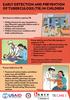 EARLY DETECTION AND PREVENTION OF TUBERCULOSIS (TB) IN CHILDREN Risk factors in children acquiring TB: Children living in the same household as a lung TB patient (especially children under 5) Children
Complaint Investigations of Minnesota Health Care Facilities
 Complaint Investigations of Minnesota Health Care Facilities Report to the Minnesota Legislature explaining the investigative process and summarizing investigations from July 1, 2003 to June 30, 2006 and
NOTICE OF PUBLIC HEARING REGARDING PROPOSED CHANGES IN HEALTH CARE SERVICES PROVIDED BY FRESNO COUNTY
 NOTICE IS HEREBY GIVEN that a public hearing will commence on Tuesday, September 23, 2008, at 9:00 a.m. (subject to continuance on that date of the hearing) at the Fresno County Board of Supervisors Chambers,
ARTICLE 7. BEHAVIORAL HEALTH RESIDENTIAL FACILITIES
 Section R9-10-701. R9-10-702. R9-10-703. R9-10-704. R9-10-705. R9-10-706. R9-10-707. R9-10-708. R9-10-709. R9-10-710. R9-10-711. R9-10-712. R9-10-713. R9-10-714. R9-10-715. R9-10-716. R9-10-717. R9-10-718.
Assessment modules. Australian Government Australian Aged Care Quality Agency. www.aacqa.gov.au
 Assessment modules Australian Government Australian Aged Care Quality Agency www.aacqa.gov.au Assessment module compilation October 2014 Australian Aged Care Quality Agency 2014 ISSN 2204 1796 (print)
Targeted Testing for Tuberculosis Infection
 Targeted Testing for Tuberculosis Infection CONTENTS Introduction... 3.2 Purpose... 3.2 Policy... 3.2 When to Conduct Targeted Testing... 3.3 Approaches to increasing targeted testing and treatment for
How To Get A Job In California
 HUMAN RESOURCES DIVISION - EMPLOYEE HEALTH SERVICES MEDICAL AND TUBERCULOSIS CLEARANCE FOR NEW CERTIFICATED EMPLOYEES To ensure the attached forms are valid at the time of submission, do not proceed with
Center for Medicaid and State Operations/Survey and Certification Group Ref: S&C-07-30 DATE: August 10, 2007 (revised)
 DEPARTMENT OF HEALTH & HUMAN SERVICES Centers for Medicare & Medicaid Services 7500 Security Boulevard, Mail Stop S2-12-25 Baltimore, Maryland 21244-1850 Center for Medicaid and State Operations/Survey
What is an IGRA? What is an IGRA? Are they available here? How do I use them? Learning Objectives
 What is an IGRA? Are they available here? How do I use them? Debbie Staley, RN, MPH TB Nurse Consultant VDH Division of Disease Prevention TB Control Program Learning Objectives Participants will be able
Registration for Supplemental Nursing Services Agency
 HEALTH REGULATION DIVISION For MDH Use Only Fee Deposit # Deposit Date Initials Registration for Supplemental Nursing Services Agency In accordance with Minnesota Statutes, Section 13.41, ALL DATA SUBMITTED
Home Health Aide Hiring, Training and Supervision
 Hiring and Supervision in Home Health Home Health Aide Hiring, Training and Supervision Hiring, training and supervision of home health aides is an important management challenge to home healthcare agencies.
FAMILY ADULT DAY CARE CERTIFICATION STANDARDS CHECKLIST
 DEPARTMENT OF HEALTH SERVICES Division of Quality Assurance F-62611 (Rev. 07/08) STATE OF WISCONSIN FAMILY ADULT DAY CARE CERTIFICATION STANDARDS CHECKLIST NOTE: These standards apply when adult day care
PRICELIST. State Term Schedule Number 800163 Index No. STS155 Temporary Medical Staffing. Effective July 01, 2011 through June 30, 2016
 PRICELIST State Term Schedule Number 800163 Index No. STS155 Temporary Medical Staffing Effective July 01, 2011 through June 30, 2016 1 Holiday Observation: Hours worked on the following holidays will
Best Practices for Health Care Service Firms
 1 I. Definitions Best Practices for Health Care Service Firms 1. Date means day, month and year. 2. Licensed means holding a valid, current New Jersey license, certification, or registration, required
Rules and Statutes For Registered Nurses and Licensed Practical Nurses
 Rules and Statutes For Registered Nurses and Licensed Practical Nurses 59A 18.007 Registered Nurse and Licensed Practical Nurse. The registered nurse and the licensed practical nurse shall: (1) Be responsible
Personal Assistance Services Self-assessment Worksheet
 Office of the Assisted Living Registrar Personal Assistance Services Self-assessment Worksheet Purpose The purpose of this worksheet is to help you assess the extent to which you offer personal assistance
Interviewable: Yes No Resident Room: Initial Admission Date: Care Area(s): Use
 Facility Name: Facility ID: Date: Surveyor Name: Resident Name: Resident ID: Initial Admission Date: Care Area(s): Interviewable: Yes No Resident Room: Use Use this protocol for a sampled resident receiving
 You can get more information about TB from the following: Local Public Health Nurse Community Clinic Nurse Communicable Disease Control Nurse Your Family or Community Doctor Your Infection Control Practitioner
LEARNING OUTCOMES. Identify children at risk of developing TB disease. Correctly manage and refer children suspected of TB. Manage child contacts
 TB in Children 1a TB IN CHILDREN 2 LEARNING OUTCOMES Identify children at risk of developing TB disease Correctly manage and refer children suspected of TB Manage child contacts 3 TB Infection and Disease
Interim Guidance for Medical Schools on health checks for active and latent Tuberculosis in medical students returning from elective periods overseas
 Interim Guidance for Medical Schools on health checks for active and latent Tuberculosis in medical students returning from elective periods overseas This document has been developed by: Dr Mathina Darmalingam
Adult Foster Home Screening and Assessment and General Information
 Office of Licensing and Regulatory Oversight Resident information Resident s name: Resident s current address: Resident s current living situation: Resident s current primary caregiver: Adult Foster Home
Ambulatory Surgical Centers Frequently Asked Questions
 Ambulatory Surgical Centers Frequently Asked Questions Index Top General Definitions Compliance with State Licensure Laws Governing Body and Management Surgical Services Quality Assessment and Performance
LOUISIANA STATE UNIVERSITY HEALTH SCIENCES CENTER - SHREVEPORT MEDICAL RECORDS CONTENT/DOCUMENTATION
 LOUISIANA STATE UNIVERSITY HEALTH SCIENCES CENTER - SHREVEPORT MEDICAL RECORDS CONTENT/DOCUMENTATION Hospital Policy Manual Purpose: To define the components of the paper and electronic medical record
Tuberculosis Surveillance and Screening for Long Term Care Facilities in Colorado
 Tuberculosis Surveillance and Screening for Long Term Care Facilities in Colorado Developed by the Colorado Medical Directors Association and The Colorado Department of Public Health and Environment Introduction:
HEALTH SERVICES UNIT ORIENTATION. 1. Sick call is to be available to all inmates five days per week.
 TI 15.11.01 Appendix D 4/03 Page 1 of 8 HEALTH SERVICES UNIT ORIENTATION A. SICK CALL 1. Sick call is to be available to all inmates five days per week. 2. Sick call provides access for requested medical
Career Options for Direct Service Workers in Maine
 Career Options for Direct Service Workers in Maine Maine s Career Options in the field of Direct Service Work (Specialized Content) Homemaker Homemakers assist individuals with household or personal care
RULES OF DEPARTMENT OF COMMUNITY HEALTH HEALTHCARE FACILITY REGULATION
 Disclaimer: This is an unofficial copy of the rules that has been provided for the convenience of the public by the Department of Community Health. The official rules for this program are on record with
RULES OF DEPARTMENT OF MENTAL HEALTH AND DEVELOPMENTAL DISABILITIES OFFICE OF LICENSURE
 RULES OF DEPARTMENT OF MENTAL HEALTH AND DEVELOPMENTAL DISABILITIES OFFICE OF LICENSURE CHAPTER 0940-05-38 MINIMUM PROGRAM REQUIREMENTS FOR PERSONAL SUPPORT TABLE OF CONTENTS 0940-05-38-.01 Definitions
New Jersey Board of Nursing Regulations
 SUBCHAPTER 14. HOMEMAKER-HOME HEALTH AIDES 13:37-14.1 Purpose and scope (a) The rules in this subchapter are designed to protect the health and safety of the public through certification of homemaker-home
CONSUMER INFORMATION GUIDE: ASSISTED LIVING RESIDENCE
 CONSUMER INFORMATION GUIDE: ASSISTED LIVING RESIDENCE 1 TABLE OF CONTENTS Introduction 3 What is an Assisted Living Residence? 3 Who Operates ALRs? 4 Paying for an ALR 4 Types of ALRs and Resident Qualifications
Student Health Form Howard Community College Health Science Division
 Name: HCC ID#: Student Health Form Howard Community College Health Science Division Please complete all sections of this form and return to Health Sciences Division Office HS 236 HEALTH FORM DEADLINES
*The Medicare Hospice Conditions of Participation (2008) (CoPs) contain the federal regulations that govern all Medicare-certified hospice programs.
 Compliance Tip Sheet National Hospice and Palliative Care Organization www.nhpco.org/regulatory CMS TOP TEN HOSPICE SURVEY DEFICIENCIES COMPLIANCE RECOMMENDATIONS INTRODUCTION The Centers for Medicare
MINNESOTA. Downloaded January 2011
 4658.00 (GENERAL) MINNESOTA Downloaded January 2011 4658.0015 COMPLIANCE WITH REGULATIONS AND STANDARDS. A nursing home must operate and provide services in compliance with all applicable federal, state,
Easing the Transition: Moving Your Relative to a Nursing Home
 Easing the Transition: Moving Your Relative to a Nursing Home Alzheimer s Association, New York City Chapter 360 Lexington Avenue, 4th Floor New York, NY 10017 24-hour Helpline 1-800-272-3900 www.alz.org/nyc
410-127-0020 Definitions... 1. 410-127-0040 Coverage... 5. 410-127-0050 Client Copayments... 6. 410-127-0060 Reimbursement and Limitations...
 Home Health Services Administrative Rulebook Division of Medical Assistance Programs Policy and Planning Section Table of Contents Chapter 410, Division 127 Effective January 1, 2014 410-127-0020 Definitions...
DEPARTMENT OF HEALTH AND HUMAN SERVICES CENTERS FOR MEDICARE & MEDICAID SERVICES
 Facility Name: Facility ID: Date: Surveyor Name: Resident Name: Resident ID: Initial Admission Date: Interviewable: Yes No Resident Room: Care Area(s): Use Use this protocol for a sampled resident receiving
TO: CHEMICAL DEPENDENCY TREATMENT PROGRAMS (Rule 31) RE: License renewal information for licenses effective January 1, 2013
 DATE: TO: CHEMICAL DEPENDENCY TREATMENT PROGRAMS (Rule 31) RE: License renewal information for licenses effective January 1, 2013 A. LICENSE HOLDER REQUIREMENTS FOR LICENSE RENEWAL 1. License fee payment
State Operations Manual Appendix E - Guidance to Surveyors: Outpatient Physical Therapy or Speech Pathology Services
 State Operations Manual Appendix E - Guidance to Surveyors: Outpatient Physical Therapy or Speech Pathology Services Transmittals for Appendix E INDEX 485.703 Definitions (Rev. 119, 07-25-14) 485.707 Condition
PRICELIST. State Term Schedule Number 800163 Index No. STS155 Temporary Medical Staffing. Effective July 01, 2011 through June 30, 2014
 PRICELIST State Term Schedule Number 800163 Index No. STS155 Temporary Medical Staffing Effective July 01, 2011 through June 30, 2014 1 Holiday Observation: Hours worked on the following holidays will
Health Professions Act BYLAWS SCHEDULE F. PART 3 Residential Care Facilities and Homes Standards of Practice. Table of Contents
 Health Professions Act BYLAWS SCHEDULE F PART 3 Residential Care Facilities and Homes Standards of Practice Table of Contents 1. Application 2. Definitions 3. Supervision of Pharmacy Services in a Facility
RULES OF DEPARTMENT OF MENTAL HEALTH AND DEVELOPMENTAL DISABILITIES OFFICE OF LICENSURE
 RULES OF DEPARTMENT OF MENTAL HEALTH AND DEVELOPMENTAL DISABILITIES OFFICE OF LICENSURE CHAPTER 0940-5-38 MINIMUM PROGRAM REQUIREMENTS FOR PERSONAL SUPPORT TABLE OF CONTENTS 0940-5-38-.01 Definitions for
Medication Administration Training Program South Dakota Specific Legal Requirements with Revised Rules 2014
 SOUTH DAKOTA BOARD OF NURSING SOUTH DAKOTA DEPARTMENT OF HEALTH 4305 S. Louise Avenue Suite 201 Sioux Falls, SD 57106-3115 (605) 362-2760 FAX: 362-2768 www.state.sd.us/doh/nursing Medication Administration
San Francisco Guidelines on the Use of QuantiFERON-TB Gold (In Tube Method) for the Diagnosis of Latent TB Infection
 San Francisco Guidelines on the Use of QuantiFERON-TB Gold (In Tube Method) for the Diagnosis of Latent TB Infection Rationale When to Screen for TB Choosing the Right TB Test Patient Registration Pre-Test
RULES OF THE TENNESSEE DEPARTMENT OF MENTAL HEALTH AND DEVELOPMENTAL DISABILITIES
 RULES OF THE TENNESSEE DEPARTMENT OF MENTAL HEALTH AND DEVELOPMENTAL DISABILITIES CHAPTER 0940-05-47 MINIMUM PROGRAM REQUIREMENTS FOR ALCOHOL AND DRUG OUTPATIENT DETOXIFICATION TREATMENT FACILITIES TABLE
CTCA POSITION ON TB EXAMINATION OF SCHOOL EMPLOYEES AND VOLUNTEERS
 CTCA POSITION ON TB EXAMINATION OF SCHOOL EMPLOYEES AND VOLUNTEERS Introduction Although progress has been made, tuberculosis (TB) continues to be a significant public health problem; appropriate TB examination
UNIFORM ACT ON INFLUENZA VACCINATION OF HEALTH CARE WORKERS. 1) Certificate of Influenza Immunization means a written statement indicating the
 UNIFORM ACT ON INFLUENZA VACCINATION OF HEALTH CARE WORKERS SECTION 1. DEFINITIONS. In this Act: 1) Certificate of Influenza Immunization means a written statement indicating the influenza vaccination
Chapter 7 Tuberculosis Infection Control
 Chapter 7 Tuberculosis Infection Control Table of Contents Chapter Objectives.... 189 Introduction.... 191 Infectiousness.... 192 TB Infection Control Measures.... 196 TB Infection Control Program................................................