
The importance of parameter mapping in electronic instrument design
|
|
|
- Eugenia Bridges
- 10 years ago
- Views:
Transcription
1 The importance of parameter mapping in electronic instrument design Andy Hunt Music Technology Group, Electronics Department University of York, Heslington, York YO10 5DD Marcelo M. Wanderley Faculty of Music, McGill University 555, Sherbrooke Street West H3A 1E3 - Montreal - Canada [email protected] Matthew Paradis Music Technology Group, Music Department University of York, Heslington, York YO10 5DD [email protected] Abstract In this paper we challenge the assumption that an electronic instrument consists solely of an interface and a sound generator. We emphasise the importance of the mapping between input parameters and system parameters, and claim that this can define the very essence of an instrument. Keywords Mapping Strategies, Electronic Musical Instruments, Human-Computer Interaction ELECTRONIC INSTRUMENTS AND T H E MAPPING LAYER In an acoustic instrument, the playing interface is inherently bound up with the sound source. A violin's string is both part of the control mechanism and the sound generator. Since they are inseparable, the connections between the two are complex, subtle and determined by physical laws. With electronic and computer instruments, the situation is dramatically different. The interface is usually a completely separate piece of equipment from the sound source. This means that the relationship between them has to be defined. The art of connecting these two, traditionally inseparable, components of a real-time musical system (an art known as mapping) is not trivial. Indeed this paper hopes to stress that by altering the mapping, even keeping the interface and sound source constant, the entire character of the instrument is changed. Moreover, the psychological and emotional response elicited from the performer is determined to a great degree by the mapping. THE IMPORTANCE OF MAPPING In this section we emphasise the dramatic effect that the style of mapping can have on 'bringing an interface to life'. We focus on our own experience in designing digital musical instruments and comment on several previous designs. An extensive review of the available literature on mapping in computer music has been presented by the authors in [6], [16] and [17]. Informal Observations The first author has carried out a number of experiments into mapping. The more formal of these have been presented in detail in [5] and [3], and are summarised later in this paper. Let us begin with some rather simple, yet interesting, observations that originally sparked interest in this subject. We have retained the first person writing style to denote that these are informal, personal reflections. The Accidental Theremin Several years ago I was invited to test out some final university projects in their prototype form in the lab. One of them was a recreation of a Theremin with modern electronic circuitry. What was particularly unusual about this was that a wiring mistake by the student meant that the 'volume' antenna only worked when your hand was moving. In other words the sound was only heard when there was a rate-of-change of position, rather than the traditional position-only control. It was unexpectedly exciting to play. The volume hand needed to keep moving back and forth, rather like bowing an invisible violin. I noted the effect that this had on myself and the other impromptu players in the room. Because of the need to keep moving, it felt as if your own energy was directly responsible for the sound. When you stopped, it stopped. The subtleties of the bowing movement gave a complex texture to the amplitude. We were 'hooked'. It took rather a long time to prise each person away from the instrument, as it was so engaging. I returned in a week's time and noted the irony that the 'mistake' had been corrected, deleted from the student's notes, and the traditional form of the instrument implemented. Two Sliders and Two Sound Parameters The above observation caused me to think about the psychological effect on the human player of 'engagement' with an instrument. Amp Freq Osc Figure 1. Simple Mapping for Experiment 1

2 To investigate this further I constructed a simple experiment. The interface for this experiment consisted of two sliders on a MIDI module, and the sound source was a single oscillator with amplitude and frequency controls. In the first run of the experiment the mapping was simply one-to-one, i.e. one slider directly controlled the volume, and the other directly controlled the pitch (cf. Figure 1). I let several test subjects freely play with the instrument, and talked to them afterwards. In the second experimental run, the interface was re-configured to emulate the abovementioned 'accidental Theremin'. One slider needed to be moved in order to make sound; the rate of change of movement controlled the oscillator's amplitude. But I decided to complicate matters (on purpose!) to study the effect that this had on the users. The pitch, which was mainly controlled by the first slider, operated 'upside-down' to most people's expectations (i.e. pushing the slider up lowered the pitch). In addition the second slider (being moved for amplitude control) was used to mildly offset the pitch - i.e. it was cross-coupled to the first slider (cf. Figure 2). Mapping Experiments Several formal investigations have been carried out by the authors in order to explore the essence and the effect of this mysterious mapping layer. Complex mapping for arbitrary interfaces The first author carried out an investigation into the psychology and practicality of various interfaces for realtime musical performance [3]. The main part of this study took the form of major series of experiments to determine the effect that interface configuration had on the quality and accuracy of a human player s performance. The full thesis is available for download online [15], and the details of the theory, experiments and results have been published [5]. They are summarised here, in order to give an overview of their implications for mapping strategies. Three interfaces were used, and these are now described. The first interface (cf. Figure 3) represented a typical computer music editing interface with on-screen sliders connected one-to-one to each sound parameter. Rate of change Amp Scale + Osc Invert Freq Figure 2. Complex Mapping for Experiment 2 A remarkable consistency of reaction was noted over the six volunteers who tried both configurations. With Experiment 1, they all commented within seconds that they had discovered how the instrument worked (almost like giving it a mental 'tick'; "yes, this is volume, and this is pitch"). They half-heartedly tried to play something for a maximum of two minutes, before declaring that they had 'finished'. Problem solved. With Experiment 2, again there was a noted consistency of response. At first there were grumbles. "What on earth is this doing?" "Hey - this is affecting the pitch" (implied cries of "unfair", "foul play"). But they all struggled with it - interestingly for several more minutes than the total time they spent on Experiment 1. After a while, their bodies started to move, as they developed ways of offsetting one slider against the other, while wobbling the first to shape the volume. Nearly all the subjects noted that somehow this was rewarding; it was "like an instrument". Yet in both cases the interface (two sliders) and the sound source (a single oscillator) were identical. Only the mapping was altered, and this had a psychological effect on the players. Figure 3. The mouse interface The second (cf. Figure 4) involved physical sliders (on a MIDI module) again connected in a one-to-one manner to the synthesis unit. Figure 4. The sliders interface The third interface (cf. Figure 5) consisted of a series of multi-parametric cross-mappings, and like the accidental Theremin mentioned above required constant movement from the user to produce sound. NIME02-02

3 Figure 5. The multi-parametric interface Users attempted to copy (using each interface) a series of sounds produced by the computer. The accuracy of reproduction was recorded for each user, over several attempts, spread out over a number of weeks. Results were gathered numerically, and plotted on a series of graphs to compare the effect - over time - of each interface. These quantitative results can be summarised for the multiparametric interface as follows: The test scores in general were much higher than those for the other two interfaces, for all but the simplest tests. There was a good improvement over time across all test complexities. The scores got better for more complex tests! This last result may seem rather counter-intuitive at first sight; that people performed better on the harder tasks. However, this brings into question the definition of a hard task. If an interface allows the simultaneous control of many parameters, maybe it really is easier to perform the more complex tasks, and harder to accurately isolate individual parameters. A range of qualitative results was also gathered by interviewing the test subjects to establish their subjective experience of using each interface. They all concluded that the 'mouse' interface was the most limited - as they could see how impossible it would be to operate more than one parameter simultaneously. Surprisingly perhaps, they were nearly all extremely frustrated and angered by the 4 physical sliders. Comments abounded such as "I should be able to do this, technically, but I can't get my mind to split down the sound into these 4 finger controls". Some users actually got quite angry with the interface and with themselves. The multiparametric interface, on the other hand, was warmly received - but not at the very beginning. At first it seemed counter-intuitive to most users, but they rapidly warmed to the fact that they could use complex gestural motions to control several simultaneous parameters without having to 'de-code' them into individual streams. Many users remarked how "like an instrument" it was, or "how expressive" they felt they could be with it. Focusing on the Effect of Mapping Strategies In the above experiment several factors may have affected the results. For instance, the multiparametric interface used cross-coupled parameters in addition to the user's energy. It also decreased reliance on visual feedback, and provided two-handed input, all of which may have contributed in varying degrees to the interface s effectiveness. An additional experiment was subsequently carried out by the third author to focus entirely on the user's reaction to a change in mapping strategy. These tests utilised three contrasting mapping strategies, with a fixed user interface and synthesis algorithm. The mappings were; a) simple one-to-one connections between input and output, b) one-to-one requiring the user's energy as an input. This was implemented by requiring the user to constantly move one of the sliders in a bowing -like action c) many-to-many connections from input to output, but also requiring the user s energy as in b). These mappings were used to control the parameters of a stereo FM synthesis algorithm, including amplitude, frequency, panning, modulation ratio and modulation index. The input device used was a MIDI fader box. Users were asked to play with each interface until they felt they had a good sense of how to drive it to perform musical gestures. No time limit was given to this process; the users were encouraged to explore the possibilities of each set-up. Data was collected on the users (subjective) views on the comparative expressivity and learnability of each mapping and the accuracy of musical control that could be achieved. Whilst experimenting with the first mapping test (oneto-one) many users noted that the simple division of parameters was not very stimulating. Users tended to learn the parameter associations very quickly but then struggle to achieve any improvement in their performance or expressive output. The second test generated a range of comments, which suggested that the process of injecting energy into a system presented a much more natural and engaging instrument. However, due to the proximity of sliders on the interface they found it difficult to control other sliders whilst providing the required 'bowing' action. However, this problem lessened over time as the user practised. The third and final user test (many-to-many mappings) provided some interesting results. Most of the test subjects noted that the appeal of this instrument was that it was not instantly mastered but required effort to achieve satisfactory results. The instrument presented a challenge to the user, as one would expect from a traditional expressive instrument. These tests highlighted the differences between a general-purpose interface, (such as the mouse) which has simple mappings but allows the user to begin working instantly, and an interface with more complex mappings which must be practised and explored in order to achieve truly expressive output. Learning from Acoustic Instruments In [12] the second author and collaborators discussed the fact that by altering the mapping layer in a digital musi- NIME02-03

4 cal instrument and keeping the interface (an off-the-shelf MIDI controller) and sound source unchanged, the essential quality of the instrument is changed regarding its control and expressive capabilities. Previous studies, notably by Buxton [2], presented evidence that input devices with similar characteristics (e.g. number of degrees of freedom) could lead to very different application situations depending on the way these characteristics were arranged in the device. In that study, however, the devices were not exactly the same mechanically (one had two separate controllers and the other one two-dimensional controller), so the situation is not the same as when using the same input device with different mapping strategies, even if the results are similar. In [12], a Yamaha WX7 wind controller was used as the input device, and sound was generated using additive synthesis models of clarinet sounds in IRCAM s FTS environment (later in jmax). The idea behind the project was simple: many wind instrument performers complained that MIDI wind controllers tend to lack expressive potential when compared to acoustic instruments such as the clarinet or saxophone. A common path to solving this problem involves improving the design of the controller by adding extra sensors. However, it was decided to challenge this assumption and to solely work on the mapping layer between the controller variables and the synthesis inputs (for a complete description see [12]). Another point became clear in this process: even if the WX7 was a faithful model of a saxophone providing the same types of control variables (breath, lip pressure and fingering), these variables worked totally independently in the MIDI controller, whereas they are cross-coupled in acoustic single-reed instruments. This natural crosscoupling is the result of the physical behaviour of the reed, and since the equivalent reed in the controller was a plastic piece that did not vibrate, and moreover was not coupled to an air column, variables were simply independent. Based on these decisions and facts, the authors proposed different mappings between the WX7 variables and the synthesis parameters. The first was basically a one-toone relationship, where variables were independent. The second was a model where the virtual airflow through the reed (loudness) was a function of both the breath and lip pressure (embouchure), such as in an acoustic instrument. The third was a model that took into account both the virtual airflow and the relationship between spectrum content to breath and embouchure; a model that would match even more closely the real behaviour of the acoustic instrument. Using these three different models, the system was performed by different musicians and non-musicians. Results indicated that wind instrument performers tended to stick with complex cross-coupled mappings similar to the single reed behaviour (the third mapping strategy used), whereas beginners initially preferred simpler mappings (easier to play and produce stable sounds). WX7 breath lip pressure fingering breath lip pressure fingering breath lip pressure fingering dynamics (Y) loudness vibrato (X, relative) fundamental frequency (X, absolute) dynamics (Y) loudness vibrato (X, relative) fundamental frequency (X, absolute) dynamics (Y) loudness vibrato (X, relative) fundamental frequency (X, absolute) Figure 6. Several mappings used in the clarinet simulation presented in [12]. The two most important consequences of this work were: - By just changing the mapping layer between the controller and the synthesis algorithm, it was indeed possible to completely change the instrumental behaviour and thus the instrument s feel to the performer. Depending on the performer s previous experience and expectations, different mappings were preferred. - By deconstructing the way that the reed actually works, it was noted that the choice of mapping could be important as a pedagogical variable. Indeed, in stark contrast with acoustic instruments where the dependencies between parameters are unchangeable, crosscoupling between variables can easily be created or destroyed in digital musical instruments. This means that performers could focus on specific aspects of the instrument by explicitly defining its behaviour. Possible options could include: complex (cross-coupled) control of loudness with one-to-one control of timbre, one-to-one loudness and complex timbre controls, or, complex loudness and timbre controls, such as in the real instrument. Even if these results supported the essential role of mapping (and the importance of devising mapping strategies other than one-to-one during the design of digital musical instruments), they could not be easily extrapolated to more general situations. In fact, in the above specific case, there did exist a model of complex mapping to be followed, since the controller was a model of the acoustic instrument. So what about mappings in general digital musical instruments using alternate controllers, those not based on traditional acoustic instruments? NIME02-04

5 MODELS AND GUIDELINES FOR MAPPING Since there will not always be ready models for inspiration when designing mapping strategies for new digital musical instruments, the task then becomes one of proposing guidelines for mapping and also, if possible, devising models that can facilitate the implementation of mapping strategies other than simple one-to-one relationships. In trying to answer this question of how to extend a specific mapping solution to a more general case, a model of mapping for digital musical instruments was proposed in [13]. It was based on the separation of the mapping layer into two independent layers, coupled by an intermediate set of user-defined (or abstract ) parameters. This model was presented in the framework of a set of extensions to jmax later known as ESCHER (actually, a set of objects developed by Norbert Schnell to perform interpolation using additive models). This idea is based on previous works, such as those of Mulder et al. [9], Métois [8], and Wessel [18]. A similar direction was presented by Mulder and Fels in [10] and later by Garnett and Goudeseune [7]. Basically, all these works have used higher levels of abstraction as control structures instead of raw synthesis variables such as amplitudes, frequencies and phases of sinusoidal sound partials. The main point made in [13] was to explicitly think about two separate mapping layers and the strategies to implement these, and not on the choice of intermediate parameters themselves, whether perceptive, geometrical or abstract [14]. The intrinsic advantage of this model is its flexibility. Indeed, for the same set of intermediate parameters and synthesis variables, the second mapping layer is independent of the choice of controller being used. The same would be true in the other sense: for the same controller and the same set of parameters, multiple synthesis techniques could be used by just adapting the second mapping layer, the first being held constant. Specifically in this case, the choice of synthesis algorithm is transparent for the user The original two-layered model has recently been expanded to include three mapping layers in two independent performance works by Hunt and Myatt [11], and by Arfib and collaborators [1]. These works support the idea that, by using multi-layered mappings, one can obtain a level of flexibility in the design of instruments and that moreover, these models can indeed accommodate the control of different media, such as sound and video, in a coherent way. One-to-one Mappings Multiple Layers We have noted that there is a tendency for designers to make one-to-one mappings when constructing an interface. We can use this tendency to improve the mapping process if we utilise the many layered models outlined above. The following scenario may illustrate this: Imagine a system whose interface inputs included button 1, button 2 slider 1, slider 2, mouse x and mouse y. Let us suppose that the synthesis system was a Frequency Modulation module with inputs such as carrier frequency, carrier amplitude, modulation frequency etc. Now consider the two possibilities below: Case 1: let us consider a designer working to connect the above inputs to the above outputs. We are quite likely to see arbitrary connections such as mouse x controls carrier frequency, and slider 1 controls modulation frequency. These give us the oft-encountered one-to-one mappings. Case 2: let us imagine that a mapping layer has already been devised to abstract the inputs to parameters such as energy, distance between sliders, wobble etc. Also let us imagine that there is a mapping layer before the FM synthesis unit, providing higher-level control inputs such as brightness, pitch, sharpness etc. Now we can picture the designer making a relationship such as energy controls brightness. On the surface this may appear to be yet another one-to-one mapping. Indeed it is at the conceptual level. However, when you consider how energy is calculated from the given inputs, and how brightness has to be converted into the FM synthesis primitives, you will notice how many of the lower-level parameters have been cross-coupled. Thus the many-level mapping models are a way of simplifying the design process, and of helping the designer to focus on the final effect of the mapping, as well as providing a convenient method of substituting input device or synthesis method. FUTURE DISCUSSION OF MAPPING From the evidence presented above in both informal and controlled experiments, there is definitely a need to come up with better-designed mappings than simple (engineering style) one-to-one relationships. General models of mappings have been proposed and expanded to incorporate multimedia control, but also to fit several levels of performance, from beginners to highly skilled players. One attempt to foster the discussion in this direction has been initiated in the context of the ICMA/EMF Working Group on Interactive Systems and Instrument Design in Music [4]. A further effort is currently being carried out in the form of a special issue on Mapping Strategies for Real-time Computer Music guest-edited by the second author [17] to appear as volume 7, number 2 of the journal Organised Sound later this year. We therefore welcome comments and criticism on issues related to mapping so as to push the discussion on this essential although often ignored topic. CONCLUSIONS The mapping layer has never needed to be addressed directly before, as it has been inherently present in acoustic instruments courtesy of natural physical phenomena. Now that we have the ability to design instruments with separable controllers and sound sources, we need to explicitly design the connection between the two. This is turning out to be a non-trivial task. We are in the early stages of understanding the complexities of how the mapping layer affects the perception NIME02-05
![In trying to answer this question of how to extend a specific mapping solution to a more general case, a model of mapping for digital musical instruments was proposed in [13].](/docs-images/44/14592308/images/page_5.jpg "It was based on the separation of the mapping layer into two independent layers, coupled by an intermediate set of user-defined (or abstract ) parameters.")
6 (and the playability) of an electronic instrument by its performer. What we know is that it is a very important layer, and one that must not be overlooked by the designers of new instruments. REFERENCES [1] Arfib, D. Personal Communication. (2002) [2] Buxton, W. There s more Interaction than Meets the Eye: Some Issues in Manual Input. In Norman, D. a. and Draper, S. W. (eds), User Centered System Design: New Perspectives on Human-Computer Interaction, Hillsdale, N.J.: Lawrence Erlbaum Associates, (1986) [3] Hunt, A. Radical User Interfaces for Real-time Musical Control. DPhil thesis, University of York, UK. (1999) [4] Hunt, A. and Wanderley, M. M. (eds.) Mapping of Control Variables to Musical Variables. Interactive Systems and Instrument Design in Music Working Group. (2000) Website: [5] Hunt, A., and Kirk, R. Mapping Strategies for Musical Performance. In M. Wanderley and M. Battier (eds.) Trends in Gestural Control of Music. IRCAM Centre Pompidou. (2000) [6] Hunt, A., Wanderley, M. M., and Kirk, R. Towards a Model for Instrumental Mapping in Expert Musical Interaction. In Proc. of the 2000 International Computer Music Conference. San Francisco, CA: International Computer Music Association, pp (2000) [7] Garnett, G., and C. Goudeseune. Performance Factors in Control of High-Dimensional Spaces. In Proc. of the 1999 International Computer Music Conference. San Francisco, CA: International Computer Music Association, pp (1999) [8] Métois, E. Musical Sound Information: Musical Gestures and Embedding Systems. PhD Thesis. MIT Media Lab. (1996) [9] Mulder, A., S. Fels, and K. Mase. Empty-Handed Gesture Analysis in Max/FTS. In Kansei, The Technology of Emotion. Proceedings of the AIMI International Workshop, A. Camurri (ed.) Genoa: Associazione di Informatica Musicale Italiana, October 3-4, pp (1997) [10] Mulder, A., and Fels, S. Sound Sculpting: Manipulating Sound through Virtual Sculpting. In Proc. of the 1998 Western Computer Graphics Symposium, pp (1998) [11] RIMM The Real-time Interactive MultiMedia project. (2001) Website: m/ [12] Rovan, J. B., Wanderley, M. M., Dubnov, S., and Depalle, P. Instrumental Gestural Mapping Strategies as Expressivity Determinants in Computer Music Performance. In Kansei, The Technology of Emotion. Proceedings of the AIMI International Workshop, A. Camurri (ed.) Genoa: Associazione di Informatica Musicale Italiana, October 3-4, pp (1997) [13] Wanderley, M. M., Schnell, N. and Rovan, J. Escher - Modeling and Performing Composed Instruments in Real-Time. In Proc. IEEE International Conference on Systems, Man and Cybernetics (SMC 98), San Diego, CA, pp (1998) [14] Wanderley, M. M., and Depalle, P. Contrôle gestuel de la synthèse sonore. In H. Vinet and F. Delalande (eds.) Interfaces Homme-Machine et Creation Musicale - Hermes Science Publishing, pp (1999) [15] Wanderley, M. M. (ed.) Interactive Systems and Instrument Design in Music Workgroup. (2000) Website: s/wg.htm l [16] Wanderley, M. M. Performer-Instrument Interaction. Application to Gestural Control of Sound Synthesis. PhD Thesis. University Paris VI, France. (2001) [17] Wanderley, M. M., ed. Mapping Strategies for Real-time Computer Music. Special Issue. Organised Sound 7(2). To appear in August [18] Wessel, D. Timbre Space as a Musical Control Structure. Computer Music Journal, 3(2): (1979) NIME02-06
![J.: Lawrence Erlbaum Associates, 319-337. (1986) [3] Hunt, A. Radical User Interfaces for Real-time Musical Control. DPhil thesis, University of York, UK. (1999) [4] Hunt, A. and Wanderley, M. M. (eds.](/docs-images/44/14592308/images/page_6.jpg ") Mapping of Control Variables to Musical Variables. Interactive Systems and Instrument Design in Music Working Group. (2000) Website: http://www.notam02.no/icma/interactivesystems/mapping.")
Building Your Own Instrument with Pd Hans-Christoph Steiner
 Building Your Own Instrument with Pd Hans-Christoph Steiner 1. THE P ROBLEMS WITH L IVE C OMPUTER M USIC With the power that even a cheap laptop can provide, the computer has gained widespread acceptance
Gestural Control of Music
 Gestural Control of Music Marcelo M. Wanderley IRCAM - Centre Pompidou 1, Pl. Igor Stravinsky 75004 - Paris - France [email protected] Abstract Digital musical instruments do not depend on physical constraints
VACA: A Tool for Qualitative Video Analysis
 VACA: A Tool for Qualitative Video Analysis Brandon Burr Stanford University 353 Serra Mall, Room 160 Stanford, CA 94305 USA [email protected] Abstract In experimental research the job of analyzing data
An Instructional Aid System for Driving Schools Based on Visual Simulation
 An Instructional Aid System for Driving Schools Based on Visual Simulation Salvador Bayarri, Rafael Garcia, Pedro Valero, Ignacio Pareja, Institute of Traffic and Road Safety (INTRAS), Marcos Fernandez
C. Wohlin, "Is Prior Knowledge of a Programming Language Important for Software Quality?", Proceedings 1st International Symposium on Empirical
 C. Wohlin, "Is Prior Knowledge of a Programming Language Important for Software Quality?", Proceedings 1st International Symposium on Empirical Software Engineering, pp. 27-36, Nara, Japan, October 2002.
An Iterative Usability Evaluation Procedure for Interactive Online Courses
 An Iterative Usability Evaluation Procedure for Interactive Online Courses by Laurie P. Dringus ABSTRACT The Internet and World Wide Web (W3) have afforded distance learners simple links to access information.
Control of affective content in music production
 International Symposium on Performance Science ISBN 978-90-9022484-8 The Author 2007, Published by the AEC All rights reserved Control of affective content in music production António Pedro Oliveira and
Engagement and motivation in games development processes
 Engagement and motivation in games development processes Engagement and motivation in games development processes Summary... 1 Key findings... 1 1. Background... 2 Why do we need to engage with games developers?...
Lecture 2, Human cognition
 Human Cognition An important foundation for the design of interfaces is a basic theory of human cognition The information processing paradigm (in its most simple form). Human Information Processing The
GCSE Music Unit 3 (42703) Guidance
 GCSE Music Unit 3 (42703) Guidance Performance This unit accounts for 40% of the final assessment for GCSE. Each student is required to perform two separate pieces of music, one demonstrating solo/it skills,
Bowstroke Database: A Web-Accessible Archive of Violin Bowing Data
 Bowstroke Database: A Web-Accessible Archive of Violin Bowing Data ABSTRACT Diana Young MIT Media Laboratory 20 Ames Street Cambridge, MA 02142 [email protected] This paper presents a newly created database
Building tomorrow s leaders today lessons from the National College for School Leadership
 Building tomorrow s leaders today lessons from the National College for School Leadership If you re looking for innovative ways to engage your would-be leaders through gaming and video role play, the National
ART A. PROGRAM RATIONALE AND PHILOSOPHY
 ART A. PROGRAM RATIONALE AND PHILOSOPHY Art education is concerned with the organization of visual material. A primary reliance upon visual experience gives an emphasis that sets it apart from the performing
An Introduction to OSVR
 An Introduction to OSVR What is OSVR? OSVR is an open-source software platform for VR/AR applications. OSVR provides an easy and standardized way to discover, configure and operate hundreds of devices:
Basic Theory of Intermedia Composing with Sounds and Images
 (This article was written originally in 1997 as part of a larger text to accompany a Ph.D. thesis at the Music Department of the University of California, San Diego. It was published in "Monochord. De
FOURIER TRANSFORM BASED SIMPLE CHORD ANALYSIS. UIUC Physics 193 POM
 FOURIER TRANSFORM BASED SIMPLE CHORD ANALYSIS Fanbo Xiang UIUC Physics 193 POM Professor Steven M. Errede Fall 2014 1 Introduction Chords, an essential part of music, have long been analyzed. Different
Analysis of an Acoustic Guitar
 I. Introduction Analysis of an Acoustic Guitar The acoustic guitar has been a common component in many genres of music for many years. Its versatile, rich tones and popularity with famous artists have
The IRCAM Musical Workstation: A Prototyping and Production Tool for Real-Time Computer Music
 The IRCAM Musical Workstation: A Prototyping and Production Tool for Real-Time Computer Music Cort Lippe, Zack Settel, Miller Puckette and Eric Lindemann IRCAM, 31 Rue St. Merri, 75004 Paris, France During
Tonal Analysis of Different Materials for Trumpet Mouthpieces
 Greg Formosa PHYS 199 POM Project Write-up Tonal Analysis of Different Materials for Trumpet Mouthpieces INTRODUCTION: Trumpets have been noted as one of the oldest instruments in the world, and ever since
Thesis Proposal for the Master of Fine Arts Degree
 Thesis Proposal for the Master of Fine Arts Degree A computer vision system for doing interactive-creative musical installations: A portable computer vision system based on video projection that allows
Teaching Portfolio. Teaching Philosophy
 Teaching Portfolio Teaching Philosophy Over the course of my education, I have had the privilege of interacting with some truly excellent teachers, who have shaped my knowledge, reasoning, and technical
UNDERGRADUATE PROGRAMME SPECIFICATION
 UNDERGRADUATE PROGRAMME SPECIFICATION Programme Title: Awarding Body: Teaching Institution: Final Awards: Intermediate Awards: Mode of Study: UCAS Codes: QAA Benchmarks: Music Business and Production Staffordshire
The Sonometer The Resonant String and Timbre Change after plucking
 The Sonometer The Resonant String and Timbre Change after plucking EQUIPMENT Pasco sonometers (pick up 5 from teaching lab) and 5 kits to go with them BK Precision function generators and Tenma oscilloscopes
Assessing Online Asynchronous Discussion in Online Courses: An Empirical Study
 Assessing Online Asynchronous Discussion in Online Courses: An Empirical Study Shijuan Liu Department of Instructional Systems Technology Indiana University Bloomington, Indiana, USA [email protected]
Pedagogical Use of Tablet PC for Active and Collaborative Learning
 Pedagogical Use of Tablet PC for Active and Collaborative Learning Oscar Martinez Bonastre [email protected] Antonio Peñalver Benavent [email protected] Francisco Nortes Belmonte [email protected]
Voltage. Oscillator. Voltage. Oscillator
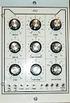 fpa 147 Week 6 Synthesis Basics In the early 1960s, inventors & entrepreneurs (Robert Moog, Don Buchla, Harold Bode, etc.) began assembling various modules into a single chassis, coupled with a user interface
Design Analysis of Everyday Thing: Nintendo Wii Remote
 1 Philip Stubbs Design Analysis of Everyday Thing: Nintendo Wii Remote I. Introduction: Ever since being released in November 2006, the Nintendo Wii gaming system has revolutionized the gaming experience
AER reference: 52454; D14/54321 ACCC_09/14_865
 Commonwealth of Australia 2014 This work is copyright. In addition to any use permitted under the Copyright Act 1968, all material contained within this work is provided under a Creative Commons Attribution
Midi Workshop. SAWStudio. From RML Labs. To order this product, or download a free demo, visit www.sawstudio.com
 SAWStudio Midi Workshop From RML Labs Welcome to the exciting new Midi WorkShop add-on for SAWStudio! The Midi WorkShop requires SAWStudio, SAWStudioLite, or SAWStudioBasic as a host. The Midi WorkShop
(Refer Slide Time: 01:52)
 Software Engineering Prof. N. L. Sarda Computer Science & Engineering Indian Institute of Technology, Bombay Lecture - 2 Introduction to Software Engineering Challenges, Process Models etc (Part 2) This
14TH INTERNATIONAL CONFERENCE ON ENGINEERING DESIGN 19-21 AUGUST 2003
 14TH INTERNATIONAL CONFERENCE ON ENGINEERING DESIGN 19-21 AUGUST 2003 A CASE STUDY OF THE IMPACTS OF PRELIMINARY DESIGN DATA EXCHANGE ON NETWORKED PRODUCT DEVELOPMENT PROJECT CONTROLLABILITY Jukka Borgman,
Visualization. For Novices. ( Ted Hall ) University of Michigan 3D Lab Digital Media Commons, Library http://um3d.dc.umich.edu
 Visualization For Novices ( Ted Hall ) University of Michigan 3D Lab Digital Media Commons, Library http://um3d.dc.umich.edu Data Visualization Data visualization deals with communicating information about
IM 2701 Multimedia Design and Web Development BSc in Business Information Systems. Chapter 01 Introduction to Multimedia Design
 IM 2701 Multimedia Design and Web Development BSc in Business Information Systems Chapter 01 Introduction to Multimedia Design Topics Definition of Multimedia Multimedia Elements Web Design Principles
Composite performance measures in the public sector Rowena Jacobs, Maria Goddard and Peter C. Smith
 Policy Discussion Briefing January 27 Composite performance measures in the public sector Rowena Jacobs, Maria Goddard and Peter C. Smith Introduction It is rare to open a newspaper or read a government
VRSPATIAL: DESIGNING SPATIAL MECHANISMS USING VIRTUAL REALITY
 Proceedings of DETC 02 ASME 2002 Design Technical Conferences and Computers and Information in Conference Montreal, Canada, September 29-October 2, 2002 DETC2002/ MECH-34377 VRSPATIAL: DESIGNING SPATIAL
From Databases to Natural Language: The Unusual Direction
 From Databases to Natural Language: The Unusual Direction Yannis Ioannidis Dept. of Informatics & Telecommunications, MaDgIK Lab University of Athens, Hellas (Greece) [email protected] http://www.di.uoa.gr/
Electronic music. live electronic music is where technology is used to make, change, or play sounds during live performance (usually on laptops).
 Electronic music Electronic music is music in which electronic technology, now mostly computer-based, is used to access, make, explore and configure sound materials, and which is heard through loudspeakers.
Best Practices for Teaching Online
 10 Best Practices for Teaching Online 9 8 7 5 6 4 3 2 1 p This handbook is compiled and edited from hundreds of teaching tips drawn from a wide variety of Web sites that provide resources for faculty teaching
What makes a good coder and technology user at Mountfields Lodge School?
 What makes a good coder and technology user at Mountfields Lodge School? Pupils who persevere to become competent in coding for a variety of practical and inventive purposes, including the application
elearning Guide: Instructional Design
 elearning Guide: Instructional Design Produced by NHS Education for Scotland, 2013 Introduction This e-learning Guide provides the standards to be followed when developing content Web-based Training (WBT)
Serious Game as Educational Tool for Safety and Prevention
 Serious Game as Educational Tool for Safety and Prevention Maarten Vanhoucke 1, Cesar Vandevelde 1, Joost Ingels 2, Geoffrey Hamon 2, Jelle Saldien 1 1 Department of Industrial System and Product Design,
MAS.836 HOW TO BIAS AN OP-AMP
 MAS.836 HOW TO BIAS AN OP-AMP Op-Amp Circuits: Bias, in an electronic circuit, describes the steady state operating characteristics with no signal being applied. In an op-amp circuit, the operating characteristic
Introduction to Engineering System Dynamics
 CHAPTER 0 Introduction to Engineering System Dynamics 0.1 INTRODUCTION The objective of an engineering analysis of a dynamic system is prediction of its behaviour or performance. Real dynamic systems are
Robotic motion planning for 8- DOF motion stage
 Robotic motion planning for 8- DOF motion stage 12 November Mark Geelen Simon Jansen Alten Mechatronics www.alten.nl [email protected] Introduction Introduction Alten FEI Motion planning MoveIt! Proof
How do non-expert users exploit simultaneous inputs in multimodal interaction?
 How do non-expert users exploit simultaneous inputs in multimodal interaction? Knut Kvale, John Rugelbak and Ingunn Amdal 1 Telenor R&D, Norway [email protected], [email protected], [email protected]
Design Elements & Principles
 Design Elements & Principles I. Introduction Certain web sites seize users sights more easily, while others don t. Why? Sometimes we have to remark our opinion about likes or dislikes of web sites, and
MIDI messages. March 2001 Edition 1.4
 March 2001 Edition 1.4 MIDI messages (For MIDI specialists only!) MIDI is that most rare of beasts, a standard set by a number of different manufacturers that is universally implemented and supported.
Code Kingdoms Learning a Language
 codekingdoms Code Kingdoms Unit 2 Learning a Language for kids, with kids, by kids. Resources overview We have produced a number of resources designed to help people use Code Kingdoms. There are introductory
Final Exam Performance. 50 OLI Accel Trad Control Trad All. Figure 1. Final exam performance of accelerated OLI-Statistics compared to traditional
 IN SEARCH OF THE PERFECT BLEND BETWEEN AN INSTRUCTOR AND AN ONLINE COURSE FOR TEACHING INTRODUCTORY STATISTICS Marsha Lovett, Oded Meyer and Candace Thille Carnegie Mellon University, United States of
Corel Painter 8 Liquid Ink Visual Guide
 Corel Painter 8 Liquid Ink Visual Guide Contents Welcome to Corel Painter 8........... 3 Liquid Ink in Corel Painter 8.......... 4 Liquid Ink Controls in Corel Painter 8...... 7 General Section: Liquid
Assessing Learners Behavior by Monitoring Online Tests through Data Visualization
 International Journal of Electronics and Computer Science Engineering 2068 Available Online at www.ijecse.org ISSN : 2277-1956 Assessing Learners Behavior by Monitoring Online Tests through Data Visualization
GAZETRACKERrM: SOFTWARE DESIGNED TO FACILITATE EYE MOVEMENT ANALYSIS
 GAZETRACKERrM: SOFTWARE DESIGNED TO FACILITATE EYE MOVEMENT ANALYSIS Chris kankford Dept. of Systems Engineering Olsson Hall, University of Virginia Charlottesville, VA 22903 804-296-3846 [email protected]
Week 3. COM1030. Requirements Elicitation techniques. 1. Researching the business background
 Aims of the lecture: 1. Introduce the issue of a systems requirements. 2. Discuss problems in establishing requirements of a system. 3. Consider some practical methods of doing this. 4. Relate the material
Multimedia Technology and Design Courses at a Glance
 Multimedia Technology and Design Courses at a Glance MTD101: Multimedia Design Concepts MTD101 Multimedia Design concept is a design module that seeks to equip students with competent skills in design
Business Management. Is Business Management right for me? Are all Business Management degrees the same? Specialisms
 Business Management Is Business Management right for me? If you have an interest in working in the world of management and business then Business Management can set you up well. To get the best out of
Title: Transforming a traditional lecture-based course to online and hybrid models of learning
 Title: Transforming a traditional lecture-based course to online and hybrid models of learning Author: Susan Marshall, Lecturer, Psychology Department, Dole Human Development Center, University of Kansas.
Bloom s Taxonomy. List the main characteristics of one of the main characters in a WANTED poster.
 Bloom s Taxonomy Bloom s Taxonomy provides an important framework for teachers to use to focus on higher order thinking. By providing a hierarchy of levels, this taxonomy can assist teachers in designing
How pre-university online learning experience can influence a successful transition into and through higher education
 pamoja education Teaching the IB online How pre-university online learning experience can influence a successful transition into and through higher education A research study published by the Institute
The basics of digital print
 The Digital Dots Wild Format Digital Printing Technology Guides are about providing you with all you need to know about investing in wide format digital printing technology. The Wild Format goal is to
HND degree top-up students perceptions of their experience at the University of Worcester: how can future students experiences be improved?
 HND degree top-up students perceptions of their experience at the University of Worcester: how can future students experiences be improved? Lerverne Barber and Dr Nick Breeze University of Worcester ([email protected]
LESSONS LEARNED FROM MOVING TO WEB BASED SURGICAL REQUESTS
 LESSONS LEARNED FROM MOVING TO WEB BASED SURGICAL REQUESTS Philip M. Troy 2,3, PhD, Trixie Mairura 1, BSc, CAPM, Dana Porubska 1, BScN Sir Mortimer B. Davis-Jewish General Hospital 1, McGill University
Preparing a Slide Show for Presentation
 In this chapter Find out why it s important to put finishing touches on a slide show Learn how to use the slide sorter Explore the use of slide transitions Learn how to change slide color schemes and backgrounds
FCE: A Fast Content Expression for Server-based Computing
 FCE: A Fast Content Expression for Server-based Computing Qiao Li Mentor Graphics Corporation 11 Ridder Park Drive San Jose, CA 95131, U.S.A. Email: qiao [email protected] Fei Li Department of Computer Science
Writing a Requirements Document For Multimedia and Software Projects
 Writing a Requirements Document For Multimedia and Software Projects Rachel S. Smith, Senior Interface Designer, CSU Center for Distributed Learning Introduction This guide explains what a requirements
Market Research: Friend or Foe to Christian Charities?
 Market Research: Friend or Foe to Christian Charities? by Redina Kolaneci Senior Fundraising & Stewardship Consultant McConkey Johnston international UK If you are ignorant of yourself, in addition to
The Tuning CD Using Drones to Improve Intonation By Tom Ball
 The Tuning CD Using Drones to Improve Intonation By Tom Ball A drone is a sustained tone on a fixed pitch. Practicing while a drone is sounding can help musicians improve intonation through pitch matching,
CHAPTER 3 THE LOANABLE FUNDS MODEL
 CHAPTER 3 THE LOANABLE FUNDS MODEL The next model in our series is called the Loanable Funds Model. This is a model of interest rate determination. It allows us to explore the causes of rising and falling
The Real Challenges of Configuration Management
 The Real Challenges of Configuration Management McCabe & Associates Table of Contents The Real Challenges of CM 3 Introduction 3 Parallel Development 3 Maintaining Multiple Releases 3 Rapid Development
Auto enrolment step by step guide for payroll bureaux
 Auto enrolment step by step guide for payroll bureaux As company sizes are reducing, the proportion of employers with an in house payroll department is declining, and the number of employers looking for
Prospectus for the Essential Physics package.
 Prospectus for the Essential Physics package. Essential Physics is a new textbook and learning package aimed at the College Physics audience, covering the standard introductory physics topics without using
[ Training Manual ] Pastel Partner Version 12 Bridging Manual for Dealers: Version 12.1.1
![[ Training Manual ] Pastel Partner Version 12 Bridging Manual for Dealers: Version 12.1.1](/thumbs/28/12953323.jpg "[ Training Manual ] Pastel Partner Version 12 Bridging Manual for Dealers: Version 12.1.1") [ Training Manual ] Pastel Partner Version 12 Bridging Manual for Dealers: Version 12.1.1 V e r s i o n 1 1 T r a i n i n g M a n u a l Notices This product is copyrighted to: Softline Pastel, Softline
[ Training Manual ] Pastel Partner Version 12 Bridging Manual for Dealers: Version 12.1.1 V e r s i o n 1 1 T r a i n i n g M a n u a l Notices This product is copyrighted to: Softline Pastel, Softline
New Generation of Software Development
 New Generation of Software Development Terry Hon University of British Columbia 201-2366 Main Mall Vancouver B.C. V6T 1Z4 [email protected] ABSTRACT In this paper, I present a picture of what software development
The Application of Statistics Education Research in My Classroom
 The Application of Statistics Education Research in My Classroom Joy Jordan Lawrence University Key Words: Computer lab, Data analysis, Knowledge survey, Research application Abstract A collaborative,
ANALYZING A CONDUCTORS GESTURES WITH THE WIIMOTE
 ANALYZING A CONDUCTORS GESTURES WITH THE WIIMOTE ICSRiM - University of Leeds, School of Computing & School of Music, Leeds LS2 9JT, UK [email protected] www.icsrim.org.uk Abstract This paper presents
START TEACHER'S GUIDE
 START TEACHER'S GUIDE Introduction A complete summary of the GAME:IT Junior curriculum. Welcome to STEM Fuse's GAME:IT Junior Course Whether GAME:IT Junior is being taught as an introductory technology
How To Teach Geology
 A HANDS-ON APPROACH TO UNDERSTANDING TOPOGRAPHIC MAPS AND THEIR CONSTRUCTION Department of Geology and Environmental Science La Salle University Philadelphia, Pennsylvania This article originally appeared
Performance Management Is performance management really necessary? What techniques are best to use?
 Performance Management Is performance management really necessary? What techniques are best to use? This e-book is a guide for employers to help them discover tips and methods of performance management,
Why Your CRM Process is Destroying Your Team s Prospecting and How to Fix It
 Proof of Prospecting Why Your CRM Process is Destroying Your Team s Prospecting and How to Fix It When implementing any kind of sales improvement program, most sales organizations understandably focus
Composition and Layout Techniques
 Composition and Layout Techniques Composition Techniques Composition Composition is the placement or arrangement of visual elements or ingredients in a work of art, as distinct from the subject of a work.
A causal algorithm for beat-tracking
 A causal algorithm for beat-tracking Benoit Meudic Ircam - Centre Pompidou 1, place Igor Stravinsky, 75004 Paris, France [email protected] ABSTRACT This paper presents a system which can perform automatic
Motion, Sound, Interaction Design, Machine Learning
 Dr. Caramiaux Baptiste email : [email protected] web : http ://www.baptistecaramiaux.com twitter : @caramiaux tel : 0044-756-52-45-604 Department of Computing Goldsmiths, University of London New
In 2 Hockey Leadership Course Planning and Delivery Guidance
 In 2 Hockey Leadership Course Planning and Delivery Guidance This guidance aims to assist with delivery of the In 2 Hockey Leadership Course giving young leaders the basic skills to lead an In 2 Hockey
Doppler Effect Plug-in in Music Production and Engineering
 , pp.287-292 http://dx.doi.org/10.14257/ijmue.2014.9.8.26 Doppler Effect Plug-in in Music Production and Engineering Yoemun Yun Department of Applied Music, Chungwoon University San 29, Namjang-ri, Hongseong,
Application of Neural Network in User Authentication for Smart Home System
 Application of Neural Network in User Authentication for Smart Home System A. Joseph, D.B.L. Bong, D.A.A. Mat Abstract Security has been an important issue and concern in the smart home systems. Smart
WINDOWS AZURE AND WINDOWS HPC SERVER
 David Chappell March 2012 WINDOWS AZURE AND WINDOWS HPC SERVER HIGH-PERFORMANCE COMPUTING IN THE CLOUD Sponsored by Microsoft Corporation Copyright 2012 Chappell & Associates Contents High-Performance
Interactive Multimedia Courses-1
 Interactive Multimedia Courses-1 IMM 110/Introduction to Digital Media An introduction to digital media for interactive multimedia through the study of state-of-the-art methods of creating digital media:
C. Wohlin and B. Regnell, "Achieving Industrial Relevance in Software Engineering Education", Proceedings Conference on Software Engineering
 C. Wohlin and B. Regnell, "Achieving Industrial Relevance in Software Engineering Education", Proceedings Conference on Software Engineering Education & Training, pp. 16-25, New Orleans, Lousiana, USA,