
A GENTLE INTRODUCTION TO SOUTH INDIAN CLASSICAL (KARNATIC) MUSIC
|
|
|
- Clemence Willis
- 10 years ago
- Views:
Transcription
1 A GENTLE INTRODUCTION TO SOUTH INDIAN CLASSICAL (KARNATIC) MUSIC ACKNOWLEDGEMENTS PART I of IV BY MAHADEVAN RAMESH [email protected] I owe a tremendous amount of gratitude to my music teachers, Prof. T. R. Subramaniam and Prof. Prabhakara Varma and to friends like Surya Prabha, Srikanth Chary and Prof. R. Pichumani (University of Connecticut) for teaching me the fundamentals. A big thanks to Ilayaraja (no, I dont know him personally) for many wonderful Karnatic music-based film songs, which presented an entirely different angle to Karnatic music. Finally, I owe it all to my friend K. S. Balaji for introducing me to Karnatic music. I am also fortunate to be friends with several folks who are very knowledgeable about music. I learnt a lot from them and many of them have been active on the music bboards one time or another. (Some are still active). A short list of these people includes Prof. S. Mahadevan and Monica (Vanderbilt University), Prof. Venkatasubramaniam and Vyju (Purdue), Mukund Srinivasan, Chandramouli (A. T and T), Prof. V. Krishnan (University of Texas), Srinivasan Gopalaswamy (Carnegie Mellon), Srinivasan Pichumani and Kannikeswaran. And it is always a pleasure to acknowledge how much I benefited from Rajan Parrikar and his immense knowledge of almost every aspect of Indian music. WHAT IS THE FOCUS OF THIS PRIMER? Many of us have grown up in India, where we were exposed to Indian classical music in one form or another. However, if you are not from a musically inclined family, the odds are that you perceived classical music to be something esoteric that only a selected few could understand and appreciate. An occassional devotional song or a 'classically tuned' film song would have made you stop and take note. Your curiosity could have been aroused. But, you may have quickly ignored the instinct and made a beeline for the usual pursuits in life. Even if you were interested enough to find out about classical music, you did not know what books to read or who to talk to. Even if you managed to talk to someone, it is likely that the person made you feel inadequate about your lack of musical abilities or proceeded to give you a long lecture about music with a million buzzwords that confused you and weaned you off your curiosity. It is unfortunate that there is an almost total lack of simple, readable, introductary texts on Indian classical music, especially when compared to volumes and volumes of elementary books available on Western Classical music. No wonder an average college-educated person in the USA is at least mildly knowledgeable about Western classical music whereas an average Indian is by and large ignorant about the technicalities of Indian classical music. This primer is a feeble attempt to introduce Karnatic music in a gentle way, in a language presumably we

2 all can understand. I want to be able to rekindle your interest and help you discover some of the 'method' and grammar of Karnatic music. Even though these notes are aimed at introducing Karnatic music, a lot of of what I have to say also apply to Hindustani Classical music. This primer is obviously not meant for experts. I have intentionally kept this text simple. The idea is to introduce the richness of Karnatic music and not to write an encyclopedia. Some of what I will be saying may not be entirely accurate, but the simplicity is more important than dictionary definition of terms. This primer is only intended to get you started and once you are on your own, there are many, many texts you can refer to for all kinds of information. These notes are also not meant to be complete, because I will be using only a minimum of technical terms. I won't even attempt to discuss the 'vaadhivivaadhi -samvaadhi' kind of technicalities and lose my reader. So, lets get started! SOUND AND MUSIC Music is an extremely subjective, aural experience. Some sounds are perceived by us as pleasant and some others as unpleasant. What is considered pleasant or unpleasant can be quite personal, based on our specific culture, exposure to particular kinds of music and perhaps even on what our parents told us. A song could be a major hit in one country and could be completely disliked and ignored in some other country. Our musical tastes are indeed developed. As we grow up, and discover music from other cultures or newer musical styles, our tastes too change. Sometimes, we even discover a pleasant piece of music purely by accident - because it simply happened to resonate with our inner sensibilities. Oh, nothing like self discovery! So how do we make sense of sound and music? Let us try to answer this by examining some simple concepts first. Our high school physics tells us that sound has several features - such as pitch, intensity, quality and duration. The pitch is just the frequency of the sound vibration - given in hertz or cycles. The musical term for frequency is 'tone'. The audible frequency range extends from about 25 Hz to around eight or ten thousand hertz, although it depends entirely on the individual. Children can hear much higher frequencies. At the lower end of the range, even if we may not 'hear' ultralow frequencies, we may 'feel' the vibrations as a tactile sensation. The intensity is the same as loudness and it is related to the amplitude of the sound wave. One should learn to not confuse the intensity with the frequency. For example, try to recite the nursery rhyme 'Baa baa black sheep, Have you any wool?' When you come to the syllable 'bl' in the phrase 'black sheep' (or 'woo' in the word 'wool') you are hitting a higher 'tone' compared to 'Baa baa'. This is the effect of frequency. Now, you can either whisper this nursery rhyme or shout your guts out. In each case, you are simply changing the intensity.

3 The other attribute of sound - duration - is self-explanatory. It is simply the time during which the specific frequency or 'tone' lasts. The term 'quality' is more difficult to understand. It is simply a signature of the source of the sound. It is a term which explains why a violin sounds like a violin and a drum sounds like a drum. This attribute is precisely the reason you can make out your mother's voice over the phone even if she has a horrible cold. The bottomline is, when you or an instrument produce sound, you not only produce one frequency, but also produce a spectrum consisting of several 'overtones'. This is variously referred to as 'timbre' or 'tone color'. This constitutes the 'Quality' of that sound. Just to explain this concept some more, let us say you try to produce a single frequency with your voice - one way to 'produce' a single frequency is to get a keyboard and keep pressing one of its keys and you hum along till you resonate. If you actually analyzed the waveform you produced, you will see not only a significant amount of the frequency you were trying to produce but also see small amounts of other frequencies - which are the overtones. The exact composition of overtones you produced is in some sense the signature of your voice and constitutes its quality. This should also set you thinking. Just how in the world do you perceive sounds? How do you identify your friend's voice? Clearly you are not decomposing it into frequency components (Fourier analysis). How do you sometimes make out which song it is simply by listening to a few notes? How is it that you can mentally 'visualize' (!) someone's voice, laughter, sounds, some past conversations, songs? Basically, when you hear sounds and music, you are simply doing a 'pattern recognition' against what you already know. Over the years, your brain has stored a certain number of 'primitives' - this list is a dynamic one and primitives are added or lost as you grow older - and you have an intrinsic capability to match a freshly heard sound impulse to the basic database. If you hear a strange sound that does not produce a match, sometimes you load it up as a primitive. An equally interesting exercise - think of five songs you really like. Can you explain why you like them or what is in common with all of them? Can you 'explain' and define your musical taste? Unfortunately, however much analysis one does, in terms of frequencies and so forth, it finally boils down to psychological factors when it comes to music and taste. Analysis is merely a tool to understand some of its structure. It can never explain why some musical sounds are deemed 'romantic' or 'harsh' or why some Ragam is an evening Ragam (if you believe in such things). Such mystique about music will come back to haunt us and will forever prevent us from understanding its totality in an objective manner. This is just a simple stab at the psychology of sound perception. Let us get back to the business on hand! WESTERN MUSIC, INDIAN MUSIC AND THE KEYBOARD

4 Let us examine the frequency aspect of music first. This is perhaps the most studied aspect as well. We mentioned that all music is produced in the audible frequency range, a range which varies from person to person. Although human ears cannot tell very high 'tones', musical instruments can produce frequencies (overtones) even beyond the threshold of human hearing. Music is sometimes described technically as 'tonal' or 'chromatic', both terms simply mean that we use a whole spectrum of frequencies to produce music. The audible range is divided into 'octaves'. An octave is really a frequency range from a frequency f1 to f2 such that f2 is twice that of f1 in terms of cycles or hertz. For some physiological reason, the human ear is logarithmic and is sensitive to frequency octaves. The audible frequency is then comprised of many, many octaves. We can choose any number to be our f1 (and f2 of course is 2 times f1) - we can define an octave from 10 Hz to 20 Hz or equally well another one, say from 15 Hz to 30 Hz. In terms of sound production, a typical human voice can produce several frequencies, although it is usually limited to about three or four octaves - even if we have a drum-like, groggy 'morning voice' at the low end of the range and a shrill, ear-piercing shriek at the high end. Only the exceptionally gifted people can produce a wide spectrum of vocal sounds spanning several octaves. (Of course, there are those female Indian movie playback singers who can produce ultra high frequencies which only dogs can hear clearly!) By the way, here we are only talking about 'primary' frequencies and not overtones associated with the 'quality' of our voices - remember, overtones are higher frequency components, but produced in much lower intensities. A piano or a keyboard is a typical Western musical instrument. All we see is a bunch of keys, some in black and some in white. However, upon a closer look, we see that there is a periodicity. As we go from the left of the keyboard to the right (and here I am assuming you know how to sit in front of a keyboard) the keys produce higher and higher frequencies. In fact, the key frequencies are arranged in such a manner that they are in a geometric series. That is, the frequency between any key and the key immediately to its left (irrespective of the color of the key) is a constant, the constant being equal to the twelfth root of two or For example, typically, there is a white key in the keyboard set to 240 Hz. Then the adjacent key on the right, a black one as a matter of fact, is set to 240 X = 254 Hertz. By the specific choice of this ratio (twelfth root of two) we see that by the time we reached the thirteenth key, we have doubled our frequency and thus spanned a whole octave. In fact, if you look at the keyboard you see that the key pattern repeats every twelve keys. If you chose the white key at 240 Hz, then the thirteenth key will be at 480 Hz and your octave ranged from 240 to 480 Hz. Equally well, you could have started counting from the black key at 254 Hz and twelve keys later you would have still spanned an octave, except that this time your octave ranged from 254 to 508 Hz. This division of the octave into twelve 'tones' which have specific ratio between adjacent keys (the ratio equalling 1.059) is peculiar to Western music. This geometric arrangement

5 of frequencies of the keys in an octave is called an 'Equally tempered' arrangement. And besides the keyboard, most Western musical instruments are also tuned to such an arrangement. Even though there is a degree of freedom about what you want to be the range of an octave (whether it is from 240 to 480 Hz or 254 to 508 Hz etc.) the Western music defines a standard octave called the 'Middle C octave' (also called the Middle C scale etc) starting from the white key set to 240 Hz. The entire octave (the twelve key pattern, that is) is shown in Fig. 1. On your keyboard, this octave is located somewhere near the middle. Once you figured out where this octave is, you can quickly identify the first key of this octave (set to 240 Hz). And because we know the ratio of the key frequencies now we can pretty much compute the frequency generated by ANY key. You will also notice that the keyboard has about three to four octaves (between 36 to 48 keys, depending on how much you paid for it) The upper octave, starting from 480 Hz is the Upper C octave and the lower octave starting at 120 Hz is the Lower C octave etc. From Table I given below, we notice that the keys in the octave have labels for identification. Of the white keys - and there are seven of them in an octave - the first one is called C (and hence the name 'Middle C' octave) and then we progress alphabetically to G and then back to A and B, after which, the present octave ends and the C key of the next octave begins. The same labeling system is repeated for the keys in the other octaves as well. If you noticed, the five black keys have ambiguous labels, because each one of them has two labels. The first black key, for example, is called 'C sharp' (C #) or 'D flat' (Db) - it is obvious that 'sharpening' essentially is a technical term for being 'one key higher' and similarly 'flattening' is one key lower in frequency than the white key in the prefix. The labels, frequencies etc of all the twelve keys in the Middle C octave are provided in Table I. Table I Arrangement of keys in a keyboard

6 Key # Key color Frequency (Hz) Name 1 White 240 C 2 Black 254 C # (D b) 3 White 269 D 4 Black 285 D # (E b) 5 White 302 E 6 White 320 F 7 Black F # (G b) 8 White G 9 Black 380 G # (A b) 10 White 402 A 11 Black 426 A # (B b) 12 White 451 B Now here is a set of bizarre technical terms - by definition, each key is supposed to be a 'semitone' or 'half tone' apart from its adjacent key. Thus, keys which are second nearest neighbors are considered a 'whole tone' apart. (Note that the sense in which we use the word 'tone' here is quite different from our earlier usage of it to mean frequency). For example, the first white key ('C' key) and the first black key ('C sharp') are a 'semitone' apart, whereas the first white key ('C key') and the second white key ('D key') are a full tone (whole tone) apart. And the 'C sharp' and 'D' keys are a semitone apart, as well. Yet another aside: All keyboards are not necessarily tuned to the middle C key (which is set to 240 Hz). You can build keyboards which have a different reference point. Fixing the middle A key to a particular frequency (440 Hz) is a common alternative. You can play with the keys and produce music. The keys and the 'tones' they produce are the basic building blocks of music. You can even press the same key twice or stay on one key for an extended period of time. You will also notice that although some 'melodies' are pleasant to the senses, some other sequences are not. If it is the very first time you are tinkering with a keyboard, the odds are that whatever melody you produce sounds 'musical' to you and of course, extremely unpleasant to the others around you. If you

7 increase the volume on the electric keyboard, you are changing the intensity. If you choose different 'instruments' the modern day keyboards simulate, you are then changing the 'quality'. Basically, you now know how to manipulate the essentials of music, namely the pitch, intensity, duration and quality. Having said all this, we should also realize that there is nothing inherently scientific or sacred about this 'Equally tempered, twelve key per octave' Western music system, where an arbitrary set point is created at 240 Hz. There are other alternate systems and creative musicians are always experimenting with unconventional systems - in music it is 'cool' to break tradition! For example, there is no need to have just twelve keys in an octave. In fact, the traditional Indian music system over thousands of years is based on a 22 key per octave system. Even if you chose twelve keys to fill in an octave, there is no reason to tune them in a geometric progression. In other words, you don't have to have an 'Equally tempered scale'. You can locate your frequencies based on some other non-geometric criteria which might 'sound' even better. Such scales in fact, exist and they are called 'Just tempered scales'. In fact, the Indian musical system uses one such scale. And in the final analysis, there is no need to even stick to the concept of octaves when producing music. In short, to produce music, there is no need for a grammar and rules! If it sounds pleasnt, you are on. However, let us first learn the established grammar and tradition, before we attempt to break them! Even though Indian musical systems are very different from the traditional Western Music system, we can still get a lot of insight into Indian music using the Equally tempered, twelve keys per octave methodology - essentially because it makes things simple. (Also, the keyboard is probably one of the easiest instruments to play). This has always been a bone of contention between the traditional Indian musicologists and the 'quick and dirty' folks like us. The Indian traditionalist will argue that we are compromising by limiting ourselves to just twelve 'tones' per octave, when tradition, dating back thousands of years, categorically spells out twenty two 'tones' per octave. The twenty two 'sruti' for the middle C octave is given in Table III. By the way, the Indian word for frequency or pitch or 'tone' is 'Sruti. A word of caution though - the term 'Sruti' has several other interpretations and meanings. We will come across some of them later. Why, some Indian schools of thought even propose that there are infinite frequencies in an octave. The basic reason for such demands for more than twelve 'srutis' per octave is that Indian music, (not just Karnatic music) seems to 'flow' through the frequencies, whereas a Western song seems 'jumpy'. Take for example, 'Baa baa black sheep' and compare it to an Indian song, say, a movie song like 'Roop tera mastaana'. The Indian song seems to involve a lot of vocal acrobatics and nuances and not just go through piano-like jumps. This is the main difference between the Indian and Western music and we will return to this point again and again in this primer. This is the reason why Indian classical music cannot be played effectively in a twelve key per octave instrument like a piano. Of course, several Western instruments have been 'adapted' with a little modification here and there, to play Indian classical music - violin, mandolin and guitar, for example. Some other instruments have been simply 'used',

8 without modification, such as the harmonium and its latest cousin, the keyboard. Indian purists abhor such blatant use of Western, 'equally tempered' instruments. Expert harmonium player, Rajan Parrikar, points out that 'Just tempered' harmoniums, harmoniums with 22 tones per octave, even over 50 tones per octave etc have been built by various people. Now let us come back to this basic difference between the Western and the Indian classical music system. We noted that in Indian music it is not enough to produce just twelve or even twenty two 'tones' in an octave. One ought to produce even the intermediate frequencies. These intermediate frequencies, which do not have any keys to produce them, are called 'microtones'. The Indian word for the 'microtone' is 'gamakam'. (of course, 'gamak' in hindi) It is often very difficult to explain this concept clearly and precisely. If the C key produces 240 Hz and the C# key produces 254 Hz what intermediate frequencies are we talking about? Does Indian music use sounds produced at 247 Hz? Treatises have been written in India about such microtonal apects of music. Suffice it to say that microtones or gamakams tend to be clustered around the primary key frequency, although this need not always be the case. Note that if you postulate that an Indian music octave has twenty two or two hundred keys or infinity per octave, then what used to be a 'microtone' in a twelve-key system could now very well be a key. Of course, you can make a piano with such large number of tones per octave. It may be a long piano and you will need a superhuman dexterity to play it. But the positive side of it is that you will be able to play Indian music on it. The bottomline is, the piano produces just twelve frequencies in one octave and that is enough to compose a lot of Western songs. Whereas, to make Indian music, twelve keys are not enough in an octave. Let us talk some more about microtones or gamakams. The vocal gliding and rolling in Indian music, (Remember Kishore Kumar's yodelling?) whether it sounds good or not, are again examples of microtone usage. In fact, the microtones add variety to the Indian classical music - an extra dimension. From movie songs to folk music to classical music, the very heart of Indian music is this 'continuous flow' or 'gliding through a continuum of frequencies' or gamakam or microtonal excursions. Thus it is often said that Indian music is 'melody-based'. Since microtones are so important in Karnatic and Hindustani music and very few instruments can produce all the frequencies in an octave, the best enunciation of Indian classical music is in vocal singing. Many instruments like the violin, Gottuvadhyam (called Chitra Veena these days) and even the simple bamboo flute can produce a lot of gamakams, of course. Just to drag the concept a little farther - some of you who have grown up in India may have developed a taste for Indian music, be it movie songs or highly classical songs. When you were exposed to Western rock and roll music you may have been drawn toward the numbers rich in gamakams (The Beatles, Simon and Garfunkel et al have produced many such pieces) rather than the rhythm oriented heavy metal numbers.

9 In the same breath, people say that the Western music is 'harmony-based', which brings out yet another difference between the two systems. 'Harmony' is produced when several instruments play different melodies or pieces simultaneously like in an orchestra. Harmony is also produced when more than one tone is produced at the same time. In the Western Music, 'harmony' is an important element. Orchestration and 'harmony' are absent in Indian classical music. People have tried out orchestration of Indian classical music time and time again with limited success. (and there have been probably as many Western attempts to compose and play 'Indian style' melody based classical music) There is not much of a market for such 'Fusion' music, except perhaps among the fringe elements of the immigrant Indian community :-) Even if there is a 'Jugal bandhi' - a standard fare in Hindustani classical music where two instruments (or even two vocalists) are featured together, the musicians usually follow the same melodic pattern one after another with minor variation rather than play different melodies simultaneously. There are a number of other differences as well between the two systems of music. Indian classical music, for example, does not use what are called chords, or pressing more than one key simultaneously. Chords are a major aspect of Western music and producing harmony via chords is a natural consequence of the Equally tempered (geometric series) arrangement of the keys. If keys were arranged in a Just tempered sequence, pressing more than one key at a given time might produce an unpleasant sound pattern resulting in what is called 'Besur' (in Hindustani music) or 'Abaswaram' (in Karnatic music). By the way, one more advantage of Equal temperment of pianos and keyboards is that it makes it easier to 'tune' them, (they go out of tune every once in a while and need to be tuned periodically) since each key is harmonically related to the other keys. In case of Just tempered arrangement, since the key ratio between adjacent keys is not a constant, most keys will have to be tuned individually. Also absent is 'polyphony' - where several instruments (melodies) come and go asynchronously instead of at periodically predictable times. Also, the Western scales are standardized. The middle C octave ranges from 240 to 480 Hz. There is no reason to stick to these frequencies. In fact, in Indian music, you have the freedom to choose the frequency range of the octave from anywhere to twice anywhere. You can start at 230 Hz, if you wish. Also, in Western classical music, most musicians have music notated on sheets of paper and 'read' it when performing. Indian music is always played by 'ear'. Just to summarize, the essential differences between Indian classical music system and the Western music are (a) the Western keyboard is 'Equally tempered' whereas the Indian keyboard ideally should be 'Just tempered' (b) Only twelve keys per octave are used in the West, whereas to play Indian music one needs to produce several intermediate microtones, not represented by a conventional keyboard - This is the most major difference (c) Harmony, chords, polyphony etc are absent in Indian classical music (d) In Indian music, there is no need to standardize an octave to begin at 240 Hz.

10 We have enunciated again and again that we need many, many microtones to produce Indian music. Still, in this chapter, we are going to use a conventional, Western keyboard to learn about Indian music. It is almost like the Indian music is an analog entity and we are trying to quantize or digitize it into twelve keys, knowing fully well that we will have something akin to truncation (approximation) errors. But before we begin, let us define one more term - the 'note'. The 'note' is just a primitive element of a musical phrase. An analogy will be the concept of a 'syllable' in a spoken word or a letter in a written word. For example, in the nursery rhyme 'Baa baa black sheep' there are four 'notes', namely 'baa', 'baa', 'black' and 'sheep'. By a curious coincidence, this line also has four syllables - and we have managed to make a 'note' for each syllable. The concept of a note is so simple that even if you know nothing about music, you may be able to tell how many notes there are in a (simple) melodic pattern. On the other hand, consider 'Roop tera mastana, pyaar meraa...' When spoken, the word 'roop' has only one syllable. However, when sung, it is distorted to sound like 'roo - pu' and uses TWO 'notes'. Similarly, when the singer goes 'pyaar meraaaa', he glides the end of the word 'meraaaa' into several 'notes'. The term 'note' and 'tone' are different and make sure you understand it. The word 'tone' is essentially a frequency, whereas the 'note' is the smallest part of a melody and could last one 'tone' plus possible microtones. The Indian word for 'note' is 'Swaram' or 'sur'. Now we are ready to get more technical and tinker with any commercially available keyboard to learn about Indian classical music. A diagram showing a typical keyboard octave is given in Table II, except that now we have labeled the keys with Indian names. Onceagain, eight out of the twelve keys have unique labels, whereas four of the remaining keys - keys 3, 4, 10 and 11 - have ambiguous (two possible) names. Unlike the Western notation, the keys with ambiguous labels are both black and white (two of each). In the Indian system, we do not use alphabets to label keys. Instead, we use short, meaningless (please don't beat me to death on this - I know there are etymological reasons for choosing these set of syllables) syllables which go - Sa ri ga ma pa dha ni. These seven syllables are actually mnemonics to represent the 'notes' or 'Swarams' in Indian music. They are referred to as the 'Saptha Swarams' or 'Seven Swarams'. So, confusing as it may sound, in Indian music, we use the 'notes' to represent the 'tones'. Upon looking at Table II some more, we see that some THREE keys can be designated as 'ri', (even though they are designated as ri 1, ri 2 etc, they are all 'called' ri) three keys as 'ga', two as 'ma', three as 'dha' and three as 'ni'. However, there is no ambiguity when we want to press the keys corresponding to 'Sa' or 'Pa' - they are unique. This notation (and this set of seven 'notes') is also called the 'Solfege notation' (in the West). Remember, even in the West, there is a solfege notation which goes do, re, me, soh etc. Basically, the solfege notation is a 'singable' set of syllables which helps us describe a musical melody. It will sound quite ridiculous to sing out words like 'C, C sharp, E flat' - instead of 'do fa la' when we hit the keyboard keys.

11 (An aside: The complete names of the Indian notation are as follows: Shadjam for Sa, Rishabham for ri, Gandhaaram for ga, Madhyamam for Ma, Panchamam for pa, Dhaivatam for dha and Nishaadham for ni - This information is provided just so that you don't get too zapped when someone uses these full names) Even in case of Indian music, we can extend our labeling of the keys to other octaves, much like in the Western system. In Indian music, the main octave is called 'Madhya stayi', the octave above it (higher) is called 'tara stayi' and the octave just below the Madhya stayi is called 'Mandra stayi' (based on the way 'mantras' were chanted in low frequencies in the centuries past). In terms of notation, the keys in the higher octave are labeled with a dot on TOP of the notes. The keys in the Mandra (lower) stayi are identified with dots BELOW the solfege notes. Many good Indian musicians have voices spanning the entire three octaves, although most Indian compositions use up just the complete Madhya stayi scale and the top half of the Mandra stayi (only half an octave below) and the bottom half of the Tara stayi (just half an octave above the Madhya stayi). We also see that the twelve keys of the octave divide into two halves. The four keys which are designated as ri and ga are called the 'bottom tetrachord' (in Indian terminology, 'Poorvaangam') and similarly the four keys corresponding to dha and ni are called the 'upper tetrachord' or 'Uttaraangam'. There is some kind of a symmetry between the bottom and the top tetrachords and key label assignment. Just when you thought you had seen enough of the buzzwords, here is one more! The starting frequency of your personalized octave relative to a 'standard' octave determines the 'pitch' of your voice. Your signature 'pitch' or 'sruti' (here we are using the word 'sruti' to mean 'the starting frequency of 'your' octave') is measured in a weird sounding unit called 'kattai'. Half a 'kattai' is a semitone and a full kattai is a 'whole tone'. If your octave happens to start at 240 Hz then you have a 'four kattai sruti', by definition. If your voice is very low pitched then you can have lower than four kattai as in case of many males. Women and children are high pitched and can have higher than four (even six) kattai srutis and their octave will start at frequencies higher than 240 Hz. An approximate Western equivalent of this is called 'Register'. In Indian classical music, the octaves are 'free floating', varying from person to person. The starting points are not pegged at 240 Hz. Table II Karnatic names for keys in a keyboard Key # Western name Karnatic Karnatic (Notation 1) (Notation 2)

12 1 C Sa S 2 C # (D b) Ri 1 R1 3 D Ri 2 (Ga 1) R2 (G1) 4 D # (E b) Ri 3 (Ga 2) R3 (G2) 5 E Ga 3 G3 6 F Ma 1 M1 7 F # (G b) Ma 2 M2 8 G Pa P1 9 G # (A b) Dha 1 D1 10 A Dha 2 (Ni 1) D2 (N1) 11 A # (B b) Dha 3 (Ni 2) D3 (N2) 12 B Ni 3 N3 It is also common to abbreviate the seven notes sa, ri, ga, ma, pa, dha, ni to letters S, R, G, M, P, D and N. The way to use this table is to realize that when you hit the first key of the octave (the C key) you will sing out 'Sa'. When you hit the first black key (C sharp) you will sing out 'Ri'. On the third key, you will sing out 'Ri' or perhaps a 'Ga' depending on the context. More about this 'context' later. Table III 22 Sruti scheme Sruti Frequency Frequency ratio (Hertz)

13 Sa Ri 1 32/ Ri 2 16/ Ri 3 10/ Ri 4 9/8 270 Ga 1 32/ Ga 2 6/5 288 Ga 3 5/4 300 Ga 4 81/ Ma 1 4/3 320 Ma 2 27/ Ma 3 45/ Ma 4 64/ Pa 3/2 360 Dha 1 128/ Dha 2 8/5 384 Dha 3 5/3 400 Dha 4 27/ Ni 1 16/ Ni 2 9/5 432 Ni 3 15/8 450 Ni 4 31/16 465

14

Music Theory: Explanation and Basic Principles
 Music Theory: Explanation and Basic Principles Musical Scales Musical scales have developed in all cultures throughout the world to provide a basis for music to be played on instruments or sung by the
The Tuning CD Using Drones to Improve Intonation By Tom Ball
 The Tuning CD Using Drones to Improve Intonation By Tom Ball A drone is a sustained tone on a fixed pitch. Practicing while a drone is sounding can help musicians improve intonation through pitch matching,
Mathematical Harmonies Mark Petersen
 1 Mathematical Harmonies Mark Petersen What is music? When you hear a flutist, a signal is sent from her fingers to your ears. As the flute is played, it vibrates. The vibrations travel through the air
MUSIC GLOSSARY. Accompaniment: A vocal or instrumental part that supports or is background for a principal part or parts.
 MUSIC GLOSSARY A cappella: Unaccompanied vocal music. Accompaniment: A vocal or instrumental part that supports or is background for a principal part or parts. Alla breve: A tempo marking indicating a
2010 Marty Buttwinick (818) 242-7551 All Rights Reserved Not for Sale. Marty Buttwinick. Melody 1 -
 2010 Marty uttwinick (818) 242-7551 All Rights Reserved Not for Sale Marty uttwinick Melody 1 - Melody 1 contains the fundamental definitions about the mechanics of melody. When you understand these concepts,
Cathy Benedict, Ed.D Florida International University NAfME Nashville, 2013 Doing Away With Classroom Management: Teaching for Musical Transitions
 Cathy Benedict, Ed.D Florida International University NAfME Nashville, 2013 Doing Away With Classroom Management: Teaching for Musical Transitions The following can be made appropriate for 1st-5th grade
Demonstrate technical proficiency on instrument or voice at a level appropriate for the corequisite
 MUS 101 MUS 111 MUS 121 MUS 122 MUS 135 MUS 137 MUS 152-1 MUS 152-2 MUS 161 MUS 180-1 MUS 180-2 Music History and Literature Identify and write basic music notation for pitch and Identify and write key
Crash Course in Music Theory for Guitarists by Andy Drudy
 Crash Course in Music Theory for Guitarists by Andy rudy An in-depth knowledge of music theory is essential for any musician. Learning the ropes so-to-speak, will rapidly expand your insight into you own
National Standards for Music Education
 National Standards for Music Education 1. Singing, alone and with others, a varied repertoire of music. 2. Performing on instruments, alone and with others, a varied repertoire of music. 3. Improvising
DIGITAL MUSIC DAY 1 WHAT IS SOUND? ANALOG AND DIGITAL EARLY RECORDING WAX FOR YOUR EARS ROUND BUT FLAT WIRE AND TAPE PURE SOUND
 DIGITAL MUSIC DAY 1 WHAT IS SOUND? 1. Making a sound playing a musical instrument, moves the surrounding the instrument. 2. Making a sound sends out air which hit your ears. 3. Waves of changing air pressure
Ukulele Music Theory Part 2 Keys & Chord Families By Pete Farrugia BA (Hons), Dip Mus, Dip LCM
 This lesson assumes that you are using a ukulele tuned to the notes G, C, E and A. Ukulele Notes In lesson 1, we introduced the sequence of 12 notes, which repeats up and down the full range of musical
Sample Entrance Test for CR125-129 (BA in Popular Music)
 Sample Entrance Test for CR125-129 (BA in Popular Music) A very exciting future awaits everybody who is or will be part of the Cork School of Music BA in Popular Music CR125 CR126 CR127 CR128 CR129 Electric
MUSIC OFFICE - SONGWRITING SESSIONS SESSION 1 HARMONY
 MUSIC OFFICE - SONGWRITING SESSIONS SESSION 1 HARMONY Introduction All songwriters will use harmony in some form or another. It is what makes up the harmonic footprint of a song. Chord sequences and melodies
Piano Accordion vs. Chromatic Button Accordion
 Piano Accordion vs. Chromatic Button Accordion Which is best, piano accordion (PA), or five row chromatic button accordion (CBA)? This is a question which is often debated in newsgroups. The question should
MUSIC. MU 100 Fundamentals of Music Theory (4) MU 101 Listen to the Music (4) MU 102 Music Appreciation (4) MU 109 Class Voice (2)
 MUSIC MU 100 Fundamentals of Music Theory (4) An introduction to notation, including a study of intervals, scales, modes, meters, basic triads and seventh chords. Intended for non-majors or students with
2012 Music Standards GRADES K-1-2
 Students will: Personal Choice and Vision: Students construct and solve problems of personal relevance and interest when expressing themselves through A. Demonstrate how musical elements communicate meaning
Lesson 21: Substitution Chords Play Piano By Ear Audio Course. Materials For This Lesson
 Hello, and welcome to Lesson 21. In Lesson 19 you learned Drink To Me Only With Thine Eyes, using just four chords. In this lesson we ll be using substitution chords to create a more professional sounding
Music Standards of Learning
 Music Standards of Learning for Virginia Public Schools Board of Education Commonwealth of Virginia April 2006 Music Standards of Learning for Virginia Public Schools Adopted in April 2006 by the Board
Beginners Guide to the Walkingbass
 Beginners uide to the Walkingbass Learning to play a new instrument can open up a whole new world of creativity. It certainly has for me. The 3-string Walkingbass is an easy instrument to learn, yet it
How to Improvise Jazz Melodies Bob Keller Harvey Mudd College January 2007 Revised 4 September 2012
 How to Improvise Jazz Melodies Bob Keller Harvey Mudd College January 2007 Revised 4 September 2012 There are different forms of jazz improvisation. For example, in free improvisation, the player is under
Silver Burdett Making Music
 A Correlation of Silver Burdett Making Music Model Content Standards for Music INTRODUCTION This document shows how meets the Model Content Standards for Music. Page references are Teacher s Edition. Lessons
Standard 1: Skills and Techniques 1
 1 Standard 1: Skills and Techniques 1 CB.1.1 Instrument Knowledge Skills CB.1.1.1 Instrument in good playing condition- including proper assembly, reed care, and cleaning. CB.1.2 Playing Posture Skills
Music Theory for Cajun Accordionists
 1 Music Theory for Cajun Accordionists Right off the bat, I need to make clear that I m no expert; far from it. I ve had to piece together what little I know about music theory from here and there, mostly
Musical Literacy. Clarifying Objectives. Musical Response
 North Carolina s Kindergarten Music Note on Numbering/Strands: ML Musical Literacy, MR Musical Response, CR Contextual Relevancy Musical Literacy K.ML.1 Apply the elements of music and musical techniques
Drum-Set Tuning Guide
 Drum-Set Tuning Guide Tune-Bot enables you to accurately tune your drums to a specific notes or frequencies and once you know the notes or frequencies you want, you can quickly tune and retune your drums.
General Music K-2 Primary Elementary Grades
 The following General K-8 alignment with Iowa Core was developed to provide guidance with the 21 st Century Universal Constructs: Critical Thinking, Effective Communication, Creativity, Collaboration,
Put Your Song to the Tests
 Put Your Song to the Tests By Pat & Pete Luboff We ve been listening to songs in a professional capacity for over 20 years, as songwriting consultants, workshop leaders, contest judges and Taxi screeners.
GCSE Music Unit 3 (42703) Guidance
 GCSE Music Unit 3 (42703) Guidance Performance This unit accounts for 40% of the final assessment for GCSE. Each student is required to perform two separate pieces of music, one demonstrating solo/it skills,
GUITAR THEORY REVOLUTION. Part 1: How To Learn All The Notes On The Guitar Fretboard
 GUITAR THEORY REVOLUTION Part 1: How To Learn All The Notes On The Guitar Fretboard Contents Introduction Lesson 1: Numbering The Guitar Strings Lesson 2: The Notes Lesson 3: The Universal Pattern For
Definitive Piano Improvisation Course
 Definitive Piano Improvisation Course By Yoke Wong 2007 Harmony and Melody Studio Inc Contents Pages Introduction Pentatonic Scale Improvisation 1 Country Western Style Made Easy 4 Left Hand Harmonizing
KODÁLY METHOD AND ITS INFLUENCE ON TEACHING WIND INSTRUMENTS IN HUNGARY
 KODÁLY METHOD AND ITS INFLUENCE ON TEACHING WIND INSTRUMENTS IN HUNGARY Jozsef Csikota Midwest Clinic Chicago, Illinois U.S.A. 15th December 2004 KODÁLY METHOD IN HUNGARIAN SCHOOLS In Hungary, every student
HOWARD COUNTY PUBLIC SCHOOLS MUSIC TECHNOLOGY
 HOWARD COUNTY PUBLIC SCHOOLS MUSIC TECHNOLOGY GOALS AND OBJECTIVES GOAL I: PERCEIVING, PERFORMING, AND RESPONDING: AESTHETICS The student will demonstrate the ability to perceive, perform, and respond
Music Theory Unplugged By Dr. David Salisbury Functional Harmony Introduction
 Functional Harmony Introduction One aspect of music theory is the ability to analyse what is taking place in the music in order to be able to more fully understand the music. This helps with performing
BEGINNER GUITAR - LESSON 1
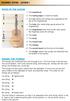 BEGINNER GUITAR - LESSON 1 PARTS OF THE GUITAR 1- The headstock. 2- The tuning pegs or machine heads. 3- The nut (where the strings are supported at the top of the fingerboard). 4- The frets (the metal
1. interpret notational symbols for rhythm (26.A.1d) 2. recognize and respond to steady beat with movements, games and by chanting (25.A.
 FIRST GRADE CURRICULUM OBJECTIVES MUSIC I. Rhythm 1. interpret notational symbols for rhythm (26.A.1d) 2. recognize and respond to steady beat with movements, games and by chanting (25.A.1c) 3. respond
How they invented chord patterns for the guitar. J. Chaurette. Dec., 2012
 How they invented chord patterns for the guitar J. Chaurette Dec., 2012 The guitar has a very long history; it has evolved over the ages to what it is now. It has achieved its final distinct form in 1770,
GCSE Music Unit 4 (42704) Guidance
 GCSE Music Unit 4 (42704) Guidance (There are recordings to accompany this document.) The Task Students will be required to compose one piece of music which explores two or more of the five areas of study.
Music Standards FINAL. Approved on May 5, 2000. Copyright 2003 Texas State Board for Educator Certification
 Music Standards FINAL Approved on May 5, 2000 Copyright 2003 Texas State Board for Educator Certification MUSIC STANDARDS Standard I. Standard II. Standard III. Standard IV. Standard V. Standard VI. Standard
Seven Kings High School Music Department. Scheme of Work. Year 9 - Spring Term 1. Indian Music.
 Seven Kings High School Music Department. Scheme of Work. Year 9 - Spring Term 1. Indian Music. Content. Aurally recognise and appreciate characteristics of Indian Classical Music. Learning about Indian
FAVORITE SONGS AND MUSIC ACTIVITIES FOR ELEMENTARY TEACHERS AND THEIR STUDENTS
 - FAVORITE SONGS AND MUSIC ACTIVITIES FOR ELEMENTARY TEACHERS AND THEIR STUDENTS Sponsored by the FINE ARTS division of the Utah State Office of Education Featuring practical music lessons coffelated to
Greenwich Public Schools Electronic Music Curriculum 9-12
 Greenwich Public Schools Electronic Music Curriculum 9-12 Overview Electronic Music courses at the high school are elective music courses. The Electronic Music Units of Instruction include four strands
Cheat Sheet for Local Church Audio Training Sound Essentials. Kick:
 Cheat Sheet for Local Church Audio Training Sound Essentials Thank you for attending this session and supporting your church s ministry. I believe that, as a sound technician, you are a vital part of the
FOURIER TRANSFORM BASED SIMPLE CHORD ANALYSIS. UIUC Physics 193 POM
 FOURIER TRANSFORM BASED SIMPLE CHORD ANALYSIS Fanbo Xiang UIUC Physics 193 POM Professor Steven M. Errede Fall 2014 1 Introduction Chords, an essential part of music, have long been analyzed. Different
Today, Iʼd like to introduce you to an analytical system that Iʼve designed for microtonal music called Fractional Set Theory.
 College Music Society Great Lakes Regional Conference Chicago, IL 2012 1 LECTURE NOTES (to be read in a conversational manner) Today, Iʼd like to introduce you to an analytical system that Iʼve designed
 MIDISAURUS MUSIC ~ Contents Guide ~ MIDISAURUS MUSIC MIDISAURUS MUSIC - Table of Contents Introduction High & Low in Music Fast & Slow in Music Sounds Around Us The Musical Keyboard Black & White Keys
Guitar Rubric. Technical Exercises Guitar. Debut. Group A: Scales. Group B: Chords. Group C: Riff
 Guitar Rubric Technical Exercises Guitar Debut In this section the examiner will ask you to play a selection of exercises drawn from each of the three groups shown below. Groups A and B contain examples
Perfect Pitch Versus Relative Pitch Tutorial
 1 Perfect Pitch Versus Relative Pitch Tutorial By Jay Graydon I offer this tutorial gratis for the San Luis Obispo County and LA County schools music departments. Please feel free to share with other schools
Wallingford Public Schools - HIGH SCHOOL COURSE OUTLINE
 Wallingford Public Schools - HIGH SCHOOL COURSE OUTLINE Course Title: Soprano/Soprano/Alto Chorus (SSA) Course Number: A5693 Department: Music Grade(s): 9-12 Level(s): Academic Credit:.5 Course Description:
Indiana Academic Standards for Music August, 2010
 Indiana Academic Standards for Music August, 2010 Courtney Cabrera Fine Arts Specialist Curriculum and Instruction Indiana Department of Education 151 West Ohio Street Indianapolis, IN 46204 Phone (317)
Time allowed: 1 hour 30 minutes
 SPECIMEN MATERIAL GCSE MUSIC 8271 Specimen 2018 Time allowed: 1 hour 30 minutes General Certificate of Secondary Education Instructions Use black ink or black ball-point pen. You may use pencil for music
MUSIC A. PROGRAM RATIONALE AND PHILOSOPHY
 MUSIC A. PROGRAM RATIONALE AND PHILOSOPHY The systematic development of musical skills, knowledge and perception is fundamental to the total development of the individual. Music education should begin
SAMPLE MIDAS PROFILE MULTIPLE INTELLIGENCES DEVELOPMENTAL ASSESSMENT SCALES MIDAS Version 2.0 Processed 09-23-1999 for Tara Student
 SAMPLE MIDAS PROFILE MULTIPLE INTELLIGENCES DEVELOPMENTAL ASSESSMENT SCALES MIDAS Version 2.0 Processed 09-23-1999 for Tara Student Sex: F Grade: 9 ID number: 407 Code: 1 Birth Date: 1984 The following
General Music Programme Syllabus (Primary/Secondary)
 GENERAL MUSIC PROGRAMME SYLLABUS General Music Programme Syllabus (Primary/Secondary) Curriculum Planning & Development Division Ministry of Education Singapore All Rights Reserved Year of Implementation:
Computer Networks and Internets, 5e Chapter 6 Information Sources and Signals. Introduction
 Computer Networks and Internets, 5e Chapter 6 Information Sources and Signals Modified from the lecture slides of Lami Kaya ([email protected]) for use CECS 474, Fall 2008. 2009 Pearson Education Inc., Upper
Music Literacy for All
 Music Literacy for All Developing Musically Literate Individuals in Performance-Based Ensembles J. Steven Moore, DMA Research Data How Many Public Performances Does the Average H.S. Band Present Annually?
Hearing Tests And Your Child
 How Early Can A Child s Hearing Be Tested? Most parents can remember the moment they first realized that their child could not hear. Louise Tracy has often told other parents of the time she went onto
A: zero everywhere. B: positive everywhere. C: negative everywhere. D: depends on position.
 A string is clamped at both ends and then plucked so that it vibrates in a standing wave between two extreme positions a and c. (Let upward motion correspond to positive velocities.) When the
Trigonometric functions and sound
 Trigonometric functions and sound The sounds we hear are caused by vibrations that send pressure waves through the air. Our ears respond to these pressure waves and signal the brain about their amplitude
Unit Overview Template. Learning Targets
 ENGAGING STUDENTS FOSTERING ACHIEVEMENT CULTIVATING 21 ST CENTURY GLOBAL SKILLS Content Area: Orchestra Unit Title: Music Literacy / History Comprehension Target Course/Grade Level: 3 & 4 Unit Overview
RESEARCH IN MUSIC EDUCATION AND SOUND ARTS (Completed in, and/or about New Zealand)
 Te Puna Puoru National Centre for Research in Music Education and Sound Arts (MERC) invites you to contribute to the national database of research in music education and sound arts. Fill in the template
Music in schools: promoting good practice
 Guidance from HMI for teachers, headteachers, and music hub leaders when observing musical teaching and learning Schools, all other funded providers of music education, and providers of Continuing Professional
RECORDING AND CAPTURING SOUND
 12 RECORDING AND CAPTURING SOUND 12.1 INTRODUCTION Recording and capturing sound is a complex process with a lot of considerations to be made prior to the recording itself. For example, there is the need
Tonal Analysis of Different Materials for Trumpet Mouthpieces
 Greg Formosa PHYS 199 POM Project Write-up Tonal Analysis of Different Materials for Trumpet Mouthpieces INTRODUCTION: Trumpets have been noted as one of the oldest instruments in the world, and ever since
PROVIDENCE UNIVERSITY COLLEGE
 4.6.16 Music Academic Staff Bill Derksen, Ph.D., University of Minnesota, Emeritus Karen Sunabacka, Ph.D., University of California at Davis, Program Coordinator Darryl Friesen, D.M.A., University of Illinois
Chapter Three Voices: Layered Tone Colors
 17 Chapter Three Voices: Layered Tone Colors Timbre in African Music (pp. 47-52) Timbre (the color or texture of a sound) is an essential element in creating the palette of sounds associated with African
MAKING YOUR LINES SOUND MORE LIKE JAZZ!
 MAKING YOUR LINES SOUND MORE LIKE JAZZ! BY ALISDAIR MACRAE BIRCH One of the common questions asked by jazz guitar students is, How do I make my lines sound more like jazz? or Why do my improvised lines
Larry's Guitar Chord Key Chart
 C Larry's Guitar Chord Key Chart C# G# G D D# A A# E B C# # The middle triangle in any circle is the name of that key. Every circle is a key. This does not show the minors but they follow the same pattern.
How to Read Music Notation
 How to Read Music Notation The New School of American Music IN JUST 30 MINUTES! C D E F G A B C D E F G A B C D E F G A B C D E F G A B C D E F G A B C D E 1. MELODIES The first thing to learn about reading
Hearing Tests And Your Child
 HOW EARLY CAN A CHILD S HEARING BE TESTED? Most parents can remember the moment they first realized that their child could not hear. Louise Tracy has often told other parents of the time she went onto
Dr. Abdel Aziz Hussein Lecturer of Physiology Mansoura Faculty of Medicine
 Physiological Basis of Hearing Tests By Dr. Abdel Aziz Hussein Lecturer of Physiology Mansoura Faculty of Medicine Introduction Def: Hearing is the ability to perceive certain pressure vibrations in the
Admission Requirements to the Music Program
 Department of Humanities and Fine Arts / 111 THE BACHELOR OF ARTS DEGREE IN MUSIC (MUSI, MUAP, MUEN) The Music Program plays a vital role in the life of the University and the community. The training environment
Medical Laboratory Technology Music
 Medical Laboratory Technology Music MLT-2990 Advanced MLT Applications 06 Semester Credits Manual laboratory skills related to clinical chemistry, hematology, coagulation, body fluids, microbiology, parasitology,
18 Benefits of Playing a Musical Instrument
 18 Benefits of Playing a Musical Instrument by Michael Matthews The Chinese philosopher Confucius said long ago that "Music produces a kind of pleasure which human nature cannot do without." Playing a
K-12 Music Unpacked Content
 This document is designed to help North Carolina educators teach the Essential Standards (Standard Course of Study). NCDPI staff are continually updating and improving these tools to better serve teachers.
2015 2016 VCE Music Performance
 2015 2016 VCE Music Performance Performance examination End of year Examination specifications Overall conditions The student will give a live performance in only one of the following contexts: as a member
SCHEHERAZADE LESSON PLAN. Discovering the world of the Arabian Nights fairy tales through the music of Rimsky-Korsakov s Scheherazade
 Content focus: Music Visual Arts Language Arts History/Social Sciences SCHEHERAZADE LESSON PLAN Discovering the world of the Arabian Nights fairy tales through the music of Rimsky-Korsakov s Scheherazade
Music Degrees and Rock Guitarists, Part I. My Background. Colleges: Junior Vs. Full
 Music Degrees and Rock Guitarists, Part I Many guitar players learn music theory and consider a degree in music, but wonder what they will gain from a traditional four-year degree and whether it's worth
Music, Grade 11, University/College Preparation (AMU3M)
 Music, Grade 11, University/College Preparation (AMU3M) This course emphasizes the appreciation, analysis, and performance of various kinds of music, including baroque and classical music, popular music,
The Keyboard in Black and White
 Chapter 3 The yboard in Black and White In This Chapter Understanding the basics of the black and white key layout Learning about octaves and the range of a piano Discovering half steps and whole steps
Broadband Networks. Prof. Dr. Abhay Karandikar. Electrical Engineering Department. Indian Institute of Technology, Bombay. Lecture - 29.
 Broadband Networks Prof. Dr. Abhay Karandikar Electrical Engineering Department Indian Institute of Technology, Bombay Lecture - 29 Voice over IP So, today we will discuss about voice over IP and internet
Brookburn Primary School. Policy for Music
 Brookburn Primary School Policy for Music POLICY FOR MUSIC Document Purpose This document reflects the values and philosophy of Brookburn Primary School in relation to the teaching and learning of Music.
THE MUSIC ACADEMY AT CCTS Audition Requirements For Vocalists applying for acceptance into The Music Academy at Camden County Technical Schools
 THE MUSIC ACADEMY AT CCTS Audition Requirements For Vocalists applying for acceptance into The Music Academy at Camden County Technical Schools www.ccts.org MUSIC ACADEMY AUDITION DATE AND TIME The Music
Tuning Subwoofers - Calibrating Subwoofers
 Tuning Subwoofers - Calibrating Subwoofers WHY The purpose of a subwoofer is to fill in the bottom octaves below the capabilities of the mains speakers. There are many reasons to use a subwoofer to do
Major Scale Construction. The musical alphabet is just like the English one except we only go up to G. There is no H so you have to go back to A.
 Major Scale Construction The musical alphabet is just like the English one except we only go up to G. There is no H so you have to go back to A. A B C D E F G A B C D E F G etc. Scales are a series of
Curriculum Mapping Electronic Music (L) 4202 1-Semester class (18 weeks)
 Curriculum Mapping Electronic Music (L) 4202 1-Semester class (18 weeks) Week Standard Skills Resources Vocabulary Assessments Students sing using computer-assisted instruction and assessment software.
The Instant Impresario Guitar Instruction Guide
 The Instant Impresario Guitar Instruction Guide (Everything you need to know to get playing right away!) First Things First: This guitar can either be powered by the AC Adapter (included) or via eight
The University of Alabama in Huntsville is an accredited institutional member of the National Association of Schools of Music.
 The University of Alabama in Huntsville 1 Music B102 Roberts Hall Telephone: 256.824.6436 Email: [email protected] The University of Alabama in Huntsville is an accredited institutional member of the
Music Department EDUCATIONAL PROGR AMS TRANSFER CURRICULUM SUBJECTS & COURSE DESCRIPTIONS ASSOCIATE DEGREE PROGRAM. Faculty
 Music Department S2-107M (323) 265-8894 Faculty Dawson II, Robert B, Chair, Professor Lupica, Dr. Anthony J., Associate Professor Martinez, Jesus E., Professor Nagatani, Dr. Chie, Professor Adjunct Associate
GRADE THREE THEORY REVISION
 GRADE THREE THEORY REVISION Note Pitches Use flashcards to make sure you know all your notes including leger lines. Whenever you name a note remember to check the clef, keysignature, and for accidentals
Portsmouth High School. Music Department
 Portsmouth High School Music Department What Courses Are Available as a Freshman? Piano I Guitar I Introduction to Music AP Music Theory Music Production & Engineering (Music Technology) Jazz Ensemble
PHYSICS 202 Practice Exam Waves, Sound, Reflection and Refraction. Name. Constants and Conversion Factors
 PHYSICS 202 Practice Exam Waves, Sound, Reflection and Refraction Name Constants and Conversion Factors Speed of sound in Air œ $%!7Î= "'!*7/>/
Advanced Techniques for the Walkingbass
 Advanced Techniques for the Walkingbass I have seen guys with 5 string basses who can t get half the sounds that you are getting out of just three. -Buddy Fo of the Invitations If you have read the Beginners
UKULELE CHORD SHAPES. More Strumming, Less Memorizing BRAD BORDESSA
 UKULELE CHORD SHAPES More Strumming, Less Memorizing BRAD BORDESSA TABLE OF CONTENTS GRATITUDES 2 9th 26 13th 26 INTRODUCTION 3 Altered 27 HOW TO USE THIS BOOK 4 Suspended 2 28 The Fingerboard 5 Suspended
Rehearsal Strategies A Night in Tunisia By Reginald Thomas, Professor of Jazz Piano Michigan State University, East Lansing, MI
 Rehearsal Strategies A Night in Tunisia By Reginald Thomas, Professor of Jazz Piano Michigan State University, East Lansing, MI Do you remember the first time you heard this jazz classic, A Night In Tunisia?
DRAFT Proposed Revisions Texas Essential Knowledge and Skills (TEKS) Fine Arts, High School Music
 Proposed Revisions Texas Essential Knowledge and Skills (TEKS) Fine Arts, High School Music Prepared by the State Board of Education (SBOE) TEKS Review Committees Final Recommendations, These draft proposed
Gas Dynamics Prof. T. M. Muruganandam Department of Aerospace Engineering Indian Institute of Technology, Madras. Module No - 12 Lecture No - 25
 (Refer Slide Time: 00:22) Gas Dynamics Prof. T. M. Muruganandam Department of Aerospace Engineering Indian Institute of Technology, Madras Module No - 12 Lecture No - 25 Prandtl-Meyer Function, Numerical
MUSIC. Syllabus for Primary Schools. Curriculum Department, Floriana Year 3 19
 MUSIC Syllabus for Primary Schools Curriculum Department, Floriana Year 3 19 YEAR 3 Curriculum Department, Floriana Year 3 20 LEARNING OUTCOMES for YEAR 3 Curriculum Department, Floriana Year 3 21 3.1
Teaching Fourier Analysis and Wave Physics with the Bass Guitar
 Teaching Fourier Analysis and Wave Physics with the Bass Guitar Michael Courtney Department of Chemistry and Physics, Western Carolina University Norm Althausen Lorain County Community College This article
A Basic Mixing Method
 A Basic Mixing Method Mixing is one of the most difficult things to get right in music production and one of the most important. Every producer and engineer will approach a mix differently and like many
Music Learning Activity Types 1, 2
 Music Learning Activity Types 1, 2 Technology has greatly influenced today s world of music, including the means by which people produce, consume, and share it. Teachers have many options for utilizing