
Restoration of Meadow Bird Habitats
|
|
|
- Raymond Evans
- 10 years ago
- Views:
Transcription
1 Report from the EU LIFE-Nature seminar on Restoration of Meadow Bird Habitats April 2009 Naturcenter Vestamager, Copenhagen, Denmark

2 Background In order to share experiences on restoration and management of meadow bird habitats and to disseminate experiences gained in the EU-Life project Restoration of Meadow Bird Habitats (REMAB) a seminar was held on April 2009 in Copenhagen, Denmark. Seminar theme The themes for the seminar were: Dissemination of the experiences gained in the REMAB project Good management practise for meadow bird habitats Improving hydrology for breeding waders Predation control Excursions to project sites Participants The seminar participants included: Colleagues from other projects in EU working on meadow bird habitat management Environmental authorities Researchers with expertise/interest in meadow birds and habitat management Agricultural advisors NGO s and other interested parties

3 Programme Seminar - Restoration of Meadow Bird Habitats (REMAB) Nature centre Vest Amager, Copenhagen, Denmark April th April 09:30-10:00 Registration and Coffee 10:00-10:30 Welcome by Hans Henrik Christensen, Director of Danish Forest & Nature Agency and Jan Ejlsted, Director of Bird Life Denmark 10:30-11:15 Presentation of the project Restoration of Meadow Bird Habitats (Henning Fjord Aaser, Danish Forest & Nature Agency) 1. Session Hydrology and meadow birds 11:15-12:00 Experiences with restoration of wet features for breeding waders in lowland grassland in UK. (Ph.D Sara Eglington, British Trust for Ornithology) 12:00-12:30 How much water needs a meadow bird habitat? - Experiences from the LIFE project "Rewetting of Lake Dümmer Lowlands (Dipl.-Biol. Heinrich Belting, Naturschutzstation Dümmer). 12:30-13:15 Lunch 13:15 14:00 From wheat to waders - large scale management of wet grassland for waders (Mark Smart, Site manager Berney Marshes and Breydon water) 2. Session Predation and meadow birds 14:00-14:45 Experiences with predator control on Öland -Sweden (Richard Ottvall, University of Lund) 14:45-15:30 Restoration of natural conditions and predator barriers within the marine Ramsar site Tautra-Svaet, Norway (Per Gustav Thingstad, Norwegian University of Science and Technology) 15:30-16:00 Coffee break 16:00-16:20 Investigations of fox population at the project site Vest Amager and introduction to the excursion at Vest Amager (Cand. Scient. Henrik Olesen & Sven Norup, Danish Forest & Nature Agency)

4 16:20-18:15 Visit to the project area Vest Amager (bicycle tour) 18:15 - Seminar dinner at the Nature Centre Vest Amager Seminar Dinner Lecture: Meadow management in Greece (Yannis Kazoglou, Society for the Protection of Prespa) 28 th April 09:00-11:00 Travel to the project site Nyord 11:00-12:45 Presentation of project activities at Nyord (predator control, grazing society, blue border zone, improved hydrology) 12:45-13:45 Lunch at the Old Inn 14:00-14:30 Experiences from the BALCOAST project (Martin Altemüller, Naturschutzbund Deutschland) 14:30-15:00 Breeding waders in the Baltic Region, lessons learned and future challenges (Dr. Preben Clausen, National Environmental Research Institute) 15:00-15:15 Closure of seminar, Claus Jespersen Head of Danish Forest & Nature Agency, Regional office Storstrom 15:15-17:15 Travel back to Copenhagen 17:15 Arrival at Copenhagen Airport terminal 3

5 List of participants Name Title Company / Organization Allan Gudio Nielsen Ranger Danish Bird Protection Foundation [email protected] Anna Bodil Hald Senior researcher National Environmental Research Institute, University of Aarhus [email protected] Antti Below Conservation Biologist Finnish Forest and Park Service [email protected] Berit Mogensen Landscape engineer Fredensborg Kommune [email protected] Brian K Jensen Ranger Danish Forest and Nature Agency [email protected] Christian A. Jensen Biologist Agency for Spatial and Environmental Planning - MC Århus [email protected] Claus Jespersen Forester, Head of unit Danish Forest and Nature Agency [email protected] Claus Paludan Biologist Faaborg-Midtfyn Municipality [email protected] Elise Frydensberg Director Danish Bird Protection Foundation [email protected] Erich Wederkinch Biologist Odsherred Municipality [email protected] Erik Mandrup Jacobsen Biologist, Senior Consultant Orbicon A/S [email protected] Erling Krabbe Head of Section, Senior Biologist Danish Forest and Nature Agency, Ministry of Environment [email protected] Hans Henrik Christensen Director Danish Forest and Nature Agency Hans Kolling Andersen Ranger Danish Forest and Nature Agency [email protected] Heinrich Belting Dipl. Biologist Naturschutzstation Dümmer [email protected] Helle Hjorth Agriculture technologist Danish Bird Protection Foundatation [email protected] Henning Fjord Aaser Biologist Danish Forest and Nature Agency [email protected] Henrik Knuth-Winterfeldt Board member Danish Bird Protection Foundation [email protected] Henrik Olesen PhD. Biologist [email protected] Ib Nord Nielsen Ranger Danish Forest and Nature Agency - Thy [email protected] Inger Nielsen Vestsjælland Municipality [email protected] Jacob Jensen Nature School Leader Taarnby Municipality [email protected] Jakob Lausen Coordinator Halsnæs Minicipality [email protected] Jan Ejlsted Director Danish Ornithological Society Jan Steinbring Jensen Head of Section Danish Forest and Nature Agency, Wadden Sea Dep. [email protected] Jannik Hansen cand.scient. NERI, Dept. Arctic Environment [email protected] Jens Hjerrild Hansen Ranger Danish Forest and Nature Agency [email protected] Jens Overgaard Christensen Draughtsman [email protected] Jens Vinge Forest and Landscape Engineer Aalborg Municipality [email protected] Jes Aagaard Ranger Danish Forest and Nature Agency [email protected] Jørgen Peter Kjeldsen Ornithologist ornit.dk [email protected] Karsten Gasseholm Programme Director Fortification of Copenhagen [email protected] Kasper Nowac Biologist Faaborg-Midtfyn Municipality [email protected] Knud Larsen Biologist Slagelse Municipality [email protected] Lars Delfs Mortensen Forest and Landscape Aalborg Municipality [email protected]

6 Engineer Lars Maagaard Biologist Randers Municipality Lotte Rye Vind Biologist Fredensborg Municipality Mark Smart Site Manager RSPB Martin Altemüller Dipl. Biologist Naturschutzbund Deutschland Mikkel Bornø Clausen Ranger Danish Forest and Nature Agency Olaf Christiani LIFE Desk Officer Danish Forest and Nature Agency Ole Thorup Bilogist Amphi consult Palle Graubæk Danish Forest and Nature Agency Per Gustav Thingstad Scientist Norwegian University of Science and Technology Preben Clausen Doctor Danish National Research Institute Richard Ottvall PhD Lund University Sabine Anna Stosiek Dipl. Biol. Thisted Kommune, Teknisk Forvaltning Sarah Eglington PhD British Trust for Ornithology Steffen Sørensen Biologist Odsherred Kommune Stella Blichfeldt Nature Interpretator Danish Forest and Nature Agency Sten Asbirk Biologist Agency for Spatial and Environmental Planning Sven Norup Ranger Danish Forest and Nature Agency Søren F. Hansen Biologist Danish Bird Protection Foundation Tapio Aalto Project coordinator Southwest Finland Regional Environment Centre Thomas Borup Svendsen Chief Forest Officer Forest and Nature Agency Thomas Vikstrøm biologist Danish Ornithological society Torben Ebbensgaard Biologist Ministry of Environment, Mc Aalborg Yannis Kazoglou Biologist Society for the Protection of Prespa Zsofia Horvath Eötvös Lorand University, Budapest, Hungary Klaus Simonsen Chairman Nyord Hunting Society Stefan Skov Ranger Vordingborg Municipality Andreas Barkow Dipl. Biologist NABU Daniel Doer Dipl. Biologist NABU

7 Presentation summary: Welcome by Hans Henrik Christensen, Director of Danish Forest & Nature Agency and Jan Ejlsted, Director of Bird Life Denmark Director Hans Henrik Christensen (HHC) welcomed the participants to the seminar on behalf of the Danish Ministry of Environment and the Danish Forest and Nature Agency. He also thanked the EU-life Nature Fund for their financial support to the seminar and the project Restoration of Meadow Bird Habitats. After a short presentation of the NATURE 2000 site Vest Amager, a site visited by more than visitors per year, HHC thanked the Danish Ornithological Society and the Danish Bird Protection Foundation for their cooperation and especially their huge monitoring effort. Director Jan Ejlsted (JE) mentioned creation of blue border zones as a good examples on efforts made in cooperation between the Danish Forest and Nature Agency and the Danish Bird Protection Foundation to improve conditions for meadow birds in Denmark. Today management of meadow bird habitats is mainly based on common sense. JE stated that we need more scientific research in order to be able to improve our management of meadow bird habitats. According to JE the survival of meadow birds in Denmark is very much depended on EU initiatives as e.g. EU-directives and EU-funding. Director Hans Henrik Christensen (Danish Forest & Nature Agency) welcomed the participants to the seminar.

8 Presentation of the project Restoration of Meadow Bird Habitats (Henning Fjord Aaser, Danish Forest & Nature Agency) The overall objective of the EU-Life project Restoration of Meadow Bird Habitats (REMAB) is to restore and improve habitats for Southern Dunlin (Calidris alpina schinzii) and Ruff (Philomachus pugnax) at four key breeding sites in Denmark. Secondly the objective is to restore a favourable conservation status for associated habitat types and habitats (1330 Atlantic salt meadows, 3140 Hard oligo-mesotrophic waters with benthic vegetation of Chara spp.) and habitats of Botaurus stellaris, Chlidonias niger and Porzana porzana. The project involves 4 Danish Forest and Nature Agency Regional Offices and The Danish Bird Protection Foundation. The total budget of the project are The meadow birds are among the most threatened bird species in Denmark. Many species of meadow birds have suffered from serious decline since the 1970 ties primarily due to lost of suitable breeding sites. Only one fourth of the breeding sites for Calidris alpine schinzii remain, and for Philomachus pugnax only one seventh of the breeding sites remain in Denmark. The REMAB project aims to stop the decline in number of breeding pairs of the two species at the four project sites. The main actions of the project are activities to restore suitable water levels for meadow birds, to clear trees, scrubs and reeds and to ensure a proper grazing regime. Hydrology will be restored to counteract previous draining efforts by establishment of weirs and other efforts to ensure a suitable water level for meadow birds. Areas overgrown with trees, bushes or reed will be cleared by machinery. Furthermore the future proper management will be facilitated by establishment of a Grazing Society at one site and development of a management plan at another site. The project is implemented following a participatory approach through cooperation with landowners. The key benefits from the project will be: Improved hydrology on 1900 ha meadow bird habitats incl. 920 ha Atlantic salt meadows. Clearing of trees on 220 ha wet grassland and reeds on 18 ha Atlantic salt meadow Enhancement of breeding and feeding habitat of Botaurus stellaris and Chlidonias niger. Improved management on 900 ha of meadow bird habitat by establishment of a Grazing society and by the development of a management plan. Significantly reduction of predation by foxes on meadow birds at two project sites by establishment of 25 artificial fox dens and a fox secure bridge. Enhanced possibility to experience meadow birds for visitors by establishment of 5 km of path and a bird observation platform.

9 Water quality at 975 ha of 3140 Hard oligo-mesotrophic waters with benthic vegetation of Chara ssp. will be improved. Bad weather conditions, change of personnel, reconstruction of the Danish public sector in 2007 and negotiations with private landowners have caused delay in some project actions, but no major problems and drawbacks have yet been encountered in the project. Session 1 Hydrology and meadow birds Experiences with restoration of wet features for breeding waders in lowland grassland in UK. (Ph.D Sarah Eglington, British Trust for Ornithology) Sarah Eglington (SE) presented the results from her research in the Broads (East England). As in the rest of Europe extensive draining, conversion to arable land and intensive management of grassland has reduced the abundance and quality of meadow bird habitats in England. SE stated that the key issue in re-creating wet grassland from arable land is water. High soil watertable or the presence of surface water is crucial factors to attract breeding waders. Establishment of footdrains (1-3 m wide shallow channels) coupled with appropriate water control offer an important tool in order to provide suitable nesting and foraging habitats for breeding waders. The vegetation characteristics of the site are also important in order to improve habitats for breeding waders. Heterogeneous vegetation structure is preferable as different wader species prefer different sward heights, and low intensity grazing is generally the best way to produce this structure. Sarah Eglinton presenting results from the Broads in East England

10 SE s research showed that adult lapwing (Vanellus vanellus) appear to prefer fields with foot drain densities of approx. 300 m 2 /ha and that an increase in the amount of shallow water flashes increased the density of birds. The results also showed that chicks spent more time in fields with higher densities of foot drains. Foraging rates were highest in fields with high foot drain density. Research showed that this was due to higher invertebrate density and availability, suggesting that prey was not only more plentiful but also more accessible within these fields. Early in the season chick condition varied very little, but later in the season, chicks in fields with high foot drain densities were heavier on average than those in fields with low foot drain density. Wader productivity increased with footdrain densities exceeding 200 m 2 per hectare. In the Broads survival rates of both nests and chicks were higher where lapwing bred at high densities, presumably due to effective deterrence of predators by group mobbing. It is therefore likely that features such as foot drains, around which breeding waders tend to concentrate, will have beneficial effects on breeding success beyond the provision of habitat, due to a reduction in predation. How much water needs a meadow bird habitat? - Experiences from the LIFE project "Rewetting of Lake Dümmer Lowlands (Dipl.-Biol. Heinrich Belting, Naturschutzstation Dümmer). The Lake Dümmer lowlands (covers 2500 hectares) are located in Niedersachsen, Germany. Draining of the lowlands during the 1950 ties caused severe decline in numbers of breeding meadow birds in the area. In 1987 a LIFE project was initiated at Lake Dümmer in order to rewet the lowlands. Due to the LIFE project a mosaic of not flooded, short term flooded and long term flooded meadows have now been established. 140 local farmers are involved in the management of the meadows. The start date for grazing and hay harvest is scheduled from year to year in order to protect the breeding meadow birds. It is not allowed to use fertilizers on the meadows, but small amounts of potassium fertilizer are added as this according to Dr. Hermann Hoetker could be essential in order to improve living conditions for Black-tailed godwit on peat soil. The LIFE project at Lake Dümmer lowlands has been successfull. White stork (Ciconia ciconia), Shoveler (Anas clypeata), Garganey (Anas querquedula), Spotted crake (Porzana porzana), Corncrake (Crex crex), Ruff (Philomachus pugnax), Redshank (Tringa totanus), Short-eared owl (Asio flammeus), Bluethroat (Luscinia luscinia) and Sedge warbler (Acrocephalus schoenobaenus) have all returned to the project area. The Lake Dümmer is today the only inland breeding site for Ruff in Germany. Additionally has the number of Yellow wagtail (Motacilla flava) has increased from a few individuals to 400, and the population of Black-tailed godwit (Limosa limosa) has doubled due to the project.

11 Intensive monitoring programmes at the site have shown that hatching success for Black-tailed godwit are highest in long term flooded areas due to a lower predation rate from especially Water vole (Arvicola terrestris) in these areas. Food availability for Black-tailed godwit chicks is however biggest on medium flooded areas and not sufficient at the long-term flooded areas. Therefore fletching success was highest on medium flooded areas. A mosaic of areas with different wetness is therefore necessary to ensure breeding success for Black-tailed godwit. The monitoring has also shown that black-tail godwit chicks eats approx insects pr. day and the average hatching date for Black-tailed godwit has been postponed 4 weeks from primo to ultimo May since 2000 at Lake Dümmer lowlands. Heinrich Belting presenting the Lake Dümmer LIFE-Project. From wheat to waders - large scale management of wet grassland for waders (Mark Smart, Site manager Berney Marshes and Breydon Water) Berney Marshes and Breydon Water is located west from Norwich in U.K. The site covers 480 ha and is owned by The Royal Society for the Protection of Birds (RSPB). Prior to 1994 all marshes at the site was individually embanked. A diesel pump was used to pump water into the central parts of the site and thereby improving conditions for meadow birds. But it was only possible to manage 15 out of 49 marshes by using this method.

12 After 1994 all marshes are connected. Foot drains (small shallow ditches) have been established and water is pumped in and circulated by small wind powered water mills. This has increased the amount of open water surface (flashes) in the marshes. The number of breeding meadow birds have also increased considerably since 1994 as a consequence of the improved hydrology in the area combined with predator control projects. Foxes are the main predator at the site, and predator control projects have shown that predator control is necessary to maintain high numbers of breeding lapwings and to ensure sufficient reproduction rates for lapwings. Research at the site has also shown that the number of red shanks is positively correlated to the number wet features (flashes and foot drains) in the marshes. Mark Smart presenting management of Berney Marshes & Breydon Water

13 2. Session Predation and meadow birds Experiences with predator control on Öland - Sweden (Richard Ottvall, University of Lund) The meadows at Öland cover more than 100 km 2 and have been grazed continuously for more than 1000 years. The meadows at Öland are housing 60% of the Southern dunlin 50% of black tailed godwit population in Sweden. In spite of well managed grazing of the meadows the Southern dunlin population has decreased from 120 pairs to during the last 20 years. Other meadow birds at e.g. lapwing have also been reduced in numbers on the island. Predation was identified as on of the problems for the meadow birds. An experiment with predator control was initiated at four different areas on the island. The predation control covers species like raven (Corvus corax), hooded crow (Corvus corone cornix), magpie (Pica pica), jackdaw (Corvus monedula) and mammals like badger, fox and martens. At the test areas on the east coast of the island breeding success enhanced due to the predation control. But on the test areas on the west coast the breeding success was lowered. Another surprising result was that 85% of the nests were predated during night in 2008 even though foxes are nearly absent due to an outbreak of fox mange in In % of the crow population was caught but in 2009 the population on the east coast was at the same level as before the control was initiated. On the west coast was the population still much smaller than before the control. The results with predation control on Öland seems to indicate that the significance of predation from crows was overestimated but predation from badgers and foxes is of significant importance. Richard Ottval presenting results with predation control on Öland.

14 Restoration of natural conditions and predator barriers within the marine Ramsar site Tautra-Svaet, Norway (Per Gustav Thingstad, Norwegian University of Science and Technology) In a ½ km long dam was build to connect the Norwegian island Tautra to the main land. Heavy current in the sound between the island and the main land prevented mammalian predators to enter the island. After the dam was build, predators entered the island and the hydrology changed dramatically, which caused a serious decline in the abundance of mollusc epifauna in the sound. The decline in food abundance and the increased predation on nesting females caused a serious decline in numbers of Common eider (Somateria mollissima) in the area, and the ratio between numbers of male and female birds changed from 1:1 to 4:1 as a consequence of the predation on nesting females on Tautra. In 2003 a bridge replaced 350 m of the dam and a gate was established on the bridge to prevent mammalian predators from entering the island. The bridge improved the hydrology in the sound and the mollusc epifauna responded positive immediately. As a result the number of common eider is today at the same level as before the establishment of the dam. It is still too early to conclude on the effect of the gate on the number of predator on Tautra. The number of nesting common eider has increased but not significantly. An explanation is that mammalian predators like fox, badger, martens, stoat and domestic cats and dogs are still present on the island. The gate has been modified several times and latest in The gate is now more efficient and the breeding birds at Tautra are much better protected today. But still some challenges remain in order to make the gate 100% efficient. Per Gustav Thingstadt presenting the predator barrier at Tautra in Norway

15 Investigations of fox population at the project site Vest Amager and introduction to the excursion at Vest Amager (Cand. Scient. Henrik Olesen & Sven Norup, Danish Forest & Nature Agency) Henrik Olesen presenting results from Vest Amager. 77% of all Lapwing nests were predated on Vest Amager in Crows were under suspicion, but a massive crow control did not have any effect on the breeding success for lapwings. Placing data loggers within the nests showed that 80% of the nests were predated during night and 90% of these where predated by mammalian predators primarily foxes. Fencing certain areas with one electrical weir increased hatching success significantly, but a three row weir fence was needed to eliminate predation from mammals in these areas. Predation from crows is only a problem during day time and it is only a minor problem at Vest Amager. But an efficient fox control seems to be crucial in order to improve breeding success for meadow birds at Vest Amager.

16 The excursion to Vest Amager Sven Norup (site manager at Vest Amager) presenting an artificial fox den

17 Seminar Dinner Lecture: Meadow management in Greece (Yannis Kazoglou, Society for the Protection of Prespa) The Prespa lakes situated on the border between Macedonia, Albania and Greece, are among the oldest lakes in the world. Major land reclamation works in the s and s has cost direct loss of wetland habitats. And abandonment of traditional management activities e.g. reed cutting, grazing in the littoral zone and fishing in shallow waters have changed many wet meadows into massive reed beds in the Prespa area. Due to these changes Plegadis falcinellus and Platalea leucorodia stopped breeding in 1970 and 1992 resp. and the populations of fish (litho-phytophilous spp) decreased. In 2002 a LIFE-Nature project Conservation of priority bird species in Lake Mikri Prespa was initiated. The main objectives of the project were to reconstruct a sluice between the 2 Prespa Lakes (for effective control of water level fluctuation) and to restore 70 ha of wet meadows and adjacent blue border zones. The project also involved actions to improve reed bed management and bird, water and vegetation monitoring. Public awareness, protection and surveillance were also raised during the project as well as compilation of a comprehensive management plan for Yannis Kazoglou presented results from the Life-project in Prespa (Greece)

18 Day 2 Søren Ferdinand Hansen from the Danish Bird Protection Foundation presents REMAB activities at the project site Nyord Experiences from the BALCOAST project (Martin Altemüller, Naturschutzbund Deutschland) The LIFE Project BalCoast has assembled around 20 partners from 5 countries (Germany, Denmark, Sweden, Estonia and Lithuania) around the Baltic Sea in order to improve Baltic coastal habitats. Up to 90% of the coastal lagoon habitats have disappeared in the western part of the Baltic region and 75% in the eastern part. Many habitats have been overgrown with reed, trees and bushes like Rosa rugosa. Others have been drained, cultivated or claimed for urbanisation. The main tool to improve many habitats is grazing. Vegetation will be kept in a favourable/appropriate state using hardy cattle as Galloway and Highland cattle and Konik horses. Especially winter grazing or grazing in early spring and late autumn have apparently quite positive impacts on site vegetation and structure. Other actions in the project aim to improve hydrology by blocking ditches, drainages and reducing unnatural lagoon discharge. Water bodies will be improved by dredging accumulated mud and

19 removing of dense reed beds. Many habitats are invaded by unnatural overgrowth of bushes and trees including alien invasive species (e.g. Rosa rugosa) which displace natural plants and animals; this tendency will be stopped and reversed by mowing and grazing. The project also runs an orphanage for Green toad (Bufo viridis) and Natterjack (Bufo calamita) and small artificial islands (platforms) is build to create suitable nesting sites for Common tern (Sterna hirundo). Martin Altemüller presenting the BALCOAST project Breeding waders in the Baltic Region, lessons learned and future challenges (Dr. Preben Clausen, Danish National Environmental Research Institute) Investigations in Tønder Marsken in the south western part of Jutland have shown that up to 70% of a lapwing generation will return to their own hatching site to breed. The breeding and fletching success for lapwings depends on well grazed/mowed meadows with wet areas. Another crucial factor is predation. Hatching is only successfully in 14% of the lapwing nest in Tønder Marsken today. During the latest outbreak of fox mange 56% of the nests hatched. The investigation in Tønder Marsken also showed that lapwings are able to protect each other as hatching success was higher in areas with high density of lapwing nests compared to areas with a low nest density.

20 In the future we need to gain more knowledge about how we optimize management (grazing/mowing) and hydrological conditions for meadow birds. And we need better tools and a higher effort in order to reduce predation. Preben Clausen Talked about future challenges and lessons learned Claus Jespersen (Head of DFNA regional office Storstrom) giving closing remarks

San Francisco Bay Area Wetlands Restoration Program Design Review Group. Project Summary Outline
 San Francisco Bay Area Wetlands Restoration Program Design Review Group Project Summary Outline The project proponent desiring to have a project considered by the Design Review Group (DRG) shall provide
Breeding Birds in Trouble
 Workshop Report Breeding Birds in Trouble Preparation of an action plan for proper management of threatened breeding birds in the Wadden Sea Wilhelmshaven, 18 April 213 Photo: G. Reichert Joint Monitoring
HORTOBAGY SODIC LAKES - Restoration of sodic lake sub-type of the Pannonic salt steppe and marsh habitat in the Hortobágy LIFE07 NAT/H/000324
 HORTOBAGY SODIC LAKES - Restoration of sodic lake sub-type of the Pannonic salt steppe and marsh habitat in the Hortobágy LIFE07 NAT/H/000324 Project description Environmental issues Beneficiaries Administrative
Green Infrastructure Case Study Template
 Green Infrastructure Case Study Template The aim of the exercise is to provide information on how the elements of the Green Infrastructure Strategy are implemented at national level and to provide case
Advice note. Linking River and Floodplain Management
 Advice note Linking River and Floodplain Management Advice note Linking River and Floodplain Management Demonstrating STrategic REstoration And Management (STREAM) is a 1 million four-year conservation
Translating ecological research results into wind farm practice The Danish experience. Niels-Erik Clausen. 2 Risø DTU
 Translating ecological research results into wind farm practice The Danish experience Niels-Erik Clausen We@Sea Conference, Den Helder Holland 12-13 February 2009 Outline The Danish offshore monitoring
Sullivan s Island Bird Banding and Environmental Education Program. Sarah Harper Díaz, MA and Jennifer Tyrrell, MS
 Sullivan s Island Bird Banding and Environmental Education Program Sarah Harper Díaz, MA and Jennifer Tyrrell, MS I. Introduction The Sullivan s Island Bird Banding and Environmental Education Program
4.2 Buena Vista Creek Watershed
 Buena Vista Creek Watershed 4.2 Buena Vista Creek Watershed Watershed Overview The Buena Vista Creek Watershed is the fourth-largest system within the Carlsbad Hydrologic Unit. The watershed extends approximately
Michigan Wetlands. Department of Environmental Quality
 Department of Environmental Quality Wetlands are a significant component of Michigan s landscape, covering roughly 5.5 million acres, or 15 percent of the land area of the state. This represents about
These Maps Are For The Birds
 These Maps Are For The Birds Students will study New York State Breeding Bird Atlas maps to learn where different bird species nest and how their distributions have changed over time. Objectives: Students
RESTORATION AND ENHANCEMENT OF SOUTHERN CALIFORNIA LAGOONS
 RESTORATION AND ENHANCEMENT OF SOUTHERN CALIFORNIA LAGOONS by Hany Elwany, Ph.D. Scripps Institution of Oceanography Headwaters to Oceans Conference 25 October 2003 CE Ref #03-22 San Diego County Lagoons
River Wensum Restoration Strategy Swanton Morley Restoration Scheme Reach 14a
 River Wensum Restoration Strategy Swanton Morley Restoration Scheme Reach 14a At a glance River restoration benefits: Improved planform, channel cross-section, flow variation and sediment process. Improved
Dawn Reis Ecological Studies. www.ecologicalstudies.com
 Dawn Reis Ecological Studies www.ecologicalstudies.com Laguna Salada Sharp Park s Federal & State Protected San Francisco Garter Snake (Thamnophis sirtalis tetrataenia) and California Red-legged Frog (Rana
Experience in Wetlands restoration and conservation concerning natural water retention measures. Ministry of Environment and Water, Bulgaria
 Experience in Wetlands restoration and conservation concerning natural water retention measures Ministry of Environment and Water, Bulgaria Water management in Bulgaria - Water management in Bulgaria national
PROCEDURE. See: Great Lakes Coastal Wetlands (http:// www.miseagrant.umich.edu/wetlands/index.html)
 Activity: Students review a selection of career profiles and play a lively classroom game to find out more about marine and aquatic science professionals. Grade Level: 4-8 Subjects: Science, social studies
Urban Waters and River Restoration. Pinja Kasvio, Finnish Environment Institute, SYKE RESTORE North Region Closing Seminar 14.8.
 Urban Waters and River Restoration Pinja Kasvio, Finnish Environment Institute, SYKE RESTORE North Region Closing Seminar 14.8.2013 Urban Waters Hålland, Gässlösa (Sweden) Characteristics of urban areas:
DTU INTERNATIONAL ENERGY CONFERENCE. WHEN? 10-12 September 2013
 Invitation DTU INTERNATIONAL ENERGY CONFERENCE 10-12 September 2013 SUSTAINABLE ENERGY FOR GREEN ECONOMIC GROWTH Programme overview Detailed programme at www.natlab.dtu.dk ENERGY TECHNOLOGIES AND SYSTEMS
Policies and programmes to achieve food security and sustainable agriculture
 HUNGARY Agriculture (Government focal point(s): Ministry of Agriculture and Rural Development Mr. Zoltán Kárpáti: tel: +361-301-3533, fax: +361-301-5949, e-mail: [email protected] and Ms. Rita Francia: tel:
CONSERVATION MEASURES FOR ELEONORA S FALCON IN GREECE LAYMAN S REPORT
 CONSERVATION MEASURES FOR ELEONORA S FALCON IN GREECE LAYMAN S REPORT JANUARY 2008 2 Eleonora s Falcon Eleonora s Falcon is one of the most characteristic birds of the Aegean Sea. It is a migrating falcon
9.0 PUBLIC HEALTH (MOSQUITO ABATEMENT)
 9.0 PUBLIC HEALTH (MOSQUITO ABATEMENT) This chapter analyzes the public health effects of the project, particularly with regard to mosquito abatement. The chapter discusses historical and existing efforts
Bird watching is organized by Alecturist Mr. Tomaz Remzgar
 Bird watching is organized by Alecturist Mr. Tomaz Remzgar Bird watching trip 1: Birds of alpine forests DURATION: 6-8 hours HABITATS: coniferous forest, mixed forest, rock cliffs PRICE: 180 A trip into
Appendix B: Cost Estimates
 Appendix B: Estimates This appendix presents the estimated costs of the monitoring and supplemental research components presented in Section 3 of this document. A 20% quality assurance and quality control
Monitoring the Critically Endangered Bird Species (White-shouldered Ibis) in Western Siem Pang Important Bird and Biodiversity Area (IBA)
 Monitoring the Critically Endangered Bird Species (White-shouldered Ibis) in Western Siem Pang Important Bird and Biodiversity Area (IBA) Transboundary Biodiversity Landscapes (TBLs) Knowledge Meeting
ENDANGERED AND THREATENED
 ENDANGERED AND THREATENED Understand how species in the Sonoran Desert Region may become endangered or threatened and what is being done to protect them. ARIZONA SCIENCE STANDARDS SC03-S4C3-03&04, SC08-S1C3-07,
Nature Conservation in the Netherlands Contents
 Nature Conservation in the Netherlands Contents Introduction 3 1. Natura 2000 4 2. The National Ecological Network 6 3. National Parks 8 4. The National Landscapes 10 5. Species Protection 12 6. Legislation
Background Information: The Mamquam River Floodplain Restoration Project
 Background Information: The Mamquam River Floodplain Restoration Project The Mamquam River Floodplain Restoration project is being undertaken in partnership with the Squamish River Watershed Society, Fisheries
EFB 496.10/696.03 Online Wetland Restoration Techniques Class Syllabus
 EFB 496.10/696.03 Wetland Restoration Techniques Online Class Syllabus SUNY-ESF College of Environmental Science and Forestry Summer Session II 2015 Wetland Restoration Techniques is a graduate and undergraduate
Pest Toolkit. Pest proofing your land for a sustainable community. Help is at hand. Main topics: Pest Animal control. pest plant control
 Pest Toolkit Pg1 Main topics: RPMP Pest proofing your land for a sustainable community Pg2 Pg3 Pg4 Pest Animal control pest plant control weed control in retirement areas Pests are unwanted plants (invasive
THE DANISH WADDEN SEA NATIONAL PARK THE DANISH APPROACH TO NATIONAL PARKS. FOTO: John Frikke
 THE DANISH WADDEN SEA NATIONAL PARK THE DANISH APPROACH TO NATIONAL PARKS FOTO: John Frikke The Organisation for Economic Co-operation and Development OECD 1999: It is recommended to investigate the possibility
The Lodes Way. www.nationaltrust.org.uk
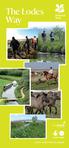 The Lodes Way www.nationaltrust.org.uk The Lodes Way The Lodes Way is a 9 mile cycle way from Wicken passing Anglesey Abbey to Bottisham, which forms part of National Cycle Network route 11 (NCN11). The
Wildlife Habitat Conservation and Management Plan
 Wildlife Habitat Conservation and Management Plan For [Applicant Name] [Insert photo of property] Developed in Cooperation with Jane Doe Habitat Conservation Biologist Oregon Department of Fish and Wildlife
SECTION 7 LANDSCAPE RESTORATION
 SECTION 7 LANDSCAPE RESTORATION 27 7. Landscape and Restoration This section should be read in conjunction with Drawing No.CO8194/A010 Rev. B, Regeneration Strategy As Proposed which can be found at Section
www.irishseedsavers.ie Natural surface water on earth includes lakes, ponds, streams, rivers, estuaries, seas and oceans.
 www.irishseedsavers.ie POND LIFE FACT SHEET Natural surface water on earth includes lakes, ponds, streams, rivers, estuaries, seas and oceans. A pond is a small body of fresh water shallow enough for sunlight
Kristina Veidemane, Baltic Environmental Forum Panevezys, 12.05.2015
 Priority 2 Protection and restoration of biodiversity and soil and promotion of ecosystem services, including through Natura 2000, and green infrastructure Kristina Veidemane, Baltic Environmental Forum
MONITORING LONG TERM TRENDS OF BIRD POPULATIONS IN SWEDEN
 S. SVENSSON, 2004 - Monitoring long term trends of bird populations in Sweden.In : Anselin, A. (ed.) Bird Numbers 1995, Proceedings of the International Conference and 13 th Meeting of the European Bird
Living with Foxes and Skunks Goose Hunting: CWS
 Ministry of Natural Resources and Forestry Living with Foxes and Skunks Goose Hunting: CWS November 19 th, 2015 Town of Tecumseh Kathryn Markham, A/Management Biologist Steven Rowswell, A/Wildlife Technician
Kacy Blackham Fall, 2002. Introductory Lesson: Grade Level: 10 th
 Kacy Blackham Fall, 2002 Introductory Lesson: The Interdependence of Birds and the Great Salt Lake Ecosystem Abstract: Students will participate in the Checks and Balances game. This game will allow the
RESTORATION & REVITALIZATION
 RESTORATION & REVITALIZATION Legal preservation has not proved to be sufficient to preserve natural communities. Restoration activities are diverse and includes revitalization of natural communities which
Lesson Overview. Biodiversity. Lesson Overview. 6.3 Biodiversity
 Lesson Overview 6.3 6.3 Objectives Define biodiversity and explain its value. Identify current threats to biodiversity. Describe how biodiversity can be preserved. THINK ABOUT IT From multicolored coral
How To Plan A Buffer Zone
 Backyard Buffers Protecting Habitat and Water Quality What is a buffer? A buffer (also called a riparian buffer area or zone) is the strip of natural vegetation along the bank of a stream, lake or other
How To Run A Power Station In Danesborg
 Presentation of Energinet.dk April 2008 1 Presentation of Energinet.dk Agenda 10:00 12:00 Welcome and presentation of Energinet.dk /Peter Jørgensen Wind integration - challenges /Antje Orths R&D in environment-friendly
Key Idea 2: Ecosystems
 Key Idea 2: Ecosystems Ecosystems An ecosystem is a living community of plants and animals sharing an environment with non-living elements such as climate and soil. An example of a small scale ecosystem
BMP Guidelines. Environmental Impact Assessment (EIA) report for activities related to hydrocarbon exploration and exploitation offshore Greenland
 BMP Guidelines for preparing an Environmental Impact Assessment (EIA) report for activities related to hydrocarbon exploration and exploitation offshore Greenland Danish National Environmental Research
Understanding cycling and the possibilities for cycling promotion to achieve societal goals.
 PhD seminar Cycling and society Understanding cycling and the possibilities for cycling promotion to achieve societal goals. November 28 December 1 2011: Daily 9 AM 5 PM Hosted by the, Faculty of Life
MIRDINEC - Management of the invasive Raccoon Dog (Nyctereutes procyonoides) in the north-european countries LIFE09 NAT/SE/000344
 MIRDINEC - Management of the invasive Raccoon Dog (Nyctereutes procyonoides) in the north-european countries LIFE09 NAT/SE/000344 Project description Environmental issues Beneficiaries Administrative data
FOUR RIVERS RESTORATION PROJECT
 MLTM Republic of Korea Making Every Drop Count International Workshop on Integrated Urban Water Management WATER & GREEN GROWTH FOUR RIVERS RESTORATION PROJECT Office of National River Restoration, Korea
Howsham fish passage Consultation document
 Howsham fish passage Consultation document Report ENVIMNE000903 Final version 30 June 2016 We are the Environment Agency. We protect and improve the environment. Acting to reduce the impacts of a changing
Farming. In the Standard Grade Geography exam there are three types of farming you need to know about arable, livestock and mixed.
 Types of Farming In the Standard Grade Geography exam there are three types of farming you need to know about arable, livestock and mixed. Arable farms are ones where the main way of making money is by
IWA World Water Congress and Exhibition. First proposal from Copenhagen
 2020 IWA World Water Congress and Exhibition First proposal from Copenhagen Agenda Welcome Presentation of the Host Committee Presentation of the Danish Proposal Capacity to organise IWA2020 Strong support
Past and Current Research on Natural Resource Issues in the Blue Mountains
 Past and Current Research on Natural Resource Issues in the Blue Mountains Recreation, Hunting, Access Livestock Production (and Wild Ungulate Ecology) Restoration Timber Harvest, Production Biodiversity,
Chapter 3 Communities, Biomes, and Ecosystems
 Communities, Biomes, and Ecosystems Section 1: Community Ecology Section 2: Terrestrial Biomes Section 3: Aquatic Ecosystems Click on a lesson name to select. 3.1 Community Ecology Communities A biological
Remaining Wetland Acreage 1,500,000 915,960 584,040-39%
 NEW JERSEY Original Wetland Acreage Remaining Wetland Acreage Acreage Lost % Lost 1,500,000 915,960 584,040-39% New Jersey Wetlands: Nearly 99 percent of New Jersey s wetlands are palustrine or estuarine.
Approved Natural Disaster Recovery Round Green Army projects
 Approved Natural Disaster Recovery Round Green Army projects Project Title Project Description State Territory Belmont Wetlands East Coast This project will reduce erosion and revegetate and control weeds
U.S. Fish and Wildlife Service will invest $15 million for post-sandy cleanup and marsh restoration on Long Island
 For Immediate Release: Wednesday, November 6, 2013 For further information: Michelle Potter, refuge manager, 631/286-0485 ext. 2112, [email protected] Tom Sturm, public affairs specialist, 413/253-8339,
Part 2. Appendix 2O. Greater Black Backed Gull EIA Analysis
 Part 2 Appendix 2O Greater Black Backed Gull EIA Analysis Greater Black Backed Gull EIA Analysis Introduction Natural England (NE) and JNCC (in their further detailed response to Relevant Representations,
Pay Later: The Cost of Inaction. Climate change will have a negative impact on many of the industries that 3500 3000 2500 2000 1500 1000 500 5.
 FACTS CONNECTICUT A M E R I C A N S E C U R I T Y P R O J E C T Pay Now, Pay Later: Connecticut The Environmental Protection Agency estimates that the cost of protecting Connecticut s coast from the potential
BEECH MAST RESPONSE 2014
 BEECH MAST RESPONSE 2014 Heavy seeding in our native forests this year will drive high rodent and stoat numbers that prey on endangered birds. Battle for our Birds is a predator control response to protect
Recommended Land Use Guidelines for Protection of Selected Wildlife Species and Habitat within Grassland and Parkland Natural Regions of Alberta
 Fish and Wildlife Division Sustainable Resource Development Recommended Land Use Guidelines for Protection of Selected Wildlife Species and Habitat within Grassland and Parkland Natural Regions of Alberta
Policy & Management Applications of Blue Carbon. fact SHEET
 Policy & Management Applications of Blue Carbon fact SHEET Policy & Management Applications of Blue Carbon Coastal Blue Carbon - An Important Wetland Ecosystem Service Coastal Blue Carbon refers to the
Looking to the Future: 4 Danish scenarios for future farming
 Looking to the Future: 4 Danish scenarios for future farming Christian Ege, Danish Ecological Council Tommy Dalgaard, Aarhus University Alex Dubgaard, University of Copenhagen 1 A Danish project: Future
Water Management in the Netherlands
 Water Management in the Netherlands Eric Boessenkool Senior Advisor to the Management Board of RIjkswaterstaat Ministry of Infrastructure and the Environment New ministry since end of 2010 Merger of Ministry
15th Colorectal Day Programme
 15th Colorectal Day Programme 7TH OF JUNE 2016 AARHUS UNIVERSITY HOSPITAL, SKEJBY ENTRANCE 6, AUDITORIUM A www.crd.auh.dk Fotograf: Kristian Bang, AUH Dear friends and colleagues It is our pleasure to
Facts on biodiversity
 Facts on biodiversity What is biodiversity? Biological diversity (biodiversity) comprises diversity of species and habitats as well as the genetic diversity within the individual species of fauna and flora.
19 Great Crested Newt species action plan
 Adult Great Crested Newts spend the majority of the year on land and immature newts remain on the land until they reach sexual maturity at between two and four years. They will then find a breeding pond,
4. Which choice below lists the biomes in order from lowest precipitation amounts to highest precipitation amounts?
 Ecosystems and Biomes 1. All of the living organisms in a forest plus their environment is an example of A. a biome. B. a community. C. a population. D. an ecosystem. 2. Which of the following best describes
THE INTRODUCED SACRED IBIS, PREDATOR OF SEABIRDS AND OTHER FRAGILE SPECIES
 THE INTRODUCED SACRED IBIS, PREDATOR OF SEABIRDS AND OTHER FRAGILE SPECIES Pierre Yésou, Dr. Suzanne Bastian, Prof. Philippe Clergeau, Denis Lacourpaille & Sébastien Reeber Sacred Ibis Threskiornis aethiopicus
Lesson 3: Fish Life Cycle
 Lesson 3: Fish Life Cycle Activity: Diagram fish life cycle. Grade level: 4-8 Subjects: Science, social studies Setting: Classroom Duration: 50 minutes Key Terms: Fry, life cycle, life history, spawn,
9.3.7 Advice December 2014
 9.3.7 Advice December 2014 ECOREGION STOCK Widely distributed and migratory stocks European eel Advice for 2015 The status of eel remains critical and ICES advises that all anthropogenic mortality (e.g.
Science On Stage Festival 2011
 Welcome to Science On Stage April 16-19 2011 Copenhagen, Denmark A Creative Network for European Teachers FRAMEWORK 1. Duration and location Period: 16.04.2011-19.04.2011. This is the Saturday-Tuesday
Ch. 15-Restoration Ecology
 Ch. 15-Restoration Ecology Conservation focuses on protecting and maintaining diversity and ecological processes Restoration emphasizes active management to bring back a former state of an ecosystem (
Restoration Planning and Development of a Restoration Bank
 Restoration Planning and Development of a Restoration Bank Black Creek Pioneer Village, South Theatre 8:30 a.m. to 3:30 p.m. Habitat Restoration and Environmental Monitoring Projects Section Restoration
Ecosystem services in grasslands: evidence, trade-offs and restoration. James Bullock NERC Centre for Ecology and Hydrology [email protected].
 Ecosystem services in grasslands: evidence, trade-offs and restoration James Bullock NERC Centre for Ecology and Hydrology [email protected] Ecosystem services definitions and types Grasslands 13% of Earth
CONFERENCE DISTRICT HEATING AND COOLING. a main key to CO 2 reduction
 BEST PRACTICE SOLUTIONS IN DENMARK CONFERENCE DISTRICT HEATING AND COOLING a main key to CO 2 reduction September 1 st - 2 nd 2009 At Hotel Pejsegården in Brædstrup, Denmark DENMARK AS ONE OF THE LEADING
AN INITIATIVE TO IMPROVE
 L OW E R C A R M E L R I V E R A N D L AG O O N F L O O D P L A I N R E S TO R AT I O N A N D E N H A N C E M E N T P R O J E C T AN INITIATIVE TO IMPROVE FLOOD PROTECTION RESTORE AND PROTECT RIPARIAN
Kakapo Recovery Plan 1996-2005
 Kakapo Recovery Plan 1996-2005 Threatened Species Recovery Plan No.21 Kakapo Management Group Department of Conservation P.O. Box 10-420 Wellington New Zealand CONTENTS 1. Background 5 2. Distribution
Wind power in Denmark 1
 June 1996 Peter Helby Wind power in Denmark 1 A sketch of history. Wind power always fascinated the Danes. The geography of the country made Denmark a sea going nation with a large merchant fleet and lots
The River Ribble is one of the longest rivers in the North West of England
 River Ribble The River Ribble is one of the longest rivers in the North West of England Did you know? The tidal limit of the Ribble is 11 miles inland (above Preston); The River Ribble is home to a variety
Although greatly MOUNTAINS AND SEA BRITISH COLUMBIA S AWIDE RANGE OF. Environment. Old Forests. Plants. Animals
 BRITISH COLUMBIA is Canada s westernmost province. From island-dotted Pacific coast to spectacular Rocky Mountain peak, and from hot dry grassland to moist and majestic coastal forest, British Columbia
DYNAMICS OF EMERGENT MACROPHYTES OVERGROWTH IN LAKE ENGURES
 Jānis Brižs Latvijas Universitāte, Latvija DYNAMICS OF EMERGENT MACROPHYTES OVERGROWTH IN LAKE ENGURES Abstract Expansion of emergent plants is one of the most important problems of Lake Engures, a Ramsar
Promoting Pollination Farming for Native Bees
 Promoting Pollination Farming for Native Bees Overview Pollination, the transfer of pollen grains to fertilize the ovules of flowers to produce seeds and fruits, is essential to agriculture and natural
Restoring Ecosystems. Ecosystem Restoration Services
 Restoring Ecosystems Ecosystem Restoration Services 2 Ecosystem Restoration Services AECOM s integrated approach sciencebased planning, with innovative design and execution delivers sustainable and cost-effective
Chapter 18 Introduction to. A f r i c a
 Chapter 18 Introduction to A f r i c a Ch. 18:1 Landforms & Resources 1. Africa s shape & landforms are the result of its location in the southern part of the ancient supercontinent of. Pangaea Over thousands
CORPORATE POLICY STATEMENT NO. 12 MANAGEMENT OF PEST ANIMALS
 1. OBJECTIVE CORPORATE POLICY STATEMENT NO. 12 MANAGEMENT OF PEST ANIMALS August 2015 To provide direction and guidance for the management of pest animals on lands and waters managed by the Department
Flooding Fast Facts. flooding), seismic events (tsunami) or large landslides (sometime also called tsunami).
 Flooding Fast Facts What is a flood? Flooding is the unusual presence of water on land to a depth which affects normal activities. Flooding can arise from: Overflowing rivers (river flooding), Heavy rainfall
Dwejra A Coastal Nature Park
 Dwejra A Coastal Nature Park Introduction Dwejra is an important and very popular site in the Maltese Islands found on the North West coast of the island of Gozo. The site is famous for it natural beauty
Longboat Dr Noeleen Smyth. Pitcairn 24 21 41 S, 128 18 58 W. UK Overseas Territories and Crown Dependencies: 2011 Biodiversity snapshot 87
 Longboat Dr Noeleen Smyth Pitcairn 24 21 41 S, 128 18 58 W 13 UK Overseas Territories and Crown Dependencies: 2011 Biodiversity snapshot 87 Pitcairn Author: Michele Christian, Division Manager Natural
The city s green areas represent about 25% of the city s overall area and on
 3. Green urban areas incorporating sustainable land use Provide the percentage of green and water areas (public and private) and soil sealing in relation to the overall city area, including trends over
Delivering multiple benefits through effective river restoration UK & EU
 Martin Janes Managing Director The River Restoration Centre Delivering multiple benefits through effective river restoration UK & EU CIEEM Annual Conference Southampton 2013 [email protected] 01234 752979
Wadden Sea National Park
 Case Studies Level 1+ Wadden Sea National Park Area: Schleswig-Holstein Country: Germany Date of Completion: 9.1. 06 Pen Picture Schleswig-Holstein s (Lower Saxony) part of the Wadden Sea is a traditional
Name Date Hour. Plants grow in layers. The canopy receives about 95% of the sunlight leaving little sun for the forest floor.
 Name Date Hour Directions: You are to complete the table by using your environmental text book and the example given here. You want to locate all the abiotic (non-living) and biotic (living) factors in