
A Review paper on Dual Mass Flywheel system
|
|
|
- Adam Hoover
- 10 years ago
- Views:
Transcription
1 A Review paper on Dual Mass Flywheel system Prof. R.S. Shelke, D. G. Dighole Department of Mechanical Engineering Sir Visvesvaraya Institute of Technology, Nashik, Maharashtra, India. Savitribai Phule Pune University Mo. No ABSTRACT During the power stroke vibrations are occurred due to the slight twist in the crankshaft. The combustion cycles of a 4-stroke engine produce torque fluctuations which excite torsional vibration to be passed down the drive train. Hence it is necessary that the vibrations generated by engine be reduced or isolate, so that the operator / driver was feel lesser fatigue. Dual mass flywheel is a multi-clutch device which is used to dampen. The torsional frequency is defined as the rate at which the torsional vibration occurs. When the torsional frequency of the crankshaft is equal to the transaxles torsional frequency an effect known as the torsional resonance occurs. When the operating speed of the engine is low, vibration occurs due to the torsional resonance and this can be avoided using dual mass flywheel. The resulting noise and vibration, such as gear rattle, body boom and load change vibration, result in poor noise behavior and driving comfort. The objective while developing this concept was to isolate the drive train from the torsional vibrations. This paper includes the development of inertia augmentation mechanism and development of optimized flywheel using this mechanism. The dual mass flywheel comprises primary flywheel and secondary flywheel and two springs. Keywords: Dual Mass Flywheel, Arc Spring, Torsional Resonance and Torsional Frequency. simple model designed to simulate fundamental vibration behavior. The engine, transmission and vehicle are represented as rotating inertias connected by springs. The spring C 3 represents the stiffness of the drive train, while spring C 2, located between engine and transmission, and represents the spring characteristic of the torsion damper. Such a system has two vibrations modes. The first mode, with a natural frequency of between 2 and 10 Hz, is known as the tip-in/back-out reaction. This is generally excited by a driver-induced load change. The second mode, where the transmission inertia vibrates against engine and vehicle, has a natural frequency of Hz with conventional torsion dampers. This is a typical cause of a gear rattle. Consequently, the tuning of a conventional automotive torsion damper a clutch disc with its corresponding spring characteristic - always involves compromise. The upper graph of Fig. 2 shows typical speed fluctuations in a vehicle with a clutch disc. In this case, the friction-damped resonance is located at around 1700 rpm. Further damping of this resonance leads to a worsening of the hypercritical isolation of rotational vibrations (at speeds higher than the resonance). [2] I. INTRODUCTION The clutch system in a vehicle performs two main functions: Power interruption and modulation during start up and when shifting Reduction of rotational vibrations in the drive train induced by engine irregularities Rotational vibrations affect durability of the drive train components and create Gear rattle Body boom Tip-in/back-out vibrations These factors produce considerable noise and a loss in driving comfort. The main cause of these rotational vibrations is variation in torque. This variation results from the discrete piston combustion cycle of the engine as a function of the ignition frequency. These factors produce considerable noise and a loss in driving comfort. The main cause of these rotational vibrations is variation in torque. This variation results from the discrete piston combustion cycle of the engine as a function of the ignition frequency. The vehicle drive train is a vibrating system. Fig. 1 shows a Fig. 1 Vehicle drive train with vibration modes [1] 326

2 The goal of torsion damper development is to keep the torsional vibrations induced by the engine as far as possible from the rest of the drive train. A conventional system only satisfies this requirement at high engine speeds, because the attainable torsion damper spring rates lead to natural frequencies which are always within the normal driving range. Fig. 2 Torsional vibration isolation with conventional clutch disc and dual mass flywheel [2] This unsatisfactory situation led to the development of a new torsion damper concept - the dual mass flywheel (DMF). This design shifts part of the flywheel inertia to the transmission input shaft and drastically lowers the torsion damper spring rate by introducing new spring designs (Fig. 3), thus reducing the resonance speed to very low engine speeds. Fig. 2, lower graph, shows the hypercritical isolation of rotational engine vibrations (starting from idle speed). Improvements in driving comfort achieved by the dual mass flywheel, together with low-cost designs resulting from goal-oriented, value-analyzed development, has led to the increased popularity of this system. Currently the LuK dual mass flywheel is used by ten car manufacturers in approximately 80 different models. [2] Fig. 3 Principle of the dual mass flywheel [2] The main function of engine flywheel is to reduced fluctuations in power and produced smooth transmission of power to wheels. There are two schools of thought concerning light flywheels. The first is that they do not contribute to power output. The second is that they do. Which thought is correct? In fact both, in a way, are correct. If we measured the power output of an engine first with light flywheel and then again with the standard part on an engine dyno, no change in power will be seen to occur. At first it appears that the light flywheel has done nothing and was a total waste of cash. This is not the case. A dyno that shows max power at constant revs does not demonstrate what happens to an engine's power output in real life situations - like acceleration. If an engine is accelerated on a dyno (we are talking about a rate of around 2000 rpm a second) it would show a power output of around 20%-25% less than at the constant rev state. The reason for this is that when accelerating a vehicle the engine not only has to push the total mass of the car but the internal components of the engine need to be accelerated also. This tends to absorb more power as the extra power is used accelerating the internal mass of the engine components and is why a motor accelerating on a dyno will produce less power than at constant revs. Also it must be remembered that the rate of acceleration on the engine internals is much greater that the rest of the car. This would then suggest that by lightening the flywheel, less power would be required to accelerate it and therefore more power would be available to push the car along. Obviously, there s a certain minimum amount of flywheel inertial that should be resent for several reasons: 1. Idle stability 2. Tolerance of high compression, cam overlap, etc 3. Better clutch operation for low speed and traffic operation 4. Fewer load reversals on the driveline during low speed 5. Better traction 6. The carburetor s accelerator pump and off-idle circuit settings are closer to real world 7. Damps vibration out some 8. Oil pressure is more consistent Lighter flywheel offers the following advantages 1. Improves acceleration 2. Improves braking 3. Better suspension compliance in non-irs where flywheel gyro wraps up the springs under brakes 4. Reduced overall weight On the other hand lighter flywheel leads to following problems; 1. Is harder to kick through 2. Requires slightly higher idle speed screw setting for stable idle 3. Is more likely to stall when cold/out of tune 4. Is easier to shift 5. Has better braking (unless you disconnect the motor by pulling the clutch in while braking) 6. Requires more delicate touch with the clutch in traffic 7. Harder on the primary chain 8. Less tolerant of walking speed in gear 327

3 A. Problem statement In an ordinary conventional flywheel the engines ignition-induced rotational speed irregularity causes torsional vibration in the vehicles driveline also the fluctuations in engines speed. At a given speed the ignition frequency is equal to the natural frequency of the driveline so that extremely high vibrations amplitudes occur that causes rattle in transmission. Also more mass of flywheel increases the cost of engine. B. Proposed methodology The arrangement of the dual mass flywheel is best explained by the mathematical model below. The model is a two spring two mass model graphically represented as below. Fig.5. Dual Mass Flywheel System Fig. 4 Graphical Model of spring mass flywheel system The fig. 4 shows free un-damped vibrations set up of two mass- two spring system. As shown in the figure the input to the system is in the form of an low energy intermittent input from any power source (excitation), this results in free undamped vibrations are set up in the system resulting in the free to and fro motion of the mass (m1)& (m2), this motion is assisted by gravity and will continue until resonance occurs, i.e., the systems will continue to work long after the input (which is intermittent) has ceased. Hence the term free energy is used. From Fig.5 it is clear that in addition to the mass of the flywheel, the couple owing to the centrifugal and centripetal forces keeps the flywheel into motion for longer time thereby increasing the work done by the system hence the output from the given system increases. Dual mass flywheel is represented in figure below: Fig.6.Dual Mass Flywheel System The dual mass flywheel system is as shown above. The flywheel comprises of the flywheel hub which is keyed to the engine shaft,. Hub carries the flywheel body, on which the flywheel gear ring is mounted. The flywheel body is recessed at the rim inner side to receive the spring. Two springs and two masses are used hence the flywheel has dual masses from which the name of the flywheel originates. As the engine power is delivered to the flywheel, the jerk applied will set the flywheel into motion, so also the jerk is applied to the masses, and as explained in the two spring two mass system the two masses oscillate to generate the free energy as explained earlier. The motion of the masses gives extra impetus to the flywheel body due to which we get extra revolutions from the same jerk as applied to the conventional flywheel. Thus it is able to achieve more inertia II. LITERATURE REVIEW There has been a great deal of research on gear analysis, and a large body of literature on energy storage system has been published. The origins and use of flywheel technology for mechanical energy storage began several hundred years ago and developed throughout the Industrial Revolution. One of the first modern dissertations on the theoretical stress limitations of rotational disks is the work by Dr. A. Stodola whose first translation to English was made in Development of advanced flywheel begins in the 1970s. Rotating wheels have been used to store and deliver energy since prehistoric times. The potter s wheel is perhaps the first invention to resemble a flywheel and it has existed for 4,000 years. The first instance of the word flywheel occurred in 1784 during the industrial revolution. At this time flywheels were used on steam engine boats and trains and were often used as energy accumulators in factories. Flywheels became more popular with steep drops in the cost of cast iron and cast steel. In the industrial revolution, flywheels were very large and heavy so that they could store significant energy at low rotational speeds. The first use of flywheels in road vehicles was in the gyrobuses in Switzerland during the 1950 s. The flywheels used on the buses were 1500kg and had a diameter 328

4 of meters. When they were fully charged they could store Joules. Flywheels are now found in many road vehicles as well as space, sea and air vehicles. Flywheels are also used for energy storage in power plants and as voltage controllers. Newly raised concerns about the environment have increased interest in flywheels. Kevin Ludlum [3] studied a flywheel is an energy storage device that uses its significant moment of inertia to store energy by rotating. Flywheels have long been used to generate or maintain power and are most identified with the industrial age and the steam engine. In one sense it can be thought of as a rechargeable battery that store energy in the form of mechanical energy instead of electrochemical. Flywheels have been gaining popularity as a possible replacement for chemical batteries in vehicles, but until last year there was no record of a flywheels being used to increase the efficiency of a bicycle. S H Salter [4] discussed here that it is easy to make a device that will respond vigorously to the action of sea waves. Indeed, it is quite hard to make one that will not. However, the conversion of the slow, random, reversing energy flows with very high extreme values into phase-locked synchronous electricity with power quality acceptable to a utility network is very much harder. This paper describes a range of different control strategies of varying degrees of sophistication and then describes possible conversion equipment for high-pressure oil and water and low-pressure air. Like many renewable energy sources, waves would benefit from some form of energy storage, particularly if they are to be used in weak island networks. Flywheels, gas accumulators, submerged oil/vacuum accumulators, thermal stores and reversible fuel cells are discussed, with emphasis on the coupling hardware. This leads on to a description of a new type of hydraulic machine with digital control which has been specially designed for high efficiency and flexible control of multiple erratic sources. Dr. Robert Hebner, et.al. [5] In the past year, the researchers at the Center for Electro mechanics at The University of Texas at Austin (UT-CEM) and the Nanotech Institute at The University of Texas at Dallas (UTD) began research efforts on improved flywheel designs and flywheel materials to meet energy storage requirements for the grid. UT-CEM s initial effort focused on determining the power and energy requirements for a flywheel energy storage system at various points on the grid. UT-CEM researchers used real-world data from a newly developed community in Austin, TX to analyze the effect of energy storage at the home level, transformer level, and the community distribution level. With requirements defined, an optimization code was developed for sizing a flywheel energy storage system for the grid. Results of this optimization are shown for today s flywheel using conventional materials. Rudolf Glassner, Kottes [6] A dual mass flywheel for a drive train of motor vehicle includes a primary flywheel mass, a secondary flywheel mass & coupling device. The coupling device includes at least two pivot levers associated with secondary flywheel mass that interact with the controlleled profile formed on the primary mass. The pivot levers are pretension against the controlled profile in radial direction by an elastic element. A control segment of elastic element is disposed radially inside the control profile. Park, Dong-Hoon Suwan- Si, Kyunggi- Do [7] A dual mass flywheel for a vehicles includes a primary flywheel connected to a crankshaft of an engine, a damper housing integrally formed in a circumferential direction of primary flywheel a secondary flywheel is connected to input shaft of a transmission and rotatably mounted on hub of primary flywheel; driven fingers integrally formed on a second flywheel and inserted vertically into the damper housing to be forced by a damper spring. The damper spring comprises two springs sets symmetrically disposed within the damper housing, one end of each damper springs being driven by the stoppers which are integrally formed on primary flywheel, while the other end of the spring sets drive the driven fingers of the secondary flywheel. The primary & secondary flywheel is integrally provided with projections for preventing the damper spring from being excessively compressed & damaged. The damper spring comprises a plurality of springs, each having different spring coefficients and the damper spring is supported by a plurality of sliding guides or blocks. Research Gap From the above discussed literatures, it is concluded that most of the work had been done on study the performance of flywheel, dual mass flywheel act as vibration isolators in engine, energy storage of flywheel etc. Nowadays the requirement of energy storage of flywheel is more in small size, because of the space constraint in engines. This paper describes the improvement of energy storage capability by using dual mass flywheel with same size as compared to conventional flywheel. III. WORKING STEPS Typical working steps involved in the proposed work are mentioned as below Step 1: Literature Review In this phase literature survey of dual mass flywheel systems, the importance of DMF studied as compared to conventional flywheel. By referring journal like journal, International papers, European patents,us patents etc. Step 2: System design & Mechanical design of the DMF for engine of following specifications Prime mover selection Make: Crompton Greave Model: IK-35 Engine is Two stroke Spark ignition engine with following specifications: Bore diameter: 35 mm Stroke: 35 mm Capacity: 34 cc Power out pu : 1.2 BHP at 5500 rpm Torque: rpm Dry weight: 4.3 kg Ignition: Magneto ignition Direction of rotation: Clockwise.looking from driving end Carburetor: B type Cooling: Air Cooled engine Step 3: Mathematical model development of system for dual mass flywheel system. Step 4: Selection of materials of flywheel shaft, flywheel, flywheel mass, arc spring, dyno brake pulleyetc. Step 5: System design for mechanical component like the coupling for engine connection, flywheel base, flywheel 329
![Kevin Ludlum [3] studied a flywheel is an energy storage device that uses its significant moment of inertia to store energy by rotating.](/docs-images/41/13960017/images/page_4.jpg "Flywheels have long been used to generate or maintain power and are most identified with the industrial age and the steam engine.")
5 shaft, arc springs, flywheel mass, dyno brake pulley, chassis connection for given system of operation. This phase includes the planning of system as per the sketch above. Step 6: Mechanical design of all components of the set up using theoretical formulae.for mechanical component engine Step 7: Mechanical design validation using ANSYS for critical components of the system will be designed and validated. Step 8: Validation of strength calculations of critical components viz, engine connection, engine shaft, mass lever, mass, dyno brake pulley, flywheel base, chassis connection using ANSYS Step 9: Results and Discussion based on experimentation. Testing of the developed system with and with Dual mass system & Conventional system by removing spring & masses. ENGINE COUPLING SHAFT FUEL TANK BEARING 6005 FLYWHEEL DISK MASS HINGE PIN MASS LEVER MASS ROPE DYNO-BRAKE PULLEY FLYWHEEL SHAFT FLYWHEEL HUB LOAD BEARING HOUSING BASE FRAME SCHEMATIC OF DUAL MASS FLYWHEEL TEST RIG Fig. 8 Schematic of dual mass flywheel test rig IV. EXPERIMENTAL SETUP OF DUAL MASS FLYWHEEL The experimental test rig consist of two stroke petrol engine is paired with the planetary dual mass flywheel mounted on flywheel shaft, by love joy coupling. The flywheel shaft is mounted on base plate with the help of deep groove ball bearing. The torsional vibration damper is incorporated into the flywheel as a two arc spring and two masses on the conventional flywheel. For this purpose the flywheel is divided into a primary and a secondary mass hence the name exists dual mass flywheel. The unidirectional ball bearing called as unidirectional clutch is mounted on flywheel shaft with bearing mounting to avoid opposite side rotation of dyno brake pulley. The dyno brake pulley is paired with unidirectional clutch. The rope is rapped on dyno brake pulley with one end is tie on base plate, and another end is tie on weighing pan. ENGINE FUEL TANK BEARING 6005 MULTI-RIM FLYWHEEL ROPE DYNO-BRAKE PULLEY FLYWHEEL SHAFT FLYWHEEL HUB LOAD COUPLING SHAFT Fig. 9 Actual setup of dual mass flywheel test rig BEARING HOUSING BASE FRAME SCHEMATIC OF FLYWHEEL TEST RIG Fig. 7 Schematic of conventional flywheel test rig V. PROCEDURE 1) Start engine by turning 2) Let mechanism run & stabilize at certain speed (say 1300 rpm) 3) Place the pulley cord on dynamo brake pulley and add 500 gm weight into, the pan, note down the output speed for this load by means of tachometer. 4) Add another 500 gm cut & note down the output speed for this load by means of tachometer. 5) Take data of speed up to adding 5 kg weight. 6) Repeat above process with removing weight. 7) Tabulate the readings in the observation table for conventional and dual mass flywheel system. 8) Plot torque Vs speed, Efficiency Vs speed & Power Vs speed characteristics. 330

6 VI. EXPECTED OUTCOME OF THE PROJECT- The expected outcome of the system with dual mass flywheel system & without dual mass flywheel system (conventional system) is effectiveness of dual mass flywheel system with respect to conventional system. Also the improvement in power output as well as efficiency with using dual mass flywheel geometry. VII. OBJECTIVE AND SCOPE A. Objectives of project 1. Development of mathematical model for optimization of flywheel mass to derive stipulated output power. 2. Design and development of inertia augmentation mechanism. 3. Design and development of optimized flywheel using inertia augmentation technique. 4. Test and trial on optimized flywheel using test rig. 5. Plot performance characteristic curves. B. Scope 1. Lowered weight of flywheel system will reduce system weight thereby leading to better fuel economy of vehicle and also reduce overall material cost. 2. Compact size: The size of the flywheel will lead to better cabin space of vehicle. 3. Engine life increases due to balanced power output. Finally I extend my gratefulness to one and all who are directly or indirectly involved in the successful completion of this project work. REFERENCES 1. Dr. Wolfgang Reik, Dr. Roland Seebacher, Dr. Ad Kooy, Dual mass flywheel Dr. Albert Albers, Advanced Development of Dual Mass Flywheel (DMFW) Design - Noise Control for Today's Automobiles 3. Kevin Ludlum, Optimizing Flywheel Design for use as a Kinetic Energy Recovery System for a Bicycle In 2011, Maxwell von Stein 4. S H Salter Power conversion mechanisms for wave energy, University of Edinburgh, Edinburgh, UK 5. Dr. Robert Hebner, Director/Principal Investigator, Center for Electro mechanics; Low-Cost Flywheel Energy Storage for Mitigating the Variability of Renewable Power Generation, University of Texas at Austin 6. Patent No: US 8393, United state patent, 03 Feb 2010, Dual mass flywheel, 12 March EP A2, Park, European patent application, , Dual mass flywheel for automotive vehicles, AUTHOR PROFILE Prof. R.S. Shelke, ME Mechanical, Professor of Mechanical Engineering, Sir Visvesvaraya Institute of Technology, Nashik, Savitribai Phule Pune University abbreviated as Pune University IV. CONCLUSION It is observed that there is approximately 7 to 8 % increase in power output by using the Dual mass flywheel and also observed that the Dual mass flywheel is 5 to 6 % efficient than the conventional flywheel which will also result in increasing fuel economy of the engine. ACKNOWLEDGEMENT I place on record and warmly acknowledge the continuous encouragement, invaluable supervision, timely suggestions and inspired guidance offered by my project guide Prof. R.S. Shelke Department of Mechanical Engineering, Sir Visvesvaraya Institute of Technology, Chincholi, Nasik, in bringing this report to a successful completion. I am grateful to Prof. V. M. Rane Head of the Department of Mechanical Engineering, and Also Prof. V. L. Kadlag, Workshop Superintendent Department of Mechanical Engineering for permitting me to make use of the facilities available in the department to carry out the project successfully. My deep gratitude to Dr. G. B. Shinde, Principal of S.V.I.T., Chincholi, Nashik, who always been playing a great role in all round development of student. Last but not the least I express my sincere thanks to all of my friends who have patiently extended all sorts of help for accomplishing this undertaking. Most importantly I would like to express my sincere gratitude towards my Family for always being there when I needed them most. Digambar G. Dighole completed BE (Mechanical Engineering) & appearing in ME Mechanical (Design Engineering) from Sir Visvesvaraya Institute of Technology, Nashik, Savitribai Phule Pune University abbreviated as Pune University. [email protected] Mo. No

UNIT 1 INTRODUCTION TO AUTOMOBILE ENGINEERING
 UNIT 1 INTRODUCTION TO AUTOMOBILE ENGINEERING Introduction to Automobile Engineering Structure 1.1 Introduction Objectives 1.2 Definition 1.3 Classification of Vehicles 1.4 Layout of an Automobile Chassis
Clutch Systems. Innovative Solutions for All Roads
 Aftermarket Aftermarket Aftermarket P r o d u c t i o n Gearing up for Tomorrow LuK supplies components and systems for vehicle drivetrains around the world. When Georg and Wilhelm Schaeffler founded LuK
KINETIC ENERGY RECOVERY SYSTEM BY MEANS OF FLYWHEEL ENERGY STORAGE
 ADVANCED ENGINEERING 3(2009)1, ISSN 1846-5900 KINETIC ENERGY RECOVERY SYSTEM BY MEANS OF FLYWHEEL ENERGY STORAGE Cibulka, J. Abstract: This paper deals with the design of Kinetic Energy Recovery Systems
Clutch and Operation as a System
 Clutch and Operation as a System Dipl.-Ing. Matthias Zink Dipl.-Ing. René Shead Introduction New technologies and increasing demands for comfort, require increased total system thinking, also in the area
UNIT 3 AUTOMOBILE ELECTRICAL SYSTEMS
 UNIT 3 AUTOMOBILE ELECTRICAL SYSTEMS Automobile Electrical Structure 3.1 Introduction Objectives 3.2 Ignition System 3.3 Requirement of an Ignition System 3.4 Types of Ignition 3.4.1 Battery or Coil Ignition
Slide 10.1. Basic system Models
 Slide 10.1 Basic system Models Objectives: Devise Models from basic building blocks of mechanical, electrical, fluid and thermal systems Recognize analogies between mechanical, electrical, fluid and thermal
Belt Drives and Chain Drives. Power Train. Power Train
 Belt Drives and Chain Drives Material comes for Mott, 2002 and Kurtz, 1999 Power Train A power train transmits power from an engine or motor to the load. Some of the most common power trains include: Flexible
1/29/2008 DR70. Baja Motorsports Inc. P.O. Box 61150 Phoenix, AZ 85082 Toll Free: 888-863-2252 PART NUMBERS PRICES ARE SUBJECT TO CHANGE 1 of 43
 DR70 Toll Free: 888-863-2252 PART NUMBERS PRICES ARE SUBJECT TO CHANGE 1 of 43 CYLINDER & CYLINDER HEAD 1 DR70-001 883099044472 CYLINDER 1 1 2 DR70-002 883099044489 GASKET, CYLINDER 1 1 3 DR70-003 883099044496
DR90. Baja Motorsports Inc. P.O. Box 61150 Phoenix, AZ 85082 Toll Free: 888-863-2252 PART NUMBERS AND PRICES ARE SUBJECT TO CHANGE 1 of 51
 DR90 Toll Free: 888-863-2252 PART NUMBERS AND PRICES ARE SUBJECT TO CHANGE 1 of 51 CYLINDER & CYLINDER HEAD 1 DR90-001 842645048166 CYLINDER 1 1 2 DR90-002 842645048173 GASKET, CYLINDER 1 1 3 DR90-003
FXA 2008. UNIT G484 Module 2 4.2.3 Simple Harmonic Oscillations 11. frequency of the applied = natural frequency of the
 11 FORCED OSCILLATIONS AND RESONANCE POINTER INSTRUMENTS Analogue ammeter and voltmeters, have CRITICAL DAMPING so as to allow the needle pointer to reach its correct position on the scale after a single
Fig 1 Power Transmission system of Tractor
 POWER TRANSMISSION SYSTEM Transmission is a speed reducing mechanism, equipped with several gears (Fig. 1). It may be called a sequence of gears and shafts, through which the engine power is transmitted
1/29/2008 DR50. Baja Motorsports Inc. P.O. Box 61150 Phoenix, AZ 85082 Toll Free: 888-863-2252 PART NUMBERS PRICES ARE SUBJECT TO CHANGE 1 of 45
 DR50 Toll Free: 888-863-2252 PART NUMBERS PRICES ARE SUBJECT TO CHANGE 1 of 45 CYLINDER & CYLINDER HEAD Part UPC Number Description Baja Description 1 DR50-001 842645074424 CYLINDER 1 1 2 DR50-002 842645074431
DR50 Hensim Dirt Runner 49cc Dirt Bike (VIN PREFIX LLCH or LUAH)
 Page 1 of 21 Product Information Baja Web > Product Information > Parts Lists > DIRTBIKE > DR50 Hensim Dirt Runner 49cc Dirt Bike (VIN PREFIX LLCH or LUAH) DR50 Hensim Dirt Runner 49cc Dirt Bike (VIN PREFIX
EXPERIMENT NO. 3. Aim: To study the construction and working of 4- stroke petrol / diesel engine.
 EXPERIMENT NO. 3 Aim: To study the construction and working of 4- stroke petrol / diesel engine. Theory: A machine or device which derives heat from the combustion of fuel and converts part of this energy
DR90. Baja Motorsports Inc. P.O. Box 61150 Phoenix, AZ 85082 Toll Free: 888-863-2252 PART NUMBERS AND PRICES ARE SUBJECT TO CHANGE 1 of 51
 DR90 Toll Free: 888-863-2252 PART NUMBERS AND PRICES ARE SUBJECT TO CHANGE 1 of 51 CYLINDER & CYLINDER HEAD Part UPC Number Description Baja Description 1 DR90-001 842645048166 CYLINDER 1 1 2 DR90-002
REDESIGN OF THE INTAKE CAMS OF A FORMULA STUDENT RACING CAR
 FISITA2010-SC-P-24 REDESIGN OF THE INTAKE CAMS OF A FORMULA STUDENT RACING CAR Sándor, Vass Budapest University of Technology and Economics, Hungary KEYWORDS valvetrain, camshaft, cam, Formula Student,
Wynn s Extended Care
 Wynn s Extended Care Every car deserves to receive the very best care... especially yours. How Do You Keep Your Reliable Transportation Reliable? Count on Wynn s Because Wynn s has been caring for cars
BR150 Pmi Baja Reaction 150cc Go Kart (VIN PREFIX L4VM)
 Page 1 of 21 Product Information Baja Web > Product Information > Parts Lists > GOKART > BR150 Pmi Baja Reaction 150cc Go Kart (VIN PREFIX L4VM) BR150 Pmi Baja Reaction 150cc Go Kart (VIN PREFIX L4VM)
SUSPENSION AND STEERING OVERVIEW
 SUSPENSION SUSPENSION AND STEERING OVERVIEW The S40/V50 has a wide track and a long wheelbase for its relative size and weight. This gives the car stable and predictable driving characteristics. It also
Simple Machines. Figure 2: Basic design for a mousetrap vehicle
 Mousetrap Vehicles Figure 1: This sample mousetrap-powered vehicle has a large drive wheel and a small axle. The vehicle will move slowly and travel a long distance for each turn of the wheel. 1 People
THE INFLUENCE OF STRUCTURAL FEATURES ON VIBRATION OF THE PROPELLER ENGINE TEST BENCH
 JOURNAL OF THEORETICAL AND APPLIED MECHANICS 53,1,pp.27-36,Warsaw2015 DOI: 10.15632/jtam-pl.53.1.27 THE INFLUENCE OF STRUCTURAL FEATURES ON VIBRATION OF THE PROPELLER ENGINE TEST BENCH Wiesław Ostapski,
DESIGN AND ANALYSIS OF KINETIC ENERGY RECOVERY SYSTEM IN BICYCLES
 DESIGN AND ANALYSIS OF KINETIC ENERGY RECOVERY SYSTEM IN BICYCLES Sreevalsan S Menon 1, Sooraj M S 2, Sanjay Mohan 3, Rino Disney 4, Suneeth Sukumaran 5 Final year student, Department of Mechanical Engineering,
SOLID MECHANICS TUTORIAL MECHANISMS KINEMATICS - VELOCITY AND ACCELERATION DIAGRAMS
 SOLID MECHANICS TUTORIAL MECHANISMS KINEMATICS - VELOCITY AND ACCELERATION DIAGRAMS This work covers elements of the syllabus for the Engineering Council exams C105 Mechanical and Structural Engineering
AUTOMATED, FULL LOAD MOTOR TESTING AT PRODUCTION SPEEDS
 AUTOMATED, FULL LOAD MOTOR TESTING AT PRODUCTION SPEEDS Abstract: Revolutionary test method coupled with innovative automation yields superior motor performance measurement data without sacrifice of production
Automatic Transmission Basics
 Automatic Transmission Basics Lesson Objectives 1. Describe the function of the torque converter. 2. Identify the three major components of the torque converter that contribute to the multiplication of
Continuously variable transmission (CVT)
 Continuously variable transmission (CVT) CVT CVT allows for the operation at the lowest possible speed and highest possible load, partially avoiding the low efficiency region of the engine map. A continuously
C18 ACERT Fire Pump Tier 3 448 bkw/600 bhp @ 1750 rpm
 CATERPILLAR ENGINE SPECIFICATIONS I-6, 4-Stroke-Cycle Diesel Bore...145.0 mm (5.71 in) Stroke...183.0 mm (7.2 in) Displacement... 18.1 L (1,104.53 in3) Aspiration...Turbocharged Aftercooled Compression
International Journal of Engineering Research-Online A Peer Reviewed International Journal Articles available online http://www.ijoer.
 RESEARCH ARTICLE ISSN: 2321-7758 DESIGN AND DEVELOPMENT OF A DYNAMOMETER FOR MEASURING THRUST AND TORQUE IN DRILLING APPLICATION SREEJITH C 1,MANU RAJ K R 2 1 PG Scholar, M.Tech Machine Design, Nehru College
1x90 TONS TENSIONERS TECHNICAL PROPOSAL. 1 X 90 Tons 30 m/min Tensioners TECHNICAL PROPOSAL JOB 08/059. 0 19/02/2008 Basic proposal PP GM SB
 Pagina N.: 1 of 19 1 X 90 Tons 30 m/min Tensioners JOB 08/059 0 19/02/2008 Basic proposal PP GM SB Rev N Date Issue Description Prepared by Checked by Approved by Pagina N.: 2 of 19 TABLE OF CONTENTS:
Unit 24: Applications of Pneumatics and Hydraulics
 Unit 24: Applications of Pneumatics and Hydraulics Unit code: J/601/1496 QCF level: 4 Credit value: 15 OUTCOME 2 TUTORIAL 3 HYDRAULIC AND PNEUMATIC MOTORS The material needed for outcome 2 is very extensive
1/29/2008 DR125 / DR150. Baja Motorsports Inc. P.O. Box 61150 Phoenix, AZ 85082 Toll Free: 888-863-2252 PARTS AND PRICES ARE SUBJECT TO CHANGE 1 of 55
 DR125 / DR150 Toll Free: 888-863-2252 PARTS AND PRICES ARE SUBJECT TO CHANGE 1 of 55 CYLINDER HEAD ASSY. 1 125-001 883099006937 CYLINDER HEAD COVER 1 1 2 125-002 883099006944 BOLT M6X28 2 3 3 125-003 883099006951
Aprilia.no. RS 50 96-98 Eng.6M
 01 Carburettor - oil pump 02 Drive shaft 03 Head - piston 04 Primary gear shaft 05 Gearbox driven shaft 06 Selector 07 Clutch 08 Clutch cover 09 Right crankcase 10 Left crankcase 11 Ignition unit RS 50
Gear Trains. Introduction:
 Gear Trains Introduction: Sometimes, two or more gears are made to mesh with each other to transmit power from one shaft to another. Such a combination is called gear train or train of toothed wheels.
DR125 and DR150 Hensim Dirt Runner 125cc and 150cc Dirt Bike (VIN PREFIX LLCH or LUAH)
 Parts Lists - DR125 and DR150 Hensim Dirt Runner 125cc and 150cc Dirt Bike (VIN PR... Page 1 of 25 Product Information Baja Web > Product Information > Parts Lists > DIRTBIKE > DR125 and DR150 Hensim Dirt
Torque motors. direct drive technology
 Torque motors direct drive technology Why Direct Drive Motors? Fast and effective Direct-drive technology in mechanical engineering is defined as the use of actuators which transfer their power directly
ZF W325 Vertical offset, direct mount marine transmission.
 Marine Propulsion Systems Vertical offset, direct mount marine transmission. Maximum Input** Duty kw hp RPM Medium 507 680 2600 Continuous 430 577 2600 ** Must not be exceeded Description Robust design
1115 4G SERIES GOVERNOR. 4-20 ma ANALOGUE DIGITAL SPEED SETTING
 1115 4G SERIES GOVERNOR with 4-20 ma ANALOGUE & DIGITAL SPEED SETTING PO Box 28, 9300AA Roden, The Netherlands Tel: +31 505019888 Fax: +31 505013618 E-mail: [email protected] 1115 4G
Table of Contents. Transmission Fundamentals
 Table of Contents Subject Page Standard/Automatic Transmission Comparison... 3 Hydraulic Transmission vs. Electro-Hydraulic Transmission... 4 Transmission Identification... 5 Transmission Hydraulics...
Full-Toroidal Variable Drive Transmission Systems in Mechanical Hybrid Systems From Formula 1 to Road Vehicles
 Full-Toroidal Variable Drive Transmission Systems in Mechanical Hybrid Systems From Formula 1 to Road Vehicles Chris Brockbank BSc (Hons) & Chris Greenwood BSc (Hons) Torotrak (Development) Ltd 1. Introduction
S KID S TEER L OADER SK818-5 SK818-5 SK 818-5. NET POWER SAE J1349 34,7 kw. OPERATING WEIGHT 2.910 kg. OPERATING CAPACITY 870 kg
 SK 818-5 SK818-5 SK818-5 S KID S TEER L OADER NET POWER SAE J1349 34,7 kw OPERATING WEIGHT 2.910 kg OPERATING CAPACITY 870 kg S KID STEER L OADER PRESTAZIONI IN SICUREZZA Power, ease-of-use, and simplicity-of-operation
Field Application Note
 Field Application Note Reverse Dial Indicator Alignment RDIA Mis-alignment can be the most usual cause for unacceptable operation and high vibration levels. New facilities or new equipment installations
Name Class Date. You do twice as much work. b. You lift two identical books one meter above the ground.
 Exercises 9.1 Work (pages 145 146) 1. Circle the letter next to the correct mathematical equation for work. work = force distance work = distance force c. work = force distance d. work = force distance
Systematic Optimisation of Gearboxes for Hybrid and Electric Vehicles in Terms of Efficiency, NVH and Durability
 Systematic Optimisation of Gearboxes for Hybrid and Electric Vehicles in Terms of Efficiency, NVH and Durability Dr. Artur Grunwald GKN Driveline 1 Content of presentation Scope and introduction Gearbox
P = n M 9550 [kw] Variable Intake Manifold in VR Engines. Self-study programme 212. Principles and Description of Operation. Service.
![P = n M 9550 [kw] Variable Intake Manifold in VR Engines. Self-study programme 212. Principles and Description of Operation. Service.](/thumbs/40/21744251.jpg "P = n M 9550 [kw] Variable Intake Manifold in VR Engines. Self-study programme 212. Principles and Description of Operation. Service.") Service. Self-study programme 212 Variable Intake Manifold in VR Engines Principles and Description of Operation P = n M 9550 [kw] M [Nm] P [kw] n [min -1 ] 212_020 The output and torque of an engine have
Service. Self-study programme 212 Variable Intake Manifold in VR Engines Principles and Description of Operation P = n M 9550 [kw] M [Nm] P [kw] n [min -1 ] 212_020 The output and torque of an engine have
Series 6000 Torque measured metal bellow coupling
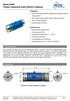 Properties Free of float metal bellow coupling with integrated torque measurement Non-contact measurement system, high robustness High torsional stiffness Limited torque of inertia Performance Measurement
Continuously Variable Transmission CVT. How does it work?
 Continuously Variable Transmission CVT How does it work? Scooters were meant to be easy and so a lot of complication has gone into making them simple. Here s how to demystify the transmission without even
Titan Makina Ltd. Şti. 1160. Sok. No: 9 Ostim 06370 Ankara Tel: + 90 312 354 9977 Fax: + 90 312 385 5611 Web: www.titanltd.com.
 IS26 Concrete Spraying Machine IS26 Concrete Spraying Machine TECHNICAL SPECIFICATIONS Manipulator Max. vertical spraying reach : Max. horizontal spraying reach : Working lights : Spraying Head Rotation
ENERGY TRANSFER SYSTEMS AND THEIR DYNAMIC ANALYSIS
 ENERGY TRANSFER SYSTEMS AND THEIR DYNAMIC ANALYSIS Many mechanical energy systems are devoted to transfer of energy between two points: the source or prime mover (input) and the load (output). For chemical
ZF W320 Vertical offset, direct mount marine transmission.
 Marine Propulsion Systems Vertical offset, direct mount marine transmission. Maximum Input** Duty kw hp RPM Medium 425 570 2400 Continuous 357 479 2400 ** Must not be exceeded Description Robust design
Frequecy Comparison and Optimization of Forged Steel and Ductile Cast Iron Crankshafts
 International Journal of Engineering Science Invention ISSN (Online): 2319 6734, ISSN (Print): 2319 6726 Volume 2 Issue 11ǁ November2013 ǁ PP.38-45 Frequecy Comparison and Optimization of Forged Steel
Product Brochure. Controlled start transmission
 Product Brochure Controlled start transmission What CST does The Dodge CST (Controlled Start Transmission) is a 2 in 1 gearbox which combines a planetary gear reducer with an integral wet clutch system.
Vibration Isolation in Data Centers
 Vibration Isolation in Data Centers Vibrations in Data Centers Vibrations in Data Centers can be produced by nearby construction works, heavy traffic, railways or even the own cooling units inside or next
Address for Correspondence
 International Journal of Advanced Engineering Technology E-ISSN 0976-3945 Research Paper DEVELOPMENT OF LOW COST SHAKE TABLES AND INSTRUMENTATION SETUP FOR EARTHQUAKE ENGINEERING LABORATORY C. S. Sanghvi
C O N T E N T S 1 ABOUT THIS PARTS LIST... 2 ENGINE GROUP... 3 3 CONTENTS-FRAME GROUP
 C O N T E N T S 1 ABOUT THIS PARTS LIST... 2 2 CONTENTS-ENGINE ENGINE GROUP ENGINE GROUP... 3 3 CONTENTS-FRAME GROUP FRAME GROUP... 5 4 ENGINE PARTS LIST... 9 5 FRAME PARTS LIST...37 1 ABOUT THIS PARTS
TYPE APPROVAL CERTIFICATION SCHEME MASS PRODUCED DIESEL ENGINES
 1. Introduction TYPE APPROVAL CERTIFICATION SCHEME MASS PRODUCED DIESEL ENGINES 1.1 This scheme details the tests and inspection of diesel engines manufactured by mass production system for use in marine
Using mechanical energy for daily
 unit 3 Using mechanical energy for daily activities Physics Chapter 3 Using mechanical energy for daily activities Competency Uses mechanical energy for day-to-day activities Competency level 3.1 Investigates
26 3213.13 Diesel Engine Driven Generators Page 1 of 6
 Last Update: December 8, 2014 A. Description of System Consultant s Handbook Page 1 of 6 1. Provide a diesel engine driven electric generating unit, factory assembled, tested and certified to operate at
B.TECH. (AEROSPACE ENGINEERING) PROGRAMME (BTAE) Term-End Examination December, 2011 BAS-010 : MACHINE DESIGN
 No. of Printed Pages : 7 BAS-01.0 B.TECH. (AEROSPACE ENGINEERING) PROGRAMME (BTAE) CV CA CV C:) O Term-End Examination December, 2011 BAS-010 : MACHINE DESIGN Time : 3 hours Maximum Marks : 70 Note : (1)
SHIFT INTERLOCK SYSTEM SHIFT INTERLOCK SYSTEM
 SHIFT INTERLOCK SYSTEM The shift lock system is designed to ensure the proper operation of the automatic transmission. The driver must depress the brake pedal in order to move the gear selector from Park
STATIC STRUCTURAL ANALYSIS OF SUSPENSION ARM USING FINITE ELEMENT METHOD
 STATIC STRUCTURAL ANALYSIS OF SUSPENSION ARM USING FINITE ELEMENT METHOD Jagwinder Singh 1, Siddhartha Saha 2 1 Student, Mechanical Engineering, BBSBEC, Punjab, India 2 Assistant Professor, Mechanical
12. REAR WHEEL/BRAKE/SUSPENSION
 12 12 12-0 SERVICE INFORMATION... 12-1 REAR BRAKE... 12-5 TROUBLESHOOTING... 12-2 REAR SHOCK ABSORBER... 12-8 REAR WHEEL... 12-3 REAR FORK... 12-9 SERVICE INFORMATION GENERAL INSTRUCTIONS When installing
INDEX INTRODUCTION. Reference No. 10-21L-01 R E V I S E D : 2 0 0 5 0 2
 10-21L-01 SRM-2305, SRM-2305SI 1 1 INTRODUCTION We are constantly working on technical improvement of our products. For this reason, technical data, equipment and design are subject to change without notice.
32:(5#5$7,1* 4833#USP283#+] 4;33#USP293#+] 3ULPH 10.4 kva, 8.3 kw 12.9 kva, 10.3 kw 6WDQGE\ 11.3 kva, 9 kw 14.4 kva, 11.5 kw
![32:(5#5$7,1* 4833#USP283#+] 4;33#USP293#+] 3ULPH 10.4 kva, 8.3 kw 12.9 kva, 10.3 kw 6WDQGE\ 11.3 kva, 9 kw 14.4 kva, 11.5 kw](/thumbs/33/15930623.jpg "32:(5#5$7,1* 4833#USP283#+] 4;33#USP293#+] 3ULPH 10.4 kva, 8.3 kw 12.9 kva, 10.3 kw 6WDQGE\ 11.3 kva, 9 kw 14.4 kva, 11.5 kw") ,QGXVWULDO#*HQHUDWRU 32:(5#5$7,1* 4833#USP283#+] 4;33#USP293#+] 3ULPH 10.4 kva, 8.3 kw 12.9 kva, 10.3 kw 6WDQGE\ 11.3 kva, 9 kw 14.4 kva, 11.5 kw Generator set consisting of engine and alternator mounted
,QGXVWULDO#*HQHUDWRU 32:(5#5$7,1* 4833#USP283#+] 4;33#USP293#+] 3ULPH 10.4 kva, 8.3 kw 12.9 kva, 10.3 kw 6WDQGE\ 11.3 kva, 9 kw 14.4 kva, 11.5 kw Generator set consisting of engine and alternator mounted
Physics and Economy of Energy Storage
 International Conference Energy Autonomy through Storage of Renewable Energies by EUROSOLAR and WCRE October 30 and 31, 2006 Gelsenkirchen / Germany Physics and Economy of Energy Storage Ulf Bossel European
LMS Imagine.Lab AMESim Powertrain Transmission
 LMS Imagine.Lab AMESim Powertrain Transmission LMS Imagine.Lab Powertrain Transmission LMS Imagine.Lab Powertrain Transmission provides a generic platform for analyzing and designing optimal transmission
MECHANICAL ENGINEERING EXPERIMENTATION AND LABORATORY II EXPERIMENT 490.07 ENGINE PERFORMANCE TEST
 MECHANICAL ENGINEERING EXPERIMENTATION AND LABORATORY II EXPERIMENT 490.07 ENGINE PERFORMANCE TEST 1. Objectives To determine the variation of the brake torque, brake mean effective pressure, brake power,
SYNCHRONOUS MACHINES
 SYNCHRONOUS MACHINES The geometry of a synchronous machine is quite similar to that of the induction machine. The stator core and windings of a three-phase synchronous machine are practically identical
Unit 24: Applications of Pneumatics and Hydraulics
 Unit 24: Applications of Pneumatics and Hydraulics Unit code: J/601/1496 QCF level: 4 Credit value: 15 OUTCOME 2 TUTORIAL 2 HYDRAULIC AND PNEUMATIC CYLINDERS The material needed for outcome 2 is very extensive
B Dinesh Prabhu, Asst. Professor, P E S College Engg., Mandya, KARNATAKA 1
 Firing Order Every engine cylinder must fire once in every cycle. This requires that for a four-stroke fourcylinder engine the ignition system must fire for every 180 degrees of crank rotation. For a sixcylinder
OUTCOME 2 INTERNAL COMBUSTION ENGINE PERFORMANCE. TUTORIAL No. 5 PERFORMANCE CHARACTERISTICS
 UNIT 61: ENGINEERING THERMODYNAMICS Unit code: D/601/1410 QCF level: 5 Credit value: 15 OUTCOME 2 INTERNAL COMBUSTION ENGINE PERFORMANCE TUTORIAL No. 5 PERFORMANCE CHARACTERISTICS 2 Be able to evaluate
The 02E Direct Shift Gearbox Design and Function
 The 02E Direct Shift Gearbox Design and Function Self-Study Program Course Number 851403 Volkswagen of America, Inc. Service Training Printed in U.S.A. Printed 05/2004 Course Number 851403 2004 Volkswagen
The linear generator as integral component of an energy converter for electric vehicles
 The linear generator as integral component of an energy converter for electric vehicles Frank Rinderknecht Institute of Vehicle Concepts, German Aerospace Center Pfaffenwaldring 38-40 Stuttgart, 70569,
Fleet Technician I Fleet Technician II Fleet Technician III
 Fleet Technician I Fleet Technician II Fleet Technician III DEFINITION Under general supervision (Fleet Technician I) or direction (Fleet Technician II and III), perform skilled repairs and preventive
The Starting System. Section 4. Starting System Overview. Starter. The starting system:
 The Starting System Starter The starter motor drives the engine through a pinion gear that engages the ring gear on the flywheel. Fig. 4-01 TL623f401c Starting System Overview The starting system: Uses
INTERNAL COMBUSTION (IC) ENGINES
 INTERNAL COMBUSTION (IC) ENGINES An IC engine is one in which the heat transfer to the working fluid occurs within the engine itself, usually by the combustion of fuel with the oxygen of air. In external
1993 SUSPENSION Volkswagen Front. EuroVan
 Article Text ARTICLE BEGINNING 1993 SUSPENSION Volkswagen Front EuroVan DESCRIPTION FWD independent suspension is an double-wishbone type with torsion bars mounted on upper control arm. Wheel is supported
Selecting and Sizing Ball Screw Drives
 Selecting and Sizing Ball Screw Drives Jeff G. Johnson, Product Engineer Thomson Industries, Inc. Wood Dale, IL 540-633-3549 www.thomsonlinear.com [email protected] Fig 1: Ball screw drive is a
Increase the efficiency of your rotating machines by optimizing your bearing lubrication
 Increase the efficiency of your rotating machines by optimizing your bearing lubrication I. Introduction When designing oil lubrication systems for bearings, the classical criteria are the necessity for:
MINEX -S. Magnetic coupling. You will find continuously updated data in our online catalogue at www.ktr.com
 MINEX - 171 Table of contents NEW MINEX - 171 Coupling description 173 Technical description 174 s A 22/4 to B 60/8 with containment shroud made of stainless steel 175 s A 75/10 to F 250/38 with containment
Permanent Magnetic Couplings and Brakes for Drive Technology
 Tridelta Magnetsysteme A Tridelta Group Company Permanent Magnetic Couplings and Brakes for Drive Technology Raw Materials Magnets Systems and Components Magnet N1 Soft iron N2 Resin Introduction and principals
Choosing Between Electromechanical and Fluid Power Linear Actuators in Industrial Systems Design
 Choosing Between Electromechanical and Fluid Power Linear Actuators in Industrial Systems Design James Marek, Business Unit Director, Thomson Systems Thomson Industries, Inc. 540-633-3549 www.thomsonlinear.com
Petrol engines. Technical specifications 1.4 MPI/59kW 1.6 MPI/75 kw 1.6 MPI/75 kw Engine
 ŠKODA Octavia Tour Petrol engines Technical specifications 1.4 MPI/59kW 1.6 MPI/ kw 1.6 MPI/ kw Engine Engine type petrol engine, in-line, liquid cooling system, DOHC, transverse in front petrol engine,
Single-Phase AC Synchronous Generator
 ST Series Single-Phase AC Synchronous Generator Instructions for Operation and Maintenance English to English translation by R.G. Keen, May 2004. ST Series of Single-Phase AC Synchronous Generators Description
Problem Set 1. Ans: a = 1.74 m/s 2, t = 4.80 s
 Problem Set 1 1.1 A bicyclist starts from rest and after traveling along a straight path a distance of 20 m reaches a speed of 30 km/h. Determine her constant acceleration. How long does it take her to
Design of a Rope Brake Dynamometer
 Middle-East Journal of Scientific Research 0 (5): 650-655, 014 ISSN 1990-933 IDOSI Publications, 014 DOI: 10.589/idosi.mejsr.014.0.05.11356 Design of a Rope Brake Dynamometer R. Gopinath Department of
The simulation of machine tools can be divided into two stages. In the first stage the mechanical behavior of a machine tool is simulated with FEM
 1 The simulation of machine tools can be divided into two stages. In the first stage the mechanical behavior of a machine tool is simulated with FEM tools. The approach to this simulation is different
Curriculum for Motorcycle Mechanic (6 Months)
 Curriculum for Motorcycle Mechanic (6 Months) Page 1 Contents Overall objective of the course: 3 Competencies gained after completion of the course:. 3 Job opportunities available immediately and in the
PHYS 101-4M, Fall 2005 Exam #3. MULTIPLE CHOICE. Choose the one alternative that best completes the statement or answers the question.
 PHYS 101-4M, Fall 2005 Exam #3 Name MULTIPLE CHOICE. Choose the one alternative that best completes the statement or answers the question. 1) A bicycle wheel rotates uniformly through 2.0 revolutions in
Perfection= Automotive Testing
 www.sushmaindustries.com Perfection= Automotive Testing SI - IND - 002 I N D U S T R I E S TM D E S I G N E D F O R P E R F E C T I O N Sushma Automotive Testing Solutions Experience India s finest Automotive
Modeling and Simulation of Heavy Truck with MWorks
 Modeling and Simulation of Heavy Truck with MWorks Ying Sun, Wei Chen, Yunqing Zhang, Liping Chen CAD Center, Huazhong University of Science and Technology, China [email protected] Abstract This paper
32:(5#5$7,1* 4833#USP283#+] 4;33#USP293#+] 3ULPH 113 kva, 90 kw 124 kva, 99 kw 6WDQGE\ 114 kva, 91 kw 125 kva, 100 kw
![32:(5#5$7,1* 4833#USP283#+] 4;33#USP293#+] 3ULPH 113 kva, 90 kw 124 kva, 99 kw 6WDQGE\ 114 kva, 91 kw 125 kva, 100 kw](/thumbs/30/14614129.jpg "32:(5#5$7,1* 4833#USP283#+] 4;33#USP293#+] 3ULPH 113 kva, 90 kw 124 kva, 99 kw 6WDQGE\ 114 kva, 91 kw 125 kva, 100 kw") ,1'8675,$/#*(16(7 6HULHV#'9#448 32:(5#5$7,1* 4833#USP283#+] 4;33#USP293#+] 3ULPH 113 kva, 90 kw 124 kva, 99 kw 6WDQGE\ 114 kva, 91 kw 125 kva, 100 kw Generator set consisting of engine and alternator mounted
,1'8675,$/#*(16(7 6HULHV#'9#448 32:(5#5$7,1* 4833#USP283#+] 4;33#USP293#+] 3ULPH 113 kva, 90 kw 124 kva, 99 kw 6WDQGE\ 114 kva, 91 kw 125 kva, 100 kw Generator set consisting of engine and alternator mounted
TECHNICAL INFORMATION
 TECHNICAL INFORMATION Models No. 2012NB Description 304mm (12") Automatic Thickness Planer CONCEPTION AND MAIN APPLICATIONS * Compact and light weight (27 Kg./59 lbs) automatic thickness planer for easier
Extended Protection Plans for New and Pre-Owned Vehicles
 Extended Protection Plans for New and Pre-Owned Vehicles Protection from the Unexpected. Your vehicle is not only an investment; it s your transportation lifeline. Driver s Choice from Old Republic Insured
AP Physics C. Oscillations/SHM Review Packet
 AP Physics C Oscillations/SHM Review Packet 1. A 0.5 kg mass on a spring has a displacement as a function of time given by the equation x(t) = 0.8Cos(πt). Find the following: a. The time for one complete
Suspension and Steering Systems Operation. The Steering/Suspension System (Overview)
 Suspension and Steering Systems Operation Below is an overview of the suspension and steering systems The Steering/Suspension System (Overview) "Suspension," when discussing cars, refers to the use of
Closed-Loop Motion Control Simplifies Non-Destructive Testing
 Closed-Loop Motion Control Simplifies Non-Destructive Testing Repetitive non-destructive testing (NDT) applications abound, and designers should consider using programmable motion controllers to power
Free piston Stirling engine for rural development
 Free piston Stirling engine for rural development R. Krasensky, Intern, Stirling development, [email protected] W. Rijssenbeek, Managing director, [email protected] Abstract: This paper presents
Roller Chain Coupling
 Roller Chain Coupling Features 1. Simple structure A roller chain coupling consists of one duplex roller chain and two sprockets for a simplex chain. Handling is very simple as both the shafts (driving