
MULTILOAD cu 250 / cu 375
|
|
|
- Valentine Blankenship
- 10 years ago
- Views:
Transcription
1 MULTILOAD cu 250 / cu 375 CE 0336 Read all of this leaflet carefully before you decide to have Multiload Radiopaque inserted. This leaflet provides information that may help you in your decision to start using Multiload. It will also advise you how to use Multiload properly and safely. Keep this leaflet and read it also regularly while using Multiload, since it is important to stay alert on matters that do not affect you now, but may affect you in the future. If you have further questions, please ask your doctor, professional health care provider or pharmacist. In this leaflet: 1. What is Multiload Radiopaque and what is it used for 2. Manufacturer 3. What does Multiload do 4. When should you not use Multiload 5. What do you need to know before using Multiload 5.1 General notes 5.2 Multiload and other medicines 5.3 Multiload and other treatments 5.4 Multiload and breast feeding 5.5 Multiload and pregnancy 5.6 Multiload and the ability to drive and use machines 6. When should you contact your doctor 7. How should Multiload be used 7.1 How should Multiload be inserted 7.2 How can you check whether Multiload is still in place 7.3 How long may Multiload be left in place 8. What side effects might you have while using Multiload 8.1 Possible complications in the beginning 8.2 Infections of the sex organs or urinary tract 8.3 Breakage 8.4 A shifting IUD 9. Storage and shelf-life 10. Package
2 11. Customer services 12. Last revision of this package leaflet 13. Explanation of symbols used on the package and user card 1. WHAT IS MULTILOAD RADIOPAQUE AND WHAT IS IT USED FOR Multiload is an IUD, an intra uterine device, used for contraception (Please see: What does Multiload do ). It is a small plastic rod, called stem, with two small flexible side-arms. The plastic is a mixture of high density polyethylene, ethylene vinyl acetate copolymer and barium sulphate in a weight ratio 44/36/20. A copper wire is wound around the stem. A nylon thread with two ends is attached to the bottom end of the stem (Figure 1). Multiload is intended for single use only. Figure 1 a. flexible plastic arms b. small plastic rod with copper wire wound around it c. nylon thread a b c Three different Multiloads are available. Your doctor will decide which one suits you best. It depends on how long you want to use Multiload, and the size of your womb. Multiload-cu 250 has a copper wire with a surface of 250 square millimeters. It works for three years. Multiload-cu 375 has a thicker copper wire, with a surface of 375 square millimeters. It works for five years.

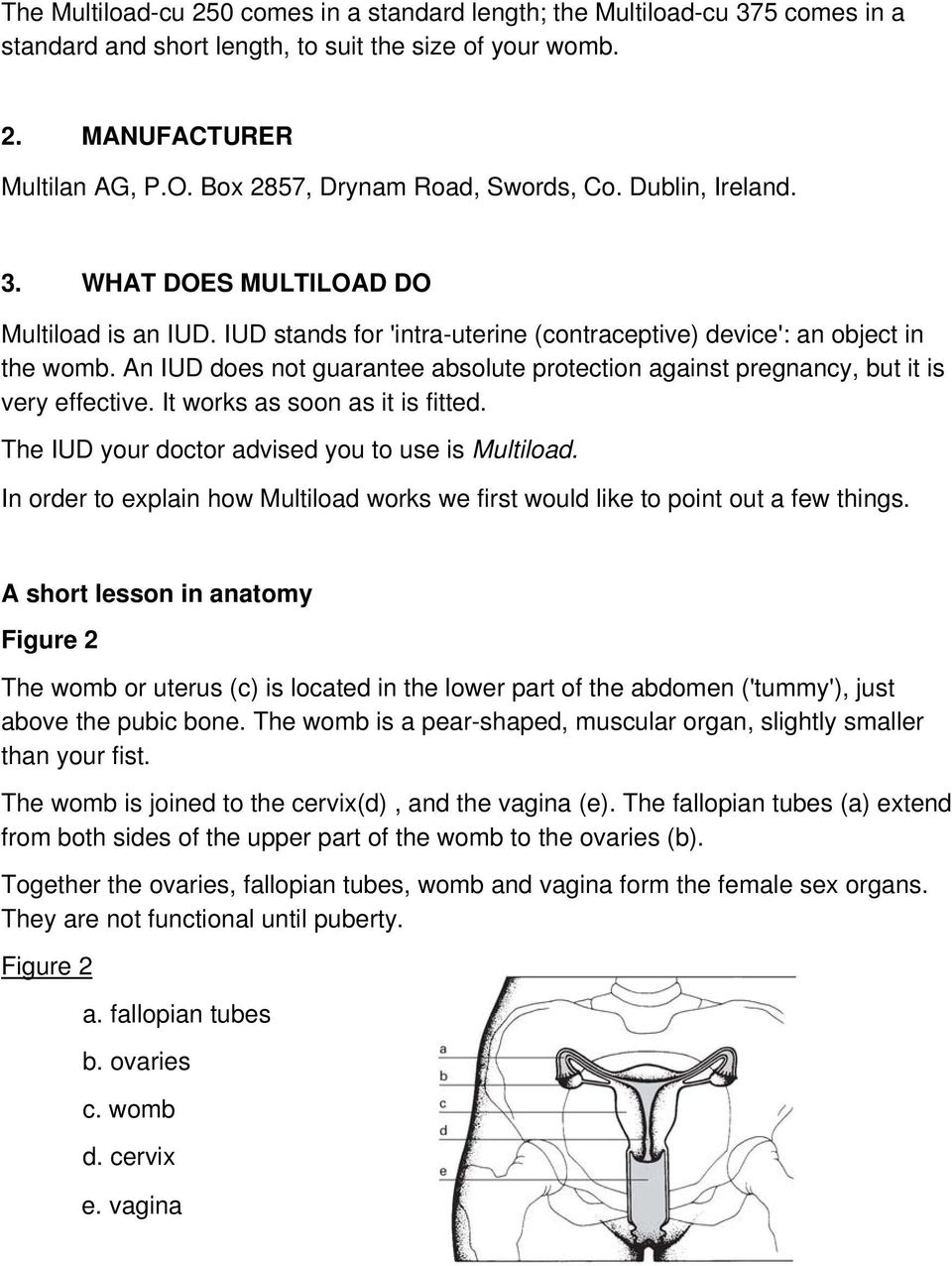
3 The Multiload-cu 250 comes in a standard length; the Multiload-cu 375 comes in a standard and short length, to suit the size of your womb. 2. MANUFACTURER Multilan AG, P.O. Box 2857, Drynam Road, Swords, Co. Dublin, Ireland. 3. WHAT DOES MULTILOAD DO Multiload is an IUD. IUD stands for 'intra-uterine (contraceptive) device': an object in the womb. An IUD does not guarantee absolute protection against pregnancy, but it is very effective. It works as soon as it is fitted. The IUD your doctor advised you to use is Multiload. In order to explain how Multiload works we first would like to point out a few things. A short lesson in anatomy Figure 2 The womb or uterus (c) is located in the lower part of the abdomen ('tummy'), just above the pubic bone. The womb is a pear-shaped, muscular organ, slightly smaller than your fist. The womb is joined to the cervix(d), and the vagina (e). The fallopian tubes (a) extend from both sides of the upper part of the womb to the ovaries (b). Together the ovaries, fallopian tubes, womb and vagina form the female sex organs. They are not functional until puberty. Figure 2 a. fallopian tubes b. ovaries c. womb d. cervix e. vagina
4 Figure 3 When a woman starts having periods (menstruating) she is sexually mature. Around every four weeks a tiny egg cell (which is smaller than this. dot) ripens in one of the ovaries. This egg cell (a) travels through the fallopian tube where it may be fertilized by a male seed cell (sperm, b in Figure 3). While the egg cell travels through the fallopian tube, the womb prepares to receive a fertilized egg. The inside of the womb is lined with mucous membrane (c) (just like the inside of your mouth). At about the time when an egg cell is ready to be fertilized, this membrane - the endometrium - becomes twice as thick as normal, and tiny blood vessels supply it with an extra quantity of blood. Figure 3: If the egg cell is not fertilized, a part of the endometrium is shed after fourteen days, together with a quantity of blood and : menstruation (d) takes place. If the egg is fertilized, it travels from the fallopian tube into the womb. Here, it attaches to the mucous membrane (e), usually high up in the womb. If this happens, the mucous membrane is not shed and: no menstruation takes place. An age old method rediscovered For more than 2000 years it has been known that pregnancy can be prevented by inserting objects into the womb, such as a pebble, a ring or a wire. Doctors have developed a modern and reliable way of contraception based on this age-old method. An important discovery was that the reliability of IUDs is greatly improved by adding copper. How an IUD prevents pregnancy is not exactly known yet, but it is generally believed that an IUD prevents the sperm meeting and fertilizing an egg cell.

5 4. WHEN SHOULD YOU NOT USE MULTILOAD Your doctor will take a thorough look at your medical records to find out if there is any reason why you should not use an IUD. In addition, you must tell your doctor all about your state of health. You should not use Multiload if any of the following applies to you: 1. tumors of the womb or cervix; 2. vaginal bleeding with an unknown cause; 3. pregnancy or suspected pregnancy; 4. an increased risk of extra-uterine (or 'ectopic') pregnancy. That is a pregnancy in which a fertilized egg does not implant in the womb, but for instance in a fallopian tube. The risk is higher if you have had an ectopic pregnancy before, or if you have ever had an infection of the womb or the fallopian tubes (pelvic inflammatory disease, PID); 5. abnormalities of the womb or the cervix; many or large fibroids (benign growths of the uterine wall) together with very heavy menstrual periods; endometriosis (growth of uterine tissue outside the womb or fallopian tubes); 6. an infection of the reproductive organs, with the exception of candidiasis (the latter is an infection caused by the skin fungus Candida albicans); 7. a sexually transmitted disease during the past 12 months (with the exception of vaginal infections caused by bacteria, candidiasis, or infections caused by the herpes virus, the hepatitis B virus, or the cytomegalovirus); 8. an infected miscarriage or abortion in the past 3 months; 9. PID (pelvic inflammatory disease, infection of the womb or the fallopian tubes), or if you suffer repeatedly from PID; 10. an allergy to copper.
6 5. WHAT DO YOU NEED TO KNOW BEFORE USING MULTILOAD IUDs DO NOT protect against HIV infection (AIDS) or any other sexually transmitted disease. 5.1 General notes You should be informed by your doctor on all aspects of Multiload including those concerning your health and future fertility. Your doctor should arrange regular check-ups for you. Contact your doctor about any changes in your state of health, which you think may be due to the use of Multiload. Tell any doctor you consult that you are using an IUD. 5.2 Multiload and other medicines Some medicines may prevent Multiload from working properly. This can lead to decrease in contraceptive efficacy. This is the case for medicines that suppress the immune system (for instance given to prevent rejection of a graft after transplantation), corticosteroids, and 'nonsteroidal anti-inflammatory drugs' (NSAIDs) including painkillers such as aspirin. If you need long-lasting intensive treatment with any of these medicines, another method of contraception might be more appropriate. If you have to undergo intensive treatment with any of these medicines on occasion, during these periods you should take additional protective measures (for example by using a condom). There are also indications that tetracycline antibiotics may hinder the working of an IUD. Always tell your doctor or dentist who prescribes another medicine that you use Multiload. He/she can tell you if need to take additional contraceptive precautions and if so, for how long. 5.3 Multiload and other treatments When you have microwave, shortwave or diathermy treatment of the lower abdomen or back, inform your (physio)therapist that you use a copper-bearing IUD. Magnetic Resonance Imaging (MRI) does not negatively influence the working of Multiload. Multiload does not impair the scan obtained with MRI. 5.4 Multiload and breast feeding Multiload may be used while you are breast feeding. However, as there may be an increased risk that Multiload may pass the uterine wall during breast feeding,
7 particular care should be taken. Therefore, if you wish to use Multiload while breastfeeding, please seek the advice of your doctor. 5.5 Multiload and pregnancy Even when using an IUD, there is still a very slight chance that you become pregnant. If this happens, pregnancy could lead to serious complications. So you should contact your doctor if your period is two weeks or more late. The IUD should be removed as soon as pregnancy is established. Sometimes, removing the IUD leads to a miscarriage. If you insist on continuing the pregnancy without removal of the IUD, you ought to be referred to a gynaecologist. This because such a pregnancy requires a good medical support. You must tell your doctor immediately if you have complaints such as flu, fever, cramping or pain in your tummy, pain during intercourse and vaginal bleeding or discharge. If you do get pregnant with the IUD in place, there is a chance of having an extrauterine pregnancy (a fertilized egg not implanting in the womb, but for instance in a fallopian tube). Although a copper loaded IUD protects also against extra-uterine (ectopic) pregnancies, it protects better against a normal pregnancy. An extra-uterine pregnancy is a serious condition, which needs urgent medical attention. Some signs of an ectopic pregnancy are: - your period is two or more weeks late; - severe one-sided lower abdominal pain with or without vaginal bleeding; - shoulder tip pain; - dizziness or fainting. You must tell your doctor immediately if you have any of these signs. 5.6 Multiload and the ability to drive and use machines It is unlikely that Multiload affects the ability to drive and the capability to use machines. 6. WHEN SHOULD YOU CONTACT YOUR DOCTOR You should have extra check-ups by your doctor if any of the following apply to you: 1. valvular heart disease. The use of an IUD may increase the risk of a bacterial inflammation of the inside lining of the heart (endocarditis). To prevent this, treatment with antibiotics should be given on inserting or removing the IUD;
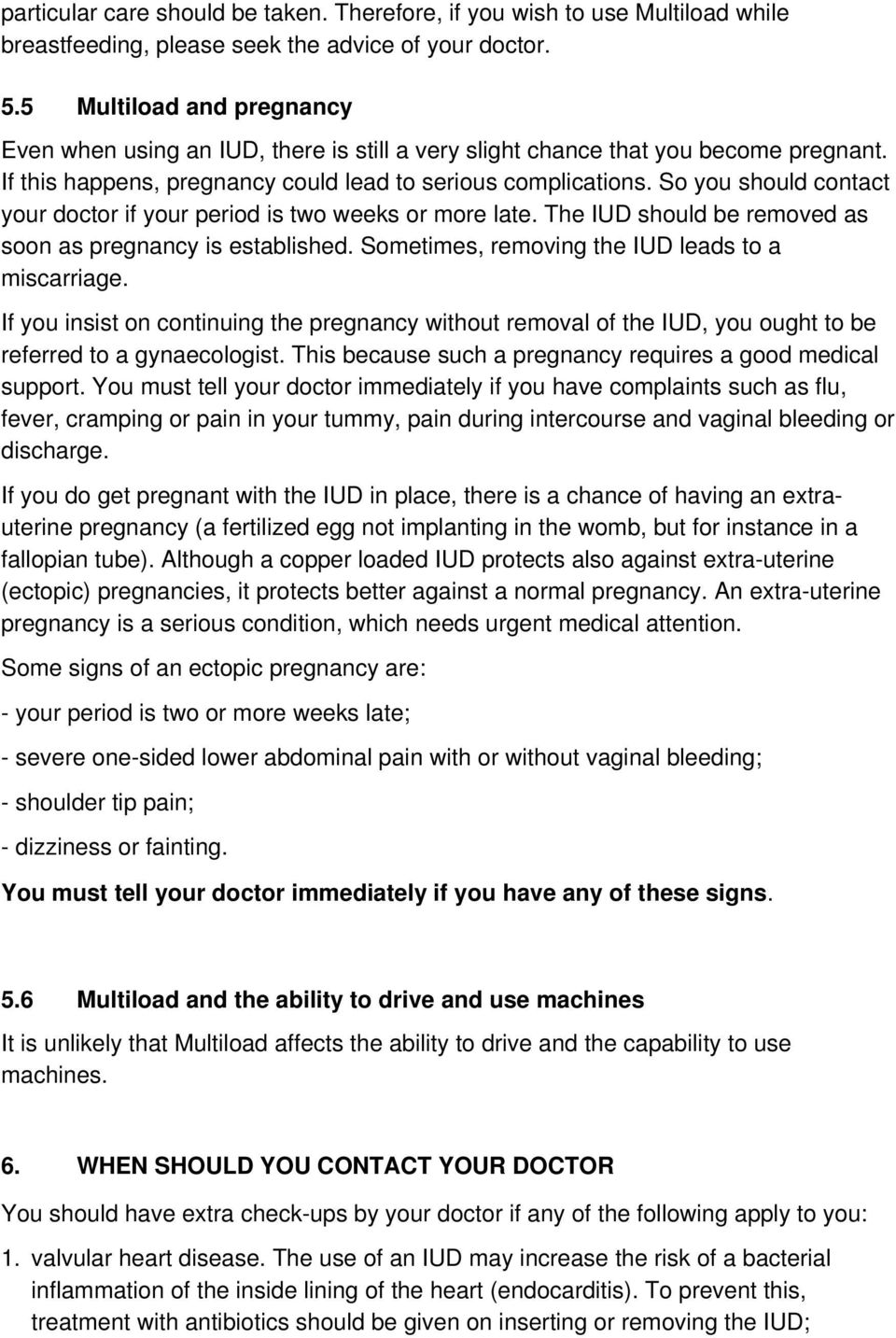
8 2. anaemia, or a history of severe uterine bleeding; 3. if you have a blood clotting disorder, or if you are using medicines that interfere with blood clotting (anti-coagulants); 4. painful or irregular menstruation; 5. uterine scars from perforation, or from surgery (other than caesarean section); 6. small fibroids (benign growths of the uterine wall), polyps (benign growths of the uterine mucous membrane), or endometriosis (growth of uterine tissue outside the womb or fallopian tubes); 7. a disorder of the copper metabolism (that is the way in which your body takes up and excretes copper), for instance Wilson's disease; 8. an infection of the lower genital tract (cervix and vagina), or if you suffer from that repeatedly; 9. sexual contact with multiple partners and unsafe sexual habits do increase the risk of PID. So tell your doctor if you or your partner have other sexual partners. 7. HOW SHOULD MULTILOAD BE USED 7.1 How should Multiload be inserted Multiload has to be inserted by a doctor. After examining your womb to determine its position, size and condition, an instrument called 'speculum' is inserted into your vagina (as for a smear test) and the cervix and vagina are cleaned with antiseptic lotion. The womb is held steady while its length is measured. Your doctor uses a thin plastic tube to insert Multiload into your womb. After insertion of Multiload, the two threads reach into the top of the vagina (see Figures 4 and 5) so that you can check if Multiload is still in place. Your doctor will show you how to do this. Figure 4:
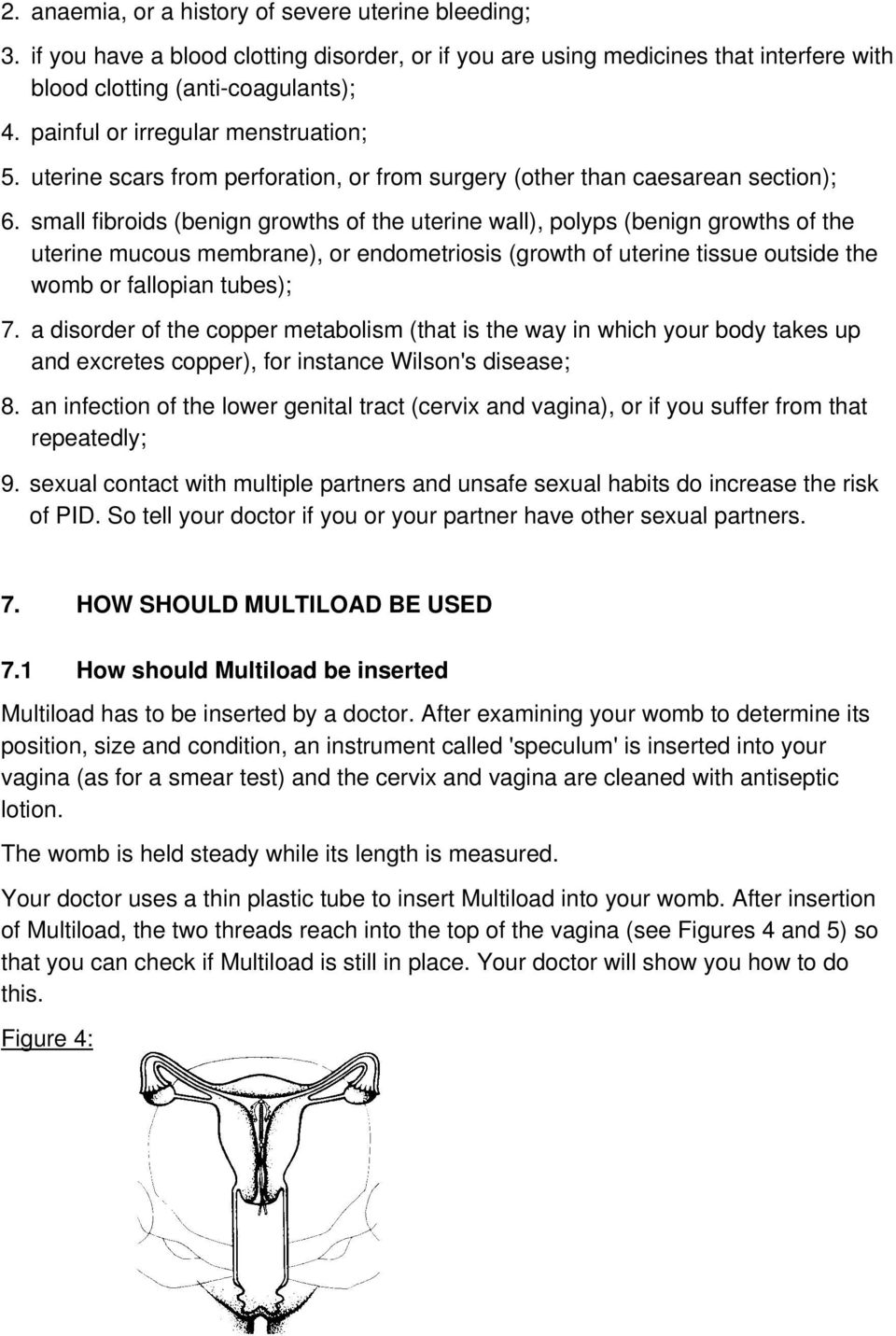
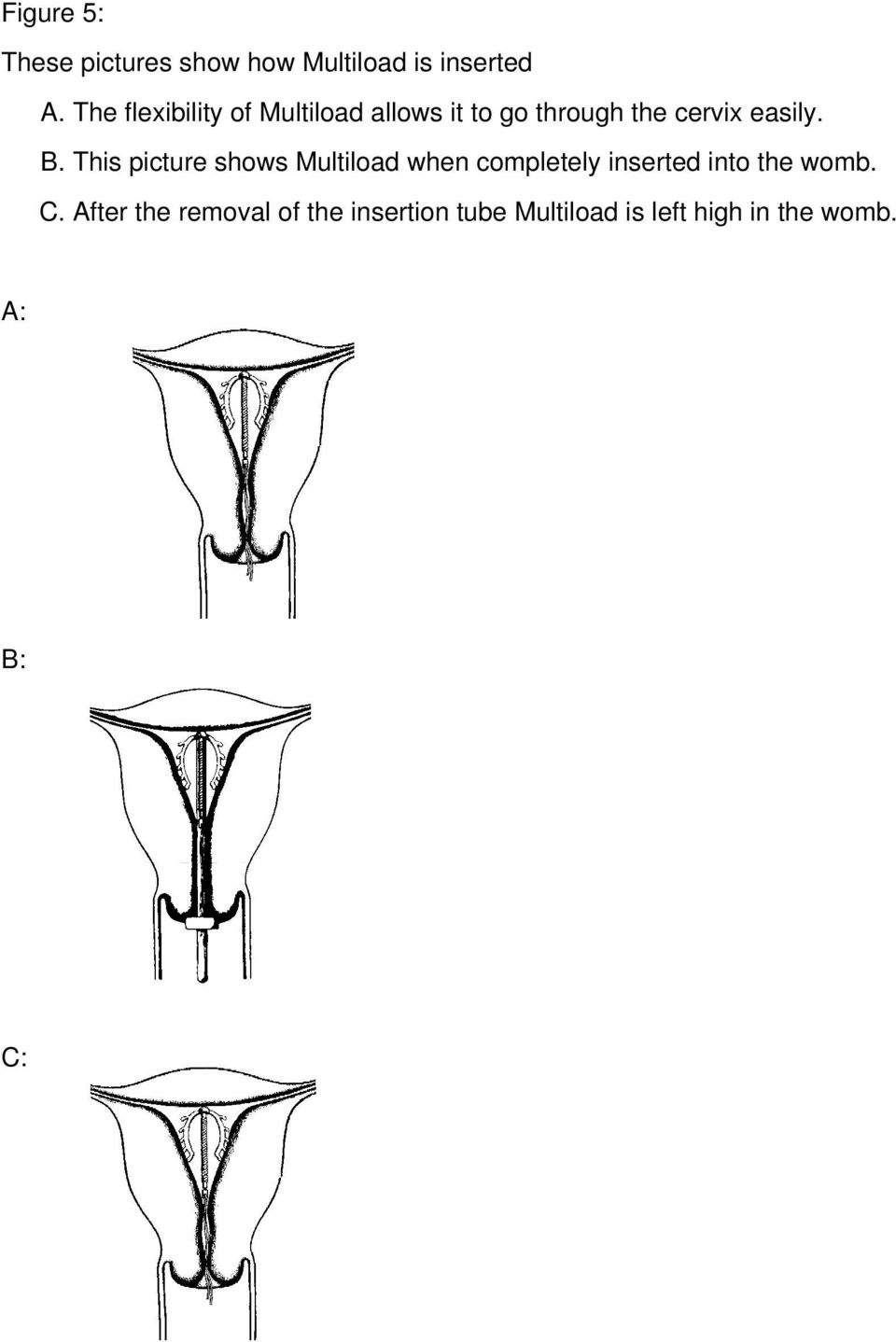
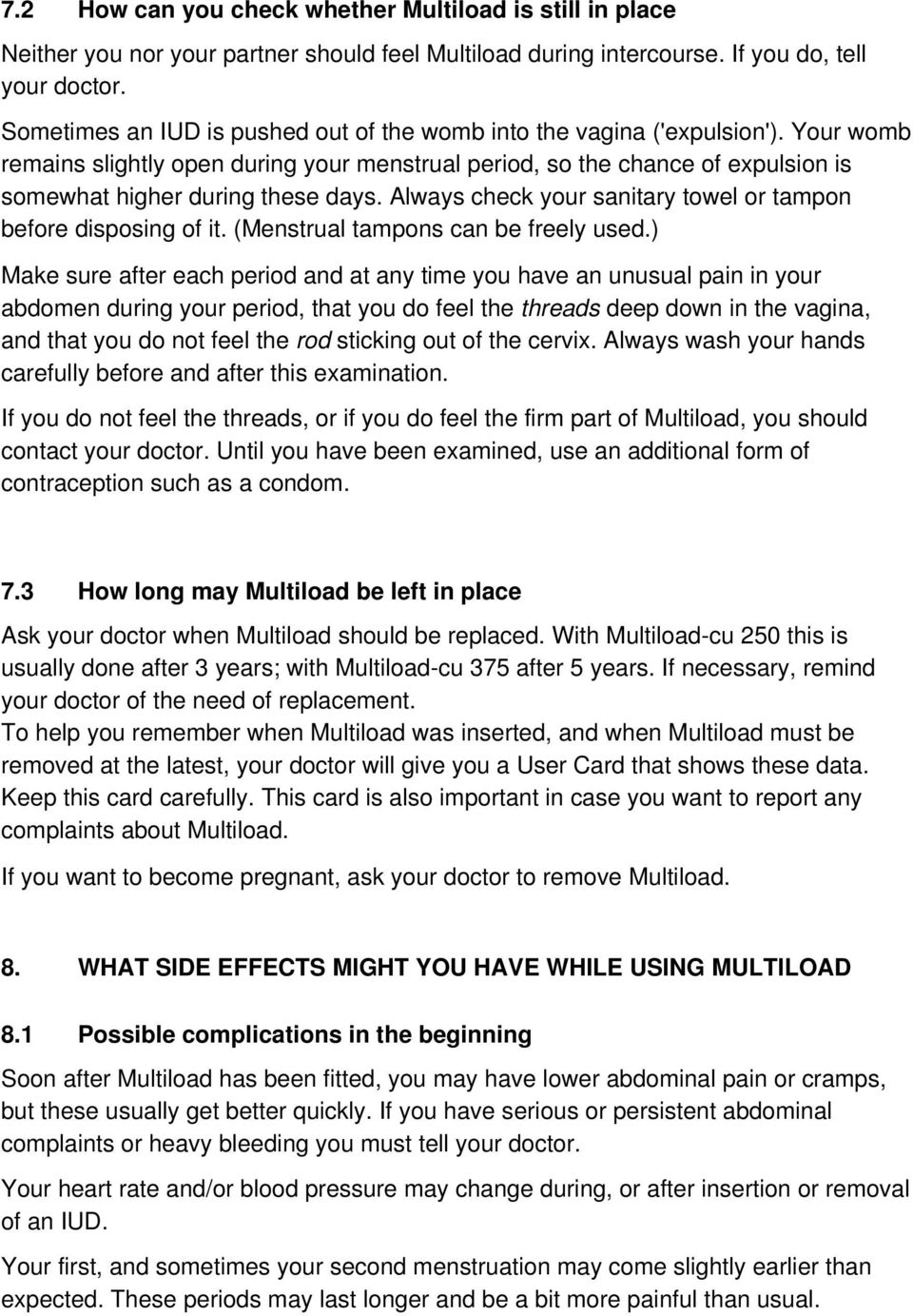
9 Figure 5: These pictures show how Multiload is inserted A. The flexibility of Multiload allows it to go through the cervix easily. B. This picture shows Multiload when completely inserted into the womb. C. After the removal of the insertion tube Multiload is left high in the womb. A: B: C:
10 7.2 How can you check whether Multiload is still in place Neither you nor your partner should feel Multiload during intercourse. If you do, tell your doctor. Sometimes an IUD is pushed out of the womb into the vagina ('expulsion'). Your womb remains slightly open during your menstrual period, so the chance of expulsion is somewhat higher during these days. Always check your sanitary towel or tampon before disposing of it. (Menstrual tampons can be freely used.) Make sure after each period and at any time you have an unusual pain in your abdomen during your period, that you do feel the threads deep down in the vagina, and that you do not feel the rod sticking out of the cervix. Always wash your hands carefully before and after this examination. If you do not feel the threads, or if you do feel the firm part of Multiload, you should contact your doctor. Until you have been examined, use an additional form of contraception such as a condom. 7.3 How long may Multiload be left in place Ask your doctor when Multiload should be replaced. With Multiload-cu 250 this is usually done after 3 years; with Multiload-cu 375 after 5 years. If necessary, remind your doctor of the need of replacement. To help you remember when Multiload was inserted, and when Multiload must be removed at the latest, your doctor will give you a User Card that shows these data. Keep this card carefully. This card is also important in case you want to report any complaints about Multiload. If you want to become pregnant, ask your doctor to remove Multiload. 8. WHAT SIDE EFFECTS MIGHT YOU HAVE WHILE USING MULTILOAD 8.1 Possible complications in the beginning Soon after Multiload has been fitted, you may have lower abdominal pain or cramps, but these usually get better quickly. If you have serious or persistent abdominal complaints or heavy bleeding you must tell your doctor. Your heart rate and/or blood pressure may change during, or after insertion or removal of an IUD. Your first, and sometimes your second menstruation may come slightly earlier than expected. These periods may last longer and be a bit more painful than usual.
11 In the beginning some bleeding may occur between menstrual periods. This is nothing to worry about, but mention it to your doctor during your next visit. After two or three months everything should be back to normal again. Occasionally complaints are reported, such as; pain in the back or legs, pain during intercourse, or itching eruptions of the skin as a result of an allergic reaction. If you notice such signs, contact your doctor immediately. 8.2 Infections of the sex organs or urinary tract During the first weeks to months after insertion of an IUD, there is a slightly higher chance of infection of the womb and the fallopian tubes (pelvic inflammatory disease, PID). The chances of getting an infection are greater if you or your partner have other sexual partners. Having PID can seriously affect your fertility in the future. An infection should be treated until it is completely cured. Sometimes the IUD has to be removed to ensure complete healing of the infection. Signs of an infection of the sex organs or urinary tract are: - flu-like complaints with a high temperature (over 38 C/100 F); - persistent lower abdominal tenderness or pain; - pain during or after sexual intercourse; - prolonged or heavy menstrual bleeding; - unpleasant-smelling vaginal discharge. You must tell your doctor immediately if you have any of these signs. 8.3 Breakage There have been occasional reports of the thread breaking when removing Multiload. Very occasionally the plastic body broke. This mostly happened when Multiload got stuck (embedded) in the wall of the womb. Breakage or embedding may require an operation (curettage) to remove the device or pieces of it. 8.4 A shifting IUD In rare occasions an IUD may pass the uterine wall. If this occurs an operation may be required to remove the IUD and the uterine wall may need to be repaired.

12 9. STORAGE AND SHELF-LIFE Don't open or damage the pouch. In an intact package Multiload may be stored for five years, if kept dry and below 30 C in the original carton box. Multiload may be inserted until the expiry date printed on the package. 10. PACKAGE Pouch containing one sterile Multiload-cu 250 (Standard) or one Multiload-cu 375 (Standard or SL). 11. CUSTOMER SERVICES In order to maintain the high quality of this the manufacturer is very interested in all your complaints or remarks with respect to Multiload. If you have any complaint or remark, it is recommended to discuss these with your doctor, but you may also report these directly to your local distributor of Multiload (for address details see User Card). Please always report the Lot number of the Multiload you are using; the Lot number is mentioned on your User Card. 12. LAST REVISION OF THESE INSTRUCTIONS FOR USE: November EXPLANATION OF SYMBOLS USED ON THE PACKAGE AND USER CARD: : Attention: see instruction for use : Sterile, sterilized by irradiation : Single use
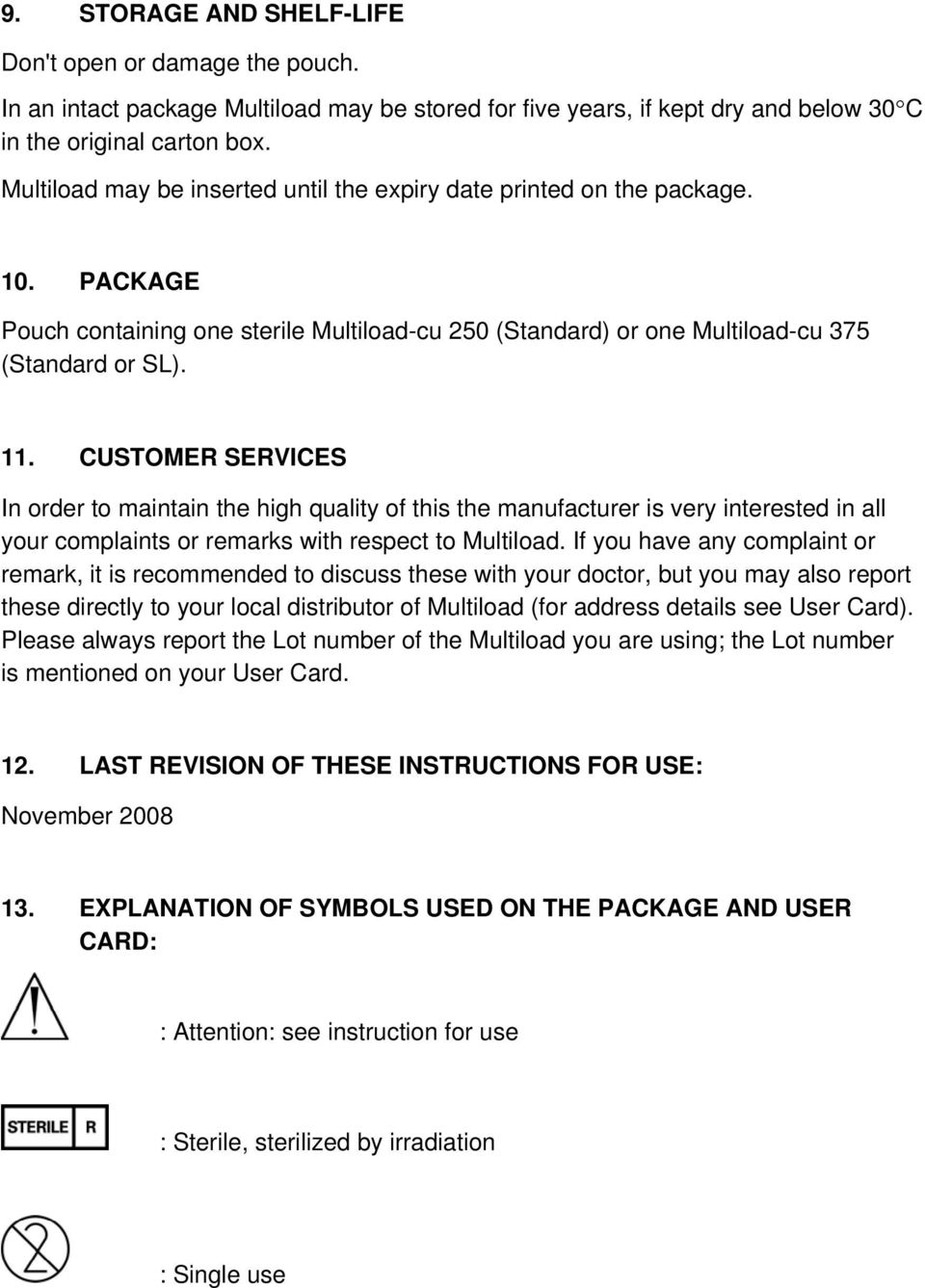
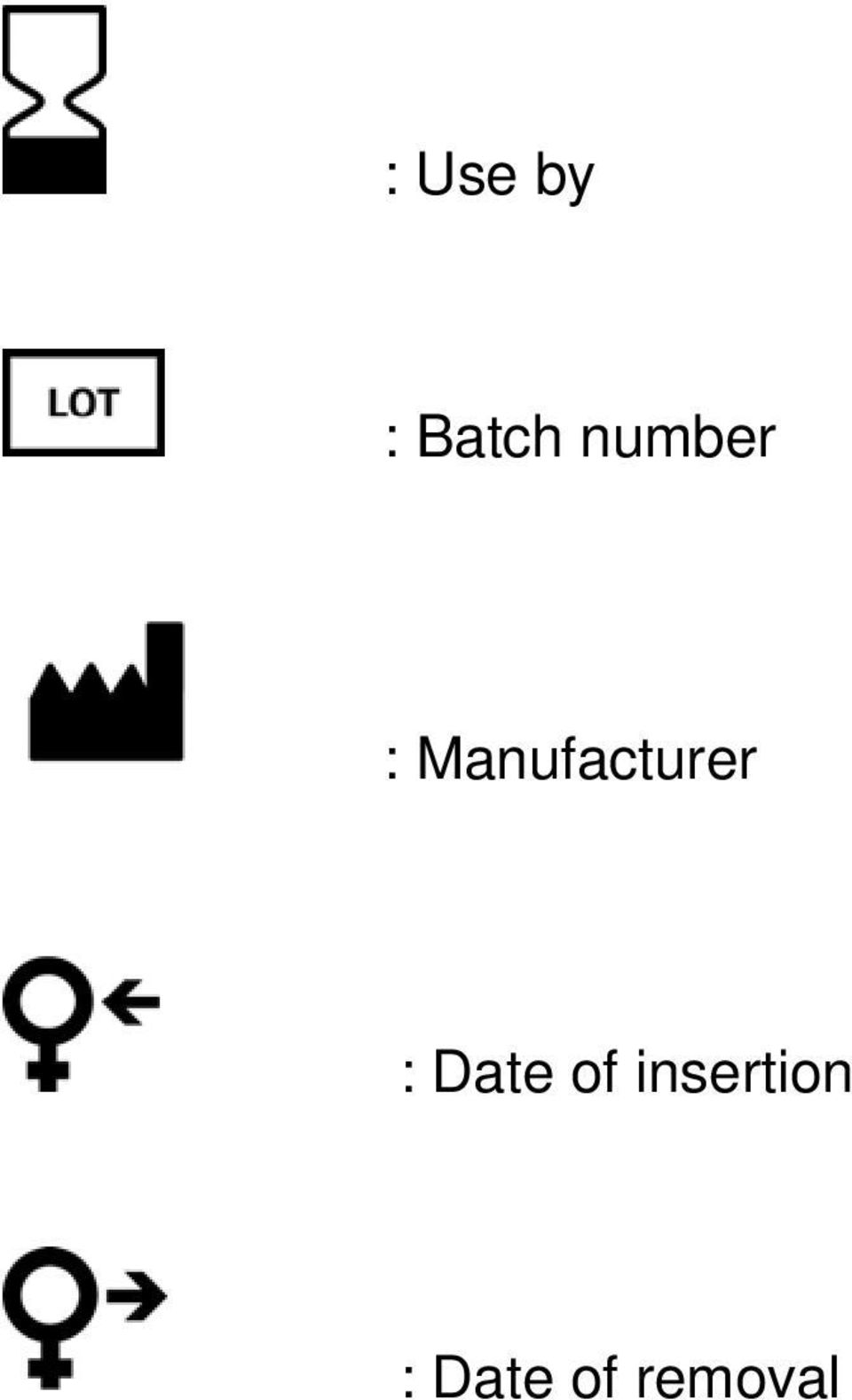
13 : Use by : Batch number : Manufacturer : Date of insertion : Date of removal
A Guide to Hysteroscopy. Patient Education
 A Guide to Hysteroscopy Patient Education QUESTIONS AND ANSWERS ABOUT HYSTEROSCOPY Your doctor has recommended that you have a procedure called a hysteroscopy. Naturally, you may have questions about
the IUD the IUD the IUD the IUD the IUD the IUD the IUD the IUD the IUD the IUD the IUD the IUD the IUD your guide to
 your guide to Helping you choose the method of contraception that is best for you IUD IUD the e IUD IU IUD the IUD 2 The intrauterine device (IUD) An IUD is a small plastic and copper device that is put
Abnormal Uterine Bleeding FAQ Sheet
 Abnormal Uterine Bleeding FAQ Sheet What is abnormal uterine bleeding? Under normal circumstances, a woman's uterus sheds a limited amount of blood during each menstrual period. Bleeding that occurs between
IUD. the IUD. the IUD. the IUD. the IUD. the IUD. the IUD the IUD. the IUD. the the IUD. the IUD. the IUD. the IUD. the IUD. the IUD.
 your guide to Helping you choose the method of contraception that is best for you I the IUD 2 3 The intrauterine device (IUD) An IUD is a small plastic and copper device that is put into your uterus (womb).
LIPPES LOOP TRADEMARK. your intrauterine contraceptive
 LIPPES LOOP TRADEMARK your intrauterine contraceptive LIPPES LOOP Patient Information This brochure provides information on the use of In trauterine Contraceptive Devices (lud s). There are other birth
IUD. the IUD. the IUD. the IUD. the IUD. the IUD. the IUD. the IUD. the IUD. the IUD. your guide to
 your guide to Helping you choose the method of contraception that is best for you IUD he the the the 2 3 The intrauterine device (IUD) An IUD is a small plastic and copper device that is put into your
Birth Control Options
 1 of 5 6/2/2014 9:46 AM Return to Web version Birth Control Options What is contraception? Contraception means preventing pregnancy, also called birth control. Most people know about options such as birth
Effective long-lasting strategy to prevent unintended pregnancy. The intrauterine system for contraception after abortion.
 Effective long-lasting strategy to prevent unintended pregnancy. The intrauterine system for contraception after abortion. After the abortion I started re-thinking my birth control method. I am looking
Glossary. amenorrhea, primary - from the beginning and lifelong; menstruation never begins at puberty.
 Glossary amenorrhea - absence or cessation of menstrual periods. amenorrhea, primary - from the beginning and lifelong; menstruation never begins at puberty. A amenorrhea, secondary - due to some physical
Heavy menstrual bleeding and what you can do about it!
 Heavy menstrual bleeding and what you can do about it! The intrauterine system as an alternative to hysterectomy. What is heavy menstrual bleeding? Do I have it? A woman s menstrual periods are considered
Abnormal Uterine Bleeding
 Abnormal Uterine Bleeding WOMENCARE A Healthy Woman is a Powerful Woman (407) 898-1500 Abnormal uterine bleeding is one of the most common reasons women see their doctors. It can occur at any age and has
About the Uterus. Hysterectomy may be done to treat conditions that affect the uterus. Some reasons a hysterectomy may be needed include:
 Hysterectomy removal of the uterus is a way of treating problems that affect the uterus. Many conditions can be cured with hysterectomy. Because it is major surgery, your doctor may suggest trying other
Copper intra-uterine device (IUD)
 Oxford University Hospitals NHS Trust Copper intra-uterine device (IUD) Page What is an inter-uterine device? 3 How does it work? 4 Would an IUD be suitable for me? 5 Are there any risks or complications?
Summa Health System. A Woman s Guide to Hysterectomy
 Summa Health System A Woman s Guide to Hysterectomy Hysterectomy A hysterectomy is a surgical procedure to remove a woman s uterus (womb). The uterus is the organ which shelters and nourishes a baby during
WOMENCARE A Healthy Woman is a Powerful Woman (407) 898-1500. Birth Control Pills
 Birth Control Pills WOMENCARE A Healthy Woman is a Powerful Woman (407) 898-1500 Birth control pills (also called oral contraceptives or "the pill") are used by millions of women in the United States to
Acute pelvic inflammatory disease: tests and treatment
 Acute pelvic inflammatory disease: tests and treatment Information for you Information for you Published August 2010 Published in August 2010 (next review date: 2014) Acute What is pelvic inflammatory
Outpatient hysteroscopy
 Women s & Children s Outpatient hysteroscopy Information for patients Welcome to King s gynaecology service. The doctor who saw you in the outpatient clinic recently has recommended that you have a procedure
Sterilisation for women and men: what you need to know
 Sterilisation for women and men: what you need to know Published January 2004 by the RCOG Contents Page number Key points 1 About this information 2 What are tubal occlusion and vasectomy? 2 What do I
Medical criteria for IUCD s Based on the WHO MEC (2004- Annexure 3) system a woman s eligibility for IUCD insertion falls in 4 categories. These categ
 CLIENT ASSESSMENT Ensure that the woman is not pregnant Determine the length and direction of uterus. Ensure that she does not have gonorrhea and chlamydia, and is not a high risk case of STI s Identify
Uterine fibroids (Leiomyoma)
 Uterine fibroids (Leiomyoma) What are uterine fibroids? Uterine fibroids are fairly common benign (not cancer) growths in the uterus. They occur in about 25 50% of all women. Many women who have fibroids
Menstruation and the Menstrual Cycle
 Menstruation and the Menstrual Cycle Q: What is menstruation? A: Menstruation (men-stray-shuhn) is a woman's monthly bleeding. When you menstruate, your body sheds the lining of the uterus (womb). Menstrual
Heavy periods (menstrual bleeding)
 Heavy periods (menstrual bleeding) This information sheet has been given to you to help answer some of the questions you may have about heavy periods and the treatments that are available. This leaflet
Female Reproductive System. Unit 8 Lesson 2 Continued
 Female Reproductive System Unit 8 Lesson 2 Continued Female Reproductive System Female Reproductive System Female produce ovum or egg cells. The egg (ovum) cell is the female sex cell. Female Reproductive
Out-patient hysteroscopy. Information for patients
 Out-patient hysteroscopy Information for patients Important If there is any chance you may be pregnant please tell a member of the team immediately. We will not be able to perform a hysteroscopy if you
THE WELL. Intrauterine Contraceptive Devices WOMAN CENTRE
 THE WELL WOMAN CENTRE Intrauterine Contraceptive Devices INTRAUTERINE CONTRACEPTIVE DEVICES How does the Mirena work? How effective is the Mirena? What are the advantages of the Mirena? What are the disadvantages
Department of Gynaecology Early medically induced termination of pregnancy. Information for patients
 Department of Gynaecology Early medically induced termination of pregnancy Information for patients Medically induced termination of pregnancy In this procedure the termination of pregnancy is brought
This is Jaydess. Patient Information. What is Jaydess? How does Jaydess work?
 , Patient Information This is Jaydess We hope that this brochure will answer your questions and concerns about Jaydess. What is Jaydess? Jaydess is an intrauterine device consisting of a hormone capsule
Women s Health Laparoscopy Information for patients
 Women s Health Laparoscopy Information for patients This leaflet is for women who have been advised to have a laparoscopy. It outlines the common reasons doctors recommend this operation, what will happen
Menstruation and the Menstrual Cycle
 Menstruation and the Menstrual Cycle Q: What is menstruation? A: Menstruation is a woman s monthly bleeding, also called a period. When you menstruate, your body is shedding the lining of the uterus (womb).
Safe & Unsafe. abortion
 Safe & Unsafe Facts About abortion WHAT IS THE DIFFERENCE BETWEEN UNSAFE AND SAFE ABORTION? What is unsafe abortion? Unsafe abortion is a procedure for terminating an unplanned pregnancy either by a person
All methods of birth control are MUCH SAFER than being pregnant! If 100 women use each method for a year, how many of them get pregnant?
 The Correct Use of Birth Control: In order for any method of birth control to be effective, it must be used correctly ALL THE TIME. This means: One condom every time you have sex One pill every day One
abortion your questions answered
 abortion your questions answered About Marie Stopes International Marie Stopes International is a specialist reproductive healthcare organisation and a registered charity working in both the UK and overseas.
Gynaecology FAQ s. Correspondence address: 204 Fulham Road London SW10 9PJ Email: [email protected] Tel: 02077514489
 Gynaecology FAQ s Why is the cervical screening test important? Cervical cancer is not uncommon. In recent years the number of cases has fallen due to cervical screening tests. However, there are still
TERMINATION OF PREGNANCY- MEDICAL
 TERMINATION OF PREGNANCY- MEDICAL Information Leaflet Your Health. Our Priority. Page 2 of 8 You have been offered a medical termination of pregnancy using mifepristone. You will have been given some verbal
implant contraceptiv contraceptive contraceptive raceptiv contraceptive implant contraceptive contraceptive ontraceptive implant ontraceptive im
 your guide to the contraceptive implant Helping you choose the method of contraception that is best for you contra ontraceptive im contraceptive implant mpl ceptive contraceptive contracepti ntraceptive
Leader's Resource. Note: Both men and women can have an STD without physical symptoms.
 Leader's Resource Information on Sexually Transmitted Diseases (STDs) Signs and Symptoms of STDs Note: Both men and women can have an STD without physical symptoms. Any of the following can indicate to
Ovarian Cyst. Homoeopathy Clinic. Introduction. Types of Ovarian Cysts. Contents. Case Reports. 21 August 2002
 Case Reports 21 August 2002 Ovarian Cyst Homoeopathy Clinic Check Yourself If you have any of the following symptoms call your doctor. Sense of fullness or pressure or a dull ache in the abdomen Pain during
Understanding Fertility
 Understanding Fertility 6 Introduction The word fertile means the ability to become pregnant or to cause pregnancy. Basic knowledge of both the male and female reproductive systems is important for understanding
ency emergency contra-
 your guide to emergency contraception Helping you choose the method of contraception that is best for you emergency cont gency contrace emergency contraception ency emergency contra- emergen mergency contraception
LAPAROSCOPIC OVARIAN CYSTECTOMY
 LAPAROSCOPIC OVARIAN CYSTECTOMY Information Leaflet Your Health. Our Priority. Page 2 of 5 About this information This leaflet is for you if you have a cyst on one or both ovaries and are considering surgery.
Diseases that can be spread during sex
 Diseases that can be spread during sex Did you know... over 65 million people in the United States have a chronic, incurable sexually transmitted disease (STD)? and that every year another 19 million persons
OUTPATIENT HYSTEROSCOPY SERVICES JASMINE SUITE
 OUTPATIENT HYSTEROSCOPY SERVICES JASMINE SUITE Information Leaflet Your Health. Our Priority. Page 2 of 6 This information is for patients having a hysteroscopy (diagnostic or operative). It explains what
Intrauterine Device (IUD) THE FACTS
 Intrauterine Device (IUD) Quick Facts Effectiveness in Preventing Pregnancy: Use: Of 100 women using IUDs for a year, about one may become pregnant. IUDs are better at preventing pregnancy than condoms,
FDA-Approved Patient Labeling IMPLANON (etonogestrel implant) Subdermal Use
 FDA-Approved Patient Labeling IMPLANON (etonogestrel implant) Subdermal Use IMPLANON does not protect against HIV infection (the virus that causes AIDS) or other sexually transmitted diseases. Read this
Hysterectomy. What is a hysterectomy? Why is hysterectomy done? Are there alternatives to hysterectomy?
 ROBERT LEVITT, MD JESSICA BERGER-WEISS, MD ADRIENNE POTTS, MD HARTAJ POWELL, MD, MPH COURTNEY LEVENSON, MD LAUREN BURNS, MSN, RN, WHNP OBGYNCWC.COM What is a hysterectomy? Hysterectomy Hysterectomy is
Chlamydia THE FACTS. How do people get Chlamydia?
 What is Chlamydia? Chlamydia is a common bacterial infection that is sexually transmitted and often causes no symptoms. If not treated, chlamydia can damage reproductive organs and make it difficult for
Copper-Bearing Intrauterine Device
 CHAPTER 9 Copper-Bearing Intrauterine Device This chapter describes primarily the TCu-380A intrauterine device (for the Levonorgestrel Intrauterine Device, see p. 157). Key Points for Providers and Clients
abortion abortion abortion abortion abortion abortion abortion on abortio abortion ortion abortion abortion abortion abortion abortio
 Abortion Your questions answered abortio bortion ion ortion on abortio 2 Are you pregnant but not sure you want to have the baby? Do you need more information about your pregnancy choices? Unplanned pregnancy
OVARIAN CYSTS. Types of Ovarian Cysts There are many types of ovarian cysts and these can be categorized into functional and nonfunctional
 OVARIAN CYSTS Follicular Cyst Ovarian cysts are fluid-filled sacs that form within or on the ovary. The majority of these cysts are functional meaning they usually form during a normal menstrual cycle.
PILLS & RING INFORMATION AND INSTRUCTIONS ON COMBINED HORMONAL CONTRACEPTION INCLUDING BIRTH CONTROL PILLS & NUVA RING
 PILLS & RING INFORMATION AND INSTRUCTIONS ON COMBINED HORMONAL CONTRACEPTION INCLUDING BIRTH CONTROL PILLS & NUVA RING What is combined hormonal contraception? Birth control which contains two hormones
Introduction Ovarian cysts are a very common female condition. An ovarian cyst is a fluid-filled sac on an ovary in the female reproductive system.
 Ovarian Cysts Introduction Ovarian cysts are a very common female condition. An ovarian cyst is a fluid-filled sac on an ovary in the female reproductive system. Most women have ovarian cysts sometime
Information for you Abortion care
 Information for you Abortion care Published in February 2012 This information is for you if you are considering having an abortion. It tells you: how you can access abortion services the care you can expect
MULTILOAD Radio-Opaque Intrauterine Contraceptive Devices
 NEW ZEALAND DATA SHEET MULTILOAD Radio-Opaque Intrauterine Contraceptive Devices Presentation MULTILOAD consists of a small plastic rod wound with copper wire and provided with two flexible arms and a
Chlamydia. Looking after your sexual health
 Chlamydia Looking after your sexual health 2 Chlamydia Chlamydia is one of the most common sexually transmitted infections (STIs). It is very easy to treat and cure. Up to one in 10 sexually active young
Birth Control Methods
 page 1 Birth Control Methods Q: What is the best method of birth control (or contraception)? A: There is no best method of birth control. Each method has its pros and cons. All women and men can have control
progestog progestogen stogen-only pill progestogen progestogen-only pill he progestogen-only pill progestogen-onl progestogen-o the progestogenonly
 your guide to the progestogenonly pill Helping you choose the method of contraception that is best for you the progestogen rogestogen-only the progestogen-only pill progestogen-only pill stogen-only progestoge
WOMENCARE A Healthy Woman is a Powerful Woman (407) 898-1500. Endometriosis
 Endometriosis WOMENCARE A Healthy Woman is a Powerful Woman (407) 898-1500 The lining of the uterus is called the endometrium. Sometimes, endometrial tissue grows elsewhere in the body. When this happens
Young Women and Long-Acting Reversible Contraception. Safe, Reliable, and Cost-Effective Birth Control
 ISSUES AT A GLANCE Young Women and Long-Acting Reversible Contraception Safe, Reliable, and Cost-Effective Birth Control In 2012, the American College of Obstetricians and Gynecologists (ACOG) revised
Treating heavy menstrual bleeding caused by fibroids or polyps
 Treating heavy menstrual bleeding caused by fibroids or polyps With today s medical advances the outlook for successful treatment of fibroids and polyps has never been better. You don t have to live with
Family Planning for Women and Couples following Fistula Repair
 Family Planning for Women and Couples following Fistula Repair Fistula Care at EngenderHealth 440 Ninth Avenue, 13th Floor New York, NY, USA 10001 Tel: 212-561-8000 E-mail: [email protected]
Laparoscopy and Hysteroscopy
 AMERICAN SOCIETY FOR REPRODUCTIVE MEDICINE Laparoscopy and Hysteroscopy A Guide for Patients PATIENT INFORMATION SERIES Published by the American Society for Reproductive Medicine under the direction of
Gonorrhoea. Looking after your sexual health
 Gonorrhoea Looking after your sexual health 2 Gonorrhoea Gonorrhoea is a bacterial sexually transmitted infection (STI). It can be painful and can cause serious health problems such as infertility in both
Patient information leaflet for Termination of Pregnancy (TOP) / Abortion
 Patient information leaflet for Termination of Pregnancy (TOP) / Abortion Families Division Options available If you d like a large print, audio, Braille or a translated version of this leaflet then please
WOMENCARE A Healthy Woman is a Powerful Woman (407) 898-1500. Menstruation
 Menstruation WOMENCARE A Healthy Woman is a Powerful Woman (407) 898-1500 Menstruation is a normal and healthy part of growing up. The discharge of blood and tissue from the lining of your uterus each
Laparoscopic Hysterectomy
 Any further questions? Please contact the matron for Women s Health on 020 7288 5161 (answerphone) Monday - Thursday 9am - 5pm. For more information: Royal College of Obstetrics and Gynaecology Recovering
University College Hospital. Miscarriage Women s Health
 University College Hospital Miscarriage Women s Health 2 Introduction The purpose of this leafl et is to: Describe what a miscarriage is and why it happens What it means for your health What treatment
Vaginal hysterectomy and vaginal repair
 Women s Service Vaginal hysterectomy and vaginal repair Information for patients Vaginal hysterectomy and vaginal repair This leaflet is for women who have been advised to have a vaginal hysterectomy.
WHAT YOU SHOULD KNOW ABOUT ABORTION
 WHAT YOU SHOULD KNOW ABOUT ABORTION It is the public policy of the state of Idaho to prefer live childbirth over abortion: "The Supreme Court of the United States having held that the states have a "profound
An abnormal Pap smear - what does it mean?
 An abnormal Pap smear - what does it mean? It is natural to feel worried if you have just found out that your Pap smear result is not normal (abnormal). Around 1 in 10 Pap smears will show changes in the
Why is Cerazette used? To prevent pregnancy.
 CERAZETTE Tablets for oral use Consumer Medicine Information What is in this leaflet Keep this leaflet. You may need to read it again. This leaflet will provide information about the benefits and risks
EARLY PREGNANCY LOSS A Patient Guide to Treatment
 EARLY PREGNANCY LOSS A Patient Guide to Treatment You have a pregnancy that has stopped growing, or you have started to miscarry and the process has not completed. If so, there are four ways to manage
WHAT YOU SHOULD KNOW ABOUT ABORTION
 WHAT YOU SHOULD KNOW ABOUT ABORTION It is the public policy of the state of Idaho to prefer live childbirth over abortion: "The Supreme Court of the United States having held that the states have a "profound
Understanding Endometriosis - Information Pack
 What is endometriosis? Endometriosis (pronounced en- doh mee tree oh sis) is the name given to the condition where cells like the ones in the lining of the womb (uterus) are found elsewhere in the body.
Anatomy and Physiology of Human Reproduction. Module 10a
 This work is licensed under a Creative Commons Attribution-NonCommercial-ShareAlike License. Your use of this material constitutes acceptance of that license and the conditions of use of materials on this
Patient Information: Endometriosis Disease Process and Treatment
 1 William N. Burns, M. D. Associate Professor Department of Obstetrics & Gynecology Joan C. Edwards School of Medicine Marshall University Huntington, West Virginia, USA Patient Information: Endometriosis
injections injections injections injections injections injection injections injections injections tions njections injections injections injections
 your guide to contraceptive Helping you choose the method of contraception that is best for you ions ections injection njections injection tions 2 Contraceptive Contraceptive contain a progestogen hormone
Hysteroscopy (Out Patient, Day Case or In Patient)
 Hysteroscopy (Out Patient, Day Case or In Patient) Exceptional healthcare, personally delivered Introduction This leaflet explains the procedure of hysteroscopy. If you have any other questions do not
Uterine Fibroid Symptoms, Diagnosis and Treatment
 Fibroids and IR Uterine Fibroid Symptoms, Diagnosis and Treatment Interventional radiologists use MRIs to determine if fibroids can be embolised, detect alternate causes for the symptoms and rule out misdiagnosis,
Saint Mary s Hospital. Hysterectomy. Information For Patients
 Saint Mary s Hospital Hysterectomy Information For Patients 2 Contents Welcome 4 What is a hysterectomy? 4 Why is a hysterectomy necessary? 4 How common is it? 7 Things to consider before having a hysterectomy
Abortion Aftercare. Tel: 0845 359 6666 Tel: (01) 874 0097. www.smpclinic.co.uk
 Abortion Aftercare Your Guide to Advice & Information Following an Early Medical or Surgical Abortion Tel: (01) 874 0097 REPUBLIC OF IRELAND (R.O.I) 2 Aftercare Line Tel: (01) 874 0097 REPUBLIC OF IRELAND
Hysterectomy. The time to take care of yourself
 Hysterectomy The time to take care of yourself The time to take care of yourself Women spend a lot of time taking care of others spouses, children, parents. We often overlook our own needs. But when our
Hysterosalpingography
 Scan for mobile link. Hysterosalpingography Hysterosalpingography uses a real-time form of x-ray called fluoroscopy to examine the uterus and fallopian tubes of a woman who is having difficulty becoming
GLOSSARY. A Abstinence: having no vaginal, anal, or oral sex. It is the only method that is 100% effective in preventing pregnancy and STI s.
 WOMEN S HEALTH GLOSSARY We encourage you to learn the meanings behind these words for your personal health and to fully understand the words being used during your appointments at the Falcon Health Center.
The main surgical options for treating early stage cervical cancer are:
 INFORMATION LEAFLET ON TOTAL LAPAROSCOPIC RADICAL HYSTERECTOMY (TLRH) FOR EARLY STAGE CERVICAL CANCER (TREATING EARLY STAGE CERVICAL CANCER BY RADICAL HYSTERECTOMY THROUGH KEYHOLE SURGERY) Aim of the leaflet
Sexual reproduction in humans
 Sexual reproduction in humans Name: WHY DO HUMANS NEED TO REPRODUCE? The reason humans reproduce is to have children so that our species can continue to exist. Humans reproduce sexually, which means like
Unit 3 REPRODUCTIVE SYSTEMS AND THE MENSTRUAL CYCLE
 Unit 3 REPRODUCTIVE SYSTEMS AND THE MENSTRUAL CYCLE Learning Objectives By the end of this unit, the learner should be able to: Explain the importance of understanding the male and female reproductive
Having an early medical abortion
 Having an early medical abortion Patient information PAGE 2 OF 15 Early medical abortion The following information is for women intending to have an abortion at Gynaecology Centres Australia. More detailed
Clinical Interruption of Pregnancy (Medical/Surgical Abortion)
 Clinical Interruption of Pregnancy (Medical/Surgical Abortion) Approximately one fifth of all pregnancies in the United States end in abortion (Ventura et al., 2009). According to the CDC (2011a), there
Problems in Early Pregnancy
 Problems in Early Pregnancy Exceptional healthcare, personally delivered This information answers queries about issues that may arise in early pregnancy. Not all of these issues will apply to you. It provides
All you need to know about Endometriosis. Nordica Fertility Centre, Lagos, Asaba, Abuja
 All you need to know about Endometriosis October, 2015 About The Author Nordica Lagos Fertility Centre is one of Nigeria's leading centres for world class Assisted Reproductive Services, with comfort centres
Information on termination of pregnancy (abortion) A series of information leaflets on termination of pregnancy services in Greater Glasgow & Clyde
 Information on termination of pregnancy (abortion) A series of information leaflets on termination of pregnancy services in Greater Glasgow & Clyde Your first doctors appointment The assessment clinic
the abortion pill by David Hager, M.D.
 the abortion pill by David Hager, M.D. A positive pregnancy test is one of the most life-changing moments for a woman. Never is it more important to base your decisions on accurate information. Try to
Considering a Hysterectomy?
 Considering a Hysterectomy? Learn more about virtually scarless surgery using da Vinci Single-Site technology { {Symptoms & Conditions: Chronic Pain, Heavy Bleeding, Fibroids, Endometriosis, Pelvic Prolapse
Getting Pregnant: The Natural Approach Revealing the Secrets to Increase Your Fertility
 Getting Pregnant: The Natural Approach Revealing the Secrets to Increase Your Fertility Page 1 Contents Introduction 3 Part I Understanding Fertility and Infertility Chapter 1: What is Fertility? 4 - Signs
MHRI IUD Protocol. Migraine with aura Current DVT or PE History of or current breast cancer Active viral hepatitis Severe cirrhosis or liver tumors
 Table of Contents A. Indications B. Contraindications C. Prior to Insertion D. Insertion E. Follow-Up Visit F. Removal G. Re-Insertion H. Complications/Side Effects I. Appendices MHRI IUD Protocol A. Indications
ALTERNATIVE TREATMENT PLAN AND CONSENT FOR MEDICAL ABORTION WITH MIFEPREX (MIFEPRISTONE) AND MISOPROSTOL
 ALTERNATIVE TREATMENT PLAN AND CONSENT FOR MEDICAL ABORTION WITH MIFEPREX (MIFEPRISTONE) AND MISOPROSTOL The FDA gave its approval status to Mifepristone in 1996 based on research up to that time. Extensive
A potential treatment for your abnormal uterine bleeding
 TRUCLEAR System A potential treatment for your abnormal uterine bleeding Do You Suffer from Abnormal Uterine Bleeding? What is a Hysteroscopy? What is the TRUCLEAR Procedure? What Happens Before Your
Inferior Vena Cava filter and removal
 Inferior Vena Cava filter and removal What is Inferior Vena Cava Filter Placement and Removal? An inferior vena cava filter placement procedure involves an interventional radiologist (a specialist doctor)