
Down s syndrome and childhood deafness
|
|
|
- Arabella Lambert
- 10 years ago
- Views:
Transcription
1 Information for families Down s syndrome and childhood deafness D O W N S SYNDROME ASSOCIATION

2 Our vision is of a world without barriers for every deaf child.

3 Down s syndrome and childhood deafness Information for families 1 page Content 2 Introduction 2 The ear and how it works Conductive deafness Sensori-neural deafness Mixed deafness 3 Glue ear Antibiotics, antihistamines and decongestant medicines Grommets Alternative treatments for glue ear 5 Other things that can affect the hearing Wax Middle-ear infections Cholesteatoma Hyperacusis 6 What should I do if I am worried about my child s hearing? 6 How is hearing tested? Objective hearing tests Otoacoustic emissions (OAE) Auditory brainstem response (ABR) Behavioural tests Visual response audiometry (VRA) Pure tone audiometry (PTA) Bone conduction Speech discrimination tests 8 Tympanometry 8 Tips on getting the best results from hearing tests 8 What do the results of the hearing test mean? 9 Will my child s hearing change over time? 9 What can be done to help? Specialist support services Hearing aids Wearing hearing aids and glasses together Tips for getting children to wear hearing aids Bone-conduction and bone-anchored hearing aids (BAHA) Cochlear implants Radio aids Soundfield systems 14 How will I communicate with my child? Communication tips 15 Where can I get more help?

4 2 Information for families Down s syndrome and childhood deafness Introduction All children use what they see and hear around them to learn about their world and to develop communication and language skills. Good hearing plays an important role in developing speech skills. Children with Down s syndrome all have some degree of learning disability, and at birth it is impossible to tell what degree that is. Many children with Down s syndrome also have some degree of deafness. Deafness that is not diagnosed or managed can have a negative effect on a child s social and language development, especially for a child with a learning disability. This booklet explains about different types and causes of deafness, how hearing is tested, what the results of a hearing test mean, and how deafness can be managed or overcome. If you would like more information about any of the topics covered in this booklet, phone our Freephone Helpline on (voice and text), send an to [email protected], or visit our website at For more information on Down s syndrome, phone the Down s Syndrome Association on , send an to [email protected] or visit their website at For other sources of information go to p15 Where can I get more help? We use the term deaf to mean all types of deafness, including temporary deafness such as glue ear. We have produced this booklet with The Down s Syndrome Medical Interest Group (UK) and The Down s Syndrome Association. We are grateful to Mr Patrick Sheehan, Consultant Paediatric Otolaryngologist, and the Audiology Department at The ENT and Hearing Clinic for Children with Down s syndrome at Manchester Children s Hospitals, for their help in preparing this booklet. The ear and how it works There are different types of deafness. Conductive deafness is when sound cannot pass efficiently through the outer and middle ear to the inner ear (cochlea and auditory nerve). The most common type of conductive deafness in childhood, and in those with Down s syndrome, is caused by glue ear. There is more information on glue ear in the next section. Sensori-neural deafness is caused by a fault in the inner ear (most often because the hair cells in the cochlea that turn sound waves into electrical signals are not working properly) or the auditory nerve (the nerve that carries the electrical signals from the cochlea to the brain). Sensori-neural deafness is permanent. A very small number of children with Down s syndrome are born with this type of deafness and some develop sensori-neural deafness as they get older, particularly through adolescence and into adult life. About 10% to 15% of children with Down s syndrome have sensori-neural deafness. Mixed deafness is when children who have sensori-neural deafness also have conductive deafness.

5 Down s syndrome and childhood deafness Information for families 3 Glue ear Glue ear is a build-up of sticky fluid in the middle ear. For the ears to work properly the middle ear needs to be kept full of air. The eustachian tube usually keeps the middle ear full of air. It runs from the middle ear to the back of the throat. In children, this tube is not as vertical and wide as it will be when they get older. As a result, it doesn t work as well. In children with Down s syndrome, this tube can be particularly narrow. If the eustachian tube becomes blocked, air cannot enter the middle ear. When this happens, the cells lining the middle ear begin to produce fluid. With fluid filling the middle ear, it becomes harder for sound to pass through to the inner ear and sounds become more muffled. About 60% to 70% of children with Down s syndrome have a conductive deafness caused by glue ear. Glue ear sometimes causes pain or ear infections. For most children glue ear is a temporary condition and they grow out of it by about the age of eight as their eustachian tube and other cavities grow larger. However, children with Down s syndrome often get glue ear before the age of one and because their eustachian tubes stay small throughout their life, it may last to the age of 10 or even longer. For this reason a wait and see policy is not recommended. Depending on the child and the degree of deafness caused by the glue ear, several options are available. Antibiotics, antihistamines and decongestant medicines If the glue ear seems to be triggered by an ear infection, or by repeated infections of the respiratory tract (the breathing passages), your doctor may prescribe a six-week course of low-dose antibiotics. This may be combined with a decongestant medicine to dry up the fluid being produced. For some children this clears up the problem so that no further treatment is necessary. Some may benefit in the short-term but need a further course of antibiotics the next time they get an infection. For those waiting for grommets to be fitted, this treatment is sometimes a useful measure to keep the problem at bay and improve hearing until the operation can be done. Decongestants are usually given as medicine (such as Sudafed). Nose drops (such as Otrivine) are not recommended for long-term use and can lead to too much mucus being produced once the immediate effect of the drops wears off. Evidence suggests that antihistamines are not effective in managing glue ear in children with Down s syndrome. Grommets If glue ear does not respond to antibiotics or clear up by itself in a few months, an operation to clear the fluid from the middle ear may be recommended. Under a general anaesthetic, the eardrum is punctured with a very fine instrument and the fluid sucked out. A grommet (a tiny plastic tube sometimes called a ventilation tube) may be inserted into the hole to keep it open for a while. This will help air to circulate to prevent further fluid from building up. It stays in the eardrum for about six to eight months (on average) and then the eardrum naturally pushes it out and the hole heals by itself. Sometimes larger drainage tubes called T-tubes are used. These stay in the ear longer. The grommet can easily be removed from the ear canal, in the ENT clinic, or it may fall out unnoticed, in a lump of wax. You do not need to look for the grommet, or consult your GP, unless you have problems. Your ear, nose and throat clinic and audiology department will usually check your child s grommet and hearing around three to six months after the operation.

6 4 Information for families Down s syndrome and childhood deafness Sometimes, removing the adenoids is also recommended. Adenoids are fleshy pads at the back of the nose and throat area. If they enlarge they may block the end of the eustachian tube. Removing the adenoids may mean that the child is less likely to get glue ear again once the grommets have fallen out. These operations can occasionally be difficult or impossible in young children with Down s syndrome because the ear canal may be so narrow that the surgeon cannot operate. In this situation hearing aids may be helpful until the child is a little older and the operation to insert grommets can be performed. For about one in five children without Down s syndrome who have had grommets, glue ear comes back again. This may mean that further grommets need to be fitted. This is much more likely in children with Down s syndrome but, because the glue is more sticky, the grommet itself often becomes blocked and the improvement in hearing may be short-lived. It is possible to put grommets in about three times, but it is not good practice to perform repeated grommet surgery because every time one is put in, the eardrum has to be punctured. And every time one falls out, it leaves a tiny scar. Because of this, some ENT doctors and audiologists recommend hearing aids as the preferred treatment for glue ear in children who have Down s syndrome. It is very important that an ENT doctor regularly monitors the glue ear, even if it is not being treated with grommets, to check for possible complications from the glue ear. For more information about hearing aids, go to page 9. Tips for children with grommets If your child already has grommets the following tips may be helpful: Some surgeons recommend that children do not swim while they have grommets in. This is because the grommets allow water to get into the middle ear and a small percentage of children with grommets may develop ear infections as a result. Other surgeons allow swimming with some precautions. If your child s surgeon says that your child is allowed to swim, the following simple precautions are helpful. Try to stop your child from diving or jumping into the water as this forces water through the grommet into the middle ear. If you can, try to get your child to wear a swimming cap when swimming. Don t take your child swimming for at least three weeks after the grommets have been fitted, to allow for the operation site to settle down. Do not let your child swim in lakes or pools that do not have chlorine in them. The water in these places usually contain bacteria and infection is more likely. Soapy water is more likely to pass through the grommet into the middle ear. If the water is dirty it will infect the middle ear. When bathing your child, wash their hair first before washing their body so the water is not too soapy, and rinse the hair off in clean running water. Then put a shower cap on your child. This way the child can play in the bath without getting dirty soapy water in the ear. Remember that grommets are ventilation tubes and not drainage tubes. Any discharge (leak) from the ear is abnormal. For a couple of days after the operation, there may be a discharge (occasionally bloodstained). This is usually because the surgeon placed antibiotic drops in the ear at the time of the operation. After the first couple of days there should not be any discharge. If there is see your GP for advice and antibiotic drops. Any prolonged discharge from the ear should be assessed by your ENT doctor.

7 Down s syndrome and childhood deafness Information for families 5 Alternative treatments for glue ear Some parents have found that adjusting their child s diet can help reduce the amount of mucus they produce and so reduce the effects of glue ear. There is also a range of alternative treatments that may help glue ear. On the whole, there is very little scientific research available to support them. If you would like more information about diet or the alternative treatments available, download the factsheet Treatments for Glue Ear from our website at Other things that can affect the hearing Wax Wax is a common problem for children and adults with Down s syndrome because it easily blocks the narrow ear canals and can cause hearing difficulty. For children who use hearing aids, wax can cause feedback (a whistling noise). You can buy ear drops for wax removal but when the ear canal is very narrow, it can easily become even more blocked by the drops and wax combining. It is a good idea to ask your audiologist to check your child s ears every four to six months and arrange for wax to be removed by your ENT doctor if necessary. Middle-ear infections Middle-ear infections are common in children. The most common is acute otitis media which causes severe earache and a high temperature. Most infections clear up without any long-term effects once they are treated with antibiotics. However, sometimes repeated infections can cause the eardrum to weaken and could eventually leave a permanent hole (perforation). A hole in the eardrum exposes the middle ear. It can then easily become infected leading to long-term discharge from the ear. It is important that you see your doctor if your child has a discharge from their ear. Most infections clear up with a course of antibiotics, but if infections become frequent or long-term it is important that your child sees an ENT doctor to examine the ears. Cholesteatoma Cholesteatoma is a cyst or pouch of skin within the ear. It is usually due to repeated infection, which causes skin to grow inwards from the eardrum. The first sign may be a persistent smelly discharge from the ear. If left untreated, it could get bigger and destroy the delicate bones within the middle ear and so cause permanent deafness. So it is necessary to remove the cholestatoma before it can cause damage. If your child has a chronic discharge from the ear over a long period it is very important that your child sees an ENT doctor for assessment and advice. Hyperacusis Hyperacusis is sensitivity to noise. Studies have shown that a few children with Down s syndrome are particularly sensitive to noise. These children may be distressed in some situations especially when there is a lot of background noise. If this seems to be a problem, discuss this with your child s audiologist. There is also more information about hyperacusis on the Tinnitus and Hyperacusis website at Sometimes longer-term problems can arise. They can lead to a second and more serious form of middle-ear disease known as chronic otitis media. Chronic middle-ear disease is usually associated with a smelly discharge from the ear and deafness, but rarely pain.

8 6 Information for families Down s syndrome and childhood deafness What should I do if I am worried about my child s hearing? All children with Down s syndrome should have their hearing tested regularly. Depending on the type and degree of deafness, this might be every three to six months for young children and every year for older children. If you are worried about your child s hearing or feel that their hearing has changed between appointments, ask for an earlier appointment. The Down s Syndrome Medical Interest Group publish guidelines for professionals on the frequency of hearing tests. Their contact details are at the end of this booklet. Your child will need to be referred to your local audiology service for hearing tests. You can ask your GP, health visitor or paediatrician to refer you. How is hearing tested? It is possible to test the hearing of all children from birth. There are two different types of test that can be carried out to find out about your child s hearing objective tests and behavioural tests. Responses to hearing tests depend both on how the ear and its nerve connections are working as well as the stage of general development a child has reached. For example, a two- to three-year-old child with Down s syndrome may be tested using a hearing test normally used with an 18-month-old baby. Usually, several different tests need to be done over a period of time to be able to build up an accurate picture of your child s hearing. Objective hearing tests Otoacoustic emissions (OAE) The otoacoustic emission test is commonly carried out as a matter of routine shortly after birth. It works on the principle that a healthy cochlea will produce a faint response when stimulated with sound. A small earpiece (containing a speaker and microphone) is placed in the child s ear and a clicking sound is played. If the cochlea is working properly, the earpiece will pick up the response. This is recorded on a computer and tells the tester whether more tests are needed. A poor response to an OAE test does not necessarily mean that a child is deaf. Background noise, an unsettled baby, or fluid in the ear at the time of the test can all make it difficult to record the tiny response. The tester will explain the results to you and explain the next steps. Auditory brainstem response (ABR) Before testing, the audiologist will place three small sensors and a set of headphones on the child s head. During an auditory brainstem response test, the child does not have to do anything. The computer measures the electrical signal sent by the hearing nerves. This is then recorded. For an accurate result, the child must be very still and quiet throughout the test. In young babies it can be done while they are asleep. In slightly older children, a light sedative or anaesthetic may be offered. The test measures whether sound is being sent from the cochlea and through the auditory nerve to the brain. It can be used as a screening test (Automated Auditory Brainstem Response AABR) where the computer judges whether a response is present at quiet levels of sound, or diagnostically where different levels of sound are used and the audiologist interprets the results to find the quietest level of sound being detected by the hearing nerves at the frequencies tested. In very young children and children who are not developed enough to have behavioural hearing tests, the results of the ABR test can be used to accurately fit hearing aids if these are necessary.

9 Down s syndrome and childhood deafness Information for families 7 In older children, this test may be used to confirm the results of their behavioural test. Behavioural tests As your child gets older, their audiologist will get more information about their hearing. Tests involving toys and games are used as part of the assessment, and it involves your child listening to different sounds as part of a game. Visual response audiometry (VRA) Visual response audiometry is suitable for children from about six months of age. Using a machine called an audiometer, sounds of different frequencies and loudness are played through speakers. When the child hears the sound, they will turn their head and get a visual reward, such as a toy or puppet lighting up. The test can check the full range of hearing but does not give specific information about each ear. If your audiologist feels it is important to get information about each ear, this test can be done with small insert earphones. Pure tone audiometry (PTA) From about the age of three or four, children are actively involved in their hearing test through a technique known as conditioning. Younger children are taught to move a toy (for example, putting a peg into a board) each time they hear a sound. Older children are asked to respond to sounds by saying yes or pressing a button. Sounds are played through headphones, insert ear phones or sometimes through a speaker (when the test is known as soundfield audiometry). Bone-conduction All of the tests above are described as testing using air-conduction. That is, sounds passing through the ear canal and middle ear before reaching the cochlea. The tests can also be carried out using bone-conduction. A small vibrating device is placed behind the child s ear. This passes sound directly to the inner ear through the bones in the head. This technique is useful for identifying whether a hearing loss is conductive or sensori-neural. Speech discrimination tests Speech discrimination tests check the child s ability to hear words at different volumes. The tester asks the child to identify toys or pictures, or to copy words spoken by them or from a recording. From this the tester can assess the quietest level at which the child can correctly identify the words used. This test can also be used to assess lip-reading and signing skills.

10 8 Information for families Down s syndrome and childhood deafness Tympanometry Tympanometry is not a hearing test. It is used to check how well the eardrum and moving parts of the middle ear are working. A small earpiece is held gently in the ear canal. A pump causes the pressure in the ear to change. The eardrum should move freely in and out with the change in pressure. The earpiece measures this movement. If the eardrum is not moving freely there is likely to be some fluid ( glue ear ) or another problem with the middle ear. or co-operative at certain times, let the clinic know so that they can arrange an appointment time that best suits getting accurate test results. Ask for a longer appointment and one at a time when your child will be at his or her best. What do the results of the hearing test mean? Your child s test results will be written on a chart like this, known as an audiogram. Tips on getting the best results from hearing tests All the hearing tests described above are harmless and painless. Nevertheless, a trip to the hospital or clinic can be daunting for some children. It may take a child with Down s syndrome longer to understand how the audiologist wants them to respond, and it may be more difficult to keep them interested in the tests. For these reasons it is important that the children are seen by people who have experience and an interest in children with additional needs. Also, children can get very bored waiting to see the doctor or audiologist. This can mean that they don t get as involved as they can in hearing tests. Some clinics have a waiting area with games and toys, and you could ask if you can wait there. Or you could take a book, activity or something to eat and drink to keep your child occupied while you are waiting. If you know that your child will sleep at a particular time of day, or be more alert There are different levels of deafness. These can be described as a decibel (db) hearing level (how loud a sound has to be for your child to hear it) or described using terms such as mild, moderate, severe or profound. The very quietest sounds are at the top of the chart, getting louder as you look down it. Your child s deafness may also be described as high frequency or low frequency and is measured in hertz (Hz). We commonly think of frequency as the pitch of a sound. A piano keyboard runs from low pitch on the left to high pitch sounds on the right and the audiogram is the same. On the audiogram above we have added pictures of common sounds. These give you an idea of how loud and at what frequency the sounds

11 Down s syndrome and childhood deafness Information for families 9 occur. There are also speech sounds drawn on the chart. You can see that all the sounds of speech occur over a range of frequencies. Try saying some of the speech sounds out loud while looking at the chart. The sounds m, b, and d are on the left-hand side and part-way down the chart. This means that they are at a lower frequency and are slightly louder than say f, s, and th which are higher in frequency and are much quieter. So it is important to be able to hear across the frequency range at a quiet level to be able to hear all the sounds of speech clearly. Ask your child s audiologist to explain your child s test results and how they will affect your child s ability to hear speech. Your audiologist will need your permission to share the test results with other professionals (such as the speech and language therapist or school). It is a good idea to ask your audiologist for a copy of each hearing test for your own files and to take them with you when you visit the audiology department or ENT doctor. Will my child s hearing change over time? All hearing losses are different. Some will change over time, others will stay the same. If you think that your child s hearing has changed, talk to your local audiology service. What can be done to help? Specialist support services If your child has a hearing loss, your local audiology and education services will give you and your child support. Your audiologist will refer you to a teacher of the deaf who will be able to give you advice on encouraging good communication, using hearing aids, schooling and who is responsible for making sure your child has any appropriate support they need in school. You may also be offered an appointment with a speech and language therapist. You may also be offered specialist equipment to help improve your child s hearing. Depending on the type and level of the deafness, there are several options available. Hearing aids Hearing aids can be useful for children with any level of deafness. The type of hearing aid that will be suitable for your child will depend on the type and level of deafness they have. Hearing aids work by amplifying (making louder) sounds going into the ear. Hearing aids come in a range of styles. Good-quality, digital hearing aids are available free of charge for all children on the NHS. Most children use behind-the-ear hearing aids in each ear.

12 10 Information for families Down s syndrome and childhood deafness The hearing aid sits on the top of the pinna (the outside part of the ear) and is connected to an earmould that is specially made to fit in the child s ear. Many children with Down s syndrome wear behind-the-ear hearing aids very successfully. Children with Down s syndrome often have very small and very soft pinna that can make keeping a behind-the-ear hearing aid in place difficult. It is also common for children with Down s syndrome to have very small ear canals. This can sometimes make it difficult to get well-fitting earmoulds. It may also mean that any wax produced quickly builds up in the ear canal. Wearing hearing aids and glasses together There is usually room behind the ear for both the hearing aid and the arm of glasses. Occasionally the arm of the glasses may need to be adjusted and your optician can help you with this. Sometimes a different model of hearing aid might be tried. If the ear is naturally cupped forward, surgical tape (such as Micropore) or wig tape help to hold the hearing aid in place. Your audiologist can usually supply this tape. The narrow ear canals and build-up of wax can cause some children difficulty in wearing behind-the-ear hearing aids as sound from the hearing aid bounces back off the wax or the wall of the ear canal, causing whistling or feedback from the hearing aids. If your child has any of these problems, talk to their audiologist about possible solutions. Every hearing aid is programmed for the ear it will be worn behind. When the hearing aids are fitted you will be shown how to use them effectively as well as how to clean and maintain them and how to change the batteries. You should be given written information to take home. Your audiologist and teacher of the deaf will discuss when the best times are to use the hearing aids. If you would like more information about hearing aids you can download the booklet Hearing aids, information for families from our website at Tips for getting children to wear hearing aids Introducing hearing aids to a young child can be difficult for the child and you. Some children immediately accept the hearing aids and wear them without complaining. Other children struggle and complain. When a child first starts wearing hearing aids, it is important that they wear them regularly. This allows the child to get used to them and lets you and the audiologist see what benefit they are having. The first task is to encourage your child to like their hearing aids. Your own attitude towards them is important. If you are positive, your child will be more positive about wearing them. Remember that you are putting something in your child s ear that has not been there before. If you are fitting hearing aids to your baby, the chances are that he or she will not be bothered by them unless you are nervous or upset.

13 Down s syndrome and childhood deafness Information for families 11 Hold the earmoulds in your hand for a couple of minutes before trying to put them in. This makes them warmer and less of a shock for your child. It also makes them softer, easier to put in and more comfortable. You can also try putting the aids in before your baby or young child normally wakes up, so that they are already in place. (But never leave babies and young children alone with hearing aids as they may put them in their mouths.) Try making putting on their hearing aids part of your child s dressing and undressing routine. Put the hearing aids in when they get up and take them out when they go to bed. It will become normal for your child to wear hearing aids whenever they are awake. Slowly build up the length of time that your child wears their hearing aids. Depending on how your child is taking to the aids, you could start with just a couple of minutes several times a day. If you are feeling stressed because you have already put the aids in many times that day, and each time your child took them out within seconds, stop trying and have a rest. Your child will sense that you are feeling stressed and this will only make it more difficult. Try again later or the next day when you are both feeling a bit more relaxed. Have something ready to distract your child, such as a favourite toy. Perhaps you could even have a special toy that they play with only when they are wearing their hearing aids. Your child may remove their hearing aids if they are uncomfortable or painful. If you notice your child removing their hearing aids after loud noises or because their ears hurt, or if your baby blinks often when they are listening to sounds around them, check that the settings on the hearing aids are correct and talk to your child s audiologist or teacher of the deaf. Tips for getting children to wear hearing aids Here are some useful tips from parents Keep the hearing aids in a special and safe place. If your child takes their hearing aids out, take your child with the hearing aids to the special place and put them away. They will learn to put the aids in the special place when they take them out, and you won t have to go looking for them every time they disappear. Try to meet other parents so they can share their experiences with you. This may also give your child the chance to see other children wearing hearing aids so they know they are not the only one. It may also be useful to meet adults with hearing aids so that your child can see that people of all ages wear them. Hearing aids are available in different colours, so your child can choose their favourite colour. You can also decorate the aids with stickers and personalise them. This can also help you to tell which hearing aid is for which ear. Earmoulds also come in different colours and can have pictures, logos or glitter inside the plastic. Let your child have choices. Ask if they are going to wear their hearing aids. Perhaps offer them two of their favourite things to choose from as rewards when they wear their hearing aids. You may find that your baby s hearing aids whistle when you feed them or when they are lying down. The whistling is called feedback, and it happens because the microphone on the aids is close to something solid, like a mattress. Arranging pillows behind a baby, holding them in a different position or temporarily turning their hearing aids down or off while they are feeding can help. You can ask the hospital about hearing aid retainers (huggies). These are bands that clip around the aid and the child s ear. They secure the hearing aid to the ear. Surgical tape or wig tape can also be used. These tips are only the starting point, and you don t need to follow them all. Try the tips that you think may work for you and your child.

14 12 Information for families Down s syndrome and childhood deafness Bone-conduction and bone-anchored hearing aids (BAHA) Children with Down s syndrome who have a conductive hearing loss and have problems wearing behind-the-ear hearing aids may benefit from a different type of hearing aid. Bone-conduction hearing aids use a vibrating pad that allows sound to be conducted through the bone rather than through the middle ear. They are worn on a headband with the vibrator behind the ear, resting on the mastoid bone (part of the skull behind the ear). Children who have a permanent conductive hearing loss and find a bone-conduction hearing aid effective may also be suitable for a bone-anchored hearing aid (BAHA). These hearing aids have a sound processor that clips onto a fixture (known as an abutment ) attached to a small titanium screw that has been implanted in the skull just behind the ear. Through the abutment, the BAHA is directly connected to the skull bone which the cochlea (inner ear) forms part of. This allows sound to be transmitted more directly to the inner ear. In very young children when the skull bone is too thin to firmly hold the fixture the BAHA attaches to, or in older children who are not suitable for surgery, a BAHA on a Softband TM can be used. The BAHA Softband TM is taken on and off like other bone-conduction hearing aids and can be used permanently or temporarily during the assessment stage. There is more information about bone-conduction and BAHA hearing aids in our booklet Bone-anchored hearing aids, information for parents and families. Cochlear implants Cochlear implants may be useful for children who have severe to profound sensori-neural deafness and cannot hear the full range of speech sounds with hearing aids. A cochlear implant is different from a hearing aid. It provides a sensation of hearing by stimulating the auditory nerve using electrical signals. The implant has two parts a receiver which is implanted under the skin behind the ear and an outside part which is worn like a hearing aid. The decision to have a cochlear implant is an important and difficult one for many families. Children have to be referred to a specialist centre to be assessed over a period of time before a decision to go ahead can be made. If you think your child may benefit from a cochlear implant, ask the doctor in charge of your child s audiological care to refer you to a cochlear implant centre. There is more information about cochlear implants in our booklet Cochlear implants, a guide for families.

15 Down s syndrome and childhood deafness Information for families 13 Radio aids - what is a radio aid? There are many situations in which your child may find it particularly difficult to listen. The three main situations are where: there is unwanted background noise; sounds are echoing around the room; and there is a distance between the person who is speaking and the deaf child. A radio aid can help to overcome these problems. For example, if your child is using a radio aid in school, a teacher standing at the far end of a noisy classroom should sound as if he or she is standing directly in front of your child. A radio aid consists of a transmitter worn by the person who is speaking (for example, a teacher), and a receiver worn by your child. The radio aid works by making the sound the child needs to hear clearer in relation to other unwanted noise. Who can a radio aid help? If your child benefits from their hearing aid or cochlear implant, they may find a radio aid useful. This is because a radio aid will work with your child s hearing aid or cochlear implant to make it easier for them to concentrate on the sounds they want to hear. Children with all levels of deafness have benefited from using radio aids. Radio aids do not amplify sounds in the same way as hearing aids, but they help your child to concentrate on the particular sounds or voices they need to hear. Your child s hearing aids are chosen to suit their deafness and the radio aid is set up to work properly with the hearing aids. So the benefits of a radio aid are limited by the suitability of the hearing aids. Soundfield systems Soundfield systems should not be confused with radio aids, although they are designed for similar purposes. Soundfield is an increasingly popular system in schools. The systems are designed to improve listening conditions for all children in the classroom. They can be used with or without hearing aids. How do soundfield systems work? A soundfield system includes a microphone, worn by the teacher. This is linked to an amplifier, (by radio transmitter or an infra-red transmitter to avoid the need for wires and allow the teacher to move around the room). The soundfield system makes the teacher s voice louder. However, the aim is not to produce a very loud sound. Soundfield is not like a public address system. The aim is to produce a clear and consistent level of sound throughout the classroom. The teacher s voice is made just loud enough to be heard above unwanted background noises. A soundfield system that is set up correctly may not be noticeable. The teacher may have controls to set the correct level of sound for the room. Who can it benefit? Most children who wear a hearing aid or a cochlear implant will still need to use a personal radio aid. The group most likely to benefit from a soundfield system is children with mild deafness who may otherwise be given no extra support at school. There are a large number of children who could fit into this category, including those with mild or unilateral (one-sided) deafness. A soundfield system is also very helpful to the teacher. As well as helping them to avoid straining their voice, research has suggested that soundfield systems can improve discipline and concentration for all children. Will soundfield systems solve all the problems of poor sound quality in a classroom? If it is practical to improve the quality of sound (acoustics) in a classroom (for example, by lowering ceilings, changing wall coverings and adding soft flooring) this should be the first step. Fitting a soundfield system in a room with very poor acoustics could make listening conditions more difficult, rather than improving them. There is more information about radio aids and soundfield systems, used with or without hearing aids, in our booklet Radio aids, an introductory guide.

16 14 Information for families Down s syndrome and childhood deafness How will I communicate with my child? Children with Down s syndrome communicate in a number of ways. Depending on their age, ability and level of deafness, they may use spoken language, makaton (a language programme using signs and symbols, often used by people with communication and learning difficulties), sign language or a combination of these. If your child is a baby, you will also be communicating by using facial expressions, body language, gestures and tone of voice to show love and let your child know that you are there. Developing good communication skills that are appropriate for your child s and family s needs is vital. Speech development may be delayed and it can be very helpful for families to learn some sign-based language to help the child communicate. Learning and using sign-based languages early on will not prevent speech from developing as long as normal spoken language and signs are used together. It is important to remember that you do not have to make a choice for life. The communication method you choose may change as you learn more about your child s needs and preferences. Communication tips No matter which way you and your child communicate there are some tips that will help. Always give your child plenty of time to respond to anything you say. Make sure you have your child s attention before starting to talk to them. Make sure you are facing your child and maintaining good eye contact. Try to be on the same level as them, and allow some space for signing or lip-reading if used. Use a well-lit room and don t have your back to a window, as this creates a shadow and makes it difficult to read facial expressions or to lip-read. Speak clearly, naturally and at a normal pace. Don t shout, as it can appear to your child that you are angry. It also distorts lip patterns. Try to make sure that background noise is kept as low as possible. Even with hearing aids, it can be difficult to pick out what is being said. A room that is carpeted or that has curtains will help cut down the effects of noise in a room. If your child doesn t use sign language, use gestures and facial expressions to support what you say. While speaking don t smoke, eat or block the view of your face. Keep beards or moustaches trimmed and also remember that glasses and sunglasses can make it difficult to maintain eye contact. When in a group, speak one at a time. Indicate when a different person is speaking so that your child can keep up. Make sure you let your child know when there is a new topic of conversation. Some words or signs may not be easily understood, in which case use a different word or sign with the same meaning. Pause between sentences and check your child has understood you, and that you have understood them. Encourage them to stop you if they don t understand what you are saying.

17 Down s syndrome and childhood deafness Information for families 15 Where can I get more help? For more information on Down s syndrome and childhood deafness you may like to contact the following. NDCS Freephone Helpline 15 Dufferin Street, London, EC1Y 8UR Phone: (voice and text) [email protected] Web: Down s Syndrome Association Langdon Down Centre, 2a Langdon Park, Teddington, TW11 9PS Phone: Fax: [email protected] Web: UK Down's Syndrome Medical Interest Group (DSMIG) (Evidence based information for health care professionals on hearing problems in Down s syndrome but including resources for parents.) [email protected] Web: The ENT and Hearing Clinic for Children with Down s Syndrome Manchester Children s Hospitals, Charlestown Road, Manchester, M9 7AA Phone: Fax: [email protected] Web: The Down Syndrome Educational Trust The Sarah Duffen Centre, Belmont Street, Southsea, Hampshire, PO5 1NA Phone: Fax: [email protected] Web: The Makaton Vocabulary Development Project (MVDP) 31 Firwood Drive, Camberley, Surrey, GU15 3QD Phone: Fax: [email protected] Web: Signalong Group (A sign-supporting system based on British Sign Language and designed to help children and adults with communication difficulties, mostly associated with learning disabilities.) Stratford House, Waterside Court, Neptune Close, Rochester, Kent ME2 4NZ Phone: Fax: Web:

18 16 Information for families Down s syndrome and childhood deafness Notes

19 We provide the following A Freephone Helpline (voice and text) and a range of publications for parents and professionals that can be downloaded from our website at Clear, balanced information on many issues relating to childhood deafness An audiologist and technology team that can give advice and answer any questions about deafness and equipment that may help deaf children A children s equipment fund and an opportunity to borrow equipment Support with benefits claims and Disability Appeals Tribunals Education advice and support at Special EducationalNeedsTribunalsand Appeals Family weekends, special events and training for families of deaf children A network of regional staff and local contacts Personal development and training for young deaf and hearing people Sports, arts and outdoor activities for young deaf and hearing people A quarterly magazine for our members plus age-appropriate handbooks and regular updates

20 NDCS Freephone Helpline: (voice and text) Open Monday to Friday, 10am to 5pm Published by the National Deaf Children s Society 15 Dufferin Street, London EC1Y 8UR Tel: (voice and text) Fax: Registered charity no NDCS March 2007 This publication is available in large print, in Braille and on audio tape

Why does my child have a hearing loss?
 Introduction This factsheet will tell you about the range of tests that can be carried out to try to find the cause of your child s hearing loss. The process to find out why a child is deaf is sometimes
Questions and Answers for Parents
 Questions and Answers for Parents There are simple, inexpensive tests available to detect hearing impairment in infants during the first days of life. In the past, most hearing deficits in children were
Understanding Hearing Loss 404.591.1884. www.childrensent.com
 Understanding Hearing Loss 404.591.1884 www.childrensent.com You just found out your child has a hearing loss. You know what the Audiologist explained to you, but it is hard to keep track of all the new
Once your baby has good head control and can turn towards something interesting, a more advanced behavioural procedure can be used.
 How do we test the hearing of babies and children? An audiologist will select from a range of different tests to evaluate your child s hearing. The choice of test depends on the information that is needed
BONE-CONDUCTION HEARING AIDS
 BONE-CONDUCTION HEARING AIDS Introduction Conventional hearing aids fit in the ear canal and amplify sounds, which the hearing aid user then hears in the normal way. However, these hearing aids are not
Hearing Tests And Your Child
 How Early Can A Child s Hearing Be Tested? Most parents can remember the moment they first realized that their child could not hear. Louise Tracy has often told other parents of the time she went onto
Audiology Services. Carolyn Dando Audiology Services Manager South Warwickshire NHS
 Audiology Services Carolyn Dando Audiology Services Manager South Warwickshire NHS What are we going to cover today? General overview of the ear Hearing loss Hearing assessments, results Hearing aids Paediatric
Hearing Tests And Your Child
 HOW EARLY CAN A CHILD S HEARING BE TESTED? Most parents can remember the moment they first realized that their child could not hear. Louise Tracy has often told other parents of the time she went onto
Getting Started Kei Te Timata
 Getting Started Kei Te Timata AN INTRODUCTION FOR THE FAMILIES AND WHANAU OF CHILDREN DIAGNOSED WITH A HEARING LOSS. THIS IS A JOINT PROJECT BY DEAF EDUCATION AOTEAROA NEW ZEALAND AND THE NATIONAL AUDIOLOGY
Paediatric Hearing Assessment
 Information for parents Paediatric Hearing Assessment Hearing assessment of infants is limited by their ability to respond to sounds. This is determined by both the development of the hearing system and
Section 4. Hearing loss and hearing tests
 Section 4 Hearing loss and hearing tests How we hear Outer Ear Middle Ear Inner Ear 4. 7. 8. 1. 3. 6. 2. 5. 1. 2. 3. 4. 5. 6. 7. 8. Ear canal Ear drum Middle ear cavity Middle ear bones the malleus, incus,
Pure Tone Hearing Screening in Schools: Revised Notes on Main Video. IMPORTANT: A hearing screening does not diagnose a hearing loss.
 Pure Tone Hearing Screening in Schools: Revised Notes on Main Video (Notes are also available for Video segments: Common Mistakes and FAQs) IMPORTANT: A hearing screening does not diagnose a hearing loss.
Infant hearing screening will not hurt your baby, and will only take between 5 and 20 minutes. Ideally it is done whilst baby is asleep or settled.
 Early diagnosis of hearing loss will make a difference to your baby s life. Significant hearing loss is the most common condition present at birth. In the private sector, 3 in every 1000 babies are born
My child has a hearing loss
 My child has a hearing loss A guide for parents Content You are not alone 3 Hearing impairment 5 Methods of testing hearing 6 Audiogram 7 Types and causes of hearing loss 8 Degree of hearing loss 10 Where
Veterans UK Leaflet 10. Notes about War Pension claims for deafness
 Veterans UK Leaflet 10 Notes about War Pension claims for deafness 1 About this leaflet About this leaflet This leaflet tells you how claims for deafness are decided and gives you some information about
Unilateral (Hearing Loss in One Ear) Hearing Loss Guidance
 Unilateral (Hearing Loss in One Ear) Hearing Loss Guidance Indiana s Early Hearing Detection and Intervention Program Before universal newborn hearing screening, most children with unilateral hearing loss
Middle ear conditions
 Middle ear conditions Middle ear conditions This factsheet is part of our Ears and ear problems range. It is written for people who have been diagnosed with a condition that affects the middle ear. Read
So, how do we hear? outer middle ear inner ear
 The ability to hear is critical to understanding the world around us. The human ear is a fully developed part of our bodies at birth and responds to sounds that are very faint as well as sounds that are
Your Hearing Aids A guide for helping children and their families understand and take care of their hearing aids
 Your Hearing Aids A guide for helping children and their families understand and take care of their hearing aids Congratulations on your new hearing aids!! This booklet will show you how to use your behind-the-ear
Types of hearing aids There are a number of different types of hearing aids to choose from, although not all will necessarily be suitable for you.
 What do hearing aids do? Hearing aids are designed to amplify sounds so that they are loud enough, but not uncomfortably loud. The amplification volume depends on the type and degree of hearing loss you
X-Plain Perforated Ear Drum Reference Summary
 X-Plain Perforated Ear Drum Reference Summary Introduction Perforated eardrum is a common condition. The eardrum is a thin layer of tissue at the end of the ear canal inside the ear. Eardrum perforations
Presbycusis. What is presbycusis? What are the symptoms of presbycusis?
 Presbycusis What is presbycusis? Presbycusis is the loss of hearing that gradually occurs in most individuals as they grow older. Hearing loss is a common disorder associated with aging. About 30-35 percent
Your child s hearing aid
 Patient information leaflet Royal Surrey County Hospital NHS Foundation Trust Your child s hearing aid Paediatric Audiology Child s name:... Teacher of the Hearing Impaired:... 2 This booklet is intended
PURE TONE AUDIOMETRY Andrew P. McGrath, AuD
 PURE TONE AUDIOMETRY Andrew P. McGrath, AuD Pure tone audiometry is the standard behavioral assessment of an individual s hearing. The results of pure tone audiometry are recorded on a chart or form called
What are the causes of presbycusis? What can be done? How can I communicate with someone who has a hearing loss? How does hearing work?
 This e-book will answer the following questions: What is presbycusis? What are the symptoms of presbycusis? What are the causes of presbycusis? What can be done? How can I communicate with someone who
Hearcentres Guide to Hearing Aid Terminology
 Hearcentres Guide to Hearing Aid Terminology Sophisticated modern hearing aids use a number of complicated technologies and techniques to ensure great improvements in hearing. Not only are the terms used
Ear Disorders and Problems
 Ear Disorders and Problems Introduction Your ear has three main parts: outer, middle and inner. You use all of them to hear. There are many disorders and problems that can affect the ear. The symptoms
EARLY INTERVENTION: COMMUNICATION AND LANGUAGE SERVICES FOR FAMILIES OF DEAF AND HARD-OF-HEARING CHILDREN
 EARLY INTERVENTION: COMMUNICATION AND LANGUAGE SERVICES FOR FAMILIES OF DEAF AND HARD-OF-HEARING CHILDREN Our child has a hearing loss. What happens next? What is early intervention? What can we do to
Hearing Tests for Children with Multiple or Developmental Disabilities by Susan Agrawal
 www.complexchild.com Hearing Tests for Children with Multiple or Developmental Disabilities by Susan Agrawal Hearing impairment is a common problem in children with developmental disabilities or who have
highlight some of the problems a deafblind or sensory impaired person might have in getting tested;
 THE IMPORTANCE OF HEARING AND EYE TESTS Hearing and eye tests are easily and widely available to any person who has concerns about their sight or hearing. Professional testing is the only way to assess
CONVENTIONAL AND DIGITAL HEARING AIDS
 CONVENTIONAL AND DIGITAL HEARING AIDS Coverage for services, procedures, medical devices and drugs are dependent upon benefit eligibility as outlined in the member's specific benefit plan. This Medical
Your Hearing ILLUMINATED
 Your Hearing ILLUMINATED INFORMATION FROM YOUR HEARING CARE PROFESSIONAL REDISCOVER your hearing and reconnect 1 with the important things you might have been missing. Your sense of hearing is a vital
Hearing Aids. What Is a Hearing Aid? How Common Is Hearing Loss and What Causes It? How Do We Hear?
 Hearing Aids What Is a Hearing Aid? A hearing aid is an electronic, battery-operated device that amplifies and changes sound to allow for improved communication. Hearing aids receive sound through a microphone,
Stapedectomy / Stapedotomy / Surgery for Otosclerosis
 Patient information Stapedectomy / Stapedotomy / Surgery for Otosclerosis Ear, Nose and Throat Directorate PIF 230 V6 Your Consultant / Doctor has advised you to have a Stapedectomy / Stapedotomy / Surgery
The Role of the Educational Audiologist 2014. Introduction:
 The Role of the Educational Audiologist 2014. Introduction: As the current CHAIR of the BAEA I felt that it was time for the Role of the Educational Audiologist to be updated. There has been a period of
Information about deafness and hearing loss
 Information about deafness and hearing loss About this resource This information resource is for parent carers with children up to the age of 25 who are deaf. It contains information about your child s
Audiometry and Hearing Loss Examples
 Audiometry and Hearing Loss Examples An audiogram shows the quietest sounds you can just hear. The red circles represent the right ear and the blue crosses represent the left ear. Across the top, there
Hearing difficulty? Information about services and support
 Hearing difficulty? Information about services and support Foreword Did you know that 1 in 6 people in the Borders have some loss of hearing? You may know from your own experience that hearing problems
Guideline for Hearing Conservation and Noise Control
 EVERYONE'S RESPONSIBILITY Guideline for Hearing Conservation and Noise Control February 2007 Guideline for Hearing Conservation and Noise Control Workplace Safety & Health Division 200 401 York Avenue
Cochlear Implants: A Communication Choice. Cochlear Implants: A Communication Tool. www.cochlear.com
 Cochlear Ltd ABN 96 002 618 073 14 Mars Road, PO Box 629 Lane Cove NSW 2066 Australia Tel: 61 2 9428 6555 Fax: 61 2 9428 6353 Cochlear Americas 400 Inverness Parkway Suite 400 Englewood CO 80112 USA Tel:
Products to make life easier
 Products to make life easier Equipment to improve the lives of people who are deaf or hard of hearing We re RNID, the charity working to create a world where deafness or hearing loss do not limit or determine
Potty/toilet training
 Behaviour Potty/toilet training Information for parents of disabled children in England, Northern Ireland, Scotland and Wales Contents Introduction 3 What do we mean by toilet training 4 When should you
Tympanoplasty. Tympanoplasty is an elective procedure. If your doctor recommends it, it is still your decision whether or not to have this surgery.
 Tympanoplasty Introduction Tympanoplasty is a surgical procedure to repair a perforated eardrum. The eardrum is a thin membrane inside the ear at the end of the ear canal. Eardrum perforations are not
Melbourne Children s Eye Clinic. Strabismus Surgery for Children
 Melbourne Children s Eye Clinic Strabismus Surgery for Children Why operate on turned eyes? Surgery for turned eyes aims to improve the alignment of the eyes, that is, to make the eyes look straight. The
HEARING SCREENING: PURE TONE AUDIOMETRY
 HEARING SCREENING: PURE TONE AUDIOMETRY QUALIFIED SCREENERS 7-005.01 For the purposes of the school officials verifying that a qualified screener is carrying out the required screening activity, the qualified
What is a mastoidectomy and why do I need this operation? What is the benefit of having a mastoidectomy?
 Mastoidectomy What is a mastoidectomy and why do I need this operation? A mastoidectomy is performed to remove infected mastoid air cells situated behind the middle ear and the removal of infected structures
Using FM. A guide for children and their families on how to use an FM solution with hearing aids
 Using FM A guide for children and their families on how to use an FM solution with hearing aids Congratulations on your new FM solution!! This booklet tells you how to use your FM solution, where to use
SEMI-IMPLANTABLE AND FULLY IMPLANTABLE MIDDLE EAR HEARING AIDS
 Coverage for services, procedures, medical devices and drugs are dependent upon benefit eligibility as outlined in the member's specific benefit plan. This Medical Coverage Guideline must be read in its
Bone anchored hearing aid
 Bone anchored hearing aid Exceptional healthcare, personally delivered Bone Anchored Hearing Aid Surgery What is a bone-anchored hearing aid? This operation involves fitting a hearing aid behind the ear
Noise and Hearing Protection
 Noise and Hearing Protection Noise and Hearing Safety Training This training module is designed to teach you about the purpose and benefits of a hearing conservation program. After completing the training,
Information for parents. Learning disabilities
 Background information Introduction What is a learning disability? are the most common form of childhood impairment: 1 in 20 children have a learning disability of some kind. The term learning disability
Infant Hearing Program. A parent s guide to hearing aids
 Infant Hearing Program A parent s guide to hearing aids Introduction Hearing aids and your child Hearing aids and how they work Parts of a hearing aid Hearing aid use Turning hearing aids on and off Putting
Squint Surgery in Children. Patient Information
 Squint Surgery in Children Patient Information Author ID: KW Leaflet Number: Orth 014 Version: 4 Name of Leaflet: Squint Surgery in Children Date Produced: August 2014 Review Date: August 2016 What is
Having a vitrectomy- surgery to
 Having a vitrectomy- surgery to repair your retinal detachment If you need information on audiotape about having a vitrectomy or your hospital visit, please call 020 7188 8815. You have been given this
Cataract Information for Patients
 Cataract Information for Patients http://www.gov.pe.ca/health and click on Wait Times tab Page 1 What is a Cataract? A cataract is a clouding of the eye s naturally clear lens. When the lens becomes cloudy,
Counseling parents for the use of hearing aids
 Counseling parents for the use of hearing aids AUTHORS NACHIKETA ROUT ANIKET PANDIT (Under Revision) Kindly Post your Suggestions/ comments which can be incorporated for necessary modification at [email protected]
Hearing Loss and Older Adults
 Hearing Loss and Older Adults Hearing loss is one of the most common conditions affecting older adults. One in three people older than 60 and half of those older than 85 have hearing loss. Hearing problems
Pediatric Hearing Assessment
 Pediatric Hearing Assessment Stanton Jones Key Points This chapter outlines the methods of hearing assessment that are appropriate for children from birth to adolescence. The importance of timely referral
Local anaesthesia for your eye operation
 Local anaesthesia for your eye operation A short guide for patients and families. This is for anyone expecting to have an eye operation with a local anaesthetic. It does not give detailed information about
Hearing Aid Users Information Booklet
 This Information leaflet has been reviewed and approved by the Audiology Patient Panel. If you would like to get involved, please leave your contact details with a member of the reception staff. Hearing
Treatment Guide Understanding Hearing Loss. Cleveland Clinic Hearing Specialists. Choosing Care for Hearing Loss
 Treatment Guide Understanding Hearing Loss Good hearing is part of a full and active life. Let us help you achieve a world of better hearing and improve your quality of life. Choosing Care for Hearing
More information >>> HERE <<<
 More information >>> HERE http://urlzz.org/hearloss/pdx/dcli864/ Tags: ## best way to get cheapest natural methods to
Faecal Incontinence Patient advice and information leaflet on the management of faecal incontinence
 Oxford University Hospitals NHS Trust Oxford Pelvic Floor Service Faecal Incontinence Patient advice and information leaflet on the management of faecal incontinence What is faecal incontinence? Faecal
How To Help With Your Hearing Loss In New Zealand
 June 2010 Adults over 16 years Are you deaf or do you find it difficult to hear? If so, this booklet has information on some of the services available from different government organisations and other
Patient Information Cataract surgery
 Patient Information Cataract surgery Introduction This leaflet has been written to help you understand more about surgery for a cataract. It explains what the operation involves, the benefits and risks
Hearing Aid Styles. Siemens Phonak Widex Starkey. Sonic Oticon Unitron. Resound
 Hearing Aid Styles The purpose of this paper is to assist you in becoming an educated consumer. It should not be construed that this is a definitive paper. Rather, it is merely a starting point, an overview.
Hopefully this information will be useful for people with dementia, their families, carers and medical professionals.
 et ision 2020 UK The right to sight ementia and Sight Loss Interest Group Cataracts and dementia Cataracts are a very common eye condition in older people. Most people with cataracts are over the age of
Squint surgery in adults
 Patient Information Strabismus service Squint surgery in adults This leaflet aims to answer some of the questions you may have about squint surgery. The leaflet does not cover everything as every patient
Learners Who are Deaf or Hard of Hearing Kalie Carlisle, Lauren Nash, and Allison Gallahan
 Learners Who are Deaf or Hard of Hearing Kalie Carlisle, Lauren Nash, and Allison Gallahan Definition Deaf A deaf person is one whose hearing disability precludes successful processing of linguistic information
DURATION OF HEARING LOSS
 When your child is diagnosed with a hearing loss, it may be very overwhelming. This may be a difficult time for you and your family. However, gaining a greater knowledge in this area is crucial in helping
Royal National Throat, Nose and Ear Hospital. Functional endoscopic sinus surgery (FESS) Ear, Nose and Throat Surgery
 Royal National Throat, Nose and Ear Hospital Functional endoscopic sinus surgery (FESS) Ear, Nose and Throat Surgery 31 If you need a large print, audio or translated copy of the document, please contact
Guide for families of infants and children with hearing loss
 With early detection, Early Intervention can begin! Guide for families of infants and children with hearing loss Birth to 3 2008 Cover photograph Geneva Marie Durgin was born January 20, 2007. She lives
After Your Hearing Aid Fitting
 Who is on the UofM Hearing Team?: Otolaryngologist: A medical doctor (M.D.) specializing in diseases of the ear. Your otolaryngologist will ensure that there are no medical issues preventing you from using
Dizziness and balance problems
 Dizziness and balance problems Dizziness and balance problems, Action on Hearing Loss Information, May 2011 1 Dizziness and balance problems This factsheet is part of our Ears and ear problems range. It
Sensory alerts and multi-alerting systems for the home
 Sensory alerts and multi-alerting systems for the home Sensory alerts and multi-alerting systems for the home This factsheet is part of our Equipment range, for people with hearing loss and their families.
Cerebral Palsy and Visual Impairment
 CP Factsheet Cerebral Palsy and Visual Impairment Although cerebral palsy mainly causes difficulty with movement, other conditions may also occur. This is because other parts of the brain may also be affected
Cochlear Implant and Associated Technologies for Hearing
 Cochlear Implant and Associated Technologies for Hearing Mada Assistive Technology Center Tel: 00 974 44594050 Fax: 00 974 44594051 Email: [email protected] What is a cochlear implant? Cochlear implants
St. Louis Eye Care Specialists, LLC Andrew N. Blatt, MD
 St. Louis Eye Care Specialists, LLC Andrew N. Blatt, MD 675 Old Ballas Rd. Suite 220 St. Louis, MO 63141 Phone: 314-997-3937 Fax: 314997-3911 Toll Free: 866-869-3937 PEDIACTRIC CATARACT SURGERY A cataract
S-822. Noise and Hearing Conservation RISK MANAGEMENT
 RISK MANAGEMENT Noise and Hearing Conservation Resources and information for developing Patient handling programs in health care Employers with workplaces that have excessive levels of noise need to implement
Education Adjustment Program (EAP) Handbook
 Education Adjustment Program (EAP) Handbook Current as at September 2015 The State of Queensland (2015) This document is licensed under CC-BY 4.0, with the exception of the government coat of arms, logos
Case Study THE IMPORTANCE OF ACCURATE BEHAVIOURAL TESTING IN INFANT HEARING AID FITTINGS
 Case Study THE IMPORTANCE OF ACCURATE BEHAVIOURAL TESTING IN INFANT HEARING AID FITTINGS Andrea Kelly, PhD, MNZAS Auckland District Health Board Suzanne Purdy, PhD, MNZAS University of Auckland Asymmetrical
8.Audiological Evaluation
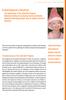 8. A U D I O L O G I C A L E V A L U A T I O N 8.Audiological Evaluation The external ear of the child with Progeria Behavioral testing for assessing hearing thresholds Objective electrophysiologic tests
Endoscopic Third Ventriculostomy (ETV)
 Endoscopic Third Ventriculostomy (ETV) Information for Patients, Parents and Carers Joanne Kehoe Neurosurgical Nurse Co-ordinator 01 892 1753 Monday to Thursday 8am and 4pm Friday 8am -12pm Main Hospital
How to care for your eye after surgery
 Ambulatory Care & Local Networks How to care for your eye after surgery Information for patients attending appointments at King s College Hospital only This leaflet explains what to expect after your eye