
Section 4. Hearing loss and hearing tests
|
|
|
- Samantha Rose
- 9 years ago
- Views:
Transcription
1 Section 4 Hearing loss and hearing tests
2 How we hear Outer Ear Middle Ear Inner Ear Ear canal Ear drum Middle ear cavity Middle ear bones the malleus, incus, and stapes Eustachian tube Cochlea Semi-circular canals Auditory nerve Outer Ear Air around us carries sound through sound waves. The outer ear collects these sound waves and sends them along the ear canal. Middle Ear At the end of the ear canal is the ear drum. This bounces or vibrates, just like when you hit a drum. Sound waves pass from the ear drum onto three tiny bones in the middle ear called the malleus, incus, and stapes (commonly known as the hammer, the anvil and the stirrup because that s what they look like). When these bones vibrate and move, they carry the sound waves into the inner ear. Inner Ear The inner ear contains the cochlea, our snail-shaped hearing organ. The cochlea is filled with fluid and thousands of tiny sensory hair cells. These hair cells turn all the sound vibrations from the middle ear into electrical signals, which then travel up the nerves of the auditory pathway to the brain for processing
3 The Family Book What caused my child s hearing loss? Often it is hard to say what the cause is. In 50-60% of cases of permanent hearing loss in New Zealand no known cause is identified. Hearing loss is described as either congenital or acquired, as shown in the summary below. Congential (before birth) Types include: Acquired (after birth) Conductive Sensorineural Mixed Auditory Neuropathy Spectrum Disorder (ANSD) Hearing loss may be: Congenital hearing loss This is when a baby is born with hearing loss and in most cases is a result of the child s genetic make-up. This is why you are asked if your family has any history of hearing loss. The hearing loss may still have a genetic cause even when parents hear normally. Although in some cases, there may be a family history of hearing loss, most of the time there is none. Babies may be affected by an illness during the mother s pregnancy, such as cytomegalovirus or rubella, or exposure to certain drugs. Complications when the baby is being delivered (such as extreme prematurity) can also lead to hearing loss. Approximately 90 children per year may be born in New Zealand with permanent congenital hearing loss. If we have more children will they also have a hearing loss? The answer to this question may be yes. Your otorhinolaryngologist/ear, Nose and Throat (ENT) specialist can arrange for genetic testing for some of the more common types of genetically carried hearing loss. We know there are many genes involved in the cause of deafness, the most common of which is the connexin 26 gene. Understanding the genetics of hearing loss is a very new and rapidly developing field. Your ORL/ENT specialist may also offer an MRI or CT scan of the ears, and cytomegalovirus (CMV) testing to help diagnose the cause of the deafness. This can also help determine if the hearing is likely to stay stable, or if it might change in the future. Syndromes Most cases of genetic hearing loss are not associated with any other genetic abnormalities. There are, however, some genetically inherited conditions where hearing loss is associated with other problems, such as Waardenburg s Syndrome, Usher s Syndrome and Turners Syndrome. Bilateral (both ears) Unilateral (one ear) For more information about syndromes see
4 Acquired hearing loss This is when a child acquires or gets a hearing loss later, usually after having normal hearing. Children with acquired hearing loss can be divided into two groups: children whose hearing deteriorates gradually children who lose their hearing suddenly. Children whose hearing deteriorates gradually Sometimes children with normal hearing may experience a gradual loss. A few children who have a mild loss, this may gradually worsen to a severe hearing loss. This should be thoroughly investigated by an ORL/ENT or audiologist. In most cases, this is thought to be a result of a genetic cause, but in the first few years of life it may be secondary to congenital CMV (cytomegalovirus). Children who lose their hearing suddenly Some illnesses, such as meningitis, encephalitis, measles, mumps, and high levels of jaundice can cause sudden hearing loss. Certain medicines, including gentamicin, neomycin, streptomycin, kanamycin, cisplatin, and quinine sulfate (which may be necessary to treat serious illnesses) can also cause sudden hearing loss. Meningitis Meningitis can cause a hearing loss or deafness when the inner ear becomes infected with bacteria. Immunisation is available for various types of meningitis, including a free vaccination from the age of 6 weeks. Children who have had meningitis need to have a hearing test as soon as possible before leaving hospital and have their hearing monitored frequently. Noise damage A sudden, single extremely loud sound, or exposure to loud noise over a long time, can cause a traumatic hearing loss. This is called noise-induced hearing loss. It is most often seen in adults who work in noisy industries. If your child has an acquired hearing loss they face different challenges from children who are born deaf. They may go through significant emotional changes. Types of hearing loss Hearing loss can result if there is a problem in any part of the hearing pathway in the outer, middle or inner ears, or in the complex pathway of nerves leading to the brain. There are several types of hearing loss. Conductive hearing loss (CHL) This is caused by a blockage in sound transmission to the inner ear because of problems affecting the middle ear, the hearing bones, or the ear canal. The degree of hearing loss varies but you cannot be completely deaf with just conductive hearing loss. Common causes Blocked Eustachian Tube The tube that runs from the middle ear to the back of the throat (see diagram page 27, 5) may become infected and swollen. The swelling prevents the tube from opening normally and the middle ear cannot be aerated or drained. This may lead to an infection in the middle ear called Acute Otitis Media, or may cause a build up of fluid behind the ear drum. This is sometimes called Glue Ear. Ear infections and Glue Ear are very common among children, as their Eustachian tubes are narrow. If your child has been diagnosed with a permanent hearing loss, Glue Ear will make their hearing temporarily worse. Treatment A blocked Eustachian tube is usually treatable. Often middle ear problems clear up without medicine but sometimes they can linger for months or even years. If your child has a middle ear problem, it is important to consult your family doctor who may refer you to an ORL/ENT specialist. If your child has been diagnosed with a permanent hearing loss, Glue Ear will make their hearing temporarily worse. Your doctor will arrange a hearing test if your child has had persisting middle ear fluid for more than three months. If the problem is long-standing and associated with a hearing loss or ear drum damage, your child will be referred to an ORL/ENT specialist who may discuss with you inserting grommets. These are small tubes (also called ventilation tubes ) which are put into your child s ear drum to aerate the middle ear and help prevent the build up of the fluid that causes Glue Ear
5 The Family Book External Auditory Canal Atresia (with Microtia ) Approximately 20 children a year are born without an external ear or an ear canal. In most cases, there is a normal ear and normal hearing on the other side. Children with this condition are usually referred to a specialist team consisting of an ORL/ENT specialist, a plastic surgeon and an audiologist working together. Sensorineural hearing loss (SNHL) If the outer and middle ear work well, the cause of the hearing loss is usually in the inner ear. This is the part of the ear which creates electrical signals and sends them along the auditory nerve to the brain. Common causes The most common cause is genetic, usually a cochlea that has not formed correctly. Other causes include: cytomegalovirus (acquired while the baby is developing in the womb) a difficult birth high levels of jaundice infections such as mumps, measles and meningitis drugs given to treat diseases. Treatment This type of loss is almost always permanent. There is rarely any medical treatment. Hearing aids will be fitted. Where hearing loss is more significant, a cochlear implant may be recommended. Auditory Neuropathy Spectrum Disorder (Auditory Dys-synchrony) If tests show the problem lies in a lack of synchrony (timing) from the cochlea or the sensory nerve going to the brain, this is an Auditory Neuropathy Spectrum Disorder. This can have widely varying effects. A child with auditory neuropathy spectrum typically does not hear well and the hearing may fluctuate from day to day. The most common cause is a high level of jaundice at birth, often associated with a difficult birth or extreme prematurity. In some cases, it may also be genetic. Tests are available for this. Some children may manage to learn to speak and require little help. Others, who appear to be functionally deaf, may benefit from hearing aids or a cochlear implant. How much a child may benefit from hearing aids or a cochlear implant can be uncertain. However, teams of professionals involved with these children will support families in making the best choice to help their child, based on as much information as they can learn about the child s hearing and nervous system function. Auditory Processing Disorder Another type of hearing problem is an auditory processing disorder. This is where there is a normal hearing at the level of the ear but a problem with the processing of complex sounds, such as speech in noise, at higher levels of the hearing pathway. The use of Frequency Modulation systems (FM systems) and some computer-based habilitation programmes may help Frequency Modulation Systems with this type of disorder. Mixed hearing loss Some children may have both a sensorineural loss and a conductive loss a mixed hearing loss. If a child with a sensorineural hearing loss gets a middle ear infection, their hearing can become temporarily worse until the middle ear problem has cleared up.
6 Unilateral hearing loss In most cases hearing loss affects both ears and is known as bilateral loss. When only one ear is affected this is a unilateral loss. In quiet situations, a child with unilateral loss will hear well by relying on their better ear. However it can be difficult for them to figure out where sounds are coming from. In a noisy environment, it is hard for them to understand speech clearly, especially on the hearing-impaired side and particularly in a group discussion. A child may be thought of as having selective hearing and as with any child with a hearing loss, they will often be tired from having to work hard to listen with only one ear functioning correctly. Children with a unilateral hearing loss are not always eligible for services from an Advisor on Deaf Children (AODC) contact Special Education staff at your regional Ministry of Education office for information. Sometimes certain types of hearing aids and other assistive devices are recommended for children with unilateral hearing loss. See Section 5: Hearing aids, cochlear implants, and other assistive technology. Causes of changes in hearing levels Wax This can cause a temporary conductive hearing loss. Children who use hearing aids tend to have greater wax build up which can affect hearing levels. Wax can also block the sound outlet of the hearing aid (see Section 5). A doctor, ear nurse or ORL/ENT specialist can check your child s ear canal and wax can be removed with minimum discomfort. Do not try to clean wax out yourself, as you may push the wax further into the ear causing damage. Ear syringing (water cleaning) is not recommended to clear wax. There are other more modern methods such as suction, available from medical professionals such as ear nurses, ORL/ENTs and some doctors. Unexplained change Sometimes a child s hearing will deteriorate and there will be no sign of a middle ear problem or wax. This usually means the sensorineural hearing has been affected and the ability to hear is further decreased. In most cases, this type of change is due to the nature of a child s hearing loss. The changes in hearing may be sudden and dramatic, or they may happen very slowly. If your child has a sudden or dramatic drop in their hearing levels without any signs of a middle ear problem, you should see your ORL/ENT specialist or audiologist immediately. A hearing test should be carried out to confirm the amount of change and if action is needed. Glue Ear This can occur as a result of a middle ear infection and is the most common reason for a change in hearing levels. Glue Ear causes a temporary conductive hearing loss. See page 29. If a middle ear problem is making your child s hearing worse, seek medical advice and ask your audiologist for a hearing test. Hearing aids may need to be adjusted if there is a significant change in hearing thresholds, and as this problem is likely to be temporary, it is important to ask when hearing and hearing aids need to be rechecked
7 The Family Book Combination of causes Occasionally a child s hearing may worsen through a combination of factors: the child s own sensitivity to noise exposure and their exposure to high levels of environmental noise. Children with a hearing impairment can be affected by long term exposure to high levels of noise in the same way as a person with normal hearing. Protect the child s hearing in the same way as for other children, when taking part in noisy activities. If an audiologist detects a significant unexplainable change in a child s hearing levels, they will refer them for medical advice. Vision problems and deafness Vision is especially important for children with a hearing loss. Contact with the outside world becomes very limited if a child with hearing loss goes on to suffer vision loss. Early identification and correction of minor visual problems such as short-sightedness is therefore vital. Usher s Syndrome All children with hearing loss should have a full eye examination to check for conditions such as Usher s Syndrome, a rare condition that involves hearing loss followed later by vision problems. Early signs of complications such as Usher s Syndrome are detected by examining the retina or back of the eye. Understanding hearing Sound To understand your child s hearing loss it helps to understand something about sound itself. Sound happens when a moving or vibrating object makes the air around it move. Sound travels through the air in waves. These sounds waves are invisible, we can t see them but we can hear them. Sound also passes through objects such as walls and floors. When we want to describe sound waves, we talk about their frequency or intensity. Frequency This is the pitch of a sound. When sound waves are made by something vibrating slowly, there is a low frequency sound. An example of this is the sound of a fog-horn or drum. When the sound waves are made by something vibrating quickly, there is a high frequency sound. An example of this is a whistle, small bell, or bird song. Sound frequency is measured as the number of vibrations per second or Hertz (Hz). The greater the Hz number of a sound, the higher its frequency. The human ear can hear a wide range of frequencies, from about 20 Hz to 20,000 Hz. However, the sounds of speech are concentrated in the range of 125 Hz to 8000 Hz and these are the frequencies tested in a hearing threshold test. Intensity This is the loudness of a sound. When sound waves are made by an object vibrating gently, the sound waves are small. They are described as low intensity and the sound will be soft. If the object vibrates strongly, the sound waves will have greater intensity and the sound will be loud. The greater the intensity of vibration, the bigger the sound waves and the louder we hear the sound. Here are some things you can do to help your child if they have unilateral loss. Teach them to sit or stand where their best ear is closest to sound sources, and encourage people to direct their speech towards the best ear. Get them to sit near the front of the class at pre-school and school. Ensure there is good lighting in the classroom so they can clearly see the face and lips of others speaking to them.
8 Audiograms An audiogram is a map of a person s hearing. It s a way of showing the softest sound a person says they can hear at different frequencies (pitches) of sound. The average hearing threshold level for young adults with normal hearing is 0 dbhl on the audiogram. The frequency of the sound is shown across the chart in the speech banana audiogram below, from low pitched sounds on the left (125 Hz) to high pitched sounds on the right (8,000 Hz). The intensity (loudness) of the sound is shown down the side of the chart, from soft sounds at the top (-10dB) to loud sounds at the bottom (120dB). Audiologists use symbols on the chart to show which ear is being tested and how the sound has been presented to the ear. The greater the hearing loss, the greater the decibel level needed in the ear for the child to just detect the test sound. Audiologists categorise and describe hearing loss according to its degree. The audiogram below illustrates the decibel hearing levels corresponding to these degrees of hearing loss. It is commonly know as the speech banana. db Low Pitch High Pitch HZ m d b n ng e l u o i a r p h g ch sh k t th f s Degree of hearing loss Normal Hearing (up to 25 db HL) Mild Hearing Loss (26 to 40 db HL) Moderate Hearing Loss (41 to 70 db HL) Severe Hearing Loss (71 to 90 db HL) Profound Hearing Loss including deafness (+90 db HL) Adapted from the American Academy of Audiology Normal young, healthy ears can hear frequencies as low as 20Hz and as high as 20,000Hz. However, we test hearing between 250Hz to 8000Hz, as most speech sounds are in this range. 125Hz may not be tested with very young children due to time and child attention constraints
9 The Family Book The speech banana Human speech consists of vowels and consonants at different loudness and frequency levels. They are recorded on the audiogram as a so-called speech banana. It is an easy way to check whether the entire spectrum of speech is still audible and how someone s hearing has changed over time. The familiar sounds audiogram This chart shows how some everyday sounds, including speech, relate to the different frequency and intensity levels on an audiogram. Pitch - Frequency in Cycles Per Second (Hz) db Volume - Hearing Loss in db Z V mdb n el u i a r o Ph ch g sh k f s th Adapted from the Family Book 2005 Ask your audiologist or AODC to plot your child s hearing loss onto a copy of the Familiar Sounds Audiogram. This will help you understand what everyday sounds your child is able to hear. Simulations of the effects of hearing loss can also be demonstrated by the audiologist using a computer in the audiology clinic. Ask your audiologist to arrange a simulation for you. This will help you understand the best ways to communicate with your child if they have hearing aids, FM aids or cochlear implants.
10 Describing hearing loss The term hearing loss is used together with a decibel level, or range of decibel levels, across different frequencies. It s hard to relate a person s degree of hearing loss to how well they will be able to hear someone speak. The following table has categories of hearing loss and explains what it might sound like to a person with that degree of loss. It also describes the technical support they might need. Describing hearing levels in day-to-day terms: Range What it sounds like (without aids or CI) Habilitation options Normal (-10 to +15dBHL) A child hears normally Mild loss (16-40dBHL) Moderate and moderate/severe loss (41-70dBHL) Severe loss (71-90dBHL) Profound loss (91+ dbhl) Ask your audiologist to arrange a simulation of what it might be like for your child to hear with this level of hearing loss. Able to hear some speech sounds and words spoken with normal voice effort at 1 metre when child s attention is gained. Will have difficulty hearing some beginings and endings of words (consonant sounds) in background noise. Able to hear the sound of a voice faintly when shouted into the better ear, but unlikely to understand what is said. The child may hear occasional sounds such as loud noises but may not understand any speech even if shouted close to ear. In some cases, a child may need a classroom amplification system or hearing aids Counselling on managing spoken communication essential to ensure a child hears speech. Hearing aids. May need an FM radio hearing aid system. Assessment of visual communication needs also important. Counselling on managing spoken communication essential to ensure a child hears speech. Hearing aids are essential, as is a personal FM system in the classroom. Children at this end of the spectrum may not receive sufficient benefit from hearing aids and a cochlear implant may be considered. Assessment of visual communication needs also important. Speech-language therapy will assist in speech development. Counselling on managing communication. Assessment of visual communication needs also important. Child will not receive sufficient benefit from hearing aids and cochlear implant may be considered. With a cochlear implant and/or hearing aids, speech-language therapy will assist in speech and language development. In the learning environment, hearing aids or cochlear implant must be used with a personal FM system
11 The Family Book Testing hearing Testing babies and young children Audiologists have special tests for babies and young children. The tests chosen will depend on the child s age and ability to complete the test, and what needs to be known about their hearing. Babies can be tested at any age from birth. A hearing assessment usually involves a range of tests and will include tests that measure the quietest sound the child can hear. This is called a hearing threshold. Hearing assessments may also include tests that measure a child s ability to understand more complex sounds such as speech. Audiologists are used to testing babies and younger children and will want to make the child s experience as easy as possible. The ways hearing is tested There are two main ways to test hearing: behavioural tests and physiological tests (see below). Both tests are usually carried out together. Results are compared to confirm the type and degree of hearing loss. Behavioural tests may involve the use of pure tone audiometry. This is the most common hearing test and it involves the child listening to a range of tones and reacting when they are heard. Pure tone audiometry can be done by Air Conduction in which the child wears headphones to listen for test sounds moving from the headphone speaker down the ear canal through the middle ear to the cochlea in the inner ear. Another way of testing pure tone audiometry is by Bone Conduction where a small vibrator is placed on the mastoid bone behind the ear to test the sensitivity of the cochlea to the test sounds. Sounds presented this way travel through the bones of the skull and vibrate the cochlea directly, stimulating the hearing nerve. This method bypasses the outer and middle ear. The air and bone conduction hearing levels on the audiogram help to describe the type of hearing problem. FAQ: Why do some deaf people sound different when they talk? This is because they cannot hear whether their voice is producing a sound, nor can they regulate that sound. The speech of some deaf people sounds different for that of a normally-hearing person because they have not been able to hear all the normal sounds of speech when they were learning to talk. Often they have not been able to hear the high frequency sounds such as s and t, so these are the sounds that may be missing from their speech.
12 Behavioural tests The audiologist watches for a change in behaviour when a child hears a sound. This can be used to test the child s hearing with or without hearing aids. The type of behavioural test used depends on the child s age and abilities. Results can indicate an ability to hear sounds across different sound frequencies, which helps in deciding on the best hearing aid. There are three main behavioural tests. 1. Visual Reinforcement Audiometry (VRA). For children six months to two and a half years. In babies this test depends on them being able to sit unsupported on a parent s knee and having good head control. How it works The child is taught to turn their head when a sound is heard. This is encouraged or reinforced by seeing a moving puppet or toy in a window box which lights up. By altering the frequency and intensity of the sounds, it is possible to find out about the child s ability to hear sounds across a range of frequencies. Results Testing is done with insert phones so that individual ear information can be recorded, or through a loudspeaker if the infant will not wear the insert phones. These results are plotted on an audiogram. 2. Play Audiometry. Used for most children from about two and a half years to five years. How it works The child listens to sounds and is taught to make a response every time a sound is heard. The response can be almost anything that suits the child s interest, abilities and attention, and is also quick and reliable. For example, the child may drop a marble in a bucket, put a peg in a board or put a stamp on a piece of paper. Results The child is encouraged to respond even to the very softest sounds. If the child is cooperative, the technique can be used to produce a complete audiogram of the child s hearing. Play audiometry can also be used to test the child s hearing when hearing aids are worn. 3. Pure tone audiometry. Used for children five years and older. How it works The child wears headphones or insert phones and listens to sounds. The child is taught to press a button or tap with a stick every time a sound is heard. This is the same way that hearing is tested for adults. If the hearing test can t be completed, don t worry. In the days before their next appointment, play pretend hearing test games with your child. This will help them understand what s going to happen
13 Physiological Tests Physiological tests are especially valuable when behavioural testing is not possible or when the child s age or abilities make behavioural testing difficult. Physiological tests help with working out which part of the ear or auditory system is causing the hearing loss. These tests don t hurt and are not uncomfortable. Physiological tests are less likely to be affected by the child s abilities. They only require the child to be sitting or lying quietly while the test is done, although this can sometimes be a challenge too. 1. Otoacoustic Emission (OAE) Testing. This tests whether certain hair cells in the cochlea are working properly. How it works Certain cochlea hair cells respond to sound by producing a very soft sound of their own. This sound is called an otoacoustic emission. Results By measuring if this response is coming from various parts of the cochlea, it is possible to learn how these tiny hair cells are working. 2. Evoked Potential Testing. This measures the function of the auditory nerve and higher auditory processing centres. 3. Tests of Middle Ear Function. a. Tympanometry Tympanometry is not a hearing test, but a test of how well the middle ear system is functioning and how well the eardrum can move. A small rubber tip is placed in the ear and a little air is pumped into the outer ear canal. If there is a problem in the middle ear it will usually show up on this test. For example, if there is very little movement of the eardrum, it may indicate there is fluid behind the eardrum as a result of a middle ear infection or Glue Ear. Tympanometry is widely used in New Zealand. Many family doctors, Plunket nurses, Vision Hearing Technicians, Māori and Pacific Island Community Health Workers, practice nurses and Ear Nurses use tympanometers. b. Acoustic Reflexes When a child has normal tympanograms, it may be possible to test for a muscle reflex (the acoustic reflex ) in the middle ear. The way this reflex responds to different sounds can provide valuable clues about a child s auditory system. Reflexes can only be reliably measured when children are quiet and still. Regardless of the label given to your child s hearing loss, it s important to remember that each person s hearing loss is configured differently and therefore is unique. How it works The most commonly used test of this type in New Zealand is Auditory Brainstem Response audiometry or ABR. This measures the activity of various parts of the nerve pathway from the ear to the brain when a sound is made. Electrodes (small stickers) are attached to the child s head to record electrical energy in the auditory pathway in response to the sound. The child wears insert phones and this allows recording of the auditory system s response to specific frequencies and different intensities. This can usually be done as the child sleeps, but sometimes a light general anaesthetic is needed for older children who may be inclined to wriggle
Getting Started Kei Te Timata
 Getting Started Kei Te Timata AN INTRODUCTION FOR THE FAMILIES AND WHANAU OF CHILDREN DIAGNOSED WITH A HEARING LOSS. THIS IS A JOINT PROJECT BY DEAF EDUCATION AOTEAROA NEW ZEALAND AND THE NATIONAL AUDIOLOGY
Understanding Hearing Loss 404.591.1884. www.childrensent.com
 Understanding Hearing Loss 404.591.1884 www.childrensent.com You just found out your child has a hearing loss. You know what the Audiologist explained to you, but it is hard to keep track of all the new
So, how do we hear? outer middle ear inner ear
 The ability to hear is critical to understanding the world around us. The human ear is a fully developed part of our bodies at birth and responds to sounds that are very faint as well as sounds that are
Questions and Answers for Parents
 Questions and Answers for Parents There are simple, inexpensive tests available to detect hearing impairment in infants during the first days of life. In the past, most hearing deficits in children were
Once your baby has good head control and can turn towards something interesting, a more advanced behavioural procedure can be used.
 How do we test the hearing of babies and children? An audiologist will select from a range of different tests to evaluate your child s hearing. The choice of test depends on the information that is needed
Hearing Tests And Your Child
 HOW EARLY CAN A CHILD S HEARING BE TESTED? Most parents can remember the moment they first realized that their child could not hear. Louise Tracy has often told other parents of the time she went onto
Hearing Tests And Your Child
 How Early Can A Child s Hearing Be Tested? Most parents can remember the moment they first realized that their child could not hear. Louise Tracy has often told other parents of the time she went onto
Pure Tone Hearing Screening in Schools: Revised Notes on Main Video. IMPORTANT: A hearing screening does not diagnose a hearing loss.
 Pure Tone Hearing Screening in Schools: Revised Notes on Main Video (Notes are also available for Video segments: Common Mistakes and FAQs) IMPORTANT: A hearing screening does not diagnose a hearing loss.
Hearing Tests for Children with Multiple or Developmental Disabilities by Susan Agrawal
 www.complexchild.com Hearing Tests for Children with Multiple or Developmental Disabilities by Susan Agrawal Hearing impairment is a common problem in children with developmental disabilities or who have
Why does my child have a hearing loss?
 Introduction This factsheet will tell you about the range of tests that can be carried out to try to find the cause of your child s hearing loss. The process to find out why a child is deaf is sometimes
Your Hearing ILLUMINATED
 Your Hearing ILLUMINATED INFORMATION FROM YOUR HEARING CARE PROFESSIONAL REDISCOVER your hearing and reconnect 1 with the important things you might have been missing. Your sense of hearing is a vital
Paediatric Hearing Assessment
 Information for parents Paediatric Hearing Assessment Hearing assessment of infants is limited by their ability to respond to sounds. This is determined by both the development of the hearing system and
Presbycusis. What is presbycusis? What are the symptoms of presbycusis?
 Presbycusis What is presbycusis? Presbycusis is the loss of hearing that gradually occurs in most individuals as they grow older. Hearing loss is a common disorder associated with aging. About 30-35 percent
What are the causes of presbycusis? What can be done? How can I communicate with someone who has a hearing loss? How does hearing work?
 This e-book will answer the following questions: What is presbycusis? What are the symptoms of presbycusis? What are the causes of presbycusis? What can be done? How can I communicate with someone who
DURATION OF HEARING LOSS
 When your child is diagnosed with a hearing loss, it may be very overwhelming. This may be a difficult time for you and your family. However, gaining a greater knowledge in this area is crucial in helping
Unilateral (Hearing Loss in One Ear) Hearing Loss Guidance
 Unilateral (Hearing Loss in One Ear) Hearing Loss Guidance Indiana s Early Hearing Detection and Intervention Program Before universal newborn hearing screening, most children with unilateral hearing loss
Learners Who are Deaf or Hard of Hearing Kalie Carlisle, Lauren Nash, and Allison Gallahan
 Learners Who are Deaf or Hard of Hearing Kalie Carlisle, Lauren Nash, and Allison Gallahan Definition Deaf A deaf person is one whose hearing disability precludes successful processing of linguistic information
PURE TONE AUDIOMETRY Andrew P. McGrath, AuD
 PURE TONE AUDIOMETRY Andrew P. McGrath, AuD Pure tone audiometry is the standard behavioral assessment of an individual s hearing. The results of pure tone audiometry are recorded on a chart or form called
Veterans UK Leaflet 10. Notes about War Pension claims for deafness
 Veterans UK Leaflet 10 Notes about War Pension claims for deafness 1 About this leaflet About this leaflet This leaflet tells you how claims for deafness are decided and gives you some information about
My child has a hearing loss
 My child has a hearing loss A guide for parents Content You are not alone 3 Hearing impairment 5 Methods of testing hearing 6 Audiogram 7 Types and causes of hearing loss 8 Degree of hearing loss 10 Where
Infant hearing screening will not hurt your baby, and will only take between 5 and 20 minutes. Ideally it is done whilst baby is asleep or settled.
 Early diagnosis of hearing loss will make a difference to your baby s life. Significant hearing loss is the most common condition present at birth. In the private sector, 3 in every 1000 babies are born
Audiometry and Hearing Loss Examples
 Audiometry and Hearing Loss Examples An audiogram shows the quietest sounds you can just hear. The red circles represent the right ear and the blue crosses represent the left ear. Across the top, there
Audiology Services. Carolyn Dando Audiology Services Manager South Warwickshire NHS
 Audiology Services Carolyn Dando Audiology Services Manager South Warwickshire NHS What are we going to cover today? General overview of the ear Hearing loss Hearing assessments, results Hearing aids Paediatric
Pediatric Hearing Assessment
 Pediatric Hearing Assessment Stanton Jones Key Points This chapter outlines the methods of hearing assessment that are appropriate for children from birth to adolescence. The importance of timely referral
Ear Disorders and Problems
 Ear Disorders and Problems Introduction Your ear has three main parts: outer, middle and inner. You use all of them to hear. There are many disorders and problems that can affect the ear. The symptoms
Case Study THE IMPORTANCE OF ACCURATE BEHAVIOURAL TESTING IN INFANT HEARING AID FITTINGS
 Case Study THE IMPORTANCE OF ACCURATE BEHAVIOURAL TESTING IN INFANT HEARING AID FITTINGS Andrea Kelly, PhD, MNZAS Auckland District Health Board Suzanne Purdy, PhD, MNZAS University of Auckland Asymmetrical
131 797 www.hearing.com.au
 AUSTRALIAN HEARING CHOICES AUSTRALIA Choices is produced by Australian Hearing and is provided free of charge to parents and carers of children who have a hearing loss. Other individuals and organisations
Dr. Abdel Aziz Hussein Lecturer of Physiology Mansoura Faculty of Medicine
 Physiological Basis of Hearing Tests By Dr. Abdel Aziz Hussein Lecturer of Physiology Mansoura Faculty of Medicine Introduction Def: Hearing is the ability to perceive certain pressure vibrations in the
Guide for families of infants and children with hearing loss
 With early detection, Early Intervention can begin! Guide for families of infants and children with hearing loss Birth to 3 2008 Cover photograph Geneva Marie Durgin was born January 20, 2007. She lives
1/26/2011. 50% of deafness and hearing impairment is avoidable through prevention, early diagnosis, and management.
 Hearing Impairment Roseann Mulligan, DDS, MS Herman Ostrow School of Dentistry of the University of Southern California 1 JAMA, July 4, 2007 Vol 298, No. 1 2 278 million - moderate to profound bilateral
COCHLEAR NERVE APLASIA : THE AUDIOLOGIC PERSPECTIVE A CASE REPORT. Eva Orzan, MD Pediatric Audiology University Hospital of Padova, Italy
 COCHLEAR NERVE APLASIA : THE AUDIOLOGIC PERSPECTIVE A CASE REPORT Eva Orzan, MD Pediatric Audiology University Hospital of Padova, Italy Congenital absence or underdevelopment of the cochlear nerve has
Hearing Aids. What Is a Hearing Aid? How Common Is Hearing Loss and What Causes It? How Do We Hear?
 Hearing Aids What Is a Hearing Aid? A hearing aid is an electronic, battery-operated device that amplifies and changes sound to allow for improved communication. Hearing aids receive sound through a microphone,
HEARING LOSS AND LANGUAGE DELAY IN LITTLE CHILDREN. Prepared by Jane H. LeBlanc, M.S., M.S.P. Audiologist, CCC-A Speech Language Pathologist, CCC-SLP
 HEARING LOSS AND LANGUAGE DELAY IN LITTLE CHILDREN Prepared by Jane H. LeBlanc, M.S., M.S.P. Audiologist, CCC-A Speech Language Pathologist, CCC-SLP This is being written to provide information to concerned
The Role of the Educational Audiologist 2014. Introduction:
 The Role of the Educational Audiologist 2014. Introduction: As the current CHAIR of the BAEA I felt that it was time for the Role of the Educational Audiologist to be updated. There has been a period of
More information >>> HERE <<<
 More information >>> HERE http://urlzz.org/hearloss/pdx/dcli864/ Tags: ## best way to get cheapest natural methods to
Byron's Hudson Valley Hearing Aid Centers Kingston/Lake Katrine 845-336-0108 Poughkeepsie 845-485-0168 Your hearing Journey
 Your hearing Journey Don't miss out on the joys of life, your hearing is our concern. Trust our experts to enhance your quality of life. Ask Yourself: Do you have difficulty following a conversation in
Hearcentres Guide to Hearing Aid Terminology
 Hearcentres Guide to Hearing Aid Terminology Sophisticated modern hearing aids use a number of complicated technologies and techniques to ensure great improvements in hearing. Not only are the terms used
A diagram of the ear s structure. The outer ear includes the portion of the ear that we see the pinna/auricle and the ear canal.
 A diagram of the ear s structure THE OUTER EAR The outer ear includes the portion of the ear that we see the pinna/auricle and the ear canal. The pinna or auricle is a concave cartilaginous structure,
Down s syndrome and childhood deafness
 Information for families Down s syndrome and childhood deafness D O W N S SYNDROME ASSOCIATION Our vision is of a world without barriers for every deaf child. Down s syndrome and childhood deafness Information
Coding Fact Sheet for Primary Care Pediatricians
 1/1/2015 Hearing Testing Coding Fact Sheet Coding Fact Sheet for Primary Care Pediatricians While coding for hearing screening is relatively straightforward, ensuring that appropriate payment is received
8.Audiological Evaluation
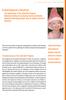 8. A U D I O L O G I C A L E V A L U A T I O N 8.Audiological Evaluation The external ear of the child with Progeria Behavioral testing for assessing hearing thresholds Objective electrophysiologic tests
Information about deafness and hearing loss
 Information about deafness and hearing loss About this resource This information resource is for parent carers with children up to the age of 25 who are deaf. It contains information about your child s
The Disability Tax Credit Certificate Tip sheet for Audiologists
 The Disability Tax Credit Certificate Tip sheet for Audiologists Developed by: The Canadian Academy of Audiology (CAA) & Speech- Language and Audiology Canada (SAC) Purpose of This Document The Canada
Noise and Hearing Protection
 Noise and Hearing Protection Noise and Hearing Safety Training This training module is designed to teach you about the purpose and benefits of a hearing conservation program. After completing the training,
Hearing Screening Coding Fact Sheet for Primary Care Pediatricians
 Hearing Screening Coding Fact Sheet for Primary Care Pediatricians While coding for hearing screening is relatively straightforward, ensuring that appropriate payment is received for such services is a
A Guide to Otoacoustic Emissions (OAEs) for Physicians
 A Guide to Otoacoustic Emissions (OAEs) for Physicians Introduction Hearing loss is not uncommon in children and adults. According to recent estimates, 31.5 million people in the United States report difficulty
EARLY INTERVENTION: COMMUNICATION AND LANGUAGE SERVICES FOR FAMILIES OF DEAF AND HARD-OF-HEARING CHILDREN
 EARLY INTERVENTION: COMMUNICATION AND LANGUAGE SERVICES FOR FAMILIES OF DEAF AND HARD-OF-HEARING CHILDREN Our child has a hearing loss. What happens next? What is early intervention? What can we do to
PROTECT YOUR HEARING
 PROTECT YOUR HEARING Original idea from David Carlisle Aviation can be a noisy business that can assault tour ears and chip away at your ability to hear clearly. Prevention is your only effective defense.
NIHL - understanding audiograms and medical causation
 NIHL - understanding audiograms and medical causation Darrell Smith Partner, BLM Manchester Birmingham Cardiff Leeds Liverpool London Manchester Southampton Stockton-on-Tees How the ear works The human
highlight some of the problems a deafblind or sensory impaired person might have in getting tested;
 THE IMPORTANCE OF HEARING AND EYE TESTS Hearing and eye tests are easily and widely available to any person who has concerns about their sight or hearing. Professional testing is the only way to assess
HEARING SCREENING: PURE TONE AUDIOMETRY
 HEARING SCREENING: PURE TONE AUDIOMETRY QUALIFIED SCREENERS 7-005.01 For the purposes of the school officials verifying that a qualified screener is carrying out the required screening activity, the qualified
Education Adjustment Program (EAP) Handbook
 Education Adjustment Program (EAP) Handbook Current as at September 2015 The State of Queensland (2015) This document is licensed under CC-BY 4.0, with the exception of the government coat of arms, logos
Fundamental Components of Hearing Aid Fitting for Infants. Josephine Marriage PhD
 Fundamental Components of Hearing Aid Fitting for Infants Josephine Marriage PhD Neonatal Hearing Screening Screening efforts have far out stripped our habilitation efforts, leaving parents with diagnosis
AP Psychology ~ Ms. Justice
 AP Psychology ~ Ms. Justice 8: What are the characteristics of air pressure waves that we hear as sound? Audition Audition, or hearing, is highly adaptive. We hear a wide range of sounds, but we hear best
SEMI-IMPLANTABLE AND FULLY IMPLANTABLE MIDDLE EAR HEARING AIDS
 Coverage for services, procedures, medical devices and drugs are dependent upon benefit eligibility as outlined in the member's specific benefit plan. This Medical Coverage Guideline must be read in its
Facts and figures on hearing loss, deafness and tinnitus
 FACTSHEET Facts and figures on hearing loss, deafness and tinnitus This factsheet gives you information about the latest available figures on hearing loss, deafness and tinnitus among adults in the UK.
Diagnostic Tests for Vestibular Problems By the Vestibular Disorders Association
 PO BOX 13305 PORTLAND, OR 97213 FAX: (503) 229-8064 (800) 837-8428 [email protected] WWW.VESTIBULAR.ORG Diagnostic Tests for Vestibular Problems By the Vestibular Disorders Association The inner ear
HEARING SCREENING (May 2006)
 HEARING SCREENING (May 2006) Definition Procedures for Hearing Screening Student with hearing loss School Nurse Role Referral Criteria Resources Definition: Hearing is the perception of sound. The normal
Behavioural Audiometry for Infants and Young Children Whose hearing loss has been detected in infancy
 Behavioural Audiometry for Infants and Young Children Whose hearing loss has been detected in infancy Alison King, Principal Audiologist, Paediatric Services, Australian Hearing International Paediatric
5th Congress of Alps-Adria Acoustics Association NOISE-INDUCED HEARING LOSS
 5th Congress of Alps-Adria Acoustics Association 12-14 September 2012, Petrčane, Croatia NOISE-INDUCED HEARING LOSS Davor Šušković, mag. ing. el. techn. inf. [email protected] Abstract: One of
Hearing and Deafness 1. Anatomy & physiology
 Hearing and Deafness 1. Anatomy & physiology Chris Darwin Web site for lectures, lecture notes and filtering lab: http://www.lifesci.susx.ac.uk/home/chris_darwin/ safari 1 Outer, middle & inner ear Capture;
Cochlear Implants: A Communication Choice. Cochlear Implants: A Communication Tool. www.cochlear.com
 Cochlear Ltd ABN 96 002 618 073 14 Mars Road, PO Box 629 Lane Cove NSW 2066 Australia Tel: 61 2 9428 6555 Fax: 61 2 9428 6353 Cochlear Americas 400 Inverness Parkway Suite 400 Englewood CO 80112 USA Tel:
X-Plain Perforated Ear Drum Reference Summary
 X-Plain Perforated Ear Drum Reference Summary Introduction Perforated eardrum is a common condition. The eardrum is a thin layer of tissue at the end of the ear canal inside the ear. Eardrum perforations
Guideline for Hearing Conservation and Noise Control
 EVERYONE'S RESPONSIBILITY Guideline for Hearing Conservation and Noise Control February 2007 Guideline for Hearing Conservation and Noise Control Workplace Safety & Health Division 200 401 York Avenue
Table of Contents Introduction... 2
 IOWA FAMILY RESOURCE GUIDE FOR PARENTS OF CHILDREN WHO ARE DEAF AND HARD OF HEARING Table of Contents Introduction... 2 Section 1: Families Make All the Difference What to do when you learn your child
Confirmation of Diagnosis of Disability (To determine eligibility under section 18(2)(b) of the Income Tax Act, 1962 (as amended))
 Confirmation of Diagnosis of Disability (To determine eligibility under section 18(2)(b) of the Income Tax Act, 1962 (as amended)) ITR-DD This certificate must not be submitted with your tax return but
Occupational Noise Induced Hearing Loss
 Occupational Noise Induced Hearing Loss M Baxter FRACS SISA Adelaide June 2014 ENT in Personal Injury Claims EAR Hearing Loss -main, Dizziness Nose Injuries ->cosmesis,breathing: Loss of sense of smell:
Hearing Aids - Adult HEARING AIDS - ADULT HS-159. Policy Number: HS-159. Original Effective Date: 3/18/2010. Revised Date(s): 3/18/2011; 3/1/2012
 Harmony Behavioral Health, Inc. Harmony Behavioral Health of Florida, Inc. Harmony Health Plan of Illinois, Inc. HealthEase of Florida, Inc. Ohana Health Plan, a plan offered by WellCare Health Insurance
Cerebral Palsy. In order to function, the brain needs a continuous supply of oxygen.
 Cerebral Palsy Introduction Cerebral palsy, or CP, can cause serious neurological symptoms in children. Up to 5000 children in the United States are diagnosed with cerebral palsy every year. This reference
Surgery for Conductive Hearing Loss
 Surgery for Conductive Hearing Loss What is conductive hearing loss Conductive hearing loss is a form of hearing loss due to abnormalities in mobile portions of the ear. Theses are the movable parts (including
Management of Deafness in the Elderly
 Management of Deafness in the Elderly Mrs R Kayarkar Consultant ENT Surgeon Mid Yorks NHS Trust British Geriatric Society Meeting 18.9.2013 Effects of hearing loss Embarrassment, loss of confidence, anger
Hearing Conservation Procedures
 Hearing Conservation Procedures Purpose The University of Regina is committed to providing a safe and healthy work and educational environment for all members of the University community by ensuring that
S-822. Noise and Hearing Conservation RISK MANAGEMENT
 RISK MANAGEMENT Noise and Hearing Conservation Resources and information for developing Patient handling programs in health care Employers with workplaces that have excessive levels of noise need to implement
Florida Resource Guide for Families of Young Children with Hearing Loss
 inf screen_res guide cvr.qxp_inf screen bro 07 4/6/15 4:28 PM Page 1 Florida Resource Guide for Families of Young Children with Hearing Loss April 2015 Edition Florida Department of Health Children s Medical
CONVENTIONAL AND DIGITAL HEARING AIDS
 CONVENTIONAL AND DIGITAL HEARING AIDS Coverage for services, procedures, medical devices and drugs are dependent upon benefit eligibility as outlined in the member's specific benefit plan. This Medical
How babies' senses develop
 B2 There is much growth and change that must occur in your baby s body. For babies born full-term (37-40 weeks), this growth and change occurred within the warm, dark, watery womb. For the premature baby,
AUDIOLOGICAL EVALUATIONS, FINDINGS AND RECOMMENDATIONS: A PARENT S GUIDE
 AUDIOLOGICAL EVALUATIONS, FINDINGS AND RECOMMENDATIONS: A PARENT S GUIDE Nicole Raia, ScD, CCC-A, FAAA Clinical Audiologist University Hospital Newark, NJ AGENDA Anatomy of the Ear Types of Audiological
Middle ear conditions
 Middle ear conditions Middle ear conditions This factsheet is part of our Ears and ear problems range. It is written for people who have been diagnosed with a condition that affects the middle ear. Read
Audiometric (Hearing) Screening September November 2013
 Audiometric (Hearing) Screening September November 2013 Sample Report QLD Prepared by: Name of Technician Qualified Audiometric Technicians INTRODUCTION Australasian Safety Services provided on-site audiometric
STATE OF AL ASK A. Hearing Screening Guidelines for the Pre-school/School Population
 STATE OF AL ASK A Hearing Screening Guidelines for the Pre-school/School Population DIVISION OF PUBLIC HEALTH APRIL, 2016 ACKNOWLEDGEMENTS Prepared by: Mary Bell, BSN, RN, NCSN Mindy Galyon, MA, CCC-A
Cerebral Palsy. 1995-2014, The Patient Education Institute, Inc. www.x-plain.com nr200105 Last reviewed: 06/17/2014 1
 Cerebral Palsy Introduction Cerebral palsy, or CP, can cause serious neurological symptoms in children. Thousands of children are diagnosed with cerebral palsy every year. This reference summary explains
Ear, Nose, Throat, Teeth and the Jaw
 Many people suffer from ear related problems, such as ear pain, a feeling of pressure or fullness of the ear, or ringing of the ear. If you suffer from any of these symptoms, it may surprise you to learn
Noise: Impact on Hearing; Regulation
 Noise: Impact on Hearing; Regulation EOH 466A Fall 2008 Mechanism of Hearing Sound waves collected, focused by the outer ear. Humans have little control over muscles in outer ear. Many animals have the