
Runner's Injury Prevention
|
|
|
- Bernard Robinson
- 10 years ago
- Views:
Transcription
1 JEN DAVIS DPT Runner's Injury Prevention Jen Davis DPT Orthopedic Physical Therapy Foot Traffic 7718 SE 13th Ave Portland, OR (503)
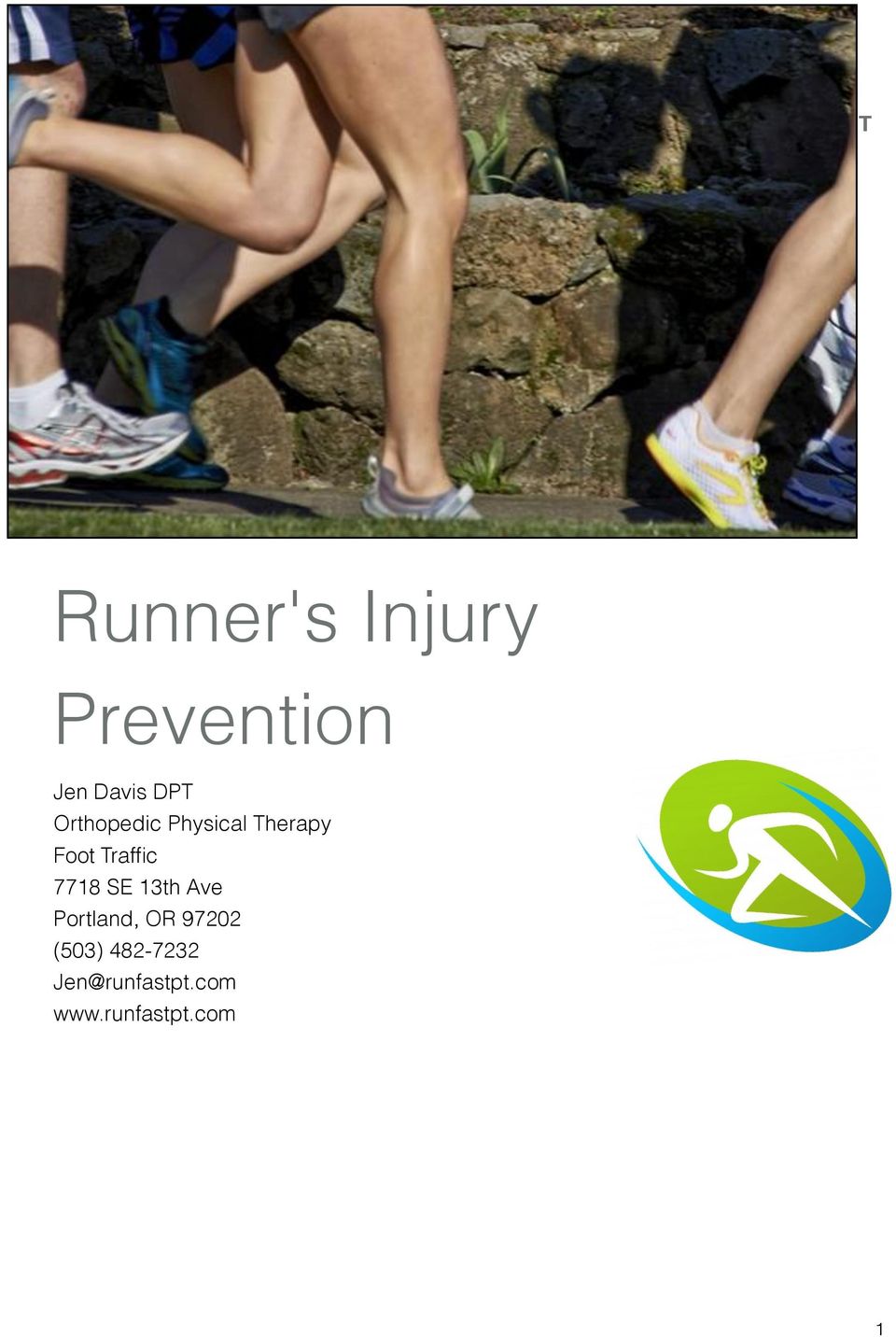
2 THE AMAZING RUNNER Objectives Deliver an overview of the most common running injuries encountered and signs and symptoms of unbalanced running training Provide insight and solutions for running injury free Education on a general flexibility and strength program to address runner specific needs for Balanced training The Act of Running Body must absorb lots of shock with ground reaction forces (GRF) times body weight The body must Reverse these forces to propel self forward Cadence= steps per minute typically , in elite runners well over steps per minute Must control forces in three dimensions: front and back, sideways, rotational through out the whole body head to toe in all tissues, bones and joints Must maintain this ability and control on all types of running terrain for extended periods of time These GRFs are not evenly distributed in a balanced way The typical runner Focuses on time and distance Tend to ignore mild symptoms and " signal alarms" our body gives us Train and compete with one another and train through fatigue and discomfort Takes little equipment or specific knowledge or training to do, easy to take advantage of our body running!2

3 Why running injuries occur Poor training or inadequate preparation ( nutrition, recovery, fatigue) Cumulative tightness and weakness over time ( inadequate muscle strength and flexibility) Imbalances of absorption of GRF up and down the kinetic chain, loads certain tissues, joints more than others. Develop compensatory patterns The activity exceeds the tissues threshold/ tolerance for force attenuation so it begins to breakdown. Overuse injuries primarily from micro trauma not macro trauma Most Common Running Injuries Medial Tibial Stress Syndrome (shin splints) Achilles Tendonitis Plantar Fasciitis Anterior Knee Pain Iliotibial Band Syndrome Medial tibial stress syndrome ( Shin Splints) 10-20% of injuries in runners Increased rate and magnitude of shock absorption through the foot and lower leg Knee drop toward midline excessive and poorly controlled Tight and strong calf muscles cause bow string effect Muscular control of forces decreases with fatigue Bone mineral density Increased activation and work of the tibial is anterior Pain along the inside of the lower leg Symptoms occur at the beginning of the run then dissipate and return after the run Pain resolves within several minutes if allowed to rest If it becomes chronic will hurt consistently More diffuse pain, all over, stress fractures more localized!3

4 Achilles Tendonitis (Tendonosis) Pain or soreness above the insertion of the tendon onto the heel (especially in the AM) can be sharp as condition worsens Tightness at rest, then loosens up during the warm up Diffuse soreness at the end of a run, and a few hours after Possible localized swelling around the tendon Eventually painful all the time Plantar Fasciitis Sharp pain along the front and inside part of the bottom of the heel and arch of the foot Worse with the first few steps in the morning "stepping on glass" Better as the day goes on, then gets bad again later on from prolonged weight bearing Increased tenderness with increased GRF, running down hill, increased speed Soreness and tightness after a run Calf tightness Speed and extent of arch drop ( uncontrolled loading of the arch quickly or too much) Increased tension if the knee drops towards Midline or if the foot rotates outward Iliotibial Band Syndrome Pain along the outside of the knee and outer thigh Pain usually begins after running for a while Increased pain with running hills, stairs, striding out Sometimes snapping hip syndrome present along side Tightness and soreness after a run Foam roll stretching? More common in females!4

5 Weakness or fatigue of the hip muscles that control the drop of the knee toward midline during Single leg stance in running Quick and or excessive pronation Pain and possible swelling of bursa ( fluid filled cushion) on the outside of the knee from friction Anterior Knee Pain Pain along the front of the knee at the base of the patella Stiffness and difficulty bending the knee after periods of sitting in a bent knee posture Increased pain when running down hill, and activities requiring increased shock absorption Loosens up after warmed up, but gets sore at the end of a run Inflammation from increased force through the patellar tendon Pain due to irritation of the patella femoral joint Increase in hills, distance or speed Increased knee bend at impact/loading response Poor hip and knee alignment Tightness of the ITB What do all these Running injuries have in common Weakness, or inhibition of the gluteus medius muscle The gluteus medius muscles primary function in standing, walking and running is to maintain pelvic stability This muscle controls deceleration when landing on one foot during running and controls the collapse of the knee and arch of the foot towards midline What does that look like? Either collapse or compensate!5

6 Is there any hope for us runners then? YES!!! Focus on your posture and form when running consistently, and in everyday activities Train you muscles to be good at controlling against gravity Maintain or obtain functional flexibility... Dynamic and static stretching Perform a maintenance program 2-3x week to counteract common postural deficits that running and activities of daily living can predispose you to Follow the runners golden rule: don't increase your frequency duration or intensity more than 10% a week from week to week to allow tissues to slowly and safely adapt to the new loads. Especially as we age. Our tissues take longer to recover Repeat after me: " I WILL NOT BECOME A WEEKEND WARRIOR " Listen to your body Don't drastically change running form, style and shoe wear ( 10% rule) ie stability shoe to neutral shoe without cutting back on duration (time or mileage), frequency and intensity to allow body to adapt. Give muscles and joints proper warm up before and cool down after training Better to increase running based on time not mileage Train all three planes of motion: saggital, frontal and transverse for optimal performance and injury prevention Use cross training to allow muscles and tissues to adapt and heal from fatigue of running Don't wait until last minute to seek help for nagging injuries, or until you can no longer run to get checked out. This usually leads to increased time off of running, and longer recovery time Stay In tune with your body while training, avoid the urge to train through nagging symptoms Use caution when adding uneven terrain, inclines and speed work into training If all else fails learn to ride a bike!!! ( Just kidding)!6

7 Jen's Practical Prevention Program: Passion, Persistence & Patience Foam roll progression for spinal posture Swiss ball scapular retractions Gluteus medius strengthening progression Abdominal core stabilization exercises 3D hamstring stretch 3D calf stretch 3D hip flexor stretch Piriformis/ Hip External rotator stretch The ultimate key to success: Passion, Persistence and Patience!!!!7

Most Common Running Injuries
 Most Common Running Injuries 1. Achilles Tendonitis 2. Chrondomalacia Runner s Knee 3. Iliotibial Band (ITB) syndrome 4. Plantar Fasciitis 5. Shin Splints Achilles Tendonitis inflammation of the Achilles
ILIOTIBIAL BAND SYNDROME
 ILIOTIBIAL BAND SYNDROME Description The iliotibial band is the tendon attachment of hip muscles into the upper leg (tibia) just below the knee to the outer side of the front of the leg. Where the tendon
By Agnes Tan (PT) I-Sports Rehab Centre Island Hospital
 By Agnes Tan (PT) I-Sports Rehab Centre Island Hospital Physiotherapy Provides aids to people Deals with abrasion and dysfunction (muscles, joints, bones) To control and repair maximum movement potentials
Self Management Program. Ankle Sprains. Improving Care. Improving Business.
 Ankle Sprains Improving Care. Improving Business. What is an ankle sprain? Ligaments attach to the ankle bones and allow for normal movement and help prevent too much motion within the joint. Ankle sprains
Adult Advisor: Plantar Fasciitis. Plantar Fasciitis
 Adult Advisor: Plantar Fasciitis Page 1 of 3 Plantar Fasciitis What is plantar fasciitis? Plantar fasciitis is a painful inflammation of the bottom of the foot between the ball of the foot and the heel.
Knee Conditioning Program. Purpose of Program
 Prepared for: Prepared by: OrthoInfo Purpose of Program After an injury or surgery, an exercise conditioning program will help you return to daily activities and enjoy a more active, healthy lifestyle.
RUNNING INJURIES: PREVENTION AND REHABILITATION
 RUNNING INJURIES: PREVENTION AND REHABILITATION Topics of Tonight s s Lecture Common Injuries and Treatments Causes of Common Injuries Measures to Avoid Injury Most Common Running Injuries Plantar Fascitis
PERFORMANCE RUNNING. Piriformis Syndrome
 Piriformis Syndrome Have you started to experience pain in your hip or down your leg while beginning or advancing your fitness program? This pain may be stemming from the piriformis muscle in your hip.
What muscles do cyclists primarily use?
 Stress & Injury The following information has been taken from freely available articles from British Cycling and other Cycling organisations. Sources are noted at the end of this document. Please note
COMMON OVERUSE INJURIES ATTRIBUTED TO CYCLING, AND WAYS TO MINIMIZE THESE INJURIES
 COMMON OVERUSE INJURIES ATTRIBUTED TO CYCLING, AND WAYS TO MINIMIZE THESE INJURIES Listed are a few of the most common overuse injuries associated with cycling long distances. 1. Cervical and upper back
Understanding. Heel Pain
 Understanding Heel Pain What Causes Heel Pain? Heel pain is a common problem that occurs when the heel is placed under too much stress. Heel pain is most often caused by walking in ways that irritate tissues
PLANTAR FASCITIS (Heel Spur Syndrome)
 PLANTAR FASCITIS (Heel Spur Syndrome) R. Amadeus Mason MD Description Plantar fascitis is characterized by stiffness and inflammation of the main fascia (fibrous connective [ligament-like] tissue) on the
Injury Prevention. Presented by: John Furey Master Trainer, Fitcorp. [email protected]
 Injury Prevention Presented by: John Furey Master Trainer, Fitcorp Injury Prevention 1. Causes of injury 2. Warm-up and stretching & cool down 3. Cross-training 4. What pain is okay? 5. What to do when
Plantar Fasciitis. Plantar Fascia
 Plantar Fasciitis Introduction Plantar fasciitis is an inflammation of the thick band of tissue that connects your heel bone to your toes. This thick band of tissue is called the plantar fascia. Plantar
Overuse injuries. 1. Main types of injuries
 OVERUSE INJURIES Mr. Sansouci is an ardent runner and swimmer. To train for an upcoming 10-km race, he has decided to increase the intensity of his training. Lately, however, his shoulder and Achilles
Plantar Fasciitis Information Leaflet. Maneesh Bhatia. Consultant Orthopaedic Surgeon
 Plantar Fasciitis Information Leaflet Maneesh Bhatia Consultant Orthopaedic Surgeon What is plantar fasciitis? The plantar fascia is a strong band of tissue that stretches from the heel to the toes. It
Hip Conditioning Program. Purpose of Program
 Prepared for: Prepared by: OrthoInfo Purpose of Program After an injury or surgery, an exercise conditioning program will help you return to daily activities and enjoy a more active, healthy lifestyle.
.org. Plantar Fasciitis and Bone Spurs. Anatomy. Cause
 Plantar Fasciitis and Bone Spurs Page ( 1 ) Plantar fasciitis (fashee-eye-tiss) is the most common cause of pain on the bottom of the heel. Approximately 2 million patients are treated for this condition
McMaster Spikeyball Therapy Drills
 BODY BLOCKS In sequencing Breathing and Tempo Flexibility / Mobility and Proprioception (feel) Upper body segment Middle body segment Lower body segment Extension / Static Posture Office / Computer Travel
BP MS 150 lunch and learn: Stretching and injury prevention. Dr. Bart Kennedy (Sports Chiropractor) and Josh Thompson February 04, 2015
 BP MS 150 lunch and learn: Stretching and injury prevention Dr. Bart Kennedy (Sports Chiropractor) and Josh Thompson February 04, 2015 Epidemiology Overuse injuries most common, traumatic event second
TIPS and EXERCISES for your knee stiffness. and pain
 TIPS and EXERCISES for your knee stiffness and pain KNEE EXERCISES Range of motion exercise 3 Knee bending exercises 3 Knee straightening exercises 5 STRENGTHENING EXERCISES 6 AEROBIC EXERCISE 10 ADDITIONAL
Self-Myofascial Release Foam Roller Massage
 How it works. Self-Myofascial Release Foam Roller Massage Traditional stretching techniques simply cause increases in muscle length and can actually increase your chances of injury. Self-myofascial release
Plantar Fascia Release
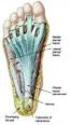 Plantar Fascia Release Introduction Plantar fasciitis is a common condition that causes pain around the heel. It may be severe enough to affect regular activities. If other treatments are unsuccessful,
Plantar fascia. Plantar Fasciitis (pain in the heel of the foot)
 ! Plantar fascia Plantar Fasciitis (pain in the heel of the foot) Plantar Fasciitis is the most common foot problem seen in runners and is often associated with an increase in running mileage. Typically
NETWORK FITNESS FACTS THE HIP
 NETWORK FITNESS FACTS THE HIP The Hip Joint ANATOMY OF THE HIP The hip bones are divided into 5 areas, which are: Image: www.health.com/health/static/hw/media/medical/hw/ hwkb17_042.jpg The hip joint is
Page 2 of 6 plantar fascia. This is called the windlass mechanism. Later, we'll discuss how this mechanism is used to treat plantar fasciitis with str
 Page 1 of 6 Plantar Fasciitis (Heel Pain) Plantar fasciitis is a painful condition affecting the bottom of the foot. It is a common cause of heel pain and is sometimes called a heel spur. Plantar fasciitis
How To Treat Heel Pain
 Plantar Fasciitis, Heel Spurs, Heel Pain The Plantar Fasciitis Organization is dedicated to the understanding of Plantar Fasciitis, Heel Spurs, and all other forms of Heel Pain. Welcome to the Plantar
This is caused by muscle strain to the Achilles tendon in the heel of the foot.
 Foot Facts Our feet were designed to move across uneven earthy surfaces. The hard, inflexible surfaces that we regularly walk on today, such as concrete, tile or wood, leave our feet wanting in terms of
BALANCED BODYWORKS LA Rejuvenate. Heal. Restore.
 Tools For Myofascial Self Massage and Stretching Foam Roller Lacrosse Ball (Hard) Stretch Strap What is Foam Rolling? Foam Rolling or Self Myofascial Release, is a form of soft tissue massage. Similar
Sports Injury Treatment
 Sports Injury Treatment Participating in a variety of sports is fun and healthy for children and adults. However, it's critical that before you participate in any sport, you are aware of the precautions
Hip Bursitis/Tendinitis
 Hip Bursitis/Tendinitis Anatomy and Biomechanics The hip is a ball and socket joint that occurs between the head of the femur (ball) and the acetabulum of the pelvis (socket). It is protected by several
Foot and Ankle Conditioning Program. Purpose of Program
 Prepared for: Prepared by: OrthoInfo Purpose of Program After an injury or surgery, an exercise conditioning program will help you return to daily activities and enjoy a more active, healthy lifestyle.
Rehabilitation. Rehabilitation. Walkers, Crutches, Canes
 Walkers, Crutches, Canes These devices provide support through your arms to limit the amount of weight on your operated hip. Initially, after a total hip replacement you will use a walker to get around.
GALLAND/KIRBY INTERVAL DISTANCE RUNNING REHABILITATION PROGRAM
 GALLAND/KIRBY INTERVAL DISTANCE RUNNING REHABILITATION PROGRAM PHASE I: WALKING PROGRAM Must be able to walk, pain free, aggressively (roughly 4.2 to 5.2 miles per hour), preferably on a treadmill, before
Heel pain and Plantar fasciitis
 A patient s guide Heel pain and Plantar fasciitis Fred Robinson BSc FRCS FRCS(orth) Consultant Trauma & Orthopaedic Surgeon Alex Wee BSc FRCS(orth) Consultant Trauma & Orthopaedic Surgeon. What causes
Spine Conditioning Program Purpose of Program
 Prepared for: Prepared by: OrthoInfo Purpose of Program After an injury or surgery, an exercise conditioning program will help you return to daily activities and enjoy a more active, healthy lifestyle.
Physical & Occupational Therapy
 In this section you will find our recommendations for exercises and everyday activities around your home. We hope that by following our guidelines your healing process will go faster and there will be
Pre - Operative Rehabilitation Program for Anterior Cruciate Ligament Reconstruction
 Pre - Operative Rehabilitation Program for Anterior Cruciate Ligament Reconstruction This protocol is designed to assist you with your preparation for surgery and should be followed under the direction
Lower Back Spinal Fusion & Exercise
 & Exercise with Rick Kaselj, MS More FREE Information on Exercise & Injuries $299 Fitness Education Returning the Shoulder Back to Optimal Function Seminar Exercise Modification for the Sensitive Shoulder
CYCLING INJURIES. Objectives. Cycling Epidemiology. Epidemiology. Injury Incidence. Injury Predictors. Bike Fit + Rehab = Happy Cyclist
 Objectives CYCLING INJURIS Bike Fit + Rehab = Happy Cyclist Jenny Kempf MPT, CSCS 1. pidemiology 2. Biomechanics 3. Overuse injuries 4. Prevention Cycling pidemiology 100 million Americans ride bicycles
Endoscopic Plantar Fasciotomy
 Endoscopic Plantar Fasciotomy Introduction Plantar fasciitis is a common condition that causes pain centralized around the heel. It may be severe enough to affect regular activities. Health care providers
Flat foot and lower back pain
 Flat foot and lower back pain Dr James Tang, MBA, BDS, LDS RCS General Dental Practitioner, NASM Corrective Exercise Specialist with special interest in postural dysfunction & lower back problems, Level
Running Injury Prevention Tips & Return to Running Program
 Department of Rehabilitation Services Physical Therapy The intent of these guidelines is to provide the athlete with a framework for return to sports activity following injury. These guidelines should
Injury Prevention for the Back and Neck
 Injury Prevention for the Back and Neck www.csmr.org We have created this brochure to provide you with information regarding: Common Causes of Back and Neck Injuries and Pain Tips for Avoiding Neck and
GET A HANDLE ON YOUR HEEL PAIN GUIDE
 GET A HANDLE ON YOUR HEEL PAIN GUIDE American Podiatric Medical Association www.apma.org/heelpain Take a Moment to Focus in on Your Feet. Does one (or even both) of your heels hurt? If so, you aren t alone.
Effective Plantar Fasciitis Exercises
 Effective Plantar Fasciitis Exercises Effective Plantar Fasciitis Exercises - 12 Week Plantar Fasciitis Exercise Solution - 1 3 Month Plantar Fasciitis Exercise Program Stage 1 Stage 2 Stage 3 Structure
Rehabilitation of Sports Hernia
 Rehabilitation of Sports Hernia (Involving Adductor Tenotomy, Ilioinguinal Neurectomy and Osteitis Pubis) An appendix follows this protocol for examples of exercises in each phase of rehabilitation. There
A Guide to Heel Pain
 The Society of Chiropodists and Podiatrists A Guide to Heel Pain The Society of Chiropodists and Podiatrists Heel pain may be caused by a number of different problems; for effective treatment you need
Anterior Cruciate Ligament Reconstruction Rehabilitation Protocol
 The First Two Weeks After Surgery You will go home with crutches and be advised to use ice. Goals 1. Protect reconstruction 2. Ensure wound healing 3. Maintain full knee extension 4. Gain knee flexion
What Are Bursitis and Tendinitis?
 Bursitis and tendinitis are both common conditions that cause swelling around muscles and bones. They occur most often in the shoulder, elbow, wrist, hip, knee, or ankle. A bursa is a small, fluid-filled
Patellofemoral/Chondromalacia Protocol
 Patellofemoral/Chondromalacia Protocol Anatomy and Biomechanics The knee is composed of two joints, the tibiofemoral and the patellofemoral. The patellofemoral joint is made up of the patella (knee cap)
Predislocation syndrome
 Predislocation syndrome Sky Ridge Medical Center, Aspen Building Pre-dislocation syndrome, capsulitis, and metatarsalgia are all similar problems usually at the ball of the foot near the second and third
Addressing Pelvic Rotation
 1 of 5 4/20/2008 10:31 AM http://www.strengthcoach.com Addressing Pelvic Rotation Aaron Brooks of Perfect Postures When trying to address your athlete's or client's limitations due to pain or joint restriction,
Fact sheet Exercises for older adults undergoing rehabilitation
 Fact sheet Exercises for older adults undergoing rehabilitation Flexibility refers to the amount of movement possible around a joint and is necessary for normal activities of daily living such as stretching,
A Patient s Guide to Plantar Fasciitis. Foot and Ankle Center of Massachusetts, P.C.
 A Patient s Guide to Plantar Fasciitis Welcome to Foot and Ankle Center of Massachusetts, where we believe in accelerating your learning curve with educational materials that are clearly written and professionally
Physical Therapy Corner: Knee Injuries and the Female Athlete
 Physical Therapy Corner: Knee Injuries and the Female Athlete Knee injuries, especially tears of the anterior cruciate ligament, are becoming more common in female athletes. Interest in women s athletics
Patient Guide. Sacroiliac Joint Pain
 Patient Guide Sacroiliac Joint Pain Anatomy Where is the Sacroiliac Joint? The sacroiliac joint (SIJ) is located at the bottom end of your spine, where the "tailbone" (sacrum) joins the pelvis (ilium).
Psoas Syndrome. The pain is worse from continued standing and from twisting at the waist without moving the feet.
 Psoas Syndrome The iliopsoas muscle is a major body mover but seldom considered as a source of pain. Chronic lower back pain involving the hips, legs, or thoracic regions can often be traced to an iliopsoas
Sciatica Yuliya Mutsa PTA 236
 Sciatica Yuliya Mutsa PTA 236 Sciatica is a common type of pain affecting the sciatic nerve, which extends from the lower back all the way through the back of the thigh and down through the leg. Depending
Rehabilitation Documentation and Proper Coding Guidelines
 Rehabilitation Documentation and Proper Coding Guidelines Purpose: 1) Develop a guide for doctors in South Dakota to follow when performing reviews on rehabilitation cases. 2) Provide doctors in South
Integra. Subtalar MBA Implant
 Integra Subtalar MBA Implant Patient EDUCATION Overview: What is Flatfoot? Flatfoot is a physical deformity where there is an absence of the arch that runs from the heel of the foot to the toes. A common
KNEE EXERCISE PROGRAM
 KNEE PROGRAM INTRODUCT ION Welcome to your knee exercise program. The exercises in the program are designed to improve your knee stability and strength of the muscles around your knee and hip. The strength
ACL Reconstruction Rehabilitation Program
 ACL Reconstruction Rehabilitation Program 1. Introduction to Rehabilitation 2. The Keys to Successful Rehabilitation 3. Stage 1 (to the end of week 1) 4. Stage 2 (to the end of week 2) 5. Stage 3 (to the
Objectives Learn the anatomy of the foot. Identify key terms associated with plantar fasciitis. Determine the causes of plantar fasciitis and understa
 Plantar Fasciitis Objectives Learn the anatomy of the foot. Identify key terms associated with plantar fasciitis. Determine the causes of plantar fasciitis and understand why it occurs. Recognize the injury
Biomechanics of cycling - Improving performance and reducing injury through biomechanics
 Biomechanics of cycling - Improving performance and reducing injury through biomechanics Biomechanics is the science concerned with the forces that act on the human body and the effects these forces produce.
Heel Pain: Heal! Amie C. Scantlin, DPM, MS, FACFAS Glencoe Regional Health Services (320) 864-3121 ext. 1933
 Heel Pain: Heal! Amie C. Scantlin, DPM, MS, FACFAS Glencoe Regional Health Services (320) 864-3121 ext. 1933 www.grhsonline.org Important Notice The information contained in this document is for informational
A small roller with a big effect. The mini roller for massaging, strengthening, stretching and warming up
 A small roller with a big effect The mini roller for massaging, strengthening, stretching and warming up Suva Preventative products P. O Box, 6002 Lucerne Enquiries Tel. 041 419 58 51 Orders www.suva.ch/waswo
Evaluation, Treatment, and Exercise Rx for Muscle Imbalance in the Lower Extremities April 5, 2014 AOCPMR Midyear Meetingr Rebecca Fishman, D.O.
 Evaluation, Treatment, and Exercise Rx for Muscle Imbalance in the Lower Extremities April 5, 2014 AOCPMR Midyear Meetingr Rebecca Fishman, D.O. Biomechanics of the Lumbar Spine and Lower Extremities Lower
Strength Training for the Knee
 Strength Training for the Knee This handout is to help you rebuild the strength of the muscles surrounding the knee after injury. It is intended as a guideline to help you organize a structured approach
Lumbar/Core Strength and Stability Exercises
 Athletic Medicine Lumbar/Core Strength and Stability Exercises Introduction Low back pain can be the result of many different things. Pain can be triggered by some combination of overuse, muscle strain,
Trochanteric Bursitis Self Management for Patients
 Trochanteric Bursitis Self Management for Patients Updated May 2010 What is the Trochanteric Bursa? The trochanteric bursa is a fluid-filled sac that functions as a gliding surface to reduce friction between
Basic Principles of Bike Fitting: The Role of the Physical Therapist Matthew S. Briggs, PT, DPT, SCS, ATC
 Basic Principles of Bike Fitting: The Role of the Physical Therapist Matthew S. Briggs, PT, DPT, SCS, ATC School of Health & Rehabilitation Sciences, The Ohio State University; Improving People s Lives
ACL RECONSTRUCTION POST-OPERATIVE REHABILITATION PROGRAMME
 ACL RECONSTRUCTION POST-OPERATIVE REHABILITATION PROGRAMME ABOUT THE OPERATION The aim of your operation is to reconstruct the Anterior Cruciate Ligament (ACL) to restore knee joint stability. A graft,
EXCESSIVE LATERAL PATELLAR COMPRESSION SYNDROME (Chondromalacia Patella)
 EXCESSIVE LATERAL PATELLAR COMPRESSION SYNDROME (Chondromalacia Patella) Description Maintain appropriate conditioning: Excessive lateral patellar compression syndrome is characterized by pain in the knee
Dr. O Meara s. Anterior Knee Pain (PatelloFemoral Syndrome) Rehabilitation Protocol www.palomarortho.com
 Dr. O Meara s Anterior Knee Pain (PatelloFemoral Syndrome) Rehabilitation Protocol www.palomarortho.com Anterior Knee Pain (PatelloFemoral Syndrome) Rehabilitation Protocol Hamstring Stretching & Strengthening
Range of Motion. A guide for you after spinal cord injury. Spinal Cord Injury Rehabilitation Program
 Range of Motion A guide for you after spinal cord injury Spinal Cord Injury Rehabilitation Program This booklet has been written by the health care providers who provide care to people who have a spinal
The Santa Monica Orthopaedic and Sports Medicine Research Foundation. The PEP Program: Prevent injury and Enhance Performance
 The Santa Monica Orthopaedic and Sports Medicine Research Foundation The PEP Program: Prevent injury and Enhance Performance This prevention program consists of a warm-up, stretching, strengthening, plyometrics,
KINESIOLOGY TAPING GUIDE
 KINESIOLOGY TAPING GUIDE What is Kinesiology tape and how does Kinesiology tape work? How to apply Kinesiology tape Examples of application of UP Kinesiology tape for common injuries and conditions Introduction
Hip Arthroscopy Labral Repair Rehabilitation Protocol
 Hip Arthroscopy Labral Repair Rehabilitation Protocol PHASE 1: INITIAL Diminish pain and inflammation Protect integrity of repaired tissue Prevent muscular inhibition Restore ROM within the restrictions
KNEES A Physical Therapist s Perspective American Physical Therapy Association
 Taking Care of Your KNEES A Physical Therapist s Perspective American Physical Therapy Association Taking Care of Your Knees When the mother of the hero Achilles dipped him in the river Styx, she held
Knee Kinematics and Kinetics
 Knee Kinematics and Kinetics Definitions: Kinematics is the study of movement without reference to forces http://www.cogsci.princeton.edu/cgi-bin/webwn2.0?stage=1&word=kinematics Kinetics is the study
PATHOLOGIC GAIT -- MUSCULOSKELETAL. Focal Weakness. Ankle Dorsiflexion Weakness COMMON GAIT ABNORMALITIES
 Pathological Gait I: Musculoskeletal - 1 PATHOLOGIC GAIT -- MUSCULOSKELETAL Normal walking is the standard against which pathology is measured Efficiency is often reduced in pathology COMMON GAIT ABNORMALITIES
W SITTING, KNEELING, LONG LEG & SIDE SITTING Perils, Problems, & Prevention
 W SITTING, KNEELING, LONG LEG & SIDE SITTING Perils, Problems, & Prevention Tema Stein B.P.T., D.O (mp) Paediatric Physical Therapist Osteopathic Manual Practitioner Toddlers, preschoolers and children
PATELLOFEMORAL TRACKING AND MCCONNELL TAPING. Minni Titicula
 PATELLOFEMORAL TRACKING AND MCCONNELL TAPING Minni Titicula PF tracking disorder PF tracking disorder occurs when patella shifts out of the femoral groove during joint motion. most common in the US. affects
The Process of Strength and Conditioning for Golfers
 The Process of Strength and Conditioning for Golfers The use of different sporting activities and resistance work to develop a strength and conditioning program specific to golf. Many club golfers are
ANKLE STRENGTHENING INTRODUCTION EXERCISES SAFETY
 ANKLE STRENGTHENING INTRODUCTION Welcome to your Ankle Strengthening exercise program. The exercises in the program are designed to improve your ankle strength, fitness, balance and dynamic control. The
.org. Achilles Tendinitis. Description. Cause. Achilles tendinitis is a common condition that causes pain along the back of the leg near the heel.
 Achilles Tendinitis Page ( 1 ) Achilles tendinitis is a common condition that causes pain along the back of the leg near the heel. The Achilles tendon is the largest tendon in the body. It connects your
Today s session. Common Problems in Rehab. www.physiofitness.com.au/filex.htm LOWER BODY REHAB ESSENTIALS TIM KEELEY FILEX 2012
 Tim Keeley B.Phty, Cred.MDT, APA Principal Physiotherapist physiofitness.com.au facebook.com/physiofitness Today s session Essential list for the lower body Rehab starting point Focussing on activation,
ISOMETRIC EXERCISE HELPS REVERSE JOINT STIFFNESS, BUILDS MUSCLE, AND BOOSTS OVERALL FITNESS.
 ISOMETRIC EXERCISE HELPS REVERSE JOINT STIFFNESS, BUILDS MUSCLE, AND BOOSTS OVERALL FITNESS. By Askari A. Kazmi KazmisBioscienceLabs exercise helps reverse joint stiffness, builds muscle, and boosts overall
CAPPAGH NATIONAL ORTHOPAEDIC HOSPITAL, FINGLAS, DUBLIN 11. The Sisters of Mercy. Plantar Fascitis
 1.0 Policy Statement... 2 2.0 Purpose... 2 3.0 Scope... 2 4.0 Health & Safety... 2 5.0 Responsibilities... 2 6.0 Definitions and Abbreviations... 2 7.0 Guideline... 3 7.1 Assessment... 3 7.2 Treatment...
The Five Most Common Pathomechanical Foot Types (Rearfoot varus, forefoot varus, equinus, plantarflexed first ray, forefoot valgus)
 The Five Most Common Pathomechanical Foot Types (Rearfoot varus, forefoot varus, equinus, plantarflexed first ray, forefoot valgus) Pathomechanical foot types usually refer to structural deformities that
PILATES Fatigue Posture and the Medical Technology Field
 PILATES Fatigue Posture and the Medical Technology Field Marybeth Kane May 2014 Course: 2014, Pacific Palisades, CA 1 ABSTRACT A medical laboratory scientist (MLS) (also referred to as a medical technologist
How to Get and Keep a Healthy Back. Amy Eisenson, B.S. Exercise Physiologist
 How to Get and Keep a Healthy Back Amy Eisenson, B.S. Exercise Physiologist Lesson Objectives Statistics of Back Pain Anatomy of the Spine Causes of Back Pain Four Work Factors Core Muscles Connection
Stretching in the Office
 Stretching in the Office Legs: Quads, Hamstrings, IT band, Hip flexors, Gluts, Calves Quads: Standing @ desk maintaining upright posture, grab one leg @ a time by foot or ankle and bring it towards backside
Pilates for the Rehabilitation of Iliopsoas Tendonitis and Low Back Pain
 Pilates for the Rehabilitation of Iliopsoas Tendonitis and Low Back Pain Bruce Manuel November 30, 2015 CAP Standard 2015 Pilates Denver Greenwood Village, CO Abstract Iliopsoas Tendonitis is irritation
Exercises for Low Back Injury Prevention
 DIVISION OF AGRICULTURE RESEARCH & EXTENSION University of Arkansas System Family and Consumer Sciences Increasing Physical Activity as We Age Exercises for Low Back Injury Prevention FSFCS38 Lisa Washburn,
What are Core Muscles?... 2. A Healthy Lumbar Spine...3. What is Low Back Pain?...4. Rehabilitation...6. Stages of Rehabilitation...
 Table of Contents What are Core Muscles?... 2 A Healthy Lumbar Spine...3 What is Low Back Pain?...4 Rehabilitation...6 Stages of Rehabilitation...7 Pain Management....................... 8 Heat/Ice What