
Air Balancers- Advanced
|
|
|
- Todd Shaw
- 10 years ago
- Views:
Transcription
1 Air Balancers- Advanced Learning Objectives At the conclusion of this module, you will understand IR Zimmerman Air Balancer: Capabilities Balancer Operation Controls Operation and Adjustment Audience Ingersoll-Rand sales, distributors, customer service, engineering and service personnel Executive Summary The Balancer has smooth operation, variable capacity, multiple control choices, multiple mounting options and minimal air consumption. The Balancer replaces hoist applications or as part of a complete lifting system to improve ergonomics and increase production. Understanding the operation and function of the balancer and various controls is an important factor in the proper use of the balancer system. We will discuss the adjustment, inspection and operation of the balancer and controls. Module Preview 1. If a balancer with ZA controls allows a load to drift to the floor in less than a minute what is the problem? Leak to atmosphere Hook balance incorrectly set Low air supply pressure 2. When facing the end cover which direction does the reel rotate? Counterclockwise Clockwise 3. If air pressure is released from the piston chamber, the load will. Raise Lower Stay in place 4. Which control is best suited for a lifting or hoisting application? ZA BA EA Page 1 of 21

2 Configuration The Balancer is a configured product. The sequence of letters and numbers represent the balancers controls, rated capacities, travel and options. The graphic below depicts a configured balancer model number. Controls Capacity Z-Stop Suspension ZA W S A2 Wire Rope Travel Options Capacity Zimmerman has 5 basic models of Balancers, with rated capacities of 50, 150, 200, 350, and 500-lb. The rated capacity is based on a supply pressure of 100-psi at the balancer. The capacity of the Balancer decreases as the air pressure decreases. The Balancers can be configured to handle up to 2000-lbs. by adding reeve blocks or operating units in tandem. Operating Capacity of a balancer is determined by actual (plant) operating air pressure. Plant operating pressure is the pressure that is available during normal operations. Each pound of pressure below 100-psi is a 1% decrease in Balancer capacity. To determine the operating capacity of a Balancer at any air pressure, convert the air pressure into a decimal. Air Pressure 100 = Capacity Factor (50 psi pressure 100 =.50 Factor) Multiply the capacity factor by the rated capacity of the Balancer to determine the operating capacity. Capacity Factor x Rated Capacity = Operating Capacity (.50 Factor x 350-lb Rated Capacity = 175-lb. Operating Capacity) Page 2 of 21

3 Plant operating air pressure (PSI) 50 lb. Balancer operating capacity 150 lb. Balancer operating capacity 200 lb. Balancer operating capacity 350 lb. Balancer operating capacity 500 lb. Balancer operating capacity Balancing or Lifting The Balancer stalls when the total load is equal to its operating capacity, as the load increases; maximum speed decreases. For balancing applications, the total load on the balancer should not be greater than 60% of its operating capacity for optimum performance. For lifting applications, the total load on the balancer should not be greater than 80% of its operating capacity for maximum performance. Reeve or Tandem Option To increase the operating capacity of the balancer a reeve block can be used, pass the wire rope through the pulley and tie the dead end of the rope to the padeye at the bottom of the Balancer housing, this action doubles the capacity of the Balancer. A 500-lb. Balancer becomes a 1,000-lb. Balancer. The disadvantage of this action is that it cuts maximum travel in half. A Balancer with 80-in. of travel is cut to a maximum of 40-in. Reeve blocks are not available for the 50 and 150-lb. balancers. The second option is to use Balancers in tandem. Two balancers are tied to a common control system and a single hook. Two 500-lb. Balancers become a 1000-lb system. The advantage is that there is no reduction in travel. The disadvantage of this method is the expense of two balancers. Travel Each Balancer is supplied with a predetermined amount of wire rope. The total length of rope is greater than the capacity of the reel. Not all of the supplied rope will wind onto the reel. The purpose of the excess rope is to accommodate various installation heights. Remove excess wire rope at the completion of installation. Each balancer is also supplied with a maximum amount of straight travel, which is more than an operator s reasonable and comfortable, ergonomically sound, reach. Page 3 of 21

4 The 150, 350 and 500lb. Balancers have 80 inches of travel. The 200 lb. Balancer has 120 inches of travel. The 50 lb. Balancer has 60 inches of travel. Remember that installing a reeve block will reduce the travel by half. Note: 50 & 150 lb. units reeve block is unavailable. Balancer Capacity Length of Rope (Feet) Straight Travel (Inches) Reeved Travel (Inches) 50 lb N/A 150 lb N/A 200 lb lb lb Exercise 1 1. How many models of balancers does IR provide? One Three Five 2. What is the operating capacity of: 350-lb. Balancer at 55 psi = 200-lb. Balancer at 95 psi = 3. What does the "S" represent in the balancer model number? Stand Alone Secondary Z-Stop 4. If a 200lb balancer is reeved how many inches of travel, will it have? How many inches of travel do 500lb. Balancers have? Balancer Function The Balancer uses the same principle as a single acting air cylinder. Air pressure passes into the piston chamber to raise the load, while gravity and the release of pressure allow the load to lower. This design requires minimum air consumption. The balancer consumes approximately 1/8 of a cubic foot of air per complete cycle. An average hoist will consume up to 4 cubic feet of air per cycle. A fixed Ball Screw runs through the Z-Brake Reel Thrust Bearing Z-Brake Reel Thrust Bearing End Cover End Cover Ball Screw and Nut Ball Screw and Nut Housing Housing Piston Piston End Cap End Cap Page 4 of 21

5 center of the Balancer. A Valox Reel, with a Ball Nut pressed into one end and a Thrust Bearing pressed into the other, rides on the Ball Screw. A Piston pushes against the Thrust Bearing. The Reel rotates counterclockwise (facing the end cover) along the length of the Ball Screw, lifting the load. When pressure in the piston chamber releases, the load counter-rotates the Reel and lowers. When the load is stopped the air trapped in the piston chamber, acts as a cushion balancing the load until the load is moved or the controls are manipulated. Balancer Inspections The balancer should be inspected annually for condition of the internal components and lubrication. The balancer may be serviced while installed on the overhead rail. Refer to the Balancer Service Manual, form MHD56151 for Preventive Maintenance instructions. Z-Brake Z-Brake is the name of our patented Safety Retraction System. The Z-Brake will prevent uncontrolled upward travel of the wire rope if the load is lost or the wire rope breaks. It is installed in the End Cover as a standard part of the balancer (except in the 50 lb. Balancer). The Z-Brake activates by centrifugal force through Brake Rods that engage the Reel. When the speed of the Reel overcomes the Brake Spring tension, the Z-Brake will engage. The Z-Brake should be checked during installation for proper operation of the brake in the work area. The Z-Brake sensitivity can be adjusted. Moving the spring inward, will cause the brake to engage more quickly, the lifting speed will be slower. Sensitivity is decreased by moving the spring outward, which causes the brake to engage more slowly and allows faster lifting speeds. Operate the balancer very slowly in the up direction until a load is attached to avoid accidental engagement of the Z-Brake Train operators to release the up lever if the load stops suddenly or begins to jerk. Then depress the down lever to reset the Z-Brake. Page 5 of 21

6 Maintenance personnel should be notified to adjust the Z-Brake or slow the lifting speed. The Z-Brake should never be used to limit travel as this will cause increased wear and reduce the life of the balancer. If the Z-Brake engages repeatedly during normal operation, it will damage the wire rope, end cover, reel and brake rods. The force generated by the piston when the Z-Brake engages can be sufficient to bend the brake rods, crack the reel or cause core pops in the wire rope. Z-Brake Inspection The Z-Brake should be inspected annually during the normal balancer service. Remove balancer from service. Remove the end cover of the balancer. Brake Rods- Check for security Bent or deformed Bearing- Check for smooth rotation Brake ring- Check for excessive gouging and wear Brake arm/pad- Check spring holes for excessive wear Check pad area for excessive wear Brake Spring- Check for deformation and over center wrap for attachment Check engagement: Grasp the brake rods and rotate them clockwise with a rapid motion. The brake shoe should engage the end cover and stop rotation. Wire Rope Zimmerman Air Balancers incorporate wire rope because it is an inexpensive means to support a load and has excellent wear characteristics. It should provide approximately 250,000 cycles. We use 7 X 19, galvanized, 3/16 wire rope with a working capacity of 1,400-lbs. A fitting is swaged onto the end of the rope that installs into the reel. Page 6 of 21

7 Wire Rope Inspection The wire rope should be inspected daily. Replace wire rope with any bulges, more than one wire frayed, kinks or abnormal bends. A damaged wire rope will have one or more of these faults. Depress the down lever or lower the handling device to the bottom of balancer travel. Use a gloved hand to carefully slide up the rope, if the glove snags on the wire rope inspect for frays and core pops in this area. Check the entire length of rope up to the wire rope guide. Replace any wire rope found faulty. Repeated loading and unloading of the wire rope causes core pop. The core strand of the rope stretches beyond its limits then the load releases rapidly. The core strand of rope will break and fray or curl into a knot causing a bulge or bend in the wire rope. To prevent core pop the wire rope should always have tension on it or do not allow the wire rope to go slack. Frays occur as part of normal wear. Replace a wire rope at the first sign of fraying. Load Hook The load hook is a Crosby/ Bullard Golden Gate, Lif-Lok self-closing swivel bail load hook. The hook has a working limit of one half ton and an ultimate load of four times the working limit. Load Hook Inspection The load hook should be inspected daily as part of the wire rope inspection. Check the following: Top bail of hook should swivel freely. Tip of hook should align with the self-closing gate. No more than 10% wear is allowed at the base of the hook. No more than 5% wear in all other areas. Quic-Check marks must align with an inch or half inch increment. Page 7 of 21

8 Z-Stop- Option The Z-Stop is a patented mechanism that will disable the operation of the Balancer if the main air supply is disabled. It consists of an Engagement Plate and a Double Acting Air Cylinder with engagement pin. The Engagement Plate is installed on the Z-Brake rods and rotates with the Reel. It contains slots for the Engagement Pin. Both ends of the Double Acting Cylinder are pressurized. Air pressure from the Piston Chamber attempts to extend the engagement pin through the red 5/32-inch tube. Supply air pressure routes to the front of the Cylinder through the yellow 5/32-inch tube and acts to hold the Engagement Pin back. If the main air supply is disabled or supply pressure drops below the balancer pressure, the Engagement Pin will extend and engage one of the slots in the plate. The Z-Stop will engage before the load lowers 6 inches. When supply air pressure is re-enabled and exceeds the balancer pressure, the air cylinder will begin to retract. However, because of a notch in the end of the Engagement Pin, the load must be raised slightly before the Pin will disengage from the slot in the Engagement Plate. The Z-Stop is not available on the 50 or 150-lb. balancers. All required fittings and tubing are supplied. The Z-Stop can be added to balancers with the Z-Brake installed using the appropriate retrofit kit. Z-Stop Inspection The Z-Stop should be inspected annually as part of the balancer service. Connect an airline to the Z-Stop housing and apply air pressure to extend the Z- stop pin. Engagement Pin- Check pin engages fully through plate Bent or deformed Plate- Security to brake rods Warped or bent End Cover- Housing- Leakage at pin (inside) Leakage at Z-Stop housing Security and leakage at fitting Security of screws Security and leakage at fitting Cracks Page 8 of 21

9 Exercise 2 1. How often should the balancer be inspected and lubricated? Annually Weekly Monthly 2. How often should the wire rope be inspected? Monthly Annually Daily 3. What is the purpose of a Z-Stop? Disable the balancer if air supply is lost Stop an uncontrolled load To limit travel 4. When should the Z-Brake engage? Every Cycle Rope fails or load is lost When supply pressure is lost 5. When should the wire rope be replaced? Annually Weekly First signs of fraying Controls Function IR Zimmerman Balancers provide superior load control for precision placement of parts. When properly applied, a balancer can increase production and reduce employee injuries and fatigue. The following table identifies the control options available and their proper application. CONTROL DESCRIPTION APPLICATION LIMITATIONS BA Basic Pressure regulator control Balancing a single load- Weld Gun Multi-spindle Nut Runner Checking Fixture BA Z-Servo EA Basic EA 2PS ZA Basic Pressure regulator control with input amplifying servo Pressure regulator control with adjustment for multiple loads Pendent actuated Pressure regulator control with adjustment for empty device and loaded device Integrated to device or manually actuated Manifold control with speed adjustments; capable of lifting up to operating capacity of balancer Pendent actuated Balancing a single load Weld Gun Multi-spindle Nut Runner Checking Fixture Balancing of three loads Three mode pendent: HI-LOAD LO-LOAD UN-LOAD Balancing control integrated into a handling device that will pick up only one size or weight part All lifting applications Page 9 of 21 Supplied only on the 50 and 150lb. capacity Balancers Supplied with lb. balancers Above 600lbs. total load the control will lose the ergonomic effect The variation between UN-LOAD and HI- LOAD can be a maximum of 40 lbs. If the total load is above 200lbs. the control will lose the ergonomic effect 80% of operating capacity overall speed will begin to decrease

10 ZA (Zim-Air) Control The ZA is best suited for applications where it would be uncomfortable for an operator to reach for the load. The requirements for operators to bend or reach for a load are reduced through use of the pendent. The ZA control operates similar to a hoist control. When the levers on the pendent are depressed, the Balancer will raise or lower the load. The valves in the pendent operate like an accelerator in a car. The harder you press, the faster the load will move. The levers can be "feathered" to make the load move at a comfortable rate for different operators and loads. There are three adjustments on the ZA manifold. Flow controls on either end of the manifold control the UP and DOWN speed. The center adjustment is a non-relieving regulator that adjusts pressure to the Balancer to prevent the load from drifting down. The air flows across the UP speed control valve on the right side of the manifold, down the black hose to the UP lever. When the lever is depressed the air will flow past the Down (DN) lever valve, up the hose to the Balancer raising the load. When the controls are inactive, the load is in balance and pressure traps in the Balancer. To lower the load, depress the Down lever allowing pressure to escape through the pendent to atmosphere. The top center of the manifold is the Hook Balance Adjust, in the event of a leak; pressure is supplied to the piston chamber to prevent a load from drifting down. The normal setting for this valve is flush with the top of the manifold block, which turns the regulator off. ZA Adjustments 1. Install the manifold to the end cap. 2. Connect the black UP hose to the UP port on the manifold. 3. Connect the gray/ yellow hose (handling device applications) to the DN port on the manifold. 4. Connect main air supply to the right side port of the manifold. 5. Turn on main air supply. Adjust regulator to required air pressure. 6. Rotate hook balance screw clockwise slowly until the wire rope begins to raise, move to the full up position ensure the Z-brake does not engage. Page 10 of 21

11 7. Install the load hook and handling device to the wire rope in the required position. Refer to "Lash up" instructions in the Balancer Service Manual form MHD Rotate the UP flow control clockwise until snug. 9. If the wire rope is slack- ensure the Z-brake does not engage. 10. Feather the UP lever until tension is applied to the wire rope, then fully depress the UP lever until the load is in the full up position. 11. Depress the DN lever and check speed. 12. Adjust the DN flow control on the manifold counterclockwise to increase speed, clockwise to decrease speed, until the desired speed is achieved. 13. Lower to the bottom of normal travel with tension on the wire rope. 14. Adjust the UP flow control on the manifold counterclockwise to increase speed, clockwise to decrease speed, until the desired speed is achieved. BA (Balance Air) Control The BA control installs on the 50-lb. and 150-lb. capacity Balancers for suspending, balancing and/or manipulating a load. The BA control is for single weight loads only. The BA control is a regulator that mounts to the Balancer (manifold- 150 lb. Units). It is manually adjusted to balance a load at a desired height, but can also be set to slowly raise a load up and out of the operator s way. The BA control is easy to install and adjust. There is an acorn nut at the base of the regulator to make adjustments. The regulator will supply or exhaust air as the operator moves the load. There is a check valve supplied with the control to be installed in the inlet of the regulator. If air supply is lost the check valve will prevent the air in the balancer from escaping allowing the load to lower. BA Adjustments 1. Connect regulator to balancer. 2. Rotate regulator adjustment knob counterclockwise until it stops. 3. Turn on main air supply. Adjust regulator to required air pressure. 4. Rotate the adjustment knob clockwise slowly until the wire rope begins to raise, move to the full up position. (Ensure the Z-brake does not engage- 150lb. units only). Page 11 of 21

12 5. Install the load hook and tooling or fixture to the wire rope in the required position. Refer to "Lash up" instructions in the Balancer Service Manual form MHD Rotate the adjustment knob clockwise until the load is suspended. 7. The correct setting will require equal effort to lift and lower the load. 8. If they require the unit to raise the load out of the way, turn the adjustment knob clockwise until the desired speed is achieved. 9. Tighten the jam nut just above the adjustment knob to maintain the proper setting. EA (Equalize Air) Regulator All applications balancing one or more loads with the lb capacity balancers use the EA regulator. The EA regulator is a versatile regulator specially designed for operation with the balancer. The EA regulator has an inlet port with a bronze filter, on the right side, to remove debris in the air supply. The plugged "B" port can provide a filtered supply of air that powers handling device components. The center section is the control and main regulator. The main regulator is the larger upper portion, to provide adequate airflow to the balancer. The control regulator uses a very small volume of air for faster response to operator inputs. The control regulator adjusts with the brass acorn nut at the base of the EA regulator. The trim valve located on the left side of the regulator body sets the balance pressure of the control regulator. If the trim valve is not set correctly it will make the load difficult to move. The normal setting is two turns from closed. Fine-tuning may be required for some applications. If the trim valve is opened too far the load will be difficult to push down. If not opened far enough the regulator will be slow to respond making the load feel heavy. The correct setting will require equal effort to raise and lower the load. To the left of the trim valve is the auxiliary flow valve, which controls the amount of air delivered to the "A" port where the control valve connects. The normal setting for the auxiliary flow has 1/8 th inch of the screw head protruding from the regulator body. If the valve is not set properly the control handle/ valve will not receive sufficient air pressure causing erratic operation. The "A" port connects to the control valve. The type of valve varies with different applications. A check valve in the left side of the EA regulator installs over the port to the balancer to trap air in the piston chamber and may prevent a load from drifting Page 12 of 21

13 down if the air supply is disabled. The spring behind the check valve requires 50psi to open. Exercises 3 1. What is the normal setting for the hook balance adjust? Two turns clockwise Flush with manifold top Screw removed 2. Turning the Up speed control on the ZA manifold clockwise will? Increase speed Decrease speed No effect 3. What would be the best control for balancing a 25lb. air tool? BA ZA EA-2PS 4. What is the purpose of the "B" port on the EA regulator? Connect control No purpose filtered air 5. If the load is hard to push down what EA regulator setting may need adjustment? Auxiliary Flow Trim Hook Balance BA (Balance Air) Z-Servo Control Inherent friction within the Balancer is 10% of a load, so manipulating loads over 100-lbs. can be fatiguing over time. The BA Z-Servo addresses this issue. The BA Z-Servo uses a spring actuating valve to amplify inputs from the operator to reduce the required effort to move a load to 3-5 % of the load. This allows the operator to use less effort to move or manipulate a very heavy load. Air flows from the "A" port of the EA regulator through the control tube to the Z-Servo valve. The Z-Servo vents pressure to atmosphere continuously to keep the load in balance. A die spring placed on the bolt mounted in the base of the Z- Servo compresses the servo valve against the knurled nut. At all times air can be heard or felt venting at the Z-Servo this keeps the load in balance when not being manipulated. When the load lowers the spring pushes against the Z-Servo valve, venting air to atmosphere until the EA regulator begins to exhaust air to lower the load. When the load moves up the spring relaxes and the amount of air vented at the Z-Servo valve reduces, sending a signal back Page 13 of 21

14 to the EA regulator to increase pressure to the balancer to lift. The knurl nut at the top of the servo provides fine tuning adjustment of the control. The BA Z-Servo control is supplied on all lb. Balancers for balancing applications. BA Z-Servo Adjustments 1. Install the regulator to the balancer. 2. Install the Z-Servo as close to but below the ball stop. Refer to the Balancer Service Manual, "Z-Servo Installation" instructions. 3. Rotate the regulator adjustment knob counterclockwise until 1/2 inch of thread is visible. 4. Rotate the trim valve clockwise until snug, then counterclockwise 2 full turns. 5. Rotate the auxiliary flow valve clockwise until snug. 6. Turn on main air supply. Adjust regulator to required air pressure. 7. Rotate the adjustment knob clockwise slowly until the wire rope begins to raise, move to the full up position ensure the Z-brake does not engage. 8. Install the load hook and tooling or fixture to the wire rope in the required position. Refer to "Lash up" instructions in the Balancer Service Manual form MHD Rotate the regular adjustment knob clockwise until the load raises to the full up position. The speed should be relatively slow. Pull down and release the load and check the speed. 10. Connect the black tube to the "A" port on the regulator. 11. Rotate the auxiliary flow valve counterclockwise until the lowering speed is the same as the lifting speed. "Pinching" off the black tube will pressurize the regulator to raise the load. 12. Raise and lower the load two or three times to verify the speeds are the same. If the speed in one direction is much faster than the opposite direction the load will be difficult to move and may provide erratic operation. 13. Pinch off the black tube and connect the free end to the Z-Servo fitting. 14. Turn the knurled nut at the top of the servo until the load is balanced. Rotating the nut clockwise will increase the balance setting or raise the load. Counterclockwise rotation of the nut will reduce the balance setting and lower the load. 15. Lift and lower the load several times. Equal effort should be required to raise and lower the load. If the load is hard to pull down turn the trim valve clockwise 1/2 turn and check. If the load is hard to raise turn the trim valve counterclockwise 1/2 and check. Page 14 of 21

15 EA (Equalized Air) Basic Control The EA basic control balances three loads without the need to readjust the control. The EA control is suited for applications where the various loads are within a 40lb. range. If the load variation is greater than 40-lbs., the lightest load may be difficult to lower or may drift up. The port sizes in the pendent prevent any additional air from being released at the pendent flow controls. Air from the "A" port of the EA Regulator flows through the control hose to the EA Pendent. The EA pendent has a rotary thumb switch with three settings: HI-LOAD- Balances heaviest load LO-LOAD- Air vents at the pendent to balance medium load UN-LOAD- Air vents at the pendent to balance lightest load When the pendent is in the HI-LOAD position, the EA regulator setting balances the heaviest load. When the pendent is in the LO-LOAD or UN-LOAD position, balancer pressure releases to atmosphere at the flow controls in the pendent. Set the pendent to the desired load position and the load can be moved by hand with minimal effort. The flow adjustments on the pendent to compensate for LO-LOAD and UN- LOAD are in line with the corresponding position. EA Basic Adjustments 1. Install the regulator to the balancer. 2. Install the EA pendent to the "A" port of the regulator. 3. Rotate the control handle to the HI-LOAD position. 4. Rotate the regulator adjustment knob counterclockwise until 1/2 inch of thread is visible. 5. Rotate the trim valve clockwise until snug, then counterclockwise 2 full turns. 6. Rotate the auxiliary flow valve clockwise until snug. 7. Turn on main air supply. Adjust regulator to required air pressure. 8. Rotate the adjustment knob clockwise slowly until the wire rope begins to raise, move to the full up position ensure the Z-brake does not engage. Page 15 of 21

16 9. Install the load hook and tooling or handling device to the wire rope in the required position. Refer to "Lash up" instructions in the Balancer Service Manual form MHD Rotate both the LO-LOAD and UN-LOAD flow controls clockwise until snug. 11. Apply the heaviest load to the tooling or handing device. 12. Rotate the auxiliary flow valve clockwise until snug, then counterclockwise until 1/8 th inch of the screw head protrudes from the side of the regulator body 13. Rotate the regulator adjustment knob clockwise until the load is balanced. 14. Lift and lower the load several times. Equal effort should be required to raise and lower the load. If the load is hard to pull down turn the trim valve clockwise 1/2 turn and check. If the load is hard to raise turn the trim valve counterclockwise 1/2 turn and check. 15. Rotate the pendent to the LO-LOAD position. 16. Slowly rotate the LO-LOAD flow control counterclockwise until the load drifts to the floor or full down position. The wire rope should go slack. 17. Remove the heaviest load from the tooling or handling device. 18. Apply the medium weight load to the tooling or handling device. 19. Rotate the LO-LOAD flow control clockwise until the load is balanced. 20. Tighten the jam nut to maintain the proper setting. 21. Lift the load to the full up position. 22. Rotate the pendent to the UN-LOAD position. 23. Slowly rotate the UN-LOAD flow control counterclockwise until the load drifts to the floor or full down position. Allow the wire rope to go slack. 24. Remove the medium weight load from the tooling or handling device. 25. Rotate the UN-LOAD flow control clockwise until the load is balanced. 26. Maneuver the tooling or handling device to the heaviest load and engage the load. 27. Rotate the pendent to the HI-LOAD position. 28. The load should be in balance. 29. Set down the heaviest load and rotate the pendent to the UN-LOAD position. 30. Maneuver the tooling or handling device to the medium weight load and engage the load. 31. Rotate the pendent to the LO-LOAD position. 32. The load should be in balance. 33. Set down the medium load and rotate the pendent the UN-LOAD position. EA-2PS (Position Sensor) Control The EA-2PS control integrates with either a clamp or a vacuum- handling device. The best applications for the EA-2PS control are single weight parts that are to be picked up and set down above the knees and below the shoulders. This control is designed to remain in balance with or without a load attached. The operator maneuvers the load by hand providing superior control. Page 16 of 21

17 The 2PS-valve mounts to the "A" port of the EA regulator. The valve releases balancer pressure through an adjustable flow control to balance the handling device while empty. A limit switch mounted on the handling device actuates the clamp or vacuum circuit and sends a pilot signal to the 2PS-valve. The 2PS-valve shifts to a blocked port, so pressure does not release. The EA regulator is set to balance the handling device with a load attached. Whether the handling device has a part attached or not, it is in a balanced condition, so the operator can maneuver the handling device by hand without having to manipulate any controls. EA2PS Adjustments 1. Install the regulator and 2PS valve to the balancer. 2. Rotate the regulator adjustment knob counterclockwise until 1/2 inch of thread is visible. 3. Rotate the trim valve clockwise until snug, then counterclockwise 2 full turns. 4. Rotate the auxiliary flow valve clockwise until snug, then counterclockwise until 1/8 th inch of the screw head protrudes from the side of the regulator body. 5. Rotate the 2PS-flow control clockwise until snug, then counterclockwise 1 turn. 6. Ensure the tube is connected at the 2PS valve and handling device. 7. Turn on main air supply. Adjust regulator to required air pressure. 8. Rotate the adjustment knob clockwise slowly until the wire rope begins to raise, move to the full up position ensure the Z-brake does not engage. 9. Install the load hook and tooling or handling device to the wire rope in the required position. Refer to "Lash up" instructions in the Balancer Service Manual form MHD Engage the load with the tooling or handling device. 11. Rotate the regulator adjustment knob clockwise until the load is balanced. 12. Lift and lower the load several times. Equal effort should be required to raise and lower the load. If the load is hard to pull down turn the trim valve clockwise 1/2 turn and check. If the load is hard to raise turn the trim valve counterclockwise 1/2 turn and check. 13. Set the part down. The handling device may raise or lower unexpectedly when the part is released. Ensure you are clear of the vertical path at all times during adjustments. 14. Rotate the 2PS-flow control counterclockwise if the handling device raises or counterclockwise if it lowers until the handling device is balanced. 15. Lift and lower the load several times. Equal effort should be required to raise and lower the load. If the load is hard to pull down turn the 2PS flow control counterclockwise 1/2 turn and check. If the load is hard to raise turn the trim valve clockwise 1/2 turn and check. Page 17 of 21

18 16. Engage and disengage the part checking the balance condition of both the loaded and unloaded handling device. Interlock Control The Interlock is a pilot operated; adjustable spring return valve that will prevent the accidental release of the load while suspended. The air supply to the clamp open/ vacuum release button is routed through the Interlock ports. In the normal state the valve will allow air to these buttons for normal operation. When "interlocked" the valve will shift supplying air directly to the clamp cylinder or vacuum generators. The pilot signal is from the piston chamber of the balancer. The spring return is set for the weight of the empty device. When a load is attached to the end effector additional pressure is required to lift the load. The pressure increase will be sufficient to shift the valve to the interlocked condition. The operator will not be able to release the part until the weight of the load is removed from the end effector or the load is set down. The Interlock valve will return to the normal state and allow the part to be released. Interlock Adjustments Perform the Interlock adjustments as the last portion of the installation, after all control adjustments have bee completed. 1. Raise the handling device to a mid travel position, so the balancer is supporting the entire weight. The Interlock screw threads into an aluminum housing that will rotate with the screw. Hold the aluminum housing while turning the screw. 2. Turn the screw counterclockwise until the Interlock light illuminates (green light) or until 1-1/2 inch of thread is visible. 3. Depress and release (repeatedly) the clamp/ vacuum release button while rotating the Interlock screw clockwise until the clamp opens or blow off air is heard at the vacuum cups or the Interlock indicator extinguishes. 4. Raise and lower the device several times. Check for proper operation of the clamp and vacuum controls. 5. Raise the handling device to the full up position. Page 18 of 21

19 6. Depress and hold the up lever of the ZA control for three seconds. This will simulate an additional load on the balancer. 7. Depress and release the clamp/ vacuum release button. The clamp should remain closed or not blow off air to the vacuum cups. 8. Check that the Interlock indicator has illuminated (green light). 9. Lower the handling device and engage a part with the end effector. 10. Raise the load 1-inch above the pick up point. 11. Depress and release the clamp/ vacuum release button. The part should remain attached to the end effector. 12. Lower the handling device and release the part at the pick up point. 13. Hold the aluminum housing and tighten the jam nut on the Interlock screw to prevent the setting from changing. Exercises 3 1. Turning the Z-Servo nut clockwise will? Raise the load Lower the load No effect 2. Where is the Z-Servo installed? Wire rope Balancer Tool 3. How many loads can be balanced with the EA Basic control? How does the EA control balance lighter loads? Magic Weights and pulleys Bleed air to atmosphere 5. When does the 2PS-flow control release air? Shutdown Empty device Loaded device Suspension Kits IR Zimmerman offers suspension kits that will fit most any rail type, enclosed track or I-beam/ T-rail. The enclosed track suspension kits incorporate a cast aluminum trolley body with Delrin molded wheels and precision life lubricated sealed wheel bearings. The I-beam/ T-rail kits are stamped and machined steel components. The wheel assemblies have a flat flange and slight taper that will allow adaptation to I-beam, T-rail, Patent track styles with running surface flange width adjustable up to 4 inches. Consult the factory for flange widths larger than 4 inches, custom suspension kits can be designed. All suspension kits come complete with all hardware, trolleys and brackets required to mount the balancer and an instruction sheet. If the instruction sheet is not available refer to the Balancer Service Manual for an exploded view of the suspension kits that can be used for assembly reference. Page 19 of 21

20 All bolted connections have self-locking nuts that should be replaced when removed. Suspension Kit Inspections The suspension kits should be inspected with the balancer annually. Remove the balancer from service. Remove trolley from brackets. Check for evidence of wear or elongation of bolt and hole. Check trolley wheels for cracks, smooth rotation and no flat spots. Check trolley body for evidence of cracks or damage. Remove brackets from balancer. Check brackets for signs of wear and elongation of bushing and bracket holes and bolt. Module Review We have discussed the operation and inspection of the balancer, load hook, suspension kits, wire rope, Z-brake and Z-Stop. You now have the required expertise to inspect and maintain the balancer. We have also reviewed the operation, installation and adjustment of the standard control kits. The adjustment of the controls is a critical element in the proper operation of the balancer system. Module Review 1. What is the maximum recommended load for a ZA controlled Balancer? 50% of operating capacity 80% of operating capacity 100% of operating capacity 2. How many inches of travel do tandem 500lb. Balancers have? How many loads can be balanced with the EA Basic control? What function does the hook balance adjustment perform on the ZA manifold? Send pressure to the piston chamber Change down speed Change up speed 5. What is the function of an Interlock valve? Shutdown handling device Prevent dropping a load Prevent lifting of a load Page 20 of 21

21 Glossary Balancing application a single load that is continuously supported Core Pop- occurs in a wire rope when the core strand of the rope breaks or stretches Design standard pressure the minimum available air pressure Lifting application the picking and placing of a load that generally requires the operator to reach or bend in order to perform the task Rated capacity the maximum capacity of the balancer Operating capacity the balancer capacity at a specific air pressure Operating pressure the maximum sustainable air pressure during normal plant operation Reeve block a block or similar device through which a rope is passed; a pulley Mechanism Static Seal an O-ring or seal that does not move or rotate once installed. Total load the total amount of weight of everything that is suspended from the balancer Answers Module Preview: 1. Leak to atmosphere 2. Counterclockwise 3. Lower 4. ZA Exercises 1: 1. Lift 2. Never 3. Core pop 4. First signs of fraying Exercises 2: lb lb lb A Exercises 3: 1. BA 2. ZA 3. EA2PS 4. EA2PS Module Review: 1. 80% Three 4. Send pressure to piston chamber 5. Prevent dropping a load Submitted by Daniel K. Richards, Field Service Manager, I-R Assembly Solutions Reviewed by: Joe Paulin, Field Service, I-R Assembly Solutions Umesh Cooduvalli, Marketing, I-R Assembly Solutions Page 21 of 21
Pallet Jack. OWNER S MANUAL Model MH1230. Important Safety Instructions Assembly Instructions Parts and Hardware Identification
 OWNER S MANUAL Model MH1230 Important Safety Instructions Assembly Instructions Parts and Hardware Identification Pallet Jack CAUTION: Read, understand and follow ALL instructions before using this product
IR-Zimmerman Lifting Equipment Product Overview
 IR-Zimmerman Lifting Equipment Product Overview Handling Devices Torque Reaction Products Irax Spring Balancers Quantum Electric Chain Hoists End Effectors The real workhorse of material handling equipment
APPLIED PNEUMATICS AND HYDRAULICS H TUTORIAL HYDRAULIC AND PNEUMATIC CYLINDERS. This work covers part of outcome 2 of the standard Edexcel module.
 APPLIED PNEUMATICS AND HYDRAULICS H TUTORIAL HYDRAULIC AND PNEUMATIC CYLINDERS This work covers part of outcome 2 of the standard Edexcel module. The material needed for outcome 2 is very extensive so
Unit 24: Applications of Pneumatics and Hydraulics
 Unit 24: Applications of Pneumatics and Hydraulics Unit code: J/601/1496 QCF level: 4 Credit value: 15 OUTCOME 2 TUTORIAL 2 HYDRAULIC AND PNEUMATIC CYLINDERS The material needed for outcome 2 is very extensive
HYDRAULIC TABLE CART 500-LB.
 HYDRAULIC TABLE CART 500-LB. OWNER S MANUAL WARNING: Read carefully and understand all MACHINE ADJUSTMENT AND OPERATION INSTRUCTIONS before operating. Failure to follow the safety rules and other basic
Volkswagen Jetta, Golf, GTI 1999, 2000 Brake System 47 Brakes - Hydraulic Components (Page GR-47)
 47 Brakes - Hydraulic Components (Page GR-47) FS III front brake calipers, servicing Front brake caliper piston, removing and installing FN 3 front brake calipers, servicing Front caliper piston, removing
SECTION G2: CABLE PROCESSOR MODULE MAINTENANCE
 SECTION G2: CABLE PROCESSOR MODULE MAINTENANCE Cable Processor Module overview WARNING! When tipping the Cable Processor Module back, (after removing the toggle arm pin), use extreme caution not to drop
Balancers The strength behind Ingersoll Rand ergonomic handling
 19 Balancers The strength behind Ingersoll Rand ergonomic handling Ingersoll Rand offers: Pneumatic balancers InteLIFT intelligent assist devices Mechanical spring balancers (800) 998-0872 irtools.com/lifting
Operating, Installation, and Maintenance Instructions
 ELKHART BRASS MFG. CO., INC. 1302 WEST BEARDSLEY AVENUE P.O. BOX 1127 ELKHART IN 46515 (574) 295-8330 FAX (574) 293-9914 Operating, Installation, and Maintenance Instructions RAM Personal Portable Monitor
HYDRAULIC LIFT TABLE CART 2200-LB.
 HYDRAULIC LIFT TABLE CART 2200-LB. OWNER S MANUAL WARNING: Read carefully and understand all MACHINE ADJUSTMENT AND OPERATION INSTRUCTIONS before operating. Failure to follow the safety rules and other
MASTER CYLINDER. Section 2. Master Cylinder. Tandem Master Cylinder. Master Cylinder
 MASTER CYLINDER Master Cylinder The master cylinder converts the motion of the brake pedal into hydraulic pressure. It consists of the reservoir tank, which contains the brake fluid; and the piston and
Volkswagen Jetta, Golf, GTI 1999, 2000 Brake System 46 Brakes - Mechanical Components (Page GR-46)
 46 Brakes - Mechanical Components (Page GR-46) Front brakes Brake pads, removing and installing Brake pads, removing and installing FN 3 brake caliper, servicing FS III brake caliper, servicing Rear wheel
Service Manual Rol-Lift
 R 2000 Service Manual Rol-Lift Series: T and E Developed by Generic Parts Service This manual is intended for basic service and maintenance of the Rol-Lift pallet jack. The pallet jacks you are servicing
SELF-STEERING AXLE TABLE OF CONTENTS
 SELF-STEERING AXLE TABLE OF CONTENTS Section 1 - Introduction Section 2 - Pre-Installation Check List Section 3 - Ride Height Adjustments Section 4 - Suspension Mount Section 5 - Axle Mount Section 6 -
MUSTANG II IFS COMPLETE PARTS PACKAGE
 MUSTANG II IFS COMPLETE PARTS PACKAGE Your Southern Rods & Parts Mustang II IFS Parts Package contains the following items: 1 pr) Upper Control Arms (2023) 1) Upper Arm Bolt Kit (MP-001-A) 1 pr) Lower
#62192 Moroso Degree Wheel with Intake Center Line Calculator Instructions:
 #62192 Moroso Degree Wheel with Intake Center Line Calculator Instructions: Items in Kit: 1-18 Inner Degree Wheel 2-20 Outer Degree Wheel 3- (4) Nylon thumb screws 4- (4) 10-32 Allen Head screws 5- (4)
SIMPLEX UNICAN LOCKS CHANGING THE CODE / COMBINATION 900 Series 1000 Series L1000 Series LP1000 Series EE1000 Series 2000 Series 2015 Series
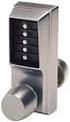 SIMPLEX UNICAN LOCKS CHANGING THE CODE / COMBINATION 900 Series 1000 Series L1000 Series LP1000 Series EE1000 Series 2000 Series 2015 Series 2400/2500 Series 3000 Series 3100 Series Simplex 5000 Series
Class 5 to 7 Truck and Bus Hydraulic Brake System
 Class 5 to 7 Truck and Bus Hydraulic Brake System Diagnostic Guide 1st Edition * 5+0 Important Service tes The information in this publication was current at the time of printing. The information presented
Operator s Manual EVENTER 20 / 25 Series Lifts
 Operator s Manual EVENTER 20 / 25 Series Lifts May 2013! Before operating this lift, read and understand this Operator s Manual. Become familiar with the potential hazards of this unit. Call SUMNER should
Rollator Cane and Brake Replacement SAFETY SUMMARY (CONTINUED)
 Rollator Cane and Replacement Assembly, Installation and Operating Instructions SAVE THESE INSTRUCTIONS NOTE: Check ALL parts for shipping damage. If shipping damage is noted, DO NOT use. Contact Carrier/Dealer
2100 AD 015 0009 Mirror Elevator Ball Nut Replacement Procedure
 2100 AD 015 0009 Mirror Elevator Ball Nut Replacement Procedure Derek Guenther 1/28/2015 Rev. Purpose The purpose of this document is to describe the procedure necessary to replace one of the ball nuts
I BEAM TRACK INSTALLATION
 PDQ 0/700 FESTOON SYSTEM INSTALLATION AND MAINTENANCE INSTRUCTIONS INTRODUCTION The PDQ Festoon System was designed to run on one of three sizes of I-beams: S x., S8 x 8. and S x.. System trolleys must
Fuel Injection Pump, Rotary (005-014)
 Fuel Injection Pump, Rotary View Related Topic Page 1 of 30 Fuel Injection Pump, Rotary (005-014) Table of Contents Summary General Information Preparatory Steps Remove Front Gear Train Rear Gear Train
Rear wheel brakes, servicing. Стр. 1 из 45. Note:
 Volkswagen Touareg - Rear wheel brakes, servicing Стр. 1 из 45 46-2 Rear wheel brakes, servicing Rear brakes, FN 44 brake caliper, servicing Note: After replacing brake pads, depress brake pedal firmly
Unit 24: Applications of Pneumatics and Hydraulics
 Unit 24: Applications of Pneumatics and Hydraulics Unit code: J/601/1496 QCF level: 4 Credit value: 15 OUTCOME 2 TUTORIAL 4 DIRECTIONAL CONTROL VALVES The material needed for outcome 2 is very extensive
Slide the new steering column shaft through the steering column from the driver compartment.
 Slide the new steering column shaft through the steering column from the driver compartment. Push the column shaft through the steering column until the machined end is out past the column lower bushing.
Table of Contents. Overview 1. Pump Disassembly 2. Control Disassembly / Reassembly 7. Pump Reassembly 13. Adjustment Procedures DR Control 19
 Table of Contents Overview 1 Pump Disassembly 2 Control Disassembly / Reassembly 7 Pump Reassembly 13 Adjustment Procedures DR Control 19 Adjustment Procedures DRG Control 20 Adjustment Procedures DFR
GEK-90214B. GE Lift Truck. User s Guide 144D2933G1 144D2912G1 144D2911G5
 g GEK-90214B GE Lift Truck User s Guide 144D2933G1 144D2912G1 144D2911G5 GE LIFT TRUCK EACH USER HAS THE RESPONSIBILITY TO INSTRUCT ALL PERSONNEL ASSOCIATED WITH THIS EQUIPMENT ON ALL SAFETY PRECAUTIONS
For exploded diagram and part number information, refer to the Spare Parts Catalog available on our website at www.rockshox.com.
 For exploded diagram and part number information, refer to the Spare Parts Catalog available on our website at www.rockshox.com. Information contained in this publication is subject to change at anytime
Auto Sentry-eXP Maintenance
 Auto Sentry-eXP Maintenance Maintenance Procedures for Auto Sentry exp Bill Dispenser Credit Card Reader Bill Acceptor Bill Dispenser Maintenance Bill Dispenser Problem / Cause Bill Dispenser Error Codes
OPERATING INSTRUCTIONS AND PARTS LIST FOR U075075 U100058 UNDERGROUND HOSE REELS
 OPERATING INSTRUCTIONS AND PARTS LIST FOR U075075 U0005 FORM NO.: 3-00 REV: RAIN BIRD CORPORATION ONE REELCRAFT CENTER COLUMBIA CITY, IN 675 (00) -33 / (60) - FAX: (60) -605 U0005 MODEL NUMBER SIGNIFICANCE
Owner s Manual Gantry Cranes
 Owner s Manual Gantry Cranes Fixed Height Gantry Crane MODEL NUMBER: SERIAL NUMBER: CAPACITY IN TONS: Telescoping Gantry Crane Bushman AvonTec 262-790-4200, 800338-7810, Fax 262-790-4200 www.bushmanavontec.com
Front brakes (FN- 3), servicing
 j a t Front brakes (FN- 3), servicing 46-1 Front brakes, servicing Note: Install complete repair kit. After replacing brake pads and before moving vehicle, depress brake pedal several times firmly to properly
2010 APPLICATION REFERENCE GUIDE
 2010 APPLICATION REFERENCE GUIDE INDEX QUALITY POLICY 2 ERGO ASSIST STANDARD 4-13 CUSTOM 14-18 END EFFECTORS 19-24 LIFT ASSIST 25-41 FIXTURED TOOLS 42-53 FIXTURES 54-63 ASSEMBLY TABLES 64-72 CARTS/ DUNNAGE
MEASURING WHEEL ALIGNMENT
 MEASURING WHEEL ALIGNMENT 2003-04 WHEEL ALIGNMENT Specifications & Procedures - Hummer - H2 Steering and vibration complaints are not always the result of improper alignment. One possible cause is wheel
Micro Cart User's Guide
 Micro Cart User's Guide To take full advantage of the ergonomic features of your new Sun Mountain Micro Cart, please read the following information. SUN MOUNTAIN 1 Your Micro Cart has several innovative
For exploded diagram and part number information, refer to the Spare Parts Catalog available on our website at www.rockshox.com.
 For exploded diagram and part number information, refer to the Spare Parts Catalog available on our website at www.rockshox.com. 2 0 0 5 D U K E A I R X C / S L / R A C E S E R V I C E G U I D E Information
2006 HEADSHOK Service Video #1
 LEFTY SPEED DLR DAMPING CARTRIDGE This document explains how to properly remove, disassemble, inspect, reassemble and reinstall the Lefty Speed DLR2 damping cartridge. It is a document to be used in conjunction
http://waterheatertimer.org/troubleshoot-rheem-tankless-water-heater.html
 http://waterheatertimer.org/troubleshoot-rheem-tankless-water-heater.html TECHNICAL SERVICE DEPARTMENT Removal, Cleaning, & Reinstallation of the Burner Assembly For models 74 & GT199 Required tools -
Fisher 1052 Size 20 Diaphragm Rotary Actuator with F and G Mounting Adaptation
 Instruction Manual 1052 Size 20 Actuator (F & G) Fisher 1052 Size 20 Diaphragm Rotary Actuator with F and G Mounting Adaptation Contents Introduction... 1 Scope of manual... 1 Description... 1 Specifications...
WHAT YOU DON T KNOW ABOUT ACCUMULATORS CAN KILL YOU!
 WHAT YOU DON T KNOW ABOUT ACCUMULATORS CAN KILL YOU! Atlanta (Monroe) GA 770-267-3787 [email protected] www.gpmhydraulic.com What You Don t Know About Hydraulic Accumulators Can Kill You TABLE OF CONTENTS
E, EA & EL Series Balancer Service Manual
 AERO-MOTIVE COMPANY A Woodhead Industries, Inc. Subsidiary E, EA & EL Series Balancer Service Manual IMPORTANT SAFETY INSTRUCTIONS Please read this manual carefully and follow its instructions. Improper
TECHNICAL BULLETIN. Meritor WABCO Cab Leveling Valves and Chassis Leveling Valves. How the Cab Leveling and Chassis Leveling Valves Work
 Revised 02-00 TECHNICAL BULLETIN Meritor WABCO Cab Leveling Valves and Chassis Leveling Valves This technical bulletin covers both cab and chassis leveling valves manufactured by Meritor WABCO. While the
Fleck 4650. Service Manual INSTALLATION AND START-UP PROCEDURE TABLE OF CONTENTS JOB SPECIFICATION SHEET
 Fleck 4650 Service Manual TABLE OF CONTENTS JOB SPECIFICATION SHEET...1 INSTALLATION AND START-UP PROCEDURE...1 CONTROL VALVE DRIVE ASSEMBLY...2 CONTROL DRIVE ASSEMBLY FOR CLOCK...3 BYPASS VALVE ASSEMBLY...4
C O N V E Y O R C O M P O N E N T S C H A I N S B E L T S B E A R I N G S
 C O N V E Y O R C O M P O N E N T S C H A I N S B E L T S B E A R I N G S January 2009 Issue 6 Valu Guide Brackets The Ultimate in Adjustability and Cost Savings Valu Guide brackets are part of a family
How Do I Replacing My Rear Brake Pads and Rotors?
 How Do I Replacing My Rear Brake Pads and Rotors? WARNING! Always have the vehicle under inspection on level ground, in park with the emergency brake on. Always wear protective eyewear, gloves and necessary
Oregon Fuel Injection
 Corporate Office: P.O. Box 21121, VE Pump Removal and Installation Cummins Lock Timed Applications Removal Clean the exterior of the injection pump and mounting surfaces. 1. Disconnect the fuel return
Owner s Manual & Safety Instructions
 Owner s Manual & Safety Instructions Save This Manual Keep this manual for the safety warnings and precautions, assembly, operating, inspection, maintenance and cleaning procedures. Write the product s
jbs nfb INSTALLATION INSTRUCTIONS AND OWNERS MANUAL Mechanical Steering for Inboard, Outboard, and Sterndrive Powered Vessels
 MEMBER INSTALLATION INSTRUCTIONS AND OWNERS MANUAL Part # IS-SH5094, Rev 3, 04/204 www.seastarsolutions.com SH5294 DUAL SH5094 SINGLE jbs nfb Mechanical Steering for Inboard, Outboard, and Sterndrive Powered
INSTRUCTIONS. FLHR/C/S (Road King) FRONT END LOWERING KIT 1WARNING -J03242 REV. 10-19-04. General. Removal (Left and Right Forks) Kit Number 54614-05
 INSTRUCTIONS -J04 REV. 0-9-04 General FLHR/C/S (Road King) FRONT END LOWERING KIT This kit is designed for installation on 00 and later FLHR/C/S Model Motorcycles. Road King models use the conventional
SUSPENSION DIAGNOSIS
 SECTION 2A SUSPENSION DIAGNOSIS TABLE OF CONTENTS Diagnosis... 2A-2 General Diagnosis... 2A-2 Hub and Bearing... 2A-7 2A-2 SUSPENSION DIAGNOSIS DIAGNOSIS GENERAL DIAGNOSIS Problems in the steering, the
SET-UP AND INSTALLATION FOR LEAD SCREW CARTRIDGE ASSEMBLY
 SET-UP AND INSTALLATION FOR LEAD SCREW CARTRIDGE ASSEMBLY 82-13-1 O-Ring (Rear) The Lead Screw Assembly is shipped separately. Note: Install Electrical and Pneumatic Circuitry. Be Sure electrical and pneumatic
Easy Tool Retracting System CMC-SR2159ER36
 Easy Tool Retracting System CMC-SR2159ER36 Pepperl+Fuchs, Inc. 1600 Enterprise Parkway Twinsburg, Ohio 44087 Phone: +1 330 486 0002 e-mail: [email protected] Mounting the Easy Tool Refer to
JANUS INTERNATIONAL CORPORATION INSTALLATION INSTRUCTIONS Pantheon Mini Operator
 JANUS INTERNATIONAL CORPORATION INSTALLATION INSTRUCTIONS Pantheon Mini Operator The Janus Pantheon mini operator does not typically require the provision of any additional site requirements other than
Section A. GENERAL INFORMATION
 Section A. GENERAL INFORMATION I. Description The information and instructions for attaching the sidecar to the right-hand side of the motorcycle are contained in this handbook and must be carefully observed.
Operating Instructions Parts List Manual Scissor Lift Pallet Truck
 Operating Instructions Parts List Manual Scissor Lift Pallet Truck Note: Operator MUST read and understand this operating instructions before use this Hand Scissor Lift. Thank you for using this hand scissors
POSEIDON 2-29, 2-25 & 2-22 POSEIDON 2-29, 2-25 & 2-22 XT
 POSEION 2-29, 2-25 & 2-22 POSEION 2-29, 2-25 & 2-22 XT Repair Manual Index A. Safety precautions 3 B. Technical data 4 C. Structure 5-6. Service / Repair 7-23 E. Tools 24 F. Function 25-26 G. Electric
P7100 PUMP INSTALLATION INSTRUCTIONS Diesel Care & Performance Inc
 P7100 PUMP INSTALLATION INSTRUCTIONS Diesel Care & Performance Inc Installation Timing Pin Location CAUTION: Before installing the injection pump, be sure that number 1 cylinder is at the Top Dead Center
HOW TO ORDER SAFETY PRODUCTS/SAFETY CONTROL SYSTEMS ELECTRICAL SAFETY CONTROLS
 HOW TO ORDER SAFETY PRODUCTS/SAFETY CONTROL SYSTEMS PNEUMATIC SAFETY CONTROLS BASIC CONTROLS SC3000 - SELF CONTAINED 2 HAND CONTROL - STAND ALONE MODEL SC3300 - SELF CONTAINED 2 HAND CONTROL - PRESS READY
PALLET JACK - 2.5 TON
 PALLET JACK - 2.5 TON 39939 SET UP AND OPERATING INSTRUCTIONS Visit our website at: http://www.harborfreight.com Read this material before using this product. Failure to do so can result in serious injury.
Before repairing your toilet, you must determine
 Before repairing your toilet, you must determine which type of toilet you have. Pressurized Toilets If you have a pressurized toilet, it is recommended that you call a licensed plumbing contractor to repair
2007 Hummer H3. 2007 BRAKES Disc Brakes - H3. Fastener Tightening Specifications Specification Application
 2007 BRAKES Disc Brakes - H3 SPECIFICATIONS FASTENER TIGHTENING SPECIFICATIONS Fastener Tightening Specifications Specification Application Metric English Backing Plate Bolts 135 N.m 100 lb ft Brake Hose
Installation Instructions 6028.801
 DAZZLE Installation Instructions 08.80 Spread Lavatory Faucet with Speed Connect Drain* Congratulations on purchasing your American Standard faucet with Speed Connect drain, a feature found only on American
MGB Chrome Bumper Conversion
 MGB Chrome Bumper Conversion Installation Instructions For 1974 1/2-1980 MGB This kit requires cutting, welding, and painting. Professional installation recommended. Note: Every MGB body is slightly different
1000-LB. TRAILER JACK OWNER S MANUAL
 1000-LB. TRAILER JACK OWNER S MANUAL WARNING: Read carefully and understand all INSTRUCTIONS before operating. Failure to follow the safety rules and other basic safety precautions may result in serious
Owners & Installation Manual for the Sheridan, Mountainair, Pine Valley and Old Forge Ceiling Fan Family
 Owners & Installation Manual for the Sheridan, Mountainair, Pine Valley and Old Forge Ceiling Fan Family Part of the Kiva Lighting Family Custom Lighting and Fans Since 1992 1312 12th St NW Albuquerque,
VEHICLE SPEED CONTROL SYSTEM
 PL VEHICLE SPEED CONTROL SYSTEM 8H - 1 VEHICLE SPEED CONTROL SYSTEM TABLE OF CONTENTS page DESCRIPTION AND SPEED CONTROL SYSTEM...1 SPEED CONTROL SERVO-PCM OUTPUT....2 SPEED CONTROL SWITCHES PCM INPUT...2
Owner s Guide and Installation Manual. Vancouver Model Name. 21321, 21328 Model No. English Español
 For Your Records and Warranty Assistance For reference, also attach your receipt or a copy of your receipt to the manual. Vancouver Model Name 21321, 21328 Model No. Type A Models Owner s Guide and Installation
WARNING! Failure to follow these inspection procedures can cause personal injury and property damage.
 GARDNER-DENVER TECHNICAL MANUAL CPTEN-136 07/03 Hoist Inspection and Maintenance Guide Inspection Record For: Hoist Model.: Hoist Serial.: WARNING! Failure to follow these inspection procedures can cause
FOR ANY QUESTIONS, PLEASE CALL US @ 727.347.9915 M-F 8:00a.m.-8:00p.m. EST. REAR BRAKES 1 AEROSPACE COMPONENTS 727.347.9915
 REAR BRAKES 1 AEROSPACE COMPONENTS 727.347.9915 REAR BRAKES Before getting started, remove all stock braking components. Pre-assembly of parts: Clean the bolts and the threads in the hat with acetone.
Model No: VS4815 1. SAFETY INSTRUCTIONS VS4800 2. INTRODUCTION & APPLICATIONS VS4815 3. CONTENTS. 2.1 Introduction. 2.
 Instructions for: Petrol Engine Twin Camshaft Setting / Locking Tool Kit - (incorporating Vanos Alignment) - BMW N42 & N46 Engines Model No: VS4800 Associated kit: Camshaft/Carrier Bracket Remover & Installer
Trouble Shooting Tech Tips Operation
 Steering Components TroubleShooting Tech Tips Table of Contents Basic Steering System Operation 2 Sector Shaft Adjustments 4 Drag Link Adjustment 5 Relief Valve/Unloading Valve Adjustment 6 Ross TAS Automatic
PRESSURE REDUCING CONTROL VALVE
 Schematics Throttles to reduce high upstream pressure to constant lower downstream pressure Low Flow By-Pass controls at low flows 4 PRESSURE REDUCING CONTROL VALVE with LOW FLOW BY-PASS FEATURE Main Line
PUMP MAINTENANCE SCHEDULE AND CHECKLISTS
 PUMP MAINTENANCE SCHEDULE AND CHECKLISTS Providing a maintenance schedule defined specifically by run hours or yardage pumped serves only as a general guideline given the large amount of variables a unit
Series 30000 Hose Reels
 Operating Instructions and Parts List for Series 30000 Hose Reels - MANUAL DRIVEN - - POWER DRIVEN - SAFETY PRECAUTIONS Personal injury and/or equipment damage may result if proper safety precautions are
BRAKE DRUM AND ROTOR SERVICE INFORMATION
 SERVICE INFORMATION To achieve maximum drum life and optimum performance, proper brake maintenance and brake balance are essential. Consult your truck or trailer manufacturer s maintenance manual for proper
Mustang Series PRESSURE REDUCING CONTROL VALVE WITH PRESSURE SUSTAINING FEATURE. M115-2 (Globe) M1115-2 (Angle) Schematic. Standard Components
 Schematic Throttles to reduce high upstream pressure to constant lower downstream pressure Throttles to maintain minimum upstream pressure PRESSURE REDUCING CONTROL VALVE WITH PRESSURE SUSTAINING FEATURE
Transportation and Lifting of Liquefied Gas Dewars
 Transportation and Lifting of Liquefied Gas Dewars FN000475/OJ 1 Fermilab uses liquefied gasses or cryogenics in various forms around the lab. These liquefied gasses are sometimes transported in large
Turbocharger system components, servicing
 21-1 Turbocharger system components, servicing Engine codes: AAZ, 1Z, AHU Observe rules of cleanliness Page 21-10 Turbocharger hoses and lines, connecting Page 21-11 WARNING! Do not re-use any fasteners
3. SEISCO PARTS & SERVICE REMOVAL AND REPAIR GUIDE
 4 3. SEISCO PARTS & SERVICE REMOVAL AND REPAIR GUIDE A. Changing the Control Board B. Replacing a Heating Element C. Thermistor Replacement D. High Limit Switch Replacement E. Level Detector Replacement
Z-Truck (Vertical Moving) Z-truck Flag. Y-Truck (Horizontal Moving) FIGURE 1: VIEW OF THE Z-TRUCK. Flexshaft Assembly
 Replacing the Cover Micro-Switch To remove and replace the Cover Micro-Switch you will need the following tools: #2 Phillips screwdriver (magnetic tip preferred) #1 Phillips screwdriver (magnetic tip preferred)
INSTALLATION INSTRUCTIONS. 6108 Air Spring Kit 2011+ Ford F250 Single Wheel 4WD 2011+ Ford F350 Dually 4WD (2011 F350 Single Wheel 4WD use p/n 6113)
 INSTALLATION INSTRUCTIONS 6108 Air Spring Kit 2011+ Ford F250 Single Wheel 4WD 2011+ Ford F350 Dually 4WD (2011 F350 Single Wheel 4WD use p/n 6113) Thank you for purchasing a quality Hellwig Product. PLEASE
TITAN Fuel Tanks. INSTALLATION INSTRUCTIONS G e n e r a t i o n V
 TITAN pt. no.: 02 0000 0143 Important: Please read these instructions carefully and completely before starting the installation. TITAN Fuel Tanks INSTALLATION INSTRUCTIONS G e n e r a t i o n V Extended
Table of Contents. www.hunterfan.com. What to Expect with. Preparation. Tools Needed. Wiring. Hanging the Fan. Blades. Motor Housing.
 www.hunterfan.com Table of Contents What to Expect with Your Installation 30 inches Hanging the Fan Wiring 8 Maintenance, Operation & Cleaning Light Kit 13??? 14 1 9 Troubleshooting 11 5 Blades Motor Housing
2006 JUDY SERVICE GUIDE
 2006 JUDY SERVICE GUIDE For exploded diagram and part number information, refer to the Spare Parts Catalog available on our website at www.rockshox.com. Information contained in this publication is subject
MODEL E-AF. Drain Cleaning Machine. Operator s Manual
 MODEL E-AF Drain Cleaning Machine Operator s Manual!!!! FOR YOUR SAFETY Before you operate or maintenance this equipment, READ this manual carefully and completely! Purchase Date: Serial Number: ELECTRIC
4 in 1 Strength Station
 Revision 0 September 2010 4 in 1 Strength Station Owner s Manual Record Serial Number Here Platinum by Tunturi www.tunturi.com Date www.tunturi.com of Purchase 4 in 1 Strength Station Owner s Manual Instructions
TABLE OF CONTENTS. I. TROUBLESHOOTING... 2 - Section 1.01: Common Problems/Solutions... 2
 BAL Accu-Slide System I. Table of Contents TABLE OF CONTENTS I. TROUBLESHOOTING... 2 - Section 1.01: Common Problems/Solutions... 2 II. GETTING STARTED... 5 - Section 2.01: Tools You Will Need... 5 - Section
Chapter 7 Hydraulic System Troubleshooting
 Chapter 7 Hydraulic System Troubleshooting General The following troubleshooting information is provided as a general guide to identify, locate and correct problems that may be experienced with the hydraulic
SERVICE PARTS LIST PAGE 1 OF 6 BASE ASSEMBLY SPECIFY CATALOG NO. AND SERIAL NO. WHEN ORDERING PARTS 12" DUAL BEVEL COMPOUND MITER SAW B27A
 PAGE 1 OF 6 BASE ASSEMBLY 00 0 EXAMPLE: Component Parts (Small #) Are Included When Ordering The Assembly (Large #). SPECIFY CATALOG NO. AND NO. WHEN ORDERING PARTS 1 02-80-0050 Thrust Bearing (1) 2 05-80-0510
REMOVAL AND INSTALLATION
 303-01C-1 REMOVAL AND INSTALLATION Engine Body On Special Tool(s) Adapter For 303-D043 303-D043-02 or equivalent Special Tool(s) 303-01C-1 Turbocharger Lifting Bracket 303-1266 Wrench, Fan Clutch Nut 303-214
DYNA RIDER FOOTBOARD KIT
 -J0 REV. 0-0-0 DYNA RIDER FOOTBOARD KIT GENERAL Kit Number 000 Models For model fitment information, see the P&A Retail Catalog or the Parts and Accessories section of www.harley-davidson.com (English
with installation dynafact boost GAUGE this manual is for use with systems 64050-64054
 owners manual with installation instructions dynafact boost GAUGE this manual is for use with systems 64050-64054 GENERAL INSTALLATION PRACTICES This manual is an installation guide for all 1. Banks DynaFact
758 Heavy-duty Ratchet Guy Wire Cutter
 INSTRUCTION MANUAL 758 Heavy-duty Ratchet Guy Wire Cutter Read and understand all of the instructions and safety information in this manual before operating or servicing this tool. Register this product
CETAC Z-Drive Assembly
 CETAC Z-Drive Assembly Replacement Guide Manual Part Number 610144 Rev 1, 2012 CETAC Technologies, Printed in USA Overview This guide describes the necessary steps to replace the Z-drive assembly on your
Original Assembly Guide
 TCT Multipurpose Single Bevel Sliding Compound Mitre Saw Original Assembly Guide Read instructions before assembling this tool. Table of Contents GB Assembly Guide Read instructions before assembling this
POWERS Controls No. 4 Pneumatic Damper Actuator
 POWERS Controls No. 4 Pneumatic Damper Actuator Technical Instructions Document No. 155-032P25 AP 331-2 Actuator Assembly 331-2929 Typical Actuator Assembly 331-2904 Typical Actuator Assembly 331-3000
Air-Oxygen Blender. Service Manual. Model No. PM5200 Series PM5300 Series (shown)
 Service Manual Model No. PM5200 Series PM5300 Series (shown) SAVE THESE INSTRUCTIONS 300 Held Drive Tel: (+001) 610-262-6090 Northampton, PA 18067 USA Fax: (+001) 610-262-6080 www.precisionmedical.com
UNPACKING AND ASSEMBLY
 UNPACKING AND ASSEMBLY Assembly Instructions Step 1. Open the two boxes and remove all the parts. Lay out the parts as shown below and read through the assembly instructions before beginning assembly.