
An Owner s Guide Elevator and escalator mobility solutions
|
|
|
- Delphia Townsend
- 10 years ago
- Views:
Transcription
1 An Elevator and escalator mobility solutions Schindler Service

2 Contents About This Guide Purpose...i Obtaining qualified support...i Schindler Customer Service Network (SCSN)...i Promoting safe operation...ii Optional features...ii Document convention...ii Elevators Operating and safety features... 1 Hall controls and displays... 1 Car controls and displays... 3 Destination dispatch systems... 7 Elevator doors... 9 Emergency control systems Remote monitoring system Preventive maintenance Escalators/Moving Walks Operating and safety Features Operating controls Safety features Remote monitoring system Preventive maintenance... 18

3 About this guide Purpose Since 1874, Schindler has held a reputation as a leader in the development and application of mobility solutions. With U.S. headquarters in Morristown, New Jersey, and Canadian headquarters in Toronto, Ontario, Schindler Elevator Corporation is the North American operating entity of the Swiss-based Schindler Group, the world s second largest elevator company and the world s leading escalator supplier. Schindler employs over 5,000 people in more than 230 locations in North America. Schindler manufactures, installs, maintains and modernizes mobility solutions for almost every type of building requirement worldwide. The company specializes in latest-technology engineering, as well as mechanical and microtechnology products designed and rigorously tested for comfort, efficiency and reliability. Schindler products can be found in many wellknown buildings throughout North America, including office buildings, airports, shopping centers/retail establishments and specialty buildings. The Schindler system installed in your building was manufactured to the strict standards set by Schindler and was designed to adhere to applicable safety and disability codes that were in effect when installed. As an owner or operator of an elevator, escalator or moving walk system, you should take steps to promote the safe operation of the equipment. Regardless of the manufacturer of your equipment, we suggest that you take a few minutes to familiarize yourself with your equipment, and its safe and proper use. This guide provides an overview of the basic information you should know about your building s equipment. It contains routine operating features and functions of the systems, as well as preventive maintenance guidelines. Obtaining qualified support Any operation or function not specifically covered in this guide must be performed by a qualified service technician. Additionally, certain operations or functions, even though they are discussed in this guide, should, where noted, be performed by qualified technicians only. Do not attempt to perform maintenance or repair work in the event of an equipment malfunction. Rather, remove the equipment from service and have it inspected or repaired by a qualified service technician. Schindler Customer Service Network (SCSN) When you do need to call for service, Schindler is available around the clock to provide prompt response to your requests through the Schindler Customer Service Network (SCSN). Your call to SCSN ( ) will be answered by a trained professional who will access your building records via a computer terminal and dispatch a trained Schindler service technician to your building to resolve the problem. If you call for service, please be prepared to provide the following information to our SCSN representative: Your building identification number The number or location of the elevator, escalator or moving walk A brief description of the problem Name of building personnel to contact. i

4 Promoting safe operation In addition to maintaining safe operation of the equipment, owners and operators of peoplemoving systems should communicate safety guidelines to passengers as part of a comprehensive safety program. To encourage its customers active participation in advising passengers about the proper use of elevators, escalators and moving walks, Schindler has developed UPs+DOWNs, a safety brochure to be shared with building occupants. To order, free of charge, contact your local Schindler representative. Older systems may not include all features describe in this guide. However, most features can be retrofitted to older installations. For more information, contact your local Schindler representative. Document convention! This symbol calls attention to important safety messages. Optional features Your equipment was designed to fit the specific requirements of your building and its traffic patterns. Several of the features discussed in this guide are optional and may be newer than your particular system. In addition, the appearance of certain function buttons may vary between systems although the functions described remain the same. ii

5 Elevators Operating and safety features Hall controls and displays Hall position indicator Hall lantern Hall pushbutton station Typical locations of hall controls Hall position indicator This fixture, usually used in the main lobby of multiple elevator installations, serves to alert waiting passengers to the location and direction of travel of the elevator cars in the hoistways. Hall position indicators Hall position indicators are typically mounted above the elevator entrance with illuminated lenses indicating the car s floor location and direction of travel. If specified, hall position indicators may be combined with hall lanterns. 1

6 Hall lanterns or car lanterns These fixtures indicate the direction of travel of the arriving car. The lenses illuminate to show the car s direction of travel. An audible tone announces the arrival of the car by sounding once for an up car and twice for a down car. Hall lanterns are mounted in the corridor above the elevator entrance or adjacent to the entrance and jamb, or they re jamb-mounted. With this feature, passengers can see the direction of travel before the car arrives. Car lanterns are mounted in the entrance column of the elevator car. They allow waiting passengers to see the direction of travel once the elevator doors have opened. Most elevator installations contain either hall lanterns at each floor or car lanterns on each car; both fixtures usually are not used together. Vertical and horizontal hall lanterns and car lanterns Hall pushbutton station This fixture, located in the wall beside an elevator entrance, serves to call an elevator to the floor when the button indicating the desired direction of travel is pressed. At intermediate floors the fixture contains two buttons, up and down. At the top and bottom terminals, the station reflects the only direction of travel. On most fixtures, a light illuminates when the button is pressed and it remains lighted until the call is answered. Hall pushbutton station The up button is usually located above the down button. Press the button indicating desired direction of travel. Never press both the up and down buttons when registering a call; this may delay service for all passengers. 2

7 Car controls and displays Car lantern Car position indicator Main car operating panel Auxiliary car operating panel Typical locations of car controls and displays Car position indicator This fixture advises elevator passengers of the car s position, its direction of travel and its arrival at a selected floor. Many car position indicators are mounted in the transom above the car door, with illuminated numbers indicating the floor location of the car. Other types of car position indicators may be located above the car operating panels. Car position indicators Car lantern See hall lanterns or car lanterns on page 2. 3

8 Car operating panel All elevators are equipped with a main car operating panel. As with other elevator fixtures, car operating panels vary in appearance and design depending on the system furnished, but most contain these basic features: Call register pushbuttons Door open button Alarm button Communication system intercom or telephone Restricted access switches. Car position indicator Emergency light Audible fl oor passing and up/down chimes Locking Firefighters service panel Alarm button Call register pushbuttons Door open button Door close button Locking service panel Main car operating panel When specified, elevator cars are equipped with an auxiliary car operating panel to enhance passenger convenience and to speed the registering of calls. The auxiliary car operating panel contains only the buttons required for passenger use and can be mounted on the front of the return panel opposite the main car operating panel or adjacent to a rear door. 4

9 Call register pushbuttons The call register pushbuttons are used to select a floor destination. They illuminate when pushed to indicate that a call has been registered for that floor. As required by code, raised numerals and Braille markings indicating the number of each floor are installed adjacent to the pushbuttons to aid people with disabilities. Door open button When there is a need to keep the car doors open longer than the normal programmed time, such as during passenger loading, pressing the door open button extends normal door-opening time or re-opens a closing door. Alarm button When pressed, this button activates an audible signal to notify building personnel of a possible emergency situation in an elevator. The signal is audible both inside the car and outside the hoistway. Emergency stop switch When activated, this switch stops the elevator and sounds its emergency signal. This switch may be replaced with a key switch in most jurisdictions to prevent nuisance use and prevent unnecessary stops. To restore normal operation after activating the stop switch, return the switch to its normal position. The switch may be located in the car operating panel or the locking service panel depending on local codes. 5

10 Communication from the car A telephone (provided by owner and located in a telephone compartment) is used for emergency communication from inside an elevator. In some cases, an intercom speaker is provided to allow communication between building personnel and elevator passengers. Telephone call button Locking service panel Your system may include controls which are either key operated or located in a locked compartment. These switches are not for passenger use and should be used by authorized personnel only. Restricted access panel door and inside switches Power or MG (Motor Generator) switch Normally left on to permit constant use of the elevator. When turned off the elevator is not operable. Stop switch When activated, this switch stops the elevator and sounds its emergency signal. To restore normal operation after activating the stop switch, return the switch to its normal position. In some jurisdictions this switch is located where it is accessible to passengers. Hand switch When on, this switch removes a car from normal operation to allow servicing by a qualified service technician. This switch should be used by trained elevator service technicians only. Fan switch Controls the operation of the ventilation fan and should be on when the car is in use. Light switch Controls car lighting and must be on whenever the car is in use. Service switch This switch is marked HE or Service. When on, this switch cancels all previously registered car calls and corridor calls assigned to that car and reassigns the calls to other cars. Pressing a car button after the switch is in the on position will send the car to the requested floor where it will remain with its doors open until another car button is pressed. The switch must be turned off to restore routine use of the car. Your elevator system may be equipped with other switches to provide special functions tailored to your building. Your local Schindler representative can provide instructions for their use. 6

11 Destination-dispatch systems Hall terminal Schindler destination-dispatch systems are based on one very simple, but highly effective idea. You register your destination on a keypad, touchscreen or card reader before you enter the elevator. The hall terminals are conveniently located in the elevator lobbies of each floor. 1. Choose your destination on the keypad, touchscreen, or swipe your RFID card. Each terminal features a keypad or touchscreen that you use to register your floor number. Some have a card reader option. To call an elevator car, press the keypad, touchscreen or swipe a preprogrammed RFID card to choose your desired floor. 2. Read your elevator car assignment. As soon as you press the keys to call an elevator, the display will indicate a letter and symbol. The letter identifies which elevator has been designated to take you to your destination, and the symbol tells you the direction to walk to your elevator. 3. Enter the assigned elevator and enjoy the ride. As soon as the display screen tells you which elevator you ve been assigned, approach that elevator and wait for the doors to open. A car designation sign generally located above the elevator door will identify your assigned car. Enter the car and enjoy the ride. In addition to the car designation sign, you can confirm that you re at the correct elevator using the stop indicator in the car entrance Intelligent access control Access control can be a fully integrated component of the keypad of Schindler s destination dispatching system. When a passenger scans a preprogrammed RFID card at the terminal, the system can verify that passenger s credentials through a secure central database and automatically call an elevator to transport that person to an authorized floor. Schindler s patented technology helps your elevators play a significant role in controlling access within your building while performing at peak efficiency. 1 Lobby Lower Floor Activates features for people with disabilities Keypad, touchscreen Card reader 7

12 Car designation sign Car designation sign The car designation sign (letter above car) replaces the conventional hall lantern. It can be located above the entrance or to the side of each elevator opening. The fixture clearly identifies the letter designation for each elevator. For people with special needs, the car s door jamb will have a plate with raised and Braille markings indicating the car designation. Car designation with Braille Stop indicator The stop indicator in the car s entrance confirms the car will stop at the floor you have chosen and remains illuminated while you travel. Stop indicator Car operating panel The car operating panel is much like a conventional one, except since passengers have already told the system what floor they wish to go to, there is no longer the need for floor buttons inside the car. A passenger simply looks to the stop indicator mounted on the side of the car entrance jamb for verification of where the car they are entering is going to stop. The stop indicator is a red digital display that clearly shows each destination. Digital car position indicator Emergency light Audible floor-passing and up/down chimes Firefighters service key switch Locking service panel Door open/close buttons Alarm button Emergency stop switch ADA compliant phone and button 8

13 Elevator doors Elevator doors open automatically when the car arrives at a floor. The door open interval may be adjusted by trained elevator technicians to increase the door open interval or to reduce the door speed. The following safety features are included in your door system for the protection of elevator passengers. Mechnical safety edge Light beams (located between the car doors and the hatch doors) Mechanical safety edge and light beams Mechanical safety edge This sensitive, mechanically operated switch extends the full height of the door to automatically re-open a closing door when it comes into contact with an obstruction. Light beam The light beam sensing device controls the door closing to conform to the traffic movement across the threshold. If the photo-electric light beams across the door are broken by a passenger or an object, this device causes doors to remain open or to re-open if they have started to close. Electronic door protection In lieu of the light curtain and light beam, many newer elevators are equipped with electronic door sensors using infrared technology. They are also available as an upgrade to older systems. These devices cause doors to remain open or to re-open if the sensor detects a passenger or object with its path. Nudging If doors are prevented from closing after an extended period of time, nudging takes place unless prohibited by law. During nudging, the doors start to close at a reduced speed, and the door warning buzzer sounds until the doors are fully closed. If the light curtain is held during nudging, the doors will start but will not re-open. 9

14 Emergency exits Emergency exits are not for passenger use.! Warning: These exits, located at the top or on the side of a car, must remain locked at all times unless under the direct supervision of trained elevator technicians or emergency personnel. Passengers should not attempt to use emergency car exits except under the direct supervision of trained elevator technicians or emergency personnel. Failure to heed this warning can result in severe personal injury or death. Emergency control systems Firefighters service and emergency operation feature Every building s disaster or fire drill procedure should include information regarding the proper operation of the firefighters service feature. Firefighters service is an elevator control system designed to protect passengers and aid firefighters in combating fires. The system is activated by a key switch or by the building s smoke detectors on each floor. The switch may be located in the elevator monitoring center or it may be located separately at a designated floor. Hall fire service switch Car fire call cancel button Car fire service switch Firefighters service provides for the automatic and immediate return of all elevator cars to a designated floor where they will park with doors open, and will not go to others floors. All the call buttons, emergency stop switch and signal lights, except the car position indicator, will be inoperative. In some systems, if the sensor is activated at the designated floor, elevators will be recalled to an alternative emergency exit floor. During a fire or emergency, the elevator can be operated only from the car using the in-car key-operated emergency switch. Only trained emergency service personnel should operate elevators with this keyoperated switch. The keys to this switch should be kept where they are immediately accessible to authorized personnel but where they are not available to the public or any unauthorized personnel.! Warning: In case of fire do not use elevators; use stairs or other emergency exits. Use of elevators during a fire can impede fire fighting efforts and can result in severe personal injury or death. To reset operation initiated from fire alarm system, the fire alarm signal must be reset, then the Phase I switch must be cycled to RESET momentarily then to OFF. 10

15 Emergency power control Many buildings have an emergency (standby) power generator system or other emergency power source. If your building does, your elevators may be capable of operating under emergency power. In the event of a power outage, the emergency power system controls power distribution to the elevators. The emergency power control panel may be located in the elevator monitoring center or in a separate locked station. The emergency power system varies among elevator systems. However, all accomplish the basic functions of allowing operation of each car to permit passengers to exit, establishing reduced service for the duration of the emergency and returning the elevator system to normal service when building power has been restored. In most emergency power systems, building personnel can communicate with passengers by telephone or intercom. System activation In most systems the changeover from regular power to emergency power will occur automatically. In some systems the changeover must be activated manually, usually by means of a Emergency power control panel switches keyed or controlled-access switch. Car selection For multiple elevator high-rise buildings, the most common system provides automatic selection. In the event of a loss of normal power, all elevators in motion make an emergency stop. When standby power becomes available, a signal is sent to the controller which automatically starts returning the cars (one at a time) to the designated (usually main) floor, opens their doors and takes them out of service. This is done in a predetermined sequence. When all cars have returned to the designated floor, the system automatically places one or more preselected cars in service for normal operation on standby power. If the preselected car is not in operating condition, a second choice is made. In some automatic systems, an override feature permits manual selection of the car to be put into normal service. This is done by activating two switches in the emergency power control panel: the override switch plus the switch for the car selected to run. Some systems required manual selection of cars operated under emergency power. When there is a loss of normal power, all elevator cars in motion make an emergency stop. When standby power is available, an indicator light at the control station signals that the cars can be operated. Qualified building personnel at the station can then return the cars one at a time to the main floor and take them out of service. This is done by manual operation of individual car switches on the emergency power control panel. Typically, all cars are returned to the main floor and a car is manually placed in service to operate under emergency power. 11

16 Restoring normal power For those systems where emergency power operation is activated automatically, the restoration of normal building power will cause a signal from the ATS (automatic transfer switch) to notify the elevator system that a transfer from emergency to normal power is impending. This signal directs the elevator to stop at the next available floor until the transfer to normal power occurs. This avoids the possibility of the car making an emergency stop during the transfer sequence. Individual car override switches should be returned to off position when normal building power has been restored. For systems which require manual transfer between normal and emergency power, care should be exercised to assure that any cars in use are stopped at a floor before transferring back to normal power. Otherwise, an emergency stop may occur during the transfer, which may be unsettling to the passengers. Emergency lighting In the event of a power loss, a battery-powered light will automatically provide low-level illumination sufficient to view the car operating panels in each elevator. Remote monitoring system Schindler Remote Monitoring is available as part of your overall Schindler service plan or as a standalone service. All new Schindler elevators are equipped with remote monitoring capability. Remote monitoring capability is also available as part of a modernization or as a stand-alone upgrade. Sensors within your elevator controllers monitor numerous operational parameters around the clock, 365 days a year. If they detect nonconformances, a modem dials Schindler s Remote Monitoring center. The Schindler Remote Monitoring system will determine the most likely cause of a problem. Depending on the situation, Schindler will: Have you perform an on-site check. Dispatch a qualified technician to your site, with a complete diagnostic plan in hand. Have the item handled at your next scheduled service visit. Overall, Schindler Remote Monitoring can help improve equipment uptime. To learn more about the availability of Schindler Remote Monitoring on your equipment, check your service contract or ask your Schindler representative. 12

17 Elevators Preventive maintenance You will find your equipment to be highly reliable, but preserving its smooth and safe operation requires regular preventive maintenance performed by a qualified service organization. No one is better qualified to maintain your Schindler equipment than we are. In fact, Schindler services elevators, escalators and moving walks from all manufacturers. In addition to being the most knowledgeable when it comes to the equipment installed in your building, Schindler also has the largest, most comprehensive service network dedicated to the superior performance of Schindler elevators, escalators and moving walks. Owner s responsibilities As an owner or operator of an elevator system, you should take certain steps to promote the safe operation of the equipment. Follow the guidelines listed below as part of a conscientious accident prevention program. Failure to adhere to these guidelines could risk serious injury or death.! Operating guidelines Report any unusual equipment operation to trained maintenance personnel. Shut down equipment if dangerous conditions exist. Adopt a rigid preventive maintenance program in accordance with manufacturer s recommendations. Do not allow untrained or unskilled individuals to perform any maintenance or repairs on the equipment. Do not use elevators during fires, blackouts or power shortages except under the special conditions outlined under firefighters service and emergency power sections of this guide (see pages 10 and 11). Under no circumstances should passengers or untrained individuals be permitted or encouraged to use elevators during such emergency situations. In certain unusual circumstances, elevator cars may level slightly too high or too low at a floor. Always verify proper leveling before entering or leaving the car. If misleveling occurs, shut down the car and summon trained maintenance personnel. ASME A17.1/CSA B44 requires a building owner to perform a firefighters service operation test on a periodic basis. Please consult your local jurisdiction to determine the exact requirements and frequency required to conform to your building. Some jurisdictions may require that certain tests be performed by licensed technicians, so please check with your local Schindler office. Immediately report all accidents to the maintenance company and your insurance carrier.! Maintaining the environment Keep elevator interiors clean. Clean door sill area in both car and corridor. Assure proper lighting in corridors and in the elevator car. Secure handrails, ceiling panels and ceiling light panels to prevent their falling upon passengers. Elevator code prohibits the storage of all non-elevator related material in machine room or elevator closets. The elevator machine room houses the machinery which powers the elevators, electronic panels which control the operation of the elevators, plus peripheral devices designed to provide safe and dependable operation. High voltages and rotating equipment are present which pose severe danger to those not experienced with elevator operations. Special care must be taken to keep all 13

18 flammable material away from this area. Access to the machine room should be limited to trained elevator technicians. Avoid using any cleaning solution containing chemical content when wiping down your electronic door protection. The machine room for hydraulic elevators should be maintained near normal room temperature. Failure to do so can result in elevator malfunction. For elevator control systems, manufacturers have normally requested that a machine room have properly regulated humidity and a temperature range of 55 to 90 degrees fahrenheit. This type of environment will serve to promote reliability and to increase the effective life of the elevator motors, coils and other electrical devices. When a hydraulic elevator has not run for a number of hours (such as overnight), it may be necessary for designated personnel to operate the cars for a few trips. This circulates warm oil into the jack and minimizes leveling difficulties that may be encountered during normal passenger use after initial start-up. Note: No one is more qualified to service your equipment than a trained Schindler employee.! Enforcing proper use Do not permit overloading of passengers or freight. Do not permit individuals to ride or to play on top of the elevator cars. Do not move furniture or other materials above or beneath elevator cars or allow material moved to extend through the car top emergency exit. Do not permit unauthorized people to have access to emergency door keys, so as to enable them to open hoistway doors when the car is not present. Such keys may be used only by trained elevator or emergency service personnel. Only qualified elevator technicians or trained emergency personnel should attempt to remove passengers from stalled elevators. Unauthorized or untrained personnel attempting to rescue trapped passengers may place themselves and the passengers in danger. If safe to do so, establish verbal contact with entrapped passengers and advise them to remain in the cab. Do not attempt to use emergency car top exits. These exits are provided for use by trained elevator technicians or emergency personnel only. Advise passengers on the proper use of the elevator system. Schindler offers a safety DVD and brochure to assist you in communicating ridership guidelines to your passengers. See page ii. Care and cleaning Elevator surfaces Most surfaces of an elevator, such as walls and floors, can be maintained using normal cleaning materials and procedures. Avoid using abrasive or corrosive type cleaners on or around the fixtures. Do not use ammonia-based cleaners on lacquer finishes as they may strip the finish off of metals and woods. Stainless steel and bronze fixtures require special care, as explained below. Stainless steel and bronze fixtures We recommend you use a quality product such as a stainless steel cleaner and polish on brushed stainless steel surfaces and a quality bronze polish on bronze fixtures. Apply a light coat of cleaner and polish with a soft cloth. Do not spray any cleaners directly onto pushbuttons or any other elevator fixture to avoid damaging the pushbuttons and causing them to look unsightly. 14

19 Escalators/Moving Walks Operating and safety features Operating controls For the owner or operator, the only controls for the operation of the escalator or moving walk involve starting and stopping it. Authorized building personnel should be trained in the starting and stopping of escalator and moving walks in order to be prepared in the event of an emergency. Off/emergency stop button (newer installations) On-direction key switch Schindler Off/emergency stop button (older installations) Escalator operating controls On-direction key switch The on-direction switch is key operated and conveniently located at the bottom of the escalator. A top key switch is optional on newer installations. Exact location may vary depending on model. Direction is controlled by the on-direction switch. The switch is marked to indicate a clockwise turn for up operation and a counter-clockwise turn for down operation. Turn the key to initiate travel in the desired direction. Function and location are similar with moving walks. If you choose to change the direction of travel in which your escalator has been operating for a significant period of time, contact your service technician for guidance.! Warning: Be sure no one is on the escalator or moving walk when it is started. Off/emergency stop button The stop button is a red pushbutton located on the top and bottom newels for convenient accessibility in the event of an emergency. The newel is located at both ends of the escalator. (Many older models have this feature next to the on-direction switch under the newel. Please check your escalator immediately and inform all building personnel as to location of this button.) The pushbutton functions both as a normal stop and emergency stop button.! Warning: Never stop the escalator or moving walk when passengers are riding except in an emergency. Doing so may cause injury to passengers who may not be prepared for the stop. If an emergency stop is necessary when riders are present, alert the riders before pushing the emergency stop button. Re-start the escalator or moving walk only after the emergency condition is resolved. 15

20 Safety features Escalators and moving walks are equipped with numerous safety features to minimize the chance of accidents or injuries. The following describes some of these safety features which may be furnished with your escalator or moving walk, depending on model. Familiarize yourself with your particular equipment and the safety features included. Contact your Schindler representative with any questions. Off/emergency stop button (newer installations) Handrail Balustrade panel Grooved risers Inner and outer decking Decking barrier Caution sign Skirting Combfingers On-direction key switch Direction indicator (option) Escalator safety features Schindler Off/emergency stop button (older installations) Combplate lighting (option) Handrail entry protection device Combplate The features described below apply to escalators and moving walks except where indicated. Hold Handrail sign The sign was designed to promote safety and comfort, and to help educate the public in the proper ridership of escalators. The sign, which meets ASME A17.1/CSA B44 standards for color and format in effect at the time of installation, is affixed to the balustrade at both sides and ends of the escalator. Handrail entry protection device This device helps prevent hand injuries by using a safety switch which automatically stops the escalator should an object become wedged between the handrail and balustrade. Narrow pitch step treads Step treads are made of die-cast aluminum and feature narrow grooves for passenger comfort and safety. The narrow pitch treads help prevent objects from being entangled at the combplate, and provide a more stable platform on which to stand. Combplate and combfingers Combplates are an extruded aluminum assembly located at each escalator entrance and exit. They provide a stable entrance and exit platform. 16

21 The combfingers are sometimes of a contrasting high-visibility yellow color. The contrast may assist the passenger in distinguishing between the stationary combplate and the moving step. Combfingers protrude into the step tread and help prevent objects from being caught under the combplate. Grooved risers Grooved risers allow a combing action between the back of a step and the adjacent riser of the next step. This helps prevent objects from being caught between the steps. (Escalators only.) Understep lighting For newer units (2007 code and later), understep lighting is optional. LED lights mounted below the steps at entrances and exits clearly outline the separation between adjacent steps. This feature may help the passengers avoid stepping on the separation when stepping onto and off of the escalator. (Escalators only.) Soffit guards Soffit guards may be installed between the inclined deck of the escalator and the building s ceiling soffit to prevent objects from being wedged at the junction. (Escalators only.) Safety switches There are a number of safety switches designed to detect unusual or unsafe conditions. Most will stop the escalator automatically when activated. Prior to re-starting your escalator, contact trained escalator maintenance personnel for an equipment check. The particular features of your system should be discussed with your service representative. Remote monitoring system Schindler Remote Monitoring is available as part of your overall Schindler service plan or as a standalone service. All new Schindler escalators or moving walks are equipped with remote monitoring capability. Remote monitoring capability is also available as part of modernization. Sensors within your equipment s controllers monitor numerous operational parameters around the clock, 365 days a year. If they detect nonconformances, a modem dials Schindler s Remote Monitoring center. The Schindler Remote Monitoring system will determine the most likely cause of a problem. Depending on the situation, Schindler will: Have you perform an on-site check. Dispatch a qualified technician to your site, with a complete diagnostic plan in hand. Have the item handled at your next scheduled service visit. Overall, Schindler Remote Monitoring can help improve equipment uptime. To learn more about the availability of Schindler Remote Monitoring on your equipment, check your service contract or ask your Schindler representative. 17
22 Escalators/Moving Walks Preventive maintenance You will find your new Schindler equipment to be highly reliable, but preserving its smooth and safe operation requires regular preventive maintenance performed by a qualified service organization. No one is better qualified to maintain your Schindler equipment than we are. In fact, Schindler services elevators, escalators and moving walks from all manufacturers. In addition to being the most knowledgeable when it comes to the equipment installed in your building, Schindler also has the largest, most comprehensive service network dedicated to the superior performance of Schindler elevators, escalators and moving walks. Owner s responsibilities As an owner or operator of an escalator or moving walk system, you should take certain steps to promote the safe operation of the equipment. As part of your responsibilities as owner or operator of the premises and of the escalators, you retain responsibility for appropriate crowd control measures so as to prevent dangerous overcrowding of those escalators that could overload the escalator brakes beyond the limits of the applicable code and result in possible serious injury to the riders. In addition, Schindler recommends that you follow the guidelines listed below as part of a conscientious accident prevention safety program. Failure to adhere to these guidelines could create a risk of serious injury to the users of the equipment.! Operating guidelines Report any unusual equipment operation to trained maintenance personnel. Shut down equipment if dangerous conditions exist. Adopt a rigid preventive maintenance program in accordance with manufacturer s recommendations. Do not allow untrained or unskilled individuals to perform any maintenance or repairs on equipment. Your escalator maintenance company should regularly (at least monthly) apply a silicone friction reducer on skirt panels as part of general procedures. Do not remove the silicone during your routine building maintenance procedures. If understep lighting is burned out or inoperable, notify your maintenance company. Report any unusual noises or vibrations to your maintenance company. Stop escalator or moving walk and remove any debris accumulated on steps or combplates. Monitor for broken combteeth and see that repairs/replacements are undertaken immediately by qualified technicians. Always remove the start-up key from the on-direction switch. Be sure all safety features are in place and operable. If an escalator or moving walk makes an automatic emergency stop, contact trained maintenance personnel for an equipment check before returning it to operation. Report all accidents immediately to the maintenance company and your insurance carrier.! Enforcing proper use Instruct employees and qualified personnel as to the location and use of emergency stop buttons. Instruct all employees and passengers to avoid hitting escalator balustrades (side panels) with objects. Do not permit use of an inoperative escalator as a stairway. Maintain crowd control. Provide alternative vertical transportation for people with disabilities, the elderly, children in strollers or persons carrying parcels or freight. Advise passengers regarding proper use. Schindler offers a safety DVD and brochure to assist you in communicating ridership guidelines to your passengers. See page ii. 18
23 Care and cleaning The balustrades of an escalator or moving walk come in various finishes. The following outlines how to care for components of the system. Glass Glass should be cleaned with a quality glass cleaner. Do not lean over the handrails to clean outside glass surfaces while standing on the escalator or moving walk as a loss of balance may occur. Stainless steel and bronze areas We recommend you treat stainless steel portions of the balustrades with a quality stainless steel cleaner and polish and treat bronze surfaces with a quality bronze polish. Apply a light spray coating and polish with a soft cloth. Avoid spraying this product on the emergency stop buttons, keyed switches or over traffic areas. Skirts Skirts, the vertical panels adjacent to the moving steps, should be carefully treated with a frictionreducing material by your escalator maintenance company. Do not apply cleaner or polish to the skirt area as they remove the friction-reducing material. Aluminum steps Brush the aluminum steps with a stiff broom to dislodge most dirt or debris. Do not attempt to use liquids to clean the steps without first consulting a trained technician. Liquids could enter the area below the steps and result in an unsafe condition. Do not polish the steps. Synthetic yellow step inserts Use a mild detergent and soap solution. Do not use any other cleaners, including steam jet blowers. Avoid contact with oil or other lubricants. Handrails Handrails should be cleaned periodically with a mixture of light detergent and water.! Warning: All cleaning of escalators and moving walks should be performed when the system is not in operation and passengers are not present. 19
24 Schindler Service Reliability from the ground level For further information, including location of the Schindler office nearest you, please contact: U.S. Headquarters. Morristown, New Jersey Toll-Free Canada Headquarters. Toronto, Ontario Tel Schindler has received renewal to ISO 14001:2004 and ISO 9001:2008 certificates. Schindler is a member organization of the U.S. Green Building Council. Schindler prints with vegetable-based ink on paper containing post-consumer waste fiber. BRN-1006a C1315 Schindler Elevator Corporation
Assessment of Elevator and Escalator Maintenance & Repair Program Final Elevator Audit Submission Bethesda Station - Escalator A09X04 (Station)
 Bethesda Station - Escalator A09X04 (Station) Ride Quality Test Results The Parametricoder is a time and displacement encoding system that measures mechanical performance characteristics on escalators.
Escalator incidents occur frequently at airports (some airports experience several per month).
 ESIS, Inc. Global Risk Control Services Airport Risk Management Series Escalator Safety Prepared by: Ginga Griffin, CPCU. ALCM Introduction As airports and terminals expanded, the number of escalators
FIRST ALERT INSTRUCTION MANUAL FOR FA 270 KEYPADS SECURITY SYSTEM
 FIRST ALERT INSTRUCTION MANUAL FOR FA 270 KEYPADS SECURITY SYSTEM Page 0 Table of Contents Introduction 1 System Basics.. 1 Burglary Protection.. 1 Fire Protection.. 1 Security Codes. 1 Zones and Partitions
V1504 Vertical Platform Lift OWNER S MANUAL
 V1504 Vertical Platform Lift OWNER S MANUAL (To Be Retained by Owner After Installation by Authorized Savaria Dealer) Part No. 000692 01-m03-2016 2 IMPORTANT Ensure that only an authorized Savaria Dealer
Area of Rescue Assistance Communication System ADA Code Applicable excerpts:
 Area of Rescue Assistance Communication System ADA Code Applicable excerpts: CONTENTS (Guidelines and Definitions) Page 1 Area of Rescue Assistance Requirements Page 2 Emergency Communication Equipment
V1504 Vertical Platform Lift OWNER S MANUAL
 V1504 Vertical Platform Lift OWNER S MANUAL (To Be Retained by Owner After Installation by Authorized Savaria Dealer) Part No. 000692 03-m12-2013 2 IMPORTANT Ensure that only an authorized Savaria Dealer
Schindler 6400 NA A complete modernization solution for mid-rise elevators
 Schindler 6400 NA A complete modernization solution for mid-rise elevators Schindler Modernization Schindler 6400 NA is a benefits-rich mid-rise elevator modernization system Enhanced performance and reliability
rpsa FIRE PROTECTION ENGINEERS www.rpsa-fire.com
 www.-fire.com R.P. SCHIFILITI ASSOCIATES, INC. P.O. Box 297 Reading, MA 01867-0497 USA 781.944.9300 Fax / Data 781.942.7500 Telephone Elevator Fire Safety: Elevator Recall and Elevator Power Shutdown Disclaimer:
Schindler Service Because life is a moving experience
 Because life is a moving experience delivers assurance that your elevators and escalators are always available Reliability The industry s most highly trained technicians, supported by an entire global
Interfacing Elevators with Fire Alarm and Sprinklers
 Interfacing Elevators with Fire Alarm and Sprinklers IEEE Atlanta Chapter May 15, 2006 Brian K Fabel, PE Agenda Today s Codes NFPA, ASME, IBC/IFC Conflicts/Issues Tomorrow s Codes? Applicable Codes NFPA
CarePartner Telephone With Reminders
 Philips wordmark and Lifeline K100 CarePartner Telephone With Reminders Model 9500 User s Manual Black and white version For use with newsprint and other one-color applications. 1 x P height 1 x P height
SECTION 16721 FIRE ALARM AND DETECTION SYSTEM
 1. GENERAL 1.1. Related Documents: 1.2. Scope: 1.1.1. The general provisions of the Contract, including General and Supplementary Conditions and General Requirements apply to the work specified in this
User s Guide. Security Systems D220
 User s Guide Security Systems D220 Table of Contents About This User s Guide... 3 Introduction... 3 Security System Basics... 4 Controlled Points... 5 24-Hour Points... 6 Keypad Keys... 6 Keypad Lights...
-maq NCE Technology 26 6/06/08 17:11 Page 1 NCE T echnology
 NCE Technology NCE Escalator In close-up Controller Upper landing Balustrade Machine Handrail drive Step band Intermediate section Lower landing Balustrade decking Glass interior panel Skirt panel Handrail
2012 Ontario Building Code Changes Affecting Fire Alarm Systems
 2012 Ontario Building Code Changes Affecting Fire Alarm Systems CFAA Annual Technical Seminar May 31, 2013 Ken Baird VP Systems www.lrifire.com LRI 2010 Developments in Life Safety Introduction Code Development
INSTRUCTION MANUAL PC255O
 INSTRUCTION MANUAL PC255O Canadian Department of Communications Notice NOTICE: The Canadian Department of Communications label identifies certified equipment. This certification means that the equipment
DEPARTMENT OF CORRECTIONS
 Elevator Consulting, LLC. Post Office Box 464 Mequon, WI 53092-0464 Voice/Fax: 262-242-3077 Mobile No: 262-853-1054 E-mail: [email protected] DEPARTMENT OF CORRECTIONS MILWAUKEE SECURE DETENTION
ISLE OF MAN FIRE & RESCUE SERVICE FIRE PRECAUTIONS LOGBOOK. Website www.iomfire.com
 ISLE OF MAN FIRE & RESCUE SERVICE FIRE PRECAUTIONS LOGBOOK Website www.iomfire.com ADDRESS OF PREMISES FIRE CERTIFICATE No. (where applicable).. LOCATION OF LOG BOOK. CONTENTS OF LOG BOOK Useful telephone
Chippewa County Courthouse Security Emergency Procedures. Dial 9 9 1 1 FIRE POLICE AMBULANCE
 Chippewa County Courthouse Security Emergency Procedures Dial 9 9 1 1 FIRE POLICE AMBULANCE Table of Contents Introduction... 2 Explosion... 3 Civil Disorder/Threat to Personal Safety... 4 Chemical Spill...
Section 7: Elevators and Lifts. Main Entry Floor Outside the Elevator
 Section 7: Elevators and Lifts Questions Yes No Data Main Entry Floor Outside the Elevator 1. If an elevator is required to arrive at the voting area, is it on an accessible path of travel? 2. Is there
Machine Room Less (MRL) Elevators. Evolution in elevator design.
 Machine Room Less (MRL) Elevators. Evolution in elevator design. By: Bill Glas, Product Manager, Schindler Elevator Corporation Machine Room Less (MRL) elevators are an emerging yet proven technology and
HERNANDO COUNTY FIRE ALARM GUIDELINES
 HERNANDO COUNTY FIRE ALARM GUIDELINES To be used for all commercial building fire alarm system plan review. The procedures set forth in this document are the minimum requirements necessary to ensure a
NetworX Series. NX- 4/8 Code Pad. User Manual (Australian Version)
 NetworX Series NX- 4/8 Code Pad User Manual (Australian Version) Table Of Contents Code Pad Diagram... Inside Front Glossary of Terms...2 Understanding the Code Pad lights...3 Code Pad Tones...4 Fully
DUOTOUR WITH SLIDING DOORS OPERATING MANUAL
 DUOTOUR WITH SLIDING DOORS OPERATING MANUAL Duotour DT with Sliding Doors 2 Contents PREFACE... 4 Copyright... 4 Symbols... 4 1 INTRODUCTION... 6 1.1. Options... 6 2 SAFETY FEATURES... 8 2.1. Safety Rail
HILLS Series LED Code Pad User Manual
 HILLS Series LED Code Pad User Manual Not all features may be available on your system Check with your installer to find out which features are programmed Page 2 TABLE OF CONTENTS Code Pad Diagrams...2
Manual for Fire Suppression & Methane Detection System
 Manual for Fire Suppression & Methane Detection System Fogmaker North America Post address: 150 Gordon Dr Exton, PA 19341 Delivery address: 150 Gordon Dr Exton, PA 19341 Tel: 610-265-3610 Fax: 610-265-8327
Air Conditioning System
 Owner s Information Manual Air Conditioning ystem NOTE TO EQUIPMENT OWNER: For your convenience, please record the model and serial numbers of your new equipment in the space provided. This information,
HEAT RECOVERY VENTILATORS MODELS 90H-V ECM HRV, 90H-V+, 60H-V+ AND ENERGY RECOVERY VENTILATOR MODEL 90H-V ECM ERV
 USER GUIDE HEAT RECOVERY VENTILATORS MODELS 90H-V ECM HRV, 90H-V+, 60H-V+ AND ENERGY RECOVERY VENTILATOR MODEL 90H-V ECM ERV PLEASE READ AND SAVE THESE INSTRUCTIONS These products earned the ENERGY STAR
Walking and Working Surface Checklist:
 Walking and Working Surfaces Purpose: This information is presented to improve the level of safety in our operations, and to inform you that we will comply with the OSHA Standard 29 CFR 1910.23. Responsibility:
DENVER PUBLIC SCHOOLS DESIGN AND CONSTRUCTION STANDARDS This Standard is for guidance only. SECTION 17650 SECURITY SYSTEMS
 PART 0 DESIGN STANDARDS 0.01 GENERAL DESIGN GUIDELINES A. Inspections and observations by the Owner do not relieve the A/E of contract responsibilities. B. Chain of command 1. The DPS Project Manager is
Schindler 5500 Efficiency. Flexibility. Performance.
 Efficiency. Flexibility. Performance. Schindler Passenger Elevators Key figures Capacity 2100 lb (950 kg) to 5000 lb (2270) kg Travel height Up to 350 ft (107 m) Door width Up to 4 6 Door height Up to
HILLS Series LED Code Pad User Manual
 HILLS Series LED Code Pad User Manual Not all features may be available on your system Check with your installer to find out which features are programmed Page 2 TABLE OF CONTENTS Code Pad Diagrams...2
Workplace Fire Safety
 Teaching Guide Workplace Fire Safety for staff Seattle Fire Department Fire Prevention Division Workplace Fire Safety Instructor Outline Introduction Goals: To ensure that employees are knowledgeable in
Keys to understanding your alarm system
 Keys to understanding your alarm system This section is designed to allow you to familiarize yourself with most of the security system devices that may be installed or proposed to be installed in your
IMPORTANT SAFETY RULES TO FOLLOW
 WARNING FLOOR & CARPET CLEANER Any piece of equipment can be dangerous if not operated properly. YOU are responsible for the safe operation of this equipment. The operator must carefully read and follow
Emergency Procedures IF YOU DISCOVER A FIRE. Upon discovering a fire: the following steps are to be taken:
 IF YOU DISCOVER A FIRE Upon discovering a fire: the following steps are to be taken: 1. Leave the fire area immediately removing any person in immediate danger. Make sure that doors to the affected area
Slip, Trip & Fall Program Table of Contents
 Slip, Trip & Fall Program Table of Contents I. Introduction... 2 II. Scope... 2 III. Definitions... 2 IV. Responsibilities... 4 V. Practices... 5 VI. Slip-Fall Facility Checklist... 7 VII. References...
SECURITY SYSTEM NOTES SPECIAL CODES AUXILIARY ARM / DISARM CODES ENTRY / EXIT DELAY TIMES ZONE DESCRIPTIONS
 SECURITY SYSTEM NOTES Installing/Service Company For Service Call SPECIAL CODES Master Code Duress Code "Quick Arm" Digit "Chime" Digit "Entry-Guard" Digit AUXILIARY ARM / DISARM CODES 02 12 22 03 13 23
User s Guide. Security Systems
 User s Guide Security Systems National Security Systems Inc (800)457-1999 2 Table of Contents About This Users Guide... 4 Introduction... 4 Security System Basics... 5 Controlled Points... 6 24-Hour Points...
User s Guide. Security Systems
 User s Guide Security Systems 2 Table of Contents About This Users Guide... 4 Introduction... 4 Security System Basics... 5 Controlled Points... 6 24-Hour Points... 7 Keypad Keys... 7 Keypad Tones... 8
CITY OF HOUSTON HIGH-RISE OFFICE BUILDING FIRE SAFETY PLAN
 CITY OF HOUSTON HIGH-RISE OFFICE BUILDING FIRE SAFETY PLAN DATE PROPERTY MANAGER ADDRESS Houston, TX _(Zip Code)_ PHONE NUMBER LIFE SAFETY IS THE GOAL OF THIS PLAN. ALL DUTIES CALLED FOR HEREIN SHOULD
2.4 Protected Elevators For Egress And Access During Fires In Tall Buildings
 2.4 Protected Elevators For Egress And Access During Fires In Tall Buildings Richard W. Bukowski, P.E., FSFPE NIST Building and Fire Research Laboratory The events of September 11, 2001 have generated
Our professional elevator support staff and emergency elevator repair technicians are available to serve you 24 hours a day, seven days a week.
 Applied Elevator Service, Sales and Installation Applied Elevator delivers unparalleled customer service, proactive maintenance programs and dependability that will exceed your expectations. With more
National Security Systems Inc (800)457-1999. Security System User's Guide
 National Security Systems Inc (800)457-1999 Security System User's Guide Security System Glossary As security system technology has evolved, a special jargon has developed. Some terms widely used within
Hydraulic Controllers, PHC, HS
 General In This Section PHC HS Hydraulic Controllers, PHC, HS General Model HMC-1000 controllers, industry recognized for over a decade, provide field proven reliability for all hydraulic elevator applications.
MONITOR ISM / AFx Multi-Tenant Security System User Guide V1.3
 MONITOR ISM / AFx Multi-Tenant Security System User Guide V.3 Multi-Tenant Security System User Guide Welcome New Users! There are two types of suite security keypads. Follow the instructions in the proceeding
Portable Air Conditioner
 Portable Air Conditioner Owner's Manual Model:3 in 1 12,000 Btu/h Series 3 Please read this owner s manual carefully before operation and retain it for future reference. CONTENTS 1. SUMMARY...1 2. PORTABLE
ACCESS AUDIT OF WESTPORT HOUSE
 ACCESS AUDIT OF WESTPORT HOUSE Large sign on the highway to indicate the entrance to Purbeck District Council Large and wide entrance Entrance showing sign for opening times Entrance sign Main entrance
MODIFIED INDUSTRY STANDARDS FOR ELEVATORS AND CONVEYING SYSTEMS
 MODIFIED INDUSTRY STANDARDS FOR ELEVATORS AND CONVEYING SYSTEMS CHAPTER K1 MODIFICATIONS TO ASME A17.1-2000, SAFETY CODE FOR ELEVATORS AND ESCALATORS K101.1 General. As referenced by Chapter 30 of the
ALARM SYSTEM INSTALLATION GUIDE
 ALARM SYSTEM INSTALLATION GUIDE Congratulations on the purchase of your Egardia alarm system. Egardia's website www.egardia.com Customer services Please visit www.egardia.com if you would like further
Restaurant & café guide
 'Helping our customers stay in business by reducing risk' NZI Risk Solutions TM About NZI Risk Solutions NZI has extensive experience in providing expert risk management advice to help our commercial customers
Automatic Phone-Out Home Monitoring Systems
 Automatic Phone-Out Home Monitoring Systems Power Outage and Freeze Alarm Model Number: THP202 Power Outage, Freeze and Flood Alarm Product Description Model Number: THP201 These monitoring systems are
EKOS Cart. Instructions for Use
 EKOS Cart Instructions for Use EKOS Corporation 11911 North Creek Parkway South Bothell, WA 98011 USA (425) 415-3100 (tel) (425) 415-3102 (fax) [email protected] (e-mail) - 1-4913-002 REV E Intended Use
Feel Secure Your Guide to Home Safety
 Feel Secure Your Guide to Home Safety Master Licences: VIC No. 65201491P WA No. SA36517 SA No. ISL152299 NSW No. 405187443 ACT No. 17501009 QLD No. 3258669 Pic contents Watching over you and your home
FLORIDA ATLANTIC UNIVERSITY FIRE ALARM SYSTEM INSTALLATION MANUAL
 FLORIDA ATLANTIC UNIVERSITY FIRE ALARM SYSTEM INSTALLATION MANUAL January, 2003 Environmental Health and Safety Florida Atlantic University 777 Glades Rd. Boca Raton, FL 33431 Phone: 561-297-3129 Fax:
CITY AND COUNTY OF DENVER POLICY DENVER FIRE DEPARTMENT SUBMITTAL OF CONVEYANCE INSTALLATION/ALTERATION PLANS
 Subject: SUBMITTAL OF CONVEYANCE INSTALLATION/ALTERATION PLANS Reference: Denver Fire Code Section 105.7.29 Approved: Joseph L. Gonzales, Division Chief, Fire Prevention Division Number: 105-1 Effective
c. As mandated by law, facilities must obtain and maintain valid zoning permits as well as permits for intended use.
 Walmart Standards for Suppliers Section 7. Health and Safety 7. Health and Safety Suppliers must provide workers with a safe and healthy work environment. Suppliers must take proactive measures to prevent
Vertical Display and Storage B1350-2. SKOPE Gen2: Three Door Chiller
 Vertical Display and Storage User Manual MAN1227 Rev. 3.0 March 2008 edition CONTACT ADDRESSES Designed and Manufactured by New Zealand SKOPE INDUSTRIES LIMITED PO Box 1091, Christchurch New Zealand Freephone:
IDS. Users Guide to Keypad Functions S E C U R I T Y MANUAL NO. 700-171-01B ISSUED AUG 2002 VERSION 1.18
 INHEP DIGITAL IDS S E C U R I T Y Users Guide to Keypad Functions MANUAL NO. 700-171-01B ISSUED AUG 2002 VERSION 1.18 Summary of Operation A rm/ disarm [#] + [USER CODE] Quick Quick Quick Away Arm Stay
Users Guide to Keypad Functions
 Users Guide to Keypad Functions MANUAL NO. 700-175-01J ISSUED JAN 2002 VERSION 1.41 Summary of Operation A rm/ disarm [#] + [USER CODE] Quick Quick Quick Panic Fire Medical Away Arm Stay Arm Stay Arm &
THE NEW GENERATION IN TECHNOLOGY. NI-3103A Alarm Clock w/fm Radio ipod & iphone Docking. Operating Instructions
 THE NEW GENERATION IN TECHNOLOGY NI-3103A Alarm Clock w/fm Radio ipod & iphone Docking Operating Instructions Table of Contents Important Safeguards... 3 Parts... 6 Controls... 6 To Set Up... 7 ipod/iphone
Planning Information. Passenger and Freight Elevators.
 A company of ThyssenKrupp Elevator Thyssen Aufzüge tk This planning information will give you an overview of the most important planning criteria of passenger and freight elevators. However you should
GNOME PELLET E.I. Pellet Heater Owner's Manual Installation and Operating Instructions. Please read this entire manual before installation.
 Pellet Heater Owner's Manual Installation and Operating Instructions Please read this entire manual before installation. Save these instructions. SAFETY NOTICE HEATER MUST BE PROPERLY INSTALLED AND MAINTAINED
TYPICAL FIRE SAFETY INSPECTION VIOLATIONS
 TYPICAL FIRE SAFETY INSPECTION VIOLATIONS The following is a list of typical violations often found by inspectors and a generic solution. You can use this list to improve the safety of your facility, to
FOR THE FOLLOWING MODELS: EE-8075W EE-8075O EE-8075R EE-8075BK
 FIREPLACE HEATER FOR THE FOLLOWING MODELS: EE-8075W EE-8075O EE-8075R EE-8075BK If you have any questions about the operation of your fireplace heater, please contact Crane Customer Care. Toll Free: 888-599-0992
ITEM DESCRIPTION SPECIFICATION TENDER OFFER
 TECHNICAL SPECIFICATIONS PL1 & PL2 PLEASE TICK IF YOU COMPLY. SPECIFY YOUR OPTION IF YOU DON'T. ITEM DESCRIPTION SPECIFICATION TENDER OFFER Make (please specify) 1.0 Type Duplex Passenger Lift 2.0 Minimum
St. John s University
 St. John s University Fire Safety Plan Founder s Village Townhouses Page 1 St. John s University Fire Safety Plan Part 1-Building Information Section Founder s Village Townhouses 8000 Utopia Parkway Jamaica
Understanding Alarm Systems
 Understanding Alarm Systems A false alarm occurs when an alarm signal designed to elicit an immediate emergency Law Enforcement, Fire, or Medical response is activated, when in fact no emergency exists.
Schindler 400AE Machine Room-less Elevator Dynamic. Durable. Distinguished.
 Schindler 400AE Machine Room-less Elevator Dynamic. Durable. Distinguished. Schindler Passenger Elevators 2 Streamlined MRL design. Enhanced with PORT Technology. The streamlined Schindler 400 Advanced
Keys... 2-2 Master, submaster and valet key... 2-2 Key number... 2-2. Door locks... 2-3 Power door locking switches... 2-5
 Doors and locks Keys........................................................................... 2-2 Master, submaster and valet key..................................... 2-2 Key number...............................................................
Using your LED Plus keypad
 Using your LED Plus keypad System 238 System 2316 System 238i System 2316i Part Number 5-051-372-00 Rev B Thank you for purchasing this C&K alarm system Your system is one of the most powerful and advanced
USER S MANUAL. SMDC-16 Digital Control Communicator and SMPC-32 Personal Control
 SMDC-16 USER S MANUAL SMDC-16 Digital Control Communicator and SMPC-32 Personal Control Table of Contents General Descriptions Page Description of Your Alarm System 3 Description of Keypads 3 Keypad Maintenance
Active and Passive Sash Replacement
 for Andersen Gliding Windows Read all instructions carefully before attempting this procedure. If you have any questions about your ability to complete the procedure, call Andersen at 1-888-888-7020 for
SECURITY SYSTEM NOTES
 SECURITY SYSTEM NOTES Installing/Service Company For Service Call Central Station Duress Code FUNCTION CODES Function Code Controls Function EMERGENCY ACTIVATION KEYS (check if enabled) Fire Auxiliary
616, 626, 636 & 646 Keypads
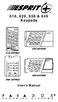 616, 626, 636 & 646 Keypads User s Manual TABLE OF CONTENTS 1.0 BASIC OPERATION...2 2.0 ACCESS CODES...4 3.0 ARMING & DISARMING...6 4.0 PANIC ZONES...13 5.0 KEY ACCESS PROGRAMMING.14 6.0 ADDITIONAL FEATURES...15
Understanding the Code Pad lights...4. Code Pad tones...5. Fully arming the system On MODE...6. Fully arming the system - Quick Arm MODE...
 TABLE OF CONTENTS...Glossary of terms...2...code Pad Diagram...3 Understanding the Code Pad lights...4 Code Pad tones...5 Fully arming the system On MODE...6 Fully arming the system - Quick Arm MODE...6
PUBLIC RESTROOMS, DESIGN INTENT
 PUBLIC RESTROOMS, DESIGN INTENT 1.01 STRUCTURAL A. Where feasible, metal stud partitions will be constructed on a 6 high concrete curb. 1.02 MECHANICAL A. Restrooms will have a minimum of 15 air changes
SPECIAL CODES AUXILIARY CODES SYSTEM NOTES
 Installing/Service Company Monitoring Center SPECIAL CODES Master Code Duress Code AUXILIARY CODES "Quick Arm" " Chime" 08 02 09 03 10 04 11 05 12 06 13 07 14 SYSTEM NOTES Exit Delay Time Entry Delay Time
FIRE PREVENTION & INVESTIGATION DIVISION 125 Idylwyld Drive South Saskatoon, SK S7M 1L4 Phone: (306) 975-2578 Fax: (306) 975-2589.
 FIRE PREVENTION & INVESTIGATION DIVISION 125 Idylwyld Drive South Saskatoon, SK S7M 1L4 Phone: (306) 975-2578 Fax: (306) 975-2589 Bulletin 16-12 Fire Drills This guideline was developed to assist persons
BUILDING OWNERS - SERVICE RELATED ISSUES FOR FIRE ALARM SYSTEMS
 BUILDING OWNERS - SERVICE RELATED ISSUES FOR FIRE ALARM SYSTEMS Owners have numerous responsibilities as it pertains to the maintenance and operation of a building s fire safety equipment. The liabilities
SECURITY SYSTEM NOTES
 SECURITY SYSTEM NOTES Installing/Service Company For Service Call Central Station Duress Code FUNCTION CODES Function Code Controls Function This system is is not partitioned. EMERGENCY ACTIVATION KEYS
Xerox Nuvera Production System and Xerox igen Digital Production Press
 January 2015 702P01084 Xerox Nuvera Production System and Xerox igen Digital Production Press Xerox Nuvera 100/120/144/157 EA Production System Xerox Nuvera 100/120/144 MX Production System Xerox Nuvera
USER GUIDE SERIES 4250 AUDIO ALARM CONFIRMATION SYSTEM CONTROL UNIT
 USER GUIDE SERIES 4250 AUDIO ALARM CONFIRMATION SYSTEM CONTROL UNIT CONTENTS Page INTRODUCTION... 2 Security conditions... 3 Full Set (Fully armed)... 3 Part Set (Partially armed)... 3 Unset (Disarmed)...
Expanding Your Market
 U.S. Department of Justice Civil Rights Division Disability Rights Section Expanding Your Market Maintaining Accessible Features in Retail Establishments Introduction More than 50 million Americans with
Building Codes Update: The 2009 International Fire Code and the Apartment Industry
 ! Building Codes Update: The 2009 International Fire Code and the Apartment Industry Apartment operators and developers should be aware of organizational changes in the 2009 edition of the International
A. Work on this project shall consist of, but is not limited to, the following:
 PART 1 - GENERAL CLEANING AND RESTORATION OF SECTION 05900-1 1.1 SUMMARY A. Work on this project shall consist of, but is not limited to, the following: 1. Clean and treat all exposed anodized architectural
SECURITY SYSTEM NOTES SPECIAL CODES ENTRY / EXIT DELAY TIMES ARM / DISARM CODES
 SECURITY SYSTEM NOTES Installing/Service Company For Service Call SPECIAL CODES "Chime" Digit 1 "Partial Arm" Digit 2 "Quick Arm" Digit 3 ENTRY / EXIT DELAY TIMES Exit Delay Time Entry Delay Time Secondary
About Escalators. About Escalators. 1 of 7
 About Escalators Part of the urban landscape Visit any large department store, shopping mall, metro station, airport or stadium anywhere in the world and you are sure to find escalators carrying people
Slip, Trip & Fall Program Table of Contents
 Slip, Trip & Fall Program Table of Contents I. Introduction...2 II. Scope...2 III. IV. Definitions...2 Responsibilities...4 V. Practices...5 VI. Slip-Fall Facility Checklist...7 VII. VIII. Training...8
NetworX NX-6V2. LED Keypad User Manual
 NetworX NX-6V2 LED Keypad User Manual POWER Light is on when AC power is present; flashes to indicate a low battery condition. ARMED Light is on when armed; off when disarmed; flashes to indicate a previous
Simcoe Place. Emergency Information and Response Procedures
 Simcoe Place Emergency Information and Response Procedures Page i Emergency Information and Response Procedures introduction This manual has been designed and produced for distribution to the occupants
CBD-233. Fire Alarm and Detection Systems
 Page 1 of 5 CBD-233. Fire Alarm and Detection Systems Originally published August 1984. R.H.L. McEwen Fire alarm systems are normally required by building codes. In the case of new buildings, this is usually
Destiny 4100. Destiny 4100. Owners Manual
 Destiny 4100 Destiny 4100 Owners Manual TABLE OF CONTENTS INTRODUCTION Control Panel...3 Detection Devices...3 Telephone Keypads...3 GLOSSARY... 4-5 LOCAL PHONE ACCESS Using Your Telephones As Keypads...6
Maintenance Manual PC6010. WARNING This manual contains information on limitations regarding product use and function
 WARNING This manual contains information on limitations regarding product use and function and information on the limitations as to liability of the manufacturer. The entire manual should be carefully
PhoneWatch Smart Security System User Manual - Domonial
 PW0002 10/13 Customer Support: 1850 753 753 PhoneWatch Ltd., Unit 3/4, Sandyford Park, Burton Hall Rd, Sandyford Industrial Estate, Dublin 18. Email: [email protected] PhoneWatch Smart Security System
INSTRUCTION MANUAL LCD-6OO SECURITY STATION
 INSTRUCTION MANUAL 1993 Digital Security Controls Ltd. 1645 Flint Road, Downsview, Ontario, Canada M3J 2J6 Printed in Canada 29000144 R1 LCD-6OO SECURITY STATION Table of Contents Introduction 1 About
Building Code Clarifications - 7. Fire Resistance
 Building Code Clarifications - 7. Fire Resistance 7.1 (15-12-030) Use of combustibles in Type III construction roof assemblies Code Section (15-12-030) Use of Combustibles was revised on May 17, 2000,
2012 Customer Satisfaction Survey Subway
 Customer Satisfaction Survey Subway Methodology Citywide Survey conducted by telephone Random landline and cell phone samples Interviewed 1829 persons 1200 qualified for full survey: At least one subway
527 CMR: BOARD OF FIRE PREVENTION REGULATIONS
 527 CMR 24.00: FIRE WARNING SYSTEMS INSTALLED IN BUILDINGS WITHIN THE COMMONWEALTH OF MASSACHUSETTS Section 24.01: Purpose 24.02: Scope 24.03: Definitions 24.04: Approval of Design 24.05: Power Supply