
Trade of Motor Mechanic
|
|
|
- Felicia Flynn
- 10 years ago
- Views:
Transcription
1 Phase 2 Trade of Motor Mechanic Module 2 Unit 3

2 Produced by In cooperation with: Subject Matter Experts Martin McMahon & CDX Global Curriculum Revision SOLAS 2013

3 Table of Contents Introduction... 1 Unit Objective Dangers Associated With the Lead Acid Battery Safety Precautions Energy Requirements for 12 V Vehicles Typical Electrical Loads The Function of a Lead Acid Battery Function of Battery Types Service, Test and Charge Batteries Battery Maintenance Battery Recharging Use Boost Pack/Jump Leads Battery Boosting Safety Notes Jump-Starting a Vehicle Functions of the In-Vehicle Battery Control Unit Battery Control/Management End-of-Life Legal Requirements of Lead Acid Batteries Environment Issues Self Assessment Suggested Exercises Task Sheets Cleaning & Replacing a Battery Charging a Battery Testing a Battery Jump-Starting a Vehicle...41 Suggested Further Reading... 44

4

5 Introduction There are six Units in this Module. In Theory 1 we cover Units 1, 2 and 3 which focuses on the basics of electricity. In Theory 2 we cover Units 4, 5 and 6 which focuses on the fundamental electrical circuits in the vehicle. Module 2 Body Electrics Unit 1 Unit 2 Unit 3 Magnetism Basic Electicity On completion of this unit you will be able to describe the basic function, operation of a lead acid battery. Health and safety issues related to this unit will also be covered in this unit. Unit Objective By the end of this unit you will be able to: Describe the electrical energy supply requirements of 12V petrol and diesel engine vehicles Describe the function and basic operation of a lead acid battery Describe the dangers and the Health and Safety precautions associated with the lead acid battery Service, test and charge batteries Use boost pack/jump leads to assist-start a vehicle Describe the basic function of the in-vehicle, battery control/ management unit State the end-of-life legal requirements of lead acid batteries 1

6

7 1.0 Dangers Associated With the Lead Acid Battery Key Learning Points The strict need for 'polarity observance' when making connections to the vehicle. Hazards: Possibility of explosion by arcing/sparking around battery terminals due to Hydrogen and Oxygen presence, from the charging process, acid burns, spillages, overcharging, toxic fumes. Health and Safety precautions: ventilated charging area (fume extraction). Personal protection equipment (P.P.E.) i.e. full facial shield, charger always off before making or breaking any connections. Environmental damage due to incorrect 'end of life' disposal of batteries. 1.1 Safety Precautions Always refer to manufactures specification when working on vehicles with lead acid batteries. Here are some guide lines. Always ensure correct polarity before attempting to fit a battery to a vehicle. Connected the wrong way, even for the fraction of a second will burn out alternator diodes and other electronic components. Always connect the earth lead last. This way, if the spanner used to tighten the live connection at the live side of the battery shorts off the chassis, there will be no danger of a direct short circuit across the battery. Always wear goggles or a face shield. Always pour acid slowly into water, not water into acid. Never lean over a battery when charging, testing, or jumpstarting an engine. Charge batteries only in well-ventilated areas (fume extraction). Batteries contain hydrogen and oxygen, two flammable and explosive gasses. 3

8 Never smoke or operate anything that may cause a spark when working on a battery. The gasses may ignite and cause the battery to explode. A battery which is being overcharged should not be allowed to do so. The regulator should be checked immediately and the fault rectified. This condition will be recognised by a number of symptoms: 1. The battery will need to be topped up frequently. 2. Electrolyte may overflow onto the battery cage. 3. Lights will brighten up abnormally and bulbs may blow at more than the normal rate. The dangers of allowing this situation to continue are: The battery s life will be shortened considerably. The overflow of electrolyte will cause serious corrosion. The constant failure of bulbs could be a danger. The most important of all - a battery which is being charged at an abnormally high rate will give off hydrogen gas in large quantities. Accumulation of this, plus the slightest spark in the vicinity of the battery could cause an explosion and fire. Wiring could also burn out as a result of the heavy loads being imposed on it in the charging system. Loose or corroded battery connections should be rectified immediately. As the battery would not be charged correctly, and of course the obvious starting problems would also result from any loose or corroded leads. In an alternator system, any break in the connection to the battery while the engine is running will allow the alternator to charge in an open circuit which will cause serious damage to the alternator. Never place any tools on the battery as these are in constant danger of shorting across the poles of the battery, or between the live pole and earth. The resulting spark can cause an explosion due to the hydrogen gas being given off by the battery. Such an explosion may cause the battery to disintegrate spraying acid over a wide area and possibly cause a fire as well. 4

9 Never test a battery by placing any metal object across the battery poles. The end result could be the same as in No. 11 above. If the battery is to be tested use a voltmeter, hydrometer or high-discharge tester. Be extremely careful using any of these on a battery that has just been charged or which is being overcharged on the vehicle. The spark caused by placing a discharge tester on a battery which is gassing could cause an explosion. The hydrometer is quite safe at any time. If acid is accidentally spilled on the skin wash off with plenty of water. Time is important, seconds matter so do it immediately. If acid gets on one s clothes, washing it off with a solution of an alkali such as bread soda and water will prevent the acid from burning holes in the fabric. Using jump leads, always double check polarity before connecting. The spark caused by a wrong connection could cause an explosion or damage to alternator. Using a battery booster, or even a normal charger, same as above applies. Always disconnect the battery when electric welding Always disconnect the battery when: 1. Working on the electrics, except for testing. 2. Removing the starter motor. 3. Removing the engine. 4. Carrying out any mechanical work in the vicinity of the battery. 5. Leaving a job where turning over the engine could cause damage e.g. engine partly dismantled. Exercise extreme care when removing or fitting battery connections. Never hammer on or off or use undue pressure with connections. When removing clamp type, slacken bolt and spread clamp by inserting screwdriver in the slot and twisting. 5

10 2.0 Energy Requirements for 12 V Vehicles Key Learning Points Vehicle electrical current and voltage requirements i.e. consistently fully charged battery and the ever-increasing electrical loads/circuits. 2.1 Typical Electrical Loads Batteries do not produce electric current but instead store current produced by the generator when the engine is running. This energy is then available for starting the engine (typically 120 amps). In addition, the battery covers the power requirements of electrical equipment when the engine is stationary or only ticking over. These include some of the following (voltage applied 12v): Short-term load Permanent load Per interior lamp 5W Ignition 20W Per flasher lamp( indicator) 21W 2 stop lamps 42W Electric pump fuel Electronic petrol injection Per reversing lamp 21W Long-term load Horn W Fog lamp 21W Car radio approx Per licence-plate lamp 50 70W W W 10W Rear-window wiper 30 65W Side lamp 5W Wipers. 80W 2 headlamp dip lights 110W Cigarette lighter 100W 2 headlamp main beams 120W Rear-window heater 120W Per rear tail light 5W 6

11 For diesel cars Heater plugs for starting (per cylinder) Power windows 100W 150W Electric radiator fan 200W Starter W Note: to change watts to amps use the power triangle. For this calculation the voltage value is 12 volts. 7

12 3.0 The Function of a Lead Acid Battery Key Learning Points The battery, an EMF generator by chemical means. Basic chemical reaction i.e. lead plates and H2SO4 electrolyte, grid support material; antimony, lead-calcium, lead calcium silver advantages, low maintenance, gassing, durability to higher temperatures, maintenance-free batteries 3.1 Function of The function of the battery is to store electricity in the form of chemical energy and when required to convert it to electrical energy. Electrical energy can be produced from two plates immersed in a chemical solution. Several linked give a higher capacity. 8

13 The Lead Acid Battery is the most popular type used in modern motor vehicles and consists basically of the following parts: 1. Case 2. Plates 3. Electrolyte Case The battery case is constructed of insulating, acid resistant material (hard rubber or plastic) and has a number of compartments or cells. A 12 volt battery has 6 cells. Recesses in the bottom of the cells collect the sediment that falls from the plates. This prevents the sediment from bridging the plates and causing internal short circuiting. The top of the plate assembly is enclosed by a moulded one piece cover which is sealed to the main case. Each cell has a removable plug to facilitate topping up and testing. These plugs are vented to allow for the escape of gases produced during charging. Plates Each cell has a number of positive and negative plates with separators fitted between them. The total number of plates per cell is normally not less than seven, usually starting and finishing with a negative plate. 9

14 The plates are made of lead grids and active material which is coated or pasted onto the grids. Each group of positive plates and each group of negative plates is held together by its own plate strap. The plate strap joining the positive plates in the first cell is connected to the positive (Plus) terminal pole of the battery. The plate strap joining the negative plates in the last cell is connected to the negative (Minus) terminal pole of the battery. Electrolyte The battery is filled with electrolyte which is a mixture of sulphuric acid and water (H2SO4). The separators are porous to permit circulation of the electrolyte and to allow chemical action between the plates to take place. When the cell is functioning, the acid reacts with 10

15 the plates, converting chemical energy into electrical energy. Electric current flows from one pole of the battery through the vehicle circuit back to the battery and then through the electrolyte. The heaviest demand is made on a battery when the engine is being started (approx 120 amps). Once the engine is running, the alternator provides a flow of current to the battery to recharge it and keep it charged. Discharging In a fully-charged battery the positive plates are made of lead peroxide and the negative plates are spongy lead. During discharge or use: Sulphur in the acid combines with the plates to form lead sulphate. The oxygen and hydrogen released combine to form water, which dilutes the electrolyte. This makes it possible to tell the state of charge by seeing how weak the electrolyte is. A hydrometer is used to measure the strength of the electrolyte. Both negative and positive plates become lead sulphate as the battery is discharged by use. The resulting lead sulphate is bulkier than spongy lead or lead peroxide, so if the battery is discharged too quickly the plates will buckle and some paste will fall out. This shortens the life of the battery. 11

16 During Charging Charging To charge a battery, a current must be forced back through it. So a positive voltage must be applied to the positive terminal and negative to the negative terminal. Also the voltage must be high enough to overcome the battery voltage and drive sufficient current into the battery. About 14 Volts is adequate, for a 12V battery. Oxygen in the electrolyte combines with the lead sulphate of the positive plate to become lead peroxide; Sulphate is released from both plates, which increases the concentration of sulphuric acid in the electrolyte; The negative plate becomes spongy lead. Charging is thus the reverse of discharging, and the plate materials return to their original form lead peroxide for the positive plates and spongy lead for the negative plates. 3.2 Battery Types There are at least three variations of the lead-acid battery in current automotive use. In the most common configuration, the car battery has six cells, each producing about 2.1 volts. Thus the total battery output voltage is about 12.6 volts. The three major contributors to battery chemistry are lead, lead dioxide, and sulphuric acid. Unfortunately pure lead is too soft to withstand the physical abuse of mobile applications, so about 6% antimony was added to strengthen it. Antimony added to the lead grids acted as a catalyst and made out gassing (loss of hydrogen and oxygen during use) worse, and frequent water replenishing was required. So battery manufacturers looked for another material that could strengthen the lead grids. Calcium was added to both the positive and negative electrodes it reduced out gassing. Therefore the need for topping up with distilled water is reduced i.e. maintenance-free batteries. However, lead/calcium batteries are not very resistant to deepcycling (deep discharge followed by a full charge). It also required a higher charging voltage at 14.8 volts. Lower settings prevented charging to full capacity. This is too high for lead/antimony batteries and will cause them to lose water rapidly. 12

17 The third type of battery frequently used in automotive service uses hybrid construction. Its positive grid is strengthened with antimony, and the negative grid with calcium. Water usage is greatly reduced, although regular checking is advisable. The hybrid battery is more resistant to deep cycling than the lead/ calcium, but is still not as good in this respect as the original lead/ antimony style. Older vehicles with voltage regulators set at about 14.0 volts simply will not fully charge lead/calcium or hybrid batteries. 13

18 4.0 Service, Test and Charge Batteries Key Learning Points Battery charging, correct use of equipment and rate of charge. Voltage limitation chargers for maintenance free batteries Electrolyte specific gravity levels/change during charge/ discharge Battery: specific gravity test (conventional types) high rate discharge tester, use of electronic battery tester Dangers of excessive voltages/voltage peaks produced by the incorrect use of battery chargers/battery charger type causing damage to ECUs or related electronic systems/ components 4.1 Battery Maintenance Positive pole is shown +. Usually red in colour and larger diameter. Negative pole is shown. Usually black or green and smaller diameter. Battery Connectors Various types of connectors are shown below: Die Cast (Helmet) Type Flat Type SMMT (Clamp) Type 14

19 Battery Visual Checks 1. Electrolyte level. The electrolyte must be maintained at the correct height which is normally level with the tops of the separators. 2. Topping up should be carried out when the electrolyte falls below the correct level. Only distilled water or de-ionised water must be added to electrolyte lost by evaporation. 3. Clean and dry the battery, particularly the top area after topping up. 4. Battery terminal poles and clamps - should be cleaned of oxidation and smeared with petroleum jelly as a precaution against corrosion. 15

20 4.2 Battery Recharging The way that an alternator charges a battery is ideal. It is capable of delivering a large current to a discharged battery when the engine is driving it. Since the alternator has an accurate built-in semiconductor regulator it is unlikely to over-charge the battery. Workshop chargers and home chargers are not so well regulated and over-charging can occur. This causes gassing, loss of electrolyte, overheating, and positive plate corrosion. Low-maintenance and maintenance free batteries are easily damaged by using workshop battery chargers use only approved chargers. Fast Charging Fast charging or boost charging is only acceptable in an emergency with conventional batteries and should be controlled by a thermostat probe inserted into the electrolyte. Rarely is this precaution taken in practice. Fast charging of low maintenance and maintenance free batteries is not recommended, as most chargers do not have the required control system, Therefore when charging maintenance free batteries the correct charger is to be used. Charging Rates A battery can safely be charged at 1/l0th of its Amp-hr capacity until the terminal voltage reaches 14.4 V: (A 30 Ah battery charged at 1/l0th will require 3 A of direct current). This will take several hours. 16

21 Electrolyte The concentration (strength) of sulphuric acid within the electrolyte varies with the state of charge. This changes the density or specific gravity of the electrolyte, which can be measured with a hydrometer. State of charge Density Fully charged Half charged Discharged Since temperature also has a small effect on density the graph below would be a more accurate way of finding the state of charge. Hydrometer scale showing density readings of electrolyte this energy is then available for starting the engine. In addition, the battery covers the power requirements of electrical equipment when the engine is stationary or only ticking over. Battery Rating Nowadays batteries have a new method of rating instead of A.H. capacity and it can become very confusing as there are three standards used, namely: BS (British Standard) DIN (German Standard) S.A.E. (Society of Automobile Engineers American). However, the main function of a battery used in motor vehicles is to provide a high starting current for a short time. The vehicle loads are thereafter supplied by the alternator. In these circumstances Cold Cranking Amps (CCA) figures are given. 17
22 The Cold Cranking rating is, then, the current in Amperes delivered at -18 until the battery voltage fails to: Standard Duration BS 60 seconds DIN 30 seconds SAE 30 seconds End Voltage 8.4 volts 9.0 volts 7.2 volts Reserve Capacity (RC) This is defined as the time in minutes for the battery voltage to fall to 10.5 volts with a constant load of 25 Amps at a temperature of 25 C. Typical Label on a Battery Charging in Series and Parallel For charging purposes it is possible to put batteries in series or parallel provided the charger can produce the correct voltage and current. Charging Methods Either the constant current method or the constant voltage method may be employed for recharging. In either case a Direct Current supply must be used. 18
23 The connections to be made differ with each method as can be seen in the diagram. You will see that, using the constant current method (below), the batteries is in series. Thus, a limit is set to the number of batteries that may be charged in series, since the voltage of the batteries when fully charged must not exceed the supply voltage. A constant-voltage charger gives a voltage output equivalent to the voltage of a fully charged battery, e.g. 14.4V for a 12V battery. When a discharged battery is connected to the charger, the initial charge current is high, but this gradually falls until it is practically zero after about 6-8 hours. The batteries are normally connected in parallel with this type of charger. Charge Rate for Conventional Batteries It is recommended that the charge current should be 1/10 of the ampere-hour capacity of the battery. Charging at this rate should continue until the sp. gr. values remain constant for three successive hourly readings and all cells are gassing freely. During charging, the electrolyte should be maintained at the indicated level by topping-up with distilled water. It takes about 16 hours to recharge a battery at the normal rate from a specific gravity Of to its fully-charge state. 19
24 Checking Specific Gravity There is a relationship between the state of battery charge and the strength of the electrolyte. As the battery becomes discharged, the specific gravity (S.G.) of the electrolyte becomes lower. The S.G. of the electrolyte is measured by means of a hydrometer. This instrument consists of a glass tube, with a rubber bulb fitted on one end. Inside the tube, there is a float, which is calibrated from to Indications from specific gravity readings are as follows: : Battery fully charged : Battery approximately half charged : Battery fully discharged The readings for each cell should be approximately the same. Note: The hydrometer should always be washed out with clean water after use and stored safely. This test should be carried out as a further check of the battery condition. A heavy discharge tester should be applied to the battery terminals as shown in the illustration on next page. The test ensures that the battery is capable of supplying the heavy currents required by the starter at the moment of starting the engine. The tester should be set to the manufactures specification. This will vary depending on the type and capacity of the battery. An electronic battery tester is to be used to carry out this test. 20
25 The results are checked against the manufactures spec and then a report is filled in. Battery must be 70% charged to obtain correct result. 21
26 5.0 Use Boost Pack/Jump Leads 5.1 Battery Boosting Safety Notes Safe Use of Booster Pack/Jump Leads Use a booster pack or jump leads that have a surge protection device. Refer to the vehicle manufactures specifications for important specific information on jump starting General Information When jump starting a vehicle, always wear proper eye protection and never lean over battery. Inspect both batteries before connecting booster cables. Do not jump start a damaged battery. Ensure that the car you are jump starting has the keys out of the ignition and you have them with you outside the vehicle when connecting the leads or booster pack. Some cars will auto lock when you connect a power supply locking keys in the vehicle. Be sure vent caps are tight and level. Sequence for Connecting Leads 1. Connect positive (+) booster cable to positive (+) terminal of discharged battery. 2. Connect other end of positive (+) cable to positive (+) terminal of assisting battery. 22
27 3. Connect negative (-) cable to negative (-) terminal of assisting battery. 4. Make final connection of negative (-) cable to engine block of stalled vehicle, away from battery. This helps reduce the risk of sparks occurring around the battery. 5. Start Vehicle and remove cables in reverse order of connections. 5.2 Jump-Starting a Vehicle Objective Preparation and Safety Start a vehicle with a discharged battery using jumper leads and a second vehicle or battery. Safety Check Make sure that the bonnet is secure with a stay rod before going under it. A spark created above a battery can cause an explosion. So always follow these precautions: 1. Keep your face and body as far back as you can while connecting jumper leads. 2. Connect the leads in the correct order -- positive on discharged battery; then positive on charged battery; then negative on charged battery; then negative to a good ground on the vehicle with the discharged battery away from the battery itself. 3. Do not connect the negative cable to the discharge battery because this may cause a spark. 23
28 Points to Note 4. Only use specially designed heavy-duty jumper cables to start a vehicle with a dead battery. Do not try to connect the batteries with any other type of cable. Always make sure that you wear the appropriate personal protection equipment before starting the job. Remember, batteries contain acid and it is very easy to hurt yourself even when the most exhaustive protection measures are taken. Always make sure that your work area/environment is as safe as you can make it. Do not use damaged, broken or worn out workshop equipment. Always follow any manufacturer's personal safety instructions to prevent damage to the vehicle you are servicing. Make sure that you understand and observe all legislative and personal safety procedures when carrying out the following tasks. If you are unsure of what these are, ask your instructor. Make sure the battery is not frozen; you cannot jump-start a frozen battery. Before you disconnect the service battery from the discharged battery, it is good practice to place a load across the discharged battery (such as turning on the headlamps) to absorb any sudden rise in voltage that may occur as the alternator suddenly increases its output. 24
29 Step-by-Step Instruction 1. Locate the charged battery: Locate the charged battery close enough to the discharged battery of your vehicle so that it is within comfortable range of your jumper cables. If the charged battery is in another vehicle, make sure the two vehicles are not touching. 2. Connect jumper leads: Connect the leads always in this order. First, connect the red, positive, lead to the positive terminal of the discharged battery in the vehicle you are trying to start. The positive terminal is the one with the plus sign. Next, connect the other end of this lead to the positive terminal of the charged battery. Then connect the black, negative, lead to the negative terminal of the charged battery. The negative terminal is the one with the minus sign. Connect the other end of the negative lead to a good ground on the engine block or body of the vehicle with the discharged battery, and as far away as possible from the battery. Do NOT connect the lead to the negative terminal of the discharged battery itself; this may cause a dangerous spark. 3. Start the vehicle with the discharged battery: Start the vehicle with the discharged battery. If the booster battery does not have enough charge to do this, start the engine in the second vehicle and try it again with the engine running. Turn the lights on to prevent a possible voltage spike damaging electronic equipment. 4. Disconnect jumper leads: Disconnect the leads in the reverse order to connecting them. Remove the negative lead from the good ground. Then from the second battery. Then remove the positive lead from the second battery and lastly, disconnect the other end from the battery in the vehicle you have just started. If the charging system is working correctly and the battery is in good condition, the battery will be recharged while the engine is running. 25
30 6.0 Functions of the In-Vehicle Battery Control Unit Key Learning Points Battery control/management unit; on-going evaluation of system voltage, hidden consumer current draw of network/gateway, closing down of lesser priority circuits, requirement of battery charger use 6.1 Battery Control/Management Many modern vehicles (particularly those using a CANBUS to facilitate the various vehicle electrical systems) have a system that is able to control battery load through a priority system. This system is able to determine the most efficient use of the available battery EMF (voltage). Priority is given to the essential vehicle operation systems and less essential systems are effectively put into sleep or hibernation mode by the system controller as the available EMF (voltage) runs down. 26
31 7.0 End-of-Life Legal Requirements of Lead Acid Batteries Key Learning Points Batteries at 'end of life' stored appropriately for industry approved recycling company collection/us 7.1 Environment Issues The legal requirements for lead acid battery s in relation to end of useful life are that it is disposed in a manner that is appropriate to the current laws and regulations within the state. The storage of the batteries within the garage environment has to be such that it conforms to the safety rules and regulations. The collection of used batteries has to be by an approved recycling company. Contact your local waste disposal company for further details. 27
32 Self Assessment Q1: In a discharged lead acid cell the active material of both plates is: (Tick one box only) 1. Lead sulphate 2. Lead peroxide 3. Sponge lead 4. Electrolyte Q2: A hydrometer measures: (Tick one box only) 1. Specific heat 2. Scientific gravity 3. Specific gravity 4. Scientific heat Q3: The electrolyte in an automotive lead acid battery is: (Tick one box only) 1. Hydrochloric acid 2. Sulphur dioxide 3. Sulphuric acid 4. Nitric acid Q4: The potentially explosive gas given off when charging a battery is: (Tick one box only) 1. Oxygen 2. Helium 3. Hydrogen 4. Nitrogen Q5: The Hydrometer reading for a fully charged battery is: (Tick one box only)
33 Q6: During a high rate discharge test, a battery in good condition should maintain a steady voltage that must not drop below: (Tick one box only) 1. 6 volts 2. 8 volts volts volts volts Q7: Battery terminal corrosion can be treated by: (Tick one box only) 1. Pouring cold water on it 2. Using bicarbonate of soda 3. Pouring freezing cold water on it 4. Using salt water Q8: What is the correct sequence for removing a battery? (Tick one box only) 1. Disconnecting it before removal 2. Disconnecting it after removal 3. Disconnecting the negative terminal and then the positive terminal before removal 4. Disconnecting the positive terminal and then the negative terminal before removal Q9: What MUST be done when jump starting a vehicle fitted with electronic control units? (Tick one box only) 1. Turn ALL systems off before connecting the slave battery 2. Turn the headlights on before connecting the slave battery 3. Turn the headlights on on the slave vehicle before disconnecting the slave battery 4. Turn ALL systems off, on the slave vehicle before connecting the slave battery 29
34 Q10: What type of water should you use to top up battery electrolyte levels? (Tick one box only) 1. De-mineralized or distilled 2. Hot de-mineralized or distilled 3. Tap water 4. Mineralized or still water Q11: Name two types of battery chargers that are used in automotive applications: (Tick one box only) 1. Trickle charger & high rate 2. Trickle charger & low rate 3. Super & high rate 4. Dry cell & high rate Q12: Which of the following is the most correct when connecting booster leads to start a vehicle with a discharged battery? (Tick one box only) 1. Positive to positive, and negative to engine valve cover 2. Positive to positive, and negative to engine intake manifold 3. Positive to positive, and negative to engine block 4. Positive to positive, and negative to negative Q13: When disconnecting automotive battery terminals on a vehicle with a negative ground system, which of the following statements are correct? (Tick one box only) 1. Disconnect the positive terminal first 2. Disconnect the negative terminal first Q14: An assembly consisting of a parallel group of negative plates, a parallel group of positive plates, separators and electrolyte, is referred to as a. (Tick one box only) 1. Series accumulator 2. Unit 3. Battery 4. Cell 30
35 Q15: A fully charged battery that has been disconnected has the potential to do work, so it is referred to as a: (Tick one box only) 1. Source of electrons 2. Source of resistance 3. Source of current 4. Source of energy 31
36 Suggested Exercises 1. Use an electronic data facility to procure manufacturer s appropriate data for use with practical exercises 2. Perform specific gravity and high rate discharge tests on a battery 3. Place batteries on charge 4. State the local procedure for battery end of life/recycling 5. Use boost pack/reserve battery/jump leads to assist crank over an engine 32
37 Task Sheets Cleaning & Replacing a Battery Objective Personal Safety Safety Check Preparation and Safety Clean and replace an automotive battery. Whenever you perform a task in the workshop you must use personal protective clothing and equipment that is appropriate for the task and which conforms to your local safety regulations and policies. Among other items, this may include: Work clothing - such as coveralls and steel-capped footwear Eye protection - such as safety glasses and face masks Ear protection - such as earmuffs and earplugs Hand protection such as rubber gloves and barrier cream Respiratory equipment such as face masks and valve respirators Make sure that the hood is secure with a bonnet rod before going under it. Always make sure that you wear the appropriate personal protection equipment before starting the job. Remember, batteries contain acid and it is very easy to hurt yourself even when the most exhaustive protection measures are taken. Always make sure that your work area/environment is as safe as you can make it. Do not use damaged, broken or worn out workshop equipment. Always follow any manufacturer's personal safety instructions to prevent damage to the vehicle you are servicing. Make sure that you understand and observe all legislative and personal safety procedures when carrying out the following tasks. If you are unsure of what these are, ask your instructor. 33
38 Points to Note Always remove the negative terminal first when disconnecting the battery and fit the negative terminal last when reconnecting the battery. Automotive batteries can look lighter than they really are. If replacing a smaller battery with a larger one, replace the restraining device and tray used to secure the new battery. Be sure that you do not connect the battery up with reverse polarity because this could send an unwanted voltage spike into the electronic circuit and possibly damage the Electronic Control Unit (ECU). Disconnecting the battery will usually clear all the codes that are used to maintain the memory for the vehicle's on-board computer. This may erase all the radio presets and security codes. In some cases, the vehicle will even go into a type of "sleep" mode. This can prevent the vehicle from starting after the battery has been reconnected. Some manufacturers recommend connecting a 9-volt dry cell battery to the cigarette lighter with an auxiliary plug before the battery is disconnected. This should supply enough power to maintain the memory while the battery is changed over. 34
39 Step-by-Step Instruction 1. Disconnect battery: Always remove the cable clamp from the negative terminal first. The negative terminal is marked with a minus sign. Then remove the positive terminal, the one with the plus sign. You will later replace them in reverse order, positive cable first and then the negative cable. While they are unconnected, bend the cables back, or if necessary tie them out of the way, so that they cannot fall back and touch the terminals. 2. Remove battery restraints: Remove the battery restraints or other hardware holding the battery down. Depending on the type of vehicle, you will need to unbolt or unscrew or unclip the restraint and move it away from the battery. Keeping it upright, remove the battery from its tray and place it on a clean level surface. You are now ready to inspect it. 3. Visual inspection: Carefully wipe the battery with a clean cloth. It is best to wear rubber gloves while doing this in case any corrosive electrolyte has leaked from the battery. Then safely dispose of the cloth. If you see major cracks in the battery case or obvious terminal damage, the battery should be replaced regardless of its electrical performance. If the battery is not serviceable, don t just dump it into the trash where it will be a hazard to the environment. Batteries are recyclable, and can be rebuilt and returned into service. 4. Clean terminals: If there are powdery deposits on the terminals, clean them off. It may be enough to brush the deposits off the terminal posts and cable clamps with a non-metallic brush and a mixture of baking soda and water. Sprinkle the baking soda onto the terminal, dip the brush in clean water, and scrub the deposits away. If this is not effective, use a battery terminal cleaner and brush to provide a good, solid mechanical and electrical connection. 5. Clean clamps: Examine the battery cables to see whether they are badly frayed or corroded. If the damage looks extensive, the cables and clamps should be replaced. Clean the insides of the cable clamps with the clamp cleaner that is usually supplied with a terminal brush. If you don t have the correct brushes, use a steel wool pad instead. Dry the terminals and clamps with a clean, disposable, lint-free rag. To prevent corrosive deposits from forming, coat the terminals with some anticorrosion terminal grease. 35
40 6. Clean the battery tray: Clean the battery tray with a mixture of baking soda and water, or some other approved cleaning solutions using a small non-metallic brush. Wipe the tray clean and dry, and then replace the cleaned and serviceable battery. Replace the restraints and make sure they are holding the battery securely in position. If a new battery is to be installed be sure to compare the outside dimensions as well as the type of terminals and their locations prior to installation. These MUST meet the original manufacturer s specifications. 7. Reconnect the battery terminals: Reconnect the battery terminals, Positive first, and then Negative. Test that you have a good electrical connection by starting the vehicle. Charging a Battery Objective Safety Check Preparation and Safety Correctly charge a battery using battery charging equipment. Make all connections between the battery charger and the battery to be charged before connecting to the power supply or turning ON any switches. Make sure that the voltage used to charge the system never exceeds the system design while charging. For instance if you connect two 12 volt batteries in 'series' for charging you should use the 24 volt setting on the charger, however if you connect the same two batteries in 'parallel' you should only use the 12 volt setting on the charger. 36
41 Never allow a spark or flame to get near the battery. Always use the markings on the battery to determine the positive and negative terminals. Never simply use the colour of the cables to determine the positive or negative terminals. Make sure that you understand and observe all legislative and personal safety procedures when carrying out the following tasks. If you are unsure of what these are, ask your instructor. Points to Note Slow charging a battery is less stressful on a battery than fast charging is. Always remove the negative battery terminal while changing a battery to reduce risk to the vehicle, especially with today s electronically intensive cars. Use a 'memory minder' to retain electronic settings. After charging the battery and reinstalling it, always clean the battery terminals and posts. Step-by-Step Instruction 1. Inspect the battery: Carry out a visual inspection of the battery to ensure there are no cracks or holes in the casing. 2. Connect the charger: Check the charger is unplugged from the wall and turned off. Connect the red lead from the charger to the positive battery terminal. Connect the black lead from the charger to the negative battery terminal. Turn the charger on. Check the charger amperage output to ensure the battery is charging correctly. A slow charger usually charges at a rate of less than 5 amperes. A fast charger charges at a much higher ampere rate depending on the original battery state of charge and should only be carried out under constant supervision. 3. Disconnect the charger: Once the battery is charged turn the charger off. Disconnect the black lead from the negative battery terminal, and the red lead from the positive battery terminal. 4. Test the battery: Allow the battery to stand for at least 5 minutes before testing the battery. Using a load tester or hydrometer, test the charged state of the battery. 37
42 Testing a Battery Objective Safety Check Preparation and Safety Inspect and test a battery. Make sure that the bonnet is secure with a bonnet stay rod. Always make sure that you wear the appropriate personal protection equipment before starting the job. Remember that batteries contain acid and it is very easy to hurt yourself even when the most exhaustive protection measures are taken. Points to Note Always make sure that your work area/environment is as safe as you can make it. Do not use damaged, broken or worn out workshop equipment. Always follow any manufacturer's personal safety instructions to prevent damage to the vehicle you are working on. Make sure that you understand and observe all legislative and personal safety procedures when carrying out the following tasks. If you are unsure of what these are, ask your instructor. Batteries come in many sizes and power ratings, so always check the rating of the battery you are servicing. The rating provides a testing benchmark for battery performance. The hydrometer used to measure the specific gravity of the electrolyte must be handled carefully and safely. Store the hydrometer in a safe receptacle before and after use. Small amounts of electrolyte in the hydrometer can leak out and damage the vehicle paintwork. Do not remove electrolyte from one cell to another when testing; this will cause incorrect readings. 38
43 Step-by-Step Instruction 1. General condition checks: Switch on the ignition. The charge light on the dash should light up, and go out when you start the engine. This indicates that the alternator is charging the battery. Turn the engine off. Switch on the headlights of the vehicle, then start the engine and see if the lights brighten significantly. If they do, then this indicates that the alternator is charging the battery more than it is being drained by the lights. If you do not have someone else to start the engine for you, judge the brightness by shining the lights onto a reflective surface such as a wall. Check that the battery casing and the terminals are in good condition. This can generally be achieved just with a visual inspection; however, since the battery may be located in a position where you cannot see all of it, you may have to remove it to complete the inspection, after performing any other on-car tests. 2. Check and adjust fluid level: A sealed or low-maintenance battery has no removable cell covers, so you cannot adjust or test the fluid levels inside However, some of these do have visual indicators that provide information on the status of the charge and condition of the battery cells. Each manufacturer provides details of these visual indicators so refer to these when undertaking an inspection. If the battery is not a sealed unit, it will have removable caps or bars on top. Remove them, and look inside to check the level of the battery fluid, which is called the electrolyte. If the level is below the tops of the plates and their separators inside add distilled water or water with a low mineral content until it just covers them. Be careful not to over-fill the cells as they could boil over when charging. 3. Conduct specific gravity test: Test the specific gravity of each of the cells by using a hydrometer designed for battery testing. Draw some of the electrolyte into the tester and look at the float inside it. A scale indicates the relative charge state of the battery by measuring how high the float sits in relation to the fluid level. A very low overall reading of 1150 or below indicates a low state of charge. A high overall reading of about 1300 indicates a high state of charge. The reading from each cell should be the same. If one or two cells are very different from the rest that indicates there is something wrong with the battery. 39
44 4. Conduct voltage test with DVOM: Select the Volts DC position on your DVOM and attach the probes to the battery terminals (red to positive and black to negative). With all vehicle accessories switched off and the battery at 70 degrees Fahrenheit or 21 degrees Celsius, the voltage reading should be 12.6 volts if the battery is fully charged. This will be slightly lower at cooler temperatures. 5. Conduct load test: Measure the continuous load capability of the battery with a load tester, use of electronic battery tester is preferred. Refer to the manual of the particular tester for its operating instructions. A load tester induces a high rate of discharge in the battery, like the load created by a cranking starter motor. A battery is rated in ampere hours, which means that it can supply a certain number of amperes for a specified length of time under continuous load. Another measurement used is International Standard Cold Cranking Amps. Check the specifications for the battery you are testing. If it can meet these specifications under a load test then it is in good condition. There are different makes and types of load testers. Always use the equipment manufacturer s recommended testing procedure. Hazards Possibility of explosion by arcing/sparking around battery terminals due to Hydrogen and Oxygen presence from the charging process, acid burns, spillages, overcharging, and toxic fumes. 40
45 Jump-Starting a Vehicle Objective Preparation and Safety Start a vehicle with a discharged battery using jumper leads and a second vehicle or battery. Personal Safety Safety Check Whenever you perform a task in the workshop you must use personal protective clothing and equipment that is appropriate for the task and which conforms to your local safety regulations and policies. Among other items, this may include: Work clothing - such as coveralls and steel-capped footwear Eye protection - such as safety glasses and face masks Ear protection - such as earmuffs and earplugs Hand protection such as rubber gloves and barrier cream Respiratory equipment such as face masks Make sure that the hood is secure with a stay rod before going under it. A spark created above a battery can cause an explosion. So always follow these precautions: 1. Keep your face and body as far back as you can while connecting jumper leads. 2. Connect the leads in the correct order -- positive on discharged battery; then positive on charged battery; then negative on charged battery; then negative to a good ground on the vehicle with the discharged battery away from the battery itself. 41
46 3. Do not connect the negative cable to the discharge battery because this may cause a spark. 4. Only use specially designed heavy-duty jumper cables to start a vehicle with a dead battery. Do not try to connect the batteries with any other type of cable. Always make sure that you wear the appropriate personal protection equipment before starting the job. Remember, batteries contain acid and it is very easy to hurt yourself even when the most exhaustive protection measures are taken. Always make sure that your work area/environment is as safe as you can make it. Do not use damaged, broken or worn out workshop equipment. Always follow any manufacturer's personal safety instructions to prevent damage to the vehicle you are servicing. Make sure that you understand and observe all legislative and personal safety procedures when carrying out the following tasks. If you are unsure of what these are, ask your instructor. Points to Note Make sure the battery is not frozen; you cannot jump-start a frozen battery. Before you disconnect the service battery from the discharged battery, it is good practice to place a load across the discharged battery (such as turning on the headlamps) to absorb any sudden rise in voltage that may occur as the alternator suddenly increases its output. 42
47 Step-by-Step Instruction 1. Locate the charged battery: Locate the charged battery close enough to the discharged battery of your vehicle so that it is within comfortable range of your jumper cables., If the charged battery is in another vehicle, make sure the two vehicles are not touching. 2. Connect jumper leads: Connect the leads always in this order. First, connect the red, positive, lead to the positive terminal of the discharged battery in the vehicle you are trying to start. The positive terminal is the one with the plus sign. Next, connect the other end of this lead to the positive terminal of the charged battery. Then connect the black, negative, lead to the negative terminal of the charged battery. The negative terminal is the one with the minus sign. Connect the other end of the negative lead to a good ground on the engine block or body of the vehicle with the discharged battery, and as far away as possible from the battery. Do NOT connect the lead to the negative terminal of the discharged battery itself; this may cause a dangerous spark. 3. Start the vehicle with the discharged battery: Start the vehicle with the discharged battery. If the booster battery does not have enough charge to do this, start the engine in the second vehicle and try it again with the engine running. Turn the lights on to prevent a possible voltage spike damaging electronic equipment. 4. Disconnect jumper leads: Disconnect the leads in the reverse order to connecting them. Remove the negative lead from the good ground. Then from the second battery. Then remove the positive lead from the second battery and lastly, disconnect the other end from the battery in the vehicle you have just started. If the charging system is working correctly and the battery is in good condition, the battery will be recharged while the engine is running. 43
48 Suggested Further Reading Advanced Automotive Diagnosis. Tom Denton. ISBN Automobile Electrical and Electronic Systems (3rd Edition). Tom Denton. ISBN Automotive Mechanics (10th Edition). William H. Crouse and Donald L. Anglin. ISBN Bosch Automotive Electrics Automotive Electronics: Systems and Components (4th Edition). Robert Bosch. ISBN Bosch Automotive Handbook (6th Edition). Robert Bosch. ISBN Bosch Automotive Technology Technical Instruction booklet series (numerous titles) Hillier s Fundamentals of Motor Vehicle Technology: Book One (5th Edition). V.A.W. Hillier and Peter Coombes. ISBN Hillier s Fundamentals of Motor Vehicle Technology: Book Two (5th Edition). V.A.W. Hillier and Peter Coombes. ISBN Modern Automotive Technology. James E. Duffy. ISBN Motor Vehicle Craft Studies - Principles. F.K. Sully. ISBN X National Car Test (NCT) Manual (Department of Transport, Vehicle Testers Manual - DoT VTM). Department of Transport Transmission, Chassis and Related Systems (Vehicle Maintenance and Repair Series: Level 3) (3rd Edition) John Whipp and Roy Brooks. ISBN X Vehicle and Engine Technology (2nd Edition). Heinz Heisler. ISBN Automotive Encyclopedia and Text Book Resource (CD version of e-textbook), Available from your instructor. 44
49 Notes
50
51
52 27-33 Upper Baggot Street Dublin 4
BATTERY SERVICE. This Automotive Series BATTERY SERVICE has been developed by. Kevin R. Sullivan. Professor of Automotive Technology Skyline College
 BATTERY SERVICE This Automotive Series BATTERY SERVICE has been developed by Kevin R. Sullivan Professor of Automotive Technology Skyline College All Rights Reserved v1.1 Visit us on the web at: www.autoshop101.com
If you accidentally get battery acid on your skin, flush it with lots of water
 RV Battery Savvy To properly maintain and extend the life of your RV batteries you need to have a basic understanding of what a battery is and how it works. Batteries used in RVs are lead acid batteries.
BATTERY BASICS. This Automotive Series 12-volt Lead Acid BATTERY BASICS has been developed by. Kevin R. Sullivan
 BATTERY BASICS This Automotive Series 12-volt Lead Acid BATTERY BASICS has been developed by Kevin R. Sullivan Professor of Automotive Technology Skyline College All Rights Reserved v1.1 Visit us on the
6 & 12 Volt Battery and Systems Tester with 100 Amp Load
 6 & 12 Volt Battery and Systems Tester with 100 Amp Load Form No. 841-731 -000 DESCRIPTION This Load Tester tests 6 or 12 volt automotive-size lead-acid batteries under load. It will also test 6 or 12
Installation and Operating Instructions (for chargers shown below)
 Installation and Operating Instructions (for chargers shown below) For additional information please call our Technical Support Group 800.742.2740 PRO CHARGING SYSTEMS, LLC 1551 Heil Quaker Boulevard,
SOLAR PV SYSTEM MAINTENANCE GUIDE
 SOLAR PV SYSTEM MAINTENANCE GUIDE GUYANA HINTERLANDS STAND-ALONE SOLAR PV INSTALLATIONS IMPROVING HEALTH FACILITY INFRASTRUCTURE (IHFI) GUYANA CONTRACT NO. EPP-I-00-03-00008-00, TASK ORDER 07 APRIL 2013
Standard Operating Procedure (SOP) Car/Truck Battery Safety
 INTRODUCTION Lead-acid batteries contain sulfuric acid and only trained and authorized personnel should handle them. When talking about lead-acid batteries, people usually call sulfuric acid "battery acid"
400 Amp Rechargeable Jump Start System RAC-HP082
 400 Amp Rechargeable Jump Start System RAC-HP082 MAINTENANCE Always inspect the tool before use to ensure the cables are in good condition and the clamps are clean and free from corrosion. Keep clean by
Installation and Operating Instructions (for chargers shown below)
 Installation and Operating Instructions (for chargers shown below) For additional information please call our Technical Support Group 800.742.2740 PRO CHARGING SYSTEMS, LLC 1551 Heil Quaker Boulevard,
BATTERY CHARGER OWNER S MANUAL
 SAVE THESE INSTRUCTIONS This manual contains important safety and operating instructions for the automatic battery charger. Do not expose charger to rain or snow. Do not use and an attachment not recommended
BATTERIES. Battery Types. General. Battery Functions
 General The battery is the primary "source" of electrical energy on Toyota vehicles. It stores chemicals, not electricity. Two different types of lead in an acid mixture react to produce an electrical
Battery Tester. GxT Incorporated, Cheboygan MI, U.S.A. All Rights Reserved E040-01G. 40 & 42HD Operator s Manual
 Battery Tester GxT Incorporated, Cheboygan MI, U.S.A. All Rights Reserved E040-01G 40 & 42HD Operator s Manual SPECIFICATIONS Measurement Range...Ferret 40... Ferret 42HD Battery Volts... 4.0 to 19.99...
Battery Management Innovation DIAGNOSTIC CONDUCTANCE CHARGER. For testing and charging 12-volt automotive batteries INSTRUCTION MANUAL
 Battery Management Innovation DIAGNOSTIC CONDUCTANCE CHARGER For testing and charging 12-volt automotive batteries INSTRUCTION MANUAL Contents Safety instructions... 3 Installing the handle... 9 Operation...
Installation Instructions for Alarm Module Kit A043F059
 Instruction Sheet 07-2013 Installation Instructions for Alarm Module Kit A043F059 1 Introduction The information contained within is based on information available at the time of going to print. In line
CHARGING SYSTEMS INTERNATIONAL
 CHARGING SYSTEMS INTERNATIONAL INSTALLATION AND OPERATING INSTRUCTIONS FOR THE FOLLOWING BATTERY CHARGING SYSTEMS: MODELS MAX AMPS/BANK NO. OF BANKS BATTERY SYSTEM PRO XL 6 1 12 DUAL PRO XL 6 2 12/24 PRO
BATTERY CHARGING GUIDELINES FOR 6-VOLT DEEP CYCLE BATTERIES
 BATTERY CHARGING GUIDELINES FOR 6-VOLT DEEP CYCLE BATTERIES Introduction Your 6-volt deep cycle battery set has been specially formulated for long cycle life and has particular voltage and specific gravity
POWER TO GET THE JOB DONE
 52720 1.5 AMP SLOW 12 VOLT BATTERY CHARGER OWNER S MANUAL KEEPS BATTERIES FULLY CHARGED IN STORAGE Automatic over-charging protection Short circuit protection Reverse hook-up protection Overheat protection
Carefree Sealed Lead Acid (SLA) MSDS
 EaglePicher Technologies, LLC Commercial Power P.O. Box 47 Joplin, MO 6482 (417) 623-8 [email protected] Carefree Sealed Lead Acid (SLA) MSDS EaglePicher s Carefree lead acid batteries are
Compressed Gas Cylinder Storage and Handling Guide
 Overview Compressed gas cylinders are used in many workplaces to store gases that vary from extremely flammable (acetylene) to extremely inert (helium). Many compressed gas cylinders are stored at extremely
LEAD CRYSTAL. User Manual. Valve-regulated lead-crystal batteries Energy storage Cells
 Engineering Production Sales LEAD CRYSTAL Valve-regulated lead-crystal batteries Energy storage Cells User Manual www.axcom-battery-technology.de [email protected] Chapter 1: 1. Introduction
Amps Per Bank. Total Output. Battery System. Model Name. 6 amps 12 amps 10 amps 20 amps 30 amps 40 amps 15 amps 30 amps 45 amps
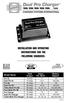 Model Name Total Output Amps Per Bank Battery System Pro XL Dual Pro XL Pro SE Dual Pro SE Three Bank Pro SE Four Bank Pro SE Pro Charger Dual Pro Charger Three Bank Pro Charger 6 amps 12 amps 10 amps
www.ringautomotive.co.uk Instructions: Retain these instructions for future reference SmartChargePro35 RSCPR35-12v, 2 / 8 / 16 / 35A
 SmartChargePro7 RSCPR7-12v, 7A SmartChargePro10 RSCPR10-12v, 10A SmartChargePro15 RSCPR15-12v, 15A SmartChargePro25 RSCPR25-12v, 2 / 6 / 12 / 25A SmartChargePro35 RSCPR35-12v, 2 / 8 / 16 / 35A SmartChargePro50
TROJAN BATTERY USER S GUIDE
 Congratulations on your purchase from Trojan Battery Company, the manufacturer of the world s most trusted deep cycle batteries. The battery you purchased was engineered by Trojan to deliver superior power,
Turbocharger system components, servicing
 21-1 Turbocharger system components, servicing Engine codes: AAZ, 1Z, AHU Observe rules of cleanliness Page 21-10 Turbocharger hoses and lines, connecting Page 21-11 WARNING! Do not re-use any fasteners
1. Connect the charger to the battery. 2. Connect the charger to the wall socket. 3. Press the MODE-button to select charging program.
 MANUAL CONGRATULATIONS to the purchase of your new professional switch mode battery charger. This charger is included in a series of professional chargers from CTEK SWEDEN AB and represents the latest
12 Volt 30 Amp Digital Solar Charge Controller Installation & Operation Manual
 12 Volt 30 Amp Digital Solar Charge Controller Installation & Operation Manual This 30Amp charge controller is designed to protect your 12Volt Lead-acid or Gel-cell battery from being overcharge by solar
FUEL CELL CAR SCIENCE KIT ASSEMBLY GUIDE. Battery operation instructions:
 FUEL CELL CAR SCIENCE KIT ASSEMBLY GUIDE Battery operation instructions: 1. The removing and inserting of batteries is to be conducted by the adults only. Unscrew the screw holding the battery pack s cover
Using electric storage batteries safely
 Using electric storage batteries safely Every year, at least 25 people are seriously injured when using batteries at work. If you or your staff work with large batteries, this booklet is for you. It gives
Solar Wind Microhydro Water Pumping Inverters Batteries Professional system design and installation
 Solar Wind Microhydro Water Pumping Inverters Batteries Professional system design and installation BATTERY CHARGING GUIDELINES FOR GLOBAL/DAVIDSON TUBULAR PLATE BATTERIES Introduction Your Global/Davidson
How To Use A Power Supply Unit (Upu)
 BRAVER UPS (Uninterruptible Power System) User s Manual Safety CAUTION! This UPS utilizes voltages that may be hazardous. Do not attempt to disassemble the unit. The unit contains no user replaceable parts.
12 Volt 30 Amp Digital Solar Charge Controller
 12 Volt 30 Amp Digital Solar Charge Controller User s Manual WARNING Read carefully and understand all INSTRUCTIONS before operating. Failure to follow the safety rules and other basic safety precautions
Ultrasonic support removal tank
 Ultrasonic support removal tank User guide and safety manual See inside for use and safety information. The Ultrasonic support removal tank automatically removes PLA support material from a printed ABS
Height w/o Terminals (in)
 EaglePicher Technologies, LLC Commercial Power P.O. Box 47 Joplin, MO 6482 (417) 623-8 [email protected] Carefree Sealed Lead Acid (SLA) MSDS EaglePicher s Carefree lead acid batteries are
OWNER S MANUAL. Model AE150/AE300/AE500 1.5AMP MULTI-USE SMART BATTERY CHARGER READ ENTIRE MANUAL BEFORE USING THIS PRODUCT
 Model AE150/AE300/AE500 MULTI-USE SMART BATTERY CHARGER Certified by Californiia BCS Regulations AE300E AE500E 5AMP MULTI-USE AUTOMOTIVE BATTERY CHARGER 3AMP MULTI-USE SMART BATTERY CHARGER AE500E 5AMP
User s Manual AURORA 1.2K/2.2K
 User s Manual AURORA 1.2K/2.2K Uninterruptible Power System Safety CAUTION This UPS utilizes voltages that may be hazardous. Do not attempt to disassemble the unit. The unit contains no user serviceable
National- Spencer Inc.
 9-27-2010 National- Spencer Inc. 19.2V HEAVY DUTY GREASE GUN PRODUCT SPECIFICATION Charger Input Power 110 VAC Battery Output Power 19.2V Battery Capacity 1500 MAH Battery Pack Charge Time 1 Hour Maximum
Height w/o Terminals (in)
 EaglePicher Technologies, LLC Commercial Power P.O. Box 47 Joplin, MO 6482 (417) 623-8 [email protected] Carefree Sealed Lead Acid (SLA) MSDS EaglePicher s Carefree lead acid batteries are
Golf Cart Maintenance Guide
 Golf Cart Maintenance Guide Watering Your Battery There are two conditions when watering can be harmful to your batteries. One is over-watering and the other is under watering. It seems like most everyone
Dear Neuton Owner, This is a helpful hint to guide you in getting the most out of your NEUTON Battery and Charger.
 Battery-Powered Mower NEUTON 24-Volt Charger Instructions Booklet Dear Neuton Owner, In order for you to get the most out of your Neuton Mower, we recently reviewed and revised our battery-charging instructions.
LEAD ACID BATTERY working LIFETIME STUDY
 LEAD ACID BATTERY working LIFETIME STUDY Valve Regulated Lead Acid (VRLA) Batteries Overview The most common type of battery used on UPS systems and for backup of telecommunications systems. VRLA batteries
SB-52. Battery Load Tester. Instruction Manual. Simplified Check Program for Charging Systems. Auto Meter Products Inc.
 Auto Meter Products Inc. 413 West Elm Street Sycamore, IL 60178 Test Equipment Toll Free (866) 883-TEST (8378) Fax (815)895-6786 www.autometer.com SB-52 Battery Load Tester Instruction Manual Simplified
TELEDYNE BATTERY PRODUCTS. INSTRUCTIONS FOR CONTINUED AIRWORTHINESS and COMPONENT MAINTENANCE MANUAL. For
 TELEDYNE BATTERY PRODUCTS INSTRUCTIONS FOR CONTINUED AIRWORTHINESS and COMPONENT MAINTENANCE MANUAL For TSO-C173/C173a Authorized (GILL ) 7000 Series LT Valve-Regulated Lead-Acid Aircraft Batteries REFER
orlando OWNER S MANUAL
 orlando OWNER S MANUAL 2 Assembling & operating manual Orlando 30 mbar - PORTABLE GAS BARBECUE 1. 2. 3. Improper installation, adjustment, alteration, service or maintenance can injury or property damage.
MOTIVE POWER BATTERY SERVICE MANUAL
 TM MOTIVE POWER BATTERY SERVICE MANUAL THEORY CONSTRUCTION MAINTENANCE SERVICE PRECAUTIONS INTRODUCTION With today s expanding industrial world, storage batteries and associated equipment must fill a vital
BC-5000 OPERATIONS MANUAL BATTERY CAPACITY TESTER COFKO LLC.
 BC-5000 BATTERY CAPACITY TESTER OPERATIONS MANUAL COFKO LLC. COPYRIGHT 2010 1 UNPACKING As you unpack your new BC-5000 battery capacity tester, inspect the tester for signs of shipping damage. If shipping
MANUAL EN 3. Continue to press the MODE-button to combine charging program with charging options.
 MANUAL CONGRATULATIONS on the purchase of your new professional switch mode battery charger and tester. This charger and tester is included in a series of professional chargers from CTEK Sweden AB and
Odyssey of the Mind Technology Fair. Simple Electronics
 Simple Electronics 1. Terms volts, amps, ohms, watts, positive, negative, AC, DC 2. Matching voltages a. Series vs. parallel 3. Battery capacity 4. Simple electronic circuit light bulb 5. Chose the right
Material Safety Data Sheet
 1. Product & Company Identification: Product: Conrad Energy Kamera-Akku Manufacturer: Conrad Electronic SE Nominal capacity: 1500 mah Nominal voltage: 7,4 V Address: Klaus-Conrad-Strasse 1, D-92240 Hirschau
Substation Battery & Charger Maintenance
 Document title AUTHORIZED COPY Substation Battery & Charger Maintenance Document number MNT-TRMX-00015 Applies to: Keywords: Transmission Operations & Planning Department Carolinas and Florida maintenance;
AUTOMOTIVE ELECTRICAL CIRCUITS AND WIRING
 AUTOMOTIVE ELECTRICAL CIRCUITS AND WIRING INTRODUCTION CHARGING CIRCUIT BATTERY CONSTRUCTION BATTERY CASE, COYER, AND CAPS. BATTERY CAPACITY BATTERY CHARGING PLACING NEW BATTERIES IN SERVICE BATTERY MAINTENANCE
Automatic taper of charge rate for superior battery life through good equalization of cells and low water use rate.
 *00151* FEATURES Automatic taper of charge rate for superior battery life through good equalization of cells and low water use rate. Silicon diodes with inherent surge protection operated at a conservative
Battery Types 7. How The Battery Works 8. Common Battery Terms 10. Battery Testing 12. Battery Maintainence 15. Battery Replacement 21
 Table of Contents Subject Page Battery Construction 4 Battery Types 7 How Works 8 Common Battery Terms 10 Battery Testing 12 Battery Maintainence 15 Battery Replacement 21 Special Battery Systems 25 Closed
Battery Backup Sump Pump System
 Battery Backup Sump Pump System Instruction Manual & Safety Warnings Table of Contents Important Safety Warnings and Instructions Electrical Precautions 1 Battery Preparation 1 Battery Precautions 1 Introduction
12V Battery Charger & Engine Starter
 OPERATOR S MANUAL 12V Battery Charger & Engine Starter Model No. 28 71222 Read and follow all Safety Rules and Operating Instructions before Every Use of this Product. SAVE THESE INSTRUCTIONS. Sears Brands
10 Year VRLA Battery Periodic Maintenance Instructions
 TECHNICAL BULLETIN 41-7546 Valve Regulated Lead Acid Battery 20 to 200 ampere-hours capacity 10 Year VRLA Battery Periodic Maintenance Instructions 41-7546/0213/CD www.cdtechno.com General Information
MANUAL. * Supply plugs may differ to suit your wall socket. EN 3. Continue to press the MODE-button to combine charging program with charging options.
 MX MANUAL CONGRATULATIONS to the purchase of your new professional switch mode battery charger. This charger is included in a series of professional chargers from CTEK SWEDEN AB and represents the latest
Material Safety Data Sheet
 Material Safety Data Sheet Conforms to ISO 11014:2009 DRAIN CLEANER 1. IDENTIFICATION OF THE SUBSTANCE/PREPARATION AND OF THE COMPANY Product name : DRAIN CLEANER Product code : KC7 Use/description of
IMPORTANT INSTRUCTIONS & OPERATING MANUAL. Houston 50 Inch Electric Wall Mounted Fireplace Black / White
 IMPORTANT INSTRUCTIONS & OPERATING MANUAL Houston 50 Inch Electric Wall Mounted Fireplace Black / White Model Number:MFE5050BK Model Number:MFE5050WH Read these instructions carefully before attempting
3 WATT LED SPOTLIGHT Model No. SLM - 3801
 3 WATT LED SPOTLIGHT Model No. SLM - 3801 OWNER'S MANUAL Customer Service Tel: 1-800-268-3319 Superex Canada Ltd, Toronto,M2H 3B8 Made in China Table of Contents A). Important Safety Instructions B). Charging
Combination Primary and Backup Sump Pump System
 Combination Primary and Backup Sump Pump System Instruction Manual & Safety Warnings Table of Contents Important Safety Warnings and Instructions Electrical precautions 1 Battery preparation 1 Battery
Battery Backup Sump Pump System
 Battery Backup Sump Pump System Instruction Manual & Safety Warnings Table of Contents Important Safety Warnings and Instructions Electrical Precautions 1 Battery Preparation 1 Battery Precautions 1 Introduction
The Charging System. Section 5. Charging System. Charging System. The charging system has two essential functions:
 The Charging System Charging System The charging system has two essential functions: Generate electrical power to run the vehicle s electrical systems Generate current to recharge the vehicle s battery
TROUBLESHOOTING GUIDE
 TROUBLESHOOTING GUIDE LESTRONIC II BATTERY CHARGER FOR MOTIVE POWER BATTERIES PLEASE SAVE THESE IMPORTANT SAFETY AND OPERATING INSTRUCTIONS For correct operation of the equipment, it is important to read
TROUBLESHOOTING, REPAIR, AND REPLACEMENT GUIDE FOR MODEL #19300 BATTERY CHARGER PLEASE SAVE THESE IMPORTANT SAFETY INSTRUCTIONS
 *35827* TROUBLESHOOTING, REPAIR, AND REPLACEMENT GUIDE FOR MODEL #19300 BATTERY CHARGER PLEASE SAVE THESE IMPORTANT SAFETY INSTRUCTIONS For correct operation of the equipment, it is important to read and
Instruction Manual. Window Wiper AFW900. (Read carefully before use)
 Instruction Manual Window Wiper AFW900 (Read carefully before use) When using electrical appliances, basic precautions should always be followed, including the fact READ ALL INSTRUCTIONS IN THIS MANUAL
Technical Manual. Powersports Batteries
 Technical Manual Powersports Batteries Consumer Products Yuasa 12V, 1 AMP Automatic Battery Charger & Maintainer Part No. YUA1201000 3 stage charge cycle Easy-to-use, simply attach to battery & plug it
Combination Primary and Backup Sump Pump System
 Combination Primary and Backup Sump Pump System Instruction Manual & Safety Warnings Table of Contents Important Safety Warnings and Instructions Electrical precautions 1 Battery preparation 1 Battery
Volkswagen Golf 5 2004-> VW Rabbit GTI 2006->
 Стр. 1 из 24 Volkswagen Golf 5 2004-> VW Rabbit GTI 2006-> 19-1 Cooling system components Warning! Hot steam may escape when opening expansion tank. Wear protective goggles and protective clothing to prevent
Portable Air Conditioner
 Portable Air Conditioner Owner's Manual Model:3 in 1 12,000 Btu/h Series 3 Please read this owner s manual carefully before operation and retain it for future reference. CONTENTS 1. SUMMARY...1 2. PORTABLE
LABORATORY SAFETY INSPECTION CHECKLIST
 LABORATORY SAFETY INSPECTION CHECKLIST As part of EH&S's laboratory safety survey program, we have compiled a list of the most common safety problems. This is not a list of every possible hazard, but can
INSTRUCTION MANUAL FOR RECREATIONAL REFRIGERATOR/FREEZER MODEL
 INSTRUCTION MANUAL FOR RECREATIONAL REFRIGERATOR/FREEZER MODEL 15-LITER, 20-LITER, 35-LITER, 45-LITER, 60-LITER & 100-LITER SECTION 1 Basic Operation SECTION 2 Cleaning and Storing SECTION 3 Basic Trouble
TruPower-Portable-500W. Solar Starter kit
 TruPower-Portable-500W Solar Starter kit This Solar starter kit is an easy to use solar power supply system that is the complete solution for all your solar power needs. It is a solar generator that converts
I. R. D. T INSTITUTE OF RESEARCH DEVELOPMENT AND TRAINING
 I. R. D. T INSTITUTE OF RESEARCH DEVELOPMENT AND TRAINING SYLLABUS SIX MONTHS FULL TIME Repair and Maintenance of Electrical gadgets EFFECTIVE FROM:- UNDER DEVELOPMENT Prepared By: Curriculum Development
Install Guide CT100. Caution. Caution ENGLISH. disconnect the power supply before beginning work.
 Install Guide CT100 PG 1 Caution top cover Your thermostat is a precise instrument, handle it with care. Turn off electricity to the system before installing or servicing thermostat or any part of the
A/C-D/C Battery Backup Sump Pump System
 A/C-D/C Battery Backup Sump Pump System Instruction Manual & Safety Warnings Table of Contents Important Safety Warnings and Instructions Electrical precautions 1 Battery preparation 1 Battery precautions
http://waterheatertimer.org/troubleshoot-rheem-tankless-water-heater.html
 http://waterheatertimer.org/troubleshoot-rheem-tankless-water-heater.html TECHNICAL SERVICE DEPARTMENT Removal, Cleaning, & Reinstallation of the Burner Assembly For models 74 & GT199 Required tools -
LIST OF CONTENTS STARTING DEVICES. Bull Starter 12V Bull Starter 12/24 V Genesis EP16 Memory Saver P 3 Professional Booster Cables for Car and Truck
 LIST OF CONTENTS STARTING DEVICES Bull Starter 12V Bull Starter 12/24 V Genesis EP16 Memory Saver P 3 Professional Booster Cables for Car and Truck BULL STARTER 12 V The Banner booster for professionals!
ENGINE COOLING SYSTEM
 ENGINE COOLING SYSTEM 1988 Toyota Celica 1987-88 TOYOTA Engine Cooling Systems Celica DESCRIPTION The basic liquid cooling system consists of a radiator, water pump, thermostat, cooling fan, pressure cap,
Emergency Response Guide
 Emergency Response Guide Honda Fuel Cell Vehicle Prepared for Fire Service, Law Enforcement, Emergency Medical, and Professional Towing Personnel by American Honda Motor Co., Inc. Contents Key Components...2
Welcome to the safe@work Hairdressing Module
 Welcome to the safe@work Hairdressing Module Have you read the General Module, completed the test and printed your safe@work General Award of Attainment? The Hairdressing Module should be done AFTER the
TECHNICAL SERVICE DEPARTMENT Technical Service Bulletin 1-800-432-8373. Anode Rods, Cathodic Protection and the Porcelain (glass) Lining
 Corrosion can be defined as the destructive attack of a metal by an electrochemical reaction with its environment. Steel exposed to moisture and oxygen will rust and corrode. Corrosion is defined as the
Cooling system components, removing and installing
 Page 1 of 34 19-1 Cooling system components, removing and installing WARNING! The cooling system is pressurized when the engine is warm. When opening the expansion tank, wear gloves and other appropriate
EVANS ELECTRONIC TEMPERATURE CONTROL TROUBLESHOOTING GUIDE for systems equipped with electric coolant valve and external PC board.
 EVANS ELECTRONIC TEMPERATURE CONTROL TROUBLESHOOTING GUIDE for systems equipped with electric coolant valve and external PC board. This Troubleshooting Guide covers the electric coolant valve and control
LS1024B / LS2024B/ LS3024B. Solar Charge Controller USER MANUAL
 EPSOLAR LS1024B / LS2024B/ LS3024B Solar Charge Controller USER MANUAL Thank you very much for selecting our product! This manual offers important information and suggestions with respect to installation,
SPILLS & SPILL KITS. Spills -General Guidelines:
 Spills -General Guidelines: If handled properly, a spill may be nothing more than a nuisance. If handled improperly, a spill can seriously disrupt your activities and the work of your colleagues. At worst,
STEALTH I DC MANUAL TECH SUPPORT 1-888-588-4506.WEB www.stealth1charging.com BLACK UNIT IS 24/36 ONLY
 STEALTH I DC MANUAL TECH SUPPORT 1-888-588-4506.WEB www.stealth1charging.com BLACK UNIT IS 24/36 ONLY PLEASE READ AND UNDERSTAND YOUR NEW PRODUCT IMPORTANT MESSAGE: Before installing your newly purchased
Cooling system components, removing and installing
 Volkswagen Touareg 3.2 - Cooling system components, removing and installing Page 1 / 24 19-1 Cooling system components, removing and installing Warning! Hot steam may escape when opening expansion tank.
Digital echo-charge. Owner s Manual. Xantrex Digital echo-charge Battery Charger
 Digital echo-charge Owner s Manual Xantrex Digital echo-charge Battery Charger Thank you for purchasing a Xantrex Digital echo-charge. Xantrex Technology Inc. takes pride in manufacturing quality products
BATTERY CHARGER OPERATOR'S MANUAL
 ASSOCIATED BATTERY CHARGER OPERATOR'S MANUAL IMPORTANT SAFETY INSTRUCTIONS 1. SAVE THESE INSTRUCTIONS. This manual contains important safety and operating instructions for models 9006, 9010, 9014, 9050,
USER S MANUAL. MaxPower 400-600 UPS. Uninterruptible Power System 28-2MAXPO0018
 USER S MANUAL MaxPower 400-600 UPS Uninterruptible Power System 28-2MAXPO0018 IMPORTANT SAFETY INSTRUCTIONS SAVE THESE INSTRUCTIONS This manual contains important instructions for models MaxPower 400 and
Pro Series C11. Combination Primary and Backup Sump Pump System. Instruction Manual & Safety Warnings. Table of Contents
 Pro Series C11 Combination Primary and Backup Sump Pump System Instruction Manual & Safety Warnings Table of Contents Important Safety Warnings and Instructions Electrical precautions 1 Battery preparation
UNIT 3 AUTOMOBILE ELECTRICAL SYSTEMS
 UNIT 3 AUTOMOBILE ELECTRICAL SYSTEMS Automobile Electrical Structure 3.1 Introduction Objectives 3.2 Ignition System 3.3 Requirement of an Ignition System 3.4 Types of Ignition 3.4.1 Battery or Coil Ignition
READ THE ENTIRE MANUAL BEFORE USING THIS PRODUCT. FAILURE TO DO SO COULD RESULT IN SERIOUS INJURY OR DEATH.
 OWNER S MANUAL Model OMAX-6A-1B Single Bank Charger With Quick Disconnect Model OMAX-12A-1B Single Bank Charger Model OMAX-25A-1B Single Bank Charger Model OMAX-50A-1B Single Bank Charger Model OMAX-40AS-3B
Use and Care Manual. Model CPA12KH AIR CONDITIONER
 Use and Care Manual Model CPA12KH AIR CONDITIONER Introduction Thank you for choosing this air conditioner to provide you and your family with all of the "Home Comfort" requirements for your home, cottage
STORE HAZARDOUS SUBSTANCES SAFELY. incompatibles gas cylinders
 STORE HAZARDOUS SUBSTANCES SAFELY Suitable containers incompatibles gas cylinders Oxy-Acetylene welding flammable substances 35 36 STORE HAZARDOUS SUBSTANCES SAFELY STORE HAZARDOUS SUBSTANCES SAFELY Storing
PBX Series Quick Fit Connector Bimetallic Steam Traps
 6262100/6 IM-P626-01 ST Issue 6 PBX Series Quick Fit Connector Bimetallic Steam Traps Installation and Maintenance Instructions 1. Safety information 2. General product information 3. Installation 4. Commissioning
TOYOTA STARTING SYSTEMS. General
 General Starting the engine is possibly the most important function of the vehicle's electrical system. The starting system performs this function by changing electrical energy from the battery to mechanical
LESTRONIC DV AUTOMATIC 12 OR 24 VOLT DUAL OUTPUT DUAL MODE BATTERY CHARGER MODEL 16350 TYPE 12/24EL40-10ET
 LESTRONIC DV AUTOMATIC 12 OR 2 VOLT DUAL OUTPUT DUAL MODE BATTERY CHARGER MODEL 16350 TYPE 12/2EL0-10ET PLEASE SAVE THESE IMPORTANT SAFETY AND OPERATING INSTRUCTIONS For correct operation of the equipment,
Battery Handbook. By: RON SMITH
 Battery Handbook By: RON SMITH Information compiled from the Battery Charger Handbook and the Battery Handbook written by Alvin G. Graham, Chief Engineer, Ratelco Electronics Inc. Introduction The purpose
Sport Ice Elektro 124
 Sport Ice Elektro 124 Operation Manual 2007/4 V2.1 Introduction The Sport Ice Elektro 124 is an ice resurfacing machine designed to be used on small ice surfaces. The machine has been designed to produce