
LeSSon 2 Food Chains and Food Webs in an ecosystem
|
|
|
- Regina Lambert
- 10 years ago
- Views:
Transcription
1 LeSSon 2 Food Chains and Food Webs in an ecosystem G4 U3 L2 Important Note to the Teacher: This lesson and the next lesson involve observation and experimentation with guppies, which are vertebrates. Fish are an important part of any aquatic ecosystem, thus the guppies are included in this activity, but the guppies are an optional part of your aquarium. While living organisms provide opportunities for students to develop inquiry skills such as observation and comparison, there are also responsibilities for appropriate and humane care of the fish. When bringing animals into the classroom, a conscious effort must be made to provide guidance for students to develop an understanding of and value for life and living organisms. In addition, if you choose to use guppies or any organism, they are never to be released in our streams or rivers as many of the items in the aquarium are actually invasive species to Hawaiian waters. The guppies must be provided with appropriate daily care so that they remain healthy during the course of the experiment and should not be subjected to pain or discomfort. Students need to be supervised by a teacher that understands the safe and responsible use of animals in the classroom and who understands and follows Hawai i Department of Education policies and other relevant regulations. In this lesson, students will only be observing the classroom bottle aquarium. In the next lesson, they will conduct a class experiment with the bottle aquariums. Lastly, teachers must develop and implement a plan for the future care of the guppies following the study. (Adapted from the National Science Teacher Association s 2005 Position Paper: Responsible Use of Live Animals and Dissection in the Science Classroom ) Proper care of guppies includes: 1. Feeding them daily, i.e. making sure there is a source of food such as elodea, or providing fish food flakes, 2. The temperature of the water must be between 72 and 82 F., 3. Change approximately 1/3 of the water every 1 to 2 weeks, or as needed to keep the water in good condition, 4. Create a happy or natural environment by adding things like gravel and plants to the tank. Care of the guppies must be provided daily, including weekends, holidays, and other times school is not in session. When the experiment is over you must continue care of the guppies in the classroom or implement another plan for the continued proper care of the guppies, as they cannot be re-introduced into Hawai i s environment. Please see for guidance on aquarium disposal. For further information regarding current policies and regulations in Hawai i contact the Science Section of the Instructional Services Branch of the Office of Curriculum, Instruction, and Student Support at the Hawai i Department of Education. 1

2 G4 U3 L2 Pre-Lesson Preparation Complete a bottle aquarium as a model for the students. Make this a week or so in advance of showing it to the students. The students will make their own bottle aquarium in the next lesson. Materials: - Two, clear two-liter soda bottles (another transparent plastic container may be substituted) You will need 2 bottles to make one bottle aquarium. This bottle aquarium will be used for observation and possibly as the control for the class experiment in the next lesson. - Water that has sat out for at least 24 hours (This is important to allow chlorine in tap water to settle or evaporate) - Light source (do not put the bottle aquarium in direct sunlight as it will overheat the water.) - Guppies (enough for at least one guppy per bottle, but recommend additional guppies if that is the variable that is going to be changed) - Elodea plants (also called anacharis and can be purchased at pet stores) - Duckweed - Fresh water snails - Gravel, pre-rinsed, so that there is no mud or sand, but enough to fill the bottom of the bottles and hold the Elodea plants in place - Thermometers - Scissors - Waterproof marker - Optional: aquarium aerator, with tubing and airstone, timers, rulers. Instructions for Assembling the Bottle Aquarium: IMPORTANT: It s important to know where this lesson leads. Go to Lesson 3 and read the Lesson at a Glance and the Teacher Prep about the Bottle Aquarium. You will put the classroom bottle aquarium together for this lesson. Students can start observing the bottle aquarium mini ecosystem to enhance their understanding of the food chain/webs. This aquarium may serve as the control for the class experiment in the next lesson, depending on what the class decides to test. You will need 2 2-Liter bottles per class. Rinse and cut the bottles for the aquarium. Make one aquarium per class. 1) Rinse each two-liter soda bottle with clear water to get rid of any residue. Do not use soap! 2) Then cut off the bottle top 1 to 2 cm above the shoulder where the bottle tapers and discard. 3) Cut off the base of the other bottle, and score it with holes (this will be the cover). Repeat the process for as many bottle aquariums as you see fit for the number of classes you have. 4) For the bottle aquarium, you may want to add gravel, elodea, duckweed, a snail, and 1 or 2 guppies. You may add other small plants or creatures that you think would be a good fit for the ecosystem. Keep in mind this is a very small aquarium. Prepare to discuss the ethical treatment of living things with the students in regards to the bottle aquarium. As guppies are vertebrates, extra caution and care must be afforded them, if you choose to use them. Please refer to the National Science Teachers Association Position Statement: Responsible Use of Live Animals and Dissection in the Science Classroom online at Also, check out the Institute for Laboratory Animal Research (ILAR) Principles and Guidelines for the Use of Animals in Precollege Education at Additionally, you may want to consult Exploring Safely by Terry Kwan and Juliana Texly. You may, also, want to check with the Education Specialist for Science in the Office of Curriculum, Instruction and Student Support if you have questions about this. Please see for guidance on aquarium disposal. 2

3 Lesson at a Glance Scientists study interactions among plants and animals by observing organisms in the field and in aquariums set up as mini-ecosystems that simulate the natural environment. In this lesson, students will be introduced to the bottle aquarium and they will observe it daily as a class. Students learn new vocabulary terms about feeding relationships and marine environments that they can apply to their bottle aquarium. Each student creates a food chain for the ecosystem in their bottle aquarium, and then combines his/her food chain with the food chains of fellow students to create a food web for an ecosystem. Lesson Duration Four 45-minute periods Essential Question(s) What role do plants and animals have in an ecosystem? How are plants important to food chains and webs? Key Concepts Energy is produced (made) by the producers, and then flows through the consumers. Many different food chains in an ecosystem will create a food web. Instructional Objectives I can create a food chain for a marine organism. I can create a food web for an ecosystem using different food chains. I can identify the producers and the consumers in a food web/ecosystem. I can identify the important information in a text, and use that information to create my food chain. Assessment Tools Benchmark Rubric: Topic Cycles of Matter and Energy Benchmark SC Rubric Advanced Compare the Proficient Explain how both Partially Proficient Describe how simple Novice characteristics of simple food chains food chains or food simple food chains with and food webs can be webs can be traced those of food webs traced back to plants back to plants Explain how simple food chains and food webs can be traced back to plants Topic Unity and Diversity Benchmark SC Rubric Advanced Analyze how the Proficient Describe the roles of Partially Proficient Identify a few Novice roles of different various organisms in organisms and their organisms affect their the same environment role in the same interaction in the same environment environment Related HCPSIII Benchmark(s): Recognize that simple food chains or food webs can be traced back to plants Describe the roles of various organisms in the same environment Science SC Describe the roles of various organisms in the same environment. Science SC Explain how simple food chains and food webs can be traced back to plants. Language Arts LA Summarize main points found in informational texts. Language Arts LA Give a short, informal presentation to inform or persuade. Recall, with assistance, very few organisms and their role in the same environment G4 U3 L2 3

4 G4 U3 L2 Topic Constructing Meaning Summarize main points found in informational Benchmark LA texts Rubric Advanced Proficient Partially Proficient Novice Summarize the main Summarize the main Produce a summary Summarize information points and describe their connection to the main idea or focus in informational texts points found in informational texts that mixes insignificant not necessary to points with main points understanding the main points of informational texts, or repeat original text rather than summarize Topic Discussion and Presentation Benchmark LA Rubric Advanced Give creative, short, Proficient Give short, informal Partially Proficient Give short, informal Novice highly effective presentations to inform presentations that are informal presentations or persuade somewhat informative to inform or persuade or persuasive Assessment/Evidence Pieces Give short, informal presentations to inform or persuade Give short, informal presentations that do not inform or persuade Lesson Foodwebs created by student groups Materials Needed Teacher Class Group Bottle aquarium (made in Pre-Lesson Preparation) Pictures of the ecosystems found Access to research materials (books and the Internet) Pen and paper to take notes and draw the food chains Chart paper to combine food chains into a web. Try using different colored Post-it notes for each food chain, and then the different colors can be joined to make the food webs. This also allows for easier rearrangements as the food web grows. Instructional Resources PowerPoint Presentation: What is an Ecosystem? PowerPoint Presentations: Invasive Species Supplemental Resource: Aquatic Food Chains Interactive Game Suggested reading for the safe use of animals in the classroom: Kwan, T., and J. Texley. National Science Teachers Association Exploring safely; A guide for elementary teachers. Arlington, VA: NSTA Press. 4

5 Student Vocabulary Words abiotic: non-living factors in the environment, including, light, temperature, moisture and air. biotic: of life or living organisms. carnivore: organisms that eat other animals. consumers: organisms that must find and eat food and cannot make it themselves. decomposers: organisms that return nutrients into ecological cycles by breaking down dead organic material. ecosystem: all the organisms in a given area, as well as the abiotic factors with which they interact, a community, and its physical environment. herbivore: organisms that eat plant material. keystone species: a species whose impacts on its community or ecosystem are much larger and more influential than would be expected from mere abundance. omnivore: organisms that eat both plant and animal material. predation: the killing and consumption of living organisms by other living organisms. producers: a green plant or plant-like organism that can make food out of carbon dioxide, water and sunlight. Lesson Plan Lesson Preparation Review the Science Background provided in the unit overview. Review the interactive piece Aquatic Food Chains to be completed at the end of Step III. Preview and make arrangements to project the three PowerPoint Presentations. Assemble materials needed and arrange computer access for the student research process. Place the pre-made bottle aquarium in an area students can observe. G4 U3 L2 I. How do scientists study interactions among plants and animals in the world of water? A. Show and discuss the PowerPoint What is an Ecosystem? Discuss with the students their ideas on how scientists learn about the interactions among plants and animals that live in the ocean, or in a freshwater lake, pond, stream, or river. 1) Ask students to tell you what they know about how scientists study plants and animals. Ask whether scientists carry out most, or even all, of their studies about plants and animals in their natural habitats (perhaps scuba diving, or viewed from a submersible, or otherwise in fi eld situations)? How often can scientists actually study plants and animals underwater? What expenses and risks might be involved? Tell the students that they will be using a model to perform research. 2) Establish that scientists also use aquariums, in which they set up a model of a natural ecosystem. Refer to the classroom freshwater aquarium that you have already set up, containing guppies (optional), snails, elodea, and duckweed. 3) Review, or teach, that the aquarium is a model of a small ecosystem that includes non-living physical (abiotic) factors, as well as living plants and animals, or biotic factors. Examples of physical factors include: a. Whether the aquarium contains freshwater or seawater. b. The temperature of the water. c. The amount of sunlight or artificial light. d. Whether there is gravel or sand, or no bottom material (substrate). e. Amount of oxygen in the water. (Note to teacher: These are all variables that can be manipulated in an experimental design to test for an effect, if there is no pain or discomfort caused to the animals.) 4) Optional: Ask students their experiences with aquaria, either public aquariums or a home aquarium. 5

6 G4 U3 L2 B. Discuss the ethical treatment of living things with the students. C. Begin observing the mini ecosystem daily with the class. The students should make observations for a few minutes every day over a week or so. You can develop an observation record on a piece of chart paper and post it on a wall in the class. For example: Recorder Time/Date What we observed II. D. Ask open-ended questions about the bottle aquarium to stimulate students thoughts in developing questions for the investigation. Using a KWL chart, record what students know (under K), and their questions about organisms and interactions (under W). You will come back to this chart in Lesson 3. Feeding classification and roles A. Bring a healthy snack to get the class attention. (Grapes are a great snack to share.) Tell students to take a grape and eat it. Ask students: 1) Why do we eat things? 2) What does that grape give you? B. Ask every student to think of an animal and what it eats. Students share their ideas, and create a list on the board. The following is an example of what the chart might look like: Animal/ Organism Diet What does it eat? What does its prey eat? Lion (2nd consumer) Gazelle (1st consumer) Grass (producer) Snake Mice Seeds Toad Grasshopper Grass C. Explain that students will learn and use new vocabulary words to help them better understand the relationships in the bottle ecosystem. Introduce the three terms: 1) Carnivore: an animal that eats other animals, such as foxes, frogs, snakes, hawks, and spiders 2) Herbivore: an animal that eats plants, such as mice, rabbits, deer, beavers, moose, cows, sheep, and goats 3) Omnivore: an animal that eats both plants and animals, such as bears, turtles, monkeys, or squirrels D. Add a column to the chart on the board. Ask students to apply the terms, Carnivore, Herbivore, and Omnivore to the organisms they chose: Animal/ Organism Diet What does it eat? What does its prey eat? Classification (Omnivore, Carnivore, or Herbivore) Lion (2nd consumer) Gazelle (1st consumer) Grass (producer) Carnivore Snake Mice Seeds Carnivore Toad Grasshopper Grass Omnivore 6

7 G4 U3 L2 E. Have students add creatures in the bottle aquarium to the chart. Then ask the following questions: 1) How would you classify the organisms in our bottle aquarium? a. Guppies -? (omnivores, students will probably think they are herbivores unless they observe them eating the snails or a dead guppy.) b. Snails -? (herbivores) 2) How would you classify the elodea and duckweed? 3) Do they fit into one of our classifications? 4) Do the elodea and duckweed eat? F. Introduce that organisms can also be categorized as producers, consumers, and decomposers. Plants and plant-like organisms (that are green and contain chlorophyll) are producers that create their own food through photosynthesis. 1) Animals are consumers that depend on other organisms for food/energy. 2) Decomposers include animals that eat and break down dead or decaying material into simpler substances. Ask students where the decomposers are in the aquarium. (in the gravel) G. Add a column to the chart as seen here: Animal Diet What does it eat? What does its prey eat? Classification (Omnivore, Carnivore, or Herbivore) Lion (2nd consumer) Gazelle (1st consumer) Grass (producer) Carnivore Snake Mice Seeds Carnivore Toad Grasshopper Grass Omnivore Guppy Role (producer, consumer, decomposer) II. 1) Ask students to fill in the Role column for all organisms. H. Ask students if any of the above terms describe the elodea and duckweed. Connect Food Chains to the Bottle Aquarium A. Based on their daily observations of their bottle aquarium, ask the students to create one or more food chains for the animals in their mini-ecosystem. B. Once the food chains are complete, they will create a food web for their bottle aquarium ecosystem. Using their food web, ask them do all the organisms in our aquarium have the food that they need to survive? Students will share their answers and explanations. They can t really have a strong food web with only four organisms. Have the class share their thoughts of what would happen if a top predator was introduced, such as a crayfish, goldfish, or African frogs. C. Optional: This is a good place to bring up, what happens when invasive species are introduced in the food chain. How do invasive species alter food chains and food webs? Show the PowerPoint Invasive Species. III. Drawing a Food Chain A. Have students draw simple food chains to show what the fish and the snail eat. 1) The food chain that they develop needs to be based on observed evidence. Students should refer back to their observations on the chart paper on the wall for evidence of their findings. 2) Be sure that the food chains the students create start with a plant. Two plants are visible in the aquarium: elodea and duckweeds. Have they seen either the fish or the snail eat either plant? Is 7

8 G4 U3 L2 there evidence of any other plant life in the aquarium? (Look closely because it is possible that microscopic freshwater algae may have formed as well, and if it becomes dense enough may appear either as a greenish film, or perhaps a greenish hue in the water.) 3) Reinforce that simple food chains can be traced back to plants. In other words, plants can produce their own food, but animals cannot. Animals are dependent on plants for food. If time permits allow students the opportunity to practice creating food chains using the interactive game Aquatic Food Chains. IV. Sample Food Webs A. Explain that an ecosystem is composed of many different plants and animals. When the food chains for these plants and animals are combined, they become a food web. B. Divide the class into three different ecosystems: ocean, stream and land. Show pictures of the different ecosystems and provide the students with a list of animals for each of the ecosystems. Add to the suggested list below. 1) Ocean (coral reef): coral, shark, sea birds, turtles, sting ray, seaweed, squid, Portuguese-Man-O- War, parrotfish, octopus, cone snails, eels, butterfly fish. 2) Wetlands: snail, crayfish, prawn, o opu, shrimp ( opae), tilapia, swordtail, guppies, elodea, duckweed. 3) Grasslands: insects, birds, mongoose, rats, cats, snakes, cattle, goats, grasses and shrubs, C. Decide who, within each group/ecosystem, will look up which animal to learn what it eats and to draw a food chain that starts with a plant and ends with their animal. Who in the group will study the plants in the ecosystem and how they obtain energy from the sun and what animals feed on them. D. Allow time for students to use books or the Internet to look up information. E. Ask each group to combine their food chains to draw a food web on chart paper. Time permitting, they may illustrate the organisms. F. Have groups describe and share their food webs with the class to address benchmark LA G. Post the charts. Extended Activities 1. Make flash cards of vocabulary words using the students own words with graphic representations. 2. Do a special lesson on the Ahupua a, and invite a kupuna, makua, or parent to give a talk about the Hawaiians use of wetland areas. 3. Have students play another game that will reinforce their understanding of Hawai i s coastal marsh food web provided in the Moanalua Gardens Ohia Project Curriculum. Preview the Marsh Connections lesson. For additional information, visit 4. Technology Integration Ideas Sign up for time in your school computer lab, or facilitate use of your classroom computers to allow students to read additional information about the topics introduced in Lesson 2, such as Hawai i s coastal marsh organisms and wetlands specific to Hawai i. The following websites could be used as resources for this exercise: - Lāi e Wetlands at Nu u Coastal Wetlands Refuge at CWGrant.pdf - Kahana Ponds, Maui, at Hanalei coastal wetlands, Kaua i, at 8

Lesson Plan Two - Ecosystems
 Lesson Plan Two - Ecosystems Summary Students discuss what living things need to survive. They identify the abiotic and biotic components of an ecosystem and describe the roles and interactions of producers
This hands-on activity incorporates observing, classifying, predicting, sequencing, formulating models, and drawing conclusions.
 SCIENCE Science and the Environment 4 th Grade FOOD CHAINS Overview: All organisms, or living things, depend on other organisms for nutrients. The movement of nutrients through an environment is visualized
NOTE TO TEACHER: It is appropriate to introduce the mitochondria (where energy is made) as a major structure common to all cells.
 5.2.1 Recall the cell as the smallest unit of life and identify its major structures (including cell membrane, cytoplasm, nucleus, and vacuole). Taxonomy level: 1.1 and 1.2-A Remember Factual Knowledge
www.irishseedsavers.ie Natural surface water on earth includes lakes, ponds, streams, rivers, estuaries, seas and oceans.
 www.irishseedsavers.ie POND LIFE FACT SHEET Natural surface water on earth includes lakes, ponds, streams, rivers, estuaries, seas and oceans. A pond is a small body of fresh water shallow enough for sunlight
Lesson 1. Objectives: ocus: Subjects:
 Lesson 1 The Web of Life Objectives: 1. Understand the concept of an ecosystem. 2. Understand the interdependence of members of an ecosystem. Subjects: 1. Ecology 2. Language 3. Art MATERIALS: Copies of
Prairie Food Chains & Webs Producers, Consumers & Decomposers
 Kansas Prairies s, s & Decomposers Science, Life Science, Reading, Math Materials Vocabulary worksheet Food Chain worksheet Overview To explore the organisms found on a prairie and identify the various
Ecology 1 Star. 1. Missing from the diagram of this ecosystem are the
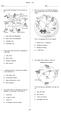 Name: ate: 1. Missing from the diagram of this ecosystem are the 5. ase your answer(s) to the following question(s) on the diagram below and on your knowledge of biology.. biotic factors and decomposers.
Prairie Food Chains & Webs Producers, Consumers, & Decomposers
 Kansas Prairies Prairie Food Chains & Webs Producers, s, & Decomposers Life Science, Math, Reading, Science Materials Student Worksheet A: Vocabulary Student Worksheet B: Food Chain Overview To explore
Food Web Crasher. An introduction to food chains and food webs
 Food Web Crasher An introduction to food chains and food webs Activity Students create a physical food web and watch what happens when an aquatic nuisance species is introduced into the ecosystem. Grade
food webs reflect look out! what do you think?
 reflect Imagine for a moment that you stay after school one day to clean up the classroom. While cleaning, you move some plants away from the sunny windows. A week later, you remember to move the plants
Food Webs and Food Chains Grade Five
 Ohio Standards Connection: Life Sciences Benchmark B Analyze plant and animal structures and functions needed for survival and describe the flow of energy through a system that all organisms use to survive.
Producers, Consumers, and Food Webs
 reflect Think about the last meal you ate. Where did the food come from? Maybe it came from the grocery store or a restaurant. Maybe it even came from your backyard. Now think of a lion living on the plains
food chains reflect How are these organisms important to one another? organism: a living thing
 reflect Different plants and animals live together. Look at the picture of the garden. What organisms live there? Grass, trees, bugs, and birds live there. Fish and frogs live there, too. Can you think
Food Chains (and webs) Flow of energy through an ecosystem Grade 5 Austin Carter, Dale Rucker, Allison Hursey
 Food Chains (and webs) Flow of energy through an ecosystem Grade 5 Austin Carter, Dale Rucker, Allison Hursey References: Columbus Public Schools Curriculum Guide- Grade 5 GK-12 Biological Science Lesson
Introduction to Ecology
 Introduction to Ecology Ecology is the scientific study of the interactions between living organisms and their environment. Scientists who study ecology are called ecologists. Because our planet has many
You are What You Eat
 You are What You Eat By: Tanja Schollmeier, marine biologist, School of Fisheries and Ocean Sciences, University of Alaska Fairbanks Grade level: 6-8th grade Context: This lesson emphasizes human impacts
Energy Flow. Materials Per Group (groups of 4)
 Energy Flow Lesson Concept Link Energy flows through a food chain. In the previous lesson, students reviewed the basic components of a food chain: producer, consumer, decomposer and the concept that matter
Food Chains and Food Webs
 Program Support Notes by: Spiro Liacos B.Ed. Produced by: VEA Pty Ltd Commissioning Editor: Sandra Frerichs B.Ed, M.Ed. Executive Producers: Edwina Baden-Powell B.A, CVP. Sandra Frerichs B.Ed, M.Ed. You
a. a population. c. an ecosystem. b. a community. d. a species.
 Name: practice test Score: 0 / 35 (0%) [12 subjective questions not graded] The Biosphere Practice Test Multiple Choice Identify the letter of the choice that best completes the statement or answers the
Pond Water Web Lesson Plan
 Pond Water Web Lesson Plan Purpose: As a result of this lesson, students will become familiar with common organisms found in a pond and discover their importance in a balanced aquatic habitat as they create
FOOD CHAINS, FOOD WEBS AND ECOLOGICAL PYRAMIDS
 FOOD CHAINS, FOOD WEBS AND ECOLOGICAL PYRAMIDS SECTION 1 In an ecosystem, plants capture the sun's energy and use it to convert inorganic compounds into energy-rich organic compounds. This process of using
Pond Vocabulary Words and Meanings
 Pond Vocabulary Words and Meanings Adapt: to adjust to a use or situation Aquatic: from or in the water Bacteria: tiny organisms, too small to be seen with the naked eye Carnivore: an animal that eats
The animals at higher levels are more competitive, so fewer animals survive. B.
 Energy Flow in Ecosystems 1. The diagram below shows an energy pyramid. Which of the following best explains why the number of organisms at each level decreases while moving up the energy pyramid? The
6. Which of the following is not a basic need off all animals a. food b. *friends c. water d. protection from predators. NAME SOL 4.
 NAME SOL 4.5 REVIEW - Revised Habitats, Niches and Adaptations POPULATION A group of the same species living in the same place at the same time. COMMUNITY-- All of the populations that live in the same
Creating Chains and Webs to Model Ecological Relationships
 Creating Chains and Webs to Model Ecological Relationships Overview This hands-on activity supports the HHMI short film The Guide and the 2015 Holiday Lectures on Science: Patterns and Processes in Ecology.
Key Idea 2: Ecosystems
 Key Idea 2: Ecosystems Ecosystems An ecosystem is a living community of plants and animals sharing an environment with non-living elements such as climate and soil. An example of a small scale ecosystem
Section 3: Trophic Structures
 Marine Conservation Science and Policy Service learning Program Trophic Structure refers to the way in which organisms utilize food resources and hence where energy transfer occurs within an ecosystem.
2. What kind of energy is stored in food? A. chemical energy B. heat energy C. kinetic energy D. light energy
 Assessment Bank Matter and Energy in Living Things SC.8.L.18.4 1. What is energy? A. anything that takes up space B. anything that has mass C. the ability to conduct current D. the ability to do work 2.
13.1. Principles of Ecology CHAPTER 13. Ecology is the study of the relationships among organisms and their environment.
 SECTION 13.1 KEY CONCEPT ECOLOGISTS STUDY RELATIONSHIPS Study Guide Ecology is the study of the relationships among organisms and their environment. VOCABULARY ecology community MAIN IDEA: Ecologists study
Grassland Food Webs: Teacher Notes
 Grassland Food Webs: Teacher Notes Alan Henderson ecosystem Objectives After completing this activity students will be able to: Create a food web and identify producers and consumers. Assign organisms
5.1 Ecosystems, Energy, and Nutrients
 CHAPTER 5 ECOSYSTEMS 5.1 Ecosystems, Energy, and Nutrients Did anyone ever ask you the question: Where do you get your energy? Energy enters our world from the Sun but how does the Sun s energy become
What s For Lunch? Exploring the Role of GloFish in Its Ecosystem, Food Chain and Energy Pyramid
 Name Period Date What s For Lunch? Exploring the Role of GloFish in Its Ecosystem, Food Chain and Energy Pyramid Objective The learner will define terms related to relationships and energy transfer in
FOOD CHAINS AND FOOD WEBS PHYTOPLANKTON ZOOPLANKTON SILVERSIDE BLUEFISH
 FOOD CHAINS AND FOOD WEBS Food Chains All living organisms (plants and animals) must eat some type of food for survival. Plants make their own food through a process called photosynthesis. Using the energy
Life Science Study Guide. Environment Everything that surrounds and influences (has an effect on) an organism.
 Life Science Study Guide Environment Everything that surrounds and influences (has an effect on) an organism. Organism Any living thing, including plants and animals. Environmental Factor An environmental
Materials Activity 1: Group Discussion Series Poster Board for Driving Question Board KWL worksheet Scientific Method Chart
 Dry Forest Concepts Scientific data collect ion and presention. HCPS III Benchmarks SC6.1.1, SC6.1.2, SC6.2.1 MA6.9.1, MA6.11.1, MA6.12.1, MA6.13.1 LA6.1.1, LA6.4.1, LA6.4.2, LA6.5.2, LA6.6.1, LA6.6.2,
ENERGY FLOW THROUGH LIVING SYSTEMS
 reflect Enter the word domino as a search term on the Internet; you can fi nd some amazing domino runs. You can make your own by setting up a series of dominoes in a line. When you push the fi rst domino
Ecosystems and Food Webs
 Ecosystems and Food Webs How do AIS affect our lakes? Background Information All things on the planet both living and nonliving interact. An Ecosystem is defined as the set of elements, living and nonliving,
DOG Pets cat - dog - horse - hamster - rabbit - fish
 CAT Pets cat - dog - horse - hamster - rabbit - fish DOG Pets cat - dog - horse - hamster - rabbit - fish HORSE Pets cat - dog - horse - hamster - rabbit - fish HAMSTER Pets cat - dog - horse - hamster
2015-2016 Edition. Lake Habitat Study. My Name: Team Members: 1. 2. 3. 4. Page 1
 2015-2016 Edition Lake Habitat Study My Name: Team Members: 1. 2. 3. 4. Page 1 Freshwater Lake Habitat BEFORE YOU VISIT Lakes can be thousands of feet deep or as shallow as a few feet. Lakes are divided
Biology Keystone (PA Core) Quiz Ecology - (BIO.B.4.1.1 ) Ecological Organization, (BIO.B.4.1.2 ) Ecosystem Characteristics, (BIO.B.4.2.
 Biology Keystone (PA Core) Quiz Ecology - (BIO.B.4.1.1 ) Ecological Organization, (BIO.B.4.1.2 ) Ecosystem Characteristics, (BIO.B.4.2.1 ) Energy Flow 1) Student Name: Teacher Name: Jared George Date:
Matter and Energy in Ecosystems
 Matter and Energy in Ecosystems The interactions that take place among biotic and abiotic factors lead to transfers of energy and matter. Every species has a particular role, or niche, in an ecosystem.
Rain Forests. America's. Web of Life. Rain Forest Ecology. Prince William Network's OVERVIEW OBJECTIVES SUBJECTS
 Rain Forest Ecology National Science Education Standards Standard C: Life Sciences Populations and ecosystems. Standard C: Life Sciences Diversity and adaptation of organisms. Standard F: Science in Personal
Lesson 6: Fisheries Management in the Open Ocean. Open Ocean
 !!! Open Ocean Concepts How does fishing equipment affect the amount of fish and bycatch caught in a fishery? How can we change the way we fish to use the ocean better? Standards Addressed HCPS 5. & 5.2
CCR Biology - Chapter 13 Practice Test - Summer 2012
 Name: Class: Date: CCR Biology - Chapter 13 Practice Test - Summer 2012 Multiple Choice Identify the choice that best completes the statement or answers the question. 1. A group of organisms of the same
ECOSYSTEM RESPONSES. reflect
 reflect There is a saying, No man is an island, which means that people need one another in order to survive. Everyone on Earth is interconnected in some way. This is not only true of human beings, but
How do abiotic factors and physical processes impact life in the ocean?
 This website would like to remind you: Your browser (Apple Safari 7) is out of date. Update your browser for more security, comfort and the best experience on this site. Activitydevelop Ocean Abiotic Factors
RESOURCES FOR THIS LESSON
 Food Chains and Food webs Teacher Notes AIM: To introduce simple food chains and food webs using species found around an offshore windfarm development to illustrate key concepts such as energy flows, trophic
7 Energy Flow Through an Ecosystem investigation 2 c l a s s se s s i o n s
 7 Energy Flow Through an Ecosystem investigation 2 c l a s s se s s i o n s Overview Students create a food web of a kelp forest ecosystem with which they explore the flow of energy between ecosystem organisms.
Adopt an Ecosystem Project Grade Ten
 Ohio Standards Connection: Life Sciences Benchmark F Explain the structure and function of ecosystems and relate how ecosystems change over time. Indicator 15 Explain how living things interact with abiotic
Life in a Pond. Page 1 of 5. Grade Levels K-5
 Grade Levels Overview Observe a local pond or aquatic ecosystem, and study the wildlife that utilizes the pond/aquatic ecosystem for its habitat needs. Subject Areas Science, Language Arts & Art, Duration
ALASKA DISCOVERY LESSON
 GK-12 Program ALASKA DISCOVERY LESSON Adaptations and Ecology in the Arctic Lesson 4 - Arctic Food Chains What are food chains and food webs and how do they apply to arctic ecology? Developer s Name: Corinne
AQUATIC ECOSYSTEMS & BIOMES
 AQUATIC ECOSYSTEMS & BIOMES A) Name three general types of aquatic ecosystems and describe the salinity for each. Give an example for each. 1) 2) 3) B) MATCHING In the space provided, write the letter
Science Grade 7 Unit 01 & 02: Science Safety & Flow of Energy 2012 2013
 Science Grade 7 Unit 01 & 02: Science Safety & Flow of Energy 2012 2013 1 2 Using the diagram above of a grassland ecosystem, complete the following: Draw and label an energy pyramid to represent this
Energy Flow in the Pond Teacher s Guide February 2011
 Energy Flow in the Pond Teacher s Guide February 2011 Grades: 6, 7 & 8 Time: 3 hours With the pond as a model, students explore how energy that originates from the sun keeps changing shape and form as
Use this diagram of a food web to answer questions 1 through 5.
 North arolina Testing Program EO iology Sample Items Goal 4 Use this diagram of a food web to answer questions 1 through 5. coyotes 3. If these organisms were arranged in a food pyramid, which organism
The Balance of Nature Food Chains 101 (Suitable for grades 4-12)
 Environmental Education using Live Birds of Prey Thank you to Xcel Energy Foundation and their Environmental Partnership Program The Balance of Nature Food Chains 101 (Suitable for grades 4-12) OBJECTIVE
PLANET EARTH: Seasonal Forests
 PLANET EARTH: Seasonal Forests Teacher s Guide Grade Level: 6-8 Running Time: 42 minutes Program Description Investigate temperate forests and find some of the most elusive creatures and welladapted plant
Grade 10 - Sustainability of Ecosystems - Pre-Assessment. Grade 7 - Interactions Within Ecosystems. Grade 10 - Sustainability of Ecosystems
 Purpose: This document is for grade 10 teachers to use as a pre-assessment for the Sustainability of Ecosystems unit. It assesses students understanding of the of the end of unit knowledge outcomes from
EXPLORING ECOSYSTEMS Lesson Plan
 EXPLORING ECOSYSTEMS Lesson Plan TARGET AUDIENCE Fourth through Seventh grade STANDARDS VA grades 4-6: Scientific Investigation, Reasoning, and Logic; Living Systems; Resources; Force, Motion and Energy;
Plant Parts. Background Information
 Purpose The purpose of this lesson is for students to learn the six basic plant parts and their functions. Time Teacher Preparation: 30 minutes Student Activity: 60 minutes Materials For the teacher demonstration:
Living Things and the Environment
 Living Things and the Environment (pages 6 11) Habitats (page 7) Key Concept: An organism obtains food, water, shelter, and other things it needs to live, grow, and reproduce from its environment. An organism
Weaving the Web. Overview Students construct food webs to learn how food chains are interconnected. Suggested Grade Level 2 5
 Weaving the Overview Students construct food webs to learn how food chains are interconnected. Suggested Grade Level 2 5 Estimated Time 30 40 minutes Objectives Students will be able to: 1. construct a
The Seven Characteristics of Life
 Jennifer Hepner Maureen Frandsen Fall 2003 Grade Level: 3 rd grade The Seven Characteristics of Life Abstract: The purpose of this lesson is for students to learn the characteristics of living organisms.
The main source of energy in most ecosystems is sunlight.
 Energy in Ecosystems: Ecology: Part 2: Energy and Biomass The main source of energy in most ecosystems is sunlight. What is the amount of energy from the sun? 100 W/ft 2 The energy gets transferred through
ANIMALS AND THEIR HABITATS: KS1 STUDENT RESOURCES
 ANIMALS AND THEIR HABITATS: KS1 STUDENT RESOURCES PLANT OR ANIMAL? (Lesson 1:1) Card sort task: print out and get the students to sort them into: Plants or Animals. Get the students to explain why they
Plant Growth - Light and Shade
 Science Unit: Lesson 5: Plants Plant Growth - Light and Shade School year: 2004/2005 Developed for: Developed by: Grade level: Duration of lesson: Notes: Queen Alexandra Elementary School, Vancouver School
4. Which choice below lists the biomes in order from lowest precipitation amounts to highest precipitation amounts?
 Ecosystems and Biomes 1. All of the living organisms in a forest plus their environment is an example of A. a biome. B. a community. C. a population. D. an ecosystem. 2. Which of the following best describes
In this lesson, students will identify a local plant community and make a variety of
 MAKING COMMUNITY MEASUREMENTS: ABIOTIC FACTORS Grades 3 6 I. Introduction In this lesson, students will identify a local plant community and make a variety of measurements, preferably during two different
2.2 Interactions Among Species
 Key Terms ecological niche bog predator prey mutualism parasite ecological niche the way that an organism occupies a position in an ecosystem, including all the necessary biotic and abiotic factors 2.2
A CONTENT STANDARD IS NOT MET UNLESS APPLICABLE CHARACTERISTICS OF SCIENCE ARE ALSO ADDRESSED AT THE SAME TIME.
 Environmental Science Curriculum The Georgia Performance Standards are designed to provide students with the knowledge and skills for proficiency in science. The Project 2061 s Benchmarks for Science Literacy
Chapter 3 Communities, Biomes, and Ecosystems
 Communities, Biomes, and Ecosystems Section 1: Community Ecology Section 2: Terrestrial Biomes Section 3: Aquatic Ecosystems Click on a lesson name to select. 3.1 Community Ecology Communities A biological
Plants, like all other living organisms have basic needs: a source of nutrition (food),
 LEARNING FROM LEAVES: A LOOK AT LEAF SIZE Grades 3 6 I. Introduction Plants, like all other living organisms have basic needs: a source of nutrition (food), water, space in which to live, air, and optimal
Unit 3 Lesson 5: People Need Plants
 Focus Areas: Characteristics of Plants; Science Focus Skills: observing, identifying, drawing conclusions Dedicated to Reducing Pesticides Objectives To identify parts of a plant To recognize the importance
Marine Ecosystems and Biodiversity
 This website would like to remind you: Your browser (Apple Safari 7) is out of date. Update your browser for more security, comfort and the best experience on this site. lesson Marine Ecosystems and Biodiversity
Standard II: Students will understand that organisms depend on living and nonliving things within their environment.
 Cassie Nielsen and Denise Alatrista Spring, 2005 Living Non Living Mobile The purpose of this lesson is to introduce the concept of living and nonliving organisms in general. There is a starter activity
3D Ocean Bingo. You will need:
 3D Ocean Bingo Background information: To those of us who live on land, the middle of the ocean seems a vast homogeneous area of water, water, and more water. However, to the creatures that live in the
Marine Biology with PADI Diving Certification
 Marine Biology with PADI Diving Certification A High School Summer Program Copyright 2011 Jeffrey S. Sanow, Sinbad Scuba Ltd Executive Summary The Marine Biology with PADI Diving Certification is a proven
World Oceans Day at ZSL Whipsnade Zoo
 World Oceans Day at ZSL Whipsnade Zoo Teachers notes KS 1 & KS 2 This booklet will help you to focus your self guided trail on ocean animals, looking at the adaptations of the species and focusing in on
What is a food chain?
 3 What is a food chain? Learning Intention Understand that plants and animals in a habitat are dependent on each other. National Curriculum Skills Science Interdependence of living organisms in those 2
Energy Flow Through an Ecosystem. Food Chains, Food Webs, and Ecological Pyramids
 Energy Flow Through an Ecosystem Food Chains, Food Webs, and Ecological Pyramids What is Ecology? ECOLOGY is a branch of biology that studies ecosystems. Ecological Terminology Environment Ecology Biotic
Pond Ecosystem Field Study MOLS
 This multi-week lab involves field studies comparing ecosystem-level ecology between 2 freshwater ponds in Marshfield Outdoor Learning Sanctuary. We will be investigating a correlation between weather
Principles of Ecology
 2 Principles of Ecology section 1 Organisms and Their Relationships Before You Read On the lines below, list the organisms that you have encountered today. You share the same environment with these organisms.
The Need Is Mutual: The Importance of Biological Interactions
 The Need Is Mutual: The Importance of Biological Interactions Science Topic: Food Webs Grades: 6 th -8 th Essential Question: What kinds of relationships are involved in biological interactions? Lesson
8.2 - A Local Ecosystem:
 8.2 - A Local Ecosystem: 1. The distribution, diversity and numbers of plants and animals found in ecosystems are determined by biotic and abiotic factors: Distinguish between the abiotic and biotic factors
CPI Links Content Guide & Five Items Resource
 CPI Links Content Guide & Five Items Resource Introduction The following information should be used as a companion to the CPI Links. It provides clarifications concerning the content and skills contained
Activity 1 Exploring Animal Diets and Sizes
 Activity 1 Exploring Animal Diets and Sizes Objective & Overview: Using measurement and books, students will gain a better understanding of animal size, diversity, and diet through the fun study of wildlife.
Life processes. All animals have to carry out seven life processes. These are: 2. Respiration taking in one gas and getting rid of another
 Food chains Life processes All animals have to carry out seven life processes. These are: 1. Movement being able to move its body 2. Respiration taking in one gas and getting rid of another 3. Reproduction
Learning expeditions
 Learning expeditions Food webs How are all living things connected? Introduction: On this Expedition, your students will explore the question, How are all living things connected? by role playing different
NEIGHBORHOOD WATER QUALITY
 1 NEIGHBORHOOD WATER QUALITY Lesson 1: Aquatic Ecosystems Keywords: ecosystem, ecology, watershed, surface water, hydrologic cycle, evaporation, transpiration, precipitation, surface runoff, percolation,
Invasive Species Jeopardy
 LESSON FOURTEEN: INVASIVE SPECIES JEOPARDY Duration: One 45-minute class period Objectives: To test students knowledge of exotic invasive plant species taught in this unit. Prepare in advance: Practice
Name Class Date. Adapting to the Environment Adaptations and Survival
 CHAPTER 3 4 SECTIN Adapting to the Environment Adaptations and Survival EFRE YU READ After you read this section, you should be able to answer these questions: What adaptations help animals survive? What
D. Categorize Words. E. Find the Odd Word
 Answer Key Vocabulary Practice A. Synonyms or Antonyms 1. synonym 2. antonym 3. antonym 4. synonym 5. antonym 6. antonym B. Stepped-Out Vocabulary 1. A species that has an unusually large effect on its
Lesson Overview. Biodiversity. Lesson Overview. 6.3 Biodiversity
 Lesson Overview 6.3 6.3 Objectives Define biodiversity and explain its value. Identify current threats to biodiversity. Describe how biodiversity can be preserved. THINK ABOUT IT From multicolored coral
Beech Maple Forest Classroom Unit
 Beech Maple Forest Classroom Unit Theme: Forest Overview What makes up a Michigan forest? Unit Connection: Introductory lesson to Beech Maple Forest Unit (lesson #1) Subject: Science Recommended Grade
Reef Magic Education and Research Field trips. Links to the Australian Curriculum v6.0 Science
 Reef Magic Education and Research Field trips. Links to the Australian Curriculum v6.0 Science Year Level Biological Science Description Foundation Living things have basic needs including food and water.
Symbiotic Relationships Grade Seven
 Ohio Standards Connection: Life Sciences Benchmark C Explain how energy entering the ecosystems as sunlight supports the life of organisms through photosynthesis and the transfer of energy through the
Zoo Connections Curriculum
 Zoo Connections Curriculum We Like to Move It, Move It: Classifying animals by features 1 st grade Curriculum is aligned with the Mississippi Academic Framework. Lessons and support material are provided
AP Biology Unit I: Ecological Interactions
 AP Biology Unit I: Ecological Interactions Essential knowledge 1.C.1: Speciation and extinction have occurred throughout the Earth s history. Species extinction rates are rapid at times of ecological stress.
Plants, like all other living organisms have basic needs: a source of nutrition (food),
 WHAT PLANTS NEED IN ORDER TO SURVIVE AND GROW: WATER Grades 3 6 I. Introduction Plants, like all other living organisms have basic needs: a source of nutrition (food), water, space in which to live, air,
-* -* -* -* reflecting. A~fion ~ynop i. Gl) ~ linking to real world
 Afion ynop i Students make food webs of their study site, then trace how a change in one population could affect other populations within the web. Session 1 1. Show a food web made by a team of ecologists.