
FLOW TEMP. CONTROLLER [MASTER] (Cased) PAC-IF051B-E PAC-IF052B-E FLOW TEMP. CONTROLLER [SLAVE] (Cased) PAC-SIF051B-E
|
|
|
- Ariel Oliver
- 10 years ago
- Views:
Transcription
1 FLOW TEMP. COTROLLER [MASTER] (Cased) PAC-IF05B-E PAC-IF052B-E FLOW TEMP. COTROLLER [SLAVE] (Cased) PAC-SIF05B-E ISTALLATIO MAUAL FOR ISTALLER For safe and correct use, read this manual thoroughly before installing the FTC4 unit. English OPERATIO MAUAL FOR USER For safe and correct use, please read this operation manual thoroughly before operating the FTC4 unit.

2 Contents. Safety precautions Installing the FTC4 unit System Electrical work Dip switch setting Before test run Main controller operation Troubleshooting Multiple outdoor units control Supplementary information (Pump down)...69 Local application factors...70 FTC4 (Master) is the abbreviation of Flow Temperature Controller [Master], which is described as FTC4 (Master) in this manual. FTC4 (Slave) is the abbreviation of Flow Temperature Controller [Slave], which is described as FTC4 (Slave) in this manual. In this manual, FTC4" that is not followed by (Master) or (Slave) means FTC4 (Master and Slave). Mitsubishi Electric is not responsible for the failure of locally supplied parts.. Safety precautions FOR ISTALLER Before installing the FTC4 unit, make sure you read all the Safety precautions. Please report to your supply authority or obtain their consent before connecting this equipment to the power supply system. Warning: Precautions that must be observed to prevent injuries or death. Caution: Precautions that must be observed to prevent damage to the unit. After installation, perform the test run to ensure normal operation. Then explain to your customer the Safety Precautions *, use, and maintenance of the unit based on the information in this manual. This manual must be given to the user. This manual must always be kept by the actual users. * Safety Precautions for user is indicated on page 32. : This indicates a part which must be grounded. Warning: Carefully read the labels attached to the unit. Warning: The unit must not be installed by the user. Ask an installer or an authorized technician to install the unit. If the unit is installed improperly, electric shock, or fire may be caused. For installation work, follow the instructions in the Installation Manual and use tools and pipe components specifically made for use with refrigerant specified in the outdoor unit installation manual. The unit must be installed according to the instructions in order to minimize the risk of damage by earthquakes, typhoons, or strong winds. Improperly installed units may fall down and cause damage or injuries. The unit must be securely installed on a structure that can sustain its weight. If the unit is mounted on an unstable structure, it may fall down and cause damage or injuries. All electric work must be performed by a qualified technician according to local regulations and the instructions given in this manual. The unit must be powered by dedicated power lines and the correct voltage and s must be used. Power lines with insufficient capacity or incorrect electrical work may result in electric shock or fire.. Before installation (Environment) Caution: Do not install the FTC4 unit in outdoor location as it is designed for indoor installation only. Otherwise electric shock or breakdown may be caused by water, wind or dust. Do not use the unit in an unusual environment. If the FTC4 unit is installed or exposed to steam, volatile oil (including machine oil), or sulfuric gas, or exposed to briny air, the internal parts can be damaged. Do not install the unit where combustible gases may leak, be produced, flow, or accumulate. If combustible gas accumulates around the unit, it may cause fire or explosion. Only the specified cables can be used for wiring. Connections must be made securely without tension on the terminals. If cables are connected or installed improperly, it may result in overheating or fire. Terminal block cover panel of the unit must be firmly fixed. If the cover panel is mounted improperly, dust and moisture may enter the unit, and it may cause electric shock or fire. Make sure to use accessories authorized by Mitsubishi Electric and ask an installer or an authorized technician to install them. If accessories are improperly installed, it may cause electric shock, or fire. Do not remodel the unit. Consult an installer for repairs. If alterations or repairs are not performed correctly, it may cause electric shock or fire. The user should never attempt to repair the unit or transfer it to another location. If the unit is installed improperly, it may cause electric shock or fire. If the FTC4 unit needs to be repaired or moved, ask an installer or an authorized technician. During installing a heat pump system, keep water from splashing on the FTC4 unit. When installing sensors and parts, do not expose the terminals. When installing the unit in a hospital or in a building where communications equipment are installed, you may need to take measures to prevent noise and electronic interference. Inverters, home appliances, highfrequency medical equipment, and radio communications equipment can cause the FTC4 unit to malfunction or to breakdown. At the same time, the noise and electric interference from the FTC4 unit may disturb the proper operation of nearby medical equipment, and communications equipment..2 Before installation or relocation Caution: Be very careful when moving the units. Do not hold the packaging bands. Wear protective gloves to unpack and to move the units, in order to avoid injury to your hands. Be sure to safely dispose of the packaging materials. Packaging materials, such as nails and other metal or wooden parts may cause injuries. Do not wash the FTC4 unit. You may receive an electric shock..3 Before electric work Caution: Be sure to install a. If it is not installed, there may be a risk to get an electric shock. For the power lines, use standard cables of sufficient capacity. Otherwise, it may cause a short, overheating, or fire. When installing the power lines, do not apply tension to the cables. The cables may be cut or overheated resulting in a fire. Make sure to ground the unit. Do not connect the ground wire to gas or water pipes, lightning rods, or telephone grounding lines. If the unit is not properly grounded, there may be a risk to get an electric shock. Make sure to use s (ground fault interrupter, isolating switch (+B fuse), and molded case ) with the specified capacity. If the capacity is larger than the specified capacity, breakdown or fire may result. 2
![..70 FTC4 (Master) is the abbreviation of Flow Temperature Controller [Master], which is described as FTC4 (Master) in this manual.](/docs-images/40/11651115/images/page_2.jpg "FTC4 (Slave) is the abbreviation of Flow Temperature Controller [Slave], which is described as FTC4 (Slave) in this manual.")
3 . Safety precautions.4 Before starting the test run Caution: Turn on the main power switch of the outdoor unit more than 2 hours before starting operation. Starting operation immediately after turning on the power switch can severely damage the internal parts. Keep the main power switch turned on during the operation period. In heating mode, to avoid the heat emitters being damaged by excessively hot water, set the target flow temperature to a minimum of 2ºC below the maximum allowable temperature of all the heat emitters. For Zone2, set the target flow temperature to a minimum of 5ºC below the maximum allowable flow temperature of all the heat emitters in Zone2..5 Electric booster and immersion heaters Warning: FTC4 has signal outputs for heaters however it can not isolate power to them in the event of overheating. All electrical heaters used on the water must have Before starting operation, check that all protective parts are correctly installed. Make sure not to get injured by touching high voltage parts. Do not touch any switch with wet hands. There may be a risk to get an electric shock. After stopping operation, make sure to wait at least 5 minutes before turning off the main power. Otherwise, it may cause breakdown. a) A thermostat to prevent overheating. b) A non-self resetting thermal mechanism to prevent overheating. Abbreviations and glossary Abbreviations/Word Description Ambient temperature The outdoor temperature Freeze stat. function Heating to prevent water pipes freezing ASHP/HP Air source heat pump COP Coefficient of performance the efficiency of the heat pump Cylinder unit Indoor unvented DHW tank and component plumbing parts Hydrobox Indoor unit housing the component plumbing parts (O DHW tank) DeltaT Difference in temperature between two system locations. DHW mode Domestic hot water heating mode for showers, sinks, etc Flow rate Speed at which water circulates around the primary Flow temperature Temperature at which water is delivered to the primary FTC4 (Master) Flow temperature controller, the board in charge of controlling the system, master board for multiple outdoor units control FTC4 (Slave) Slave board for multiple outdoor units control Compensation curve mode Space heating incorporating outdoor temperature compensation Heating mode Space heating through radiators or UFH Cooling mode Space cooling through radiators or UFC Legionella Bacteria potentially found in plumbing, showers and water tanks that may cause Legionnaires disease LP mode Legionella prevention mode a function on systems with tanks to prevent the growth of legionella bacterium Packaged model Plate heat exchanger in the outdoor heat pump unit Refrigerant A compound used within the heat cycle that goes through a phase change from gas to liquid Split model Plate heat exchanger in the indoor unit TRV Thermostatic radiator valve a valve on the entrance or exit of the radiator panel controlling the heat output UFH Under floor heating a system of water carrying pipes under the floor, that warms the floor surface UFC Under floor cooling a system of water carrying pipes under the floor, that cools the floor surface 2. Installing the FTC4 unit Master Slave 2.. Check the parts (Fig. 2..) The FTC4 unit should be supplied with the following parts. Part name diagram Q'ty symbol FTC4 (master) unit: PAC-IF05/052B-E FTC4 (slave) unit: PAC-SIF05B-E 2 Liquid refrigerant temp. thermistor (Lead wire: 5m/Red, Connector: 3p/Yellow) TH2 *¹ 3 Flow water temp. and Return water temp. thermistor (Lead wire: 5m/Gray(Flow water temp.), THW/2 5m/Black(Return water temp.), Connector: 4p/Red) 4 Main controller cable (0 m) 5 Main controller *² 6 SD memory card * ot included with PAC-IF052B-E. *2 ot included with PAC-SIF05B-E. <Fig. 2..> 3

4 2. Installing the FTC4 unit B D 2.2. Choosing the FTC4 unit installation location Do not install the FTC4 units outdoors as it is designed for indoor installation only. (The FTC4 board and casing are not waterproof.) Avoid locations where the unit is exposed to direct sunlight or other sources of heat. Select a location where easy wiring access to the power source is available. Avoid locations where combustible gases may leak, be produced, flow, or accumulate. Select a level location that can bear the weight and vibration of the unit. Avoid locations where the unit is exposed to oil, steam, or sulfuric gas. Do not install in location that is hot or humid for long periods of time. 30 mm or more Cover Base A <Fig. 2.3.> Top Wall 2.3. Installing the FTC4 unit (Fig. 2.3., 2.3.2, 2.3.3, 2.3.4). Remove 2 screws (A Screw) from FTC4 unit and remove the cover. (See Fig ) 2. Install the 4 screws (locally supplied) in the 4 holes (C Hole). w To prevent the unit from falling off the wall, select the appropriate screws (locally supplied) and secure the base horizontally to the appropriate wall location. (See Fig ) A Screw B Cover C Hole for installation D Screw ote: Do not remove the screws D as the screws are the component parts of the cover and are not used for the installation of cover. Weight *** kg + ACCESSORIES *** kg Allowable ambient temperature 0 to 35 C Allowable ambient humidity 80% RH or less <Fig > Service space Optional extras Wireless Remote Controller Wireless Receiver Remote sensor PAR-WT50R-E PAR-WR5R-E PAC-SE4TS-E <FTC4 (Master) unit> <FTC4 (Slave) unit> C (2.5) 5 C 86.7 C (2.5) C C C C C 2-ELECT WIRE ILET When installed on a wall: Lower side 5-ELECT WIRE ILET When installed on a wall: Lower side <Fig > Remove the 2 screws A (control box cover screws). Base Cover Slide the control box cover until the bottom of the cover comes into contact with the bottom of the control box. Pull the cover to the front and remove it. Front Bottom Top Bottom Top Bottom Top <Fig >

5 3. System The FTC4 (Master) is designed for use with a number of heat pump systems. Please refer to the following table to find the relevant installation information for your system. For multiple outdoor units control with FTC4 (Slave), see section First step (Electrical work) Power supplies System diagram FTC4 (Master) powered via outdoor unit Reference section Wireless receiver (Option) FTC4 (Master) Main controller Wireless Remote controller (Option) FTC4 (Master) powered by independent source Wireless receiver (Option) FTC4 (Master) Wireless Remote controller (Option) Main controller 3.2 Second step ( type) type System diagram Thermistor Split TH2: Liquid refrigerant temp Heat exchanger Reference section TH2 Packaged Heat exchanger * PAC-IF052B-E is not available for Split-type system. 5

6 3. System 3.3 Third step (Functions setting) DHW tank Immersion heater Booster heater BH function Present Absent Present For heating and DHW 3-way valve (* ) System diagram THW5 DHW tank Thermistor THW: Flow water temp. THW2: Return water temp. THW5: Tank water temp. Reference section Remarks THW Booster heater Heat emitter THW2 Present Present Present For heating and DHW 3-way valve (* ) THW5 DHW tank Immersion heater THW: Flow water temp. THW2: Return water temp. THW5: Tank water temp THW Booster heater Heat emitter THW2 Present Absent Present For heating only 3-way valve ( * ) THW5 DHW tank THW: Flow water temp. THW2: Return water temp. THW5: Tank water temp Legionella Prevention Mode cannot be selected in this system. THW Booster heater Heat emitter THW2 Present Absent Absent THW: Flow water temp. DHW tank THW2: Return water temp. THW5 THW5: Tank water temp. 3-way valve ( * ) THW THW2 Heat emitter Legionella Prevention Mode cannot be selected in this system. 2. Please make sure water not to get frozen during defrost. Present Present Present For heating only 3-way valve ( * ) THW5 DHW tank Immersion heater THW: Flow water temp. THW2: Return water temp. THW5: Tank water temp THW Booster heater Heat emitter THW2 Present Present Absent THW: Flow water temp. DHW tank THW2: Return water temp. THW5 THW5: Tank water temp. Immersion heater 3-way valve ( * ) THW Heat emitter THW2 Absent Absent Present THW: Flow water temp. THW THW2: Return water temp. Booster heater Heat emitter THW2 Absent Absent Absent THW: Flow water temp. THW THW2: Return water temp. Heat emitter THW Please make sure water not to get frozen during defrost. * The use of two 2-way valves can perform same function as a 3-way valve.

7 3. System 3.4 Fourth step (Functions setting) * Make sure to check the followings for your safety when designing a system. These are the minimum requirement for the safe use of FTC4 unit. Parts name Flow switch Requirement It is required to protect system from the effects of insufficient flow. Strainer /Magnetic filter (water ) Provide it as required to protect parts from damages caused by iron particles/water/contamination (e.g. the position before pump and return part from emitters). Pressure relief valve (Primary side) (Sanitary water side) It is required to protect system from reaching high pressure. Select the operating pressure depending on water pressure in the in normal use. Follow the national regulations. 3-way valve Current: 0.A Max (If over 0.A you must use a relay) Power supply: 230V AC Connect earth cable, if there is one. Type: SPST SPDT type can OT be used. TBO. L L way valve motor SPST type 3-way valve motor SPDT type 2-way valve Current: 0.A Max (If over 0.A you must use a relay) Power supply: 230V AC Connect earth cable, if there is one. Type: ormally closed Select the 2-way valve that slowly opens and shuts off to prevent water hammer. A by-pass valve or should be installed between pump and 2-way valve for safety (to release pressure when the both 2-way valves are closed). Select a 2-way valve equipped with manual override, which is necessary for topping up or draining of water. Water circulation pump Current:.0A Max, Power supply: 230V AC When connecting a pump with an electric current of A or multiple pumps, please note the following.. Use (a) relay(s). 2. When power is supplied from outdoor unit, TOTAL current (including the other parts) requirement MUST be 3A (otherwise, the fuse on the outdoor unit PCB will blow. ) 3. When independent power supplies (i.e. from the FTC4 unit itself), total current for the pump(s) is 3A. (otherwise, the fuse on the FTC4 PCB will blow. ) Connect earth cable, if there is one. Adjust the pump speed setting so that the flow rate in the primary is appropriate for the outdoor unit installed see the table and figures below. Outdoor heat pump unit Water flow rate range [L/min] Packaged PUHZ-W PUHZ-W PUHZ-HW PUHZ-HW Split PUHZ-RP PUHZ-RP PUHZ-RP PUHZ-(H)RP PUHZ-(H)RP PUHZ-(H)RP PUHZ-RP PUHZ-RP PUHZ-HRP PUHZ-RP PUHZ-SW PUHZ-SW PUHZ-SW PUHZ-SW PUHZ-SW PUHZ-SW PUHZ-SW PUHZ-SHW PUHZ-SHW PUHZ-SHW PUHZ-SHW * The water velocity in pipes should be kept within certain limits of material to avoid erosion corrosion and excessive noise generation. (e.g. Copper pipe:.5m/s) Continue to the next page.

8 3. System From the previous page. Parts name Water circulation pump Requirement () Packaged-type units Heating PUHZ-W50 PUHZ-W85 Return water temp [ ] Available range Return water temp [ ] Available range Water flow rate [L/min] Water flow rate [L/min] PUHZ-HW2/40 Return water temp [ ] Available range Water flow rate [L/min] (2) Split-type units PUHZ-RP60/7 *2 PUHZ-HRP7 *3 PUHZ-RP35/50 * PUHZ-SW40/50 PUHZ-SW75 *2 PUHZ-SHW80 *2 Return water temp [ ] Heating Available range Water flow rate [L/min] Return water temp [ ] Available range Water flow rate [L/min] PUHZ-RP00/25/40 *3 PUHZ-HRP00/25 *3 PUHZ-RP200/250 *4 PUHZ-HRP200 *4 PUHZ-SW00/20 *3 PUHZ-SHW2/40 *3 PUHZ-SW75/90 *4 PUHZ-SHW230 *4 Return water temp [ ] Available range 7.0 Available range Water flow rate [L/min] Water flow rate [L/min] * When the connected plate heat exchanger is ACH made by ALFA LAVAL. *2 When the connected plate heat exchanger is ACH made by ALFA LAVAL. *3 When the connected plate heat exchanger is ACH made by ALFA LAVAL. *4 When two ACH plate heat exchangers made by ALFA LAVAL are parallel-connected. Return water temp [ ]
![0 Water flow rate [L/min] PUHZ-HW2/40 Return water temp [ ] 25.0 23.0 2.0 Available range 9.0 7.0 5.0 3.0.0 9.0 7.0 5.0 4.0 9.0 24.0 29.0 34.0 39.](/docs-images/40/11651115/images/page_8.jpg "0 Water flow rate [L/min] (2) Split-type units PUHZ-RP60/7 *2 PUHZ-HRP7 *3 PUHZ-RP35/50 * PUHZ-SW40/50 PUHZ-SW75 *2 PUHZ-SHW80 *2 Return water temp [ ] Heating 9.0 7.0 5.0 3.0.0 9.0 7.0 Available range 5.")
9 3. System Parts name Requirement Booster heater General * Consider necessity and capacity of booster heater to meet the following points. () Heating capacity and flow water temperature should always be sufficient. (2) System can increase the temperature of the stored water in tank to inhibit legionella bacterium growth. (ote) System without neither booster heater or immersion heater, Legionella Prevention Mode is OT available. (3) Water should not be frozen during defrost operation. Control Power for Contactor Separate power for Heater Current: 0.5A Max, Power supply: 230V AC * Use a relay. Install an earth leakage (ECB) for heater, separate from control power (See Fig. and Fig.2). * When using two booster heaters, booster heater capacity must be less than that of booster heater 2. When using a single booster heater, connect to BH (TBO.3-2 (OUT6)), and turn the Dip SW2-3 to O. (Booster heater capacity restriction) FTC4 (Master) FTC4 (Master) TB2 L Power supply ~/ 230V 50Hz Earth leakage or Isolating switch TB2 L Power supply ~/ 230V 50Hz Earth leakage or Isolating switch L S S2 S3 TB S S2 S3 To control board Power supply 3~ 400V 50Hz Earth leakage or Isolating switch L L2 L3 S S2 S3 TB To control S board S2 S3 Power supply Power supply or Isolating switch or Isolating switch ECB ECB for L booster heater (Primary ) ECB ECB for L immersion heater (DHW tank) Power supply Power supply or Isolating switch or Isolating switch ECB ECB for L booster heater L2 (Primary ) L3 ECB ECB for L immersion heater (DHW tank) <Fig. ( phase)> <Fig. 2 (3 phase)> Heater capacity/breaker/wiring (recommended) < Phase> <3 Phase> Description Power supply Total capacity (BH + BH2) Breaker Booster heater ~/ 230V 2 kw (2 kw + 0 kw) 6 A 2.5 mm² (Primary ) 50Hz 6 kw (2 kw + 4 kw) 32 A 6.0 mm² * When installing a booster heater with the capacity of bigger than shown above, select an appropriate size and cable (diameter) based on the maximum possible electric current. Safety device () Use an overheat protection thermostat (manual reset type) (to detect unusual temperature increase/heating up without water). Protection device operating temperature must be above 80 C. Protection device should not operate quickly, but water must not boil even when heater(s) overshoot. (Reference value) Thermostat operation temperature used in our Cylinder unit and Hydrobox : 90 C ± 4 C (2) Connect a pressure relief valve on the primary side. Immersion heater General * Consider necessity and capacity of immersion heater to meet the following points. () Heating capacity and flow water temperature should always be sufficient. (2) System can increase the temperature of the stored water in tank to inhibit legionella bacterium growth. (ote) System without neither booster heater or immersion heater can not select Legionella Prevention Mode. Mixing valve Control Power for Contactor Separate power for heater Safety device Current: 0.5A Max, Power supply: 230V AC * Use a relay. Description Power supply Booster heater 3~ 400V (Primary ) 50Hz Total capacity (BH + BH2) Breaker Install an earth leakage (ECB) for heater, separate from control power (See Fig. and Fig.2). *ECB is built-in in PAC-IF052B-E. Heater capacity/breaker/wiring (recommended) < Phase> Description Power supply Capacity Breaker Immersion heater (DHW tank) ~/ 230V 50Hz 3 kw 6 A 2.5 mm² * When installing an immersion heater with the capacity of bigger than shown above, select an appropriate size and cable (diameter) based on the maximum possible electric current. () Install the enclosed thermistor THW5 on the DHW tank. (Microcomputer detecting temperature for protection: 80 C) (2) Use a built-in direct cut-off thermostat (manual reset type). Protection device operating temperature must be above 80 C. Protection device should not operate quickly, but water must not boil even when a heater overshoots. (Reference value) Thermostat operation temperature used in our Cylinder unit : 85 C ± 5 C (3) Connect a pressure relief valve on the sanitary water side. Current: 0. A Max (If over 0. A you must use a relay) Power supply: 230V AC Connect earth cable, if there is one. Type: Refer to the right figure. M 9 kw (3 kw + 6 kw) 6 A 2.5 mm² Expansion Vessel (Primary side) Expansion Vessel (Sanitary water side) Limits of TOTAL electric current when connecting field supply parts Mixing valve When the water is closed, select the expansion vessel according to water quantity of the water. * Follow the national regulations. Option. (Power supply from outdoor unit) TOTAL current requirement MUST be 3A (otherwise, the fuse on the outdoor unit PCB will blow). Option 2. (Independent power supply (i.e. from the FTC4 unit itself)) TOTAL current of the pump(s) MUST be 3A. The total current allowed for parts except pumps is 3A. (otherwise, the fuse on the FTC4 PCB will blow. )

10 3. System 3.5 Local system -zone temperature control Zone Zone zone temperature control Zone Zone zone temperature control with boiler 2-zone temperature control with boiler Zone 5 Zone Zone Zone heat emitters (e.g. radiator, fan coil unit) (field supply) 2. Mixing tank (field supply) 3. Zone flow water temp. thermistor (THW6) (option) 4. Zone return water temp. thermistor (THW7) (option) 5. Zone water circulation pump (field supply) 6. Zone flow switch (field supply) 7. Motorized mixing valve (field supply) 8. Zone2 flow water temp. thermistor (THW8) (option) 9. Zone2 return water temp. thermistor (THW9) (option) 0. Zone2 water circulation pump (field supply). Zone2 flow switch (field supply) 2. Zone2 heat emitters (e.g. underfloor heating) (field supply) 3. Boiler flow water temp. thermistor (THWB) (option) 4. Boiler return water temp. thermistor (THWB2) (option) 5. Boiler ote: Cooling mode cannot run under 2-zone temperature control but can run both in Zone and Zone2 under -zone temperature control. 3.6 Piping diagram for 2-zone temperature control The following component parts are required for piping for 2-zone control operation. Arrange the following component parts. Mixing tank (field supply) Motorized mixing valve (field supply) Water circulation pump ( 2) (field supply) Flow switch ( 2) (field supply) Thermistor ( 4) *2 sets of (PAC-TH0-E) thersmistors are required. Wire the component parts to the water referring to the figure below. For more details on wiring, refer to 4.7 for 2-zone temperature controls. ote: Do not install the thermistors on the mixing tank. This could affect correct monitoring of flow and return temperatures through each zone. Install the Zone2 flow temp. thermistor (THW8) near the mixing valve. Mixing tank Thermistor (THW6): Zone flow temp. Thermistor (THW7): Zone return temp. Thermistor (THW8): Zone2 flow temp. Thermistor (THW9): Zone2 return temp. THW6 THW7 Flow switch 2 (Zone) Motorized Water circulation pump 3 mixing valve (Zone2) THW9 Water circulation pump 2 (Zone) THW8 Flow switch 3 (Zone2) Heat emitters (Zone) Heat emitters (Zone2) 0

11 4. Electrical work 4. Electrical connection All electrical work should be carried out by a suitably qualified technician. Failure to comply with this could lead to electrocution, fire, and death. It will also invalidate product warranty. All wiring should be according to national wiring regulations. For multiple outdoor units control with FTC4 (Slave), see section 9. FTC4 (Master) can be powered in two ways.. Power cable is run from the outdoor unit to FTC4 (Master). 2. FTC4 (Master) has independent power source Connections should be made to the terminals indicated in the following figures depending on the phase. Breaker abbreviation Meaning ECB Earth leakage for immersion heater TB Terminal bed TB2 Terminal bed 2 Immersion heater should be connected independently from one another to dedicated power supplies. Clamps Clamp TB2 TB Clamps Slot <Fig. 4..> for PAC-IF052B-E High voltage cables (OUTPUT) 2 Low voltage cables (IPUT) 3 Wireless receiver s cable 4 Thermistor cables 5 Power cables otes:. Do not run the low voltage cables through a slot that the high voltage cables go through. 2. Do not run other cables through a slot that the wireless receiver s cable goes through. 3. Do not bundle power cables together with other cables. 4. Bundle cables as figure above by using clamps. Option : FTC4 (Master) powered via outdoor unit TB2 L FTC4 (Master) < phase> <3 phase> FTC4 (Master) TB2 L Power supply ~/ 230V 50Hz Earth leakage or Isolating switch L S S2 S3 TB S S2 S3 To control board Power supply 3~ 400V 50Hz Earth leakage or Isolating switch L L2 L3 S S2 S3 TB S S2 S3 To control board Power supply or Isolating switch ECB L ELB for immersion heater (DHW tank) Power supply or Isolating switch ECB L ELB for immersion heater (DHW tank) <Fig. 4..2> Electrical connections phase/3 phase : PAC-IF05B-E : PAC-IF052B-E * If the installed earth leakage does not have an over-current protection function, install a with that function along the same power line. *2 Affix label A that is included with the manuals near each wiring diagram for FTC4 (Master) and outdoor units. ote: In accordance with IEE regulations the /isolating switch located on the outdoor unit should be installed with lockable devices (health and safety). o. size (mm²) FTC4 (Master) - *2 3.5 (polar) FTC4 (Master) - earth *2 Min..5 Circuit rating FTC4 (Master) - S - S2 *3 AC230V FTC4 (Master) - S2 - S3 *3 DC24V *. A with at least 3.0 mm contact separation in each pole shall be provided. Use earth leakage (V). The shall be provided to ensure disconnection of all active phase conductors of the supply. *2. Max. 45 m If 2.5 mm² used, Max. 50 m If 2.5 mm² used and S3 separated, Max. 80 m *3. The values given in the table above are not always measured against the ground value. otes:. size must comply with the applicable local and national codes. 2. FTC4 (Master)/outdoor unit connecting cords shall not be lighter than polychloroprene sheathed flexible cord. (Design IEC 57) FTC4 (Master) power supply cords shall not be lighter than polychloroprene sheathed flexible cord. (Design IEC 53) 3. Install an earth longer than other cables. 4. Please keep enough output capacity of power supply for each individual heater. Insufficient power supply capacity might cause chattering.

12 4. Electrical work Option 2: FTC4 (Master) powered by independent source If FTC4 (Master) and outdoor units have separate power supplies, the following requirements MUST be carried out: FTC4 (Master) unit electrical box connector connections changed (see Fig. 4..3) DIP switch settings changed to SW8-3 O Turn on the outdoor unit before the FTC4 (Master). Initial settings (Power supplied by outdoor unit) L S S2 S3 BLACK BLACK YELLOW YELLOW CO Black CO FTC4 (Master) TB2 TB Modified settings (Separate power supply to FTC4(Master)) L S S2 BLACK YELLOW BLACK YELLOW CO Black CO FTC4 (Master) Clamps Clamp Clamps Slot S3 <Fig. 4..3> <Fig. 4..4> for PAC-IF052B-E High voltage cables (OUTPUT) 2 Low voltage cables (IPUT) 3 Wireless receiver s cable 4 Thermistor cables 5 Power cables otes:. Do not run the low voltage cables through a slot that the high voltage cables go through. 2. Do not run other cables through a slot that the wireless receiver s cable goes through. 3. Do not bundle power cables together with other cables. 4. Bundle cables as figure above by using clamps. < phase> Power supply ~/ 230V 50Hz Earth leakage or Isolating switch FTC4 (Master) TB2 L <3 phase> Power supply ~/ 230V 50Hz Earth leakage or Isolating switch FTC4 (Master) TB2 L Power supply ~/ 230V 50Hz Earth leakage or Isolating switch L S S2 S3 TB S S2 S3 To control board Power supply 3~ 400V 50Hz Earth leakage or Isolating switch L L2 L3 S S2 S3 TB S S2 S3 To control board Power supply or Isolating switch ECB L ELB for immersion heater (DHW tank) Power supply or Isolating switch ECB L ELB for immersion heater (DHW tank) <Fig. 4..5> Electrical connections phase/3 phase : PAC-IF05B-E : PAC-IF052B-E * If the installed earth leakage does not have an over-current protection function, install a with that function along the same power line. *2 Affix label B that is included with the manuals near each wiring diagram for FTC4 (Master) and outdoor units. ote: In accordance with IEE regulations the /isolating switch located on the outdoor unit should be installed with lockable devices (health and safety). FTC4 (Master) power supply FTC4 (Master) input capacity Main switch (Breaker) o. size (mm²) Circuit rating ~/ 230 V 50 Hz * 6 A FTC4 (Master) power supply 2 Min..5 FTC4 (Master) power supply earth Min..5 FTC4 (Master) - *2 2 Min. 0.3 FTC4 (Master) - earth FTC4 (Master) L - *3 AC230V FTC4 (Master) - S - S2 *3 FTC4 (Master) - S2 - S3 *3 DC24V *. A with at least 3.0 mm contact separation in each pole shall be provided. Use earth leakage (V). The shall be provided to ensure disconnection of all active phase conductors of the supply. *2. Max. 20 m *3. The values given in the table above are not always measured against the ground value. otes:. size must comply with the applicable local and national codes. 2. FTC4 (Master) unit/outdoor unit connecting cords shall not be lighter than polychloroprene sheathed flexible cord. (Design IEC 57) FTC4 (Master) unit power supply cords shall not be lighter than polychloroprene sheathed flexible cord. (Design IEC 53) 3. Install an earth longer than other cables. 4. Please keep enough output capacity of power supply for each individual heater. Insufficient power supply capacity might cause chattering. 2

13 Electrical work 4.2 Connecting the main controller 4.2. Connect the main controller cable to FTC4 (Master) Connect the main controller cable to and 2 on the terminal block (TBI. 2) on the FTC4 (Master) controller. <Fig. 4.2.> wire o. size (mm²): (non polar) The 0 m wire is attached as an accessory. Max. 500 m size must comply with the applicable local and national codes. Circuit rating: 2V DC Circuit rating is OT always against the ground. Location to place the main controller When using the Remote controller options (refer to section 4.3), place the main controller on appropriate location that meets the following points to detect room temperature. Do not place the main controller in the periphery of a door or a window. Do not place the main controller near heat or cold sources, such as a radiator or the like. otes: for main controller cable shall be (5 cm or more) apart from power source wiring so that it is not influenced by electric noise from power source wiring. (Do not insert main controller cable and power source wiring in the same conduit.) (Refer to Fig. 4..) When wiring to TBI.2, use the ring type terminals and insulate them from the cables of adjoining terminals. <Fig. 4.2.> Main controller profile TBI.2 RC Required clearances surrounding the main controller Installing the main controller. The main controller can be installed either in the switch box or directly on the wall. Perform the installation properly according to the method. () Secure clearances shown in <Fig > regardless of whether installing the main controller either directly on the wall or in the switch box. (2) Prepare the following items in the field. Double switch box Thin metal conduit Locknut and bushing Cable cover Wall plug Installation pitch <Fig > 2. Drill an installation hole in the wall. Installation using a switch box Drill a hole in the wall for the switch box, and install the switch box in the hole. Fit the conduit tube into the switch box. Wall Conduit tube Locknut Switch box Direct wall installation Drill a cable access hole and thread the main controller cable through it. Caution: To prevent entry of dew, water, and insects, seal the gap between the cable and the hole through which the cable is threaded with putty. Otherwise, electric shock, fire, or failure may result. 3. Have the main controller ready. Remove the back cover from the main controller. 4. Connect the main controller cable to the terminal block on the back cover. Modify the main controller cable as shown in <Fig >, and thread the cable from behind the back cover. Completely thread the cable to the front so that the unsheathed part of the cable cannot be seen behind the back cover. Connect the main controller cable to the terminal block on the back cover. Bushing Seal the gap with putty. Main controller cable <Fig > Direct wall installation Seal the gap between the cable and the hole through which the cable is threaded. Caution To prevent electric shock or failure, keep the sheath ends or any other foreign objects out of the terminal block. Do not use ring terminals to connect the wires to the terminal block on the back cover. The terminals will come in contact with the control board and the cosmetic cover, which will result in failure. Completely thread the unsheathed portion to the front. Sheath The 2 inner wires must not be seen on the back. Cosmetic cover and front cover <Fig > Back cover Main controller cable Seal the gap with putty. 0mm Front Back 6mm Thread the cable. Connect the 2 inner wires to the terminal block (non polarized). Thread the cable from behind the main controller. <Fig > 3

14 4. Electrical work 5. Install the back cover. Installation using a switch box When installing the back cover in the switch box, secure at least two corners of the switch box with screws. Roundhead cross slot screws Double switch box Completely seal the gap around the cable access hole. See Step 2. Main controller cable See Step 5. Direct wall installation Thread the cable through the slot provided. When mounting the back cover on the wall, secure at least two corners of the main controller with screws. To prevent the back cover from lifting, use top-left bottom-right corners of the main controller (viewed from the front) to secure the back cover to the wall with wall plugs or the like. Wood screw Main controller cable See Step 5. Thread the cable through the slot. <Fig > Caution: To avoid causing deformation or cracks to the main controller, do not overtighten the screws and make an additional installation hole(s). 6. Cut out the cable access hole. Direct wall installation Cut out the knockout hole (indicated with grey in <Fig >) in the cosmetic cover by knife or nipper. Thread the main controller cable from the slot behind the back cover through this access hole. Securely plug the connector into the jack. <Fig > 7. Plug the lead wire cable into the front cover. Plug the lead wire cable coming from the back cover into the front cover. Caution: To avoid failures, do not remove the controller board protective sheet and the controller board from the front cover. After the cable is plugged into the front cover, do not hang the front cover as shown in <Fig >. Otherwise, the main controller cable could sever, which could cause malfunction to the main controller. <Fig > 8. Fit the lead wires into the clamps. Caution: Hold the wires in place with clamps to prevent excessive strain from being applied on the terminal block and causing cable breakage. Hold the wires in place with clamps. Clamps <Fig > 4

15 4. Electrical work 9. Fit the front cover and the cosmetic cover onto the back cover. The front cover assembly (fitted with the cosmetic cover at factory shipment) has two tabs on top. Hook the tabs onto the back cover and snap the front cover onto the back cover into place. Check that the cover is securely installed. Caution: When the front cover is correctly attached to the back cover a click is heard. If the cover is not clicked into place it may fall off. Direct wall installation (when routing the main controller cable along the wall surface) Thread the main controller cable through the cable access hole at the top of the main controller. Seal the gap between the cable and the access hole with putty. Use a cable cover. <Fig > Seal the gap between the cable and the access hole with putty. Check that the cover is securely installed and not lifted. Use a cable cover. Thread the main controller cable through the cable access hole at the top of the main controller. <Fig. 4.2.> Disassembling the front cover and the cosmetic cover () Remove the cosmetic cover. Insert a flat head screwdriver into either of two open slots at the bottom of the main controller and move the screwdriver handle downward as shown. The engagement of the tabs will be released. Then pull the cosmetic cover toward the front to remove the cosmetic cover. (2) Remove the front cover. Insert a flat head screwdriver into either of two open slots at the bottom of the main controller. The subsequent procedure is the same as that of the cosmetic cover. Caution: Use a 5 mm- flat head screwdriver. Do not turn the screwdriver forcibly while placing the blade in the slots. Doing so could break the covers. <Fig > 5

16 4. Electrical work 4.3 Remote Controller Options The FTC4 (cased) comes factory fitted with a main controller. This incorporates a thermistor for temperature monitoring and a graphical user interface to enable set-up, view current status and input scheduling functions. The main controller is also used for servicing purposes. This facility is accessed via password protected service menus. To provide the best efficiency Mitsubishi Electric recommends using automatic adaptation function based on room temperature. To use this function a room thermistor needs to be present in a main living area. This can be done in a number of ways the most convenient are detailed below. Refer to heating section of this manual for instructions on how to set compensation curve, flow temp or room temp (Auto adaptation). For instructions on how to set the thermistor input for the FTC4 (Master) please refer to Initial settings section. Factory supplied standard FTC4 (Master) Main controller The factory setting for space heating mode is set to Room temp. (auto adaptation). If there is no room sensor present in the system, this setting must be changed to either Compensation curve mode or Flow temp mode. ote: Auto-adaptation is not available in Cooling mode. -zone temperature control Control option A This option features the main controller and the Mitsubishi Electric wireless remote controller. The wireless remote controller is used to monitor room temperature and can be used to make changes to the space heating settings, boost DHW (*) and switch to holiday mode without having to directly use the main controller. If more than one wireless remote controller is used, the most recently requested temperature setting will commonly be applied to all rooms by the central control system regardless of which wireless remote controller was used. o hierarchy exists across these remote controllers. Wireless receiver (option) FTC4 (Master) Wireless remote controller (option) 20.0 C 20.0 C 20.0 C Max. 8 Wire the wireless receiver to FTC4 (Master) referring to the wireless remote controller instruction manual. Turn DIP SW-8 to O. Before operation configure the wireless remote controller to transmit and receive data referring to the wireless remote controller installation manual.) Main controller 20.0 C Room Control option B This option features the main controller and the Mitsubishi Electric thermistor wired to FTC4 (Master). The thermistor is used to monitor room temperature but can not make any changes in control operation. Any changes to DHW (*) must be made using the main controller mounted on the FTC4 (Master). FTC4 (Master) Wire the thermistor to the TH connector on FTC4 (Master). The number of room temperature thermistors that can be connected to FTC4 (Master) is always one. Room temperature thermistor (option) Main controller Room Control option C This option features the main controller being removed from the FTC4 (Master) and situated in a different room. A thermistor built in the main controller can be used for monitoring the room temperature for Auto Adaptation function whilst keeping all its features of the main controller available. FTC4 (Master) The main controller and FTC4 (Master) are connected by a 2-core, 0.3 mm², non-polar cable (field supply) with a maximum length of 500 m. Main controller (remote position) To use the sensor in the main controller the main controller should come off from the FTC4 (Master). Otherwise it will detect the temperature of the FTC4 (Master) instead of room temperature. This will affect the output of the space heating. Room Control option D (Flow temp. or compensation curve only) This option features the main controller and a locally supplied thermostat wired to FTC4 (Master). The thermostat is used to set the maximum temperature for heating room. Any changes to DHW (*) must be made using main controller mounted on the FTC4 (Master). FTC4 (Master) 20.0 C The thermostat is wired to I in TBI. on FTC4 (Master). The number of thermostats that can be connected to FTC4 (Master) is always one. The wireless remote controller can be also used as a thermostat. Main controller Room temperature thermostat (field supply) * If applicable 6

17 4. Electrical work 2-zone temperature control Control option A This option features the main controller, the Mitsubishi Electric wireless remote controller and a locally supplied thermostat. The wireless remote controller is used to monitor the Zone room temperature and the thermostat is used to monitor the Zone2 room temperature. The thermostat can be also allocated to Zone and the wireless remote controller to Zone2. The wireless remote controller can be also used to make changes to the space heating settings, boost DHW (*) and switch to holiday mode without having to use the main controller. If more than one wireless remote controller is used, the last temperature setting adjustment/demand will be applied to ALL rooms in same zone. Wire the wireless receiver to FTC4 (Master) referring to the wireless remote controller instruction manual. Turn DIP SW-8 to O. Before operation configure the wireless remote controller to transmit and receive data referring to the wireless remote controller installation manual.) The thermostat is used to set the maximum temperature for heating Zone2 room. The thermostat is wired to I6 on FTC4 (Master). (If the thermostat is allocated to Zone, it is wired to I on TBI..) (Refer to 4.5.) Wireless receiver (option) FTC4 (Master) Main controller Zone: Room temp. control (Auto adaptation) Zone2: Compensation curve or flow temp. control Wireless remote controller (option) 20.0 C 20.0 C Zone 20.0 C Room temperature thermostat (field supply) Zone2 Max. 8 Control option B This option features the main controller, the Mitsubishi Electric thermistor and a locally supplied thermostat that are wired to FTC4 (Master). The thermistor is used to monitor the Zone room temperature and the thermostat is used to control the Zone2 room temperature. FTC4 (Master) Room temperature thermistor (option) The thermostat can be also allocated to Zone and the thermistor to Zone2. The thermistor can not make any changes in control operation. Any changes to DHW (*) must be made using the main controller mounted on the FTC4 (Master). Wire the thermistor to the TH connector on FTC4 (Master). The number of room temperature thermistors that can be connected to FTC4 (Master) is always one. The thermostat is used to set the maximum temperature for heating Zone2 room. The thermostat is wired to I6 on FTC4 (Master). (If the thermostat is allocated to Zone, wire it to I on TBI..) (Refer to 4.5) Control option C This option features the main controller (with in-built thermistor) that is removed from the FTC4 (Master) to monitor the Zone room temperature and a locally supplied thermostat to monitor the Zone2 room temperature. The thermostat can be also allocated to Zone and the thermistor to Zone2. A thermistor built into the main controller can be used for monitoring the room temperature for Auto Adaptation function whilst keeping all its features of the main controller available. The main controller and FTC4 (Master) are connected by a 2-core, 0.3 mm², non-polar cable (field supply) with a maximum length of 500 m. To use the sensor in the main controller the main controller should be detached from the FTC4 (Master). Otherwise it will detect the temperature of the FTC4 (Master) instead of room temperature. This will affect the output of the space heating. The thermostat is used to set the maximum temperature for heating Zone2 room. The thermostat is wired to I6 on FTC4 (Master). (If the thermostat is allocated to Zone, wire it to I on TBI..) (Refer to 4.5.) Main controller Zone: Room temp. control (Auto adaptation) Zone2: Compensation curve or flow temp. control FTC4 (Master) Zone: Room temp. control (Auto adaptation) Zone2: Compensation curve or flow temp. control Zone 20.0 C Room temperature thermostat (field supply) Zone2 Main controller (remote position) Zone 20.0 C Room temperature thermostat (field supply) Zone2 Control option D This option features the locally supplied thermostats wired to FTC4 (Master). The thermostats are individually allocated to Zone and Zone2. The thermostats are used to set each maximum temperature for heating Zone and Zone2 rooms. Any changes to DHW (*) must be made using the main controller mounted on the FTC4 (Master). The thermostat for Zone is wired to I in TBI. on FTC4 (Master). The thermostat for Zone2 is wired to I6 in TBI. on FTC4 (Master). FTC4 (Master) Room temperature thermostat (field supply) Zone Main controller Zone, Zone2: Compensation curve or flow temp. control 20.0 C Room temperature thermostat (field supply) Zone2 * If applicable *2 For the options above, the sensor types can be exchanged between Zone and Zone2. (e.g. Wireless remote controller in Zone and Room temp thermostat in Zone2 can be changed to Room temp thermostat and wireless remote controller, respectively). Also, the wireless remote controller can be used to function as a thermostat as well, if required. 7

18 4. Electrical work 4.4. Connecting the thermistor cables Connect the thermistor for the FTC4 (Master) controller. For multiple outdoor units control with FTC4 (Slave), see section Connecting the room temp. thermistor (TH) cable TH is an optional part (PAC-SE4TS-E). TH is required to use the auto adaptation function. However, when room temperature detection is conducted by the main controller or the wireless remote controller (optional), this part is not required. Connect the TH cable to the C20 connector on FTC4 (Master). When the TH cable is too long, bundle the excess cable outside the FTC4 (Master) unit. For more details, refer to Section 4.3 in this manual or the installation manual that comes with PAC-SE4TS-E. When using TH, place this sensor on appropriate location to detect room temperature. Connector C20 Connector C2 Connector CW2 Connector CW Connecting the refrigerant pipe temp. thermistor (TH2) cable Connect the TH2 cable to the C2 connector on FTC4 (Master). For split : Connect TH2. For packaged : It is OT necessary to connect TH2. When the TH2 cable is too long, bundle the excess cable outside the FTC4 (Master) unit. Do not bind the wires in the FTC4 (Master) unit. <Thermistor position> Place TH2 on refrigerant piping ( liquid side). It is recommended to protect the thermistor with heat insulating materials so as not to be affected by ambient temperature. ote: Be sure to place TH2 where it correctly detects refrigerant piping temp. (liquid side). Because; () TH2 is required to detect heating subcool correctly. (2) Refrigerant temperature of water-to-refrigerant heat exchanger also needs to be detected for protection purpose. TBI.2 THW8 TBI.2 THWB TBI.2 THWB2 <Fig. 4.4.> TBI.2 THW6 TBI.2 THW7 TBI.2 THW Connecting the flow water temp. thermistor (THW) cable and the return water temp. thermistor (THW2) cable The THW and the THW2 cables share a connector, and the connector connects to CW2 connector on FTC4 (Master). When the THW and THW2 cables are too long, bundle the excess cables outside the FTC4 (Master) unit. Do not bind the wires in the FTC4 (Master) unit. <Thermistor position> Place THW on water piping (water outlet side) after booster heater, and THW2 on the water inlet side. It is recommended to protect the thermistor with heat insulating materials so as not to be affected by ambient temperature. ote: Be sure to attach THW where it correctly detects Flow temp. (water oulet side). Fore more details, see Page Connecting the actual DHW tank thermistor (THW5) cable Connect the THW5 cable to the CW5 connector on FTC4 (Master) if the DHW tank is available. When the THW5 cable supplied with FTC4 (Master) is too long, bundle the excess cable outside the FTC4 (Master) unit. Do not bind the wires in the FTC4 (Master) unit. <Thermistor position> Place THW5 on the position where tank water temperature can be detected correctly. It is recommended to position the thermistor at the mid height of the DHW tank (to control DHW heating with this sensor). It is recommended to protect the thermistor with heat insulating materials so as not to be affected by ambient temperature. Especially for double (insulated) tank, thermistor should be attached to the inner side (to detect the water temperature). ote: Connect the terminals by using the ring terminals and also insulate the cables of adjoining terminals when wiring to TBI. or 2. The necessary thermistor (THW6, THW7, THW8, THW9) connection for 2-zone temperature control, refer to 4.7 for 2-zone temperature control. The necessary thermistor (THWB, THWB2, THW6, THW7) connection for back-up operation of boiler, refer to the installation manual of PAC-TH0HT-E. Caution: Do not route the thermistor cables together with power cables. The sensor part of the thermistor should be installed where user can not access. (It should be separated, by supplementary insulation, from areas the user can access.) 8

19 4. Electrical work Thermistor position and necessity <Thermistor position and necessity> type DHW tank TH2 THW THW2 THW5 Split Packaged Present Absent Present Absent : ecessary. Connect the thermistor. : ot necessary. The thermistor is not required, do not connect. SPLIT type outdoor unit with DHW tank and booster heater DHW tank temperature PACKAGED type outdoor unit with DHW tank and booster heater DHW tank temperature Refrigerant LIQUID side FTC4 (Master) Water OUTLET side after booster heater THW5 FTC4 (Master) Water OUTLET side after booster heater THW5 THW THW TH2 * THW2 Water ILET side * THW2 Water ILET side ot necessary Refrigerant piping SPLIT type (without a refrigerant-water HEX inside) Water piping * Refrigerant-water HEX Water piping PACKAGED type (with a refrigerant-water HEX inside) TH2 * Refrigerant-water HEX SPLIT type outdoor unit with DHW tank DHW tank temperature PACKAGED type outdoor unit with DHW tank DHW tank temperature Refrigerant LIQUID side FTC4 (Master) Water OUTLET side THW5 FTC4 (Master) Water OUTLET side THW5 THW THW TH2 ot necessary * THW2 Water ILET side * THW2 Water ILET side TH2 Refrigerant piping SPLIT type (without a refrigerant-water HEX inside) Water piping * Refrigerant-water HEX Water piping PACKAGED type (with a refrigerant-water HEX inside) * Refrigerant-water HEX SPLIT type outdoor unit with booster heater ot necessary PACKAGED type outdoor unit with booster heater ot necessary Refrigerant LIQUID side FTC4 (Master) Water OUTLET after booster heater THW5 FTC4 (Master) Water OUTLET side after booster heater THW5 THW THW ot necessary TH2 TH2 * THW2 Water ILET side * THW2 Water ILET side Refrigerant piping SPLIT type (without a refrigerant-water HEX inside) Water piping * Refrigerant-water HEX Water piping PACKAGED type (with a refrigerant-water HEX inside) * Refrigerant-water HEX SPLIT type outdoor unit without DHW tank and booster heater Refrigerant LIQUID side FTC4 (Master) Water OUTLET side THW ot necessary THW5 PACKAGED type outdoor unit without DHW tank and booster heater FTC4 (Master) Water OUTLET side THW ot necessary THW5 ot necessary TH2 TH2 * THW2 Water ILET side * THW2 Water ILET side Refrigerant piping Water piping Water piping SPLIT type (without a refrigerant-water HEX inside) * Refrigerant-water HEX PACKAGED type (with a refrigerant-water HEX inside) * Refrigerant-water HEX <Fig > 9

20 4. Electrical work 4.5 Connecting inputs/outputs For multiple outdoor units control with FTC4 (Slave), see section TBO. TBO.2 FTC4 FTC (Master) 4 LED3 C0 (BLK) C3C (BLU) 5 3 C05 (RED) 5 When the wires are wired to adjacent terminals use ring terminals and insulate the wires TBO CIH (OR) CBHT (BLK) LED2 LED4 CRF (WHT) 5 C08 C20 (RED) 2 C2 (YLW) 3 CW2 (RED) 4 CW5 (WHT) 2 SW4 LED 6 SW2 SW SW3 8 TBI. TBI Signal inputs ame Terminal block Connector Item OFF (Open) O (Short) I TBI. -2 Room thermostat input Refer to SW2- in <5. Dip Switch Functions>. I2 TBI. 3-4 Flow switch input Refer to SW2-2 in <5. Dip Switch Functions>. I3 TBI. 5-6 Flow switch 2 input (Zone) Refer to SW3-2 in <5. Dip Switch Functions>. I4 TBI. 7-8 Demand control input ormal Heat source OFF/ Boiler operation *2 I5 TBI. 9-0 Outdoor thermostat input (*) Standard operation Heater operation/ Boiler operation *2 I6 TBI. -2 Room thermostat 2 input Refer to SW3- in <5. Dip Switch Functions>. I7 TBI. 3-4 Flow switch 3 input (Zone2) Refer to SW3-3 in <5. Dip Switch Functions>. *. If using outdoor thermostat for controlling operation of heaters, the lifetime of the heaters and related parts may be reduced. *2. To turn on the boiler operation, use the main controller to select Boiler in External input setting screen in the service menu. specification and field supply parts Item ame Model and specifications Signal input function 20 Signal input wire Switch Thermistor inputs <Fig. 4.5.> Use sheathed vinyl coated cord or cable. Max. 0 m Wire type: CV, CVS or equivalent Wire size: Stranded wire 0.5 mm² to.25 mm² Solid wire: ø0.65 mm to ø.2 mm on-voltage a contact signals Remote switch: minimum applicable load 2V DC, ma ame Terminal block Connector Item Optional part model TH C20 Thermistor (Room temp.) (Option)* PAC-SE4TS-E TH2 C2 Thermistor (Ref. liquid temp.)*2 THW CW2-2 Thermistor (Flow water temp.) THW2 CW2 3-4 Thermistor (Return water temp.) THW5 CW5 Thermistor (DHW tank water temp.) (Option)* PAC-TH0TK-E THW6 TBI Thermistor (Zone flow water temp.) (Option)* THW7 TBI Thermistor (Zone return water temp.) (Option)* PAC-TH0-E THW8 TBI.2-2 Thermistor (Zone2 flow water temp.) (Option)* THW9 TBI.2-2 Thermistor (Zone2 return water temp.) (Option)* PAC-TH0-E THWB TBI Thermistor (Boiler flow water temp.) (Option)* THWB2 TBI Thermistor (Boiler return water temp.) (Option)* PAC-TH0HT-E Do not splice the wiring to extend or shorten it, or this could affect correct monitoring of each temperature. If the wiring is too long, bundle it with a strap to adjust the length. *. The maximum length of the thermistor wiring is 5 m. When the wires are wired to adjacent terminals, use ring terminals and insulate the wires. *2. Except PAC-IF052B-E

21 4. Electrical work Outputs ame Terminal block Connector Item OFF O Signal/Max current Max. total current OUT TBO. 3-4 Water circulation pump output (Space heating & DHW) OFF O 230V AC.0 A Max 3.0 A (a) OUT2 TBO. 5-6 Water circulation pump 2 output (Space heating for Zone) OFF O 230V AC.0 A Max OUT3 TBO. 7-8 Water circulation pump 3 output (Space heating for Zone2) OFF O 230V AC.0 A Max OUT4 TBO. 9-3-way valve (2-way valve ) output Heating DHW 230V AC 0. A Max OUT5 TBO. 2-3 Stop Close Mixing valve output TBO. 3-4 Stop Open 230V AC 0. A Max OUT6 TBO.3-2 Booster heater output OFF O 230V AC 0.5 A Max (Relay) OUT7 TBO Booster heater 2 output OFF O 230V AC 0.5 A Max (Relay) OUT8 TBO.2-2 Booster heater 2+ output OFF O 230V AC 0.5 A Max (Relay) OUT9 TBO CIH Immersion heater output OFF O 230V AC 0.5 A Max (Relay) 3.0 A (b) OUT TBO.2-2 Error output ormal Error 230V AC 0.5 A Max OUT2 TBO Defrost output ormal Defrost 230V AC 0.5 A Max OUT3 TBO way valve 2 output DHW Heating 230V AC 0. A Max BC TBO Booster heater protection output OFF O (BHT open) (BHT short) 230V AC 0.5 A Max non-voltage contact OUT0 TBO. -2 Boiler output OFF O V AC (30V DC) 0.5A or less 0 ma 5V DC or more BHT TBO CBHT Thermostat for booster heater Thermostat ormal: short / High temp.: open L L L L L L L L L L L L L TBO TBO TBO OUT0 OUT OUT2 OUT3 Close Open OUT4 OUT5 OUT OUT2 OUT3 OUT9 OUT8 BHT OUT6 OUT7 BC specification and field supply parts Item ame Model and specifications External output function Outputs wire Use sheathed vinyl coated cord or cable. Max. 30 m Wire type: CV, CVS or equivalent Wire size: Stranded wire 0.5 mm² to.25 mm² Solid wire: ø0.65 mm to ø.2 mm ote:. When the hydrobox is powered via outdoor unit, the maximum grand total current of (a)+(b) is 3.0 A. 2. Do not connect multiple water circulation pumps directly to each output (OUT, OUT2, and OUT3). In such a case, connect them via (a) relay(s). 3. Connect an appropriate surge absorber to OUT0 (TBO. -2) depending on the load at site. 2
22 4. Electrical work 4.6 for heater <Care to be taken when connecting a booster heater(s)> The initial setting assumes that the connected booster heater(s) has a built-in direct cut-off thermostat. <Fig. 4.6.> When the connected booster heater(s) has a built-in indirect cut-off thermostat, perform wiring according to the following items. < Fig > Connect the thermostat signal to BHT (TBO.2 3-4). Remove the jumper wire from connector CBHT. Connect a contactor (or relay) for protecting the booster heater. (Connect the electromagnetic coil terminals to BC (TBO.3 5-6). * Do not remove the jumper wire from connector CBHT when the connected booster heater(s) has a built-in direct cut-off thermostat. < Fig. 4.6.> <Care to be taken when connecting an immersion heater> The initial setting assumes that the connected immersion heater has a built-in direct cut-off thermostat. <Fig > < for booster heater with a built-in direct cut-off thermostat> < for booster heater with a built-in indirect cut-off thermostat> Earth leakage for booster heater Earth leakage for booster heater Contactor or relay for booster heater Direct cut-off thermostat Booster heater Contactor or relay for booster heater 2 OUT6 (TBO.3-2) Booster heater2 OUT7 (TBO.3 3-4) Contactor or relay for protecting booster heater Contactor or relay for booster heater Booster heater BC (TBO.3 5-6) Contactor or relay for booster heater 2 OUT6 (TBO.3-2) OUT7 (TBO.3 3-4) <Fig. 4.6.> < for immersion heater with a built-in direct cut-off thermostat> Earth leakage for immersion heater Indirect cut-off thermostat Booster heater2 BHT (TBO.2 3-4) <Fig > Contactor or relay for immersion heater OUT9 (TBO.2 9-0) Direct cut-off thermostat Immersion heater <Fig > TBO TBO TBO.3-2 TBO TBO CBHT 22
23 4. Electrical work 4.7 for 2-zone temperature control. Water circulation pump 2 (Zone water circulation pump) / Water circulation pump 3 (Zone2 water circulation pump) Electrically wire water circulation pumps 2 and 3 to the appropriate output terminals. (Refer to Outputs in 4.5.) 2. Flow switch 2 (Zone flow switch) / Flow switch 3 (Zone2 flow switch) Connect flow switches 2 and 3 to the appropriate terminals. (Refer to Signal inputs in 4.5.) Set dip switches 3-2 and 3-3 according to the functions of individual flow switches 2 and 3. (Refer to Dip switch setting in 5.) 3. Thermistor Connect the thermistor to monitor the Zone flow temp. to the THW6 (TBI. 2-7 and 2-8) terminals. Connect the thermistor to monitor the Zone return temp. to the THW7 (TBI. 2-9 and 2-0) terminals. Connect the thermistor to monitor the Zone2 flow temp. to the THW8 (TBI. 2- and 2-2) terminals. Connect the thermistor to monitor the Zone2 return temp. to the THW9 (TBI. 2- and 2-2) terminals. The maximum length of the thermistor wiring is 5 m. Do not splice the wiring to extend or shorten it, or this could affect correct monitoring of each hot water temperature through zones. If the wiring is too long, bundle it with a strap to adjust the length. 4. Motorized mixing valve Connect three wires coming from the motorized mixing valve to the appropriate terminals referring to Outputs in 5.2. ote: Connect the signal line to open Port A (hot water inlet port) to TBO. -4 (Open), the signal line to open Port B (cold water inlet port) to TBO. -2 (Close), and the neutral terminal wire to TBO. -3 (). L FTC4 (Master) from mixing tank A B to Zone2 heat emitter Motorized mixing valve TBO to mixing tank from Zone2 heat emitter Close Open 23
24 4. Electrical work 4.8 Installation procedure for DHW tank ote: Be aware that the respective DHW operations are greatly effected by the selections of the components such as tank, immersion heater, or the like. Follow your local regulations to perform system configuration.. To enable switching of the water circulation between the DHW mode and the heating mode, install a 3-way valve (field supply). The 3-way valve and the DHW tank should be positioned as shown in the system diagram in section 3. The use of two 2-way valves can perform the same function as a 3-way valve. 2. Install the optional thermistor THW5 (optional part PAC-TH0TK-E) on the DHW tank. It is recommended to position the thermistor at the mid point of the DHW tank capacity. Insulate thermistor from ambient air. Especially for double (insulated) tank, thermistor should be attached to the inner side (to detect the water temperature). 3. Connect the thermistor lead to the CW5 connector on the FTC4 (Master). If the thermistor lead is too long bundle it with a strap to adjust the length. 4. The output terminals for the 3-way valve is TBO. 9- (OUT4). The TBO. 9- terminals on the FTC4 (Master) are shown in the wiring diagram on the page 20. Choose the terminals that the 3-way valve is connected to between TBO. 9-0, or TBO. 9-, according to the rated voltage. When the rated current of the 3-way valve exceeds 0.A, be sure to use a relay with maximum voltage and current ratings of 230V AC / 0.A when connecting to the FTC4 (Master). Do not directly connect the 3-way valve cable to the FTC4 (Master). Connect the relay cable to the TBO. 9-0 terminals. 3-way valve must be of SPST type. SPDT type can OT be used. For systems using 2-way valves instead of a 3-way valve please read the following; Specification of 2-way valve (field supply) Power supply: 230V AC Current: 0.A Max (If over 0.A you must use a relay) Type: ormally closed Installation position Electrical connection terminal block 2-way valve DHW TBO. 9-0 OFF (closed) 2-way valve2 Heating TBO O (open) Output signal Heating DHW System OFF O (open) OFF (closed) OFF (closed) OFF (closed) ote: Should the 2-way valve become blocked the water circulation will stop. A by-pass valve or should be installed between pump and 2-way valve for safety. The TBO terminals on the FTC4 (Master) are shown in the wiring diagram. The 2-way valve (field supply) should be installed according to the instructions supplied with it. Follow 2-way valve s manufacturer s instructions as to whether to connect an earth cable or not. For the 2-way valve, choose the one that slowly opens and shuts off to prevent water hammer sound. Choose the 2-way valve equipped with manual override, which is necessary for topping up or draining of water. 5. Turn the DIP SW-3 on the FTC4 (Master) to O. 6. When using an immersion heater (field supply), connect a contact relay cable for the immersion heater to TBO (OUT9), and turn the Dip SW-4 to O. Do OT directly connect the power cable to the FTC4 (Master). ote: When an immersion heater is installed, select appropriate capacity and a cable with appropriate diameter on the basis of heater output. When wiring an immersion heater in the field, always install an earth leakage to prevent accidental electric shock. TBO. 9- TBO TBO Dip SW WARIG: When connecting DHW tank () Attach the optional thermistor THW5 (PAC-TH0TK-E). (2) Always use earth leakage when connecting immersion heater. (3) When installing an immersion heater, be sure that the immersion heater has a built-in direct cut-off thermostat. (4) Connect a pressure relief valve on the sanitary water side. 24
25 4. Electrical work 4.9 Using SD memory card FTC4 is equipped with an SD memory card interface. Using an SD memory card can simplify main controller settings and can store operating logs. * (a) For insertion, push on the SD memory card until it clicks into place. (b) For ejection, push on the SD memory card until it clicks. ote: To avoid cutting fingers, do not touch sharp edges of the SD memory card connector (C08) on the FTC4 control board. (a) (a) (b) (b) FTC4 (Master) <Handling precautions> () Use an SD memory card that complies with the SD standards. Check that the SD memory card has a logo on it of those shown to the right. (2) SD memory cards to the SD standards include SD, SDHC, minisd, micro SD, and microsdhc memory cards. The capacities are available up to 32 GB. Choose that with a maximum allowable temperature of 55ºC. (3) When the SD memory card is a minisd, minisdhc, microsd, or micro SDHC memory card, use an SD memory card converter adapter. (4) Before writing to the SD memory card, release the write-protect switch. Logos FTC4 (Slave) 2 GB (5) Before inserting or ejecting an SD memory card, make sure to power off the system. If an SD memory card is inserted or ejected with the system powered on, the stored data could be corrupted or the SD memory card be damaged. *An SD memory card is live for a whilst after the system is powered off. Before insertion or ejection wait until the LED lamps on the FTC4 control board are all off. (6) The read and write operations have been verified using the following SD memory cards, however, these operations are not always guaranteed as the specifications of these SD memory cards could change. Manufacturer Model Tested in Verbatim # Mar. 202 SanDisk SDSDB-002G-B35 Oct. 20 Panasonic RP-SDP04GEK Oct. 20 Arvato 2GB PS8032 TSB 24nm MLC Jun. 202 Before using a new SD memory card (including the card that comes with the unit), always check that the SD memory card can be safely read and written to by the FTC4 controller. <How to check read and write operations> a) Check for correct wiring of power supply to the system. For more details, refer to section 4.. (Do not power on the system at this point.) b) Insert an SD memory card. c) Power on the system. d) The LED4 lamp lights if the read and write operations are successfully completed. If the LED4 lamp continues blinking or does not light, the SD memory card cannot be read or written to by the FTC4 controller. (7) Make sure to follow the instruction and the requirement of the SD memory card s manufacturer. (8) Format the SD memory card if determined unreadable in step (6). This could make it readable. Download an SD card formatter from the following site. SD Association homepage: (9) FTC4 supports FAT file system but not TFS file system. (0) Mitsubishi Electric is not liable for any damages, in whole or in part, including failure of writing to an SD memory card, and corruption and loss of the saved data, or the like. Back up saved data as necessary. () Do not touch any electronic parts on the FTC4 control board when inserting or ejecting an SD memory card, or else the control board could fail. Capacities 2 GB to 32 GB *2 SD speed classes All The SD Logo is a trademark of SD-3C, LLC. The minisd logo is a trademark of SD-3C, LLC. The microsd logo is a trademark of SD-3C, LLC. * To edit main controller settings or to check operating data, an Ecodan service tool (for use with PC) is required. *2 A 2-GB SD memory card stores up to 30 days of operation logs. 25
26 5. Dip Switch setting 5. Dip Switch Functions Located on the FTC4 printed board are 4 sets of small white switches known as Dip switches. The Dip switch number is printed on the board next to the relevant switches. The word O is printed on the board and on the Dip switch block itself. To move the switch you will need to use a pin or the corner of a thin metal ruler or similar. Dip switch settings are listed below. Make sure to turn off both indoor unit and outdoor unit power supplies before changing the switch settings. For multiple outdoor units control with FTC4 (Slave), see section 9. SW4 SW2 SW3 SW OFF: PAC-IF05B-E PAC-SIF05B-E O: PAC-IF052B-E Dip switch Function OFF O SW SW- Boiler WITHOUT Boiler WITH Boiler OFF SW-2 Heat pump maximum outlet water temperature 55ºC 60ºC O * Default settings: Indoor unit model SW-3 DHW tank WITHOUT DHW tank WITH DHW tank OFF: PAC-IF05B-E PAC-SIF05B-E O: PAC-IF052B-E SW-4 Immersion heater WITHOUT Immersion heater WITH Immersion heater OFF: PAC-IF05B-E PAC-SIF05B-E O: PAC-IF052B-E SW-5 Booster heater WITHOUT Booster heater WITH Booster heater O SW-6 Booster heater function For heating only For heating and DHW O SW-7 type Split type Packaged type OFF: PAC-IF05B-E PAC-SIF05B-E O: PAC-IF052B-E SW-8 Wireless remote controller WITHOUT Wireless remote controller WITH Wireless remote controller OFF SW2 Zone operation stop at thermostat Zone operation stop at thermostat SW2- Room thermostat input (I) logic change short open OFF SW2-2 Flow switch input (I2) logic change Failure detection at short Failure detection at open O SW2-3 Booster heater capacity restriction Inactive Active OFF SW2-4 Cooling mode function Inactive Active OFF Automatic switch to backup heat source operation SW2-5 Inactive (When outdoor unit stops by error) Active *2 OFF SW2-6 Mixing tank WITHOUT Mixing tank WITH Mixing tank OFF SW2-7 2-zone temperature control Inactive Active OFF SW2-8 - OFF SW3 SW3- Room thermostat 2 input (I6) logic change Zone2 operation stop at thermostat short Zone2 operation stop at thermostat open SW3-2 Flow switch 2 input (I3) logic change Failure detection at short Failure detection at open OFF SW3-3 Flow switch 3 input (I7) logic change Failure detection at short Failure detection at open OFF OFF SW4 SW3-4 Cooling operation in Zone2 ot in use In use OFF SW3-5 Heating mode function *3 Inactive Active OFF SW3-6 OFF SW3-7 OFF SW3-8 OFF OFF: PAC-IF05B-E SW4- Multiple outdoor units control Inactive Active PAC-IF052B-E O : PAC-SIF05B-E SW4-2 Position of multiple outdoor units control *4 Slave Master OFF SW4-3 OFF SW4-4 OFF SW4-5 Emergency mode (Heater only operation) SW4-6 Emergency mode (Boiler operation) ormal ormal "Emergency mode (Heater only operation) (To be activated only when powered O)" "Emergency mode (Boiler operation) (To be activated only when powered O)" OFF *5 OFF *5 ote:. When the FTC4 is connected with a PUHZ-RP outdoor unit of which maximum outlet water temperature is 55ºC, Dip SW-2 must be changed to OFF. 2. OUT will be available. For safety reasons, this function is not available for certain errors. (In that case, system operation must be stopped and only the water circulation pump keeps running.) 3 This switch functions only when the FTC4 is connected with a PUHZ-FRP outdoor unit. When another type of outdoor unit is connected, the heating mode function is active regardless of the fact that this switch is O or OFF. 4. SW4-2 is available only when SW4- is O. 5. If emergency mode is no longer required, return the switch to OFF position. 26
27 5. Dip Switch setting 5.2 type Set Dip SW -7 to set the outdoor unit type. Dip SW -7 Setting ote OFF Split type ecessary to connect TH2 O Packaged type ot necessary to connect TH2 Set Dip SW -2 to set the heat pump maximum outlet water temperature. Dip SW -2 OFF 55 C O 60 C Setting When the outdoor unit is a PUHZ-RP series set the Dip SW -2 to O, other than that, set the Dip SW -2 to OFF. ote: When Dip SW -2 is OFF (55 C) and an electric heater is not installed (*), Legionellla Prevention Mode is OT available. * Dip SW settings set when no electric heater is installed. Dip SW -2 Dip SW -4 Dip SW -5 Dip SW -6 OFF OFF O OFF OFF OFF OFF (O/OFF) 5.3 Functions setting Set Dip SW -3 to set whether the system has a DHW tank. Dip SW -3 Setting ote OFF WITHOUT DHW tank ot necessary to connect THW5 O WITH DHW tank ecessary to connect THW5 When Dip SW -3 is OFF, DHW mode is not available. Set Dip SW -4 to set whether the system has an immersion heater. Dip SW -4 OFF O Setting WITHOUT immersion heater WITH immersion heater Set Dip SW -5 to set whether the system has a booster heater. Dip SW -5 OFF O Setting WITHOUT booster heater WITH booster heater Set Dip SW -6 to set the booster heater function. Dip SW -6 OFF O Setting For heating only For heating and DHW Set Dip SW - to set whether the system has a boiler. Dip SW - Setting OFF WITHOUT boiler O WITH boiler When Dip SW - is OFF, back-up operation of boiler is not available. Set Dip SW 2-6 to set whether the system has a mixing tank. Dip SW 2-6 OFF O Setting WITHOUT mixing tank WITH mixing tank When Dip SW 2-6 is OFF, back-up operation of boiler is not available. When Dip SW 2-7 is OFF, 2-zone temperature control is not available. Set Dip SW 2-7 to set activate or deactivate 2-zone temperature control. Dip SW 2-7 Setting OFF Inactive O Active When Dip SW 2-7 is OFF, 2-zone temperature control is not available. Set Dip SW 4- to set activate or deactivate multiple units control. Dip SW 4- Setting OFF Inactive O Active When Dip SW 4- is OFF, 2-zone temperature control is not available. Set Dip SW 4-2 to set master or slave of multiple units control. Dip SW 4-2 Setting OFF Slave O Master When multiple units control is not available, setting of Dip SW 4-2 is not necessary. 27
28 5. Dip Switch setting <Summary of Function setting> Dip SW -3 (DHW tank) O (WITH DHW tank) Dip SW -4 (Immersion heater) OFF (WITHOUT immersion heater) Dip SW -5 (Booster heater) O (WITH booster heater) Dip SW -6 (BH function) O (For heating and DHW) 3-way valve (* ) System diagram THW5 DHW tank THW Booster heater Heat emitter THW2 O (WITH DHW tank) O (WITH immersion heater) O (WITH booster heater) O (For heating and DHW) 3-way valve (* ) THW5 DHW tank Immersion heater THW Booster heater Heat emitter THW2 O (WITH DHW tank) OFF (WITHOUT immersion heater) O (WITH booster heater) OFF (For heating only) 3-way valve (* ) THW5 DHW tank THW Booster heater Heat emitter THW2 O (WITH DHW tank) OFF (WITHOUT immersion heater) OFF (WITHOUT booster heater) 3-way valve (* ) THW5 DHW tank THW Heat emitter THW2 O (WITH DHW tank) O (WITH immersion heater) O (WITH booster heater) OFF (For heating only) 3-way valve (* ) THW5 DHW tank Immersion heater THW Booster heater Heat emitter THW2 O (WITH DHW tank) O (WITH immersion heater) OFF (WITHOUT booster heater) 3-way valve (* ) THW5 DHW tank Immersion heater THW Heat emitter THW2 OFF (WITHOUT DHW tank) OFF (WITHOUT immersion heater) O (WITH booster heater) OFF THW Booster heater Heat emitter THW2 OFF (WITHOUT DHW tank) OFF (WITHOUT immersion heater) OFF (WITHOUT booster heater) THW Heat emitter THW2 * The use of two 2-way valves can perform same function as a 3-way valve. 28
29 5. Dip Switch setting 5.4 Operation setting Set Dip SW -8 to set whether the system has a wireless remote controller. Dip SW -8 OFF O Setting WITHOUT wireless remote controller WITH wireless remote controller Set Dip SW 2- to set the room thermostat input (I) logic. Dip SW 2- OFF O Setting Operation stop at thermostat short Operation stop at thermostat open Set Dip SW 2-2 to set the flow switch input (I2) logic. Dip SW 2-2 OFF O Setting Failure detection at short Failure detection at open Set Dip SW 2-3 to set the restriction on the capacity of booster heater. Dip SW 2-3 Setting OFF Inactive O Active When Dip SW 2-3 is O, booster heater 2 and 2+ operation is not available. (Only booster heater is available) otes: When installing one booster heater, use OUT6 (Booster Heater ) and switch SW2-3 to O. 2 When installing two booster heaters, use OUT6 (Booster Heater ) and OUT7 (Booster heater 2). In such cases, use OUT7 (Booster heater 2) to connect the one with higher capacity. Or, make the sum of the capacities of OUT7 (Booster heater 2) and OUT8 (Booster 2+) greater than the capacity of OUT6 (Booster ). Reference: Summary of Booster heater control The booster heater is controlled in the following three steps. Booster heater (OUT6) Booster heater 2 (OUT7) Booster heater 2+ (OUT8) OFF OFF OFF OFF STEP O OFF OFF Controlled to this extent when SW2-3 is O. O STEP 2 OFF O O STEP 3 O O O Output synchronised with Booster heater 2 Set Dip SW 2-4 to set activate or deactivate cooling mode. Dip SW 2-4 Setting OFF Inactive O Active When Dip SW 2-4 is OFF, cooling mode is not available. Set Dip SW 2-5 to set the automatic switch to backup heater only operation. (When outdoor unit stops by error.) Dip SW 2-5 OFF O Inactive Active Setting Set Dip SW 3- to set the room thermostat 2 input (I6) logic. Dip SW 3- OFF O Setting Operation stop at thermostat short Operation stop at thermostat open Set Dip SW 3-2 to set the flow switch 2 input (I3) logic. Dip SW 3-2 OFF O Setting Operation stop at thermostat short Operation stop at thermostat open Set Dip SW 3-3 to set the flow switch 3 input (I7) logic. Dip SW 3-3 OFF O Setting Operation stop at thermostat short Operation stop at thermostat open Set Dip SW3-4 whether to make cooling operation in Zone 2 available. Dip SW 3-4 Setting OFF ot in use O In use When Dip SW3-4 is set to OFF, cooling operation in Zone 2 is not available. Set Dip SW 3-5 to set activate or deactivate heating mode. Dip SW 3-5 Setting OFF Inactive O Active When the connected outdoor unit is not of PUHZ-FRP model, heating mode is always active regardless of Dip SW3-5 setting. 29
30 5. Dip Switch setting 5.5 Emergency mode (Heater only operation) The emergency mode is available when a failure on the outdoor unit of the heat pump or a communication error occurs. This mode uses booster heater or immersion heater as a heat source and automatically controls between the DHW mode and the heating mode. When the system is not incorporated with heater, the emergency mode is not available. Before starting the emergency mode, turn off the outdoor unit and FTC4 (Master), and then turn Dip SW 4-5 to O. Then, turn on FTC4 (Master) to start the emergency mode. FTC4 (Master) can be power-supplied by the outdoor unit or directly by power source. If emergency mode is no longer required, please turn off both outdoor and indoor unit power supply before returning Dip SW4-5 to OFF position. 5.6 Emergency mode (Boiler operation) The emergency mode is available when a failure on the outdoor unit of the heat pump or a communication error occurs. This mode uses boiler as a heat source and automatically controls the heating mode. When the system is not incorporated with boiler, the emergency mode is not available. Before starting the emergency mode, turn off the outdoor unit and FTC4 (Master), and then turn Dip SW 4-6 to O. Then, turn on FTC4 (Master) to start the emergency mode. FTC4 (Master) can be power-supplied by the outdoor unit or directly by power source. If emergency mode is no longer required, please turn off both outdoor and indoor unit power supply before returning Dip SW4-6 to OFF position. 30
31 6. Before test run 6.. Check After completing installation and the wiring and piping of the local application and outdoor units, check for refrigerant leakage, looseness in the power supply or control wiring, wrong polarity, and power cable is securely connected. Use a 500-volt megohmmeter to check that the resistance between the power supply terminals and ground is at least.0mω. Warning: Do not use the system if the insulation resistance is less than.0mω. Caution: Do not carry out this test on the control wiring (low voltage ) terminals Self-check When an error occurs when power is applied or during operation Indication of error details The code, unit, address, and telephone number are displayed. The telephone number is displayed if registered. Resetting the error Press the F4 (RESET) button, and the F3 (Yes) button to reset the current error. Code Error Action L3 Circulation water temperature overheat protection Flow rate may be reduced check for; Water leakage Strainer blockage Water circulation pump function (Error code may display during filling of primary, complete filling and reset error code.) L4 DHW tank water temperature overheat protection Check the immersion heater and it s contactor. L5 Indoor unit temperature thermistor (THW, THW2, THW5, THW6, THW7, THW8, Check resistance across the thermistor. THW9) failure L6 Circulation water freeze protection See Action for L3. L8 Heating operation error Re-attach any thermistors that have become dislodged. L9 Low primary flow rate detected by flow switch (flow switches, 2, 3) See Action for L3. If the flow switch itself does not work, replace it. Caution: The pump valves may be hot, please take care. LC Boiler circulation water temperature overheat protection Check if the setting temperature of the Boiler for heating exceeds the restriction. (See the manual of the thermistors "PAC-TH0HT-E") Flow rate of the heating from the boiler may be reduced. Check for water leakage, strainer blockage water circulation pump function. LD Boiler temperature thermistor (THWB, THWB2) failure Check resistance across the thermistor. LE Boiler operation error See Action for L8. Check the status of the boiler. LH Boiler circulation water freeze protection Flow rate of the heating from the boiler may be reduced. Check for water leakage strainer blockage water circulation pump function. LL Setting errors of Dip switches on FTC4 control board For boiler operation, check that Dip SW- is set to O (With Boiler) and Dip SW2-6 is set to O (With Mixing Tank). For 2-zone temperature control, check Dip SW2-7 is set to O (2-zone) and Dip SW2-6 is set to O (With Mixing Tank). For multiple outdoor units control system, check that Dip SW-3 is set to O on the slave unit that runs DHW operation. J0 Communication failure between FTC4 and wireless receiver Check connection cable for damage or lose connections. P Thermistor (Room temp.) (TH) failure Check resistance across the thermistor. P2 Thermistor (Ref. liquid temp.) (TH2) failure Check resistance across the thermistor. P6 Anti-freeze protection of plate heat exchanger See Action for L3. Check for correct amount of refrigerant. J - J8 Communication failure between wireless receiver and wireless remote controller Check wireless remote controller s battery is not flat. Check the pairing between wireless receiver to wireless remote controller. Test the wireless communication. (See the manual of wireless system) J9 Commnunication failure between main controller and FTC4 (Slave) Check connection cable for damage or loose connections. E0 - E5 Communication failure between main controller and FTC4 Check connection cable for damage or loose connections. E6 - EF Communication failure between FTC4 and outdoor unit Check that the outdoor unit has not been turned off. Check connection cable for damage or loose connections. Refer to outdoor unit service manual. E9 receives no signal from indoor unit. Check both units are switched on. Check connection cable for damage or loose connections. Refer to outdoor unit service manual. U*, F* failure Refer to outdoor unit service manual. ote: To cancel error codes please switch system off (Press button E, on Main Controller, for 3 secs). For description of each LED (LED to 3) provided on the FTC4, refer to the following table. LED (Power for microcomputer) Indicates whether control power is supplied. Make sure that this LED is always lit. LED 2 (Power for main controller) Indicates whether power is supplied to the main controller. This LED lights only in the case of the FTC4 (Master) unit which is connected to the outdoor unit refrigerant address 0. LED 3 (Communication between FTC4 and outdoor unit) Indicates state of communication between the FTC4 and outdoor unit. Make sure that this LED is always blinking. 3
32 7. Main controller operation ote (Marking for WEEE) This symbol mark is for EU countries only. This symbol mark is according to the directive 2002/96/EC Article 0 Information for users and Annex IV. Your MITSUBISHI ELECTRIC product is designed and manufactured with high quality materials and components which can be recycled and reused. This symbol means that electrical and electronic equipment, at their end-of-life, should be disposed of separately from your household waste. Please, dispose of this equipment at your local community waste collection/recycling centre. In the European Union there are separate collection systems for used electrical and electronic product. Please, help us to conserve the environment we live in! 7.. Safety precautions FOR USER Before installing the unit, make sure you read all the Safety Precautions. The Safety Precautions provide very important points regarding safety. Make sure you follow them. Please report to or take consent by the supply authority before connection to the system. Symbols used in the text Warning: Describes precautions that should be observed to prevent danger of injury or death to the user. Caution: Describes precautions that should be observed to prevent damage to the unit. Symbols used in the illustrations : Indicates a part which must be grounded. Warning: For appliances not accessible to the general public. The unit must not be installed by the user. Ask the dealer or an authorized company to install the unit. If the unit is installed improperly, water leakage, electric shock or fire may result. Do not stand on, or place any items on the unit. Do not splash water over the unit and do not touch the unit with wet hands. An electric shock may result. Do not spray combustible gas close to the unit. Fire may result. Do not place a gas heater or any other open-flame appliance where it will be exposed to the air discharged from the unit. Incomplete combustion may result. Do not remove the front panel or the fan guard from the outdoor unit when it is running. When you notice exceptionally abnormal noise or vibration, stop operation, turn off the power switch, and contact your dealer. ever insert fingers, sticks etc. into the intakes or outlets. If you detect odd smells, stop using the unit, turn off the power switch and consult your dealer. Otherwise, a breakdown, electric shock or fire may result. If the supply cable is damaged, it must be replaced by the manufacturer, its service agent or similarly qualified persons in order to avoid a hazard. This appliance is not intended for use by persons (including children) with reduced physical, sensory or mental capabilities, or lack of experience and knowledge, unless they have been given supervision or instruction concerning use of the appliance by a person responsible for their safety. Children should be supervised to ensure that they do not play with the appliance. If the refrigeration gas blows out or leaks, stop the operation of the air conditioner, thoroughly ventilate the room, and contact your dealer. Do not install in location that is hot or humid for long periods of time. Caution: Do not use any sharp object to push the buttons, as this may damage the main controller. ever block or cover the indoor or outdoor unit s intakes or outlets. Disposing of the unit When you need to dispose of the unit, consult your dealer. 32
33 7. Main controller operation 7.2 Main Controller <Main controller parts> Letter ame Function F F2 F3 F4 A E A Screen Screen in which all information is displayed B Menu Access to system settings for initial set up and modifications. C Back Return to previous menu. D Confirm Used to select or save. (Enter key) E Power/Holiday If system is switched off pressing once will turn system on. Pressing again when system is switched on will enable Holiday Mode. Holding the button down for 3 secs will turn the system off. (*) F-4 Function keys Used to scroll through menu and adjust settings. Function is determined by the menu screen visible on screen A. * When the system is switched off or the power supply is disconnected, the water cicuit protection functions (e.g. freeze stat. function) will OT operate. Please beware that without these safety functions enabled the water may potentially become exposed to damage. B C D <Main screen icons> Icon Legionella prevention Description When this icon is displayed Legionella prevention mode is active Heat pump Heat pump is running. Defrosting. Emergency heating Electric heater When this icon is displayed the Electric heaters (booster or immersion heater) are in use. 4 Target temperature Target flow temperature Target room temperature Compensation curve 5 OPTIO Pressing the function button below this icon will display the quick view menu. 6 + Increase desired temperature. 7 - Decrease desired temperature. 8 Z Z2 Pressing the function button below this icon switches between Zone and Zone2. Information Pressing the function button below this icon displays the information screen. 9 Space heating (cooling) mode Heating mode Zone or Zone2 Cooling mode 0 DHW mode ormal or ECO mode Holiday mode When this icon is displayed Holiday mode activated. 2 Timer 3 Current temperature Prohibited Stand-by Stop Operating Current room temperature 4 The Menu button is locked. Current water temperature of DHW tank 5 SD memory card is inserted. ormal operation. SD memory card is inserted. Abnormal operation. 6 Boiler When this icon is displayed, Boiler is in use. 33
34 7. Main controller operation <Main Controller Menu Tree> Initial Main screen F Information Option F4 F F2 F3 F4 Forced DHW DHW Heating/Cooling Holiday O/OFF O/Prohibited/Timer O/Prohibited/Timer Active/on active Set time Unrestricted access Installer only Shaded items relate to DHW functions. These are only available if the system includes a DHW tank. Main menu DHW ormal/eco Edit DHW max. temp. DHW max. temp. drop DHW max. operation time DHW mode restriction Legionella Active/on active Edit Hot water temp. Frequency Start time Max. operation time Duration of max. temp. F (Zone) Heating/cooling mode Zone Heating room temp./heating flow temp./ Heating compensation curve/cooling flow temp. F2 (Zone2) Zone2 Room temp./flow temp. / F3 (PREVIEW) Compensation curve preview Compensation curve F4 (EDIT) Compensation curve edit Zone F2, F3 Curve parameters F4 Adjustment Zone2 F2, F3 F4 Curve parameters Adjustment Schedule timer menu Heating Zone Schedule timer preview Day select Time select Time setting Temp. setting Zone2 Schedule timer preview Day select Time select Time setting Temp. setting Cooling Schedule timer preview Day select Time select Time setting DHW Schedule timer preview Day select Time setting Time setting DHW 2 * Period Schedule timer preview Day select Time setting Time setting Holiday mode F F2 F3 (EDIT) DHW active /non active Heating/Cooling active/non active Holiday menu Zone Heating room temp. Heating flow temp. Cooling flow temp. Zone2 Heating room temp. Heating flow temp. Initial settings Date/Time yyyy/mm/dd/hh:mm Language EG/FR/GER/SW/SP/IT/DA/L/FI/OR/PT C/ F C/ F Temp. display OFF/Room/Tank/Room&Tank Contact number Time display hh:mm/hh:mm AM/AM hh:mm Room sensor settings Room RC zone select Room RC-8 Sensor setting Zone Sensor setting TH/Main controller/ Room RC-8/ Time/Zone Select Time setting Continued to next page. Time/Zone Sensor setting Zone2 Sensor setting TH/Main controller/ Room RC-8/ Time/Zone * When a PUHZ-FRP outdoor unit is connected. Select Time/Zone Time setting Sensor setting 34
35 7. Main controller operation <Main Controller Menu Tree> Initial Main screen Main menu Service (Password protected) Manual operation Function settings Thermistor adjustment Auxiliary settings Economy setting for pump O/OFF Delay Electric heater (Heating) O/OFF Delay Electric heater (DHW) O/OFF Delay Heat source setting Unrestricted access Installer only Shaded items relate to DHW functions. These are only available if the system includes a DHW tank. Mixing valve control Running Interval Pump speed Standard (Heat pump & electric heater)/heater (Electric heater only)/boiler/hybrid (Heat pump & heater/boiler) Operation settings Freeze stat function Flow t. Outdoor ambient temp. Simultaneous operation O/OFF Outdoor ambient temp. Cold weather function O/OFF Outdoor ambient temp. Room temp. control (Heating) Temp. control interval Flow temp. range Min. temp. Max. temp. H/P thermo diff. adjust O/OFF Lower limit Upper limit Boiler settings Hybrid settings Outdoor ambient temp. *2 Priority Ambient/Cost /CO2 Floor dry up function (For more details, refer to Page 50.) Intelligent settings Energy price Electricity Boiler Schedule CO2 emission Electricity Boiler Heat source Heat pump capacity Boiler efficiency Booster heater capacity Booster heater 2 capacity O/OFF Target temp. Start & Finish Max. temp. Max. temp. period Flow temp. (Increase) Temp. increase step Flow temp. (Decrease) External input settings Demand control OFF (Heat source)/boiler Running information Outdoor thermostat Heater/Boiler Thermistor reading Summary of settings Error history Password protection Manual reset Main controller Yes/o FTC Yes/o SD card SD Main RC Select download data Main RC SD Select upload data Increase interval Temp. decrease step Decrease interval *2 For more details, refer to the installation manual of PAC-TH0HT-E. Continued from the previous page. 35
36 7. Main controller operation Setting the Main Controller After the power has been connected to the outdoor unit and hydrobox (See section 4.) the initial system settings can be entered via the main controller.. Check all s and other safety devices are correctly installed and turn on power to the system. 2. When the main controller switched on for the first time, the screen automatically goes to Initial settings menu, Language setting screen and Date/Time setting screen in order. 3. Main controller will automatically start up. Wait approximately 6 mins whilst the control menus load. 4. When the controller is ready a blank screen with a line running across the top will be displayed. 5. Press button E (Power) (refer to page 33) to turn on the system. Before turning on the system, perform initial settings as instructed below. Main Settings Menu The main settings menu can be accessed by pressing the MEU button. To reduce the risk of untrained end users altering the settings accidentally there are two access levels to the main settings; and the service section menu is password protected. User Level Short press If the MEU button is pressed once for a short time the main settings will be displayed but without the edit function. This will enable the user to view current settings but not change the parameters. Installer Level Long press If the MEU button is pressed down for 3 secs the main settings will be displayed with all functionality available. The following items can be viewed and/or edited (dependent on access level). Domestic Hot water (DHW) Heating/Cooling Schedule timer Holiday mode Initial settings Service (Password protected) Use the F2 and F3 buttons to move between the icons. The highlighted icon will appear as a larger version in the centre of the screen. Press COFIRM to select and edit the highlighted mode. Icon Description Hot water (DHW) Heating/Cooling Schedule timer Holiday mode Initial settings Service Initial Settings From the Initial settings menu the installer can set the following. Date/Time Language ºC/ºF Temp. display Contact number Time display Room sensor settings. Use buttons F and F2 to move scroll through the menu list. When the title is highlighted press COFIRM to edit. 2. Use function buttons appropriate to edit each setting then press COFIRM to save the setting. <Room sensor settings> For room sensor settings it is important to choose the correct room sensor depending on the heating mode the system will operate in.. From the Initial settings menu select Room sensor settings. 36
37 7. Main controller operation 2. When 2-zone temperature control is active or wireless remote controllers are available, from Room RC zone select screen, select zone no. to assign to each remote controller. 3. From Sensor setting screen, select a room sensor to be used for monitoring the room temperature from Zone and Zone2 separately. Control option (pages 33 and 34) A Corresponding initial settings room sensor Zone Zone2 Room RC-8 (one each * for Zone and Zone2) B TH * C Main controller * D * * * ot specified ( if a field-supplied room thermostat is used) Room RC-8 (one each for Zone and Zone2) (if a wireless remote controller is used as a room thermostat) 4. From Sensor setting screen, select Time/Zone to make it possible to use different room sensors according to the time schedule set in the Select Time/Zone menu. The room sensors can be switched up to 4 times within 24 hours. Time/Zone schedule setting screen Domestic Hot Water (DHW)/Legionella Prevention The domestic hot water and legionella prevention menus control the operation of DHW tank heat ups. <DHW mode settings>. Highlight the hot water icon and press COFIRM. 2. Use button F to switch between ormal and ECO heating modes. 3. To edit the mode press F2 to display the HOT WATER (DHW) SETTIG menu. 4. Use F2 and F3 keys to scroll through the menu selecting each component in turn by pressing COFIRM. See the table below for description of each setting. 5. Enter the desired number using the function keys and press COFIRM. Menu subtitle Function Range Unit Default value DHW max. temp Desired temperature of stored hot water C 50 DHW max. temperature Difference in temperature between DHW max. temp and the temperature at which DHW mode restarts 5-30 C 0 drop DHW max. operation time Max time allowed for stored water heating DHW mode min 60 DHW mode restriction The time period after DHW mode when space heating has priority over DHW mode temporarily preventing further stored water heating (Only when DHW max. operation time has passed.) min 30 37
38 7. Main controller operation Explanation of DHW operation When the DHW tank temperature drops from DHW max. temp by more than the DHW max. temperature drop (set by installer), DHW mode operates and the flow from the primary heating/cooling is diverted to heat the water in the DHW tank. When the temperature of the stored water reaches the DHW max. temp. set by the installer or if the DHW max. operation time set by the installer is exceeded DHW mode ceases to operate. Whilst DHW mode is in operation primary hot water is not directed to the space heating/cooling. Directly after DHW max. operation time DHW mode restriction will routinely operate. The duration of this feature is set by the installer and during its operation DHW mode can not (normally) be reactivated, allowing time for the system to deliver primary hot water to the space heating/cooling if required. However, if at this time there is no current demand for space heating/cooling, the system will automatically resume DHW mode. This will continue until it receives a demand for space heating/cooling. After the DHW mode restriction operation the DHW mode can operate again and DHW tank heating will continue according to system demand. <Eco mode> DHW mode can run in either ormal or Eco mode. ormal mode will heat the water in the DHW tank more quickly using the full power of the heat pump. Eco mode takes a little longer to heat the water in the DHW tank but the energy used is reduced. This is because heat pump operation is restricted using signals from the FTC4 based on measured DHW tank temperature. ote: The actual energy saved in Eco mode will vary according to outdoor ambient temperature. Return to the DHW/legionella prevention menu. DHW tank temp. DHW max. temp. DHW max. temp. drop DHW tank temp. DHW max. temp. DHW max. temp. drop Start DHW mode Start DHW max. operation time Stop Stop DHW mode restriction Restart Restart DHW mode DHW mode Stop Time Time Legionella Prevention Mode settings (LP mode). Use button F3 to choose legionella mode active YES/O. 2. Use button F4 to edit the legionella function. 3. Use F and F2 keys to scroll through the menu selecting each subtitle in turn by pressing COFIRM. See the table below for description of each setting. 4. Enter the desired number using the function keys and press COFIRM. During Legionella Prevention Mode the temperature of the stored water is increased above 60 C to inhibit legionella bacterium growth. It is strongly recommended that this is done at regular intervals. Please check local regulations for the recommended frequency of heat ups. ote: When failures occur on the hydrobox, the LP mode may not function normally. Menu subtitle Function Range Unit Default value Hot water temp. Desired temp of stored hot water C 65 Frequency Time between LP mode DHW tank heat ups 30 day 5 Start time Time when LP mode will begin 0:00 23:00-03:00 Max. operation time Maximum time allowed for LP mode DHW tank heat 5 hour 3 Duration of max. temp. The time period after LP mode max. water temp has been reached 20 min 30 Explanation of Legionella Prevention Mode operation At the time entered by the installer Start time flow of useful heat from the system is diverted to heat the water in the DHW tank. When the temperature of the stored water exceeds the Hot Water temp. set by the installer (above 65 C) primary water is no longer diverted to heat the DHW tank. Whilst LP mode is in operation hot water is not directed to the space heating /cooling. Directly after LP mode operation Duration of max. temp will operate. The duration of this feature is set by the installer and during its operation stored water temperature will be monitored. If stored water temperature should drop to LP restart temp, LP mode will restart and primary water flow from the heat source(s) will be directed to the DHW tank to boost the temperature. Once the set time for Duration of Max. temp has passed LP mode will not recur for the set interval (set by installer). It is the responsibility of the installer to ensure the settings for legionella prevention are compliant with local and national guidelines. DHW tank temp. Stop temp. Legionella hot water temp. Restart temp. Start LP mode Stop Space heating/ cooling Restart LP mode Stop Duration of Max. temp. Mode finish (LP mode: Legionella Prevention mode) Time Please note that LP mode uses the assistance of electric heaters (if present) to supplement the energy input of the heat pump. Heating water for long periods of time is not efficient and will increase running costs. The installer should give careful consideration to the necessity of legionella prevention treatment whilst not wasting energy by heating the stored water for excessive time periods. The end user should understand the importance of this feature. ALWAYS COMPLY WITH LOCAL AD ATIOAL GUIDACE FOR YOUR COUTRY REGARDIG LEGIOELLA PREVETIO. 38
39 7. Main controller operation Forced DHW The forced DHW function is used to force the system to operate in DHW mode. In normal operation the water in the DHW tank will be heated either to the set temperature or for the maximum DHW time, whichever occurs first. However should there be a high demand for hot water Forced DHW function can be used to prevent the system from routinely switching to space heating/cooling and continue to provide DHW tank heating. Forced DHW operation is activated by pressing button F and Back button in the Option Screen. After DHW operation finishes, the system will automatically return to normal operation. To cancel forced DHW operation hold down button F in the Option Screen. Heating/Cooling The heating and cooling menus deal with space heating and cooling typically using either a radiator or underfloor system depending on the installation. From the main settings menu. Use F2 and F3 buttons to highlight heating/cooling icon then press CO- FIRM. 2. The heating and cooling menu will be displayed. 3. To select the sub-menus press the function button below the icon required. E.g. for mode change of Zone press F Heating/Cooling. Under this sub-menu the mode of heating or cooling is selected. 2. Choose between Heating flow temperature ( ) Heating room temperature ( ) Heating compensation curve ( ) Cooling flow temperature ( ) Heating room temperature cannot be selected both in Zone and Zone2. When Cooling flow temp. is selected in Zone, Cooling flow temp is automatically selected in Zone2. Zone and Zone2 are controlled at the same set temperature. If using an underfloor system in Cooling mode, do not set the flow temperature too low to avoid formation of condensation. 3. To choose between the different modes for heating and cooling, highlight the mode preferred and press select. If compensation curve mode was selected as the heating mode please read the following instructions. Explanation of compensation curve During late spring and summer usually the demand for space heating is reduced. To prevent the heat pump from producing excessive flow temperatures for the primary the compensation curve mode can be used to maximise efficiency and reduce running costs. The compensation curve is used to restrict the flow temperature of the primary space heating dependent on the outdoor ambient temperature. The FTC4 uses information from both an outdoor ambient temperature sensor and a temperature sensor on the primary supply to ensure the heat pump is not producing excessive flow temperatures if the weather conditions do not require it. <Compensation curve setting> *This setting cannot be performed in cooling mode.. From the heating menu select edit using the F3 function button. 2. The compensation curve setting screen will be displayed. 3. In 2-zone heating operation, press F to switch between Zone and Zone2. 4. Press F2 to alter the Hi parameter (when flow temp is maximum and outdoor ambient temp is minimum). 5. Press F3 to alter the Lo parameter (when flow temp is minimum and outdoor ambient temp is maximum). 6. Press F4 to add an extra point (adjust). Pressing F2-4 will cause the relevant edit screen to be displayed. Editing Lo and Hi parameters is done in the same way; please see the following for more detailed explanation of parameter editing. In the parameter (Lo/Hi) edit screen the flow temperature and outdoor ambient temperature for the compensation curve graph can be set and altered for the 2 extremes of Hi and Lo.. Press F and F2 to change the flow temperature (y-axis of compensation curve). 2. Pressing F will raise the desired flow temperature for the set outdoor ambient temperature. 3. Pressing F2 will lower the desired flow temperature for the set outdoor ambient temperature. 4. Press F3 and F4 to change the outdoor ambient temperature (x-axis of compensation curve). 5. Pressing F3 will lower the outdoor ambient temperature for the set flow temperature. 6. Pressing F4 will raise the outdoor ambient temperature for the set flow temperature. 39
40 7. Main controller operation Holiday mode Holiday mode can be activated in 2 ways. Both methods will result in the Holiday Mode activation screen being shown. Option. From the main menu screen button E should be pressed. Be careful not to hold down button E for too long as this will turn off the controller and system. Option 2. From the main menu screen press button F4. The current settings screen will be displayed. Press button F4 again to access the holiday mode activation screen. Once the holiday mode activation screen is displayed you can activate/deactivate and select the duration that you would like holiday mode to run for. Press button F to activate or deactivate holiday mode. Use buttons F2, F3 and F4 to input the date which you would like holiday mode to activate or deactivate for space heating/cooling. Holiday Mode activation screen <Editing holiday mode> To change the Holiday mode settings e.g. the flow temp, you must access the holiday mode menu from the main settings menu.. From main menu screen press button B. 2. Use buttons F2 and F3 to scroll through menu until Holiday Mode is highlighted. 3. Press COFIRM button. 4. The holiday mode status screen is displayed. 5. To change the flow temperature or room temperatures on heating mode press button F3. 6. A list of variables will be displayed. Choose the one you wish to modify using buttons F/F2 then press COFIRM. 7. Adjust the temperature using buttons F3 and F2 and press COFIRM button to save changes. Holiday Mode status screen Schedule timer The schedule timer mode allows daily and weekly space heating/cooling and DHW patterns to be entered.. From the main settings menu use F2 and F3 to highlight the schedule timer icon then press COFIRM. 2. The schedule timer sub menu will be displayed. The icons show the following modes; Heating Cooling Hot Water (DHW) 3. Use F2 and F3 buttons to move between mode icons then press COFIRM to be shown the preview screen for each mode. Mode select screen The preview screen allows you to view the current settings. In 2-zone heating operation, press F to switch between Zone and Zone2. Days of the week are displayed across the top of the screen. Where day appears underlined the settings are the same for all those days underlined. Hours of the day and night are represented as a bar across the main part of the screen. Where the bar is solid black, space heating/dhw (whichever is selected) is allowed. When a PUHZ-FRP outdoor unit is connected, DHW schedule timer setting can be set for two periods into which a year is divided. In this menu screen, the duration of Period 2 can be entered. The rest of the set duration comes set as Period.. From the main settings menu use F2 and F3 to highlight the schedule timer icon then press COFIRM. 2. The schedule timer sub menu will be displayed. The icons show the following modes; Heating Hot Water (DHW) Hot Water (DHW) 2 3. Use F2 and F3 buttons to move between mode icons to select the Hot Water (DHW) 2 icon. 4. Use F to F4 buttons to select start and end months that apply to Period Press COFIRM to be shown the preview screen for each mode. Mode select screen when PUHZ-FRP connected Period setting screen when PUHZ-FRP connected 40
41 7. Main controller operation <Setting the schedule timer>. In the preview menu screen press F4 button. * In the case of 2-zone system, press F button to switch between Zone and Zone2. Preview screen 2. First select the days of the week you wish to schedule. 3. Press F2/F3 buttons to move between days and F to check or uncheck the box. 4. When you have selected the days press COFIRM. Day of week select screen 5. The time bar edit screen will be displayed. 6. Use buttons F2/F3 to move to the point at which you do not want the selected mode to be active press COFIRM to start. 7. Use F3 button to set the required time of inactivity then press COFIRM. 8. You can add up to 4 periods of inactivity within a 24 hour interval. Time of period setting screen 9. Press F4 to save settings. When scheduling heating, button F changes the scheduled variable between time and temperature. This enables a lower temperature to be set for a number of hours e.g. a lower temperature may be required at night when the occupants are sleeping. ote: The schedule timer for space heating/cooling and DHW are set in the same way. However for Cooling and DHW only time can be used as scheduling variable. A small rubbish bin character is also displayed choosing this icon will delete the last unsaved action. It is necessary to use the SAVE function F4 button to save settings. CO- FIRM does not act as SAVE for this menu. Time of period setting screen 2 4
42 7. Main controller operation Service Menu The service menu provides functions for use by installer or service engineer. It is not intended the home owner alters settings within this menu. It is for this reason password protection is required to prevent unauthorised access to the service settings From the main setting menu use F2 and F3 to highlight the service icon then press COFIRM. You will be prompted to enter a password. THE FACTORY DEFAULT PASSWORD IS Press COFIRM. (It takes approx. 30 secs to load the service menu.) The service menu is navigated using the F and F2 buttons to scroll through the functions. The menu is split across two screens and is comprised of the following functions;. Manual operation 2. Function settings 3. Thermistor adjustment 4. Auxiliary settings 5. Heat source setting 6. Operation settings 7. External input settings 8. Running information 9. Thermistor reading 0. Summary of settings. Error history 2. Password protection 3. Manual reset 4. SD card Screen of service menu Screen 2 of service menu In this Installation Manual, instructions will be given only for the following functions;. Manual operation 2. Auxiliary settings 3. Heat source setting 4. Operation settings 5. External input settings 6. Password protection 7. Manual reset 8. SD card Information on the other functions can be found by consulting the service manual. ote: Many functions can not be set whilst the indoor unit is running. The installer should turn off the unit before trying to set these functions. If the installer attempts to change the settings whilst the unit is running the main controller will display a reminder message prompting the installer to stop operation before continuing. By selecting Yes the unit will cease operation. System off prompt screen 42
43 7. Main controller operation Manual operation During the filling of the system the water circulation pump and 3-way valve can be manually overridden using manual operation mode. When manual operation is selected a small timer icon appears in the screen. The function selected will only remain in manual operation for a maximum of 2 hours. This is to prevent accidental permanent override of the FTC4.. From the service menu use F and F2 buttons to scroll through list until Manual Operation is highlighted. 2. Press COFIRM. 3. Manual operation menu screen is displayed. 4. To activate manual operation press the function button under the desired part. Example Pressing F3 button will switch manual operation mode O for the main 3-way valve. When filling of the DHW tank is complete the installer should access this menu again and press F3 to deactivate manual operation of the part. Alternatively after 2 hours manual operation mode will no longer be active and FTC4 will resume control of the part. Being selected Being running Error indication Manual operation menu screen OTE: Manual operation and heat source setting can not be selected if the system is running. A screen will be displayed asking the installer to stop the system before these modes can be activated. The system automatically stops 2 hours after last operation. System off prompt screen Auxiliary settings This function is used to set the parameters for any auxiliary parts used in the system. From the service menu use F and F2 buttons to highlight Auxiliary settings then press COFIRM. Auxiliary settings menu screen <Economy settings for pump>. From the Auxiliary settings menu highlight Economy Settings for water circulation pump. 2. Press COFIRM. 3. The economy settings for water circulation pump screen is displayed. 4. Use button F to switch the water circulation pump O/OFF. 5. Use buttons F3 and F4 to adjust the time the water circulation pump will run. (3-60 mins) Economy settings for pump screen <Electric heater (Heating)>. From the Auxiliary settings menu highlight Electric heater (heating). 2. Press COFIRM. 3. The Electric heater (heating) screen is displayed. 4. Press F button to switch the function O/OFF. 5. Use F3 and F4 buttons to adjust the time period of heat pump only operation before the booster heater will assist in space heating. (5-80mins) Electric heater (Heating) screen <Electric heater (DHW)>. From the Auxiliary settings menu highlight Electric heater (DHW). 2. Press COFIRM. 3. The Electric heater (DHW) screen is displayed. 4. Press F button to switch the function O/OFF. 5. Use F3 and F4 buttons to adjust the time period of heat pump only operation before the booster heater and the immersion heater (if present) will assist in DHW heating. (5-30mins) Electric heater (DHW) screen 43
44 7. Main controller operation <Mixing valve control>. From the Auxiliary settings menu highlight Mixing valve control. 2. Press COFIRM. 3. The Mixing valve control screen is displayed. 4. Use F and F2 buttons to set Running time between 30 to 240 seconds. The Running time equals to a period from full open of the valve (at a hot water mixing ratio of 00%) to full close (at a cold water mixing ratio of 00%). ote: Set the Running time according to the specifications of the actuator of each mixing valve.. From the Auxiliary settings menu highlight Mixing valve control. 2. Press COFIRM. 3. The Mixing valve control screen is displayed. 4. Press F3 and F4 buttons to set the interval between 2-zone temperature controls of the mixing valve between to 30 mins. Mixing valve setting screen ote: It is recommended to set the interval to 2 minutes that is a default value. With the interval set longer, it could take longer to warm up a room. <Pump speed>. From the Auxiliary settings menu highlight water circulation pump speed. 2. Press COFIRM. 3. Press F3 and F4 buttons to select a refrigerant address of which you wish to configure or check the settings, and press COFIRM. * 4. The Pump speed screen is displayed. 5. Use F2 and F3 buttons to set the pump speed of the water circulation pump between to 5. * For multiple outdoor units control system only. Pump speed setting screen Heat source setting The default heat source setting is heat pump and all electric heaters present in the system to be operational. This is referred to as Standard operation on the menu.. From the service menu use F and F2 buttons to scroll through list until Heat Source Setting is highlighted. 2. Press COFIRM. 3. Heat source setting menu screen is displayed. 4. Press F3 button until preferred heat source is displayed. 5. Press COFIRM. Heat source setting screen 6. If you wish to return to the service menu without saving the setting press return button. You will be asked if you are sure you wish to cancel the changes. Choose Yes or o as appropriate. Cancel last action screen 44
45 7. Main controller operation Operation settings. To access the Operation settings menu use F and F2 buttons to scroll through the service menu until Operation settings is highlighted. 2. Press COFIRM. 3. Operation settings menu is displayed. Operation settings menu screen <Freeze stat function>. From the Auxiliary settings menu highlight Freeze Stat Function. 2. Press COFIRM. 3. The freeze stat function screen will be displayed. 4. Use buttons F3 and F4 to adjust the minimum outdoor ambient temperature which freeze stat function will begin to operate, (3-20 C) or choose. If asterisk ( ) is chosen freeze stat function is deactivated. (i.e. primary water freeze risk) ote: When the system is turned off, freeze stat function is not enabled. Freeze stat function screen <Simultaneous Operation> For periods of very low outside temperature this mode can be used. Simultaneous operation allows both DHW and space heating to run together by using the heat pump and/or booster heater to provide space heating whilst only the immersion heater provides heating for DHW. This operation is only available if BOTH a DHW tank AD immersion heater are present on the system.. From the Operation settings menu use F and F2 buttons to scroll through the list until Simultaneous operation is highlighted. 2. Press COFIRM. 3. Simultaneous operation screen is displayed. 4. To switch simultaneous operation O/OFF press F. 5. To alter the temperature at which simultaneous operation starts use F3 and F4. ote: Range of outdoor ambient temperature is 5 C to 0 C (default 5 C). System shall automatically return to routine operation. This will happen when the outdoor ambient temp rises above the selected temp for this specific mode of operation. Simultaneous operation screen <Cold weather function> For extremely low outdoor ambient temperature conditions when the heat pump s capacity is restricted the heating or DHW is provided only by the electric booster heater (and immersion if present). This function is intended for use during extreme cold periods only. Extensive use of direct electrical heaters OLY will result in higher electric usage and may reduce working life of heaters and related parts.. From the Operation settings menu use F and F2 buttons to scroll through the list until Cold weather function is highlighted. 2. Press COFIRM. 3. Cold weather function screen is displayed. 4. To switch Cold weather function O/OFF press F. 5. To alter the temperature at which heater switching function starts use F3 and F4. ote: Range of outdoor ambient temperature is 5 C to 0 C (default 5 C). System shall automatically return to routine operation. This will happen when the outdoor ambient temp rises above the selected temp for this specific mode of operation. Cold weather function screen 45
46 7. Main controller operation <Room Temp Control (Heating)> This function allows operational setting of flow temperature range from the Ecodan and also the time interval at which the FTC4 collects and processes data for the auto adaptation mode.. From the Operation settings menu use F and F2 buttons to scroll through the list until Room temp. control (HEATIG) is highlighted. 2. Press COFIRM. 3. Use F and F2 keys to scroll through the menu selecting each subtitle in turn by pressing COFIRM. See the table below for description of each setting. 4. Enter the desired number using the function keys and press COFIRM. Room temp. control (HEATIG) screen Menu subtitle Function Range Unit Default Temp. control interval Selectable according to the heat emitter type and the materials 0-60 mins. 0 of floor (i.e. radiators, floor heating-thick, -thin concrete, wood, etc.) Flow temperature range Minimum temp. To minimize the loss by frequent O and OFF in mild outdoor ºC 30 ambient temp. seasons. Maximum temp. To set max. possible flow temp according to the type of heat ºC 50 emitters. Heat pump thermo diff.adjust On/Off To minimize the loss by frequent O and OFF in mild outdoor On/Off On ambient temp. seasons. Lower limit Prohibits heat pump operation until the flow temperature 9 - ºC 5 drops below the target flow temperature minus lower limit value. Upper limit Allows heat pump operation until the flow temperature rises ºC +5 above the target flow temperature plus upper limit value. * The minimum flow temperature that prohibits heat pump operation is 20ºC. *2 The maximum flow temperature that allows heat pump operation equals to the maximum temperature set in the flow temp. range menu. <Floor dry up function> The Floor dry up function automatically changes the target hot water temperature in stages to gradually dry concrete when this particular type of underfloor heating system is installed.. Turn off the system using the main controller. 2. From the Operation settings in the service menu, use F and F2 buttons to scroll through the list until Floor dry up function is highlighted. 3. Press COFIRM to display the FLOOR DRY UP screen. 4. To change settings, press F4. For details on settings, refer to the table below. 5. To start the Floor dry up operation, press F button to check a box below Active and press COFIRM *. Upon completion of the operation the system stops all the operations except the Freeze stat. operation. *2. For Floor dry up function, the target flow temp. of Zone is the same as that of Zone2. ote: This function is not available when a PUHZ-FRP outdoor unit is connected. Disconnect wiring to signal inputs of room thermostat, demand control, and outdoor thermostat, or the target flow temp. may not be maintained. Target flow temp. ( C) (g) (b) (c) 30 (f) (h) (d) (e) Days Functions Symbol Description Option/Range Unit Default Set the function to O and power on the system using the main controller, Floor dry up function a On/Off - Off and the dry up heating operation will start. Flow temp. (increase) Flow temp. (decrease) Target temperature Flow temp. increase step b Sets the increase step of the target flow temp ºC +5 Increase interval c Sets the period for which the same target flow temp is maintained. - 7 day 2 Flow temp. decrease step d Sets the decrease step of the target flow temp. - 0 ºC 5 Decrease interval e Sets the period for which the same target flow temp is maintained. - 7 day 2 Start & Finish f Sets the target flow temp. at the start and the finish of the operation ºC 30 Max. target temp. g Sets the maximum target flow temp ºC 45 Max. temp. period h Sets the period for which the maximum target flow temp. is maintained day 5 46
47 7. Main controller operation External input settings From the service menu use F and F2 buttons to highlight External input settings then press COFIRM. <Demand control (I4)>. From the External input settings menu highlight Demand control (I4). 2. Press COFIRM. 3. The Demand control screen is displayed. External input settings menu screen 4. Press F3 button to select Heat source OFF or Boiler. 5. Press COFIRM. ote: The selection of OFF, whilst a signal is being sent to I4, forcefully stops all the heat source operations and the selection of Boiler stops operations of heat pump and electric heater and performs boiler operation. Demand control screen <Outdoor thermostat (I5)>. From the External input settings menu highlight Outdoor thermostat (I5). 2. Press COFIRM. 3. The Outdoor thermostat screen is displayed. 4. Press F3 button to select Heater or Boiler. 5. Press COFIRM. ote: The selection of Heater, whilst a signal is being sent to I5, performs electric-heater-only operation and the selection of Boiler performs boiler operation. Outdoor thermostat setting screen Password protection Password protection is available to prevent unauthorised access to the service menu by untrained persons.. From the service menu use F and F2 buttons to scroll through list until Password protection is highlighted. 2. Press COFIRM. 3. When password input screen is displayed use buttons F and F2 to move left and right between the four digits, F3 to lower the selected digit by, and F4 to increase the selected digit by. 4. When you have input your password press COFIRM. Password input screen 5. The password verify screen is displayed. 6. To verify your new password press button F3. 7. Your password is now set and the completion screen is displayed. Password verify screen <Resetting the password> If you forget the password you entered, or have to service a unit somebody else installed, you can reset the password to the factory default of From the main settings menu scroll down the functions until Service Menu is highlighted. Press COFIRM. You will be prompted to enter a password. Hold down buttons F3 and F4 together for 3 secs You will be asked if you wish to continue and reset the password to default setting. To reset press button F3. The password is now reset to Completion screen 47
48 7. Main controller operation Manual reset Should you wish to restore the factory settings at any time you should use the manual reset function. Please note this will reset ALL functions to the factory default settings.. From the service menu use F and F2 buttons to scroll through list until Manual Reset is highlighted. 2. Press COFIRM. 3. The Manual reset screen is displayed. 4. Choose either Manual Reset for FTC4 or Main Controller. 5. Press F3 button to confirm manual reset of chosen device. SD card The use of an SD memory card simplifies the main controller settings in the field. *Ecodan service tool (for use with PC tool) is necessary for the setting. <SD Main RC>. From the SD card setting use F and F2 buttons to scroll through list until SD Main RC is highlighted. 2. Press COFIRM. 3. Press F3 and F4 buttons to set the Ref. address. * 4. Use F, F2 and F3 buttons to select a menu to write to the main controller. 5. Press COFIRM to start downloading. 6. Wait for a few minutes until Complete! appears. * For multiple outdoor units control system only. <Main RC SD>. From the SD card setting use F and F2 buttons to scroll through list until Main RC SD is highlighted. 2. Press COFIRM. 3. Press F3 and F4 buttons to set the Ref. address. * 4. Use F, F2 and F3 buttons to select a menu to write to the SD memory card. 5. Press COFIRM to start uploading. 6. Wait for a few minutes until Complete! appears. * For multiple outdoor units control system only. 48
49 7. Main controller operation Should settings be changed from default please enter new setting in Field Setting column. This will ease resetting in the future should the system use change or the board need to be replaced. Commissioning/Field settings record sheet Main controller screen Parameters Default setting Field setting Main Zone heating room temp 0 C - 30 C 20 C Zone2 heating room temp * 0 C - 30 C 20 C Zone heating flow temp 25 C - 60 C 45 C Zone2 heating flow temp * 25 C - 60 C 35 C Cooling flow temp *2 5 C - 25 C 5 C Zone heating compensation curve 9 C C 0 C Zone2 heating compensation curve * 9 C C 0 C Holiday mode Active/on active/set time Option Forced DHW operation On/Off DHW On/Off/Timer On Heating On/Off/Timer On Holiday mode Active/on active/set time Setting DHW *3 Operation mode ormal/eco ormal DHW max. temp. 40 C - 60 C 50 C DHW temp. drop 5 C - 30 C 0 C DHW max. operation time mins 60 mins DHW mode restriction mins 30 mins Legionella prevention *3 Active Yes/o Yes Hot water temp 60 C - 70 C 65 C Frequency - 30 days 5 days Start time Max. operation time - 5 hours 3 hours Duration of maximum temp mins 30 min Heating/Cooling *2 Zone operation mode Heating room temp/heating flow temp/heating Room temp compensation curve/cooling flow temp Zone2 operation mode * Heating room temp/heating flow temp/heating Compensation compensation curve curve Compensation Hi set point Zone outdoor ambient temp 5 C C 5 C curve Zone flow temp 25 C 60 C 50 C Zone2 outdoor ambient temp * 5 C C 5 C Zone2 flow temp * 25 C - 60 C 40 C Lo set point Zone outdoor ambient temp 5 C C 35 C Zone flow temp 25 C - 60 C 25 C Zone2 outdoor ambient temp * 5 C C 35 C Zone2 flow temp * 25 C - 60 C 25 C Adjust Zone outdoor ambient temp 4 C C Zone flow temp 25 C - 60 C Zone2 outdoor ambient temp * 4 C C Zone2 flow temp * 25 C - 60 C Holiday DHW *3 Active/on active on active Heating/Cooling *2 Active/on active Active Zone heating room temp 0 C - 30 C 5 C Zone2 heating room temp * 0 C - 30 C 5 C Zone heating flow temp 25 C - 60 C 35 C Zone2 heating flow temp * 25 C - 60 C 25 C Cooling flow temp *2 5 C - 25 C 25 C Initial settings Language EG/FR/GER/SW/SP/IT/DA/L/FI/OR/PT EG C/ F C/ F C Temp. display Room/DHW tank/room&dhw tank /Off Off Time display hh:mm/hh:mm AM/AM hh:mm hh:mm Room sensor settings for Zone TH/Main RC/Room RC-8/ Time/Zone TH Room sensor settings for Zone2 * TH/Main RC/Room RC-8/ Time/Zone TH Room RC zone select * Zone/Zone2 Zone Service menu Thermistor adjustment Auxiliary settings THW 0 C - +0 C 0 C THW2 0 C - +0 C 0 C THW5 0 C - +0 C 0 C THW6 0 C - +0 C 0 C THW7 0 C - +0 C 0 C THW8 0 C - +0 C 0 C THW9 0 C - +0 C 0 C THWB 0 C - +0 C 0 C THWB2 0 C - +0 C 0 C Economy settings On/Off On for pump Time before pump switched off (3-60 mins) *4 0 mins Electric heater Space heating: On (used)/off (not used) On (Heating) Electric heater delay timer (5-80 mins) 30 mins Electric heater DHW: On (used)/off (not used) On (DHW) *3 Electric heater delay timer (5-30 mins) 5 mins Mixing valve Running time (0-240 secs) 20 secs control Interval ( - 30 mins) 2 mins Pump speed Pump speed ( - 5) 5 * The settings related to Zone2 can be switched only when Zone2 temperature control is enabled (when Dip SW2-6 and SW 2-7 are O). *2 Cooling mode settings are available for ERSC-VM2B only. *3 Only available if DHW tank present in system. *4 Decreasing time before pump switched off may increase the duration of stand-by in Heating mode. otes 49
50 7. Main controller operation Commissioning/Field settings record sheet (continued from the previous page) Main controller screen Parameters Default setting Service menu Heat source setting Standard/Heater/Boiler/Hybrid *5 Standard Operation settings Freeze stat function Outdoor ambient temp. (3-20 C) 5 C Simultaneous operation (DHW/ On/Off *6 Off Heating) Outdoor ambient temp. ( C) 5 C External input settings Cold weather function On/Off *6 Off Outdoor ambient temp. ( 5-0 C) 5 C Room temp control Temp. control interval (0-60 mins) 0 mins (Heating) Flow temp. range Min. temp. (25-45 C) 30 C Heat pump thermo diff. adjust Max. temp. (35-60 C) 50 C On/Off *6 Lower limit ( 9 - C) On 5 C Upper limit ( C) 5 C Boiler operation Hybrid settings Outdoor ambient temp. ( C) 5 C Priority mode (Ambient/Cost/CO2) Ambient Intelligent settings Energy price Electricity ( */kwh) 0.5 */kwh *7 Boiler ( */kwh) 0.5 */kwh CO2 Electricity 0.5 kg -CO2/kWh emission ( kg -CO2/kWh) Boiler ( kg 0.5 kg -CO2/kWh -CO2/kWh) Heat source Heat pump capacity.2 kw ( - 40 kw) Boiler efficiency 80% (25-50%) Booster heater capacity 2 kw ( - 20 kw) Booster heater 2 capacity 4 kw ( - 20 kw) Floor dry up function On/Off *6 Off Target temp. Start&Finish (25-60 C) 30 C Max. temp. (25-60 C) 45 C Max. temp. period ( - 20 days) 5 days Flow temp. (Increase) Temp. increase step ( C) +5 C Increase interval ( - 7 days) 2 days Flow temp. (Decrease) Temp. decrease step ( - 0 C) 5 C Demand control Heat source OFF/Boiler operation (I4) Outdoor thermostat Heater operation/boiler operation (I5) Decrease interval ( - 7 days) 2 days Boiler operation Boiler operation *5 When Dip SW- is set to OFF WITHOUT Boiler or SW2-6 is set to OFF WITHOUT Mixing tank, neither Boiler nor Hybrid can be selected. *6 On: the function is active; Off: the function is inactive. *7 * of */kwh represents currency unit (e.g. or or the like) Field setting otes 50
51 8. Troubleshooting <Troubleshooting by inferior phenomena> o. Fault symptom Possible cause Explanation - Solution Main controller display is blank. 2 Please Wait remains displayed on the main controller. 3 The main screen appears with a press of the O button, but disappears in a second. 4 LED2 on FTC4 (Master) is off. (See <Figure 4.5.>.). There is no power supply to main controller. 2. Power is supplied to main controller, however, the display on the main controller does not appear.. "Please Wait" is displayed for up to 6 minutes. 2. Communication failure between the main controller and FTC4 (Master). 3. Communication failure between FTC4 (Master) and outdoor unit. The main controller operations do not work for a whilst after the settings are changed in the service menu. This is because the system takes time to apply the changes. When LED on FTC4 (Master) is also off. (See <Figure 4.5.>.) <FTC4 (Master) powered via outdoor unit.>. The outdoor unit is not supplied at the rated voltage.. Check LED2 on FTC4 (Master). (See <Figure 4.5.>.) (i) When LED2 is lit. Check for damage or contact failure of the main controller wiring. (ii) When LED2 is blinking. Refer to o. 5 below. (iii) When LED2 is not lit. Refer to o. 4 below. 2. Check the following: Disconnection between the main controller cable and the FTC4 (Master) control board Failure of the main controller if Please Wait is not displayed. Refer to o. 2 below if Please Wait is displayed.. ormal operation. 2, 3. Main controller start up checks/procedure. (i) If 0% or 50-99% is displayed below "Please Wait" there is a communication error between the main controller and the FTC4 (Master) control board. Check wiring connections on the main controller. Replace the main controller or the FTC4 (Master) control board. (ii) If -49% is displayed there is a communication error between the outdoor unit's and FTC4 (Master) control boards. Check the wiring connections on the outdoor unit control board and the FTC4 (Master) control board. (Ensure S and S2 are not cross-wired and S3 is securely wired with no damage. (See section 4..) Replace the outdoor unit's and/or the FTC4 (Master) control boards. ormal operation. The indoor unit is applying updated settings made in the service menu. ormal operation will start shortly.. Check the voltage across the terminals L and or L3 and on the outdoor power board. (See section 4..) When the voltage is not 220 to 240V AC, check wiring of the outdoor unit and of the. When the voltage is at 220 to 240V AC, go to 2. below. 2. Defective outdoor controller board. 2. Check the voltage across the outdoor unit terminals S and S2. (See section 4..) When the voltage is not 220 to 240V AC, check the fuse on the outdoor control board and check for faulty wiring. When the voltage is 220 to 240V AC, go to 3. below. 3. FTC4 (Master) is not supplied with 220 to 240V AC. 3. Check the voltage across the indoor unit terminals S and S2. (See section 4..) When the voltage is not 220 to 240V AC, check FTC4 (Master)-outdoor unit wiring for faults. When the voltage is 220 to 240V AC, go to 4. below. 4. FTC4 (Master) failure. 4. Check the FTC4 (Master) control board. Check the fuse on FTC4 (Master) control board. Check for faulty wiring. If no problem found with the wiring, the FTC4 (Master) control board is faulty. 5. Faulty connector wiring. 5. Check the connector wiring. When the connectors are wired incorrectly, re-wire the connectors referring to below. (See section 4..) FTC4 (Master) powered via outdoor unit L S S2 S3 BLACK YELLOW BLACK YELLOW C0 Black C0 Hydrobox control board 5
52 8. Troubleshooting o. Fault symptom Possible cause Explanation - Solution 4. LED2 on FTC4 (Master) is off. (See Figure <4.5.>) <FTC4 (Master) powered on independent source>. FTC4 (Master) is not supplied with 220 to 240V AC. 2. There are problems in the method of connecting the connectors.. Check the voltage across the L and terminals on the indoor power supply terminal block. (See section 4..) When the voltage is not 220 to 240V AC, check for faulty wiring to power supply. When the voltage is 220 to 240V AC, go to 2. below. 2. Check for faulty wiring between the connectors. When the connectors are wired incorrectly re-wire them correctly referring to below. (See section 4. and a wiring diagram on the control and electrical box cover.) FTC4 (Master) powered from independent source L S S2 S3 BLACK YELLOW YELLOW BLACK C0 Black C0 Hydrobox control board 5 LED2 on FTC4 (Master) is blinking. (See Figure <4.5.>) 6 LED4 on FTC4 (Master) is off. (See figure <4.5.>) LED4 on FTC4 (Master) is blinking. (See Figure <4.5.>) If no problem found with the wiring, go to 3. below. 3. FTC4 (Master) failure. 3. Check the FTC4 (Master) control board. Check the fuse on FTC4 (Master) control board. Check for faulty wiring. If no problem found with the wiring, the FTC4 (Master) control board is faulty. When LED on FTC4 (Master) is lit. Recheck the refrigerant address setting on the outdoor unit. Incorrect setting of refrigerant address for outdoor unit. Set the refrigerant address to 0. (Set refrigerant address using SW(3-6) on outdoor controller board.) (one of the refrigerant address is set to "0".) When LED is also blinking on FTC4 (Master). Check for faulty wiring between FTC4 (Master) and outdoor unit. Faulty wiring between FTC4 (Master) and outdoor unit When LED on FTC4 (Master) is lit.. Faulty wiring in main controller Multiple indoor units have been wired to a single outdoor unit.. Check for faulty wiring in main controller. The number of indoor units that can be wired to a single outdoor unit is one. Additional indoor units must be wired individually to a single outdoor unit Short-ed wiring in main controller Main controller failure 2.,3. Remove main controller wires and check LED2 on FTC4 (Master). (See Figure 4.5..) If LED2 is blinking check for short s in the main controller wiring. If LED2 is lit, wire the main controller again and: - if LED2 is blinking, the main controller is faulty; - if LED2 is lit, faulty wiring of the main controller has been corrected.. SD memory card is OT inserted into the. Correctly insert SD memory card in place until a click is heard. memory card slot with correct orientation. 2. ot an SD standards compliant memory card. 2. Use an SD standards compliant memory card. (Refer to section 4.9.). Full of data.. Move or delete data, or replace SD memory card with a new one. 2. Write-protected. 2. Release the write-protect switch. 3. OT formatted. 3. Refer to "4.9 Using SD memory card". 4. Formatted in TFS file system. 4. FTC4 is ot compatible with TFS file system. Use an SD memory card formatted in FAT file system. 7 o water at hot tap.. Cold main off. Check and open stop cock. 2. Strainer (field supply) blocked. 2. Isolate water supply and clean strainer. 8 Cold water at tap.. Hot water run out.. Ensure DHW mode is operating and wait for DHW tank to re-heat. 2. Prohibit, schedule timer or holiday mode selected. 2. Check settings and change as appropriate. 3. Heat pump not working. 3. Check heat pump consult outdoor unit service manual. 4. Booster heater cut-out tripped. 4. Check booster heater thermostat and press reset button if safe. Reset button is located on the side of booster heater, covered with white rubber cap. See component parts diagram (Installation manual of Hydrobox, section 3.) to find out its position. 5. The earth leakage for booster heater (ECB) tripped. 5. Check the cause and reset if safe. 6. The booster heater thermal cut-out has tripped and cannot be reset using the manual reset button. 6. Check resistance across the thermal cut-out, if open then the connection is broken and the booster heater will have to be replaced. Contact your Mitsubishi Electric dealer. 7. Immersion heater cut-out tripped. 7. Check immersion heater thermostat and press reset button, located on immersion heater boss, if safe. If the heater has been operated with no water inside it may have failed, so please replace it with a new one. 8. Immersion heater (ECB2) tripped. 8. Check the cause and reset if safe way valve fault 9. Check plumbing/wiring to 3-way valve. (i) Manually override 3-way valve using the main controller. (Refer to <Manual operation> in section 7.2.) If the valve does not still function, go to (ii) below. (ii) Replace 3-way valve coil. If the valve does not still function, go to (iii) below. (iii) Replace 3-way valve. (Refer to the service manual.) 52
53 8. Troubleshooting o. Fault symptom Possible cause Explanation - Solution 9 Water heating takes longer.. Heat pump not working.. Check heat pump consult outdoor unit service manual. 2. Booster heater cut-out tripped. 2. Check booster heater thermostat and press reset button if safe. Reset button is located on the side of booster heater, covered with white rubber cap. See component parts diagram (Installation manual of Hydrobox, section 3.) to find out its position. 3. Booster heater tripped. 3. Check the cause and reset if safe. 4. The booster heater thermal cut-out has tripped and cannot be reset using the manual reset button. 4. Check resistance across the thermal cut-out, if open then connection is broken and the booster heater will have to be replaced. Contact your Mitsubishi Electric dealer. 5. Immersion heater cut-out has been triggered. 5. Check immersion heater thermostat and press reset button located on immersion heater boss, if safe. If the heater kept running with no water inside, this may have resulted in failure, so replace it with a new one. 6. Immersion heater tripped. 6. Check the cause and reset if safe. 0 Temperature of DHW tank water dropped. When DHW operation is not running, the DHW tank emits heat and the water temperature decreases to a certain level. If water in the DHW tank is reheated frequently because of a significant drop in water temperature, check for the following.. Water leakage in the pipes that connect to the DHW tank 2. Insulation material coming loose or off. 2. Fix insulation.. Take the following measures. Retighten the nuts holding the pipes onto the DHW tank. Replace seal materials. Replace the pipes. Hot or warm water from cold tap way valve failure 3. Check plumbing/wiring to 3-way valve. (i) Manually override 3-way valve using the main controller. (Refer to <Manual operation> in section 7.2.) If the valve does not still function, go to (ii) below. (ii) Replace 3-way valve coil. If the valve does not still function, go to (iii) below. (iii) Replace 3-way valve. (Refer to the service manual.) Heat of hot water pipe is transferred to cold water Insulate/re-route pipework. pipe. 2 Water leakage. Poorly sealed connections of water components 2. Water components reaching the end of life 3 Heating system does not reach the set temperature.. Prohibit, schedule timer or holiday mode selected.. Tighten connections as required. 2. Refer to PARTS CATALOG in the service manual for expected part lifetimes and replace them as necessary.. Check settings and change as appropriate. 2. Check settings and change as appropriate. 2. Check the battery power and replace if flat. 3. The temperature sensor is located in a room 3. Relocate the temperature sensor to a more suitable room. that has a different temperature relative to that of the rest of the house. 4. Heat pump not working. 4. Check heat pump consult outdoor unit service manual. 5. Booster heater cut-out tripped. 5. Check booster heater thermostat and press reset button if safe. Reset button is located on the side of booster heater, covered with white rubber cap. (See component parts diagram in Installation manual of Hydrobox, section 3. for position.) 6. Booster heater (ECB) tripped. 6. Check the cause of the trip and reset if safe. 7. The booster heater thermal cut-out tripped and can not be reset using the manual reset button. 7. Check resistance across the thermal cut-out, if open then the connection is broken and the booster heater will have to be replaced. Contact your Mitsubishi Electric dealer. 8. Incorrectly sized heat emitter. 8. Check the heat emitter surface area is adequate Increase size if necessary way valve failure 9. Check plumbing/wiring to 3-way valve. 0. Battery problem (*wireless control only) 0. Check the battery power and replace it flat.. If a mixing tank is installed, the flow rate between the mixing tank and the hydrobox is less than that between the mixing tank and the local system.. Increase the flow rate between the mixing tank and the hydrobox decrease that between the mixing tank and the local system. 53
54 8. Troubleshooting o. Fault symptom Possible cause Explanation - Solution 4 In 2-zone temperature control, only Zone2 does not reach the set temperature.. When Zone and Zone2 are both in heating. ormal action no action necessary. mode, the hot water temperature in Zone2 does not exceed that in Zone. 2. Faulty wiring of motorized mixing valve 2. Refer to "5.3 for 2-zone temperature control". 3. Faulty installation of motorized mixing valve 3. Check for correct installation. (Refer to the manual included with each motorized mixing valve.) 4. Incorrect setting of Running time 4. Check for correct setting of Running time. 5. Motorized mixing valve failure 5. Inspect the mixing valve. (Refer to the manual included with each motorized mixing valve.) 5 When a PUHZ- FRP outdoor unit is connected, DHW or Heating operation cannot run. 6 When a PUHZ-FRP outdoor unit is connected and is in heat recovery operation, the set temperature is not reached. 7 After DHW operation room temperature rises slightly. 8 The room temperature rises during DHW operation. 9 Water discharges from pressure relief valve. (Primary ) 20 Water discharges from pressure relief valve (field supplied item). (Sanitary ) 2 oisy water circulation pump 22 oise during hot water draw off typically worse in the morning. 23 Mechanical noise heard coming from the hydrobox. 24 Water circulation pump runs for a short time unexpectedly. 25 Milky/Cloudy water (Sanitary ) 26 Heating mode has been on standby for a long time (does not start operation smoothly.) The outdoor unit is set to have operation of the indoor unit of air conditioner take precedence over that of the hydrobox, and in the main controller settings "Electric heater (Heating)" or "Electric heater (DHW)" is turned off. When the outdoor unit is set to have cooling operation of the indoor unit of air conditioner take precedence over that of the hydrobox, the outdoor unit controls the frequency of the compressor according to the load of air conditioner. The DHW and heating run according to that frequency. At the end of the DHW mode operation the 3-way valve diverts hot water away from the DHW into space heating. This is done to prevent the hydrobox components from overheating. The amount of hot water directed into the space heating varies according to the type of the system and of the pipe run between the plate heat exchanger and the hydrobox. 3-way valve failure. If continual pressure relief valve may be damaged. 2. If intermittent expansion vessel charge may have reduced/bladder perished.. If continual field supplied pressure reducing valve not working. 2. If continual pressure relief valve seat may be damaged. 3. If intermittent expansion vessel charge may have reduced/bladder perished. Turn O Electric heater (Heating) or Electric heater (DHW) using the main controller. ormal operation no action necessary. If Air-to-Water system is given priority in operation, comp Hz can be regulated depending on the load of DHW or Heating. For more details, refer to the PUHZ-FRP installation manual. ormal operation no action necessary. Check the 3-way valve.. Turn the handle on the pressure relief valve to check for foreign objects in it. If the problem is not still solved, replace the pressure relief valve with a new one. 2. Check pressure in expansion vessel. Recharge to bar if necessary. If bladder perished replace expansion vessel with a new one.. Check function of pressure reducing valve and replace if necessary. 2. Turn the handle on the pressure relief valve to check for foreign objects inside. If the problem is not still solved, replace the pressure relief valve. 3. Check gas-side pressure in expansion vessel. Recharge to correct precharge pressure if necessary. If bladder perished replace expansion vessel with a new one with appropriate precharge. 4. DHW tank may have subjected to backflow. 4. Check gas-side pressure in DHW tank. If pressure in DHW tank is similar to that in incoming mains, cold water supply that merges with incoming mains water supply could flow back to DHW tank. Investigate source of back-feed and rectify error in pipework/fitting configuration. Adjust pressure in cold supply. Air in water circulation pump. Use manual and automatic air vents to remove air from system. Top up water if necessary to achieve bar on primary.. Loose airing cupboard pipework.. Install extra pipe fastening clips. 2. Heaters switching on/off. 2. ormal operation no action necessary.. Heaters switching on/off. ormal operation no action necessary way valve changing position between DHW and heating mode. Water circulation pump jam prevention mechanism (routine) to inhibit the build-up of scale. Oxygenated water The time of Delay set in Economy settings for pump is too short. (Go to Service menu Auxiliary settings Economy settings for pump ). ormal operation no action necessary. Water from any pressurised system will release oxygen bubbles when water is running. The bubbles will settle out. Increase the time of Delay in Economy settings for pump. 54
55 8. Troubleshooting o. Fault symptom Possible cause Explanation - Solution 27 The hydrobox that was running in the heating mode before power failure is running in the DHW mode after power recovery. 28 Cooling mode is OT available. 29 The cooling system does not cool down to the set temperature. The hydrobox is designed to run in an operation mode with a higher priority (i.e. DHW mode in this case) at power recovery. Dip SW2-4 is OFF.. When the water in the circulation is unduly hot, Cooling mode starts with a delay for the protection of the outdoor unit. ormal operation. After the DHW max. operation time has elapsed or the DHW max. temperature has been reached, the DHW mode switches to the other mode (ex. Heating mode). Turn Dip SW2-4 to O. (Refer to 5. Dip Switch Functions in this manual.). ormal operation. 30 The electric heaters are activated shortly after DHW or LP mode starts running after Cooling mode. 3 During DHW or LP mode following the cooling mode, error L6 (circulation water freeze protection) occurs and operation stops frequently. 2. When the outdoor temperature is lower than the preset temperature below which the freeze stat. function is activated, Cooling mode does not start running. The setting time period of Heat-pump-only operation is short. If the preset temperature below which the freeze stat. function is activated is low, error L6 is more likely to occur interruption operation before the freeze stat. function is activated. 2. To run Cooling mode overriding the freeze stat. function, adjust the preset temperature below which the freeze stat. function is activated. (Refer to <Freeze stat function> on Page 49. Adjust the setting time period of Heat-pump only operation. (Refer to <Electric heater (DHW)> on Page 47. Adjust the preset temperature below which the freeze stat. function is activated. (Refer to <Freeze stat function> on Page
56 9. Multiple outdoor units control 9. for multiple outdoor units control To establish a larger system, up to 6 outdoor units of the same model can be connected in one system. ote: PUHZ-FRP outdoor unit is not available for multiple outdoor units control. 9.. Requirements <> (a) Up to 6 units can be connected. (b) All the outdoor units must be of the same model. (c) The outdoor units must be connected to slave units. FTC4 (Slave) FTC4 (Master) Master Main controller <FTC: Master unit> Each slave unit is controlled by the master unit. (a) The outdoor units must OT be connected to the master unit. Make sure that the master unit is powered by independent source. (b) Wire the main controller to TBI on the master unit. (c) Wire the electric heater to the master unit. Max 6 units FTC4 (Slave) <FTC: Slave unit> The hydrobox or PAC-SIF05B-E is used as a slave unit (a) Connect each outdoor unit to a slave unit. (b) The main controller must OT be wired to a slave unit. Slave Max 6 units Hydrobox FTC4 (Master) Master Main controller Hydrobox Slave 56
57 9. Multiple outdoor units control 9.2 Pipe work Following is the system example of two outdoor units being connected in one system. IMPORTAT OTE Keep the minimum amount of water required in the space heating according to the number of outdoor units. * Flow temp. thermistor Return temp. thermistor Ref. liquid temp. thermistor (TH2) * Flow temp. thermistor Return temp. thermistor * Refrigerant-water HEX (Packaged type) * Refrigerant-water HEX (Split type) <Fig. 9.2.> System : Heating/Cooling system Install a low loss header (field supply). Install booster heater toward the local system, relative to the low loss header <Fig > Low loss header (field supply) 4 2 Heating/ Cooling 5 3 o. Component Booster heater (field supply) 2 Circulation pump (field supply) 3 Flow switch (field supply) *2 4 Flow temp. thermistor (THW) 5 Return temp. thermistor (THW2) 6 Slave circulation pump (field supply) 7 Slave flow switch (field supply) *2 8 Slave flow temp. thermistor (THW) 9 Slave return temp. thermistor (THW2) 0 Slave ref. liquid temp. thermistor (TH2) * Slave2 circulation pump (field supply) 2 Slave2 flow switch (field supply) *2 3 Slave2 flow temp. thermistor (THW) 4 Slave2 return temp. hermistor (THW2) Master Slave Slave 2 5 Slave2 ref. liquid temp. thermistor (TH2) * * When the outdoor unit is split type, TH2 needs to be installed. <Fig. 9.2.> *2 For safety protection, it is recommended to install a flow switch. System 2: Heating/Cooling & DHW system Install DHW tank toward the outdoor unit, relative to the low loss header. Wire 3-way valve (or 2-way valve, 2 to FTC (slave unit). LP mode uses assistance of electric heater. Place an immersion heater on the DHW. Install a low loss header (field supply). Install booster heater toward the local system, relative to the low loss header <Fig > 0 DHW tank Low loss header (field supply) 2 Heating/ Cooling 3 o. Component Master Slave Slave 2 Booster heater (field supply) 2 Circulation pump (field supply) 3 Flow switch (field supply) *2 4 Immersion heater (field supply) 5 Flow temp. thermistor (THW) 6 Return temp. thermistor (THW2) 7 Tank water temp. (THW5) 8 Slave circulation pump (field supply) 9 Slave flow switch (field supply) *2 0 Slave 3-way valve (field supply) *3 Slave flow temp. thermistor (THW) 2 Slave return temp. thermistor (THW2) 3 Slave ref. liquid temp. thermistor (TH2) * 4 Slave2 circulation pump (field supply) 5 Slave2 flow switch (field supply) *2 6 Slave2 flow temp. thermistor (THW) 7 Slave2 return temp. thermistor (THW2) 8 Slave2 ref. liquid temp. thermistor (TH2) * * When the outdoor unit is split type, TH2 needs to be installed. <Fig. 9.2.> *2 For safety protection, it is recommended to instal a flow switch. *3 The use of two 2-way valves can perform the same function as a 3-way valve. 57
58 9. Multiple outdoor units control System 3: 2-zone temperature control Install a mixing tank (field supply) for 2-zone temperature control. Install a low loss header (field supply). Install booster heater toward the local system, relative to the low loss header. For details on 2-zone installation, refer to "3.6 Piping Heating/Cooling (Zone ) Heating/Cooling (Zone 2) Low loss header (field supply) 0 3 Mixing tank (field supply) 4 7 <Fig > o. Component Booster heater (field supply) 2 Circulation pump (field supply) 3 Flow switch (field supply) *2 4 Circulation pump2 (field supply) 5 Flow switch2 (field supply) *2 6 Circulation pump3 (field supply) 7 Flow switch3 (field supply) *2 8 Motorized mixing valve (field supply) 9 Flow temp. thermistor (THW) 0 Return temp. thermistor (THW2) Zone flow temp. thermistor (THW6) (option) 2 Zone return temp. thermistor (THW7) (option) Master Slave Slave 2 o. Component 3 Zone2 flow temp. thermistor (THW8) (option) 4 Zone2 return temp. thermistor (THW9) (option) 5 Slave circulation pump (field supply) 6 Slave flow switch (field supply) *2 7 Slave flow temp. thermistor(thw) 8 Slave return temp. thermistor (THW2) 9 Slave ref. liquid temp. thermistor (TH2) * 20 Slave2 circulation pump (field supply) 2 Slave2 flow switch (field supply) *2 22 Slave2 flow temp. thermistor (THW) 23 Slave2 return temp. thermisto r(thw2) 24 Slave2 ref. liquid temp. thermistor (TH2) * Master Slave Slave 2 * When the outdoor unit is split type, TH2 needs to be installed. <Fig. 9.2.> *2 For safety protection, it is recommended to instal a flow switch. 58
59 9. Multiple outdoor units control System 4: Heating/Cooling system (with Boiler) Install a mixing tank (field supply) for connection of the boiler. Install a low loss header (field supply). Install booster heater between low loss header and mixing tank. For more details, refer to the installation manual of PAC-TH0HT-E. Boiler Heating/Cooling Low loss header (field supply) 7 3 Mixing tank (field supply) 9 5 <Fig > o. Component Booster heater (field supply) 2 Circulation pump (field supply) 3 Flow switch (field supply) *2 4 Circulation pump2 (field supply) 5 Flow switch2 (field supply) *2 6 Flow temp. thermistor (THW) 7 Return temp. thermistor (THW2) 8 Flow temp. thermistor (THW6) (option) 9 Return temp. thermistor (THW7) (option) 0 Boiler flow temp. thermistor (THWB) (option) Master Slave Slave 2 * When the outdoor unit is split type, TH2 needs to be installed. <Fig. 9.2.> *2 For safety protection, it is recommended to instal a flow switch. o. Component Boiler return temp. thermistor (THWB2) (option) 2 Slave circulation pump (field supply) 3 Slave flow switch (field supply) *2 4 Slave flow temp. thermistor (THW) 5 Slave return temp. thermistor (THW2) 6 Slave ref. liquid temp. thermistor (TH2) * 7 Slave2 circulation pump (field supply) 8 Slave2 flow switch (field supply) *2 9 Slave2 flow temp. thermistor (THW) 20 Slave2 return temp. thermistor (THW2) 2 Slave2 ref. liquid temp. thermistor (TH2) * Master Slave Slave 2 System 5: Heating/Cooling system (with Hydrobox) Install a low loss header (field supply). Install booster heater toward the local system, relative to the low loss header. Hydrobox 4 2 Heating/ Cooling o. Component Booster heater(field supply) Master Slave (Hydrobox) Slave 2 (Hydrobox) Hydrobox 2 Circulation pump (field supply) 3 Flow switch (field supply) *2 4 Flow temp. thermistor (THW) Return temp. thermistor (THW2) Low loss header (field supply) <Fig > *2 For safety protection, it is recommended to instal a flow switch. 59
60 9. Multiple outdoor units control 9.3 Electrical connection All electrical work should be carried out by a suitably qualified technician. Failure to comply with this could lead to electrocution, fire, and death. It will also invalidate product warranty. All wiring should be according to national wiring regulations Master unit FTC4 (Master) must OT be connected to FTC4 (Master) unit. FTC4 (Master) unit electrical box connector connections changed (see Fig ) Power supply ~/ 230V 50Hz Earth leakage or Earth leakage or Isolating switch FTC4 (Master) TB2 L TB S S2 Initial settings (Power supplied by outdoor unit) L S S2 S3 BLACK BLACK YELLOW YELLOW CO Black CO FTC4 (Master) <Fig. 9.3.> S3 Modified settings (Separate power supply to FTC4(Master)) L S S2 BLACK YELLOW BLACK YELLOW CO Black CO FTC4 (Master) S3 <Fig > 60
61 L S S2 S3 9. Multiple outdoor units control Slave unit Connect each outdoor unit to a slave unit. FTC4 (Slave) can be powered in two ways.. Power cable is run from the outdoor unit to a slave unit. 2. FTC (Slave) has indipendent power source. FTC4 (Master) (PAC-IF05B-E) used as slave For wiring as a slave controller, refer to "4. Electrical connection". * * Don't connect the power cable to the booster heater because it doesn't work in slave controller setting. FTC4 (Slave) (PAC-SIF05B-E) <Fig > FTC4 (Slave) can be powered in two ways.. Power cable is run from the outdoor unit to FTC4 (Slave). 2. FTC4 (Slave) has independent power source ote: Do not run the low voltage cables through a slot that the high voltage cables go through. Bundle cables by using clamps as shown in the figure to the right. Low voltage cables (IPUT) & Thermistor cables High voltage cables (OUTPUT) & Power cables <Fig > Option : FTC4 (Slave) powered via outdoor unit < phase> FTC4 (Slave) FTC4 (Slave) TB6 L TB6 L Power supply ~/ 230V 50Hz Earth leakage * or Isolating switch L S S2 S3 S S2 S3 Power supply 3~ 400V 50Hz Earth leakage * or Isolating switch L L2 L3 S S2 S3 S S2 S3 <Fig > * If the installed earth leakage does not have an over-current protection function, install a with that function along the same power line. ote: In accordance with IEE regulations the /isolating switch located on the outdoor unit should be installed with lockable devices (health and safety). o. size (mm²) FTC4 (Slave) - *2 3.5 (polar) FTC4 (Slave) - earth *2 Min..5 Circuit rating FTC4 (Slave) - S - S2 *3 230V AC FTC4 (Slave) - S2 - S3 *3 24V DC *. A with at least 3.0 mm contact separation in each pole shall be provided. Use earth leakage (V). The shall be provided to ensure disconnection of all active phase conductors of the supply. *2. Max. 45 m If 2.5 mm² used, Max. 50 m If 2.5 mm² used and S3 separated, Max. 80 m *3. The values given in the table above are not always measured against the ground value. otes:. size must comply with the applicable local and national codes. 2. FTC4 (Slave)/outdoor unit connecting cords shall not be lighter than polychloroprene sheathed flexible cord. (Design IEC 57) FTC4 (Slave) power supply cords shall not be lighter than polychloroprene sheathed flexible cord. (Design IEC 53) 3. Install an earth longer than other cables. 6
62 9. Multiple outdoor units control Option 2: FTC4 (Slave) powered by independent source If FTC4 (Slave) and outdoor units have separate power supplies, the following requirements MUST be carried out: C08 LED Remove the short-ed connector (CS2) on FTC4 (Slave) (see <Fig >.) Turn the outdoor unit DIP switch SW8-3 to O Turn on the outdoor unit BEFORE the FTC4 (Slave). LED4 FTC4 (Slave) SW2 SW4 8 SW 6 LED3 Remove the short-ed connector (CS2) 8 TBI CW2 (RED) C2 (YLW) S S2 S3 L 4 3 TBOUT TB6 CS2 (RED) 3 <Fig > < phase> FTC4 (Slave) <3 phase> FTC4 (Slave) Power supply ~/ 230V 50Hz Earth leakage * or Isolating switch L Power supply ~/ 230V 50Hz Earth leakage * or Isolating switch L Power supply ~/ 230V 50Hz Earth leakage * or Isolating switch L S S2 S3 S S2 S3 TB6 Power supply 3~ 400V 50Hz Earth leakage * or Isolating switch L L2 L3 S S2 S3 S S2 S3 TB6 <Fig > * If the installed earth leakage does not have an over-current protection function, install a with that function along the same power line. FTC4 (Slave) power supply FTC4 (Slave) input capacity Main switch (Breaker) o. size (mm²) Circuit rating ~/ 230 V 50 Hz * 6 A FTC4 (Slave) power supply 2 Min..5 FTC4 (Slave) power supply earth Min..5 FTC4 (Slave) - *2 2 Min. 0.3 FTC4 (Slave) - earth FTC4 (Slave) L - *3 230V AC FTC4 (Slave) - S - S2 *3 FTC4 (Slave) - S2 - S3 *3 24V DC *. A with at least 3.0 mm contact separation in each pole shall be provided. Use earth leakage (V). The shall be provided to ensure disconnection of all active phase conductors of the supply. *2. Max. 45 m If 2.5 mm² used, Max. 50 m If 2.5 mm² used and S3 separated, Max. 80 m *3. The values given in the table above are not always measured against the ground value. otes:. size must comply with the applicable local and national codes. 2. FTC4 (Slave)/outdoor unit connecting cords shall not be lighter than polychloroprene sheathed flexible cord. (Design IEC 57) FTC4 (Slave) power supply cords shall not be lighter than polychloroprene sheathed flexible cord. (Design IEC 53) 3. Install an earth longer than other cables. Hydrobox For wiring as a slave controller (hydrobox), refer to "4.5 Electrical Connection" in Hydrobox installation manual. * * Don't connect the power cable to the booster heater because it doesn't work in slave controller setting. *2 Don't connect the main controller cable. <Before system set up> Insert the included SD memory card into the FTC4 control board. (Refer to section 4.9.) 62
63 9. Multiple outdoor units control 9.4 Main controller wiring (a) Wire the main controller to TBI.2 RC terminals on the master unit. The main controller must OT be connected to a slave unit. (b) Use the daisy chain wiring method to wire the master unit and slave units by connecting TBI.2 RC terminals. * * The maximum length between each units wiring is 0 m. The maximum length of total daisy-chain wiring is 500 m. PAC-SIF05B-E Hydrobox (with FTC4 (Master) that is set as slave) Main controller Main controller Master unit TBI.2 (RC) Master unit TBI.2 (RC) Max. 500 m Slave units TBI (RC) TBI (RC) 2 2 Max. 0 m 3 4 Max. 0 m 3 4 Max. 500 m Slave units TBI.2 (RC) TBI.2 (RC) Max. 0 m Max. 0 m <Fig. 9.4.> ote: for main controller cable and daisy chain cable shall be (5 cm or more) apart from power source wiring so that it is not influenced by electrical noise from power source wiring. (Do OT insert main controller cable and power source wiring in the same conduit.) 9.5. Connecting the thermistor cables Connect the thermistor for the FTC4 (Slave) controller Connecting the refrigerant pipe temp. thermistor (TH2) cable Connect the TH2 cable to the C2 connector on FTC4 (Slave). For split : Connect TH2. For packaged : It is OT necessary to connect TH2. When the TH2 cable is too long, bundle the excess cable outside the FTC4 (Slave) unit. Do not bind the wires in the FTC4 (Slave) unit. <Thermistor position> Place TH2 on refrigerant piping ( liquid side). It is recommended to protect the thermistor with heat insulating materials so as not to be affected by ambient temperature. ote: Be sure to place TH2 where it correctly detects refrigerant piping temp. (liquid side). Because; () TH2 is required to detect heating subcool correctly. (2) Refrigerant temperature of water-to-refrigerant heat exchanger also needs to be detected for protection purpose Connecting the flow water temp. thermistor (THW) cable and the return water temp. thermistor (THW2) cable The THW and the THW2 cables share a connector, and the connector connects to CW2 connector on FTC4 (Slave). When the THW and THW2 cables are too long, bundle the excess cables outside the FTC4 (Slave) unit. Do not bind the wires in the FTC4 (Slave) unit. RC I2 Connector C2 Connector CW2 <Fig. 9.5.> <Thermistor position> Place THW on water piping (water outlet side) after booster heater, and THW2 on the water inlet side. It is recommended to protect the thermistor with heat insulating materials so as not to be affected by ambient temperature. ote: Be sure to attach THW where it correctly detects Flow temp. (water oulet side). Fore more details, see Page 6. Caution: Do not route the thermistor cables together with power cables. The sensor part of the thermistor should be installed where user can not access. (It should be separated, by supplementary insulation, from areas the user can access.) 63
64 9. Multiple outdoor units control 9.6 Dip switch functions <> Set refrigerant address on each outdoor unit from to 6. ote: Do OT use refrigerant address 0 as 0 is used for FTC4 (Master). The address range is from to 6. Split model (SW-3 to SW-6) Dip switch Refrigerant address number Add. Add. 2 Add. 3 Add. 4 Add. 5 Add. 6 SW- SW-2 SW-3 O OFF O OFF O OFF SW-4 OFF O O OFF OFF O SW-5 OFF OFF OFF O O O SW-6 OFF OFF OFF OFF OFF OFF Packaged model (SW7-3 to SW7-6) Dip switch Refrigerant address number Add. Add. 2 Add. 3 Add. 4 Add. 5 Add. 6 SW7- SW7-2 SW7-3 O OFF O OFF O OFF SW7-4 OFF O O OFF OFF O SW7-5 OFF OFF OFF O O O SW7-6 OFF OFF OFF OFF OFF OFF <FTC4: Master> Set Dip SW4- and SW4-2 to O. For more details refer to 5. Dip Switch setting. <FTC4: Slave> Set Dip SW4- to O "Active :multiple outdoor unit control". Set Dip SW-7 ( type) on each slave unit according to each connected outdoor unit type. Set only Dip-SW-3 to O on the slave unit that runs DHW operation. Dip switch Function OFF O Master Slave (PAC-SIF05B-E) Slave * (Hydrobox) SW SW- Bolier WITHOUT Bolier WITH Bolier SW-2 Heat pump maximum outlet water temperature 55 C SW-3 DHW tank WITHOUT DHW tank WITH DHW tank SW-4 Immersion heater WITHOUT Immersion heater WITH Immersion heater SW-5 Booster heater WITHOUT Booster heater WITH Booster heater SW-6 Booster heater function For heating only For heating and DHW SW-7 type Split type Packaged type 60 C Wireless remote controller SW-8 SW2 SW2- Room thermostat input (I) logic change WITHOUT Wireless remote controller Zone operation stop at short WITH Wireless remote controller Zone operation stop at open SW2-2 Flow switch input (I2) logic change Failure detection at short Failure detection at open SW2-3 Booster heater capacity restriction Inactive Active SW2-4 Cooling mode function Inactive Active SW2-5 "Automatic switch to backup heater only Inactive operation (When outdoor unit stops by error)" Active SW2-6 Mixing tank WITHOUT Mixing tank WITH Mixing tank *2 SW2-7 2-zone temperature control Inactive Active SW2-8 SW3 SW3- Room thermostat2 input (I6) logic change Zone2 operation stop at short Zone2 operation stop at open SW3-2 Flow switch2 input (I3) logic change Failure detection at short Abnormality detection at open SW3-3 Flow switch3 input (I7) logic change Failure detection at short Abnormality detection at open SW3-4 Cooling operation in zone2 OT in use In use SW3-5 Heating mode function Inactive Active SW3-6 SW3-7 SW3-8 SW4 SW4- Multiple unit control Inactive Active O O O SW4-2 Position of multiple outdoor units control Slave Master O OFF OFF SW4-3 SW4-4 SW4-5 SW4-6 Emergency mode (Heater only operation) ormal "Emergency mode (Heater only operation) (To be activated only when powered O)" Emergency mode (Bolier operation) ormal "Emergency mode (Bolier operation) (To be activated only when powered O)" * When FTC4 (Master) in Hydrobox is set as Slave. *2 Set Dip SW2-6 to O in "System 3 (2 zone)" and in "System 4 (with Boiler)" mentioned in "9.2 Pipe work." : Setting is required : O setting (function is not available) 64
65 9. Multiple outdoor units control 9.7 Connecting inputs/outputs When the wires are wired to adjacent terminals use ring terminals and insulate the wires. <Electrical connection for master controller> Refer to "4.5 Connecting inputs/outputs" <Electrical connection for slave controller> PAC-IF05B-E TBO TBO FTC4 FTC (Master) 4 LED3 C0 (BLK) C3C (BLU) 5 3 C05 (RED) TBO CIH (OR) CBHT (BLK) LED2 LED4 CRF (WHT) 5 C08 C20 (RED) 2 C2 (YLW) 3 CW2 CW5 (RED) (WHT) 4 2 SW4 LED 6 SW2 SW TBI. TBI.2 <Fig. 9.7.> 8 SW3 8 8 Signal inputs ame Terminal block Connector Item OFF (Open) OFF (Short) RC TBI Communication cable between indoor units I2 TBI. 3-4 Flow switch input Refer to SW2-2 in <9.6 Dip Switch Functions>. specification and field supply parts Item ame Model and specifications Signal input function Thermistor inputs Signal input wire Switch Use sheathed vinyl coated cord or cable. Max. 0 m Wire type: CV, CVS or equivalent Wire size: Stranded wire 0.5 mm² to.25 mm² Solid wire: ø0.65 mm to ø.2 mm on-voltage a contact signals Remote switch: minimum applicable load 2V DC, ma ame Terminal block Connector Item Optional part model TH2 C2 Thermistor (Ref. liquid temp.) THW CW2-2 Thermistor (Flow water temp.) THW2 CW2 3-4 Thermistor (Return water temp.) ote: Do not splice the wiring to extend or shorten it, or this could affect correct monitoring of each temperature. If the wiring is too long, bundle it with a strap to adjust the length. Outputs ame Terminal block Connector Item OFF O Signal/Max current OUT TBO. 3-4 Water circulation pump output OFF O 230V AC.0 A Max OUT4 TBO. 9-3-way valve (2-way valve ) output Heating DHW 230V AC 0. A Max OUT3 TBO way valve 2 output DHW Heating 230V AC 0. A Max L L L TBO TBO OUT OUT4 OUT3 <Fig > 65
66 9. Multiple outdoor units control specification and field supply parts Item ame Model and specifications External output function Outputs wire Use sheathed vinyl coated cord or cable. Max. 30 m Wire type: CV, CVS or equivalent Wire size: Stranded wire 0.5 mm² to.25 mm² Solid wire: ø0.65 mm to ø.2 mm ote: Do not connect multiple water circulation pumps directly to each output (OUT). In such a case, connect them via (a) relay(s). PAC-SIF05B-E C08 LED LED4 FTC4 (Slave) SW2 SW4 8 SW 6 LED3 8 TBI CW2 (RED) C2 (YLW) S S2 S3 L 4 3 TBOUT TB6 CS2 (RED) 3 Signal inputs ame Terminal block Connector Item OFF (Open) OFF (Short) RC TBI -2 Communication cable between indoor units I2 TBI 3-4 C2F Flow switch input Refer to SW2-2 in <9.6 Dip Switch Functions>. specification and field supply parts Item ame Model and specifications Signal input function Thermistor inputs Signal input wire Switch Use sheathed vinyl coated cord or cable. Max. 0 m Wire type: CV, CVS or equivalent Wire size: Stranded wire 0.5 mm² to.25 mm² Solid wire: ø0.65 mm to ø.2 mm on-voltage a contact signals Remote switch: minimum applicable load 2V DC, ma ame Terminal block Connector Item Optional part model TH2 C2 Thermistor (Ref. liquid temp.) THW CW2-2 Thermistor (Flow water temp.) THW2 CW2 3-4 Thermistor (Return water temp.) ote: Do not splice the wiring to extend or shorten it, or this could affect correct monitoring of each temperature. If the wiring is too long, bundle it with a strap to adjust the length. Output <Fig > ame Terminal block Connector Item OFF O Signal/Max current OUT TBOUT -2 Water circulation pump output OFF O 230V AC.0 A Max L TBOUT OUT <Fig > specification and field supply parts Item ame Model and specifications External output function Outputs wire Use sheathed vinyl coated cord or cable. Max. 30 m Wire type: CV, CVS or equivalent Wire size: Stranded wire 0.5 mm² to.25 mm² Solid wire: ø0.65 mm to ø.2 mm ote: Do not connect multiple water circulation pumps directly to each output (OUT). In such a case, connect them via (a) relay(s).
67 9. Multiple outdoor units control Hydrobox CP(WHT) 3 TBO. 5 TBO.2 CV (WHT) FTC 4 LED3 C0 (BLK) C3C (BLU) 5 3 C05 (RED) 5 7 CBH (WHT) 3 CBC (GLY) 3 3 CIH (OR) CBHT (BLK) 3 2 CPWM (WHT) C22 (BLU) LED2 LED4 CRF (WHT) 5 C08 C2F C20 (YLW) (RED) 3 2 C2 (YLW) 3 CW2 CW5 (RED) (WHT) 4 2 SW4 LED 6 SW2 SW SW3 8 TBI. TBI.2 8 Signal inputs ame Terminal block Connector Item OFF (Open) OFF (Short) RC TBI C22 Communication cable between indoor units I2 TBI. 3-4 C2F Flow switch input Refer to SW2-2 in <9.6 Dip Switch Functions>. specification and field supply parts Item ame Model and specifications Signal input function Thermistor inputs Signal input wire Switch Use sheathed vinyl coated cord or cable. Max. 0 m Wire type: CV, CVS or equivalent Wire size: Stranded wire 0.5 mm² to.25 mm² Solid wire: ø0.65 mm to ø.2 mm on-voltage a contact signals Remote switch: minimum applicable load 2V DC, ma ame Terminal block Connector Item Optional part model TH2 C2 Thermistor (Ref. liquid temp.) THW CW2-2 Thermistor (Flow water temp.) THW2 CW2 3-4 Thermistor (Return water temp.) ote: Do not splice the wiring to extend or shorten it, or this could affect correct monitoring of each temperature. If the wiring is too long, bundle it with a strap to adjust the length. Outputs <Fig > ame Terminal block Connector Item OFF O Signal/Max current OUT TBO. 3-4 CP Water circulation pump output OFF O 230V AC.0 A Max OUT4 TBO. 9- CV 3-way valve (2-way valve ) output Heating DHW 230V AC 0. A Max OUT3 TBO way valve 2 output DHW Heating 230V AC 0. A Max L L L TBO TBO OUT OUT4 specification and field supply parts Item ame Model and specifications External output function Outputs wire <Fig > Use sheathed vinyl coated cord or cable. Max. 30 m Wire type: CV, CVS or equivalent Wire size: Stranded wire 0.5 mm² to.25 mm² Solid wire: ø0.65 mm to ø.2 mm OUT3 ote: Do not connect multiple water circulation pumps directly to each output (OUT). In such a case, connect them via (a) relay(s). 67
68 9. Multiple outdoor units control Basic Troubleshooting for multiple outdoor units control o. Fault symptom Possible cause Explanation - Solution Main controller display is blank. 2 Please Wait remains displayed on the main controller. 3 LED2 on master controller is off. (See <Figure 5.2.>.). There is no power supply to main controller. 2. Power is supplied to the main controller, however, the display on the main controller does not appear.. "Please Wait" is displayed for up to 6 minutes. 2. Communication failure between the main controller and master/slave controller. 3. Communication failure between slave controller and outdoor unit. When LED on master controller is also off. (See <Figure 5.2.>.). Master controller is not supplied with 220 to 240V AC. 2. There are problems in the method of connecting the connectors.. Check LED2 on the master controller. (See <Figure 5.2.>.) (i) When LED2 is lit. Check for damage or contact failure of the main controller wiring. (ii) When LED2 is blinking. Refer to o. 4 below. (iii) When LED2 is not lit. Refer to o. 3 below. 2. Check the following: Disconnection between the main controller cable and the master controller. Failure of the main controller if Please Wait is not displayed. Refer to o. 2 below if Please Wait is displayed.. ormal operation. 2, 3. Main controller start up checks/procedure. (i) If 0% or 50-99% is displayed below "Please Wait" there is a communication error between the main controller and the master/slave controller. Check wiring connections on the main controller. Replace the main controller or master/slave controller. (ii) If -49% is displayed there is a communication error between the outdoor unit's control board and slave controller. Check the wiring connections on the outdoor unit control board and the slave controller. (Ensure S and S2 are not cross-wired and S3 is securely wired with no damage. (See section 4.5.) Replace the outdoor unit's control board and/or the slave controller.. Check the voltage across the L and terminals on the indoor power supply terminal block. (See section 4.5.) When the voltage is not 220 to 240V AC, check for faulty wiring to power supply. When the voltage is 220 to 240V AC, go to 2. below. 2. Check for faulty wiring between the connectors. When the connectors are wired incorrectly re-wire them correctly referring to below. (See section 4.5 and a wiring diagram on the control and electrical box cover.) L S S2 S3 BLACK YELLOW YELLOW BLACK C0 Black C0 Master controller If no problem found with the wiring, go to 3. below. 3. Master controller failure. 3. Check the master controller. Check the fuse on the master controller. Check for faulty wiring. Check Dip SW4-2 is O. If no problem found with the wiring, the master controller is faulty. 4 LED2 on FTC4 is blinking. (See Figure <5.2.>) When LED is also blinking on master controller. When LED on master controller is lit.. Faulty wiring in main controller Multiple indoor units have been wired to a single outdoor unit. Check for faulty wiring between master controllers.. Check for faulty wiring in main controller. The number of indoor units that can be wired to a single outdoor unit is one. Additional indoor units must be wired individually to a single outdoor unit. 2. Short-ed wiring in main controller 2.,3. Remove main controller wires and check LED2 on master controller. (See Figure 5.2..) 3. Main controller failure If LED2 is blinking check for short s in the main controller wiring. If LED2 is lit, wire the main controller again and: - if LED2 is blinking, the main controller is faulty; - if LED2 is lit, faulty wiring of the main controller has been corrected. 4. Dip SW setting failure 4. Check Dip SW 4-2 on the slave controller is OFF. For other details, refer to "8. Troubleshooting". 68
69 0. Supplementary information 0. Refrigerant collecting (pumpdown) for split model systems only Refer to Refrigerant collection in the outdoor unit installation manual or service manual. 0.2 Back-up operation of boiler Heating operation is backed up by boiler. For more details, refer to the installation manual of PAC-TH0HT-E. <Installation & System set up>. Set Dip-SW - to O "With boiler" and SW2-6 to O With Mixing tank. 2. Install the thermistors THWB (Flow temp.) and THWB2 (return temp.) * on the boiler. 3. Connect the output wire (OUT0: Boiler operation) to the signal input (room thermostat input) on the boiler. *2 4. Install one of the following room temp. thermostats. *3 Wireless remote controller (option) Room temp. thermostat (field supply) Main controller (remote position) * The boiler temp. thermistor is an optional part. *2 OUT0 has no voltage across it. *3 Boiler heating is controlled on/off by the room temp. thermostat. <Remote controller settings>. Go to Service menu > Heat source setting and choose Boiler or Hybrid. *3 2. Go to Service menu > Operation settings > Boiler settings to make detailed settings for Hybrid above. *3 The Hybrid automatically switches heat sources between Heat pump (and Electric heater) and boiler. 69
70 Local application factors * This FTC4 is designed to connect Mr.Slim/Ecodan inverter outdoor unit of MITSUBISHI ELECTRIC to local systems. Please check the following when designing the local system. * MITSUBISHI ELECTRIC does not take any responsibility for the local system design. Heat exchanger () Withstanding pressure Designed pressure of outdoor unit is 4.5 MPa. Following must be satisfied for burst pressure of connecting application. Burst pressure: More than 2.45 MPa (3 times more than designed pressure) (2) Performance Secure the heat exchanger capacity which meets the following conditions. If the conditions are not met, it may result in malfunction caused by the protection operation or the outdoor unit may be turned off due to the operation of protection system. In case of hot water supply, condense temperature is less than 58 C in max. frequency operation with the outside temperature 7 C D.B./6 C W.B. (3) Heat exchanger internal capacity Heat exchanger internal capacity must be within the capacity range shown below. If the heat exchanger below the minimum capacity is connected, it may result in the back flow of liquid or the failure of the compressor. If the heat exchanger above the maximum capacity is connected, it may result in the deficiency in performance due to lack of refrigerant or overheating of the compressor. Minimum capacity: 0 Model capacity [cm³] / Maximum capacity: 30 Model capacity [cm³] e.g. When connecting to PUHZ-HRP00 VHA Minimum capacity : 0 00 = 000 cm³ Maximum capacity : = 3000 cm³ Model capacity Maximum capacity [cm³] Minimum capacity [cm³] (4) Contamination maintenance. Wash the inside of heat exchanger to keep it clean. Be sure to RISE not to leave flux. Do not use chlorine detergent when washing. 2. Be sure that the amount of contamination per unit cubic content of heat transfer pipe is less than the following amount. Example) In case of [9.52 mm Residual water: 0.6 mg/m, Residual oil: 0.5 mg/m, Solid foreign object:.8 mg/m Thermistor position Refer to 4.4. otes Install the hydraulic filter at the water inlet pipework. Inlet water temperature of heat exchanger should be within the range 5 C - 55 C. Water quality should be to European Directive 98/83 EC standards ph value of Calcium 00 mg/l Chrorine 00 mg/l Iron/Manganese 0.5 mg/l Refrigerant pipe diameter from outdoor unit to refrigerant-water HEX (Only for SPLIT type) Use the pipe with same diameter size as the refrigerant pipe connection diameter of outdoor unit. (Refer to outdoor unit installation manual.) Ensure that there is sufficient anti-freeze chemical in the water. It is recommended to use 7 : 4 anti-freeze to water ratio. The water velocity in pipes should be kept within certain limits of material to avoid erosion, corrosion and excessive noise generation. Be aware, and take care of, that local velocities in small pipes, bends and similar obstructions can exceed the values above. e.g.) Copper:.5 m/s Warning: Always use water that meets the above quality requirements. Using water that does not meet these standards may result in damage to the system pipework and heating components. ever use anything other than water as a medium. It may cause a fire or an explosion. Do not use heated water that is produced by the air to water heat pump directly for drinking or cooking. There is a risk to damage your health. There is also a risk that installing the water heat exchanger may corrode if the necessary water quality for air to water heat pump system cannot be maintained. If you wish to use the heated water from the heated pump for these purposes, take measure such as to the second heat exchanger within the water piping system. 70
71 EC DECLARATIO OF COFORMITY EG-KOFORMITÄTSERKLÄRUG DÉCLARATIO DE COFORMITÉ CE EG-COFORMITEITSVERKLARIG DECLARACIÓ DE COFORMIDAD CE DICHIARAZIOE DI COFORMITÀ CE DECLARAÇÃO DE COFORMIDADE CE EU-OVERESSTEMMELSESERKLÆRIG EG-DEKLARATIO OM ÖVERESSTÄMMELSE CE-ERKLÆRIG OM SAMSVAR CE-VAATIMUSTEMUKAISUUSVAKUUTUS MITSUBISHI ELECTRIC AIR CODITIOIG SYSTEMS EUROPE LTD. ETTLEHILL ROAD, HOUSTOU IDUSTRIAL ESTATE, LIVIGSTO, EH54 5EQ, SCOTLAD, UITED KIGDOM hereby declares under its sole responsibility that the heating system components described below for use in residential, commercial and light-industrial environments: erklärt hiermit auf seine alleinige Verantwortung, dass die unten beschriebenen Zubehörteile für das Heizungs- / Kühlungs-System zur Benutzung im häuslichen, kommerziellen und leicht-industriellen Umfeld: déclare par la présente et sous son entière responsabilité que les composants du système de chauffage/refroidissement décrits ci-dessous pour l utilisation dans des environnements résidentiels, commerciaux et d industrie légère : verklaart hierbij als enige verantwoordelijke dat de componenten van het verwarmings-/koelsysteem die hieronder worden beschreven, bedoeld zijn voor gebruik in woonomgevingen en in commerciële en licht industriële omgevingen: declara por la presente bajo su responsabilidad exclusiva que los componentes del sistema de calefacción/refrigeración descritos a continuación para su uso en zonas residenciales, comerciales y para la industria ligera: con la presente dichiara, sotto la sua esclusiva responsabilità, che i componenti dell impianto di riscaldamento/raffreddamento descritto di seguito, destinato all uso in ambienti residenziali, commerciali e industriali: através da presente declara sob sua única responsabilidade que os componentes do sistema de aquecimento/arrefecimento abaixo descritos para uso residencial, comercial e de indústria ligeira: erklærer hermed under eneansvar, at de herunder beskrevne komponenter til opvarmning/køling til brug i privat boligbyggeri, erhvervsområder og inden for let industri: intygar härmed att uppvärmnings/nedkylningssystemkomponenterna som beskrivs nedan är för användning i bostäder, kommersiella miljöer och lätt industri: erklærer hermed som sitt ansvar, ene og alene, at komponentene i varme- og kjølesystemet som beskrives nedenfor og som er beregnet for bruk i bolig-, forretnings- og lettindustrimiljøer: vakuuttaa täten asiasta yksin vastuussa, että alla kuvatut lämmitys/jäähdytysjärjestelmän osat, jotka on tarkoitettu käytettäviksi asuin-, toimisto- ja kevyen teollisuuden ympäristöissä: MITSUBISHI ELECTRIC, PAC-IF05B-E, PAC-IF052B-E, PAC-SIF05B-E ote: Its serial number is on the nameplate of the product. Hinweis: Die Seriennummer befindet sich auf dem Kennschild des Produkts. Remarque : Le numéro de série de l appareil se trouve sur la plaque du produit. Opmerking: het serienummer staat op het naamplaatje van het product. ota: El número de serie se encuentra en la placa que contiene el nombre del producto. ota: il numero di serie si trova sulla targhetta del prodotto. ota: o número de série encontra-se na placa que contém o nome do produto. Bemærk: Serienummeret står på produktets fabriksskilt. Obs: Serienumret finns på produktens namnplåt. Merk: Serienummeret befinner seg på navneplaten til produktet. Huomautus: Sen sarjanumero on tuotteen nimikilvessä. Directives Richtlinien Directives Richtlijnen Directivas Direttive Directivas Direktiver Direktiv Direktiver Direktiivit 2006/95/EC: Low Voltage 2006/42/EC: Machinery 2004/08/EC: Electromagnetic Compatibility Our authorized representative in EU, who is authorized to compile the technical file, is as follows. Unser autorisierter Vertreter in der EU, der ermächtigt ist die technischen Daten zu kompilieren, ist wie folgt. otre représentant agréée dans L UE, qui est autorisé à compiler le fichier technique, est le suivant. Onze geautoriseerde vertegenwoordiger in de EU, die gemachtigd is het technische bestand te compileren, is als volgt. uestro representante autorizado en la UE, que está autorizado para compilar el archivo técnico, es el siguiente. Il nostro rivenditore autorizzato nell UE, responsabile della stesura della scheda tecnica, è il seguente. O nosso representante autorizado na UE, que está autorizado para compilar o ficheiro técnico, é o seguinte: Vores autoriserede repræsentant i EU, som er autoriseret til udarbejdelse af den tekniske fil, er følgende. Vår EG-representant som är auktoriserad att sammanställa den tekniska filen är följande. Vår autoriserte EU-representant, som har autorisasjon til å utarbeide denne tekniske filen, er som følger. Valtuutettu edustajamme EU:ssa, jolla on lupa laatia tekninen tiedosto, on seuraava. MITSUBISHI ELECTRIC EUROPE, B.V. HARMA HOUSE, GEORGE STREET, UXBRIDGE, MIDDLESEX UB8 QQ, U.K. Yoji SAITO Product Marketing Director Issued LIVIGSTO July, 202 Atsuhiro YABU President
72 Installers: Please be sure to put your contact address/telephone number on this manual before handing it to the customer. HEAD OFFICE: TOKYO BLDG., 2-7-3, MARUOUCHI, CHIYODA-KU, TOKYO , JAPA Authorized representative in EU: MITSUBISHI ELECTRIC EUROPE B.V. HARMA HOUSE, GEORGE STREET, UXBRIDGE, MIDDLESEX UB8 QQ, U.K. This product is made by Mitsubishi Electric Air Conditioning Systems Europe Ltd.: ETTLEHILL Rd, HOUSTOU ID ESTATE, LIVIGSTO, EH54 5EQ, UK BH79D300H0 Printed in UITED KIGDOM
73 ITERFACE October 202 o. OCB536 PARTS CATALOG [Model names] PAC-IF05B-E PAC-IF052B-E PAC-SIF05B-E ote: RoHS compliant products have <G> mark on the spec name plate. COTETS. RoHS PARTS LIST OPTIOAL PARTS... Back cover
74 RoHS PARTS LIST PAC-IF05B-E PAC-IF052B-E PAC-SIF05B-E OCB536 2
75 RoHS PARTS LIST Q ty/set o RoHS Part o. Part ame Specification PAC-IF05B-E PAC-IF052B-E PAC-SIF05B-E Remarks diagram symbol G S70 C30 35 ATW COTROLLER FTC4 G S70 C40 35 ATW COTROLLER FTC4(slave) 2 G S70 C BREAKER 3 G S70 C0 76 TERMIAL BED 3P (#250LE) 4 G S70 E08 76 TERMIAL BED 3P (S/S2/S3) 5 G S70 C COTACTOR 6 G S70 C G S70 C 202 THERMISTOR (Flow water temp & return water temp) THERMISTOR (Liquid refrigerant temp) 8 G S REMOCO CABLE 0 m 9 G S70 C REMOCO ASSY THW/2 TH2 FOR REMOTE COTROLLER OCB536 3
76 2 OPTIOAL PARTS 2-. WIRELESS REMOTE COTROLLER Part o WIRELESS RECEIVER Part o. PAR-WT50R-E PAR-WR5R-E 2-3. REMOTE SESOR Part o. PAC-SE4TS-E HEAD OFFICE : TOKYO BLDG., 2-7-3, MARUOUCHI, CHIYODA-KU, TOKYO , JAPA Copyright 202 MITSUBISHI ELECTRIC CORPORATIO Distributed in Oct. 202 o. OCB536 Made in Japan ew publication, effective Oct. 202 Specifications are subject to change without notice.
HP switch LP switch Discharge thermo Comp. Surface thermo
 1 Specifications Zubadan Model Name PUHZ-SHW80VHA PUHZ-SHW11VHA PUHZ-SHW11YHA Power supply (phase, cycle, voltage) 1φ, V, Hz 1φ, V, Hz 3φ, 0V, Hz Max. current A 9.5 35.0 13.0 Breaker size A 3 16 Outer
AIR-CONDITIONER SPLIT TYPE
 FILE NO. A08-016 SERVICE MANUAL AIR-CONDITIONER SPLIT TYPE RAS-M10PKVP-E, RAS-M13PKVP-E, RAS-M16PKVP-E, RAS-M18PKVP-E / RAS-M10PKVP-ND, RAS-M13PKVP-ND, RAS-M16PKVP-ND, RAS-M18PKVP-ND / RAS-3M26GAV-E1,
Portable Air Conditioner
 Portable Air Conditioner Owner's Manual Model:3 in 1 12,000 Btu/h Series 3 Please read this owner s manual carefully before operation and retain it for future reference. CONTENTS 1. SUMMARY...1 2. PORTABLE
Oil and Coolant Circulating Heating System. Model - OCSM
 Oil and Coolant Circulating Heating System Model - OCSM Installation & Operation Manual 216280-000 REV 2 Identifying Your System The HOTSTART heating system is designed to heat fluids for use in marine
AIR CONDITIONER INSTALLATION MANUAL
 INSTALLATION MANUAL AIR CONDITIONER Please read this installation manual completely before installing the product. Installation work must be performed in accordance with the national wiring standards by
Power supply unit Model: PAC-SC50KUA
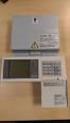 Building Air Conditioning Control System Power supply unit Model: PAC-SC50KUA Installation Manual Contents 1. Safety precautions... 1 2. Product feature... 2 1. Specification... 2 2. Appearance... 2 3.
Split-type Air-Conditioner INSTALLATION MANUAL CONTENTS FOR INSTALLER MXZ-3A30NA MXZ-4A36NA ATTENTION. English. Français. Español
 Split-type Air-Conditioner MXZ-3A30NA MXZ-4A36NA INSTALLATION MANUAL Refer to the installation manual of each indoor unit for indoor unit installation. English Français Español ATTENTION This manual mentions
Si10-417_C. Pocket Manual. Service Diagnosis SPLIT & MULTI
 Pocket Manual Service Diagnosis SPLIT & MULTI Service Diagnosis SPLIT & MULTI 1. Troubleshooting with LED...5 1.1 Indoor Unit... 5 1.2 Outdoor Unit... 10 2. Troubleshooting by Symptoms...11 2.1 Air conditioner
Air Conditioner Water Heater - A Product of HotSpot Energy LLC
 Air Conditioner Water Heater - A Product of HotSpot Energy LLC PLEASE READ THIS BEFORE YOU INSTALL THE UNIT 1. This air conditioner must be installed and/or repaired by a qualified technician. If you perform
INSTALLATION INSTRUCTIONS FOR MODELS 16NG50/16LP50, 16NG60/16LP60, 20NG50/20LP50, 20NG60/20LP60, 26NG50/26LP50, 26NG60/26LP60
 GAS CONTINUOUS FLOW WATER HEATERS INSTALLATION INSTRUCTIONS FOR MODELS 16NG50/16LP50, 16NG60/16LP60, 20NG50/20LP50, 20NG60/20LP60, 26NG50/26LP50, 26NG60/26LP60 2 INSTALLATION INSTRUCTIONS IMPORTANT SAFETY
INNOVATIVE SOLUTION OF DOMESTIC HEATING SPLIT TYPE SPLIT DHW INTEGRATED TYPE MONOBLOC TYPE
 INNOVATIVE SOLUTION OF DOMESTIC HEATING SPLIT TYPE SPLIT DHW INTEGRATED TYPE MONOBLOC TYPE Fujitsu General realizes considerable energy saving operations by the Heat pump heating system using the ambient
TECHNICAL DATA & SERVICE MANUAL SPLIT SYSTEM AIR CONDITIONER INDOOR UNIT: AW52AL AW64AL AW52AL 387030095 AW64AL 0.8180.463.0 07/05
 TECHNICAL DATA & SERVICE MANUAL INDOOR UNIT: AW52AL AW64AL SPLIT SYSTEM AIR CONDITIONER Model No. Product Code No. AW52AL 387030095 AW64AL 387030096 0.8180.463.0 07/05 IMPORTANT! Please read before installation
Installation and User Instructions Unvented Electric Storage Water Heater Models: S10UNV, S15UNV.
 Installation and User Instructions Unvented Electric Storage Water Heater Models: S10UNV, S15UNV. MULTIPOINT Please read and understand these instructions before starting work. Please leave this leaflet
14. Troubleshooting Guide
 14. Guide 14.1 Refrigeration Cycle System In order to diagnose malfunctions, ensure the air conditioner is free from electrical problems before inspecting the refrigeration cycle. Such problems include
Drayton Digistat +2RF/+3RF
 /+3RF Programmable Room Thermostat Wireless Model: RF700/22090 Model: RF701/22092 Power Supply: Battery - Thermostat Mains - Digistat SCR Invensys Controls Europe Customer Service Tel: 0845 130 5522 Customer
Features of your Air to water heat pump
 Features of your Air to water heat pump Running Costs-Reduction of Up to 33.3% Samsung EHS, known for its world class efficiency (12kW floor heating system with COP of 4.60), can reduce 33.3% of your running
IMPORTANT SAFETY INSTRUCTIONS WARNING READ AND SAVE THESE OPERATING AND SAFETY INSTRUCTIONS BEFORE USING THIS HEATER.
 THERMAWAVE CERAMIC HEATER Model HZ-850 Series Model HZ-860 Series IMPORTANT SAFETY INSTRUCTIONS WARNING READ AND SAVE THESE OPERATING AND SAFETY INSTRUCTIONS BEFORE USING THIS HEATER. Warning Failure to
USER INSTRUCTIONS FOR 10 LITRE PORTABLE DEHUMIDIFIER MODEL NO. DHMD102
 USER INSTRUCTIONS FOR 10 LITRE PORTABLE DEHUMIDIFIER MODEL NO. DHMD102 THANK YOU FOR CHOOSING YOUR NEW DEHUMIDIFIER. BEFORE USING THE UNIT READ THESE INSTRUCTIONS FULLY AND RETAIN THEM FOR FUTURE REFERENCE
Meaco 30L and Meaco 40L dehumidifier instruction manual
 Meaco 30L and Meaco 40L dehumidifier instruction manual Please read this instruction manual before using the dehumidifier and keep safe for future reference SAFETY INSTRUCTIONS PLEASE READ ALL INSTRUCTIONS
SERVICE MANUAL SPLIT SYSTEM ROOM AIR CONDITIONER SHARP CORPORATION SHARP CORPORATION CONTENTS
 SERVICE MANUAL SPLIT SYSTEM ROOM AIR CONDITIONER INDOOR UNIT AH-129 AH-MP14 OUTDOOR UNIT AU-129 AU-MP14 CONTENTS SPECIFICATIONS...2 EXTERNAL DIMENSIONS...4 WIRING DIAGRAMS...5 ELECTRICAL PARTS...6 MICROCOMPUTER
OPTIONAL SLENDER REMOTE CONTROL
 DAIKIN ROOM AIR CONDITIONER Operation Manual OPTIONAL SLENDER REMOTE CONTROL BRC944A2B READ BEFORE OPERATION Safety Precautions...2 Names of Functions of Parts...4 Preparation before Operation...5 OPERATION
Service manual. Website: www.andico.com.au CAUTION - BEFORE SERVICING THE UNIT, READ THE SAFETY - PRECAUTIONS IN THIS MANUAL.
 Website: www.andico.com.au Service manual CAUTION - BEFORE SERVICING THE UNIT, READ THE SAFETY - PRECAUTIONS IN THIS MANUAL. - ONLY FOR AUTHORISED SERVICE PERSONNEL. MODELS: MPK1-09CR-QB8 MPK1-12ER-QB6
SERVICE MANUAL. Room Air Conditioner Multi Split Wall-Mounted Type Indoor. FSAI-Pro-91AE2 FSAI-Pro-121AE2 FSAIF-Pro-181AE2
 SERVICE MANUAL Room Air Conditioner Multi Split Wall-Mounted Type Indoor FSAI-Pro-91AE2 FSAI-Pro-121AE2 FSAIF-Pro-181AE2 NOTE: Before servicing the unit, please read this at first. Always contact with
Install Guide CT100. Caution. Caution ENGLISH. disconnect the power supply before beginning work.
 Install Guide CT100 PG 1 Caution top cover Your thermostat is a precise instrument, handle it with care. Turn off electricity to the system before installing or servicing thermostat or any part of the
USER S MANUAL. Duct Type Series. Free Joint Multi Air Conditioner (Cooling and Heating) FUEA Series E S F I P D G DB98-29565A(1) ENGLISH ESPAÑOL
 USER S MANUAL Duct Type Series MH MH FEEA Series FUEA Series ENGLISH ESPAÑOL PORTUGUÊS E HNIKA DEUTSCH ITALIANO FRANÇAIS Free Joint Multi Air Conditioner (Cooling and Heating) E S F I P D G DB98-29565A(1)
ELECTRIC CENTRAL HEATING FLOW BOILER
 ELECTRIC CENTRAL HEATING FLOW BOILER EKCO.T Used product can t be treated as general communal waste. Disassembled appliance has to be delivered to the collection point of electrical and electronic equipment
INSTALLATION INSTRUCTIONS & HOME OWNERS MANUAL ECO 18 ECO 24 ECO 27 IMPORTANT SAFETY INFORMATION
 INSTALLATION INSTRUCTIONS & HOME OWNERS MANUAL ECO 18 ECO 24 ECO 27 IMPORTANT SAFETY INFORMATION As when installing or using any high voltage electrical appliance, basic safety precautions should always
Install Guide CT101. Caution. Caution
 Install Guide CT101 PG 1 Caution top cover Your thermostat is a precise instrument, handle it with care. Turn off electricity to the system before installing or servicing thermostat or any part of the
Homeowner Quick Start Guide. Version 2
 Homeowner Quick Start Guide Version 2 Introduction to Your New Mitsubishi Electric Ecodan Heating System This booklet has been created to enable you to quickly personalise the Heating System controls
USER INSTRUCTIONS FOR GET PORTABLE 12k BTU AIR CONDITIONER MODEL No. GPACU12HR
 USER INSTRUCTIONS FOR GET PORTABLE 12k BTU AIR CONDITIONER MODEL No. GPACU12HR CONTENTS Introduction Safety Notes Identification of parts Installation instructions Operation instructions Maintenance Troubleshooting
Current valve. for AC 24 V pulse/pause control of electrical loads up to 30 kw
 4 937 DESIO Current valve for AC 24 V pulse/pause control of electrical loads up to 30 kw SEA45.1 Use The current valve is used for the control of electric heating elements in heating, ventilation and
Nest Learning Thermostat Installation Guide. Installation step-by-step
 Nest Learning Thermostat Installation Guide Installation step-by-step Contents Compatibility. 3 In the box. 4 Before you start. 5 Choose an installation method. 6 Replacing an existing wired thermostat.
Max primary circuit temperature 90ºC Max primary circuit temp. 90ºC Max secondary circuit temperature 45ºC Max secondary circuit temp.
 EGLISH 1 Product description exchanger equipped with an electronic control unit and circulation pump for the primary circuit. All Aqua-Mex variants can be ordered with an interior coil of either titanium
R22. K Control. Indoor Unit. Nomenclature. Compatibility PL H 3 G K H B. Unit style Heat Pump Horse Power
 R22. K Control. Indoor Unit. Nomenclature. PL H 3 G K H B Compatibility Unit style Heat Pump Horse Power Control Boost Heaters R22. K Control. Outdoor Unit. Nomenclature. PU H 3 Y K A Compatibility Outdoor
SWIMMING POOL HEAT PUMP
 SWIMMING POOL HEAT PUMP Installation & User Manual Model HP40B HP50B HP65B Hayward Pool Products Canada, Inc. T: 1-888-238-7665 www.haywardpool.ca CONTENT I. Application 4 II. Features 4 III. Technical
I N S T ALLATION INSTRUCTIONS & HOME OWNERS MANUAL IMPORTANT SAFETY INFORMATION
 I N S T ALLATION INSTRUCTIONS & HOME OWNERS MANUAL MODELS: HA018240 HA024240 HA027240 HA036240 IMPORTANT SAFETY INFORMATION As when installing or using any high voltage electrical appliance, basic safety
BUILT-IN DISHWASHER INSTALLATION INSTRUCTIONS
 BUILT-IN DISHWASHER INSTALLATION INSTRUCTIONS PLEASE READ COMPLETE INSTRUCTIONS BEFORE YOU BEGIN LEAVE INSTALLATION INSTRUCTIONS AND USER'S GUIDE WITH OWNER ALL ELECTRIC WIRING AND PLUMBING MUST BE DONE
Installation Instructions for Alarm Module Kit A043F059
 Instruction Sheet 07-2013 Installation Instructions for Alarm Module Kit A043F059 1 Introduction The information contained within is based on information available at the time of going to print. In line
Use & Care Manual. Electric Tankless Water Heaters. With Installation Instructions for the Installer AP15447 (10/10)
 Use & Care Manual With Installation Instructions for the Installer Electric Tankless Water Heaters The purpose of this manual is twofold: one, to provide the installer with the basic directions and recommendations
ECOCIAT. Domestic hot water heat recovery unit
 Heat recovery unit Domestic hot water High energy efficiency with R410A Compact and quiet Scroll compressors Brazed-plate heat exchangers Heating Heat recovery ENVIRONMENTALLY HFC R410A PROTECTION DE FRIENDLY
SHOWER WATER HEATER MODEL BS 35 / 45 / 60 BS 35 E / 45 E / 60 E OPERATION AND INSTALLATION INSTRUCTIONS
 SHOWER WATER HEATER MODEL BS 35 / 45 / 60 BS 35 E / 45 E / 60 E OPERATION AND INSTALLATION INSTRUCTIONS 2 This water heater must be installed (water and electrical installation), commissioned and serviced
USER S MANUAL HSC-24A
 AIRREX AIR CONDITIONER USER S MANUAL HSC-24A Thank you for purchasing an AIRREX AIR CONDITIONER. BEFORE operation please read this user s manual carefully. Keep this manual readily available. It is ESSENTIAL
MAC-821SC-E. Centralized On-Off Remote Controller. English ÏÏËÓÈÎ. Русский [FOR INSTALLER] INSTALLATION MANUAL
![MAC-821SC-E. Centralized On-Off Remote Controller. English ÏÏËÓÈÎ. Русский [FOR INSTALLER] INSTALLATION MANUAL](/thumbs/24/3019861.jpg "MAC-821SC-E. Centralized On-Off Remote Controller. English ÏÏËÓÈÎ. Русский [FOR INSTALLER] INSTALLATION MANUAL") Centralized On-Off Remote Controller MC-821SC-E [FOR INSTLLER] INSTLLTION MNUL English [ [ π À À π ] E XEIPI IO O H IøN E KT T H [ [MONTÖR Ç N] MONTJ ELK TBI ÏÏËÓÈÎ [ДЛЯ УСТАНОВИТЕЛЯ] РУКОВОДСТВО ПО УСТАНОВКЕ
Centralized On-Off Remote Controller MC-821SC-E [FOR INSTLLER] INSTLLTION MNUL English [ [ π À À π ] E XEIPI IO O H IøN E KT T H [ [MONTÖR Ç N] MONTJ ELK TBI ÏÏËÓÈÎ [ДЛЯ УСТАНОВИТЕЛЯ] РУКОВОДСТВО ПО УСТАНОВКЕ
User Manual THR840DUK Digital Thermostat
 User Manual THR840DUK Digital Thermostat 50051982-001 Rev. A WARNING: This product must be correctly installed and configured to work properly (see pages 12-24). If you are not experienced in wiring electrical
INSTALLATION GUIDE 1
 INSTALLATION GUIDE 1 Setting information MAC-558IF-E address(mac) MAC-558IF-E serial number(id) MAC-558IF-E code(pin) Indoor unit model name Indoor unit serial number Outdoor unit model name Outdoor unit
Roof Top Air Conditioner INSTALLATION AND OPERATING INSTRUCTIONS
 Roof Top Air Conditioner INSTALLATION AND OPERATING INSTRUCTIONS Ducted System RECORD THIS UNIT INFORMATION FOR FUTURE REFERENCE: Model Number: Serial Number: Date Purchased: This manual must be read and
SPLIT WALL MOUNTED TYPE AIR CONDITIONERS OWNER'S MANUAL
 SPLIT WALL MOUNTED TYPE AIR CONDITIONERS OWNER'S MANUAL Thank you for choosing our Air Conditioner. Please read this OWNER'S MANUAL carefully prior to use and keep it for further reference. CONTENTS Contents
Operating Instructions Split System Air Conditioner
 Operating Instructions Split System Air Conditioner Model No. Indoor Unit Type Indoor Unit Type Nominal Capacity 26 36 F2 Low Silhouette Ducted S-26PF2U6 S-36PF2U6 Connectable outdoor unit lineup This
PANASONIC TROUBLE SHOOTING GUIDE
 A General Guide To Room Style Products Pipework Pipe sizes and lengths should be as the relevant Technical Guide Both lines should be insulated No line accessories or oil traps should be fitted In cooling
Overheating limit control
 Pahlén electric heater Maxi Heat with digital control is a compact and effective heater for swimming pools. It consists of a glassfibre reinforced polypropylene tank containing resistance-type heating
RVR Hybrid System Installer Instructions - 10052012. RVR Hybrid System Controller Installation Instructions
 RVR Hybrid System Controller Installation Instructions 1 Introduction to Hybrid Systems The RVR Hybrid system uses a combination of the Immergas Audax range of heat pumps with gas or oil boilers to create
Table of Contents. 1 - Specifications...3. 2 - Installation...3. 3 - Wiring...5. 4 - User controls...7
 THERMOSTATS Table of Contents Page 1 - Specifications...3 1.1 - Product range...3 ARTTH001 (DSL-610)...3 ARTTH002 (DSL-700)...3 ARTTH003 (DSL-600)...3 1.2 - Technical data...3 1.3 - Power failures...3
Use and Care Manual. Model CPA12KH AIR CONDITIONER
 Use and Care Manual Model CPA12KH AIR CONDITIONER Introduction Thank you for choosing this air conditioner to provide you and your family with all of the "Home Comfort" requirements for your home, cottage
SECTION 15750 PACKAGED ROOFTOP AIR CONDITIONING UNITS
 SECTION 15750 PART 1 - GENERAL 1.01 DESCRIPTION A. Section includes requirements for roof mounted, self-contained units, with electric cooling, and electric or reverse refrigeration cycle (heat pump) heating
VC Series Zone Valves BALANCED 2-WAY AND 3-WAY HYDRONIC VALVES
 VC Series Zone Valves BALANCED 2-WAY AND 3-WAY HYDRONIC VALVES PRODUCT DATA Design VC Series zone valves consist of: 2-way or 3-way valve housing available with various connection ends Spindle and cartridge
SERVICE MANUAL OUTDOOR UNIT. No. OBH590 REVISED EDITION-B. Models HFC
 SPLIT-TYPE AIR CONDITIONERS Revision B: MUZ-EF25/35/42/50VE - E2 and MUZ-EF25/35VEH - E2 have been added. Please void OBH590 REVISED EDITION-A. OUTDOOR UNIT SERVICE MANUAL HFC utilized R410A. OBH590 REVISED
543-0032-00, 943-0032-00. User s Manual
 543-0032-00, 943-0032-00 User s Manual 1 Comfort Alert Diagnostics Faster Service And Improved Accuracy The Comfort Alert diagnostics module is a breakthrough innovation for troubleshooting heat pump and
CW-5000/ 5200,1'8675,$/ &+,//(5 86(5 0$18$/
 CW-5000/ 5200 Contents Cautions ---------------------------------------------------------------- 3 Parts introduction --------------------------------------------------- 4 Installation ------------------------------------------------------------
USERS GUIDE. LOGIC Combi 24, 30, 35. For installation guide see reverse of book
 USERS GUIDE LOGIC Combi 24, 30, 35 For installation guide see reverse of book When replacing any part on this appliance, use only spare parts that you can be assured conform to the safety and performance
Failure code manual. content
 Failure code manual content 一 wall split AC series 2 二 floor standing AC series. 4 三 portable AC series.. 5 四 dehumidifer 6 五 DC inverter single split series...7 六 DC inverter multi-split series 10 1 一
ENGLISH INSTRUCTION & INSTALLATION MANUAL DUCTLESS MINI SPLIT AIR CONDITIONING SYSTEMS
 ENGLISH INSTRUCTION & INSTALLATION MANUAL DUCTLESS MINI SPLIT AIR CONDITIONING SYSTEMS Céliera Corporation. All rights reserved. Unauthorized duplication, reproduction prohibited. CONTENTS SAFETY PRECAUTIONS...
Installation and Troubleshooting Instructions for Electric Tankless Residential Water Heaters.
 Model Number: Serial Number: Information Manual Installation and Troubleshooting Instructions for Electric Tankless Residential Water Heaters. ATTENTION: IF YOU ARE NOT A LICENSED PLUMBER OR A LICENSED
AIR CONDITIONER INSTALLATION MANUAL
 FRANCAIS ESPAÑOL INSTALLATION MANUAL AIR CONDITIONER Please read this installation manual completely before installing the product. Installation work must be performed in accordance with the national wiring
INSTALLATION GUIDE. Card Reader & Controller with KIM Swipe Reader for Solitaire 850 / 950 / 850L Learnlok PK2930
 INSTALLATION GUIDE Card Reader & Controller with KIM Swipe Reader for Solitaire 850 / 950 / 850L Learnlok PK2930 Card Reader and Controller Model 3.5 with KIM Swipe Reader Table of Contents 1. Features..................................
UB1 AIR CONDITIONING UNIT INSTALLATION INSTRUCTIONS
 UB1 AIR CONDITIONING UNIT INSTALLATION INSTRUCTIONS INSTALLATION INSTRUCTIONS: Carefully read these instructions before installing your new air-conditioner. AUSTRALIAN AUTOMOTIVE AIR AL00500054E 1 Table
USERS GUIDE. LOGIC Heat 12, 15, 18, 24, 30. For installation guide see reverse of book
 USERS GUIDE LOGIC Heat 12, 15, 18, 24, 30 For installation guide see reverse of book When replacing any part on this appliance, use only spare parts that you can be assured conform to the safety and performance
IMPORTANT INSTRUCTIONS & OPERATING MANUAL. Houston 50 Inch Electric Wall Mounted Fireplace Black / White
 IMPORTANT INSTRUCTIONS & OPERATING MANUAL Houston 50 Inch Electric Wall Mounted Fireplace Black / White Model Number:MFE5050BK Model Number:MFE5050WH Read these instructions carefully before attempting
Installation Instructions
 Installation Instructions Built-In Dishwasher If you have questions, call 1-800-4-MY-HOME (1-800-469-4663) or visit our website at: www.sears.com BEFORE YOU BEGIN Read these instructions completely and
CARING FOR YOUR WATER HEATER
 http://waterheatertimer.org/troubleshoot-rheem-tankless-water-heater.html Water Heater Inspections CARING FOR YOUR WATER HEATER Venting System (Direct Vent Only) The venting system should be inspected
PASSIVE INFRARED INTRUSION DETECTOR PASSIVE INFRAROOD DETECTOR DETECTEUR D INTRUSION PASSIF INFRAROUGE
 MODEL HAA51 PASSIVE INFRARED INTRUSION DETECTOR PASSIVE INFRAROOD DETECTOR DETECTEUR D INTRUSION PASSIF INFRAROUGE OPERATING MANUAL HAA51 PASSIVE INFRARED INTRUDER DETECTOR INTRODUCTION HAA51 Passive Infrared
Split Air Conditioner
 Split nditioner plit itsplit ir onditioner Split Split Split Split Split User s WNER'S 'S ER'S For s: AWI/AWO-21HPR1 Delta AWI/AWO-25HPR1 Delta AWI/AWO-32HPR1 Delta AWI/AWO-53HPR1 Delta AWI/AWO-65HPR1
Electric Flow Boiler
 Electric Flow Boiler EHC offer the most comprehensive range of electric boilers in the market and with our wealth of knowledge and technical expertise we have designed the Slim Jim Electric Flow Boiler
UNDERSTANDING HOT WATER SYSTEMS IN THE HOME
 UNDERSTANDING HOT WATER SYSTEMS IN THE HOME This advice guide is part of a series of free guides produced by the Association of Plumbing & Heating Contractors Ltd. which provide consumers with essential
Art.S001-S002 SOLAR MODULE WITH DELIVERY AND RETURN CONNECTIONS
 Art.S001-S002 SOLAR MODULE WITH DELIVERY AND RETURN CONNECTIONS Technical Information sheet 0001/07/Rev01 ENG FUNCTION Series S001 and S002 circulation units are applied to the primary circuit of solar
SERVICE INSTRUCTION R410A. WALL MOUNTEDtype INVERTER SPLIT TYPE ROOM AIR CONDITIONER. Models Indoor unit Outdoor unit
 SERVICE INSTRUCTION SPLIT TYPE ROOM AIR CONDITIONER WALL MOUNTEDtype INVERTER Models Indoor unit Outdoor unit ASYG07LECA ASYG09LECA ASYG12LECA ASYG14LECA AOYG07LEC AOYG09LEC AOYG12LEC AOYG14LEC R410A CONTENTS
RI-215A Operator s Manual. Part Number: 71-0045RK Revision 0 Released: 10/3/05
 RI-215A Operator s Manual Part Number: 71-0045RK Revision 0 Released: 10/3/05 Warranty RKI Instruments, Inc., warrants gas alarm equipment sold by us to be free from defects in materials and workmanship,
AIR CONDITIONING SYSTEMS
 Installation Manual for DRED Interface (DRC-101A) About DRED Interface The DRED interface (DRC-101A) allows the air-conditioner to go in to Demand Response Mode in response to signals sent from the Electric
Programmable Room Thermostat 7 Day (5-2 Day) Models: 22083 / 22087 Power Supply: Battery / Mains
 Drayton Programmable Room Thermostat 7 Day (5-2 Day) Models: 22083 / 22087 Power Supply: Battery / Mains Invensys Controls Europe Technical Helpline: +44 (0) 845 130 7722 www.draytoncontrols.co.uk Installation
Installation and Operating Instruction Manual
 Electric Mini Tank Water Heaters CMT-1.3 CMT-2.5 CMT-4.0 CMT-ST70 Tempering valve Optionally available Installation and Operating Instruction Manual Table of Contents Important Safety Instructions 3 General
HERZ-Thermal Actuators
 HERZ-Thermal Actuators Data Sheet 7708-7990, Issue 1011 Dimensions in mm 1 7710 00 1 7710 01 1 7711 18 1 7710 80 1 7710 81 1 7711 80 1 7711 81 1 7990 00 1 7980 00 1 7708 11 1 7708 10 1 7708 23 1 7709 01
MICA HEATER INSTRUCTION MANUAL Model No: UHM-786 230V 50Hz 2200W
 MICA HEATER INSTRUCTION MANUAL Model No: UHM-786 230V 50Hz 2200W Safety Precautions To reduce the risk of personal injury or damage to property, basic safety precautions must be observed including the
LUCCI AIRFUSION QUEST II CEILING FAN
 LUCCI AIRFUSION QUEST II CEILING FAN WITH IR REMOTE INSTALLATION OPERATION MAINTENANCE WARRANTY INFORMATION CAUTION READ INSTRUCTIONS CAREFULLY FOR SAFE INSTALLATION AND FAN OPERATION. V1.0 QUEST II IR
INSTALLATION INSTRUCTIONS Fan Coil Replacement Coil Kit EBX & EBXX
 Fan Coil Replacement Coil Kit EBX & EBXX These instructions must be read and understood completely before attempting installation. These instructions covers the installation of replacement coil kit into
Geyser-R Heat pump water heater Installation manual
 Geyser-R Heat pump water heater Installation manual 1 Version 2.9 SAFETY INFORMATION Please read carefully to prevent serious accidents or injury. The Geyser-R Heat Pump Water Heater must be installed
NewAir AC-10100E / AC-10100H Portable Air Conditioner Owner s Manual PLEASE READ AND SAVE THESE INSTRUCTIONS
 NewAir AC-10100E / AC-10100H Portable Air Conditioner Owner s Manual PLEASE READ AND SAVE THESE INSTRUCTIONS ELECTRICAL SAFETY This appliance is for indoor use only. Always turn off the unit and unplug
Alpha Climatic Programmable Modulating Boiler Energy Manager. Installation and User Instructions
 Alpha Climatic Programmable Modulating Boiler Energy Manager Part No 3.022144 (Hard Wired) Part No 3.022143 (Radio Frequency) Installation and User Instructions 1. Description The Alpha Climatic energy
Service Guide 12/27/03 TESTING, SERVICE & REPAIR GUIDE (For SH Space Heating Models & RA Water Heating Models)
 TESTING, SERVICE & REPAIR GUIDE (For SH Space Heating Models & RA Water Heating Models) WARNING - HIGH VOLTAGE AC electrical circuits are connected to this heater. Do not attempt any service work on the
Install Guide 3M-50. Caution. Caution
 PG 1 Install Guide 3M-50 aution Your thermostat is a precise instrument, handle it with care. Turn off electricity to the HVA system before installing or servicing thermostat or any part of the system.
Installation Instructions
 H5HK Series Installation Instructions 3 Phase Electric Heater Kits 7.5 and 0 TON Package A/C Systems Description Installation of 08/40V and 480V H5HK 3 Phase Heater Kits in 7.5 and 0 TON Packaged Air Conditioners.
SERVICE MANUAL FOR 6535 SERIES TWO TON HIGH EFFICIENCY PACKAGED HEAT PUMPS
 SERVICE MANUAL FOR 6535 SERIES TWO TON HIGH EFFICIENCY PACKAGED HEAT PUMPS TABLE OF CONTENTS 1. Warnings...2 2. Accessibility Of Appliance...3 3. Unit Dimensions And Specifications...3 4. Unit Specifications
Split Type Room Air Conditioner. KSWM units
 OWNER S MANUAL Split Type Room Air Conditioner KSWM units Please read the operating instructions and safety precautions carefully and thoroughly before installing and operating your room air conditioner.
E2 Series Electric Furnaces
 E2 Series Electric Furnaces Service Manual Table of Contents Electrical Requirements... 10 Codes, Specifications Requirements... 10 Connection Supply Service Wires... 10 Furnace Sequence of Operation...
User's Instructions. Alpha HE CB25/33 and HE SY25
 User's Instructions Alpha HE CB25/33 and HE SY25 Wall Mounted, Fan Assisted, Room Sealed, Gas Fired, High Efficiency Condensing Boiler Range For Technical help or for Service call... ALPHA HELPLINE Tel:
SERVICE MANUAL Order No.WH0911S001V0
 SERVICE MANUAL Order No.WH0911S001V0 Electrical Water Heater Model No. FCD-JTSA50-III FCD-JTSA60-III FCD-JTSA70-III FCD-JTSA80-III! WARNING This service information is designed for experienced repair technicians
Aerona Air Source Heat Pumps
 ADDENDUM to INSTALLATION INSTRUCTIONS for Aerona Air Source Heat Pumps DOC.87-05/05 Rev.04 March 2013 ATTENTION INSTALLERS - UPDATED INFORMATION! Your Grant Aerona Air Source Heat Pump has a number of
Portable Air Conditioner. OWNER S MANUAL Read these instructions before use. Model: MM14CHCSCS
 Portable Air Conditioner OWNER S MANUAL Read these instructions before use Model: MM14CHCSCS Voltage rating: 120V~60Hz Power rating : 1400W(Cooling) Power rating : 1350W(Heating) Customer Support : 1-800-474-21477
AIR CONDITIONER (SPLIT TYPE)
 OWNER S MANUAL AIR CONDITIONER (SPLIT TYPE) For general public use ENGLISH EN Indoor Unit RAS-07PKVP-E RAS-10PKVP-E RAS-13PKVP-E RAS-16PKVP-E RAS-18PKVP-E RAS-07PKVP-ND RAS-10PKVP-ND RAS-13PKVP-ND RAS-16PKVP-ND
TMS TANK MANAGEMENT SYSTEM
 TMS TANK MANAGEMENT SYSTEM Page 1 of 9 Operating Instructions GENERAL The Tank Management System is a bespoke design to control, monitor and accommodate efficient storage and dispensing of TMS. FUNCTIONS
PART 8: FIELD WIRING. n WARNING NOTICE. Boiler Manual
 PART 8: FIELD WIRING A. INSTALLATION MUST COMPLY WITH: 1. National Electrical Code and any other national, state, provincial or local codes or regulations. 2. In Canada, CSA C22.1 Canadian Electrical Code
INSTALLATION INSTRUCTIONS & HOME OWNERS MANUAL EEMAX ELECTRIC TANKLESS WATER HEATERS IMPORTANT SAFETY INFORMATION
 INSTALLATION INSTRUCTIONS & HOME OWNERS MANUAL EEMAX ELECTRIC TANKLESS WATER HEATERS IMPORTANT SAFETY INFORMATION When installing or using any high voltage electrical appliance, basic safety precautions