
Air Pollution in China: Mapping of Concentrations and Sources
|
|
|
- Toby Perkins
- 10 years ago
- Views:
Transcription
1 Air Pollution in China: Mapping of Concentrations and Sources Robert A. Rohde 1, Richard A. Muller 2 Abstract China has recently made available hourly air pollution data from over 1500 sites, including airborne particulate matter (PM), SO 2, NO 2, and O 3. We apply Kriging interpolation to four months of data to derive pollution maps for eastern China. Consistent with prior findings, the greatest pollution occurs in the east, but significant levels are widespread across northern and central China and are not limited to major cities or geologic basins. Sources of pollution are widespread, but are particularly intense in a northeast corridor that extends from near Shanghai to north of. During our analysis period, 92% of the population of China experienced >120 hours of unhealthy air (US EPA standard), and 38% experienced average concentrations that were unhealthy. China s population-weighted average exposure to PM 2.5 was 52 µg/m 3. The observed air pollution is calculated to contribute to 1.6 million deaths/year in China [ million deaths/year at 95% confidence], roughly 17% of all deaths in China. Introduction Air pollution is a problem for much of the developing world and is believed to kill more people worldwide than AIDS, malaria, breast cancer, or tuberculosis (1-4). Airborne particulate matter (PM) is especially detrimental to health (5-8), and has previously been estimated to cause between 3 and 7 million deaths every year, primarily by creating or worsening cardiorespiratory disease (2-4,6,7). Particulate sources include electric power plants, industrial facilities, automobiles, biomass burning, and fossil fuels used in homes and factories for heating. In China, air pollution was previously estimated to contribute to 1.2 to 2 million deaths annually (2-4). In 2012, China adopted the Ambient Air Quality Standard (9), and began development of a national Air Reporting System that now includes 945 sites in 190 cities. These automated 1 Berkeley Earth. at [email protected] 2 Berkeley Earth and Dept of Physics, U. Calif. Berkeley. [email protected]

2 stations report hourly via the internet, and focus on six pollutants: particulate matter < 2.5 microns (PM 2.5 ), particulate matter < 10 microns (PM 10 ), sulfur dioxide (SO 2 ), nitrogen dioxide (NO 2 ), ozone (O 3 ), and carbon monoxide (CO). Provincial governments perform air quality monitoring at 600 additional locations that are not yet integrated into the national system. Previous studies of regional scale air pollution have generally relied on satellite data (10,11) or modeling (12,13), but the high density of hourly data in China now allows regional patterns to be constructed directly from ground observations. Materials and Methods Though China deserves praise for its monitoring system and transparent communication, most archived observations are not publicly available. To compensate, real-time data was downloaded every hour during a four month interval from April 5, 2014 to August 5, Due to download restrictions on the official Chinese air quality reporting system, two different thirdparty sources were used: PM25.in and AQICN.org. PM25.in is a direct mirror of data from the 945 stations in China s national network, while AQICN.org is the world s largest aggregator of real-time air quality data and included many additional sites in China and surrounding areas. Nearly all of the additional data from within China originates from stations operated by provincial environmental agencies that have not yet been incorporated in China s national network. Consistency, quality control, and validation checks were applied to the raw data prior to further analysis in order to reduce the impact of outliers, badly calibrated instruments, and other problems. The most common quality problem was associated with stuck instruments that implausibly reported the same concentration continuously for many hours. A regional consistency check was also applied to verify that each station was reporting data similar to its neighboring stations. Approximately 8% of the data was removed as a result of the quality control review. Further details are described in the supplemental material (Text S1). As little monitoring is conducted in western China (Figure 1); we will focus on China east of 95 E, which includes 97% of the population. After removing stations with a high percentage of missing values or with other quality control problems, this study used 880 national network sites, 640 other sites in China and Taiwan, and 236 sites in other countries within 500 km of China (mostly South Korea). The air quality network is skewed towards urban areas, 2

3 often with several sites per city and fewer, if any, in rural areas. For the n-th site, we use p n ( t) to denote the pollutant concentration time series and p n to denote the mean pollutant concentration. Hohhot Zhangjiakou Qinhuangdao Urumqi Lanzhou Shijiazhuang Jining Shenyang Harbin Changchun Tangshan Shanghai Wuhan Lhasa Chongqing Wenzhou Chinese National Real time Air Quality Ganzhou Kunming Quanzhou Network (N = 880) Guangzhou Other Real time Air Kaohsiung Quality Stations (N = 640 in China) 500 km Baoding Tianjin Dalian Shijiazhuang Cangzhou Handan Jinan Weifang Qingdao Jining Zhengzhou Xuzhou Huai an Nanyang Fuyang Hefei Nanjing Suzhou Wuhan Hangzhou Shanghai Ningbo Figure 1. Map of real-time air pollution monitoring stations. Map shows the locations of air quality monitoring sites in China and surrounding areas with sufficient hourly data to be included in this study. Selection criteria and data sources are described in Supplemental Text S1. For each pollutant, a correlation vs. distance function was estimated by computing all possible pairwise correlations between different stations and fitting the resulting correlations to a two part exponential decay as a function of distance. The resulting functional forms are stated in the supplemental Table S1 and shown in Figure S2 and Figure S3. The correlation functions are used to construct correlation matrices that in turn are used to compute Kriging coefficients (14,! 15), K n ( x). The interpolated pollutant field, P x,t!!!! P x, t = S x + A x, t ( ) ( ) ( )!! ( ) + G( x)!! S = n n n n! *! A =, ( x) K ( x) p G( x ) ( x, t) K ( x t) p ( t) n n ( p ) n n ( ), is then estimated in two parts. 3

4 The stationary part, S ( x! ), is derived by applying Kriging interpolation to the mean pollutant concentrations and a global predictor, G ( x! n ), that depends on latitude and longitude and contains free parameters that are adjusted to fit the observed means. The time-dependent anomaly part, A ( x,t! ), depends only on the fluctuations at each station relative to the local mean, *! and its Kriging coefficients, K n ( xn,t), are computed with restriction to stations that are active at time t. This two-step process reduces errors associated with stations that have intermittently missing data. This method is similar to that used by Berkeley Earth for its historical earth temperature analysis (16). Since the correlation vs. distance function has been constructed with the correlation at zero distance obtaining a value less than one, the resulting interpolated fields will be smoother than the original data. This design was chosen for its ability to compensate for noise in the underlying station measurements. Additional details of the interpolation process are provided in the supplement methods (Text S1). For mapping and computation, this continuous field was sampled with an approximately 6 km resolution, though in practice, the characteristic size of resolvable features is often larger (e.g. 30 km) and varies with station density and noise. A simple estimate of pollutant fluxes, F ( x,t! ), was computed by comparing observed changes in the hourly pollutant concentration to the concentrations expected due to short-term wind transport v! ( x,t! ) and an exponential decay with lifetime τ. Differences from the simple transport and decay model are assumed to represent source fluxes.!!! Δt τ!!! P x + v ( ) ( x, t) Δt, t + Δt e P x, t P x, t e F x, t = + 2Δt Δt τ ( ) ( ) ( ) P( x v( x, t) Δt, t Δt)! 2Δt The near-surface (80 m) wind field from the Global Forecast System (17) was used for this calculation, and the effective pollutant lifetime was estimated as described in supplemental Text S1 and reported in Table S4. Flux averages were computed by time-averaging the resulting field after excluding outlying values and cells affected by rain events as determined from Tropical Rainfall Measuring Mission data (18, 19). The change in mortality due to PM 2.5 air pollution was calculated by adopting the integrated exposure response function approach (20) which considers relative risk of death for five disease classes (stroke, ischemic heart disease, lung cancer, chronic obstructive pulmonary disease, and lower respiratory infection) and which was adopted by World Health Organization!! 4

5 (WHO) for the Global Burden of Disease study (21). The model incorporates non-linear response versus concentration and provides an estimate of uncertainty. Relative risk was calculated at the prefecture level using local average PM 2.5 concentration. The data for different diseases and prefectures was then combined to construct national average mortality estimates. Additional details of these calculations and associated background information is provided in the supplemental methods document (Text S1). Results Figure 2 shows a time series of PM 2.5 concentration at and interpolated maps at three time points separated by 6 hours each. This shows the volatile nature of air pollution and the role of weather patterns in redistributing pollution on short timescales. Our approach creates a smooth field that approximates the data at each station, but allows a degree of difference attributable to noise. The pollution is extensive and rapidly evolves in response to winds and other atmospheric conditions. In the Figure, fresh air from the North displaces a period of heavy pollution. Hourly data allows us to capture this evolution and ultimately estimate source fluxes. Supplemental Movie S3 shows the time evolution of PM 2.5 across the entire country. Figure 3 presents averages of the interpolated data for PM 2.5, PM 10, and O 3 across the study duration. The maps are color-coded based on US EPA health categories for 24-hour exposure (22). Maps for SO2 and NO2 are included in the supplemental materials and show good levels nearly everywhere (Figure S11, S13). Air pollution is extensive in China, with the highest particulate concentrations observed south of (e.g. Xingtai / Handan), but significant levels extend throughout the interior, which is consistent with previous satellite and modeling estimates (11-13). Extensive pollution is not surprising since particulate matter can remain airborne for days to weeks and travel thousands of kilometers. The corridor south of contains the highest pollution concentrations and, as discussed below, many of the largest sources. During this study, the southern coastal area experienced somewhat better air quality, possibly linked to greater rainfall (Figure S5). 5

6 300 PM 2.5 (µ g/m 3 ) April 1 May 1 June 1 July 1 August 1 20 km May 19, 14:00 UTC May 19, 20:00 UTC May 20, 02:00 UTC PM 2.5 Concentration (µ g/m 3 ) Langfang Langfang Langfang 50 Tianjin Tianjin Tianjin Baoding Baoding Baoding 0 Health Category: Good Moderate Unhealthy for Sensitive Groups Unhealthy Very Unhealthy Hazardous Figure 2. Time evolution of PM 2.5 pollution in the vicinity of. (Top) Time series of PM 2.5 concentration at extracted from the interpolated field. Red circles indicate times shown in bottom row. (Bottom) Maps of interpolated PM 2.5 concentration during a period of high pollution. Pollution concentrations were computed as described in the text from hourly data and maps were rendered in MATLAB. Concentrations are shown using color gradients and contour lines, where color tones (green, yellow, etc.) correspond to health impact categories defined by the US EPA. Bold circles show station locations with the observed value at each station indicated by the color within the circle. 6

7 Harbin Harbin Harbin Shenyang Dalian Lanzhou Handan Yichang Shanghai Chongqing Wenzhou Guiyang Quanzhou Guangzhou Shenyang Dalian Lanzhou Handan Yichang Shanghai Chongqing Wenzhou Guiyang Quanzhou Guangzhou Shenyang Dalian Lanzhou Handan Yichang Shanghai Chongqing Wenzhou Guiyang Quanzhou Guangzhou Qinhuangdao Qinhuangdao Qinhuangdao Baoding Tianjin Dalian Baoding Tianjin Dalian Baoding Tianjin Dalian Shijiazhuang Shijiazhuang Shijiazhuang Handan Weifang Qingdao Handan Weifang Qingdao Handan Weifang Qingdao Zhengzhou Xuzhou Zhengzhou Xuzhou Zhengzhou Xuzhou Huai an Huai an Huai an Fuyang Fuyang Fuyang Hefei Nanjing Hefei Nanjing Hefei Nanjing Shanghai Shanghai Shanghai Wuhan Hangzhou Wuhan Hangzhou Wuhan Hangzhou PM 2.5 (µg / m 3 ) PM 10 (µg / m 3 ) O (ppb) 3 Health Category: Good Moderate Unhealthy for Sensitive Groups Unhealthy Figure 3. Average air pollution maps. Maps of average pollutant concentration for PM 2.5, PM 10, and O 3 for eastern China (top row) and the to Shanghai corridor (bottom row). Concentrations are shown using color gradients and contour lines; the colors (green, yellow, etc.) represent US EPA qualitative health impacts. Pollution concentrations were computed as described in the text using hourly data and then the hourly concentration fields were averaged over the four month study duration. For PM 2.5, portions of China encompassing roughly 38% of the population are classified as unhealthy on average (>55 µg/m 3, red) with an additional 45% of the population averaging unhealthy for sensitive groups (>35 µg/m 3, orange). Almost none of the study area averaged 7

8 below the US EPA s 12 µg/m 3 standard for annual average PM 2.5 exposure (green). The areaweighted average was 46 µg/m 3 and the population-weighted average exposure to PM 2.5 was 52 µg/m 3. 92% of China s population experienced unhealthy PM 2.5 for at least 120 hours during the study period. 46% of China s population experienced PM 2.5 above the highest EPA threshold ( hazardous, >250 µg/m 3 ), during at least one hour in the observation period. Patterns for PM 10 are similar but less severe, with average PM 10 levels moderate for most of China. Ozone concentrations are modest across most of China, though higher levels occur in the Northwest desert area, and in a small number of Northeastern cities. Though the average levels of PM 10 and O 3 are moderate or good for much of China, intermittently high levels of these pollutants can occur in some areas. Source Regions for Air Pollution in China Figure 4 shows estimated pollutant fluxes for PM 2.5, PM 10, SO 2, and NO 2. Pollution emission is often localized, especially in the to Shanghai corridor where many of the highest PM concentrations also occur (Figure 3). Most of the largest emissions appear in or near urban areas (e.g. Handan, Shijazhuang, Zibo, Tangshan,, Hangshou), though not all major cities have high pollution fluxes (e.g. Chongqing, Chengdu, Wuhan). The source map presumably reflects patterns of industrial activity, though detailed differences will not be explored here. NO 2 and SO 2 emissions help suggest the pollution source. Nitrogen oxides, including nitric oxide (NO) and NO 2 are created when air is heated, and on average have been attributed to transportation fuels (15-25%), fossil fuel burning in power plants (30-50%), and to industrial facilities (25-35%) (23,24). It is expected that NO dominates at the combustion source, but in the presence of sunlight NO and NO 2 will equilibrate within a few minutes (as well as reacting with O 3 ), implying that NO 2 measurements reflect a combination of NO and NO 2 emissions. SO 2 emissions have been previously associated with coal (~90%) in power plants and industrial facilities (25). has negligible SO 2 flux, despite a large NO 2 signal, possibly a result of policies that limit coal burning in the immediate vicinity of and more extensively apply mitigation technologies. 8

9 Figure 4 Click here to download high resolution image Figure 4. Air pollution source maps. Maps of average pollutant flux for PM 2.5, PM 10, SO 2, and NO 2 for eastern China (top row) and the to Shanghai corridor (bottom row). Pollutant fluxes were computed as described in the text from changes in the interpolated hourly pollution fields along with contemporaneous wind and weather data. Due to sparse sampling and secondary transformations of pollutants in the atmosphere, apparent source fluxes are likely to appear more diffuse than the true emissions source. Many of the SO 2 and NO 2 sources are also sources of PM pollution. This is not surprising since fossil fuel burning is also a major source of PM 2.5 and PM 10. However, the PM sources appear more diffuse than either the SO 2 or NO 2 sources. In part, this is caused by secondary particulate matter formed within the atmosphere from other pollutants, such as SO 2 or NO 2 (26). Secondary particulate formation may cause PM fluxes to appear more widely distributed than the underlying emitters. Nonetheless, many strong PM sources are identified through this analysis. Within the study region, 10% of the area is responsible for 34% of the PM 2.5 emissions, and 5% of the area is responsible for 22% of emissions. However, small and 9

10 moderate sources are also important. Approximately 37% of the study region had PM 2.5 fluxes >0.5 µg/m 3 /hr, sufficient to exceed US EPA standards after only 3 days of stagnant air. Discussion We have presented a technique for mapping air pollution concentrations and sources using data from monitoring stations. As has been known from satellite and modeling studies, particulate pollution is an extensive problem affecting nearly all of China s population, but the observed heterogeneity of source locations could help develop strategies to reduce pollution. We examined a four month interval as long-term station data were not available for most of China. Previous studies of both in situ and satellite data have indicated that winter and early spring months in China have somewhat higher PM concentrations due to increased use of fossil fuels for seasonal heating, weather patterns that concentrate pollution at low altitudes, and increased desert dust fluxes (12, 27). In contrast, the air in China is typically cleanest from late summer to early fall. The April 5 to August 5 study period is somewhat intermediate. A review of hourly PM 2.5 station data from ( ), Shanghai ( ), Guangzhou ( ), Chengdu ( ), and Shenyang (2014) indicates that the months studied in this paper averaged 91%, 84%, 89%, 72%, and 73% respectively of the annual averages (U.S. Air Quality Monitoring Program, Monthly-resolved PM 2.5 satellite data for the whole study region was not immediately available, but a monthly satellite history for reported that April-July averaged 99% of the annual mean during 2000 to 2012 (28). Hence, particulate pollution estimates drawn from the current short study period will likely be similar to or somewhat lower than long-term averages. Future work could explore seasonal variations and long-term trends. During the four months studied, the population-weighted and area-weighted PM 2.5 averages were 52 and 46 µg/m 3 respectively. Satellite pollution datasets generally focus on annual or multi-year averages, which limits the ability to make direct comparisons. However, the available satellite estimates tend to be similar to or somewhat lower than the ground observations. An analysis of the larger East Asia region estimated a population-weighted PM 2.5 exposure of 50 µg/m 3 for 2001 to 2010 (28). A version of the same dataset masked to the current study region had an area-weighted average of 40 µg/m 3 from 2010 to 2012 (28, 29). A different satellite estimate using similar observations but different calibrations and modeling gave 25 10

11 µg/m 3 for the 2008 to 2010 average over the present study region (30, 31). Both of these datasets show similar spatial patterns to what we observe (Figure 5), though the magnitudes in van Donkelaar et al. s work (28) are clearly more consistent with our ground data estimates. As noted in previous satellite to in situ comparisons, satellite data may be more likely to underestimate pollution concentrations during the most extreme pollution events (28, 32). The conversion of pollution concentrations to mortality is complicated. We adopt the framework (20) developed for the WHO Global Burden of Disease study (21) that considers PM 2.5 mortality due to impacts on five distinct diseases and accounts for nonlinearities as a function of concentration. Using prefecture level population and pollution data along with national average death rates for the five modeled diseases, we calculate that 1.6 million deaths / year can be attributed to PM 2.5 air pollution under the WHO model [95% confidence: 0.7 to 2.2 million deaths/year]. This is equivalent to 4 thousand deaths / day or 17% of all deaths in China. Additional details appear in the supplemental Text S1 and Table S2. For perspective, the categories of mortality events considered by the WHO model, e.g. cardiorespiratory deaths, account for roughly 55% of all Chinese deaths (21). This compares to only 42% of mortality in the United States in the same cardiorespiratory categories, despite much higher incidence of obesity in the United States (21). The calculated mortality is somewhat higher than the 1.2 million deaths/year previously estimated from the Huai River study using Chinese air pollution measurements and mortality data (3,4,33). Though most of China is subject to potentially harmful levels of PM 2.5, some large population centers (Chongqing, Wuhan, Chengdu) emit less than half the PM 2.5 of others. Among northeastern cities, has relatively low emissions except for NO 2. Low SO 2 fluxes may indicate cities that benefit from lower coal usage or better smokestack pollution controls. Compared to natural gas, coal produces 150 to 400 times more PM for the same energy delivered (34,35). China has plans for new coal plants in the next decade that could effectively double their coal consumption (36), potentially exacerbating the problem of air pollution. A table of pollution concentrations and fluxes by province and prefecture is included in the supplemental material (Table S2). The methods of this study should be applicable to air quality monitoring in other regions of the world. However, these techniques require an extensive air-quality monitoring network with frequent updates (e.g. hourly), and such networks presently exist in only a few places. We 11

12 hope that other countries will follow China s lead and provide both extensive and transparent real-time air quality monitoring. Figure 5 Click here to download Figure: Fig5.eps This study, Ground Data, April August 2014 van Donkelaar et al., Satellite, Figure 5. Comparison of PM 2.5 observations to satellite data. Maps of average PM 2.5 concentration from this study (top) and two satellite-derived datasets restricted to the same region. The average over the 2008 to 2010 time interval was chosen for the satellite data due to the limitations of the available satellite data. Both the concentrations reported by van Donkelaar (28) (middle) and those reported by de Sherbinin (30) (bottom) rely on similar satellite observations of aerosol optical depth (obtained by NASA),, but interpret those observations differently when determining pollutant concentration. The satellite-derived data was imported from concentration data files provided by their respected sources and rendered via MATLAB to use the same US EPA health category color scheme applied in Figure 2 and 3. de Sherbinin et al., Satellite, PM Concentration (µ g / m 3 )

13 Acknowledgments We thank Elizabeth Muller for suggesting this study, Steve Mosher and Zeke Hausfather for discussion and feedback, and John Li and Xinyu Zhang for help with Chinese materials. References 1. World Health Organization (2014) WHO methods and data sources for global causes of death Global Health Estimates Technical Paper WHO/HIS/HSI/GHE/ Available: GlobalCOD_method_2000_2012.pdf 2. World Health Organization (2012) Burden of disease from the joint effects of Household and Ambient Air Pollution for WHO Technical Report. Available: rch2014.pdf 3. O Keefe B (2013) Recent Trends in Air Quality Standards in Europe and Asia: What s next? HEI Annual Conference Available: OKeefe-Sun.pdf 4. Yang G, Wang Y, Zeng Y, Gao GF, Liang X, et al. (2013) Rapid health transition in China, : findings from the Global Burden of Disease Study Lancet 381: Dockery DW, Pope CA, Xu X, Spengler JD, Ware JH et al. (1993) An association between air pollution and mortality in six U.S. cities. N Engl J Med 329(24), Pope CA, Burnett RT, Thun MJ, Calle EE, Krewski D, et al. (2002) Lung cancer, cardiopulmonary mortality, and long-term exposure to fine particulate air pollution. JAMA 287(9): doi: /jama PMID Hoek G, Krishnan RM, Beelen R, Peters A, Ostro B, Brunekreef B, Kaufman JD (2013) Long-term air pollution exposure and cardiorespiratory mortality: a review. Env. Health. 12: Beelen R, Raaschou-Nielsen O, Stafoggia M, Andersen ZJ, Weinmayr G (2013) Effects of long-term exposure to air pollution on natural-cause mortality: an analysis of 22 European cohorts within the multicentre ESCAPE project. Lancet 383(9919): Government of China. (2012) Ambient Air Quality Standards (in Chinese). GB Available: W pdf 10. Zhang Q, Geng GN, Wang SW, Richter A, He KB. (2012) Satellite remote sensing of changes in NO x emissions over China during Chinese Sci. Bull. 57(22): DOI: /s Wang J, Xua X, Spurr R, Wang Y, Drury E. (2010) Improved algorithm for MODIS satellite retrievals of aerosol optical thickness over land in dusty atmosphere: Implications for air quality monitoring in China. Remote Sensing Env. 114:

14 12. Liu X-H, Zhang Y, Cheng S-H, Xing J, Zhang Q, et al. (2010) Understanding of regional air pollution over China using CMAQ, part I: performance evaluation and seasonal variation. Atmos. Env. 44(20): Lei Y, Zhang Q, He K, Streets D. (2011) Primary anthropogenic aerosol emission trends for China, Atmos. Chem. Phys. 11, Schabenberger O, Gotway CA. (2004) Statistical Methods for Spatial Data Analysis. CRC Press. ISBN X. 15. Krige DG. (1951) A statistical approach to some basic mine valuation problems on the Witwatersrand. J Chem Metall Min Soc S Afr. December: Rohde RA, Muller RA, Jacobsen R, Perlmutter S, Rosenfeld A, et al. (2013) Berkeley Earth Temperature Averaging Process. Geoinfor Geostat: An Overview 1(2) doi: /gigs NOAA/NCEP. Global Forecast System (GFS) Atmospheric Model. (2012; Huffman GJ, Bolvin DT, Nelkin EJ, Wolff DB, Adler RF, et al. (2007) The TRMM Multisatellite Precipitation Analysis: Quasi-global, multi-year, combined-sensor precipitation estimates at fine scale. J. Hydrometeor. 8(1), Huffman GJ, Bolvin DT. (2011) Real-Time TRMM Multi-Satellite Precipitation Analysis Data Set Documentation. NASA/GSFC Laboratory for Atmospheres, 43 pp. Available: ftp://meso.gsfc.nasa.gov/pub/trmmdocs/rt/3b4xrt_doc.pdf. 20. Burnett RT, Pope CA III, Ezzati M, Olives C, Lim SS, Mehta S, Shin HH, Singh G, Hubbell B, Brauer M, Anderson HR, Smith KR, Balmes JR, Bruce NG, Kan H, Laden F, Prüss-Ustün A, Turner MC, Gapstur SM, Diver WR, Cohen A. (2014) An integrated risk function for estimating the global burden of disease attributable to ambient fine particulate matter exposure. Environ Health Perspect 122: ; Naghavi M, Wang H, Lozano R, Davis A, Liang X, Zhou M, et al. (2015) Global, regional, and national age sex specific all-cause and cause-specific mortality for 240 causes of death, : a systematic analysis for the Global Burden of Disease Study The Lancet 385 (9963): US EPA. Air Quality Index: A Guide to Air Quality and Your Health. U.S. EPA Report EPA-456/F Available: Emission Database for Global Atmospheric Research (EDGAR), release 4.2. Available: Shi Y, Xia Y, Lu B, Liu N, Zhang L, et al. (2014) Emission inventory and trends of NO x for China, J. Zhejiang Univ.-SCIENCE A 15(6): Lu Z, Zhang Q, Streets D (2011) Sulfur dioxide and primary carbonaceous aerosol emissions in China and India, Atmos. Chem. Phys. 11, Davidson C, Phalen R, Solomon P. (2005) Airborne particular matter and human health: a review. Aerosol Sci. Technol. 39, Zhang W-J, Sun Y-L, Zhuang G-S, Xu D-Q Characteristics and Seasonal Variations of PM 2.5, PM 10, and TSP Aerosol in. Biomedical and Environmental Sciences 19:

15 28. van Donkelaar A, Martin RV, Brauer M, Boys BL (2015) Global fine particulate matter concentrations from satellite for long-term exposure assessment, Environmental Health Perspectives, DOI: /ehp Boys BL, Martin, RV, van Donkelaar A, MacDonell R., Hsu NC, Cooper MJ, Yantosca RM, Lu Z, Streets DG, Zhang Q, Wang S, Fifteen-year global time series of satellite-derived fine particulate matter, Environ. Sci. Technol, /es502113p, de Sherbinin A, Levy M, Zell E, Weber S, Jaiteh M Using Satellite Data to Develop Environmental Indicators. Environmental Research Letters 9 (8): Battelle Memorial Institute, and Center for International Earth Science Information Network - CIESIN - Columbia University Global Annual Average PM 2.5 Grids from MODIS and MISR Aerosol Optical Depth (AOD). Palisades, NY: NASA Socioeconomic Data and Applications Center (SEDAC) Song W, Jia H, Huang J, Zhang Y A satellite-based geographically weighted regression model for regional PM 2.5 estimation over the Pearl River Delta region in China. Remote Sensing of Env. 154: Chen Y, Ebenstein A, Greenstone M, Lie H. (2013) Evidence on the impact of sustained exposure to air pollution on life expectancy from China s Huai River policy, Proc US NAS 110(32): Cai H, Wang M, Elgowainy A, Han J. (2012) Updated Greenhouse Gas and Criteria Air Pollutant Emission Factors and Their Probability Distribution Functions for Electric Generating Units. Argonne National Laboratory ANL/ESD/ US Energy Information Agency (1998) Natural Gas 1998, Issues and Trends. US EIA Report DOE/EIA-0560(98). Available: natural_gas_1998_issues_and_trends/it98.html. 36. Yang A, Cui Y. (2012) Global Coal Risk Assessment: Data Analysis and Market Research. World Resources Institute Working Paper. Available: 15

GBD MAPS Global Burden of Disease Major Air Pollution Sources. Meeting of the GBD MAPS Working Group IIT Bombay January 18-19, 2016
 GBD MAPS Global Burden of Disease Major Air Pollution Sources Meeting of the GBD MAPS Working Group IIT Bombay January 18-19, 2016 Project Overview and Meeting Objectives GBD MAPS Global Burden of Disease
Burden of disease from Household Air Pollution for 2012
 Number of deaths Burden of disease from Household Air Pollution for 2012 Summary of results Globally, 4.3 million deaths were attributable to household air pollution (HAP) in 2012, almost all in low and
VWNMS Dr. Frank Galas 24 th September 2014 Volkswagen Leasing China 1
 1 Leasing is the natural choice for commercial customers Fixed low monthly leasing payments full transparency and cost control No bound capital and higher financial freedom for the business Off balance
BMW DEALER NETWORK IN CHINA
 BMW DEALER NETWORK IN CHINA DR. DANIEL KIRCHERT SENIOR VICE PRESIDENT, SALES & MARKETING BMW BRILLIANCE AUTOMOTIVE OCTOBER 19, 2012 CONTENTS. Leading in city coverage Best quality dealer network Sustainable
Amy K. Huff Battelle Memorial Institute [email protected] BUSINESS SENSITIVE 1
 Using NASA Satellite Aerosol Optical Depth Data to Create Representative PM 2.5 Fields for Use in Human Health and Epidemiology Studies in Support of State and National Environmental Public Health Tracking
TABLE OF CONTENTS ACKNOWLEDGEMENTS... 1 INTRODUCTION... 1 DAMAGE ESTIMATES... 1
 ISBN 0-919047-54-8 ICAP Summary Report TABLE OF CONTENTS ACKNOWLEDGEMENTS... 1 INTRODUCTION... 1 DAMAGE ESTIMATES... 1 Health Effects... 1 Premature Death... 1 Hospital Admissions... 3 Emergency Room Visits...
 7 Figures and Tables` Death Rate 90 100 110 120 130 Figure 1: Trends in Cancer Rates in China 1991 1994 1997 2000 Year Cancer Rate, Rural Cancer Rate, Urban Source: China DSP. Graphs displayed are created
Always Beside You, Make All Customers Satisfied
 Always Beside You, Make All Customers Satisfied Beijing Shenyang Xi an Qingdao Chengdu Wuhan Shanghai Guangzhou Xiamen Branch Offices Distribution Customer Service Center Distribution OMRON INDUSTRIAL
FACT SHEET PROPOSED REVISIONS TO THE NATIONAL AMBIENT AIR QUALITY STANDARDS FOR SULFUR DIOXIDE
 FACT SHEET PROPOSED REVISIONS TO THE NATIONAL AMBIENT AIR QUALITY STANDARDS FOR SULFUR DIOXIDE SUMMARY OF ACTION o On November 16, 2009, EPA proposed to strengthen the National Ambient Air Quality Standard
STATEMENT ON ESTIMATING THE MORTALITY BURDEN OF PARTICULATE AIR POLLUTION AT THE LOCAL LEVEL
 COMMITTEE ON THE MEDICAL EFFECTS OF AIR POLLUTANTS STATEMENT ON ESTIMATING THE MORTALITY BURDEN OF PARTICULATE AIR POLLUTION AT THE LOCAL LEVEL SUMMARY 1. COMEAP's report 1 on the effects of long-term
Chapter 2 False Alarm in Satellite Precipitation Data
 Chapter 2 False Alarm in Satellite Precipitation Data Evaluation of satellite precipitation algorithms is essential for future algorithm development. This is why many previous studies are devoted to the
Visualizing of Berkeley Earth, NASA GISS, and Hadley CRU averaging techniques
 Visualizing of Berkeley Earth, NASA GISS, and Hadley CRU averaging techniques Robert Rohde Lead Scientist, Berkeley Earth Surface Temperature 1/15/2013 Abstract This document will provide a simple illustration
Station #1 Interpreting Infographs
 Energy Resources Stations Activity Page # 1 Station #1 Interpreting Infographs 1. Identify and explain each of the energy sources (5) illustrated in the infograph. 2. What do the white and black circles
Daily High-resolution Blended Analyses for Sea Surface Temperature
 Daily High-resolution Blended Analyses for Sea Surface Temperature by Richard W. Reynolds 1, Thomas M. Smith 2, Chunying Liu 1, Dudley B. Chelton 3, Kenneth S. Casey 4, and Michael G. Schlax 3 1 NOAA National
163 ANALYSIS OF THE URBAN HEAT ISLAND EFFECT COMPARISON OF GROUND-BASED AND REMOTELY SENSED TEMPERATURE OBSERVATIONS
 ANALYSIS OF THE URBAN HEAT ISLAND EFFECT COMPARISON OF GROUND-BASED AND REMOTELY SENSED TEMPERATURE OBSERVATIONS Rita Pongrácz *, Judit Bartholy, Enikő Lelovics, Zsuzsanna Dezső Eötvös Loránd University,
Natural Gas and Greenhouse Gases. OLLI Lectures November 2014 Dennis Silverman Physics and Astronomy UC Irvine
 Natural Gas and Greenhouse Gases OLLI Lectures November 2014 Dennis Silverman Physics and Astronomy UC Irvine Replacing Coal With Natural Gas Greenhouse Gas Reduction by Switching from Coal to Natural
Air Pollution in Ulaanbaatar: Public Health Impacts and Research Opportunities
 Air Pollution in Ulaanbaatar: Public Health Impacts and Research Opportunities Ryan W. Allen, PhD Associate Professor Faculty of Health Sciences Simon Fraser University Burnaby, BC, Canada [email protected]
Air Quality: Public Health Impacts and Local Actions
 Air Quality: Public Health Impacts and Local Actions This briefing is to inform public health professionals of the public health impacts of air pollution, the sources of air pollution and measures available
Generating Current Electricity: Complete the following summary table for each way that electrical energy is generated. Pros:
 P a g e 1 Generating Current Electricity: Complete the following summary table for each way that electrical energy is generated. Generating Electrical Energy Using Moving Water: Hydro-Electric Generation
Ambient Air Monitoring at Deployment Locations in the Middle East
 Ambient Air Monitoring at Deployment Locations in the Middle East Presented by: John E. Kolivosky, P.E. 01 May 2015 DISCLAIMERS The views expressed in this presentation are those of the author and do not
FLORIDA S OZONE AND PARTICULATE MATTER AIR QUALITY TRENDS
 FLORIDA S OZONE AND PARTICULATE MATTER AIR QUALITY TRENDS Florida Department of Environmental Protection Division of Air Resource Management December 2012 Various pollutants are found in the air throughout
Residential & Commercial Sectors Overview CLIMATE
 CLIMATE TECHBOOK Residential and Commercial Emissions in the United States Greenhouse gas (GHG) emissions data can be reported either by economic sector, which includes electric power generation as a separate
Birmingham City University / Students Union Aspects and Impacts Register. Waste. Impacts description
 Birmingham City University / Students Union and Impacts Register Waste Production of non - hazardous waste Production of hazardous waste Storage of non - hazardous waste Potential for waste to be disposed
Health effects of particulate matter and implications for policy in Europe
 Health effects of particulate matter and implications for policy in Europe Marie-Eve Héroux Technical Officer, Air Quality and Noise WHO European Centre for Environment and Health Bonn, Germany Presentation
Health and the environment: addressing the health impact of air pollution
 1 EXECUTIVE BOARD EB136/CONF./9 Rev.1 136th session 29 January 2015 Agenda item 7.2 Health and the environment: addressing the health impact of air pollution Draft resolution proposed by the delegations
The Regulatory Role of Chemical Mechanisms and Future Needs
 The Regulatory Role of Chemical Mechanisms and Future Needs Ajith Kaduwela Planning and Technical Support Division Air Resources Board California Environmental Protection Agency Department of Land, Air
Measurement of the effect of biomass burning aerosol on inhibition of cloud formation over the Amazon
 Supporting Online Material for Koren et al. Measurement of the effect of biomass burning aerosol on inhibition of cloud formation over the Amazon 1. MODIS new cloud detection algorithm The operational
Performance Analysis and Application of Ensemble Air Quality Forecast System in Shanghai
 Performance Analysis and Application of Ensemble Air Quality Forecast System in Shanghai Qian Wang 1, Qingyan Fu 1, Ping Liu 2, Zifa Wang 3, Tijian Wang 4 1.Shanghai environmental monitoring center 2.Shanghai
Public health benefits of strategies to reduce greenhouse gas emissions. Professor Sir Andy Haines
 Public health benefits of strategies to reduce greenhouse gas emissions Professor Sir Andy Haines Case studies in four sectors responsible for large emissions of greenhouse gases (GHGs) Household energy
REDUCING UNCERTAINTY IN SOLAR ENERGY ESTIMATES
 REDUCING UNCERTAINTY IN SOLAR ENERGY ESTIMATES Mitigating Energy Risk through On-Site Monitoring Marie Schnitzer, Vice President of Consulting Services Christopher Thuman, Senior Meteorologist Peter Johnson,
PROPOSAL AIR POLLUTION: A PROJECT MONITORING CURRENT AIR POLLUTION LEVELS AND PROVIDING EDUCATION IN AND AROUND SCHOOLS IN CAMDEN
 PROPOSAL AIR POLLUTION: A PROJECT MONITORING CURRENT AIR POLLUTION LEVELS AND PROVIDING EDUCATION IN AND AROUND SCHOOLS IN CAMDEN Vivek Deva Supervisors: Dr Audrey de Nazelle, Dr Joanna Laurson- Doube
Development of High-Speed Railways in China
 Development of High-Speed Railways in China Kiyoharu Takagi Introduction The rapid developments seen recently in high-speed railways in China are astonishing. The lengths and speeds of lines in operation
Evaluating impacts of air pollution in China on public health: Implications for future air pollution and energy policies
 Atmospheric Environment 40 (2006) 1706 1721 www.elsevier.com/locate/atmosenv Evaluating impacts of air pollution in China on public health: Implications for future air pollution and energy policies Xiaoping
INTERACTIONS: ENERGY/ENVIRONMENT Fossil Fuel Energy Impacts on Health - Helena Ribeiro
 FOSSIL FUEL ENERGY IMPACTS ON HEALTH Helena Ribeiro Department of Environmental Health, Faculdade de Saúde Pública, Universidade de São Paulo, Brazil Keywords: Fossil Fuel, Combustion, Air Pollution, Respiratory
Revealing the costs of air pollution from industrial facilities in Europe a summary for policymakers
 Revealing the costs of air pollution from industrial facilities in Europe a summary for policymakers A new European Environment Agency (EEA report, Revealing the costs of air pollution from industrial
The IPCC Special Report on Managing the Risks of Extreme Events and Disasters to Advance Climate Change Adaptation
 The IPCC Special Report on Managing the Risks of Extreme Events and Disasters to Advance Climate Change Adaptation A changing climate leads to changes in extreme weather and climate events 2 How do changes
Jorine Campopiano US Environmental Protection Agency Region 9 Schools Environmental Health Coordinator. May 27, 2014
 Jorine Campopiano US Environmental Protection Agency Region 9 Schools Environmental Health Coordinator May 27, 2014 Today we ll talk about The Flag Program The purpose of the program Background information
EMISSIONS OF AIR POLLUTANTS IN THE UK, 1970 TO 2014
 STATISTICAL RELEASE: 17 DECEMBER 2015 EMISSIONS OF AIR POLLUTANTS IN THE UK, 1970 TO 2014 There has been a long term decrease in the emissions of all of the air pollutants covered by this statistical release
NOVEL STRATEGIES FOR ASSESSMENT OF AMBIENT AIR QUALITY USING GIS AND ONLINE POLLUTION MONITORING TOOLS I. Jaykumar 2, V. Hima Bindu 2, P.
 NOVEL STRATEGIES FOR ASSESSMENT OF AMBIENT AIR QUALITY USING GIS AND ONLINE POLLUTION MONITORING TOOLS I. Jaykumar 2, V. Hima Bindu 2, P.V Mukunda Rao 2, G. Sagareshwar 2 K.V. Ramani 3, & Y. Anjaneyulu
WHEREAS environmental stewardship is one of the City of Santa Monica s core
 City Council Meeting October 11 2011 Santa Monica California RESOLUTION NUMBER jotp 2 1 CCS City Council Series A RESOLUTION OF THE CITY COUNCIL OF THE CITY OF SANTA MONICA IN SUPPORT OF REDUCING GREENHOUSE
Comparison of PM10 and SO 2 Concentrations in the Cities Located at the Mediterranean Coast of Turkey
 Comparison of PM10 and SO 2 Concentrations in the Cities Located at the Mediterranean Coast of Turkey *Güray Doğan, Ahmet Tepe and Çiğdem Moral Akdeniz University, Department of Environmental Engineering,
From Carbon Subsidy to Carbon Tax: India s Green Actions 1
 From Carbon Subsidy to Carbon Tax: India s Green Actions 1 09 CHAPTER 9.1 INTRODUCTION The recent steep decline in international oil prices is seen by many as an opportunity to rationalize the energy prices
AP ENVIRONMENTAL SCIENCE 2007 SCORING GUIDELINES
 AP ENVIRONMENTAL SCIENCE 2007 SCORING GUIDELINES Question 4 Some scientists estimate that by 2025 over 60 percent of the global human population will live in urban areas. Urban residents experience a variety
Oil and Gas Air Quality Regulations and Permitting
 Oil and Gas Air Quality Regulations and Permitting Adam Berig Olsson Associates Colorado Springs Oil and Gas Committee Presentation February 2012 Who Regulates Air Quality? United States Environmental
CLOUD COVER IMPACT ON PHOTOVOLTAIC POWER PRODUCTION IN SOUTH AFRICA
 CLOUD COVER IMPACT ON PHOTOVOLTAIC POWER PRODUCTION IN SOUTH AFRICA Marcel Suri 1, Tomas Cebecauer 1, Artur Skoczek 1, Ronald Marais 2, Crescent Mushwana 2, Josh Reinecke 3 and Riaan Meyer 4 1 GeoModel
Tracing Back the Smog:
 Tracing Back the Smog: Source Analysis and Control Strategies for PM2.5 Pollution in Beijing-Tianjin-Hebei Executive Summary Severe air pollution and its associated health impacts have become of major
Guy Carpenter Asia-Pacific Climate Impact Centre, School of energy and Environment, City University of Hong Kong
 Diurnal and Semi-diurnal Variations of Rainfall in Southeast China Judy Huang and Johnny Chan Guy Carpenter Asia-Pacific Climate Impact Centre School of Energy and Environment City University of Hong Kong
Data Sets of Climate Science
 The 5 Most Important Data Sets of Climate Science Photo: S. Rahmstorf This presentation was prepared on the occasion of the Arctic Expedition for Climate Action, July 2008. Author: Stefan Rahmstorf, Professor
Monsoon Variability and Extreme Weather Events
 Monsoon Variability and Extreme Weather Events M Rajeevan National Climate Centre India Meteorological Department Pune 411 005 [email protected] Outline of the presentation Monsoon rainfall Variability
The Regulatory Impact Analysis (RIA) for the Mercury Air Toxics Standard (MATS)
 The Regulatory Impact Analysis (RIA) for the Mercury Air Toxics Standard (MATS) Kevin Culligan U.S. Environmental Protection Agency (EPA) Associate Division Director, Sector Policies and Programs Division
The Ambient Air Monitoring System
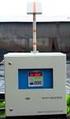 The Ambient Air Monitoring System 1.0 Introduction: The Ambient Air Monitoring System (AAMS) can measure a range of toxic and flammable gases, particulate matter, meteorological and environmental parameters
Air Quality in San Diego 2013 Annual Report
 Air Pollution Control Board Greg Cox District 1 Dianne Jacob District 2 Dave Roberts District 3 Ron Roberts District 4 Bill Horn District 5 Air Quality in San Diego 2013 Annual Report Protecting and improving
National Database of Air Quality and Meteorological Information. Gregor Feig South African Weather Service
 National Database of Air Quality and Meteorological Information Gregor Feig South African Weather Service Air Quality at the South African Weather Service 1. South African Air Quality Information System
Introduction. Taxes Supported. E tax Payment Service
 Introduction To allow corporate clients to pay taxes (levied by both State Tax Bureau and Local Tax Bureau) electronically, HSBC Bank (China) Company Limited (HSBC China) has completed the system development
Adverse Health Effects of Air Pollution in India
 Health Impacts of Air in India in India in India JN Pande Sitaram Bhartia Institute of Science and Research, New Delhi Well documented in developed countries using several epidemiological study designs.
Exhaust Emissions from Ship Engines in Australian Waters Including Ports
 Exhaust Emissions from Ship Engines in Australian Waters Including Ports Laurie Goldsworthy Honorary Research Fellow National Centre for Maritime Engineering and Hydrodynamics Australian Maritime College
FACTS ABOUT CLIMATE CHANGE
 FACTS ABOUT CLIMATE CHANGE 1. What is climate change? Climate change is a long-term shift in the climate of a specific location, region or planet. The shift is measured by changes in features associated
The atmosphere has a number of gases, often in tiny amounts, which trap the heat given out by the Earth.
 The Earth is wrapped in a blanket of air called the atmosphere, which is made up of several layers of gases. The sun is much hotter than the Earth and it gives off rays of heat (radiation) that travel
GEOTHERMAL HEAT PUMP SYSTEMS ARE RED HOT BUT ARE THEY REALLY GREEN?
 GEOTHERMAL HEAT PUMP SYSTEMS ARE RED HOT BUT ARE THEY REALLY GREEN? Richard C. Niess 1 Gilbert & Associates / Apogee Interactive, Inc., Gloucester Point, Virginia 23062 Phone & Fax (804) 642 0400 ABSTRACT
Air Quality Index A Guide to Air Quality and Your Health
 1EPA United States Environmental Protection Agency Air Quality Index A Guide to Air Quality and Your Health 2 Recycled/Recyclable. Printed with vegetable oil-based inks on 100% postconsumer process, chlorine-free
sample The IPCC Special Report on Managing the Risks of Extreme Events and Disasters to Advance Climate Change Adaptation
 sample The IPCC Special Report on Managing the Risks of Extreme Events and Disasters to Advance Climate Change Adaptation A changing climate leads to changes in extreme weather and climate events 2 Impacts
Site Identification No.: 197809AAO Application No.: 15030051
 Project Summary for a Construction Permit Application from Midwest Generation for a Natural Gas Conversion Project for the Joliet Electric Generating Station Joliet, Illinois Site Identification No.: 197809AAO
Survey on the Mortality from Malignant Tumors of Female Asbestos Spinning Workers
 Table of Contents WS-E-12 Xing Zhang Survey on the Mortality from Malignant Tumors of Female Asbestos Spinning Workers Xing Zhang 1, Tong-da Sun 2, Nan-feng Shi 2, Li-qiu Zhu 1, Kenji Morinaga 3 1 Institute
Integrated Global Carbon Observations. Beverly Law Prof. Global Change Forest Science Science Chair, AmeriFlux Network Oregon State University
 Integrated Global Carbon Observations Beverly Law Prof. Global Change Forest Science Science Chair, AmeriFlux Network Oregon State University Total Anthropogenic Emissions 2008 Total Anthropogenic CO 2
Renewable Choice Energy
 Catawba College Table of Contents About Renewable Choice The Problem: Electricity Production Today The Solutions: Renewable Energy Sources Renewable Energy Credits (RECs) Who can participate in Renewable
Environment Impact Assessment of Thermal Power Plant for Sustainable Development
 International Journal of Environmental Engineering and Management. ISSN 2231-1319, Volume 4, Number 6 (2013), pp. 567-572 Research India Publications http://www.ripublication.com/ ijeem.htm Environment
BMW China. Dealer Development.
 Page 1 BMW China.. Dealer Development September 2010 Sheer Driving Pleasure Page 2 China auto market overview. Both total Passenger Vehicle (PV) market and plus segment have been growing quickly over the
EPA Requirements for Diesel Standby Engines In Data Centers. Bob Stelzer / CTO / Safety Power Inc. For 7x24 Fall 2014 Conference. 1.
 EPA Requirements for Diesel Standby Engines In Data Centers Bob Stelzer / CTO / Safety Power Inc For 7x24 Fall 2014 Conference 1.0 Introduction In order to get the Air Emissions Permit for facilities that
Climate Extremes Research: Recent Findings and New Direc8ons
 Climate Extremes Research: Recent Findings and New Direc8ons Kenneth Kunkel NOAA Cooperative Institute for Climate and Satellites North Carolina State University and National Climatic Data Center h#p://assessment.globalchange.gov
Emissions Comparison for a 20 MW Flywheel-based Frequency Regulation Power Plant
 Emissions Comparison for a 20 MW Flywheel-based Frequency Regulation Power Plant Beacon Power Corporation KEMA Project: BPCC.0003.001 May 18, 2007 Final Report with Updated Data Emissions Comparison for
2) Relevance for environmental policy... 2. 4) Data sources and reporting... 5 5) References at the international level... 6
 A- 2: Ambient air quality in urban areas 1) General description... 2 1.1) Brief definition... 2 1.2) Units of measurement... 2 1.3) Context...2 2) Relevance for environmental policy... 2 2.1) Purpose...
What are the causes of air Pollution
 What are the causes of air Pollution Pollutant Particulate Matter (PM-PM 10 and PM 2.5 ) Description and main UK sources Particulate Matter is generally categorised on the basis of the size of the particles
VOLATILITY AND DEVIATION OF DISTRIBUTED SOLAR
 VOLATILITY AND DEVIATION OF DISTRIBUTED SOLAR Andrew Goldstein Yale University 68 High Street New Haven, CT 06511 [email protected] Alexander Thornton Shawn Kerrigan Locus Energy 657 Mission St.
Stage 4. Geography. Blackline Masters. By Karen Devine
 1 Devine Educational Consultancy Services Stage 4 Geography Blackline Masters By Karen Devine Updated January 2010 2 This book is intended for the exclusive use in NSW Secondary Schools. It is meant to
Giovanni: A System for Rapid Access, Visualization and Analysis of Earth Science Data Online
 Giovanni: A System for Rapid Access, Visualization and Analysis of Earth Science Data Online Suhung Shen *, H. Rui, Z. Liu, T Zhu, L. Lu, S. Berrick, G. Leptoukh, W. Teng, J. Acker, J. Johnson, S. P. Ahmad,
Using Geostatistical Tools for Mapping Traffic- Related Air Pollution in Urban Areas
 International Environmental Modelling and Software Society (iemss) 7th Intl. Congress on Env. Modelling and Software, San Diego, CA, USA, Daniel P. Ames, Nigel W.T. Quinn and Andrea E. Rizzoli (Eds.) http://www.iemss.org/society/index.php/iemss-2014-proceedings
Costs of air pollution from European industrial facilities 2008 2012 an updated assessment
 Costs of air pollution from European industrial facilities 2008 2012 an updated assessment Summary In 2012, air pollution from European industrial facilities cost at least EUR 59 billion (and up to EUR
National Environment Protection (Ambient Air Quality) Measure. Appendix 6
 SOCO National Environment Protection (Ambient Air Quality) Measure Report of the Risk Assessment Taskforce 2 Appendix 6 Pb NO 2 Possible use of Health Risk Assessment in the Review of NEPM Pollutants Specified
Assignment 2: Exploratory Data Analysis: Applying Visualization Tools
 : Exploratory Data Analysis: Applying Visualization Tools Introduction Economic boom, though inspiring, is always connected with unsustainable development. Because of this, people tend to view economic
Cross-State Air Pollution Rule Reducing Air Pollution Protecting Public Health
 Cross-State Air Pollution Rule Reducing Air Pollution Protecting Public Health U.S. Environmental Protection Agency Office of Air and Radiation 2 Overview of Action EPA finalized the Cross-State Air Pollution
5.5 QUALITY ASSURANCE AND QUALITY CONTROL
 0 0 0. QUALITY ASSURANCE AND QUALITY CONTROL.. Introduction The IPCC Good Practice Guidance and Uncertainty Management (GPG000, IPCC, 000), Chapter, Quality Assurance and Quality Control, defines quality
CARBON THROUGH THE SEASONS
 DESCRIPTION In this lesson plan, students learn about the carbon cycle and understand how concentrations of carbon dioxide (CO 2 ) in the Earth s atmosphere vary as the seasons change. Students also learn
Predicting daily incoming solar energy from weather data
 Predicting daily incoming solar energy from weather data ROMAIN JUBAN, PATRICK QUACH Stanford University - CS229 Machine Learning December 12, 2013 Being able to accurately predict the solar power hitting
WHY IS BREATHING SO IMPORTANT?
 You need to breathe to stay alive. But how clean is the air you breathe? If you breathe dirty air, you are more likely to develop health problems and become ill. Plants and animals need clean air too.
Radiative effects of clouds, ice sheet and sea ice in the Antarctic
 Snow and fee Covers: Interactions with the Atmosphere and Ecosystems (Proceedings of Yokohama Symposia J2 and J5, July 1993). IAHS Publ. no. 223, 1994. 29 Radiative effects of clouds, ice sheet and sea
Energy Projections 2006 2030 Price and Policy Considerations. Dr. Randy Hudson Oak Ridge National Laboratory
 Energy Projections 2006 2030 Price and Policy Considerations Dr. Randy Hudson Oak Ridge National Laboratory There is perhaps no single current topic so potentially impacting to all life on this planet