
2) Relevance for environmental policy ) Data sources and reporting ) References at the international level... 6
|
|
|
- Cleopatra Walsh
- 9 years ago
- Views:
Transcription
1 A- 2: Ambient air quality in urban areas 1) General description ) Brief definition ) Units of measurement ) Context...2 2) Relevance for environmental policy ) Purpose ) Issue ) International agreements and targets... 3 a) Regional level... 3 b) Subregional level ) Methodology and guidelines ) Data collection and calculations ) Internationally agreed methodologies and standards ) Data sources and reporting ) References at the international level

2 1) General description 1.1) Brief definition The number or percentage of days during a year when air pollution levels (for air pollutants such as at least: particulate matter 10 (PM 10 ), sulphur dioxide (SO 2 ), nitrogen dioxide (NO 2 ) and ground- level ozone (O 3 )) exceed the established limit values (maximum allowable annual and daily concentrations (MACs)) in urban areas with regular observations of air quality; Percentage of urban population (i.e. the total number of people living in urban areas with at least one monitoring station) in a country exposed to air pollution above the established limit values; Absolute values of concentration of pollutants in the air. 1.2) Units of measurement Days or percentage of days during a year with exceeded daily daily average limit values/allowable concentration; Percentage of urban population living in areas with exceeded limit values; Concentration of pollutants (μg or ng, as appropriate for a particular pollutant) in cubic metre (m 3 ) of air. 1.3) Context Relation to other indicators from the Guidelines: This indicator relates to indicator A- 1: Emissions of pollutants into the atmospheric air. 2) Relevance for environmental policy 2.1) Purpose The indicator provides a measure of the state of the environment in terms of air quality and the impact of air pollution on the population, the state of the environment and on vegetation/ecosystems. 2

3 2.2) Issue Increased concentrations of pollutants in the low layer of the atmosphere can have various adverse impacts on human health, vegetation/ecosystems and materials. Exposure to PM, measured as concentrations of PM 10 or PM 2.5 (particles with mean diameter of 10 and 2.5 µm, respectively) in ambient air, represents, together with heavy metals and persistent organic pollutants (POPs), one of the largest human health risks from air pollution. Short- term inhalation of high concentrations of suspended particulates PM 10 and PM 2.5 may cause increased symptoms for asthmatics, respiratory symptoms, reduced lung capacity and increased risk of serious diseases. Moreover, there is considerable evidence of negative impact on human health from carbon monoxide (CO), SO 2, nitrogen oxides (NO X ) and O 3 in ambient air. SO 2, NO X and ammonia (NH 3 ) cause acidification and/or eutrophication and O 3 has negative impact on vegetation. 2.3) International agreements and targets a) Regional level: The ECE Convention on Long- range Transboundary Air Pollution (CLRTAP) and its eight protocols commit the Parties to reducing and preventing air pollution by SO 2, NO X, NH 3, non- methane volatile organic compounds (NMVOC), O 3, PM, lead, mercury, cadmium and POPs. WHO Europe recommends in its guidelines guiding 1 air quality limit values for 32 main air pollutants; in the 2006 revision those for SO 2, nitrogen dioxide (NO 2 ), PM and O 3. b) Subregional level: The Environmental Strategy of countries of South- Eastern and Eastern Europe, Caucasus and Central Asia foresees, in particular, the optimization of standards for ambient air pollution in urban areas with respect to environmental impacts and to combined health impacts (based on WHO criteria). In the European Union, Directive 2008/50/EC of the European Parliament and of the Council on ambient air quality and cleaner air for Europe (Air Quality Framework Directive) has been adopted which regulates ambient air concentrations of PM 10, PM 2.5, SO 2, NO 2, CO, benzene, lead and O 3 and sets detailed rules for air quality assessment. Concentrations of arsenic, cadmium, nickel and polycyclic aromatic hydrocarbons (represented by benzo(a)pyrene) in ambient air are regulated by the Directive 2004/107/EC. Several types of standards are laid down by these directives: Limit values for the protection of human health (fixed levels to be attained within a given period of time period not to be exceeded once attained) for PM 10, PM 2.5, SO 2, NO 2, benzene, CO and lead, 1 Air Quality Guidelines for Europe (revision of Air Quality Guidelines for Europe 1987). WHO Regional Office for Europe, Bilthoven Division, 2000; Air Quality Guidelines Global update Particulate matter, ozone, nitrogen dioxide and sulfur dioxide. WHO Regional Office for Europe,

4 target values for the protection of human health (fixed levels to be attained where possible) for O 3, PM 2.5, arsenic, cadmium, nickel and benzo(a)pyrene, 2 alert thresholds (fixed levels beyond which there is a risk to human health from brief exposure) for SO 2, NO 2 and O 3, critical levels (fixed levels above which direct adverse effects may occur on some receptors, such as trees, other plants or natural ecosystems but not on humans) for SO 2 and NO X, long- term objective (fixed level to be attained in the long term, save where not achievable through proportionate measures with the aim of providing effective protection of human health and the environment) for O 3. In the case of PM 2.5, additional interim standards are set (average exposure indicator, exposure concentration obligation, national exposure reduction target). All limit values and target values except of those for SO 2, O 3 and CO are set as annual average values. In some cases, shorter- term limit values are set as well. The basic limit values for the protection of human health, as laid down by the above- mentioned directives, are as follows: PM 10 (annual average 40 μg/m 3, 24- hour limit value 50 μg/m 3, not to be exceeded more than 35 times a calendar year); compliance deadline PM 2.5 (target value and limit value for stage 1 - annual average 25 µg/m 3 ); compliance deadline PM 2.5 (limit value for stage 2 - annual average 20 µg/m 3 ); compliance deadline SO 2 (hourly limit value 350 μg/m 3, not to be exceeded more than 24 times a calendar year; 24- hour limit value 125 μg/m 3, not to be exceeded more than 3 times a calendar year); compliance deadline NO 2 (annual average 40 μg/m 3, hourly limit value 200 g/m 3, not to be exceeded more than 18 times a calendar year); compliance deadline Lead (annual average 0.5 μg/m 3 ); compliance deadline Benzene (annual average 5 μg/m 3 ); compliance deadline CO (maximum daily 8- hour mean 10 mg/m 3 ); compliance deadline O 3 (target value maximum 8- hour mean 120 μg/m 3, not to be exceeded more than 25 days a calendar year over 3 years); compliance deadline Arsenic (target value annual average 6 ng/m 3 ); compliance deadline Nickel (target value annual average 20 ng/m 3 ); compliance deadline Cadmium (target value annual average 5 ng/m 3 ); compliance deadline Benzo(a)pyrene (target value 1 ng/m 3 ); ); compliance deadline Benzo(a)pyrene is understood as a representative of polycyclic aromatic hydrocarbons. 4

5 3) Methodology and guidelines 3.1) Data collection and calculations The data should be collected from an air quality- monitoring network which consists of fixed manual or automated monitoring stations which may be complemented by mobile stations. The selection strategy for site locations should focus on areas with the highest concentration of emission sources (industrial zones and highways) for direct warnings or on background monitoring stations in residential areas to get an overview of the general exposure of the country s urban population. The data from the monitoring should be calibrated in the National calibration laboratories and validated according to quality assurance/quality control (QA/QC) procedures introduced. 3.2) Internationally agreed methodologies and standards WHO Air Quality Guidelines for Europe covering 32 pollutants, ISO standards , Air quality or ECE 2012 Guidelines for Developing National Strategies to Use Air and Water Quality Monitoring as Environmental Policy Tools may be applied for monitoring purposes. Directive 2008/50/EC of the European Parliament and of the Council on ambient air quality and cleaner air for Europe sets detailed rules of air quality assessment including data quality objectives, assessment requirements (measurement or modelling), minimum number and siting of sampling points and reference methods. Detailed rules of reporting are set by the Commission Implementing Decision 2011/850/EU of 12 December 2011 laying down rules for Directives 2004/107/EC and 2008/50/EC of the European Parliament and of the Council as regards the reciprocal exchange of information and reporting on ambient air quality. Many references are available on the most appropriate and up- to- date air quality monitoring and analysis methods and on proven models estimating ambient air concentrations of air pollutants on the basis of data on emissions. 4) Data sources and reporting: Data on ambient air pollution concentrations are routinely collected in national monitoring networks. General data on air quality in urban areas are published in annual environmental reports, while actual data are being published at the municipal levels. The WHO Healthy Cities Network and the Air Quality and Health programme of the WHO Regional Office for Europe collect air quality data from participating national agencies. Eurostat, EEA and OECD collect air quality data from their Member States. 5

6 5) References at the international level: Air Quality Guidelines for Europe (revision of Air Quality Guidelines for Europe 1987). WHO Regional Office for Europe, Bilthoven Division, 2000: topics/environment- and- health/air- quality/publications/pre2009/air- quality- guidelines- for- europe; Air Quality Guidelines Global update Particulate matter, ozone, nitrogen dioxide and sulfur dioxide. WHO Regional Office for Europe, 2005: we- do/health- topics/environment- and- health/air- quality/publications/pre2009/air- quality- guidelines.- global- update particulate- matter,- ozone,- nitrogen- dioxide- and- sulfur- dioxide; Guidelines for Developing National Strategies to Use Air and Water Quality Monitoring as Environmental Policy Tools. ECE English and Russian edition: Human Exposure Assessment, Environmental Health Criteria Document 214, Program of Chemical Safety. WHO, 2000; Monitoring Ambient Air Quality for Health Impact Assessment. WHO Regional Publications, European Series, No WHO, 1999; Environmental Health Indicators: Framework and Methodologies. Prepared by D. Briggs, Occupational and Environmental Health. WHO, 1999; Directive 2008/50/EC of the European Parliament and of the Council on ambient air quality and cleaner air for Europe; Directive 2004/107/EC of the European Parliament and of the Council of 15 December 2004 relating to arsenic, cadmium, mercury and polycyclic aromatic hydrocarbons in ambient air; Commission Implementing Decision 2011/850/EU of 12 December 2011 laying down rules for Directives 2004/107/EC and 2008/50/EC of the European Parliament and of the Council as regards the reciprocal exchange of information and reporting on ambient air quality; Commission Decision 2004/461/EC of 29 April 2004 establishing a questionnaire to be used for annual reporting on ambient air quality assessment under Council Directives 96/62/EC and 1999/30/EC and under Directives 2000/69/EC and 2002/3/EC of the European Parliament and of the Council; Air Quality in Europe 2012 Report, EEA report No 4/2012; CLRTAP (Convention on Long- range Transboundary Air Pollution) and its protocols: WHO Europe: we- do/health- topics/environment- and- health/air- quality; UNSD: EEA: Eurostat: European Commission. See EIONET: 6

Revealing the costs of air pollution from industrial facilities in Europe a summary for policymakers
 Revealing the costs of air pollution from industrial facilities in Europe a summary for policymakers A new European Environment Agency (EEA report, Revealing the costs of air pollution from industrial
Costs of air pollution from European industrial facilities 2008 2012 an updated assessment
 Costs of air pollution from European industrial facilities 2008 2012 an updated assessment Summary In 2012, air pollution from European industrial facilities cost at least EUR 59 billion (and up to EUR
What are the causes of air Pollution
 What are the causes of air Pollution Pollutant Particulate Matter (PM-PM 10 and PM 2.5 ) Description and main UK sources Particulate Matter is generally categorised on the basis of the size of the particles
The design of the Romanian national air quality monitoring network
 The design of the Romanian national air quality monitoring network Ecaterina SZABO NRC Air Quality Romania Senior Councilor Pollution Control and Air Quality Department Ministry of Environment and Forestry
Air Pollution. Copenhagen, 3 rd September 2014. Valentin Foltescu Project manager air quality European Environment Agency
 Air Pollution Copenhagen, 3 rd September 2014 Valentin Foltescu Project manager air quality European Environment Agency Air pollution, transport and noise MAWP Strategic Area 1.1 Objective To support and
UK Air Quality Monitoring Networks
 UK Air Quality Monitoring Networks Steve Telling 28 August 2012 Introduction History of air quality monitoring Legislative drivers The monitoring networks Data quality considerations Access to data Concern
EMISSIONS OF AIR POLLUTANTS IN THE UK, 1970 TO 2014
 STATISTICAL RELEASE: 17 DECEMBER 2015 EMISSIONS OF AIR POLLUTANTS IN THE UK, 1970 TO 2014 There has been a long term decrease in the emissions of all of the air pollutants covered by this statistical release
Impact Assessment of Dust, NOx and SO 2
 Impact Assessment of Dust, NOx and SO 2 By Pat Swords Content of the Presentation Historical Basis for Air Pollution Control Impacts of air pollutants on human health, etc. Impact Pathway Approach to assessing
Impacts of air pollution on human health, ecosystems and cultural heritage
 Impacts of air pollution on human health, ecosystems and cultural heritage Air pollution causes damage to human health, crops, ecosystems and cultural heritage The scientific data presented in this brochure
Air Quality: Public Health Impacts and Local Actions
 Air Quality: Public Health Impacts and Local Actions This briefing is to inform public health professionals of the public health impacts of air pollution, the sources of air pollution and measures available
Air Quality Appraisal Damage Cost Methodology
 www.defra.gov.uk Air Quality Appraisal Damage Cost Methodology Interdepartmental Group on Costs and Benefits, Air Quality Subject Group February 2011 Damage costs are one way of approximating the impacts
Oil and Gas Air Quality Regulations and Permitting
 Oil and Gas Air Quality Regulations and Permitting Adam Berig Olsson Associates Colorado Springs Oil and Gas Committee Presentation February 2012 Who Regulates Air Quality? United States Environmental
Air quality in Europe 2015 report
 EEA Report No 5/2015 ISSN 1977-8449 EEA Report No 5/2015 Cover design: EEA Cover photo: Sigita Lapina, Picture2050/EEA Left photo flickr/problemkind Right photo flickr/tim Fields Layout: EEA/Pia Schmidt
Which filter class for supply air is required in a typical HVAC system?
 Which filter class for supply air is required in a typical HVAC system? Thomas Carlsson, Technical Director, Magnus Johnsson, Vokes Air Table of Contents: Background 2 Energy Demand 2 Air Quality and PM
Health effects of particulate matter and implications for policy in Europe
 Health effects of particulate matter and implications for policy in Europe Marie-Eve Héroux Technical Officer, Air Quality and Noise WHO European Centre for Environment and Health Bonn, Germany Presentation
AIR QUALITY IN PARIS REGION 2014
 AIR QUALITY IN PARIS REGION 214 Summary May 215 AIR QUALITY IN THE PARIS REGION 214 Summary May 215 This report is an English summary of the annual report on ambient air quality in the Paris region. It
2014 Aamjiwnaang Air Monitoring Station Results. Ministry of the Environment and Climate Change April 19, 2016
 2014 Aamjiwnaang Air Monitoring Station Results Ministry of the Environment and Climate Change April 19, 2016 Outline Key Results Parameters Measured Benchmarks 2014 Report Results Mobile Monitoring Results
EEA Technical report No 6/2012
 EEA Technical report No 6/2012 Reporting by the Member States under Directive 2001/81/EC of the European Parliament and of the Council of 23 October 2001 on national emission ceilings for certain atmospheric
Ambient Air Monitoring at Deployment Locations in the Middle East
 Ambient Air Monitoring at Deployment Locations in the Middle East Presented by: John E. Kolivosky, P.E. 01 May 2015 DISCLAIMERS The views expressed in this presentation are those of the author and do not
Emissions estimate from forest fires: methodology, software and European case studies
 Emissions estimate from forest fires: methodology, software and European case studies Carlo Trozzi, Rita Vaccaro, Enzo Piscitello Techne srl, Via Nicola Zabaglia, 3 I00153 Roma, Italy [email protected]
DEVELOPMENT OF NEEDS ASSESSMENT AND DESIGN OF AIR QUALITY MONITORING NETWORK
 Terms of Reference DEVELOPMENT OF NEEDS ASSESSMENT AND DESIGN OF AIR QUALITY MONITORING NETWORK (Contract ID No: PPCR/DHM/S/CQS-36) August 2015 1. Introduction This Terms of Reference (ToR) is for an international
H- 3: Composition of the road motor vehicle fleet by fuel type. 2) Relevance for environmental policy... 2
 H- 3: Composition of the road motor vehicle fleet by fuel type 1) General description... 2 1.1) Brief definition... 2 1.2) Units of measurement... 2 1.3) Context...2 2) Relevance for environmental policy...
FACT SHEET PROPOSED REVISIONS TO THE NATIONAL AMBIENT AIR QUALITY STANDARDS FOR SULFUR DIOXIDE
 FACT SHEET PROPOSED REVISIONS TO THE NATIONAL AMBIENT AIR QUALITY STANDARDS FOR SULFUR DIOXIDE SUMMARY OF ACTION o On November 16, 2009, EPA proposed to strengthen the National Ambient Air Quality Standard
Economic and Social Council
 United Nations Economic and Social Council ECE/EB.AIR/WG.1/2013/10 Distr.: General 30 July 2013 English only Economic Commission for Europe Executive Body for the Convention on Long-range Transboundary
Energy from Waste Combined Heat and Power Facility, North Yard, Devonport. Community Ambient Air Quality Monitoring Programme Report Quarter 4, 2015
 Energy from Waste Combined Heat and Power Facility, North Yard, Devonport Community Ambient Air Quality Monitoring Programme Report Quarter 4, 2015 Overview of Monitoring Programme MVV started ambient
2) Relevance for environmental policy... 2. 4) Data sources and reporting... 4 5) References at the international level... 4
 F- 4: Pesticide consumption 1) General description... 2 1.1) Brief definition... 2 1.2) Units of measurement... 2 1.3) Context...2 2) Relevance for environmental policy... 2 2.1) Purpose... 2 2.2) Issue...
ISBN 978-88-448-0660-6
 Legal Disclaimer The Institute for Environmental Protection and Research, or persons acting on its behalf, are not responsible for the use that may be made of the information contained in this report.
Holcim EMR List of EN Standards and VDI Guidelines usable for Discontinuous Measurements in Cement Plants
 Holcim EMR List of EN Standards and VDI Guidelines usable for Discontinuous Measurements in Cement Plants Version 2004-01 / August 2004 (HGRS-JW-04-25s) HGRS-CTS/MT J. Waltisberg SUMMARY ( ) shall not
RESIDENTIAL AND COMMERCIAL/INSTITUTIONAL NATURAL GAS AND LIQUEFIED PETROLEUM GAS (LPG) COMBUSTION
 RESIDENTIAL AND COMMERCIAL/INSTITUTIONAL NATURAL GAS AND LIQUEFIED PETROLEUM GAS (LPG) COMBUSTION DESCRIPTION This source category covers air emissions from natural gas and liquefied petroleum gas (LPG)
National Environment Protection (Ambient Air Quality) Measure
 National Environment Protection (Ambient Air Quality) as amended made under section 20 of the National Environment Protection Council Act 1994 (Cwlth), National Environment Protection Council (New South
(Adopted May 6, 1977)(Amended June 2, 1978) (Amended April 4, 1980)(Amended July 9, 1982) (Amended September 8, 1995)(Amended June 13, 1997)
 (Adopted May 6, 1977)(Amended June 2, 1978) (Amended April 4, 1980)(Amended July 9, 1982) (Amended September 8, 1995)(Amended June 13, 1997) RULE 701. AIR POLLUTION EMERGENCY CONTINGENCY ACTIONS (a) Applicability
Issues/Concerns With Ambient Air Monitoring
 Issues/Concerns With Ambient Air Monitoring By Wendy Bracken Please find listed comments below that pertain to the Final Report on Ambient Air Monitoring of the Courtice Road Station, June 2009. They are
Partnership in Environmental Governance. Swedish Environmental Protection Agency
 Partnership in Environmental Governance Swedish Environmental Protection Agency ISBN 978-91-620-8495-0. PRINT: CM Gruppen, Stockholm, 10-11. PRODUCTION: Swedish EPA. DESIGN: Peter Hönig. PHOTO: SXC if
i n d o o r a i r q u a l i t y I AQ EN 13779:2007 European standard Camfil Farr clean air solutions
 i n d o o r a i r q u a l i t y I AQ Camfil Farr Segment brochure EN 13779:2007 European standard Camfil Farr clean air solutions en 13779 environment, air quality and health The industrialised world is
42.1 Average Gaseous Composition of Dry Air in the Troposphere 627. 42.2 National Ambient Air Quality Standards (NAAQS) 628
 Table No. Contents Page 42. ENVIRONMENT 42.1 Average Gaseous Composition of Dry Air in the Troposphere 627 42.2 National Ambient Air Quality Standards (NAAQS) 628 42.3 State of Ambient Air Quality in Major
NOVEL STRATEGIES FOR ASSESSMENT OF AMBIENT AIR QUALITY USING GIS AND ONLINE POLLUTION MONITORING TOOLS I. Jaykumar 2, V. Hima Bindu 2, P.
 NOVEL STRATEGIES FOR ASSESSMENT OF AMBIENT AIR QUALITY USING GIS AND ONLINE POLLUTION MONITORING TOOLS I. Jaykumar 2, V. Hima Bindu 2, P.V Mukunda Rao 2, G. Sagareshwar 2 K.V. Ramani 3, & Y. Anjaneyulu
Birmingham City University / Students Union Aspects and Impacts Register. Waste. Impacts description
 Birmingham City University / Students Union and Impacts Register Waste Production of non - hazardous waste Production of hazardous waste Storage of non - hazardous waste Potential for waste to be disposed
National Environment Protection (Ambient Air Quality) Measure. Appendix 6
 SOCO National Environment Protection (Ambient Air Quality) Measure Report of the Risk Assessment Taskforce 2 Appendix 6 Pb NO 2 Possible use of Health Risk Assessment in the Review of NEPM Pollutants Specified
Sludge Treatment Facility Stack Gas Monitoring Report February 2016
 I. INTRODUCTION This Monthly Report aims to provide a summary of environmental performance of the Sludge Treatment Facility (STF) over the monitoring period, which includes the air emission data collected
Air Pollution - 1940s, 1950s. Air Pollution Laws 1950s
 Air Pollution - 1940s, 1950s 1940s: Smog severe in Los Angeles 1947: Los Angeles Air Pollution Control District forms 1948: Donora, Pennsylvania smog disaster 1949: National symposium on air pollution
The Ambient Air Monitoring System
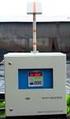 The Ambient Air Monitoring System 1.0 Introduction: The Ambient Air Monitoring System (AAMS) can measure a range of toxic and flammable gases, particulate matter, meteorological and environmental parameters
Revised Health Impact Assessment Recommendation Document for
 Revised Health Impact Assessment Recommendation Document for Quincy, Washington Prepared by Department of Ecology Air Quality Program Olympia, Washington Second Tier Review Recommendation Page 2 of 16
INTERACTIONS: ENERGY/ENVIRONMENT Fossil Fuel Energy Impacts on Health - Helena Ribeiro
 FOSSIL FUEL ENERGY IMPACTS ON HEALTH Helena Ribeiro Department of Environmental Health, Faculdade de Saúde Pública, Universidade de São Paulo, Brazil Keywords: Fossil Fuel, Combustion, Air Pollution, Respiratory
Monitoring of air pollution spread on the car-free day in the city of Veszprém
 INTERNATIONAL JOURNAL OF ENERGY AND ENVIRONMENT Volume 5, Issue 6, 2014 pp.679-684 Journal homepage: www.ijee.ieefoundation.org Monitoring of air pollution spread on the car-free day in the city of Veszprém
Jytte Boll Illerup Morten Winther Erik Lyck Henrik Gundorph Bruun Department of Policy Analysis
 1998 Jytte Boll Illerup Morten Winther Erik Lyck Henrik Gundorph Bruun Department of Policy Analysis National Environmental Research Institute Ministry of Environment and Energy Denmark September 2 Introduction
Automotive Air Quality Sensors: industrial innovations to protect people s health
 Pioneering sensor and detector technology Automotive Air Quality Sensors: industrial innovations to protect people s health COST Action TD1105 3 rd Management Committee Meeting Barcelona, Spain, 21st June
Guide to UK Air Pollution Information Resources June 2014
 www.gov.uk/defra Guide to UK Air Pollution Information Resources June 2014 Contents Introduction... 1 What public information is available?... 2 UK-AIR online... 2 Air Quality Websites for Scotland, Wales
The Public Health Management of Chemical Incidents Case Study
 The Public Health Management of Chemical Incidents Case Study Professor David Russell, The WHO Collaborating Centre for Chemical Incidents, Cardiff, Wales, UK Location http://www.wales-calling.com/wales-buttons-maps/wales-town-map.gif
Electronic Reporting to BTS
 Electronic Reporting to BTS EPA s Electronic Reporting Tool (ERT) Software to Standardize Source Test Planning, Reporting and Assessment. http://www.epa.gov/ttnchie1/ert/ Enhancements made to improve and
JRC- AQUILA Position Paper. Assessment on siting criteria, classification and representativeness of air quality monitoring stations
 JRC- AQUILA Position Paper Assessment on siting criteria, classification and representativeness of air quality monitoring stations Structure of document 1. Introduction... 3 2. Scope... 3 3. Provisions
TESTIMONY OF LARRY J. GORDON, M.S., M.P.H. PRESIDENT, AMERICAN PUBLIC HEALTH ASSOCIATION BEFORE THE SENATE ENVIRONMENT AND PUBLIC WORKS COMMITTEE
 TESTIMONY OF LARRY J. GORDON, M.S., M.P.H. PRESIDENT, AMERICAN PUBLIC HEALTH ASSOCIATION BEFORE THE SENATE ENVIRONMENT AND PUBLIC WORKS COMMITTEE CLEAN AIR ACT July 9, 1981 Mr. Chairman and Members of
TORONTO MUNICIPAL CODE CHAPTER 423, ENVIRONMENTAL REPORTING AND DISCLOSURE. Chapter 423 ENVIRONMENTAL REPORTING AND DISCLOSURE
 423-1. Definitions. TORONTO MUNICIPAL CODE 423-2. Duty to report. Chapter 423 ENVIRONMENTAL REPORTING AND DISCLOSURE ARTICLE I Interpretation ARTICLE II Duty to Report 423-3. Exemptions from reporting
measured (empirical) data from CCC. The modelled values are of value for all (ecosystem specific modelling work deposition)
 TABLE 1. PLANNED ACTIVITIES CONCERNING ACIDIFICATION AND EUTROPHICATION DELIVERABLES WGE DELIVERABLES EMEP - Approved Eulerian modelling results - Ecosystem specific depositions - IAM as basis for negotiations
Criteria for EUROAIRNET
 Technical Report No. 12 Criteria for EUROAIRNET The EEA Air Quality Monitoring and Information Network Prepared by: Steinar Larssen, Norwegian Institute for Air Research, Kjeller, Norway, Rob Sluyter,
FACT SHEET PROPOSED MERCURY AND AIR TOXICS STANDARDS
 FACT SHEET PROPOSED MERCURY AND AIR TOXICS STANDARDS ACTION On March 16, 2011, the Environmental Protection Agency (EPA) issued a proposed rule that would reduce emissions of toxic air pollutants from
VARIATIONS TO STATE ENVIRONMENT PROTECTION POLICY (AIR QUALITY MANAGEMENT) AND STATE ENVIRONMENT PROTECTION POLICY (AMBIENT AIR QUALITY)
 POLICY IMPACT ASSESSMENT VARIATIONS TO STATE ENVIRONMENT PROTECTION POLICY (AIR QUALITY MANAGEMENT) AND STATE ENVIRONMENT PROTECTION POLICY (AMBIENT AIR QUALITY) POLICY IMPACT ASSESSMENT VARIATIONS TO
A GUIDANCE NOTE ON THE BEST PRACTICABLE MEANS FOR ELECTRICITY WORKS BPM 7/1 (2014)
 A GUIDANCE NOTE ON THE BEST PRACTICABLE MEANS FOR ELECTRICITY WORKS (COAL-FIRED PLANT, GAS-FIRED GAS TURBINE, AND OIL-FIRED GAS TURBINE (PEAK LOPPING PLANT)) BPM 7/1 (2014) Environmental Protection Department
EPA Requirements for Diesel Standby Engines In Data Centers. Bob Stelzer / CTO / Safety Power Inc. For 7x24 Fall 2014 Conference. 1.
 EPA Requirements for Diesel Standby Engines In Data Centers Bob Stelzer / CTO / Safety Power Inc For 7x24 Fall 2014 Conference 1.0 Introduction In order to get the Air Emissions Permit for facilities that
Development of an Air Quality Monitoring Network for Kosovo
 Development of an Air Quality Monitoring Network for Kosovo Submitted as a Capstone Project Proposal in partial fulfillment of a Master of Science Degree in Professional Studies at the RIT Center for Multidisciplinary
TR 07-03 SUPPLEMENTARY REQUIREMENTS FOR THE ACCREDITATION OF CONTINUOUS AMBIENT AIR QUALITY MONITORING STATIONS
 SUPPLEMENTARY REQUIREMENTS FOR THE ACCREDITATION OF CONTINUOUS AMBIENT AIR QUALITY MONITORING STATIONS Approved By: Chief Executive Officer: Ron Josias Senior Manager: Christinah Leballo Reviewed By: Testing
Clean Up Your Fleet. Introducing a practical approach to cleaner, more efficient fleet operation
 Clean Up Your Fleet Introducing a practical approach to cleaner, more efficient fleet operation The value of clean fleet management Reduce air pollution from your fleet Reduce greenhouse gas emissions
Smoke Management Plan
 Smoke Management Plan December 2007 TABLE OF CONTENTS 1.0 Introduction 3 2.0 Background 6 3.0 Smoke Management Plan 7 3.1 Authorization to Burn 10 3.2 Minimizing Air Pollutant Emissions 11 3.3 Smoke Management
The Regulatory Role of Chemical Mechanisms and Future Needs
 The Regulatory Role of Chemical Mechanisms and Future Needs Ajith Kaduwela Planning and Technical Support Division Air Resources Board California Environmental Protection Agency Department of Land, Air
POTENTIAL TO EMIT SUMMARY FIBERIGHT, LLC HAMPDEN, MAINE
 POTENTIAL TO EMIT SUMMARY FIBERIGHT, LLC HAMPDEN, MAINE s (Ton/Year) Thermal Flare Oxidizer Boiler#1 Boiler #2 Scrubber #1 Scrubber #2 Total Carbon Monoxide (CO) 6.91 2.90 43.59 24.90 78.3 Oxides of Nitrogen
Experimental study on atmospheric pollutant emissions from heating systems, in Italy
 Experimental study on atmospheric pollutant emissions from heating systems, in Italy Promoted by the Italian Ministry for the Environment, in coperation with : The Lombardy Region, the Piedmont Region,
AN OVERVIEW OF AIR POLLUTION IN URBAN AREAS OF TANZANIA
 AN OVERVIEW OF AIR POLLUTION IN URBAN AREAS OF TANZANIA Presented in DART project launching workshop, April 2009 By G. J. Kombe Senior Environment Management Officer Introduction Pollution of air is the
Air Pollution Sampling and Analysis
 Air Pollution Sampling and Analysis (Laboratory Manual) Dr. Sharad Gokhale [email protected] Department of Civil Engineering Indian Institute of Technology Guwahati Guwahati 781039, Assam, India Date:
Published in "Official Gazette of the Republic of Macedonia" No. 67/2004 LAW ON AMBIENT AIR QUALITY I. GENERAL PROVISIONS
 Published in "Official Gazette of the Republic of Macedonia" No. 67/2004 LAW ON AMBIENT AIR QUALITY I. GENERAL PROVISIONS Article 1 Subject of regulation (1) This Law shall regulate the measures for avoidance,
LIFE CYCLE ASSESSMENT ON COTTON AND VISCOSE FIBRES FOR TEXTILE PRODUCTION
 LIFE CYCLE ASSESSMENT ON COTTON AND VISCOSE FIBRES FOR TEXTILE PRODUCTION Janka Dibdiakova, Volkmar Timmermann Norwegian Forest and Landscape Institute (NFLI) Ås, Norway COST FP1205 Innovative applications
Invisible air pollution is the second biggest public health risk
 Invisible air pollution is the second biggest public health risk Barbican Association London: 26 April 2012 Simon Birkett, Founder and Director, Clean Air in London www.twitter.com/cleanairlondon http://delicious.com/cleanairlondon
An overview of Euro VI for trucks over 3.5t. Brought to you by Mercedes-Benz
 An overview of Euro VI for trucks over 3.5t Brought to you by Mercedes-Benz Contents What is Euro VI? What is Euro VI? 01 What s different about Euro VI? 02 When do you need to think about it? 03 How is
Economic and Social Council
 UNITED NATIONS E Economic and Social Council Distr. GENERAL CEP/AC.10/2005/5 12 April 2005 ORIGINAL: ENGLISH ECONOMIC COMMISSION FOR EUROPE COMMITTEE ON ENVIRONMENTAL POLICY Working Group on Environmental
FLORIDA S OZONE AND PARTICULATE MATTER AIR QUALITY TRENDS
 FLORIDA S OZONE AND PARTICULATE MATTER AIR QUALITY TRENDS Florida Department of Environmental Protection Division of Air Resource Management December 2012 Various pollutants are found in the air throughout
4. The role of fleets and fleet managers Role of REC?
 4. The role of fleets and fleet managers Role of REC? 79% 5% 44% To grow by 50% by 2010 over 1998 Role of Fleets - Changing operating environment: national, local government incentives, disincentives -