
Working with Copper Tubing
|
|
|
- Earl Lucas
- 10 years ago
- Views:
Transcription
1 This sample chapter is for review purposes only. opyright The Goodheart-Willcox o., Inc. ll rights reserved. Objectives fter studying this chapter, you will be able to: Identify types and sizes of copper tubing. Select and properly use tubing tools. Demonstrate proper use of tube bending tools. Describe the steps needed to make swaged connections. Describe the steps needed to make flared connections. Identify and properly use various types of copper tubing fittings. Important Terms R tubing annealed chamfer compression fittings coupling elbows flare bonnet flare cap nut flare elbow flare fitting flare nut flare plug flare tee flare union flaring flaring block hacksaw hard-drawn copper tubing inside diameter lever-type tubing benders offsets outside diameter oxidation P-trap pressure drop psi reamed reducing coupling soft copper tubing spring benders street elbow swaging sweat soldering tee telescoping tubing cutter union work-hardening wrought fittings 3 Working with opper Tubing 3.1 opper Tubing opper tubing used for air conditioning and refrigeration work is called R (ir onditioning and Refrigeration) tubing. It differs from copper tubing used for general plumbing work. When R tubing is manufactured, the inside of the tubing is dehydrated to remove all moisture. The tubing is then charged (filled) with low-pressure nitrogen gas and sealed with a cap at each end to keep the tubing safe from contamination by oxygen and moisture in the air. If oxygen atoms were to combine with copper atoms (a process called oxidation), a layer of copper oxide would form inside the tubing. The caps also keep out dirt and other foreign matter that could contaminate a refrigeration system. aps or plugs should be replaced after cutting a length of tubing. Plumbing copper tubing is cheaper than R copper tubing, but plumbing copper is not used in refrigeration systems because it is not protected against contamination. Plumbing copper also differs from R copper in size. Plumbing copper is measured by its nominal inside diameter (ID), while R copper is measured by its outside diameter (OD). See Figure Types of opper Tubing opper tubing is available in soft and hard-drawn types. Soft copper tubing has been annealed (softened by heating it to a bright cherry red color and permitting it to cool) so it can be bent easily. Hard-drawn copper tubing is rigid and cannot be bent easily unless it is first annealed. oth soft copper and hard copper are further classified according to the thickness of the tubing wall. Three thicknesses are available: K, L, and M. Type K has the thickest wall. It is used in applications where abuse or corrosion might occur. Type 39 Figure 3-1. R copper tubing and plumber s copper tubing are measured differently. R tubing is sized by actual outside diameter. Plumber s tubing is measured by nominal inside diameter the OD usually will be 1/8 larger than its ID. K is usually hard-drawn tubing and is used in commercial refrigeration systems. Type L is the most common tubing. It has a medium-thick wall and is used for residential and commercial applications. Most R tubing, both soft and hard, is L thickness. When R copper tubing is ordered, Type L is automatically provided unless another thickness is specified. Type M is a thin-walled tubing. It is not used in refrigeration systems because it does not meet safety code requirements. Some manufacturers use Type M copper tubing to construct watercarrying coils. Plumbers may use it for small drain lines and for other noncritical applications. Soft copper tubing Type L soft copper tubing is available from 1/8 to 3/4 OD and is usually sold in 50-foot coils, Figure 3-2. s noted earlier, these coils are dehydrated and sealed at the factory. apped ends Figure 3-2. Soft copper R tubing is supplied in 50-foot coils. To prevent contamination, it is dehydrated, filled with nitrogen gas, and capped at both ends. (Mueller rass o.) ecause soft copper is easily bent, it must be supported with clamps or brackets every four to six feet. Soft copper tubing has a tendency to harden as a result of vibration, oxidation, and bending. This is called work-hardening. Work-hardened copper will crack at stress points, especially when it is flared or formed at the tubing ends. opper that has become work-hardened can be resoftened by heating it to a bright red surface color and then allowing it to cool. Unrolling soft copper coils. Soft copper coils should be handled with care because the tubing is easily damaged. Kinks, bends, flat spots, or dents will make the material unfit for use. ending and kinking can be avoided by unrolling the coil properly. s shown in Figure 3-3, unrolling is done by supporting the coil upright with one hand and holding the free end of the tubing stationary on a flat surface with the other hand (or a foot). The coil is then rolled in a straight line to the desired length. Do not unroll an excessive amount because it is difficult to recoil the tubing without bends or kinks. fter cutting off the desired length, replace the cap or plug on the end of the coil to prevent contamination. Figure 3-3. Uncoil soft copper tubing carefully to avoid kinking. Hold one end flat on the floor or other surface, and unroll as much as needed. Hard-drawn copper tubing Hard-drawn copper tubing is hard and rigid and either Type L or Type K thickness. It comes in standard 20-foot lengths that are dehydrated, charged with nitrogen, and sealed with rubber plugs at each end, Figure 3-4. Hard-drawn copper tubing cannot be bent easily, so soldered or brazed fittings are used when making connections or changing directions. ecause of its rigidity, hard-drawn copper tubing requires fewer supports or brackets than soft copper tubing, and assembly is quicker. It is available in sizes ranging from 3/8 OD to over 6 OD.

2 Figure 3-4. Rubber plugs are used to seal the ends of lengths of hard-drawn copper tubing after it is dehydrated and filled with nitrogen gas. (Mueller rass o.) Tubing vs Pipe In the early days of refrigeration and air conditioning, plumbers performed the installation and service work. These early systems used ammonia and other corrosive chemicals as refrigerants. Iron and steel pipe had to be used to avoid the chemical reaction that would occur if these chemicals were used with copper tubing and fittings. The development of noncorrosive refrigerants has made possible the use of copper tubing in almost all refrigeration and air conditioning systems today. The distinction between tubing and pipe is primarily wall thickness and the resulting joining method. Tubing is considered thin-walled material (regardless of whether it is Type K, L, or M) compared to steel and plastic pipe. The term tubing is generally applied to materials such as copper and aluminum that are joined by means other than threads. Pipe is the term used to describe thick-walled materials, such as steel or plastic. Threads are cut into the pipe wall, allowing lengths of pipe to be joined with threaded fittings that screw into place. Fitting different sizes of tubing inside one another is known as telescoping. It is sometimes used to perform emergency repairs when the proper fitting is not available. Telescoping can be performed with R tubing because of its OD sizing system and wall thickness. s shown in Figure 3-5, R 1/4 copper tubing will fit snugly inside 3/8 copper tubing, 3/8 tubing will fit snugly inside 1/2 tubing, 1/2 will fit snugly inside 5/8, and so on. Figure 3-5. ccurate OD sizing allows different diameters of R tubing to telescope inside each other. 3.2 The ability to properly perform such operations as cutting, bending, and joining copper tubing is a basic requirement for success as an HV technician. areful attention to correct use of tools and the development of good work habits will result in trouble-free installations and satisfied customers utting Tubing utting copper tubing is a simple task, but it must be performed properly. are must be exercised not to damage the ends being cut. The most common and accurate way to cut copper tubing is to use a tubing cutter, Figure 3-6. Figure 3-6. Tubing cutters produce an accurate, clean 90 cut, resulting in strong, well-made joints. Tubing cutters make an accurate 90 cut on either hard or soft copper tubing. They are available in several sizes for use on different tubing size ranges or for special purposes, see Figure 3-7. The tubing is positioned on the cutter rollers with the cutter blade accurately located at the cut point. Rotating the cutter knob will raise or lower the cutter blade. The blade is pressed firmly against the metal, and the tool is rotated around the copper tubing. fter each rotation, the knob is tightened to force the blade lower into the cut. Several rotations are needed to properly complete the cut. void excessive blade pressure, which will flatten the tubing and may cause a severe burr on the inside of the tubing ends. See Figure 3-8. Keep the cutter blade sharp; a dull blade will not cut a single clean groove. Instead, it will track, making rows of shallow cuts on Heating and ooling Essentials Figure 3-7. This tiny, special-purpose tubing cutter can be used to cut tubing up to 1 1/8 OD where little clearance is available. (The Ridge Tool ompany) Flat spot Figure 3-8. Excessive pressure from the tubing cutter blade may cause flat spots and severe burrs on the tubing. Tubing at left was cut with correct pressure; tubing at right, with excessive pressure. Note the flat spot that resulted. the outside of the tubing. The tubing cutter should be used only on copper or aluminum tubing. Using the cutter on steel tubing or electrical conduit will quickly dull the blade, making a replacement necessary. hacksaw is the second (and less desirable) method of cutting copper tubing. This method has two main disadvantages: it is difficult to obtain a precise 90 cut, and the sawing process creates tiny metal chips that can contaminate the inside of the tubing. To obtain the smoothest possible cut, use a saw blade with at least 32 teeth per inch. e very careful to remove all metal chips from the tubing. Reaming and deburring fter the copper tubing is cut, the tube ends must be reamed, removing burrs and scraping the ends to a flat surface. This procedure is usually performed with a pointed reamer blade built into the tubing cutter, but some technicians prefer using a pocketknife blade. Use care to prevent copper chips or burrs from entering the tubing. Hold the tubing upside down or at an angle during the reaming process so the chips will fall to the floor. See Figure 3-9. It is important to properly dress the cut tubing end. urrs or ridges on the inside of the hole will cause problems in assembly, as will thin or uneven edges. The thickness of the tubing at the cut should match the thickness of the rest of the tubing, Figure little time and effort spent dressing the cut will prove worthwhile. Figure 3-9. Reaming. Reamer blade built into a tubing cutter. Hold the tubing with the open end down while reaming to prevent contamination of the tubing with metal chips from the burrs ending opper Tubing Several types of tubing benders are available for making accurate bends in tubing without causing flats, kinks, or dents. Flats and kinks are eliminated, not for the sake of appearance, but because they would restrict the flow of liquid or gas through the tubing. In a refrigeration system, the tubing must carry liquid or vapor from one component to another. The

3 43 44 Heating and ooling Essentials copper tubing is almost a daily task, especially on installation jobs. ending is much faster than installing a fitting and does not present a potential leak hazard, as do fittings. Making accurate 45 and 90 bends requires some practice; lever benders are designed to make this task easier and more accurate. 3.3 onnecting opper Tubing The walls of copper tubing are too thin to make strong threaded connections, so other means are employed to join lengths of tubing. Two general approaches are used: permanent connections using soldering or brazing on swaged copper tubing or wrought fittings, and mechanical connections using threaded fittings that can be easily disconnected to make repairs or to replace defective parts. The ability to work with copper tubing and the various fittings used to make connections is a basic requirement for anyone entering the HV field. Punch-type swage. The tubing is clamped into a special tool called a flaring block with just enough tubing protruding through the block to accomplish the enlarging process. See Figure The depth of the finished swage should be equal to the original tubing diameter. For example, 1/4 tubing is swaged 1/4 deep, and 1/2 tubing is swaged 1/2 deep. Swaging punches are available in diameters ranging from 3/16 to 7/8. Figure orrectly and incorrectly dressed cut tubing. Tubing is correctly reamed, with proper wall thickness at cut end. Tubing is excessively reamed; wall is too thin. Tubing is not reamed sufficiently; wall is too thick. tubing is carefully sized to carry a specific flow, so the technician must be careful not to create unplanned restrictions, such as flats and kinks. Restrictions to flow reduce system efficiency, resulting in pressure drop. It is important to keep to a minimum any decreases in pressure in a piping system. Hand bending Soft copper greater than 1/4 in diameter can sometimes be bent successfully by hand. (Smaller tubing is easily bent by hand without kinks or flats, unless the bend is very sharp.) ending is done carefully, a little at a time, to avoid developing severe flats or kinks that must be removed. Hand bending requires skill and should be done only by experienced technicians. Spring benders Spring benders, Figure 3-11, provide an efficient, low-cost method to bend soft copper tubing. Spring benders are available in a variety of sizes to fit tubing from 1/4 OD to 3/4 OD. These springs slip over the tubing to completely cover the area of the bend. fter each bend is made, the spring is slid along the tubing to the next section to be bent. When a bend is sharp, spring benders have a tendency to bind, or stick, to the tubing. This tendency to bind can be overcome by bending the tubing a little farther than needed, then bending it back to relieve pressure on the spring. Push, do not pull, on the spring to remove it from the tubing. Pulling can permanently separate the spring coils, making the bender unfit for further use. If the bend is still too tight to slide the spring off the tubing, simply twist the spring to unscrew it. Very little practice is needed to accomplish proper bends in smaller tubing with a spring bender. Larger tubing, however, requires more physical force to bend, Figure Spring benders. Used mostly with smalldiameter, soft copper tubing, spring benders are available in a number of sizes. Using a bending spring on soft copper tubing is a two-handed operation. so spring benders are used on larger tubing primarily to accomplish slight bends or curves. lthough the spring bender is designed for use on the outside of tubing, a smaller spring is sometimes inserted into the tubing to make a bend at the tubing end. Lever-type benders Lever-type tubing benders, Figure 3-12, are easy to operate and are calibrated to allow accurate shortradius bends up to 180. Some benders are designed to fit only one size of tubing, while others can be used with a range of sizes. Lever benders can be used on soft copper, aluminum, steel, stainless steel, and Types K and L hard copper tubing. For the technician, making accurate bends in Degree scale Figure Lever-type tubing benders can make shortradius bends of up to 180 without flattening the tubing. Note the scale used to read degrees when making bends Swaging opper Tubing Swaging (pronounced swedging ) involves enlarging the diameter of one end of a length of soft copper tubing so the end of another length can be slipped into it. See Figure The connection is then soldered or brazed to make a strong, leakproof joint. Swaging is the preferred method of joining soft tubing since the process requires little time, and only one brazed joint is needed to complete the connection (compared to two joints for a fitting). Figure Swaging joins tubing by enlarging the diameter of one piece so that it forms a socket for another piece. The joint is then soldered or brazed for strength and leakproofing. Swaging methods Swaged connections can be made using either the punch-type joint method or the screw-type joint method. oth punch- and screw-type joints require the use of special hand tools. Flaring block all pein hammer Punch Tubing Figure punch-type swaging tool uses a flaring block to hold the tubing and a ball pein hammer and a punch to stretch the tubing end. Swaging is done by clamping the tubing in the flaring block, then positioning the proper size swaging punch at the tubing end. ball pein hammer is used to slowly drive the punch into the tubing end. The punch will enlarge the tubing end to the precise diameter required. The punch should be held firmly and straight during the swaging process. Striking several easy blows is the preferred technique; it permits the copper to swell slowly, resulting in a straighter and more accurate swage. (Using less force is also easier on your knuckles if you miss!) With a little practice, you will be able to determine how hard to strike the punch to obtain the desired swage. When tubing is inserted into the swage, the fit should be tight and straight. Such a fit is best for proper soldering and brazing. Loose or crooked connections are difficult to solder or braze, resulting in a weak joint. hapter 5 covers procedures for soldering and brazing tubing. Screw-type swage. With this method, the tubing is clamped into the flaring block with the correct amount of tubing protruding. s shown in Figure 3-15, a screw-type yoke is fitted over the tubing end and

4 45 46 Heating and ooling Essentials Flaring block Yoke copper tubing for easy soldering or brazing. void dropping or roughly handling fittings since a dent in a fitting can make it unsuitable for use. Types of fittings Fittings are available in many different types and sizes, so almost any connection is possible. See Figure 3-16 for examples of wrought fittings. The names and shapes of fittings are common to many trade areas (plumbing, electrical, HV), but the sizes, threads, and types of material often differ. ouplings. The fitting used to connect two lengths elbows usually have female fittings on each end. See Figure Elbows are used to change the direction of the tubing run. short-radius elbow bends quite sharply, while a long-radius elbow makes a more sweeping turn. The long-radius type is preferred because it offers less restriction to the flow of refrigerant. Like couplings, elbows are sized according to the OD of the tubing on which they are used. 1/2 90 elbow, for example, would have 1/2 female openings on each end to accept 1/2 copper tubing. street elbow contains a female end and a male D E F G 90 Elbow 45 Street Elbow Figure Screw-type swaging tool. The screw-type tool consists of a yoke and a flaring block. It is easier to use in close quarters than the punch-type tool. The selfcentering yoke is slipped over the flaring block. The yoke is rotated slightly to lock onto the block. This ensures centering of the adapter over the tubing. (Imperial Eastman) twisted to lock it onto the flaring block. y turning the handle on the yoke, the swaging adapter is slowly forced into the tubing to stretch it. Swaging adapters are interchangeable and range in OD from 1/8 to 3/4. The screw-type swaging tool is often easier to use in close quarters than the punch-type tool. The screwtype tool precisely aligns the adapter with the tubing, producing nearly perfect swages every time. Using wrought fittings Wrought fittings are sometimes called sweat fittings because of the sweat soldering (or brazing) method used to join them to either hard-drawn or soft copper tubing. These fittings are usually made of copper, but sometimes are brass and do not have threads. They are sized according to the copper tubing used and are readily available in sizes ranging from 1/4 to 6. Wrought fittings are used where the connection is permanent, such as long runs of either soft or hard copper tubing. (They are required when using harddrawn copper tubing.) The brazed connection is stronger than the actual copper tubing, but the connection must be properly brazed and leakproof. Wrought fittings are designed to fit tightly over Figure Typical fittings used to make permanent copper tubing connections by sweat soldering or brazing. 90 street elbow. 45 street elbow. Reducing coupling. D 90 elbow. E oupling. F ap. G Tee. of hard copper tubing is the coupling, Figure ouplings are available in all sizes and usually have openings of the same diameter on each end. 5/8 coupling, for example, is used to connect two sections of 5/8 hard copper tubing. These fittings also can be obtained as reducing couplings by specifying the sizes on each end. For example: Reducing coupling, 7/8 5/8. Elbows. vailable in either 45 or 90 angles, Figure ouplings are used to connect two pieces of tubing in a straight line. Most couplings have openings of the same diameter at both ends. reducing coupling, like the one on the right, has openings of different sizes, allowing a larger-diameter piece of tubing to be connected to tubing with a smaller diameter. Figure Elbows are used to make 45 or 90 changes in direction. Standard elbows have female fittings at both ends. Street elbows have a female fitting at one end and a male fitting at the other. end. oth openings are normally sized for the same size tubing. The male end of the street elbow is the same size as the tubing; the female end is sized to fit the outer diameter. They are used frequently in HV work to make offsets (changes in direction that extend only a short distance). See Figure Street elbows reduce the number of brazed connections needed, compared to using regular elbows and short lengths of tubing. Tees. Fittings called tees are used to connect a branch circuit to an existing line of copper tubing. tee numbering system guarantees the correct size, type, and placement of an opening. s shown in Figure 3-20, the straight-through connections are numbered 1 and 2, and the branch is 3. With this numbering system, it is possible to order a tee with different sizes at each opening. For example: Wrought tee, 7/8 5/8 1/4. (The branch would be 1/4 OD.) Other fittings. Wrought fittings are available to satisfy almost any need. Special fittings such as P-traps (named for the shape into which the tubing is bent), return bends, unions, and caps can save much time and trouble when installing HV equipment. The union combines aspects of mechanical and permanent-type fittings. It has three parts: two shoulders and a nut for pulling the shoulders together, Figure The shoulders of the union are brazed to Figure Street elbows are used to make offsets (changes in direction) similar to those shown. Offsets reduce the number of brazed connections needed Figure standard numbering system is used for the openings in a tee. The straight-through connections are numbered 1 and 2, and the branch is assigned number 3. the ends of the joined copper tubing. The nut pulls on one shoulder while screwing onto the other shoulder, providing a mechanical connection. This results in a leakproof joint that can be disconnected. union is used in such applications as a drain line that may need to be disconnected for cleaning Using Mechanical onnections Mechanical tubing connections can be divided into two types: those using compression fittings and those using flare fittings. ompression-type connections are rarely used on refrigeration systems since they cannot withstand the high pressure and vibration associated with such systems.

5 47 48 Heating and ooling Essentials Nut Shoulders Figure union combines permanent connections with a mechanical system that allows the union to be disconnected. The locking nut pulls the shoulders tightly together, making it possible to break the connection for cleaning or repair work. Flared connections, however, are very common on all types of refrigeration systems because they can withstand high pressure and some vibration. Failure of a flare connection can usually be traced to abuse or to lack of skill by the person who made it. ompression-type connections ompression fittings are commonly used in heating applications that involve only low pressure. They also are widely used for connecting gasoline, natural gas, propane, water, and air lines, where excessive pressure and vibration are not involved. ompression fittings are simple, efficient, and easy to assemble. See Figure ompression union fitting ompression ring Nut Other than making sure tubing ends are cut square and burrs are removed, no special preparation is needed when using compression fittings. Simply slip the nut and compression ring over the tubing, then insert the tubing into the fitting until it rests against a shoulder. Slide the compression ring into position and tighten the nut. Tightening the nut causes the ring to be compressed between mating surfaces, providing a leakproof connection. When the connection is disassembled, the ring will remain attached to the tubing and cannot be removed. The ring is often called a sleeve or ferrule. ompression fittings are never used on refrigeration systems because of vibration and high pressure. However, some residential air conditioning systems use special compression fittings to join tubing from the indoor unit to the outdoor unit. These field connections are simple, inexpensive, and quick. ompression fittings. Fittings are sized according to the outside diameter of the tubing, ranging from 1/8 to 7/16. Nuts and compression rings needed for installation are provided with all compression fittings such as unions, elbows, and tees. Many adapters are available to connect tubing with a compression fitting on one side and a flare fitting or pipe connection on the other. Flare-type connections Flaring copper tubing is a process of expanding or spreading the end of the tube into a funnel shape with a 45 angle, Figure ll refrigeration flare fittings are made with a 45 angle so the tubing will fit snugly against the fitting. flare nut is used to compress the flare against the fitting to obtain a tight, leakproof, metal-to-metal contact. Refrigeration tubing connections must withstand at least 300 psi (pounds per square inch) of pressure without leaking. ecause the flare connection is a mechanical, metal-to-metal contact without gaskets, it is vital that proper attention and care be given to making the flares. The tubing end should be properly reamed before attempting to make flares. urrs or rough edges will interfere with the smooth metal-to-metal contact and permit leakage. The tubing is clamped in a flaring block with its end protruding slightly above the chamfer (beveled edge) on the block s top side. screw-type yoke with a special flaring adapter is then clamped onto the block and automatically centered above the tube. See Figure Turning the screw will force the cone-shaped adapter into the tubing end, spreading it until it is formed to a 45 angle against the chamfer, Figure Flare defects. Extending the tubing too high above the chamfer will result in a flare that is too wide. This prevents the nut from sliding over the flare. If the tubing is too low in the chamfer, the result is a small flare that can pull free from the flare nut. properly made flare will almost fill the bottom of the flare nut without binding or rubbing the threads. Figure 3-26 shows a correctly made flare and some that are incorrectly made. Flare Figure The flaring tool s cone-shaped adapter stretches the end of the tubing and forces it against the chamfer, forming a 45 flare. Tubing ompleted connection D Figure ompression connections are made by compressing (squeezing) a sleeve or ring between a fitting and a nut. ompression fittings are used more widely in residential heating and air conditioning. Figure When copper tubing is flared, the tubing end is expanded to a funnel shape. The 45 angle matches the angle used on flare fittings. Figure Forming a flare. The tubing is clamped in the flaring block. The yoke is slipped over the block and twisted into place. The adapter is screwed into the tubing to form the flare. Figure correctly made flare is vital to achieving a leakproof connection. orrectly made flare. Flare too small. Flare too large. D Flare uneven.

6 49 50 Heating and ooling Essentials UTION: Overtightening the yoke screw while forming the flare will create a thin area where the adapter meets the chamfer of the block. This thin area weakens the flare and can cause it to break off when the nut is tightened. lways remember to place the flare nut on the tubing before making the flare. (Every technician has, at one time or another, made a perfect flare and then discovered that the flare nut was not on the tubing.) To resolve such a problem, you must cut off the flare, install the nut on the tubing, and make a new flare. Most tubing cutters have a special groove located on the rollers, Figure 3-27, to permit removing only the flare. Groove in roller Figure groove in the roller of the tubing cutter allows just the flare to be cut off so the tubing is not shortened any more than necessary. Flare fittings Flare fittings are mechanical fittings intended for use on soft copper tubing. They are usually dropforged brass and are accurately machined to form a 45 flare face (area where tubing joins the fitting). See Figure Flare fittings are sized according to the copper tubing size and are commonly available from 3/16 to 3/4. The threads for all flare fittings are Society of utomotive Engineers (SE) National Fine. This means they cannot be connected to other threads, such as pipe threads, National oarse, or ISO Metric. Flare nuts. The flare nut is the most frequently used fitting. Flare nuts are sized according to the hole through which the tubing is inserted. Since the hole just fits over the tubing, any flats or kinks in the tubing will interfere with the fit. Threads are located on the inside of the nut, and the bottom of the nut contains a perfect 45 flare to exactly match the flare on the tubing end. The tubing flare should almost fill the area at the bottom of the nut. When the nut is screwed onto a fitting, the flare on the tubing is compressed between the nut and the fitting. To be leakproof to 300 psi (2000 kpa), this metal-to-metal contact requires a perfect match without burrs or ridges to interfere with the seal. E Figure Flare fittings are normally machined from brass. Short nut. Long nut. Reducing flare nut. D Tee. E 90 elbow. F Reducing union. Flare nuts can be obtained in either short or long style, Figure The short flare nut is the most common. The long style is used to provide more tubing support when vibration is a concern. Figure Flare nuts are made in both short and long styles. onnections subjected to vibration should be made with long flare nuts for greater tubing support. Sometimes, a reducing flare nut is used to attach tubing to a fitting of another size. This eliminates the use of additional fittings and reduces the number of possible leaks. Flare unions. full flare union is a fitting used to connect two flare nuts of the same size. It is called a full union because each end of the fitting is the same size. 3/8 full union would have a 3/8 male flare on each end. 3/8 full union is a quick way of saying, 3/8 MFT 3/8 MFT union, (MFT = Male Flare Thread). reducing union performs the same function as a full union, except the sizes of the flare nuts are D F different. It is used to reduce from one size tubing to another, such as 1/2 MFT 3/8 MFT. It is possible to obtain a union that has a male fitting on one end and a female fitting on the other. Such a union might be described as 3/8 MFT 3/8 FFT (FFT = Female Flare Thread). Flare elbows. The flare elbow serves the same function as the flare union while providing an accurate bend of either 45 or 90. Flare elbows (often called ells ) can be obtained in any tubing size, conventional or reducing. For example: 90 flare elbow, 1/4 MFT 3/8 MFT (or FFT). Flare tees. The flare tee makes it possible to connect a branch to an existing line of copper tubing. The tee numbering system guarantees the correct size, type, and placement of the opening. With the numbering system, it is possible to order a tee with openings of different sizes. For example: flare tee, 1/2 MFT 3/8 MFT 1/4 MFT. Position 1 is 1/2 MFT, position 2 is reduced to 3/8 MFT, and position 3 (the branch) is 1/4 MFT. Of course, any of the positions on the tee can be ordered with female threads. Flare plugs. vailable for all tubing sizes, the flare plug is used to seal a flare nut or similar femalethreaded opening. This seal can be temporary or permanent but is usually temporary until proper repairs can be made. Flare cap nuts. female nut used to seal off a male-threaded fitting is called a flare cap nut. This seal can be either permanent or temporary. The flare cap nut is used extensively on service valves and other such devices. The cap nut prevents dirt and other foreign matter from entering the system through an access fitting. Flare bonnets. The flare bonnet is made of copper and is used to convert an ordinary flare nut into a cap nut. Such devices come in handy when a cap nut is not available. The bonnet is placed inside a flare nut, which can be used to cap a male-threaded fitting. Summary This chapter has explained the various tools and procedures for connecting copper tubing. opper tubing is used to connect system components, which must be durable and leakproof. Skill is required to perform tubing connections that will withstand vibration and remain leakproof. Poor connections result in loss of refrigerant and failure of the system to operate properly. Most technicians can recognize tubing sizes and fittings at a glance. They do not need to measure or double-check sizes. This familiarity comes after constantly using tubing and fittings. Likewise, consistently making swages and flares quickly and accurately the first time results from practice. eginning technicians are often assigned to work with copper tubing and fittings. Many never progress beyond this stage. They become professional installers of copper tubing. Their pay scale is very good because such skills are important and valuable. Test Your Knowledge Please do not write in this text. Write your answers on a separate sheet of paper. 1. Why is R tubing dehydrated, filled with gas, and capped at both ends? 2. What gas is used to charge R copper tubing after it has been dehydrated? 3. The two types of R copper tubing are and. 4. The three thicknesses of copper tubing are Type, Type, and Type. a. J, K, L b. 3, 8, 12 c. K, L, M d., P, W 5. R tubing is sized by its diameter. Plumber s copper tubing is sized by nominal diameter. 6. Name two methods for cutting copper tubing. Which is preferred? Why? 7. Why is it important to remove burrs from cut ends of copper tubing? 8. Name three methods used to bend soft copper tubing. 9. What is the advantage of swaging over joining tubing with a fitting? 10. Hard-drawn copper tubing is connected by wrought fittings, also known as fittings. 11. The openings in tee fittings are numbered 1, 2, and 3. Which one is the branch opening? 12. Name the two types of mechanical connections. 13. The angle on flare fittings is degrees. a. 30 b. 45 c. 60 d True or false? Flare fittings are intended for use only on hard-drawn copper tubing. 15. The flare is the most frequently used flare fitting.

Installer s Guide 18-AH39D1-13
 18-AH39D1-13 Cased Aluminum "Convertible" Coils 4TXCA018BC3HC** 4TXCA024BC3HC** 4TXCB025BC3HC** 4TXCB026BC3HC** 4TXCB031BC3HC** 4TXCB032BC3HC** ALL phases of this installation must comply with NATIONAL,
Installation Instructions 4508 4508S
 SYMPHONY Spread Lavatory Faucet with Speed Connect Drain Congratulations on purchasing your American Standard faucet with Speed Connect drain, a feature found only on American Standard faucets. Speed Connect
GEET Fuel Processor Plans
 GEET Fuel Processor Plans This is a greatly simplified Proof of Concept version of the GEET Fuel Processor that just about anyone can build from parts from a local Hardware store in a weekend for very
Makes bends greater than 90 in a single operation
 TurnPro Tools TurnPro Indexing Tube Bender TurnPro HTB Indexing Handle Tube Bender Makes bends greater than 90 in a single operation Eliminates crossed handles Noassembly andreassembly ofbenderhandles
CAST IRON THE BASICS. Heatline - Cast Iron Radiators SMOOTH FLAT FILE TO REMOVE ANY SWARF. ONE TIME. ASSEMBLY. JOINTS SHOULD BE TIGHTENED.
 CAST IRON THE BASICS 1. DO NOT LIFT ON YOUR OWN. 2. ONLY LIFT THE RADIATOR VERTICALLY. 3. DO NOT LIFT MORE THAN 8/10 SECTIONS AT ANY ONE TIME. 4. POSITION THE RADIATOR BEFORE FINAL ASSEMBLY. 5. THIS PRODUCT
Service Manual Rol-Lift
 R 2000 Service Manual Rol-Lift Series: T and E Developed by Generic Parts Service This manual is intended for basic service and maintenance of the Rol-Lift pallet jack. The pallet jacks you are servicing
Hose Clamps & Fittings
 All Stainless Steel Marine or Underground Hose Clamps 5/16 HEX HEAD SCREW 60000 SERIES Highly corrosion resistant Use for marine or underground applications Stainless Steel Band, Housing Plated Steel Screw
Overview PARTS LIST. B. Lever mounting base C. Flush handle assembly D. Grey/Blue float stop E. Grey float (Full Flush) F. Flush valve washer
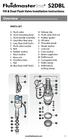 Overview READ ENTIRE INSTRUCTIONS BEFORE STARTING INSTALLATION PARTS LIST A. Flush valve B. Lever mounting base C. Flush handle assembly D. Grey/Blue float stop E. Grey float (Full Flush) F. Flush valve
Guidelines for Earthquake Bracing of Residential Water Heaters
 Guidelines for Earthquake Bracing of Residential Water Heaters Department of General Services Division of the State Architect 1102 Q Street, Suite 5100 Sacramento, CA 95814 Phone: (916) 324-7099 Fax: (916)
INSTALLATION INSTRUCTIONS P-TRAP SUPPLY KIT Model: RH-3016 These instructions are a guideline for a basic installation
 INSTALLATION INSTRUCTIONS P-TRAP SUPPLY KIT Model: RH-3016 These instructions are a guideline for a basic installation Recommended Installation by a Professional Plumbing Contractor To find proper fit
DTU Animal Cart Programme
 DTU Animal Cart Programme TECHNICAL 21 RELEASE PIPE AND ROLLER DONKEY CART AXLES Development Technology Unit, Department of Engineering, University of Warwick, Coventry, CV4 7AL UK, tel: +44 (0)1203 523523
Installation Instructions 6028.801
 DAZZLE Installation Instructions 08.80 Spread Lavatory Faucet with Speed Connect Drain* Congratulations on purchasing your American Standard faucet with Speed Connect drain, a feature found only on American
The "DAVID" Steam Engine By Alan Marconett Hobbit Engineering HTTP://WWW.HobbitEngineering.com Alan@HobbitEngineering.
 The "DAVID" Steam Engine By Alan Marconett Hobbit Engineering HTTP://WWW.HobbitEngineering.com [email protected] (c) 2/20/03 The David steam engine is a simple oscillating steam engine, many plans
HVAC Super Pro FAQ. Can HVAC SUPER PRO be used on both hard and soft copper and aluminum tubing?
 HVAC Super Pro FAQ Application What is the working time for HVAC SUPER PRO? HVAC SUPER PRO can be left on the tubing and connector for several minutes, but when the tubing is inserted into the connector
1500 Follow Spot Yoke
 = 1500 Follow Spot Yoke Rev 1.1 2004 City Theatrical, Inc. Getting Started with the City Theatrical Follow Spot Yoke Congratulations on the purchase of your City Theatrical Follow Spot Yoke. The City Theatrical
Char-Lynn Hydraulic Motor. Repair Information. 10 000 Series. October, 1997
 Char-Lynn Hydraulic Motor October, 1997 Repair Information Geroler Motor Two Speed 001 27 Retainer inside bore of valve plate bearingless motors only 4 15 16 3 6 35 Parts Drawing 25 2 2 1 19 17 36 40 47
Tubing Data. Contents. Tubing Selection. Tubing Handling. Tubing Material. Tubing Outside Diameter Hardness. Tubing Wall Thickness
 www.swagelok.com Tubing Data Contents Tubing Selection... 1 Tubing Handling.... 1 Gas Service... 2 Tubing Installation.... 2 Suggested Allowable Working Pressure Tables Carbon Steel Tubing... 3 Stainless
Trouble shooting guide
 guide DPR/PSR Leak Insuffi ciently tightened, shallow bite Tighten the nut according to correct number of turns, direct assembly only for maintanance/repair, use of recommended pre-assembly machines Mark
Owners & Installation Manual for the Sheridan, Mountainair, Pine Valley and Old Forge Ceiling Fan Family
 Owners & Installation Manual for the Sheridan, Mountainair, Pine Valley and Old Forge Ceiling Fan Family Part of the Kiva Lighting Family Custom Lighting and Fans Since 1992 1312 12th St NW Albuquerque,
Style 07 Zero Flex Rigid Coupling. Style 75 Flexible Coupling. Style 77 Flexible Coupling 11. Description
 Style 07 Zero Flex Rigid Coupling The unique angled pad design adjusts to standard pipe tolerances to positively clamp the pipe to resist flexural and torsional loads. Working pressures are based on standard
Flare Fittings. The World Standard. SAE 45 Flared Fittings... D4. Inverted Flared Fittings... D14. Access Valves... D18
 Flare Fittings SAE 45 Flared Fittings... 4 Inverted Flared Fittings... 14 Access Valves... 18 The World Standard Flare Fittings Flare to ale PT 48F ale Connector 481FH ale Connector AVU1 ale Connector
Rebuild Instructions for 70001 and 70010 Transmission
 Rebuild Instructions for 70001 and 70010 Transmission Brinn, Incorporated 1615 Tech Drive Bay City, MI 48706 Telephone 989.686.8920 Fax 989.686.6520 www.brinninc.com Notice Read all instructions before
STORAGE, INSTALLATION AND MAINTENANCE PROCEDURES
 GATE VALVE O.S. & Y 1.0 Periodic Inspections 1.1 The valve stem packing should be inspected at least monthly. If the stem packing shows signs of leakage, simply tighten the adjusting nuts to compress the
Policy on Water Heater Installations Policy No. UPC 510-1-94 Effective: September 1, 1995 Revised: February 10, 1996
 CITY OF SAN JOSE BUILDING DIVISION POLICY Policy on Water Heater Installations Policy No. UPC 510-1-94 Effective: September 1, 1995 Revised: February 10, 1996 All new and replacement water heaters installed
USE &CARE GUIDE. Remote Faucet Pump System. See Important Safeguards on page 2
 Remote Faucet Pump System USE &CARE GUIDE See Important Safeguards on page 2 An exclamation point within an equilateral triangle is intended to alert user to the presence of important operating and maintenance
BUILT-IN DISHWASHER INSTALLATION INSTRUCTIONS
 BUILT-IN DISHWASHER INSTALLATION INSTRUCTIONS PLEASE READ COMPLETE INSTRUCTIONS BEFORE YOU BEGIN LEAVE INSTALLATION INSTRUCTIONS AND USER'S GUIDE WITH OWNER ALL ELECTRIC WIRING AND PLUMBING MUST BE DONE
BASIC PLUMBING. 2 - Preparation. The simple skills required for basic plumbing are explained in this project.
 BASIC PLUMBING The simple skills required for basic plumbing are explained in this project. It helps to have some metalworking experience. Take care when working with a blowtorch in loft spaces. Be aware
Stainless Steel Single and Dual Circulation Kits
 Instruction Sheet P/N 160780 01 Stainless Steel Single and Dual Circulation Kits Introduction The single and dual high-pressure circulation kits allow you to vary and control the circulation rate of coating
Tools. Acid Brushes. Utility Brushes. Brushes For Cleaning Copper Fittings. Brushes For Cleaning Copper Tubing G113 10/06/11
 10/06/11 Acid Brushes G113 Manufactured with electrolyte tin plate and filled with 100% pure stiff black horse hair which is firmly crimped to eliminate bristle "fall out" Use with acid, flux and pipe
NEW SIX-SEALS CUTTING RING. INTERNATIONAL INDUSTRIAL PATENT Nr. 864061 of the 10/03/99 FLANKS AND DOES NOT REPLACE THE STANDARD RING CURRENTLY IN USE
 B4 NEW SIX-SEALS CUTTING RING. INTERNATIONAL INDUSTRIAL PATENT Nr. 864061 of the 10/03/99 FLANKS AND DOES NOT REPLACE THE STANDARD RING CURRENTLY IN USE AVAILABLE IN CARBON AND STAINLESS STEEL 23 THEORY
Drive shaft, servicing
 Volkswagen Passat B6 - Drive shaft, servicing Стр. 1 из 41 40-7 Drive shaft, servicing Drive shafts, overview I - Assembly overview: Drive axle with CV joint VL100 40-7, Drive axle with CV joint VL100,
WIRE, TERMINAL AND CONNECTOR REPAIR CONDUCTORS
 CONDUCTORS Conductors are needed to complete the path for electrical current to flow from the power source to the working devices and back to the power source. Special wiring is needed for battery cables
Copper and Copper Alloy Tube, Pipe and Fittings
 Copper and Copper Alloy Tube, Pipe and Fittings COPPER and COPPER ALLOY TUBE and PIPE Seamless Copper Pipe: Copper pipe is almost pure copper manufactured to the requirements of ASTM B 42 - Standard Specification
2100 AD 015 0009 Mirror Elevator Ball Nut Replacement Procedure
 2100 AD 015 0009 Mirror Elevator Ball Nut Replacement Procedure Derek Guenther 1/28/2015 Rev. Purpose The purpose of this document is to describe the procedure necessary to replace one of the ball nuts
TABLE OF CONTENTS. I. TROUBLESHOOTING... 2 - Section 1.01: Common Problems/Solutions... 2
 BAL Accu-Slide System I. Table of Contents TABLE OF CONTENTS I. TROUBLESHOOTING... 2 - Section 1.01: Common Problems/Solutions... 2 II. GETTING STARTED... 5 - Section 2.01: Tools You Will Need... 5 - Section
W I T H I N J O I ST S I N STA L L AT I ON
 Radiantec W I T H I N J O I ST S I N STA L L AT I ON I N S TA L L AT I O N S U P P L E M E N T 260 Joists When tubing is placed beneath a joisted floor system, it is weaved between the joists and supported
Ocean Engineering Technical Data Sheet Stuffing Tubes
 Ocean Engineering Technical Data Sheet Stuffing Tubes Stuffing tubes are devices used to allow a wire or cable to pass through a wall or bulkhead and protect components from the outside environment. Many
8D.1 BALL ANGLE METER VALVES - 3/4" & 1" P-24258 B-24258 E-24259 B-24259 B-24266 B-24267
 BALL ANGLE METER VALVES - 3/4" & " 8D. B-24258 MUELLER 300 Ball Angle Meter Valve MUELLER 0 Conductive Compression Connection for CTS O.D.* tubing x meter swivel nut** adding -3 suffix to catalog number.
Installation and Troubleshooting Instructions for Electric Tankless Residential Water Heaters.
 Model Number: Serial Number: Information Manual Installation and Troubleshooting Instructions for Electric Tankless Residential Water Heaters. ATTENTION: IF YOU ARE NOT A LICENSED PLUMBER OR A LICENSED
It's large enough to handle most welding job shop projects, yet small enough to make it a worth while home-workshop tool
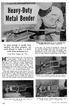 It's large enough to handle most welding job shop projects, yet small enough to make it a worth while home-workshop tool H Craft Print Project No. 272 ERE'S a metal bender that will enable you to bend
MGB Chrome Bumper Conversion
 MGB Chrome Bumper Conversion Installation Instructions For 1974 1/2-1980 MGB This kit requires cutting, welding, and painting. Professional installation recommended. Note: Every MGB body is slightly different
SHOP NOTES METAL SHAPER FOR YOUR SHOP
 SHOP NOTES METAL SHAPER FOR YOUR SHOP A METAL SHAPER is indispensable for certain machining operations where flat surfaces must be produced within very close limits, such as machining flats on castings,
Pipe Thread Types and Designations
 Pipe Thread Types and Designations Overview: Different types of screw threads have evolved for fastening, and hydraulic systems. Of special concern are plastic-to-metal, taper/parallel threaded joints
with installation dynafact boost GAUGE this manual is for use with systems 64050-64054
 owners manual with installation instructions dynafact boost GAUGE this manual is for use with systems 64050-64054 GENERAL INSTALLATION PRACTICES This manual is an installation guide for all 1. Banks DynaFact
INGROUND, ROPED, AND HOLELESS JACK SEAL REPLACEMENT
 D. L. Martin Company INGROUND, ROPED, AND HOLELESS JACK SEAL REPLACEMENT TYPICAL HYDRAULIC JACK HEAD ASSEMBLY 1 TOOLS REQUIRED: 1) Container to hold hydraulic fluid. 2) Clean rags and protective covers
http://waterheatertimer.org/troubleshoot-rheem-tankless-water-heater.html
 http://waterheatertimer.org/troubleshoot-rheem-tankless-water-heater.html TECHNICAL SERVICE DEPARTMENT Removal, Cleaning, & Reinstallation of the Burner Assembly For models 74 & GT199 Required tools -
Transport & Automotive CATALOGUE. March 2011. Customer Service Phone: 1800 777 299 Fax: 1800 065 321 Email:[email protected]. www.tubefit.com.
 Transport & Automotive CATALOGUE Customer Service Phone: 1800 777 299 Fax: 1800 065 321 Email:[email protected] March 2011 www.tubefit.com.au Page 1 4 6 9 12 14 16 17 19 20 22 23 24 26 28 29 31 33 Index
Dew Point Tester. Instruction Manual. CVS Regular Chiller Model A-2. CVS Regular Chiller Model A-2
 Instruction Manual Dew Point Tester The CVS Dew Point Tester is a chilled mirror apparatus, which operates by attaining the conditions necessary by the definition of dew point. When a gas is cooled out
Watts Pure Water Systems
 Watts Pure Water Systems WM-120-PT Installation and Operation Manual Premier Water Systems Do not use with water that is microbiologically unsafe or of unknown quality without adequate disinfection before
THERMOSTATIC MIXING VALVE TRIM K-T9493, K-T9494
 THERMOSTATIC MIXING VALVE TRIM K-T9493, K-T9494 1. BEFORE YOU BEGIN IMPORTANT INSTRUCTIONS READ AND SAVE FOR THE CONSUMER WARNING: Risk of scalding or other severe injury. Before completing installation,
758 Heavy-duty Ratchet Guy Wire Cutter
 INSTRUCTION MANUAL 758 Heavy-duty Ratchet Guy Wire Cutter Read and understand all of the instructions and safety information in this manual before operating or servicing this tool. Register this product
Tube Fabricating Equipment
 Tube Fabricating Equipment Tube Fabricating Equipment Tube cutters Tube Benders Flaring Tools Flaring Tool Kits Swaging Tools Testing & Service Tools Deburring Tool The World Standard Tube Cutters Sizes
Guidelines for Earthquake Bracing Residential Water Heaters
 Guidelines for Earthquake Bracing Residential Water Heaters Department of General Services Division of the State Architect In accordance with the Health and Safety Code Section 19215, the Division of the
Installation Instructions For Slider Casement Air Conditioners
 Installation Instructions For Slider Casement Air Conditioners NOTE: These instructions describe installation in a typical wood framed window with a wood SLIDE-BY sash, or installation in a metal CASEMENT
INSTRUCTIONS. FLHR/C/S (Road King) FRONT END LOWERING KIT 1WARNING -J03242 REV. 10-19-04. General. Removal (Left and Right Forks) Kit Number 54614-05
 INSTRUCTIONS -J04 REV. 0-9-04 General FLHR/C/S (Road King) FRONT END LOWERING KIT This kit is designed for installation on 00 and later FLHR/C/S Model Motorcycles. Road King models use the conventional
GAS DISTRIBUTION PRODUCTS STEEL SERVICE TEES
 GAS DISTRIBUTION PRODUCTS STEEL SERVICE TEES CONTINENTAL INDUSTRIES ABOUT US THE ULTIMATE CONNECTION Our Company Continental Industries, headquartered in Tulsa, Oklahoma, was formed in 1958 and is today
BUILDINGA 1/10 SCALE FLATBED TRAILER
 VOLUME 1, ISSUE 1 BUILDINGA 1/10 SCALE FLATBED TRAILER BUILT, DESIGNED & WRITTEN BY NATHAN MYERS MATERIALS: FEATURES: While the design was kept simple to allow anyone to be able to build their own trailer,
Powers Controls TH 192 HC Heating/Cooling Room Thermostat
 Powers Controls TH 192 HC Heating/Cooling Room Thermostat Technical Instructions Document No. 155-066P25 TH 192-2 50 60 70 80 70 TH0356R1 60 80 POWERS Description The TH 192 HC thermostats are proportional
ASSEMBLY INSTRUCTIONS ACCORDING TO SAE J1453 FOR FLARED TUBES. 5. Clean properly with appropriate products the part of the tube to be flared.
 ASSEMBLY INSTRUCTIONS ACCORDING TO SAE J1453 FOR FLARED TUBES 1. Before to start to flare the tube check for the correct parameters of all the tools to be used and substitute 2. Cut the tube at a 90 angle
INSTALLATION INSTRUCTIONS MK-8704
 INSTALLATION INSTRUCTIONS MK-8704 EXPOSED MACKINTOSH THERMOSTATIC MIXING VALVE WITH RISER KIT, HANDSET, LEVER DIVERTER, 8 ROSE AND ADJUSTABLE RISER PIPE BRACKET. Dimensions in Inches (& Millimetres) 1
How to Build a Fuel Line
 How to Build a Fuel Line by Lars Grimsrud Rev. G 4-19-05 Colorado Corvette Crazies (CCC) The Ultimate Corvette Tuning & Beer Drinking Fraternity - Lafayette, CO Photos & photo editing by Jeff Todd, owner
Select Radiators Installation Guide
 Select Radiators Installation Guide Table of Contents Informational Symbols...3 Before You Begin...4 Select Rough-In... 5 Connection Installation...6 Optional Piping Arrangements...7 Conventional Wall
HYDRAULIC TABLE CART 500-LB.
 HYDRAULIC TABLE CART 500-LB. OWNER S MANUAL WARNING: Read carefully and understand all MACHINE ADJUSTMENT AND OPERATION INSTRUCTIONS before operating. Failure to follow the safety rules and other basic
Installation and Operating Instructions Installation Instructions for SS EPE-316L Series
 INSTR3010 0406 Installation and Operating Instructions Installation Instructions for SS EPE-316L Series Congratulations on your purchase of this Aqua-Pure high flow, single housing filtration system. This
FRONT BUMPER INSTALLATION INSTRUCTIONS 2007-2011 DODGE / MERCEDES SPRINTER
 Aluminess Products Inc 9402 Wheatlands Ct. #A Santee, CA 92071 619-449-9930 FRONT BUMPER INSTALLATION INSTRUCTIONS 2007-2011 DODGE / MERCEDES SPRINTER Please read before beginning Stainless steel hardware
SIMPLAIR PIPING. www.irtools.com 1-800-376-TOOL
 SIMPLAIR PIPING INGERSOLL-RAND SIMPLAIR PIPING With push-in fittings and lightweight anodized aluminum pipe, a SimplAir system provides ideal connection throughout your entire air distribution system.
Fabricating a chassis from clad PCB board material
 Fabricating a chassis from clad PCB board material How many times have you started a project and the finished appearance is based on what box you had laying around, rather than what you would like to have?
VOYAGER 570G. 744A Sprayer Control
 VOYAGER 570G 744A Sprayer Control U S E R M A N U A L U S E R M A N U A L Table of Contents CHAPTER 1 - INTRODUCTION...1 SYSTEM CONFIGURATIONS...1 KIT CONTENTS...3 CONTROL HOUSING ASSEMBLY...5 CHAPTER
THE PUSH-FIT SOLUTION FOR PLUMBING AND HEATING SYSTEMS
 THE PUSH-FIT SOLUTION FOR PLUMBING AND HEATING SYSTEMS Speedfit Fittings are suitable for use with copper pipe. Included in this leaflet: Product Guide Trade Tips How Speedfit Works Making a Good Connection
1958-64 WINDOW CHANNEL, WEATHERSTRIP & WHISKER STRIP REPLACEMENT FOR 2-DOOR SEDANS
 By Denny Williams Photos by Denny Williams 1958-64 WINDOW CHANNEL, WEATHERSTRIP & WHISKER STRIP REPLACEMENT FOR 2-DOOR SEDANS Denny Williams - Technical Writer Denny is first and foremost a dyed-in-thewool
1/8 Stainless Steel Cable Assemblies to Enhance Any Railing and Any View!
 2014 Feeney 1st Edition 1/8 Stainless Steel Cable Assemblies to Enhance Any Railing and Any View! Standard Cable Assemblies Distributed by EURO FORGINGS INC. Architectural Components for the Railing and
2006 HEADSHOK Service Video #1
 LEFTY SPEED DLR DAMPING CARTRIDGE This document explains how to properly remove, disassemble, inspect, reassemble and reinstall the Lefty Speed DLR2 damping cartridge. It is a document to be used in conjunction
INSTALLATION INSTRUCTIONS BL-8704
 INSTALLATION INSTRUCTIONS BL-8704 EXPOSED BLACK LEVER THERMOSTATIC MIXING VALVE WITH RISER KIT, HANDSET, LEVER DIVERTER, 8 ROSE AND ADJUSTABLE RISER PIPE BRACKET. Dimensions in Inches (& Millimetres) 1
2. This is a close up of a typical area where the rocker is rusted out leaving holes under where the rocker moulding would be..
 ROCKER PANELS 55,56,57 CHEVY REPLACEMENT Do not throw away any pieces when you first remove them. There are many supports that are not reproduced and will need to be used again. When disassembling try
How To Install An Evaporator Coil
 EVAPORATOR COIL INSTALLATION INSTRUCTIONS EVAPORATOR COIL SAFETY... INSTALLATION REQUIREMENTS... Tools and Parts... System Requirements... Location Requirements... Drain Requirements... INSTALLATION INSTRUCTIONS...
Mueller B-101 and A-3 Drilling and Tapping Machines
 TM TM Mueller and Drilling and Tapping Machines A guide to selecting Mueller Equipment Mueller TM TM and Drilling and Tapping Machines When it comes to line stopping and drilling and tapping technology
GENERAL RUBBER LINING PRINCIPLES
 GENERAL RUBBER LINING PRINCIPLES I. METAL PREREQUISITES Metal to be lined should meet the requirements as stated in section 8 Metal Fabrication and section 12 Blasting and Cementing Procedures. The surface
Newloc Acetal. Plastic Push-to-Connect Fittings. Fluid Transfer Specialists
 Newloc Acetal Plastic Push-to-Connect Fittings Fluid Transfer Specialists Newloc Acetal Extremely easy to install no tools necessary Certified by the National Sanitation Foundation (NSF-1 and NSF-1) Instant
3. SEISCO PARTS & SERVICE REMOVAL AND REPAIR GUIDE
 4 3. SEISCO PARTS & SERVICE REMOVAL AND REPAIR GUIDE A. Changing the Control Board B. Replacing a Heating Element C. Thermistor Replacement D. High Limit Switch Replacement E. Level Detector Replacement
INSTRUCTIONS AND PARTS LIST FOR MODEL 70H & 75H HAND-OPERATED HYDRAULIC PRESS
 INSTRUCTIONS AND PARTS LIST FOR MODEL 70H & 75H HAND-OPERATED HYDRAULIC PRESS SETTING UP THE PRESS FOR OPERATION For shipping convenience, the gauge, pump handle, hoist crank, screw nose and base angles
Engineering Specifications
 PUREFLOW PEX PRODUCTS PART 1 GENERAL 1.1 SUMMARY 1.1.1 This specification covers Branch & Main, Parallel Water Distribution Systems (MANABLOC), Cross-linked Polyethylene tubing and fittings using PEX Press
Trillium 40 Axis Spring Tensioner Wire Replacement Instructions
 Trillium 40 Axis Spring Tensioner Wire Replacement Instructions 1 Overview The objective is to replace the broken axis spring tensioner wire. This requires the following tasks: 1. Remove the seismometer
Fixtures - Parts - Accessories to shampoo bowls
 Page 1??? - For what brand of bowl do you need parts??? Find out by looking on the bottom of the bowl, between the front and strainer, where molded in the bottom is the brand and model number. For example,
INSPECTION, MAINTENANCE AND RECHARGE SERVICE MANUAL P/N 16303
 WATER MIST HAND PORTABLE FIRE EXTINGUISHERS Model B270 ¾ Gallon Model B272 2 ½ Gallon INSPECTION, MAINTENANCE AND RECHARGE SERVICE MANUAL P/N 6303 All fire extinguishers should be installed, inspected
08003-1 WATER SERVICE 2
 08003_Mar08_2011.pdf Page 1 of 7 INDEX Page 08003-1 WATER SERVICE 2 1.1 Pipe 2 1.1.1 Copper 2 1.1.2 Polyethylene 2 1.2 Valves and Fittings 2 1.2.1 Main Stops 3 1.2.2 Curb Stops 3 1.2.3 Curb Box 3 1.2.4
C O N V E Y O R C O M P O N E N T S C H A I N S B E L T S B E A R I N G S
 C O N V E Y O R C O M P O N E N T S C H A I N S B E L T S B E A R I N G S January 2009 Issue 6 Valu Guide Brackets The Ultimate in Adjustability and Cost Savings Valu Guide brackets are part of a family
THE TRIMLINE 10' x 20' CANOPY
 THE TRIMLINE 10' x 20' CANOPY Instructions for Assembly Please, assemble the TrimLine at home the first time, not at an event. Before beginning assembly of your TrimLine, please take time to review the
Fiberstars Lighted Laminar Flow Fountain Installation Manual
 Fiberstars Lighted Laminar Flow Fountain Installation Manual 79-15037-00 REV Xx http://www.fiberstars.com Page 1 of 8 SAVE THESE DIRECTIONS! These directions are provided to ensure the proper installation
Dive Rite 200 & 300 Bar Isolator Manifold Service Manual
 Dive Rite 200 & 300 Bar Isolator Manifold Service Manual Principal Photography and Text by Pete Nawrocky Copyright 2003 Lamartek Inc. D/B/A Dive Rite 0 Warning This manual is only to be used as a guide
TRANS-05, Torque Tube Removal, Rebuilding, and Installation
 TRANS-05, Torque Tube Removal, Rebuilding, and Installation Tools Metric Wrench Set Metric Socket Set Jack Stands (6 minimum) Floor Jack 8mm Cheesehead socket (also referred to as 12 point internal socket
DeZURIK 3-20" BAW AWWA BUTTERFLY VALVES WITH TRANSFER MOLDED SEAT
 3-20" BAW AWWA BUTTERFLY VALVES WITH TRANSFER MOLDED SEAT Instruction D10386 August 2013 Instructions These instructions provide installation, operation and maintenance information for BAW Butterfly Valves.
1.8 CRANKSHAFT OIL SEALS
 SERIES 60 SERVICE MANUAL 1.8 CRANKSHAFT OIL SEALS An oil seal is fitted between each end of the crankshaft and the bores of the flywheel housing and gear case cover to retain the lubricating oil in the
Speed-Mat Rectangle Cutter
 Speed-Mat Rectangle Cutter 1 Honeycomb baseboard. 2 Left hold down. 14 3 Bottom hold down. 4 4 Left / right rule. 8 5 8 5 Left / right rule pointer. 1 6 Top / bottom rule. 7 Top / bottom rule pointer.
Lathe Milling Attachment
 Lathe Milling Attachment By L C. MASON BY CLEVERLY stacking cold-rolled flat stock together, T-slots and slide for this lathe milling attachment are made without costly machinery. In fact, only two tools,
Constantemp Double Wall Low pressure steam-water Heater F-340LDW,F-640LDW, F-940LDW and F-1240LDW
 Installation, Operating and Maintenance Instructions 90/4.5.5 Rev. 0 Constantemp Double Wall Low pressure steam-water Heater F-340LDW,F-640LDW, F-940LDW and F-1240LDW Table of Contents SECTION I... 2 INSTALLATION...
LU6X-130 Instructions and Parts List (including LU6X Basic) Operating Instructions
 LORTONE LU6X-130 Item # 061-092 LU6X Basic Item # 061-090 LU6X-130 Instructions and Parts List (including LU6X Basic) Operating Instructions Introduction The LU6X is one the most versatile pieces of equipment
How To Launch A Rocket From A Formica
 Building the Basic Bottle Rocket Launch Pad Materials: -Formica double-sink countertop cutout. This can be easily and cheaply obtained from a local company that manufactures and/or installs countertops.
INSTALLATION & OPERATING INSTRUCTIONS
 INSTALLATION & OPERATING INSTRUCTIONS WARNING RISK OF ELECTRIC SHOCK. CONNECT ONLY TO A CIRCUIT PROTECTED BY A GROUND-FAULT CIRCUIT-INTERRUPTER. THE UNIT SHOULD BE INSTALLED BY A QUALIFIED SERVICE REPRESENTATIVE.
H EAD TUBE BASICS. Figure 1 - Head tube, front fork and hardware
 H EAD TUBE BASICS Figure 1 - Head tube, front fork and hardware This tutorial will cover some of the basics you need to know when pulling apart the steering system of a bicycle for repair or use on one
Refrigeration Installation 101
 Refrigeration Installation 101 Hundreds of Installations Refrigerated Cases 2 Compressor Racks 3 Condensing Units 4 Walk-in Boxes 5 Some were done very well 6 Some had some issues... 7 8 Some seemingly