
Honeywell 7000 Solid State Alarm System
|
|
|
- Jason Stanley
- 10 years ago
- Views:
Transcription
1 Honeywell 7 Solid State Alarm System APPLICATION FEATURES PRODUCT DATA The Honeywell 7 is a solid state fire/burglary and home health care alarm system designed to protect a wide range of private residences. This UL-listed system is easily expandable and can be customized to meet the demanding needs of homeowners. Can display up to 96 points of protection. Eight hardwire zones built into the control panel. Optional RF and hardwired expansion on Hbus. Supports keypads with custom text displays. Mode-based operation for simple error-free control. Date and time stamped event log. Up to 24 fully programmable outputs. Contents Application... Features... Specifications... 2 Ordering Information... 2 Installation... 3 Programming... 9 Operation... 2 Checkout Troubleshooting Regulatory Agency Statements U.S. Registered Trademark Copyright 998 Honeywell Inc. All Rights Reserved

2 SPECIFICATIONS System 7 Specifications Electrical Ratings: System Power: 5 Vac; 6 Hz,.5A. Low voltage Input to Control Panel 24 Vac, 2A (5 VA, UL-listed, fused Class II Transformer) 24 AC Power wiring is limited to 2 feet of No. 8 AWG wire. Outputs: No. (Bell/Horn): A maximum at 3.8 Vdc. No. 2 (AUX): ma maximum at 3.8 Vdc. Fusing: Hbus: 3.8 Vdc, current limited at 2A. AUX Horn: 3.8 Vdc, current limited at 2A. Battery Charging Output: 8 ma maximum at 3.8 Vdc. Power Consumption (at 3.8 Vdc): Keypad 2 ma. Point Expansion Module (PEM), 6 ma (2 ma when both relays are on). RF Expansion Module (RFEM), 6 ma. Ademco Receiver, 5 ma. Ademco Transmitters (see individual Ademco specification sheet with each type of transmitter). Battery Backup: 7AH Minimum, 28 AH Maximum at 2 to 3.8 Vdc. Fuses: One 2A, AGA2 fuse: F3 = AC. Digital Communicator (Located on Control Panel) Format: Modem 2E. Line Seizure: Double Pole. Ringer Equivalence:. B. FCC Registration No.: B7FUSA-37-AL-E. Connection: RJ3X Type. Circuit wiring: Fire Circuit (Loop 8): feet, No. 8 AWG wire, 5 ma maximum, for two-wire smoke detectors. Burglary circuits (Loop -7): feet maximum, No. 22 AWG wire. End of Line Resistors (EOLR): Inputs through 7: 3.3 kilohm. Input 8: 5. kilohm. Four Wire HBus Interface (Cable No. -668, 22 AWG) Red: Power 3.8 VDC. amps maximum load. Black: ground. Yellow: () Data high. Green: (-) Data low. 2 Ohm 5% /4 Watt end-of-line (EOL) resistor at end of last bus device. 25 feet home run 22 AWG, 5 feet home run 8 AWG. Environmental Ratings: Ambient Temperature: 32 F ( C) to 2 F (49 C). Humidity: Less than 85% relative humidity, continuous, noncondensing. Dimensions: Control Panel: 2-/2 in. x 2-/2 in. x 3-/8 in. Keypad, LCD Two Line: 6-3/32 in. x 5-/32 in. x 29/32 in. Point Expansion Module: 6-/2 in. x 4-5/6 in. x -3/32 in. RF Point Expansion Module: 6-/2 in. x 4-5/6 in. x -3/32 in. RF Receiver 7-3/8 in. x 4-3/8 in. x -7/6 in. (with antenna -7/8 in. high). Transmitters: See individual Ademco specification sheet with each type transmitter. ORDERING INFORMATION When purchasing replacement and modernization products refer to the price sheets for complete ordering number. If you have additional questions, need further information, or would like to comment on our products or services, please write or phone:. Your local Home and Building Control Sales Office (check white pages of your phone directory). 2. Home and Building Control Customer Relations Honeywell, 885 Douglas Drive North Minneapolis, Minnesota In Canada Honeywell Limited/Honeywell Limitée, 35 Dynamic Drive, Scarborough, Ontario MV 4Z9. International Sales and Service Offices in all principal cities of the world. Manufacturing in Australia, Canada, Finland, France, Germany, Japan, Mexico, Netherlands, Spain, Taiwan, United Kingdom, U.S.A

3 MODES OPTIONS OK CANCEL HONEYWELL 7 SOLID STATE ALARM SYSTEM INSTALLATION When Installing this Product.... Read these instructions carefully. Failure to follow them can damage the product or cause a hazardous condition. 2. Check the ratings given in the instructions and marked on the product to make sure the product is suitable for the application. 3. Installer must be a trained, experienced service technician. 4. After installation is complete, check out the product operation as provided in these instructions. Overview b. Circuit Board. c. Transformer. 2. Point Expansion Module. 3. RF Expansion Module. 4. RF Receiver. 5. RF Transmitter. 6. Keypad. Control Panel The control panel performs the main functions of the system. The following can be found inside the control panel enclosure: a. Control Panel Circuit Board. b. Batteries. This section provides a general overview of the system (Fig. ) and installation and hookup instructions for the following equipment:. Control Panel: a. Enclosure. PLUG-IN TRANSFORMER RJ3X TELCO LINES HORN/BELL J TB S SMOKE DETECTOR BATTERY CONTROL PANEL HARDWIRE LOOPS HBUS FIRE POLICE SPECIAL RF TRANSMITTERS POINT EXPANSION MODULE (PEM) HARDWIRE LOOPS RF EXPANSION MODULE (RFEM) RF RECEIVER M97 Fig.. General overview of Honeywell System

4 Location Locate the control panel enclosure in an area that is dry and not subject to temperature extremes. Prolonged exposure to temperatures below 32 F ( C) or above 2 F (5 C) can adversely affect the battery and some system circuits. The location selected should be well inside the secured area and accessible for testing and reprogramming. Allow for routing wire runs. Locate the control panel enclosure and any accessory equipment, such as the PEM or RFEM in: a. Interior closet. b. Interior wall in an untravelled area. If a cement, brick or cinderblock wall is to be used as a mounting location, use an appropriately sized piece of 3/4 in. (9 mm) plywood attached to the wall with wall anchors as a base for the system. Mounting (Fig. 2 and 3) Determine what equipment will be mounted on the wall with the control panel box, approximate location of each device, and probable wiring runs. This can be a rough sketch, with approximate dimensions of the devices (see Specifications). Based on this information, cut the 3/4 in. (9 mm) plywood, if necessary, to the appropriate dimensions and mount the plywood on the selected wall using wall anchors or expansion plugs. IMPORTANT For RF installations, mount the RF Receiver at least 25 feet away from any other sources of RF interference, such as garage door opener receivers. Avoid mirrors and reflecting surfaces such as metal heating and cooling ducts. If insufficient RF strength is noted, move the receiver. DRYWALL ANCHORS (NOT SUPPLIED) DRYWALL CIRCUIT BOARD CONTROL BOX M98 SUPPLIED (4) Fig. 2. Mounting the control panel enclosure on drywall

5 BRICK, CONCRETE OR CINDER BLOCK WALL MOUNTING HARDWARE FOR PLYWOOD 3/4 IN. (9 MM) PLYWOOD CONTROL BOX M99 Fig. 3. Mounting the control panel enclosure on plywood. Place the empty control panel box in the correct location on the plywood and mark the location of the mounting holes on the plywood. If necessary, drill pilot holes at these locations. Mount the control panel box using properly sized screw anchors (not supplied) or other secure mounting techniques. See Fig. 2 and 3. CAUTION Equipment Damage Hazard. Static discharge can damage circuit board. Follow ESD safety procedures when installing or handling circuit board. Circuit Board Installation Mount the control panel printed circuit board in the metal control panel box on the four standoffs and guides, using the four screws and four lockwashers supplied. Circuit Board Wiring The control panel circuit board is the central wiring point for most of the system. Connections are available for: a. Loop wiring. b. Smoke detector wiring. c. Backup batteries. d. External bell/horn. e. Ac connections. f. Earth ground. g. Telephone interface connection. h. HBus devices (keypad, PEM, RFEM, etc.). Wiring instructions for each of these connections or devices are provided in the appropriate section. General WARNING Electrical Shock Hazard Can cause serious injury or death. Disconnect power before wiring. Protect all wiring entering the control panel box with strain relief and bushings. 2. Use adhesive-backed cable tie mounts and cable ties to secure the wiring to a convenient point inside the control panel box. 3. Use two No. 6 screws to secure the control panel box lid after wiring is completed. See Fig. 4 for general information on circuit board wiring

6 SYSTEM 7 HOME CONTROL SYSTEM HOME AND BUILDING CONTROL MINNEAPOLIS, MINNESOTA HOUSEHOLD FIRE AND BURGLARY WARNING SYSTEM. U.L. HOME HEALTHCARE SIGNALING SYSTEM. HOUSEHOLD BURGLARY U.L. GRADE A WHEN USED WITH EXTERNAL AUDIBLE. BEFORE INSTALLING, READ HONEYWELL SYSTEM 7 INSTALLATION MANUAL, REV. 9/98. BEFORE OPERATING, READ HONEYWELL SYSTEM 7 OWNERS MANUAL. THIS EQUIPMENT SHOULD BE INSTALLED IN ACCORDANCE WITH CHAPTER 2 OF NFPA STANDARD 72. NATIONAL FIRE PROTECTION ASSOCIATION, BATTERYMARCH PARK, QUINCY, MA 2269 PRINTED INFORMATION DESCRIBING PROPER INSTALLATION, OPERATION, TESTING, MAINTENANCE, EVACUATION, PLANNING, AND REPAIR IS TO BE PROVIDED WITH THIS EQUIPMENT. WARNING: LEAVING THE POWER SWITCH IN THE OFF POSITION RENDERS THE SYSTEM 7 CONTROL PANEL INOPERABLE. WARNING: FOR CONTINUED PROTECTION AGAINST FIRE, REPLACE FUSE WITH SAME TYPE AND RATING (AGA 2) J TELCO LINE COUPLER CORD TO RJ3X. CONNECT PC PROGRAMMER HERE FOR LOCAL PROGRAMMING. AC S THE SYSTEM IS U.L. LISTED FOR LIMITED ENERGY INSTALLATIONS PER NEC ARTICLE 76. USE ONLY U.L. RECOGNIZED LIMITED ENERGY CABLE. TEST SYSTEM AT LEAST ONCE A WEEK WITH AC OFF. SYSTEM SHOULD BE CHECKED BY A QUALIFIED TECHNICIAN AT LEAST EVERY THREE YEARS. STANDBY BATTERY/BATTERIES SHOULD BE REPLACED EVERY FIVE YEARS. DISCONNECT AC LINES AND TELEPHONE WIRES BEFORE SERVICING. WARNING: OWNERS INSTRUCTION NOTICE NOT TO BE REMOVED BY ANYONE EXCEPT OCCUPANT. CONNECT TO EARTH GROUND STANDBY BATTERY MINIMUM REQUIREMENTS: 2 VDC, 7 AH REFERENCE PART NUMBER REPLACE BATTERY EVERY 5 YEARS. SYSTEM SUPPLIES 4 TO 24 HR. EMERGENCY STANDBY CAPACITY. 24 HOURS REQUIRED FOR FIRE PROTECTION. SEE INSTALLATION MANUAL REV 9/98 FOR EQUIPMENT AND BATTERY CONFIGURATIONS. HBUS COM 3.8 VDC P P2 COM P3 P4 COM P5 P6 COM P7 HBUS- P8- P8 AUX HORN COM 3.8 VDC AC IN AC IN TB GRN YEL BLK RED NC HSP PEM NO EOLR 3.3K 5% /4W AUXILIARY OUTPUT, PROGRAMMABLE VOFF = 25V MAX (FLOAT) VON =.V MAX ISINK = ma SMOKE DETECTOR SMOKE DETECTOR EOLR BELL / HORN 2 VDC, AMP MAX. RFEM EOLR 2Ω 5% /4W END OF LINE RESISTOR CONNECTED ACROSS THE HBUS AND HBUS CONTACTS OF LAST (END) DEVICE CONNECTED TO THE HBUS CIRCUIT TYPICAL FOR POINTS P TO P7 END-OF-LINE RESISTOR MUST BE AT END OF CONTACT. 5.K 5% /4W MAXIMUM OF 2-WIRE SMOKE DETECTORS. REFER TO INSTALLATION INSTRUCTIONS FOR A LIST OF APPROVED DETECTORS. SMOKE DETECTOR COMPATIBILITY IDENTIFIER IS 7K8. P8 MAY BE WIRED FOR 2-WIRE FIRE OR 4-WIRE FIRE OR BURGLARY. 2-WIRE FIRE IS SHOWN. FOR 4-WIRE FIRE AND BURGLARY WIRING, SEE INSTALLATION INSTRUCTIONS. PLUG-IN TRANSFORMER PART NO.: INPUT 2 VAC, 6HZ OUTPUT: 24 VAC, 5 VA CLASS 2 DO NOT CONNECT AC TRANSFORMER TO A SWITCH CONTROLLED OUTLET REV. Fig. 4. Control panel wiring, showing TB and general physical layout. M

7 Connect loop wiring but do not run wiring within 2 in. (35 mm) of house ac wiring. IMPORTANT Do not run any wires or cabling behind or across the control panel printed circuit board. Point Expansion Module (PEM) Installation The PEM provides additional hardwire points for the Honeywell 7 System and can be used in place of, or in conjunction with, the RF transmitters and receivers. The PEM can support normally open (NO) or normally closed (NC) sensor contacts. The PEM has eight hardwire point connections and two relay output connections. Mount the PEM plastic box within 25 feet (76 meters) of the control panel if using 22 AWG wire or 5 feet (52 meters) if using 8 AWG wire. Remove the PEM circuit board from the PEM plastic box (if installed) and use the PEM plastic box to mark the mounting screw locations on the wall or plywood. Use two screws (not supplied) to mount the PEM plastic box. Insert the PEM circuit board into the PEM plastic box. See Fig. 5. MOUNTING SLOTS ON BACK OF RFEM DRYWALL OR PLYWOOD ANCHORS NOT SUPPLIED Fig. 5. Installing the PEM plastic box. PEM (COVER REMOVED) M

8 PEM Wiring. Use four-conductor AK45A cable to connect the PEM to other HBus devices. 2. Connect the PEM wires to the control panel according to the wiring diagram with the unit. See Fig. 6. Each PEM has a unique, four digit, address. Fig. 6 lists the PEM address number and switch settings. The Honeywell 7 System can support up to PEM. RFEM Installation The RFEM provides additional rf protection points for the Honeywell 7 System. Only one RFEM can be used per system. Mount the RFEM plastic box within 25 feet (76 meters) of the control panel if using 22 AWG wire or 5 feet (52 meters) if using 8 AWG wire. Remove the RFEM circuit board from the RFEM plastic box (if installed) and use the RFEM plastic box to mark the mounting screw locations on the wall or plywood. Use two screws to mount the RFEM plastic box. Insert the RFEM circuit board into the RFEM plastic box. See Fig. 7. GOLDEN VALLEY, MINN. SYSTEM 7 PEM SEE INSTALLATION MANUAL PEM ADDRESS # BLK GND S OFF S ON ON ON ON ON ON ON ON ON OFF OFF OFF ON ON ON ON OFF OFF OFF OFF ON ON ON ON ON OFF OFF ON ON OFF OFF ON ON OFF ON OFF ON OFF OFF OFF ON OFF ON OFF ON 9 8 RED GRN YEL 3.8 VDC HBUS HBUS TO CONTROL PANEL 2 3 S SETS PEM ADDRESS # S SHOWN SET FOR ADDRESS # MAXIMUM OF PEMs ON A SYSTEM 7 6 NO NC RELAY 4 5 C 4 NO 3 NC RELAY 2 GND P P2 P3 P4 GND P5 P6 P7 P8 P8 2 C TB TB2 GND NO NC EOLR ALL EOLR = 3.3K /4W 5% NO NC EOLR RELAY: CURRENT DRAIN 4 ma CONTACT RATING: RESISTIVE 3 3 VAC INDUCTIVE 3 3 VAC TYP WIRING: POINT -7 WIRING: POINT 8 LABEL REV B Fig. 6. PEM wiring diagram. M

9 MOUNTING SLOTS ON BACK OF RFEM DRYWALL OR PLYWOOD ANCHORS NOT SUPPLIED Fig. 7. Installing the RFEM. RFEM (COVER REMOVED) M9 RFEM Wiring. Use four-conductor AK45A cable to connect the PEM to other HBus devices. 2. Connect the RFEM wires to the control panel according to the wiring diagram with the unit. See Fig. 8. RF Receiver Installation 2. Place the open receiver on the wall in the desired location, leaving room for the two antennas. 3. Use a pencil or other marking device to mark the two screw locations for the receiver. 4. Install the two screws (not supplied), leaving enough room to hang the receiver on the screws. 5. Install the antennas in the slots as shown in Fig. 9. The antennas go in the right-hand slot of each set. 6. Set the receiver switches as shown in Table. The RF Receiver receives messages from the RF Transmitters, demodulates and transfers the data to the RFEM for decoding. A maximum of two receivers can be connected to an RFEM. Perform the following steps:. Remove the cover from the RF Receiver (use a thinbladed screwdriver to release the cover)

10 ANTENNAE RF RECEIVER INTERFERENCE INDICATOR ON - OFF YELLOW BLUE RED BLACK GREEN PANEL R RF G RFEM HBUS POWER DATA DATA IN DATA OUT 2V (GND) HBUS () HBUS ( ) GREEN YELLOW RED BLACK YELLOW GREEN RED BLACK YELLOW GREEN TO SYSTEM 7 CONTROL PANEL HBUS TERMINALS TB M93 Fig. 8. Connecting the RFEM to the RF Receiver. Table. RF Receiver switch settings. Receiver Switch Position 2 RF Receiver Wiring 4 ON Off 3 OFF ON 2 OFF OFF IMPORTANT No two receivers can have the same address settings. Only address or 2 can be used. CAUTION Equipment Damage Hazard. Incorrect connections can damage hardware. Wire the RF Receiver according to Fig. 8. Keypad Installation (Fig. 9) The keypad is used by the homeowner to operate the Honeywell 7 System. The two-line display provides information about what is happening and the locations of any problems. The display will automatically prompt the user with help instructions after eight seconds of inactivity. Locate the keypad no further than 25 feet from the control panel if using 22 AWG cable or 5 feet if using 8 AWG cable. Do not route keypad wiring parallel to ac wiring or within 2 in. of ac wiring. A maximum of keypads can be installed on one Honeywell 7 System.The control panel can supply power for up to four keypads. Additional keypads must be powered by an external 2V power source with backup batteries. A standard plastic base is provided. To mount the keypad:. Secure the base to the wall. 2. Attach the wires to the keypad. 3. Fasten the keypad to the base. 4. Attach the trim ring to the keypad. Keypad Wiring Honeywell 7 System keypads are connected to each other and to the control panel via the HBus. Follow these wiring practices:. Use four-conductor AK45A cable to connect the keypad to other HBus devices. 2. Keep maximum distance for the data line from the control panel to the farthest device under 3 feet. 3. Keep the maximum distance from the power source to the farthest keypad under 25 feet. IMPORTANT No more than four keypads can share the same power wiring pair. Separate power sources are required when the distance exceeds 25 feet. Use Altronix Model AIL or ALARM SAF Model PS-FMC- 2/-BFS/UL 3/4A power supplies when ULapproved equipment is required. 4. Always use 2 ohm end-of-line resistors (provided with keypad) to terminate the ends of the HBus line as shown in Fig. through

11 HONEYWELL 7 SOLID STATE ALARM SYSTEM MOUNTING SCREWS (4) WALL TOUCHPAD TRIM RING SCREW ANCHORS (4) MOUNTING BASE FOUR WIRES CONNECT TO HBUS SCREWS (4) M64A Fig. 9. Standard surface mount of keypad. TB- CMN () 3.8V POWER SOURCE (-) () 2 SYSTEM 7 CONTROL TB- 2 OHM MAXIMUM SIGNAL DISTANCE 3 FT 2 OHM HBUS (-) HBUS () 2 OHM Fig.. Daisy chain HBus wiring. M894 2 OHM 5. Connect the keypad cable to the control panel fourconductor cable using wirenuts. 6. Use adhesive-backed cable tie mounts to secure the keypad cable to the back of the keypad for strain relief. If power to the keypad is lost, the bell will chirp as an audible supervision signal. 2 OHM Fig.. External keyboard power wiring. M

12 2 2 HONEYWELL 7 SOLID STATE ALARM SYSTEM SYSTEM 7 CONTROL TB- 2 OHM 2 OHM 2 MAXIMUM SIGNAL DISTANCE 3 FT MAXIMUM SIGNAL DISTANCE 3 FT Fig. 2. Dual branch HBus wiring. M895 P P2 CMN P P2 CMN OHM TB TB SYSTEM 7 CONTROL TB- N.O. N.O. N.C. N.C. OHM EOLR 3.3K 5% /4W EOLR 3.3K 5% /4W 2 NORMALLY OPEN CONTACTS NORMALLY CLOSED CONTACTS HARDWIRE LOOP WIRING P THROUGH P7 P8 P8 P8 P8 2 OHM TB 5 6 TB 5 6 Fig. 3. Star HBus wiring. M896 N.O. N.C. N.C. Hardwired Detection Circuits The Honeywell 7 System control panel and each PEM has eight fully supervised hardwired input loops that can be used for zoning groups of sensors or identifying individual points of protection. These input loops can be programmed to respond as the point types listed in Table 2. Burglary Circuit Wiring N.O. EOLR 5.K 5% /4W NORMALLY OPEN CONTACTS EOLR 5.K 5% /4W NORMALLY CLOSED CONTACTS (PERFERRED) P8 HARDWIRE LOOP WIRING FOR BURGLARY M898 Fig. 4. Terminal Block TB hardwire loops.. Use only UL-listed switches and sensors. 2. Use UL-listed wire, 22 AWG minimum. 3. Loop lengths are not to exceed feet. 4. Each circuit must be terminate with a 3.3K ohm, /4 watt EOLR (provided). 5. Make all connections according to the loop diagrams that follow. 6. Program loops for type as well as NC or NO contact operation

13 Table 2. Input loop point types. Type Perimeter Entry/Exit Entry/Exit 2 Interior Interior Delay Tamper Police Fire Medical/Special Equipment Supervisory Strategy (Mode): Smart Pool Description A burglary circuit that instantly alarms on cross or break when violated. A burglary circuit that signals a warning for time period before alarming. A burglary circuit that signals a warning for time period 2 before alarming. A burglary circuit that is ignored during the exit and entry delay periods. A burglary circuit that signals a warning for time period 2 when violated and is ignored during the normal exit and entry delay periods. A burglary circuit that is always on. Violation of this point will be reported but the local audible alarm can be optioned to be silenced. A burglary alarm that instantly alarms on cross or break when violated. The audible alarm is selectable separately. A fire circuit that instantly alarms on cross and signals a trouble on break. A circuit that instantly alarms with a separate audible sound. A circuit that instantly alarms with a separate audible sound. An input that invokes a specified security mode. A burglary point or zone that can be part of the complete security as well as operated separately by Special Protection Modes. Used for protecting an isolated door (to let pets out, for example), as well as protection for the home office, bar, gun rack, workshop, etc. This point alarms instantly when occupants are away and sounds a warning for time period 2 when persons are at home. Violation of the point causes the keypad audible to sound throughout the house for 3 seconds when occupants are home and the keypads, bell or siren to sound for 3 seconds when occupants are away. Requires a separate device to be installed to delay the audible on entry or briefly bypass the audible on exit by an adult. Available from Safeguard Innovations: (62) Fire Circuits The Honeywell 7 System directly supports certain specified two-wire fire detectors. Four-wire detectors require special wiring and programming arrangements for resetting smoke detectors. Two-Wire Smoke Detector Circuit The Honeywell 7 System directly supports one two-wire fire circuit (loop 8 on the control panel). Use the following approved smoke detector models and refer Fire Marshals to the compatibility ID shown in Table 3. The compatability ID for the Honeywell 7 System is 7K8. Table 3. Two-wire smoke detectors and compatibility ID. Manufacturer Model Compatibility ID Sentrol 429A, 429AT SA Detection Systems DS25, DS25TH, DS5HD Detectors MB2W, MB2WL Bases Two-Wire Fire Circuit Installation B A 2. Use UL-listed 8 AWG energy limited cable (Signal Cable Co. No. 9884, for example) to wire a maximum of two-wire smoke detectors within 2 feet of the control panel. 3. Attach the 5. Kilohm, /4 watt EOLR (provided) at the last smoke detector. 4. Wire detectors as shown in Fig. 5. TB MAXIMUM OF 2 WIRE SMOKE DETECTORS P8 P8 5 6 SMOKE DETECTOR SMOKE DETECTOR EOLR 5. K 5%.4W M9 Fig. 5. Wiring diagram for two-wire smoke detectors.. Install smoke and heat detectors in accordance with manufacturer instructions

14 Four-Wire Smoke Detector Circuit Loop 8 of the Honeywell 7 System control panel can supervise four-wire smoke detectors with the wiring arrangements shown in Fig. 9. Use the approved equipment listed in Table 4. TB P8 P8 AUX OUT BELL COM 3.8 VDC Table 4. Approved four-wire smoke detection devices. Manufacturer Sentrol Detection Systems Honeywell AlarmSaf Relay Model 449CT Detector Four-Wire Circuit Installation DS25, DS24TH Detectors; MB4W, MB4WL Bases EM End-of-Line Module AS/BRK-624 Reset Relay. Use 8 AWG FPL cable such as Honeywell AK474ARE. 2. Secure the smoke alarm reset relay module in the bottom of the Honeywell 7 System metal box as shown in Fig. 9 with double-sided tape (provided). 3. Install smoke and heat detectors in accordance with manufacturer instructions. 4. Wire the circuit as shown in Fig. 6. IMPORTANT Do not exceed the 3.8V total current draw with all detectors in alarm. 5. Connect the End-Of-Line Module at the last smoke detector. All wire leads must be insulated with a minimum of.3 in. insulation or wire nuts that cover all exposed leads. 6. Make sure that all wire is contained within the base of the smoke detector. 7. Program a Special Mode with the name FIRE RESET to operate the fire reset relay from a programmable output. COM COM SMOKE DETECTOR COM COM SMOKE DETECTOR NO NO NO NO VIOLET RED/ WHITE BLACK RED HONEYWELL EM AS/RBK WIRE SMOKE DETECTOR HOOK-UP #4-WIRE SMOKE DETECTORS: SENTORL ESL 449CT OR DETECTION SYSTEMS INC. DS25 SENSOR AND MB4W BASE END-OF-LINE MODULE: HONEYWELL EM SMOKE RESET RELAY: ALARMSAF RELAY (PART NO. AS/RBK-624) IS REQUIRED AND MUST BE PROCURED SEPARATELY FOR PROPER OPERATION OF THE FOUR-WIRE SMOKE DETECTOR SYSTEM. 3 M9 Fig. 6. Wiring diagram for four-wire hardwired smoke detectors. Four-Wire Circuit Reset Operation (Fig. 7). Reset four-wire smoke detectors from the keypad by entering the disarm code and pressing the FIRE RESET mode numeric key. J TB S The reset period is approximately 6 seconds, after which the Fire loop is returned to service. During the 6 seconds, the power is removed and the Fire loop is disabled. At the end of the 6 seconds, the alarm condition will repeat if the detector still detects smoke. BATTERY AS/RBK-624 M94 Fig. 7. Installation of smoke alarm reset relay

15 RF Wireless Sensors The Honeywell 7 System will work with a broad line of Series 58 RF security and fire sensors when connected to a 58HK Receiver/RFEM. The system first must be programmed to recognize the unique serial identification code of each sensor and to bind these codes to logical 7 System input point numbers. After the RFEM has been connected to the HBus and a 588H Receiver connected to the RFEM, proceed as follows:. Specify the number of receivers present on the site in the programmer database for this site (either one or two under the UNITS: ACCOUNT INFO menu). This will enable further programming of RF points and tell the system to regularly poll and thereby supervise the presence of the receivers. 2. Examine all of the RF transmitters and note the serial numbers stamped under the bar codes. Ignore the alpha letter (date code) and program the numeric serial numbers in the POINTS: HOW CONNECTED menu. 3. Identify the transmitter type and select how the inputs (loops) are used from Table 5. Transmitters may have up to four inputs that can be treated as independent points by the system. 4. Place the system into RF TEST (OPTION 8 from the keypad). The RF receiver runs at 5 percent sensitivity to assure adequate range for future changes to the environment. The keypad beeps every time a transmitter is operated and also records the operation in the event log for later review by the installer. 5. Mount each sensor as noted in the instructions with each device. 6. Operate each sensor several times, verifying each time that the sound is heard at the keypads. 7. Turn the RF TEST option off after all sensors are installed and operated. 8. Check the event log record for indications of correct operation of each sensor. In the event of any RF transmission problems: a. Move sensors away from any metal that could obstruct RF signaling. b. Move the transmitters two to three inches to get them away from multi-path nulls. Outputs Honeywell 7 System supports two solid state outputs on the main control panel and two relay outputs on each PEM. All but the HORN output are fully programmable for maintained or momentary operation. They can be: a. activated by events (Burglar Alarm, Fire Alarm, Equipment Alarm, Police Alarm, Medical/Special Alarm, System Ready, On Watch, Interior Siren, Exterior Siren); b. be programmed to follow the activities of any security points, and c. be operated by selected modes. Control Panel Output Wiring. Connect the external siren to the HORN output. Use sounding devices that draw less than 95 ma. 2. Wire a secondary output device drawing no more than ma to the AUX output. When operating a relay, connect a recirculating diode across the relay coil. PEM Output Wiring. Each device has two programmable outputs that are form C relay configurations (a NC as well as NO contact with a shared common side). 2. Each contact is rated for operating a maximum of A for a 24V load. Use the contact to drive a relay with contacts rated for higher loads and power when required. External Bell/Horn Installation The HORN output can power a 95 ma bell or siren with a built-in driver. The control panel supervises the wiring to the sounding device for a wire break or ground condition. In the event of a wiring fault, HORN FAILURE is displayed on the keypad screen. This condition must be acknowledged by entering a valid passcode to silence the keypad audible. When UL-approved equipment is required, use the devices listed in Table 6. Table 5. RF wireless sensors. Device Description Loop Loop 2 Loop 3 Loop 4 RF Type 58 Tabletop Transmitter Lower Right Upper Right UpperLeft Lower Left UR 582 Panic Button Button UR 584 Wireless Key (4) Lower Right Upper Right Upper Left Lower Left BR 588 Wireless Smoke Detector Detector Alarm RF 586NM 2-Point Door/Window Termnals Reed Switch - Tamper RF Point Door/Window TB -2 TB 3-4 TB 5-6 Tamper RF 588 Recessed Door/Window Reed Switch RF 5849 Glass Break Detector Sound - - Tamper RF 589 Passive Infrared Detector IR Detector Walk Test - Tamper RF

16 Ademco Revere Table 6. Approved external sound devices. Siren Manufacturer 747UL R44SSD Model The following are general instructions for the bell or horn installation. Follow the instructions specified for the device to be used.. Use UL-listed 8 AWG wire. 2. Locate bell or horn within 2 ft of panel. 3. Install bell or horn following manufacturer instructions. 4. Connect a 3.3K ohm, /4 watt, resistor across HORN terminal (TB-8) and 3.8V (TB-2) when no external sounding device is used. For tamper-protection of a bell or siren enclosure wire, wire two leads from the external device NC tamper switch contacts to a loop programmed as a tamper loop. TB BELL CMN 3.8 VDC BELL/HORN 2 AMP MAX M899 Fig. 8. External bell/horn hookup diagram. To meet CSFM requirements, the fire system must use an ADEMCO Model 747UL Siren only. Telephone Wiring This connection is required for monitored installations or whenever remote programming is desired. Proceed as follows:. Install the RJ-3X Phone Terminal Block within 25 ft of the control panel. 2. Use UL-listed 26 AWG wire or larger. 3. Connect in accordance with Fig. and Program the Digital Receiver telephone number in the Honeywell 7 System panel only after all installation and checkout has been completed, to avoid jamming the panel buffer with repeated retries. Modular Telephone Coupler Cord This standard eight-conductor telephone cord is used to connect the Honeywell 7 System to the RJ-3X Phone Terminal Block. See Fig. 9. Plug one end into J on the control panel board and the other end into the RJ-3X Phone Terminal Block. See Fig. 9. Transformer Installation The Honeywell 7 System is powered by a 2 Vac to 24 Vac, 5A, plug-in transformer. Install the transformer as follows:. Locate the control panel within 25 ft of a non-switched power receptacle. 2. Make sure that S, the control panel power switch, is off. 3. Use UL-listed two-conductor twisted pair 8 AWG wire to connect the transformer to the AC IN connectors (TB-2 and TB-22) on the control panel. 4. Secure the transformer to the outlet with the faceplate screw. Battery Installation The control panel has room for two 7 Ampere-Hour (AH) batteries in the enclosure and can recharge up to 28AH of battery capacity when longer standby is required. The system supervises for the presence of battery and tests the operation of the battery and charging system every two hours when ac is present (every three minutes when ac is lost). A disconnected, shorted or defective battery will indicate SYS LOW BATTERY on the keypad display and must be acknowledged by the user to silence the trouble audible. Replace defective batteries. Install the battery as follows:. Use 2 volt, rechargeable, gel-cell batteries rated for the appropriate AH necessary to deliver the prescribed standby for the installation. See the battery table and load calculations that follow. 2. Make sure that S, the control panel power switch, is off. 3. Connect the control panel leads to the appropriate battery terminals. IMPORTANT Observe battery polarity (red to positive [], black to negative [-]). Standby Battery The Honeywell 7 System uses 7 AH gel-cell lead-acid batteries for standby power. UL installations require 24 hour of standby power. This section shows how to determine the number of batteries needed for the system being installed. One or two batteries can be installed in the system control panel enclosure. If three or four batteries are needed, they must be installed in a separate enclosure. The wiring between these remote batteries and the control panel must be enclosed in electrical conduit. If not provided by the phone company, install the RF-3X Phone Terminal Block in accordance with the wiring diagrams in Fig

17 J TB S HOUSE PHONE BATTERY CONTROL PANEL 8-CONDUCTOR CORD RJ3X CORD BROWN 8 BLUE 7 YELLOW 6 GREEN 5 RED 4 BLACK 3 ORANGE 2 GRAY RJ3X JACK TIP (GREEN) RING (RED) LIGHTING SURGE PROTECTOR (OPTIONAL) INCOMING PHONE LINE FROM TELEPHONE POLE TO TELCO NETWORK T R R T TO TELCO WIRING ALL LOCAL PHONES MINIATURE 8 POSITION SERIES JACK SHORTING BAR SHORT REMOVED ON PLUG INSERTION MINIATURE 8 POSITION PLUG R R T T TO REGISTERED TERMINAL EQUIPMENT M96 Fig. 9. Simplified telephone company wiring diagram. Battery Calculations The Honeywell 7 System can have from one to four 7AH standby batteries. The number of batteries needed is a function of the size of the system. The formula used to calculate battery capacity is: Normal current (Amps) x 24 hours Alarm current (Amps) x /5 hours % = Capacity needed (AH) Divide the ampere-hour result by seven to obtain the number of 7AH batteries needed for the system. Table 8 gives current usage, normal and alarm, for the devices in the system. Adding the normal and alarm currents of the system and using the above formula, determine the number of batteries needed. Table 7. Current use of Honeywell 7 System devices. Device Control Panel with 8 Points Normal Current (ma) Alarm Current (ma) 9 9 Keypad 2 2 PEM 6 6 RFEM 6 6 RF Receiver 5 5 Horn 95 2-Wire Smoke Detectors 25 Miscellaneous/AUX * * Devices * Miscellaneous/AUX devices can be relays, IR, etc. from the AUX terminal, additional HBus devices (HSP, PEM, etc.), or four-wire smoke detectors. Use the manufacturer current ratings for this calculation

18 IMPORTANT The following limits must not be exceeded:. Maximum normal total current:.5a. 2. Maximum alarm current on TB-8 (HORN): 95 ma. 3. Maximum alarm current on TB-7 (AUX): ma. 4. Maximum number of batteries: 4 (28 AH total capacity). 5. Total current drawn from TB-2 (3.8 Vdc):.A. Minimum System The minimum UL system is:. One control panel. 2. One keypad. 3. Up to two-wire smoke detectors (or equivalent fourwire smoke detectors). 4. One siren (95 ma model). Table 8 summarizes the power calculations for this system. Using the battery calculation formula: (.2A X 24 hours) (.85A X /5 hour) % = 5.64 AH. Device Quantity Normal Current Each Normal Current Total Alarm Current Each Alarm Current Total Control Panel with 8 Points Keypad PEM 6 6 RFEM RF Receiver 5 5 Horn Smoke Detectors Miscellaneous/AUX Devices TOTALS 2 85 Configuration No. Standby Battery Hours Number of Batteries Total AH RF RFEM RCVR PEM Keypad This configuration requires one 7AH battery. Maximum System The maximum system is any configuration that requires 28AH of standby battery power. Sample Configurations Table 9 lists sample configurations. Any of these configurations can be downsized (less modules or components) and still meet the battery standby times for that configuration. Installation per these guidelines will meet the California State Fire Marshal (CFSM) 24-hour battery backup requirement. Earth Wire Grounding An earth ground can be a cold water pipe, a ground rod, the metal framework of a building, or the reinforcing rod (concrete rebar) of a building as shown in Fig 2. The third wire ground in building electrical wiring should not be used as earth ground as it is difficult to establish reliability as an earth ground. 2-Wire Smoke Detectors (Maximum) Aux. Power (ma) Maximum Normal Current (ma) Maximum Alarm Current (ma) 24 7 No No Yes No Yes Yes *7 4 7 Yes 4 5 None 9 2 *8 4 7 Yes 7 None 84 2 *9 4 7 No 8 None 8 2 * 4 7 No 4 6 None 87 2 *These configurations are for non-fire applications. Table 8. Power calculations. Table 9. Sample system configurations

19 PROGRAMMING J TB S GROUND STUD The following steps will enable Programming. Refer to Programming Instructions, form 24569, for details. Setup BATTERY The following procedure steps apply to local programming with a PC. If remote programming (Downloading a program from the CSC) is applicable skip steps 2 and 3: complete steps 4 through 7 to enable remote programming. The system will be ready for the CSC to call, and the system will connect, and the CSC program can be downloaded. When complete select option 5 and toggle the programming option to OFF. Fig. 2. Earth ground connection.. Make the connection to earth ground with a single No. 8 AWG wire connected to the control panel box ground stud. Secure the wire to earth ground with a suitable clamp to make sure that it is a solid mechanical and electrical ground. 2. Avoid ground loops by connecting the shield of shielded cables to the control panel box ground stud. 3. Secure the corners of the control panel circuit board to the metal box and connect a single earth ground wire to the metal box ground stud located on the center righthand side. Do not loop or daisy-chain any wires on the circuit board terminal blocks to this ground stud. Powering Up and Disarming the System. Power up the system. Make sure all keypad LED are off and the keypad displays either FACTORY TEST or MASTER ARM. 2. If the keypad displays FACTORY TEST, program the data base and download per instructions in the Programming section. After downloading is complete, enter a valid passcode into the Honeywell 7 System to activate the new data base. 3. Disarm the system by entering the programmed disarm code ( 3 7 9) on any keypad. The keypad will indicate SYSTEM DISARMED and READY. The keypad will display AC POWER OFF if the ac is not applied to the control panel. M95 The PEM has a status LED that is on steady when power is first applied. After about 4 seconds, if the control panel communicates successfully with the PEM, the LED will blink at a one second on/off rate, after which the LED will blink five times rapidly every time it communicates successfully with a poll from the control panel.. Disconnect the Telco connection at the Telco jack, J, on the Control Panel circuit board. 2. Connect the PC (standard telephone) interface cable from the PC Modem to the Telco Jack, J, on the Control Panel. 3. Enter a valid passcode and verify the system disarmed. Factory default passcode is 379. Have user select a new master passcode after installation is complete. 4. Press the OPTIONS key and use the arrow keys to scroll down to Option 5 ALLOW PROGRAM. 5. Press 5 to allow programming. Enable Programming will last 5 minutes then the system automatically returns to disable local programming. 6. Repeat the above procedure and press OPTIONS 6 to enable the SERVICE Passcode to view EVENT LOG records. 7. Repeat the above steps through 7 and press OPTIONS 8 if RF testing or verification will be required. Powerup. Turn on the PC. 2. Load and execute the System 7 Programming program. 3. In the program set all customer options and system values per the instructions in the next section. 4. Download the data into the customers premise unit. The panel will display: PROGRAMMING DONE ENTER PASSCODE 5. Enter Passcode and system will reset with the new data base active. The system will come up MASTER ARM. Enter passcode a second time to disarm. 6. Repeat Option 7 to disable RF TEST MODE if applicable. Remote program changes after downloading will only take effect after the passcode resets the system. Disconnect the PC Interface cable and reconnect the telco line to the RJ3 phone service when finished with programming (see next section). This completes the physical installation of the system and application of power. Proceed to the next section on programming instructions

20 Customer Data Entry: The following control panel options are listed as a checklist to make sure customer database information is not left out. Refer to Programming Instructions, form 24569, for stepby-step instructions with illustrations. IMPORTANT Do not program the Honeywell 7 System to call a fire or police station number unless authorized by that fire or police station.. Open the customers program or a new one if the program doesn t exist (default program). 2. Establish or verify a customer three-digit ID (account) number. 3. Fill in the Customer information. 4. Proceed to programmer options and fill in the name. 5. Fill in CSC dial out prefix if applicable. 6. Verify or add call-back number to call the Central Station. 7. Verify or add call-back number 2 to call the Central Station. 8. Set city in the data base. 9. Select Programmer type - Local or by modem remote.. Enter the Comm. port of modem on PC.. Verify or select Dial Method Tone or Pulse. 2. Enter Modem Type. 3. Enter R-Dial Type yes or no. 4. Enter Modem speed - 3 or 2. IMPORTANT The next step will send the program to the customers Control Panel. Proceed to step 6 unless you are ready to download information to the System At Transfer Main Menu Programming Information submenu enter the Customer s Phone Number. This is not required for local programming. 6. Enter Customer s Unit Account number Enter Passcode length 4,5, or Enter Duress Digit Select passcode required for MODES yes or no. 2. Enter number of RF receivers Select allow remote programming. Yes or No. 22. Select special Needs - Yes or No. 23. Add the CSC Receiver telephone Number 24. Specify delay seconds of report to CSC. - to 99. UL Requires this to be set to. 25. Set dialing method pulse or tone. 26. Force 65 Transmission to ZONEX - yes or no. See programming guide for details. 27. Select if RF Troubles will be Reported. Yes or no. 28. Fill in the Callback phone number. Number of CSC modem phone line. 29. Fill in the Callback phone number 2. Number of CSC modem phone line. (Optional) 3. Enter the Pick up phone after how many rings. to 5. IMPORTANT Watch out for other devices on the line such as answering machines, FAX machines and local telephone company options. 3. Enter the FIRE, POLICE, and SPECIAL Keypad point numbers. 32. Enter Fire Audible Shutoff. UL requires this to be set to 4 minutes or greater. 33. Set Police, Special, and Tamper Audibles. Silent or not silent. 34. Set the Entry/ Delay times. to 255 seconds. 35. Pick customer city. 36. If necessary, pick time zone. Previous step should exclude need for this entry. 37. Set daylight savings parameters. See Programming guide. 38. Set EVENT TRIGGERS OUTPUT for each customer output. See Programming Guide. 39. Set OUTPUT OPTIONS. Continuous or Momentary for to 5 seconds. Bell/Horn output is fixed continuous. 4. Set up the 8 AREA names. 4. Enter the points and how connected on each area/ zone. 42. Define Point Type (Hardwire or RF), Hardwire Use, and Loop Type. 43. Enter each Serial Number for each RF Point Type Transmitter. See marking on transmitter. 44. Enter Loop Number for RF Point Types. 45. Select RF Transmitter Type - Supervised, Non-sup or Button. 46. Attach points to areas and select Point Names for the points. IMPORTANT Use only Ademco 58 Series Transmitters on the Honeywell 7 Control Panel. 47. Define Point Type (7 selections) see Programming Guide. 48. Define OUTPUT and MODES for each point. See Programming Guide for details on Modes on points that are Strategy Point Types. 49. Repeat steps above as necessary to enter all points into all zones in the system. 5. In the MODES Menu select the first mode and define it. MODES can be Special or Normal. The following two steps are for Special Points. Skip to step 53 for Normal MODES. 5. Set Mode NAME, TYPE, PASSCODE LEVEL, SPECIAL NEEDS, and OUTPUT ACTIVATION. 52. If Mode is to have a Smart Point select which Smart Point, then select CHANGE POINT and set the point to ARM, DISARM, ON WATCH, or NO CHANGE. 53. Set Normal Mode NAME, TYPE, PASSCODE LEVEL, SPECIAL NEEDS, OUTPUT ACTIVATION, DELAY, OCCUPANCY STATE, CHANGE POINT TO STATUS, and CHANGE POINT STATUS TO. 54. In the Passcodes Menus set up all passscodes plus the inactive or temporary, and attach an authority level. (See Programming Guide for details) 55. Download the Customer Data into the 7 System by selecting SEND PROGRAM in the TRANSFER MAIN Menu. 56. Wait for the message PROGRAMMING SUCCESSFUL. 57. Print out a hard copy of the Customer Data to verify that all the sales options have been entered. Keep this copy for history records. Save the customer data on the PC s hard disk

21 . Data must be read by an external text reader after it is saved on the hard disk drive. 2. After programming system will require a valid passcode to be entered to activate the new data base. 58. If programming is complete disconnect the PC Programmer and reconnect the Telco connections to the RJ-3X block. See Figure 27. OPERATION This section provides general operation instructions for the Honeywell 7 Solid State Alarm System. All operating procedures can be done from the keypad. Keypad The system can include more than one keypad. If so, each keypad operates in conjunction with the others and the system can be controlled from any one of them. Messages and any user requested operation will appear the same way on every two-line display at the same time. The non-alarm sounds can be silenced on selective displays to avoid waking people up when returning home late. Fig. 2 shows the keypad and the following provides a brief description of the display and key functions. DISPLAY MODES KEY OPTIONS KEY c. Arrow Keys Used to scroll through menus having more than 2 selections. The Display shows the current mode, and the down arrow, when pressed, will show all points that are not ready. The up arrow key shows the points that are bypassed and the special protection points that are disarmed. d. Audible Feedback Each time you press any key, an audible tone will sound to confirm successful entry of a digit or function. e. LED s Two LED s between arrow keys. The LED next to the UP arrow, when lit, indicates that some Special Protection is turned off or Security Points have been bypassed. The LED next to the DOWN arrow, when lit, indicates a Point of Protection such as a window or door is open. FIRE Press and hold this key for two seconds anytime regardless of mode or security status, and an instant fire alarm is transmitted to the CSC, which will dispatch the fire department and notify the first available person on the call list. POLICE Press and hold this key for two seconds anytime regardless of mode or security system status and an immediate alarm is transmitted to the CSC, which will dispatch the police and notify the first available person on the call list. Police can be programmed to be silent, however the Keypad will still display POLICE ALARM. NUMBER KEYS MODES FIRE OPTIONS POLICE OK SPECIAL CANCEL LED ARROW KEYS Fig. 2. Keypad layout. OK KEY CANCEL KEY SPECIAL KEYS M897 SPECIAL The emergency function of the system was determined at the time of installation. When monitoring of this button is included, you need to press and hold this key for two seconds and an immediate alarm is transmitted to the CSC, which will dispatch the pre-determined help and notify the first available person on the call list. The Special button can be programmed to be silent, however the Keypad will still display SPECIAL ALARM. MODES a. Two-Line Display Words appear here to offer menu choices and tell you what s happening with the system, including system status and location of alarms, open points or system troubles. More than 2 lines can be displayed by scrolling information 2 lines at a time. b. Numbered Keys Used to enter passcodes and make menu selections. Press to display a menu of the modes pre-programmed for the system. Arrow keys allow scrolling up or down to see additional selections. Use the number keys to make the selection. OPTIONS Press to display the options menu. Use arrow and number keys to locate and make selections. OK Press this key to confirm selections
22 CANCEL Press this key to cancel a menu selection or operation. If you are at a menu selection the cancel key allows you to backup to the previous screen. CONTEXT SENSITIVE HELP During any keypad interaction if you pause more than 7 seconds without hitting a key the system assumes that help is appropriate at that time. The Keypad will then provide help for the specific function you are performing. After help is provided the display returns to the current function. Seven seconds later the cycle is repeated and the specific help message is presented two more times. The messages are always pertinent to the area of the system you are currently effecting. Modes. The System 7 system allows you to manage numerous security appliances with one control. In order to simplify the choices and make the system quick and easy to operate, a group of pre-programmed commands have been organized into modes. 2. A Security mode activates a particular arrangement of sensors and instructions that tell the security system what to do which you and the Honeywell representative selected when the system was installed. A Special Protection mode changes the protection for special areas or objects such as the home office, safe, workshop, liquor cabinet, gun rack etc. Up to eight security and eight special protection modes are available. Each can be described by 2 character that are convenient for the use. Examples of possible Security modes are listed in Table. Alarm and Trouble Indications on the Keypad. Entry/Exit Delay: Pulsed low tone one second ON,. second OFF for the duration of the programmed Entry or 2, or the Exit delay timer. EXIT NOW is displayed on line of the LCD. Audible Increases in speed for the last seconds. Exit audible is silent for home occupancy modes. 2. Burglary Alarm: Continuous loud tone, the point alarm description is displayed on line, the BURGLARY warning message on line 2. The outside siren is delayed 5 seconds. Mode Description SLEEP All security armed except for bedroom area motion detector. Living room motion detector is ON WATCH. Special Protection for the home office is turned on. AWAY All perimeter and security is armed. Special Protection for the home office is turned on. HOME ALONE Interior motion detectors are off. Perimeter security is ON WATCH. Special Protection for the home office is turned on. ON WATCH All perimeter is ON WATCH and will chime when violated. Interior protection is off. Special Protection for the home office remains as previously set. Examples of Special Protection modes include: Table. Examples of Security Modes. OPEN OFFICE Special Protection for the home office is turned off. OPEN OFFICE is momentarily displayed on the keypad. The LED next to the UP arrow lights. The name of the previously selected Security mode is displayed. All other security from previously selected Security modes remains in effect. CLOSE OFFICE Special Protection for the home office is turned on. CLOSE OFFICE is momentarily displayed on the keypad. The LED next to the UP arrow goes out. The name of the previously selected Security mode is displayed. All other security from previously selected Security modes remains in effect
23 3. Fire Alarm: Pulsed loud evacuation tone sequence. Three bursts ON then, OFF for three burst periods, and then repeats. Outside siren is delayed 5 seconds. The Fire point description that triggered the alarm is displayed on line and the FIRE warning message is displayed on line Fire Trouble: Pulsed low tone,. second ON,. second OFF. Fire trouble point description is displayed on line 2 with the FIRE TROUBLE warning message on line There is no outside siren annunciation. 5. Police Alarm: Pulsed loud tone, one second ON,. second OFF, and the outside siren is instant (if programmed as an audible). The police point description is displayed on line with the POLICE warning message on line Police Duress: The duress feature is inactive if there is any keypad activity seconds prior to pressing the duress digit. The Duress alarm is available on all Honeywell 7 Control Panels. The duress digit is a programmable feature that can be selected at the time of installation. Pressing the duress digit followed by a valid disarm code activates the silent duress alarm; however the system disarms normally. There are no audible or visible alarm indications at the keypad. 7. Special Alarm: Pulsed loud tone,.5 second ON,.5 second OFF, the outside siren is instant (if programmed as an audible). The special point description is displayed on line with the SPECIAL warning message on line Transmitter In Trouble: The Transmitter In Trouble condition is due to the loss of the supervisory test message sent to the RF Receiver. The Control Panel dials the CSC if programmed to do so. The system will remember all transmitters in a trouble condition and display them. For example, the display will show:. TROUBLE TX. 2. GROUP NAME. 3. POINT DESCRIPTION. The above display will scroll through several times as necessary if multiple transmitters are in trouble. The above message will appear after a transmitter goes into trouble AND a one second tone (similar to the ON WATCH tone) will annunciate once every minute. To quite the one second per minute audible, enter the disarm code. The display is reset by sending a valid signal from the troubled transmitter. 9. On Watch: The ON WATCH Feature sounds a one second low tone and hardwire/transmitter point description is displayed on line 2 for 2 seconds.. System Low Battery: System Low Battery condition occurs when the control panel senses the battery voltage drifting through.5 volts and resets when the control panel senses the battery rising through 2. volts.. Tamper Alarm: Continuous loud tone displayed the same as any other burglary point. This hardwire point is programmed as a 24 hour burglary zone. External Siren is delayed 5 seconds. 2. Transmitter Low Battery: A tone will be heard between 8 AM and 8 PM. This could be up to 2 hours after displaying the message. The tone delay is to avoid annunciation during sleeping hours. Each time the transmitter is activated while in a low battery state (either by the supervisory transmission or transmitter activation), the control panel will display this condition and start the 2 hour tone delay. The low battery condition will occur at a voltage of approximately 8. volts (7.5 /-.4 volts while transmitting). The display can be cleared from the by replacing the battery and then entering the disarm code. 3. Horn Failure: A Horn Failure condition occurs when the system senses that the wiring to the external horn is open or shorted to ground. Table provides a listing of keypad LCD and LED responses to system operation. Emergency System Shutoff: This procedure will completely disable the entire security system including the 24 hour protected points, the display Keypads, and outputs. Use this procedure only as a last resort if:. All efforts to turn off the audible alarms fail, or 2. You cannot disarm the security portion of the system by any other means, or 3. You want to turn off the System 7 System for any other reason. To shut off the system, unlock and open the Control Panel. Locate the POWER switch near the right end of the circuit board. Slide the switch to the OFF position. IMPORTANT Call the Honeywell Customer Service Center immediately, provide the passcard number and describe the problem. Power Failure To keep the System 7 system functioning during a power failure it is equipped with a rechargeable back-up battery. This battery will operate for a minimum of four hours (24 hours for fire). While the security system is on battery power, the security system will function normally. You will see an AC POWER OFF message on the Keypad panels. If a power failure lasts longer than the charge in the battery(s), the entire security system including the 24 hour protected points, the Panels and programmed outputs will be disabled. Alarms will not sound in the event of a burglary, fire or intrusion, and the CSC will not receive signals from the system. The modes, passcodes and information programmed into the System 7 system will not be affected, and once power is restored the system will begin operation immediately. Open and close all points protected by RF transmitters once and the system resets itself and is fully operational. If the installation does not have any RF transmitters, it will reset itself automatically
24 Keypad LED Keypad Display Audible Left Right Comments/Interpretations System Off None Off off System in Standby Mode; 24-Hour Points and Fire active. Mode None Off Off System in selected Mode. Alarm ON Off On System in Alarm Mode; see second line of display for alarm type. Fire Alarm On (External delayed for 5 seconds) Off Off System in Alarm Mode; see second line of display for alarm type. Police Alarm On or Silent Off Off System normal if silent; otherwise in Alarm. Special Alarm Message On or Silent. off Off System displays Alarm; see second line of display for alarm type. System Trouble ON off Off Message identifies type of trouble; see message. Ac Power Failure None Off Off Problem displayed; resets when power restored. Low Battery Fire Trouble Comm CSC Failure RFEM Trouble ON Watch Pool Point Horn Failure Low tone once a minute. Low tone repeating. Low tone once a minute. Low tone once a minute. Low tone when tripped. On for 3 seconds if away. Low tone repeating. Table. Keypad LCD and LED response to system operation. Off Off Problem displayed; resets when battery replaced. Off Off Problem displayed until circuit restored. Off Off Problem displayed until message received at CSC. Off Off Message displayed until RF service restored. Off On Point ID Message on for seconds. Off On Can be ON-WATCH or Armed. Off Off Problem displayed; reset when problem resolved and password entered. Emergency System Shutoff This procedure will completely disable your entire security system including the 24 hour protected points, the display Keypads, and outputs. Use this procedure only as a last resort if:. All efforts to turn off the audible alarms fail, or 2. You cannot disarm the security portion of the system by any other means, or 3. You want to turn off your System 7 System for any other reason. To shut off the system, unlock and open the Control Panel. Locate the POWER switch near the right end of the circuit board. Slide the switch to the OFF position. IMPORTANT Call the Honeywell Customer Service Center immediately, provide your passcard number and describe the problem. CHECKOUT System Installation Test Local Test Sequence After performing this test and verifying that the system is working properly, repeat the test with the customer/home-owner to show him how that the system operates as intended.. Power up the system and verify the (s) are displaying MASTER ARM.and both LED s are OFF. 2. Verify there were no alarm audibles. (Hardwire points in the alarm state will go into alarm within 45 seconds after power-up, Fire after 2 seconds). 3. With the arrow keys verify that all points are normal. If any are open, correct and proceed. 4. Enter a valid passcode and verify that the System goes into the default Mode (disarmed). 5. Push the MODES key and select a mode with points in ON WATCH. (If some points in this mode are programmed for ALARM, they will go into ALARM.)
25 CAUTION Personal Injury Hazard. Can cause hearing damage. Wear hearing protection devices when testing bells, horns or sirens. If hearing protection is not available, muffle the audible devices until after the test. 6. Exercise each Perimeter point and verify that the correct description is displayed along with a one second tone. When opening the contacts, the right LED lights. 7. Exercise each Entry/Exit point and verify that the correct description is displayed. 8. Exercise each Interior point and verify that the correct description is displayed for the interior zone selected. When opening the contacts, the right LED lights. 9. Exercise each Fire sensor and verify that the correct description is displayed. The only hardwire Fire point is P8. The will alarm locally, immediately and the external siren or bell turns on.. Exercise any SPECIAL or POLICE points in the system and verify the correct descriptions. The hardwire Police and Special loops on TB display the same description as their respective keys. The READY display on the is replaced with the special or police alarm message. The audible and outside siren are both instant if programmed as audible. After a power outage long enough to fully discharge the battery, or if the Control Panel is turned OFF, the user must test all points of protection to update the status of each RF point in the Control Panel memory.. Enter a mode with points armed and exercise a point. 2. Verify the External Bell and output options function as programmed. To Verify Or Test RF Points And Descriptions. Press the MODES key, scroll and select number 8, the RF TEST Option. Press, then OK, to put the System into RF Test (receiver sensitivity reduced 2 db). If the next step does not occur in three minutes, the system will automatically return to the Default mode. 2. Trip the RF Transmitter to be tested twice within 8 seconds. The Transmitter Point ID description will appear, and the will annunciate a one second tone. IMPORTANT Use only Ademco 58 transmitters on the Honeywell 7 System control panel. Customer Service Center (CSC) Test. Call the CSC to coordinate testing of the system. 2. Reconnect the telephone cord from the Control Panel to the RJ-3X jack. 3. Press the MODES key and arm the system. 4. Cause a point to alarm, and enter the disarm code. After the first disarm, the Control Panel sends the restore message to the CSC. Testing The Duress Code. Put the system into the AWAY mode as described in the User Guide. 2. Wait seconds in between any activity before trying the duress code. 3. Enter the duress digit followed by the master disarm code. Verify the control panel seizes the phone line and dials out the police alarm and that the Honeywell 7 does not send in a restore message to the CSC. 4. Call the CSC and confirm correct reception of all alarms and restore messages that should have been received. Testing Local Telephone Connections. While the dialer communication is in progress, all of the telephones in the house are seized by the Control Panel. To verify that the RJ-3X jack is wired correctly, go to each telephone, pick up the receiver and listen. No dial tone or other dialing sound should be heard. 2. Unplug the telephone cord from the RJ-3X module and ensure that the house phones work properly. Final Configuration Form Help the customer fill out the configuration form in the User Manual. TROUBLESHOOTING The security portion of the Honeywell 7 System is constantly checking itself and will report problems the Keypad display. The system test should be performed locally, and then a CSC communication test should be performed. Your system may or may not include radio frequency transmitters. If it does not, the RF transmitter information below does not apply. Disconnect the phone cord from the RJ-3X phone jack until local testing is completed. Table 2 lists trouble messages, indications and possible solutions. Follow the What You Should Do instructions in order
26 Table 2. Troubleshooting guide. What You See What is Wrong What You Should Do HOME NOT READY FORCE ARM? These Points not ready. HOME FIRE TROUBLE SMOKE DETECTOR ( A warning tone will also sound.) HOME TROUBLE TX GUEST WINDOW. A protected point is open and/or: 2. A transmitter cover is open.. Press the right arrow button to look at open points. 2. Open and close the named door or window and leave it closed. 3. If your system includes rf transmitters, check the transmitter at the named location and make sure the cover is tightly closed. Wire to fire sensors is damaged.. Check for signs of fire. If none: 2. Enter your passcode to silence the warning tone. 3. Call Honeywell for service.. Defective battery. 2. Loose battery lead(s). 3. Transmitter malfunction. 4. Receiver malfunction. HOME AC POWER FAIL. The low voltage ac transformer is loose or unplugged. 2. Power failure. HOME SYS LOW BATTERY No display is showing. The Control Panel system backup battery is defective or weakened after extended ac failure.* There is no ac or backup battery power to the system.. Clean the battery connections. if this fails, replace the battery. 2. Tighten the battery and the battery clip. Reconnect the battery and test the system. 3. If replacing the transmitter battery does not solve the problem, call Honeywell for service. 4. If the keypad display indicates that all points are in trouble, the receiver may be defective. Call Honeywell for service.. Check the low voltage transformer usually located near the control panel. 2. Restore house power. If there has not been a power failure, call Honeywell for service. Call Honeywell for service.. If only some lights are out in your home, check house circuit breakers or fuses and restore as necessary. 2. Make sure the low voltage transformer near the Control Panel is securely plugged into an ac outlet. 3. Call Honeywell for service. * The CSC receives a signal from your system when low battery problems occur, and notifies the first available person on your call list. Telephone Problems In the event of telephone problems, disconnect the control panel by removing the plug from the RJ3X (CA38A in Canada) wall jack. This should leave the rest of the House phones in service if the problem is with the security equipment. Do not disconnect the phone connection inside the control panel or the local phones will be out of service. If the telephone service is still out after disconnecting the security system the problem is with the phone system and they should be contacted for service. If the phones service returns when the security system is disconnected then Honeywell should be contacted for service. REGULATORY AGENCY STATEMENTS UL Installation Requirements The following installation requirements apply to UL Grade A Household Burglar Alarm, for UL 985 Household Fire, and UL Digital Burglar Alarm Communicator System Units, and UL 637 Home Health Care Signaling:. All wiring and interconnections must be owned and managed by the same person(s). 2. All wiring and interconnections must be located at one address. 3. At least one audible alarm device must be placed where it can be heard at the installation location. 4. Per NFPA72, Battery backup capabilities must be provided for 24 hours of normal service followed by at least 4 minutes of File Alarm signaling. 5. The maximum Ampere Hour Battery load for System 7 is 28 AG without a Listed Auxiliary Power Supply. 6. The minimum Ampere Hour Battery is 7 AH and current load is restricted to 2 milliamps normal standby and.85 amperes of alarm for 4 minutes for 24 hours of battery backup. 7. Use ALARM-SAF AP/PS5BF 2-UL when auxiliary power is required
27 California State Fire Marshal (CSFM) Requirements 24 hour battery back-up:. Per NFPA72, Battery backup capabilities must be provided for 24 hours of normal service followed by at least 4 minutes of File Alarm signaling 2. The maximum Ampere Hour Battery load for System 7 is 28 AH without a Listed Auxiliary Power Supply. 3. The minimum Ampere Hour Battery is 7 AH and current load is restricted to 2 milliamps normal standby and.85 amperes of alarm for 4 minutes for 24 hours of battery backup. 4. Use ALARM-SAF AP/PS5BF2-UL when auxiliary power is required on CSFM installations. 5. Use ADEMCO 747UL Sirens for audible requirements. Federal Communications Commission (FCC) Statement This equipment has been tested to FCC requirements and has been found acceptable for use. The FCC requires the following statement for your information: This equipment generates and uses radio frequency energy and if not installed and used properly, that is, in strict accordance with the manufacturer s instructions, may cause interference to radio and television reception. It has been type tested and found to comply with the limits for Class B computing device in accordance with the specifications in Part 5 of FCC Rules, which are designed to provide reasonable protection against such interference in a residential installation. However, there is no guarantee that interference will not occur in a particular installation. If this equipment does cause interference to radio or television reception, which can be determined by turning the equipment off and on, the user is encouraged to try to correct the interference by one or more of the following measures:. If using an indoor antenna, have a quality outdoor antenna installed. 2. Reorient the receiving antenna until interference is reduced or eliminated. 3. Move the receiver away from the control/communicator. 4. Move the antenna leads away from ant wire runs to the control/communicator. 5. Plug the control/communicator into a different power outlet so that it and the receiver are on different branch circuits. 6. If necessary, the user should consult the dealer or an experienced radio/television technician for additional suggestions. 7. If necessary, consult the booklet entitled Interference Handbook, prepared by the FCC. It is available from the U.S. Government Printing Office, Washington, DC 242. This equipment complies with Part 68 of the FCC rules. On the front cover of this equipment is a label that contains, among other information, the FCC registration number and ringer equivalence number (REN) for this equipment. If requested, this information must be provided to the telephone company. The REN is needed to determine the quantity of devices that may be connected to the telephone line. Excessive REN on the telephone line may result in the devices not ringing in response to an incoming call. In most, but not all areas, the sum of the REN should not exceed five (5). To be certain of the number of REN that may be connected to your telephone line, add up the REN on your line and call the local telephone company and verify that you are below the maximum limit for your area. If this equipment causes harm to the telephone network, the telephone company will notify you in advance that temporary discontinuance of service may be required. If advance notice is not practical, the telephone company will notify the customer as soon as possible. Also, you will be advised of your right to file a complaint with the FCC if you believe necessary. The telephone company may make changes in its facilities, equipment, operations, or procedures that could affect the operation of the equipment. If this happens, the telephone company will provide advance notice in order for you to make the necessary modifications in order to maintain uninterrupted service. If trouble is experienced with this equipment, please contact the manufacturer for repair and warrantee information. If the trouble is causing harm to the telephone network, the telephone company may request you to remove the equipment from the network until the problem is resolved. This equipment uses a RJ3X to connect the System 7 to the telephone network. There are no user serviceable components in this product, and all necessary repairs must be made by the manufacturer. Other repair methods may invalidate the FCC registration on this product. This equipment cannot be used on telephone companyprovided coin service. Connection to Party Line Service is subject to state tariffs. This equipment is hearing-aid compatible. When programming or making test calls to an emergency number, prior to initiating alarms, briefly explain to the Monitoring dispatcher the reason for the call. Perform such test activities in the off-peak hours; such as early morning or late evening. The user shall not make any changes or modifications to the equipment unless authorized by the Installation Instructions or User s Manual. Unauthorized changes or modifications could void the user s authority to operate the equipment
28 Home and Building Control Honeywell Inc. Honeywell Plaza P.O. Box 524 Minneapolis MN Honeywell Latin American Region 48 Sawgrass Corporate Parkway Suite 2 Sunrise FL Home and Building Control Honeywell Limited-Honeywell Limitée 55 Gordon Baker Road North York, Ontario M2H 3N7 Honeywell Europe S.A. 3 Avenue du Bourget 4 Brussels Belgium Honeywell Asia Pacific Inc. Room Sun Hung Kai Centre No. 3 Harbour Road Wanchai Hong Kong Printed in U.S.A. on recycled paper containing at least % G.R. Rev post-consumer 28 paper fibers.
SECTION 13850 DETECTION AND ALARM
 SECTION 13850 DETECTION AND ALARM PART 1 GENERAL 1.01 SUMMARY A. Section Includes 1. Control Panel 2 Associated Equipment B. Products Installed But Not Supplied Under This Section 1. Section 16140 - Wiring
HONEYWELL COMMERCIAL FIRE/BURG PANEL UL LISTING REQUIREMENTS (Compiled from VistaFBPT Installation Instructions 800-09617V1 Rev A 11/12)
 HONEYWELL COMMERCIAL FIRE/BURG PANEL UL LISTING REQUIREMENTS (Compiled from VistaFBPT Installation Instructions 800-09617V1 Rev A 11/12) UL864 (Commercial Fire) Compliance General Requirements The VISTA-128FBPT/VISTA250FBPT
Using your LED Plus keypad
 Using your LED Plus keypad System 238 System 2316 System 238i System 2316i Part Number 5-051-372-00 Rev B Thank you for purchasing this C&K alarm system Your system is one of the most powerful and advanced
Control/Communicator Installation Manual
 DAS NETWORX NX-8 Control/Communicator Installation Manual Page General Description... 2 Ordering Information... 2 Option Definitions... 2 Programming the LED Code Pads... 4 Programming the NX-8... 8 Types
ADEMCO LYNXR-I Security Systems
 K14117 3/06 Rev. A ADEMCO LYNXR-I Security Systems Quick Start Guide UL LYNXR-I is not intended for UL985 Household Fire applications unless a 24-hour backup battery (P/N LYNXRCHKIT-HC or LYNXRCHKIT-SHA)
Reference & Installation Manual
 & Versions 4.4 (728ULT) & 4.1 (738ULT) 728ULT 738ULT Reference & Installation Manual Table of Contents Introduction... 1 About This Manual... 1 New Features... 1 Main Features... 1 Specifications... 1
AC-115 Compact Networked Single Door Controller. Installation and User Manual
 AC-115 Compact Networked Single Controller Installation and User Manual December 2007 Table of Contents Table of Contents 1. Introduction...5 1.1 Key Features... 6 1.2 Technical Specifications... 7 2.
XP-600 Programming Instructions
 Hexadecimal Data Entry To Enter a hexadecimal digit enter the following A= A1 D= A4 B= A2 E= A5 C= A3 F= A6 XP-600 Programming Instructions Note These Programming Instructions are intended to be used in
CM705B - Universal Expander Module CM707B - Plug On Zone Expander Security Systems
 CM705B - Universal Expander Module CM707B - Plug On Zone Expander Security Systems EN Security System CM705B CM705B - Universal Expander Module The CM705B universal expander provides a cost effective way
INSTALLATION MANUAL PC2525. Version 1.1
 INSTALLATION MANUAL PC2525 Version 1.1 TABLE OF CONTENTS FEATURES 1 SPECIFICATIONS 1 INSTALLATION 2 Mounting the Panel... 2 Mounting the Keypad... 2 Auxiliary Power Connection... 2 Bell/Siren Connection...
User s Information Guide R1A
 HSC505-R Home Security Controller - User Manual Release R1a Pi HSC505 and Pi HSC505R Home Security Controller User s Information Guide R1A Page 1 QD Dynamics (Pty) Ltd reserves the right to make changes
NetworX NX-6V2. LED Keypad User Manual
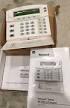 NetworX NX-6V2 LED Keypad User Manual POWER Light is on when AC power is present; flashes to indicate a low battery condition. ARMED Light is on when armed; off when disarmed; flashes to indicate a previous
IDS X-Series User Manual 700-398-01D Issued July 2012
 1 2 Contents 1. Introduction to the IDS X-Series Panels... 7 2. Before Operating Your Alarm System... 7 3. Understanding the Keypad LEDs... 8 3.1 Viewing Data on an LED Keypad... 12 3.1.1 LED Status Indicators...
IDS. Users Guide to Keypad Functions S E C U R I T Y MANUAL NO. 700-171-01B ISSUED AUG 2002 VERSION 1.18
 INHEP DIGITAL IDS S E C U R I T Y Users Guide to Keypad Functions MANUAL NO. 700-171-01B ISSUED AUG 2002 VERSION 1.18 Summary of Operation A rm/ disarm [#] + [USER CODE] Quick Quick Quick Away Arm Stay
www.ealarm.com.my P/N 5-051-371-00 Rev D
 System 236 System 236i P/N 5-051-371-00 Rev D Thank you for purchasing this C&K alarm system Your system is one of the most powerful and advanced alarm systems on the market today, designed to provide
GE Concord 4 Quick User Guide
 GE Concord 4 Quick User Guide GE Concord 4 Quick User Guide Page 1 Before Calling Is the keypad beeping? Press *. This will silence the beeping and let you know where the trouble is. Is there a flashing
SECURITY SYSTEM NOTES
 SECURITY SYSTEM NOTES Installing/Service Company For Service Call Central Station Duress Code FUNCTION CODES Function Code Controls Function This system is is not partitioned. EMERGENCY ACTIVATION KEYS
Users Guide to Keypad Functions
 Users Guide to Keypad Functions MANUAL NO. 700-175-01J ISSUED JAN 2002 VERSION 1.41 Summary of Operation A rm/ disarm [#] + [USER CODE] Quick Quick Quick Panic Fire Medical Away Arm Stay Arm Stay Arm &
Wireless Alarm system s manual
 MOUNTVIEW TECH AUSTRALIA PTY LTD Wireless Alarm system s manual ADS A180 Series ADS Security 1/11/2011 1. Before You Begin For your safety and the safety of others, and to ensure that you get the most
9452/9453 Installation and User Guide
 9452/9453 Installation and User Guide Compatible Equipment 9425 Remote Keypad 9040 Internal Sounder 660 Speech Communicator 8440 4-Channel Minicom 496330 Issue 1 1 of 10 9452/3 Introduction The 9452 and
Firmware version: 1.10 Issue: 7 AUTODIALER GD30.2. Instruction Manual
 Firmware version: 1.10 Issue: 7 AUTODIALER GD30.2 Instruction Manual Firmware version: 2.0.1 Issue: 0.6 Version of the GPRS transmitters configurator: 1.3.6.3 Date of issue: 07.03.2012 TABLE OF CONTENTS
SECURITY SYSTEM NOTES
 SECURITY SYSTEM NOTES Installing/Service Company For Service Call Central Station Duress Code FUNCTION CODES Function Code Controls Function EMERGENCY ACTIVATION KEYS (check if enabled) Fire Auxiliary
SECTION 16720 - FIRE AND SMOKE ALARM SYSTEM. City of San Diego, CWP Guidelines
 PART 1 -- GENERAL 1.1 WORK OF THIS SECTION SECTION 16720 - City of San Diego, CWP Guidelines A. The WORK of this Section includes providing manual and automatic fire alarm and smoke detection systems meeting
SPECIAL CODES AUXILIARY CODES SYSTEM NOTES
 Installing/Service Company Monitoring Center SPECIAL CODES Master Code Duress Code AUXILIARY CODES "Quick Arm" " Chime" 08 02 09 03 10 04 11 05 12 06 13 07 14 SYSTEM NOTES Exit Delay Time Entry Delay Time
System Introduction S E C T I O N 1
 System Introduction S E C T I O N 1 1.1 Specifications Flexible Zone Configuration Six fully programmable zones; system expandable to eight zones using keypad zone inputs and wireless zones 38 access codes:
HILLS Series LED Code Pad User Manual
 HILLS Series LED Code Pad User Manual Not all features may be available on your system Check with your installer to find out which features are programmed Page 2 TABLE OF CONTENTS Code Pad Diagrams...2
tattletale User Guide Consumer unit version 2.48 1 P a g e
 tattletale User Guide Consumer unit version 2.48 1 P a g e Contents Basic 1... 4 Base Unit Features... 4 Initial Setup... 4 Arming... 5 Disarming... 5 Quiet Button... 5 Settings... 5 Settings 2... 6 Quick
Control Panels D9412GV3/D7412GV3/D7212GV3. UL Installation Instructions
 Control Panels D9412GV3/D7412GV3/D7212GV3 en UL Installation Instructions Control Panels Table of Contents en 3 Table of Contents 1 Installation 4 1.1 Installation Preparation 4 1.2 Enclosure Options
CS848E Receiver for 868GEN2 Devices Installation Sheet
 CS848E Receiver for 868GEN2 Devices Installation Sheet EN 1 2 1 3 4 2 3 EN: Installation Sheet Description The CS848E Receiver adds wireless capabilities to the CS line of control panels. The CS848E allows
500r+ Installation and User Guide
 500r+ Installation and User Guide Compatible Equipment 502rUK-50 Watch/Pendant PA. 509rUK-50 Smoke Detector 515rUK-00 10 metre passive infra red movement detector. 525rUK-00 Remote Set/Unset (Full and
SILENT KNIGHT MODEL 5207
 SILENT KNIGHT MODEL 5207 Fire Control / Communicator Installation, Programming, and Operation Manual Part Number 150865 Rev. C, 04/03 Contents Section 1 Introduction.......................................................................1-1
NESS D16. 16 Zone Control Panel and Dialler OWNER S MANUAL
 NESS D16 16 Zone Control Panel and Dialler OWNER S MANUAL REVISION 2, JULY 2001 Ness Security Products Pty Ltd Quality Endorsed Company ISO9001 LIC.No. QEC2074 NSW Head Office only WWW.NESS.COM.AU Australia
TABLE OF CONTENTS FEATURES
 TABLE OF CONTENTS FEATURES 2 Keypad Programmable... 2 EEPROM Memory... 2 Static/Lightning Protection... 2 Supervision... 2 Operation... 2 SPECIFICATIONS 2 PC1550 Control Panel... 2 PC1500RK Keypad... 2
Destiny 4100. Destiny 4100. Owners Manual
 Destiny 4100 Destiny 4100 Owners Manual TABLE OF CONTENTS INTRODUCTION Control Panel...3 Detection Devices...3 Telephone Keypads...3 GLOSSARY... 4-5 LOCAL PHONE ACCESS Using Your Telephones As Keypads...6
How To Use A Powerline On A Iphone Or Ipa (Aero) With A Powerpoint (A2) On A Blackberry) With An Iphones 2 (A3) Or Ipad (A4) With
 NOTE After 15 minutes of keypad inactivity the keypad will emit a steady tone indicating the panel has been left in Dealer Program Mode. Enter Dealer Code to exit or press the C key to return to Dealer
User's Manual 5120XM N8031 6/96
 Fire and Burglary System User's Manual 5120XM N8031 6/96 SYSTEM OVERVIEW...3 General...3 Zones...3 Fire & Emergency Protection...3 Burglary Protection...4 Alarms...4 Memory of Alarm...4 ABOUT THE KEYPADS...5
PK5500 v1.1 Installation Instructions
 PK5500 v1.1 Installation Instructions 1 2 3 4 5 6 7 8 9 * 0 # WARNING: Please refer to the System Installation Manual for information on limitations regarding product use and function and information on
Emergency Dialer DIAL-ALERT MODEL: AD-105. www.skylinkhome.com
 www.skylinkhome.com Emergency Dialer TM DIAL-ALERT MODEL: AD-105 If you would like to order Skylink s products or have difficulty getting them to work or download information and user manual, please :
DORMA MODEL PS-406BB POWER SUPPLY INSTALLATION INSTRUCTIONS
 Features: INSTALLATION Install in accordance with NFPA 70. DORMA MODEL PS-406BB POWER SUPPLY INSTALLATION INSTRUCTIONS Up to 1.95 Amps Load Capacity Class 2 Rated Outputs Overload, Over Voltage, and Short
SECURITY SYSTEM NOTES. Security System Configuration
 Installing / Service Company: For Service Call: SECURITY SYSTEM NOTES Security System Configuration Master Code: Auxiliary Code(s) 2 3 4 5 6 "Quick Arm" Digit: Exit Delay Time Auxiliary Exit Delay Time
CONTENTS QUICK SETUP & INSTALLATION USER MANUAL. SUPA8 Quick Setup & User Manual
 SUPA8 Quick Setup & User Manual QUICK SETUP & INSTALLATION CONTENTS FACTORY DEFAULTS... 1 INSTALLATION OF THE SECURITY SYSTEM... 2 COMMISSIONING THE DIALLER PANEL... 5 ZONE INPUT CONNECTIONS... 7 PANEL
HILLS Series LED Code Pad User Manual
 HILLS Series LED Code Pad User Manual Not all features may be available on your system Check with your installer to find out which features are programmed Page 2 TABLE OF CONTENTS Code Pad Diagrams...2
Home Security Alarm System
 Home Security Alarm System User Manual (ALM-S02) Read manual carefully before use. PiSector Inc., USA www.pisector.com Thank you for purchasing this home security alarm system. For your safety and better
AM100 SECURITY SYSTEM INSTALLATION INSTRUCTIONS
 AM100 SECURITY SYSTEM INSTALLATION INSTRUCTIONS N7526-3V1 Rev B 4/99 Ref: 20AMTE RECOMMENDATIONS FOR PROPER PROTECTION The Following Recommendations For The Location Of Fire And Burglary Detection Devices
SECURITY SYSTEM NOTES SPECIAL CODES. Security System Configuration
 Installing / Service Company: SECURITY SYSTEM NOTES For Service Call: Master Code SPECIAL CODES Duress Code Security System Configuration Auxiliary Code(s) Quick Arm" Digit: 2 9 3 10 4 11 5 12 6 13 7 14
NetworX Series. NX- 4/8 Code Pad. User Manual (Australian Version)
 NetworX Series NX- 4/8 Code Pad User Manual (Australian Version) Table Of Contents Code Pad Diagram... Inside Front Glossary of Terms...2 Understanding the Code Pad lights...3 Code Pad Tones...4 Fully
Ademco Vista-20P/First Alert FA-168C Basic Commands
 Zones 64 total Ademco Vista-20P/First Alert FA-168C Basic Commands Wireless Yes, Zones 09 to 48 + 16 Keyfob Zones (Zones 49 to 64) Batteries Downloadable Partitions 2 12 volt Rechargable inside main Panel,
Dialog Telephone Interface Module Installation Sheet
 Dialog Telephone Interface Module Installation Sheet Description The Dialog Telephone Module (DTIM), model number 60-879- 95R, is a battery operated communication link between the security system control
GC2 Panel User Guide
 GC2 Panel User Guide ENGLISH (International) WIRELESS SECURITY SYSTEM WARNING: OWNER S I NSTRUCTION NOTICE Not to be removed by anyone except occupant THIS PAGE INTENTIONALLY LEFT BLANK CONTENTS System
SECURITY SYSTEM NOTES. EMERGENCY ACTIVATION KEYS (check if enabled) PROGRAMMED FUNCTIONS
 SECURITY SYSTEM NOTES Installing/Service Company For Service Call Installation Date / / Central Station Duress Code EMERGENCY ACTIVATION KEYS (check if enabled) Fire Auxiliary Emergency Police PROGRAMMED
GSM ALARM SYSTEM USER MANUAL
 GSM ALARM SYSTEM USER MANUAL 1. Instruction The alarm system is based on GSM network. With a GSM SIM card, it can be used wherever you want and no need to connect any wire, which is convenient and easy
First Alert FA140C/142C Installer Notes M. Leuck
 First Alert FA140C/142C Installer Notes M. Leuck 1. Programming can only be done by 6139 Alpha keypads, standard 6128 keypad cannot be used to program zones 2. Program new Master Code in section *20 (old
SFC-200 SERIES FIRE ALARM CONTROL PANELS. SFC-200 Series Fire Alarm Control Panels. Features. Description
 SFC-200 SERIES FIRE ALARM CONTROL PANELS SFC-200 Series Fire Alarm Control Panels Description Summit s SFC-200 Series fire alarm control panels consist of six and twelve zone models which are equipped
Solid Core and Split Core Adjustable Current Status Switches CSS-O, CSS-C; CSP-O, CSP-C
 Solid Core and Split Core Adjustable Current Status Switches CSS-O, CSS-C; CSP-O, CSP-C DESCRIPTION FEATURES PRODUCT DATA Very low operating trip points LED status indication Integral DIN rail mounting
Security System Owner s Manual
 Security System Owner s Manual Interactive Technologies Inc. 2266 North 2nd Street North St. Paul, MN 55109 FCC Notices FCC Part 15 Information to the User Changes or modifications not expressly approved
ERS-2400B. PERS-2400B Personal Emergency Reporting System
 PERS-2400B Personal Emergency Reporting System ERS-2400B Durability and Versatility for Emergency Reporting Solutions Create a customized and comprehensive Personal Emergency Reporting System with the
User Guide for the DS7060 Control/Communicator
 DS7060 User Guide Copyright 1996-97 Detection Systems, Inc. User Guide for the DS7060 Control/Communicator Copyright 1996-97 Detection Systems, Inc. Detection Systems, Inc., 130 Perinton Parkway, Fairport,
Y7230A CO 2 Alarm System
 Y7230A CO 2 Alarm System FOR CO 2 GAS DETECTION PRODUCT DATA FEATURES APPLICATION Y7230A CO 2 alarm system is used to detect gas leaking from CO 2 beverage dispensing systems and posts an alarm to occupants
How To Use An F145C-1 With A Sim Sims 2 (Aq) And A Sims 1 (Aux) (Aipa) (For Aq) (F145C) (Ios) (Power
 First Alert FA145 Installer Notes M. Leuck 1. Programming can only be done by 6139 Alpha keypads, standard 6128 keypad cannot be used to program zones 2. Program new Master Code in section *20 (old version)
728 SERIES REFERENCE & INSTALLATION MANUAL 728+ VERSION 3.2. 728 series
 728 SERIES 728+ VERSION 3.2 728 series REFERENCE & INSTALLATION MANUAL TABLE OF CONTENTS INTRODUCTION... 2 About This Manual... 2 Features... 2 Specifications... 3 Accessories and Keypads... 3 About Paradox...
SECURITY SYSTEM NOTES SPECIAL CODES AUXILIARY ARM / DISARM CODES ENTRY / EXIT DELAY TIMES ZONE DESCRIPTIONS
 SECURITY SYSTEM NOTES Installing/Service Company For Service Call SPECIAL CODES Master Code Duress Code "Quick Arm" Digit "Chime" Digit "Entry-Guard" Digit AUXILIARY ARM / DISARM CODES 02 12 22 03 13 23
TX GSM SMS Auto-dial Alarm System. Installation and User Manual
 TX GSM SMS Auto-dial Alarm System Installation and User Manual Product Features: 1. 16 wireless zones, 3 wired zones alarm system, suitable for small to medium size offices and homes. 2. The system uses
TS510 & TS500. Installation & User Guide. Compatible Equipment
 Installation & User Guide Compatible Equipment TS510 REM - Remote Keypad 9040 - Loudspeaker DC54/58 - Digital Communicator SD1+ - Speech Dialler 496525 Issue A 1 of 10 TS510 and TS500 Overview Introduction
User s Guide. Security Systems D220
 User s Guide Security Systems D220 Table of Contents About This User s Guide... 3 Introduction... 3 Security System Basics... 4 Controlled Points... 5 24-Hour Points... 6 Keypad Keys... 6 Keypad Lights...
VISTA-20SE INSTALLATION INSTRUCTIONS 2-PARTITIONED SECURITY SYSTEM
 VISTA-20SE 2-PARTITIONED SECURITY SYSTEM INSTALLATION INSTRUCTIONS Principal changes between the VISTA-20SE and the former VISTA-20 are indicated by margin lines. N7526V4 8/97 RECOMMENDATIONS FOR PROPER
D1260/D1260B. Keypad. National Security Systems Inc (800)457-1999. Owner's Manual
 D1260/D1260B EN Owner's Manual Keypad National Security Systems Inc (800)457-1999 D1260/D1260B Owner's Manual This system includes a telephone line seizure feature. The system may be programmed to communicate
Wireless Home Security System Product Manual (Model #80355)
 Wireless Home Security System Product Manual (Model #80355) Installation Instructions During set-up, if no key is pressed for 15 seconds it will come out of the setup mode and you will have to start over.
SECURITY SYSTEM NOTES SPECIAL CODES ENTRY / EXIT DELAY TIMES ARM / DISARM CODES
 SECURITY SYSTEM NOTES Installing/Service Company For Service Call SPECIAL CODES "Chime" Digit 1 "Partial Arm" Digit 2 "Quick Arm" Digit 3 ENTRY / EXIT DELAY TIMES Exit Delay Time Entry Delay Time Secondary
National Security Systems Inc (800)457-1999. Security System User's Guide
 National Security Systems Inc (800)457-1999 Security System User's Guide Security System Glossary As security system technology has evolved, a special jargon has developed. Some terms widely used within
1R / 4-BUTTON SERIES
 Button 1 1R / 4-BUTTON SERIES VEHICLE SECURITY SYSTEM Standard Features: Two 4-Button Remote Transmitters Status indicator (LED) Valet / override switch Multi-tone siren Dual stage impact detector Remote
Auto Dialer. Manual E-921APQ E-921GPQ
 Troubleshooting: Auto dialer will not arm/disarm Auto dialer will not dial out Unit doesn t respond to a call-back Difficulty in activating room monitor by telephone remote control Make sure that you have
ICP-CC488 ICP-CC488 EN. Control Panel. User s Guide
 ICP-CC488 EN User s Guide ICP-CC488 Control Panel ICP-CC488 User's Guide Notices EN 2 Copyright Notice Unless otherwise indicated, this publication is the copyright of Bosch Security Systems, Inc. ( Bosch
Microprocessor Home Security System
 numbers of sensor s activations in the zone and after which activations the zone will be discarded (ignored). On every system s arming the counter is cleared in self. 6.3.11. 2 - Triger Timer - enter a
NX-8V2 Control Panel Installation Manual
 NX-8V2 Control Panel Installation Manual P/N I-NX8V2-IM REV H ISS NOV12 Copyright Disclaimer Trademarks and patents Intended use Contact information Customer support 2012 UTC Fire & Security Americas Corporation,
ADA COMPLIANT BOX STYLE TELEPHONE INSTALLATION, PROGRAMMING AND OPERATING INSTRUCTIONS FOR MODEL PBX
 ADA COMPLIANT BOX STYLE TELEPHONE INSTALLATION, PROGRAMMING AND OPERATING INSTRUCTIONS FOR MODEL PBX INSTALLATION INSTRUCTIONS Step 1. Determine the position for the Hands-free phone in the elevator phone
T7079A,B Solid State Remote Temperature Controllers
 T7079A,B Solid State Remote Temperature Controllers FEATURES PRODUCT DATA Switch selection of heat or cool mode. Temperature sensing up to 400 feet. Does not require field calibration. 0K NTC temperature
HAM841K ALARM CONTROL PANEL FOR COMMERCIAL AND RESIDENTIAL SECURITY SYSTEMS
 ALARM CONTROL PANEL FOR COMMERCIAL AND RESIDENTIAL SECURITY SYSTEMS USER MANUAL USER MANUAL ALARM CONTROL PANEL FOR COMMERCIAL AND RESIDENTIAL SECURITY SYSTEMS INTRODUCTION The (HA-841K) is a complete
WIRELESS ALARM SYSTEM WITH TELEPHONE AUTO DIALER
 BAT.LOW AC WIRELESS ALARM SYSTEM WITH TELEPHONE AUTO DIALER THE SYSTEM THAT CALLS YOU! Our WIRELESS ALARM SYSTEM WITH TELEPHONE AUTO DIALER is designed to allow you to create your own security system.
PiSector Home security systems
 PiSector Home security systems User Manual (ALM-S02) Read manual fully before use. PiSector Inc., USA, www.pisector.com Thank you for purchase this alarm system, For proper use and your safety, please
466-1936 Rev E October 2004 ZZZ*(6HFXULW\FRP. Part No: 60-883-95R. CareGard. User Guide
 ) *(6HFXULW\ 466-1936 Rev E October 2004 ZZZ*(6HFXULW\FRP Part No: 60-883-95R CareGard User Guide FCC Notices FCC Part 15 Information to the User Changes or modifications not expressly approved by GE Security
FIRST ALERT INSTRUCTION MANUAL FOR FA 270 KEYPADS SECURITY SYSTEM
 FIRST ALERT INSTRUCTION MANUAL FOR FA 270 KEYPADS SECURITY SYSTEM Page 0 Table of Contents Introduction 1 System Basics.. 1 Burglary Protection.. 1 Fire Protection.. 1 Security Codes. 1 Zones and Partitions
Changes or modifications not expressly approved by Interactive Technologies, Inc. can void the user s authority to operate the equipment.
 0 FCC Notices FCC Part 15 Information to the User Changes or modifications not expressly approved by Interactive Technologies, Inc. can void the user s authority to operate the equipment. FCC Part 15 Class
CAPTAIN 6. USER GUIDE System ver. 6.0. 6 Zones Intruder Alarm System. PIMA Electronic Systems Ltd. www.pima-alarms.com
 CAPTAIN 6 6 Zones Intruder Alarm System USER GUIDE System ver. 6.0 PIMA Electronic Systems Ltd. www.pima-alarms.com P/N 4410049, G2 XX en, Jan. 2010 2 CAPTAIN 6 User Guide SAFETY INSTRUCTIONS Your CAPTAIN-i
616, 626, 636 & 646 Keypads
 616, 626, 636 & 646 Keypads User s Manual TABLE OF CONTENTS 1.0 BASIC OPERATION...2 2.0 ACCESS CODES...4 3.0 ARMING & DISARMING...6 4.0 PANIC ZONES...13 5.0 KEY ACCESS PROGRAMMING.14 6.0 ADDITIONAL FEATURES...15
Fire Fighter Phone System Installation Instructions
 Fire Fighter Phone System Installation Instructions Introduction This publication describes the installation procedure for the Fire Fighter s Phone on a 4100U or a 4100ES Fire Alarm Control Panel (FACP).
Business/Home GSM Alarm System. Installation and User Manual
 Business/Home GSM Alarm System Installation and User Manual Brief Introduction: GSM 900/1800/1900 bands, can be used in most parts of the world Full duplex communication with the host Monitor the scene
ICP-CC488. Installation Guide ICP-CC488 Control Panel
 ICP-CC488 EN Installation Guide ICP-CC488 Control Panel ICP-CC488 Installation Guide Notices EN 2 Copyright Notice Unless otherwise indicated, this publication is the copyright of Bosch Security Systems,
HUNTER-PRO 32 Ver. 3.8 Intruder Alarm System RXN-9/416 User Guide
 HUNTER-PRO 32 Ver. 3.8 Intruder Alarm System RXN-9/416 User Guide PIMA Electronic Systems Ltd. 5 Hatzoref Street, Holon 58856, Israel +972-3-5587722 +972-3-5500442 [email protected] http://www.pima-alarms.com
NetworX Series. NX-216E Zone Expander Module Installation and Startup
 NetworX Series NX-E Zone Expander Module Installation and Startup 00 GE Security All rights reserved. These instructions do not purport to cover all details or variations in equipment nor to provide every
VISTA-128FBP VISTA-250FBP Commercial Fire and Burglary Partitioned Security Systems with Scheduling
 VISTA-128FBP VISTA-250FBP Commercial Fire and Burglary Partitioned Security Systems with Scheduling User Guide K0377V2 7/09 Rev. C 2 TABLE OF CONTENTS SYSTEM OVERVIEW... 5 General... 5 A Partitioned System...
Understanding the Code Pad lights...4. Code Pad tones...5. Fully arming the system On MODE...6. Fully arming the system - Quick Arm MODE...
 TABLE OF CONTENTS...Glossary of terms...2...code Pad Diagram...3 Understanding the Code Pad lights...4 Code Pad tones...5 Fully arming the system On MODE...6 Fully arming the system - Quick Arm MODE...6
SPECIFICATIONS. Remote Keypad Specifications (PC2550RK) Output Voltage Specification. Digital Communicator Specifications
 SPECIFICATIONS Control Panel Specifications 13 zones including: 8 fully programmable supervised zones (EOL resistors) Supervised fire zone 1 auxiliary normally open zone 3 keypad activated zones Audible
WIRELESS ALARM SYSTEM WITH TELEPHONE AUTO DIALER
 BAT.LOW AC WIRELESS ALARM SYSTEM WITH TELEPHONE AUTO DIALER THE SYSTEM THAT CALLS YOU! Our WIRELESS ALARM SYSTEM WITH TELEPHONE AUTO DIALER is designed to allow you to create your own security system.
Security System. User's Guide. Keypad
 Security System EN User's Guide Keypad Security System User's Guide This system includes a telephone line seizure feature. The system can be programmed to communicate with a central monitoring station
Wireless Home Security Alarm System AM 500
 Wireless Home Security Alarm System AM 500 12 MONTH GUARANTEE Installation & Operating Instructions INTRODUCTION The AM500 is a simple self-contained alarm system. It protects the home by sounding a siren
HM-W536 Install Guide
 HM-W536 Install Guide 9/13/2013 IMPORTANT SAFETY INSTRUCTIONS Warning - When using electrical devices, basic safety precautions should be followed to reduce the risk of fire, electrical shock or injury.
Using Your. Security System With Icon Keypad S5020, S5021, S5022
 Using Your Security System With Icon Keypad S5020, S5021, S5022 Contents 1 Overview Your Security System... 1 How Your Security System Works... 2 Your System's Programming... 3 Getting Used to Your System...
PRO PLM Installation Instructions
 PRO PLM Installation Instructions PROFESSIONAL INSTALLATION STRONGLY RECOMMENDED Installation Precautions: Roll down window to avoid locking keys in vehicle during installation Avoid mounting components
Program Entry Guide. Control Panels
 EN Program Entry Guide Control Panels D6412/D4412 Program Entry Guide EN 2 Documentation Conventions Type Styles Used in this Manual To help identify important items in the text, the following type styles
D24 ALARM CONTROL PANEL USER S MANUAL REVISION 1.1 A$12.00 INC GST
 D24 ALARM CONTROL PANEL USER S MANUAL REVISION 1.1 A$12.00 INC GST Ness Security Products Pty Ltd Quality Endorsed Company ISO9001 LIC.No. QEC2074 NSW Head Office only WWW.NESS.COM.AU Australia s largest