
Sterilization and Quality Assurance Procedures
|
|
|
- George Ray
- 10 years ago
- Views:
Transcription
1 Sterilization and Quality Assurance Procedures Eric S. Kastango October 10, 2013

2 The essence of quality assurance is demonstrating that you are really doing what you say you are doing.

3 Standard of Sterility <1> Injections Parenteral articles are prepared.to ensure they meet pharmacopeial requirements for sterility, pyrogens,... Sterility Tests Preparations for injection meet the requirements under Sterility Tests <71>

4 What is Sterility? Free from bacteria or other microorganisms American Heritage's Definition of Sterility Within the strictest definition of sterility, a specimen would be deemed sterile only when there is complete absence of viable microorganisms from it. <1211> Sterilization and Sterility Assurance of Compendial Articles Is it possible to demonstrate complete absence of microorganisms from a CSP? Absolute sterility can t be demonstrated without the complete destruction of every article from the lot of CSPs. 4

5 Critical Concepts of Sterilization Sterility Assurance Level (SAL) is the probability of a non-sterile item making it through the validated sterilization process. Items terminally sterilized by moist or dry heat, irradiation, or chemical sterilants have a SAL of nonsterile item per 1 million items sterilized Items prepared aseptically prepared with a 0.22 micron filter have a SAL of nonsterile item per 1 thousand items sterilized

6 Verification of Accuracy and Sterilization The quality (sterility and accuracy) of the CSP is directly related to ensuring that methods used to compound the sterile preparation achieve the desired goal of purity, potency and sterility. CSPs that require some form of terminal sterilization: either by filtration Steam ionizing radiation (not the subject of this session) MUST be verified to ensure that each CSP is void of microbial contamination.

7 Verification of sterilization High-risk level compounding must achieve sterility (nonsterile sterile) Methods of sterilization Autoclave or Dry-Heat oven sterilization cycles Autoclave (121 C for PSI) Dry-heat 150 C (300 F) for 2.5 hours 140 C (285 F) for 3 hours Use of Biological Indicators (BIs) Filtration methodology FDA approved/challenged filters Filter integrity testing Ionizing radiation The stated temperatures and cycle times must be independently qualified by user

8 Responsibility of Compounding Supervisor The licensed healthcare professionals who supervise compounding shall be responsible for determining that the selected sterilization method both sterilizes and maintains the strength, purity, quality, and packaging integrity of CSPs. See Methods of Sterilization under Sterilization and Sterility Assurance of Compendial Articles 1211

9 Methods of Sterilization Sterilization method must both sterilize and maintain the strength, purity, and packaging integrity Methods Steam Dry Heat Filtration Image courtesy of

10 Steam (Moist Heat) Sterilization Autoclaves are used to sterilize heat-stable oil-free liquids, glassware, utensils and medical instruments. Lethality is achieved by denaturing proteins of microorganisms. Equipment must have systems to control temperature and cycle time. The item is exposed to saturated steam under high temperature and pressure conditions.

11 How to load an autoclave Image:

12 Time to Achieve Equivalent Microbial Lethality at Different Exposure Temperatures 285 F (140 C) (0.13 Minutes ) 270 F (132 C) ( 0.9 Minutes ) 250 F (121 C) 12 Minutes 212 F (100 C) 80 Hours 321 Hours 200 F (93 C) 643 Hours 176 F (80 C) MINUTES HOURS Used with permission from Steris 700

13 Chemical and Biological Indicators Biological Indicator (BIs) are systems that use a heatresistant spore-forming microorganism (B. stearothermophilus or similar) Biological Indicators (BIs) are used to determine whether a sterilizer has delivered a lethal (effective) cycle. They should be used with every cycle and in conjunction with timetemperature data generated from the sterilizer Unprocessed Positive Control Processed Image adapted from: Autoclave Training; University of Kentucky Autoclave tape does not meet this requirement. Page 13

14 Steam Sterilization (continued) The effectiveness of steam sterilization is verified: Using confirmation methods such as temperature sensing devices-thermocouples Temperature mapping Hot and cold spots Image courtesy of

15 Steam Sterilization (continued) Biological Indicators Need to incubate after exposure to steam cycle to determine effectiveness. Image courtesy of

16 Inspector Evaluation Metrics: Steam Autoclave Who operates the equipment? See training records How is the equipment operated? See PnPs or SOPs on its use How do you know the autoclave cycle was effective? What system is used to control temperature and cycle time Print out of time/temperature Typical temp: 121 C for at least 12 minutes (drug dependent) What type of monitoring and controlling sensors are used (e.g., mercury-in-glass thermometer, thermocouple, RTD, pressure gauge)? Use of biological indicator (tape is not acceptable) How is the equipment maintained, cleaned, services, and calibrated

17 Dry Heat Sterilization and Depyrogenation Used for oils and powders Designed to provide heated filtered air evenly distributed throughout the chamber by a blower device (air must circulate around items) Requires higher temperature and long exposure times Oven should be equipped with a system for controlling temperature and exposure period Effectiveness must be verified using appropriate biological indicators and temperature sensing devices

18 Dry Heat Depyrogenation Used on equipment made of glass or metal Rinse with Sterile Water prior to use Requires a much higher temperature than sterilization: 250 C for 30 minutes Validation of a depyrogenation cycle requires inoculation of bacterial endotoxin A three log reduction of E. Coli endotoxin is required to have an effective depyrogenation cycle

19 Chemical and Biological Indicators Biological Indicator (BIs) are systems that use a heat-resistant spore-forming microorganism (Bacillus atrophaeus or similar) Biological Indicators (BIs) are used to determine whether a sterilizer has delivered a lethal (effective) cycle. They should be used with every cycle and in conjunction with time-temperature data generated from the sterilizer Autoclave tape does not meet this requirement. Page 19

20 Biological Indicators Sterilization Method BI microorganism BI incubation Steam Geobacillus stearothermophilus Seven days at C Dry-Heat Bacillus atrophaeus Seven days at C Dry-Heat Depyrogenation Inoculate glassware or vials with a minimum of 5,000 EU of E. coli lipopolysaccharide. All inoculated glassware placed must demonstrate, at minimum, a threelog reduction in endotoxin. N/A

21 Polling Question The use of biological indicators is not required with each batch of drug that is terminally sterilized by either steam or dry-heat? 1. True 2. False
22 Inspector Evaluation Metrics: Dry Heat Oven Who operates the equipment? See training records How is the equipment operated? See PnPs or SOPs on its use How do you know the dry-heat cycle was effective? What system is used to control temperature and cycle time? Print out of time/temperature Typical temp: 250 C for at least 30 minutes (drug dependent) What type of monitoring and controlling sensors are used (e.g., mercury-in-glass thermometer, thermocouple, RTD, pressure gauge)? Use of biological indicator (tape is not acceptable) Different BI for steam vs. dry heat How is the equipment maintained, cleaned, services, and calibrated?
23 Inspector Evaluation Metrics: Sterilization Selected Work Practices Sterilization-Steam (autoclave) and Dry-Heat Oven Sterilization methods Inspector Evaluation Metrics Inspect equipment Maintained, clean and located in a suitable area? Are compounded solutions pre-filtered prior to autoclaving? How are the supplies wrapped/packaged prior to sterilizing? Equipment has controls for controlling temperature and cycle time Evidence: Print-out of time/temperature? Linked to batch? Are biological indicators used during the cycle (one time or every time?) Are written CSP specific steam autoclave and dryheat over PnP maintained?
24 Filtration An electron microscope image of a bacterial community, on a filter. Image courtesy of
25 Filtration Process for removing particulate matter from a liquid Removes particles by entrapment in the channels of the filter, adsorption to the filter by chemical or electrical attraction, by sieving, or size exclusion Most frequently, filters work by a combination of these mechanisms SAL for sterilizing a solution by filtration is normally accepted as 1:1000 (10-3)
26 Filtration Sterile filters used to sterilize CSPs shall be: Pyrogen-free and have a nominal porosity of 0.2 μm or 0.22 μm Certified by the manufacturer to retain at least 107 microorganisms of a strain of Brevundimonas diminuta per cm2 of filter surface area The filter dimensions and liquid material to be sterile-filtered shall permit the sterilization process to be completed rapidly, without the replacement of the filter during the process. Image courtesy of
27 Filters Size and configuration should accommodate the volume being filtered to permit complete filtration without clogging 25 mm disk filter should filter no more than 100 ml Filter and housing should be physically and chemically compatible with the product to be filtered and capable of withstanding the temperature, pressures and hydrostatic stress imposed on the system Image courtesy of
28 Bubble-Point (Filter Integrity Test) A test to ensure the integrity of filters used for sterilizing compounded solutions. The Bubble Point Test is based on the fact that liquid is held in a capillary tube by surface tension. The minimum gas pressure required to force liquid out of the tube is a direct function of tube diameter Images courtesy of
29 Filter Integrity Testing Millex / Sterivex Integrity Tester Images courtesy of Bubble Point Procedure: 1. Wet the filter with the appropriate fluid, typically water for hydrophilic membranes or an alcohol/water mixture for hydrophobic membranes. 2. Pressurize the system to about 80% of the expected bubble point pressure which is stated in manufacturer s literature. 3. Slowly increase the pressure until rapid continuous bubbling is observed at the outlet. 4. A bubble point value lower than the specification is an indication of the following: fluid with different surface tension than the recommended test fluid integral filter, but wrong pore size high temperature incompletely wetted membrane non-integral membrane or seal
30 Polling Question Conducting filter integrity testing can be used as an alternative quality release test to sterility testing? 1. True 2. False
31 Inspector Evaluation Metrics: Filtration Is the filter a sterilizing grade filter? How was the filter membrane selected? Aqueous (hydrophilic) Non-aqueous (hydrophobic) What is the maximum filtration volume per filter? See PnPs or SOPs on its use Are filters used to sterilize solutions integrity tested (Bubble-point)? Are there specific written procedures for performing a filter integrity test?
32 Probability The sterility of a lot purported to be sterile is therefore defined in probabilistic terms, where the likelihood of a contaminated unit or article is acceptably remote.
33 Sterility Testing Requirements High risk CSPs Batches of more than 25 individual CSPs Any high risk CSP that has been exposed longer than 12 hours at 2º to 8º or longer than 6 hours at warmer than 8º All risk level CSPs When USP <797> BUD limits are exceeded
34 Sterility Testing USP <71> Sterility Tests states: These Pharmacopeial procedures are not by themselves designed to ensure that a batch of product is sterile or has been sterilized. This is accomplished primarily by method suitability of the sterilization process or of the aseptic processing procedure. Is an industrial test used to detect incidents of gross contamination. It should be recognized that the USP sterility test might not detect microbial contamination if present in only a small percentage of the finished articles in the batch. Current knowledge offers no nondestructive alternatives for ascertaining the microbiological quality of every finished article in the lot.
35 Sterility Testing Cundell AM. Review of the Media Selection and Incubation Conditions for the Compendial Sterility and Microbial Limit Tests, Pharm.Forum 28 (6),
36 Sterility Testing (Membrane Filtration) Millipore Equinox Steritest System
37 Flow of the Sterility Test 1. Media and Bacteriostasis/Fungistasis Testing (Method Suitability) 2. Eliminate any bacteriostatis/fungistatic properties 3. Determine number of articles, quantity from each, to test 4. Incubate the samples 5. Examine test articles for signs of growth 6. Examine suspect tubes microscopically for signs of growth 7. Subculture if necessary 8. Write the report Reminder: All Compendial Microbiological Test Methods, including Sterility Tests, are Classical Growth Based Methods
38 Polling Question The preferred method of sterility testing is which of the following? 1. Direct inoculation 2. Filter integrity testing 3. Membrane filtration 4. Something else 20%
39 Sterility Testing Passing a sterility test does not guarantee that every unit in that batch is sterile. The use of two types of medias is required. TSB and FTM Two incubations are required for the medias Membrane filtration is the preferred method of sterility testing BUDs are not universal and must be verified by each vendor Must be based on sterility testing according to USP 71 or other procedures, methods or processes that have been proven to be equivalent or superior with statistical significance Challenge external testing labs and vendors on how they accept samples less than the quantities prescribed in USP 71, Table 3.
40 Number of Articles to be Tested in Relation to the Number of Articles in the Batch (From USP<71>)
41 Minimum Quantity to be Used for Each Medium (from USP <71>)
42 Sterility Testing Quick Reference Key Element Description Correct # units Per Chapter <71>, Table 3 Correct volume /unit Per Chapter <71>, Table 2 Correct method Membrane Filtration: pool all samples and run through single filter Must have justification if using Direct Inoculation: 1:1 (unit tested and broth used) Other methods (not in <71>) IF verification demonstrates equivalence to USP <71> Method Suitability Testing performed Determines if the sterility testing method is valid for a particular type of CSP and that the drug does not interfere with the sterility test method Correct Media Used Fluid Thioglycollate Media (FTM) Incubated for 14 days (2025 C) anaerobic and aerobic bacteria Soybean Casein Digest Media (SCDM) Incubated for 14 days (30-35 C) for both aerobic bacteria and fungi
43 Inspector Evaluation Metrics: Sterility Testing Does the pharmacy have detailed policies, procedures, forms or electronic methods of documentation about all aspects of sterility testing? Does the pharmacy comply with USP Chapter <71>? Does the compounding location have a written procedure for immediate recall of the dispensed CSPs in the event of any evidence of microbial growth in the test specimens?
44 Inspector Evaluation Metrics: Sterility Testing CSPs are not dispensed prior to the time their final sterility test results are available. Does the compounding location have a written procedure requiring daily observation of the incubating sterility test specimens (if the CSP is dispensed prior to the final sterility test results? Does the pharmacy have a procedure for the immediate recall of the dispensed CSPs in the event of any evidence of microbial contamination?
45 Polling Question The two media used for sterility testing are: 1. FTM & LAL 2. LAL & TSB 3. TSB & FTM 4. TSA & TSB
46 Critical Concepts in Pyrogen Testing Endotoxins produced by gramnegative bacteria and found within the cell membrane account for an estimated 99% of the pyrogens found on the surface of medical devices The term "pyrogen," literally "heat generating," refers to any substance microbial or otherwise which would induce a temperature rise when introduced into a patient
47 Why is pyrogen testing important? Endotoxins are produced by both gram-positive and -negative bacteria and fungi. Endotoxins from gram-negative bacteria are more potent and represent a serious threat to patient safety and well-being. Intrathecal CSPs contaminated with endotoxins have been implicated in cases of both septic and aseptic meningitis, in addition to shock and death. The intrathecal space does not have the same immunological and biological defense mechanisms as the intravenous system.
48 Why is pyrogen testing important? The official endotoxin limits are 5 EU/kg/hr or 350 EU/total body/hour for drugs and biologicals Drugs for intrathecal administration have a much lower endotoxin limit: 0.2 EU/kg/hr Image: Retrieved from Medscape on October 3, Official endotoxin limits were established by the FDA
49 Sources of pyrogens The choice of components used in CSPs is a critical step, especially during preparing intrathecal injections. Commercially available components from manufacturers are typically sterile and pyrogen-free. Nonsterile components used in high-risk level compounding may not pyrogen-free. Water is the main source of pyrogens. Endotoxins are a type of pyrogen and are stable over long periods of time.
50 Sources of pyrogens (continued) Glassware, devices, or utensils that have been washed with tap water and then used to compound high-risk level CSPs can serve as a reservoir of endotoxins. These pyrogens can be transferred to solutions prepared in beakers or utensils during the compounding process. Filtration using typical 0.22 micron filters or moist-heat sterilization will not eliminate endotoxins after introduction into a solution. Pall Posidyne filter is a 0.2 micron positively charged nylon filter membrane that can retain endotoxins in solution. Properly depyrogenating glassware and utensils by using a dryheat oven can eliminate the introduction of pyrogens.
51 Bacterial Endotoxin Test (BET) Historically, pyrogen testing of drugs was performed using rabbits. This method took longer and was less sensitive. This method was replaced with the LAL method. LAL is an acronym for Limulus Amebocyte Lysate which is based on clotting properties of the horseshoe crab s blood. BET or LAL is a test method for estimating the concentration of bacterial endotoxins.
52 BET (continued) There are several methods of performing this test: Gel-clot technique: gel-clot formed in presence of endotoxin. Photometric Turbidimetric method: presence of turbidity is observed Chromogenic method: color change is observed
53 BET Summary BET appears simple, but it is a complex procedure and requires method validation for the individual drug being tested. BET has several requirements in order to be a validated test. They are: All testing solutions have a neutral ph All testing solutions have a low salt or solute concentration to allow an optimal reaction between the LAL reagent and endotoxins. Compounded drugs usually require significant dilution to prevent interference and risk of false-negative results.
54 Inspector Evaluation Metrics: Bacterial Endotoxin Is bacterial endotoxin (pyrogen) testing on all high risk level CSPs, (except those for inhalation and ophthalmic administration) performed? Does the pharmacy have a specific policy and procedure for bacterial endotoxin testing? Does it includes the description of the procedure? Have specific endotoxin unit limits based on USP Endotoxin Test < 85> been developed?
55 Polling Question The reagent for the Bacterial Endotoxins test is which of the following? 1. FTM 2. LAL 3. TSB 4. TSA
56 Quality Release Checks And Tests: Documentation Does the pharmacy have a written release checks and tests PnP used to evaluate? Were the correct ingredients used? Were the weights and measures correct? Verified by review of batch documentation Signatures or initials of compounders can be traced back to signature log Date of preparation and specimen label retained and attached to compounding documentation
57 Quality Release Checks and Tests Physical inspection provides very basic information about the CSP. Primary concern is that the CSP contains the ingredients specified in the original prescription. The final preparation still should be evaluated for: Container leaks and integrity: physical examination of the final prepared container visually inspected for leaks, holes or other container-closure breaches; Particulates in solution: physical examination of the solution for the presence of mobile, randomly sourced, extraneous substances other than gas; Solution color, volume, and odor (if possible) and Phase separation (oiling, creaming, or cracking)
58 Quality Release Testing: Equipment How does the pharmacy ensure that equipment, apparatus, and devices used to compound a CSP be consistently capable of operating properly and within acceptable tolerance limits? Are written procedures outlining required equipment calibration, annual maintenance, monitoring for proper function, and controlled procedures for use of the equipment and specified time frames for these activities are established and followed? Routine maintenance and frequencies shall be outlined in these SOPs.
59 Quality Release Testing: Equipment Are results from the equipment calibration, annual maintenance reports, and routine maintenance are kept on file for the lifetime of the equipment? Are personnel prepared through an appropriate combination of specific training and experience to operate or manipulate any piece of equipment, apparatus, or device they may use when preparing CSPs? Training includes gaining the ability to determine whether any item of equipment is operating properly or is malfunctioning.
60 Inspector Evaluation Metrics: Quality Release Does the pharmacy a formal written policy for release checks and tests for CSPs? Is there evidence that CSPs are inspected for particulate matter? Is there evidence that the pharmacy calibrates and maintains their equipment in good working condition? Is there evidence that staff are appropriately trained on the use and troubleshooting of equipment?
61 Quality Management System Does the pharmacy have a formal and written Quality Assurance/Performance Improvement Plan for all aspects of compounding activities? includes specific monitoring and evaluation activities; details on how results are reported; and delineation of the persons responsible. Are Adverse events and defects related to CSPs are reported through the FDA s MedWatch and/or Quantros programs?
62 Quality Management System Does the pharmacy have a consistent process to document, trend, and ascertain the effectiveness of a corrective action plan to resolve issues when: a desired patient outcome is not achieved; an Action Limit is exceeded; or other operational variance is noted? Examples: CAPA, QRE/Incident Report Corrective and Preventative Action Does the compounding location have a written procedure requiring notification of the physician and patient to whom a potentially contaminated CSP was administered?
63 Example of CAPA Form
64 Inspector Evaluation Metrics: Quality Management Does the pharmacy a formal and written quality assurance plan? Does the pharmacy document patient complaints? Does the pharmacy respond appropriately to complaints and is there evidence that an investigation was conducted and resolution documented?
65 Patient Counseling Does the pharmacy have a training program includes didactic and practical hands on training of patients and caregivers with successful return demonstration of the required skills for administration of CSPs? The specific required competencies are formally assessed and patients/caregivers must demonstrate competency before they are allowed to administer CSPs independent of supervision by healthcare professionals? Does the pharmacy have a formal training program that ensures that patients/caregivers achieve the required competencies for safe storage, handling, administration, monitoring, emergency actions and disposal of CSPs? Does the pharmacy provide written materials to patients/caregivers to supplement verbal training? Does the pharmacy have procedures/system in place for patients and caregivers to use to report questions or concerns relative to CSPs they receive from the compounding location?
66 Redispensing CSPs, Storage and Transport Common practice in hospitals (also known as recycling) Originally assigned BUD dates are not changed and CSPs are not redispensed unless changes are supported by the originally assigned BUD. Is there absolute certainty that proper storage conditions have been maintained during the time they were outside of pharmacy s control? Is there evidence of a systematic process to evaluate when unopened, returned CSPs are safe to redispense? Is there evidence that packaging maintains physical integrity, sterility, stability and purity of CSPs? Is there evidence that the storage of finished CSPs and drug components is separate from food storage and from any specimen storage (if occurs onsite)? Does the pharmacy have evidence that the methods used to transport CSPs to the patient prevent damage and maintain appropriate temperatures during transit?
67 Absence of Evidence Does Not Equal Evidence of Absence Dr. David Hussong (FDA and the USP Microbiology and Sterility Assurance Expert Committee)
FDA and the Compounding Pharmacy
 FDA and the Compounding Pharmacy Scott Sutton, Ph.D. [email protected] 41 Overview of Presentation The Recent Events GCP and GMP Basics the 483 Review H.R. 3204 Outsourcing Facility Preparation
Sterilization methods and equipment Lab 1-2
 Sterilization methods and equipment Lab 1-2 PHT 434 Sterilization Sterilization a process that by which all viable M.O are removed or destroyed, based on a probability function. Sterilization concept Sterilization
3.4 TEST FOR BACTERIAL ENDOTOXINS. Final text for revision of The International Pharmacopoeia
 Document QAS/11.5 FINAL July 01 3. TEST FOR BACTERIAL ENDOTOXINS Final text for revision of The International Pharmacopoeia This monograph was adopted at the Forty-sixth WHO Expert Committee on Specifications
3039878000or8009926372
 3039878000or8009926372 bi s a l e s @me s a l a bs. c om Regulatory officials and sterilization experts have voiced concerns regarding the appropriateness of using a Biological Indicator (BI) Ampoule interchangeably
Sterile Cleanroom Management
 Sterile Cleanroom Management Lynn Stanard, Sr. Quality Manager, Berkshire Corporation When manufacturing in an aseptic environment, it is critical to ensure that the various cleanroom consumables, such
Gamma Sterilisation Validation according to ISO 11137 - Sterilising dose -
 Synergy makes sence Gamma Sterilisation Validation according to ISO 11137 - Sterilising dose - MG-FSI72-105 Last revision: March 2011 5, Chemin du Catupolan - 69120 Vaulx en Velin - France - Tel. 33 (0)4
85 BACTERIAL ENDOTOXINS TEST
 Official December 1, 2012 85 Bacterial Endotoxins Test 1 85 BACTERIAL ENDOTOXINS TEST Portions of this general chapter have been harmonized with the corresponding texts of the European Pharmacopoeia and/or
Lab Exercise 3: Media, incubation, and aseptic technique
 Lab Exercise 3: Media, incubation, and aseptic technique Objectives 1. Compare the different types of media. 2. Describe the different formats of media, plate, tube etc. 3. Explain how to sterilize it,
EH&S. Sheet. Fact. Safe and Effective Use of Autoclaves. What are autoclaves? Factors for effective sterilization. Dry heat cycle - when to use
 Please post or circulate Fact heet nvironment, ealth and afety Information for the Berkeley Campus No. 33 Revised 04/04/11 afe and ffective Use of Autoclaves Autoclaves are easy to use but can pose a safety
STERILIZATION AND DISINFECTION
 STERILIZATION AND DISINFECTION Importance of hand washing shown by Semmelweis STERILIZATION A physical or chemical process that destroys or eliminates all forms of microbial life, including spores. A satisfactory
ENVIRONMENTAL MONITORING
 ENVIRONMENTAL MONITORING Assessment and verification of the adequacy of the aseptic compounding environment is essential. Environmental monitoring programs are designed to promptly identify potential sources
A Comparative Study of In-Process and Finished Products Quality Control Tests for Ophthalmic Products in Different Pharmacopoeias
 A Comparative Study of In-Process and Finished Products Quality Control Tests for Ophthalmic Products in Different Pharmacopoeias N. Srujana, Pooja M. Balachandra*, M.P. Venkatesh, Balamuralidhara V, T.M.
Steam Sterilization and the 2007 Revision of PDA Technical Report 1
 Steam Sterilization and the 2007 Revision of PDA Technical Report 1 14 November 2007 Presented By: Mike Finger (Tunnell Consulting) Don Drew (Abbott Bioresearch Center) Agenda: Introduction Sterilization
Rules for Compounded Sterile Preparations (CSPs)
 Introduction: Despite the attention in this document to describe the provision, maintenance, and evaluation of air quality, the avoidance of direct or physical contact contamination is paramount. Since
Top 10 considerations when validating an autoclave
 Top 10 considerations when validating an autoclave Validating an autoclave is a daunting and time-consuming task. This white paper details the tricks, tips and traps to such a validation project from how
TR40 Sterilizing Filtration of Gases A comparison with TR26 Sterilizing Filtration of Liquids
 TR40 Sterilizing Filtration of Gases A comparison with TR26 Sterilizing Filtration of Liquids Leesa McBurnie Sr. Microbiologist Meissner Filtration Products, Inc. The New England Chapter of the PDA June
Revised 4-3-2012 EHS Biosafety. 1 Select appropriate containers/bags for autoclaving.
 Requirements for Decontamination by Autoclaving Summary: Steam sterilization (autoclaving) is one of the most effective methods for decontaminating biohazardous material. Autoclaves use saturated steam
HAZARD ANALYSIS CRITICAL CONTROL POINT PLAN SUMMARY SETHNESS PRODUCTS COMPANY LIQUID CARAMEL COLOR
 HAZARD ANALYSIS CRITICAL CONTROL POINT PLAN SUMMARY SETHNESS PRODUCTS COMPANY LIQUID CARAMEL COLOR I. INTRODUCTION A. CARAMEL COLOR 1. Caramel Color (Caramel) is defined in Title 21 of the U.S. Code of
AUTOCLAVE PROGRAM. SOP Bio-006 FOR THE USE OF AUTOCLAVE FOR STERILIZATION OF MATERIALS AND BIOLOGICAL WASTE SOP
 ENVIRONMENTAL AND EMERGENCY MANAGEMENT ENVIRONMENTAL HEALTH AND SAFETY 175 Cabot St. Wannalancit Suite 311 Lowell MA 01854 Ruth Medina, Ph.D. Tel: 978-934-2778 Senior Biosafety Specialist/Biosafety Officer
Decontamination and Waste Management www.biosecurity.sandia.gov
 Decontamination and Waste Management www.biosecurity.sandia.gov SAND No. 2006-3684C Sandia is a multiprogram laboratory operated by Sandia Corporation, a Lockheed Martin Company, for the United States
Guidance for Industry Pyrogen and Endotoxins Testing: Questions and Answers
 Guidance for Industry Pyrogen and Endotoxins Testing: Questions and Answers U.S. Department of Health and Human Services Food and Drug Administration Center for Drug Evaluation and Research (CDER) Center
Validation and Management of Heat Sterilization (Autoclave and Dry Heat Oven)
 Validation and Management of Heat Sterilization (Autoclave and Dry Heat Oven) CBE Pty Ltd This training program is copyright to CBE Pty Ltd and may not be modified, reproduced, sold, loaned, hired or traded
Pharma&Biotech. Endotoxin Challenge Vials Endotoxin Indicator for Depyrogenation. Translated versions available at www.lonza.com
 Pharma&Biotech Endotoxin Challenge Vials Endotoxin Indicator for Depyrogenation Translated versions available at www.lonza.com Content Section Page No. 1 Intended Use 2 1 Explanation of Test 2 1 Reagents
Guidance on safe use of Autoclaves
 Safety Office Reviewed: Dec 2013 Reviewed: DD Month Year Guidance on safe use of Autoclaves 1. Hazards & Uses There are several different types of hazard associated with the use of autoclaves. The main
USP <797> A Road to Compliance The New Mexico Board of Pharmacy
 USP A Road to Compliance The New Mexico Board of Pharmacy What is the USP? The United States Pharmacopeia and The National Formulary (USP-NF) is a compilation of drug monographs, biologics, medical
Effective Heat Sterilization in CO 2 Incubators
 Effective Heat Sterilization in CO 2 Incubators Volume 4, Number 3 Key Words Key Words Class 100 air Contamination control Contamination elimination HEPA filtration Incubator Heat Sterilization White Paper
Understanding USP 797
 DDK Scientific, Corp. Raul Duarte June 2008 Copyright DDK Scientific, Corp. 2008, 2009 DDK Scientific, Corp. Proprietary The purpose of USP 797 is to prevent harm and fatality to patients that could result
Terminal Sterilization. vs. Aseptic Processing
 Terminal Sterilization vs. Aseptic Processing Praphon Angtrakool Food and Drug Administration 1 Sterile Drug Products Produced by Aseptic Processing It is a well-accepted principle that sterile drugs should
KGI MEDICAL WASTE MANAGEMENT PLAN
 1revised 2012 I. Facility Information KGI MEDICAL WASTE MANAGEMENT PLAN a. Contact Person: Barbara Erwin Director Research Operations/Chemical and Biological Laboratory Safety/Chair. 909-607-0160 i. Facility:
Guidance for Industry
 Guidance for Industry Container and Closure System Integrity Testing in Lieu of Sterility Testing as a Component of the Stability Protocol for Sterile Products For questions on the content of the guidance,
105 CMR: DEPARTMENT OF PUBLIC HEALTH 105 CMR 210.000: THE ADMINISTRATION OF PRESCRIPTION MEDICATIONS IN PUBLIC AND PRIVATE SCHOOLS
 105 CMR 210.000: THE ADMINISTRATION OF PRESCRIPTION MEDICATIONS IN PUBLIC AND PRIVATE SCHOOLS Section 210.001: Purpose 210.002: Definitions 210.003: Policies Governing the Administration of Prescription
Cleanroom. For. Sterile Manufacturing Facilities
 Cleanroom For Sterile Manufacturing Facilities Praphon Angtrakool Food and Drug Administration 1 WHO TRS No. 823 Annex 1, 1992 (1) General 17.1 The production of sterile preparations should be carried
Fundamental Autoclave Techniques
 Fundamental Autoclave Techniques Version 3, September 2010 Veronika Tatarinoff GSBmE University of NSW Brandy Nelson University of Kentucky The following information is directed at aseptic/sterile surgical,
Assembly and Installation Procedures
 Assembly and Installation Procedures for Pall Pharmaceutical Grade Capsule Assemblies 1. Introduction The following procedures must be followed for the installation of Pall pharmaceutical grade capsule
<788> PARTICULATE MATTER IN INJECTIONS
 PARTICULATE MATTER IN INJECTIONS Particulate matter in injections and parenteral infusions consists of mobile undissolved particles, other than gas bubbles, unintentionally present in the solutions.
Autoclave Safety. Autoclaves are sterilizers using high pressure and high temperature steam. The potential safety risks for the operators are:
 Autoclave Safety Purpose: Sterilization refers to the complete killing of all living organisms, including spores. Common sterilization techniques include the application of wet heat, dry heat, chemicals,
Microbiological Testing of the Sawyer Mini Filter. 16 December 2013. Summary
 Microbiological Testing of the Sawyer Mini Filter 16 December 2013 Summary The Sawyer Mini Filter was tested for its ability to remove three microorganisms Raoultella terrigena, Bacillus subtilis, and
Blood, Plasma, and Cellular Blood Components INTRODUCTION
 Blood, Plasma, and Cellular Blood Components INTRODUCTION This chapter of the Guideline provides recommendations to Sponsors of Requests for Revision for new monographs for blood, plasma, and cellular
BRIEFING 797 Pharmaceutical Compounding Sterile Preparations,
 BRIEFING 797 Pharmaceutical Compounding Sterile Preparations, USP 39 page 626. It is proposed to revise this chapter to improve clarity, respond to stakeholder input, and reflect new science. Major edits
Leila Kakko Tampere University of Applied science TRADITIONAL FOOD IN COMBATING FOODBORNE PATHOGENS 2011
 Leila Kakko Tampere University of Applied science TRADITIONAL FOOD IN COMBATING FOODBORNE PATHOGENS 2011 World Food Programme Food quality control is necessary to ensure that food aid supplies are safe,
Particle Monitoring Requirements in Pharmaceutical Cleanrooms
 Particle Monitoring Requirements in Pharmaceutical Cleanrooms All drugs must be manufactured in accordance with the current Good Manufacturing Practice (cgmp) regulations. Pharmaceutical manufacturers
Microbiology and Auditing. Don Singer
 Microbiology and Auditing Don Singer ASQ Northeast Pharmaceutical GMP/Quality Conference 2011 Through the eyes of a Microbiologist Microbiology Audit = Inspection / Investigation Systematic Auditing Planning
DISCUSSION TOOL PRESENTED TO THE AABB CT REGULATORY AFFAIRS SUBSECTION
 1 US FDA Form 483: A Case Study DISCUSSION TOOL PRESENTED TO THE AABB CT REGULATORY AFFAIRS SUBSECTION DEVELOPED BY FRAN RABE 2 Introduction This case study is intended to extract portions of information
Environmental Monitoring
 Chapter 10 Environmental Monitoring By the end of this chapter, you will be able to: l List the types of environmental testing l Name three types of checks that are carried out to ensure the isolator is
MODULE 2D ENVIRONMENTAL MICROBIOLOGICAL LABORATORY ACCREDITATION PROGRAM (EMLAP) ADDITIONAL REQUIREMENTS
 MODULE 2D ENVIRONMENTAL MICROBIOLOGICAL LABORATORY ACCREDITATION PROGRAM (EMLAP) ADDITIONAL REQUIREMENTS 2D.1 SCOPE The AIHA- Laboratory Accreditation Programs (AIHA-LAP), LLC s Environmental Microbiological
EDUCATOR S LESSON PLAN
 EDUCATOR S LESSON PLAN Pharmacy Technician Training Program Student Version Orientation Orientation introduces the student to basic terms and definitions. An introduction to the Pharmacy Technician Certification
VALIDATION OF ASEPTIC PROCESSES
 PHARMACEUTICAL INSPECTION CONVENTION PHARMACEUTICAL INSPECTION CO-OPERATION SCHEME PI 007-6 1 January 2011 RECOMMENDATION ON THE VALIDATION OF ASEPTIC PROCESSES PIC/S January 2011 Reproduction prohibited
Lenntech [email protected] www.lenntech.com Tel. +31-15-261.09.00 Fax. +31-15-261.62.89
 Lenntech Tel. +31-15-261.09.00 Fax. +31-15-261.62.89 Data Sheet Data Sheet Solvex Solvent Filtration Cartridge Filters ReliaBle api FiltRation DeSigneD to Fit your needs Optimized filtration means meeting
Transformation Protocol
 To make Glycerol Stocks of Plasmids ** To be done in the hood and use RNase/DNase free tips** 1. In a 10 ml sterile tube add 3 ml autoclaved LB broth and 1.5 ul antibiotic (@ 100 ug/ul) or 3 ul antibiotic
Comparison Study of the Growth Promotion Capabilities of Self Contained Biological Indicator Culture Medium in Extended Steam Sterilization Cycles
 Comparison Study of the Growth Promotion Capabilities of Self Contained Biological Indicator Culture Medium in Extended Steam Sterilization Cycles Charles Hughes, Gary Socola, Donald Tumminelli, and Mike
Draft guidance for registered pharmacies preparing unlicensed medicines
 Draft guidance for registered pharmacies preparing unlicensed medicines January 2014 1 The General Pharmaceutical Council is the regulator for pharmacists, pharmacy technicians and registered pharmacies
Steam Sterilization Cycles for Lab Applications
 Steam Sterilization Cycles for Lab Applications Presented by Gary Butler STERIS Life Sciences August 2009 Early Steam Sterilizers Koch Upright Sterilizer First Pressurized Sterilizer First built by Pasteur-Chamberlain
GUIDELINES FOR NUCLEAR PHARMACY TECHNICIAN TRAINING PROGRAMS
 GUIDELINES FOR NUCLEAR PHARMACY TECHNICIAN TRAINING PROGRAMS Prepared by Ad Hoc Committee on Nuclear Pharmacy Technicians Nuclear Pharmacy Section Academy of Pharmacy Practice and Management American Pharmaceutical
Biological Indicators and
 & and BIs play an important role in the monitoring of sterilizers, along with physical and chemical indicators. However, only BIs contain live spores that directly measure the lethality of a sterilization
UW School of Dentistry Comprehensive Medication Policy
 UNIVERSITY OF WASHINGTON SCHOOL OF DENTISTRY Subject: UW School of Dentistry Comprehensive Medication Policy Policy Number: Effective Date: December 2014 Revision Dates: June 2015 PURPOSE This policy provides
CONNECTICUT. Downloaded January 2011 19 13 D8T. CHRONIC AND CONVALESCENT NURSING HOMES AND REST HOMES WITH NURSING SUPERVISION
 CONNECTICUT Downloaded January 2011 19 13 D8T. CHRONIC AND CONVALESCENT NURSING HOMES AND REST HOMES WITH NURSING SUPERVISION (d) General Conditions. (6) All medications shall be administered only by licensed
Dedicated and calibrated pipettes can reduce variability. The Most Expensive Test is a Retest By Ruth Noe, UK and Ireland Sales Manager
 LALreview LAL REVIEW: PUBLISHED BY LONZA 2008 Issue 3 EDITOR S COLUMN What is the most expensive endotoxin test that you run in your QC lab? If I were to guess, I would say the retest. How often do you
3 Attest Biological Monitoring System
 3 Attest Biological Monitoring System 1 Technical Product Profile A Technical Service Publication 2 Table of Contents Introduction...5 Product Description...5 Indicators... 5 Test Frequency... 8 Usage
Health Professions Act BYLAWS SCHEDULE F. PART 2 Hospital Pharmacy Standards of Practice. Table of Contents
 Health Professions Act BYLAWS SCHEDULE F PART 2 Hospital Pharmacy Standards of Practice Table of Contents 1. Application 2. Definitions 3. Drug Distribution 4. Drug Label 5. Returned Drugs 6. Drug Transfer
Expert Opinion. on the efficacy of. EndoDet and EndoDis + EndoAct. for cleaning and disinfection of. Olympus Gastroscope Type GIF-2T200.
 Expert Opinion on the efficacy of EndoDet and EndoDis + EndoAct for cleaning and disinfection of Olympus Gastroscope Type GIF-2T200 with the Endo Thermo Disinfector ETD3 tested according to the recommendations
DRAFT GUIDANCE. This guidance document is being distributed for comment purposes only.
 Guidance for Industry Current Good Manufacturing Practice Interim Guidance for Human Drug Compounding Outsourcing Facilities Under Section 503B of the FD&C Act DRAFT GUIDANCE This guidance document is
How single-use connections advance aseptic processing: Increased process flexibility and reliability, reduced costs
 WHITE PAPER 7004 How single-use connections advance aseptic processing: Increased process flexibility and reliability, reduced costs By John Boehm Business Unit Manager Colder Products Company Today s
PERSPECTIVE. Volume 15, No. 1, October 2011
 Volume 15, No. 1, October 2011 PERSPECTIVE The U.S. Food and Drug Administration s (FDA) retirement of the LAL Test Guideline falls on the fifth anniversary of approval of the LAL cartridge (Endosafe -PTS
Application Note USTR 805. Steam Sterilization of Pall Filter Assemblies Utilizing Replaceable Filter Cartridges
 Application Note USTR 805 Steam Sterilization of Pall Filter Assemblies Utilizing Replaceable Filter Cartridges 0 Table of Contents Table of Contents 1. Important Recommendations...1 1.1 Installation
Recommendations for the Safe Use of Handling of Cytotoxic Drugs
 Recommendations for the Safe Use of Handling of Cytotoxic Drugs Introduction Cytotoxic drugs are toxic compounds and are known to have carcinogenic, mutagenic and/or teratogenic potential. With direct
Microbiological Evaluation of the STI Series 2000 Medical Waste Treatment Process
 WNWN International,Inc. WNWN International Phone: 860-675-1217 Fax 860-675-1311 PO Box 1164 Burlington, CT. 06013 USA Microbiological Evaluation of the STI Series 2000 Medical Waste Treatment Process January
LAB 4. Cultivation of Bacteria INTRODUCTION
 LAB 4. Cultivation of Bacteria Protocols for use of cultivation of bacteria, use of general growth, enriched, selective and differential media, plate pouring, determination of temperature range for growth
LifeASSURE 020SP. Series Capsules & Cartridge Filters. Sterilising Grade Nylon 6,6 Membrane Filter
 3M Purification Life Sciences Process Technologies Markets LifeASSURE 020SP Series Capsules & Cartridge Filters Sterilising Grade Nylon 6,6 Membrane Filter for pharmaceutical, biological & bioprocess Industries
Environmental Monitoring of Clean Rooms
 Environmental Monitoring of Raul Duarte President DDK Scientific, Corp. Copyright DDK Scientific, Corp. 2008, 2009, DDK Scientific, Corp. Proprietary A manufacturing facility for pharmaceutical products
FILTRATION SOLUTIONS PhARmAceUTIcAL manufacturing FILTRATION SPecIALISTS
 FILTRATION SOLUTIONS Pharmaceutical Manufacturing filtration specialists Delivering quality filtration products As one of Europe s leading manufacturers of process filters, Amazon Filters is able to offer
Pharmalab. Pharmacy Laboratory System
 http://www.pharmalab.at Pharmalab Pharmacy Laboratory System Limulus Amoebocyte Lysate LAL - Test Pyrogen - Test Can be used for the following applications: * Pyrogentest for the following pharmacopoeias:
Bacterial Transformation with Green Fluorescent Protein. Table of Contents Fall 2012
 Bacterial Transformation with Green Fluorescent Protein pglo Version Table of Contents Bacterial Transformation Introduction..1 Laboratory Exercise...3 Important Laboratory Practices 3 Protocol...... 4
CHAPTER 61-03-02 CONSULTING PHARMACIST REGULATIONS FOR LONG-TERM CARE FACILITIES (SKILLED, INTERMEDIATE, AND BASIC CARE)
 CHAPTER 61-03-02 CONSULTING PHARMACIST REGULATIONS FOR LONG-TERM CARE FACILITIES (SKILLED, INTERMEDIATE, AND BASIC CARE) Section 61-03-02-01 Definitions 61-03-02-02 Absence of Provider or Consulting Pharmacist
11 MEDICATION MANAGEMENT
 1 11 MEDICATION MANAGEMENT OVERVIEW OF MEDICATION MANAGEMENT Depending on the size, structure and functions of the health facility, there may be a pharmacy with qualified pharmacists to dispense medication,
A Guide to the Handling and Disposal of Medical Waste Contents
 A Guide to the Handling and Disposal of Medical Waste Contents Introduction... 2 Definitions... 2 Medical waste... 2 Biological waste... 2 Solid Waste... 2 Types of Medical Waste... 3 Human Blood and Blood
Evaluation of Microbial Growth and Survival on Construction materials treated with Anabec NewBuild 30
 Evaluation of Microbial Growth and Survival on Construction materials treated with Anabec NewBuild 30 Absar Alum, Ph.D. Department of Civil and Environmental Engineering Arizona State University Tempe,
UCCS Biosafety Management Policy
 UCCS Biosafety Management Policy SAFE STORAGE AND HANDLING OF BIOLOGICAL LABORATORY WASTE (For assistance, please contact Environmental Health & Safety) It is the intention of the University of Colorado
BOSTON COLLEGE ENVIRONMENTAL HEALTH AND SAFETY LABORATORY GUIDE FOR RENOVATIONS, REMODELS, MOVES AND TERMINATIONS
 BOSTON COLLEGE ENVIRONMENTAL HEALTH AND SAFETY LABORATORY GUIDE FOR RENOVATIONS, REMODELS, MOVES AND TERMINATIONS I. Policy for Termination of Laboratory Use of Hazardous Materials The Principal Investigator
Microbiological Laboratory Quality Assurance
 Microbiological Laboratory Quality Assurance Laboratory quality assurance A group of activities proceeded in order to ensure the validity of test results Laboratory quality assurance according to ISO/IEC17025
2.3. The management in each HCF shall be responsible for ensuring good waste management practices in their premises.
 1. PURPOSE Health-care activities lead to production of medical waste that may lead to adverse health effects. Most of this waste is not more dangerous than regular household waste. However, some types
Position Classification Standard for Pharmacy Technician Series, GS-0661
 Position Classification Standard for Pharmacy Technician Series, GS-0661 Table of Contents SERIES DEFINITION... 2 SERIES COVERAGE... 2 EXCLUSIONS... 4 TITLES... 4 NOTES TO USERS OF THIS STANDARD... 5 CLASSIFICATION
STANDARD OPERATING PROCEDURES Safe Autoclave Operations
 Department of Environmental Health & Safety Biosafety & Biosecurity STANDARD OPERATING PROCEDURES Safe Autoclave Operations The purpose of this document is to provide standard operating procedures for
PETITION FOR EVALUATION AND APPROVAL OF REGULATED MEDICAL WASTE TREATMENT TECHNOLOGY PART A: GENERAL INFORMATION
 PETITION FOR EVALUATION AND APPROVAL OF REGULATED MEDICAL WASTE TREATMENT TECHNOLOGY PART A: GENERAL INFORMATION Name of Company Name of Petitioner (Must be an individual(s) Name) Trade Name of Device
Cleaning validation of cleanrooms and preparation equipments
 Cleaning validation of cleanrooms and preparation equipments Head of production Central Pharmacy, Geneva University Hospitals EAHP Foundation Seminar: Patient Safety; More About Compounding" 23-25 May,
BACTERIAL ENUMERATION
 BACTERIAL ENUMERATION In the study of microbiology, there are numerous occasions when it is necessary to either estimate or determine the number of bacterial cells in a broth culture or liquid medium.
Risk-Based Environmental Monitoring. Marsha Stabler Hardiman Senior Consultant Concordia ValSource Wednesday September 17, 2014 FDA/PQRI
 Risk-Based Environmental Monitoring Marsha Stabler Hardiman Senior Consultant Concordia ValSource Wednesday September 17, 2014 FDA/PQRI Presenter Marsha Stabler Hardiman Over 20 years experience in the
The following Good Compounding Practices (GCPs) are meant to apply only to the compounding of drugs by State-licensed pharmacies.
 1 NABP Model State Pharmacy Act & Model Rules Appendix B Good Compounding Practices Applicable to State Licensed Pharmacies The following Good Compounding Practices (GCPs) are meant to apply only to the
Nurse-Managed Medication Inventory
 Nurse-Managed Medication Inventory Information for Employers College of Registered Nurses of British Columbia 2855 Arbutus Street Vancouver, BC Canada V6J 3Y8 T: 604.736.7331 F: 604.738.2272 Toll-free:
FACT SHEET : Using Autoclaves Safely
 CSULA Environmental Health and Safety Biosafety Office FACT SHEET : Using Autoclaves Safely Most science research laboratories on campus require the use of autoclaves. The primary purpose of the autoclave
Experimental Study on Non Destructive Testing Techniques (NDTT)
 Experimental Study on Non Destructive Testing Techniques (NDTT) G.Lalitha 1, K.Bala Showry 2 1 G.Lalitha Assistant Prof, Civil Engineering, BVRIT, TS, India 2 Dr.K.Bala Showry Professor, Mechanical Engineering,
AMENDED January 27, 2015
 Proposed Language To Amend 1735 in Article 4.5 of Division 17 of Title 16 of the California Code of Regulations to read as follows: 1735. Compounding in Licensed Pharmacies. (a) Compounding means any of
Kompressoren. Compressed Air Filters PF/DF/MF/SF/AF
 Kompressoren Compressed Air Filters PF/DF/MF/SF/AF ALUP Filter For Compressed Air Purity Compressed air quality is related directly to the operating conditions of your compressor. Most compressor intake
Laboratory- and sterilisation equipment HMC EUROPE
 Laboratory- and sterilisation equipment HMC PROFILE HMC Laboratory- and sterilisation equipment Consistent marketing of technologies and the conversion of new ideas create product ranges, that are tailor-made
LifeASSURE PFS Series Filter Cartridge Integrity Testing
 LifeASSURE PFS Series Filter Cartridge Integrity Testing Introduction Integrity testing is the end user s method of confirming the structural integrity of a membrane filter before and after use. It is
Environmental Monitoring
 Environmental Monitoring Purpose of Environmental Monitoring Critical process within the pharmaceutical and biotechnology industries. Determines the microbial and particulate content of cleanroom air and
11.I In-process control Authors: Dr. Christian Gausepohl / Paolomi Mukherji / Update 07
 In-process control In-process control Authors: Dr. Christian Gausepohl / Paolomi Mukherji / Update 07 Here you will find answers to the following questions: What are the in-process control tasks? Where
Dot Blot Analysis. Teacher s Guidebook. (Cat. # BE 502) think proteins! think G-Biosciences www.gbiosciences.com
 PR110 G-Biosciences 1-800-628-7730 1-314-991-6034 [email protected] A Geno Technology, Inc. (USA) brand name Dot Blot Analysis Teacher s Guidebook (Cat. # BE 502) think proteins! think G-Biosciences
Elastomeric Components for Pharmaceutical Applications - Actual Quality Trends - Claudia Petersen. -Senior Manager Biotechnology-
 Elastomeric Components for Pharmaceutical Applications - Actual Quality Trends - Claudia Petersen -Senior Manager Biotechnology- 2005 by West Pharmaceutical Services, Inc., Lionville, PA All rights reserved.
Care and use guide. Contents. a handy solution made easy. www.getbluelab.com. page
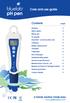 Care and use guide Contents page Features Quick guide Before use To operate Important - ph pen probe care 4 Cleaning 5 Battery replacement 5 Hydration 6 Calibration 6 Error messages 7 Troubleshooting guide