
Building Layout Plot Plan Most, if not all, communities require the builder or owner to furnish a plot plan before
|
|
|
- Horace Skinner
- 10 years ago
- Views:
Transcription
1 This sample chapter is for review purposes only. Copyright The Goodheart-Willcox Co., Inc. ll rights reserved. uilding Layout Section 1 Preparing to uild they will issue a building permit, Figure 6-1. surveyor provides a survey of the site and locates stakes to indicate the boundaries, also called property lines. If there is a plot plan, it indicates the location of the structure and distances to property lines on all sides. Surveyors should always locate the property lines. They should also draw the plot plan, if one is required. Learning Objectives fter studying this chapter, you will be able to: Explain the operation of the builder s level and level-transit. Explain the basic operation of a laser level system. Demonstrate proper setup, sighting, and leveling procedures. Measure and lay out angles using leveling equipment. Read the vernier scale. Use a plumb line. Technical Vocabulary enchmark uilder s level uilding lines uilding site Carpenter s level Cut Datum Dumpy level Elevation Fill Grade Grade leveling Laser level Leveling rod Line of sight Lots Measuring tape Optical level Plumb Property line Station mark Steel tape Transit Vernier scale efore construction of a foundation or slab for a building can begin, the carpenter must know where the structure will be located on the property. This requires a series of steps involving the use of measuring tapes and building layout instruments. The place where a building is to be constructed is called a building site. Often, these sites are in communities where there are streets and where small tracts of land are broken up into smaller parcels called lots. If the building site is a city lot, placing the building requires more steps. Most communities have strict requirements buildings must be set back a certain distance from the street and maintain minimum clearances from adjoining properties. The local code must be carefully checked for these requirements before layout begins. 6.1 Plot Plan Most, if not all, communities require the builder or owner to furnish a plot plan before uilding site: The place where a building is to be constructed. Lots: Small tracts of land broken up into smaller parcels. 149 Figure 6-1. Providing a plot plan is the responsibility of the architect or owner. The plan shows the property boundaries, along with the building lines for the proposed building. Many communities require a plot plan before issuing a building permit. Property lines: The boundaries of a site.

2 Chapter 6 uilding Layout Section 1 Preparing to uild The work of an engineer or surveyor protects the owner and builder from costly errors in measurement. 6.2 Measuring Tapes For measurements and layouts involving long distances, steel tapes, usually called measuring tapes, may be used, Figure 6-2. Tapes are available in lengths of 50 to 0. There are various types with differing graduations. 1" 2" Steel tape: Tape that comes in lengths of 50 to 0. It is used for measurements and layouts involving long distances. lso called measuring tape. Measuring tape: Tape that comes in lengths of 50 to 0. It is used for measurements and layouts involving long distances. lso called steel tape. carpenter will usually select one that is marked in feet, inches, and eighths of an inch. Surveyors, on the other hand, require a tape graduated in feet and decimal parts of a foot. 6.3 Establishing uilding Lines Laying out a building means locating the outside corners of its foundation, then marking Figure 6-2. Measuring tape. Long tapes for layout use are made in lengths of up to 0. Measuring tapes are made with different systems and graduations. 1. Metric. 2. Feet and decimal graduations. 3. Feet, inch, and eighthinch graduations. 4. Feet and inches with feet repeated at each inch mark. (The Stanley Co.; Keuffel & Esser) uilding lines: The lines marking where the walls of a structure will be located them with stakes. uilding lines are the lines marking where the walls of the structure will be. These lines must conform to code requirements on distance of the structure from boundary lines of the property. Once the property lines are known and marked by the surveyor, the building lines can be found by measuring distances with a tape. See Figure 6-3. e sure to observe proper setbacks and clearances. Carefully check the local code to ensure compliance. To start: 1. Locate the surveyor s stakes marking the lot corners. Often, these are 2 2 wood stakes driven flush with the surface of the ground. small nail driven in the top of the stake marks the exact corner of the property. 2. Measure the setback to locate the front building line. Use a tape to measure the distance. To be accurate, the tape measurement must be perpendicular to the building line. String a line from stake-to-stake as needed. 3. Locate and mark the setbacks on the other three sides of the lot. uilding lines must always be within these boundaries. 10' Street 20' 10' Figure 6-3. simple rectangular structure can be laid out by taking measurements, using lot lines as reference points. 10' Using measuring tapes to establish building lines In the absence of optical instruments (which are described later), it is possible to lay out building lines for small structures with measuring tapes. To start: 1. Drive a 2 2 stake marking one corner of the building. The exact location should never be closer to the lot lines than the intersection of two setback lines. Drive a nail in the top of the stake to mark the building line. 2. With a tape, measure off one side of the building dimension along the setback. 3. Drive another corner stake at this point and drive a nail in the top to mark the dimension. This establishes the beginning point of the second side of the building. 4. From the second stake, take a measurement for the intersecting building line. Use the method shown in Figure 6-4 to establish a square corner. 5. In the method, measure and mark 6 along one building line already established. Next, measure 8 on the intersecting building line and mark that location. Then, measure the diagonal distance from one mark to the other. djust the building line as needed until the diagonal line measures 10 long. t that point, the corner formed by the intersecting lines is square. 6. Establish the remaining two building lines by measuring the length and squaring the corners. 7. Test the accuracy of the layout by diagonally measuring from corner to corner. If these measurements are equal, the building lines are laid out square. 6.4 Laying Out with Leveling Instruments In residential construction, it is important that building lines be accurately established in relation to lot lines. It is also important that footings and foundation walls be level, square, and the correct size.

3 Chapter 6 uilding Layout Section 1 Preparing to uild 10'-0" 90 8'-0" 6'-0" Figure 6-4. To check whether a corner is square, mark 6 along one building line and 8 on the intersecting building line. If the distance between the marks is 10, the corner is square. If the building is small, such as a 24 garage, a carpenter s level, line level, framing square, and rule are accurate enough for laying out and checking the building lines. ut, as size increases, special leveling instruments are needed for greater accuracy and efficiency Leveling Instruments Carpenter s level: Tool used for laying out and checking the building lines. uilder s level: n optical device used by builders to determine grade levels and angles for laying out buildings on a site. lso called a dumpy level or an optical level. Transit: Optical leveling instrument commonly used for building layout. Line of sight: straight line that does not dip, sag, or curve. ny point along a level line of sight is at the same height as any other point. Plumb: Exactly perpendicular or vertical; at a right angle to the horizon or floor. The builder s level and transit are more accurate instruments for building layout. These leveling instruments are frequently used in construction work. They are basically telescopes with accurate spirit levels and must be mounted and leveled on a base that can be rotated. When the job is too large for the chalk line, straightedge, level, and square, then leveling instruments should be used. The optical device of these instruments operates on the basic principle that a line of sight is a straight line that does not dip, sag, or curve. ny point along a level line of sight will be at the same height as any other point. Through the use of these instruments, the line of sight replaces the chalk line, line level, and straightedge. The builder s level, also called a dumpy level or optical level, is shown in Figure 6-5. It consists of an accurate spirit level and a telescope assembly attached to a circular base that swivels 3. Leveling screws are used to adjust the base after the instrument has been mounted on a tripod. The telescope is fixed so that it does not move up or down, but it rotates on the base. This permits any angle in a horizontal plane to be laid out or measured. The transit is like the builder s level in most respects, Figure 6-6. However, the telescope can be pivoted up and down 45 in each direction. Using this instrument, it is possible to accurately measure vertical angles. The transit is also used to determine if a wall is perfectly plumb (vertical) by sighting the vertical crosshair while pivoting the scope up and down. Its vertical movement also simplifies the operation of aligning a row of stakes, especially when they vary in height. In use, both the builder s level and transit are mounted on tripods, Figure 6-7. Some models, Lens Horizontal graduated circle Leveling screws Instrument level vial Eyepiece Horizontal clamp screw Horizontal tangent screw Figure 6-5. The builder s level is used to sight level lines and lay out or measure horizontal lines. (David White) Telescope lens Focusing knob Vertical arc Horizontal graduated circle Tie strap Vertical clamp screw Index vernier Tripod head Vertical tangent screw Leg clamp Leg Ground spike Eyepiece Horizontal clamp screw Figure 6-6. transit can be used to lay out or check both level and plumb lines. It can also be used to measure angles in either the horizontal or vertical planes. (David White) Figure 6-7. Tripod legs hinge at top and are adjustable for use on uneven terrain. (David White) like the one shown, have legs whose length can be independently adjusted. This feature makes the tripod easier to level on sloping ground. It also permits the legs to be shortened for easier handling and storing. When sighting over long distances, use a leveling rod. See Figure 6-8. It is a long rod marked off with numbered graduations. It allows differences in elevation between the position of the level and various positions where the rod is held to be easily read. The rod is especially useful for surveying. The person operating the level can make the readings or the target can be adjusted up and down to the line of sight and then the person holding the rod (rod holder) can make the reading. Figure 6-8. Leveling rod with target. The target can be moved up or down to match the line of sight of the transit. (David White) Leveling rod: long rod marked off with numbered graduations that is used, along with a builder s level or transit, to sight differences in elevation over long distances.

4 Chapter 6 uilding Layout Section 1 Preparing to uild The rod shown in Figure 6-8 has graduations in feet and decimal parts of a foot. This is the type used for regular surveying work. Rods are also available with graduations in feet and inches. When sighting short distances (100 or less), a regular wooden or metal folding rule can be held against a wood stake and read through the instrument. This procedure will be satisfactory for jobs such as setting grade stakes for a footing. lways be sure to hold the stake and rule in a vertical position. Working Knowledge Leveling instruments and equipment will vary somewhat, depending on the manufacturer. lways carefully read and study the instructions for a given brand Care of Leveling Instruments Leveling instruments are more delicate than most other carpentry tools and equipment. Special precautions must be followed in their use so they will continue to provide accurate readings over a long period of time. Some suggestions follow: Keep the instrument clean and dry. Store it in its carrying case when not in use. When the instrument is set up, have a plastic bag or cover handy to use in case of rain. If the instrument becomes wet, dry it before storing. When moving the instrument from its case to the tripod, grip it by the base. Never leave the instrument unattended when it is set up near moving equipment. When moving a tripod-mounted instrument, handle it with care. Hold the instrument upright; never carry it in a horizontal position. Never over-tighten leveling screws or any of the other adjusting screws or clamps. lways set the tripod on firm ground with the legs spread well apart. When it is set up on a floor or pavement, take extra precautions to ensure that the legs will not slip. For precision work, permit the instrument to reach ambient (air) temperature before making readings. When the lenses collect dust and dirt, clean them with a camel hair brush or special lens paper. Never use force on any of the adjustments. They should easily turn by hand. Have the instrument cleaned, lubricated, and checked yearly by a qualified repair station or by the manufacturer. Setting up the instrument Use the following procedure to set up a tripodmounted instrument. 1. Place the tripod so it will be a fi rm and stable base for the instrument. The base of the legs should be about 3-6 apart. Make sure the points are well into the ground and the head is fairly level. 2. Check the wing nuts on the adjustable legs. They should be tight enough to carry the weight of the instrument without collapsing or sinking. Tighten the hex nuts holding the legs to the head to the desired tension. 3. Carefully lift the instrument from its case by the base plate. efore mounting the instrument, loosen the clamp screws. On some instruments, the leveling screws must be turned up so the tripod cup assembly can be hand-tightened to the instrument mounting stud. Set the telescope lock lever of the transit in the closed position. 4. ttach the instrument to the tripod. If it is to be located over an exact point, such as a benchmark, attach the plumb bob and move the instrument over the spot. Do this before the fi nal leveling. Leveling the instrument Leveling the instrument is the most important operation in preparing it for use. None of the readings taken or levels sighted will be accurate unless the instrument is level throughout the work. To level the instrument: 1. Release the horizontal clamp screw and line up the telescope so it is directly over a pair of the leveling screws. 2. Grasp the two screws between the thumb and forefi nger, as shown in Figure 6-9. Uniformly turn both screws with your thumbs moving toward each other or away from each other. 3. Keep turning until the bubble of the level vial is centered between the graduations. You will fi nd on most instruments that the bubble travels in the direction your left thumb moves. See Figure Leveling screws should bear fi rmly on the base plate. Never tighten the screws so much that they bind. 4. When the bubble is centered, rotate the telescope 90 (so it is over the other pair of leveling screws) and repeat the leveling operation. 5. Recheck the instrument over each pair of screws. When the instrument is level at both positions, the telescope can be turned in a complete circle without any change in the bubble. Sighting Most builder s levels have a telescope with a power of about 20. This means that the object being sighted appears to be 20 times closer than it actually is. The procedure for sighting is easy to learn: 1. Line up the telescope by sighting along the barrel and then look into the eyepiece, Figure djust the focusing knob until the image is clear and sharp. 3. When the crosshairs are in approximate position on the object, Figure 6-12, tighten the horizontal-motion clamp. 4. Make the fi nal alignment by turning the tangent screw. Figure 6-9. djust leveling screws to center the bubble in the level vial. ubble Figure The bubble of the level vial will generally move in the same direction as the left thumb. This bubble needs to move left. Figure Sighting a level line with a builder s level. oth eyes are kept open during sighting. This reduces eyestrain and provides the best view. Hand signals tell the rod holder whether to raise or lower the target on the leveling rod. (Kasten-Weiler Construction)

5 Chapter 6 uilding Layout Section 1 Preparing to uild Crosshairs 6.5 Using the Instruments 3 Figure View through the telescope. Crosshairs vertically and horizontally split the image area in half. The object in the view should be centered on the crosshairs. carpenter can use leveling instruments to prepare the building site for excavation and grade leveling. Jobs that can be done with leveling instruments include: Locating the building lines and laying out horizontal angles (square corners). Finding grade levels and elevations. Determining plumb (vertical) lines. For layout, the builder s level or transit must start from a reference point. This can be a stone marker in the ground, point on a manhole cover, or mark on a permanent structure nearby. The point where the instrument is located is called the station mark. It may be the benchmark, the corner of the property, or a previously marked point that is to be a corner of the building. This Station mark: The reference point where a builder s level or transit is set up when laying out building lines or finding grade levels and elevations. It must be a type of marker that will not be disturbed by any construction activity. enchmark: mark on a permanent object fixed to the ground from which grade levels and elevations are taken for construction of a building. Sometimes officially established by government survey. Vernier scale: Device on a transit that measures minute portions of an angle. might be a stake with a nail in it or the intersection of two string lines marking the corner of a building line The Horizontal Graduated Circle Laying out corners with the transit requires an understanding of how the horizontal graduated circle is marked. It is divided into spaces of 1, Figure When you swing (rotate) the telescope of the builder s level or transit, the graduated circle remains stationary, but another scale, called the vernier scale, moves. It is marked off in 15-minute intervals. When laying out or measuring angles where there are fractions of degrees involved, you will use this vernier scale. Figure 6-14 shows a section of the graduated circle and the scale. It reads 75. Notice that the zero mark on the vernier exactly lines up with the 75 mark. Now look at Figure The zero mark has moved past the mark for 75, but is not on 76. You need to read along the vernier scale until you find a mark that is closest to being directly over a degree mark on 3 90 = square corner = 1 quadrant Measurements of a circle Circle = 3 1 = minutes 1 minute = seconds 1 quadrant = 1/4 circle or Figure The graduated circle of a transit corresponds to the 3 of a full circle; 90 represents a quadrant, which would give you a square corner for a building Vernier scale , 45 Minutes Figure Reading the horizontal circle of a transit. When the zero mark of the vernier is exactly on a degree mark, the reading is an even degree. In this case, the reading is 75. When the zero mark is between degrees, read across the vernier to fi nd the minute mark that aligns with a degree mark. This reading is 75, 45. (David White) the circle. That number is 45. The reading is 75, plus the number on the vernier, 45 minutes. Vernier scales will not be the same on all instruments. Study the operator s manual for instructions about the particular model you are using Laying Out and Staking a uilding Staking out is done before establishing the grade level. It begins with locating the lot lines. Corners of the lot should normally be marked with stakes. Then, proceed: 1. Center and level the instrument (builder s level or transit) over the lot corner stake. Measure the setback called for by local codes. Sight across to the opposite corner stake. 2. Drive a 2 2 stake at the setback in line with the lot stakes. Use the transit or builder s level to check alignment. The vertical and horizontal crosshairs should center on the top of the stake. Drive a nail in the top-center of the stake. 3. Place another stake at the correct setback for one side of the property line. You are now ready to stake out the building lines. Staking a building Staking out building lines requires two persons. When a builder s level is used, the second person will use a rod that must be plumbed along the line of sight. Since a transit can pivot up and down, the second person uses a stake to locate corners along the building line. 1. ttach a plumb bob to the center screw or hook on the underside of the instrument. Some instruments have an optical plumb for zeroing in over a point. Shift the tripod until the point of the plumb bob is directly over the point marking the corner of the building lines. This is at point on line, as shown in Figure Level the instrument before proceeding further. Recheck for plumb. 3. From point (or station ), turn the telescope so the vertical crosshair is directly in line with the edge of a stake or rod held at point. When using a transit, sight the telescope on the stake. 4. Use a measuring tape along line to locate distance to the corner. Drive a corner stake at this point. 5. Set the horizontal circle on the instrument at zero to align with the vernier zero and swing the instrument 90 (or any other required angle). 6. Position the rod or stake along line C so it aligns with the crosshairs. 7. Locate the other corner along line C using a measuring tape. 8. Move the instrument to point C, sight back to point and then turn 90 to locate the line of sight to point D. 9. Measure the distance to point D and place a stake. 10. Use a measuring tape to check the diagonal distances. If these are equal, the building line is square. If the resulting figure is a rectangle or square, you have completed the layout. However, you may want to move the instrument to point D to check your work.

6 Chapter 6 uilding Layout Section 1 Preparing to uild Measuring tape Plumb bob In practice, you will find that it is difficult to locate a stake in a single operation. This is especially true when using a builder s level, where the line of sight must be dropped to ground level with a plumbed rod or straightedge. Usually, it is best to set a temporary stake, as in Figure Mark it with a line sighted from the instrument. Then, with the measuring tape pulled taut and aligned with the mark, drive the permanent stake and locate the exact point as shown. ll major rectangles and squares of a building line can be laid out using leveling instruments in the manner just described. fter batter boards are set and lines attached, the carpenter s level and square can be used to locate stakes for small projections and irregular shapes. Nail C 2 2 stake Figure Steps for laying out building lines. Left Locate the instrument over a stake marking a corner. Line up 0 on the instrument circle with the building line. Swing the instrument 90 to establish line C. Right Move the instrument to point C to establish point D. Rod must be used when the instrument is a builder s level. Rod must be held plumb using a plumb line or carpenter s level. transit is a much better instrument in this operation since it is not necessary to use the rod. Simply swivel the transit telescope and sight on the corner stake. Distance measured with tape D lignment sighted from stake Stake at position C Mark line of sight Temporary stake Figure temporary stake may be used to establish an exact point. First, set the temporary stake and mark the line of sight on it. Drive a second stake and transfer the mark from stake. C Finding Grade Level Many points on the building site need to be set at certain elevations or grade levels. These points might include: The depth of excavation, such as for a basement. The finished height (elevation) of the foundation footings. The height (elevation) of foundation walls. The elevation of floors. Site features, such as proper grading to ensure that surface water is directed away from the building. earing elevation (point at which footings contact the earth) for footings in order to ensure adequate frost protection of the foundation. Establishing rise and run of steps and walkways as part of the exterior of the structure. Not all building sites are level. Finding the difference in the grade level between several points or transferring the same level from one point to another is called grade leveling. This operation is immediately useful to the excavator, who must determine how much earth must be removed to excavate a basement or trench a foundation footing. Grade leveling is also useful to determine how much earth must be deposited in a particular area to achieve a desired height or elevation at that location. When the leveling instrument has been set level, the line of sight will also be level. The readings can be used to calculate the difference in elevation, Figure If the building site has a large slope, the instrument may need to be set up more than once between the points where you want to take readings. The first reading is taken with the rod in one position. Then, the instrument is carefully rotated 180 to get the reading at a second rod position. This position may be higher or lower than the first position. From a practical standpoint, it is simpler to work from a higher point on the site than a lower point. Depending on the actual slope, this measurement can often be made with a single reading. The term grade means the level of the ground. Elevation refers to the major structural levels 5'-2" 5'-9" Figure Establishing a grade level and fi nding the difference between two points on a building lot. Top Level the instrument and take a line of sight reading on point. Mark down the rod reading. ottom Swing the telescope 180 and take a line of sight reading on the rod. Compare the two elevations. In this example, point is 7 higher than point. of the building. More specifically, these levels include the top of the footing, top of the foundation wall, and finish height of the first floor. There should be a reference point (level) for all elevations established on the building site. It is called the benchmark, datum, or simply the beginning point. This point must remain Grade leveling: Finding the difference in the grade between several points or transferring the same level from one point to another. Grade: Quality of lumber. lso, the height or level of a building site. Elevation: The height of an object above grade. lso, a type of drawing that shows the front, rear, and sides of a building. Datum: n established reference point for determining elevations in an area. lso called benchmark or simply the beginning point.

7 Chapter 6 uilding Layout Section 1 Preparing to uild undisturbed during the construction of the building project. stake driven at one corner of the lot or building site, or even a mark chiseled into concrete curbing, often serves as the benchmark. Checking grade uilding sites are rarely perfectly level. ll have high and low points. These highs and lows need to be determined before the height of the foundation is established. This job is easier when the site is fairly level, as in Figure Locate the instrument midway into the site, then level the instrument. 2. Take a line-of-sight reading on a rod held at one edge of the site. 3. From the position of the target on the rod, note the elevation (5-2 in Figure 6-17) and record it. Surveyors keep a notebook for such recording, since many people may need to refer to the readings. Carpenters generally jot readings on a piece of scrap lumber. Usually, they are the only ones needing to refer to the readings. 4. Rotate the telescope 180. Take a line-of-sight reading on the rod located at the opposite side of the site. 5. Note the elevation at the target position on the rod (5-9 in Figure 6-17). Record it as before. 6. Subtract the lower elevation from the higher one to fi nd the difference (7 ). This number is the actual vertical increase or decrease from one known point to another. When setting grade stakes for a footing or erecting batter boards, set the instrument in a central location on the site, as shown in Figure The distances to the target (or rod) will be roughly equal. This will improve the accuracy of the readings taken for each corner. n elevation established at one corner can be quickly transferred to other corners or points in between. Pier footing uilding line Tripod Figure central location for the instrument will make fi nding and setting grade stakes easier and more accurate Setting Footing Stakes Grade stakes for footings are usually first set to the approximate level by eye. They are then carefully checked with the rod and level as they are driven deeper. The top of each stake should be driven to the required elevation. Sometimes, reference lines are marked on construction members, stakes, or other objects near the work. The carpenter then transfers them to the formwork with a carpenter s level and rule as needed. This eliminates the need to repeatedly establish the same elevation. There may be situations where the existing grade will not permit the setting of a stake or reference mark at the actual level of the grade. In such cases, a mark is made on the stake with the information on how much fill to add or remove. The letters C and F, standing for cut and fill, are generally used. See Figure 6-19 for an example of how stakes are marked. Cut: The process of removing material to achieve the desired grade. Fill: The process of adding material to achieve the desired grade. 2'-4" C Grade stake mark 2'-4" Required grade elevation Using multiple readings Required grade elevation 1'-10" Mark F 1'-10" Figure Cut and fi ll stakes are used to tell the excavator how much material must be removed or added to reach grade level. The letter C means cut (remove) and the letter F means fi ll (add). When laying out steeply sloped building plots or carrying a benchmark to the building site, it will likely 5'-8" Curbing used as benchmark Setup #1 2'-6" (Minus reading) be necessary to set up the instrument in several locations. Figure 6-20 shows how reading from two positions is used to calculate, establish, or determine differences in grade at various locations on the plot. 1. Set up the instrument midway between two points on the plot. In Figure 6-20, these are identifi ed as points and. 2. Take a line-of-sight reading at point (or station ). Record the reading in the notebook. In this case, the reading is With the rod at point and the instrument still at setup #1, take a second reading. Record the reading in the notebook. In this instance, the reading is Move the instrument to a point midway between points and C. Level it as before. 5. Take a second reading on point and record it. In this example, the reading is With the rod located at point C, take a reading by rotating the telescope 180. Note and record the elevation. In this case, the reading is Calculate the differences in grade level for each pair of stakes, as shown in Figure dd the resulting distances and subtract the minus sum from the plus sum to fi nd the difference in grade from one edge of the plot to the other. The result, in this example, is '-0" Setup #2 Setup # 1 2 Sum Plus sight 5'-8" 6'-0" 11'-8" 2'-4" Surveyor s Notebook C Minus sight 2'-6" 2'-4" 4'-10" 11'-8" 4'-10" = 6'-2" Figure When there is a large slope on the property or when long distances are involved, the transit will need to be set up in two or more locations.

8 Chapter 6 uilding Layout Section 1 Preparing to uild Running Straight Lines with a Transit lthough the builder s level can be used to line up stakes, fence posts, poles, and roadways, the transit is more accurate for these tasks, especially when different elevations are involved. Set the instrument directly over the reference point. Level the instrument and then release the lock that holds the telescope in the level position. Swing the instrument to the required direction or until a stake is aligned with the vertical crosshair. Tighten the horizontal circle clamp so the telescope can move only in a vertical plane. Now, by pointing the telescope up or down, any number of points can be located in a perfectly straight line. See Figure Vertical Planes and Lines eyond the leveling tasks just mentioned, the transit is a good instrument for: Measuring vertical angles above or below the line of sight. Plumbing building walls, columns, and posts. Establishing plumb lines Plumb lines can be checked or established by first operating the instrument as shown in Figure s you tilt the telescope up and down, all of the sighted points are located in the same vertical plane. To plumb structures, such as posts or walls, follow these steps and refer to Figure 6-23: 1. Set up the transit at a distance from the object equal to at least equal to the height of the object. Tilt the telescope to sight on the base. 2. Loosen the horizontal clamp and line up the vertical crosshair with the base of the object. 3. Tighten the horizontal clamp. 4. Tilt the telescope upward to the top of the object. If the object is plumb, the crosshair will be on the same plane as it is at the base. 5. If object is not plumb, adjust the brace to bring the object into plumb. 6. Move the transit to a second position, preferably 90 either to the right or left, and repeat the procedure. plumb bob and line may often be the most practical way to check vertical planes and lines. For layouts inside a structure, where a regular builder s level or transit is impractical, use a plumb line. Figure transit can be used to lay out or check points in a vertical plane. 90 C simply laser level the operating principle of the various units is essentially the same. They perform most of the functions of a conventional transit. However, they need only one person to carry out any layout operation. Some are designed to rotate 3, allowing the operator to establish level lines throughout the structure without moving the instrument. Safety Note For safety, power output of the laser is controlled. Federal regulations limit Class II construction lasers to 1 milliwatt and Class IIIa units to less than 5 milliwatts. These levels are safe for the eyes so long as the user does not stare into the beam. Manufacturer s cautions should be carefully observed. laser level can be set to emit a laser beam for a full 3 without being tended by an instrument person. Figure 6-24 shows the laser transmitter and its receiver. During use, the transmitter is untended. The receiver can be tended by a rod Measuring vertical angles 1. Position the instrument near the structure. Level the instrument. 2. Release the lever that holds the telescope in a horizontal position. 3. Swing the instrument vertically. 4. Set the horizontal crosshair at the point you wish to measure. 5. Tighten the vertical clamp. 6. Make a fi nal, fi ne adjustment with the tangent screw to locate the horizontal crosshair exactly on the point. 7. Read the vertical angle on the vertical arc scale and the vernier. C Figure How to use the transit to align a row of stakes. Figure Using the transit to plumb an object. First, align the vertical crosshair with the base. Then, swing the telescope to or near the top. djust the object for plumb as needed. Reposition the instrument at a 90 angle to the fi rst line and repeat the process. 6.6 Laser Systems The laser has been integrated into the building industry. Manufacturers have been able to produce low-power, visible lasers in small, inexpensive units. Using various names laser plane, construction laser, laser transit, or Figure Laser level and receiver. The transmitter is at the right and the receiver is at the left. (Spectra- Physics Laserplane, Inc.) Laser level: Leveling instrument that emits a level laser beam over 3 without being attended. receiver attached to a rod and attended by a rod holder makes a sound when the laser beam strikes it.

9 Chapter 6 uilding Layout Section 1 Preparing to uild holder, Figure 6-25, or it can be attached to an excavator or backhoe, Figure Operators of excavating equipment can work the entire job site without stopping to check grade levels. The laser level continuously monitors grade, eliminating excess excavation. Figure rod holder moves the receiver up or down until it is on line of sight with the laser level. (Spectra-Physics Laserplane, Inc.) Figure laser receiver can be attached to an excavating machine, speeding up the excavation process. (Spectra-Physics Laserplane, Inc.) The operator places the bucket or blade cutting edge on the benchmark or finished elevation. Then, the receiver is adjusted up or down on the machine and the operator tightens the clamp when the on-grade point is reached. The receiver catches the laser beam from the rotating transmitter and signals the operator whether measured surface is above, below, or on grade. The laser level is also adapted to other construction tasks to establish either level or plumb lines. Horizontal operations for which it might be used include leveling suspended ceiling grids and leveling raised-access computer floors. Vertical operations include plumbing partitions, curtain walls, posts, columns, elevator shafts, or any operation requiring a vertical reference point. ON THE JO Surveyor/Surveying Technician Surveyors and surveying technicians establish offi cial land boundaries and the exact location and extent of building sites and other land uses. Survey parties, usually consisting of several surveying technicians under the direction of a party chief, traditionally use a variety of instruments to establish property boundaries and elevations. licensed surveyor uses this information, combined with research in legal records and other sources, to prepare an offi cial map called a plat of survey that establishes the offi cial location of the property. Such a survey is often required before a deed can be issued in a property transfer. Surveyors are professionals who must meet educational and experience requirements and pass licensing examination. In the past, surveyors could be licensed by gaining experience on a survey party, then passing a licensing exam. However, most states today require a four-year degree in surveying or a related fi eld, such as civil engineering, in addition to the exam and fi eld experience. Surveying technicians often have some postsecondary training, usually in a community college certifi - cate or associate degree program. High school courses in algebra, geometry, trigonometry, and drafting are good preparation. Technicians are usually responsible for using optical, physical, and electronic tools to make the needed measurements in the fi eld. While traditional tools such as theodolites and measuring tapes are still used, more and more survey parties are working with electronic distance-measuring devices and global positioning system receivers that use satellite data for precise location-finding. dvancement to party chief is possible with additional formal training and experience. Working conditions for survey parties can be extreme, since they are exposed to all kinds of weather conditions and may have to carry equipment for long distances in rugged terrain. Licensed surveyors often work in the field, but also spend time indoors doing research, data analysis, and report writing. pproximately 2/3 of all surveyors and surveying technicians are employed by architectural and engineering firms or companies providing related services. Most of the remaining employment is provided by government at all levels, ranging from federal agencies, such as the U.S. Forest Service, to state and local planning departments and highway agencies. relatively small number of surveyors are self employed.

10 Chapter 6 uilding Layout 167 Summary The correct location on the building site must be identified before the foundation or slab can be constructed. Laying out a building involves locating the outside corners of the foundation, driving stakes, and then stretching building lines between stakes to mark where the walls will be. Measuring tapes can be used for layout work, but leveling instruments are more precise. Leveling instruments are also used to establish grades and elevations. Laser levels are replacing conventional transits and levels in building site layout. Their biggest advantage is requiring only one person to take measurements, rather than two. Test Your Knowledge nswer the following questions on a separate piece of paper. Do not write in this book. 1. For surveying work, a measuring tape with graduations reading in feet and is required. 2. What are building lines? 3. Explain how to check whether corners of a building layout are square. 4. In the use of leveling instruments, the replaces the chalk line and straightedge. 5. The builder s level consists of a telescope assembly that is mounted on a base. 6. The most important operation in setting up a builder s level or transit is the instrument. 7. When sighting through the telescope, you should adjust the until the image is sharp and clear. 8. True or False? The vernier scale is used to measure angles in fractions of a degree. 9. To position a leveling instrument without an optical plumb directly over a given point, a is used. 10. When setting grade stakes for a building footing, the instrument should be set up in a location. 11. True or False? laser level can check the level of an entire structure from one position. Curricular Connections Mathematics. Make a study of the procedures you would follow and calculations you would make to determine the height of a flagpole, tall building, or mountain, using a transit and trigonometric functions. Use the information to determine the height of at least one tall object in your community. Prepare a report for your class explaining the theory and how you proceeded. Outside ssignments 1. Study the catalog of a supplier or manufacturer and develop a set of specifications for a builder s level. e sure it includes a good carrying case. lso select a suitable tripod and measuring tape. Secure prices for all of the items. 2. Through drawings and a written description, tell how you would proceed to lay out a baseball diamond using a transit.

3 LEVELLING & SURVEYING
 3 LEVELLING & SURVEYING 3.1 General The primary reference at water-level recording stations is a set of stable bench-marks, installed in locations where their level should not change. Upon initial set-up
INDEX. SR NO NAME OF THE PRACTICALS Page No. Measuring the bearing of traverse lines, calculation of included angles and check.
 INDEX SR NO NAME OF THE PRACTICALS Page No 1 Measuring the bearing of traverse lines, calculation of included angles and check. 1 2 To study the essential parts of dumpy level & reduction of levels 3 To
RL HW / RL HW+ / RL HGW / RL HV / RL HVPW/RL HVPW-G
 Auto-Levelling Rotary Laser Level RL HW / RL HW+ / RL HGW / RL HV / RL HVPW/RL HVPW-G 77-496 / 77-429 / 77-439 / 77-497 / 77-427/ 77-441 Please read these instructions before operating the product Auto-Levelling
MEASURING AND LEVELING TOOLS
 MEASURING AND LEVELING TOOLS LASER LEVELING FAST AND ACCURATE LEVELING Earth moving, laying of floors, interior design and set up; all applications for our laser and optical levels to prove their accuracy,
INSTRUCTION MANUAL. Level and Transit-Level
 90 INSTRUCTION MNUL Level and Transit-Level Prepared and edited by HERMN J. SHE Former ssociate Professor of Surveying, Massachusetts Institute of Technology 90 FOR CUSTOMER SERVICE, PRTS & REPIR CLL 815-432-90
Speed-Mat Rectangle Cutter
 Speed-Mat Rectangle Cutter 1 Honeycomb baseboard. 2 Left hold down. 14 3 Bottom hold down. 4 4 Left / right rule. 8 5 8 5 Left / right rule pointer. 1 6 Top / bottom rule. 7 Top / bottom rule pointer.
FUNDAMENTALS OF LANDSCAPE TECHNOLOGY GSD Harvard University Graduate School of Design Department of Landscape Architecture Fall 2006
 FUNDAMENTALS OF LANDSCAPE TECHNOLOGY GSD Harvard University Graduate School of Design Department of Landscape Architecture Fall 2006 6106/ M2 BASICS OF GRADING AND SURVEYING Laura Solano, Lecturer Name
CHAPTER 7 TRAVERSE Section I. SELECTION OF TRAVERSE DEFINITION
 CHAPTER 7 TRAVERSE Section I. SELECTION OF TRAVERSE DEFINITION A traverse is a series of straight lines called traverse legs. The surveyor uses them to connect a series of selected points called traverse
Guidelines for Earthquake Bracing of Residential Water Heaters
 Guidelines for Earthquake Bracing of Residential Water Heaters Department of General Services Division of the State Architect 1102 Q Street, Suite 5100 Sacramento, CA 95814 Phone: (916) 324-7099 Fax: (916)
SUPER SHED. Indoor shelter for your outdoor tools.
 SUPER SHED Indoor shelter for your outdoor tools. Not everyone needs a garden shed. But, if you've no more space on your garage wall for that new leaf rake, if you can't find your potting trowel because
CHAPTER 9 SURVEYING TERMS AND ABBREVIATIONS
 CHAPTER 9 SURVEYING TERMS AND ABBREVIATIONS Surveying Terms 9-2 Standard Abbreviations 9-6 9-1 A) SURVEYING TERMS Accuracy - The degree of conformity with a standard, or the degree of perfection attained
Gate Leg Drop Leaf Table Plans
 Preparing the table top blanks: Cut and glue enough 3/4 stock to make three panels 40 long by 24 wide (they will be cut to final size at a later time). While the glue dries we will work on the legs. Preparing
INSTALLATION. General. Important Note. Design. Transport
 General The roof trusses you are about to install have been manufactured to precise engineering standards. To ensure that the trusses perform as designed, it is essential that they be handled, erected
Guidelines for Earthquake Bracing Residential Water Heaters
 Guidelines for Earthquake Bracing Residential Water Heaters Department of General Services Division of the State Architect In accordance with the Health and Safety Code Section 19215, the Division of the
FORM DESIGN. easy to work with, and generally available.
 Forms play a major role in concrete construction. They give the plastic concrete its shape and hold it until it hardens. Forms protect the concrete, assist in curing it, and support any reinforcing rods
STATE CONTROL SURVEY SPECIFICATIONS FOR PRIMARY CONTROL SURVEYS. Now Obsolete
 STATE CONTROL SURVEY SPECIFICATIONS FOR PRIMARY CONTROL SURVEYS Now Obsolete Caution: This document has been prepared by scanning the original Specifications for Primary Control Surveys - 1984 and using
DE Frame with C Series Sidelight
 TOOLS REQUIRED Tape measure 6' magnetic level 3' magnetic level Screw gun with clutch adjusted #2 phillips tip #3 phillips tip Screwdriver (used to adjust frame on will using oval slots) Pry Bar Powder
CITY OF VAUGHAN SCHEDULE O LOT GRADING DESIGN FOR RESIDENTIAL DEVELOPMENT
 Page 1 CITY OF VAUGHAN SCHEDULE O LOT GRADING DESIGN FOR RESIDENTIAL DEVELOPMENT CIVIC CENTRE 2141 MAJOR MACKENZIE DRIVE MAPLE ONTARIO L6A 1T1 905-832-2281 Page 2 SECTION 1 - GENERAL OBJECTIVES To provide
Foundation Experts, LLC Specializes in Foundation Repair and Waterproofing
 1 Most basements show some signs of leaking and cracking. Through the years, problems with water, poor soils, grading, drainage and possible settling affect the integrity of a basement. Being able to recognize
WHI 90-Minute Rated Veneered Door Frame Installation Instructions
 No. 940-03-10 INSTALLATION INSTRUCTIONS 90 MINUTE RATED VENEERED DOOR FRAME DOOR REQUIREMENTS: Consult the door manufacturer to make sure that the doors are qualified for the hardware to be installed,
Residential Deck Safety, Construction, and Repair
 Juneau Permit Center, 4 th Floor Marine View Center, (907)586-0770 This handout is designed to help you build your deck to comply with the 2006 International Residential Building code as modified by the
Ceiling Mounted Folding Attic Ladders Installation Instructions
 Ceiling Mounted Folding Attic Ladders Installation Instructions WARNING Before you start installing your new Louisville Ceiling Mounted Folding Attic Ladder, you must read and understand the following:
40-6680 5 Beam Laser Pointer Service Manual
 40-6680 5 Beam Laser Pointer Service Manual Contents Item Description Pages 1.0 Introduction 2 2.0 Overall Instrument Dis-assembly 2 2.1 Body module Dis-assembly 3 2.2 Core Module Dis-Assembly 4-5 2.3
Universal Gauge Measuring System USERS MANUAL
 Universal Gauge Measuring System 2002 Chief Automotive Technologies, Inc. Chief s Limited One-Year Warranty & Liability CHIEF'S LIMITED ONE-YEAR WARRANTY & LIABILITY Chief Automotive Technologies, Inc.
www.cornholesupplies.com
 www.cornholesupplies.com How To Build Regulation Cornhole Boards Home of the Original Cornhole Bags and Boards Supply List: 1-4' X 8' Piece of Plywood (pre sanded) 4-2" X 4" X 8' Studs (2 by 4s make sure
Anamorphic Projection Photographic Techniques for setting up 3D Chalk Paintings
 Anamorphic Projection Photographic Techniques for setting up 3D Chalk Paintings By Wayne and Cheryl Renshaw. Although it is centuries old, the art of street painting has been going through a resurgence.
Framing a Crawl-Space Foundation These timesaving tips make short work of setting sills, posts and girders
 Framing a Crawl-Space Foundation These timesaving tips make short work of setting sills, posts and girders by Larry Haun There is no "best" foundation. Depending on what part of the country you live in,
PUMP JACK SYSTEM AND ACCESSORIES
 Pump Jack Model # 2200 A low cost, easy to operate, safe, portable scaffolding built of rugged steel. It's perfect for shingling, siding, sheathing, insulating, painting, building, roofing, home repair
Building The Modular Moveable Greenhouse described in The Four Season Farm Gardener s Cookbook By Barbara Damrosch and Eliot Coleman
 1 Building The Modular Moveable Greenhouse described in The Four Season Farm Gardener s Cookbook By Barbara Damrosch and Eliot Coleman This modular greenhouse is designed so home gardeners can easily build
Chapter 10 - Scaffolding Systems
 Chapter 10 - Scaffolding Systems Contents Chapter 10 - Scaffolding Systems... 10-1 Check and Oil the Pump Jacks... 10-4 Set Pump Jack Brackets... Error! Bookmark not defined. Set Pump Jack Poles... 10-5
BMP-7. A sediment filter or an excavated impounding area around a storm drain drop inlet or curb inlet.
 BMP-7 BMP: STORM DRAIN INLET PROTECTION Definition A sediment filter or an excavated impounding area around a storm drain drop inlet or curb inlet. To prevent sediment from entering storm drainage systems
Practical Alignment Tools and Techniques
 Practical Alignment Tools and Techniques Bruce Lehmann Sr. Engineer, Thin Kerf Technologies Inc Accurate sawing requires attention to proper alignment and maintenance. Alignment is critical to modem sawmills
FTC 2015-2016 DIY Mountain Build Guide
 FTC 2015-2016 DIY Mountain Build Guide Assembly Instructions Check out the DIY2015-2016 Prints and BoM for individual part details. Release 1.0 9/10/15 Page 1 This guide and Bill of Materials are for constructing
CALIBRATION FOR LAL20X & LAL24X
 CALIBRATION AND FAULT FINDING FOR LAL20X & LAL24X DUMPY LEVELS MEASURING EXPERTS SINCE 1869 How The LAL20X & LAL24X Works The Automatic level is called Automatic because it requires only a simple basic
THE TRIMLINE 10' x 20' CANOPY
 THE TRIMLINE 10' x 20' CANOPY Instructions for Assembly Please, assemble the TrimLine at home the first time, not at an event. Before beginning assembly of your TrimLine, please take time to review the
Irrigation Water Management: Training Manual No. 2 - Elements of Topographic Surveying
 Table of Contents Irrigation Water Management: Training Manual No. 2 - Elements of Topographic Surveying by C. Brouwer International Institute for Land Reclamation and Improvement and A. Goffeau J. Plusjé
Innovative measurement technology for real professionals.
 New: the LAX 200 crossed line laser, the 300 and laser distance measurers Innovative measurement technology for real professionals. ACCURATE. TOUGH. RELIABLE. EASY-TO-USE. Three new measuring LAX 200/
Lesson Plan Course Title: Construction Technology
 Lesson Plan Course Title: Construction Technology Session Title: Wall Framing, Doors Performance Objective: Upon completion of this assignment, the student will be able to properly identify, gather sizing
NSPS SURVEY TECHNICIAN CERTIFICATION PROGRAM LEVEL III SAMPLE EXAMINATION QUESTIONS
 NSPS SURVEY TECHNICIAN CERTIFICATION PROGRAM LEVEL III SAMPLE EXAMINATION QUESTIONS NATIONAL SOCIETY OF PROFESSIONAL SURVEYORS October 2007 This booklet has been prepared to provide an example of what
March 14, 2007. Installation of Bay, Bow and Garden Windows
 March 14, 2007 Re: Installation of Bay, Bow and Garden Windows Attached are the Atrium Companies, Inc recommendation for the installation of bay, bow and garden windows. These instructions were developed
Handling, Erection and Bracing of Wood Trusses
 Handling, Erection and Bracing of Wood Trusses Follow these guidelines for safe installation of Wood Trusses. These guidelines should not be considered to be the only method for erecting and bracing of
BUILD A CARPORT. 2 - Planning the carport. 3 - Designing the carport
 BUILD A CARPORT You only need basic DIY and woodworking skills to build a carport. The most important part of the job is setting the supporting posts truly vertical - a job for which another pair of hands
Router. A. Identify the major parts of the router. B. Complete a written test on safety and operating procedures of the router with 100% accuracy.
 Router I. Competencies Given a properly adjusted router, instruction and demonstration of use, each student will be able to: A. Identify the major parts of the router. B. Complete a written test on safety
6 RETROFITTING POST & PIER HOUSES
 Retrofitting Post & Pier Houses 71 6 RETROFITTING POST & PIER HOUSES by James E. Russell, P.E. 72 Retrofitting Post & Pier Houses Retrofitting Post & Pier Houses 73 RETROFITTING POST AND PIER HOUSES This
Electrical Wiring Technical Bulletin
 Electrical Wiring Technical Bulletin Overview In general, SIP construction is easier and more cost effective when things are planned and thought out before the panels are manufactured. This process will
HOW TO INSTALL A BEAUTIFUL NEW KITCHEN
 HOW TO INSTALL A BEAUTIFUL NEW KITCHEN Easy to follow step-by-step kitchen cabinet installation TOOL AND MATERIAL LIST Hammer Pry bar Screwdriver Phillips Flathead Level Tape measure Pencil Straight edge
Policy on Water Heater Installations Policy No. UPC 510-1-94 Effective: September 1, 1995 Revised: February 10, 1996
 CITY OF SAN JOSE BUILDING DIVISION POLICY Policy on Water Heater Installations Policy No. UPC 510-1-94 Effective: September 1, 1995 Revised: February 10, 1996 All new and replacement water heaters installed
How To Repair A House
 Assessing Structural Damages Please note-this presentation is only intended to be used as a basic educational tool and is by no means all encompassing. Each property should be treated on a case by case
Black Wolf POCKET BILLIARD TABLE INSTALLATION MANUAL. SERVICE DEPARTMENT P.O. BOX 68 BRISTOL, WI 53104
 Black Wolf TM POCKET BILLIARD TABLE INSTALLATION MANUAL www.brunswickbilliards.com SERVICE DEPARTMENT P.O. BOX 68 BRISTOL, WI 53104 51-905710-000 SEPTEMBER 2010 NOTE: Please use the instructions in this
COMPLIMENTARY WOODWORKING PLAN
 COMPLIMENTARY WOODWORKING PLAN Adirondack Chair This downloadable plan is copyrighted. Please do not share or redistribute this plan in any way. It has been created for Wilton Tools, a division of WMH
MONDOATHENS BASKETBALL SET (Reference PK110)
 MONDOATHENS BASKETBALL SET (Reference PK110) DESCRIPTION The MONDOATHENS backstop unit is mainly designed for multi-sports pavilions and installations where the highest-level basketball competitions are
INSTALLATION INSTRUCTIONS IMPERVIA (Vent and Fixed) AWNING, CASEMENT, and LARGE AWNING WINDOW WITH FINS
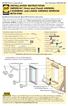 2009 Pella Corporation INSTALLATION INSTRUCTIONS IMPERVIA (Vent and Fixed) AWNING, CASEMENT, and LARGE AWNING WINDOW WITH FINS Part Number: 80WH0100 Installation Instructions for Typical Wood Frame Construction.
FirstView 3 Reflector Telescope Owner s Manual
 FirstView 3 Reflector Telescope Owner s Manual 1. Horizontal Locking Auxiliary Screw 2. Main Mount 3. Pitching Auxiliary Knob 4. Pitching Shaft Screw 5. Rack and Pinion Focusing Knob 6. Thumb Nut for Finder
Residential Decks. Planning and Development Services Department
 Building Safety Division 8500 Santa Fe Drive Overland Park, KS 66212 (913) 895-6225 Fax (913) 895-5016 Email: [email protected] Planning and Development Services Department Residential Decks
Chapter 6 ROOF-CEILING SYSTEMS
 Chapter 6 ROOF-CEILING SYSTEMS Woodframe roof-ceiling systems are the focus of this chapter. Cold-formed steel framing for a roof-ceiling system also is permitted by the IRC but will not be discussed;
TECHNICAL SPECIFICATION SERIES 8000 PRECAST CONCRETE
 TECHNICAL SPECIFICATION SERIES 8000 PRECAST CONCRETE TECHNICAL SPECIFICATION PART 8000 - PRECAST CONCRETE TABLE OF CONTENTS Item Number Page 8100 PRECAST CONCRETE CONSTRUCTION - GENERAL 8-3 8101 General
OWNER S MANUAL Table Tennis Table Patent Pending
 OWNER S MANUAL Table Tennis Table Patent Pending Be sure to write your model number and serial number here for future reference. You can find these numbers printed on the bottom of the table. MODEL # T8179
Basement & Foundation Damage
 Basement & Foundation Damage Please note-this presentation is only intended to be used as a basic educational tool and is by no means all encompassing. Each property should be treated on a case by case
Pole Lathe and Shave Horse Design
 Pole Lathe and Shave Horse Design These pictures and accompanying words are Copyright Michael Hughes February 2002. They are not to be re-produced, in part or whole, without permission from the author.
Chapter 3 Pre-Installation, Foundations and Piers
 Chapter 3 Pre-Installation, Foundations and Piers 3-1 Pre-Installation Establishes the minimum requirements for the siting, design, materials, access, and installation of manufactured dwellings, accessory
Roll-Up Door Maintenance Guide
 R Roll-Up Door Maintenance Guide Cable Replacement on Two Spring Type Balancer Page 1 Panel Replacement - Removable Roller Cover Type Bottom Panel Page 1 Panel Replacement - Removable Roller Cover Type
LAYING BLOCK AND BRICK
 LAYING BLOCK AND BRICK Products highlighted in this section: SAKRETE Type N Mortar Mix SAKRETE Type S Mortar Mix Brick And Block Laying Basics The first step in building a brick or block wall is to construct
House Design Tutorial
 Chapter 2: House Design Tutorial This House Design Tutorial shows you how to get started on a design project. The tutorials that follow continue with the same plan. When we are finished, we will have created
Surveying made easy. Karl Zeiske
 Surveying made easy Karl Zeiske Introduction This booklet will tell you about the basic principles of surveying. The most important instruments for surveying are levels and total stations; they are intended
Active and Passive Sash Replacement
 for Andersen Gliding Windows Read all instructions carefully before attempting this procedure. If you have any questions about your ability to complete the procedure, call Andersen at 1-888-888-7020 for
How to Install UnderDeck The Original.
 How to Install UnderDeck The Original. TOOLS: Chalk Line Caulk Gun Garden hose or water bucket Gloves Hammer or Screw Gun Power Mitre Saw with OSB Blade Pencil Pliers Safety Glasses Straight Edge / Carpenter
Sash Replacement Guide
 for Andersen 200/400 Series Awning Windows Read all instructions carefully before attempting this procedure. If you have any questions about your ability to complete this procedure, call Andersen at 1-888-888-7020
How to Build a Dry Stone Wall
 Do-It-Yourself: How to Build a Dry Stone Wall An instructional guide for beginners Copyright Stephen Burton and licensed for reuse under this Creative Commons License. By: Stephen T. Kane Table of Contents:
Installation information. METTLER TOLEDO MultiRange Floor scales / Pit scales
 Installation information METTLER TOLEDO MultiRange Floor scales / Pit scales KC300/KCS300 KC600/KCS600 KD600/KD1500 KE1500/KE3000 KES1500/KES3000 KG3000/KG6000 KN1500 Floor scales / Pit scales Contents
AZEK Rail Install Guide
 TRIM MOULDING DECK PORCH RAIL PAVERS AZEK Rail Install Guide Installing AZEK Rail with CableRail by Feeney... 1 Installing CableRail by Feeney for AZEK Rail... 7 Installing AZEK Rail Stairs with CableRail
AwanaGames Circle. Official. Diagram 1. Key to diagram: Pin & Striped Bean Bag C Diagonal or Starting Line. B Scoring Pins, or Center.
 Official AwanaGames Circle Diagram 1 The AwanaGames Circle is 30 feet in diameter surrounded by a 37-40 foot square. Each team is designated by a color and occupies a quarter-circle or one side of that
CEILING SYSTEMS. Between us, ideas become reality. Installing. Suspended Ceilings. North America Version
 CEILING SYSTEMS Between us, ideas become reality Installing Suspended Ceilings North America Version 1 Installing Armstrong Suspended Ceilings An Armstrong suspended mineral fiber ceiling is functional,
Router Table Plans. www.bobsplans.com
 www.bobsplans.com Router Table Plans Increase the capabilities of your router with this weekend project. Features a sliding fence with EZ-Mount clamps. These clamps are simple to make and grip tightly
Walking and Working Surface Checklist:
 Walking and Working Surfaces Purpose: This information is presented to improve the level of safety in our operations, and to inform you that we will comply with the OSHA Standard 29 CFR 1910.23. Responsibility:
These instructions will show you how to install an internal door into a non-loadbearing partition wall. The instructions are split into three parts.
 No 8 in the series of 'How to' brochures produced by PlaceMakers, New Zealand How to Frame and Hang a Door These instructions will show you how to install an internal door into a non-loadbearing partition
How to secure your property after a disaster
 How to secure your property after a disaster The Red Guide to Recovery HOuse secured properly Board-Up of Windows, Doors and Roof Hole. Lot secured with Perimeter Fencing. Fires, floods, tornadoes, hurricanes,
30 minutes in class, 2 hours to make the first time
 Asking questions and defining problems Developing and using models Planning and carrying out investigations 30 minutes in class, 2 hours to make the first time 3 12 x 24 x ¾ inch plywood boards 1 x 12
INSTALLATION OF A BAY WINDOW
 INSTALLATION OF A BAY WINDOW Installation of a Bay Window These instructions relate to the replacement of an existing bay window or replacement of a straight window with a new bay window, in an opening
MINIMUM STANDARDS OF ACCURACY, CONTENT AND CERTIFICATION FOR SURVEYS AND MAPS ARTICLE I. TYPES OF SURVEYS
 MINIMUM STANDARDS OF ACCURACY, CONTENT AND CERTIFICATION FOR SURVEYS AND MAPS ARTICLE I. TYPES OF SURVEYS Current with material published in Conn.L.J. through 5/13/08 Sec. 20-300b-1. General There are
STEEL BUILDINGS RECOMMENDED INSTALLATION GUIDE
 STEEL BUILDINGS RECOMMENDED INSTALLATION GUIDE 3 TO 30 METRE SPAN TILT UP METHOD SUPPLIED BY: Last update 8 December 2010 2010 FBHS (Aust) Pty Limited FBHS (Aust) Pty Limited ABN 83 126 232 504 trading
CHAPTER 4 EARTHWORK. Section I. PLANNING OF EARTHWORK OPERATIONS
 CHAPTER 4 EARTHWORK Section I. PLANNING OF EARTHWORK OPERATIONS IMPORTANCE In road, railroad, and airfield construction, the movement of large volumes of earth (earthwork) is one of the most important
The Stabilizer TM. Benefits. www.griptite.com. Supplemental support system for sagging beams and floor joists within a crawl space
 The Stabilizer TM Supplemental support system for sagging beams and floor joists within a crawl space Pre-drilled holes in steel plate allow for connection to beam or floor joists. Benefits Levels and
Cable Support System Guide for Andersen Bow, Bay, and Box Projecting Window Units
 for Andersen Bow, Bay, and Box Projecting Window Units Congratulations! You have just purchased one of the many fine Andersen products. Proper assembly, installation and maintenance are essential if the
Lighthouse Engineering, L.L.C.
 Registered Engineering Firm (F: 9334) Phone: 214-577-1077 Fax: 214-224-0549 Website: www.lighthouseeng.com Email: [email protected] Thursday, September 04, 2014 TO: Our Client RE: Initial Engineering
DSV-2 ALTITUDE-AZIMUTH TELESCOPE MOUNT User Manual
 DSV-2 ALTITUDE-AZIMUTH TELESCOPE MOUNT User Manual Your New Mount Thanks for choosing the Desert Sky Astro Products DSV-2 mount. Take some time to familiarize yourself with its features (Figure 1). Please
POST AND FRAME STRUCTURES (Pole Barns)
 POST AND FRAME STRUCTURES (Pole Barns) Post and frame structures. The following requirements serve as minimum standards for post and frame structures within all of the following structural limitations:
Wren Kitchens Installation Tips... 3. Carefully check your kitchen delivery... 4. Measuring out and marking up... 5. Fitting the base cabinets...
 tra 1 Index Wren Kitchens Installation Tips... 3 Carefully check your kitchen delivery... 4 Measuring out and marking up... 5 Fitting the base cabinets... 6 Fitting the corner cabinets... 7 The 972mm or
ELEMENTS OF SURVEYING FOR CADASTRAL MAPPING
 ELEMENTS OF SURVEYING FOR CADASTRAL MAPPING Chapter 4 2015 Cadastral Mapping Manual 4-0 Elements of Surveying and Mapping Utah's system of land surveying is the rectangular survey system as set forth on
Premier & Deluxe 3-Season Room Sliding Glass Door
 DTSSGD-11 Premier & Deluxe 3-Season Room Sliding Glass Door Installation Instructions Screen Door Seal Left Side Track Top Track Assembly Right Side Track Right Side Trim Sliding Glass Door Sliding Screen
Industry Track Inspection
 Industry Track Inspection Track Supervisor Phone Number 1 TABLE OF CONTENTS INTRODUCTION 3 GAUGE 4 ALINEMENT 6 TRACK SURFACE 8 BALLAST 11 CROSSTIES 13 DEFECTIVE RAILS 16 RAIL JOINTS 17 TURNOUTS 18 OTHER
Mark Cramer Inspection Services, Inc.
 Mark Cramer Inspection Services, Inc. 492 Twentieth Avenue, Indian Rocks Beach, FL 34635-2970 (727) 595-4211 Fax (727) 596-7583 Certified Member #12085 American Society of Home Inspectors Construction
EZ-48-3AB-125-35 Weather Station Mounting Tripod and Mast
 EZ-48-3AB-125-35 Weather Station Mounting Tripod and Mast EZ-125-35M 35 Mast Extension (Optional) EZ-125-SK Stake Kit (Optional) EZ-46-3 Tar Pad Kit (Optional) EZ-GWA Guy Wire Kit (Optional) Ambient Weather
BARREL ALIGNMENT- A CRITICAL FACTOR IN REDUCING EXTRUDER WEAR
 BARREL ALIGNMENT- A CRITICAL FACTOR IN REDUCING EXTRUDER WEAR Jeff A. Myers- BARR Inc., Onsted, MI Mike Puhalla Milacron, Batavia, OH Abstract As processors increase the demand on the extruder for increased
STANDARD AND SPECIFICATIONS FOR STORM DRAIN INLET PROTECTION
 STANDARD AND SPECIFICATIONS FOR STORM DRAIN INLET PROTECTION Design Criteria Drainage Area The drainage area for storm drain inlets shall not exceed one acre. The crest elevations of these practices shall
BUILD A TABLETOP LOOM
 BUILD A TABLETOP LOOM From 1" x 2" stock (actual 3/4" x 1"1/2) cut: 4 pieces 15" long 4 pieces 5"1/2 long Use the above to make 2 frames for the front and back of the loom. From 1" x 4" stock (actual 3/4"
Clad Direct Glaze Window Installation Instructions
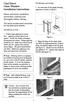 Clad Direct Glaze Window Installation Instructions Sill flashing and sealing: 2. An overview of the proper flashing sequence is shown in figure 1. Please read entire installation instructions carefully
STEADYfast Stabilizer Installation Notes Fifth Wheel and Travel Trailers 11/23/13
 STEADYfast Stabilizer Installation Notes Fifth Wheel and Travel Trailers 11/23/13 (See Supplemental Instructions for trailers with heavy duty round footplates and/or Power Leveling Systems) PHONE SUPPORT
How to Build Your Own CornHole Game
 How to Build Your Own CornHole Game DIMENSIONS Here is a diagram with the basic measurements for the Cornhole board game. SUPPLIES 1/2 thick sheet of plywood one 4 x4 or two 2 x4 s 8 long 2 4 s (4) 4 1/2
RadianceRail Installation Guide
 RadianceRail Installation Guide Installing RadianceRail with CableRail by Feeney... 2 Installing CableRail by Feeney for RadianceRail... 7 Installing RadianceRail Stairs with CableRail by Feeney... 10
WELCOME. Recommended Window Installation. 1.5 credits Minnesota Department of Labor and Industry
 WELCOME Recommended Window 1.5 credits Minnesota Department of Labor and Industry In accordance with the Department of Labor and Industry s statute 326.0981, Subd. 11, This educational offering is recognized