
Theory of Automated Reasoning An Introduction. Antti-Juhani Kaijanaho
|
|
|
- Arnold Holland
- 10 years ago
- Views:
Transcription
1 Theory of Automated Reasoning An Introduction Antti-Juhani Kaijanaho

2 Intended as compulsory reading for the Spring 2004 course on Automated Reasononing at Department of Mathematical Information Technology, University of Jyväskylä.

3 CHAPTER 1 Introduction In the 17th Century, Gottfried Leibniz dreamt of building a system where the truth of any assertion could be determined by calculation. Leibniz wrote: If controversies were to arise, there would be no more need of dispute between two philosophers than between two accountants. For it would suffice to take their pencils in their hands, and say to each other: Let us calculate. Leibniz s dream was a machine that could decide any question about what is and what is not. His dream has been shared by many, although they did not know of Leibniz s ideas. In the latter part of the 19th Century, modern logic emerged: George Boole created his algebra, Georg Cantor discovered magnitudes of infinity and developed an intuitive set theory, Gottlob Frege developed his unrestricted predicate calculus, Bertrand Russell crushed it by discovering the antinomy now known as Russell s paradox 1 and then in the first decade of the 20th Century wrote Principia Mathematica with Alfred Whitehead attempting to patch it up. In the first three decades of the 20th Century, research in logic was furious and fruitful, resulting in the modern approach to logic. Though this research was primarily motivated by interest in fundamentals of mathematics, it was critically important in realizing the dream of the reasoning machine. And such dream was also in the minds of the researchers. In 1900, at the International Congress of Mathematicians in Paris, David Hilbert delivered his famous speech on mathematical problems. He described 23 open problems for the new century; one of them is particularly relevant to our topic. Hilbert s second problem concerned the validity of formal arithmetic. In order to understand it, one must understand the point of view that it was posed from. Hilbert wanted to reduce all of mathematics to finite reasoning from a set of self-evident axioms. By that time, many important mathematical fields of study, such as geometry, had been reduced to the study of arithmetic. It was then critically 1 Russell s paradox can be paraphrased as the barber s problem: A village has a bearded barber, who swears to shave every bearded man in the village who does not shave himself. Does the barber shave himself? 1

4 2 1. INTRODUCTION important for Hilbert s program to find a proof that arithmetic was consistent. As Hilbert himself said in his address: If contradictory attributes be assigned to a concept, I say, that mathematically the concept does not exist. So, for example, a real number whose square is l does not exist mathematically. But if it can be proved that the attributes assigned to the concept can never lead to a contradiction by the application of a finite number of logical processes, I say that the mathematical existence of the concept (for example, of a number or a function which satisfies certain conditions) is thereby proved. The second problem, therefore, was [t]o prove that [the axioms of arithmetic] are not contradictory, that is, that a definite number of logical steps based upon them can never lead to contradictory results. Hilbert required that any such proof use only so called finitary methods: methods whose correctness can in principle be checked by exhaustive search in a finite amount of time. From the point of view of a reasoning machine builder, the question is equally important, for it is necessary to have a sound basis for any reasoning the machine would do; however, a reasoning machine builder does not require the use of finitary methods in these proofs ey has no problems assuming that mathematical reasoning in general is sound. In 1929, Mojzesz Presburger provided a partial solution to Hilbert s problem. He proved that natural number arithmetic with only addition and no multiplication is consistent (void of contradiction) and complete (capable of proving all valid statements). It was a major blow to Hilbert s program and a huge discovery in itself when Kurt Gödel proved in 1931 that there is no proof of consistency for any axiomatic theory that is capable of expressing general arithmetic (equality, addition and multiplication of natural numbers). In fact, if such proof were to be found, it would mean that arithmetic is inconsistent and therefore, in Hilbert s words, mathematically arithmetic would not exist (and since the consistency of every other major branch of mathematics is dependent on the consistency of arithmetic, neither would they exist mathematically). There was another problem that Hilbert posed, this time in 1928 (three years before Gödel s devastating discovery) with Wilhelm Ackermann, that was an important link in his program. It became known as the Entscheidungsproblem (German for decision problem ): to find a general mechanical procedure that would be able to decide, whether any given formula of first-order logic is a theorem. A solution for this problem would immediately give a recipe for creating a reasoning machine, and if the problem was solved, the bulk of these lecture notes would consist of presenting that solution.

5 1. INTRODUCTION 3 The first step in solving the Entscheidungsproblem would be defining what exactly is a mechanical procedure. Alonzo Church did that by defining his λ-calculus and arguing that it is a model of mechanical calculation. At about the same time, unaware of Church s work, Alan Turing created his machine and similarly argued that it is a model of mechanical calculation. Church published first, and so Turing was able to compare the two models, and as he presented his machine, he also gave a proof that it is equivalent to λ-calculus. Both Church and Turing solved the Entscheidungsproblem by proving that there is no mechanical procedure that can decide whether an arbitrary first-order sentence is a theorem or not. First-order logic was found to be undecidable. This finding was another severe blow to Hilbert s program, and also seems to make this booklet unnecessary. There is an old joke about a shop that promises immediate delivery on all orders, except for impossible ones, for which the delivery will take up to two weeks. In similar spirit, these discoveries have only slowed down the search for the reasoning machine. In the fifties, when computers were shiny and new, many researchers turned to the problem of making the computer prove theorems. Even though first-order logic was now know to be undecidable in general, it was also known that there are particular first-order theories that are decidable. Presbuger s arithmetic (natural numbers with addition but without multiplication, as mentioned above) has a decision procedure. In 1954, Martin Davis programmed Presburger s arithmetic. It did not perform well; as Davis later wrote: Its great triumph was to prove that the sum of two even numbers is even. This is not surprising in retrospect, as it was proven in the 1970s that any decision procedure for Presburger arithmetic has superexponential complexity. Although there were several attempts at making a general automatic theorem prover (notably by Davis and Putnam), the first major breakthrough was John Alan Robinson s combination of unification and the resolution principle 2. Since then, a lot of improvements have been made to both techniques. Today, most generalpurpose automatic reasoning systems are based on resolution, and nearly all of them use unification. Another main technique, semantic tableaux, has emerged as an important technique in the last ten years, although it has been around since 1960 s, developed by Raymond Smullyan 3 based on the work of E. W. Beth and Jaakko Hintikka in the 1950 s. 2 J. A. Robinson: A Machine-Oriented Logic Based on the Resolution Principle. Journal of the ACM, vol. 12 no. 1 (January 1965). 3 Raymond M. Smullyan: Trees and Nest Structures. The Journal of Symbolic Logic, vol. 31 no. 3 (September 1966).

6 4 1. INTRODUCTION While the original motivation for a reasoning machine was philosophical and metamathematical, its greatest application today is in verification of software and hardware systems. Reasoning systems have also solved several open mathematical problems. Automated reasoning also has applications in artificial intelligence, database systems and programming. This booklet develops the basic theory of automated reasoning. It assumes that the reader has the maturity of a post-baccalaureate graduate student in (theoretical) computer science. In particular, it assumes a knowledge of formal logic, theory of computation and formal languages as they are taught in computer science undergraduate (pre-baccalaureate) curricula. This booklet is a companion to the author s lectures in the Spring 2004 course on Automated reasoning at University of Jyväskylä, focusing on theory, while the lectures focus on intuitive understanding of concepts, issues and implementation techniques. We start with a precis of formal logic. The rest of this booklet covers important techniques such as normal form transformations, term unification, semantic tableaux and resolution. The main references used in writing this booklet are Melvin Fitting: First-Order Logic and Automated Theorem Proving, Second Edition, New York, Springer (Graduate Texts in Computer Science), 1996, and Alan Robinson and Andrei Voronkov, editors: Handbook of Automated Reasoning, Amsterdam, North-Holland (Elsevier) and Cambridge (Massachusetts), MIT Press, Other papers and books used as sources are referred to in footnotes.

Computation Beyond Turing Machines
 Computation Beyond Turing Machines Peter Wegner, Brown University Dina Goldin, U. of Connecticut 1. Turing s legacy Alan Turing was a brilliant mathematician who showed that computers could not completely
Hilberts Entscheidungsproblem, the 10th Problem and Turing Machines
 Hilberts Entscheidungsproblem, the 10th Problem and Turing Machines Nitin Saxena (Hausdorff Center for Mathematics, Bonn) [Happy] [100 th ] [Alan] [Mathison] [Turing!][][][]... **all pictures are works
The History of Logic. Aristotle (384 322 BC) invented logic.
 The History of Logic Aristotle (384 322 BC) invented logic. Predecessors: Fred Flintstone, geometry, sophists, pre-socratic philosophers, Socrates & Plato. Syllogistic logic, laws of non-contradiction
Automated Theorem Proving - summary of lecture 1
 Automated Theorem Proving - summary of lecture 1 1 Introduction Automated Theorem Proving (ATP) deals with the development of computer programs that show that some statement is a logical consequence of
CS 3719 (Theory of Computation and Algorithms) Lecture 4
 CS 3719 (Theory of Computation and Algorithms) Lecture 4 Antonina Kolokolova January 18, 2012 1 Undecidable languages 1.1 Church-Turing thesis Let s recap how it all started. In 1990, Hilbert stated a
CHAPTER 7 GENERAL PROOF SYSTEMS
 CHAPTER 7 GENERAL PROOF SYSTEMS 1 Introduction Proof systems are built to prove statements. They can be thought as an inference machine with special statements, called provable statements, or sometimes
This chapter is all about cardinality of sets. At first this looks like a
 CHAPTER Cardinality of Sets This chapter is all about cardinality of sets At first this looks like a very simple concept To find the cardinality of a set, just count its elements If A = { a, b, c, d },
(LMCS, p. 317) V.1. First Order Logic. This is the most powerful, most expressive logic that we will examine.
 (LMCS, p. 317) V.1 First Order Logic This is the most powerful, most expressive logic that we will examine. Our version of first-order logic will use the following symbols: variables connectives (,,,,
Lecture 13 of 41. More Propositional and Predicate Logic
 Lecture 13 of 41 More Propositional and Predicate Logic Monday, 20 September 2004 William H. Hsu, KSU http://www.kddresearch.org http://www.cis.ksu.edu/~bhsu Reading: Sections 8.1-8.3, Russell and Norvig
WHAT ARE MATHEMATICAL PROOFS AND WHY THEY ARE IMPORTANT?
 WHAT ARE MATHEMATICAL PROOFS AND WHY THEY ARE IMPORTANT? introduction Many students seem to have trouble with the notion of a mathematical proof. People that come to a course like Math 216, who certainly
Summary Last Lecture. Automated Reasoning. Outline of the Lecture. Definition sequent calculus. Theorem (Normalisation and Strong Normalisation)
 Summary Summary Last Lecture sequent calculus Automated Reasoning Georg Moser Institute of Computer Science @ UIBK Winter 013 (Normalisation and Strong Normalisation) let Π be a proof in minimal logic
How many numbers there are?
 How many numbers there are? RADEK HONZIK Radek Honzik: Charles University, Department of Logic, Celetná 20, Praha 1, 116 42, Czech Republic [email protected] Contents 1 What are numbers 2 1.1 Natural
ON FUNCTIONAL SYMBOL-FREE LOGIC PROGRAMS
 PROCEEDINGS OF THE YEREVAN STATE UNIVERSITY Physical and Mathematical Sciences 2012 1 p. 43 48 ON FUNCTIONAL SYMBOL-FREE LOGIC PROGRAMS I nf or m at i cs L. A. HAYKAZYAN * Chair of Programming and Information
Hypercomputation: computing more than the Turing machine
 Hypercomputation: computing more than the Turing machine Abstract: Toby Ord Department of Philosophy * The University of Melbourne [email protected] In this report I provide an introduction to
HILBERT S PROGRAM THEN AND NOW
 HILBERT S PROGRAM THEN AND NOW Richard Zach 1 INTRODUCTION Hilbert s program is, in the first instance, a proposal and a research program in the philosophy and foundations of mathematics. It was formulated
Introduction to formal semantics -
 Introduction to formal semantics - Introduction to formal semantics 1 / 25 structure Motivation - Philosophy paradox antinomy division in object und Meta language Semiotics syntax semantics Pragmatics
Extending Semantic Resolution via Automated Model Building: applications
 Extending Semantic Resolution via Automated Model Building: applications Ricardo Caferra Nicolas Peltier LIFIA-IMAG L1F1A-IMAG 46, Avenue Felix Viallet 46, Avenue Felix Viallei 38031 Grenoble Cedex FRANCE
Turing Machines: An Introduction
 CIT 596 Theory of Computation 1 We have seen several abstract models of computing devices: Deterministic Finite Automata, Nondeterministic Finite Automata, Nondeterministic Finite Automata with ɛ-transitions,
Introduction to Theory of Computation
 Introduction to Theory of Computation Prof. (Dr.) K.R. Chowdhary Email: [email protected] Formerly at department of Computer Science and Engineering MBM Engineering College, Jodhpur Tuesday 28 th
Handout #1: Mathematical Reasoning
 Math 101 Rumbos Spring 2010 1 Handout #1: Mathematical Reasoning 1 Propositional Logic A proposition is a mathematical statement that it is either true or false; that is, a statement whose certainty or
Rigorous Software Development CSCI-GA 3033-009
 Rigorous Software Development CSCI-GA 3033-009 Instructor: Thomas Wies Spring 2013 Lecture 11 Semantics of Programming Languages Denotational Semantics Meaning of a program is defined as the mathematical
How To Understand The Theory Of Hyperreals
 Ultraproducts and Applications I Brent Cody Virginia Commonwealth University September 2, 2013 Outline Background of the Hyperreals Filters and Ultrafilters Construction of the Hyperreals The Transfer
Chapter 1. Computation theory
 Chapter 1. Computation theory In this chapter we will describe computation logic for the machines. This topic is a wide interdisciplinary field, so that the students can work in an interdisciplinary context.
OHJ-2306 Introduction to Theoretical Computer Science, Fall 2012 8.11.2012
 276 The P vs. NP problem is a major unsolved problem in computer science It is one of the seven Millennium Prize Problems selected by the Clay Mathematics Institute to carry a $ 1,000,000 prize for the
Kolmogorov Complexity and the Incompressibility Method
 Kolmogorov Complexity and the Incompressibility Method Holger Arnold 1. Introduction. What makes one object more complex than another? Kolmogorov complexity, or program-size complexity, provides one of
CS Master Level Courses and Areas COURSE DESCRIPTIONS. CSCI 521 Real-Time Systems. CSCI 522 High Performance Computing
 CS Master Level Courses and Areas The graduate courses offered may change over time, in response to new developments in computer science and the interests of faculty and students; the list of graduate
6.080/6.089 GITCS Feb 12, 2008. Lecture 3
 6.8/6.89 GITCS Feb 2, 28 Lecturer: Scott Aaronson Lecture 3 Scribe: Adam Rogal Administrivia. Scribe notes The purpose of scribe notes is to transcribe our lectures. Although I have formal notes of my
Georg Cantor (1845-1918):
 Georg Cantor (845-98): The man who tamed infinity lecture by Eric Schechter Associate Professor of Mathematics Vanderbilt University http://www.math.vanderbilt.edu/ schectex/ In papers of 873 and 874,
Introducing Formal Methods. Software Engineering and Formal Methods
 Introducing Formal Methods Formal Methods for Software Specification and Analysis: An Overview 1 Software Engineering and Formal Methods Every Software engineering methodology is based on a recommended
Fixed-Point Logics and Computation
 1 Fixed-Point Logics and Computation Symposium on the Unusual Effectiveness of Logic in Computer Science University of Cambridge 2 Mathematical Logic Mathematical logic seeks to formalise the process of
(Academy of Economic Studies) Veronica Adriana Popescu (Academy of Economic Studies) Cristina Raluca Popescu (University of Bucharest)
 24 (Academy of Economic Studies) Veronica Adriana Popescu (Academy of Economic Studies) Cristina Raluca Popescu (University of Bucharest) Abstract: the importance of computer science, with the most important
What Is School Mathematics?
 What Is School Mathematics? Lisbon, Portugal January 30, 2010 H. Wu *I am grateful to Alexandra Alves-Rodrigues for her many contributions that helped shape this document. The German conductor Herbert
Tarski s Conceptual Analysis of Semantical Notions 1. Solomon Feferman
 Tarski s Conceptual Analysis of Semantical Notions 1 Solomon Feferman Dedicated to the memory of Robert L. Vaught (1926-2002) Fellow student, dear friend, colleague Abstract: Tarski is famous for his widely
Basic Proof Techniques
 Basic Proof Techniques David Ferry [email protected] September 13, 010 1 Four Fundamental Proof Techniques When one wishes to prove the statement P Q there are four fundamental approaches. This document
T Tutorial D - A Short Summary
 A n d N o w f o r S o m e t h i n g C o m p l e t e l y C o m p u t a t i o n a l by C. J. Date July 17th, 2006 Myself when young did eagerly frequent Doctor and Saint, and heard great Argument About it
Models of Sequential Computation
 Models of Sequential Computation 13 C H A P T E R Programming is often considered as an art, but it raises mostly practical questions like which language should I choose, which algorithm is adequate, and
The Classes P and NP
 The Classes P and NP We now shift gears slightly and restrict our attention to the examination of two families of problems which are very important to computer scientists. These families constitute the
Algebraic Computation Models. Algebraic Computation Models
 Algebraic Computation Models Ζυγομήτρος Ευάγγελος ΜΠΛΑ 201118 Φεβρουάριος, 2013 Reasons for using algebraic models of computation The Turing machine model captures computations on bits. Many algorithms
Foundational Proof Certificates
 An application of proof theory to computer science INRIA-Saclay & LIX, École Polytechnique CUSO Winter School, Proof and Computation 30 January 2013 Can we standardize, communicate, and trust formal proofs?
So let us begin our quest to find the holy grail of real analysis.
 1 Section 5.2 The Complete Ordered Field: Purpose of Section We present an axiomatic description of the real numbers as a complete ordered field. The axioms which describe the arithmetic of the real numbers
DEGREE OF NEGATION OF AN AXIOM
 DEGREE OF NEGATION OF AN AXIOM Florentin Smarandache, Ph D Professor of Mathematics Chair of Department of Math & Sciences University of New Mexico 200 College Road Gallup, NM 87301, USA E-mail: [email protected]
EQUATIONAL LOGIC AND ABSTRACT ALGEBRA * ABSTRACT
 EQUATIONAL LOGIC AND ABSTRACT ALGEBRA * Taje I. Ramsamujh Florida International University Mathematics Department ABSTRACT Equational logic is a formalization of the deductive methods encountered in studying
This asserts two sets are equal iff they have the same elements, that is, a set is determined by its elements.
 3. Axioms of Set theory Before presenting the axioms of set theory, we first make a few basic comments about the relevant first order logic. We will give a somewhat more detailed discussion later, but
Theorem3.1.1 Thedivisionalgorithm;theorem2.2.1insection2.2 If m, n Z and n is a positive
 Chapter 3 Number Theory 159 3.1 Prime Numbers Prime numbers serve as the basic building blocs in the multiplicative structure of the integers. As you may recall, an integer n greater than one is prime
How To Understand The Theory Of Computer Science
 Theory of Computation Lecture Notes Abhijat Vichare August 2005 Contents 1 Introduction 2 What is Computation? 3 The λ Calculus 3.1 Conversions: 3.2 The calculus in use 3.3 Few Important Theorems 3.4 Worked
6.080 / 6.089 Great Ideas in Theoretical Computer Science Spring 2008
 MIT OpenCourseWare http://ocw.mit.edu 6.080 / 6.089 Great Ideas in Theoretical Computer Science Spring 2008 For information about citing these materials or our Terms of Use, visit: http://ocw.mit.edu/terms.
Verification of Imperative Programs in Theorema
 Verification of Imperative Programs in Theorema Laura Ildikó Kovács, Nikolaj Popov, Tudor Jebelean 1 Research Institute for Symbolic Computation, Johannes Kepler University, A-4040 Linz, Austria Institute
Appendices master s degree programme Artificial Intelligence 2014-2015
 Appendices master s degree programme Artificial Intelligence 2014-2015 Appendix I Teaching outcomes of the degree programme (art. 1.3) 1. The master demonstrates knowledge, understanding and the ability
Formalism and Intuition in Software Development
 Formalism and Intuition in Software Development... intuition and deduction, on which alone we rely in the acquisition of knowledge. René Descartes Michael Jackson The Open University [email protected]
Predicate logic Proofs Artificial intelligence. Predicate logic. SET07106 Mathematics for Software Engineering
 Predicate logic SET07106 Mathematics for Software Engineering School of Computing Edinburgh Napier University Module Leader: Uta Priss 2010 Copyright Edinburgh Napier University Predicate logic Slide 1/24
Georg Cantor and Set Theory
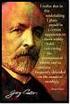 Georg Cantor and Set Theory. Life Father, Georg Waldemar Cantor, born in Denmark, successful merchant, and stock broker in St Petersburg. Mother, Maria Anna Böhm, was Russian. In 856, because of father
Degrees that are not degrees of categoricity
 Degrees that are not degrees of categoricity Bernard A. Anderson Department of Mathematics and Physical Sciences Gordon State College [email protected] www.gordonstate.edu/faculty/banderson Barbara
Software Modeling and Verification
 Software Modeling and Verification Alessandro Aldini DiSBeF - Sezione STI University of Urbino Carlo Bo Italy 3-4 February 2015 Algorithmic verification Correctness problem Is the software/hardware system
From Workflow Design Patterns to Logical Specifications
 AUTOMATYKA/ AUTOMATICS 2013 Vol. 17 No. 1 http://dx.doi.org/10.7494/automat.2013.17.1.59 Rados³aw Klimek* From Workflow Design Patterns to Logical Specifications 1. Introduction Formal methods in software
2110711 THEORY of COMPUTATION
 2110711 THEORY of COMPUTATION ATHASIT SURARERKS ELITE Athasit Surarerks ELITE Engineering Laboratory in Theoretical Enumerable System Computer Engineering, Faculty of Engineering Chulalongkorn University
The Relation between Two Present Value Formulae
 James Ciecka, Gary Skoog, and Gerald Martin. 009. The Relation between Two Present Value Formulae. Journal of Legal Economics 15(): pp. 61-74. The Relation between Two Present Value Formulae James E. Ciecka,
COMPUTER SCIENCE STUDENTS NEED ADEQUATE MATHEMATICAL BACKGROUND
 COMPUTER SCIENCE STUDENTS NEED ADEQUATE MATHEMATICAL BACKGROUND Hasmik GHARIBYAN PAULSON Computer Science Department, California Polytechnic State University, 1 Grand Avenue, San Luis Obispo, CA 93407,
Introduction to Automata Theory. Reading: Chapter 1
 Introduction to Automata Theory Reading: Chapter 1 1 What is Automata Theory? Study of abstract computing devices, or machines Automaton = an abstract computing device Note: A device need not even be a
Remarks on Non-Fregean Logic
 STUDIES IN LOGIC, GRAMMAR AND RHETORIC 10 (23) 2007 Remarks on Non-Fregean Logic Mieczys law Omy la Institute of Philosophy University of Warsaw Poland [email protected] 1 Introduction In 1966 famous Polish
Turing Machines and Understanding Computational Complexity
 Turing Machines and Understanding Computational Complexity Paul M.B.Vitányi CWI, Science Park 123, 1098XG Amsterdam The Netherlands 1. Introduction A Turing machine refers to a hypothetical machine proposed
Why STEM Topics are Interrelated: The Importance of Interdisciplinary Studies in K-12 Education
 Why STEM Topics are Interrelated: The Importance of Interdisciplinary Studies in K-12 Education David D. Thornburg, PhD Executive Director, Thornburg Center for Space Exploration [email protected] www.tcse-k12.org
THE DEVELOPMENT OF LEIBNIZ S CONSIDERATIONS IN JOHN YENCH S PROJECT
 STUDIES IN LOGIC, GRAMMAR AND RHETORIC 15(28) 2009 Emanuel Kulczycki Adam Mickiewicz University in Poznań THE DEVELOPMENT OF LEIBNIZ S CONSIDERATIONS IN JOHN YENCH S PROJECT In the title above it is a
A Problem Course in Mathematical Logic Version 1.6. Stefan Bilaniuk
 A Problem Course in Mathematical Logic Version 1.6 Stefan Bilaniuk Department of Mathematics Trent University Peterborough, Ontario Canada K9J 7B8 E-mail address: [email protected] 1991 Mathematics Subject
First-Order Logics and Truth Degrees
 First-Order Logics and Truth Degrees George Metcalfe Mathematics Institute University of Bern LATD 2014, Vienna Summer of Logic, 15-19 July 2014 George Metcalfe (University of Bern) First-Order Logics
3515ICT Theory of Computation Turing Machines
 Griffith University 3515ICT Theory of Computation Turing Machines (Based loosely on slides by Harald Søndergaard of The University of Melbourne) 9-0 Overview Turing machines: a general model of computation
Overview of the TACITUS Project
 Overview of the TACITUS Project Jerry R. Hobbs Artificial Intelligence Center SRI International 1 Aims of the Project The specific aim of the TACITUS project is to develop interpretation processes for
NP-Completeness and Cook s Theorem
 NP-Completeness and Cook s Theorem Lecture notes for COM3412 Logic and Computation 15th January 2002 1 NP decision problems The decision problem D L for a formal language L Σ is the computational task:
P vs NP problem in the field anthropology
 Research Article P vs NP problem in the field anthropology Michael.A. Popov, Oxford, UK Email [email protected] Keywords P =?NP - complexity anthropology - M -decision - quantum -like game - game-theoretical
ML for the Working Programmer
 ML for the Working Programmer 2nd edition Lawrence C. Paulson University of Cambridge CAMBRIDGE UNIVERSITY PRESS CONTENTS Preface to the Second Edition Preface xiii xv 1 Standard ML 1 Functional Programming
Factoring & Primality
 Factoring & Primality Lecturer: Dimitris Papadopoulos In this lecture we will discuss the problem of integer factorization and primality testing, two problems that have been the focus of a great amount
An Innocent Investigation
 An Innocent Investigation D. Joyce, Clark University January 2006 The beginning. Have you ever wondered why every number is either even or odd? I don t mean to ask if you ever wondered whether every number
AN INTRODUCTION TO FUNCTIONAL PROGRAMMING THROUGH LAMBDA CALCULUS. Greg Michaelson
 AN INTRODUCTION TO FUNCTIONAL PROGRAMMING THROUGH LAMBDA CALCULUS Greg Michaelson Department of Computing and Electrical Engineering Heriot-Watt University Riccarton Campus Edinburgh EH14 4AS - 2 - Preface
stefanwintein-at-gmail-dot-com Adress: Personalia 6-6-1979, Middelburg, Netherlands.
 Stefan Wintein Curriculum vitae Contact Information Mobile: +31641470624 E-mail: stefanwintein-at-gmail-dot-com Adress: van Enckevoirtlaan 87, 3052KR, Rotterdam. Webpage: stefanwintein.webklik.nl Personalia
Introduction to Mathematical. Philosophy
 Introduction to Mathematical Philosophy by Bertrand Russell Originally published by George Allen & Unwin, Ltd., London. May 1919. Online Corrected Edition version 1.0 (February 5, 2010), based on the second
Generic Polynomials of Degree Three
 Generic Polynomials of Degree Three Benjamin C. Wallace April 2012 1 Introduction In the nineteenth century, the mathematician Évariste Galois discovered an elegant solution to the fundamental problem
The Mathematics of the RSA Public-Key Cryptosystem
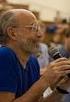 The Mathematics of the RSA Public-Key Cryptosystem Burt Kaliski RSA Laboratories ABOUT THE AUTHOR: Dr Burt Kaliski is a computer scientist whose involvement with the security industry has been through
Specification and Analysis of Contracts Lecture 1 Introduction
 Specification and Analysis of Contracts Lecture 1 Introduction Gerardo Schneider [email protected] http://folk.uio.no/gerardo/ Department of Informatics, University of Oslo SEFM School, Oct. 27 - Nov.
Mathematics for Computer Scientists
 G51MCS www.cs.nott.ac.uk/~vxc/g51mcs/g51mcs.html [email protected] Computer Science Building, A07 What this module is about What are the topics of this module? What this module is about
Teaching Formal Methods for Computational Linguistics at Uppsala University
 Teaching Formal Methods for Computational Linguistics at Uppsala University Roussanka Loukanova Computational Linguistics Dept. of Linguistics and Philology, Uppsala University P.O. Box 635, 751 26 Uppsala,