
Why Grassfed is Best. by Jo Robinson
|
|
|
- Augusta McKenzie
- 10 years ago
- Views:
Transcription
1 Why Grassfed is Best by Jo Robinson In my Grandma s day, there was no such thing as a bad fat. All fat was good simply because it tasted good. My Grandma fried her eggs in bacon grease, added bacon grease to her cakes and pancakes, made her pie crusts from lard, and served butter with her homemade bread. My grandmother was able to thrive on all that saturated fat but not my grandfather. He suffered from angina and died from heart failure at a relatively young age. My grandfather wasn t alone. Population studies from the first half of the 20th century showed that Americans in general had a much higher risk of cardiovascular disease than people from other countries, especially Japan, Italy, and Greece. Was all that saturated fat to blame? The Japanese were eating very little fat of any kind, while the Mediterraneans were swimming in olive oil, an oil that is very low in saturated fat but high in monounsaturated fats. So, in the 1960s, word came from on high that we should cut back on the butter, cream, eggs, and red meat. But, interestingly, the experts did not advise us to switch to an ultra-low fat diet like the Japanese, nor to use monounsaturated oils like the Greeks or Italians. Instead, we were advised to replace saturated fat with polyunsaturated oils primarily corn oil and safflower. Never mind the fact that no people in the history of this planet had ever eaten large amounts of this type of oil. It was deemed the right thing to do. Why? First of all, the United States had far more corn fields than olive groves, so it seemed reasonable to use the type of oil that we had in abundance. But just as important, according to the best medical data at the time, corn oil and safflower oil seemed to lower cholesterol levels better than monounsaturated oils. Wrong Oil Today, we know that s not true. In the 1960s, researchers did not differentiate between good HDL cholesterol and bad LDL cholesterol. Instead, they lumped both types together and focused on lowering the sum of the two. Polyunsaturated oils seemed to do this better than monounsaturated oils. We now know they achieve this feat by lowering both our bad and our good cholesterol, in effect throwing out the baby with the bathwater. Monounsaturated oils leave our HDL intact. In hindsight, it s not surprising, then, that our death rate from cardiovascular disease remained high in the 1970s and 80s even though we were eating far less butter, eggs, bacon grease, and red meat: We had been told to replace saturated fat with the wrong kind of oil. During this same era, our national health statistics were highlighting another problem, this one even more ominous: an increasing number of people were dying from cancer. Why were cancer deaths go- 1

2 2 ing up? Was it the fact that our environment was more polluted? That our food had more additives, herbicides, and pesticides? That our lives were more stressful? That we were not eating enough fruits and vegetables? Yes. Yes. Yes. And yes. But there was another reason we were losing the war against cancer: the supposedly heart-healthy corn oil and safflower oil that the doctors had advised us to pour on our salads and spread on our bread contained high amounts of a type of fat called omega-6 fatty acids. There is now strong evidence that omega-6s can make cancer cells grow faster and more invasive. For example, if you were to inject a colony of rats with human cancer cells and then put some of the rats on a corn oil diet, some on a butterfat diet, and some on a beef fat diet, the ones given the omega-6 rich corn oil would be afflicted with larger and more aggressive tumors. Second Helping Meanwhile, unbeknownst to us, we were getting a second helping of omega-6s from our animal products. Starting in the 1950s, the meat industry had begun taking our animals off pasture and fattening them on grains high in omega-6s, adding to our intake of these potentially cancer-promoting fats. In the early 1990s, we learned that our modern diet was harboring yet another unhealthy fat: transfatty acids. Trans-fatty acids are formed during the hydrogenation process that converts vegetable oil into margarine and shortening. Carefully designed studies were showing that these manmade fats are worse for our cardiovascular system than the animal fats they replaced. Like some saturated fats, they raise our bad cholesterol. But unlike the fats found in nature, they also lower our good cholesterol delivering a double whammy to our coronary arteries. Maybe butter is better after all, conceded the health experts. Conflicting Advice Given all this conflicting advice about fat, consumers were ready to lob their tubs of margarine at their doctors. For decades they had been skimping on butter, even though margarine tasted little better than salty Vaseline. Now they were being told that margarine might increase their risk of a heart attack! Some people revolted by trying to abandon fat altogether. For breakfast, they made do with dry toast and fat-free cottage cheese. For lunch, they ate salad greens sprinkled with pepper and vinegar. Dinner was a skinless chicken breast poached in broth. Or better yet, a soy burger topped with lettuce. Dessert? Well, after all that self-denial, what else but a big bowl of fat-free ice cream and a box of Snackwell cookies. Thank goodness calories no longer counted! Only fat made you fat! Or, so the diet gurus had told us. Paradoxically, while we were doing our best to ferret out all the fat grams, we were getting fatter and fatter. We were also becoming more prone to diabetes. Replacing fat with sugar and refined carbohydrates was proving to be no more beneficial than replacing saturated fat with

3 polyunsaturated oils. At long last, in the mid-1990s, the first truly good news about fat began to emerge from the medical labs. The first fats to be given the green light were the monounsaturated oils, the ones that had helped protect the health of the Mediterraneans for so many generations. These oils are great for the heart, the scientists discovered, and they do not promote cancer. They are also a deterrent against diabetes. The news came fifty years too late, but it was welcome nonetheless. Please pass the olive oil! Stearic acid, the most abundant fat in beef and chocolate, was also found to be beneficial. Unlike some other saturated fats, s t e a r i c acid does not raise your bad cholesterol and it may even give your good chol e s t e r o l a l i t t l e b o o s t. Hooray! Good Fat Then, at the tail end of the 20th century, two more good fats were added to the roster omega-3 fatty acids and conjugated linoleic acid, or CLA, the fat found in the meat and dairy products of ruminants. Both of these fats show signs of being potent weapons against cancer. However, the omega-3s may be the best of all the good fats because they are also linked with a lower risk of virtually all the so-called diseases of civilization, including cardiovascular disease, depression, ADHD, diabetes, Alzheimer s disease, obesity, asthma, and autoimmune diseases. So, some of you may be wondering, what does this brief history of fat have to do with grassfarming? Few people realize that all omega-3s originate in the green leaves of plants and algae. Fish have large amounts of this good fat because they eat small fish that eat smaller fish that dine on omega-3 rich algae and phytoplankton. Grazing animals have more omega-3s because they get the omega-3s directly from the grass. In both cases, the omega-3s are ultimately passed on to humans, the top of the food chain. Nutritional Benefits Products from grassfed animals offer us more than omega-3s. They contain significant amounts of two good fats, monounsaturated oils and stearic acid, but no manmade trans-fatty acids. They are also the richest known natural source of CLA and contain extra amounts of vitamin E and beta-carotene. Finally, grassfed meat is lower than feedlot meat in total fat and calories, making it ideally suited for our sedentary lifestyles. For example, a sirloin steak from a grassfed steer has about one half to one third as much fat as a similar cut from a grainfed steer. In fact, grassfed meat has about the same fat content as skinless chicken or wild deer or elk. 1 When meat is this lean, it actually lowers your LDL cholesterol levels. 2 Because grassfed meat is so lean, it is also lower in calories. (Fat has 9 calories per gram, compared with only 4 calories for protein and carbohydrates. 3

4 4 The greater the fat content, the greater the number of calories.) A 6-ounce steak from a grass-finished steer has almost 100 fewer calories than a 6-ounce steak from a grainfed steer. If you eat a typical amount of beef (66.5 pounds a year), switching to grassfed beef will save you 17,733 calories a year without requiring any willpower or change in eating habits. If everything else in your diet remains constant, you ll lose about six pounds a year. If all Americans switched to grassfed meat, our national epidemic of obesity might begin to diminish. I don t believe it s a matter of luck or chance that grassfed products have so many of the good fats but so few of the bad. In fact, I ll wager that the more that is discovered about fat in the coming years, the more grassfed meat will shine. The reason for my confidence is simple: our bodies are superbly adapted to this type of food. In the distant past, grassfed meat was the only meat around. Our hunter-gatherer ancestors either brought home a grazing ruminant such as elk, deer, or bison, or a predator that preyed on those animals. Either way, the nutrients found in grass made their way into the animals flesh, and ultimately, into our own. Over the eons, our bodies began to expect the kinds and amounts of fat found in grassfed meat. Our hearts counted on the omega-3s to stabilize their rhythm and keep blood clots from forming. Our brain cells relied on omega-3s to build flexible, receptor-rich membranes. Our immune systems used the omega-3s and CLA to help fend off cancer. And because wild game is relatively lean, our bodies weren t burdened with unnecessary amounts of fat or calories. When we switch from grainfed to grassfed meat, then, we are simply returning to our original diet, the diet that is most in harmony with our physiology. Every cell and system of our bodies function better when we eat products from animals raised on grass. Extra Omega-3s Although grassfed meat is low in total fat and bad fat (including saturated fat), it has two to six times more omega-3 fatty acids. Omega-3s play a vital role in every cell and system in your body. For example, of all the fats, they are the most heart friendly. People who have ample amounts of omega-3s in their diet are less likely to have high blood pressure or an irregular heartbeat. Remarkably, they are 50 percent less likely to suffer a heart attack. 3 Omega-3s are essential for your brain as well. People with a diet rich in omega-3s are less likely to suffer from depression, schizophrenia, attention deficit disorder (hyperactivity), or Alzheimer s disease. [ 4 ] Another benefit of omega-3s is that they may reduce your risk of cancer. In animal studies, these essential fats have slowed the growth of a wide array of cancers and also kept them from spreading. 5 Although the human research is in its infancy, researchers have shown that omega-3s can slow or even reverse the extreme weight loss that accompanies advanced cancer and also hasten recovery from surgery. 6, 7 Omega-3s are most abundant in seafood and certain nuts and seeds such as flaxseeds and walnuts, but they are also found in animals raised on pasture. The reason is simple. Omega-3s are formed in the chloroplasts of green leaves and algae. Sixty percent of the fatty acids in grass are omega-3s. When cattle are taken off omega-3 rich grass and shipped to a feedlot to be fattened on grain, they begin losing their store of this beneficial fat. Each day that an animal spends in the feedlot, its supply of omega-3s is diminished. 8 The graph on this page illustrates this rapid decline. When chickens are housed indoors and deprived of greens, their meat and eggs also become artificially low in omega-3s. Eggs from pastured hens can contain as much as 20 times more omega-3s than eggs from factory hens. 9 Switching our livestock from grass to grain is one of the reasons our modern diet is deficient in these essential fats. It has been estimated that only 40 percent of Americans consume a sufficient supply of these nutrients. Twenty percent have levels so low that they cannot be detected. 10 Switching to grassfed animal products is one way to restore this vital nutrient to your diet. The CLA Bonus Meat and dairy products from grassfed ruminants are the richest known source of another type of good fat called conjugated linoleic acid or CLA. When ruminants are raised on fresh pasture alone, their products contain from three to five times more CLA than products from animals fed conventional diets. 10, 11 CLA may be one of our most potent defenses against cancer. In laboratory animals, a very small percentage of CLA a mere 0.1 percent of total calories

5 greatly reduced tumor growth. 12 There is new evidence that CLA may also reduce cancer risk in humans. In a Finnish study, women who had the highest levels of CLA in their diet had a 60 percent lower risk of breast cancer than those with the lowest levels. French researchers compared CLA levels in the breast tissues of 360 women. The women with the most CLA in their tissue (and thus the most CLA in their diets) had a 74 percent lower risk of breast cancer than the women with the least CLA. Switching from grainfed to grassfed meat and dairy products places women in this lowest risk category. 13 Researcher Tilak Dhiman from Utah State University estimates that you may be able to lower your risk of cancer simply by eating the following grassfed products each day: one glass of whole milk, one ounce of cheese, and one serving of meat. You would have to eat five times that amount of grainfed meat and dairy products to get the same level of protection. Super Healthy Milk Most cartons of milk in the supermarket show a picture of cows contentedly grazing on grass. Unfortunately, 85 to 95 percent of the cows in American dairies are now being raised in confinement. The only grass they eat comes in the form of hay, and the ground they stand on is a variable blend of dirt and manure. The reason for confining our cows in feedlots and feeding them grain rather than grass is that they produce more milk especially when injected with bi-weekly hormones. Today s grainfed cows produce three times as much milk as the old family cow of days gone bye. But with all the emphasis on quantity, the quality of our milk has suffered. One Data from Duckett, S.K., of the biggest losses has been D.G. Wagner, L.D.Yates, H.G. Dolezal, and S.G. May in its CLA content. The milk Effects of Time on Feed on of pastured cows also contains Beef Nutrient Composition. an ideal ratio of essential fatty J. Anim Sci 71, no. 8 (1993); acids or EFAs. There are two families of EFAs omega-6 and omega-3 fatty acids. Studies suggest that if your diet contains roughly equal amounts of these two fats, you will have a lower risk of cancer, cardiovascular disease, autoimmune disorders, allergies, obesity, diabetes, dementia, and various other mental disorders. Take a few moments to study the chart on this page showing the EFA content of milk from cows fed varying amounts of grass and grain. The green bars represent the amount of omega-3 fatty acids in the milk, and the yellow bars represent the amount of omega-6 fatty acids. As you can see, when a cow gets all her nutrients from pasture (represented by the two bars on the far left), her milk has an ideal ratio of omega-6 to omega-3 fatty acids. Take away one third of the grass and replace it with grain or other supplements (represented by the two bars in the middle) and the omega-3 fatty acid content of the milk goes down while the omega-6 fatty acid content goes up, upsetting 5

6 6 an essential balance. Replace two-thirds of the pasture with a grain-based diet (illustrated by the two bars on the far right) and the milk will have a very top-heavy ratio of omega-6 to omega-3 fatty acids. The healthiest milk comes from cows that graze fresh pasture without any added grain or by-product feedstuff. Milk from pastured cows offers additional health benefits. (I m beginning to sound like a TV infomercial: But wait! There s more! ) In addition to giving you five times more CLA and an ideal balance of EFAs, grassfed milk is higher in beta-carotene, vitamin A, and vitamin E. This vitamin bonus comes, in part, from the fact that fresh pasture has more of these nutrients than grain or hay. (When grass is dried and turned into hay, it loses a significant amount of its vitamin content.) These extra helpings of vitamins are then transferred to the cow s milk. There s another factor involved as well. A grazing cow produces less milk than a cow fed a grainbased diet. This turns out to be a bane for the farmer but a blessing for the consumer. The less milk a cow produces, the more vitamins in her milk. This is because a cow has a set amount of vitamins to transfer to her milk, and if she s bred, fed, and injected to be a Super Producer, her milk has fewer vitamins per glass. It s a watered down version of the real thing. Oh, I almost forgot the best part of all. Dairy products from grassfed cows taste delicious, and they have a bright yellow color that is visible proof of their bonus supply of beta carotene. Serve cheese or butter from a grass-based dairy, and everyone will notice the difference. Also, your cookies and cakes will have that rich buttery color that hasn t been seen since Grandma s day. (You do bake, don t you?) So where can you find milk from pastured cows? Unfortunately, the label won t tell you whether the cows were raised on grass or grain. Even an organic label is no guarantee that the cows got any of their diet from fresh pasture. At the present time, however, there are two large organic dairies that make a point of raising their cows on pasture Organic Valley and Natural by Nature, an east coast brand. Look for them in your dairy case. In addition, a number of farmers listed on have pasture-based dairies. If you can find a local farmer who will sell you dairy products from all pasture-fed cows, you have found liquid gold. You Are What Your Animals Eat In my on-going investigation into pasturebased farming, I ve stumbled upon an alarming void: few animal scientists care about the link between the diet of our livestock and the nutritional content of their products. Feed animals anything you want, the research suggests, and it makes no difference to their meat, milk, or eggs. Browse through the animal science journals, for example, and you ll see that the goal of most feeding experiments is to increase production and minimize costs. Period. As long as the feed is cheap and the animal gets fat, anything goes. Here s a glaring example. A 1999 study published in The Journal of Animal Science explored the desirability of feeding stale chewing gum still in its wrappers to cattle. Wonder of wonders, the article concluded that a bubble gum diet was a net benefit. I quote: Results of both experiments suggest that [gum and packaging material] may be fed to safely replace up to 30% of corn-alfalfa hay diets for growing steers with advantages in improving dry matter intake and digestibility. In other words, feed a steer a diet that is 30 percent bubble gum and wrappers, and it will eat more. Needless to say, there was no mention in the article of the nutritional content of the resulting meat. When I first read these articles, I assumed that no one would actually feed bubblegum to their animals, despite the positive results of the studies. Then a professor of animal science drove me by a Beechnut gum factory in upstate New York where dairy farmers used to buy truckloads of bubblegum to feed to their cows. The only reason the farmers stopped coming is that the factory closed down. Researchers studying human nutrition have been just as slow to see the connection between animal diets and human diets. To virtually all dieticians, beef is beef, eggs are eggs, and milk is milk. Few pay any attention to what the animals were fed or how they were raised. Thus, when the USDA guidelines say eat less red meat, the edict applies to all red meat, whether it s a fatty steak from a grainfed cow, or a lean steak from a grassfed cow with its invisible bounty of omega-3s, vitamin E, and CLA. I have spent the past three years searching for studies that have explored the link between animal feed and human food. It s been arduous work. One of the main problems is that there is scant research about the nutritional value of products from grassfed animals. For

7 the past 50 years, virtually all the studies have focused on grainfed products. To fill in the void, I ve searched through yellowing journals published before the advent of factory farming, extrapolated from small studies financed by individual farmers, and relied on studies based in Ireland, Australia, or New Zealand parts of the world where animals are still kept home on the range. Finding the amount of vitamin E in grassfed beef has been the biggest challenge. I began to search for the data when I learned that grass has 20 times more vitamin E than corn or soy. Given the magnitude of this difference, I reasoned that meat from grassfed animals must have an extra helping of vitamin E. Diligently, I searched the scientific record. At long last, I located one American study that provided some data. The impetus for this rare study came from disgruntled Japanese buyers who were complaining that the meat from American feedlot cattle spoiled more quickly than the meat from Australian free-range cattle. To find out why, the Americans measured the vitamin E levels in the two types of meat. (They knew that antioxidants such as vitamin E helped prolong shelf life.) Their tests revealed that the meat from the Australian grassfed cattle had three to four times more vitamin E, thanks to all that vitamin E-rich grass. What did the American researchers do with this finding? True to form, they began studying how much synthetic vitamin E to add to feedlot diets. I doubt that it even occurred to them to take a closer look at the Australian model. A main reason for this lack of interest in the pasture-based model is that much of our animal research is funded by commercial interests specifically the grain, chemical, pharmaceutical, farm equipment, and meat-packing companies. Together, these vertically integrated behemoths have a multi-billion dollar stake in perpetuating factory farming. The USDA, meanwhile, aids and abets by focusing its efforts on tweaking the feedlot system. The Meat and Animal Research Center (MARC) in Lincoln, Nebraska is more willing to spend $100,000 researching how quickly feedlot manure seeps into the water table than to spend a similar amount exploring pasture-based farming. My Fantasy What will it take to change the priorities of the research community? An enlightened public. And what will it take to enlighten the public? A sustained media campaign. But since there is no money to fund such a campaign, the breakthrough will have to come from investigative journalism. I have a fantasy about how that might happen. First, a journalist from a major TV show such as 60 Minutes or Dateline or a prestigious newspaper such as The New York Times or The Washington Post will decide to explore the stunning differences between factory farms and pasture-based farms. Building on this ground-breaking work, an award-winning TV producer will create a one-hour documentary showing the vivid contrasts. The program will conclude as it must -that raising animals on pasture is better for consumers, the animals, the environment, and small-scale farmers. Before long, dozens of TV shows, newspapers, and magazines will launch their own investigations. All of a sudden, grassfarming will be the talk of the town. Serving organic meat won t win points in Los Angeles anymore unless it s grassfed as well. Meanwhile, Ted Turner will have stopped sending all of his bison calves to feedlots to be fattened like cattle, and by 2005, his Turner Reserve Grassfed Bison will be the thing to serve at celebrity gatherings. Propelled by this groundswell of interest, investors and institutions will finally devote more time, money, and energy to supporting pasture-based farming. Will grassfarming really become the darling of the media? Only time will tell. But even if it doesn t, there is evidence that grassfarming is gathering momentum the old fashioned way word of mouth. Friends are telling friends about the health benefits of pastured animal products, and they re turning the curious into converts by inviting them over to share in a feast. I ve gotten calls from quite a few grassfarmers this year who say they re having trouble keeping up with demand. The good news about grassfarming seems to be spreading one satisfied customer at a time! References 1. Fukumoto, G. K., Y.S. Kim, D. Oduda, H. Ako (1995). Chemical composition and shear force requirement of loin eye muscle of young, forage-fed steers. Research Extension Series 161: 1-5. Koizumi, I., Y. Suzuki, et al. (1991). Studies on the fatty acid composition of intramuscular lipids of cattle, pigs and birds. J Nutr Sci Vitaminol (Tokyo) 37(6): Davidson, M. H., D. Hunninghake, et al. (1999). Comparison of the effects of lean red meat vs. lean white meat on serum lipid levels among free-living 7

8 8 persons with hypercholesterolemia: a long-term, randomized clinical trial. Arch Intern Med 159(12): The conclusion of this study:... diets containing primarily lean red meat or lean white meat produced similar reductions in LDL cholesterol and elevations in HDL cholesterol, which were maintained throughout the 36 weeks of treatment. 3. Siscovick, D. S., T. E. Raghunathan, et al. (1995). Dietary Intake and Cell Membrane Levels of Long-Chain n-3 Polyunsaturated Fatty Acids and the Risk of Primary Cardiac Arrest. JAMA 274(17): Simopolous, A. P. and Jo Robinson (1999). The Omega Diet. New York, HarperCollins. My previous book, a collaboration with Dr. Artemis P. Simopoulos, devotes an entire chapter to the vital role that omega-3s play in brain function. 5. Rose, D. P., J. M. Connolly, et al. (1995). Influence of Diets Containing Eicosapentaenoic or Docasahexaenoic Acid on Growth and Metastasis of Breast Cancer Cells in Nude Mice. Journal of the National Cancer Institute 87(8): Tisdale, M. J. (1999). Wasting in cancer. J Nutr 129(1S Suppl): 243S-246S. 7. Tashiro, T., H. Yamamori, et al. (1998). n-3 versus n-6 polyunsaturated fatty acids in critical illness. Nutrition 14(6): Duckett, S. K., D. G. Wagner, et al. (1993). Effects of time on feed on beef nutrient composition. J Anim Sci 71(8): Lopez-Bote, C. J., R.Sanz Arias, A.I. Rey, A. Castano, B. Isabel, J. Thos (1998). Effect of free-range feeding on omega-3 fatty acids and alpha-tocopherol content and oxidative stability of eggs. Animal Feed Science and Technology 72: Dolecek, T. A. and G. Grandits (1991). Dietary Polyunsaturated Fatty Acids and Mortality in the Multiple Risk Factor Intervention Trial (MRFIT). World Rev Nutr Diet 66: Dhiman, T. R., G. R. Anand, et al. (1999). Conjugated linoleic acid content of milk from cows fed different diets. J Dairy Sci 82(10): Interestingly, when the pasture was machine-harvested and then fed to the animals as hay, the cows produced far less CLA than when they were grazing on that pasture, even though the hay was made from the very same grass. The fat that the animals use to produce CLA is oxidized during the wilting, drying process. For maximum CLA, animals need to be grazing living pasture. 12. Ip, C, J.A. Scimeca, et al. (1994) Conjugated linoleic acid. A powerful anti-carcinogen from animal fat Jo Robinson, author and researcher. sources. p Cancer 74(3 suppl): Aro, A., S. Mannisto, I. Salminen, M. L. Ovaskainen, V. Kataja, and M. Uusitupa. Inverse Association between Dietary and Serum Conjugated Linoleic Acid and Risk of Breast Cancer in Postmenopausal Women. Nutr Cancer 38, no. 2 (2000): This article was excerpted from articles on Jo s website,

Health Benefits of Grass-Fed Products
 Health Benefits of Grass-Fed Products As you will see, products from pastured animals are ideal for your health. Similar to wild game, they contain the amounts and kinds of nutrients that your body "expects"
Let s Talk Oils and Fats!
 Lesson Overview Lesson Participants: School Nutrition Assistants/Technicians, School Nutrition Managers, Child and Adult Care Food Program Staff, Teachers Type of Lesson: Short, face-to-face training session
It is important to know that some types of fats, like saturated and trans fat, can raise blood cholesterol levels.
 Healthy Eating You are what you eat! So before you even shop for food, it is important to become a well informed, smart food consumer and have a basic understanding of what a heart healthy diet looks like.
Recommended Daily Fat Intake
 Recommended Daily Fat Intake Total calories per day Saturated fat in grams Total fat in grams 1,600 18 or less 53 2,000 1 20 or less 65 2,200 24 or less 73 2,500 1 25 or less 80 2,800 31 or less 93 Read
Health Maintenance: Controlling Cholesterol
 Sacramento Heart & Vascular Medical Associates February 18, 2012 500 University Ave. Sacramento, CA 95825 Page 1 What is cholesterol? Cholesterol is a fatty substance. It has both good and bad effects
Nutrition Information from My Plate Guidelines
 Nutrition Information from My Plate Guidelines Note: This information was compiled from the website: http://www.choosemyplate.gov/ for participants in the 4-H Food Prep Contest 1/12/16. The information
Eat Well, Live Well Lesson 9: The Lowdown on Cholesterol
 Getting Started 1. Review lesson plan before each session 2. Copy handouts. 3. Gather supplies Eat Well, Live Well Lesson 9: The Lowdown on Cholesterol Supplies Needed 1. Handouts 2. Supplies for activity:
Ice Cream, Cheese, Butter, and Whole Milk: Health Foods? Hallie Lundquist 2B Mrs. Maas 1/4/16
 Ice Cream, Cheese, Butter, and Whole Milk: Health Foods? Hallie Lundquist 2B Mrs. Maas 1/4/16 Abstract Not all fats are bad; in fact, we are now finding out that fatty acids which are unique to milk fat
CORPORATE HEALTH LOWERING YOUR CHOLESTEROL & BLOOD PRESSURE
 CORPORATE HEALTH LOWERING YOUR CHOLESTEROL & BLOOD PRESSURE What is Cholesterol? What s wrong with having high cholesterol? Major risk factor for cardiovascular disease Higher the cholesterol higher the
BEST & WORST FOODS FOR BELLY FAT
 Belly fat is worse for you than fat elsewhere on your body. Excess accumulation of belly fat is more dangerous than excess fat around your hips and thighs. Belly fat is associated with serious health problems,
Mediterranean diet: Choose this hearthealthy
 MayoClinic.com reprints This single copy is for your personal, noncommercial use only. For permission to reprint multiple copies or to order presentation-ready copies for distribution, use the reprints
Fat Facts That Can Help Your Heart. Most Common Risk Factors for Heart Disease
 Fat Facts That Can Help Your Heart Sally Barclay, MS RD LD Nutrition Clinic for Employee Wellness Most Common Risk Factors for Heart Disease High LDL (bad) cholesterol Smoking Low HDL (good) cholesterol
MINTO PREVENTION & REHABILITATION CENTRE CENTRE DE PREVENTION ET DE READAPTATION MINTO. Counting Fat Grams. About This Kit
 MINTO PREVENTION & REHABILITATION CENTRE CENTRE DE PREVENTION ET DE READAPTATION MINTO Counting Fat Grams About This Kit In previous kits you have learned Foods to Choose and Foods to Decrease/Avoid for
Eating Well with Diabetes. Cassie Vanderwall UW Health Nutrition Registered Dietitian Certified Personal Trainer Certified Diabetes Educator
 Eating Well with Diabetes Cassie Vanderwall UW Health Nutrition Registered Dietitian Certified Personal Trainer Certified Diabetes Educator Outline What is Diabetes? Diabetes Self-Management Eating Well
Nutritional Guidelines for Roux-en-Y, Sleeve Gastrectomy and Duodenal Switch. Gastric Restrictive Procedures. Phase III Regular Consistency
 Nutritional Guidelines for Roux-en-Y, Sleeve Gastrectomy and Duodenal Switch Gastric Restrictive Procedures Phase III Regular Consistency The University of Chicago Hospitals Center for the Surgical Treatment
Beating insulin resistance through lifestyle changes
 Beating insulin resistance through lifestyle changes This information is relevant to people at risk for type 2 diabetes, those who already have type 2 diabetes, pre- diabetes, polycystic ovary syndrome
FLORA PRO-ACTIV SPREAD ACTIVELY LOWERS CHOLESTEROL ABSORPTION
 FLORA PRO-ACTIV SPREAD ACTIVELY LOWERS CHOLESTEROL ABSORPTION A STEP TOWARDS A HEALTHIER HEART Flora pro-activ contains plant sterols, which are designed to be consumed as part of a healthy diet and lifestyle,
Pediatrics. Specialty Courses for Medical Assistants
 Pediatrics Specialty Courses for Medical Assistants 7007 College Boulevard, Suite 385 Overland Park, Kansas 66211 www.ncctinc.com t: 800.875.4404 f: 913.498.1243 Pediatrics Specialty Certificate Course
Nutrients: Carbohydrates, Proteins, and Fats. Chapter 5 Lesson 2
 Nutrients: Carbohydrates, Proteins, and Fats Chapter 5 Lesson 2 Carbohydrates Definition- the starches and sugars found in foods. Carbohydrates are the body s preferred source of energy providing four
Nutritional Glossary. Index of Contents
 Nutritional Glossary This glossary provides nutrition information about the nutrients commonly found in fruits, vegetables, and other plant foods Each glossary definition has a long and a short version.
High Cholesterol and Heart Failure
 High Cholesterol and Heart Failure What Is Cholesterol? Cholesterol is a waxy substance that comes from your liver and from the food you eat. Your body needs it to function properly. There are two main
Sinclair Community College, Division of Allied Health Technologies
 Sinclair Community College, Division of Allied Health Technologies Health Promotion for Community Health Workers Cardiovascular disease, stroke, and cancer Class #5 High Blood Cholesterol (date) Course
I The THREE types of LIPIDS
 LECTURE OUTLINE Chapter 5 The Lipids: Fats, Oils, Phospholipids and Sterols I The THREE types of LIPIDS A. Triglycerides (fats & oils)- the MAJOR type of lipid in food and humans. 1. 2 parts of triglyceridesa)
The Skinny on Visceral Fat
 The Skinny on Visceral Fat Fat stored deep in the belly is the most harmful kind. Find out how to cut it down to size. People can carry their extra weight in different places on the body: All over On the
February 2006. 23 Best Foods for Athletes
 23 Best Foods for Athletes February 2006 1. Beans Legumes a. Excellent source of fiber (important for keeping blood sugar and cholesterol levels under control). b. High in protein and a good source of
Heart healthy diet: 8 steps to prevent heart disease
 Heart healthy diet: 8 steps to prevent heart disease Changing your eating habits can be tough. Start with these eight strategies to kick start your way toward a heart healthy diet. By Mayo Clinic Staff
A healthy cholesterol. for a happy heart
 A healthy cholesterol for a happy heart cholesterol A healthy cholesterol for a happy heart You probably already know that cholesterol has something to do with heart disease. But like many people, you
Nuts, Oils, Dressings, and Spreads
 Nuts, Oils, Session 1 Background Information Tips Goals Background Information Nuts, Oils, Eating Fats There are three types of fat we ll focus on in this program: Healthy fats (polyunsaturated fats),
Your Cholesterol Lowering Guide
 1 Your Cholesterol Lowering Guide Cholesterol plays a vital role in the day-to-day functioning of your body. However, too much cholesterol in the blood can affect your heart health. The good news is that
Η δίαιτα στην πρόληψη του αγγειακού εγκεφαλικού επεισοδίου
 ΠΡΟΓΡΑΜΜΑ ΜΕΤΑΠΤΥΧΙΑΚΩΝ ΣΠΟΥΔΩΝ «Η ΔΙΑΤΡΟΦΗ ΣΤΗΝ ΥΓΕΙΑ ΚΑΙ ΣΤΗ ΝΟΣΟ» Η δίαιτα στην πρόληψη του αγγειακού εγκεφαλικού επεισοδίου Γεώργιος Ντάιος Παθολογική Κλινική Πανεπιστημίου Θεσσαλίας Stroke Statistics
Heart Healthy Diet: Tips for Lowering Cholesterol and Fat in Your Diet
 Heart Healthy Diet: Tips for Lowering Cholesterol and Fat in Your Diet Cholesterol Saturated Fats Polyunsaturated and Mono-unsaturated Fats This fat-like substance is needed for good health. However, high
Myth vs. Reality: Diabetes Related
 Myth: Only medication can control my diabetes. Reality: Lifestyle changes such as good nutrition, increased physical activity, weight loss and limiting alcohol/cigarette consumption can have a positive
Cardiac Rehabilitation
 Cardiac Rehabilitation Introduction Experiencing heart disease should be the beginning of a new, healthier lifestyle. Cardiac rehabilitation helps you in two ways. First, it helps your heart recover through
Using the Nutrition Facts Label
 Using the Nutrition Facts Label A How-To Guide for Older Adults Inside Why Nutrition Matters For You...1 At-A-Glance: The Nutrition Facts Label...2 3 Key Areas of Importance...4 Your Guide To a Healthy
Maintaining Nutrition as We Age
 SS-207-06 For more information, visit the Ohio Department of Aging web site at: http://www.goldenbuckeye.com and Ohio State University Extension s Aging in Ohio web site at: http://www.hec.ohio-state.edu/famlife/aging
Margarine versus Trans Fat-Free Margarine in Chocolate Chip Cookies. Brandy Boen FN 453 Formal Project
 Margarine versus Trans Fat-Free Margarine in Chocolate Chip Cookies Brandy Boen FN 453 Formal Project Abstract Trans fatty acids can be very problematic to many who consume excessive amounts. The fatty
Low Fat Diet after Cardiac Surgery With or Without Chyle Leak
 Low Fat Diet after Cardiac Surgery With or Without Chyle Leak What is chyle? Chyle (sounds like kyle) is a milky white fluid that contains protein, fat, cholesterol, lymphocytes, and electrolytes. It is
Nonalcoholic Fatty Liver Disease. Dietary and Lifestyle Guidelines
 Nonalcoholic Fatty Liver Disease Dietary and Lifestyle Guidelines Risk factors for NAFLD Typically, but not always seen in patients who are overweight. May have Diabetes and or insulin resistance high
DIABETES & HEALTHY EATING
 DIABETES & HEALTHY EATING Food gives you the energy you need for healthy living. Your body changes most of the food you eat into a sugar called glucose. (glucose) Insulin helps your cells get the sugar
Making Healthy Food Choices. Section 2: Module 5
 Making Healthy Food Choices Section 2: Module 5 1 Nutrition For Health What is healthy Tips on planning meals Making a shopping list/ Bulk orders Using WIC foods Cook and freeze What foods to choose How
NEW YORK CITY DEPARTMENT OF HEALTH AND MENTAL HYGIENE. Control Your Cholesterol: Keep Your Heart Healthy
 V O L U M E 5, N U M B E R 8 V O L U M E 5, N U M B E R 8 Health Bulletin NEW YORK CITY DEPARTMENT OF HEALTH AND MENTAL HYGIENE #42 in a series of Health Bulletins on issues of pressing interest to all
Nutrition and Chronic Kidney Disease
 Nutrition and Chronic Kidney Disease I have been told I have early kidney failure. What does this mean? What can I expect? This means that your kidneys are not doing as good a job as they should to help
Eat More, Weigh Less?
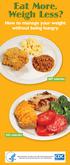 Eat More, Weigh Less? How to manage your weight without being hungry 607 calories 293 calories Department of Health and Human Services Centers for Disease Control and Prevention Can you weigh less without
Fertile Food Can you eat your way to pregnancy? Tracy Cherry, RD, CDN University of Rochester Women s Lifestyle Center
 Fertile Food Can you eat your way to pregnancy? Tracy Cherry, RD, CDN University of Rochester Women s Lifestyle Center Fertility Food Folklore Almonds a fertility symbol throughout the ages. The aroma
20th ANNUAL. About Nutrition INSIGHTS INTO NUTRITION, HEALTH AND SOYFOODS UNITED SOYBEAN BOARD
 20th ANNUAL About Nutrition INSIGHTS INTO NUTRITION, HEALTH AND SOYFOODS UNITED SOYBEAN BOARD 20th Annual Survey Consumer Attitudes about Nutrition 2013 Healthcare professionals can utilize this study
Take Control of Your Health and Reduce Your Cancer Risk
 Take Control of Your Health and Reduce Your Cancer Risk Creation of this material was made possible in part by a pioneering grant from CBCC-USA. Distributed by India Cancer Initiative Take Control of
Are You Afraid of Fat?
 Omega Fatty Acids Are You Afraid of Fat? Many people are! Have you ever purchased the low or no fat version of a food? Did you know that fat is simply replaced by sugar in these products? Examples: Low
Section C. Diet, Food Production, and Public Health
 This work is licensed under a Creative Commons Attribution-NonCommercial-ShareAlike License. Your use of this material constitutes acceptance of that license and the conditions of use of materials on this
Nutrient Reference Values for Australia and New Zealand
 Nutrient Reference Values for Australia and New Zealand Questions and Answers 1. What are Nutrient Reference Values? The Nutrient Reference Values outline the levels of intake of essential nutrients considered,
The Mediterranean Diet (Monterey Style)
 The Mediterranean Diet (Monterey Style) The use of the typical American Heart Association-recommended low-fat, highcarbohydrate diet did not adequately meet the needs of our lipid clinic. Problems and
Save Time and Money at the Grocery Store
 Save Time and Money at the Grocery Store Plan a Grocery List Making a list helps you recall items you need and also saves you time. Organize your list according to the layout of the grocery store. For
FIBER IN YOUR DIET WHAT IS FIBER?
 FIBER IN YOUR DIET WHAT IS FIBER? Fiber is the portion of plant foods that our bodies cannot absorb or digest. Fiber is found primarily in fruits, vegetables, legumes, and whole grains. There is no fiber
Foods with a high fat quality are essential for healthy diets. Dr. H. Zevenbergen Unilever Research&Development
 Foods with a high fat quality are essential for healthy diets Dr. H. Zevenbergen Unilever Research&Development Agenda Main dietary sources of fat Basic technology and production of oils, margarines and
Who Are We? Correcting Insulin Resistance: Naturopathic Health Care. Our Mission. What is Insulin? Normal Effects of Insulin. Naturopathic Doctors
 Who Are We? Correcting Insulin Resistance: Preventing and Treating Chronic Disease Naturopathic Doctors 4-year doctorate program Licensed in 16 states Holistic Natural Health Care Stimulate and support
Town of Needham Trans Fat Ban
 Town of Needham Trans Fat Ban Presented by: Jen Tuttelman, MS, RD, LDN Tara Gurge, R.S., C.E.H.T., M.S. The Needham Health Department June 5, 2009 9:00-10:00 am Agenda Welcome and Introductions Trans Fat
Proposed FDA Rule To Ban Partially Hydrogenated (PHO) Oils. Johari Minal [email protected]
 Proposed FDA Rule To Ban Partially Hydrogenated (PHO) Oils Johari Minal [email protected] Outline Chronology of events The harmful effects of trans fats The alternatives Background 1957 Fred Kummerow
Triglycerides: Frequently Asked Questions
 Triglycerides: Frequently Asked Questions Why are triglycerides important? The amount of triglycerides (or blood fats) in blood are one important barometer of metabolic health; high levels are associated
Blood clot in atheroma. help make vitamin D and hormones, like oestrogen and testosterone, in your body.
 CHOLESTEROL This factsheet explains what cholesterol is and why too much cholesterol in your blood is harmful. It also provides information regarding cholesterol testing and tips to help reduce your blood
OMEGA 3 REPORT. Source: www.omega-3-forum.com and www.myfoodforhealth.com
 OMEGA 3 REPORT Source: www.omega-3-forum.com and www.myfoodforhealth.com BACKGROUND INFORMATION AURI has received several requests for technical assistance related to omega 3 and omega 6 fatty acids and
Participant Guide Adopt a healthy lifestyle: prevent or better manage type 2 diabetes
 HealthSelectSM Lose and Win Session 13 of Texas Pre-diabetes & type II diabetes Participant Guide Adopt a healthy lifestyle: prevent or better manage type 2 diabetes Chances are that you know someone that
Complying with the Philadelphia Trans Fat Ban
 Complying with the Philadelphia Trans Fat Ban A Guide for Restaurants, Caterers, Mobile Food-Vending Units and Other Food Service Establishments `` The Philadelphia City Council passed legislation in February
Reading Food Labels. Nutritional values The ingredients of the item The percentage of the Recommended Daily Intake (RDI) of particular nutrients
 Eating well involves choosing a variety of foods that are low in saturated and trans fats, low in salt and high in dietary fibre. Food labels carry useful information to help you make choices about the
Carbohydrate Counting for Patients with Diabetes. Lauren Dorman, MS RD CDE Registered Dietitian & Certified Diabetes Educator
 Carbohydrate Counting for Patients with Diabetes Lauren Dorman, MS RD CDE Registered Dietitian & Certified Diabetes Educator Program Purpose To increase knowledge of carbohydrate counting skills for nurses
1. (U4C1L4:G9) T or F: The human body is composed of 60 to 70 percent water. 2. (U4C1L4:G13) Another name for fiber in a diet is.
 Cadet Name: Date: 1. (U4C1L4:G9) T or F: The human body is composed of 60 to 70 percent water. A) True B) False 2. (U4C1L4:G13) Another name for fiber in a diet is. A) vegetables B) laxative C) fruit D)
Elevated Cholesterol and Homocysteine
 Elevated Cholesterol and Homocysteine The evidence linking inflammation of the blood vessels and heart disease/hardening of the arteries is well documented. There is considerable debate about the role
Dietary Guidance Statements An Industry Perspective
 Dietary Guidance Statements An Industry Perspective Douglas Balentine Director of Nutrition Unilever June 8, 2010 Outline Consumer Understanding Claims on Food Packaging Dietary Guidance Food and Health
Margarines and Heart Disease. Do they protect?
 Margarines and Heart Disease Do they protect? Heart disease Several studies, including our own link margarine consumption with heart disease. Probably related to trans fatty acids elevate LDL cholesterol
simple steps give you for good bowel health
 simple steps give you for good bowel health This booklet contains simple steps you can take to help achieve good bowel health. This is important to everyone, as these small changes will help your digestive
WHAT DOES DYSMETABOLIC SYNDROME MEAN?
 ! WHAT DOES DYSMETABOLIC SYNDROME MEAN? Dysmetabolic syndrome (also referred to as syndrome X, insulin resistance syndrome, and metabolic syndrome ) is a condition in which a group of risk factors for
top 5 fat burning tips by steve dennis
 top 5 fat burning tips by steve dennis top 5 fat burning tips by steve dennis Are you frustrated about trying to lose body fat? Confused about what foods to eat? Do you often wonder why carbs are bad?
CHOLESTEROL 101: WHAT YOU NEED TO KNOW TO KEEP YOUR HEART HEALTHY. By: Camille Quiles, PharmD., RPh.
 CHOLESTEROL 101: WHAT YOU NEED TO KNOW TO KEEP YOUR HEART HEALTHY By: Camille Quiles, PharmD., RPh. WHAT IS CHOLESTEROL? CHOLESTEROL Waxy, fat-like substance found in all cells of the body Your body uses
Diane Giambruno, R.D. Central Minnesota Heart Center
 Diane Giambruno, R.D. Central Minnesota Heart Center Eating well doesn t have to be confusing! Total Cholesterol Recommended to be
Will the cholesterol in my diet raise my blood cholesterol?
 Healthy eating for your heart What does heart healthy eating mean to me? Heart healthy eating is an important part of a healthy lifestyle. Heart healthy eating, along with regular physical activity and
Title: 5 Advantages Of Getting Your Health Care Degree Online
 抰 5 Advantages Of Getting Your Health Care Degree Online 549 Ten years ago, who would have thought you could get an education without attending classes? The Internet has made wonderful things possible,
10 MINUTES TO CHANGE YOUR LIFE Lowering cholesterol
 10 MINUTES TO CHANGE YOUR LIFE Lowering cholesterol High cholesterol isn t something you can feel or notice, but if you have it you re more likely to have a heart attack or stroke. The good news is there
When you have diabetes be careful about what you eat to help you control your blood sugar.
 PART 5 INTRO TO EATING WITH DIABETES When you have diabetes be careful about what you eat to help you control your blood sugar. Foods are in three main groups: Carbohydrates (Carbs) Higher Carbohydrates
phasing out ARTIFICIAL TRANS FAT How to Comply: What Restaurants, Caterers, Mobile Food Vendors, and Others Need to Know
 phasing out ARTIFICIAL TRANS FAT in Cambridge Food Service Establishments How to Comply: What Restaurants, Caterers, Mobile Food Vendors, and Others Need to Know SUMMARY OF REGULATION In 2009, the City
You may continue to use your old manuals by writing in the detailed changes below:
 STANFORD PATIENT EDUCATION RESEARCH CENTER: CHANGES TO THE DSMP LEADER MANUAL (2012 version to the 2015 version) Stanford has corrected the DSMP manuals with the new ADA guidelines. Call- out icons and
Dietetics. Advice on. Healthy Eating for Lowering Cholesterol
 Dietetics Advice on Healthy Eating for Lowering Cholesterol 41 What is blood cholesterol? A waxy, fat-like substance in the blood Made by the liver and also comes from food Important for building and maintenance
School Nutrition Policy Background
 School Nutrition Policy Background Overview: From what s offered in lunch lines to what s stocked in vending machines, schools are in a powerful position to influence children s lifelong dietary habits.
A GUIDE TO HELP PLAN, PURCHASE & PREPARE YOUR OWN HEALTHY FOOD. FOOD SENSE HEALTHY MEALS ON A BUDGET
 A GUIDE TO HELP PLAN, PURCHASE & PREPARE YOUR OWN HEALTHY FOOD. FOOD SENSE HEALTHY MEALS ON A BUDGET You ll be surprised at how affordable, delicious & convenient your own meals can be! the Great Plate:
Types of Cooking Fats and Oils - Smoking Points of Fats and Oils
 Types of Cooking Fats and s - Smoking Points of Fats and s Not all fats are the same. Following are some basics on the various types of fats to help you make sense of what is best for your own body. Saturated
CARBS, FATS, FIBER & FADS FAD DIETS
 CARBS, FATS, FIBER & FADS FAD DIETS Carbohydrates The national recommendation for carbohydrate intake is 40% to 65% of our daily intake. Our requirements change depending on how active we are, our current
Trans fatty acids survey. May 2008 NSW/FA/FI037/0902
 Trans fatty acids survey May 2008 NSW/FA/FI037/0902 Trans fatty acids survey A survey to determine the level of trans fatty acids in a range of Australian processed and takeaway foods May 2008 This report
The Skinny on Trans Fats. Piper Mattson, M.S., R.D. Nutrition Education Specialist Montebello U.S.D.
 The Skinny on Trans Fats Piper Mattson, M.S., R.D. Nutrition Education Specialist Montebello U.S.D. Why are Trans Fats a Problem? 1. Doubles risk of cardio-vascular disease compared to saturated fats Increases
Carbohydrate Counting (Quiz Number: Manatee3032009)
 Page 1 The goal of Carbohydrate Counting is to make clear to you which foods affect your blood glucose and then to spread these foods evenly throughout the day (or to match insulin peaks and durations).
Heart Healthy Living
 Heart Healthy Living Objectives Understand basic functioning of the heart Understand cardiac risk factors Learn how to keep your heart healthy 2 How the Heart Works Muscular organ that pumps blood to your
Presentation Prepared By: Jessica Rivers, BASc., PTS
 Presentation Prepared By: Jessica Rivers, BASc., PTS Presentation Outline Why should we care about our eating habits? Why is nutrition so important as we age? How do we know if we are eating healthy? What
Ready, Set, Start Counting!
 Ready, Set, Start Counting! Carbohydrate Counting a Tool to Help Manage Your Blood Glucose When you have diabetes, keeping your blood glucose in a healthy range will help you feel your best today and in
What impacts blood glucose levels?
 What you eat and how much you eat has an impact on your blood glucose levels. Your blood glucose level reflects how well your diabetes is controlled. There are many aspects to eating for target BG (Blood
Managing your cholesterol
 Managing your cholesterol Understanding and managing your cholesterol is one of the keys to leading a healthy lifestyle. If your cholesterol is high, you re at a greater risk for heart disease and stroke.
Canada s Food Guide Jeopardy
 Canada s Food Guide Jeopardy Drafted: July 2008 Revised: December 2012 Eating Well with Canada s Food Guide Veg & Fruit Grain Products Milk & Alternatives Meat & Alternatives Physical Activity Miscellaneous
Personal Health Assessment
 Personal Health Assessment The purpose of this assessment is to determine your risk of developing the degenerative diseases common among Americans. Although diagnostic testing can sometimes be important,
Cardiovascular Disease Risk Factors
 Cardiovascular Disease Risk Factors Risk factors are traits and life-style habits that increase a person's chances of having coronary artery and vascular disease. Some risk factors cannot be changed or
Lap-Band Instructions Post-op Diet
 Lap-Band Instructions Post-op Diet Now That I ve Had Surgery, What Do I Eat Liquid Diet *(1-2 weeks post-op) The goal during this phase is to protect the small stomach pouch. Only liquids can be tolerated
A Guide to Reducing Dietary Sodium Intake
 Salt and High Blood Pressure A Guide to Reducing Dietary Sodium Intake A Look at the DASH eating plan My Plate Basics Sodium is a mineral element most commonly found in salt (sodium chloride) Sodium occurs