
Trans fatty acids survey. May 2008 NSW/FA/FI037/0902
|
|
|
- Diana Clarke
- 9 years ago
- Views:
Transcription
1 Trans fatty acids survey May 2008 NSW/FA/FI037/0902

2 Trans fatty acids survey A survey to determine the level of trans fatty acids in a range of Australian processed and takeaway foods May 2008 This report should be read in conjunction with the Food Standards Australia New Zealand review report entitled TRANS FATTY ACIDS IN THE NEW ZEALAND AND AUSTRALIAN FOOD SUPPLY

3 Contents Executive summary...3 Introduction...4 Materials and methods...6 Results...7 Conclusions References Appendix Trans fatty acids survey 2 of 16

4 Executive summary There is evidence that trans fatty acids (TFA) increase low-density lipoprotein ( bad ) cholesterol and decrease high-density lipoprotein ( good ) cholesterol. These are known risk factors for chronic heart disease. However there is less evidence of a clear linkage between TFA and the risk of heart disease. Some international agencies recently introduced regulatory risk management strategies to address the issue of TFA in the food supply. In 2006, the US Food and Drug Administration mandated TFA labelling in the nutrition information panel, whilst in 2004, Denmark introduced a limit of not more than 2 g of TFA per 100 g of fats or oil in the product as sold to the final consumer, with some exemptions for animal fats. In Australia and New Zealand, manufacturers are not required to label TFA unless nutrient content claims are made about the cholesterol content or fatty acid profile of the food. The aim of the survey was to determine the proportion of TFA in a representative range of Australian processed and takeaway foods. During 2005, a total of 250 samples from a range of different food categories were tested for TFA. The range of food categories included in the survey consists of: takeaway foods, dairy products, eggs, soy milk, meat products, fish, bakery products, fats and oils; pasta and snack foods. Of the 250 food products tested, one brand of donuts had the highest concentration of TFA at 28.6%. Quiche, takeaway potato chips, sausage rolls and a range of shelf stable cakes also had very high concentrations of TFA at 10.2, 9.9, 9.8 respectively and an average of 9.6%. However the results showed that overall, concentrations of TFA in a range of processed and takeaway foods were relatively low. A majority of products tested (65%) had undetectable level of TFA or TFA concentrations below 2%. In late 2006 and early 2007, eleven products were re-tested and there appeared to be a reduction in the TFA content over time, except for one edible oil spread and donuts sample. Overall, 63% of products from both surveys had undetectable level of TFA or TFA concentrations below the 2% legal limit introduced in Denmark in Omitting those products which are known to contain naturally occurring trans fatty acids or have the potential to include ingredients containing TFA, the level of compliance against the Danish legal limit would increase to approximately 87%. The survey results were provided to Food Standards Australia New Zealand (FSANZ) for their review of TFA in the Australian and New Zealand food supply. FSANZ s assessment, the report for which is available at showed that the contribution of TFA to energy intakes of Australians was comparable to, or lower than, estimates of intakes from other countries and below the recommendation of the World Health Organization of 1%. FSANZ advised that a national non-regulatory approach to reduce levels of TFA in foods would be the most appropriate risk management strategy. In early 2009, FSANZ will commence a review of the outcome of non-regulatory measures to reduce TFA in the food supply and assess the need to consider regulatory action commensurate with the ongoing risk posed by TFA intakes. To support this review, the NSW Food Authority will conduct another survey of TFA levels in food commencing in the latter part of Trans fatty acids survey 3 of 16

5 Introduction Fatty acids can be classified according to the number of double bonds in the molecule s carbon chain. Saturated fatty acids (SFA) have no double bonds, monounsaturated fatty acids (MUFA) have one double bond and polyunsaturated fatty acids (PUFA) have two or more double bonds. Unlike the common cis fatty acid form which has hydrogen atoms attached to the carbons on the same side of the double bond causing the molecule to bend, trans fatty acids (TFA) have hydrogen atoms attached to the carbons on opposite sides of the double bond (Figure 1) (IFST, 2007). Trans fatty acid molecules stay straight at the double bond and thus behave biologically like saturated rather than unsaturated fatty acids. There is evidence that TFA increase low-density lipoprotein ( bad ) cholesterol and decrease high-density lipoprotein ( good ) cholesterol. Increases in bad cholesterol and decreases in good cholesterol are strongly associated with an increased risk for coronary heart disease (EFSA, 2004; Stender & Dyerberg, 2003; US FDA, 2005). Figure 1: Structure of a cis and trans fatty acid molecule Trans fatty acids originate from several sources. Trans fatty acids are formed naturally by bacteria in the first stomach of ruminant animals such as cows and sheep and are present in the milk and meat of these animals (Sommerfeld, 1983). The latest reports stated that moderate intake of naturally-occuring trans fatty acids have neutral effects on plasma lipids and are perfectly safe as part of a healthy diet (Motard-Belanger et al, 2008 & Chardigny et al, 2008). Trans fatty acids are also formed when vegetable oils high in polyunsaturated fatty acids are converted into solid fats; a process known as partial hydrogenation. TFA which are derived from foods containing hydrogenated or hardened fats can be found in cakes and biscuits and other processed foods, and in takeaway meals. Trans fatty acids can also be formed during heating and frying of oils at extreme temperatures (EFSA, 2004; IFST, 2007; Stender & Dyerberg, 2003). Reductions in TFA can be achieved by modifying the conditions during the hydrogenation process or by using interesterification. There is clear evidence that in the United Kingdom and elsewhere in Europe, industry has responded positively to various recommendations to reduce levels of TFA. Reductions have been effected in major brands of margarine in the United Kingdom. For example, some soft margarines had 8-12% TFA in 1994 and now have less than 1% (IFST, 2007). Levels of TFA in Australian-branded margarines are also reportedly low, although some may still contain 5-8% TFA. The Australian Consumers Association has conducted a limited survey to estimate the amount of TFA in our foods, however it is unknown whether Australia has had a similar reduction in TFA to that in Europe (Choice, 2005). In January 2004, the Danish food authorities adopted legislation which introduced a limit of not more than 2 g of TFA per 100 g of fats or oil in the food product as sold to the final consumer, with some exemptions for animal fats (Danish Ministry of Food Agriculture and Fisheries, Trans fatty acids survey 4 of 16

6 2008). No other country has regulated such a limit. In July 2003, the US Food and Drug Administration issued a regulation requiring manufacturers to list TFA on the nutrition label of foods and some dietary supplements. This regulation took effect on 1 January 2006 (US FDA, 2003). In Australia, under the current Australia New Zealand Food Standards Code, manufacturers are not required to label TFA unless a nutrient content claim is made on the packaging about cholesterol, SFA, MUFA, PUFA, TFA, or omega-3, omega-6 or omega-9 fatty acids. Voluntary labelling of TFA is permitted and many margarine and edible oil spread manufacturers in Australia and New Zealand do voluntarily label their products. The aim of the survey on TFA was to determine the proportion of TFA in a representative range of Australian processed and takeaway foods. The survey results were provided to FSANZ for their review of TFA in the Australian and New Zealand food supply. The purpose of the FSANZ review was to estimate dietary intakes of TFA for the Australian and New Zealand populations, and to advise on appropriate risk management strategies to address the issue of TFA in the food supply. FSANZ s assessment, the report for which is available at showed that the contribution of TFA to energy intakes of Australians was comparable to, or lower than, estimates of intakes from other countries and below the recommendation of the World Health Organization of 1%. FSANZ advised that a national non-regulatory approach to reduce levels of TFA in foods would be the most appropriate risk management strategy. Trans fatty acids survey 5 of 16

7 Materials and methods In May to October 2005, a total of 250 samples from different food categories were tested for TFA. Samples were collected from a range of supermarkets and takeaway shops. Products from a range of different food categories were included in the survey: Dairy products eg milk, cream, yoghurt, cheese and ice cream Meat and meat products eg beef, lamb, chicken, bacon, meat pies, sausage rolls, fish and eggs Soy milk Bakery products eg bread, croissants, donuts, pastry, quiche, custard Danish, sweet and savoury biscuits and chocolate cake Takeaway foods eg hamburgers, potato chips, pizza and fried fish Fats and oils Confectionery Pasta Snack foods eg muesli bars, potato crisps, corn chips and chocolate Five different products from each of the food categories were tested. The exception to this was takeaway foods and the oil used to deep-fry takeaway potato chips. Five samples of each of the takeaway foods and oils were tested and their results are reported as an average of the five samples. In November 2006 to March 2007, additional analyses of 114 samples from twelve different categories were undertaken. Eleven foods previously known to contain a high level of TFA were tested again to determine whether there had been any change in the TFA levels over time. Products tested include: Takeaway foods eg potato chips and chicken nuggets Processed foods eg frozen chips, frozen chicken nuggets and frozen fish products (cooked before testing) Snack foods eg rice crackers, potato crisps Bakery products eg donuts, biscuit and shelf-stable cakes (excluding those with milk or butter as part of the ingredients) Fats and oils eg margarine and salad dressings Tests were conducted by the General Chemistry Laboratory at the Division of Analytical Laboratories (DAL) in Lidcombe. The trans fatty acids were quantified using a DAL in-house method, based on AOCS method Ce 1f-96. Natural fats, whether from animal or vegetable sources, are triglycerides. Triglycerides are saponified by methanolic potassium hydroxide to liberate fatty acids which then are esterified in the presence of boron trifluoride to produce fatty acids methyl esters. Methyl esters of fatty acids that have 4 24 carbon atoms are separated, identified (using reference standard) and determined by gas chromatography (pers. Comm., DAL). The total percentage of trans fatty acids are the sum of C18:1t; C18:2t; C18:3t fatty acids of the total fatty acids in the sample. The detection limit of this method is 0.1%. Trans fatty acids survey 6 of 16

8 Results 2005 Products with no detectable levels of TFA (Limit of Detection is 0.1%) Of the foods tested, 39 (19.3%) did not contain any detectable levels of TFA (Table 1A). These products included: Milk Yoghurt Beef Fish Soy milk Takeaway, burger Pasta Bread Donuts Muesli bars Products with less than 2% TFA 133 (46%) of foods had TFA concentrations below the 2% legal limit that was introduced in Denmark in 2004 (Table 2A). Products from the following food categories had TFA concentrations less than 2%: Ice-cream * Beef* Sausages* Lamb* Chicken Bacon Fish Meat pies* Quiche* Eggs Takeaway burger and fish fillet Sweet and savoury biscuits Croissants Donuts Pastry Potato crisps Corn chips Chocolate Fats and oils Products with greater than 2% TFA TFA levels above 2% were found in 70 (34.7%) food products (Table 3A). However, 46% of these products were derived from ruminant fats (eg cheese, cream). Such products would be excluded from the 2% limit imposed in Denmark. A number of other products such as sausage rolls and quiche also include naturally occuring TFA from animal fats, as well as TFA from hydrogenated fats. The analyses in this survey did not differentiate between naturally occuring TFA, and TFA derived from hydrogenated fats. Products from the following food categories had TFA concentrations greater than 2%: Milk* Cream* Yoghurt* Cheese* Ice-cream* Beef* Lamb* Fish Meat pies* Sausage rolls* Quiche* Takeaway potato chips Pasta Sweet biscuits Croissants Donuts Pastry Custard Danish Potato crisps Fats and oils * Product likely to contain natural trans fatty acids Trans fatty acids survey 7 of 16

9 One donut sample had the highest concentration of TFA at 23.5%. Other products that had very high concentrations of TFA included quiche at 10.2%, takeaway potato chips at 9.9%, and sausage rolls at 9.8%. 2006/07 Products with no detectable levels of TFA (Limit of Detection is 0.1%) Of the foods tested, 14 (16.2%) did not contain any detectable levels of TFA (Table 1B). These products were from the following food categories: Rice snacks Potato crisps Margarine Potato chips Donuts batter Products with less than 2% TFA 36 (41.9%) products had TFA concentrations below the 2% (Table 2B). These products included: Rice snacks Potato crisps Crackers Salad dressings Margarine Potato chips Chicken nuggets Donuts Products with greater than 2% TFA TFA levels above 2% were found in 36 (41.9%) food products (Table 3B). None of these products contain ruminant fats and it would be expected that the TFA originated from hydrogenated fats. Products from the following food categories had TFA concentrations greater than 2%: Potato crisps Biscuits Margarine Shelf stable cakes Potato chips Chicken nuggets Donuts Processed fish Again, a donut sample had the highest concentration of TFA at an average of 28.6 ± 5.4%. Other products that had very high concentrations of TFA included another donut sample (average of 8.9%) and samples of shelf stable cakes with an average of 9.6% (range from 2.9 to 23.5%). The number of products containing TFA at the level of greater than 2% were higher in 2006/07 than in 2005 as the latter survey was targetted to test foods that were previously found to contain higher level of fats. Risk management strategies to reduce levels of TFA in foods FSANZ s report on TFA in the New Zealand and Australian food supply advised that at this time, a national non-regulatory approach to reduce levels of TFA in foods would be the most appropriate risk management strategy. This has resulted in the establishment of the Australia New Zealand Collaboration on Trans Fats and the Quick Service Restaurant Roundtable. A follow-up national survey is proposed to be conducted in 2008/09 to assess the effectiveness of the non-regulatory initiatives that have been implemented. If sufficient progress is not made to reduce levels of TFA in foods, regulatory action will be considered. Trans fatty acids survey 8 of 16

10 Change in fatty acid profile in selected food products from 2005 to 2006/07 Eleven foods previously known to contain a high level of TFA from the 2005 survey were selected for testing again in 2006/07 (Table 4A). There was a reduction in the concentration of TFA in potato crisps from 2005 to 2006/07 (range from 45.5% to 78% reduction). No apparent trends in changes to the concentration of SFA, MUFA or PUFA were observed. A complete assessment of the change in fatty acid profile over time was not possible as some data were not available for two of the four potato crisp varieties that were tested in 2006/07. There was a reduction in the total fat content and TFA concentration of takeaway potato chips from 2005 to 2006/07. However, a slight increase is noticed in the SFA and MUFA content, 2.9% and 4.3% respectively. The non-chocolate cream biscuit also showed a significant reduction in its TFA content. Four of the edible oil spreads were also re-tested and a reduction of TFA in three of the products was observed (range from 30 to 100% reduction) with only a slight increase in the SFA content. One oil spread did show a 57% increase in TFA and 11.3% increase in SFA despite a reduction in total fat content (reduced by 12%). It is important to remember that the fatty acid content is calculated per 100g of total fat in foods, which means that reduction in total fat might in fact increase the percentage of the fatty acids. One donut product was re-tested and showed no change in total fat content, although an increase in the concentration of TFA was noticed as well as a decrease in the SFA, MUFA and PUFA content. Trans fatty acids survey 9 of 16

11 Conclusions The results of the survey showed that TFA concentrations in Australian processed and takeaway foods were generally low. Overall, approximately 63% of products from both surveys had undetectable level of TFA or TFA concentrations below the 2% legal limit introduced in Denmark in Omitting those products which are known to contain naturally occurring trans fatty acids, just over 82% of products would be below the Danish legal limit. If a further assessment on the products based on potential use of ingredients containing TFA, the level of compliance against the Danish legal limit would further increase to approximately 87%. One brand of donuts had the highest concentration of TFA at 28.6%. Quiche, takeaway potato chips, sausage rolls and a range of shelf stable cakes also had very high concentrations of TFA at 10.2, 9.9, 9.8 respectively and an average of 9.6%. Of the products with TFA concentrations greater than 2%, 46% were products derived from ruminant fats and naturally contain TFA. Eleven products that were tested in both parts of the surveys show a reduction in the TFA content over time, except for one of the edible oil spreads and a donut sample. The survey results were provided to FSANZ for their review of TFA in the New Zealand and Australian food supply. FSANZ s assessment, the report for which is available at showed that the contribution of TFA to energy intakes of Australians was comparable to, or lower than, estimates of intakes from other countries and below the recommendation of the World Health Organization of 1%. In early 2009, FSANZ will commence a review of the outcome of non-regulatory measures to reduce TFA in the food supply and assess the need to consider regulatory action commensurate with the ongoing risk posed by TFA intakes. To support this review, the NSW Food Authority will conduct another survey of TFA levels in food commencing in the latter part of Trans fatty acids survey 10 of 16

12 References Chardigny, J.M., Destaillats, F. et al. (2008). Do trans fatty acids from industrially produced sources and from natural sources have the same effect on cardiovascular disease rick factors in healthy subjects? Results of the Trans Fatty Acids Collaboration (TRANSFACT) study. American Journal of Clinical Nutrition, 87, European Food Safety Authority. (2004). Trans fatty acids: EFSA panel reviews dietary intakes and health effects. Retrieved November 25, 2005 from Food Standards Australia New Zealand (2007). Review report: Trans fatty acid in the New Zealand and Australian food supply. Retrieved March 10, tty%20acid%22 Hidden danger. (2005). Choice, fat Institute of Food Science and Technology Trust Fund. (2007). Trans Fatty Acids (TFA). Retrieved March 10, Lake, R., Saunders, D., & Jones, S. (2006). Level of trans fatty acids in the New Zealand food supply. Christchurch: ESR Ministry of Food Agriculture and Fisheries Denmark (2008). Transfatty acid content in foods. Retrieved March , Motard-Belanger, A., Charest, A., Grenier, G. et al. (2008) Study of the effect of trans fatty acids from ruminants on blood lipids and other risk factors for cardiovascular disease. American Journal of Clinical Nutrition 87, Sommerfeld, M. (1983). Trans unsaturated fatty acids in natural products and processed foods. Progress in Lipid Research, 22, Stender, S. & Dyerberg, J. (2003). The influence of trans fatty acids on health (4 th ed.) The Danish Nutrition Council. US Food and Drug Administration. (2003). 21 CFR Part 101 Food Labeling; Trans Fatty Acids in Nutrition Labeling; Consumer Research to Consider Nutrient Content and Health Claims and Possible Footnote or Disclosure Statements; Final Rule and Proposed Rule. Retrieved March 10, US Food and Drug Administration. (2005). Revealing trans fat. Retrieved March 10, Trans fatty acids survey 11 of 16

13 Appendix For Tables 1A-4A the percentage of TFA in the product is calculated from determining the g of trans fats / 100 g of total fats or oil in the product. Table 1A: Food products with no detectable level of TFA (LOD 0.1%) in 2005 Beef steak - trimmed external fat Canned tuna in brine Pasta Beef steak - trimmed external fat Donuts Soy milk (full fat) Bread, white (w/ omega) Milk full fat Soy milk (full fat) Bread, white (w/ omega) Milk full fat Soy milk (full fat) Bread, white (w/ omega) Milk, flavoured Soy milk (full fat) Bread, white (w/ omega) Muesli bars Soy milk (full fat) Bread, white (w/ omega) Muesli bars Take-away chicken burger 1 Canned pink salmon in brine Muesli bars White fish fillets Canned pink salmon in brine Muesli bars White fish fillets Canned tuna in brine Muesli bars White fish fillets Canned tuna in brine Pasta White fish fillets Canned tuna in brine Pasta Yoghurt fruit (full fat) Canned tuna in brine Pasta Yoghurt fruit (full fat) 1 Mean value of five analyses Table 1B: Food products with no detectable levels of TFA (LOD 0.1%) in 2006/07 Donut batter Potato crisps Rice cracker Margarine Potato crisps Rice cracker Frozen potato chips Potato crisps Rice cracker Frozen potato chips Rice cracker Rice cracker Frozen potato chips Rice cracker Trans fatty acids survey 12 of 16

14 Table 2A: Food products with less than 2% trans fatty acids in 2005 Product name %TFA per total fat Product name %TFA per total fat Olive oil 0.21 Bacon (rind removed) 0.98 Olive oil 0.22 Chicken thighs 1.01 Olive oil 0.22 Bacon (rind removed) 1.04 Olive oil 0.22 Bacon (rind removed) 1.06 Olive oil 0.22 Shortbread biscuits 1.06 Chocolate 0.27 Chocolate cake 1.10 Margarine, regular non olive oil based 0.28 Potato crisps, plain 1.12 Margarine, regular non olive oil based 0.29 Eggs 1.15 Chocolate 0.30 Ice-cream 1.15 Chocolate 0.32 Chocolate cake 1.16 Chocolate biscuits 0.33 Chicken thighs 1.18 Chocolate 0.34 Eggs 1.18 Chocolate 0.34 Bacon (rind removed) 1.19 Chocolate biscuits 0.36 Cream biscuit (non-chocolate) 1.20 Chocolate biscuits 0.36 Corn chips 1.21 Savoury biscuits 0.37 Chocolate cake 1.24 Biscuits 0.37 Chicken thighs 1.27 Corn chips 0.40 Lamb chops (tail removed) 1.27 Savoury biscuits 0.40 Eggs 1.30 Cream biscuit (non-chocolate) 0.41 Chicken thighs 1.32 Shortcrust pastry 0.41 Shortbread biscuits 1.34 Cream biscuit (non-chocolate) 0.41 Beef mince 1.39 Margarine, regular non olive oil based 0.43 Beef mince 1.40 Beef sausages 0.45 Beef mince 1.47 Chocolate biscuits 0.46 Chicken thighs 1.47 Chocolate cake 0.48 Canned pink salmon in brine 1.52 Take-away beef burger Cream biscuit (non-chocolate) 1.52 Donuts 0.62 Beef sausages 1.54 Canola oil 0.65 Meat pies 1.55 Canola oil 0.65 Croissant 1.63 Canola oil 0.65 Beef mince 1.64 Canola oil 0.65 Ice-cream 1.64 Corn chips 0.70 Quiche 1.65 Corn chips 0.70 Savoury biscuits 1.67 Canola oil 0.76 Chocolate cake 1.68 Shortbread biscuits 0.78 Beef sausages 1.69 Savoury biscuits 0.82 Shortcrust pastry 1.77 Take-away beef burger Croissant 1.79 Take-away frying oil Take-away beef burger Take-away frying oil Take-away fried fish Corn chips 0.86 Custard Danish 1.87 Bacon (rind removed) 0.87 Ice-cream 1.92 Savoury biscuits 0.90 Beef sausages 1.93 Donuts 0.92 Take-away beef burger Shortbread biscuits 0.96 Beef sausages 1.96 Eggs 0.97 Quiche 1.98 Shortbread biscuits Mean value of five analyses Trans fatty acids survey 13 of 16

15 Table 2B: Food products with less than 2% trans fatty acids in 2006/07 Product name %TFA per total fat Product name %TFA per total fat Margarine 0.14 Chicken nuggets 0.90 Salad dressing 0.14 Chicken nuggets 0.98 Margarine 0.28 Potato crisps 0.98 Salad dressing 0.29 Potato crisps 1.14 Chicken flavoured snacks 0.32 Frozen potato chips 1.15 Snack 0.35 Potato crisps 1.17 Cheese flavoured snacks 0.38 Potato crisps 1.31 Crackers 0.40 Frozen potato chips 1.33 Crackers 0.43 Chicken nuggets 1.38 Shelf stable cakes 0.46 Potato crisps 1.47 Chicken nuggets 0.51 Rice products 1.49 Chicken nuggets 0.54 Rice crackers 1.49 Chicken nuggets 0.55 Frozen potato chips 1.75 Potato crisps 0.58 Take-away potato chips Margarine 0.82 Potato crisps 1.76 Salad dressing 0.85 Take-away chicken nuggets Chicken nuggets 0.87 Frozen potato chips 1.89 Potato crisps 0.87 Frozen potato chips 1.99 Table 3A: Food products with trans fatty acids greater than 2% in 2005 Product name %TFA per total fat Product name %TFA per total fat Cream (full fat) 2.02 Canned pink salmon in brine 2.33 Ice-cream 2.03 Cheese 2.33 Custard Danish 2.05 Eggs 2.38 Ice-cream 2.05 Lamb chops (tail removed) 2.38 Custard Danish 2.07 Beef steak - trimmed external fat 2.44 Canned pink salmon in brine 2.08 Cream (full fat) 2.45 Milk full fat 2.08 Take-away potato chips Croissant 2.09 Milk full fat 2.50 Beef mince 2.13 Milk full fat 2.50 Cheese 2.13 Yoghurt fruit (full fat) 2.50 Croissant 2.13 Beef steak - trimmed external fat 2.56 Lamb chops (tail removed) 2.13 Milk, flavoured 2.56 Cheese 2.14 Take-away pizza Custard Danish 2.21 Lamb chops (tail removed) 2.61 Cream (full fat) 2.22 Cream (full fat) 2.63 Cheese 2.22 Custard Danish 2.67 Cream (full fat) 2.23 Potato crisps, plain 2.70 Cheese 2.27 White fish fillets 2.70 Beef steak - trimmed external fat 2.27 Meat pies 2.84 Milk, flavoured 2.86 Potato crisps, plain 4.32 Milk, flavoured 2.86 Pasta 4.35 Yoghurt fruit (full fat) 2.86 Sausage rolls 4.44 Croissant 3.03 Lamb chops (tail removed) Mean value of five analyses Trans fatty acids survey 14 of 16

16 %TFA per total fat %TFA per total fat Product name Product name Margarine, regular non olive oil based 3.17 Shortcrust pastry 5.29 Quiche 3.24 Potato crisps, plain 5.90 Meat pies 3.36 Shortcrust pastry 6.36 Meat pies 3.40 Take-away frying oil Milk, flavoured 3.45 Cream biscuit (non-chocolate) 7.07 Margarine, regular non olive oil based 3.72 Take-away potato chips Yoghurt fruit (full fat) 3.85 Sausage rolls 7.75 Quiche 4.02 Sausage rolls 7.87 Meat pies 4.03 Donuts 8.43 Potato crisps, plain 4.13 Sausage rolls 9.80 Shortcrust pastry 4.21 Quiche Sausage rolls 4.29 Donuts Table 3B: Food products with trans fatty acids greater than 2% in 2006/07 Product name %TFA per total fat Product name %TFA per total fat Potato crisps 2.03 Donuts 4.08 Take-away potato chips Frozen fish 4.35 Frozen potato chips 2.22 Potato crisps 4.38 Frozen potato chips 2.35 Potato crisps 4.40 Frozen fish 2.42 Frozen fish 4.88 Frozen fish 2.86 Biscuits 5.08 Frozen potato chips 2.86 Margarine 5.82 Shelf stable cakes 2.90 Frozen potato chips 7.03 Take-away chicken nuggets Donuts 8.91 Frozen fish 3.45 Frozen fish Shelf stable cakes 3.45 Shelf stable cakes Frozen fish 3.53 Shelf stable cakes Shelf stable cakes 3.56 Shelf stable cakes Frozen fish 3.60 Shelf stable cakes Frozen fish 3.77 Potato crisps Frozen fish 3.85 Donut batter Frozen fish 4.00 Shelf stable cakes Shelf stable cakes 4.02 Donuts Mean value of five analyses Trans fatty acids survey 15 of 16

17 Table 4A: Total fat and fatty acid content (% variation) in potato crisps, takeaway potato chips and donuts from 2005 to 2006/07 Product Total fat 1 TFA 2 SFA 2 MUFA 2 PUFA 2 Potato crisps, product a Potato crisps, product b Potato crisps, product c Potato crisps, product d Takeaway potato chips, product a Edible oil spread, product a Edible oil spread, product b Edible oil spread, product c Edible oil spread, product d Biscuit, cream, non chocolate, product a Donuts, product g per 100 g of food 2 g per 100 g of total fat Trans fatty acids survey 16 of 16

18 NSW Food Authority 6 Avenue of the Americas Newington NSW 2127 PO Box 6682 Silverwater NSW 1811 Phone Fax

Healthy Eating for Diabetes
 Healthy Eating for Diabetes What is diabetes and why is it important to manage it? Diabetes occurs when there is too much glucose in the blood. Learning how to manage your diabetes will help you feel better
Trans Fats Lessons Learned
 Trans Fats Lessons Learned Karen Omichinski, B.H.Ec.,., RD, CDE North Eastman Health Association CDEN Workshop February 9, 2007 Trans Fats: Outline Chemistry History Health Risks of Industrial Trans Fats
Trans Fat Intake by the U.S. Population
 Trans Fat Intake by the U.S. Population Diana Doell, Ph.D. Office of Food Additive Safety Center for Food Safety and Applied Nutrition Food and Drug Administration GMA Science Forum Washington D.C. April
MINTO PREVENTION & REHABILITATION CENTRE CENTRE DE PREVENTION ET DE READAPTATION MINTO. Counting Fat Grams. About This Kit
 MINTO PREVENTION & REHABILITATION CENTRE CENTRE DE PREVENTION ET DE READAPTATION MINTO Counting Fat Grams About This Kit In previous kits you have learned Foods to Choose and Foods to Decrease/Avoid for
CORPORATE HEALTH LOWERING YOUR CHOLESTEROL & BLOOD PRESSURE
 CORPORATE HEALTH LOWERING YOUR CHOLESTEROL & BLOOD PRESSURE What is Cholesterol? What s wrong with having high cholesterol? Major risk factor for cardiovascular disease Higher the cholesterol higher the
Heart Healthy Diet: Tips for Lowering Cholesterol and Fat in Your Diet
 Heart Healthy Diet: Tips for Lowering Cholesterol and Fat in Your Diet Cholesterol Saturated Fats Polyunsaturated and Mono-unsaturated Fats This fat-like substance is needed for good health. However, high
Let s Talk Oils and Fats!
 Lesson Overview Lesson Participants: School Nutrition Assistants/Technicians, School Nutrition Managers, Child and Adult Care Food Program Staff, Teachers Type of Lesson: Short, face-to-face training session
The Skinny on Trans Fats. Piper Mattson, M.S., R.D. Nutrition Education Specialist Montebello U.S.D.
 The Skinny on Trans Fats Piper Mattson, M.S., R.D. Nutrition Education Specialist Montebello U.S.D. Why are Trans Fats a Problem? 1. Doubles risk of cardio-vascular disease compared to saturated fats Increases
Complying with the Philadelphia Trans Fat Ban
 Complying with the Philadelphia Trans Fat Ban A Guide for Restaurants, Caterers, Mobile Food-Vending Units and Other Food Service Establishments `` The Philadelphia City Council passed legislation in February
Recommended Daily Fat Intake
 Recommended Daily Fat Intake Total calories per day Saturated fat in grams Total fat in grams 1,600 18 or less 53 2,000 1 20 or less 65 2,200 24 or less 73 2,500 1 25 or less 80 2,800 31 or less 93 Read
It is important to know that some types of fats, like saturated and trans fat, can raise blood cholesterol levels.
 Healthy Eating You are what you eat! So before you even shop for food, it is important to become a well informed, smart food consumer and have a basic understanding of what a heart healthy diet looks like.
Will the cholesterol in my diet raise my blood cholesterol?
 Healthy eating for your heart What does heart healthy eating mean to me? Heart healthy eating is an important part of a healthy lifestyle. Heart healthy eating, along with regular physical activity and
phasing out ARTIFICIAL TRANS FAT How to Comply: What Restaurants, Caterers, Mobile Food Vendors, and Others Need to Know
 phasing out ARTIFICIAL TRANS FAT in Cambridge Food Service Establishments How to Comply: What Restaurants, Caterers, Mobile Food Vendors, and Others Need to Know SUMMARY OF REGULATION In 2009, the City
1. Deciding on the Food Budget and Which Foods to Spend Most Money on.
 Ideas Meal and planning tips for to fit eating your budget together Here is a plan to help you make the most of your food budget to promote health and well being for you and your family. Try working through
NICE PDG: The prevention of cardiovascular disease at a population level
 NICE PDG: The prevention of cardiovascular disease at a population level Expert testimony on the public health harm caused by industrially produced Trans Fatty Acids and actions to reduce and eliminate
High Cholesterol and Heart Failure
 High Cholesterol and Heart Failure What Is Cholesterol? Cholesterol is a waxy substance that comes from your liver and from the food you eat. Your body needs it to function properly. There are two main
Foods with a high fat quality are essential for healthy diets. Dr. H. Zevenbergen Unilever Research&Development
 Foods with a high fat quality are essential for healthy diets Dr. H. Zevenbergen Unilever Research&Development Agenda Main dietary sources of fat Basic technology and production of oils, margarines and
Nutrition Information from My Plate Guidelines
 Nutrition Information from My Plate Guidelines Note: This information was compiled from the website: http://www.choosemyplate.gov/ for participants in the 4-H Food Prep Contest 1/12/16. The information
Nutritional Guidelines for Roux-en-Y, Sleeve Gastrectomy and Duodenal Switch. Gastric Restrictive Procedures. Phase III Regular Consistency
 Nutritional Guidelines for Roux-en-Y, Sleeve Gastrectomy and Duodenal Switch Gastric Restrictive Procedures Phase III Regular Consistency The University of Chicago Hospitals Center for the Surgical Treatment
A healthy cholesterol. for a happy heart
 A healthy cholesterol for a happy heart cholesterol A healthy cholesterol for a happy heart You probably already know that cholesterol has something to do with heart disease. But like many people, you
Heart healthy diet: 8 steps to prevent heart disease
 Heart healthy diet: 8 steps to prevent heart disease Changing your eating habits can be tough. Start with these eight strategies to kick start your way toward a heart healthy diet. By Mayo Clinic Staff
Ice Cream, Cheese, Butter, and Whole Milk: Health Foods? Hallie Lundquist 2B Mrs. Maas 1/4/16
 Ice Cream, Cheese, Butter, and Whole Milk: Health Foods? Hallie Lundquist 2B Mrs. Maas 1/4/16 Abstract Not all fats are bad; in fact, we are now finding out that fatty acids which are unique to milk fat
Resolution on Trans-Fatty Acids
 DOC NO. FOOD-25-05 DATE ISSUED: MARCH, 2005 Resolution on Trans-Fatty Acids I. TACD Recommendations There is now strong evidence that consumption of trans fatty acids increases the risk of cardiovascular
Eat Well, Live Well Lesson 9: The Lowdown on Cholesterol
 Getting Started 1. Review lesson plan before each session 2. Copy handouts. 3. Gather supplies Eat Well, Live Well Lesson 9: The Lowdown on Cholesterol Supplies Needed 1. Handouts 2. Supplies for activity:
Health Maintenance: Controlling Cholesterol
 Sacramento Heart & Vascular Medical Associates February 18, 2012 500 University Ave. Sacramento, CA 95825 Page 1 What is cholesterol? Cholesterol is a fatty substance. It has both good and bad effects
Using the Nutrition Facts Label
 Using the Nutrition Facts Label A How-To Guide for Older Adults Inside Why Nutrition Matters For You...1 At-A-Glance: The Nutrition Facts Label...2 3 Key Areas of Importance...4 Your Guide To a Healthy
Nuts, Oils, Dressings, and Spreads
 Nuts, Oils, Session 1 Background Information Tips Goals Background Information Nuts, Oils, Eating Fats There are three types of fat we ll focus on in this program: Healthy fats (polyunsaturated fats),
Useful Websites for more information. www.eatwell.gov.uk. www.lovefoodhatewaste.com. www.nutrition.org.uk. www.bda.uk.com
 Useful Websites for more information www.eatwell.gov.uk www.lovefoodhatewaste.com www.nutrition.org.uk www.bda.uk.com Community Development Dietitians 2010 This Leaflet has been awarded: Commendation from
Trans Fat Assessment Tool For Cambridge Food Service Establishments
 Trans Fat Assessment Tool For Cambridge Food Service Establishments Artificial trans fat increases the risk of heart disease, because it raises bad cholesterol and lowers good cholesterol. The City of
I The THREE types of LIPIDS
 LECTURE OUTLINE Chapter 5 The Lipids: Fats, Oils, Phospholipids and Sterols I The THREE types of LIPIDS A. Triglycerides (fats & oils)- the MAJOR type of lipid in food and humans. 1. 2 parts of triglyceridesa)
Low Fat Diet after Cardiac Surgery With or Without Chyle Leak
 Low Fat Diet after Cardiac Surgery With or Without Chyle Leak What is chyle? Chyle (sounds like kyle) is a milky white fluid that contains protein, fat, cholesterol, lymphocytes, and electrolytes. It is
Dietetics. Advice on. Healthy Eating for Lowering Cholesterol
 Dietetics Advice on Healthy Eating for Lowering Cholesterol 41 What is blood cholesterol? A waxy, fat-like substance in the blood Made by the liver and also comes from food Important for building and maintenance
Phase Out Artificial Trans Fat In New York City Food Service Establishments
 The Regulation to Phase Out Artificial Trans Fat In New York City Food Service Establishments (Section 81.08 of the New York City Health Code) How to Comply: What Restaurants, Caterers, Mobile Food-Vending
Managing your cholesterol
 Managing your cholesterol Understanding and managing your cholesterol is one of the keys to leading a healthy lifestyle. If your cholesterol is high, you re at a greater risk for heart disease and stroke.
DIABETES & HEALTHY EATING
 DIABETES & HEALTHY EATING Food gives you the energy you need for healthy living. Your body changes most of the food you eat into a sugar called glucose. (glucose) Insulin helps your cells get the sugar
A HEALTHY CHOLESTEROL
 www.irishheart.ie A HEALTHY CHOLESTEROL to reduce your risk of heart disease and stroke A healthy cholesterol You probably already know that cholesterol has something to do with heart disease and stroke.
healthy eating for gestational diabetes
 Talking diabetes No.19 healthy eating for gestational diabetes Gestational diabetes occurs in 5 8% of Australian women during pregnancy. It happens because the changing hormone levels in the body have
A Guide to Reducing Dietary Sodium Intake
 Salt and High Blood Pressure A Guide to Reducing Dietary Sodium Intake A Look at the DASH eating plan My Plate Basics Sodium is a mineral element most commonly found in salt (sodium chloride) Sodium occurs
Phase Out Artificial Trans Fat In King County Food Service Establishments
 The Regulation to Phase Out Artificial Trans Fat In King County Food Service Establishments (Chapter 5.10 of the Code of the King County Board of Health) How to Comply: What Restaurants, Delis, Bakeries,
Fat Facts That Can Help Your Heart. Most Common Risk Factors for Heart Disease
 Fat Facts That Can Help Your Heart Sally Barclay, MS RD LD Nutrition Clinic for Employee Wellness Most Common Risk Factors for Heart Disease High LDL (bad) cholesterol Smoking Low HDL (good) cholesterol
Eat More, Weigh Less?
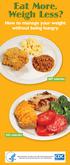 Eat More, Weigh Less? How to manage your weight without being hungry 607 calories 293 calories Department of Health and Human Services Centers for Disease Control and Prevention Can you weigh less without
Save Time and Money at the Grocery Store
 Save Time and Money at the Grocery Store Plan a Grocery List Making a list helps you recall items you need and also saves you time. Organize your list according to the layout of the grocery store. For
Town of Needham Trans Fat Ban
 Town of Needham Trans Fat Ban Presented by: Jen Tuttelman, MS, RD, LDN Tara Gurge, R.S., C.E.H.T., M.S. The Needham Health Department June 5, 2009 9:00-10:00 am Agenda Welcome and Introductions Trans Fat
Mediterranean diet: Choose this hearthealthy
 MayoClinic.com reprints This single copy is for your personal, noncommercial use only. For permission to reprint multiple copies or to order presentation-ready copies for distribution, use the reprints
The Mediterranean Diet (Monterey Style)
 The Mediterranean Diet (Monterey Style) The use of the typical American Heart Association-recommended low-fat, highcarbohydrate diet did not adequately meet the needs of our lipid clinic. Problems and
Your Cholesterol Lowering Guide
 1 Your Cholesterol Lowering Guide Cholesterol plays a vital role in the day-to-day functioning of your body. However, too much cholesterol in the blood can affect your heart health. The good news is that
Sinclair Community College, Division of Allied Health Technologies
 Sinclair Community College, Division of Allied Health Technologies Health Promotion for Community Health Workers Cardiovascular disease, stroke, and cancer Class #5 High Blood Cholesterol (date) Course
Low salt diet. Tips to reduce salt: 1. Choose low salt foods As most sodium (75%) comes from processed foods, when shopping:
 Low salt diet How much salt do I need? Although our body must have some salt (or sodium), we often eat more than we need. Nutritious fresh foods such as cereals, vegetables, fruit, meat and dairy products
Paediatric Diabetes: Carbohydrate counting
 Department of Nutrition and Dietetics Paediatric Diabetes: Carbohydrate counting Everyone with diabetes need to be careful about the foods they eat to ensure that their blood glucose levels stay as close
Margarines and Heart Disease. Do they protect?
 Margarines and Heart Disease Do they protect? Heart disease Several studies, including our own link margarine consumption with heart disease. Probably related to trans fatty acids elevate LDL cholesterol
Nonalcoholic Fatty Liver Disease. Dietary and Lifestyle Guidelines
 Nonalcoholic Fatty Liver Disease Dietary and Lifestyle Guidelines Risk factors for NAFLD Typically, but not always seen in patients who are overweight. May have Diabetes and or insulin resistance high
Understanding the Carbohydrate Portions in Gluten Free Foods 1 Portion/Exchange = 15g
 Understanding the Carbohydrate Portions in luten Free Foods 1 Portion/Exchange = 15g Know your Carbohydrate Foods Dairy Fruit Starchy vegetables Breads, cereals, rice, pasta/noodles, biscuits, flour(s)
Dietary advice for people starting treatment for Hepatitis C. Information for patients Sheffield Dietetics
 Dietary advice for people starting treatment for Hepatitis C Information for patients Sheffield Dietetics Do I need to follow a special diet? You don t need to have a special diet but you should try and
Healthy Eating for people at risk of diabetes or with prediabetes
 Healthy Eating for people at risk of diabetes or with prediabetes WHAT IS PREDIABETES / AT RISK OF DIABETES Some patients have a blood sugar level which is higher than normal but not high enough to be
Healthy Eating and your Diabetes
 Healthy Eating and your Diabetes Patient Information Leaflet Why is Healthy Eating Important? Healthy eating is important to everyone but is even more important if you have diabetes. This is because some
Blood clot in atheroma. help make vitamin D and hormones, like oestrogen and testosterone, in your body.
 CHOLESTEROL This factsheet explains what cholesterol is and why too much cholesterol in your blood is harmful. It also provides information regarding cholesterol testing and tips to help reduce your blood
Your Guide to Diabetes & Food
 Your Guide to Diabetes & Food Now you have diabetes your diet is key in helping you control your blood sugar levels. With Diabetes you have an increased risk of heart disease, which needs to be considered
FATS AND OILS: CHOOSE SENSIBLY
 FATS AND OILS: CHOOSE SENSIBLY The information explosion in the science of nutrition very often creates the impression that available information is contradictory. Consequently, it is no longer easy to
Nutrition Recommendations and Interventions for Diabetes
 Nutrition Recommendations and Interventions for Diabetes S U P P L E M E N T Medical nutrition therapy (MNT) is important in preventing diabetes, managing existing diabetes, and preventing, or at least
Committee on Medical Aspects of Food and Nutrition Policy
 Nutrient Intakes Last updated: December 2014 This paper describes how nutrient intakes are calculated from food purchases and how they are compared to nutrient recommendations and other dietary guidelines.
NEW YORK CITY DEPARTMENT OF HEALTH AND MENTAL HYGIENE. Control Your Cholesterol: Keep Your Heart Healthy
 V O L U M E 5, N U M B E R 8 V O L U M E 5, N U M B E R 8 Health Bulletin NEW YORK CITY DEPARTMENT OF HEALTH AND MENTAL HYGIENE #42 in a series of Health Bulletins on issues of pressing interest to all
SOLID FATS AND ADDED SUGARS (SoFAS) Know the Limits
 COOPERATIVE EXTENSION SERVICE UNIVERSITY OF KENTUCKY COLLEGE OF AGRICULTURE, LEXINGTON, KY, 40546 NEP-207B SOLID FATS AND ADDED SUGARS (SoFAS) Know the Limits The U.S. Department of Agriculture s Dietary
Nutrition in Chronic Liver Disease
 Nutrition in Chronic Liver Disease Weight Loss Chronic liver disease is often associated with muscle and body fat loss. This may be difficult to detect because of fluid retention. For example, you may
Carbohydrate counting a pocket guide
 counting a pocket guide www.bayerdiabetes.ca Contents Starches 3 Vegetables 4 Fruit/Fruit juices 5 Milk/Yoghurt 5 Fast foods 6 Proteins (meat/meat substitutes) 6 Drinks 6 Sweets/Sugary foods 7 Combination
Lipids. There are 2 types of lipids; those that contain the structural component of a fatty acid; and
 Lipids Lipids are biomolecules that contain fatty acids or a steroid nucleus. soluble in organic solvents, but not in water. named for the Greek word lipos, which means fat. extracted from cells using
Diet, activity and your risk of prostate cancer
 Diet, activity and your risk of prostate cancer Prostate cancer is the most common cancer in men in the UK. About one in eight men (12.5 per cent) will get prostate cancer at some point in their lives.
Nutrients: Carbohydrates, Proteins, and Fats. Chapter 5 Lesson 2
 Nutrients: Carbohydrates, Proteins, and Fats Chapter 5 Lesson 2 Carbohydrates Definition- the starches and sugars found in foods. Carbohydrates are the body s preferred source of energy providing four
Eating Well with Diabetes. Cassie Vanderwall UW Health Nutrition Registered Dietitian Certified Personal Trainer Certified Diabetes Educator
 Eating Well with Diabetes Cassie Vanderwall UW Health Nutrition Registered Dietitian Certified Personal Trainer Certified Diabetes Educator Outline What is Diabetes? Diabetes Self-Management Eating Well
Healthy Foods for my School
 yum, yum, yum, yum, yum, yum, yum, yum, yum, yum, yum, yum, yum, yum, yum, yum, yum, yum, yum, yum, yum, Healthy Foods for my School Nutrition Standards for Saskatchewan Schools Schools are an ideal place
HEALTHY EATING FOR TYPE 2 DIABETES
 HEALTHY EATING FOR TYPE 2 DIABETES Information Leaflet Your Health. Our Priority. Page 2 of 11 Introduction This leaflet provides general guidance about food choices if you have Type 2 diabetes. Making
When you have diabetes be careful about what you eat to help you control your blood sugar.
 PART 5 INTRO TO EATING WITH DIABETES When you have diabetes be careful about what you eat to help you control your blood sugar. Foods are in three main groups: Carbohydrates (Carbs) Higher Carbohydrates
Proposed FDA Rule To Ban Partially Hydrogenated (PHO) Oils. Johari Minal [email protected]
 Proposed FDA Rule To Ban Partially Hydrogenated (PHO) Oils Johari Minal [email protected] Outline Chronology of events The harmful effects of trans fats The alternatives Background 1957 Fred Kummerow
Healthy eating for young people with type 1 diabetes
 Introduction Eating healthy foods is an important part of managing your child s diabetes. It will help to control your child s blood sugar (glucose) levels and reduce their risk of developing other illnesses
Making Healthy Food Choices. Section 2: Module 5
 Making Healthy Food Choices Section 2: Module 5 1 Nutrition For Health What is healthy Tips on planning meals Making a shopping list/ Bulk orders Using WIC foods Cook and freeze What foods to choose How
Healthy eating for breastfeeding mothers
 Healthy eating for breastfeeding mothers Healthy eating is important when you are breastfeeding. Your body has a greater need for most nutrients. Some of the extra energy required for breastfeeding comes
Meal Planning for a Mushy Soft Diet After Nissen Fundoplication
 Meal Planning for a Mushy Soft Diet After Nissen Fundoplication Name: Date: Dietitian: Telephone: Questions? CALL YOUR DIETITIAN! Patient Food and Nutrition Services University of Michigan Hospital 1500
Carbohydrate Counting for Patients with Diabetes. Lauren Dorman, MS RD CDE Registered Dietitian & Certified Diabetes Educator
 Carbohydrate Counting for Patients with Diabetes Lauren Dorman, MS RD CDE Registered Dietitian & Certified Diabetes Educator Program Purpose To increase knowledge of carbohydrate counting skills for nurses
Reading Food Labels. Nutritional values The ingredients of the item The percentage of the Recommended Daily Intake (RDI) of particular nutrients
 Eating well involves choosing a variety of foods that are low in saturated and trans fats, low in salt and high in dietary fibre. Food labels carry useful information to help you make choices about the
The role of palm oil in a sustainable dairy industry
 Richard Kirkland September 2011 The role of palm oil in a sustainable dairy industry This is the final article in the series looking at issues relating to the sustainability and use of palm oil in the
Figure 3-1-1: Alkaline hydrolysis (saponification) of oil to make soaps.
 Chapter 3 CHEMICAL MODIFICATION OF OILS AND FATS From the fats and oils obtained from natural resources, the majority of them are used directly or just after refinement. While the others are used after
Are You Afraid of Fat?
 Omega Fatty Acids Are You Afraid of Fat? Many people are! Have you ever purchased the low or no fat version of a food? Did you know that fat is simply replaced by sugar in these products? Examples: Low
Duke Center for Metabolic and Weight Loss Surgery Pre-op Nutrition Questionnaire
 Duke Center for Metabolic and Weight Loss Surgery Pre-op Nutrition Questionnaire Name Date How long have you been considering weight loss surgery? Which procedure are you interested in having? Gastric
Brannel School. Conference & Hospitality. www.brannel.com
 Brannel School Conference & Hospitality www.brannel.com Welcome Brannel School s catering team are passionate about making each and every eating experience a memorable one. Regardless of the size or type
Meal Planning for a Mushy Soft Diet After Laparoscopic Myotomy
 Meal Planning for a Mushy Soft Diet After Laparoscopic Myotomy Name: Date: Dietitian: Telephone: Why is it necessary to follow this diet? This diet is necessary for individuals who have had some types
30 % The Food Guide Pyramid T F A O F T O C A L
 The Food Guide Pyramid L I M I T F A O F 30 % S T O T C A L O R I E United States Center for Home and Department of Nutrition Policy Garden Bulletin Agriculture and Promotion Number 252 What s in this
Η δίαιτα στην πρόληψη του αγγειακού εγκεφαλικού επεισοδίου
 ΠΡΟΓΡΑΜΜΑ ΜΕΤΑΠΤΥΧΙΑΚΩΝ ΣΠΟΥΔΩΝ «Η ΔΙΑΤΡΟΦΗ ΣΤΗΝ ΥΓΕΙΑ ΚΑΙ ΣΤΗ ΝΟΣΟ» Η δίαιτα στην πρόληψη του αγγειακού εγκεφαλικού επεισοδίου Γεώργιος Ντάιος Παθολογική Κλινική Πανεπιστημίου Θεσσαλίας Stroke Statistics
Diane Giambruno, R.D. Central Minnesota Heart Center
 Diane Giambruno, R.D. Central Minnesota Heart Center Eating well doesn t have to be confusing! Total Cholesterol Recommended to be
OMEGA 3 REPORT. Source: www.omega-3-forum.com and www.myfoodforhealth.com
 OMEGA 3 REPORT Source: www.omega-3-forum.com and www.myfoodforhealth.com BACKGROUND INFORMATION AURI has received several requests for technical assistance related to omega 3 and omega 6 fatty acids and
FOOD QUESTIONNAIRE RESULTS
 FOOD QUESTIONNAIRE RESULTS QUESTION 1 How many meals do you usually eat every day? At what times do you eat your meals? STUDENTS ANSWERS 3-4 meals a day Breakfast 7.00 Lunch 12.00 Dinner- 16-20.00 Supper
Triglycerides: Frequently Asked Questions
 Triglycerides: Frequently Asked Questions Why are triglycerides important? The amount of triglycerides (or blood fats) in blood are one important barometer of metabolic health; high levels are associated
To help manage your diabetes, your meals need to be:
 Food choices for people with diabetes Healthy eating for people with diabetes is no different to that which is recommended for everyone. By choosing healthy foods and being active you will help manage
Women and Children s Directorate
 Women and Children s Directorate Gestational diabetes mellitus Milton Keynes Hospital NHS Foundation Trust Standing Way, Eaglestone, Milton Keynes, MK6 5LD Telephone: 01908 660033 Page 1 of 8 What is gestational
Auteur(s) : Gerrit VAN DUIJN, TUSCC/Unilever Research, Olivier van Noortlaan 120, 3133 AT Vlaardingen, The Netherlands.
 Technical aspects of trans reduction in margarines Technical aspects of trans reduction in margarines Oléagineux, Corps Gras, Lipides. Volume 7, Numéro 1, 95-8, Janvier - Février 2000, Dossier : actes
Type 1 Diabetes Carbohydrate Counting and Insulin Adjustment
 Type 1 Diabetes Carbohydrate Counting and Insulin Adjustment Page 24 Patient Information About this workbook Welcome to this workbook. Some of the topics in the workbook are addressed using a question
High Protein High Energy Diet
 High Protein High Energy Diet High protein and/or high energy diet is useful when: you are underweight you are losing weight without trying you are unable to eat enough due to poor appetite or nausea you