
Eye movement problems in adults
|
|
|
- Alyson Ball
- 10 years ago
- Views:
Transcription
1 Eye movement problems in adults 07/12/2015 A. Dahlmann-Noor Dr med PhD FRCOphth FRCS(Ed) DipMedEd Consultant Ophthalmologist Clinical Trials Lead Paediatric Ophthalmology
2 Horizontal misalignment (Cyclo)vertical misalignment Special forms of strabismus Pathological nystagmus and other ocular oscillations OVERVIEW

3 HORIZONTAL MISALIGNMENT

4 HORIZONTAL MISALIGNMENT
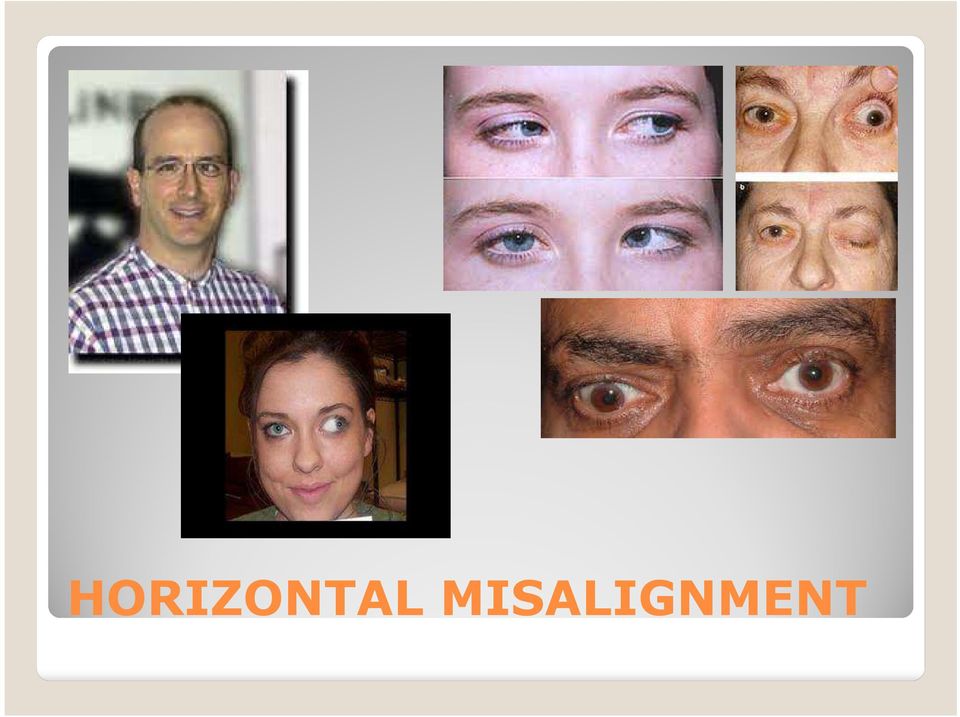
5 Comitant 1. Esotropia 2. Exotropia Non-comitant 1. Cranial nerve problem: causes/location 2. Neuromuscular junction 3. Extraocular muscle disease 4. Orbital disease Horizontal misalignment

6 Comitant Esotropia Infantile Fully/partially accommodative Sensory Sudden onset Residual Consecutive Exotropia Infantile Intermittent distance exotropia Sensory Sudden onset Residual Consecutive Horizontal misalignment

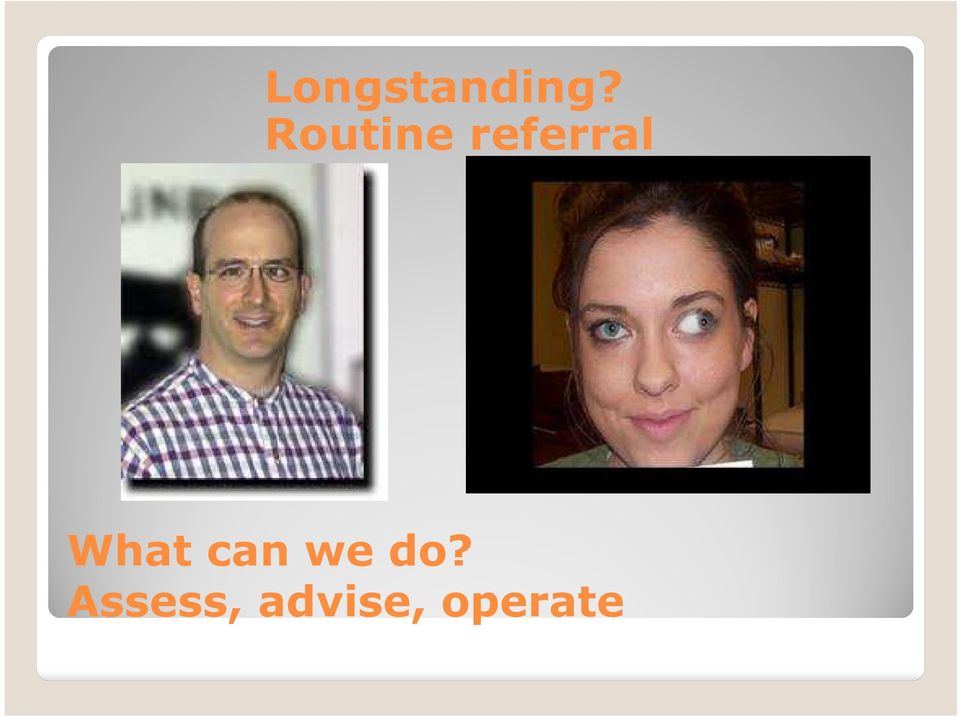
7 Longstanding? Routine referral What can we do? Assess, advise, operate
8 Non-comitant 1. Cranial nerve problem 2. Neuromuscular junction 3. Extraocular muscle disease 4. Orbital disease Horizontal misalignment

9 Cranial nerve anomaly/disease: causes Palsy/paresis Congenital/developmental Tumour Vascular Inflammatory Trauma Immune Other 1. CN problem: Causes
10
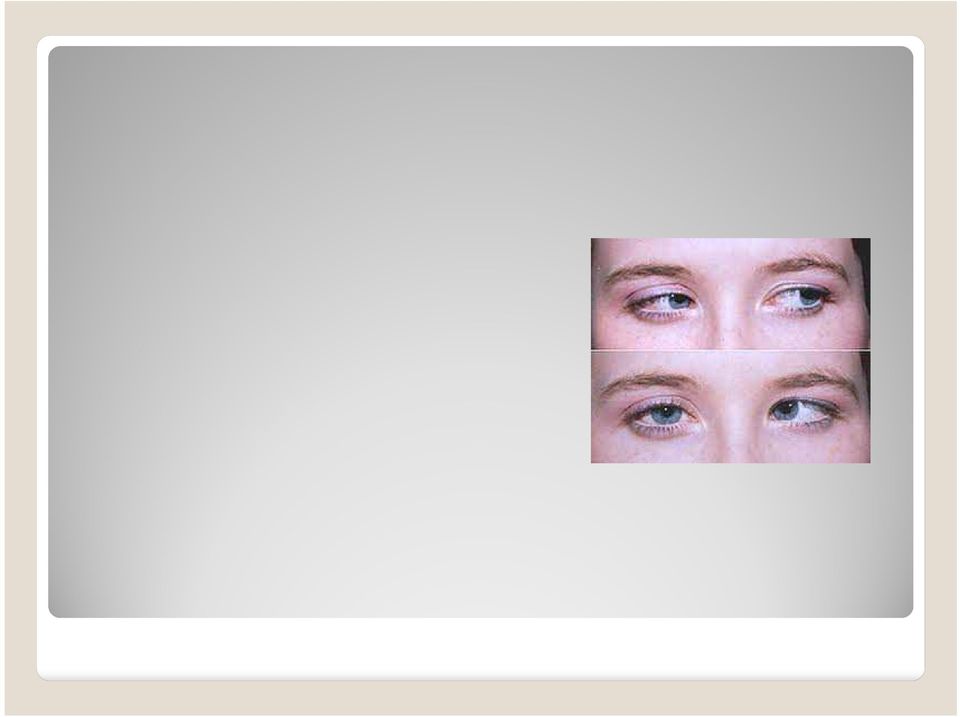
11 Causes of sixth nerve palsy Most common: vascular (diabetes, hypertension, atherosclerosis) Trauma Urgent referral Watch out for: Raised intracranial pressure Giant cell arteritis Cavernous sinus mass Brain stem tumour, aneurysm Multiple sclerosis, sarcoidosis, vasculitis Sixth nerve palsy
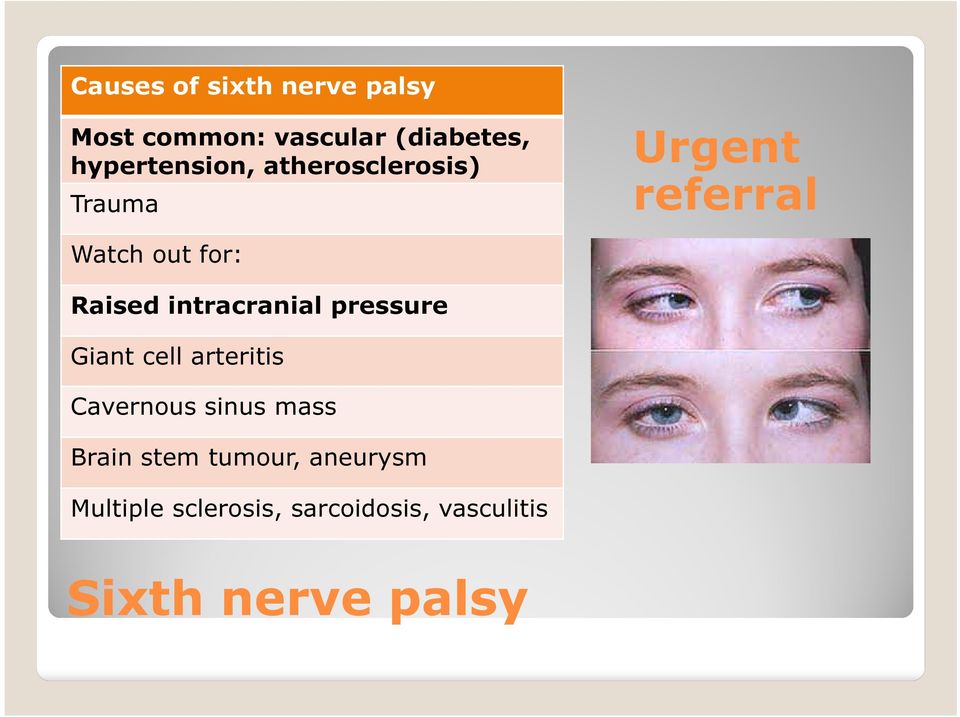
12 Investigations for sixth nerve palsy Check blood pressure, blood sugar Check full blood count, inflammatory markers, renal function, cholesterol Fundoscopy, Ishihara, neuro exam Urgent referral Decide whether imaging is needed, and how urgently Involve other hospital specialists if underlying condition such as MS identified What will we do?
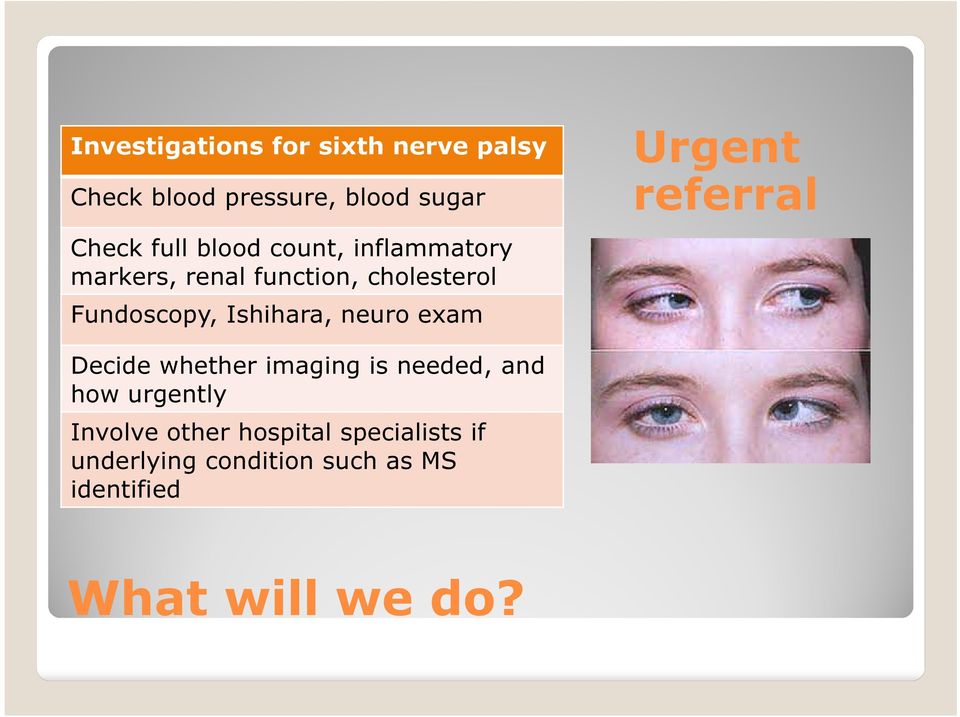
13 Management of sixth nerve palsy Treatment for any underlying condition Ophthalmic: Urgent referral prisms occlusion After 6-12 months of stable measurements: surgery Botulinum toxin What will we do?
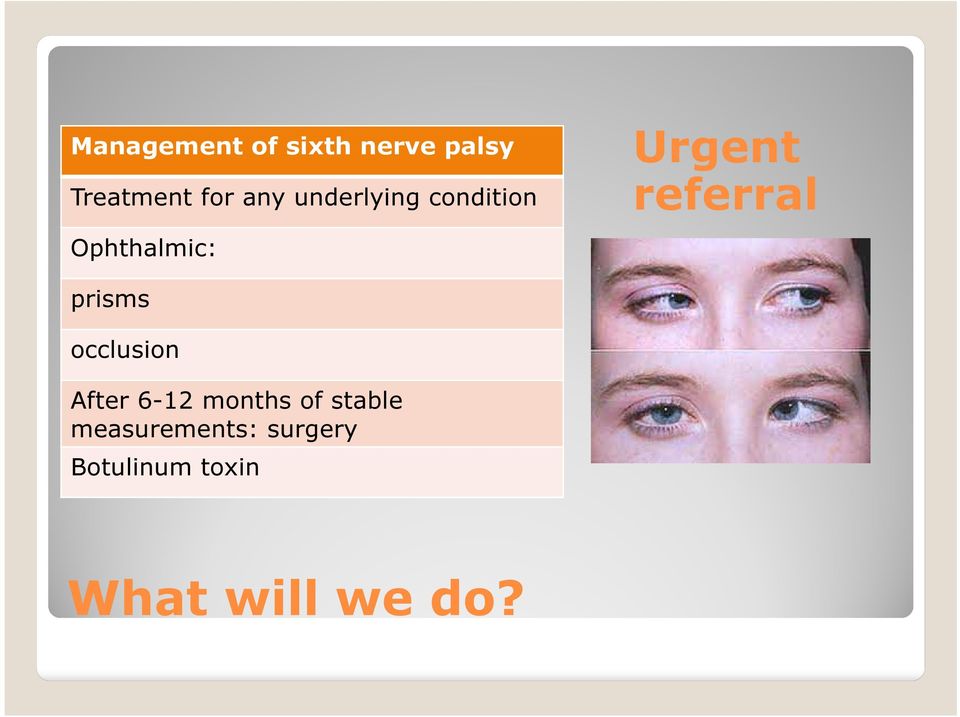
14 Horizontal gaze palsy Limitation of abduction on one side (abducens nerve) Limitation of adduction of the other eye (contralateral oculomotor nerve) Cause: lesion affecting interneurons from abducens nucleus to oculomotor nucleus in the pons Sixth plus: horizontal gaze palsy
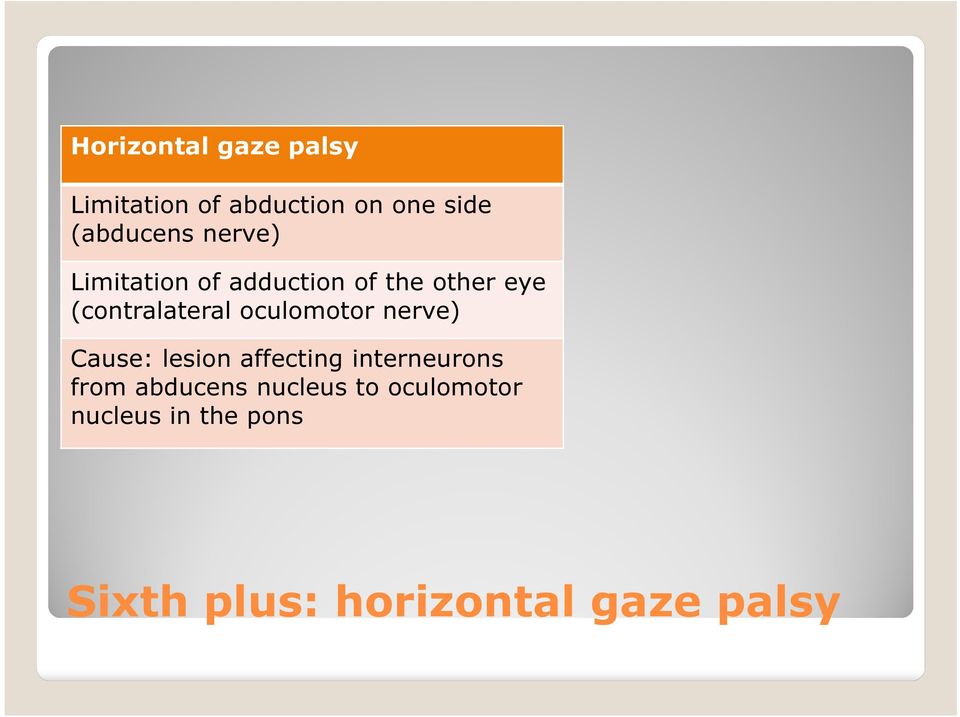
15 New case
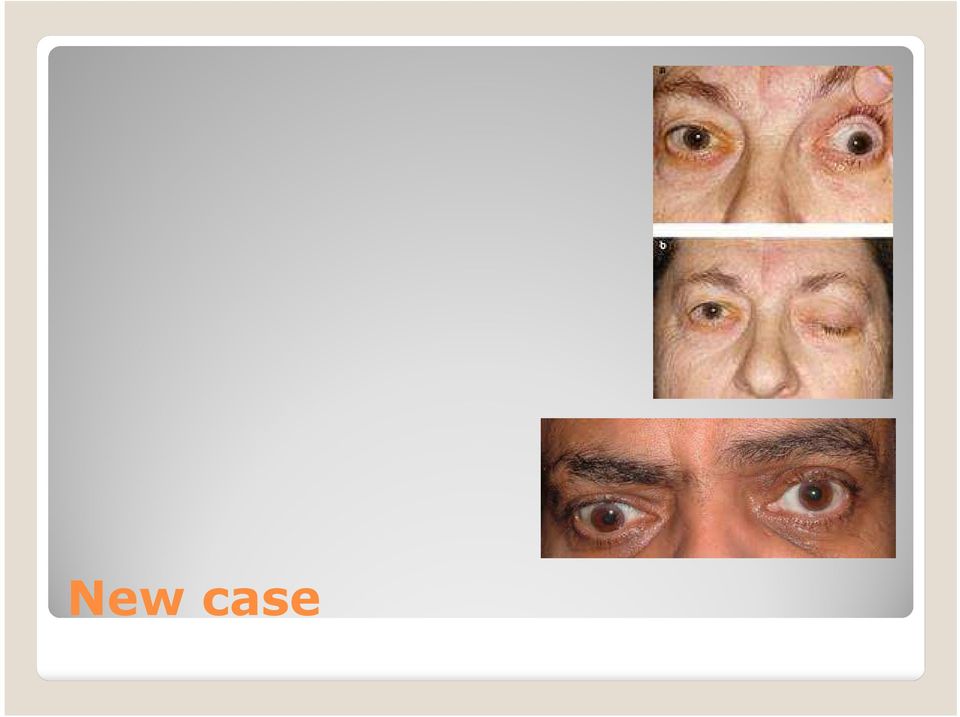
16 Down and out Ptosis Dilated pupil (or not) New case
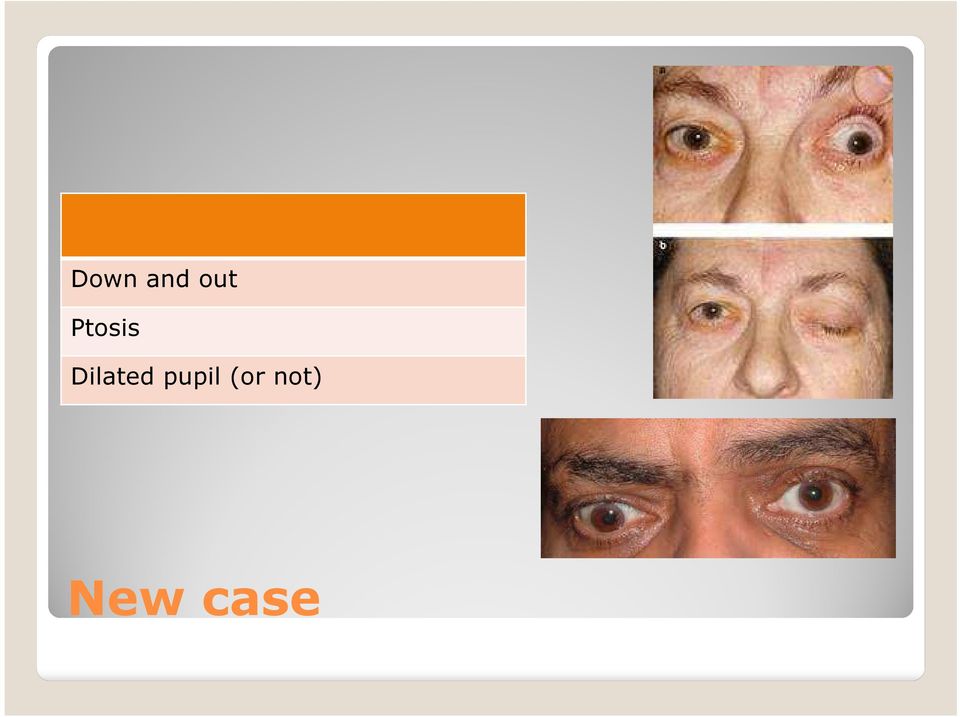
17 Causes of third nerve palsy ANEURYSM (rare, posterior communicating artery) Most common: vascular (diabetes, hypertension, atherosclerosis) Trauma Urgent referral Watch out for: Giant cell arteritis Cavernous sinus mass Tumour Multiple sclerosis, sarcoidosis, vasculitis Third nerve palsy
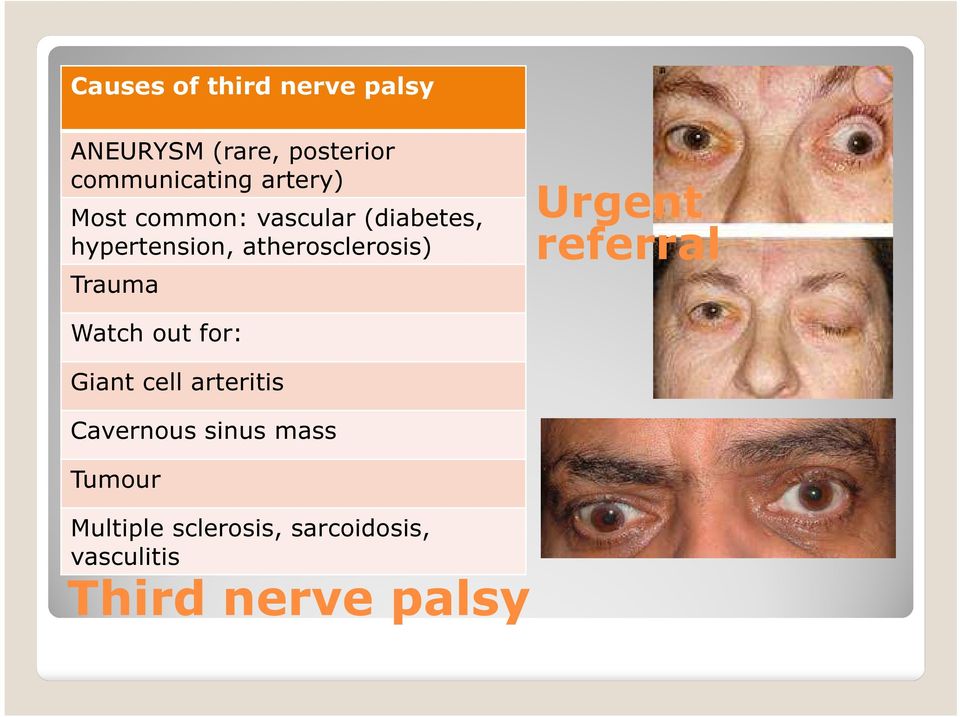
18 Investigations for third nerve palsy Check blood pressure, blood sugar Check full blood count, inflammatory markers, renal function, cholesterol Fundoscopy, Ishihara, neuro exam Decide whether imaging is needed, and how urgently Involve other hospital specialists if underlying condition identified Urgent referral What will we do?

19 Management for third nerve palsy Treatment for any underlying condition Ophthalmic: prisms Occlusion if diplopia (usually ptosis) After 6-12 months of stable measurements: surgery Botulinum toxin Urgent referral What will we do?

20

21 New case
22 2. Neuromuscular Junction
23 Neuromuscular junction: Myasthenia Varying symptoms and signs Fatiguability Generalised symptoms of weakness, breathing problems, chewing/swallowing difficulties, change of voice Tests: anti-acetylcholine receptor antibodies (negative in up to 50% of ocular only myasthenia), MuSK (musclespecific kinase) Chest MRI/CT: thymoma, lung tumour (Lambert Eaton) Electromyography Treatment: steroids, pyridostigmine, neostigmine 2. Neuromuscular Junction
24
25 3. Extraocular muscle disease
26 Extraocular muscle disease Congenital/developmental Tumour Vascular Inflammatory Trauma Immune Other 3. Extraocular muscle disease
27 Management of TED Assessment of severity and activity Thyroid function test, antithyroglobulin antibodies, antithyroid peroxidase antibodies Treatment: general, then orbital, then strabismus, then lids Steroids, thyroxine, smoking cessation, ocular artificial tears, orbital decompression, strabismus surgery to increase field of binocular vision, lid surgery to restore appearance 3. Extraocular muscle disease
28 Extraocular muscle disease Congenital/developmental Tumour Vascular Inflammatory Trauma Immune Other 4. Orbital disease
29
30 1. Apparent oblique muscle dysfunction 2. Paresis Cyclovertical misalignment
31 Inferior oblique overaction Very common, in particular in association with childhood strabismus Asymptomatic: others notice Cyclovertical muscle dysfunction
32 New case
33 Vertical double vision Worse when looking to one side Better when tilting head New case
34 Causes of fourth nerve palsy Most common: Congenital Most common acquired: head injury less common: vascular (diabetes, hypertension, atherosclerosis) Watch out for: Giant cell arteritis Cavernous sinus mass Tumour Multiple sclerosis, sarcoidosis, vasculitis Fourth nerve palsy Usually longstanding and decompensating -> diplopia If in doubt refer urgently
35 Investigations for fourth nerve palsy History: old photos head tilt? Orthoptic assessment: vertical fusion range Check blood pressure, blood sugar Check full blood count, inflammatory markers, renal function, cholesterol Fundoscopy, Ishihara, neuro exam Decide whether imaging is needed, and how urgently Involve other hospital specialists if underlying condition identified What will we do?
36 Management for fourth nerve palsy Treatment for any underlying condition Ophthalmic: prisms occlusion After 6-12 months of stable measurements: surgery What will we do?
37
38 Restrictive/Mechanical Strabismus Secondary to Muscular Disease Associated with Orbital Bony Disease Iatrogenic Cyclovertical Deviations ( Induced Adhesive Syndromes ) Special forms of strabismus
39 Neuropathic conditions a) internuclear ophthalmoplegia b) supranuclear eye movement disorders b1) Progressive supranuclear palsy b2) Dorsal midbrain syndrome (Parinaud) b3) Tonic gaze deviation c) Skew deviation d) Eye movement changes associated with Parkinson disease Special forms of strabismus
40 Neuropathic conditions a) internuclear ophthalmoplegia Lesion in the medial longitudinal fasciculus Usually multiple sclerosis or microvascular Limitation of adduction plus contralateral nystagmus on abduction Usually improve spontaneously Diplopia: occlusion. Long-term: surgery Special forms of strabismus
41 Neuropathic conditions b) supranuclear eye movement disorders b1) Progressive supranuclear palsy Degenerative condition Blurring of vision, photophobia Slowing of saccades, then pursuits Swallowing, speech, cognitive function, tone gait all progressively impaired b2) Dorsal midbrain syndrome (Parinaud) b3) Tonic gaze deviation Special forms of strabismus
42 Neuropathic conditions b) supranuclear eye movement disorders b1) Progressive supranuclear palsy b2) Dorsal midbrain syndrome (Parinaud) Posterior commissure lesion: pineal gland, hydrocephalus loss of upgaze, Bell s phenomenon Convergence-retraction nystagmus on attempted upgaze Lid retraction (Collier sign) Pupils: light-near dissociation Convergence paralysis Special forms of strabismus b3) Tonic gaze deviation
43 Neuropathic conditions b) supranuclear eye movement disorders b1) Progressive supranuclear palsy b2) Dorsal midbrain syndrome (Parinaud) b3) Tonic gaze deviation Lesion in frontal eye field (infarct) sustained horizontal conjugate deviation Special forms of strabismus
44 Neuropathic conditions c) Skew deviation Vertical misalignment lesion of the vestibular input into nuclei of third, fourth, sometimes sixth nerve nucleus One eye hypotropic/excyclotorted Fellow eye hypertropic/incyclotorted Special forms of strabismus
45 Neuropathic conditions d) Eye movement changes associated with Parkinson disease Convergence deficit Sometimes lid lag on downgaze Hypometric saccades Impaired smooth pursuits Saccadic intrusions Special forms of strabismus
46 Myopathic conditions a) Myasthenia Gravis b) Lambert Eaton myasthenic syndrome c) Miller Fisher syndrome d) Chronic progressive external ophthalmoplegia e) Myotonic and oculopharyngeal dystrophy Special forms of strabismus
47 Myopathic conditions a) Myasthenia Gravis b) Lambert Eaton myasthenic syndrome c) Miller Fisher syndrome Ophthalmoplegia, ataxia, areflexia Auto-antibodies against ganglioside QG1b Special forms of strabismus
48 Myopathic conditions d) Chronic progressive external ophthalmoplegia Mutation in mitochondrial DNA: not enough ATP produced Ptosis, progressive paresis of eye muscles, retinal salt-and-pepper appearance, cardiac conduction defect (Kearns-Sayre) Special forms of strabismus
49 Myopathic conditions e) Myotonic and oculopharyngeal dystrophy Expansion of unstable DNA trinucleotide repeats Special forms of strabismus
50 Congenital cranial nerve dysinnervation disorders 1. Duane syndrome 2. Lower cranial nerve maldevelopment: Moebius sequence 3. Marcus Gunn Jaw-Eyelid Synkinesis Syndrome 4. Congenital Fibrosis of the Extraocular Muscles (CFEOM) 5. Restrictive Hypotropia in Adduction: Brown Syndrome Special forms of strabismus
51 Congenital cranial nerve dysinnervation disorders 1. Duane syndrome Missing development of abducens nucleus Lateral rectus either not innervated, or innervated by branch from oculomotor nerve, usually inferior division Result: deficit of abduction, sometimes deficit of adduction, narrowing of palpebral fissure on horizontal gaze; abnormal head posture Special forms of strabismus
52 Congenital cranial nerve dysinnervation disorders 2. Lower cranial nerve maldevelopment: Moebius sequence Sixth and seventh nucleus maldeveloped Plus additional nuclei affected (swallowing, speech etc) Special forms of strabismus
53 Congenital cranial nerve dysinnervation disorders 3. Marcus Gunn Jaw-Eyelid Synkinesis Syndrome Maldevelopment of lid innervation Levator palpebrae instead supplied by nerve providing input to muscles of mastication Result: eyelid lifts when chewing or sucking Special forms of strabismus
54 Congenital cranial nerve dysinnervation disorders 4. Congenital Fibrosis of the Extraocular Muscles (CFEOM) Special forms of strabismus
55 Congenital cranial nerve dysinnervation disorders 5. Restrictive Hypotropia in Adduction: Brown Syndrome Special forms of strabismus
56
57
58 Acquired Oscillopsia Central/Vestibular causes Drugs, alcohol, medication, thiamine deficiency Downbeat: posterior fossa malformation, cerebellar ectopia (Arnold Chiari) Seesaw (chiasmal, posterior fossa, trauma) Periodic alternating: cerebellar, visual, idiopathic Pathologic nystagmus and other oscillations
Fourth Nerve Palsy (a.k.a. Superior Oblique Palsy)
 Hypertropia Hypertropia is a type of strabismus characterized by vertical misalignment of the eyes. Among the many causes of vertical strabismus, one of the most common is a fourth nerve palsy (also known
Doctor, I See Double : Managing Cranial Nerve Palsies
 1 Doctor, I See Double : Managing Cranial Nerve Palsies Joseph W. Sowka, OD, FAAO, Diplomate Professor of Optometry Nova Southeastern University, College of Optometry 3200 South University Drive Fort Lauderdale,
Management Approach to Isolated Ocular Motor Nerve Palsies
 Management Approach to Isolated Ocular Motor Nerve Palsies Alfredo A. Sadun, MD, PhD Thornton Professor of Vision Doheny Eye Institute Departments of Ophthalmology and Neurosurgery Keck/USC School of Medicine
List of diagnostic flowcharts
 List of diagnostic flowcharts Chapter 3 Visual loss Transient visual loss 43 Sudden or rapidly progressive visual loss 46 Gradual visual loss 61 Chapter 4 The red eye One red eye, decreased vision 83 One
Primary Motor Pathway
 Understanding Eye Movements Abdullah Moh. El-Menaisy, MD, FRCS Chief, Neuro-ophthalmology ophthalmology & Investigation Units, Dhahran Eye Specialist Hospital, Dhahran, Saudi Arabia Primary Motor Pathway
Ptosis. Ptosis and Pupils. Ptosis. Palpebral fissure. Blepharospasm. Blepharospasm or ptosis? Bilateral, longstanding, familial: Palpebral fissure
 Ptosis and Pupils Ptosis Jack CF Chong, MS, MD 99/03/06 Ptosis Bilateral, longstanding, familial: CPEO (chronic progressive external ophthalmoplegia) D/D: Acute, recent, unilateral Palpebral fissure Palpebral
Cranial Nerves. Cranial Nerve 1: Olfactory Nerve. Cranial Nerve 1: Olfactory Nerve. Cranial Nerve 2: Optic Nerve. Cranial Nerve 2: Optic Nerve
 Cranial Nerves Examination of Cranial Nerves and Palsies Drs Nathan Kerr and Shenton Chew 1 Olfactory On 2 Optic Old 3 Oculomotor Olympus 4 Trochlear Towering 5 Trigeminal Top 6 Abducens A 7 Facial Finn
Pseudoabducens palsy: When a VI nerve palsy is not a VI nerve palsy
 Pseudoabducens palsy: When a VI nerve palsy is not a VI nerve palsy Emily S. Birkholz, MD, and Michael Wall, MD December 30, 2009 CC: 44 year old male with diplopia HPI: This 44 year old man with a history
Esotropia (Crossed Eye(s))
 Esotropia (Crossed Eye(s)) Esotropia is a type of strabismus or eye misalignment in which the eyes are "crossed," that is, while one eye looks straight ahead, the other eye is turned in toward the nose.
Paraneoplastic Antibodies in Clinical Practice. Mohammed El lahawi New Cross Hospital Wolverhampton
 Paraneoplastic Antibodies in Clinical Practice Mohammed El lahawi New Cross Hospital Wolverhampton 1 Effects of Neoplasm Direct mass ( pressure ) effect Metastasis effect Remote effect 2 The Nervous System
Common visual symptoms and findings in MS: Clues and Identification
 Common visual symptoms and findings in MS: Clues and Identification Teresa C Frohman, PA-C, MSCS Neuro-ophthalmology Research Manager, UT Southwestern Medical Center at Dallas Professor Biomedical Engineering,
Thyroid Eye Disease. Anatomy: There are 6 muscles that move your eye.
 Thyroid Eye Disease Your doctor thinks you have thyroid orbitopathy. This is an autoimmune condition where your body's immune system is producing factors that stimulate enlargement of the muscles that
Institute of Ophthalmology. Thyroid Eye Disease. aka Thyroid Associated Ophthalmopathy
 Institute of Ophthalmology Thyroid Eye Disease aka Thyroid Associated Ophthalmopathy Causes TED/TAO is an eye disease associated with disease of the thyroid gland Most commonly, it occurs with an overactive
Evaluation of Diplopia: An Anatomic and Systematic Approach
 Clinical Review Article Evaluation of Diplopia: An Anatomic and Systematic Approach Victoria S. Pelak, MD Double vision, or diplopia, is a symptom with many potential causes that can involve many different
Vision Health: Conditions, Disorders & Treatments NEUROOPTHALMOLOGY
 Vision Health: Conditions, Disorders & Treatments NEUROOPTHALMOLOGY Neuroophthalmology focuses on conditions caused by brain or systemic abnormalities that result in visual disturbances, among other symptoms.
PUPILS AND NEAR VISION. Akilesh Gokul PhD Research Fellow Department of Ophthalmology
 PUPILS AND NEAR VISION Akilesh Gokul PhD Research Fellow Department of Ophthalmology Iris Anatomy Two muscles: Radially oriented dilator (actually a myo-epithelium) - like the spokes of a wagon wheel Sphincter/constrictor
![Bell s Palsy ]]> <![CDATA[Bell's Palsy]]>](/thumbs/27/10105461.jpg "Bell s Palsy ]]> <![CDATA[Bell's Palsy]]>")
Chapter 7 Complex Ocular Motor Disorders in Children
 Chapter 7 Complex Ocular Motor Disorders in Children Introduction A number of complex ocular motility disorders are discussed in this chapter. The diversity of these conditions reflects the need for the
Oculopharyngeal muscular dystrophy (OPMD)
 Oculopharyngeal muscular dystrophy (OPMD) The term muscular dystrophy is used to cover a wide range of conditions which have in common progressive muscle weakness due to an inherited genetic defect (mutation).
F r e q u e n t l y A s k e d Q u e s t i o n s
 Myasthenia Gravis Q: What is myasthenia gravis (MG)? A: Myasthenia gravis (meye-uhss- THEEN-ee-uh GRAV uhss) (MG) is an autoimmune disease that weakens the muscles. The name comes from Greek and Latin
Original Article. A 3 Year Review of Cranial Nerve Palsies from the University of Port Harcourt Teaching Hospital Eye Clinic, Nigeria
 Original Article A 3 Year Review of Cranial Nerve Palsies from the University of Port Harcourt Teaching Hospital Eye Clinic, Nigeria Chinyere Nnenne Pedro Egbe, Bassey Fiebai, Elizabeth Akon Awoyesuku
Diplopia, or double vision, is a frequently encountered. Binocular Diplopia. A Practical Approach ORIGINAL ARTICLE
 ORIGINAL ARTICLE A Practical Approach Janet C. Rucker, MD, and Robert L. Tomsak, MD, PhD Background: Diplopia is a common complaint in both inpatient and outpatient neurologic practice. Its causes are
Care of the Patient with Strabismus: Esotropia and Exotropia
 OPTOMETRIC CLINICAL PRACTICE GUIDELINE OPTOMETRY: THE PRIMARY EYE CARE PROFESSION Doctors of optometry are independent primary health care providers who examine, diagnose, treat, and manage diseases and
2014 Fall CE@SCO. COURSE 3 Doc, I m Seeing Double. COPE Course 40262-NO
 2014 Fall CE@SCO COURSE 3 Doc, I m Seeing Double COPE Course 40262-NO SCO HOMECOMING / FALL CE WEEKEND OCTOBER 9-12, 2014 Levels of disease Dennis Mathews, O.D. Partner, Eye Specialty Group Associate
DIPLOPIA - DON T PANIC (JUST PUT ON YOUR THINKING CAP)
 DIPLOPIA - DON T PANIC (JUST PUT ON YOUR THINKING CAP) Lisa Rovick, CO, COMT This article and accompanying quiz are worth.5 JCAHPO Group A continuing education credit. CONTINUING EDUCATION CREDITS ARE
Disclosure Statement. I have no financial interest in any of material presented today
 The eyes have it PEARLS IN EVALUATION, TREATMENT, AND REFERRAL OF PEDIATRIC OCULAR CONDITIONS AND TRAUMA MICHAEL G. HUNT, MD PEDIATRIC EYE SPECIALISTS, LLP Disclosure Statement I have no financial interest
Paralytic Strabismus: Third, Fourth, and Sixth Nerve Palsy
 Paralytic Strabismus: Third, Fourth, and Sixth Nerve Palsy Sashank Prasad, MD a, *, Nicholas J. Volpe, MD b KEYWORDS Paralytic strabismus Nerve palsy Ocular motor nerves Eye movement abnormalities ANATOMY
Management of sixth nerve palsy different approaches
 100 Prună et al Management of sixth nerve palsy Management of sixth nerve palsy different approaches Violeta-Ioana Prună 1,4, Ligia Gabriela Tătăranu 3, V.M. Prună 2, Daniela Cioplean 4, R.M. Gorgan 3
Guidelines for Obtaining & Reporting CE Credits
 Guidelines for Obtaining & Reporting CE Credits It is understood that continuing education (CE) is the cornerstone of maintenance of professional excellence. All COC members must therefore be able to demonstrate
Exotropias: A Brief Review. Leila M. Khazaeni, MD November 2, 2008
 Exotropias: A Brief Review Leila M. Khazaeni, MD November 2, 2008 Exotropia Myths Myth #1 He/she will grow out of it FALSE 75% of XTs show progression over a 3 year period Myth #2 The only treatment choice
Double Vision as a Presenting Symptom in an Ophthalmic Casualty Department
 Eye (99) 5,-9 Double Vision as a Presenting Symptom in an Ophthalmic Casualty Department R. J. MORRIS London Summary All patients presenting with double vision as a principal symptom who presented to the
Outcome of Surgery for Bilateral Third Nerve Palsy
 CLINICAL INVESTIGATIONS Outcome of Surgery for Bilateral Third Nerve Palsy Kazuhiro Aoki, Tatsushi Sakaue, Nobue Kubota and Toshio Maruo Department of Ophthalmology, Teikyo University School of Medicine,
Assessment and Management of Visual Dysfunction Associated with Mild Traumatic Brain Injury. Clinical Recommendation Overview
 Assessment and Management of Visual Dysfunction Associated with Mild Traumatic Brain Injury Clinical Recommendation Overview Learning Objectives Describe an overview of visual dysfunction associated with
REPORT TO THE STATEWIDE OPHTHALMOLOGY SERVICE (SOS) OF THE GREATER METROPOLITAN CLINICAL TASKFORCE (GMCT)
 REPORT TO THE STATEWIDE OPHTHALMOLOGY SERVICE (SOS) OF THE GREATER METROPOLITAN CLINICAL TASKFORCE (GMCT) The Orthoptist and the management of visual problems in inpatients with stroke: A pilot study to
Guideline for the Management of Acute Peripheral Facial nerve palsy. Bells Palsy in Children
 Guideline for the Management of Acute Peripheral Facial nerve palsy Definition Bells Palsy in Children Bell palsy is an acute, idiopathic unilateral lower motor neurone facial nerve palsy that is not associated
Basic Cranial Nerve Examination
 Basic Cranial Nerve Examination WIPE Wash hands Introduce yourself Permission Position (Patient sitting facing you, maintain comparable eye level) Exposure (Face exposed only, i.e. remove hats etc) Identify
Neurology. Chapter 6. The Eyes Have It. by Tim Root. Hey, buddy how many fingers am I holding up?
 Chapter 6 Neurology The Eyes Have It I think my patient is faking blindness, but I can t tell. Let me see Hey, buddy how many fingers am I holding up? by Tim Root Definitely malingering. Neurology by Tim
a guide to understanding facial palsy a publication of children s craniofacial association
 a guide to understanding facial palsy a publication of children s craniofacial association a guide to understanding facial palsy this parent s guide to facial palsy is designed to answer questions that
Complications of Strabismus Surgery
 Complications of Strabismus Surgery Tjeerd de Faber, Martha Tjon Rutger van Ruyven Alexis Damanakis Ondercorrectie Overcorrectie Wat vind je erger? 1 DELLEN Corneal dellen are small areas of thinning associated
Internuclear ophthalmoplegia: recovery and plasticity
 Internuclear ophthalmoplegia: recovery and plasticity M. J. Doslak, L. B. Kline, L. F. Dell'Osso, and R. B. Daroff We studied refixational eye movements of a patient during the gradual resolution of an
Surgical Outcome Of Incomitant Exotropia In Patients With Partial Third Nerve Palsy
 Surgical Outcome Of Incomitant Exotropia In Patients With Partial Third Nerve Palsy Amit Mohan, MS ; Sudhir Singh, MS ; Dr V.C. Bhatnagar, MS, DNB Dr Amit Mohan, MS Jr.Consultant Global Hospital Institute
Neuro-ophthalmology: Disorders of the Efferent Visual Pathway
 neurology Board Review Manual Statement of Editorial Purpose The Hospital Physician Neurology Board Review Manual is a peer-reviewed study guide for residents and practicing physicians preparing for board
Clinical guidance for MRI referral
 MRI for cervical radiculopathy Referral by a medical practitioner (excluding a specialist or consultant physician) for a scan of spine for a patient 16 years or older for suspected: cervical radiculopathy
Ptosis. Patient Information - Adnexal
 Patient Information - Adnexal Ptosis What is ptosis? Ptosis is the medical name for the drooping of the upper eyelid, which can happen in one or both eyes. A low upper lid can interfere with vision by
AMERICAN ACADEMY OF NEUROLOGY NEURO-OPHTHALMOLOGY/NEURO-OTOLOGY FELLOWSHIP CORE CURRICULUM
 AMERICAN ACADEMY OF NEUROLOGY NEURO-OPHTHALMOLOGY/NEURO-OTOLOGY FELLOWSHIP CORE CURRICULUM A CURRICULUM FOR NEURO-OPHTHALMOLOGY Definition and Scope Neuro-ophthalmology focuses on brain and systemic abnormalities
Thyroid eye disease (TED)
 Thyroid eye disease (TED) Mr David H Verity, MD MA FRCOphth Consultant Ophthalmic Surgeon Synonyms: Graves ophthalmopathy, thyroid ophthalmopathy, thyroid associated ophthalmopathy This information leaflet
1 Always test and record vision wearing distance spectacles test each eye separately A 1mm pinhole will improve acuity in refractive errors
 Golden eye rules Examination techniques 1 Always test and record vision wearing distance spectacles test each eye separately A 1mm pinhole will improve acuity in refractive errors Snellen chart (6 metre)
ORANGE COUNTY EYE INSTITUTE
 ORANGE COUNTY EYE INSTITUTE *Note: It is the patient s responsibility to file insurance claims if we are not contracted with your insurance company. *Note: Be aware that most medical insurance plans do
Graduate Diploma in Optometry. Related modules Pre-requisites Satisfying requirements of second year BSc (Hons) Optometry examination board
 Posterior Eye & General Ophthalmology School and subject group Module code Module title Module type Module replaces (where appropriate) Life and Health Sciences / Optometry OP3PEG Posterior Eye & General
Pediatric Eye Problems When do I refer? Hillary Onan, M.D. Eye Associates of Central Texas Dell Children s Medical Center of Central Texas
 Pediatric Eye Problems When do I refer? Hillary Onan, M.D. Eye Associates of Central Texas Dell Children s Medical Center of Central Texas Red Reflex Testing Check RR at every well child visit until child
Thyroid Eye Disease. A Patient s Guide
 Sashank Prasad, MD www.brighamandwomens.org/neuro-ophthalmology A Patient s Guide Symptoms Diagnosis Treatment Prognosis What are the symptoms of Thyroid Eye Disease? Patients with Thyroid Eye Disease
Headaches + Facial pain
 Headaches + Facial pain Introduction: Each of us experienced sporadically/ chronically headache 40% worldwide population suffers with severe, disabling headache at least annually Common ailment Presenting
CONGENITAL NYSTAGMUS WHEN TO RECORD HOW TO TREAT 2009
 CONGENITAL NYSTAGMUS WHEN TO RECORD HOW TO TREAT 2009 LIONEL KOWAL Royal Victorian Eye and Ear Hospital Center for Eye Research Australia Melbourne, Australia TYPES OF CONGENITAL NYSTAGMUS cn cn: any type
Modern Techniques of Strabismus Surgery
 Optometry in Practice Vol 2 (2001) 79-88 Modern Techniques of Strabismus Surgery IB Marsh MB ChB FRCS FRCOphth Consultant Ophthalmologist, Walton Eye Unit, University Hospital Aintree, Liverpool, UK Accepted
Orbit & Cranial Nerves II, III, IV, & VI
 Orbit & Cranial Nerves II, III, IV, & VI PCC Year 1, Spring Quarter Lawrence M. Witmer, PhD Life Sciences Building 123 OBJECTIVES: to understand the anatomy of the bony orbit and its contents, in particular,
Concussion/MTBI Certification Series. Featuring: Frederick R Carrick, DC, PhD Distinguished Professor of Neurology, Life University
 Concussion/MTBI Certification Series Featuring: Frederick R Carrick, DC, PhD Distinguished Professor of Neurology, Life University Please note that spaces are limited for this specialty certification program.
The Physiology of the Senses Lecture 11 - Eye Movements www.tutis.ca/senses/
 The Physiology of the Senses Lecture 11 - Eye Movements www.tutis.ca/senses/ Contents Objectives... 2 Introduction... 2 The 5 Types of Eye Movements... 2 The eyes are rotated by 6 extraocular muscles....
Thymus Cancer. This reference summary will help you better understand what thymus cancer is and what treatment options are available.
 Thymus Cancer Introduction Thymus cancer is a rare cancer. It starts in the small organ that lies in the upper chest under the breastbone. The thymus makes white blood cells that protect the body against
EMG and the Electrodiagnostic Consultation for the Family Physician
 EMG and the Electrodiagnostic Consultation for the Family Physician Stephanie Kopey, D.O., P.T. 9/27/15 The American Association of Neuromuscular & Electrodiagnostic Medicine (AANEM) Marketing Committee
Physical and Mental Conditions Guidelines VISION CONDITIONS AND ACTIONS Page 5.4
 Physical and Mental Conditions Guidelines VISION CONDITIONS AND ACTIONS Page 5.4 AMBLYOPIA (Lazy Eye) A reduction in the acuteness of vision without apparent eye disease. This condition cannot be entirely
Understanding Nystagmus: Diagnosis, Related Disorders, Treatment, and Research
 Understanding Nystagmus: Diagnosis, Related Disorders, Treatment, and Research Mitra Maybodi,, MD Children s National Medical Center George Washington University School of Medicine and Health Sciences
Thyroid eye disease (TED) Synonyms: Graves ophthalmopathy, thyroid ophthalmopathy, thyroid associated ophthalmopathy
 Thyroid eye disease (TED) Synonyms: Graves ophthalmopathy, thyroid ophthalmopathy, thyroid associated ophthalmopathy This information leaflet briefly covers the following issues in TED: What is TED? When
DIAGNOSTIC CRITERIA OF STROKE
 DIAGNOSTIC CRITERIA OF STROKE Diagnostic criteria are used to validate clinical diagnoses. Here below MONICA diagnostic criteria are reported. MONICA - MONItoring trends and determinants of CArdiovascular
22/02/2015. Possible causes. Decisions decisions decisions. Challenging eye and ear conditions at underwriting and claim stage Dr Maritha van der Walt
 Challenges Underwriting symptoms rather than conditions- tinnitus, vertigo, blurred vision Requests for narrower rather than broad exclusions and consequences Pre existing condition and unrelated claims
Paediatric Bell s Palsy Paediatric Update November 2014
 Paediatric Bell s Palsy Paediatric Update November 2014 Richard Webster, Paediatric Neurologist Children s Hospital at Westmead Typical history Unilateral LMN facial weakness Acute onset over a day or
NEURO-OPHTHALMIC QUESTIONNAIRE NAME: AGE: DATE OF EXAM: CHART #: (Office Use Only)
 PAGE 1 NEURO-OPHTHALMIC QUESTIONNAIRE NAME: AGE: DATE OF EXAM: CHART #: (Office Use Only) 1. What is the main problem that you are having? (If additional space is required, please use the back of this
Isolated Ocular Motor Nerve Palsies
 539 Nathan H. Kung, MD 1 Gregory P. Van Stavern, MD 2 1 Department of Neurology, Washington University in St. Louis, St. Louis, Missouri 2 Department of Ophthalmology, Washington University in St. Louis,
Chiari Malformation: Symptoms
 Chiari Malformation: Symptoms SYMPTOMS DIAGNOSIS LIVING WITH CHIARI TREATMENT Rick Labuda, Executive Director [email protected] 724-940-0116 Disclaimer: This presentation is intended for informational
A Patient & Parent Guide to Strabismus Surgery. George R. Beauchamp, M.D. Paul R. Mitchell, M.D.
 A Patient & Parent Guide to Strabismus Surgery By George R. Beauchamp, M.D. Paul R. Mitchell, M.D. Table of Contents: Part I: Background Information 1. Basic Anatomy and Functions of the Extra-ocular Muscles
Torsional Diplopia 1,2
 Supplement Handout American Orthoptic Council Workshop: When the Patient Sees Double and the Doctor Sees Nothing A Guide to Double Vision AAPOS 37 th Annual Meeting San Diego, CA April 1, 2011 Torsional
Vision and Rehabilitation After Brain Trauma Eric Singman, MD, PhD, Health.mil
 Vision and Rehabilitation After Brain Trauma Eric Singman, MD, PhD, Health.mil This article was first accessed at Brainline.org. Vision Problems After Brain Injury Visual problems following brain trauma
THE EYES IN MARFAN SYNDROME
 THE EYES IN MARFAN SYNDROME Marfan syndrome and some related disorders can affect the eyes in many ways, causing dislocated lenses and other eye problems that can affect your sight. Except for dislocated
ICD-9 to ICD-10 Conversion Commonly Used Neurologic Diagnosis
 ICD-9 to ICD-10 Conversion Commonly Used Neurologic Diagnosis 327.20 Organic sleep apnea, unspecified... 1 331.0 Alzheimer s disease...3 333.1 Essential and other specified forms of tremor...4 340 Multiple
Anatomy: The sella is a depression in the sphenoid bone that makes up part of the skull base located behind the eye sockets.
 Pituitary Tumor Your doctor thinks you may have a pituitary tumor. Pituitary tumors are benign (non-cancerous) overgrowth of cells that make up the pituitary gland (the master gland that regulates other
Traumatic third nerve palsy
 British Journal of Ophthalmology, 1984, 68, 538-543 Traumatic third nerve palsy J. S. ELSTON From Moorfields Eye Hospital, City Road, London EC] V2PD SUMMARY Twenty patients with a traumatic third nerve
Skew deviation is a vertical strabismus caused by
 AAPOS Workshops Understanding skew deviation and a new clinical test to differentiate it from trochlear nerve palsy Agnes M. F. Wong, MD, PhD SUMMARY Skew deviation is a vertical strabismus caused by a
Less common vestibular disorders presenting with funny turns
 Less common vestibular disorders presenting with funny turns Charlotte Agrup, Department of Neuro-otology, The National Hospital for Neurology and Neurosurgery, London Making the diagnosis Making the diagnosis
Angela Wilkin May 2013
 Angela Wilkin May 2013 Upper Motor Neuron v Lower Motor Neuron Lesions UMN Lesion LMN Lesion Forehead usually unaffected (bilateral innervation) Forehead affected Contralateral side Ipsilateral side Often
Article. Diagnosis of a Superior Rectus Overaction After Cataract Surgery
 Article Diagnosis of a Superior Rectus Overaction After Cataract Surgery Angel F. Romero Ayala, OD Assistant Professor, Interamerican University of Puerto Rico, School of Optometry ABSTRACT Background.
Billing and Coding Guidelines
 Billing and Coding Guidelines Contractor Name Wisconsin Physicians Service Insurance Corporation Title INJ- 018 Botulinum Toxin Type A & Type B Revision Effective Date 10/01/2011 AMA CPT/ ADA CDT Copyright
Management in the pre-hospital setting
 Management in the pre-hospital setting Inflammation of the joints Two main types: Osteoarthritis - cartilage loss from wear and tear Rheumatoid arthritis - autoimmune disorder Affects all age groups,
eyelid position. Treatment of amblyopia is only effective in main- Albert W Biglan, MD
 RESULTS FOLLOWING TREATMENT OF THIRD CRANIAL NERVE PALSY IN CHILDREN* BY Linda A. Schumacher-Feero, MD (BY INVITATION), K W Yoo, MD, (BY INVITATION), Fernando Mendiola Solari, MD (BY INVITATION) AND Albert
WHAT IS CEREBRAL PALSY?
 WHAT IS CEREBRAL PALSY? Cerebral Palsy is a dysfunction in movement resulting from injury to or poor development of the brain prior to birth or in early childhood. Generally speaking, any injury or disease
How to test ocular movements in PSP Jan Kassubek
 How to test ocular movements in PSP Jan Kassubek Universitätsklinik für Neurologie, Ulm Bedside Screening: PSP initially slowing of vertical saccades slowing of downward saccades is considered the hallmark
Vertebrobasilar Disease
 The Vascular Surgery team at the University of Michigan is dedicated to providing exceptional treatments for in the U-M Cardiovascular Center (CVC), our new state-of-the-art clinical facility. Treatment
IMAGE ASSISTANT: OPHTHALMOLOGY
 IMAGE ASSISTANT: OPHTHALMOLOGY Summary: The Image Assistant has been developed to provide medical doctors with a software tool to search, display, edit and use medical illustrations of their own specialty,
Dallas Neurosurgical and Spine Associates, P.A Patient Health History
 Dallas Neurosurgical and Spine Associates, P.A Patient Health History DOB: Date: Reason for your visit (Chief complaint): Past Medical History Please check corresponding box if you have ever had any of
Guide to Eye Surgery and Eye-related Claims
 If you or a loved one have suffered because of a negligent error during eye treatment or surgery, you may be worried about how you will manage in the future, particularly if your eyesight has been made
How To Write A Recipe Card
 Joanne R. Festa, PhD (PLEASE PRINT) NAME: DATE OF BIRTH: NEUROPSYCHOLOGY INITIAL VISIT DATE: AGE: Do you have any areas of concern about your cognitive functioning? (i.e., problems with memory, attention,
How To Diagnose Stroke In Acute Vestibular Syndrome
 Danica Dummer, PT, DPT, University of Utah Abigail Reid, PT, DPT, Kessler Institute for Rehabilitation Online Journal Club-Article Review Article Citation Study Objective/Purpose (hypothesis) Study Design