
Topics in International Relations: International Security
|
|
|
- Amos Spencer
- 10 years ago
- Views:
Transcription
1 Topics in International Relations: International Security Political Science 379R Section 4 Fall semester 2008 Dr. Christopher Jones MWF Office: SWKT 792 JKB 1103 Phone: [email protected] Office hours: MWF Course description: How are we to understand security? Traditionally the term has been synonymous with power, expressed in military might. Since the end of the Cold War in 1991, the term has been broadened to include much more. Furthermore, attention has moved from its almost solitary focus on the security of the state to take in other actors and objects of security. This will be reflected in the much of the course as we discuss a widened security concept and agenda. We ll begin the class with an historical overview of how we got where we are today, before diving into the widened security agenda. The course will end with a discussion of more traditional security threats and issues. Given that this is a smaller class, the format for this class will be a mix of lecture and class discussion. You are encouraged to interact. Certainly, the study of international security makes for good, sometimes heated, debate. We will have a few of these, allowing you to voice your opinions as to the merits (or not) of the subject in question. By the end of the class, you should be better able to understand and interpret current events. The news may never be the same! By studying the ideas and information presented through the class, students can gain both a better understanding of the world around them and a greater capacity to affect the world for good. Furthermore, you should see the course not just as a means to acquire specialised knowledge, but also as an opportunity to develop important academic and life skills, including critical thinking and communication. For more information on the learning outcome objectives of the Political Science department, visit Reading: My philosophy about reading is that you can never do enough. There is so much interesting literature out there. However, I realize that your joy of reading texts may not be shared. Thus there are primary and other readings designated in the syllabus. Required texts: - John Lewis Gaddis, 2005, The Cold War: A new history, - Alan Collins (ed.), 2007, Contemporary Security Studies. All other readings are available via Blackboard (under Course Material). These are primarily book chapters and journal articles. Where there are several readings for each class, you are not required to read all of them. However, reading several of the articles will give you a fuller understanding of the subject, and you are strongly encouraged to read more of the material. 1

2 Assessment: 1. Current affairs report 30% I want you to write a page report on a current issue. It does not have to be a war or open conflict, but an issue related to the subject matter of this course, and currently ongoing. You are required to clear your choice of subject with me. At the very least, your choice of subject will depend upon the following requirements: There are three parts to this assignment: Background, Coverage and Analysis. - For the Background, I want to see some historical understanding of how this conflict or issue came about. This will then flow into your coverage of the issue. You may use maps in this section, but totaling no more than two pages. This section is due M 29 September. - For the Coverage I want you to follow the issue in the news, press, journals, etc. for the duration of the course. Follow how the issue develops and record it. Research! I can suggest links to internet and other sources if desired. In this section you should present news coverage, in a chronological order. You may of course expand upon a simple citation of reports, interjecting them in a flowing analysis. - The final section is an Analysis of the issue. Having presented what and how, I want to know why. Here you would apply the readings and class discussions to the issue. What does this issue tell us about security? Whose security are we talking about? Are we talking about it, or is this a forgotten issue? If so, why? Why is nothing being done? What is motivating the nature of the action taken in response to the issue? What does the issue tell us about the nature if international relations? The rest of the assignment is due on or before the last day of class, W 10 December. 2. Gaddis book review 10% You are required to write a book review of Gaddis text - The Cold War: A new history. This is to be a minimum of 5 pages, double-spaced, and no longer than 10 pages. It is due at any time during the course. I expect you to know how to write a decent book review. If you do not, contact the FHSS Writing lab or the main BYU Writing lab. 3. Midterm 20% M 20 OCT. Two essay questions, in the normal class period/location. 4. Final exam 30% F 19 DEC, 11-2 PM. The final exam is comprehensive. There is no early exam. 5. Participation 10% As this is a smaller class, we will spend time discussing particular issues. Specifically, there are a number of debates scheduled throughout the semester, one specifically on the end of the Cold War (EoCW). There are a further three topical debates scheduled. Here we will discuss questions that you have posed on current issues and events. Questions are to be submitted to me in advance of the debate, so that we can all prepare in good measure. I ll select one or two of the questions to be discussed. Having your question selected does not factor into the participation grade. 2

3 These discussions will allow you to express your opinions on the subject matter, and engage in what can be a lively and engaging discussion. I remind you that the spirit of contention is not welcome on these occasions. Your participation in these debates and discussions is graded. Please read the assigned material and come prepared to contribute. Contributions can of course be made voluntarily, or I will ask you for your comment. To avoid disappointment at the end of the semester, if you have any questions about what I expect for a particular grade or assignment, or for feedback, please contact me. I would much rather that you ask before hand rather than complain after the grade. Grading Grades are not curved. The score of 94 and above is an A. Any score between a 90 and a 93 is an A-. The score of 87 and above is a B+, is a B, and 80 to 82 is a B-. The same system is used for C s and D s. I will happily discuss your grades with you, but make a practice not to amend the grade once given. There is no extra credit. I don t want more work - just better work. 3

4 Expectations You re all adults; you ve paid for this class. As much as I will try to provide value for money and time, you will get out as much as you put into this class. I expect you to attend class. I expect you to have read some of the assigned reading prior to each class, and to be able to comment on it upon request. I do not intend this to be a formal lecture series ask questions! If we take the whole class answering your questions about the topic for that day, and have an engaging class discussion, that s fine by me! In fact, I d prefer that to me talking. I expect you to participate in class. Plagiarism: While all students sign the honor code, there are still specific skills most students need to master over time in order to correctly cite sources, especially in this new age of the internet; as well as deal with the stress and strain of college life without resorting to cheating. Please know that as your professor I will notice instances of cheating on exams or plagiarizing on papers. General information about the honor code can be found at honorcode.byu.edu. Details about Academic Honesty at the Honor Code site can be found by moving your mouse over "Honor Code" in the second grey bar and then move down then right and click on "Other Clarifications", then move your mouse down and click on "Academic Honesty." Writing submitted for credit at BYU must consist of the student's own ideas presented in sentences and paragraphs of his or her own construction. The work of other writers or speakers may be included when appropriate (as in a research paper or book review), but such material must support the student's own work (not substitute for it) and must be clearly identified by appropriate introduction and punctuation and by footnoting or other standard referencing. The substitution of another person's work for the student's own or the inclusion of another person's work without adequate acknowledgment (whether done intentionally or not) is known as plagiarism. It is a violation of academic, ethical, and legal standards and can result in a failing grade not only for the paper but also for the course in which the paper is written. In extreme cases, it can justify expulsion from the University. Because of the seriousness of the possible consequences, students who wonder if their papers are within these guidelines should visit the Writing Lab or consult a faculty member who specializes in the teaching of writing or who specializes in the subject discussed in the paper. Honour code: Students are expected to adhere to the Dress and Grooming Standards. Adherence demonstrates respect for yourself and others and ensures an effective learning and working environment. It is the university s expectation that each student will abide by all Honour Code standards. Please call the Honour Code Office at if you have questions about those standards. Preventing Sexual Discrimination or Harassment Sexual discrimination or harassment (including student-to-student harassment) is prohibited both by the law and by Brigham Young University policy. If you feel you are being subjected to sexual discrimination or harassment, please bring your concerns to the professor. Alternatively, you may lodge a complaint with the Equal Employment Office (D-240C ASB) or with the Honor Code Office (4440). Students with Disabilities If you have a disability that may affect your performance in this course, you should get in touch with the office of Services for Students with Disabilities (1520 WSC). This office can evaluate your disability and assist the professor in arranging for reasonable accommodations. 4

5 Schedule: # DATE SUBJECT MWF JKB 1 W 3 SEP What is international security? - Bill McSweeney, 1999, The Meaning of Security, in Bill McSweeney, Security, Identity and Interests: A Sociology of International Relations, pp ; - Ronnie Lipschutz, 1995, On Security, chapter 1; - Barry Buzan, 1991, Is international security possible? chapter 1 in Ken Booth, New thinking about strategy and international security. 2 F 5 SEP Approaches to security: Traditional - Patrick Morgan, 2007, Security in International Politics: Traditional approaches, chapter 2 in Alan Collins (Ed.), Contemporary Security Studies. 3 M 8 SEP Approaches to security: Alternative - Paul Rogers, 2007, Peace studies, chapter 3 in Alan Collins (Ed.), Contemporary Security Studies; - Christopher Jones, Common Security. 4 W 10 SEP Approaches to security: Critical - David Mutimer, 2007, Critical Security Studies: A schismatic history, chapter 4 in Alan Collins (Ed.), Contemporary Security Studies. 5 F 12 SEP Topical debate 6 M 15 SEP Origins of the Cold War - John Lewis Gaddis, 2005, The Cold War: A new history, chapter ; - Anne Deighton, 1996, The Cold War in Europe : Three approaches, chapter 4 in Ngaire Woods, Explaining International Relations since 1945; - Geir Lundestad, 2000, How (not) to study the origins of the Cold War, chapter 3 in Odd Arne Westad, Reviewing the Cold War; - Antonio Varsori, 2000, Reflection on the origins of the Cold War, chapter 13 in Odd Arne Westad, Reviewing the Cold War. 7 W 17 SEP US Cold War policy: Containment - John Lewis Gaddis, 2005, The Cold War: A new history, chapter 1.5; - George Kennan, 1946, The source of Soviet conduct, Foreign Affairs, Vol. 25 No. 1; - NSC 68: United States Objectives and Programs for National Security, chapters 1-4, 9 and Conclusions. 8 F 19 SEP Soviet Cold War policy: Brezhnev to Sinatra - John Lewis Gaddis, 2005, The Cold War: A new history, chapter 1.6, chapter 3.7, and 3.10; - Gerasimov, 2005, From Brezhnev Doctrine to Sinatra Doctrine, Demokratizatsiya, Vol. 13 No. 2, pp ; - Mark Kramer, 1996, The Soviet Union and Eastern Europe: Spheres of influence, chapter 5 in Ngaire Woods, Explaining International Relations since 1945; - Csaba Bekes, 2001, The 1956 Revolution and world politics, in Lori Lyn Bogle, The Cold War: Hot Wars of the Cold War, Volume 3; - Istvan Vida, 2001, Janos Kadar and the Czechoslovak crisis of 1968, in Lori Lyn Bogle, The Cold War: Hot Wars of the Cold War, Volume 3. 5

6 9 M 22 SEP Nuclear weapons and the Cold War - John Lewis Gaddis, 2005, The Cold War: A new history, chapter 2; - John Lewis Gaddis, 1997, We now know: Rethinking Cold War history, chapters 4 and 8; - John Lewis Gaddis, 1992, The United States and the end of the Cold War, chapter W 24 SEP Cuban missile crisis - John Lewis Gaddis, The Cold War: A new history, chapter ; - John Lewis Gaddis, 1997, We now know: Rethinking Cold War history, chapter 9; - Philip Brenner, 2001, Cuba and the missile crisis, in Lori Lyn Bogle, The Cold War: Hot Wars of the Cold War, Volume 3; - Aleksandr Fursenko, 2001, Soviet intelligence and the Cuban missile crisis, in Lori Lyn Bogle, The Cold War: Hot Wars of the Cold War, Volume F 26 SEP Détente - John Lewis Gaddis, 2005, The Cold War: A new history, chapter 5.6, chapter 6.1-4; - Jussi Hanhimäki, 2000, Ironies and turning points: Détente in perspective, chapter 15 in Odd Arne Westad, Reviewing the Cold War. 12 M 29 SEP Arms control and disarmament - Ken Booth, 1987, Disarmament and Arms Control, in John Baylis et al (eds.), Contemporary Strategy: Volume 1, pp ; - John Lewis Gaddis, 2005, The Cold War: A new history, chapter 6; - Paul H. Nitze, The objectives of arms control ; - James H. Wyllie, 1991, Arms control and the quest for international security, chapter 8 in Ronald Barston, International Politics since W 1 OCT The ash heap of history - John Lewis Gaddis, 2005, The Cold War: A new history, chapters 6 and 7; - Matthew Evangelista, 2004, Turning points in Arms Control, in Richard Hermmann and Richard Ned Lebow, Ending the Cold War: Interpretations, Causation and the study of International Relations. 14 F 3 OCT End of the Cold War: debate prep. - William Wohlforth, 1994, Realism and the end of the Cold War, International Security, Vol. 19 No. 3; - Richard Ned Lebow et al, 1995, Realism and the end of the Cold War, International Security, Vol. 20 No. 2; - Michael Doyle, 1995, Liberalism and the end of the Cold War, in Richard Ned Lebow and Thomas Risse-Kappen, International relations theory and the end of the Cold War, chapter 4; - Thomas Risse-Kappen, 1995, Ideas do not float freely: transnational coalitions, domestic structures and the end of the Cold War, in Richard Ned Lebow and Thomas Risse-Kappen, International relations theory and the end of the Cold War, chapter 8; - Richard Ned Lebow, 1995, The long peace, the end of the Cold War, and the failure of Realism, in Richard Ned Lebow and Thomas Risse-Kappen, International relations theory and the end of the Cold War, chapter 2; - Archie Brown, 2004, Gorbachev and the end of the Cold War, in Richard Hermmann and Richard Ned Lebow, Ending the Cold War: Interpretations, Causation and the study of International Relations; 6

7 - Robert D. English, 2003, The Road(s) not taken: Causality and contingency in analysis of the Cold War s end, in Wohlforth, Cold War Endgame, chapter 7; - Stephen Brooks and William Wohlforth, 2000, Power, globalization and the end of the Cold War, International Security, Vol. 25 No. 3; - Kenneth Oye, 1995, Explaining the end of the Cold War: Morphological and behavioural adaptations to the nuclear peace? in Richard Ned Lebow and Thomas Risse-Kappen, International relations theory and the end of the Cold War, chapter M 6 OCT Debate: End of the Cold War 16 W 8 OCT Rethinking security? - Sarah Tarry, 1999, 'Deepening ' and 'Widening': An Analysis of Security Definitions in the 1990s, Journal of Military and Strategic Studies; - Bjørn Møller, 2000, The concept of security: the pros and cons of expansion and contraction, Working Paper, Copenhagen Peace Research Institute; - P. H. Liotta, 2005, Through the Looking Glass: creeping vulnerabilities and the reordering of security, Security Dialogue, Vol. 36 (1), pp F 10 OCT Securitization - Ralf Emmers, 2007, Securitization, chapter 7 in Alan Collins (Ed.), Contemporary Security Studies; - Ole Waever, 1995, Securitization and desecuritization, chapter 3 in Ronnie Lipschutz, On Security. 18 M 13 OCT The threat agenda - Johan Eriksson & Erik Noreen, 2001, Setting the agenda of threats: An explanatory model; - Johan Eriksson, 2001, Towards a theory of threat politics, chapter 10 in Eriksson et al, Threat Politics. 19 W 15 OCT Gender and security - Caroline Kennedy-Pipe, 2007, Gender and security, chapter 5 in Alan Collins (Ed.), Contemporary Security Studies; - J. Ann Tickner, 1995, Revisioning security, chapter 8 in Ken Booth and Steve Smith, International relations theory today. 20 F 17 OCT Human Security - Pauline Kerr, 2007, Human Security, chapter 6 in Alan Collins (Ed.), Contemporary Security Studies; - Roland Paris, 2001, Human Security: Paradigm Shift or Hot Air? International Security, Vol. 26 No. 2, pp ; - Gary King and Christopher Murray, 2002, Rethinking Human Security, Political Science Quarterly, Vol. 116 No. 4, pp M 20 OCT MIDTERM 22 W 22 OCT Military Security - Eric Herring, 2007, Military Security, chapter 8 in Alan Collins (Ed.), Contemporary Security Studies. 7

8 23 F 24 OCT Regime Security - Richard Jackson, 2007, Regime Security, chapter 9 in Alan Collins (Ed.), Contemporary Security Studies. 24 M 27 OCT Societal Security - Paul Roe, 2007, Societal Security, chapter 10 in Alan Collins (Ed.), Contemporary Security Studies; - Barry Buzan et al, 1998, The societal sector, chapter 6 in Security: A new framework for analysis. 25 W 29 OCT Environmental Security - Jon Barnett, 2007, Environmental Security, chapter 11 in Alan Collins (Ed.), Contemporary Security Studies; - Nina Græger, 1996, Environmental Security? Journal of Peace Research, Vol. 33 No. 1, pp ; - Karen T. Litfin, 1999, Environmental Security in the Coming Century, in T.V. Paul and John A. Hall (eds), International Order and the Future of Politics, pp F 31 OCT Economic Security - Christopher Dent, 2007, Economic Security, chapter 12 in Alan Collins (Ed.), Contemporary Security Studies. 27 M 3 NOV Coercive diplomacy - Peter Viggo Jakobsen, 2007, Coercive Diplomacy, chapter 13 in Alan Collins (Ed.), Contemporary Security Studies. 28 W 5 NOV Intelligence - Stan Taylor, 2007, The role of intelligence in national security, chapter 14 in Alan Collins (Ed.), Contemporary Security Studies. 29 F 7 NOV Topical debate 30 M 10 NOV Weapons of Mass Destruction - James Wirtz, 2007, Weapons of Mass Destruction, chapter 15 in Alan Collins (Ed.), Contemporary Security Studies; - Edward Eitzen, 1997, The use of biological weapons, in R. Zajtchuk, and R.F. Bellamy, (eds.), Textbook of military medicine: Medical aspects of chemical and biological warfare. 31 W 12 NOV Proliferation - Nikolai Sokov, 2002, Why do states rely on nuclear weapons? The case of Russia and beyond, The Nonproliferation Review; - David Krieger, 2005, Why nations go nuclear ; - Darryl Howlett, 2005, Nuclear proliferation, chapter 22 in John Baylis and Steve Smith, Globalization of World politics, 3 rd edition; - Scott Sagan, 1994, The perils of proliferation: Organization theory, Deterrence Theory, and the spread of nuclear weapons, International Security, Vol. 18 No. 4; - Michael Mazarr, 1995, Going just a little nuclear: Nonproliferation lessons from North Korea, International Security, Vol. 20 No. 2. 8

9 32 F 14 NOV Terrorism - Brenda Lutz and James Lutz, 2007, Terrorism, chapter 16 in Alan Collins (Ed.), Contemporary Security Studies; - James D. Kiras, 2005, Terrorism and globalization, chapter 21 in John Baylis and Steve Smith, Globalization of World politics, 3 rd edition; - Cindy Combs, 2003, Not a modern phenomenon, chapter 2 in Cindy Combs, Terrorism in the Twenty-first century. 33 M 17 NOV Small Arms and the Defence trade - Joanna Spear and Neil Cooper, 2007, The Defence Trade, chapter 17 in Alan Collins (Ed.), Contemporary Security Studies. 34 W 19 NOV Land mines and cluster bombs - Shannon K. Mitchell, 2004, Death, disability, displaced persons and development: The case of landmines in Bosnia and Herzegovina, World Development, Vol. 32 No. 12, pp ; - Bryan McDonald, 2004, The global landmine crisis in the 1990s, chapter 2 in Richard Matthew et al, Landmines and Human security: International politics and war s hidden legacy. 35 F 21 NOV Just War - Brian Orend, 2005, War, Stanford Encyclopaedia of Philosophy; - Mervyn Frost, 2004, Ethics and War: Beyond Just War Theory, mimeo. 36 M 24 NOV Order and justice - Hedley Bull, 1977, chapters 3 and 4 in The Anarchical society; - Robert Jackson, 1995, The political theory of International Society, chapter 5 in Booth and Smith, International Relations Theory Today; - Alex Bellamy, 2006, Whither the Responsibility to Protect? Humanitarian Intervention and the 2005 World Summit, Ethics & International Affairs, vol. 20, no. 2, pp T (F) 25 Topical debate NOV 38 M 1 DEC Humanitarian intervention - Nicholas Wheeler, 2000, Saving Strangers, Chapter 1. - Nicholas Wheeler & Alex Bellamy, 2005, Humanitarian intervention in world politics, chapter 25 in Baylis and Smith, Globalization of World politics, 3 rd edition; - Nicholas Wheeler & Justin Morris, 1996, Humanitarian intervention and state practice at the end of the Cold War, chapter 7 in Rick Fawn and Jeremy Larkins (eds.), International society after the Cold War: Anarchy and order reconsidered. 39 W 3 DEC HIV/Aids and security - Stefan Elbe, 2007, HIV/Aids and security, chapter 18 in Alan Collins (Ed.), Contemporary Security Studies. 40 F 5 DEC Transnational crime - Jeanne Giraldo and Harold Trinkunas, 2007, Transnational crime, chapter 19 in Alan Collins (Ed.), Contemporary Security Studies. 9

10 41 M 8 DEC Children and war - Helen Brocklehurst, 2007, Children and War, chapter 20 in Alan Collins (Ed.), Contemporary Security Studies. 42 W 10 DEC Q & A Review 10

Contemporary Security Studies
 SUB Hamburg B/120487 Contemporary Security Studies THIRD EDITION Edited by Alan Collins OXFORD UNIVERSITY PRESS Notes on Contributors List of Figures List of Tables List of Boxes Guided Tour of Learning
POL 140-A INTERNATIONAL RELATIONS. Fall 2009. Instructor: Dr. Gilbert Gagné Office: N 102 Tel: 822-9600, ext. 2439
 POL 140-A INTERNATIONAL RELATIONS Fall 2009 Tuesday - Thursday 8:30-10:00 Bishop Williams Hall Instructor: Dr. Gilbert Gagné Office: N 102 Tel: 822-9600, ext. 2439 Office Hours: Tuesday 14:30-17:00 E-mail:
Psychology 101 Fall 2013 Semester Section 001: Mondays from 3:00 pm 3:50 pm in 250 SWKT
 Psychology 101 Fall 2013 Semester Section 001: Mondays from 3:00 pm 3:50 pm in 250 SWKT Instructor: Jared Chapman Office Hours: By appointment Email: [email protected] TA Information We have four TAs
Introduction to Psychological Science PSYCH 111: Section 11 Online Fall Semester 2014
 Introduction to Psychological Science PSYCH 111: Section 11 Online Fall Semester 2014 1 Ross Flom Ph.D. Department of Psychology 1044 Spencer W. Kimball Tower (SWKT) 422-1147 [email protected] Office Hours
Theories of International Relations POLM013
 Theories of International Relations POLM013 View Online [1]Baylis J., Smith S., and Owens P., Eds., The globalization of world politics: an introduction to international relations. Oxford, United Kingdom:
Political Science 5020-101 PRO-SEMINAR IN INTERNATIONAL RELATIONS THEORY Fall 2007 Tuesday 6:15-9:00 pm OLC 1131
 1 Political Science 5020-101 PRO-SEMINAR IN INTERNATIONAL RELATIONS THEORY Fall 2007 Tuesday 6:15-9:00 pm OLC 1131 Dr. Ryan Office: OLC 2055 Phone: 262-6348 E-mail: [email protected] Website: http://www.pscj.appstate.edu/faculty/ryan.html
MA PROGRAM IN MILITARY STRATEGIC STUDIES INTRODUCTION
 MA PROGRAM IN MILITARY STRATEGIC STUDIES INTRODUCTION WHAT IS MSS The interdisciplinary Military Strategic Studies program is concerned with understanding, analyzing and explaining the military dimension
Introduction to Child Psychology PSYCH 320 Section 1 Winter 2014 Thomas L. Martin Building: B114 12:05 to 1:20 Tuesdays & Thursdays
 Introduction to Child Psychology PSYCH 320 Section 1 Winter 2014 Thomas L. Martin Building: B114 12:05 to 1:20 Tuesdays & Thursdays 1 Ross Flom Department of Psychology 1044 Spencer W. Kimball Tower (SWKT)
International Relations: Theory and Practice IGA-101
 Syllabus Spring 2008 The Harvard Kennedy School International Relations: Theory and Practice IGA-101 Class Time: Monday & Wednesday, 1:10pm 2:30pm Location: Land (Belfer Building, 4 th floor) The first
Political Science 1300: Global Politics Spring 2014
 Political Science 1300: Global Politics Spring 2014 Online No classroom component Instructor: Kathleen Powers Email: [email protected] Office Hours: Thurs 10:00am-12:00pm; in person AND Gchat; also available
Instructor/TA Info. Course Information. Instructor Information. Description. Prerequisites. Materials. Learning Outcomes
 Instructor/TA Info Instructor Information Name: Ross Larsen Office Phone: 801-422-2637 Email: [email protected] Course Information Description Spring 2015 Tuesdays 9-11am Thursdays 9-11:30am 102 SWKT
The School of Policy, Government, and International Affairs (SPGIA) GOVT 322 002 CRN 75997 International Relations Theory. Overview.
 The School of Policy, Government, and International Affairs (SPGIA) GOVT 322 002 CRN 75997 International Relations Theory Fall 2014 Wednesday 7:20 pm 10:00 pm in Planetary Hall room 206 Instructor: Prof.
The Globalization of World Politics
 The Globalization of World Politics An introduction to international relations Second Edition Edited by John Baylis and Steve Smith OXFORD UNIVERSITY PRESS Detailed contents Introduction i From international
INR 3333 Introduction to International Security Fall 2013 Online Section 01CA
 INR 3333 Introduction to International Security Fall 2013 Online Section 01CA Instructor: Dr. Laura Sjoberg Email: [email protected] Skype: laurasjoberg Phone: 352.575.8603 (do NOT call after midnight) Office:
Dear Delegates, It is a pleasure to welcome you to the 2014 Montessori Model United Nations Conference.
 Dear Delegates, It is a pleasure to welcome you to the 2014 Montessori Model United Nations Conference. The following pages intend to guide you in the research of the topics that will be debated at MMUN
National Security and International Relations
 National Security and International Relations School of International Studies Jawaharlal Nehru University Winter Semester 2014 MA Optional Course Course No: IS 557N Happymon Jacob, Ph.D. Room - 236, SIS,
HIS 13 Introduction to Modern European History
 HIS 13 Introduction to Modern European History Basic Information Instructor Name Home Institution Email Office Hours Naum G. Katz Carnegie Mellon University [email protected] by Appointment Course Description
Political Science 111 Current Problems and Controversies in United States Politics: Shaping Policy Fall 2009
 Political Science 111 Current Problems and Controversies in United States Politics: Shaping Policy Fall 2009 Time: T/Th; 9:30AM -10:45AM Contact Information: Location: 1115 2BSB 1122 2BSB Professor Michael
Department of Political Science Phone: (805) 893-5902 University of California, Santa Barbara Fax: (805) 893-3309
 NEIL NARANG Department of Political Science Phone: (805) 893-5902 University of California, Santa Barbara Fax: (805) 893-3309 Ellison Hall, Office 3710 Email: [email protected] Santa Barbara, CA
Completed/Your Grade. Weekly Work 25% Discussion Board 15% Document Paper 15% Midterm Exam 1 15% Midterm Exam 2 15% Final Exam 15%
 History 1301: United States History to 1865 Sections: D10 and D20 Prof. Christine M. Lamberson Office: 210C Telephone: 325-942-2227 Email: [email protected] Office Hours: Tuesday, 11:00-12:00, Wednesday
BCJ 4601, Criminal Justice Current Topics Course Syllabus. Course Description. Prerequisites. Course Textbook. Course Learning Objectives
 BCJ 4601, Criminal Justice Current Topics Course Syllabus Course Description A study of major aspects of the criminal justice system and providing an assessment of current issues such as globalization
Psychometric Foundations and Assessment of Intelligence - CPSE 647
 Psychometric Foundations and Assessment of Intelligence CPSE 647 Winter Semester 2010 Instructor: Mark E. Beecher, PhD Office Phone: 8014223035 Office: 1535 WSC Office Hours: Appointment recommended, but
Psychology of Music (PSYC 4890-001) Fall 2014
 1 Psychology of Music (PSYC 4890-001) Fall Time: Tuesday/Thursday 2:00 PM 3:15 PM Location: 120 Brackett Hall Instructors: Claudio Cantalupo, Ph.D., and Robert L. Campbell, Ph.D. Offices: 410-D Brackett
SYLLABUS: Introduction to Public Policy PUP 3002 Section 3 Summer 2006 Time: M T W R F 2:00-3:15 PM Location: 115 Bellamy Building
 SYLLABUS: Introduction to Public Policy PUP 3002 Section 3 Summer 2006 Time: M T W R F 2:00-3:15 PM Location: 115 Bellamy Building INSTRUCTOR: Justin Esarey, 556 Bellamy Building CONTACT INFORMATION: Office
SIENA HEIGHTS UNIVERSITY CRIMINAL JUSTICE PROGRAM SYLLABUS CONTEMPORARY ISSUES IN CRIMINAL JUSTICE CRJ 445
 SIENA HEIGHTS UNIVERSITY CRIMINAL JUSTICE PROGRAM SYLLABUS CONTEMPORARY ISSUES IN CRIMINAL JUSTICE CRJ 445 INSTRUCTOR: DAVID M. STADELMAN TELEPHONE: 517. 206.0816 EMAIL: [email protected] TUESDAY 6:00
Homeland Security and Terrorism COURSE SYLLABUS
 Homeland Security and COURSE SYLLABUS Course: CRJU 491T Section: 001 Semester: Spring 2015 UNIVERSITY OF SOUTH CAROLINA DEPARTMENT OF CRIMINOLOGY AND CRIMINAL JUSTICE Instructor: Leslie G. Wiser, Jr. Office:
FLORIDA STATE COLLEGE AT JACKSONVILLE COLLEGE CREDIT COURSE OUTLINE
 Form 2A, Page 1 FLORIDA STATE COLLEGE AT JACKSONVILLE COLLEGE CREDIT COURSE OUTLINE COURSE NUMBER: AMH 2047 COURSE TITLE: American Military History PREREQUISITE(S): None COREQUISITE(S): None CREDIT HOURS:
Sociology of Organizations. Instructor: Professor Karen Jennison Class meeting: MWF 12:20, CAND 2055
 Sociology of Organizations Instructor: Professor Karen Jennison Class meeting: MWF 12:20, CAND 2055 Office: Candelaria 2285D Course Website: https:// unco.blackboard.com E-mail: [email protected]
INAF 100 International Institutions and Human Rights
 INAF 100 International Institutions and Human Rights Erik Voeten Peter F. Krogh Associate Professor of Geopolitics and Global Justice Office: ICC 702 Phone: 202-6877927 E-mail: [email protected] Class:
E-mail: [email protected]. Course Syllabus
 Western Civilization Since the Reformation History 106 Class # Instructor: Prof. Robert Bond Office Hours: TBA E-mail: [email protected] 3.0 Unit Course Course Syllabus DESCRIPTION: History 106 is a survey
Adam David Roth MESSAGE FROM THE BASIC COURSE DIRECTOR. Dear students:
 MESSAGE FROM THE BASIC COURSE DIRECTOR Dear students: As the Director for this course, I d like to welcome you to what I hope will be one of the best classes you take at URI. Whether you re enrolled in
Introduction to International Relations Fall 2011 46.121.216
 Introduction to International Relations Fall 2011 46.121.216 T/Th 9:30-10:45 AM Ike Sharpless Office Hours: by appointment (617) 913-4969 (cell) South Campus, Coburn 303 [email protected] Course Description:
How To Learn About Politics At Sacred Heart University
 SACRED HEART UNIVERSITY UNDERGRADUATE CATALOG 2012-2013 POLITICAL SCIENCE The Political Science major seeks to awaken in students an appreciation and an understanding of politics and government in the
SOCIAL PROBLEMS Online Course Syllabus SOC 1303-D10 CRN 10036 Fall 2015 Angelo State University
 SOCIAL PROBLEMS Online Course Syllabus SOC 1303-D10 CRN 10036 Fall 2015 Angelo State University Jennifer L. Newman-Shoemake BS, MS [email protected] COURSE INFORMATION: This is an online lecture
Introduction to Sociology Online Course Syllabus SOC 2301 D30 CRN 10144 Fall 2015 Angelo State University
 Introduction to Sociology Online Course Syllabus SOC 2301 D30 CRN 10144 Fall 2015 Angelo State University Jennifer L. Newman-Shoemake BS, MS [email protected] COURSE INFORMATION: This is an online
MATHEMATICAL TOOLS FOR ECONOMICS ECON 1078-002 FALL 2011
 MATHEMATICAL TOOLS FOR ECONOMICS ECON 1078-002 FALL 2011 Instructor: Hakon Skjenstad Class Time: M, W, F, 2:00-2:50pm Classroom: HUMN 1B80 Email: [email protected] Course Website: CULearn Office:
Nonproliferation Education at the University of Washington PNNL-SA-50160
 Nonproliferation Education at the University of Washington PNNL-SA-50160 Christopher D. Jones, Ph.D. (University of Washington) K. Mark Leek, Ph.D. (Pacific Northwest National Laboratory) Co-Directors,
INTRODUCTION TO CRIMINAL JUSTICE CRIM 100, Section 001 Fall 2015
 INTRODUCTION TO CRIMINAL JUSTICE CRIM 100, Section 001 Fall 2015 INSTRUCTOR LECTURE Devon Johnson, Ph.D. Tues and Thurs, 10:30am-11:45am Office: 363 Aquia until Sept 10 th Innovation Hall 105 340 Enterprise
Active Engagement, Modern Defence
 Strategic Concept For the Defence and Security of The Members of the North Atlantic Treaty Organisation Adopted by Heads of State and Government in Lisbon Active Engagement, Modern Defence Preface We,
History 1112: World Civilization Since 1500 Course Syllabus 11:00 AM 12:20 PM TR Fall 2015
 History 1112: World Civilization Since 1500 Course Syllabus 11:00 AM 12:20 PM TR Fall 2015 Jesse F. Cucksee Newnan Center 131 Office Hours: Tuesday and Thursday: 12:30 1:50 Email: [email protected]
Political Science Department at the College of Charleston Guide to Referencing i
 Political Science Department at the College of Charleston Guide to Referencing i Scholarly sources: A scholarly source is a peer-reviewed article, typically found in academic journals, in hardcopy or online,
INR 2001: Introduction to International Relations
 INR 2001: Introduction to International Relations Goals The purpose of this course is to give students an appreciation of the complexity of international relations. What are the causes of war and peace?
E-mail: through d2l Phone: 370-3197 Office: Ewing 240 Office Hours: Online "Office Hours": Friday 11:00-12:00
 School of Arts & Science PSYCHOLOGY DEPARTMENT PSYC 130 Contemporary Issues Quarter or Semester/Year Psychology 130 Camosun College Course Outline Fall 2015 Distance Section D.01 Dr. R. G. Tonks E-mail:
PSYCH 3510: Introduction to Clinical Psychology Fall 2013 MWF 2:00pm-2:50pm Geology 108
 PSYCH 3510: Introduction to Clinical Psychology Fall 2013 MWF 2:00pm-2:50pm Geology 108 Instructor: Alex R. Dopp, M.A. Email: [email protected] Office: Psychology Building 221 Office hours: by appointment
English School of International Relations Theory Archived Papers
 English School of International Relations Theory Archived Papers If you would like a copy of any of the following papers, please contact Dr Jason Ralph, School of Politics and International Studies, University
CRIM 1100: INTRODUCTION TO CRIMINAL JUSTICE (HONORS) Fall 2009. M/Th 11:45am 1:25pm Ell Hall & Blackmun Auditorium 310
 CRIM 1100: INTRODUCTION TO CRIMINAL JUSTICE (HONORS) Fall 2009 M/Th 11:45am 1:25pm Ell Hall & Blackmun Auditorium 310 Professor: Natasha A. Frost, Ph.D. Teaching Assistant: Michael Rocque Office: 415 Ch
South Plains College: General Course Syllabus
 South Plains College: General Course Syllabus Department: Behavioral Sciences Discipline: Sociology Course Number: Sociology 1301 Course Name: Introduction to Sociology Credit: 3 Lecture: 3 Lab: 0 This
Miriam Anderson, PhD (Assistant Professor, Dept. of Political Science)
 Political Science 2200 Introduction to International Section 001 mun.ca/posc/people/anderson Monday, Wednesday, Friday: 10:00am 10:50am Classroom: ED 3034B CRN: 49499 Instructor Miriam Anderson, PhD (Assistant
SYA 4930-03 Crime and Society Credit Hours: 3 M W 3:35pm 4:50pm BEL 23 Fall 2010
 SYA 4930-03 Crime and Society Credit Hours: 3 M W 3:35pm 4:50pm BEL 23 Fall 2010 Instructor: Lori Moore Office: 510 BELLAMY Office Hrs: W 2:00pm 3:20pm or by appointment Tel. # 644-4428 E-mail (best way
War in the Modern World I History 240 Fall 2013 - CRN 13763 Tuesday, Thursday, 2:00-3:20 Lillis 282
 War in the Modern World I History 240 Fall 2013 - CRN 13763 Tuesday, Thursday, 2:00-3:20 Lillis 282 Professor Dracobly Office: McKenzie 329 Phone: 541-346-5910 e-mail: [email protected] Fall term office
SCHOOL OF GLOBAL STUDIES DEPARTMENT OF INTERNATIONAL RELATIONS. Taught Masters programmes
 SCHOOL OF GLOBAL STUDIES DEPARTMENT OF INTERNATIONAL RELATIONS Taught Masters programmes What s special about studying in the Department of International Relations at Sussex? With a history that spans
Introduction to Audiology and Speech- Language Pathology ASLP 133 Fall 2006. Nancy Blair, M.S. 161 TLRB Provo, UT 84604 422-7747 nancy_blair@byu.
 Introduction to Audiology and Speech- Language Pathology ASLP 133 Fall 2006 Nancy Blair, M.S. 161 TLRB Provo, UT 84604 422-7747 [email protected] Aims of a BYU Education BYU seeks to develop students
POLSC653: INTERNATIONAL POLITICS OF MIDDLE EAST Kansas State University Fall 2015 T TH 9:30 10:45 am, Willard 115
 Dr. Sabri Ciftci Waters Hall 222 Phone: 785 532 3514 Email: [email protected] POLSC653: INTERNATIONAL POLITICS OF MIDDLE EAST Kansas State University Fall 2015 T TH 9:30 10:45 am, Willard 115 Office Hours:
Professor Alex Grigorescu Tel: (773) 508-3059. 326-B Coffey Hall by appointment
 Professor Alex Grigorescu Tel: (773) 508-3059 Department of Political Science e-mail: [email protected] Loyola University Chicago Online office hours: 326-B Coffey Hall by appointment PLSC 102: International
REL 3148: RELIGION AND VIOLENCE, Fall 2015 Tues. 5th-6th periods and Thurs. 6 th period Matherly 108
 REL 3148: RELIGION AND VIOLENCE, Fall 2015 Tues. 5th-6th periods and Thurs. 6 th period Matherly 108 Instructor: Anna Peterson Office: 105 Anderson (Mailbox in 107 Anderson) Tel. 392-1625, ext. 226; fax
MSCJ 501 DEA Current Issues and Future Directions in Criminal Justice
 Columbia College Online Campus P a g e 1 MSCJ 501 DEA Current Issues and Future Directions in Criminal Justice March 2015 Session 14-M54 Monday, March 23 - Saturday, May 16, 2015 Course Description Textbooks
University of North Texas at Dallas Fall 2015 SYLLABUS
 University of North Texas at Dallas Fall 2015 SYLLABUS CJUS 3700D: ETHICS (3 Hrs) Department of Criminal Justice School of Liberal Arts and Sciences Instructor Name: Gretchen Hackard, J.D., M.S.C.J. Office
JOU4700: Problems and Ethics in Journalism Course Syllabus, Spring 2015 Mondays, 3-6 p.m. Florida Gym, Room 260
 JOU4700: Problems and Ethics in Journalism Course Syllabus, Spring 2015 Mondays, 3-6 p.m. Florida Gym, Room 260 Instructor: Michael Stone Office hours: 12:30 to 2:30 p.m., Mondays in Weimer G035; or by
INTERNATIONAL RELATIONS
 INTERNATIONAL RELATIONS ACADEMIC YEAR: DEGREE COURSE YEAR: 1º SEMESTER 2º SEMESTER CATEGORY: CORE COMPULSORY OPTIONAL NO. OF CREDITS (ECTS): 6 LANGUAGE: English TUTORIALS: FORMAT: PREREQUISITES: 1- SUBJECT
AEE 460: Foundations of Leadership Development Fall 2006 M/W/F, 11:15 12:05 p.m. 301 Ag Administration Bldg.
 AEE 460: Foundations of Leadership Development Fall 2006 M/W/F, 11:15 12:05 p.m. 301 Ag Administration Bldg. Instructor: Kristina G. Ricketts, Ph. D. Office: 439 Ag. Administration Bldg. Office Hours:
BBA 380 Management for Environmental Sustainability and Durable Competitive Advantage THE BBA PROGRAM
 GENERAL INFORMATION Semester: Fall 2015 Day / Time: Wednesdays 5:30 7 pm Room: Credit: 3 Credit Hours Professor: Lisa Herrmann, MBA, MEd Office Hours: By Appointment Phone: 480-209-6946 Email: [email protected]
Foreign Affairs and National Security
 Foreign Affairs and National Security Objectives: TLW understand and explain the following questions as it relates to the Foreign affairs of the American Government What is foreign policy? What is the
PROFESSOR: Dr. Marlene Kahla, Associate Professor, Assistant Department Chair, Director of Internships and Special Problems
 MARKETING 352 002 ADVERTISING AND PROMOTION SYLLABUS DEPARTMENT OF MANAGEMENT, MARKETING, AND INTERNATIONAL BUSINESS NELSON RUSCHE COLLEGE OF BUSINESS Fall 2011 PROFESSOR: Dr. Marlene Kahla, Associate
Office Hours: 10:00-10:50 MW or by appointment. Please call or e-mail me. 211 Normal Hall Phone 768-9438 (O) E-Mail: john.defelice@umpi.
 HISTORY 115: WORLD HISTORY to 1500 (6:30-9:15 PM Class) Dr. John F. DeFelice Associate Professor of History College of Arts and Sciences University of Maine at Presque Isle Office Hours: 10:00-10:50 MW
Harvard Kennedy School of Government Religion and World politics: Connections and Collisions (HKS: IGA: 121)(HDS: 2861)
 Harvard Kennedy School of Government Religion and World politics: Connections and Collisions (HKS: IGA: 121)(HDS: 2861) Spring 2015 Monday/Wednesday (4:10-5:25) Littauer230 Professor J. Bryan Hehir Office:
Senior Seminar in Criminal Justice CJ 480.001- Rm SS 309 COURSE SYLLABUS: Spring 2013
 Senior Seminar in Criminal Justice CJ 480.001- Rm SS 309 COURSE SYLLABUS: Spring 2013 Instructor: Dr. Willie Edwards, Associate Professor Office Location: SS 217 Ferguson Bldg. Office Hours: MWF 11:00am
CRJS 4913 CRIMINAL JUSTICE SYSTEMS ABROAD COURSE SYLLABUS
 CRJS 4913 CRIMINAL JUSTICE SYSTEMS ABROAD COURSE SYLLABUS INSTRUCTOR NAME: Ronald D. Server OFFICE LOCATION: Room 351, Don Clark Building OFFICE PHONE: AC 936 261-5233 FAX: AC 936 261-1250 EMAIL ADDRESS:
American Federal Government (POS 2041) Fall 2015
 American Federal Government (POS 2041) Fall 2015 Beth Rosenson Associate Professor, Department of Political Science Anderson Hall 202 Email: [email protected] Office hours: Wednesday 11:15-1:15, Friday
ETHICS AND LEADERSHIP IN CRIMINAL JUSTICE CRIM 203 WEB
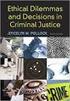 ETHICS AND LEADERSHIP IN CRIMINAL JUSTICE CRIM 203 WEB COURSE SYLLABUS Semester: Semester Credits: Meeting Days/Time: Instructor: Office: Office Phone #: E-mail: Office Hours: Fall 3 Credit Hour Course
Human Resource Management. BUA 221-71 Spring 2009 Hybrid. Semester Dates: May 19, 2009 through June 23, 2009
 Human Resource Management BUA 221-71 Spring 2009 Hybrid Semester Dates: May 19, 2009 through June 23, 2009 Online assignments for this course will be due each Thursday Instructor's Name: Antoinette (Toni)
Syllabus. Methods of Social Research, SYA 4300-8, Spring 2009
 Syllabus Methods of Social Research, SYA 4300-8, Spring 2009 M & W, 9:30-10:45 a.m. HCB, Room 214 Last Updated: 2/3/2009 Instructor: Dr. Annette Schwabe E-mail: [email protected] Office: 425 Bellamy Building
Learning Objectives and HPM Competencies. Introduction
 HPM 871 Teaching of Health Policy and Management ( TA Seminar ) Department of Health Policy and Management Gillings School of Global Public Health Fall 2015 Syllabus and Schedule Mondays 2:30-3:45 PM,
International Economics (ECON - 0323) (48 hours, 3 credits)
 1 Universidad Americana College of University Studies in English, CUSE Course Syllabus International Economics (ECON - 0323) (48 hours, 3 credits) SEMESTER: Aug - Dec 2015 Days: Tuesday Thursday 17:45-19:15
REL 100 INTRODUCTION TO RELIGION MSU
 REL 100 INTRODUCTION TO RELIGION MSU Dr. Micki Pulleyking Fall 2012 Office: Strong Hall 265 Phone: Home: 863-0412, (7:00 a.m.-9:00 p.m. please); Office: 836-5514 or 836-6262 Email: [email protected]
COURSE SYLLABUS FOR ARE 363: CURRICULUM AND TEACHING METHODS IN THE ELEMENTARY SCHOOL
 p. 1 COURSE SYLLABUS FOR ARE 363: CURRICULUM AND TEACHING METHODS IN THE ELEMENTARY SCHOOL Class Meetings: Mondays and Wednesdays 2:00PM 3:50PM, Room 225 Instructor: Sunny Spillane, Ph.D. ( or Sunny )
Master of Arts in International Affairs
 Master of Arts in International Affairs Introduction The Master of Arts in International Affairs program at NGCSU is designed to provide an advanced understanding of the international system along with
INTELLIGENCE ANALYSIS Criminal Justice 380 Course Syllabus Spring 2010
 INTELLIGENCE ANALYSIS Criminal Justice 380 Course Syllabus Spring 2010 Instructor: Mr. Albert Sproule. Phone: 610-282-1100, x-1463 E-mail Address: [email protected]. Office Hours Office Hours:
Harvard Kennedy School of Government Politics and Ethics of Statecraft (IGA 112) Fall 2016 T/TH: 2:45-4:00 Littauer Building, L332
 Harvard Kennedy School of Government Politics and Ethics of Statecraft (IGA 112) Fall 2016 T/TH: 2:45-4:00 Littauer Building, L332 Professor: J. Bryan Hehir Faculty Assistant: Rosita Scarfo Office: Belfer
Full Time JD/MA Int l Studies Recommended Degree Plan
 Full Time JD/MA Int l Studies Recommended Degree Plan 1st Year 2nd Year 3rd Year 4th Year Fall Semester (JD) Spring Semester (JD) Fall Quarter Winter Quarter Spring Quarter Fall Qtr/Fall Sem Winter Qtr/
Brief Biographical Sketch
 Department of Political Science University of California, Davis Davis, California 95616 (530) 752-2262 E-mail: [email protected] Present Position Brief Biographical Sketch Miroslav Nincic Professor of
COURSE NUMBER AND TITLE: Management Information Systems Concepts
 (IS213ZA) (Management Information Systems Concepts) Page 1 EMPORIA STATE UNIVERSITY SCHOOL OF BUSINESS DEPARTMENT OF ACCOUNTING AND INFORMATION SYSTEMS Course Syllabus Fall 2012 MISSION STATEMENT: The
Introduction to Personality Psychology 2320, Spring 2013 TTh 5:30-6:45 Arts and Science 110 (Allen Auditorium)
 Introduction to Personality Psychology 2320, Spring 2013 TTh 5:30-6:45 Arts and Science 110 (Allen Auditorium) Instructor: Wendy Slutske, Ph.D. Office: 212A McAlester Hall Office Hours: by appointment
Course Title: HSE-101 Introduction to Homeland Security Prerequisites: None Credit Hours: 3 lectures, 3 hours
 Bergen Community College Division of Business, Social Science and Criminal Justice and Homeland Security Department of Criminal Justice and Homeland Security Master Course Syllabus Course Title: HSE-101
Psychology of Women (PSYCH 235/WGS 235) SECTION 051 Fall 2011 Monday and Wednesday 5:35 6:50 Room # HW 511
 Instructor: Justine Calcagno Email: [email protected] Office Hours: By appointment Office: HN 627 Psychology of Women (PSYCH 235/WGS 235) SECTION 051 Fall 2011 Monday and Wednesday 5:35 6:50 Room #
History 120 - American History I Online Syllabus
 Page 1 of 8 History 120 - American History I Online Syllabus Textbook Information Alan Brinkley, American History: Connecting with the Past Volume I to 1865 (15th ed.) ISBN 978-0-07-777675-6 (You can purchase