
DIET AND NUTRITION GUIDE
|
|
|
- Lambert Nichols
- 10 years ago
- Views:
Transcription
1

2 A Message To You... Ostomy surgery is a lifesaving surgery that enables a person to enjoy a full range of activities, including traveling, sports, family life and work. Thousands of people annually undergo ostomy surgery for various reasons and return to a healthy, functioning lifestyle. The United Ostomy Associations of America (UOAA) is a volunteer organization dedicated to helping those who have or will have ostomy or other diversionary surgery by providing one-on-one support, local chapter meetings, conferences, and educational material through its web site, printed material and The Phoenix magazine. You have many peers in the UOAA who are ready to answer your questions, provide support and reassure you that you can have a full, productive life after ostomy surgery. We invite you to join us as we fulfill our mission in helping others. From the United Ostomy Association s of America

3 DIET AND NUTRITION GUIDE Reviewed and Revised by Michelle Pasia, MPH, RD, LD 2011 The Diet and Nutrition Guide has been compiled from existing UOA materials: Ostomy Dietary Guidelines, Anita L. Price, CETN, Lynda Allen Sanders, RN ET; 1995 Ostomy Quarterly magazine articles, Peggy Christ, RNET Ostomy Quarterly magazine article, Annie Wilde, MS, RD, CNSD Continent Diversion Network, Margie Reeder, RN Originally Compiled by Bobbie Brewer, ET,Contributions, Reviewed and Editing by: Judith Ehlers-Crim, RD CEDC, Private Practice, Atlanta, GA. Reviewed by: Lynda Allen Sanders, RNET Peggy Christ, RNET Helen DuBois, RNET This guidebook is available for free, in electronic form, from the United Ostomy Associations of America (UOAA). It was originally produced, copyrighted and sold by the United Ostomy Association (UOA), the national US ostomy organization from 1962 to 2005, which released its copyrights on this material. UOAA may be contacted at:

4 CONTENTS INTRODUCTION Overview of Common Ostomy Diversions Bowel Diversions Bladder Diversions DIETARY GUIDELINES Basic Food Groups Chart Digestion Absorption Metabolism Bowel Functions/Output Vitamins and Minerals Absorption Chart Super Nutrients Chart GENERAL GUIDELINES Ileostomy & Colostomy Food Journal Chart Continent Diversions (bowel surgery) Important Tips for Continent Diversions Urostomy Urine ph Balance FLUIDS AND ELECTROLYTES Electrolyte Balance Fluid and Electrolyte Problems Preparing and Utilizing Electrolyte Drinks Water OSTOMATES FOOD REFERENCE CHART MEDICATIONS Ileostomy Absorption Concerns Medication and the Ostomate Chart FREQUENTLY ASKED QUESTIONS RESOURCES GLOSSARY

5 INTRODUCTION This guide provides some basic information about the effects ostomy surgery has on digestion and food absorption. After healing is complete and the ostomy is functioning normally, most people with ostomies can return to a normal diet. If you have a special diet because of heart disease, diabetes or other health problems, you should ask your doctor about a diet that will work with both that problem and your ostomy. More detailed information about any special dietary and nutritional needs can be obtained through a registered dietitian (nutrition specialist) and your doctor. Overview of Common Ostomy Diversions The following is an overview of common ostomy diversions that will help you better understand their effect on the digestive system. Both fecal and urinary diversions interrupt the normal process of elimination and will have some influence on its function. Bowel Diversions Colostomy: A portion of the large intestine is removed or by-passed. The remaining portion of the functioning large intestine (colon) is brought through the abdominal wall, creating a stoma. Ileostomy: The entire colon, rectum, and anus are removed or by-passed. The small intestine (ileum) is brought through the abdominal wall, creating a stoma. Continent Ileostomy (abdominal pouch): An internal reservoir with a nipple valve is constructed from a section of small intestine and the valve is brought through the abdominal wall to create a stoma for intubation to empty the reservoir/pouch. Ileoanal Reservoir/Pelvic Pouch: A pelvic pouch/reservoir is constructed from small intestine, which is brought down and attached to the anus. Evacuation is through the anus. Bladder Diversions Urostomy: The bladder is removed or bypassed. A conduit is constructed from a segment of small intestine into which ureters are implanted and brought through the abdominal wall and an external stoma is created. Continent Urinary Reservoir: The bladder is removed or bypassed. An internal reservoir is constructed from a segment of the small or large intestine into which the ureters are implanted and a stoma is created for intubation to empty the reservoir/ pouch. 1

6 DIETARY GUIDELINES BASIC FOOD GROUPS CHART Nutritional goals for individuals who have had ostomy or related surgeries require some adaptation of dietary information provided for the general public. Specifi cs of adaptation depend on the type of ostomy and its management. Ostomy nutritional guidelines provide a Complex Carbohydrates White bread, rolls, crackers, refined cereal (cream of wheat, cream of rice, oatmeal), white rice serving per day One serving equals = 1 slice of bread 1 cup ready-to-eat cereal 1/2 cup cooked cereal, rice or pasta 1/2 bun, bagel or English muffin During the fi rst 6-8 weeks after surgery, limit foods containing insoluble fi ber e.g., wheat, bran, corn & nuts. Then add these foods gradually to determine tolerance. Vegetables Soft cooked green beans, carrots, beets, squash and stewed tomatoes. You may need to begin with mashed, boiled or baked potatoes without the skin and other pureed vegetables. 3-5 servings each day One serving equals = 1/2 cup cooked 1/4 cup juice Limit raw celery, mushrooms, green peppers, cabbage, peas, Chinese vegetables, foods with kernels, nuts, and seeds and soy. Remove skins and seeds from fruits and vegetables. Fruits Apples, bananas and canned fruit packed in water or juice. Unsweetened citrus juices. 2-4 servings per day One serving equals = 1 medium size fruit 1/2 cup canned or cooked 1/4 to 1/2 cup juice Include foods that contain soluble fiber such as applesauce and bananas. Limit coconut, pineapple and raisins. Eat small quantities and chew well. Avoid dried fruit. Digestion Digestion begins in the mouth when food is broken down by chewing and mixed with ptyalin, a digestive enzyme in saliva. In the stomach, food is mixed with gastric juices into a semi-liquid state. The stomach has two valves which help regulate emptying into the small intestine. The small intestine is approximately 21 feet long. Bile and pancreatic enzymes, along with small intestine enzymes, break food down so it can be absorbed and used for energy. The digestion process usually takes two to six hours to complete through the small intestine. The large intestine, or colon, is fi ve to six feet in length and serves as a storage 2

7 base of knowledge for selection of a personalized dietary plan and sound nutritional advice for good eating habits. The American Dietetic Association recommends the following food categories and servings. Consider the following recommendations for a healthy diet for ostomates: Milk, Yogurt, Cheese Milk and milk products as tolerated. All cheeses without seeds. 2-3 servings per day One serving equals = 1 cup milk or yogurt 1 1/2 oz. natural cheese 2 oz. processed cheese Slowly add milk and milk products to your diet. If excessive gas or diarrhea occur, omit from diet for several days and reintroduce in small amounts. Meats, Proteins Lean red meat, fish, poultry, dried beans, nuts and eggs. 3 servings or average of 10 oz. daily One serving equals = 2-3 oz. cooked meat (Count 1/2 cup beans, 1 egg, or 2 tsp. peanut butter as 1 oz. of meat.) Broil, boil, roast, grill, or cook by light frying (minimal fat is absorbed). Select or prepare meats in their natural juice instead of gravies or sauces. Fats, Oils, Sweets Broth, bouillon, cream soups made with skim milk and lean meats. Sweets/ desserts such as angel food cake, vanilla wafers, graham crackers, nonfat frozen dessert and frozen yogurt. Use Sparingly Choose low-fat snacks such as pretzels instead of potato chips. Use fat in moderation including that used in food preparation. Note: If you have a fat intolerance, use fat free items. Decrease usage of caffeine. It can increase acid content of your stomach and increase the transit time of your gastro-intestinal tract. area for the residues of digestion (wastes). Some water and sodium are absorbed from the stool in the colon. The stool may remain in the colon for 12 to 48 hours. Absorption Following the mechanical (chewing) and chemical digestion, the nutrients from food are ready for absorption into the blood and lymphatic system via the small intestine. Almost all absorption occurs in the small intestine. For absorption to take place carbohydrates, fats and protein must be completely digested or broken down into simple forms. Vitamins, minerals and water are absorbed in their original form. 3

8 DIETARY GUIDELINES cont. Your gastrointestinal tract is a highly organized, specialized, and segmented filter designed to absorb only those things that the cells in your body want or need, and allowing the residual (stool) to pass unabsorbed, essentially remaining outside of your body. See the Vitamins and Minerals Absorption chart. Many people with ostomies have no idea what portions of their bowel were removed and what remains. Get the operative reports from each surgery or ask your surgeon about the extent of the surgical procedure(s). Your nutritional needs will vary based on the bowel you have remaining, the health of the remaining bowel, your overall health and other conditions or diagnoses. All individuals with ostomies have lost a portion of their bowel and will need to compensate by optimizing their diet for the nutrients in question. Actual changes in your diet may appear minor, it could be that the only one who will notice is you. If minor adjustments do not seem to help, a registered nutrition support dietitian or certified nutrition support nurse with experience with malabsorptive disorders can assist with determining your personal needs. VITAMINS AND MINERALS ABSORPTION CHART Metabolism The utilization by the body of the absorbed nutrition is called metabolism. In a process called oxidation, the food is combined with oxygen and energy is released. Energy is measured in the form of calories. Calcium Magnesium Iron Zinc Glucose Stomach Duodenum Bile Bowel Function/Output Conventional Ileostomy the stool is liquid to semi-liquid and may contain particles of undigested food residue. The flow cannot be controlled and elimination occurs periodically. Continent Ileostomy the stool is semi-liquid to a toothpaste consistency, containing undigested food particles. Lactose Sucrose Fructose Thiamin Riboflavin Pyridoxine Folic Acid Ascorbic Acid B12 Vitamin K H 2 0 Jejunum Ileum Colon Protein Vitamin E Vitamin A Vitamin D Fat (EFA) Bile Salts Source, Annie Wilde, MS, RD, CNSD, Ostomy Quarterly, Vol. 34, No 2 4

9 High-Volume Ostomy (Short Bowel Syndrome) A condition where sections of the small intestine have been removed or by-passed due to disease, surgical complications or injury. The shortened length of the small intestine can create problems with digestion, absorption and ostomy management. Consult with your physician and/or ostomy nurse for prescribed medications to slow motility if diarrhea is a problem. SUPER NUTRIENTS CHART Description Health Effects Food Sources Vitamin C (anti-oxidant) Protects against some cancers and heart disease. Green & red peppers, oranges, grapefruit, broccoli, strawberries, other fruits and vegetables Vitamin B6 Potassium (mineral) Beta Carotene (anti-oxidant) Selenium (mineral) Zinc (mineral) Calcium (mineral) Magnesium (mineral) Helps immune system & prevents heart disease. Helps lower blood pressure, risk of stroke and helps regulate fluid and salt balance. Aids in bone growth and assists the immune system. May protect against prostate cancer. Helps wound healing and benefits the immune system. Builds strong bones and teeth. Regulates heart beat and muscle contractions. Reduces risk of heart disease and strengthens bones. Potatoes, bananas, fish, chicken, pork, beef and avocados Beets, greens, beans, avocados, yogurt, fish and bananas Fruits, green and yellow vegetables Nuts, tuna, oysters, fish, poultry wheat germ, brown rice, oatmeal and eggs Oysters, crab, beef, poultry, pork, lamb, nuts, milk products and beans Dairy products, sardines, collard greens, salmon, broccoli, beans, nuts and seeds Almonds, spinach, sunflower seeds, fish, tofu, wheat bran, brown rice, avocados and beans Folacin - vitamin B needed for cell division and protein synthesis Reduces the risk of birth defects and protects from cancer and heart disease. Beans, spinach, oatmeal, corn, asparagus, avocado, peas, broccoli and brussel sprouts Source, Peggy Christ, RNET, Ostomy Quarterly, Vol. 1, No. 37 5

10 GENERAL GUIDELINES Ileostomy & Colostomy (Bowel Surgery) Individuals who have had ostomy surgery will want to eat a regular balanced diet that includes the necessary vitamins, minerals and calories needed for good health. Usually after surgery you start out with a low-fi ber/low-residue diet. The reason is that surgery causes the bowel to swell. This swelling reduces in about six to eight weeks, then a regular diet can be resumed, adding specifi c foods one at a time to judge their effects. This is where a food journal may be helpful. See Food Journal on page 7. However, for the fi rst year of recovery from surgery (especially if you had a long history with your disease), you may need to take a multi-vitamin supplement. The vitamins could vary from a one-a-day type to a higher dosage type (stress tab) to replenish the nutrients that were lost or needed to rebuild your nutritional state. Eat a variety of foods based on the food groups. Each food group provides a combination of key nutrients for optimum bodily function. Follow individual preferences considering food requirements, tolerances and any restrictions. If you are unable to tolerate fruits, vegetables or meats, you may need to take a daily multi-vitamin supplement. Add new foods gradually to your diet to determine its effect on your ostomy management. Add a new food every three days to have a more accurate check on tolerance points. Keeping a food journal is helpful. Eat at regular intervals. Skipping meals increases the incidence of watery stools and flatus (gas). Avoid fasting and skipping meals. A few people benefit from eating six smaller meals. The total of the six feedings should equal three regular meals. Balance dietary fi ber. Fiber (roughage) includes all food substances that digestive enzymes cannot break down (indigestible food residue). Fiber adds bulk to the stool. Its purpose is aiding the transportation of stool along the intestinal tract for elimination. Lactose intolerance is common. If you notice gas, abdominal bloating, increase in liquid output or diarrhea ten minutes to several hours after the ingestion of a dairy product, eliminate it for several days. You may then add milk, one ounce at a time, to determine your tolerance point. You may also change to lactose free milk, soy milk (can cause gas), rice milk or taking lactase tablets for lactose digestion. Include all the fats. Our bodies do need different types of fats (fatty acids). If you have a fat intolerance, you may need to take some supplements. Check with your doctor or a registered dietitian if your are unsure of your fat tolerance. If you do tolerate fats, try to eat a variety of fats, monounsaturated (olive oil, canola oil, peanut oil), polyunsaturated (corn oil, safflower oil, sunflower oil) and Omega 3 fats (fi sh oil, flaxseed oil/seeds and walnuts). 6

11 FOOD JOURNAL Keeping a food journal may be beneficial for some people. If you are having persistent gas, diarrhea or you just do not feel well, a journal may help you see patterns related to how or what you eat and when problems occur. Often you may need to consult a registered dietitian (RD) to review the journal with you. It is important to consult a registered dietitian who has an understanding of gastrointestinal diseases and ostomies. There are many different ways to keep a food journal. Below is a sample journal. Date Time Food -Solid and Liquid Medications Physical Symptoms Cravings Emotions Source: Judith Crim-Ehlers, RD, CEDC,

12 GENERAL GUIDELINES Cont. Continent Diversions (Bowel Surgery) For several months after surgery, the pouch will adapt to its new status. During this time, stool consistency gradually thickens, capacity increases and the number of daily bowel movements will decrease. This is not a steady change. There will be ups and downs. Improvements should become reliable after one year. Diet and medications help to improve pouch function. Immediately after surgery, eat to slow down the digestive process and allow the pouch to enlarge. This will decrease the number of bowel movements and help prevent peri-anal irritation (ileo-anal reservoir). Food tolerances vary from person to person, so what works for someone else may affect you differently. If you do not tolerate something now, try it again in a few months. Skipping meals does not stop output. Eat to slow it down. Remember, when you eat is as important as what you eat, so try adjusting the time between meals, or see if your body responds better to a different meal time. Traditional meal patterns cause increased output later in the day. Sleep better by limiting foods and fl uids in the evening. Be patient and keep experimenting to fi nd the combinations that give you the results you want. Note: Review all the information and food charts in this guide. The effects of your diet will generally be the same as indicated for traditional ileostomy and colostomy. Important Tips for Continent Diversions: Eat regularly-don t skip meals. Empty bowels produce gas. When adding new foods to your diet, try a little bit with other foods. Small, frequent meals are best always chew thoroughly. Rice, potatoes or pasta once daily may reduce frequency and irritation. High potassium foods will help offset the effects of diarrhea. Limit foods containing simple sugars they aggravate diarrhea which include sweets, many desserts and high-sugar beverages such as juices and soda. Drink six to eight glasses of fl uid each day but not with meals. Anal Irritants Chinese/oriental vegetables Raw fruits (oranges, apples) Coconut Raw vegetables (celery, corn, coleslaw) Dried fruits (raisins, fi gs) Spicy foods Foods with seeds, nuts Limit Simple Sugars Sugar Honey Candy Jam, jellies Pastries Sweetened drinks 8

13 Urostomy (Bladder Surgeries) The urinary system is a simple network with complex functions. It plays a role in fl uid balance, electrolyte balance, acid-base balance and excretion of waste. To maintain healthy kidney function, drink sufficient fl uids to keep the urine diluted. If urine color is darker than usual, it is an indication of concentrated urine which requires an increase in fl uid intake. Certain foods and drugs can discolor the urine or produce a strong odor. Urine ph Balance Urine ph is defi ned as the fl uid s degree of acidity or alkalinity. When the food you eat is burned in the body, it yields a mineral residue called ash. This ash can be either acidic or basic (alkaline) depending on whether the food that is burned contains mostly acidic or basic ions. Most fruits and vegetables actually give an alkalinized ash and tend to alkaline the urine. Meats and cereals will usually produce an acidic ash. Acid Ash Foods Alkaline Ash Foods Neutral Foods Most meats Milk Butter Breads & cereals Bananas Coffee Cheese Beans Cream Corn Beets Honey Crackers Greens Salad oils Cranberries Spinach Syrups Eggs Most fruits Tapioca Macaroni (including citrus fruits) Tea Nuts Most vegetables Pasta, Rice Prunes, Plums Fish Poultry Unless otherwise indicated, the urine should be maintained in an acid state. To maintain an acid urine state, increase your daily fl uid intake to eight to ten (8 oz.) glasses of water. Drink cranberry juice in place of orange juice or other citrus juices which tend to make the urine more alkaline, take vitamin C daily (if okayed by physician) and try to eat an acid ash diet (see above listing). 9

14 FLUIDS AND ELECTROLYTES Electrolyte Balance Electrolytes refer to the normal chemicals dissolved in body fl uids needed to maintain body activity. If electrolytes are out of balance, a person may become weak or ill and may need to take medications by mouth or intravenously. Electrolyte balance (especially potassium and sodium) is important. When the colon (large intestine) is removed, a greater risk for electrolyte imbalance can occur. Diarrhea, excessive perspiration and vomiting can increase this risk. A person with short bowel syndrome is at high risk. Their electrolytes should be monitored closely. Your diet should include fl uids and foods rich in electrolytes. A general rule is to salt foods to taste. Do not exclude sodium in the diet. Fluid and Electrolyte Problems Problem Symptoms Treatment Dehydration Increased thirst, dry mouth, Increase fl uids (any type, dry skin, decreased urine output, Gatorade/PowerAde high fatigue, shortness of breath, in potassium & sodium) headaches, dry eyes and Daily intake of fl uids abdominal cramping. should be 8-10 (8 oz.) glasses. Sodium Loss of appetite, drowsiness, Increase intake of foods Depletion headaches, abdominal and leg and beverages high in cramping, feelings of faintness, sodium, such as any particularly when standing, cold regular soup, bouillon, sensation in arms and/or legs. Gatorade/PowerAde. Potassium Fatigue, muscle weakness, Increase intake of foods Depletion gas, bloating, shortness of high in potassium, such breath, decreased sensation as orange juice, bananas, in arms and legs. Gatorade/PowerAde. Foods high in potassium: black-eyed peas, bananas, bouillon, chicken, fi sh, oranges, pinto beans, potatoes, raisins, tomato or vegetable soup, veal, watermelon and yogurt. Foods high in sodium: broth, buttermilk, canned soups, canned vegetables, cheese, soy sauce, table salt, tomato juice and commercially prepared foods. 10

15 Preparing and Utilizing Electrolyte Drinks Excessive fl uid loss of more than one quart of liquid stool in 24 hours can cause dehydration and require medical attention. (Normal ileostomy pouch emptying is fi ve to eight times daily.) Balance intake of fl uids with the output from the stoma. Water is an excellent natural beverage; however, over-consumption of water can wash away electrolytes in the body. Drink a combination of water and electrolyte beverages. The glucose ingredients in electrolyte drinks aid in absorption of electrolytes. Homemade Electrolyte Drink Or Quick Fix 1 teaspoon salt Orange juice 4 ounces 1 teaspoon baking soda Water 4 ounces 1 teaspoon white Karo syrup Pinch of salt 1 6-ounce can frozen orange juice Add water to make one quart, mix well Diluted Electrolyte Drinks (Brand Names) (Improve taste, tolerance, lower calories, and decrease cost) 1/2 quart (500 cc) commercial electrolyte drinks 1/2 quart (500 cc) - water 1 teaspoon salt substitute (potassium chloride) Mix well Brand Name Electrolyte Drinks - 8 oz. serving* Brand/8 oz.* Sodium Chloride Potassium Glucose Calories Gatorade/PowerAde Pedialyte *Units are per ounce/ml Water Water is an essential nutrient needed by every body cell. Water controls body temperature, serves as building material and solvent, and transports nutrients. Thirst is a signal that the body needs fl uids. Daily losses must be replaced. Any liquid containing water (soda, milk, juice, etc.) helps to meet your daily requirement. You can also get water from the food you eat. (e.g., tomatoes have a 94 percent water content). Drinking coffee or tea will interfere with the ability to stay hydrated because they both cause the kidneys to increase urine and salt output. Be sure when drinking coffee or tea to increase your water consumption to counter balance the higher output. Encourage fl uid intake of eight to ten (8 oz.) glasses of liquids each day. Drinking more fl uids is helpful in fl ushing out the kidneys, eliminating impurities in the blood, and helping you to maintain the proper electrolyte balance. 11

16 OSTOMATES FOOD REFERENCE CHART For individuals who have had ostomy surgery, it is important to know the effects of various foods on ileal output. The effects may vary with the remaining portion of functioning bowel. Listed below are some general guidelines of the effects of foods after ostomy surgery. Use trial and error to determine your individual tolerance. Do not be afraid to try foods that you like, just try small amounts. Gas Odor Increased Stoma Producing Producing Stools Obstructive Alcoholic bev. Asparagus Alcoholic bev. Apple peels Beans Baked Beans Whole grains Cabbage, raw Soy Broccoli Bran cereals Celery Cabbage Cabbage Cooked cabbage Chinese vegetables Carbonated bev. Cod liver oil Fresh fruits Corn, whole kernel Cauliflower Eggs Greens, leafy Coconuts Cucumbers Fish Milk Dried fruit Dairy products Garlic Prunes Mushrooms Chewing gum Onions Raisins Nuts Milk Peanut butter Raw vegetables Oranges Nuts Some vitamins Spices Pineapple Onions Strong cheese Popcorn Radishes Seeds Color Odor Constipation Diarrhea Changes Control Relief Control Asparagus Buttermilk Coffee, warm/hot Applesauce Beets Cranberry juice Cooked fruits Bananas Food colors Orange juice Cooked vegetables Boiled rice Iron pills Parsley Fresh fruits Peanut butter Licorice Tomato juice Fruit juices Pectin supplement Red Jello Yogurt Water (fiber) Strawberries Any warm or Tapioca Tomato sauces hot beverage Toast 12

17 MEDICATIONS Ileostomy Absorption Concerns Due to the absence of the colon and often altered transit time through the small intestine, the type of medication taken must be carefully considered when prescribing for the person with an ileostomy. Medications in the form of coated tablets or timerelease capsules may not be absorbed and no benefit received. A large number of medications are prepared in this way. Before the prescription is completed by the physician, the patient with an ileostomy should inform him of this difficulty. If the medication required is available only in this form and not destroyed by the stomach juices, then the tablet may be crushed between two spoons and taken with water. This often results in an evil-tasting mixture but absorption is ensured. Decipher Your Prescription b.i.d. = 2x a day p.r.n. = as needed q. = every q.h. = every hour q.4h = every 4 hours q.8h = every 8 hours q.n. = every night q.i.d. = 4x a day The best type of medication for the person with an ileostomy is either in the form of uncoated tablets or in liquid form. Although this is not the most palatable mode of treatment, these dosage forms ensure that the medication prescribed is being absorbed. A pharmacist can assist in choosing the form of a medication that will be best absorbed. After ileostomy surgery, never take laxatives. For a person who has an ileostomy, taking laxatives can cause a severe fl uid and electrolyte imbalance. Transit time varies with individuals. If food passes through undigested, be aware that this may be a sign that the nutrients are not being absorbed properly. Prolonged incidences of decreased absorption may lead to various sub-clinical or clinical nutritional defi ciencies. What s a body made of? Sugar and spice and everything nice. An average 140 pound person s body weight consist of: 84 pounds water (60%) 28 pounds fat (20%) 29 pounds of a combination of (20%) protein (up to 25 pounds) minerals (up to 7 pounds) carbohydrates (up to 1.4 pounds) vitamins (trace) 13

18 MEDICATION AND THE OSTOMATE CHART The following information was developed to focus on a person with an ostomy. Absorption may vary with individuals and type of medication. Certain drug problems may arise depending on the type of ostomy you have and the medications you are taking. Make sure all your healthcare providers know the type of ostomy you have and the location of the stoma. This information will help your pharmacist and other healthcare providers monitor your situation. Drug Group Colostomy Ileostomy Urostomy Antacids Products containing Products containing Products containing aluminum may cause magnesium may cause calcium may cause constipation (e.g., diarrhea (e.g., Maalox, calcium stones Amphogel, Basalgel, Fast-Acting Mylanta, (e.g., Children's Maalox, Fast-Acting Mylanta Gelcaps, Mylanta, Mylanta Mylanta ). Mag-Ox 400, Uro-Mag). Gelcaps). Antibiotics Caution May May lead to diarrhea and Usually no problem. destroy normal flora risk of dehydration (e.g., (may cause diarrhea). ampicilin, cephalosporins, sulfonamides, etc). Birth Control Usually no problem. Birth control pills may not be Usually no problem. Pills fully absorbed. There may be a possible need to use other forms of birth control. Corticosteroids Sodium retention. Sodium retention. Sodium retention. (Cortisone) Possible fungal Possible fungal Possible fungal infection under face- infection under face- infection under faceplate due to suppression plate due to suppression plate due to suppression of immune system. of immune system. of immune system. Diuretics Usually no problem. Caution--may cause Will increase urine flow electrolyte imbalance. may cause electrolyte imbalance. NSAIDS May cause bleeding May cause bleeding May cause bleeding Nonsteroidal from stomach or from stomach or from stomach or anti- duodenum-gastric duodenum-gastric duodenum-gastric inflammatory distress. Do not take distress. Do not take distress. Do not take agents on an empty stomach. on an empty stomach. on an empty stomach (e.g., Motrin, Aleve, etc.) Sulfa Drugs Usually no problem. Usually no problem. Caution use lots of water. Vitamins Liquid form is best. Liquid form is best. Tablet/Capsule okay. B complex may B complex may cause B complex may cause odor. odor. Vitamin B-12 is best by cause odor. injection or nasal B-12 spray. Not absorbed well by oral route. Source: Melvin F. Baron, PharmD, MPA,

19 FREQUENTLY ASKED QUESTIONS Question: How soon after ostomy surgery can I return to a normal diet? Physicians and ostomy nurses suggest that you begin slowly, depending upon your recovery and/or other medical complications. Add back one new food at a time. If you experience any problems, discontinue for a few weeks and try again. Question: In the past, certain foods caused me some trouble with digestion. How will they affect me since my ostomy surgery? Check them out. You may fi nd that some of those same foods will continue to be troublesome and others may not. Question: Will my ileostomy continue to produce output even if I do not eat? Yes, the small intestine will continue to produce gas and digestive juices. An empty digestive tract seems to produce excessive gas. Eat small meals to keep something in the gut. Peristalsis happens! Question: After ostomy surgery, I have gained excess weight. What happened? What types of food should I eat? The relaxation of dietary restrictions, freedom from debilitating illness and malabsorption promotes a rapid gain in weight. Follow the same weight reduction diet as recommended by nutritionists and dietitians. Eating smaller quantities of a wellbalanced diet and increasing water/fl uid intake will assist with weight reduction. Question: What is meant by low-residue diet? Low-residue refers to a dietary regime which eliminates bulk-forming, hard-to-digest or high-fi ber foods. Question: Will spicy foods cause any damage to my stoma? If you can tolerate spicy foods through your digestive system, the output through your stoma should not cause any harm. The stoma is formed from the lining of the bowel and it is tough and can tolerate those spicy foods. Question: What effects will oral odor control medications have on my ostomy? Some individuals who have a colostomy report that they experienced some constipation from bismuth products found in oral odor control medications. Individuals who have an ileostomy have more benefits and fewer side effects from oral preparations (chlorophyll tablets, bismuth subgallate and bismuth subcarbonate). Most foods do not effect an individual with a urostomy. A strong urine odor may be an indication of dehydration and the need for increased fl uid intake. Check with your doctor or ostomy nurse about any oral preparations and do not exceed the recommended dosage. Question: Can sugar free foods containing mannitol, sorbitol, isomalt or xylitol have a bad effect on my gut? Yes. The effect is probably the same for people with or without an ostomy. These are sugar alcohols used instead of or in addition to nutra-sweet and saccharin. The sugar alcohols can cause gas, bloating, abdominal pain and/or diarrhea. 15

20 FREQUENTLY ASKED QUESTIONS cont. Question: Can the fat substitute Olestra cause problems? Maybe. In many people with gut diseases, it may cause severe abdominal cramping, gas, bloating and/or diarrhea. Question: Should I be concerned about vitamin B-12 defi ciency? Vitamin B-12 is absorbed in the last section of the small bowel (terminal ileum). Ileostomy surgery necessitates the removal of some portion of the terminal ileum and some of the absorption abilities for vitamin B-12. Ask your ostomy nurse or physician to check out your B-12 level and prescribe some replacement therapies if needed. There are several therapies available including B-12 injection, B-12 nose spray, and some B-12 pills that absorbs under the tongue. RESOURCES United Ostomy Associations of America UOAA is a volunteer-managed non-profit organization whose vision is the creation of a society where people with bowel and urinary diversions are universally accepted socially, in the work place, medically and psychologically. UOAA has a comprehensive website, that includes ostomy information, support group locations and discussion boards so people can connect, ask questions and share advice. UOAA staffs a national Help Line at Call to find the affiliated suptport group in your area or to talk to an ostomy nurse. Another free service offered by UOAA is provided by our advocacy legal specialist. If you experience some form of discrimination as a result of your surgery, call our Help Line and they will put you in touch with our specialist. The official publication of the UOAA, The Phoenix magazine, is America's leading source for ostomy information, education and inspiration. Subscriptions to the magazine are a major source of funding for the UOAA and are available by calling or going online: Wound, Ostomy and Continence Nurses Society (WOCN) The WOC(ET) nurse professional is an expert in the care of patients with wound, ostomy and continence problems. The UOAA can refer you to an ostomy nurse in your area. You can also contact the WOCN national office for information and local referrals: or visit Agencies That May Be Helpful American Dietic Association, , American Cancer Society, ACS-2345 or American Pharmaceutical Association. National Institutes of Health. Visiting Nurse Association (VNA), , 16

21 GLOSSARY Absorption: the ability of the digestive tract to process nutrients. Dehydration: loss of water from the body tissues due to diarrhea, vomiting, excessive sweating. Diarrhea: an abnormal profuse discharge from the intestines. Electrolytes: products in body cells and solution that, when in balance maintain bodily processes. Included as electrolytes are sodium (Na), potassium (K), magnesium (Mg), calcium (Ca), chlorides (Cl), bicarbonate (HCO3) and others. Enzymes: an organic compound (chemical) capable of accelerating or initiating a body process, such as the digestion of foods. Feces: waste products of the digestive system, also referred to as stool, bowel movements, etc. Food Blockage: a bolus of food residue lodged behind a kink or narrowed segment of bowel that blocks normal flow of fecal contents through the intestine. Insoluble Fiber: food substances that digestive enzymes cannot break down into a liquid. Intubation: insertion of a tube into a hollow organ. Lactose: a sugar present in milk. Low-Residue Diet: refers to a dietary regime which eliminates bulk-forming foods, hard-to-digest foods, high-fi ber foods. Peristalsis: wave-like contractions occurring in the gastrointestinal tract that propel food substances toward elimination during the digestive process. ph of Urine: how acid or alkaline urine is. Reservoir: an anatomic structure that serves as a place to collect or retain fl uid. Soluble Fiber: food substances that can be dissolved into a liquid. Transit Time: the amount of time it takes food to travel through the alimentary canal from the mouth until eliminated. 17
Nutritional Glossary. Index of Contents
 Nutritional Glossary This glossary provides nutrition information about the nutrients commonly found in fruits, vegetables, and other plant foods Each glossary definition has a long and a short version.
Nutritional Guidelines for Roux-en-Y, Sleeve Gastrectomy and Duodenal Switch. Gastric Restrictive Procedures. Phase III Regular Consistency
 Nutritional Guidelines for Roux-en-Y, Sleeve Gastrectomy and Duodenal Switch Gastric Restrictive Procedures Phase III Regular Consistency The University of Chicago Hospitals Center for the Surgical Treatment
Nutrition Information from My Plate Guidelines
 Nutrition Information from My Plate Guidelines Note: This information was compiled from the website: http://www.choosemyplate.gov/ for participants in the 4-H Food Prep Contest 1/12/16. The information
Healthy Eating During Pregnancy
 Healthy Eating During Pregnancy Pregnancy is a time of great change. Your body is changing to allow your baby to grow and develop. Good nutrition will help you meet the extra demands of pregnancy while
Fiber. What is fiber? Fiber is a part of plant food. There are two types of fiber:
 Fiber An important part of a healthy diet is eating fiber-rich foods. This handout will explain what fiber is, where it s found, and how to increase the amount of fiber in your diet. What is fiber? Fiber
Bariatric Surgery: Step III Diet
 Bariatric Surgery: Step III Diet This diet is blended foods with one new solid food added daily. The portions are very small to help prevent vomiting. Warning: This diet does not have enough calories,
Fibe. Fiber and water work together in bowel regulation. Be sure to drink eight to ten (8 ounce) glasses of
 r Fibe An important part of a healthy diet is eating a variety of fiber-rich foods, including whole-grain breads and cereals, fruits and vegetables, beans and nuts. Fiber is an important part of your diet.
HIGH FIBER DIET. (Article - Web Site) August 20, 2003
 HIGH FIBER DIET (Article - Web Site) August 20, 2003 Dietary fiber, found mainly in fruits, vegetables, whole grains and legumes, is probably best known for its ability to prevent or relieve constipation.
Appendix A Food Sources of Vitamins and Minerals
 Appendix A Food Sources of Vitamins and Minerals Appendix A 229 Appendix A Food Sources of Vitamins and Minerals Vitamin A (Retinol) Food Amount IU* Liver 3 oz 45,400 Crab 2 cup,680 Egg medium 590 Fats
Making Healthy Food Choices. Section 2: Module 5
 Making Healthy Food Choices Section 2: Module 5 1 Nutrition For Health What is healthy Tips on planning meals Making a shopping list/ Bulk orders Using WIC foods Cook and freeze What foods to choose How
Dietary Fiber. Soluble fiber is fiber that partially dissolves in water. Insoluble fiber does not dissolve in water.
 Dietary Fiber Introduction Fiber is a substance in plants. Dietary fiber is the kind of fiber you get from the foods you eat. Fiber is an important part of a healthy diet. Fiber helps get rid of excess
Ready, Set, Start Counting!
 Ready, Set, Start Counting! Carbohydrate Counting a Tool to Help Manage Your Blood Glucose When you have diabetes, keeping your blood glucose in a healthy range will help you feel your best today and in
Eating Well with Diabetes. Cassie Vanderwall UW Health Nutrition Registered Dietitian Certified Personal Trainer Certified Diabetes Educator
 Eating Well with Diabetes Cassie Vanderwall UW Health Nutrition Registered Dietitian Certified Personal Trainer Certified Diabetes Educator Outline What is Diabetes? Diabetes Self-Management Eating Well
Gastrointestinal (GI) Modified Diet for Malabsorption
 Gastrointestinal (GI) Modified Diet for Malabsorption Malabsorption of the gastrointestinal (GI) tract may occur when sections of the small intestine have been removed due to disease, surgical problems
Carbohydrate Counting for Patients with Diabetes. Lauren Dorman, MS RD CDE Registered Dietitian & Certified Diabetes Educator
 Carbohydrate Counting for Patients with Diabetes Lauren Dorman, MS RD CDE Registered Dietitian & Certified Diabetes Educator Program Purpose To increase knowledge of carbohydrate counting skills for nurses
Maintaining Nutrition as We Age
 SS-207-06 For more information, visit the Ohio Department of Aging web site at: http://www.goldenbuckeye.com and Ohio State University Extension s Aging in Ohio web site at: http://www.hec.ohio-state.edu/famlife/aging
Healthy Eating for Diabetes
 Healthy Eating for Diabetes What is diabetes and why is it important to manage it? Diabetes occurs when there is too much glucose in the blood. Learning how to manage your diabetes will help you feel better
How to Increase Volume in Your Meals
 How to Increase Volume in Your Meals By adding certain types of food to your diet and drinking more water, you can actually increase the amount of food you eat, while staying within your fat gram and calorie
February 2006. 23 Best Foods for Athletes
 23 Best Foods for Athletes February 2006 1. Beans Legumes a. Excellent source of fiber (important for keeping blood sugar and cholesterol levels under control). b. High in protein and a good source of
When you have diabetes be careful about what you eat to help you control your blood sugar.
 PART 5 INTRO TO EATING WITH DIABETES When you have diabetes be careful about what you eat to help you control your blood sugar. Foods are in three main groups: Carbohydrates (Carbs) Higher Carbohydrates
Here's how to include more fiber in your diet.
 July 1, 2012 Welcome to our first newsletter which will address the issue of fiber in your diet. If you are not regular or are having difficulty going to the bathroom then you should consider eating more
Eat More, Weigh Less?
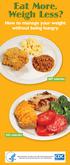 Eat More, Weigh Less? How to manage your weight without being hungry 607 calories 293 calories Department of Health and Human Services Centers for Disease Control and Prevention Can you weigh less without
(8 years or younger)
 What is iron? Iron deficiency in children (8 years or younger) Iron is a mineral found in food that your body needs. It is bound to hemoglobin, which is an important part of red blood cells. Iron helps
Take Control Nutrition Tools for Diabetes. 50/50 plate Portions Servings
 Take Control Nutrition Tools for Diabetes 50/50 plate Portions Servings Eat more Vegetables Especially non starchy vegetables Choosing Foods to manage blood glucose Select a variety of colors and types
MEAL PLANNING FOR MECHANICAL SOFT DIET
 MEAL PLANNING FOR MECHANICAL SOFT DIET Definition of Terms Calories Protein Blenderized Pureed Units of energy. A nutrient used by your body for growth and repair. The best sources are milk, meats, fish,
DIABETES & HEALTHY EATING
 DIABETES & HEALTHY EATING Food gives you the energy you need for healthy living. Your body changes most of the food you eat into a sugar called glucose. (glucose) Insulin helps your cells get the sugar
High blood sugars caused by steroids
 High blood sugars caused by steroids Your blood sugars are high because you are taking a medication called steroids. Steroids are used to: decrease swelling decrease the natural response of your immune
Kidney Stones and Diet
 Kidney Stones and Diet What are kidney stones? Urine is made up of water and substances such as calcium, oxalate and uric acid. Crystals begin to form first in the kidney when: there are higher than normal
Managing Bowel Problems after Cancer Treatment
 Managing Bowel Problems after Cancer Treatment UHN Information for cancer survivors Read this pamphlet to learn: What bowel problems are What causes bowel problems What you can do to manage your bowel
Eating more fibre. This handout provides you with tips on how to increase the amount of fibre in your diet.
 Eating more fibre This handout provides you with tips on how to increase the amount of fibre in your diet. Why do I need fibre in my diet? Fibre in the diet is important for good health. Fibre can promote
LARGE GROUP PRESENTATION: PRESENTER S NOTES
 LARGE GROUP PRESENTATION: PRESENTER S NOTES Introduce yourself. Welcome! We are so glad you are here to learn about fruits and vegetables. Icebreaker Handout: Fruit or Vegetable: Parts of Many Words Read
Carbohydrate Counting for Patients With Diabetes. Review Date 4/08 D-0503
 Carbohydrate Counting for Patients With Diabetes Review Date 4/08 D-0503 Program Objectives At the end of the session you will know how to: Define carbohydrate counting Identify the relationship between
Gaining Weight for Athletes
 Gaining Weight for Athletes Prepared by Jenn Van Ness, ATC June 2008 Gain Weight the Healthy Way To gain one pound, you need to eat approximately 500 more calories a day. Approximately one pound of fat
The Basics of Nutrition: Understanding Nutrition Facts, Servings Sizes, & Adequate Portions
 The Basics of Nutrition: Understanding Nutrition Facts, Servings Sizes, & Adequate Portions K AT I E L. H O W E H E A LT H E D U C AT O R D I V I S I O N O F S T U D E N T A F FA I R S U S C U P S TAT
Days 1 and 2: Bariatric Clear Liquids
 Gastric Bypass Diet Days 1 and 2: Bariatric Clear Liquids Duration: 2 days Food consistency: Bariatric clear liquids, which includes clear, non-carbonated, noncalorie, caffeine-free liquids such as: o
Carbohydrate Counting for Pediatric Patients With Type 1 Diabetes. Review Date 4/08 K-0591
 Carbohydrate Counting for Pediatric Patients With Type 1 Diabetes Review Date 4/08 K-0591 Program Purpose To increase knowledge of carbohydrate counting and insulin management skills for those caring for
Frequently Asked Questions: Gastric Bypass Surgery at CMC
 Frequently Asked Questions: Gastric Bypass Surgery at CMC Please feel free to talk with any member of the Obesity Treatment Center team at Catholic Medical Center regarding any questions, concerns or comments
My Diabetic Meal Plan during Pregnancy
 My Diabetic Meal Plan during Pregnancy When you have diabetes and are pregnant, you need to eat small meals and snacks throughout the day to help control your blood sugar. This also helps you get in enough
Will the cholesterol in my diet raise my blood cholesterol?
 Healthy eating for your heart What does heart healthy eating mean to me? Heart healthy eating is an important part of a healthy lifestyle. Heart healthy eating, along with regular physical activity and
DIETARY ADVICE FOR CONSTIPATION
 Leicestershire Nutrition and Dietetic Services DIETARY ADVICE FOR CONSTIPATION What is constipation? Constipation is one of the most common digestive complaints. Normal bowel habits vary between people.
It is important to know that some types of fats, like saturated and trans fat, can raise blood cholesterol levels.
 Healthy Eating You are what you eat! So before you even shop for food, it is important to become a well informed, smart food consumer and have a basic understanding of what a heart healthy diet looks like.
Food Sources of Fibre
 Food Sources of Fibre Information About Fibre Fibre includes all parts of plant foods that your body can't digest or absorb. Fibre is also known as roughage or bulk. Insoluble fibre helps promote regularity
CARBS, FATS, FIBER & FADS FAD DIETS
 CARBS, FATS, FIBER & FADS FAD DIETS Carbohydrates The national recommendation for carbohydrate intake is 40% to 65% of our daily intake. Our requirements change depending on how active we are, our current
Low Fat Diet after Cardiac Surgery With or Without Chyle Leak
 Low Fat Diet after Cardiac Surgery With or Without Chyle Leak What is chyle? Chyle (sounds like kyle) is a milky white fluid that contains protein, fat, cholesterol, lymphocytes, and electrolytes. It is
Lap-Band Instructions Post-op Diet
 Lap-Band Instructions Post-op Diet Now That I ve Had Surgery, What Do I Eat Liquid Diet *(1-2 weeks post-op) The goal during this phase is to protect the small stomach pouch. Only liquids can be tolerated
TRACKS Lesson Plan. Fiber Fill Up On Fiber! Grade: 9-12
 TRACKS Lesson Plan Fiber Fill Up On Fiber! Grade: 9-12 I. Nutrition Education Objective: Goal 1: Students will comprehend concepts consistent with USDA guidance related to eating and physical activity
Bariatric Care Center Adjustable Gastric Band Post-Op Diet
 Bariatric Care Center Adjustable Gastric Band Post-Op Diet Nothing by Mouth (Night of Surgery) Clear Liquids (DAYS 1-3) Starts the day after surgery Clear liquids must be plain or sugar-free. In general,
BuyNuezdelaIndia.com
 BuyNuezdelaIndia.com The information provided in this guide is intended for your general knowledge only and is not a substitute for professional medical advice or treatment for specific medical conditions.
Healthy Eating for Diabetes
 Healthy Eating for Diabetes What is diabetes? Diabetes is when your blood sugar (glucose) levels are higher than normal. For some people, this is because the insulin in their body doesn t work as well
FIBER IN YOUR DIET WHAT IS FIBER?
 FIBER IN YOUR DIET WHAT IS FIBER? Fiber is the portion of plant foods that our bodies cannot absorb or digest. Fiber is found primarily in fruits, vegetables, legumes, and whole grains. There is no fiber
online version Dietary Fibre Patient Information for the Gloucestershire Health Community GHPI0811_08_07 Author: Continence Review due: August 2010
 GHPI0811_08_07 Author: Continence Review due: August 2010 Patient Information for the Gloucestershire Health Community Dietary Fibre Notes Introduction Fibre is an extremely important component of a balanced,
Fat Facts That Can Help Your Heart. Most Common Risk Factors for Heart Disease
 Fat Facts That Can Help Your Heart Sally Barclay, MS RD LD Nutrition Clinic for Employee Wellness Most Common Risk Factors for Heart Disease High LDL (bad) cholesterol Smoking Low HDL (good) cholesterol
Nutrition Recommendations and Interventions for Diabetes
 Nutrition Recommendations and Interventions for Diabetes S U P P L E M E N T Medical nutrition therapy (MNT) is important in preventing diabetes, managing existing diabetes, and preventing, or at least
Material AICLE. 5º de Primaria.: Food and nutrition (Solucionario)
 Material AICLE. 5º de Primaria.: Food and nutrition (Solucionario) 3 SOLUTIONS Activity 3. Listen to the following audio and complete this chart. Then, check your answers using the information in activity
Vitamins & Minerals Chart
 Vitamins & Minerals Chart Vitamins & Minerals Functions Food Sources Water-soluble Vitamin B1-Thiamin Necessary to help the body maximizes the use of carbohydrate, its major source of energy. Essential
Getting Enough Fiber In Your Diet Does Not Have To Be Like This!
 Getting Enough Fiber In Your Diet Does Not Have To Be Like This! What is Fiber? Fiber is indigestible carbohydrate found in plant foods, such as fruits, vegetables, and grain products. Your body cannot
Nutrition for Endurance: Cycling
 Nutrition for Endurance: Cycling Superior cycling ability comes from good training. However, without good food choices and the correct timing of meals, your training and performance will suffer. You need
Using the Nutrition Facts Label
 Using the Nutrition Facts Label A How-To Guide for Older Adults Inside Why Nutrition Matters For You...1 At-A-Glance: The Nutrition Facts Label...2 3 Key Areas of Importance...4 Your Guide To a Healthy
Meal Planning for a Mushy Soft Diet After Laparoscopic Myotomy
 Meal Planning for a Mushy Soft Diet After Laparoscopic Myotomy Name: Date: Dietitian: Telephone: Why is it necessary to follow this diet? This diet is necessary for individuals who have had some types
Diabetes 101. Lifestyle Recommendations to Manage Diabetes. Cassie Vanderwall. Licensed, Registered Dietitian Certified Personal Trainer
 Diabetes 101 Lifestyle Recommendations to Manage Diabetes Cassie Vanderwall Licensed, Registered Dietitian Certified Personal Trainer Diabetes 101- Outline What is Diabetes? What can I do to control Diabetes?
Nutrition Guidelines for Diabetes
 Nutrition Guidelines for Diabetes Eating healthy foods and keeping a healthy body weight are very important parts of a diabetes treatment plan. A healthy diet and weight helps to keep your blood sugar
Canada s Food Guide Jeopardy
 Canada s Food Guide Jeopardy Drafted: July 2008 Revised: December 2012 Eating Well with Canada s Food Guide Veg & Fruit Grain Products Milk & Alternatives Meat & Alternatives Physical Activity Miscellaneous
Food Groups To Encourage. chapter OVERVIEW
 23 chapter 5 Food Groups To Encourage OVERVIEW Increased intakes of fruits, vegetables, whole grains, and fat free or low fat milk and milk products are likely to have important health benefits for most
Diet for Oral Surgery/Wired Jaw
 Diet for Oral Surgery/Wired Jaw After oral surgery no chewing is allowed for a period of 4-8 weeks. During this time you will need a blenderized or liquid diet. This pamphlet will help you to get adequate
A Guide to Reducing Dietary Sodium Intake
 Salt and High Blood Pressure A Guide to Reducing Dietary Sodium Intake A Look at the DASH eating plan My Plate Basics Sodium is a mineral element most commonly found in salt (sodium chloride) Sodium occurs
potassium which is of special importance in treating rheumatic diseases and arthritis.
 Vegetable Broth: This drink is used in all the fasting clinics in Europe. Use it first thing in the morning and before going to bed. It is a cleansing and alkalizing drink which supplies a great amount
FIBER FACTS. Straight Talk About Dietary Fiber
 F FIBER FACTS Straight Talk About Dietary Fiber WHAT IS DIETARY FIBER? HOW CAN I INCREASE MY FIBER INTAKE? WHO NEEDS TO INCREASE DIETARY FIBER? HOW WILL INCREASED FIBER BENEFIT YOU? WHEN SHOULD A FIBER
Meal Planning for a Mushy Soft Diet After Nissen Fundoplication
 Meal Planning for a Mushy Soft Diet After Nissen Fundoplication Name: Date: Dietitian: Telephone: Questions? CALL YOUR DIETITIAN! Patient Food and Nutrition Services University of Michigan Hospital 1500
How To Eat Without Getting Sick
 Level 2 Dysphagia Mechanically Altered* This diet consists of foods that are moist, soft-textured and easily formed into a bolus. All foods on Level 1 are. Meats and other select foods may be ground or
Digestive System Why is digestion important? How is food digested? Physical Digestion and Movement
 Digestive System The digestive system is made up of the digestive tract a series of hollow organs joined in a long, twisting tube from the mouth to the anus and other organs that help the body break down
Resources for Carbohydrate Counting
 Resources for Carbohydrate Counting The Diabetes Carbohydrate and Fat Gram Guide By LeaAnn Holzmeister, RD, CDE American Diabetes Association See contact information below The Doctor s Pocket Calorie,
Snacking and Gestational Diabetes
 Snacking and Gestational Diabetes Note to the Health Care Provider: Topics in this handout are discussed in Chapter 6 of the American Dietetic Association Guide to Gestational Diabetes Mellitus (1). When
Nutrition Pointers: Fruits and Veggies
 Nutrition Pointers: Fruits and Veggies Eat as many as possible try filling half your plate with fruits and veggies. Fruits and veggies are good for you whether they are fresh or frozen. Go for a wide variety
Heart Healthy Diet: Tips for Lowering Cholesterol and Fat in Your Diet
 Heart Healthy Diet: Tips for Lowering Cholesterol and Fat in Your Diet Cholesterol Saturated Fats Polyunsaturated and Mono-unsaturated Fats This fat-like substance is needed for good health. However, high
EMBRACE Your Journey Nutrition During Treatment
 Nutrition is an important part of your cancer treatment. As you prepare for treatment, it is important to focus on eating a well-balanced diet so that your body is as healthy as it can be. When your body
The Five Food Groups and Nutrition Facts
 session 4 The Five Food Groups and Nutrition Facts (Note to the presenter: Comments in parentheses are instructions to follow while giving the presentation. Do not read the comments to participants. This
Nutrition and Chronic Kidney Disease
 Nutrition and Chronic Kidney Disease I have been told I have early kidney failure. What does this mean? What can I expect? This means that your kidneys are not doing as good a job as they should to help
Participant Group Nutrition Education outline: Get the Skinny on Milk
 Participant Group Nutrition Education outline: Get the Skinny on Milk Lesson Plan adapted from California WIC This group NE outline uses a facilitated discussion format, including a tasting activity. Select
1800 Calorie Meal Plan. Jessica Iannotta Department of Nutritional Sciences UMDNJ School of Health Related Professions
 1800 Calorie Meal Plan Meal Portion Food Calories DAY 1 Breakfast 1 cup Hot Oatmeal, cooked, unsweetened 150 1 banana 120 1 Amy s Bean & Rice Burrito 280 (in the frozen foods section of your grocery store
WHOLE GRAINS FOR GOOD HEALTH
 WHOLE GRAINS FOR GOOD HEALTH Section 1: What are Whole Grains? Whole grains are nutritious, delicious, and are included in the WIC program! Whole grains contain the entire grain kernel. That means whole
Eat Well For Life: Week 4
 Eat Well For Life: Get the facts on Fiber What is Dietary Fiber? Fiber (also known as roughage or bulk) includes the parts of plant foods that the body cannot digest or absorb. Fiber is found in the skin,
Take Control of Your Health and Reduce Your Cancer Risk
 Take Control of Your Health and Reduce Your Cancer Risk Creation of this material was made possible in part by a pioneering grant from CBCC-USA. Distributed by India Cancer Initiative Take Control of
Bariatric Care Center Gastric Bypass Post-Op Diet
 Bariatric Care Center Gastric Bypass Post-Op Diet Nothing by Mouth (Night of Surgery) Clear Liquids (DAYS 1-7) Starts the day after surgery Clear liquids must be plain or sugar-free. In general, clear
Food Sources of Fibre
 Information About Fibre Food Sources of Fibre Fibre includes all parts of plant foods that your body can't digest or absorb. Fibre is also known as roughage or bulk. Insoluble fibre helps promote regularity
Now that I have diabetes, do I have to give up my favorite foods?
 14 STAYIng HeALTHY with Diabetes: Simple Steps for HeALTHY Eating Eating healthy can keep your blood sugar in good control. Eating healthy also helps avoid weight gain. These simple steps will get you
WEIGHT GAINER S NUTRITION GUIDE
 WEIGHT GAINER S NUTRITION GUIDE Gaining weight takes dedication! You must eat these meals everyday to stay on track. Included in this pack are the meal plan, supplement guide, fast food guide, and NCAA
What Does A Healthy Body Need
 What Does A Healthy Body Need Michelle Brezinski Michelle Brezinski has studied Fitness and Nutrition at Simon Fraser University and has received a Herbology Diploma from Dominion College. As a Health
What impacts blood glucose levels?
 What you eat and how much you eat has an impact on your blood glucose levels. Your blood glucose level reflects how well your diabetes is controlled. There are many aspects to eating for target BG (Blood
Blenderized & Pureed Recipes
 Blenderized & Pureed Recipes While you are having difficulty chewing or swallowing, use these recipes for preparing pureed meals. Use the recipes as a base for developing your own recipes. Be creative!
A Beginner s Guide to Carbohydrate Counting
 A Beginner s Guide to Carbohydrate Counting This slide show explains: What foods contain carbohydrates How much of these foods you can eat Where to look up the carb content of foods Pia has a Bachelors
Ready, Set, Start Counting!
 Ready, Set, Start Counting! Carbohydrate Counting a Tool to Help Manage Your Blood Glucose When you have diabetes, keeping your blood glucose in a healthy range can help you feel your best today and in
Healthy Eating For Your Kidneys
 Winter 14 Healthy Eating For Your Kidneys (For People Not on Dialysis) BC Provincial Renal Agency If you have kidney disease, you may need to change the food you eat. Changes will depend on your appetite,
Healthy Foods for my School
 yum, yum, yum, yum, yum, yum, yum, yum, yum, yum, yum, yum, yum, yum, yum, yum, yum, yum, yum, yum, yum, Healthy Foods for my School Nutrition Standards for Saskatchewan Schools Schools are an ideal place
gestational diabetes my pregnancy, my baby, and me
 gestational diabetes my pregnancy, my baby, and me What is Gestational Diabetes? Gestational diabetes occurs when your body cannot make adequate use of sugar in the blood. It is first found during pregnancy.
Diet, activity and your risk of prostate cancer
 Diet, activity and your risk of prostate cancer Prostate cancer is the most common cancer in men in the UK. About one in eight men (12.5 per cent) will get prostate cancer at some point in their lives.
Calcium and Vitamin D: Important at Every Age
 Calcium and Vitamin D: Important at Every Age National Institutes of Health Osteoporosis and Related Bone Diseases ~ National Resource Center 2 AMS Circle Bethesda, MD 20892-3676 Tel: (800) 624-BONE or
Presentation Prepared By: Jessica Rivers, BASc., PTS
 Presentation Prepared By: Jessica Rivers, BASc., PTS Presentation Outline Why should we care about our eating habits? Why is nutrition so important as we age? How do we know if we are eating healthy? What
Lee Haney s 60 Day Weight Loss Challenge
 I,, do agree with Lee Haney s 60 Day Loss Challenge that I will begin the following 60 Day Loss Challenge program as of 2014. 1. I will participate in an exercise program on Monday, Wednesday, and Friday