
Education and Development
|
|
|
- Maximilian Hart
- 9 years ago
- Views:
Transcription

1 and Development All agree that the single most important key to development and to poverty alleviation is education. James D. Wolfensohn World Bank President

2 is key to achieving the Millennium Development Goals (MDGs) In September 2000, 189 countries unanimously adopted the Millennium Development Goals, which have been commonly accepted as a framework for measuring development progress. Eradicate poverty and hunger. Halve, between 1990 and 2015, the proportion of people whose income is less than one dollar a day Achieve universal primary education. Ensure that, by 2015, children everywhere, boys and girls alike, will be able to complete a full course of primary schooling Promote gender equality and empower women. Eliminate gender disparity in primary and secondary education, preferably by 2005, and in all levels of education no later than 2015 Reduce child mortality. Reduce by two-thirds, between 1990 and 2015, the under 5 mortality rate Improve maternal health. Reduce by three-quarters, between 1990 and 2015, the maternal mortality ratio Combat HIV/AIDS, malaria, and other diseases. Have halted by 2015, and begun to reverse, the spread of HIV/AIDS and incidence of malaria and other major diseases Ensure environmental sustainability. Halve, by 2015, the proportion of people without sustainable access to safe drinking water Build a global partnership for development. All international economies work toward achieving the MDGs through increased development assistance, debt reduction, reduced barriers to trade, and special efforts to address the needs of poorest countries is both the seed and the flower of economic development. (Harbison and Myers 1965, p. xi) The World Bank and is at the heart of the World Bank s mission to reduce global poverty. It is central to helping countries invest in growth and invest in people. The World Bank is the largest single external financer of education. Since its education funding first began in 1963, it has provided over $30 billion in loans and credits. The World Bank portfolio constitutes nearly $10 billion in commitments under implementation in 79 countries; the World Bank makes more than $1 billion in new commitments each year. Portfolio of by Region As of April 30, 2002 (Total of 155) Latin America and the Caribbean 24% Europe and Central Asia 11% South Asia 11% Africa 25% East Asia and the Pacific 17% Middle East and North Africa 12% Portfolio of by Subsector As of April 30, 2002 (Total of 155) Other 15% Early Childhood Development 3% Vocational & Technical 9% Tertiary 14% Secondary 15% Primary 40% Distance & Technology.5% Adjustment 2% Literacy & Non-formal 1% The Bank is committed to helping countries accelerate progress in educational attainment. For the poorer countries, a high priority is to help together with other external partners achieve universal primary completion by 2015, with a strong focus on closing the gender gap. In mutually reinforcing ways, the Bank helps countries: design and implement sound policies and needed reforms build capacity within countries and strengthen institutions knowledge generation and dissemination including lessons in worldwide experience in development mobilize financial resources, both through its own lending and its ability to leverage other financing The Bank s education programs are wide ranging in nature. Examples include support for classroom construction, increasing the supply and distribution of textbooks, support for teacher education, increasing female literacy, building the knowledge-based economy through investments in higher education reform programs, transform education systems through investments in modern technologies, and expansion of access in rural areas, emphasizing girls in particular.

3 makes a difference... Investment in education benefits the individual, society, and the world as a whole. Broadbased education of good quality is among the most powerful instruments known to reduce poverty and inequality. With proven benefits for personal health, it also strengthens nations economic health, by laying the foundation for sustained economic growth. For individuals and nations, it is key to creating, applying, and spreading knowledge and thus to the development of dynamic, globally competitive economies. And it is fundamental for the construction of democratic societies. is among the personal freedoms to which all human beings should have a claim, says Nobel Prize winner Amartya Sen.... To the individual Improves health and nutrition. greatly benefits personal health. Particularly powerful for girls, it profoundly affects reproductive health, and also improves child mortality and welfare through better nutrition and higher immunization rates. may be the single most effective preventive weapon against HIV/AIDS. Increases productivity and earnings. Research has established that every year of schooling increases individual wages for both men and women by a worldwide average of about 10 percent. In poor countries, the gains are even greater. Reduces inequality. is a great leveler, illiteracy being one of the strongest predictors of poverty. Primary education plays a catalytic role for those most likely to be poor, including girls, ethnic minorities, orphans, disabled people, and rural families. By enabling larger numbers to share in the growth process, education can be the powerful tide that lifts all boats.... To society Drives economic competitiveness. An educated and skilled workforce is one of the pillars of the knowledge-based economy. Increasingly, comparative advantages among nations come less from natural resources or cheap labor and more from technical innovations and the competitive use of knowledge. Studies also link education to economic growth: education contributes to improved productivity which in theory should lead to higher income and improved economic performance. Has synergistic, poverty-reducing effects. can vitally contribute to the attainment of the Millennium Development Goals (see MDGs box). While two of the goals pertain directly to education, education also helps to reduce poverty, promote gender equality, lower child mortality rates, protect against HIV/AIDS, reduce fertility rates, and enhance environmental awareness. Contributes to democratization. Countries with higher primary schooling and a smaller gap between rates of boys and girls schooling tend to enjoy greater democracy. Democratic political institutions (such as power-sharing and clean elections) are more likely to exist in countries with higher literacy rates and education levels. Promotes peace and stability. Peace education spanning issues of human security, equity, justice, and intercultural understanding is of paramount importance. also reduces crime: poor school environments lead to deficient academic performance, absenteeism, and drop out precursors of delinquent and violent behavior. Promotes concern for the environment. can enhance natural resource management and national capacity for disaster prevention and adoption of new, environmentally friendly technologies.

4 Girls education is a wise investment... Investment in girls education yields some of the highest returns of all development investments, yielding both private and social benefits that accrue to individuals, families, and society at large: Reduces women s fertility rates. Women with formal education are much more likely to use reliable family planning methods, delay marriage and childbearing, and have fewer and healthier babies than women with no formal education. It is estimated that one year of female schooling reduces fertility by 10 percent. The effect is particularly pronounced for secondary schooling. Maternal and Fertility Rate, Mali Uganda Sénégal Zambia Kenya No schooling Primary completed Secondary or higher Lowers infant and child mortality rates. Women with some formal education are more likely to seek medical care, ensure their children are immunized, be better informed about their children's nutritional requirements, and adopt improved sanitation practices. As a result, their infants and children have higher survival rates and tend to be healthier and better nourished. Lowers maternal mortality rates. Women with formal education tend to have better knowledge about health care practices, are less likely to become pregnant at a very young age, tend to have fewer, better-spaced pregnancies, and seek pre- and post-natal care. It is estimated that an additional year of schooling for 1,000 women helps prevent two maternal deaths Quality counts... Getting children into school is not sufficient what matters are learning outcomes, which depend on the quality of education. And education of higher quality measured by an increase in test scores fosters economic growth, according to Robert Barro, Professor of Economics at Harvard University.... longstanding challenges remain Notwithstanding considerable progress in primary enrollment and adult literacy, more than 113 million children remain out of school and nearly a billion adults are illiterate. Two-thirds of the out-of-school children are girls and the majority of them from poor and vulnerable groups. A third of pupils drop out of school before they are functionally literate. Average al Attainment by Region Average years of schooling completed... and new challenges emerge HIV/AIDS, armed conflicts, and a widening knowledge and digital gap are some key challenges increasingly demanding urgent attention Sub- South Saharan Asia Africa 5.44 Middle East/ North Africa 6.06 Latin Amer./ Caribb Transition Economies Advanced Countries Protects against HIV/AIDS infection. Girls education ranks among the most powerful tools for reducing girls vulnerability. It slows and reduces the spread of HIV/AIDS by contributing to female economic independence, delayed marriage, family planning, and work outside the home as well as greater information about the disease and how to prevent it. Increases women s labor force participation rates and earnings. has been proven to increase income for wage earners and increase productivity for employers, yielding benefits for the community and society. Creates intergenerational education benefits. Mothers education is a significant variable affecting children s education attainment and opportunities. A mother with a few years of formal education is considerably more likely to send her children to school. In many countries each additional year of formal education completed by a mother translates into her children remaining in school for an additional one-third to one-half year. Current Estimates & Projections of AIDS Orphans in Selected Countries In millions Zambia Kenya Zimbabwe Burundi Gross Enrollment Rate (GER) In percent Current GER Hypothetical (without conflict) GER Tertiary Gross Enrollment Ratio Global Overview OECD Countries Less Developed Countries Source: UNESCO World Report 2000/UNESCO Statistical Yearbook Basic education is the foundation of a healthy, skilled, and agile labor force; lifelong learning enables countries to continually assess, adapt, and apply new technologies; and tertiary education is central to creation of intellectual capacity, on which knowledge production and utilization depend.

5 The Bank s recognition that education should be at the center of the agenda in preventing HIV/AIDS will strengthen the resolve of its partners to make better use of the education vaccine. Professor Michael Kelly University of Zambia, Lusaka For additional copies, contact: Advisory Service The World Bank 1818 H Street, NW Washington, DC USA Phone: (202) Fax: (202) [email protected] Internet:
Education is the key to lasting development
 Education is the key to lasting development As world leaders prepare to meet in New York later this month to discuss progress on the Millennium Development Goals, UNESCO s Education for All Global Monitoring
Goal 1: Eradicate extreme poverty and hunger. 1. Proportion of population below $1 (PPP) per day a
 Annex II Revised Millennium Development Goal monitoring framework, including new targets and indicators, as recommended by the Inter-Agency and Expert Group on Millennium Development Goal Indicators At
United Nations Educational, Scienti c and Cultural Organization EDUCATION COUNTS. Towards the Millennium Development Goals
 United Nations Educational, Scienti c and Cultural Organization EDUCATION COUNTS Towards the Millennium Development Goals The original artwork presented in the brochure was designed by Zago, New York,
Girls education the facts
 Education for All Global Monitoring Report Fact Sheet October 2013 Girls education the facts Millions of girls around the world are still being denied an education PRIMARY SCHOOL: There are still 31 million
As of 2010, an estimated 61 million students of primary school age 9% of the world total - are out of school vi.
 YOUTH AND EDUCATION HIGHLIGHTS 10.6% of the world s youth (15-24 years old) are non-literate i. Data from 2011 indicates that in developing countries, the percentage of non-literate youth is 12.1%, with
UNICEF in South Africa
 UNICEF in South Africa A message from the Representative 47,900,000 people live in South Africa 20,200,000 are children 294,000 children are HIV-positive 1 in 17 children die before their fifth birthday
Fact Sheet: Youth and Education
 Fact Sheet: Youth and Education 11% of the world s youth (15-24 years old) are non-literate. Data from 2005-2008 indicates that in developing countries, the percentage of nonliterate youth is 13%, with
Education for All An Achievable Vision
 Education for All An Achievable Vision Education for All Education is a fundamental human right. It provides children, youth and adults with the power to reflect, make choices and enjoy a better life.
MDG INDONESIA: STATUS AND THE WAY FORWARD
 MDG INDONESIA: STATUS AND THE WAY FORWARD Endah Murniningtyas-National Development Planning Agency Widyono University of Indonesia Presented at the UN-DESA UN-ESCAP MDG Workshop Bangkok, 20-22 August 2008
MILLENNIUM DEVELOPMENT GOALS
 MILLENNIUM DEVELOPMENT GOALS Time Level Skills Knowledge goal 60 90 minutes intermediate speaking, reading to raise awareness of today s global issues and the UN Millennium Development Goals Materials
Promoting Family Planning
 Promoting Family Planning INTRODUCTION Voluntary family planning has been widely adopted throughout the world. More than half of all couples in the developing world now use a modern method of contraception
FOCUSING RESOURCES ON EFFECTIVE SCHOOL HEALTH:
 FOCUSING RESOURCES ON EFFECTIVE SCHOOL HEALTH: a FRESH Start to Enhancing the Quality and Equity of Education. World Education Forum 2000, Final Report To achieve our goal of Education For All, we the
Development of Social Statistics in Indonesia: a brief note
 Development of Social Statistics in Indonesia: a brief note Wynandin Imawan [email protected] BPS Statistics Indonesia 29 September 2011 1 Legal Setting Institutional: Statistics Law No 16 1997; BPS Statistics
Baku, Azerbaijan, 14 May 2008
 Address by Mr Koïchiro Matsuura, Director-General of UNESCO, on the occasion of UNESCO Regional Conference in Support of Global Literacy, Addressing Literacy Challenges in Europe with a sub-regional focus:
Health and Longevity. Global Trends. Which factors account for most of the health improvements in the 20th century?
 8 Health and Longevity The health of a country s population is often monitored using two statistical indicators: life expectancy at birth and the under-5 mortality rate. These indicators are also often
Social protection and poverty reduction
 Social protection and poverty reduction Despite the positive economic growth path projected for Africa, the possibility of further global shocks coupled with persistent risks for households make proactive
CONCEPT NOTE. High-Level Thematic Debate
 CONCEPT NOTE High-Level Thematic Debate Advancing Gender Equality and Empowerment of Women and Girls for a Transformative Post-2015 Development Agenda 6 March 2015 Introduction The UN and the international
United Nations Programme on Youth. Interagency Expert Group Meeting on. Goals and Targets for Monitoring the Progress of Youth in the Global Economy
 BACKGROUND PAPER United Nations Programme on Youth Interagency Expert Group Meeting on Goals and Targets for Monitoring the Progress of Youth in the Global Economy New York, 30-31 May 2007 INTRODUCTION
FINAL. World Education Forum. The Dakar Framework for Action. Education For All: Meeting our Collective Commitments. Revised Final Draft
 28/04/2000, 3 P.m. FINAL The Dakar Framework for Action Education For All: Meeting our Collective Commitments Revised Final Draft World Education Forum Dakar, Senegal, 26-28 April 2000 1 1 The Dakar Framework
Financing For Development by Sir K Dwight Venner, Governor, ECCB (3 August 2001)
 The Caribbean countries now find themselves having to make fundamental adjustments to the structure of their economies and financial systems in response to changes at the global level. The region is not
HEALTH TRANSITION AND ECONOMIC GROWTH IN SRI LANKA LESSONS OF THE PAST AND EMERGING ISSUES
 HEALTH TRANSITION AND ECONOMIC GROWTH IN SRI LANKA LESSONS OF THE PAST AND EMERGING ISSUES Dr. Godfrey Gunatilleke, Sri Lanka How the Presentation is Organized An Overview of the Health Transition in Sri
Population, Health, and Human Well-Being-- Benin
 Population, Health, and Human Well-Being-- Benin Demographic and Health Indicators Benin Sub- Saharan Africa World Total Population (in thousands of people) 1950 2,046 176,775 2,519,495 2002 6,629 683,782
MDG 4: Reduce Child Mortality
 143 MDG 4: Reduce Child Mortality The target for Millennium Development Goal (MDG) 4 is to reduce the mortality rate of children under 5 years old (under-5 mortality) by two-thirds between 1990 and 2015.
Dear Delegates, It is a pleasure to welcome you to the 2014 Montessori Model United Nations Conference.
 Dear Delegates, It is a pleasure to welcome you to the 2014 Montessori Model United Nations Conference. The following pages intend to guide you in the research of the topics that will be debated at MMUN
SOCIAL DEVELOPMENT. Social Development is equality of social opportunities - Amartya Sen, 1995
 SOCIAL DEVELOPMENT Social Development is the promotion of a sustainable society that is worthy of human dignity by empowering marginalised groups, women and men, to undertake their own development, to
Progress and prospects
 Ending CHILD MARRIAGE Progress and prospects UNICEF/BANA213-182/Kiron The current situation Worldwide, more than 7 million women alive today were married before their 18th birthday. More than one in three
INDICATOR REGION WORLD
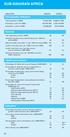 SUB-SAHARAN AFRICA INDICATOR REGION WORLD Demographic indicators Total population (2005) 713,457,000 6,449,371,000 Population under 18 (2005) 361,301,000 2,183,143,000 Population under 5 (2005) 119,555,000
The Healthy Asia Pacific 2020 Roadmap INTRODUCTION: THE HEALTHY ASIA PACIFIC 2020 INITIATIVE
 The Healthy Asia Pacific 2020 Roadmap INTRODUCTION: THE HEALTHY ASIA PACIFIC 2020 INITIATIVE In the 2014 APEC Leader s Declaration and Joint Ministerial Statement, it is recognized that the prospect of
Child Marriage and Education: A Major Challenge Minh Cong Nguyen and Quentin Wodon i
 Child Marriage and Education: A Major Challenge Minh Cong Nguyen and Quentin Wodon i Why Does Child Marriage Matter? The issue of child marriage is getting renewed attention among policy makers. This is
Dear Delegates, It is a pleasure to welcome you to the 2016 Montessori Model United Nations Conference.
 Dear Delegates, It is a pleasure to welcome you to the 2016 Montessori Model United Nations Conference. The following pages intend to guide you in the research of the topics that will be debated at MMUN
World Health Day Diabetes and RMNCAH in Africa: R for Reproductive Health
 World Health Day Diabetes and RMNCAH in Africa: R for Reproductive Health Managing diabetes and reproductive health in developing contexts. The 2016 World Health Day theme to scale up prevention, strengthen
The Smartest Targets For The WORLD 2016-2030
 The Smartest Targets For The WORLD 2016-2030 The World s Best Targets Right now, 193 governments negotiating Targets for 2016-2030 Most people don t know Development aid 2016-30: $2.5 trillion The World
Appeal to the Member States of the United Nations Early Childhood Development: The Foundation of Sustainable Human Development for 2015 and Beyond
 UNICEF/NYHQ2006-0450/Pirozzi Appeal to the Member States of the United Nations Early Childhood Development: The Foundation of Sustainable Human Development for 2015 and Beyond We, the undersigned, submit
The IBIS Education for Change strategy states the overall objective
 CONCEPT PAPER: YOUTH EDUCATION & TRAINING 1 Concept Paper youth education & training Photo: Ricardo Ramirez The IBIS Education for Change strategy states the overall objective of IBIS work with education
Kenya National Bureau of Statistics, 2010 population census 2009 report.
 Background Kenya s child population is estimated to be about 53% that is about 19 million out of the 34 million with an annual growth rate of 2.2%. 1 Currently, there are several legislative milestones
Dublin Declaration. on Partnership to fight HIV/AIDS in Europe and Central Asia
 Dublin Declaration on Partnership to fight HIV/AIDS in Europe and Central Asia Against the background of the global emergency of the HIV/AIDS epidemic with 40 million people worldwide living with HIV/AIDS,
GENDER AND DEVELOPMENT. Uganda Case Study: Increasing Access to Maternal and Child Health Services. Transforming relationships to empower communities
 GENDER AND DEVELOPMENT Uganda Case Study: Increasing Access to Maternal and Child Health Services The Context World Vision has been active in working with local communities to increase access to health
Canada and Africa: A Contrast
 Canada and Africa: A Contrast In this lesson, students will examine statistics pertaining to nations in Sub-Saharan Africa to which Canada contributes foreign aid. The students will be expected to summarize
30% Opening Prayer. Introduction. About 85% of women give birth at home with untrained attendants; the number is much higher in rural areas.
 This is the second of four studies on maternal health M AT E R N A L a n d C H I L D H E A LT H : A f g h a n i s t a n b y K a r e n B o k m a About 85% of women give birth at home with untrained attendants;
Malawi. Country coverage and the methodology of the Statistical Annex of the 2015 HDR
 Human Development Report 2015 Work for human development Briefing note for countries on the 2015 Human Development Report Malawi Introduction The 2015 Human Development Report (HDR) Work for Human Development
World Population Growth
 3 World Population Growth Why is world population growing faster than ever before? Population dynamics are one of the key factors to consider when thinking about development. In the past years the world
Trinidad and Tobago Strategic Actions for Children and GOTT-UNICEF Work Plan 2013-2014 1
 Trinidad and Tobago Strategic Actions for Children and GOTT-UNICEF Work Plan 2013-2014 1 The Trinidad and Tobago Strategic Actions for Children and the Government of Trinidad and Tobago-UNICEF Work Plan
WFP!""# World Food Programme Rome, Italy
 WFP!""# World Food Programme Rome, Italy 2 Having considered the document on the Global Framework for Action to End Child Hunger and Undernutrition, the Board: a) welcomes the Ending Child Hunger and Undernutrition
Strengthening Integrated Education Programs for Blind and Visually Impaired Children in Bangladesh
 WA 092 Strengthening Integrated Education Programs for Blind and Visually Impaired Children in Bangladesh Manju Samaddar Principal Baptist Sangha School for Blind Girls 77, Senpara Parbata, Mirpur 10 Dhaka
Aalborg Universitet. Responding to the Millennium Development Goals Enemark, Stig. Published in: Shaping the change. Publication date: 2006
 Aalborg Universitet Enemark, Stig Published in: Shaping the change Publication date: 2006 Document Version Publisher's PDF, also known as Version of record Link to publication from Aalborg University Citation
The New Delhi Commitment: Delivering Inclusive, Relevant Quality Education for All. New Delhi, India 8th 10th November 2012
 ED/EFA/2012/ME/1 Original : English The New Delhi Commitment: Delivering Inclusive, Relevant Quality Education for All New Delhi, India 8th 10th November 2012 Ninth E-9 Ministerial Review Meeting: Inclusive,
SECTOR ASSESSMENT (SUMMARY): EDUCATION 1
 Country Partnership Strategy: Bangladesh, 2011 2015 SECTOR ASSESSMENT (SUMMARY): EDUCATION 1 Sector Road Map 1. Sector Performance, Problems, and Opportunities 1. Bangladesh has made considerable progress
Health in the 2030 Agenda for Sustainable Development
 EXECUTIVE BOARD EB138/CONF./8 138th session 27 January 2016 Agenda item 7.2 Health in the 2030 Agenda for Sustainable Development Draft resolution proposed by Japan, Panama, South Africa, Thailand, United
Questions and Answers on Universal Health Coverage and the post-2015 Framework
 Questions and Answers on Universal Health Coverage and the post-2015 Framework How does universal health coverage contribute to sustainable development? Universal health coverage (UHC) has a direct impact
AP HUMAN GEOGRAPHY 2008 SCORING GUIDELINES
 AP HUMAN GEOGRAPHY 2008 SCORING GUIDELINES Question 3 Countries in the graph above have been chosen to illustrate an important trend in education patterns in the developing world. Part A (1 point) Identify
INDICATOR REGION WORLD
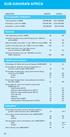 SUB-SAHARAN AFRICA INDICATOR REGION WORLD Demographic indicators Total population (2006) 748,886,000 6,577,236,000 Population under 18 (2006) 376,047,000 2,212,024,000 Population under 5 (2006) 125,254,000
2014-2017. UNICEF/NYHQ2012-1868/Noorani
 UNICEF STRATEGIC PLAN 2014-2017 UNICEF/NYHQ2012-1868/Noorani UNICEF s Strategic Plan 2014-2017 is a road map for the realization of the rights of every child. The equity strategy, emphasizing the most
Inequality undermining education opportunities for millions of children
 Inequality undermining education opportunities for millions of children UNESCO Press release No.2008-115 Paris, 25 November The failure of governments across the world to tackle deep and persistent inequalities
CONCLUSIONS AND RECOMMENDATIONS OF THE 48 TH SESSION OF THE INTERNATIONAL CONFERENCE ON EDUCATION (ICE)
 Distribution: limited ED/BIE/CONFINTED 48/5 Geneva, 28 November 2008 Original: English UNITED NATIONS EDUCATIONAL, SCIENTIFIC AND CULTURAL ORGANIZATION INTERNATIONAL CONFERENCE ON EDUCATION Forty eighth
Sierra Leone. Country coverage and the methodology of the Statistical Annex of the 2015 HDR
 Human Development Report 2015 Work for human development Briefing note for countries on the 2015 Human Development Report Sierra Leone Introduction The 2015 Human Development Report (HDR) Work for Human
MALAWI YOUTH DATA SHEET 2014
 MALAWI YOUTH DATA SHEET 2014 2 of Every 3 People in Malawi Are Under Age 25 Age 80+ 75-79 70-74 65-69 60-64 55-59 50-54 45-49 40-44 35-39 30-34 25-29 Male Female 20-24 POPULATION 700,000 700,000 0 POPULATION
HIV/AIDS: AWARENESS AND BEHAVIOUR
 ST/ESA/SER.A/209/ES DEPARTMENT OF ECONOMIC AND SOCIAL AFFAIRS POPULATION DIVISION HIV/AIDS: AWARENESS AND BEHAVIOUR EXECUTIVE SUMMARY UNITED NATIONS NEW YORK 200 1 2 HIV/AIDS: AWARENESS AND BEHAVIOUR Executive
How Universal is Access to Reproductive Health?
 How Universal is Access to Reproductive Health? A review of the evidence Cover Copyright UNFPA 2010 September 2010 Publication available at: http://www.unfpa.org/public/home/publications/pid/6526 The designations
Briefing note for countries on the 2015 Human Development Report. Burkina Faso
 Human Development Report 2015 Work for human development Briefing note for countries on the 2015 Human Development Report Burkina Faso Introduction The 2015 Human Development Report (HDR) Work for Human
Briefing note for countries on the 2015 Human Development Report. Niger
 Human Development Report 2015 Work for human development Briefing note for countries on the 2015 Human Development Report Niger Introduction The 2015 Human Development Report (HDR) Work for Human Development
Complementary Approaches towards Achieving the Millennium Development Goals for Education: Lessons from the Field.
 Panel Proposal 1. Title of the group panel: Complementary Approaches towards Achieving the Millennium Development Goals for Education: Lessons from the Field. Panel Organizer: Radhika Iyengar, Ph.D. Director
Part 4 Burden of disease: DALYs
 Part Burden of disease:. Broad cause composition 0 5. The age distribution of burden of disease 6. Leading causes of burden of disease 7. The disease and injury burden for women 6 8. The growing burden
STRATEGIC IMPACT EVALUATION FUND (SIEF)
 IMPACT EVALUATION CLUSTER NOTE: EARLY CHILDHOOD NUTRITION, HEALTH AND DEVELOPMENT I. Background. The early childhood period is a time of rapid growth and development across four domains: physical, cognitive,
Implementing Community Based Maternal Death Reviews in Sierra Leone
 Project Summary Implementing Community Based Maternal Death Reviews in Sierra Leone Background Sierra Leone is among the poorest nations in the world, with 70% of the population living below the established
Briefing note for countries on the 2015 Human Development Report. Mozambique
 Human Development Report 2015 Work for human development Briefing note for countries on the 2015 Human Development Report Mozambique Introduction The 2015 Human Development Report (HDR) Work for Human
Water, Sanitation and Hygiene
 Water, Sanitation and Hygiene UNICEF/Giacomo Pirozzi for children unite for children UNICEF/Julie Pudlowski Fast facts Tanzanians that lack access to improved drinking water sources 46% Tanzanians with
Fact Sheet: Girls and Young Women
 Fact Sheet: Girls and Young Women There are 1.8 billion young people in the world. Approximately half of them 900 million are adolescent girls and young women. Girls primary school completion rates are
Social Policy Analysis and Development
 Social Policy Analysis and Development UNICEF/Julie Pudlowski for children unite for children UNICEF/Giacomo Pirozzi Fast facts Children 0 14 years living below the basic needs poverty line Children 0
situation key partnerships in education Millennium Development Goal 2: Achieve universal primary education
 education situation More children in Cambodia are entering school and the gender gap is quickly closing as more girls make their way to the classroom. In the 2010/2011 school year, the overall rate of
Banjul Declaration on the Strategies for Accelerating the Implementation of the Dakar and Beijing Platforms for Action
 Distr.: GENERAL UNITED NATIONS ECONOMIC COMMISSION FOR AFRICA E/ECA/ARCW/8/11 15 December 2009 Original: ENGLISH Eighth Africa Regional Conference on Women (Beijing + 15) 19 20 November 2009 Banjul, The
2.1 Net enrolment ratio in primary education
 2.1 Net enrolment ratio in primary education GOAL AND TARGET ADDRESSED Goal 2: Achieve universal primary education Target 2.A: Ensure that, by 2015, children everywhere, boys and girls alike, will be able
Gender inequalities in South African society
 Volume One - Number Six - August 2001 Gender inequalities in South African society South Africa's national policy framework for women's empowerment and gender equality, which was drafted by the national
Subject: Teenage Pregnancy in Zambia Based on the Desk Research that was conducted by Restless Development
 SUBMISSION TO THE PARLIAMENTARY SESSIONAL COMMITTEE FOR YOUTH AND SPORT FOR THE THIRD SESSION OF THE 11 th NATIONAL ASSEMBLY OF ZAMBIA 27 TH JANUARY-16 TH FEBRUARY 2014 Subject: Teenage Pregnancy in Zambia
Tanzania (United Republic of)
 Human Development Report 2015 Work for human development Briefing note for countries on the 2015 Human Development Report Tanzania (United Introduction The 2015 Human Development Report (HDR) Work for
Congo (Democratic Republic of the)
 Human Development Report 2015 Work for human development Briefing note for countries on the 2015 Human Development Report Congo (Democratic Republic of the) Introduction The 2015 Human Development Report
Summary. Accessibility and utilisation of health services in Ghana 245
 Summary The thesis examines the factors that impact on access and utilisation of health services in Ghana. The utilisation behaviour of residents of a typical urban and a typical rural district are used
The Evolution and Future of Social Security in Africa: An Actuarial Perspective
 w w w. I C A 2 0 1 4. o r g The Evolution and Future of Social Security in Africa: An Actuarial Perspective Presented by Members of the Actuarial Society of South Africa Social Security Committee Fatima
TOOLKIT. Indicator Handbook for Primary Education: Abridged. Compiled by Laurie Cameron (AED)
 TOOLKIT Indicator Handbook for Primary Education: Abridged Compiled by Laurie Cameron (AED) EQUIP2 is funded by the U. S. Agency for International Development Cooperative Agreement No. GDG-A-00-03-00008-00
Madagascar. Country coverage and the methodology of the Statistical Annex of the 2015 HDR
 Human Development Report 2015 Work for human development Briefing note for countries on the 2015 Human Development Report Madagascar Introduction The 2015 Human Development Report (HDR) Work for Human
Men in Charge? Gender Equality and Children s Rights in Contemporary Families
 International Day of Families 2015 Observance Men in Charge? Gender Equality and Children s Rights in Contemporary Families Background Note Gender equality and children s rights in family laws Fair legal
Human Resources Development for Economic Development examples and lessons from ACP countries
 A presentation to the ACP EU Economic and Social Interest Group, Brussels, 5 March 08 : Human Resources Development for Economic Development examples and lessons from ACP countries Brenda King Member of
Setting the Scene: Water, 1 Poverty, and the MDGs
 Setting the Scene: Water, 1 Poverty, and the MDGs CHAPTER 1 THE MILLENNIUM DEVELOPMENT GOALS (MDGs) reflect the commitment of the world community to work together and reduce global poverty. The MDGs do
Dimensions of Global Health
 Dimensions of Global Health James Plumb MD, MPH Francis Barchi MS, MBE DFCM - September - 2010 Global Health - Jefferson Global Health Working Group Inventory of current activities Courses Certificate
El Salvador. Country coverage and the methodology of the Statistical Annex of the 2015 HDR
 Human Development Report 2015 Work for human development Briefing note for countries on the 2015 Human Development Report El Salvador Introduction The 2015 Human Development Report (HDR) Work for Human
The dichotomy of Kenya is that among the. appropriate technology. gender equity. human rights. health. youth education & development
 environmental microfinance & enterprise The dichotomy of Kenya is that among the striking backdrops of the savannah, mountains, and coast lurk the devastating problems of environmental degradation, infectious
Borderless Diseases By Sunny Thai
 Borderless Diseases By Sunny Thai Millennium Development Goal #6 6. Combat HIV/AIDS, malaria and other borderless diseases. A. Halt and begin reversing spread of HIV by 2015. B. Achieve universal access
Education for All Global Monitoring Report
 Education for All Global Monitoring Report Policy Paper 18 July 2015 update This paper shows there is an annual financing gap of US$39 billion over 2015-2030 for reaching universal pre-primary, primary
The People s Report Card: A Note On Methodology
 The People s Report Card: A Note On Methodology www.socialprogressimperative.org THE CONCEPT We need to help people understand what the Global Goals mean in a way that is relevant for their own lives.
Pricing the right to education: There is a large financing gap for achieving the post-2015 education agenda
 Education for All Global Monitoring Report Policy Paper 18 March 2015 This paper shows there is an annual financing gap of US$22 billion over 2015-2030 for reaching universal pre-primary, primary and lower
UNITED NATIONS AND ECONOMIC AND SOCIAL DEVELOPMENT
 OPTIONAL MODULE - 1 Political Science 32 UNITED NATIONS AND ECONOMIC AND SOCIAL DEVELOPMENT T he UN and its affiliated agencies play an important role in the promotion of international co-operation in
POPULATION 15,223,680 MILLION. Maternal Mortality: 110 deaths per 100,000 live births.
 OVERVIEW OF Ecuador Overview of Ecuador YEAR OF 1830 INDEPENDENCE POPULATION 15,223,680 MILLION Languages Spanish, indigenous (Quechua, Shuar) Under-five Mortality Rate: 23 per 1,000 live births. Ecuador
Primary School Net and Gross Attendance Rates, Kenya. Over-Age, Under-Age, and On-Time Students in Primary School, Kenya
 Primary School Net and Gross Attendance Rates, Kenya Nearly of primary school age children in Kenya attend school with slightly more females than males attending. of children ages - attend primary school.
DECLARATION OF SANTA CRUZ DE LA SIERRA
 DECLARATION OF SANTA CRUZ DE LA SIERRA 1. We, the elected Heads of State and Government of the Americas, gathered in Santa Cruz de la Sierra as decided at the Summit of the Americas held in Miami in 1994,
Ageing OECD Societies
 ISBN 978-92-64-04661-0 Trends Shaping Education OECD 2008 Chapter 1 Ageing OECD Societies FEWER CHILDREN LIVING LONGER CHANGING AGE STRUCTURES The notion of ageing societies covers a major set of trends
117 4,904,773 -67-4.7 -5.5 -3.9. making progress
 Per 1 LB Eastern Mediterranean Region Maternal and Perinatal Health Profile Department of Maternal, Newborn, Child and Adolescent Health (MCA/WHO) Demographics and Information System Health status indicators