
Using Your New Kenwood Audio-Video Receiver
|
|
|
- Mary Perkins
- 9 years ago
- Views:
Transcription
1
2 Using Your New Kenwood Audio-Video Receiver Welcome to the Users Guide for your new Kenwood Audio-Video Receiver. It connects all your current audio and video components. It allows you to control them all with Kenwood s remarkable LCD remote. This manual covers three models.
3 Table of Contents Chapter One: Moving Around... 1 What s on the Front Panel of Your Kenwood Audio - Video Receiver?... 2 What s on Remote Control Unit?... 4 LCD Indicators... 6 How Do I Use Remote Control Unit?... 7 Remote controllable range...7 Chapter Two: Controlling the Receiver... 8 How Do I Adjust the Sound?... 9 Turning the Speakers On...9 Adjusting the Volume Adjusting the Tone (Only in STEREO mode with THX mode Off) Adjusting the Loudness (Only in STEREO mode with THX mode Off) Adjusting Speaker Levels Adjusting the Input Level Muting Sound Midnight Theatre Function (Dolby Digital, DTS and DTS-ES only) i
4 How Do I Adjust the Surround Modes? What is the THX? What are Listen Modes? Checking the Input signal during playback Input Modes Switching Input Modes To set the THX Mode To set the Listen Mode manually Examples of inputs with which switching is available Description of Dolby Pro Logic II: Music mode Selecting the parameter of Pro Logic II: Music mode Applying Digital Signal Processor (DSP) Effects HDCD and D.R.I.V.E. Effects Headphone Operation Selecting the Inputs How Do I Operate Devices? Playback of the device connected to the CD2/TAPE2 MONITOR Operating a Television Operating an AV Device Operating a CD player To play Kenwood 200-Disc CD Changer Single or Rotary CD Player CD-R Recorder Operating an MD Recorder or Cassette Deck Playing an Analog Turntable Monitoring a Video Camera or Playing an Additional VCR ii
5 Radio Tuning Recording How Do I Adjust the LCD Display? Using Remote Control unit under low light Adjusting the contrast of LCD display Adjusting the brightness of receiver Selecting the display mode of receiver front panel Executing Several Operations at Once (Macro function).. 52 Registering a macro Executing a macro Using Remote Control Unit in Multiple Zones Haw Do I Switch Control Modes? Operation using the SYS.POWER button on Remote Control unit Chapter Three : Button Layout in Controlling Other Devices Chapter Four: Troubleshooting Sound...71 I don t hear any sound at all Audio is not output only when a 96k fs compatible disc is played The 96k fs indicator does not light while a 96k fs compatible disc is being played iii
6 I can t hear sound from one or more of the speakers, or the sound is abnormally low I can t hear sound from my surround or center speakers I can hear sound only from the center speaker when Dolby Pro Logic is selected A DTS-ES encoded source is played but it is not decoded in DTS-ES A Dolby Digital Surround EX-encoded source is played with THX Surround EX set to Auto, but the source is not reproduced in 6.1-channel audio Sound from one (or more) of my components is abnormally loud or soft I can t hear sound from some of my laser discs There wasn t any sound recorded on tapes made on my VCR or tape deck The initial sound is intermittent or non-existent when I start to play from a Dolby Digital, DTS, DTS-ES or MPEG source With a Dolby Digital program or DTS program, the loud sounds aren t very loud and the quiet sounds aren t very quiet All I hear is loud static when I play DTS discs I hear a hum when I select the PHONO input Sound is intermittent I can t hear any sound in Zone B Video I can t see the program I m playing on the TV. There wasn t any video output to my VCR when I recorded iv
7 Remote Control unit My Remote Control unit is slow to respond sometimes I have to press buttons or select commands several times My Remote Control unit is not responding I want to clear all the items in Remote Control unit and make it to the factory-set default condition The RF remote control function does not work Receiver/Tuner My receiver won t turn on and the STANDBY indicator is flashing The sound is distorted, and the CLIP indicator on the receiver s front panel flashes red continually, or stays red for more than 1 second at a time I can t receive a radio station I m getting a lot of static/interference When I press a button to tune to a preset station, the receiver does not respond v
8 vi
9 Chapter One: Moving Around Welcome to the Kenwood VR-5700/VR-5090/VR-5080 Users Guide. This chapter explains the buttons and functions you can find on the front of the receiver and on Remote Control unit. The chapter also includes an explanation of how to navigate the convenient display on your new Remote Control unit. It includes the following sections: What s on the Front Panel of Your Kenwood Audio - Video Receiver? page 2 What s on Remote Control Unit? page 4 LCD indicators page 6 How Do I Use Remote Control Unit? page 7 1
10 Moving Around What s on the Front Panel of Your Kenwood Audio- Video Receiver? 1. STANDBY indicator 2. POWER ON/STANDBY button 3. PHONES jack 4. SPEAKERS A/B button 5. INPUT MODE button / RF ON/OFF button 6. CD 2/TAPE 2 MONITOR button / RF BAND button 7. LISTEN MODE button /DISPLAY button 8. THX button 9. SOUND button / SET UP button 10. MULTI CONTROL (Up/Down) buttons 11. P. CALL (Up/Down) buttons 12. MEMORY button 13. AUTO button 14. BAND button 15. AV AUX input jacks Standby mode While the standby indicator of the unit is lit, a small amount of current is flowing into the unit s internal circuitry to back up the memory. This condition is referred to as the standby mode of the unit. While the unit is in the standby mode, it can be turned ON from the Remote Control unit. 2
11 DTS-ES DISCRETE 6.1 MATRIX 6.1 NEO : 6 PRO LOGIC INPUT MODE RF ON/OFF CD 2/TAPE 2 MONITOR RF BAND LISTEN MODE DISPLAY THX SOUND SET UP MULTI CONTROL SURROUND BACK 96kfs CD 2 / TAPE 2 CLIP MONITOR INDICATOR What s on the Front Panel of Your Kenwood Audio-Video Receiver?, continued THX DOLBY DIGITAL VOLUME CONTROL 17 STANDBY DTS MPEG POWER ON/STANDBY D.R.I.V.E. HDCD INPUT SELECTOR 16 DOWN UP PHONES AV - AUX S VIDEO VIDEO L - AUDIO - R Buttons behind the door A SPEAKERS B fi % fi P.CALL % MEMORY AUTO BAND VOLUME CONTROL knob 17.INPUT SELECTOR buttons 18.Indicators SURROUND BACK 96kfs CD2/TAPE2 MONITOR CLIP INDICATOR 19.Indicators THX DTS D. R. I. V. E. DOLBY DIGITAL MPEG HDCD 20.Display 21.2-way communication indicator 22.Infrared remote sensor 23.Indicators DTS-ES DISCRETE 6.1 DTS-ES MATRIX 6.1 NEO : 6 PRO LOGIC 24.Infrared remote transmitter Button 4 to 14 are located inside the panel door. 3
12 What s on Remote Control Unit? What s on Remote Control Unit? 1. LCD indicators 2. LCD function button 2 2WAY LCD REMOTE CONTROL UNIT 3. LCD function button CONFIRM/SHIFT AV POWER MACRO MUSIC MOVIE TV CH. CH. + - REC F.SHIFT SYS.POWER + - MUTE DIMMER INPUT MODE SUB W. SOUND LISTEN M. THX TITLE/GUIDE MENU TUNING RETURN /PAGE Home REC MODE Menu BAND ENTER AUTO/MONO VOL. VOL. LEARN REPEAT RANDOM INPUT SEL. TV SELECT DISPLAY SELECT OSD /PAGE CONFIRM/SHIFT button 5. MACRO button 6. AV POWER button (AV device Power button) 7. AV device control buttons : Play 4, : Skip 8 : Pause 7 : Stop 8. CH.(+/-) buttons (AV device control buttons) 9. LISTEN M. button / INPUT MODE button 10. SOUND button / DIMMER button 11. TITLE/GUIDE button (AV device control button) 12. 5Cursor up button / 8PAUSE button 15 AUDIO THEME FAVORITE INFO. EXIT LAST CHANNEL STATUS MULTI ZONE ZONE A/B Cursor down button / AUTO/MONO, 7 STOP button left, right button / TUNING buttons RF REMOTE CONTROL UNIT ENTER button / BAND (Play) button Infrared ray system Model : RC-R RETURN/PAGE button (AV device control button) 14. REC (Recording) button / REC MODE button 4
13 Moving Around What s on Remote Control Unit? 15. Numeric buttons (AV device control buttons) 10 button / STATUS button 11 button / MULTI ZONE button 12 button / ZONE A/B button 16. LCD cursor up/down buttons 17. Input selector buttons MUSIC: Audio device selector button MOVIE: Video device selector button TV: TV/video monitor selector button 18. SYS. POWER (Receiver power) button 19. VOL. (+/-) buttons 20. MUTE button 21. THX button /SUB W. button 22. MENU button (AV device control buttons) 23. OSD/PAGE 5 button (AV device control button) 24. LEARN button 25. F.SHIFT button How to operate the F.SHIFT button: In addition to the functions marked on the remote control buttons, those marked in blue characters above the buttons can be used. To use these functions, press the F.SHIFT button then press the desired button within 8 seconds. (Example) To use the REPEAT function, press the F.SHIFT button then press button 1 (REPEAT). 5
14 Moving Around What s on Remote Control Unit? LCD Indicators 1 2 2WAY LCD REMOTE CONTROL UNIT REC 6 CD1: CD Disc 001 Tr.01 Text Menu LCD function button 1 LCD function button 2 Cursor up/down buttons 1. Playback/recording mode indicators ` Play indicator/ 8: Pause indicator/ REC : Record indicator/ 7: Stop indicator 2. Character display Shows various information such as the input device name and track number. 3. Current function of LCD function button 1 4. Current function of LCD function button 2 5. Communication indicators : Sending. : Receiving. 6. Battery indicator appears when the batteries are nearly exhausted. In this case, replace all of the four batteries together. To switch the menu: The menu can be switched over or selected while LCD function button 1 and/or 2 are displayed. (Examples: Home, Back, Menu, Enter, etc.) 6
15 2WAY LCD REMOTE CONTROL UNIT VOLUME CONTROL Moving Around What s How Do on I Use Remote Remote Control Control Unit? Unit? How Do I Use Remote Control Unit? To select an item: The displayed items can be scrolled or switched using the LCD cursor or button. The selected item is displayed in the reversed color for distinction from other items. Remote controllable range Remote control unit can be controlled in the range as shown below using four AA (R6) batteries. IR Sensor RF Remote Antenna 20 ft (6 m) Infrared remote transmitter Take care of the following points when using Remote Control unit. The remote control signal received by the main unit is the RF signal. The signal sent from the main unit is sent as Infrared signal. The control distance of the RF remote signal is about 30 ft (10 meters) provided there is no obstacle. Do not install the receiver in a place where the receiver s remote sensor is exposed to direct sunlight or high-frequency lighting (inverter type, etc.) fluorescent lamp. Otherwise the remote control range will be reduced. When the remote control range reduces or the Low Battery indicator ( ) will flash in the LCD display, replace all of the four batteries together. 7
16 Using Receiver The Remote Control unit transmits an infrared signal in addition to an RF signal. When operation by means of the RF signal is not possible because of the radio wave conditions, aim the Remote Control unit towards the receiver and use it as an infrared remote control. For operation of other identified devices or with an external IR receiver, aim the Remote Control unit towards the respective unit and use it as an infrared remote control. Do not block the remote control IR transmitter on the Receiver or the transceiver part of the Remote Control unit. A momentary error is possible when the signal is interrupted even momentarily during transmission and reception (for example by a person passing through the beam). In such a case, the most recent information will be displayed when CON- FIRM/SHIFT button on the Remote Control unit is pressed. Sometime it may be necessary to reenter the interrupted command again. Chapter Two: Controlling the Receiver Remote Control unit provided with the receiver is a bi-directional Remote Control unit, which enables remote control while checking the information shown on the LCD display. The operations of connected devices can also be controlled from Remote Control unit. Before first time using the receiver or after having changed or added the connected devices, please be sure to read the separate booklet entitled Connection and Setup Guide. The present manual describes the operation procedures in normal use. This chapter is composed of the following sections. How Do I Adjust the Sound? page 9 How Do I Adjust the Surround Modes? page 17 Selecting the Inputs page 35 How Do I Operate Devices? page 36 How Do I Adjust the LCD Display? page 50 Executing Several Operations at Once (Macro function) page 52 8
17 L SPEAKERS R INPUT CD 2/TAPE 2 LISTEN MODE MONITOR MODE SET UP SOUND MULTI fi CONTROL % fi P.CALL % MEMORY AUTO BAND Using Receiver How Do I Adjust the Sound? How Do I Adjust the Sound? You can control and adjust a variety of sound settings using the receiver s front panel or Remote Control unit. Turning the Speakers On To turn on the front A speakers, open the receiver s front panel door and press the SPEAKERS A button. Speaker indicators (Å, ı) Push the lower part of the door. To turn on the front B speakers, press the SPEAKERS B button located in the door of the receiver s front panel. The lighting of a Å or ı indicator lamp indicates that the corresponding set of speakers is on. If you select SPEAKERS B while listening to a surround mode, the sound will automatically revert to stereo. While SPEAKERS B is on, the surround made cannot be selected. If you use speakers connected to amplifiers via the PRE OUT jacks, choose SPEAKERS A. 9
18 L SPEAKERS R INPUT CD 2/TAPE 2 MODE MONITOR LISTEN MULTI MODE SET UP SOUND fi % fi CONTROL P.CALL % MEMORY AUTO BAND 2WAY LCD REMOTE CONTROL UNIT How Do I Adjust the Sound? Adjusting the Volume Use one of the following methods to adjust the volume. Turn the VOLUME knob on the front panel of the receiver. Press + VOL. or VOL. - on Remote Control unit. Using Receiver
19 Using Receiver How Do I Adjust the Sound? Adjusting the Tone (Only in STEREO mode with THX mode Off) The Tone control adjusts the bass and treble tone of your front speakers manually. In addition to setting Bass and Treble tone adjustment values, you can completely bypass the tone control circuitry for a purer sound. 1. Press the SOUND button on Remote Control unit repeatedly until Tone = Off or On is displayed. On or Off refers to the current setting status. Sound Tone = Off Home Next 2. Press the LCD cursor up/down ( / ) button on Remote Control unit to select Tone = On (or Off if desired so). 3. When On is selected above and the SOUND button or Next button is pressed again, the Bass setting menu appears. When Off is selected above, the Loudness setting menu appears. Sound Bass = +10 Home Next 4. Press the LCD cursor up/down ( / ) button on Remote Control unit to select the desired tone level. Adjust in the range from +10 to Press the Next button (LCD function button 2). 6. The Treble setting menu appears. 7. Press the LCD cursor up/down ( / ) button on Remote Control unit to select the desired tone level. Adjust in the range from +10 to To exit from setting, press the Home button (LCD function button 1). 11
20 How Do I Adjust the Sound? Using Receiver Operation on the receiver: 1. Press the SOUND button in the door repeatedly until TONE OFF or ON is displayed. 2. Press the MULTI CONTROL (%/fi) button to display TONE ON (or OFF if desired so). 3. When ON is selected above and the SOUND button is pressed again, the BASS setting menu appears. When OFF is selected above, the LOUDNESS setting menu appears. 4. Adjust using the MULTI CONTROL (%/fi) button. 5. Press the SOUND button. 6. When the TREBLE setting menu appears, adjust the treble in the same way as above. To exit from setting, press the SOUND button repeatedly until SOUND FIXED is displayed. 12
21 Using Receiver How Do I Adjust the Sound? Adjusting the Loudness (Only in STEREO mode with THX mode Off) The Loudness control increases the bass and treble at low volume control settings. This adjusts to the way the human ear hears sound at quiet volumes, retaining music s fullness and sparkle. 1. Press the SOUND button on Remote Control unit repeatedly until Loudness = Off or On is displayed. On or Off refers to the current setting status. Sound Loudness = Off Home Next 2. Press the LCD cursor up/down ( / ) button on Remote Control unit to select Loudness = On (or Off if desired so), then press the Home button (LCD function button 1). Operation on the receiver: 1. Press the SOUND button inside the door repeatedly until LOUD- NESS OFF or ON is displayed. 2. Press the MULTI CONTROL (%/fi) button to select LOUDNESS ON (or OFF), then press the SOUND button repeatedly until SOUND FIXED is displayed. 13
22 How Do I Adjust the Sound? Using Receiver Adjusting Speaker Levels You can use the Sound menu to temporarily adjust the speaker levels of your center speaker, surround speakers, surround back speakers and subwoofer. For example, if a particular movie has dialog that s hard to understand, you can temporarily increase the center channel volume just for that movie. For more information on adjusting speaker levels permanently, see Chapter Two: Setting Up Remote Control Unit in the Connections and Setup Guide. 1. Press the SOUND button on Remote Control unit repeatedly until the speaker name to be adjusted is displayed. Sound Center Home Next = +5dB Center : center speaker Sur. Right : left and right surround speakers Sur. Left : Sur. Back R : left and right surround back speakers Sur. Back L : Sub Woofer : subwoofer The two surround speakers cannot be adjusted independently between each other. The two surround back speakers cannot be adjusted independently between each other. 2. Press the LCD cursor up/down ( / ) button on Remote Control unit to select the desired volume level, then press the Home button. Operation on the receiver: 1. Press the SOUND button inside the door repeatedly until the name of the speaker(s) to be adjusted is displayed. C : center speaker SL/SR : left and right surround speakers SBL/SBR : left and right surround back speakers SW : subwoofer 14
23 Using Receiver How Do I Adjust the Sound? 2. Press the MULTI CONTROL (%/fi) button to select the desired volume level, then press the SOUND button repeatedly until SOUND FIXED is displayed. If you select another source device or turn off the receiver, the above setting is reset to the level adjusted in Chapter Two of the Connection and Setup Guide. Adjusting the Input Level If the front panel CLIP indicator will flash red continually, lower the analog input level for the source device you re listening to. (Setting the proper input level eliminates distortion that occurs if a source device s output level is too high. Occasional brief flashing of the CLIP indicator is okay). 1. Select the input to be adjusted (see Selecting the Inputs on page 35). 2. Press the SOUND button on the Remote Control unit until Analog Level is displayed. Sound Analog Level CD1 0dB Home Next 3. Press the LCD cursor up/down ( / ) button on Remote Control unit to select the desired input level, then press the Home button. Select one of the three input levels; 0 db, -3 db and -6 db. (The db is the unit expressing the amplitude of sound.) Operation on the receiver: 1. Press the SOUND button inside the door repeatedly until ANLG IN- PUT is displayed. 2. Press the MULTI CONTROL (%/fi) button to select the desired input level, then press the SOUND button repeatedly until SOUND FIXED is displayed. 15
24 How Do I Adjust the Sound? Using Receiver Muting Sound The sound can be muted temporarily. Press the MUTE button on Remote Control unit. The MUTE indicator on the receiver panel blinks during muting. Use one of the following methods to cancel muting. Adjust the Volume control on either the receiver or Remote Control unit. Press the MUTE button again. The MUTE indicator on the receiver panel goes off. Midnight Theater Function (Dolby Digital, DTS and DTS-ES only) Any time you don t want to experience the loud and soft volume extremes of recorded sound (for example, late at night), use midnight theatre function to reduce volume extremes. This feature keeps loud, dramatic sound from being too loud (perhaps disturbing family members or neighbors) while ensuring that you can still hear whispered dialog or other soft sounds. Midnight theater function only works if you are listening to a Dolby Digital program or DTS (DTS-ES) that has been encoded with special compression data. To use the Midnight Theater function: 1. Press the SOUND button on the Remote Control unit repeatedly until Midnight 1, 2 or Off is displayed. Sound Midnight Off Home Next 2. Press the LCD cursor up/down ( / ) button on Remote Control unit to select Off, 1 or 2, then press the Home button. OFF for normal balancing 1 for quieter balancing 2 for quietest balancing (the least difference between the loudest and quietest sound) Operation on the receiver: 1. Press the SOUND button inside the door repeatedly until MIDNIGHT 1, 2 or OFF is displayed. 2. Press the MULTI CONTROL (%/fi) button to select OFF, 1 or 2, then press the SOUND button repeatedly until SOUND FIXED is displayed. 16
25 Using Receiver How Do I Adjust the Surround Modes? How Do I Adjust the Surround Modes? You can experience true home-theater sound with your Kenwood Audio- Video Receiver. This receiver incorporates several listen modes to let you enjoy surround sound with a wide variety of program sources. Each produces multiple channels of surround-sound, but each does it differently. What is the THX? THX: Movie soundtracks are mixed in special movie theaters called dubbing stages and are designed to be played back in movie theaters with similar equipment and conditions. The soundtrack created for movie theaters is then transferred directly onto Laserdisc, VHS tape, DVD, etc., and is not changed for playback in a small home theater environment. THX engineers developed patented technologies to accurately translate the sound from the movie theater environment into the home, correcting the tonal and spatial errors that occur. On the VR-5700/ VR-5090/VR-5080, when the THX mode is on, the THX technologies are automatically added after the decoded signal. Movies which have been encoded in Dolby Digital, DTS, MPEG, Dolby Pro Logic, Stereo and Mono can all benefit from activating the THX technologies. THX should be activated only when watching movies which were mixed for playback in large movie theater environments. THX need not be activated for music, movies that were made especially for television or shows such as sports programming, talk shows, etc. This is because they were mixed in a small room environment. THX Surround EX: THX Surround EX - Dolby Digital Surround EX is a joint development of Dolby Laboratories and the THX division of Lucasfilm Ltd. In a movie theater, film soundtracks that have been encoded with Dolby Digital Surround EX technology are able to reproduce an extra channel which has been added during the mixing of the program. This channel, called Surround Back, places sounds behind the listener in addition to the currently available front left, front center, front right, surround right, surround left and subwoofer channels. This additional channel provides the opportunity for more detailed imaging behind the listener and brings more depth, spacious ambience and sound localization than ever before. 17
26 How Do I Adjust the Surround Modes? Using Receiver Movies that were created using the Dolby Digital Surround EX technology, when released into the home consumer market may exhibit a Dolby Digital Surround EX logo on the packaging. A list of movies created using this technology can be found on the Dolby web site at Only receiver and controller products bearing the THX Surround EX logo, when in the THX Surround EX mode, faithfully reproduce this new technology in the home. This product may also engage the "THX Surround EX" mode during the playback of 5.1 channel material that is not Dolby Digital Surround EX encoded. In such case the information delivered to the Surround Back channel will be program dependent and may or may not be very pleasing depending on the particular soundtrack and the tastes of the individual listener. What are Listen Modes? Dolby Digital: Dolby Digital uses an encode/decode process based on its theatrical digital surround sound technology. The five main channels are full-frequency and independent, so sound can completely envelop you or soar anywhere in the room, just like at the movies. Compared with Dolby Pro Logic, Dolby Digital has more clarity, greater surround envelopment, and more realistic sound movement between channels. Although a full set of speakers (front left and right, center, surround left and right, and a subwoofer) is required for true Dolby Digital surround sound, this receiver lets you enjoy Dolby Digital program sources, even if you connect fewer speakers. Dolby Pro Logic/Dolby Pro Logic II: Dolby Pro Logic reproduces a surround sound like in a movie theater from Dolby Surround-encoded program source (videotape or LaserDisc software carrying the Dolby Surround logo), and features excellent sound movement on the front and a surrounding atmosphere of movie theaters. Meanwhile, Dolby Pro Logic II decodes a signal encoded in 2 channels into 5-channel signals composed of the left/right front signals, center signal and surround left/right signals. If no surround speaker is Setup, the surround signal is sent to front left and right speakers. (Dolby 3 stereo) Dolby Pro Logic II is an advanced version of the decoding technology used with Dolby Pro Logic. It inputs 2-channel signals from a Dolby 18
27 Using Receiver How Do I Adjust the Surround Modes? Surround-encoded source and reproduces 5-channel signals in which the surround channel is divided into independent channels for the left and right. Dolby Pro Logic II has the MOVIE mode and MUSIC mode, and the MUSIC mode enables independent adjustment of three parameters including Panorama mode, Dimension and Center Width. See page 29 for the Dolby Pro Logic II parameters. To allow the users enjoy multichannel playback also from the analog audio of currently available Dolby Surround home video software, the VR-5700/VR-5090/VR-5080 incorporates a Dolby Pro Logic II surround decoder. Manufactured under license from Dolby Laboratories. "Dolby", "Pro Logic", "Surround EX " and the double-d symbol are trademarks of Dolby Laboratories. DTS : DTS has five full-frequency channels that create effects nearly identical to those in a theater. Sounds seem to zoom from one place to another or entirely surround you. Like Dolby Digital, DTS has muchimproved clarity, surround and sound movement capability compared with Dolby Pro Logic. This listen mode is available on CD, LD, and DVD media. DTS is a strictly digital format that can be supplied only by a CD, LD, or DVD player that supports DTS sound. If you attempt to listen to DTS encoded media through the analog connections to your new receiver, you will experience digital noise (loud static). DTS-ES Discrete 6.1, DTS-ES Matrix 6.1: Both DTS-ES Discrete 6.1 and DTS-ES Matrix 6.1 add the surround back channel audio to the DTS 5.1-channel format to improve the acoustic positioning and makes acoustic image movement more natural with the 6.1-channel reproduction. This receiver incorporates a DTS-ES decoder, which can handle DTS-ES Discrete-encoded and DTS-ES Matrix-encoded program sources from DVD, etc. DTS-ES Discrete 6.1 features digital discrete recording of all channels including the surround back channels and higher quality of audio reproduction. DTS-ES Matrix 6.1 features matrix encoding of surround back (SB) signals in the SL/SR signals and decoding of the matrix into the SL, SR and SB signals during playback. 19
28 How Do I Adjust the Surround Modes? Using Receiver DTS NEO:6: This is a new technology which decodes 2-channel signals into 6-channel signals using high-accuracy digital matrix technology. The DTS NEO:6 decoder has near-discrete properties in the frequency characteristics of the channels as well as in channel separation. According to the signals to be played back, DTS NEO:6 uses either the NEO:CINEMA mode optimized for movie playback or the NEO:MUSIC mode optimized for music playback. MPEG: MPEG, which stands for Moving Pictures Experts Group, is an international standard of digital video and audio compression and decompression in media. It is the most efficient encoding method for compressed multi-channel audio which provides the highest sound quality to deliver the best movie theater sound into the home. DSP (Digital Signal Processing): DSP allows you to create your own custom surround sound environments and use them with any source (except Dolby Digital, MPEG, DTS and DTS-ES). You can select the ambience of an Arena, Jazz Club, Stadium, Cathedral, Theater or Concert hall, and then modify the parameters to fine-tune the environment to your taste. (See Applying Digital Signal Processor (DSP) Effects on page 31 for details about making DSP adjustments.) Multi ch Music (Multichannel music): All speakers are used to realize a stereo sound with a wide listening range. Stereo: Stereo listen mode provides standard stereo sound to the front left and right speakers. You cannot select the Input Analog mode if you are playing DTS-encoded media. You cannot listen to DTS-encoded media in Zone B. When playing DTS-encoded media, wait until DTS appears on the receiver display before proceeding. The listen mode is fixed to Stereo during playback of 96k fs signals. 20
29 1 /8 / Using Receiver How Do I Adjust the Surround Modes? Checking the Input signal during playback During playback of Dolby Digital, MPEG or DTS signal, the surround identification signal in the input is identified and displayed by means of the L, C, R, SR, SB (or S), SL and LFE icons. 1. Press the F.SHIFT = 10 (STATUS)* button on Remote Control unit. Input Status Dolby Digital F.Auto After 8 seconds, the display goes off. LFE L C R SL SB or S SR L : left channel C : center channel R : right channel SL : left surround channel SR : right surround channel SB : left and right surround back channel S : surround channel LFE : low frequency effect channel : identified signal Example: 5.1 ch encoded Dolby Digital 2 ch Dolby Digital * When an operation is described as [F.SHIFT = 10 (STATUS) button], for example, press the F.SHIFT button and press the next button (the 10 (STATUS) button in this case) within 8 seconds. 21
30 How Do I Adjust the Surround Modes? Input Modes (only for input with digital jacks) The input mode should usually be set to Full Auto. However, the input mode can also be set manually when you want to fix the inputs as analog signals, etc. Using Receiver Full Auto Digital Manual Analog 6ch Input : The receiver detects the input signal format and selects the Listen mode automatically according to the speaker setup. : The inputs are fixed at digital signals and the listen modes should be switched manually by the user. The Digital Manual mode is switched automatically to the Full Auto mode when an input is switched or the receiver is set to Off. : The inputs are fixed at the analog 2-channel inputs. : The inputs are fixed at the analog 6-channel inputs. This mode can be selected only when the DVD input is selected with the input selector. You cannot select the Input Analog mode if you are playing DTS-encoded media. When you use Full Auto mode with certain DVD and LD players, performing operations such as Skip or Stop may momentarily interrupt the output. This could switch the Listen Mode automatically to the surround mode intended for the input signal if you have manually selected a different listen mode. Different input modes can be selected for the different input devices. The selected input modes for the separate input devices are stored in the memory. When playing a DVD Audio disc with a DVD Audio-compatible DVD player: 1. to reproduce stereo audio, set the input mode of the receiver to 6ch Input. 2. to reproduce multi-channel audio, set the input mode of the receiver to 6ch Input. 22
31 1 /8 / Using Receiver How Do I Adjust the Surround Modes? Switching Input Modes To fully enjoy the sonic benefits of specially-encoded DVD AUDIO discs played on a compatible DVD player, you must set the receiver s input to 6Ch Input. When you are finished listening to analog media, set the receiver s input back to Full Auto. 1. Press the F.SHIFT = LISTEN M. (INPUT MODE)* button on Remote Control unit. Input Status Dolby Digital F.Auto 2. Repeat step 1 until the desired input mode is displayed. Operation on the receiver: 1. Press the INPUT MODE button inside the door repeatedly until FULL AUTO, DIGITAL MANUAL, ANALOG or 6CH INPUT is displayed. If you turn off the receiver, select a different source device, the Digital manual is reset to Full Auto. When you use Full Auto mode with certain DVD and LD players, performing operations such as Skip or Stop may momentarily interrupt the output. * When an operation is described as [F.SHIFT = LISTEN M. (INPUT MODE) button], for example, press the F.SHIFT button and press the next button (the LISTEN M. (INPUT MODE) button in this case) within 8 seconds. 23
32 How Do I Adjust the Surround Modes? To set the THX Mode Press the THX button on Remote Control unit. /8 /7 THX Cinema mode THX Sur EX On Each press switches the modes as follows. Using Receiver When the surround back speakers are set to Lrg or Nml/THX: 1 THX Sur EX On 2 THX Sur EX Auto 3 THX On 4 THX Off When the surround back speakers are set to Off: 1 THX On 2 THX Off Operation on the receiver: Press the THX button inside the door repeatedly until the desired THX mode is displayed. Each press switches the modes as follows. When the surround back speakers are set to Lrg or Nml/THX: 1 THX Sur EX ON 2 THX Sur EX AUTO 3 THX ON 4 THX OFF When the surround back speakers are set to Off: 1 THX ON 2 THX OFF After 3 seconds, the display of the set THX mode returns to the previous display. 24
33 Using Receiver How Do I Adjust the Surround Modes? THX Sur EX On The input signal is decoded automatically into 6.1-channel signals if the input signal is Dolby Digital or DTS and contains two channel surround signals. The THX operation is activated. THX Sur EX Auto The input signal is decoded into 6.1-channel signals only when the input contains the Dolby Digital Surround EX encoded identification signal. The THX operation is activated THX On The THX operation is activated. (6.1channel decoding will not be applied.) THX Off The THX Surround EX and THX operations are deactivated. To play Dolby Digital Surround EX-encoded software in 6.1 channels, it is required to set the THX Surround EX mode to On or Auto. Note that some of Dolby Digital Surround EX-encoded software does not contain the identification signal. In this case, set the THX Surround EX mode to On. Set the THX mode to Off when DTS-ES decoding is required. The THX operation is not activated with the 96k fs PCM signal. When Dolby Pro Logic II: Music is selected while THX Sur EX On, THX Sur EX Auto or THX On is selected, the THX mode will be switched Off. As long as Dolby Pro Logic II: Music is selected, switching the THX mode does not produce any effect. Different THX modes can be selected for the different input devices. The selected THX modes for the separate input devices are stored in the memory. 25
34 How Do I Adjust the Surround Modes? To set the Listen Mode manually The listen mode can be set manually except with certain input signals. 1. Press Remote Control unit s LISTEN M. button repeatedly until the desired listen mode is displayed. /8 /7 Listen Mode Dolby Digital Pro Logic F.Auto Using Receiver Operation on the receiver: Press the LISTEN MODE button inside the door repeatedly until the desired listen mode is displayed. After 5 seconds, the display of the set listen mode returns to the previous display. The available listen modes may be restricted depending on the input signal and speaker setup. When the input mode is set to Full Auto, if the incoming signal is not Dolby Digital, DTS, DTS-ES or MPEG, the listen mode reverts to the last listen mode you selected for that input. When the speakers A are set to Off or speakers B are set to On, the listen mode is switched to Stereo. Different listen modes can be selected for the different input devices. The selected listen modes for the separate input devices are stored in the memory. 26
35 Using Receiver How Do I Adjust the Surround Modes? Examples of inputs with which switching is available when the input signal is Dolby Digital *Dolby Digital **PL II : MOVIE **PL II : MUSIC ****Pro Logic Stereo when the input signal is DTS-ES Matrix 6.1 ***DTS-ES Mtrx 6.1 Stereo when the input signal is DTS (5.1) DTS Stereo when the input signal is DTS-ES Discrete 6.1 ***DTS-ES Discrt 6.1 Stereo when the input signal is MPEG Multi Channel Mpeg ****Pro Logic Stereo * When the input signal contains the identification signal indicating Dolby Surround encoding, The listen mode is switched automatically to Pro Logic (Pro Logic II MOVIE). ** Pro Logic II (MUSIC/MOVIE) can be selected only when the input is 2-channel signals. ***DTS-ES Matrix 6.1/DTS-ES Discrete 6.1 can be selected only when THX mode is OFF. **** Pro Logic can be selected only when the input is 2-channel signals. 27
36 How Do I Adjust the Surround Modes? when the input signal is PCM or Analog Using Receiver PL II : Movie PL II : Music Pro Logic Neo : Cinema Neo : Music *Arena *Jazz Club *Cathedral *Concert Hall *Stadium 1 *Stadium 2 *Theater 1 *Theater 2 Multi Ch Music Stereo * DSP Modes can be selected only when THX mode is OFF. When the input is a 96k fs PCM signal, it is only Stereo that can be selected. Some modes may be unable to be selected depending on the speaker setup. During playback of a Dolby Digital program, "OFFSET +x db" (where x is a figure) may be displayed on the receiver's display. This is displayed when the source being played outputs a Dolby Digital signal with a higher or lower level than the standard level. For example, when "OFFSET +4dB" is displayed, the source contains an audio signal with a 4 db higher level than the standard level. (db is the unit of sound amplitude.) 28
37 Using Receiver How Do I Adjust the Surround Modes? Description of Dolby Pro Logic II: Music mode Panorama mode: Expands the image of front-channel stereo to the surround speakers to create a sound environment that fills your surroundings. Dimension : This controls the balance between the Front and Rear in 3 steps on the front and 3 steps on the rear. Set this parameter to one of the Front steps if the surround effect is too strong, or to one of the Back steps if it is too weak. Center Width : The center channel signal can be divided and distributed to the Front L/R channels. The adjustment for distributing the center channel signal to the front channels can be applied in eight steps from 0 to 7. Use this adjustment when the center image seems to be too strong. Selecting the parameter of Pro Logic II : Music mode 1 Press the LISTEN M. button on the Remote Control unit repeatedly until the PL II : Music mode to be set is displayed. 2. Press the SOUND button until Panorama Off (or On ) is displayed on Remote Control unit. /8 /7 Sound Panorama Off Home Next 3. Press the LCD cursor up/down ( / ) button on Remote Control unit to select Panorama On (or Off ), then press the Next button. 4. Press the SOUND button to Dimension 0 (or F-1 etc.) is displayed on Remote Control unit. 5. Press the LCD cursor up/down ( / ) button on Remote Control unit to select Dimension F-1 (or F-2, F-3, R-1 to R-3 ), then press the Next button. 29
38 How Do I Adjust the Surround Modes? 6. Press the SOUND button to Center Width 0 (or 1 to 7 etc.) is displayed on Remote Control unit. 7. Press the LCD cursor up/down ( / ) button on Remote Control unit to select Center Width 1 (or 0, 2 to 7 ), then press the Home button. The Center Width is not displayed if the Center speaker is set to "Off" in the speaker setup (see "Setting Up Speakers" on page 36 of the Connections and Setup Guide). Using Receiver Operation on the receiver: 1 Press the LISTEN MODE button inside the door repeatedly until the PL II : Music mode to be set is displayed. 2. Press the SOUND button repeatedly until to display PANORAMA OFF (or ON ). 3. Press the MULTI CONTROL (%/fi) button to select PANORAMA ON (or OFF ). 4. Press the SOUND button to display DIMENSION 0 (or F-1 etc.). 5. Press the MULTI CONTROL (%/fi) button to select DIMENSION F- 1 (or F-2, F-3, R-1 to R-3 ). 6. Press the SOUND button to display CENTER WIDTH 0 (or 1 to 7 etc.). 7. Press the MULTI CONTROL (%/fi) button to select CENTER WIDTH 1 (or 0, 2 to 7 ). 8. Press the SOUND button repeatedly until SOUND FIXED is displayed. 30
39 Using Receiver How Do I Adjust the Surround Modes? Applying Digital Signal Processor (DSP) Effects The DSP mode creates the reverberation devices (elements of sound echoed in various spaces) which determine the feeling of presence. Since DSP uses digital processing, it can produce these effects without soiling the sound quality of the original music or video source. The DSP mode lets you add the atmosphere of an Arena, Jazz Club, Cathedral, Concert Hall, Stadium (1, 2) or Theater (1, 2) from any PCM or analog input source. These modes are particularly effective when used with stereo program sources like CD, television and FM radio. You might enjoy trying the CONCERT HALL, STADIUM or ARENA mode the next time you watch a sporting event or concert. You can adjust the following elements to create a customized environment: The WALL TYPE parameter lets you adjust the brightness of the sonic environment according to your preference. The ROOM SIZE parameter lets you adjust the size of the sonic environment according to your preference. The EFFECT LEVEL lets you adjust the amount of DSP presence in the sonic environment according to your preference. Setting a DSP effect Press the Remote Control unit s LISTEN M. button or receiver s LIS- TEN MODE button repeatedly until the desired listen mode is displayed. /8 /7 Listen Mode PCM Arena F.Auto The DSP mode can be set to Arena, Jazz Club, Cathedral, Concert Hall, Stadium (1, 2) or Theater (1, 2). The DSP mode can be selected only when the current input is PCM (except for 96kfs) or Analog. 31
40 How Do I Adjust the Surround Modes? Using Receiver To customize the DSP effect: 1. Press the SOUND button and press the Next button repeatedly until DSP Wall Type is displayed on Remote Control unit. 2. Press the LCD cursor up/down ( / ) button on Remote Control unit to select Soft, Medium or Hard. 3. Press Remote Control unit s Next button to display DSP Room Size. 4. Press the LCD cursor up/down ( / ) button on Remote Control unit to select Small, Medium or Large. 5. Press Remote Control unit s Next button. 6. Press the LCD cursor up/down ( / ) button on Remote Control unit to select one of Level 1 to Level 9, then press the Home button. Operation on the receiver: 1. Press the SOUND button repeatedly until to display WALL type. 2. Press the MULTI CONTROL (%/fi) button to select SOFT, MEDIUM or HARD. 3. Press the SOUND button to display ROOM size. 4. Press the MULTI CONTROL (%/fi) button to select SMALL, MEDIUM or LARGE. 5. Press the SOUND button to display EFFECT LEVEL. 6. Press the MULTI CONTROL (%/fi) button to select one of LEVEL 1 to LEVEL 9, then press the SOUND button repeatedly until SOUND FIXED is displayed. 32
41 Using Receiver How Do I Adjust the Surround Modes? HDCD and D.R.I.V.E. Effects HDCD is a new format enabling recording with higher quality than previous CD while maintaining compatibility with it. Although a HDCDcompatible CD player is usually required to exhibit the full characteristics of the HDCD, this receiver is capable of reproducing high-quality HDCD signals by connecting a CD player through digital connection, even if it does not incorporate the HDCD circuitry. D.R.I.V.E. is a KENWOOD original technology for reproducing signals with high resolution by instant switching of the internal filters according to the input signal. This receiver incorporate a high performance DSP to provide very high resolution from 32-bit DRIVE III circuitry, achieving stereo audio reproduction with the best quality ever reached. The D.R.I.V.E. indicator lights when the D.R.I.V.E. circuit is activated. The HDCD indicator lights when the HDCD circuit is activated and a HDCD is played. HDCD and D.R.I.V.E. are designed to be activated automatically to select the optimum circuit path. HDCD and D.R.I.V.E. is effective only at the time of digital input stereo, DSP mode or multi channel music. Some HDCD-recorded discs do not contain all tracks as HDCD recordings. (The HDCD indicator will not light for tracks not recorded as HDCD.) HDCD and D.R.I.V.E. is effective only at the time of THX Off mode., HDCD, High Definition Compatible Digital and Pacific Microsonics TM are either registered trademarks or trademarks of Pacific Microsonics, Inc. in the United States and/or other countries. HDCD system manufactured under license from Pacific Microsonics, Inc. This product is covered by one or more of the following: IN the USA: 5,479,168, 5,638,074, 5,640,161, 5,808,574, 5,838,274, 5,854,600, 5,864,311, 5,872,531, and in Australia: Other patents pending. 33
42 STANDBY ON/STANDBY VOLUME CONTROL How Do I Adjust the Surround Modes? Headphone Operation Insert the headphone plug into the receiver s PHONES jack and adjust the listening level. Using Receiver When listening through headphones, set SPEAKERS A and B to OFF. 34
43 Using Receiver How Do I Adjust the Surround Modes? Selecting the Inputs To select an input on the receiver: Press one of the INPUT SELECTOR ( / ) buttons. Each press changes the input in the following order. 1 Tuner (frequency display) 2 CD1 3 MD/TAPE1 4 CD-R 5 VIDEO1 6 VIDEO2 7 VIDEO3 8 VIDEO4 9 DVD 0 AV AUX - PHONO Audio device Video device INPUT SELECTOR To return to the previously displayed input, press the other button. (VR-5080 only) Although VIDEO4 is displayed in the initial status, the receiver cannot be switched to select VIDEO4. The VIDEO4 display will not appear after Remote Control unit has been set up. To select an input on Remote Control unit: The TV-monitored device, video device and audio device can be selected using separate buttons. TV button MUSIC 1 CD1 2 MD/TAPE1 3 Tuner 4 CD-R 5 PHONO If any of the above inputs is not identified, the next device name will be displayed. MOVIE 1 VIDEO1 2 VIDEO2 3 VIDEO3 ( 4 VIDEO4) 5 DVD 6 AV AUX If any of the above inputs is not identified, the next device name will be displayed. TV 1 TV1 2 TV2 3 CABLE The TV button cannot select the input. It can be used to remote control TV1, TV2 or CABLE if, devices are identified at these inputs. 35
44 How Do I Operate Devices? How Do I Operate Devices? Your Remote Control unit makes it easy for you to control the different devices connected to your receiver. Once AV devices are connected and identified by Remote Control unit, it can use the same remote control functions as the remotes originally provided with the AV devices. (See Chapter Two: Setting Up Remote Control Unit of the Connection and Setup Guide.) For the operations of each device, please also refer to the manuals provided with them. Using Receiver Playback of the device connected to the CD2/TAPE2 MONITOR These instructions are for operating a second CD player or tape deck from a single-zone installation or from Zone A. For more information on operating devices in a multi-zone setup, see Chapter Two: Using Remote Control Unit in Multiple Zones on page 54 of this manual. 1. Press the CD2/TAPE2 MONITOR button on the receiver s front panel. The CD2/TAPE2 MONITOR indicator lights up. 2. Play the CD player or cassette deck in the same way as usual. As this cannot be controlled from Remote Control unit, use the CD player or cassette deck controls. After completion of playback, press the CD2/TAPE2 MONITOR button again so that the CD2/TAPE2 MONITOR indicator goes out. For detailed operating procedures of your AV device, refer to its instruction manual. Do not connect the system control cable from the second CD player or second cassette deck, even if it supports system control. 36
45 Using Receiver How Do I Operate Devices? Operating a Television To operate a standard TV: 1. Press the TV button. 2. Use Remote Control unit to perform same remote control operations as with the remote of the TV set. For the buttons which are usually available, see Chapter Three: Button Layout in Controlling Other Devices on page 57. For detailed operating procedures of your TV, refer to its instruction manual. The available buttons are variable depending on the TV manufacturer and model. In case of difficulty in remote control, program the desired remote control functions under the desired remote control buttons using the LEARN function (see page 40 of the Connection and Setup Guide). To operate the cable TV and satellite TV: 1. Select the input to which you assigned the cable TV or satellite TV tuner (see page 35). 2. Use Remote Control unit to perform same remote control operations as with the remote of the cable TV or satellite TV tuner. For detailed operating procedures of your AV device, refer to its instruction manual. 37
46 How Do I Operate Devices? Operating an AV Device Using Receiver To play a VCR, DVD player or LD player: 1. Select the input you want (see page 35). 2. Use Remote Control unit to perform same remote control operations as with the remote of the selected AV device. For the buttons which are usually available, see Chapter Three: Button Layout in Controlling Other Devices on page 57. For detailed operating procedures of your AV device, refer to its instruction manual. The available buttons are variable depending on the AV device manufacturer and model. In case of difficulty in remote control, program the desired remote control functions under the desired remote control buttons using the LEARN function (see page 40 of the Connection and Setup Guide). The channels can be switched using the CH. (+/-) buttons as well as numeric buttons (1 to 12). 38
47 Using Receiver How Do I Operate Devices? Operating a CD player Kenwood 200-Disc CD Changer Kenwood 200-Disc CD Changers have many different features that make them ideal complements to your Kenwood receiver. Some changer models can store disc and track titles for all loaded discs, and then download this information to your Remote Control unit. To play Kenwood 200-Disc CD Changer: 1. Select the CD input (see page 35). 2. Use Remote Control unit to perform same remote control operations as with the remote of the CD changer. You have to assign disc and track titles to the discs in your CD player before you can transfer them to Remote Control unit. See your CD player s instruction manual for more information about assigning disc and track titles. To read the loaded disc titles and store them in Remote Control unit: 1. Select the CD input and display Menu. 2. Press the Menu button (LCD function button 2). 3. Select All Data Read and press the Enter button (LCD function button 2). 4. Set Remote Control unit down so that its IR transmitter window is aiming at receiver s IR transmitter window. Select Disc Title or Track Title. Do not move Remote Control unit while it is reading data. This process may take some time, depending on how many CDs you have loaded. When the IR light on the receiver goes out, the receiver is done sending the information to Remote Control unit, and you may move Remote Control unit again. Remote Control unit s memory now contains the disc titles of every CD in the changer with title information. 39
48 How Do I Operate Devices? To play discs and tracks by title: 1. Select the CD input (see page 35). CD1: CD Disc 001 Tr.01 Text Menu Using Receiver 2. Press the Text button (LCD function button 1) to display the disc title menu. 001.DISC Title1 002.DISC Title2 003.DISC Title3 Home Sel. 3. Press the LCD cursor up/down ( / ) button to select the desired disc, then press the Sel. button (LCD function button 2). The track title menu will appear. 01.Title 1 02.Title 2 03.Title 3 Home Sel. 4. Press the LCD cursor up/down ( / ) button to select the desired track, then press the Sel. button (LCD function button 2). Playback will start from the selected track. The track titles of the presently selected disc can be read by selecting "Track Title" in step 4 of "To read the loaded disc titles and store them in Remote Control unit" on page
49 Using Receiver How Do I Operate Devices? Single or Rotary CD Player 1. Select the CD input (see page 35). 2. Use Remote Control unit to perform same remote control operations as with the remote of the selected AV device. The available buttons are variable depending on the AV device manufacturer and model. In case of difficulty in remote control, program the desired remote control functions under the desired remote control buttons using the LEARN function (see page 40 of the Connection and Setup Guide). For the buttons which are usually available, see Chapter Three: Button Layout in Controlling Other Devices on page 57. For detailed operating procedures of your AV device, refer to its instruction manual. CD-R Recorder 1. Select the CD-R input (see page 35). 2. Use Remote Control unit to perform same remote control operations as with the remote of the selected AV device. The available buttons are variable depending on the AV device manufacturer and model. In case of difficulty in remote control, program the desired remote control functions under the desired remote control buttons using the LEARN function (see page 40 of the Connection and Setup Guide). For the buttons which are usually available, see Chapter Three: Button Layout in Controlling Other Devices on page 57. For detailed operating procedures of your AV device, refer to its instruction manual. 41
50 How Do I Operate Devices? Operating an MD Recorder or Cassette Deck Using Receiver To play an MD or cassette: 1. Select the input you want (see page 35). 2. Use Remote Control unit to perform same remote control operations as with the remote of the selected AV device. The available buttons are variable depending on the AV device manufacturer and model. In case of difficulty in remote control, program the desired remote control functions under the desired remote control buttons using the LEARN function (see page 40 of the Connection and Setup Guide). For the buttons which are usually available, see Chapter Three: Button Layout in Controlling Other Devices on page 57. For detailed operating procedures of your AV device, refer to its instruction manual. 42
51 Using Receiver How Do I Operate Devices? Playing an Analog Turntable To play an analog disk turntable: 1. Select the PHONO input (see page 35). 2. Play an analog disk on the turntable. As this cannot be controlled from Remote Control unit, use the turntable controls. For detailed operating procedures of your AV device, refer to its instruction manual. Monitoring a Video Camera or Playing an Additional VCR 1. Select the AV AUX input (see page 35). 2. Play the video camera or additional VCR in the same way as usual. As this cannot be controlled from Remote Control unit, use the video camera or additional VCR controls. For detailed operating procedures of your AV device, refer to its instruction manual. 43
52 How Do I Operate Devices? Using Receiver Radio Tuning Auto: When a tuning button is pressed, the station with the closest frequency to the current frequency position will be tuned in automatically. In this case, the stereo mode is activated automatically when a stereo station is tuned in (FM band only). Manual: When auto tuning is not available because the radio waves are weak, tune a radio station by selecting its frequency manually. The reception is in monaural during manual tuning. The monaural reception can make the sound easier to listen thanks to less noise than in stereo reception. Preset tuning : If you preset (store) radio stations in the receiver, you can tune into any of them by one-touch operations. Up to 40 stations can be preset. 44
53 1 /8 /7 1 Using Receiver How Do I Operate Devices? To tune into a radio station: 1. Select the Tuner input (see page 35). 2. Select the FM or AM band. MULTI fi CONTROL % fi P.CALL % MEMORY AUTO BAND Press the BAND button on the receiver Or press the ENTER (BAND) button on Remote Control unit. 3. Press Remote Control unit s TUNING (2/1, 3/ ) button or the receiver s MULTI CONTROL (%/fi) button to start Auto tuning until the desired station is tuned in. If the radio wave from the station is weak and hard to tune in, press the AUTO/MONO buttons on Remote Control unit or AUTO button on the receiver to select Manual tuning. In this mode, each press of the TUNING button varies the tuning frequency by one step. Presetting radio stations The following operation should be performed on the receiver. 1. Tune into a desired station. 2. Press the MEMORY button. 3. Press Remote Control unit s TUNING (2/1, 3/ ) button or press the receiver s P.CALL (%/fi) button to display the desired preset memory bank number. 4. Press the MEMORY button to preset the station under that number. 5. To preset other stations, repeat steps 2 to 5 for each. 45
54 1 1 How Do I Operate Devices? To tune into a preset station: 1. Select the Tuner input (see page 35). 2. Press Remote Control unit s 4 or button or the receiver s P.CALL (%/fi) button. Each press of the button switches the preset station (see Presetting radio stations on page 45) Using Receiver /8 /7 When select a preset station using the numeric buttons: Press the numeric buttons as shown below. To select 25:,, 46
55 Using Receiver How Do I Operate Devices? Recording To record audio/video: 1. Select the recording input source device such as a AV device or tuner (see page 35). 2. Use Remote Control unit to select the channel and perform other required operations in the same way as with the remote of the selected AV device. 3. Press and hold the remote s CONFIRM/SHIFT button for about 2 seconds so that the Shift display appears, then select the recording device such as the VCR. For 8 seconds after the CONFIRM/SHIFT button is pressed, the input selection signal is not transmitted from the remote to the receiver even when an input is selected. Therefore, this period can be used to remote control the recording device without changing the input selection. 4. Press the remote s REC button to start recording. For detailed operating procedures of your AV device, refer to its instruction manual. To record a source connected through [SL 16] system control cord: When recording audio from a CD player connected through a system control cord, the sync recording is available. (For the sync or synchro recording, refer to the instruction manual of your cassette deck or MD recorder.) 1. Select the CD input on Remote Control unit. 2. Put the cassette deck or MD recorder in Rec pause mode. When the CD starts to be played, recording is automatically started in synchronism. 47
56 How Do I Operate Devices? If you re recording from a digital source, any action other than adjusting the volume may cause the sound to clip on the recording. You cannot record from the component you are using to record. For example, if you re recording on a VCR connected to the VIDEO1 jacks, select a source other than Video 1. If your source is a camcorder or other video unit, refer to the instruction manual for the particular unit you re recording from. Using Receiver Digital to Digital Recording: The PCM digital signal input through any DIGITAL IN jack is output digitally at the digital jack. For more information on this connection, see Connecting Your MD Recorder or Primary Tape Deck on page 22 of the Connections and Setup Guide. Dolby Digital, DTS and MPEG Multichannel signals cannot be recorded. Digital to Analog Recording: While home VCRs can record only two channels of audio, the receiver is capable of "down-mixing" the multi-channel audio of Dolby Digital, DTS or MPEG into stereo sound. Down-mixing is available by setting the Digital Rec mode to REC MODE: AUTO or REC MODE: MANUAL. Digital Rec mode: Digital signals include a variety of signals such as the Dolby Digital, DTS and PCM signals. When REC MODE is set to AUTO, digital input signals are automatically converted into analog stereo signals. When REC MODE is set to MANUAL, only a specific signal among the digital signals can be converted into analog stereo signals. When REC MODE is switched to MANUAL in the middle of reproduction of a digital audio program, only the digital signal of the type being reproduced will be converted into analog stereo signals. When REC MODE is switched to MANUAL while no source is played, only the PCM signal will be converted into analog stereo signals. 48
57 Using Receiver How Do I Operate Devices? To set the Digital Rec mode: 1. Press the F. SHIFT = REC (REC MODE)* button on Remote Control unit. 2. Select Rec Mode Auto or Rec Mode Manual. Digital Rec Mode Auto It is not possible to recording monitor a digital source signal onto the device connected to the CD2/TAPE2 MONITOR input. When a source recorded by down-mixing a multi-channel source is played back in the Dolby Pro Logic mode, the audio can be reproduced in 4- channel surround sound. * When an operation is described as [F.SHIFT = REC (REC MODE) button], for example, press the F.SHIFT button and press the next button (the REC (REC MODE) button in this case) within 8 seconds. 49
58 1 /8 / Using Receiver How Do I Adjust the LCD Display? How Do I Adjust the LCD Display? Using Remote Control unit under low light When using Remote Control unit under low light, the backlight of the LCD display can be turned on. Press and hold the F.SHIFT button for more than 2 seconds. The backlight is turned on and off every 2 seconds of holding. If the is blinked, the backlight cannot be turned on because the batteries are nearly exhausted. (Replace with new batteries) Adjusting the contrast of LCD display The contrast of the LCD display can be adjusted to improve the visibility. 1. Press the Music button or Movie button to display Menu. 2. Press the Menu (LCD function button 2) button. 3. Press the Setup (LCD function button 2) button. 4. Press the LCD cursor up/down ( / ) button to select 03. Contrast, then press the Enter button. 5. Select the desired contrast with the LCD cursor up/down ( / ) button. The previous menu re-appears in about 3 seconds after the above operation. 50
59 Using Receiver How Do I Adjust the LCD Display? Adjusting the brightness of receiver When the ambient light is low, for example in the night, the brightness of the receiver s display can be dimmed and LED indicators (THX, DTS, D.R.I.V.E., DOLBY DIGITAL, MPEG, HDCD and 2-way communication indicator) can be disabled. Press the F.SHIFT = SOUND (DIMMER)* buttons. Each press of the SOUND (DIMMER) button switches the brightness as shown below. 1 Display/bright Indicators/enabled 2 Display/dim Indicators/enabled 3 Display/dim Indicators/disabled Selecting the display mode of receiver front panel Press and hold the LISTEN MODE (DISPLAY) button on the receiver for more than 2 seconds. The displayed information is switched every 2 seconds of holding the button. A: Connected Device Input Mode DVD AUTO B: Input Terminal Connected Device VIDEO3 : DVD C: Listen Mode DOLBY DIGITAL "Input Mode" is displayed only when a selector with digital input is selected. When the selected input is PHONO or TUNER, the connected device and listen mode are displayed alternately. (Switching between A and C). "Input mode" and "Connected Device" do not be displayed. The TUNER display shows the frequency. * When an operation is described as [F.SHIFT = SOUND (DIMMER) button], for example, press the F.SHIFT button and press the next button (the SOUND (DIMMER) button in this case) within 8 seconds. 51
60 2WAY LCD REMOTE CONTROL UNIT Executing Several Operations at Once (Macro function) Executing Several Operations at Once (Macro function) By registering several steps of remote control operations beforehand, these operations can be executed with a single operation. This function is referred to as the macro function. The receiver can register up to three sets of macros. Up to 20 operation steps can be recorded for one macro. Registering a macro 1. Press and hold the MACRO button on Remote Control unit for more than 2 seconds. Using Receiver MACRO MEMORY Select MACRO 2. Within 8 seconds, press the MUSIC (MACRO1), MOVIE (MACRO2) or TV (MACRO3) button. MACRO 1 3. Press the control buttons in the order you want to execute them. 4. Press the MACRO button. Now the registration is complete. 5. Check the macro according to the following Executing a macro procedure. When there is a function which does not perform interim operation, a delay must be inserted. To insert a delay, insert a macro step for a button not related to the operation at that time (for example the STOP button during stop) etc. before the function for which the operation is to be delayed. Press each button slowly and firmly. Full is displayed when the maximum number of steps have been registered. If you do not perform any operation for more than 8 seconds in the middle of registration, the registration mode is canceled and the previous registration remains without being cleared. 52
61 Using Receiver Executing Several Operations at Once (Macro function) Example of registration: In the following example, the steps for turning the TV on, turning the VCR on, setting the TV channel and playing the VCR will be registered in MACRO Press and hold the MACRO button on Remote Control unit for more than 2 seconds. 2. Within 8 seconds, press the MOVIE (MACRO2) button. 3. Perform registration. 1. Press the TV button to select TV. 2. Press the AV POWER button. 3. Press the MOVIE button. 4. Press the AV POWER button. 5. Press the 3 button. 4. Press the MACRO button. Now the registration is complete. Executing a macro 1. Press the MACRO button on Remote Control unit. 2. Within 3 seconds, press the MUSIC (MACRO1), MOVIE (MACRO2) or TV (MACRO3) button. The registered macro will be executed. After macro execution, the LCD display returns to the previous condition. 53
62 Using Remote Control Unit in Multiple Zones Using Remote Control Unit in Multiple Zones Using Receiver The VR-5700/VR-5090/VR-5080 offers dual-zone output and control, which enables you to use a single receiver to control devices and speakers for 2 zones. Due to its advanced features and controls, you can listen to music in one zone while a movie plays in the other! Depending on your tastes and budget, you can set up one of the following sound scenarios to make full use of the VR-5700/VR-5090/VR-5080 s capabilities: No additional amplifier for Zone B: You can use your receiver s Speaker B output for Zone B. This allows you to listen to full surround sound in Zone A only, or in stereo in Zone A when Zone B is active. The sound in Zone B will always be in stereo. Stereo amplifier for Zone B: You use an additional stereo amplifier for Zone B (connected to the receiver s Second Zone Preouts). This allows you to hear full surround sound in Zone A even if you are also listening in Zone B. The sound in Zone B will always be in stereo. This section covers only multiple-zone operation of the receiver. See Chapter Two for general operating instructions. How Do I Switch Control Modes? You can use Remote Control unit to operate your receiver and source devices from 2 different zones. To do so, you need to switch control modes to control the devices from each zone. To make operations from Zone B easier, we recommend that you purchase a second Remote Control unit. That way you can leave one Remote Control unit in Zone A that is always set up for Zone A operation, and another Remote Control unit in Zone B that is always set up for Zone B operation. Some system control features are not available when the Remote control unit is set up for multi-zone control. 54
63 Using Receiver Using Remote Control Unit in Multiple Zones To switch control modes for Zone A or Zone B: 1. Press the F. SHIFT = 11 (MULTI ZONE)* button on Remote Control unit. /8 /7 Multi Zone On Menu Each time the F. SHIFT = 11 (MULTI ZONE)* button is pressed, switches the On and Off. Operating Devices in Zone B 1. Press the F. SHIFT = 12 (ZONE A/B)* button on Remote Control unit. /8 /7 Zone B Menu Each time the F. SHIFT = 12 (ZONE A/B)* button is pressed, switches Zone A and Zone B. Devices connected via digital jacks only cannot be listened to in Zone B. We recommend that you connect the analog jacks of all devices. You must use the composite video connections. Only video sources connected with composite connectors can be viewed in the second zone. * When an operation is described as [F.SHIFT = 11 (MULTI ZONE) button], for example, press the F.SHIFT button and press the next button (the 11 (MULTI ZONE) button in this case) within 8 seconds. 55
64 Using Remote Control Unit in Multiple Zones Using Receiver Operation using the SYS.POWER button on Remote Control unit To perform the Multi-Zone operation, switch the Multi Zone function On in advance (see page 55). 1. When the receiver is OFF (STANDBY mode): To output the video and audio to Zone A, set the Zone setting of the remote to Zone A then press the SYS.POWER button on the remote. To output the video and audio to Zone B, set the Zone setting of the remote to Zone B then press the SYS.POWER button on the remote. 2. When the video and audio are output to Zone A only: To turn the receiver OFF (STANDBY mode), set the Zone setting of the remote to Zone A then press the SYS.POWER button on the remote. To output the video and audio to Zone B, set the Zone setting of the remote to Zone B then press the SYS.POWER button on the remote. 3. When the video and audio are output to Zone B only: To turn the receiver OFF (STANDBY mode), set the Zone setting of the remote to Zone B then press the SYS.POWER button on the remote. To output the video and audio to Zone A, set the Zone setting of the remote to Zone A then press the SYS.POWER button on the remote. 4. When the video and audio are output to both Zone A and Zone B: To turn the receiver OFF (STANDBY mode), set the Zone setting of the remote to Zone A then press the SYS.POWER button on the remote. To defeat the video and audio outputs to Zone B, set the Zone setting of the remote to Zone B then press the SYS.POWER button on the remote. The receiver can also be turned OFF (STANDBY mode) by pressing the POWER button on the receiver. 56
65 Button Layout Chapter Three: Button Layout in Controlling Other Devices The remote control unit provided with the receiver can also control a variety of AV devices. As the functions of the buttons are variable depending on the controlled device, it is recommended to control each device by referring to a function chart. The following three kinds of buttons are used to control their respective functions. 1. Remote control buttons The buttons which are operated in the same way as ordinary remote control are referred to as remote control buttons. 1 Select the device to be controlled by pressing the MUSIC button, MOVIE button or TV button. 2 Press the button corresponding to the desired operation. 2. Display buttons Pressing the LCD function buttons (, ) and LCD cursor up/ down buttons ( / ) displays a menu for use in control. 1 Select the device to be controlled by pressing the MUSIC button, MOVIE button or TV button. 2 Press the Menu button (LCD function button 2) to display the control menu. 3 Select the controlled item by pressing the LCD cursor up/down button ( / ) then press the LCD function button 2 ( ) to set the selection. 3. F.SHIFT button In addition to the functions displayed on remote control buttons, the functions displayed in blue characters on the panel above the buttons can also be used. To use one of them, press the F.SHIFT button then press the desired button within 8 seconds. (Example) To use the REPEAT function: Press the F.SHIFT button then press the 1(REPEAT) button. 1. Although the remote control unit provided with the receiver has been designed to be used in remote control of multiple devices, there may be certain devices which cannot be remote controlled by it. 2. Certain devices may function differently from the intended function. 57
66 Tuner Operation AV POWER TUNING BAND ENTER REPEAT RANDOM INPUT SEL. TV SELECT DISPLAY SELECT AUDIO THEME FAVORITE AUTO/MONO INFO. EXIT LAST CHANNEL : P.CALL DOWN : P.CALL UP BAND AUTO/MONO TUNING 2 TUNING 3 STATUS MULTI ZONE ZONE A/B Numeric buttons (0 to 9, +10) Cassette deck Operation AV POWER TUNING Button Layout : Play (3) (A) : Pause (A) : Stop (A) : F. Rewind (A) : F. Forward (A) BAND ENTER AUTO/MONO REC ENTER : Play (3) (B) 5/8 : Pause (B) 1 : F. Rewind (B) : F. Forward (B) /7 : Stop (B) Use with F.SHIFT button : ENTER : Play (2) (B) REC : Record (B) Use with F.SHIFT button : : Play (2) (A) Display buttons : Extend1-5 There may be certain devices which cannot be remote controlled by it. 58
67 Button Layout CD Player Operation REPEAT RANDOM INPUT SEL. AV POWER TITLE/GUIDE TUNING TV SELECT DISPLAY SELECT BAND ENTER AUDIO THEME FAVORITE INFO. EXIT LAST CHANNEL AUTO/MONO STATUS MULTI ZONE ZONE A/B : Pause : Play/Pause : Stop : Skip (Reverse) : Skip (Forward) + Ch : Disc select (DISC Up) Ch - : Disc select (DISC Down) 1 : F. Backward :F.Forward TITLE/GUIDE : Track Title Numeric buttons (0 to 9, +10, +100) Use with F.SHIFT button : 1 : Repeat 2 : Random 5 : Display Display buttons 01 : Disc sel. 02 : Set 03 : P.Mode 04 : Check 05 : Clear 06 : Disc Title Display buttons Display buttons 07 : Track Title 12-16: Extend : All Data Read (there may be certain devices which cannot 09 : Subout Mon be remote controlled (Subout Monitor) by it.) 10 : Cnts Play (Continuouse Play) 11 : All Info. There may be certain devices which cannot be remote controlled by it. 59
68 CD-R Recorder Operation REPEAT RANDOM INPUT SEL. AV POWER TUNING TV SELECT DISPLAY SELECT BAND ENTER AUDIO THEME FAVORITE INFO. EXIT LAST CHANNEL AUTO/MONO STATUS MULTI ZONE ZONE A/B : Play : Pause : Stop : Skip (Reverse) : Skip (Forward) + Ch : F. Forward Ch - : F. Backward ENTER: Enter 5 : Cursor UP : Cursor DOWN 2 : Cursor Left 3 : Cursor Right REC REC : Record Numeric buttons (0 to 9, +10) Use with F.SHIFT button : 1 : Repeat 2 : Shuffle/ Random 5 : Display Button Layout Display buttons 01 : Open/Close 02 : CDR Mode 03 : CD Mode 04 : Program 05 : Rec Mute 06 : Clear Display buttons : Extend1-5 There may be certain devices which cannot be remote controlled by it. 60
69 Button Layout MD Player Operation REPEAT RANDOM INPUT SEL. AV POWER TUNING TV SELECT DISPLAY SELECT BAND ENTER AUDIO THEME FAVORITE INFO. EXIT LAST CHANNEL AUTO/MONO STATUS MULTI ZONE ZONE A/B : Play : Pause : Stop : Skip (Reverse) : Skip (Forward) 1 : F. Backward : F.Forward REC REC : Record Numeric buttons (0 to 9, +10, +100) Use with F.SHIFT button : 1 : Repeat 2 : Random 5 : Time Display buttons : Extend1-5 (there may be certain devices which cannot be remote controlled by it.) There may be certain devices which cannot be remote controlled by it. 61
70 DVD Player Operation REPEAT RANDOM INPUT SEL. AV POWER TITLE/GUIDE MENU TUNING TV SELECT DISPLAY SELECT BAND RETURN /PAGE ENTER OSD /PAGE AUDIO THEME FAVORITE INFO. EXIT LAST CHANNEL AUTO/MONO STATUS MULTI ZONE ZONE A/B : Play : Pause : Stop : Skip (Reverse) : Skip (Forward) + Ch : F. Forward Ch - : F. Backward ENTER : Enter 5 : Cursor Up : Cursor Down 2 : Cursor Left 3 : Cursor Right MENU TITLE/GUIDE OSD /PAGE : Menu : Title : OSD Numeric buttons (0 to 9, +10, +100) Use with F.SHIFT button : 1 : Repeat 2 : Random 5 : Display 7 : Audio Button Layout Use with F.SHIFT button : : Slow Reverse : Slow Forward Display buttons 01 : Disc Sel 02 : Chapter/Time 03 : Angle 04 : PGM 05 : DVD Setup 06 : Memory 07 : Clear 08 : Repeat A-B RETURN /PAGE : Return 09 : Sub Title 10 : Title Search 11 : Disc Title 12 : Track Title 13 : All Data Read 14 : Aspect 15 : On/Off : Extend1-5 There may be certain devices which cannot be remote controlled by it. 62
71 Button Layout VCR Operation REPEAT RANDOM INPUT SEL. AV POWER TITLE/GUIDE MENU TUNING TV SELECT DISPLAY SELECT BAND RETURN /PAGE ENTER OSD /PAGE AUDIO THEME FAVORITE INFO. EXIT LAST CHANNEL AUTO/MONO STATUS MULTI ZONE ZONE A/B : Play : Pause : Stop : F Rewind : F. Forward + Ch : Channel (Up) Ch - : Channel (Down) ENTER : Enter 5 : Cursor Up : Cursor Down 2 : Cursor Left 3 : Cursor Right MENU TITLE/GUIDE : Menu : Guide REC REC : Record Numeric buttons (0 to 9, +10) Use with F.SHIFT button : 3 : Input select Display buttons 01 : Thumb Up 02 : Thumb Down 03 : Jump 04 : Inst. Replay 05 : Quick Skip 06 : Exit Display buttons : Extend1-5 There may be certain devices which cannot be remote controlled by it. 63
72 LD Player Operation REPEAT RANDOM INPUT SEL. AV POWER TITLE/GUIDE MENU TUNING TV SELECT DISPLAY SELECT BAND RETURN /PAGE ENTER OSD /PAGE AUDIO THEME FAVORITE INFO. EXIT LAST CHANNEL AUTO/MONO STATUS MULTI ZONE ZONE A/B : Play / Pause : Pause : Stop : Skip (Reverse) : Skip (Forward) + Ch : Slow (Forward) Ch - : Slow (Reverse) ENTER: Enter 2 : F. Backward 3 : F. Forward OSD /PAGE : OSD Numeric buttons (0 to 9, +10) Use with F.SHIFT button : 1 : Repeat 2 : Random 5 : Display Button Layout Display buttons 01 : Frame/Time 02 : Side A or A/B 03 : Side B Display buttons : Extend1-5 There may be certain devices which cannot be remote controlled by it. 64
73 Button Layout TV Operation REPEAT RANDOM INPUT SEL. AV POWER TUNING TV SELECT DISPLAY SELECT BAND ENTER AUDIO THEME FAVORITE INFO. EXIT LAST CHANNEL AUTO/MONO STATUS MULTI ZONE ZONE A/B : Mute : Volume (Down) : Volume (Up) + Ch : Channel (Up) Ch - : Channel (Down) ENTER : Enter 5 : Cursor Up : Cursor Down 2 : Cursor Left 3 : Cursor Right Numeric buttons (0 to 9, +10) Use with F.SHIFT button : 3 : Video Select 4 : TV Select 7 : Alt. Audio Display buttons 01 : / 02 : > : Wide 04 : Pic. In Pic. (Picture in picture) 05 : Text/Mix/TV 06 : Text off 07 : Mix 08 : Exit Display buttons : Extend1-5 There may be certain devices which cannot be remote controlled by it. 65
74 Cable TV Player Operation REPEAT RANDOM INPUT SEL. AV POWER TITLE/GUIDE MENU TUNING TV SELECT DISPLAY SELECT BAND RETURN /PAGE ENTER OSD /PAGE AUDIO THEME FAVORITE INFO. EXIT LAST CHANNEL AUTO/MONO STATUS MULTI ZONE ZONE A/B Button Layout : Volume (Down) : Volume (Up) + Ch : Channel (Up) Ch - : Channel (Down) Display buttons 01 : A 02 : B 03 : C ENTER : Enter 5 : Cursor UP : Cursor DOWN 2 : Cursor Left 3 : Cursor Right MENU TITLE/GUIDE OSD /PAGE RETURN /PAGE : Menu : Guide : Page Up : Page Down : Extend1-5 Numeric buttons (0 to 9, +10, +100) Use with F.SHIFT button : 0 : Exit 3 : Input Select 5 : OSD 6 : Select 8 : Theme 9:Fav. +10 : Info. +100:Last Channel There may be certain devices which cannot be remote controlled by it. 66
75 Button Layout Satellite tuner Operation REPEAT RANDOM INPUT SEL. AV POWER TITLE/GUIDE MENU TUNING TV SELECT DISPLAY SELECT BAND RETURN /PAGE ENTER OSD /PAGE AUDIO THEME FAVORITE INFO. EXIT LAST CHANNEL AUTO/MONO STATUS MULTI ZONE ZONE A/B + Ch : Channel (Up) Ch - : Channel (Down) ENTER : Enter 5 : Cursor Up : Cursor Down 2 : Cursor Left 3 : Cursor Right OSD /PAGE : OSD Numeric buttons (0 to 9, +10, +100) Use with F.SHIFT button : 3 : Input Select 6 : Select 7 : Alt. Audio Display buttons : Extend1-5 There may be certain devices which cannot be remote controlled by it. 67
76 DSS Operation REPEAT RANDOM INPUT SEL. AV POWER TITLE/GUIDE MENU TUNING TV SELECT DISPLAY SELECT BAND RETURN /PAGE ENTER OSD /PAGE AUDIO THEME FAVORITE INFO. EXIT LAST CHANNEL AUTO/MONO STATUS MULTI ZONE ZONE A/B Button Layout + Ch : Channel (Up) Ch - : Channel (Down) Display buttons 01 : Exit : Extend1-5 ENTER : Enter 5 : Cursor Up : Cursor Down 2 : Cursor Left 3 : Cursor Right MENU TITLE/GUIDE : Menu : CH Guide Numeric buttons (0 to 9, +10,+100) Use with F.SHIFT button : 3 : Input Select 6 : Select 7 : Alt. Audio 8 : Theme 9:Fav. +10 : Info. There may be certain devices which cannot be remote controlled by it. 68
77 Troubleshooting Chapter Four: Troubleshooting Troubleshooting is how you determine what part of a complex system (like a home theater system) is at fault when the system isn t working how you think it should. When you troubleshoot a system, you diagnose a problem by examining and eliminating possible causes until there s only one left. Troubleshooting is easiest when you start with the most obvious, most common, and most likely and work from there. Diagnosing your own problems can save you time and aggravation the better you understand how to troubleshoot and adjust your own system, the less time you have to: spend on the phone with a customer service representative do without your receiver because it s in the shop There are some basic steps to good troubleshooting: 1. Verify the exact conditions when the problem occurs. This is the most important step in troubleshooting. Whether you fix it yourself or have to describe it to a technician, you are much more likely to really solve the problem if you know the exact circumstances surrounding the problem. For example, if you don t hear anything through the speakers, it s useful to know if it only happens when you are listening to CDs. Knowing that eliminates the speakers themselves as part of the problem. The more you know about when a problem occurs, the more likely it is that you or the technician can solve it. 2. Check each part of the signal s path from source (such as a CD player) to speaker. You may also want to test the assumptions you made in step 1: maybe you haven t listened to your MD recorder in a while is there no sound from it as well? This step will really help narrow down the possible causes. Test all your connected components and eliminate the ones where the problem doesn t occur. When you re done with this step, you ll probably have found the problem. 69
78 Moving Around Troubleshooting 3. Go over all component connections slowly and methodically. Double-check the settings on your remote. Wrong or loose connections are the most likely cause of the most common home entertainment problem: no sound. Use the Connection and Setup Guide to double-check your connections for each component. This is especially important with VCRs, tape decks, MD recorders, and equalizers, where it s very easy to swap the play and record connections. For the VR-5700/VR-5090/VF-5080, you should also check your Remote Control unit settings carefully. Did you set the input to the correct component? (you can also check the front panel of the receiver) Are you trying to listen to an analog source using a digital connection? 4. Cables (especially old ones) go bad more frequently than components do. Always suspect the cable before its component. For one thing, it s easier to test: simply swap the cable with one connected to a component you know is working. If the problem component works now, it was the cable. You can generally purchase new cables at most home electronics stores, or via the Internet. 5. User error is more likely than component failure. You probably don t want to hear this, but it s true. Use this manual to go over the steps to operate the receiver. Refer to the other components manuals as well. 6. Instruction manuals are your friend. A good rule of thumb is to check the manual when something doesn t work how you expected it to. If you read the manual before calling the store or taking the component back, you may find the solution to your problem much more quickly. The rest of this chapter presents some common problems, grouped by type, and the steps you can take to resolve them. 70
79 Troubleshooting Sound Sound I don t hear any sound at all Check that: The volume is set at the proper level. See Adjusting the Volume on page 10 of this manual. Mute is OFF. If the MUTE indicator on the front of the receiver is blinking, MUTE is ON. See Muting Sound on page 16 of this manual. The proper input (e.g., CD player, Tuner, etc.) has been selected on the Remote Control unit. See How Do I Operate Devices? on page 36 of this manual. The proper zone has been selected. See How Do I Switch Control Modes? on page 54 of this manual. The CD2/TAPE2 MONITOR input has not been selected. (If it has, the CD2/TAPE2 MONITOR indicator on the receiver s front panel will be lit). See What s on the Front Panel of Your Kenwood Audio - Video Receiver? on page 2 of this manual. The input mode matches the input signal (e.g., analog vs. digital) that has been set. See Switching Input Modes on page 23 of this manual. The correct Input Mode (e.g., Full Auto) has been set for the digital input. See Input Modes on page 22. The correct speakers have been activated. See Turning the Speakers On on page 9 of this manual. Audio is not output only when a 96k fs compatible disc is played. The optical cable may be bent. Use a new optical cable. Check that the optical cable connector is connected properly. Certain DVD player models inhibit digital output. Use analog cables with such a DVD player. The 96k fs indicator does not light while a 96k fs compatible disc is being played. The indicator will not light unless the DVD player is properly set. 71
80 Sound Moving Around Troubleshooting I can t hear sound from one or more of the speakers, or the sound is abnormally low Check that: All of the speaker wires are connected tightly, not short circuited. See Chapter One of the Connections and Setup Guide. All of the speakers have been activated in the Setup Speakers menu. See Chapter Two of the Connections and Setup Guide. The individual speaker levels are set properly. See Chapter Two of the Connections and Setup Guide. The CD2/TAPE2 MONITOR input has not been selected. (If it has, the CD2/TAPE2 MONITOR monitor indicator on the receiver s front panel will be lit). See What s on the Front Panel of Your Kenwood Audio - Video Receiver? on page 2 of this manual. The correct speakers have been activated. See Turning the Speakers On on page 9 of this manual. The correct listen mode has been selected. See What are Listen Modes? on page 18 of this manual. I can t hear sound from my surround or center speakers Check that: The proper surround play mode (Dolby Pro Logic, Dolby Pro Logic II, DSP, MPEG, DTS NEO:6, DTS, DTS-ES or Dolby Digital) has been selected. See What are Listen Modes? on page 18 of this manual. All of the speaker wires are connected tightly. See Chapter One of the Connections and Setup Guide. I can hear sound only from the center speaker when Dolby Pro Logic is selected Check that the program (e.g., TV show, radio station, VCR tape) is in stereo. Programs in mono play only through the center speaker when the receiver is in the Dolby Pro Logic listen mode. A DTS-ES encoded source is played but it is not decoded in DTS-ES. DTS-ES decoding in playback is not available if THX is set to THX Surround EX On, THX Surround EX Auto or THX is On. Set THX to Off. See To set the THX Mode on page 24 of this manual. 72
81 Troubleshooting Sound A Dolby Digital Surround EX-encoded source is played with THX Surround EX set to Auto, but the source is not reproduced in 6.1- channel audio. Some encoded sources (discs) do not contain the recording of the encoding identification signal. To reproduce such sources in 6.1-channel audio, set THX Surround EX to ON. See To set the THX Mode on page 24 of this manual. Sound from one (or more) of my components is abnormally loud or soft Adjust the analog input level for that component: See Adjusting the Input Level on page 15 of this manual. I can t hear sound from some of my laser discs Check that the disc contains a digital soundtrack (the disc s cover will bear a digital sound logo). Some older laser discs contain only analog soundtracks. If the disc does not have a digital soundtrack, change the input type to Analog. See Switching Input Modes on page 23 of this manual and also read the manual of your laser disc player. There wasn t any sound recorded on tapes made on my VCR or tape deck Check that: The audio cables are connected properly for the component. The source is connected via an analog jack set. See Chapter One of the Connections and Setup Guide. Analog has been set as the input mode. Digital inputs such as Dolby Digital, DTS or MPEG need to be downmixed into two channels for recording to analog media (such as VHS or audio tape). See Digital to Analog Recording on page 48. The initial sound is intermittent or non-existent when I start to play from a Dolby Digital, DTS, DTS-ES or MPEG source Some DVD players simply have intermittent start-up sound. Check that the correct digital cable is being used. The cable must be a digital coaxial or optical cable. See Chapter One of the Connections and Setup Guide. 73
82 Sound / Video Moving Around Troubleshooting With a Dolby Digital program or DTS program, the loud sounds aren t very loud and the quiet sounds aren t very quiet Check that volume extremes are not automatically being balanced. See Midnight Theater Function on page 16 of this manual. All I hear is loud static when I play DTS discs Check that Digital has been set as the input mode. DTS discs do not output analog sound. See Switching Input Modes on page 23. DTS discs can only be played in Zone A I hear a hum when I select the PHONO input Check that: The audio cables are connected securely to the Phono jack set. See Chapter One of the Connections and Setup Guide. The turntable is grounded on the receiver. See Chapter One of the Connections and Setup Guide. Sound is intermittent Attach the provided protective cap to the unused OPTICAL inputs. If the light from a fluorescent lamp or direct sunlight enters through this connector, the played audio will be intermittent. I can t hear any sound in Zone B Check that: Multiple Zones is activated. The volume in Zone B is turned up. See Operating Devices in Zone B? on page 55 of this manual. The Zone B speakers are turned on if using Speaker B outputs for Zone B (as opposed to Second Zone Pre Outs). See Turning the Speakers On on page 9 of this manual. The source is connected via an analog jack set (digital inputs are not sent to Zone B). See Chapter One of the Connections and Setup Guide. Video I can t see the program I m playing on the TV. There wasn t any video output to my VCR when I recorded Check that the video source and TV are connected via the same type of connectors (For VR-5080). 74
83 Troubleshooting Video/Remote Control unit Check that the correct video input on the TV is selected. Check that the video software you record does not have copy guard protection. All Zone B inputs must be composite. S-Video is not supported in Zone B. Remote Control unit My Remote Control unit is slow to respond sometimes I have to press buttons or select commands several times If Remote Control unit is in sleep mode (the screen is blank), the first button press wakes it up. The second press performs the action. Your Remote Control unit supports 2-way communication with the receiver. If the 2-way communication indicator on the front of the receiver is lit, Remote Control unit is receiving information. It cannot transmit your new command until it is finished receiving information from the receiver. My Remote Control unit is not responding Make sure you are within the operating range for Remote Control unit. See Remote controllable range on page 7 of this manual. Replace the batteries. See Chapter Two of the Connections and Setup Guide. If you re using an IR receiver, make sure it is connected properly and turned on. See Chapter four of the Connections and Setup Guide. Check the contrast of the LCD display is adjusted properly. See How Do I Adjust the LCD Display on page 50. When the RF ON/OFF (INPUT MODE) button is pressed for 2 seconds or longer, RF OFF will be displayed. In this condition, the main unit can not receive remote control signals. Press the RF ON/ OFF (INPUT MODE) button again for at least 2 seconds to display "RF ON". See page 49 of the Connections and Setup Guide. If you want to use Remote Control unit by setting the control mode to Zone B, make sure that the Multi-Zone function is On. If this function is Off, you cannot control Zone B from Remote Control unit. 75
84 Receiver/Tuner Moving Around I want to clear all the items in Remote Control unit and make it to the factory-set default condition. 1. Remove the batteries. 2. While holding the (function up) button and button simultaneously, load the batteries. After the above, all settings are reset to the factory settings. The RF remote control function does not work. Connect the antenna. See page 33 of the Connections and Setup Guide. Make sure that the correct RF band is selected. See page 43 of the Connections and Setup Guide. The operation range of the Remote Control unit will be influenced according to the material of the obstacles between the Remote Control unit and the receiver. Please confirm that there is no such influence. Make sure that no interference from electrical appliances occurs. Receiver/Tuner Troubleshooting My receiver won t turn on and the STANDBY indicator is flashing Your receiver is in the protection mode. Check that: The speaker system s impedance is not too low. See Chapter One of the Connections and Setup Guide. The speaker wires are not short-circuited. Test the wires as follows to find the shorted wire and replace it: 1 Turn off the receiver, disconnect the positive and negative speaker wires of the RIGHT FRONT speaker from the receiver, and turn the receiver back on. 2 If the STANDBY indicator stops flashing, replace this wire. 3 If the STANDBY indicator does not stop flashing, turn off the receiver, reconnect the speaker wires, and repeat the first step for the next speaker. 4 Continue until you have isolated and replaced the shorted wire. 5 See Chapter One of the Connections and Setup Guide. 76
85 Troubleshooting Receiver/Tuner If none of the above solutions work, reset the microprocessor: 1. Turn the receiver off. 2. Unplug the receiver. 3. Plug it back in while pressing and holding the Power switch (you may need someone else to help you do this) The component set as input (Tuner is selected by default) see How Do I Operate Devices? on page 36 of this manual. The volume setting (-48dB is selected by default) see Adjusting the Volume on page 10 of this manual The tuner s receiving band (FM is selected by default) see Radio Tuning on page 44 of this manual The tuner s frequency (87.5MHz is selected by default) see Radio Tuning on page 44 of this manual The tuner s preset memory you will need to reset your stored radio stations (see Presetting radio stations on page 45 of this manual) The surround setting see What are Listen Modes? on page 18 of this manual The speaker settings you will need to reset your speaker settings ( see Chapter Two of the Connections and Setup Guide) Reset the cleared settings before operating the receiver again. The sound is distorted, and the CLIP indicator on the receiver s front panel flashes red continually, or stays red for more than 1 second at a time Lower the analog input level for the source component you re listening to. (Setting the proper input level eliminates distortion that occurs if a source component s output level is too high. When this happens, the front panel CLIP indicator will flash red continually or remain red for periods of 1 second or longer. Occasional brief flashing of the CLIP indicator is okay). Adjust the analog input level for that component: See Adjusting the Input level on page 15 of this manual. 77
86 Receiver/Tuner Moving Around I can t receive a radio station Check that: The appropriate antenna is connected. See Chapter One of the Connections and Setup Guide. The broadcast band is correct. See Radio Tuning on page 44 of this manual. The tuner is set to the correct frequency. See Radio Tuning on page 44 of this manual. I m getting a lot of static/interference Check whether the receiver or antenna is too close to a TV or other electrical appliance. Adjust the antenna for best reception. If you live in an area with weak FM signals, consider a rooftop FM antenna (available at any home electronics store). When I press a button to tune to a preset station, the receiver does not respond Check whether: The receiver has been unplugged for more than three days. If it has, your settings were cleared from the receiver s memory. See My receiver won t turn on and the STANDBY indicator is flashing on page 76 of this manual. The Tuner input is selected. See Radio Tuning on page 44 of this manual. Troubleshooting 78
87 Index Numerics 200-Disc CD Changer operating playing CDs reading and storing disc titles.. 39 A adjusting Remote Control unit display analog input, switching AV AUX front panel... 3 B balancing volume extremes C CD player operating... 39, 41 operating zone B CD2/TAPE 2 MONITOR indicator light... 3 CD-R recorder operating changing front panel display components operating CONFIRM/SHIFT button... 4, 8 custom macros executing registering D Digital Signal Processor (DSP) effects digital to analog recording digital to digital recording dimming receiver front panel display screen adjusting Dolby Digital Dolby Pro Logic/Dolby Pro Logic II D.R.I.V.E DTS DTS-ES DTS NEO: DVD player operating H headphones jack... 3 using home-theater sound I Input Analog mode IR transmitters... 7 items on Remote Control unit... 4 L laser disc player, operating LCD display screen... 6 listen modes Dolby Digital Dolby Pro Logic/Dolby Pro Logic II DSP DTS DTS-ES DTS NEO: MPEG Multi ch Music setting manually Stereo M macros executing registering MD recorder, operating MPEG Midnight Theatre function Multi ch Music mute button... 5 muting sound multiple zones operating devices sound scenarios switching control modes
88 Moving Around Index O operating devices macros range... 7 P PHONO input Power indicator light... 3 Power On/Standby button... 3 preset stations R radio stations reading and storing CD titles receiver changing display mode dimming front panel items on front panel... 3 recording S satellite TV, operating setting Dolby Pro Logic II parameters DSP effects input mode listen mode manually rec mode THX mode sound adjusting... 9 tone, adjusting speakers levels, adjusting loudness, adjusting selector buttons on receiver... 9 surround sound listen modes multiple zone THX switching to analog input zone control modes T tape deck, operating THX THX surround EX tuner, operating turntable, operating TV, operating U using macros Remote Control unit in the dark V VCR, operating volume adjusting control knob... 3 down button... 4 up button... 4 Z zone operating devices sound scenarios switching control modes
AUDIO/VIDEO MULTI-CHANNEL RECEIVER VSX-D411 VSX-D511
 AUDIO/VIDEO MULTI-CHANNEL RECEIVER VSX-D411 VSX-D511 Operating Instructions Thank you for buying this Pioneer product. Please read through these operating instructions so you will know how to operate your
JBL CINEMA BASE. Home Cinema 2.2 all-in-one soundbase for television OWNER S MANUAL
 JBL CINEMA BASE Home Cinema 2.2 all-in-one soundbase for television OWNER S MANUAL JBL CINEMA BASE TABLE OF CONTENTS INTRODUCTION 1 DESCRIPTION AND FEATURES 1 JBL CINEMA BASE TOP PANEL CONTROLS 2 JBL CINEMA
FM Stereo FM-AM Receiver
 Getting Started 3-866-247-12 (1) FM Stereo FM-AM Receiver Operating Instructions STR-DE535 STR-DE435 STR-SE491 1999 by Sony Corporation 1 Getting Started 2 WARNING To prevent fire or shock hazard, do not
INSTRUCTION MANUAL AUDIO VIDEO SURROUND RECEIVER KRF-V6100D KRF-V5100D. About the supplied remote control B60-5632-00 00 MA (E, X) AP 0602
 AUDIO VIDEO SURROUND RECEIVER KRF-V6100D KRF-V5100D INSTRUCTION MANUAL This instruction manual is for some models. Model availability and features (functions) may differ depending on the country and sales
AVR 158. Audio/video receiver. Quick-Start Guide ENGLISH
 158 Audio/video receiver ENGLISH Quick-Start Guide 158 Introduction, Speaker Placement and Connection Introduction Thank you for choosing a harman kardon product! This quick-start guide contains all the
/&' 79 7; /% ) &RORU 7HOHYLVLRQ (QJOLVK
 245U Using the On Screen Displays Many features available on this TV can be accessed via the On Screen Display menu system. Use the remote control as shown below to access and adjust features as desired.
Home Theater System HT-DDW650. Operating Instructions. Owner s Record 4-244-183-71(1) 2003 Sony Corporation
 4-244-183-71(1) Home Theater System Operating Instructions Owner s Record The model and serial numbers are located at the rear of the unit. Record the serial number in the space provided below. Refer to
Contents Connections Playback Settings Tips Appendix AVR-S510BT AV SURROUND RECEIVER. Owner s Manual. Front panel Display Rear panel Remote Index
 . Contents Connections Playback Settings Tips Appendix AVR-S510BT AV SURROUND RECEIVER Owner s Manual 1 Accessories 5 Inserting the batteries 6 Operating range of the remote control unit 6 Features 7 High
Contents Connections Playback Settings Tips Appendix AVR-S500BT AV SURROUND RECEIVER. Owner s Manual. Front panel Display Rear panel Remote Index
 . Contents Connections Playback Settings Tips Appendix AVR-S500BT AV SURROUND RECEIVER Owner s Manual 1 Accessories 5 Inserting the batteries 6 Operating range of the remote control unit 6 Features 7 High
COMMON SURROUND SOUND FORMATS
 COMMON SURROUND SOUND FORMATS The range of decoding formats used to deliver the theatre surround sound experience include: Dolby Pro Logic: The Longstanding stereo matrix encoded format. Extracting four
CINEMATE 1 SR DIGITAL HOME THEATER SPEAKER SYSTEM. Operating Guide Guía del usuario Guide d utilisation
 CINEMATE 1 SR DIGITAL HOME THEATER SPEAKER SYSTEM Operating Guide Guía del usuario Guide d utilisation Notice This equipment has been tested and found to comply with the limits for a Class B digital device,
AV Receiver. Owner s Manual. Read the supplied booklet Safety Brochure before using the unit. English
 AV Receiver Owner s Manual Read the supplied booklet Safety Brochure before using the unit. English CONTENTS Accessories...................................................... 5 FEATURES 6 What you can
AV Receiver. Owner s Manual. Read the supplied booklet Safety Brochure before using the unit. English
 AV Receiver Owner s Manual Read the supplied booklet Safety Brochure before using the unit. English CONTENTS Accessories...................................................... 4 FEATURES 5 What you can
Contents of the Guide
 BeoCenter 1 Guide Contents of the Guide 3 The following is an index to the contents of the separate Reference book with page references: How to set up BeoCenter 1, 4 Connect your TV cables, 5 Connect
VideoMate V200/V200F Analog Standalone TV Box Start Up Guide
 VideoMate V200/V200F Analog Standalone TV Box Start Up Guide Compro Technology, Inc. www.comprousa.com 1 Table of Contents About This Guide... 3 VideoMate V200/V200F TV Box Contents... 4 Install V200/V200F
Operation Manual for Users
 Operation Manual for Users Model No.: FLTAMFMRCD!!!!!!!!!! ATTENTION!!!!!!!!!! THE RESET BUTTON MUST BE PRESSED TO ENSURE PROPER OPERATION. SEE INSTRUCTION MANUAL Table of Contents Table of Contents ---------------------------------------------------------------------------------------------
Getting to Know Xsight... 3. Home Screen and Everyday Use... 9. Settings... 11. PC Setup... 17. 2 www.oneforall.com
 User Manual English English Getting to Know Xsight........................................ 3 Unpacking and Setting Up Xsight............................................................. 3 Using Xsight
JBL CINEMA SB350. Home Cinema 2.1 soundbar with wireless subwoofer
 JBL CINEMA SB350 Home Cinema 2.1 soundbar with wireless subwoofer Owner s Manual BASS English JBL CINEMA SB350 JBL CINEMA SB350 Optical cable Table of Contents INTRODUCTION 5 ITEMS INCLUDED 5 JBL CINEMA
ABOUT YOUR SATELLITE RECEIVER
 2 Satellite Receiver ABOUT YOUR SATELLITE RECEIVER This chapter gives you an overview and a description of your satellite receiver. SATELLITE RECEIVER OVERVIEW SINGLE AND DUAL MODES REMOTE CONTROL SATELLITE
AV Receiver. Owner s Manual. Read the supplied booklet Safety Brochure before using the unit. English
 AV Receiver Owner s Manual Read the supplied booklet Safety Brochure before using the unit. English CONTENTS Accessories...................................................... FEATURES 6 What you can do
FM Stereo FM-AM Receiver
 4-238-375-13(1) FM Stereo FM-AM Receiver Operating Instructions GB Owner s Record The model and serial numbers are located on the rear panel. Record the serial number in the space provided below. Refer
RX-6010RBK / RX-6012RSL
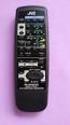 SLEEP TEST SUBWOOFER + MODE EFFECT CENTER + SOUND TV/VIDEO CD-DISC DVD CD TV VOL TV CH TV VCR AUDIO VCR CH + TV SOUND TAPE/CDR VOLUME REMOTE REAR L + MENU REAR R + ENTER VCR /DIGITAL FM/AM MUTING STANDBY
Controls (front) 1. Loudspeaker 2. Light button 3. Band button 4. Auto tune button 5. Alarm button 6. LCD display
 GB Contents Controls... 2-4 Mains operation... 5 Operating your radio... 6 Selecting a station DAB... 7 Display modes DAB... 8 Finding new stations - DAB... 9 Secondary services DAB... 9 Manual tuning
All About Audio Metadata. The three Ds: dialogue level, dynamic range control, and downmixing
 Information All About Audio Metadata Metadata, the data about the audio data that travels along with the multichannel audio bitstream in Dolby Digital, makes life easier for broadcasters while also increasing
DVB-T 730. User s Manual
 EPG Program Reservation There are 10 program timers to bring up reminder for a reserved program. 20 seconds before the start of the reserved program, a pop-up window will remind viewer. If no further instruction,
User Guide. VT1708A VIA HD Audio Adeck For Windows 2000, Windows XP & Server 2003. Jun 13 2007 Revision 1.1e
 VT1708A VIA HD Audio Adeck For Windows 2000, Windows XP & Server 2003 Jun 13 2007 Revision 1.1e VT1708A VIA HD Audio Adeck For Windows 2000, Windows XP & Server 2003 Revision History Rev Date Initial Note
KENWOOD CORPORATION AUDIO VIDEO SURROUND RECEIVER KRF-V7030D KRF-V6030D KRF-V5030D KRF-V4530D INSTRUCTION MANUAL B60-4602-00 (EN)
 AUDIO VIDEO SURROUND RECEIVER KRF-V7030D KRF-V6030D KRF-V5030D KRF-V4530D INSTRUCTION MANUAL KENWOOD CORPORATION Operations Preparations This instruction manual is used to describe multiple models listed
Breathe. Relax. Here Are the Most Commonly Asked Questions and Concerns About Setting Up and Programming the SurroundBar 3000.
 Breathe. Relax. Here Are the Most Commonly Asked Questions and Concerns About Setting Up and Programming the SurroundBar 3000. Our Customer Service Department has compiled the most commonly asked questions
Showcase Processor. Surround Preamp/Processor THE LEADER IN AUDIO ENGINEERING. Instructions for Use. Owner s Reference
 THE LEADER IN AUDIO ENGINEERING Showcase Processor Surround Preamp/Processor Instructions for Use Owner s Reference Showcase Processor Surround Preamp/Processor Instructions for Use v 02.3 CONTACT INFORMATION
Owner s Manual AWM910 JENSEN AWM910 COMPACT DISC PLAYER RADIO CD COMPACT MUSIC SYSTEM MUTE AUX BAND AUX IN PUSH PUSH PWR VOL ALARM T/F AUD SPK A SPK B
 AWM910 Owner s Manual COMPACT DISC PLAYER PUSH 1 2 3 4 5 6 RPT SCAN RDM H M PUSH PWR VOL ALARM SET ON/OFF EQ T/F AUD RADIO CD COMPACT MUSIC SYSTEM MUTE AUX BAND CD AUX IN A B A+B JENSEN AWM910 Thank You!
HANTZ + PARTNER The Upgrade Company! www.hantz.com
 Quick Start Guide X3000 HD Network Media Player X3000 HD NETWORK MEDIA PLAYER POWER HANTZ + PARTNER The Upgrade Company! www.hantz.com A Get to know your HELIOS X3000 Thank you for purchasing the HELIOS
The Parts of the System
 2 The Parts of the System THE RECEIVER THE RECEIVER FRONT PANEL Power Light This green light on the receiver front panel lights up when the receiver is turned ON. This light flashes when the receiver memory
DVB-T2 DIGITAL TV BOX
 DVB-T2 DIGITAL TV BOX QUALITY OF DIGITAL TELEVISION MT4159 User Manual EN 2 Index Index...2 Introduction...3 Front panel...3 Rear panel...3 Remote control...4 Hardware configuration...5 Connecting tuner
Mini Hi-Fi Component System
 3-867-107-14(1) Mini Hi-Fi Component System Operating Instructions Owner s Record The model and serial numbers are located on the rear panel. Record the serial number in the space provided below. Refer
PERSONAL music center II
 PERSONAL music center II Owner s Guide Guía de usario Notice d utilisation Français English INTRODUCTION Thank you By choosing a Bose PERSONAL music center II, you have opened the door to a variety of
Retro Style Turntable With CD/Radio/USB/SD/MP3/WMA and Vinyl-to-MP3 Encoding
 Retro Style Turntable With CD/Radio/USB/SD/MP3/WMA and Vinyl-to-MP3 Encoding PTCD8U INSTRUCTION MANUAL LOCATION OF CONTROLS 1) DUST COVER 2) DIAL POINTER 3) LEFT SPEAKER 4) LCD DISPLAY 5) FM STEREO LED
AV Receiver. Owner s Manual. Read the supplied booklet Safety Brochure before using the unit. English
 AV Receiver Owner s Manual Read the supplied booklet Safety Brochure before using the unit. English CONTENTS Accessories...................................................... 4 FEATURES 5 What you can
R-325 AUDIO/VIDEO RECEIVER AUDIO/VIDEO RECEIVER R-325 MASTER VOLUME 45 POWERT SLEEP PHONES INPUT SELECTOR DOLBY DOLBY OFF PRO-LOGIC 3 STEREO
 O P E R A T I N G I N S T R U C T I O N S AUDIO/VIDEO RECEIVER R-325 INPUT SELECTOR MASTER VOLUME 45 50 55 40 60 35 65 POWERT STANDBY MULTI ROOM REMOTE SENSOR ST TUNED AUTO VCR12 TAPE M PRESET MEM db khz
9A10505400 AG-D8850. AV Digital Home Theater Receiver OWNER S MANUAL
 Z 9A10505400 AG-D8850 AV Digital Home Theater Receiver OWNER S MANUAL CAUTION: TO REDUCE THE RISK OF ELECTRIC SHOCK, DO NOT REMOVE COVER (OR BACK). NO USER- SERVICEABLE PARTS INSIDE. REFER SERVICING TO
CINEMA SB100 powered soundbar speaker
 CINEMA SB100 powered soundbar speaker quick-start guide Thank You For Choosing This JBL Product The JBL Cinema SB100 powered soundbar speaker is a complete, integrated sound system that will dramatically
multi-channel SURROUND SOUND FROM A single component...
 DIGITAL SOUND PROJECTORS for more product information, applications and features please visit www.yamaha.com/home multi-channel SURROUND SOUND FROM A single component... DIGITAL SOUND PROJECTORS simplify
CABLE ONE ALL DIGITAL
 CABLE ONE ALL DIGITAL The world is going All Digital and so is Cable ONE. With the switch from analog to digital technology, Cable ONE will be able to add new channels, especially more HD channels, and
DVR GUIDE. Using your DVR/Multi-Room DVR. 1-866-WAVE-123 wavebroadband.com
 DVR GUIDE Using your DVR/Multi-Room DVR 1-866-WAVE-123 wavebroadband.com Table of Contents Control Live TV... 4 Playback Controls... 5 Remote Control Arrow Buttons... 5 Status Bar... 5 Pause... 6 Rewind...
TX-NR3030. Basic Manual AV RECEIVER. Advanced Manual found here. http://www.onkyo.com/manual/txnr3030/adv/en.html
 TX-NR3030 AV RECEIVER Basic Manual Advanced Manual found here http://www.onkyo.com/manual/txnr3030/adv/en.html En 1 2 3 Speaker CableColor Before Start About the Basic Manual The Basic Manual leads you
Digital Radio/DAB+/FM RDS digital clock radio with dual alarm Operating instruction
 381SE1D-A Digital Radio/DAB+/FM RDS digital clock radio with dual alarm Operating instruction GB Contents Controls... 2-3 Using the clock radio for the first time... 4 Operating your clock radio... 5 Selecting
Kanguru Micro MP3 PRO USB2.0 User s Manual
 Kanguru Micro MP3 PRO USB2.0 User s Manual MP3/WMA Player + Digital Voice Recorder FM Tuner + USB Flash Drive Copyright 2005, All Rights Reserved. This manual applies to 1.1 or later versions of the Kanguru
Hooking Up Home Theater
 Home Support Technical Articles Hooking Up Home Theatre What is Home Theater? Hooking Up Home Theater Since the mid- to late-1990s, home theater systems have rapidly grown in popularity, as consumers have
AUDIO/VIDEO CONTROL RECEIVER DVD CDR/VCR 2 THEATER LIVE CLUB DANCE CLUB HALL PAVILION MULTI JOG SOUND SELECT BASS BOOST ONE TOUCH OPERATION
 MENU ENTER THEATER LIVE CLUB DANCE CLUB HALL PAVILION TUNER/SEA MEMORY SOUND SELECT INPUT ATT. FM MODE BASS BOOST ONE TOUCH OPERATION SOURCE NAME DVD TV SOUND/DBS VCR 1 CDR/VCR 2 VIDEO D I G I T A L CD
DAB DIGITAL RADIO MODEL: CANVAS USER MANUAL
 DAB DIGITAL RADIO MODEL: CANVAS USER MANUAL 1 Welcome 2 Your DAB Digital Radio 2.1 In The Box 2.2 Front View 2.3 Top View 2.4 Rear View 3 Quick Setup 4 Features POWER button 4.5 FM mode choosing menu options
QUALITY AV PRODUCTS INMATE/INMATE USB PROFESSIONAL 19" MIXER. User Guide and Reference Manual
 INMATE/INMATE USB PROFESSIONAL " MIXER User Guide and Reference Manual INTRODUCTION Welcome to the NEWHANK INMATE and INMATE USB professional " mixers series user manual. INMATE and INMATE USB both offer
Tiny Audio C3. English TINY AUDIO C3. Please read carefully before using this product
 English TINY AUDIO C3 Please read carefully before using this product 1 Safety Instructions: 1. Do not use this radio near water. 2. Clean with dry cloth. 3. Do not block any ventilation openings. 4. Do
MVS - Mini Video Speaker
 MVS - Mini Video Speaker Mini Clock Radio Night Vision Hidden Camera User Manual Spy Tec www.spytecinc.com GETTING STARTED Components Features Powering Up the Device Micro SD Memory Card for Data Storage
Table of Contents Function Keys of Your RF Remote Control Quick Setup Guide Advanced Features Setup Troubleshooting
 Congratulations on your purchase of the AT&T U-verse TV Point Anywhere RF Remote Control. This product has been designed to provide many unique and convenient features to enhance your AT&T U-verse experience.
(2012 10 24) manual_tocomsat duo LITE.indd 20-1 2012-10-24 7:44:57
 (2012 10 24) manual_tocomsat duo LITE.indd 20-1 2012-10-24 7:44:57 TABLE OF CONTENTS Table of Contents Table of Contents Safety Warning General Information Package Contents & Features Front Panel Rear
Digital Satellite Receiver
 USER GUIDE Digital Satellite Receiver Models DSR207, DSR317, DSR505, and DSR530 CONTENTS IMPORTANT SAFETY INSTRUCTIONS...1 DSR BASICS SYMBOLS/ICONS...6 Front Panel...6 Back Panel...7 CONNECTING YOUR DSR...10
DIGITAL CABLE & DVR QUICK GUIDE. cable television made simple
 DIGITAL CABLE & DVR QUICK GUIDE Grande Communications cable television made simple Table of Contents TABLE OF CONTENTS Using Your Remote remote Control 1 programming the Remote 2 Interactive Program Guide
INSTRUCTIONS Please read all instructions carefully before using
 Car Multimedia System XM-2DTSB79 AUX IR MIC RESET USB INSTRUCTIONS Please read all instructions carefully before using Touch calibration If touch calibration error occurs, you can adjust the touch coordinate
BeoVision 7. Supplement
 BeoVision 7 Supplement On-screen menus This supplement contains corrections to the Guide and Reference book. The main corrections refer to the Onscreen menus, the CONNECTIONS menu and the socket panels.
Mbox Basics Guide. Version 6.7 for LE Systems on Windows XP or Mac OS X. Digidesign
 Mbox Basics Guide Version 6.7 for LE Systems on Windows XP or Mac OS X Digidesign 2001 Junipero Serra Boulevard Daly City, CA 94014-3886 USA tel: 650 731 6300 fax: 650 731 6399 Technical Support (USA)
Pocket DAB & FM Radio with Speaker
 Pocket DAB & FM Radio with Speaker P MODEL: GDPRDAB USER MANUAL 1 Welcome 2 Your DAB Digital Radio 2.1 In The Box 2.2 Front View 2.3 Rear View 3 Quick Setup 3.1 Power On and Autoscan 3.2 Changing DAB Stations
DAB+ / FM Tuner Model: TU-201
 DAB+ / FM Tuner Model: TU-201 Instruction Manual www.pulse-audio.co.uk 1 Safety Information The lightning bolt within a triangle is intended to alert the user to the presence of dangerous voltage levels
RCN DIGITAL CABLE USERS GUIDE
 RCN DIGITAL CABLE USERS GUIDE WELCOME Congratulations! Thanks to your new Digital Cable Service, you now have access to the most cutting-edge cable television services available, only from RCN. At RCN,
Home Theater. Diagram 1:
 Home Theater What is Home Theater? Since the mid- to late-1990s, home theater systems have rapidly grown in popularity, as consumers have looked for ways to enjoy movies at home the same way they do in
LSR4300 Control Center Software
 LSR4300 Control Center Software User Guide Updated for version 2.0 software Table Of Contents Introduction...3 System Requirements...4 Installation...4 Launching The Software...5 Reference...7 Main Screen...7
Multi-Channel AV Master Unit ENGLISH. Before Using This Product. Owner s Manual AVM-P9000. This product conforms to new cord colors.
 Multi-Channel AV Master Unit ENGLISH Before Using This Product Owner s Manual AVM-P9000 This product conforms to new cord colors. Contents Before Using This Product... 3 Key Finder... 3 About This Product...
Primare C31 Remote Control User Guide
 Primare C31 Remote Control User Guide i Preface COPYRIGHT AND ACKNOWLEDGMENTS Copyright 2001 Primare Systems AB. All rights reserved. Primare Systems AB Idavägen 17D SE-352 46 Växjö Sweden The information
3-100-392-31(1) HDMI CONTROL Guide. Operating Instructions. 2007 Sony Corporation
 3-100-392-31(1) HDMI CONTROL Guide Operating Instructions 2007 Sony Corporation Using the HDMI CONTROL Function for BRAVIA Theatre Sync To use BRAVIA Theatre Sync, set the HDMI CONTROL function as explained
Movie Cube N150H. User s Manual
 Movie Cube N150H User s Manual (v1.0) TABLE OF CONTENTS 1. Main Features... 4 1.1 Front panel... 4 1.2 Back panel... 4 2. Remote Control... 5 3. Welcome Page... 6 4. Installation Guide... 6 5. Program...
Jabra CRUISER2. User manual. www.jabra.com MUTE VOL - VOL + jabra
 Jabra CRUISER2 VOL - VOL + MUTE jabra User manual www.jabra.com Contents THANK YOU...2 ABOUT YOUR JABRA CRUISER2...2 WHAT YOUR SPEAKERPHONE CAN DO...3 GETTING STARTED...4 CHARGE YOUR SPEAKERPHONE...4 TURNING
DR-1 Portable Digital Recorder OWNER'S MANUAL
 » D01019610A DR-1 Portable Digital Recorder OWNER'S MANUAL Contents 1 Introduction... 3 Main functions... 3 Supplied accessories... 3 Recycling the rechargeable battery... 3 Notes about this manual...
4-132-320-13(1) Home Theatre System. Operating Instructions HT-DDW5500. 2009 Sony Corporation
 4-132-320-13(1) Home Theatre System Operating Instructions HT-DDW5500 2009 Sony Corporation WARNG To reduce the risk of fire or electric shock, do not expose this apparatus to rain or moisture. To reduce
SURROUND MASTER. User Manual 1.0. English. Copyright 2012 Involve Audio
 SURROUND MASTER SM-465 User Manual 1.0 English Copyright 2012 Involve Audio This manual is available in multiple languages on our web site. www.involveaudio.com Welcome to a whole new world of sound! KEY
SP1790JK 900MHz Wireless Indoor/Outdoor Speakers. User Manual INTRODUCTION FEATURES IMPORTANT SAFETY INFORMATION
 SP1790JK 900MHz Wireless Indoor/Outdoor Speakers INTRODUCTION This 900 MHz digital hybrid wireless speaker system uses the latest wireless technology that enables you to enjoy music and TV sound anywhere
PG-01instruction manual
 PG-01instruction manual DIGITAL RADIO fairbank house ashley road altrincham WA14 2DP united kingdom t: +44 (0)161 924 0300 f: +44 (0)161 924 0319 e: [email protected] www.intempodigital.com PG-01
MANUAL PC1000R [email protected]
 MANUAL PC1000R [email protected] Features The APart PC1000R is a professional multisource CD/USB/SD card music player, equipped with balanced and unbalanced analog outputs, coaxial and optical digital
Universal Remote Instruction Manual
 24959 Universal Remote Instruction Manual Table of Contents Introduction...3 Button Functions...4 Initial Setup...6 Battery Installation...6 Battery Saver...6 Code Saver...6 Code Setup...6 Direct Code
Basics. Mbox 2. Version 7.0
 Basics Mbox 2 Version 7.0 Copyright 2005 Digidesign, a division of Avid Technology, Inc. All rights reserved. This guide may not be duplicated in whole or in part without the express written consent of
2-319-196-11(1) Home Theatre System. Operating Instructions HT-SF1100 HT-SS1100. 2007 Sony Corporation
 2-319-196-11(1) Home Theatre System Operating Instructions HT-SF1100 HT-SS1100 2007 Sony Corporation WARNING To reduce the risk of fire or electric shock, do not expose this apparatus to rain or moisture.
Controls. LCD Display. Tuning Up Time Set and Station Scan
 PR-D8 GB Revision 3 1 1 2 4 5 7 9 10 12 14 16 18 20 22 24 25 26 27 29 31 33 35 36 37 38 Controls Stereo Built-in Microphone (Left Channel) LCD Display Stereo Built-in Microphone (Right channel) Power/Auto
DVB-T VERTO. User Manual HD TERRESTRIAL DIGITAL TV STB & PLAYER MT4162
 DVB-T VERTO HD TERRESTRIAL DIGITAL TV STB & PLAYER MT4162 User Manual EN 2 Index Index...2 Overview...2 Remote Control...3 Battery installation in remote control...4 Using remote control...4 Connections...4
H203D 中文 GB Version 1
 H203D 中 GB文 Version 1 Contents Installing batteries... 4 Using the AC adapter (not supplied)... 5 Setting the clock... 6-7 Updating your radio - DAB... 8 Selecting a station - DAB... 9 Secondary services
UVO SYSTEM QUICK REFERENCE GUIDE
 UVO SYSTEM QUICK REFERENCE GUIDE Congratulations on the Purchase of your new UVO system! Your new UVO system allows you to enjoy various audio and multimedia features through the main audio system. For
MODEL: MEMPHIS FM STEREO RADIO OPERATING INSTRUCTIONS
 MODEL: MEMPHIS CD/USB/SD PLAYER WITH TURNTABLE. ENCODING TO USB AND SD CARD. FM STEREO RADIO OPERATING INSTRUCTIONS PLEASE READ THIS USER MANUAL COMPLETELY BEFORE OPERATING THIS UNIT AND RETAIN THIS BOOKLET
CANON XA 10 IMPORTANT VIDEO & AUDIO SETTINGS
 CANON XA 10 IMPORTANT VIDEO & AUDIO SETTINGS Review these settings on your camera prior to capturing footage. The last page contains a labeled diagram of the XA 10. Initialize Memory: FUNC > MENU > Wrench
Video Baby Monitor System. User Guide
 Video Baby Monitor System User Guide What s inside Welcome!... 2 Getting started... 3 Tour of the system... 7 Everyday use...13 Cameras... 14 Motion/Alerts... 18 Recording... 21 Playing Back Pictures and
focus TOuCh P10 FOR DISPLAYS: 55, 70 AND 82 ENgliSh V01.3-2014-7
 focus TOuCh P10 FOR DISPLAYS: 55, 70 AND 82 ENgliSh V01.3-2014-7 Thank you for purchasing our product. Please read this manual carefully before operation your set and retain it for future reference. FT55-P10
HP USB Digital/Analog TV Tuner. User Guide
 HP USB Digital/Analog TV Tuner User Guide Copyright 2008 Hewlett-Packard Development Company, L.P. Windows and Windows Vista are U.S. registered trademarks of Microsoft Corporation. The information contained
Tuning into a Radio Station
 AM/FM Radio Receiving Function Tuning into a Radio Station Tuning into stations automatically 1. Press TUNER on the main unit several times to select either "AM" or "FM". 2. Press TUNING MODE so that the
Auditorium Audiovisual System User s Guide
 Auditorium Audiovisual System User s Guide Page Page Contents Introduction...4 Facilities 7 Auditorium floor plan...8 Stage floor boxes and wall plates...9 Other floor boxes and wall plates...10 System
Sonic Studio Strix Series. User Guide
 Sonic Studio Strix Series User Guide DE158 First Edition June 2015 Copyright 2015 ASUSTeK COMPUTER INC. All Rights Reserved. No part of this manual, including the products and software described in it,
ONKYO TX-SR307EB, Hinta 299
 ONKYO TX-SR307EB, Hinta 299 OMINAISUUDET 3 HDMI sisään 1 ulos (video) HDMI Pass-Thru* (Version 1.3 Compatible with 1080p, Deep Color, and x.v.color ) Audyssey 2EQ to Correct Room Acoustic Problems and
Connections and Setup
 12 Connections and Setup HOW TO CONNECT YOUR SATELLITE RECEIVER Use the information in this chapter to connect your receiver to other equipment. CONNECTING TO THE NEARBY HDTV (TV1) CONNECTING TO THE REMOTE
STEREO BLUETOOTH WIRELESS HEADPHONES
 STEREO BLUETOOTH WIRELESS HEADPHONES model: AF32 USER MANUAL part of the series PACKAGE CONTENTS Runaway AF32 Stereo Bluetooth Wireless Headphones Charging cable (USB 3.5mm) Stereo audio cable (3.5mm 3.5mm)
Canon Vixia HFS10 High Definition Camcorder Quick Start Guide
 School of Communications Design Media Lab Canon Vixia HFS10 High Definition Camcorder Quick Start Guide The Canon HFS10 is a Hard Drive/Flash Memory camera. This means the footage can be recorded to a
LCD Monitor User Manual
 LCD Monitor User Manual Products: LCD17-5, LCD19-5 Please read this manual before using your monitor, and always follow instructions for proper use. Please save this manual for future reference. LCD17-19_DM
Setting up your Gateway Media Center
 Setting up your Gateway Media Center Notices 2003 Gateway, Inc. All rights reserved. Gateway, Gateway Country, the Gateway stylized logo, and the black-and-white spot design are trademarks or registered
www.fmtalkinghouse.com
 www.fmtalkinghouse.com 24x7 FM Announcement System (Talking Sign) 2009 FM TALKING HOUSE All rights reserved Talking Sign 24x7 FM Announcement System Description: The 24x7 FM Announcement System or Talking
In-Car Digital Radio Adaptor User Guide
 S1000-DAB In-Car Digital Radio Adaptor User Guide Table of Content INTRODUCTION... 1 CONTENTS OF PACKAGE... 2 INSTALLATION...3 OVERVIEW OF CONTROLS AND CONNECTORS... 5 STARTING UP THE SYSTEM... 7 USING
ATS-505. GB Version 1
 ATS-505 GB Version 1 Control Locations Power/Sleep Power On/off/Alarm off/sleep function Display Switch between radio frequency and time while radio is power on Mode Mode set up (please see below mode
FREE TV AUSTRALIA OPERATIONAL PRACTICE OP 60 Multi-Channel Sound Track Down-Mix and Up-Mix Draft Issue 1 April 2012 Page 1 of 6
 Page 1 of 6 1. Scope. This operational practice sets out the requirements for downmixing 5.1 and 5.0 channel surround sound audio mixes to 2 channel stereo. This operational practice recommends a number