
Classification of animals by their observable features
|
|
|
- Lambert Wheeler
- 9 years ago
- Views:
Transcription
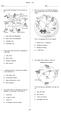
1 Classification of animals by their observable features Pupils can sort and classify native animals by their observable features as defined below: Animals without backbones invertebrates with backbones vertebrates Sponges Platyhelminthes Annelida Echinodermata Cnidaria Nematoda Mollusca Arthropoda jointed limbs hard external skeleton Insects three pairs of jointed legs two pairs of wings Arachnids two body parts four pairs of jointed legs two pairs of appendages for feeding Crustacea seven or more jointed legs two pairs of antennae Myriapods head and eighteen or more pairs of legs Centipedes one pair of legs to each body segment Millipedes two pairs of legs to each body segment naked skin without body hair not naked skin with body hair Fish with fins without fins with feathers, no fur Birds without feathers, with fur Mammals Reptiles with scales Amphibians without scales This diagram shows how common native animals can be sorted and grouped and may be used as a first stage in the progression towards an understanding of the higher level of animal classification. Pearson Publishing, Cambridge CB4 3NP Tel
2 Pupil sheet 1 Key questions for land invertebrate identification Use the Identification Cards to help find out the name of your animal. Carry out the following steps and answer the questions. Use Pupil sheet 2 to help pinpoint your animal. 1 Sort the cards into sets by the number of legs logos shown below: 0 legs 6 legs 8 legs 14 legs More than or none visible or more than 14 legs 4 pairs 2 How many visible legs does the animal have? (Select the set of cards with the matching logo) 3 Does it have wings? Yes 4 What is its size? (approximately) 2 mm to 7 mm Tiny 8 mm to 30 mm Small 31 mm to 120 mm Medium 5 What is its colour? Answer the following questions by looking at the Identification Card you have chosen as matching your animal. 6 Which feeding group does it belong to? Herbivore Feeds on plants Carnivore Kills and eats other animals Detritivore Feeds on fragmented organic matter Omnivore Feeds on both plants and animals Scavenger Feeds on dead and decaying animals 7 What is its habitat? My animal is a... Pearson Publishing, Cambridge CB4 3NP Tel
3 Identification Cards Water Snail Bithynia tentaculata Cyclops Cyclops sp. (female) Operculum Uses the antennae to assist with moving through the water Antenna Some water snails have a horny plate, the operculum, attached to the foot. This fits over the shell opening when the snail has withdrawn itself. Egg sacs 0 15 mm Brown Herbivore In rivers, streams, ditches, canals 0. t visible 3 mm Transparent Seizes small animal and plant particles from the water Ponds, rivers, streams te: Eggs are attached to water plants or stones te: Becomes the prey of many other water creatures Water Flea Daphnia sp. Fresh-water Shrimp Gammarus pulex The number of legs vary but usually there are 7 to 9 pairs Heart Outline of limbs inside the body Eggs The Water Flea is eaten by many other creatures 0. t visible 2 mm Transparent Filter feeder. Filters particles of food from the water into the mouth Ponds, shallow pools, lake edges 14. Sometimes more 16 mm Grey-brown or reddish-brown Feeds on organic particles Running water, rivers, streams te: Water fleas can live from a few weeks to six months te: They hide under stones in areas of running water Pearson Publishing, Cambridge CB4 3NP Tel
4 Teacher s notes Metamorphosis and identifying larvae 1 Metamorphosis Metamorphosis is a marked structural transformation during the development of an organism, as seen in the change from larva to adult insect.there is complete metamorphosis and incomplete metamorphosis. Complete metamorphosis The insects undergo a complete change through the stages of egg to larva, to pupa and to adult insect. The larvae often feed on diets quite different from the adults. For example, adult butterflies feed on nectar and caterpillars feed on plants. Adult Incomplete metamorphosis The wings gradually develop on the outside of the body which gets larger in stages, shedding its outer covering as it becomes too tight. The nymph, as it is called, often looks very like the adult and eats the same food. For example, Grasshoppers and Dragonflies. Adult Pupa Egg Nymph Eggs Caterpillar Nymph 2 Identifying larvae Many different types of insect larvae and pupae can be found when looking for invertebrates, particularly among soil, logs, leaves and leaf litter. There are four basic types of insect larvae: There are two main types of pupa: Butterfly and moth larva Exarate, where the appendages are free, such as in dragonflies Two-winged fly larva Beetle larva Ladybird larva Obtect, where the appendages are fixed in a case, such as in butterflies Pearson Publishing, Cambridge CB4 3NP Tel
5 Pupil sheet 23 Mammals, what they eat and their adaptations Name:... Date:... Weather:... The teeth of mammals are specifically adapted to suit their type of food. 1 Identify the animal 2 Define its food 3 Pinpoint its adaptation, A, B or C Adaptations for feeding Teeth of mammals A Herbivore such as a bank vole Dominant incisors Name Adaptation A, B, C or D plants Molar chewing B Carnivore, such as a fox Dominant canines Canine teeth for tearing flesh Molar chewing C Omnivore such as a badger s, canines and molars Canine tearing flesh Molar chewing Results: Which type are most often seen in school grounds, parks, etc and why is this? Pearson Publishing, Cambridge CB4 3NP Tel
www.irishseedsavers.ie Natural surface water on earth includes lakes, ponds, streams, rivers, estuaries, seas and oceans.
 www.irishseedsavers.ie POND LIFE FACT SHEET Natural surface water on earth includes lakes, ponds, streams, rivers, estuaries, seas and oceans. A pond is a small body of fresh water shallow enough for sunlight
Pond Vocabulary Words and Meanings
 Pond Vocabulary Words and Meanings Adapt: to adjust to a use or situation Aquatic: from or in the water Bacteria: tiny organisms, too small to be seen with the naked eye Carnivore: an animal that eats
Science Life Cycle of the Butterfly
 Science Life Cycle of the Butterfly Here is a big word for you to remember: metamorphosis. Metamorphosis means that an animal changes in the way it looks and behaves as it develops. Most insects go through
Life Cycle of a Butterfly
 Name: Date: Life Cycle of a Butterfly Life cycle refers to the stages of development, growth and reproduction that a living thing goes through. The butterfly's life cycle is made up of four stages: egg,
Classification. Living Things. bacteria and blue green algae: (single celled organisms without a nucleus)
 Teacher Discovery Card Classification Information There are millions different kinds plants and animals in the world Each different kind plant and animal is called a species We can group species together
nucleus cytoplasm membrane wall A cell is the smallest unit that makes up living and nonliving things.
 1 In nature there are living things and nonliving things. Living things depend on three basic life processes: nutrition, sensitivity and reproduction. Living things are made up of cells. 1. Match the two
Animal Classification. Contents. Preparation
 Animal Classification A collaborative sorting activity for Key stages 2 & 3 Teachers notes Contents Animal Cards: 8 Pictures per card (54 +2 blanks) Alphabetical list of pictured animals Group cards: VERTEBRATE/INVERTEBRATE
Lab #10 Invertebrates 2 and Vertebrates 1 (Exercises 39, 40)
 Name Bio 182-General Biology Lab #10 Invertebrates 2 and Vertebrates 1 (Exercises 39, 40) Answer the questions in the space provided. You need to turn this sheet at the end of the lab. In general know
Insect Life Cycle. www.readinga-z.com. Visit www.readinga-z.com for thousands of books and materials.
 Insect Life Cycle A Reading A Z Level L Leveled Reader Word Count: 607 LEVELED READER L Written by Chuck Garofano Visit www.readinga-z.com for thousands of books and materials. www.readinga-z.com Photo
ANIMALS AND THEIR HABITATS: KS1 STUDENT RESOURCES
 ANIMALS AND THEIR HABITATS: KS1 STUDENT RESOURCES PLANT OR ANIMAL? (Lesson 1:1) Card sort task: print out and get the students to sort them into: Plants or Animals. Get the students to explain why they
Task 2 Multi-text reading: Interesting facts about butterflies
 Task 2 Multi-text reading: Interesting facts about butterflies Level: ISE III Focus: Task 2 Multi-text reading Aims: To read for gist and specific information and to deduce meaning from context Objectives:
Student worksheet. Bugs. Complete metamorphosis Dung Beetle lifecycle. Incomplete metamorphosis Leafhopper lifecycle
 Complete metamorphosis Dung Beetle lifecycle Incomplete metamorphosis Leafhopper lifecycle Museum Victoria Bugs Classroom Activities Section 3 6 A Diving Beetle s story Museum Victoria Bugs Classroom Activities
World Oceans Day at ZSL Whipsnade Zoo
 World Oceans Day at ZSL Whipsnade Zoo Teachers notes KS 1 & KS 2 This booklet will help you to focus your self guided trail on ocean animals, looking at the adaptations of the species and focusing in on
Prairie Food Chains & Webs Producers, Consumers & Decomposers
 Kansas Prairies s, s & Decomposers Science, Life Science, Reading, Math Materials Vocabulary worksheet Food Chain worksheet Overview To explore the organisms found on a prairie and identify the various
Looking at life cycles
 Using a selection of the Discovery cards in this section, children can learn more about insect lifecycles and how to sequence the lifestages of a butterfly correctly. They can also explore metamorphosis.
The Pond Pack. Background information and resources for teachers
 The Ecology Service 2010 Date published 02/03/10 Extended artwork area (REMOVE THIS TEXT) The Pond Pack Background information and resources for teachers For further information contact: Holland Park Ecology
Insect Life Cycle LEVELED READER BOOK LA. www.readinga-z.com. Visit www.readinga-z.com for thousands of books and materials.
 Insect Life Cycle A Reading A Z Level L Leveled Book Word Count: 607 LEVELED READER BOOK LA Written by Chuck Garofano Visit www.readinga-z.com for thousands of books and materials. www.readinga-z.com Photo
POND INTERACTIONS Teacher Guide February 2011
 Grades: 4, 5, & 6 POND INTERACTIONS Teacher Guide February 2011 Time: 3 hours A pond is an ever-changing environment. The pond ecosystem is made of countless interactions that link living things to one
Butterflies and Plants Grades: K and up
 Butterflies and Plants Grades: K and up Purpose: To focus exploration on the butterfly life cycle and how that life cycle is related to plants in the garden. Students should be exposed to the 4 stages
Habitats. A Wildwood KS2 Teachers Pack and Activity Sheets
 Habitats A Wildwood KS2 Teachers Pack and Activity Sheets Teachers Guidance Notes This teachers resource pack is designed to support the National Curriculum KS2 topic of animal homes and habitats (see
Prairie Food Chains & Webs Producers, Consumers, & Decomposers
 Kansas Prairies Prairie Food Chains & Webs Producers, s, & Decomposers Life Science, Math, Reading, Science Materials Student Worksheet A: Vocabulary Student Worksheet B: Food Chain Overview To explore
Pond Water Web Lesson Plan
 Pond Water Web Lesson Plan Purpose: As a result of this lesson, students will become familiar with common organisms found in a pond and discover their importance in a balanced aquatic habitat as they create
2 nd Grade Science Unit B: Life Sciences Chapter 3: Plants and Animals in Their Environment Lesson 1: How are plants and animals like their parents?
 2 nd Grade Science Unit B: Life Sciences Chapter 3: Plants and Animals in Their Environment Lesson 1: How are plants and animals like their parents? offspring Offspring are young plants and animals. Offspring
Is That Mammal a Carnivore, Herbivore or Omnivore?
 Name: Is That Mammal a Carnivore, by Guy Belleranti A mammal can be a carnivore (meat eater), herbivore (plant eater) or omnivore (meat and plant eater). By looking at the teeth, eye position and feet
Frog Scavenger Hunt Activity
 Frog Scavenger Hunt Activity Materials: Frog questions worksheet (pages 2-3) 18 frog fact cards (pages 4-8) Scissors and scotch tape Preparation: Print the frog fact cards and cut them apart. Make copies
What is a food chain?
 3 What is a food chain? Learning Intention Understand that plants and animals in a habitat are dependent on each other. National Curriculum Skills Science Interdependence of living organisms in those 2
Get to Know Your Watershed. McMillan Creek
 Get to Know Your Watershed McMillan Creek Where is McMillan Creek? McMillan Creek is found in the northeastern portion of the City of Prince George, know as the Hart and Shady Valley. It is located entirely
The Mountain Ecosystem by Kimberly M. Hutmacher
 A habitat is where a plant or animal lives and grows. A habitat is part of an ecosystem where lots of different plants and animals live. Mountains, with their many levels are an ecosystem containing many
Wild About... Frogs and Frogspawn
 a Wild About... Rutland County Council Nature notes Frogs belong to a group of animals called amphibians, which also includes newts and toads. Amphibians live both on land and in water. Water is needed
Who Eats What in the Woods?
 Who Eats What in the Woods? Developed with teachers at Tolworth Junior School in Kingston upon Thames in 2000. The webaddress for this activity is; Last updated 26th February 2008 This activity has now
Class Insecta - The insects
 A Introduction 1. Very species rich 2. Characteristics a. 3 pairs of legs b. 2 pairs of wings (most) except flies (1 pair of wings - Diptera) B. Distribution 1. All habitats except saltwater - replaced
Life Cycle - Butterflies & Moths
 Life Cycle - Butterflies & Moths butterfly goes through four stages in its life. All animals A change as they grow and mature but butterflies and moths undergo the biggest change of all. Butterfly Pupa
Georgia Performance Standards Framework for Science GRADE 7 DICHOTOMOUS KEYS AND CLASSIFICATION
 The following instructional plan is part of a GaDOE collection of Unit Frameworks, Performance Tasks, examples of Student Work, and Teacher Commentary. Many more GaDOE approved instructional plans are
Time Required: 45 minutes
 Benthic Macroinvertebrate Study Concept/Topic to Teach: The presence or absence of benthic macroinvertebrates can be used to indicate water quality. Standards: Discipline: Science and Technology Strand:
Cursos: Iniciada el curs 2007-08 i revisada en diverses ocasions. Versió actual: curs 2010-2011.
 PROGRAMACIÓ: VERTEBRATES NIVELL: 5è de primària Mestres que hi han intervingut: Àngels Balañá, Àngels Mata, Raquel López, Marta Cuevas, Imma Torres. Cursos: Iniciada el curs 2007-08 i revisada en diverses
Kindergarten Science Unit B: Life Science Chapter 4: Plant and Animal Parts Lesson 1: What do plant parts do?
 Insert Photo or Graphic for Unit or Lesson Theme Kindergarten Science Unit B: Life Science Chapter 4: Plant and Animal Parts Lesson 1: What do plant parts do? Insert Photo/Graphic parts Insert Photo/Graphic
Grassland Food Webs: Teacher Notes
 Grassland Food Webs: Teacher Notes Alan Henderson ecosystem Objectives After completing this activity students will be able to: Create a food web and identify producers and consumers. Assign organisms
Key Idea 2: Ecosystems
 Key Idea 2: Ecosystems Ecosystems An ecosystem is a living community of plants and animals sharing an environment with non-living elements such as climate and soil. An example of a small scale ecosystem
Insect Record. Date. Observations
 Insect Record Date Observations Investigation 1: Mealworms No. 1 Notebook Master Stages in the Life Cycle of the Darkling Beetle 1. Cut apart the pictures. 2. Glue the pictures in a column in your science
Identifying Vertebrates Using Classification Keys
 Name Class Date Chapter 18 Classification Identifying Vertebrates Using Classification Keys Introduction Organisms such as vertebrates (animals with backbones) are classified into groups according to certain
Introduction to Ecology
 Introduction to Ecology Ecology is the scientific study of the interactions between living organisms and their environment. Scientists who study ecology are called ecologists. Because our planet has many
Life in a Pond. Page 1 of 5. Grade Levels K-5
 Grade Levels Overview Observe a local pond or aquatic ecosystem, and study the wildlife that utilizes the pond/aquatic ecosystem for its habitat needs. Subject Areas Science, Language Arts & Art, Duration
Cycles of life. You will be visiting the museum to see some baby animals and their parents. Here are some of their stories.
 Cycles of life Some animals die of old age, some die of disease, some are killed and eaten by other animals. But the world does not run out of animals because more are being born or hatched all the time.
Animal Adaptations -- Vocabulary
 Section 1 Objectives o Children will understand what animal adaptations are. o Children will be able to explain why animal adaptations are important. o Children will be able to explain different types
There s no place like home!
 2Discovery Card Teacher Time: 2.5 hours (split into two sessions) Information (suitable for 7-12 year olds) This is an opportunity for children to make their own bug boxes and test the habitat preference
Dinosaur Hall Second Grade Dinosaur Lesson Teacher Pages Pre Visit On site Visit
 Dinosaur Hall Second Grade Dinosaur Lesson Teacher Pages Pre Visit Earth Sciences 3d. Students know that fossils provide evidence about the plants and animals that lived long ago and that scientists learn
Butterfly or Moth? Made for 2nd Graders... Project Bibliography
 Butterfly or Moth? Made for 2nd Graders... Project Bibliography Butterfly or Moth? Today you will learn about a Painted Lady Butterfly and a Robin (Cecropia) Moth. What is a butterfly? Click the butterfly
Animal Classification K-4
 Animal Classification K-4 Introduction: The theme of this self-guided experience is classification of animals. Students will learn to use body coverings as an aid to classification. As the group tours
Life Science Study Guide. Environment Everything that surrounds and influences (has an effect on) an organism.
 Life Science Study Guide Environment Everything that surrounds and influences (has an effect on) an organism. Organism Any living thing, including plants and animals. Environmental Factor An environmental
Materials For each student (or group of students): Caterpillar data sheets Pencil For teacher: Chart paper Markers
 Insects! Concepts Life cycles and metamorphosis are common to all insects. Butterflies, like most insects, go through complete metamorphosis involving four distinct phases egg, caterpillar (larva), chrysalis
Butterflies and Moths
 Delta Science Reader Butterflies and Moths Delta Science Readers are nonfiction student books that provide science background and support the experiences of hands-on activities. Every Delta Science Reader
DOG Pets cat - dog - horse - hamster - rabbit - fish
 CAT Pets cat - dog - horse - hamster - rabbit - fish DOG Pets cat - dog - horse - hamster - rabbit - fish HORSE Pets cat - dog - horse - hamster - rabbit - fish HAMSTER Pets cat - dog - horse - hamster
NOTE TO TEACHER: It is appropriate to introduce the mitochondria (where energy is made) as a major structure common to all cells.
 5.2.1 Recall the cell as the smallest unit of life and identify its major structures (including cell membrane, cytoplasm, nucleus, and vacuole). Taxonomy level: 1.1 and 1.2-A Remember Factual Knowledge
Supported by. A seven part series exploring the fantastic world of science.
 Supported by A seven part series exploring the fantastic world of science. Find out about the different types of teeth in your mouth. Milk Teeth As a child you have 20 milk teeth. Your first tooth appears
FOURTH GRADE ORGANISMS
 FOURTH GRADE ORGANISMS 2 WEEKS LESSON PLANS AND ACTIVITIES LIFE CYCLE OVERVIEW OF FOURTH GRADE ORGANISMS WEEK 1. PRE: Exploring the components of a cell. LAB: Comparing cells, tissues, and organs. POST:
Structures of animals
 Structures of animals Name: All animals have been designed with different parts, which we call structures, that make up their bodies. Each of these structures is important as it is used to perform a specific
Second Grade Insects Assessment
 Second Grade Insects Assessment 1a. The stiff shell that covers an insect s body is called an: a. outer shell b. exoskeleton 1b. The stiff shell that covers and insect s body is called an: a. outer shell
Matter and Energy in Ecosystems
 Matter and Energy in Ecosystems The interactions that take place among biotic and abiotic factors lead to transfers of energy and matter. Every species has a particular role, or niche, in an ecosystem.
Lesson Plan Two - Ecosystems
 Lesson Plan Two - Ecosystems Summary Students discuss what living things need to survive. They identify the abiotic and biotic components of an ecosystem and describe the roles and interactions of producers
The main source of energy in most ecosystems is sunlight.
 Energy in Ecosystems: Ecology: Part 2: Energy and Biomass The main source of energy in most ecosystems is sunlight. What is the amount of energy from the sun? 100 W/ft 2 The energy gets transferred through
Lesson 1. Objectives: ocus: Subjects:
 Lesson 1 The Web of Life Objectives: 1. Understand the concept of an ecosystem. 2. Understand the interdependence of members of an ecosystem. Subjects: 1. Ecology 2. Language 3. Art MATERIALS: Copies of
Planning to teach science in Year 7 for students who need additional support in literacy SESSION 8
 Planning to teach science in Year 7 for students who need additional support in literacy SESSION 8 iteracy teaching literacy teac g literacy teaching literacy t 2 science supplement hing literacy teaching
Dinosaur Vocabulary List & Definitions
 Name Dinosaur Vocabulary List & Definitions dinosaur extinct fossil herbivore paleontology predator prehistoric skeleton prey carnivore one of various extinct reptiles that lived approximately l00 million
Unit 4 Lesson 1: A Pest by Any Other Name
 Focus Areas: Pest Control: Biological; Environmental Science, Language Arts Focus Skills: critical thinking, conducting research, observing, graphing, interpreting data Objectives To explore human attitudes
Fish: One-of-a-kind Animals (30 minute activity)
 FISH HEALTH/Activity Fish: One-of-a-kind Animals (30 minute activity) Objectives Materials Background I have known you in your streams and rivers where your fish flashed and danced in the sun, where the
Brownies. It s Your Planet Love It! WOW: Wonders of Water. Ice Cold (page 25) Extinct (page 39)
 Exhibit Guide WOW: Wonders of Water Ice Cold (page 25) The Earth has two poles, a North Pole and a South Pole. Both are extremely cold and covered in ice. Sometimes you might see huge masses of moving
Insect identification sheet
 information leaflet Insect identification sheet To enable you to identify the insect you have in your home, we have provided some identification sheets. These depict the most common pest species that you
Food Webs and Food Chains Grade Five
 Ohio Standards Connection: Life Sciences Benchmark B Analyze plant and animal structures and functions needed for survival and describe the flow of energy through a system that all organisms use to survive.
Identifying Aquatic Insects From Your Pond
 Identifying Aquatic Insects From Your Pond Penobscot County Soil & Water Conservation District Natural Resources Conservation Service 28 Gilman Plaza, Suite #2 Bangor, ME 04401 Tel: (207) 990-3676 Fax:
Animal skeletons. The museum holds hundreds of skeletons - of fish, amphibians, reptiles, birds and mammals.
 Animal skeletons All animals have skeletons of one sort or another. Mammals, birds, reptiles, amphibians and fish have bony skeletons. These skeletons come in all shapes and sizes, but they also share
6. Which of the following is not a basic need off all animals a. food b. *friends c. water d. protection from predators. NAME SOL 4.
 NAME SOL 4.5 REVIEW - Revised Habitats, Niches and Adaptations POPULATION A group of the same species living in the same place at the same time. COMMUNITY-- All of the populations that live in the same
Food Chain Frenzy. PREPARATION Copy and prepare Food Chain Cards - one for each pupil (pages 73-76).
 Food Chain Frenzy Key Stage 2 < < Food Chain Frenzy SUMMARY OF ACTIVITY Pupils are introduced to simple food chains using Norfolk examples. Feeding relationships, predator-prey interactions, population
Adapt to Your Habitat Complements Teacher Guide Adaptations: Secrets to Survival
 Adapt to Your Habitat Complements Teacher Guide Adaptations: Secrets to Survival Theme: and animals have many different adaptations that allow them to survive. Objectives: Understanding what adaptations
food chains reflect How are these organisms important to one another? organism: a living thing
 reflect Different plants and animals live together. Look at the picture of the garden. What organisms live there? Grass, trees, bugs, and birds live there. Fish and frogs live there, too. Can you think
Rain Forests. America's. Web of Life. Rain Forest Ecology. Prince William Network's OVERVIEW OBJECTIVES SUBJECTS
 Rain Forest Ecology National Science Education Standards Standard C: Life Sciences Populations and ecosystems. Standard C: Life Sciences Diversity and adaptation of organisms. Standard F: Science in Personal
Everything You Wanted to Know About Spiders!
 Everything You Wanted to Know About Spiders! How do spiders fit into the Animal Kingdom? Spiders are arthropods, a group of invertebrates containing insects, crustaceans, millipedes, centipedes, arachnids
Lab # 6 on Taxonomy and the Animal Kingdom Pre Lab Questions:
 Bio 10 Animal Lab #6 61 Lab # 6 on Taxonomy and the Animal Kingdom Pre Lab Questions: 1. Name one pro and one con for the use of taxonomy in Biology? 2. Name 3 domains and 4 eukaryotic kingdoms. 3. From
Objectives. 1. Learn about metamorphosis and the Painted Lady butterfly lifecycle. 2. Practice making observations of butterfly larvae.
 Science Unit: Lesson 5: Animal Growth and Changes Metamorphosis School Year: 2012/2013 Developed for: Developed by: Grade level: Duration of lesson: Notes: Hastings Elementary School, Vancouver School
Ecology 1 Star. 1. Missing from the diagram of this ecosystem are the
 Name: ate: 1. Missing from the diagram of this ecosystem are the 5. ase your answer(s) to the following question(s) on the diagram below and on your knowledge of biology.. biotic factors and decomposers.
Wetlands by Leslie Cargile
 Name: by Leslie Cargile What do the bogs in Ireland, the marshes in South Carolina, and the swamps of Louisiana have in common? If you said they re all wetlands, you d be right! are any land that is flooded
KS1 Animal Habitats. Scheme of Learning
 KS1 Animal Habitats 1 Scheme of Learning KS1 Animal Habitats Scheme of Learning This scheme of learning has been put together by Marwell Wildlife for teachers to use with their KS1 pupils. It is a complete
BUTTERFLY SCIENCE. 9 Science Activities for PreK, K & 1-3. 1 800 698 4438 EarthsBirthday.org
 BUTTERFLY SCIENCE 9 Science Activities for PreK, K & 1-3 1 800 698 4438 EarthsBirthday.org CONTENTS Butterfly Life Cycle Song 4 Changing Butterfly Dance 5 What Is a Caterpillar? 6 Caterpillar & Pupa Timelines
Monarch Butterfly Life Cycle and Migration
 This website would like to remind you: Your browser (Apple Safari 7) is out of date. Update your browser for more security, comfort and the best experience on this site. Activitydevelop Monarch Butterfly
SPECIES DESCRIPTION Picture
 SPECIES DESCRIPTION Picture German Cockroach Cockroach egg case & nymphs 12-15mm (Adult Stage)Mid to dark brown body. Lighter area with 2 dark bars behind head. Wings. Very long antennae. Young are smaller
Open Wide! Look Inside! Teacher s Masters California Education and the Environment Initiative. Science Standard 1.2.d.
 1 Teacher s Masters California Education and the Environment Initiative Science Standard 1.2.d. Supports ELA Standard: Writing 1.1.2. Open Wide! Look Inside! California Education and the Environment Initiative
Unique reproductive strategies have developed to ensure maximum reproductive success.
 Animal Reproductive Strategies The ultimate goal of each species is to produce the maximum number of surviving offspring using the least amount of energy. This is called the reproductive effort. Asexual
Animals and Adaptation
 Animals and Adaptation From: http://www.learninghaven.com/science/articles/animals_and_adaptation.htm In order for animals to survive, they need to be able to adapt. In this lesson we will look at the
Bountiful Beetles Lesson Plan
 Bountiful Beetles Lesson Plan Lesson Title: Bountiful Beetles Objectives: Students will identify the life cycle, anatomy and other characteristics of beetles. Students will conduct a simple research using
UNIT SIX ADDITIONAL RESOURCES
 UNIT SIX ADDITIONAL RESOURCES 127 128 UNIT SIX: ADDITIONAL RESOURCES Science Expectations met in this unit: Activity Number: Activity Name 23: At The Zoo Turtle Scavenger Hunt 24: New Turtle Species Discovered!
In your last science lesson, you used posters to learn about five of the classes of vertebrates.
 Science 4 Physical Life Earth and Space LESSON 31 Identifying characteristics of classes of vertebrates Lesson Preparation Program Materials Child s Booklet C Investigating Characteristics of Animals (pp.
ELEMENTARY-LEVEL SCIENCE TEST
 4THE UNIVERSITY OF THE STATE OF NEW YORK SPRING 2008 GRADE 4 ELEMENTARY-LEVEL SCIENCE TEST WRITTEN TEST Student Name School Name Print your name and the name of your school on the lines above. The test
Producers, Consumers, and Food Webs
 reflect Think about the last meal you ate. Where did the food come from? Maybe it came from the grocery store or a restaurant. Maybe it even came from your backyard. Now think of a lion living on the plains
Ecosystems and Food Webs
 Ecosystems and Food Webs How do AIS affect our lakes? Background Information All things on the planet both living and nonliving interact. An Ecosystem is defined as the set of elements, living and nonliving,
FOOD CHAINS, FOOD WEBS AND ECOLOGICAL PYRAMIDS
 FOOD CHAINS, FOOD WEBS AND ECOLOGICAL PYRAMIDS SECTION 1 In an ecosystem, plants capture the sun's energy and use it to convert inorganic compounds into energy-rich organic compounds. This process of using
Bony Fish Anatomy Worksheet
 Educational Material Bony Fish Anatomy Worksheet Teacher Information This activity is designed to be team-taught by the classroom and art teacher. Use this guide in conjunction with fish-related art to
Worksheets. (Caterpillars of Singapore s Butterflies) Worksheet Title Recommended level. Adaptations of the caterpillar defence mechanism
 Worksheets (Caterpillars of Singapore s Butterflies) Worksheet Title Recommended level 1 Life cycle of a butterfly P3 2 Am I an insect? P3 3 4 Adaptations of the caterpillar defence mechanism The butterfly
Invertebrate Comparative Anatomy Lab
 Invertebrate Comparative Anatomy Lab Background: Scientists group animals by their similarities. We will be looking at different phyla of animals today. These animals will have things in common and they
Unit Four Insects. Carlos de la Rosa. Education Coordinator Dept. of Environmental Management Pinellas County, Florida
 Carlos de la Rosa Education Coordinator Dept. of Environmental Management Pinellas County, Florida Ph.D. in Ecology University of Pittsburgh Carlos was born in Caracas, Venezuela and received his Ph.D.