
Module 3 TREATMENT OF CHILDHOOD TB
|
|
|
- Melvyn Thomas
- 9 years ago
- Views:
Transcription

1 Module 3 TREATMENT OF CHILDHOOD TB
2 Burden of TB in children Tuberculosis (TB) in children is common wherever TB is common in adults i.e. TB endemic settings TB is an important cause of illness and death in children in many TB endemic countries Over half a million ( ) children become ill with tuberculosis (TB) each year. Up to HIV-uninfected children die of TB every year* % of children with TB, have the disease in their lungs (pulmonary TB). The rest are affected by TB disease in other parts of the body (extrapulmonary TB). There were over ten million orphans due to parental TB deaths in An understanding of the risks for infection and disease due to TB in children is critical for improved diagnosis and preventive management The HIV epidemic has increased the burden of childhood TB and the clinical challenges The main benefit of neonatal BCG is protection against severe disseminated TB in children
3 Treatment of TB in children Principles of treatment of TB in children are same as for adults with similar regimens Most children have paucibacillary disease
4 Treatment response in children Children with TB usually respond well with symptomatic improvement during intensive phase and good outcome HIV-infected children with TB show poorer response to TB treatment and require ART and CPT as well as TB treatment
5 Short-course chemotherapy in children n Site % EPTB F/up period Relapse Mortality Biddulph J. PIDJ PNG 35% 24 mths 7 of % Reis FJ et al. Am Rev Resp Dis Brazil 0% 21 mths 0 0 % Te Water Naude et al. PIDJ South Africa 0% mths 1 0 % Al Dossary et al. PIDJ USA 9% 4 years 1 0 %
6 Impact of HIV on TB treatment outcome HIV infection was associated with a very poor outcome from TB in children in the pre-haart era South Africa Jeena et al 1994 Cote d Ivoire Mukadi et al 1995 Dominican Republic Espinal et al 1994 Ethiopia Palme et al 2002 Complete recovery HIV+ HIV- p value Mortality HIV+ HIV- p value 65% 95% % 0% < % 3% < % 97% < % 0% < % 73% % 6% <0.001
7 Treatment of TB in children - dosages Dosages are calculated according to weight (not age) Weight gain is an important indicator of improvement Record weight at each follow-up visit and dosages may need to be adjusted accordingly
8 Recommended dosages in WHO 2006 guidance have since been updated The dosages were revised and changed in 2010 (Rapid Advice) but this has caused problems for implementation when using currently available FDCs especially the ratio of R:H and the range for isoniazid The revised WHO Guidance 2014 has revised dose range for isoniazid and provided weight band tables to facilitate implementation using FDCs Important to be consistent with national guidelines and develop weight band tables depending on available drug preparations
9 Revised dosages These are the revised dosages (WHO 2014) for children up to 25 kgs: Rifampicin Isoniazid Pyrazinamide Ethambutol 15 (10-20) mg/kg/day 10 (7-15) mg/kg/day 35 (30-40) mg/kg/day 20 (15-25) mg/kg/day From 25 kgs, can change to adult dosages and preparations Note also other revisions to recommendations: 1. Four drugs (RHZE) in intensive phase for all new cases in HIV endemic setting 2. No intermittent regimens in HIV-endemic setting 3. Streptomycin no longer recommended for first-line therapy month regimens for TBM and osteo-articular TB

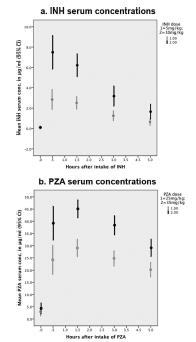
10 Thee S et al, AAC 2011
11 TB treatment and toxicity in children TB drugs are very well tolerated in almost all children Adverse events are unusual and the most important is hepatotoxicity Ethambutol can be safely used at recommended dosages in all ages
12 Adverse events are uncommon in children Biddulph J. PIDJ 1990 Tsakilidis D, et al Pediatr Infect Dis J 1992 Te Water Naude et al. Pediatr Infect Dis J 2000 Te Water Naude et al. Pediatr Infect Dis J 2000 Al Dossary et al. Pediatr Infect Dis J 2002 N Regimen Adverse events RHZS 4 R2H2 2% 36 2 RHZ 4 RH Nil RHZ Nil 89 2 R2H2Z2 4 R2H2 Nil RHZ 4 R2H2 1.2%
13 Use of ethambutol in children Ethambutol is recommended as fourth drug in intensive phase of first-line regimens Risk of toxicity is dose-related and related to duration of therapy The risk of toxicity is negligible for children of any age when ethambutol is used at recommended dosages especially as duration is usually limited to 2 months Ethambutol can be safely used at recommended dosages in all ages
14
15 Drug dosages in children are determined by weight Useful to have a table showing numbers or portion of tablets required for weight bands up to 25 kg This will depend upon what is available and used for each single drug or as fixed-dose combination Important to achieve consistency of usage nationally and to ensure availability Weight often changes (increases) with treatment so that dosages may need to be adjusted accordingly
16 Survey of NTPs and current recommendations 34 countries from 5 regions Dec 2011-Feb TB high-burden countries 12 use 2006 dosage guidelines and 19 use 2010 dosage guidelines Majority recommend RHZ (some add E in older children > 10 years) Obstacles to implementation relate to awaiting update of guidelines, need for training, that available FDCs do not match dosage guidelines, the need for change not accepted by local experts, and quantity of pills required is increased Preventive therapy not implemented and shortages and stock outs of H100 Detjen A, et al Pub Health Action 2012
17 Insert here the weight band charts for TB dosages in children consistent with NTP guidelines and available preparations Recommended drug dosages should be consistent with national guidelines
18 Example of a weight band table when using the most widely available FDC Numbers of tablets Intensive Phase Continuation Phase Weight RHZ E RH bands 60/30/ /30 4-6kg kg kg kg kg kg+ Go to adult dosages and preparations
19 Example of a weight band table when using the new FDC being developed Numbers of tablets Continuation Intensive Phase Phase RHZ E RH Weight bands 75/50/ /50 4-7kg kg kg kg kg+ Go to adult dosages and preparations
20 Treatment of TB and NTP in children Register all children receiving anti-tb treatment in the NTP register Report treatment outcomes for children
21 Treatment failure in children Treatment response is commonly noted by the end of the intensive phase and is indicated by resolution of symptoms and weight gain Smear-positive cases should follow the standard NTP follow-up microscopy HIV status should be determined in all children treated for TB as important confounder for outcome and other HIV-related treatment required (see TB/HIV section) A poor response to TB treatment may indicate: Poor adherence Incorrect diagnosis TB due to drug-resistant organism (see MDR-TB section) Incorrect dosages Co-morbidities not managed e.g. HIV
22 Treatment outcomes in children with TB Treatment outcomes should be routinely recorded and reported for child TB cases Outcome categories are the same as for adult cases (although few child TB cases would meet the criteria for cured ) Treatment outcomes are important data for monitoring & evaluation There are few NTP data of treatment completion but may be poor in children
23 Treatment adherence in children Adherence for the full course of TB treatment is a challenge in children No. Poor adherence or defaulted Al Dossary et al. PIDJ 2002 USA 175 9% poor adherence Biddulph J. PIDJ 1990 PNG % defaulted Te Water Naude et al. PIDJ 2000 South Africa % poor adherence Meissner PE et al. Int J TB Lung Dis 2002 Harries AD et al. Int J TB Lung Dis 2002 Uganda % poor adherence Malawi 2,739 13% defaulted 21% unknown

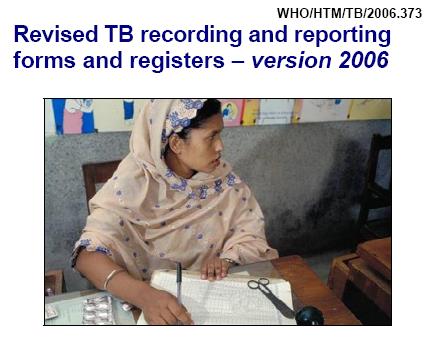
24 WHO also now recommends that all cases of child TB should be registered and reported within age bands: 0-4 years and 5-14 years
25 Data from and for NTP Importance of data of TB in children by NTP Value of audit to identify challenges/barriers Situational analysis Case management and outcome Background data and potential focus for operational research Improved child-related NTP data and activities Allocation of resources for child TB activities Drug procurement Focus for training Advocacy Monitoring & evaluation
26 TB and HIV in children A comprehensive approach to management is critical HIV test is indicated in all children with suspected and confirmed TB Approach to diagnosis of TB is similar as for HIV-uninfected children Treatment for TB is same as for HIV-uninfected children All children with TB/HIV should receive CPT and ART and nutritional support often needed All HIV-infected children need to be screened for TB disease. The management of children with TB/HIV should be integrated and all family members are counseled and tested for HIV and screened for TB
27 Mortality in HIV-positive and negative children with TB Timing of deaths in HIV-infected Ethiopian children receiving anti-tb treatment Palme IB, et al Pediatr Infect Dis J 2002
28 Possible reasons why outcome is poorer on TB treatment in HIV-infected children Immunosuppression emphasises the importance of early ART in reducing mortality High risk of co-morbidities invasive bacterial disease: emphasises the importance of concurrent cotrimoxazole preventive therapy severe malnutrition: emphasises the importance of nutritional support Poorer adherence due to pill burden and risk of illness/death of primary caregiver Risk of DR TB in HIV-infected populations Diagnosis is incorrect and child has other HIV-related lung disease, e.g. lymphocytic interstitial pneumonitis (LIP)
29 Child TB management and HIV Principles of treatment of TB in HIV-infected children is similar to HIVuninfected children ART improves outcome for HIV-infected children treated for TB It is recommended that HIV-infected children receive 1. Four first-line drugs (RHZE) in intensive phase for suspected or confirmed drug-sensitive TB irrespective of severity of disease 2. Similar duration of regimens as for HIV-uninfected 3. ART as recommended within 2-8 weeks of starting TB treatment or continue ART 4. Cotrimoxazole preventive therapy 5. Pyridoxine supplement 6. Nutritional support HIV-infected children are at increased risk of relapse and drug resistant TB
30 Child TB management and ART All newly diagnosed TB cases with HIV infection should be started on TB treatment as soon as possible after completing the first 2 weeks of anti-tb treatment from Marais BJ et al. Paediatr Resp Rev 2011
31 Child TB/HIV and IRIS HIV-infected children should be regularly screened for symptoms of possible TB including on commencement of ART TB Immune Reconstitution Inflammatory Syndrome (IRIS) can occur as: unmasking IRIS subclinical TB disease becomes evident with immune reconstitution TB treatment should be commenced paradoxical IRIS symptomatic deterioration despite adequate TB treatment continue TB treatment consider steroids TB IRIS usually occurs within 1-2 months after starting treatment and does NOT indicate failure of TB treatment BCG (M.bovis) IRIS is common in young infants initiated on ART TB IRIS or BCG IRIS can be associated with significant morbidity but not with a high mortality
32 Treatment of TB in children - summary Principles of treatment of TB in children are same as for adults Children with TB usually respond well with symptomatic improvement during intensive phase and good outcome Dosages are calculated according to weight (not age) Weight is important for monitoring treatment response TB drugs are very well tolerated in almost all children The most important adverse event is hepatotoxicity Register all children receiving anti-tb treatment Report treatment outcomes for children
33 Checklist: the child treated for TB 1. Dosages and regimens for anti-tb treatment in children should follow NTP guidelines. 2. Weight is important for calculating dosages and for monitoring treatment response. 3. All children treated for TB should be registered with NTP and reported by disease type within age bands (0-4 years and 5-14 years) 4. Follow-up is critical and treatment outcomes should be recorded as per NTP guidelines. 5. Adherence is a challenge especially during the continuation phase and counseling of child and family about importance of completion of full course of anti-tb treatment is important.
Management of a child failing first line TB treatment.
 Management of a child failing first line TB treatment. Robert Gie Desmond Tutu Tuberculosis Centre Department of Paediatric and Child Health Stellenbosch University South Africa. Tygerberg Hospital Complex
TB Prevention, Diagnosis and Treatment. Accelerating advocacy on TB/HIV 15th July, Vienna
 TB Prevention, Diagnosis and Treatment Accelerating advocacy on TB/HIV 15th July, Vienna Diagnosis Microscopy of specially stained sputum is the main test for diagnosing TB (1 2 days) TB bacilli seen in
2011 NTP Paediatric guidelines update- final draft
 Childhood TB Investigation and management of children suspected to have tuberculosis (TB) or who are close contacts of a TB case (sputum smear positive or negative) Key facts Children who are close contacts
TB preventive therapy in children. Introduction
 TB preventive therapy in children H S Schaaf Department of Paediatrics and Child Health, and Desmond Tutu TB Centre Stellenbosch University, and Tygerberg Children s Hospital Introduction Children are
Tuberculousmeningitis: what is the best treatment regimen?
 Tuberculousmeningitis: what is the best treatment regimen? H S Schaaf Desmond Tutu TB Centre, Department of Paediatrics and Child Health, Faculty of Medicine and Health Sciences, Stellenbosch University
MODULE THREE TB Treatment. Treatment Action Group TB/HIV Advocacy Toolkit
 MODULE THREE TB Treatment Treatment Action Group TB/HIV Advocacy Toolkit 1 Topics to be covered TB treatment fundamentals Treatment of TB infection and disease TB treatment research Advocacy issues 2 Section
GUIDELINES FOR TUBERCULOSIS PREVENTIVE THERAPY AMONG HIV INFECTED INDIVIDUALS IN SOUTH AFRICA
 GUIDELINES FOR TUBERCULOSIS PREVENTIVE THERAPY AMONG HIV INFECTED INDIVIDUALS IN SOUTH AFRICA 2010 1 TB prophylaxis GUIDELINES FOR TUBERCULOSIS PREVENTIVE THERAPY AMONG HIV INFECTED INDIVIDUALS Background
TREATING DRUG-SENSITIVE TB IN INDIA: IMPLEMENTATION OF DAILY THERAPY WITH FIXED DOSE COMBINATIONS
 TREATING DRUG-SENSITIVE TB IN INDIA: IMPLEMENTATION OF DAILY THERAPY WITH FIXED DOSE COMBINATIONS Policy brief, March 2015 Tuberculosis (TB), a communicable disease that affects 9 million people worldwide,
Treatment of tuberculosis. guidelines. Fourth edition
 Treatment of tuberculosis guidelines Fourth edition Treatment of tuberculosis Guidelines Fourth edition WHO Library Cataloguing-in-Publication Data: Treatment of tuberculosis: guidelines 4th ed. WHO/HTM/TB/2009.420
Desk-guide for diagnosis and management of TB in children
 Desk-guide for diagnosis and management of TB in children 2 Desk-guide for diagnosis and management of TB in children 2010 3 International Union Against Tuberculosis and Lung Disease (The Union) 68 Boulevard
Pregnancy and Tuberculosis. Information for clinicians
 Pregnancy and Tuberculosis Information for clinicians When to suspect Tuberculosis (TB)? Who is at risk of TB during pregnancy? Recent research suggests that new mothers are at an increased risk of TB
Management of Tuberculosis: Indian Guidelines
 Chapter 105 Management of Tuberculosis: Indian Guidelines Kuldeep Singh Sachdeva INTRODUCTION Tuberculosis (TB) is an infectious disease caused predominantly by Mycobacterium tuberculosis and among the
QUICK REFERENCE FOR HEALTHCARE PROVIDERS
 QUICK REFERENCE FOR HEALTHCARE PROVIDERS Ministry of Health Malaysia Academy of Medicine Malaysia Malaysian Thoracic Society KEY MESSAGES 1. Tuberculosis (TB) is a notifiable infectious disease. Timely
Tuberculosis Care with TB-HIV Co-management
 WHO/HTM/HIV/2007.01 WHO/HTM/TB/2007.380 April 2007 Tuberculosis Care with TB-HIV Co-management INTEGRATED MANAGEMENT OF ADOLESCENT AND ADULT ILLNESS (IMAI) T B HIV WHO Library Cataloguing-in-Publication
Guideline. Treatment of tuberculosis in pregnant women and newborn infants. Version 3.0
 Guideline Treatment of tuberculosis in pregnant women and newborn infants Version 3.0 Key critical points The decision to treat tuberculosis (TB) in pregnancy must consider the potential risks to mother
Pediatric Latent TB Diagnosis and Treatment
 Date Updated: April 2015 Guidelines Reviewed: 1. CDC Latent TB Guidelines 2. Harborview Pediatric Clinic Latent TB Management, 2010 3. Pediatric Associates Latent TB Guidelines, 2013 4. Seattle Children
Antiretroviral therapy for HIV infection in infants and children: Towards universal access
 Antiretroviral therapy for HIV infection in infants and children: Towards universal access Executive summary of recommendations Preliminary version for program planning 2010 Executive summary Tremendous
Tuberculosis OUR MISSION THE OPPORTUNITY
 Tuberculosis OUR MISSION Guided by the belief that every life has equal value, the Bill & Melinda Gates Foundation works to help all people lead healthy, productive lives. Our Global Health Program is
Papua New Guinea. National Tuberculosis Management Protocol. Department of Health Disease Control Branch National Tuberculosis Program
 2011 Papua New Guinea National Tuberculosis Management Protocol Department of Health Disease Control Branch National Tuberculosis Program P.O. Box 807, Waigini, Port Moresby, Papua New Guinea Telephones:
TUBERCULOSIS CONTROL INDIA
 TUBERCULOSIS CONTROL INDIA In terms of population coverage, India now has the second largest DOTS (Directly Observed Treatment, Short course) programme in the world. However, India's DOTS programme is
Chapter 6 Treatment of Tuberculosis Disease
 Chapter 6 Treatment of Tuberculosis Disease Table of Contents Chapter Objectives.... 139 Introduction.... 141 Treatment and Monitoring Plan.... 143 Adherence Strategies... 143 TB Disease Treatment Regimens....
Revised National Tuberculosis Control Programme (RNTCP) Dr. NAVPREET
 Revised National Tuberculosis Control Programme (RNTCP) Dr. NAVPREET Assistant Prof., Deptt. of Community Medicine GMCH Chandigarh Problem Statement of TB in India India accounts for nearly 1/4 th of global
General Information on Tuberculosis
 General Information on Tuberculosis ON THE MOVE AGAINST TUBERCULOSIS: Transforming the fi ght towards elimination World TB Day 2011 SAARC Tuberculosis & HIV/AIDS Centre GPO Box No 9517, Kathmandu, Nepal
TB CARE EARLY DETECTION AND PREVENTION OF TUBERCULOSIS (TB) IN CHILDREN. Risk factors in children acquiring TB:
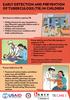 EARLY DETECTION AND PREVENTION OF TUBERCULOSIS (TB) IN CHILDREN Risk factors in children acquiring TB: Children living in the same household as a lung TB patient (especially children under 5) Children
MANAGEMENT OF TUBERCULOSIS
 MANAGEMENT OF TUBERCULOSIS Dean B. Ellithorpe, M.D. Clinical Professor of Medicine Section of Pulmonary Diseases, Critical Care and Environmental Medicine Tulane University School of Medicine INTRODUCTION
Referral Guidelines for TB/HIV co-management. (First Edition)
 Referral Guidelines for TB/HIV co-management (First Edition) Government of Lesotho April 2011 1 REFERRAL GUIDELINES FOR TB/HIV CO-MANAGEMENT INTRODUCTION Many TB patients are infected with HIV. Many people
Self-Study Modules on Tuberculosis
 Self-Study Modules on Tuberculosis Treatment of Latent Tuberculosis Infection and Tube rc ulos is Disease U.S. DEPARTMENT OF HEALTH AND HUMAN SERVICES Centers for Disease Control and Prevention National
AMBULATORY TREATMENT AND PUBLIC HEALTH MEASURES FOR A PATIENT WITH UNCOMPLICATED PULMONARY TUBERCULOSIS
 AMBULATORY TREATMENT AND PUBLIC HEALTH MEASURES FOR A PATIENT WITH UNCOMPLICATED PULMONARY TUBERCULOSIS (UPDATE 2004) Internal guidelines of the Tuberculosis & Chest Service of the Department of Health
LEARNING OUTCOMES. Identify children at risk of developing TB disease. Correctly manage and refer children suspected of TB. Manage child contacts
 TB in Children 1a TB IN CHILDREN 2 LEARNING OUTCOMES Identify children at risk of developing TB disease Correctly manage and refer children suspected of TB Manage child contacts 3 TB Infection and Disease
Main objectives in TB Rx
 Treatment of Tuberculosis in Children HS Schaaf Desmond Tutu TB Centre Department of Paediatrics and Child Health Stellenbosch University Main objectives in TB Rx To rapidly kill most bacilli in order
Tuberculosis in children in Europe -the ptbnet
 Tuberculosis in children in Europe -the ptbnet Beate Kampmann FRCPCH PhD A/Professor in Paediatric Infection & Immunity Consultant Paediatrician Imperial College London, UK and Institute of Infectious
Santa Clara County Tuberculosis Screening Requirement for School Entrance Effective June 1, 2014. Frequently Asked Questions
 Frequently Asked Questions A child has history of BCG vaccination, should they have TST or IGRA? According to the American Academy of Pediatrics Red Book (2012), Interferon Gamma Release Assay (IGRA) is
Clinical Scenarios In Childhood TB. Josefina Cadorna Carlos M.D., FPPS, FPIDSP, FSMID Associate Professor of Pediatrics U E R M M M C
 Clinical Scenarios In Childhood TB Josefina Cadorna Carlos M.D., FPPS, FPIDSP, FSMID Associate Professor of Pediatrics U E R M M M C Objectives: To present different commonly encountered clinical scenarios
Management of HIV and TB Co-infection in South Africa
 Management of HIV and TB Co-infection in South Africa Halima Dawood Department of Medicine Case Report 39 yr old female Referred to clinic on 14/06/2006 for consideration to commence antiretroviral therapy
U.S. DEPARTMENT OF HEALTH AND HUMAN SERVICES Public Health Service Centers for Disease Control and Prevention
 U.S. DEPARTMENT OF HEALTH AND HUMAN SERVICES Public Health Service Centers for Disease Control and Prevention National Center for HIV, STD, and TB Prevention Division of Tuberculosis Elimination Public
Management of Tuberculosis (TB)
 for Professional Health Care Providers Management of Tuberculosis (TB) USAID UNITED STATES AGENCY INTERNATIONAL DEVELOPMENT USAID FROM THE AMERICAN PEOPLE SOUTHERN AFRICA WHAT IS TB? Tuberculosis (TB)
Childhood Tuberculosis Some Basic Issues. Jeffrey R. Starke, M.D. Baylor College of Medicine
 Childhood Tuberculosis Some Basic Issues Jeffrey R. Starke, M.D. Baylor College of Medicine TUBERCULOSIS IS A SOCIAL DISEASE WITH MEDICAL IMPLICATIONS THE GREAT PARADOX OF TUBERCULOSIS A CAUTIONARY TALE
Global Update on HIV Treatment 2013: Results, Impact and Opportunities
 June 2013 Global Update on HIV Treatment 2013: Results, Impact and Opportunities WHO/UNAIDS/UNICEF v2 Outline Results: Progress towards Global Targets - Antiretroviral treatment - Prevention of mother-to-child
The Role of the Health Service Administrator in TB Control. National Tuberculosis Control Programme
 The Role of the Health Service Administrator in TB Control Goal/Objectives of NTP Mandate: To provide leadership for the health sector response to combat Tuberculosis in Ghana. Goal: To reduce the burden
GENERAL MANNUAL FOR TUBERCULOSIS CONTROL
 GENERAL MANNUAL FOR TUBERCULOSIS CONTROL National programme for Tuberculosis Control and Chest Diseases Ministry of Health Sri Lanka January 2005 GENERAL MANUAL FOR TUBERCULOSIS CONTROL Second Edition
TREATMENT OF TUBERCULOSIS: GUIDELINES FOR NATIONAL PROGRAMMES THIRD EDITION
 WHO/CDS/TB/2003.313 TREATMENT OF TUBERCULOSIS: GUIDELINES FOR NATIONAL PROGRAMMES THIRD EDITION World Health Organization - Geneva 2003 First edition, 1993 Second edition, 1997 Third edition, 2003 TREATMENT
TB AND M/XDR-TB: FROM CLINICAL MANAGEMENT TO CONTROL AND ELIMINATION
 ersnet.org/school TB AND M/XDR-TB: FROM CLINICAL MANAGEMENT TO CONTROL AND ELIMINATION 23-26 May 2012 - Bucharest, Romania SCHOOL COURSE 2012 Educational Material Thank you for viewing this document. We
Treatment of Tuberculosis
 Treatment of Tuberculosis 1a Taking TB Treatment 2 Learning outcomes Describe the use of TB case definitions & the management of TB patients Successfully treat TB using the appropriate regimen for the
Tuberculosis and HIV/AIDS Co-Infection: Epidemiology and Public Health Challenges
 Tuberculosis and HIV/AIDS Co-Infection: Epidemiology and Public Health Challenges John B. Kaneene, DVM, MPH, PhD University Distinguished Professor of Epidemiology Director, Center for Comparative Epidemiology
Tuberculosis in Myanmar Progress, Plans and Challenges
 Tuberculosis in Myanmar Progress, Plans and Challenges Myanmar is one of the world s 22 high tuberculosis (TB) burden countries, with a TB prevalence rate three times higher than the global average and
In Tanzania, ARVs were introduced free-of-charge by the government in 2004 and, by July 2008, almost 170,000 people were receiving the drugs.
 ANTIRETROVIRAL TREATMENT What is ART and ARV? ART is a short form for Antiretroviral Therapy (or Treatment). Antiretroviral therapy is a treatment consisting of a combination of drugs which work against
Manual on use of routine data quality assessment (RDQA) tool for TB monitoring. World Health Organization Stop TB Department, Geneva
 Manual on use of routine data quality assessment (RDQA) tool for TB monitoring World Health Organization Stop TB Department, Geneva WHO Library Cataloguing in Publication Data Manual on use of routine
CHILDHOOD TUBERCULOSIS CASE MANAGEMENT IN PAKISTAN: ADDRESSING A PRIORITY
 CHILDHOOD TUBERCULOSIS CASE MANAGEMENT IN PAKISTAN: ADDRESSING A PRIORITY Nauman Safdar Dissertation for the degree of Philosophiae Doctor (PhD) University of Bergen, Norway 2011 Centre for International
DIRECTLY OBSERVED TREATMENT SHORT-COURSE (DOTS)
 DIRECTLY OBSERVED TREATMENT SHORT-COURSE (DOTS) Protocol for Tuberculosis Demonstration Projects in Russia U.S. Centers for Disease Control and Prevention and U.S. Agency for International Development
Guidance for national tuberculosis programmes on the management of tuberculosis in children
 WHO /HTM/ TB/2006.371 WHO /FCH /CAH/2006.7 Guidance for national tuberculosis programmes on the management of tuberculosis in children WHO/HTM/TB/2006.371 WHO/FCH/CAH/2006.7 Guidance for national tuberculosis
National Antiretroviral Treatment Guidelines
 National Antiretroviral Treatment Guidelines Copyright 2004 Department of Health Published by Jacana Printed by Minuteman Press ISBN: 1-919931-69-4 National Department of Health South Africa 2004 This
Definitions and reporting framework for tuberculosis 2013 revision (updated December 2014)
 Definitions and reporting framework for tuberculosis 2013 revision (updated December 2014) Cover photos: WHO Photo Library Top, Nepal (C. Black); middle, Afghanistan (C. Black); bottom, China (S. Lim)
Principles and Structure of a Research Protocol. The Union, Paris, France MSF, Brussels, Belgium
 Principles and Structure of a Research Protocol The Union, Paris, France MSF, Brussels, Belgium BASIC STRUCTURE Background and rationale to study Aim and objectives (the research question) Methods (includes
Clinical description 2 Laboratory test for diagnosis 3. Incubation period 4 Mode of transmission 4 Period of communicability 4
 Tuberculosis Contents Epidemiology in New Zealand 2 Case definition 2 Clinical description 2 Laboratory test for diagnosis 3 Case classification 3 Spread of infection 4 Incubation period 4 Mode of transmission
Out of the Dark: Meeting the needs. msfaccess.org
 Out of the Dark: Meeting the needs of children with TB msfaccess.org Out of the Dark: Meeting the needs of children with TB MSF TB TREATMENT PROGRAMMES MSF TB programmes MSF drug-resistant TB programmes
I. Epidemiology of TB, TB/HIV/AIDS and reciprocal influence of TB and HIV...135 II. Identification of TB/HIV in adults and adolescents...
 Contents I. Epidemiology of TB, TB/HIV/AIDS and reciprocal influence of TB and HIV... 135 1. Epidemiology of TB... 135 2. Epidemiology of TB/HIV coinfection... 135 3. Reciprocal influence of HIV and TB...
How To Treat Tuberculosis
 A Tuberculosis Refresher Course for Physicians A TUBERCULOSIS REFRESHER COURSE FOR PHYSICIANS The World Medical Association, with support from the Lilly MDR-TB Partnership and technical assistance from
Tuberculosis. Clinical diagnosis and management of tuberculosis, and measures for its prevention and control
 Issue date: March 2011 Tuberculosis Clinical diagnosis and management of tuberculosis, and measures for its prevention and control This updates and replaces NICE clinical guideline 33 NICE clinical guideline
Summary of the risk management plan (RMP) for Sirturo (bedaquiline)
 EMA/16634/2014 Summary of the risk management plan (RMP) for Sirturo (bedaquiline) This is a summary of the risk management plan (RMP) for Sirturo, which details the measures to be taken in order to ensure
Guidelines for Management of Tuberculosis in Children
 Guidelines for Management of Tuberculosis in Children Ministry of Health Sri Lanka National Programme for Tuberculosis Control and Chest Diseases TABLE OF CONTENTS Table of Contents... 2 List of Tables...
Chapter Four: Treatment of Tuberculosis Disease
 Chapter Four: Treatment of Tuberculosis Disease The standard of tuberculosis (TB) treatment in Los Angeles County (LAC) is to initiate an appropriate chemotherapeutic regimen along with Directly Observed
Treatment of TB a pharmacy perspective
 Treatment of TB a pharmacy perspective Colm McDonald, Antimicrobial Stewardship Pharmacist (Acting) National TB Conference, St. James s Hospital 6 th May 2011 Overview of presentation Role of the pharmacist
Tuberculosis And Diabetes. Dr. hanan abuelrus Prof.of internal medicine Assiut University
 Tuberculosis And Diabetes Dr. hanan abuelrus Prof.of internal medicine Assiut University TUBERCULOSIS FACTS More than 9 million people fall sick with tuberculosis (TB) every year. Over 1.5 million die
Chapter 3 South African guidelines and introduction to clinical cases
 Chapter 3 South African guidelines and introduction to clinical cases 3.1. South African national antiretroviral guidelines When this book was published in 2012 the current national antiretroviral treatment
ACCESS TO AFFORDABLE TREATMENT FOR HIV/AIDS: THE ISSUES
 ACCESS TO AFFORDABLE TREATMENT FOR HIV/AIDS: THE ISSUES AIDS Law Unit Legal Assistance Centre July, 2002 INTRODUCTION Although there is currently no cure for HIV/Aids, treatment has, however, been developed
Tuberculosis Management in Children
 Tuberculosis Management in Children Ministry of Public Health and Sanitation Division of Leprosy, Tuberculosis and Lung Disease November, 2011 2011 Division of Leprosy, Tuberculosis and Lung Disease i
Age In London TB is more common in younger adults aged 15-44 years and peaks in the 25-34 age group (3).
 4. TUBERCULOSIS INTRODUCTION Tuberculosis (TB) is an infectious, notifiable disease (meaning there is a requirement by law to report it to government authorities) caused by the bacterium Mycobacterium
CHILDREN AND TUBERCULOSIS
 ACTION ADVOCACY TO CONTROL TB INTERNATIONALLY CHILDREN AND TUBERCULOSIS Exposing a Hidden Epidemic REBECCA SULLIVAN WWW.ACTION.ORG ACTION ADVOCACY TO CONTROL TB INTERNATIONALLY Tuberculosis (TB) remains
5.07.09. Aubagio. Aubagio (teriflunomide) Description
 Federal Employee Program 1310 G Street, N.W. Washington, D.C. 20005 202.942.1000 Fax 202.942.1125 5.07.09 Subject: Aubagio Page: 1 of 6 Last Review Date: December 5, 2014 Aubagio Description Aubagio (teriflunomide)
Drug-resistant Tuberculosis
 page 1/6 Scientific Facts on Drug-resistant Tuberculosis Source document: WHO (2008) Summary & Details: GreenFacts Context - Tuberculosis (TB) is an infectious disease that affects a growing number of
Chapter 5 Treatment for Latent Tuberculosis Infection
 Chapter 5 Treatment for Latent Tuberculosis Infection Table of Contents Chapter Objectives.... 109 Introduction.... 111 Candidates for the Treatment of LTBI.... 112 LTBI Treatment Regimens.... 118 LTBI
Kenya Joint TB/HIV Concept Note Development
 Kenya Joint TB/HIV Concept Note Development Market Place Presentation Outline Introduction TB HIV NFM goals, objectives and indicators TB HIV CN allocation Kenya joint TB HIV programming TB HIV actors
e-tb Manager: A Comprehensive Web-Based Tool for Programmatic Management
 e-tb Manager: A Comprehensive Web-Based Tool for Programmatic Management of TB and Drug-Resistant TB Management Sciences for Health Facts about TB* TB is contagious and airborne; each untreated person
MANAGEMENT OF COMMON SIDE EFFECTS of INH (Isoniazid), RIF (Rifampin), PZA (Pyrazinamide), and EMB (Ethambutol)
 MANAGEMENT OF COMMON SIDE EFFECTS of INH (Isoniazid), RIF (Rifampin), PZA (Pyrazinamide), and EMB (Ethambutol) 1. Hepatotoxicity: In Active TB Disease a. Background: 1. Among the 4 standard anti-tb drugs,
Tuberculosis in Children and Adolescents
 Tuberculosis in Children and Adolescents Ritu Banerjee, MD, Ph.D TB Clinical Intensive April 8, 2015 2014 MFMER slide-1 Disclosures None 2014 MFMER slide-2 Objectives Describe the epidemiology of pediatric
Aim of Presentation. The Role of the Nurse in HIV Care. Global Epidemic 7/24/09
 Aim of Presentation The Role of the Nurse in HIV Care Eileen Nixon HIV Nurse Consultant Brighton and Sussex University Hospitals Overview of key issues that affect people with HIV Identify the role of
EMR Benefits, Challenges and Uses
 EMR Benefits, Challenges and Uses Benefits Our work has greatly benefited from using the PIH-EMR: it has simplified many tasks essential to high quality patient care, and has allowed us to perform important
Guideline. Treatment of tuberculosis in renal disease. Version 3.0
 Guideline Treatment of tuberculosis in renal disease Version 3.0 Key critical points Renal failure is recognised as a risk factor for developing tuberculosis. Renal failure is recognised as a risk factor