
Drug-resistant Tuberculosis
|
|
|
- Elizabeth Paul
- 10 years ago
- Views:
Transcription
1 page 1/6 Scientific Facts on Drug-resistant Tuberculosis Source document: WHO (2008) Summary & Details: GreenFacts Context - Tuberculosis (TB) is an infectious disease that affects a growing number of people around the world. Usually, it can be treated with antibiotics but some forms of the disease have emerged that do not respond to different types of drugs, making it very difficult to treat, especially in people already infected with HIV. What are the trends in drug-resistant tuberculosis around the world and what must be done to control it? What is tuberculosis and why is it a concern?...2 What is the Global Project on Anti-tuberculosis Drug Resistance Surveillance?...2 What are current trends in drug-resistant tuberculosis?...3 Why do HIV and tuberculosis form a lethal combination?...3 What is the status of drug-resistant tuberculosis in the different WHO regions?...4 Why is it difficult to gather information on drug-resistant tuberculosis?...4 Conclusions...5 This Digest is a faithful summary of the leading scientific consensus report produced in 2008 by the World Health Organization (WHO): "Anti-Tuberculosis Drug Resistance in the World" The full Digest is available at: This PDF Document is the Level 1 of a GreenFacts Digest. GreenFacts Digests are published in several languages as questions and answers, in a copyrighted user-friendly Three-Level Structure of increasing detail: Each question is answered in Level 1 with a short summary. These answers are developed in more detail in Level 2. Level 3 consists of the Source document, the internationally recognised scientific consensus report which is faithfully summarised in Level 2 and further in Level 1. All GreenFacts Digests are available at:

2 page 2/6 1. What is tuberculosis and why is it a concern? Tuberculosis (TB) is an infectious disease caused by a bacterium (most commonly Mycobacterium tuberculosis) that mainly affects the lungs. Many people who are infected with the tuberculosis bacterium will never become ill because the infection is kept under control by their immune system and the infectious tuberculosis bacteria remain dormant. However, if the infection becomes active, the person will become ill and have symptoms such as coughing, weight loss, fever and chest pains. People with a weakened immune system, TB can be treated with antibiotics. Source: TB Global drug Facility particularly those who are also infected with HIV, have a greater chance of becoming sick with TB. When people with active tuberculosis in their lungs cough, sneeze, talk or spit, they propel TB germs into the air, which can contaminate other people who inhale them. Globally, the proportion of people who become ill with tuberculosis each year is stable or decreasing. However, because of population growth, the absolute number of new TB cases is rising. Usually, tuberculosis can be treated with antibiotics. However, some forms of the disease have emerged that do not respond to these first-line drugs. They are known as multidrug-resistant tuberculosis, or MDR-TB, and can only be cured with a handful of second-line drugs which are more expensive and have more adverse effects. Extensively drug-resistant tuberculosis, or XDR-TB, refers to even more dangerous forms of the disease that are resistant to both first- and second-line drugs and are more difficult to treat. 2. What is the Global Project on Anti-tuberculosis Drug Resistance Surveillance? The Global Project on Anti-tuberculosis Drug Resistance Surveillance was launched in 1994 by the World Health Organization (WHO) and other partners to respond to the emerging threat of drug-resistant tuberculosis. The aim of the project is to evaluate drug-resistant tuberculosis, to monitor its progress across the world, and to develop plans to prevent and tackle it. A network of 26 supra-national reference laboratories supports countries by providing them with drug resistance testing, by giving them technical help, by checking the quality of the tests s performed by the national laboratories and by collecting reliable data. The main priorities for the network are to expand in order to meet the demand for reference laboratories and to obtain regular funding. A network of supra-national laboratories supports the national laboratory network. Source: Pierre Virot

3 page 3/6 3. What are current trends in drug-resistant tuberculosis? 3.1 Worldwide, between 1 and 1.5 million people are living with multidrug-resistant tuberculosis (MDR-TB). In 2006, there were nearly half a million new cases in the world. 3.2 Multidrug-resistant tuberculosis is present in nearly every country in the world but the proportion of MDR-TB among all cases of tuberculosis varies widely from one region to another. For instance, it is lowest in Western and Central Europe, and highest in Eastern Europe. TB Patients in a prison in Tbilsi, Georgia. Source: Agnes Montanari At present it is not possible to estimate global trends of multidrug-resistant tuberculosis because information from high burden countries is lacking. The available data suggest that different trends exist. For example, MDR-TB is decreasing rapidly in countries such as China and the United States, levelling off in others such as Thailand and Viet Nam, and increasing very rapidly in parts of the former Soviet Union. 3.3 It is very difficult to estimate the extent of the problem of extensively drug-resistant tuberculosis (XDR-TB) across the world because few reliable data are available, particularly from the countries with the highest burden of tuberculosis. Still, the problem is widespread, with 45 countries having reported at least one case. It is a particularly serious problem in countries of the former Soviet Union, where it makes up a very high proportion of the region s huge number of cases of multidrug-resistant tuberculosis. 4. Why do HIV and tuberculosis form a lethal combination? There is a clear association between tuberculosis and HIV. People infected with dormant tuberculosis bacteria can quickly become sick with tuberculosis when their immune systems are weakened by HIV. Tuberculosis can be very difficult to detect in people who are HIV-positive, which can cause delays in diagnosis. This, together with the difficulty of treating both diseases at the same time, has led to high death rates in people living with TB and HIV. HIV-TB patient in Thailand. Source: Thiery Falise There are two main reasons why HIV and drug-resistant tuberculosis bacteria may be associated: HIV infection or its treatment could either interfere with anti-tuberculosis drugs and make them less effective, or could lead to resistance to these medicines. In addition, HIV-infected patients and drug-resistant tuberculosis patients may have similar risk factors such as a shared See also our AIDS Digest. [see en/aids/index.htm] environment. Indeed, there have been many outbreaks of drug-resistant tuberculosis in places where relatively large numbers of HIV-positive people are in close contact with each other, such as hospitals or prisons. However, information on how tuberculosis is transmitted in these settings cannot be used to predict the spread of drug-resistant tuberculosis among the general population.

4 page 4/6 5. What is the status of drug-resistant tuberculosis in the different WHO regions? 5.1 In Africa, the level of drug-resistant tuberculosis is low but there could be many undetected cases among HIV-infected people. 5.2 In most countries in North and South America only a small proportion of cases of tuberculosis are drug-resistant. In North The number of new TB America, levels of drug-resistant tuberculosis are declining. In cases in India is very large. South America, Peru, Ecuador and Brazil are the worst affected Source: Gary Hampton countries, with Peru alone reporting one third of all new multidrug-resistant cases in Although limited, data from the Eastern Mediterranean region indicate moderate levels of multidrug-resistant tuberculosis, with the majority of new cases emerging in Pakistan. 5.4 In most countries of Central and Western Europe, there is little resistance to anti-tuberculosis drugs. Some of the countries in Eastern Europe and Central Asia have the highest rates of multidrug-resistant and extensively resistant tuberculosis in the world. In the Russian Federation, the number and the proportion of tuberculosis cases that are drug-resistant are increasing considerably. 5.5 South East Asia shows a moderate proportion of drug-resistant tuberculosis cases. However, the number of new cases of tuberculosis in the region is so large, particularly in India, that the overall burden of multidrug-resistant tuberculosis remains considerable. 5.6 In the Western Pacific, levels of drug-resistant tuberculosis are moderate. The vast majority of cases were reported in China. Particularly high rates of extensively drug-resistant tuberculosis have been found in Japan and Hong Kong. 6. Why is it difficult to gather information on drug-resistant tuberculosis? Collecting reliable information on drug-resistant tuberculosis is expensive, time-consuming and technically complicated. In order to monitor the worldwide spread of drug-resistant tuberculosis over time, it is necessary to test large numbers of samples, and the database of results should include useful information such as the HIV status of the patients, their medical history and other background data. This requires sufficient laboratories to perform Traditional skin tests do not detect drug resistance. Source: Greg Knobloch drug resistance testing, staff to interview and classify patients and a transport network to send samples for analysis to different laboratories inside and outside the country. These facilities are expensive and not available in many countries, particularly those with the highest burden of tuberculosis. For practical and economical reasons, current survey methods do not test all cases of TB, which limits the reliability of the results, but nevertheless give a good indication of drug-resistance levels. To gather more data and determine trends in countries with a high TB burden, surveys must be simplified. New, quicker testing techniques which may help simplify and repeat drug-resistance surveys are currently being developed.

5 page 5/6 7. Conclusions 7.1 In 2006, approximately half a million new cases of multidrug-resistant tuberculosis (MDR-TB) emerged in the world, with the disease affecting almost every country. The highest proportion of MDR-TB among all TB cases is found in the former Soviet Union. In absolute numbers, the worst affected country is China. Patients need to be registered into a suitable treatment programme. Source: Gary Hampton 7.2 Extensively drug-resistant tuberculosis (XDR-TB) can only be treated with a handful of drugs that are more expensive and have worse side-effects than the drugs used to treat multidrug-resistant tuberculosis. XDR-TB is widespread but is a particularly significant problem in countries of the former Soviet Union, where cases of extensive resistance are high both in absolute numbers and as a proportion of total TB cases. 7.3 There is a significant association between HIV and MDR-TB. The death rate in people who have both infections is high. In order to reduce the number of people infected with both HIV and MDR-TB it is important to prevent transmission in places where infected people are in close contact with each other, such as hospitals and prisons. 7.4 Despite progress in information gathering, more laboratories and staff are still needed to measure the extent of drug-resistant tuberculosis. The network of supra-national reference laboratories must continue to offer practical help while individual countries improve their facilities. 7.5 To control MDR-TB, all countries need to increase their efforts to prevent transmission, detect cases as early as possible and register all patients into a suitable treatment programme. Methods to detect drug resistance quickly and new drugs to treat MDR-TB are urgently needed.

6 page 6/6 Partner for this publication The Levels 1 & 2 are summaries written by GreenFacts with financial support from the Swiss Agency for Development and Cooperation (SDC).

TB CARE EARLY DETECTION AND PREVENTION OF TUBERCULOSIS (TB) IN CHILDREN. Risk factors in children acquiring TB:
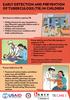 EARLY DETECTION AND PREVENTION OF TUBERCULOSIS (TB) IN CHILDREN Risk factors in children acquiring TB: Children living in the same household as a lung TB patient (especially children under 5) Children
General Information on Tuberculosis
 General Information on Tuberculosis ON THE MOVE AGAINST TUBERCULOSIS: Transforming the fi ght towards elimination World TB Day 2011 SAARC Tuberculosis & HIV/AIDS Centre GPO Box No 9517, Kathmandu, Nepal
Borderless Diseases By Sunny Thai
 Borderless Diseases By Sunny Thai Millennium Development Goal #6 6. Combat HIV/AIDS, malaria and other borderless diseases. A. Halt and begin reversing spread of HIV by 2015. B. Achieve universal access
Scientific Facts on. Psychoactive Drugs. Tobacco, Alcohol, and Illicit Substances
 page 1/5 Scientific Facts on Psychoactive Drugs Tobacco, Alcohol, and Illicit Substances Source document: WHO (2004) Summary & Details: GreenFacts Context - Psychoactive drugs such as tobacco, alcohol,
Take Steps to Control TB TUBERCULOSIS. When You HaveHIV
 Take Steps to Control TB TUBERCULOSIS When You HaveHIV What s Inside: People with HIV are are also at risk for getting TB. Read this brochure today to learn about TB and HIV. 4PAGE 5PAGE About TB infection
Yes, Tuberculosis is a serious problem all over the world. Between 6 and 10 million in South Africa are infected by the TB germ.
 What is TB? Do many people get tuberculosis (TB)? Yes, Tuberculosis is a serious problem all over the world. Between 6 and 10 million in South Africa are infected by the TB germ. It is infectious, so it
Tuberculosis: FAQs. What is the difference between latent TB infection and TB disease?
 Tuberculosis: FAQs What is TB disease? Tuberculosis (TB) is a disease caused by bacteria (germs) that are spread from person to person through the air. TB usually affects the lungs, but it can also affect
No. prev. doc.: 9392/08 SAN 77 DENLEG 48 VETER 5 Subject: EMPLOYMENT, SOCIAL POLICY, HEALTH AND CONSUMER AFFAIRS COUNCIL MEETING ON 9 AND 10 JUNE 2008
 COUNCIL OF THE EUROPEAN UNION Brussels, 22 May 2008 9637/08 SAN 88 DENLEG 52 VETER 7 NOTE from: Committee of Permanent Representatives (Part 1) to: Council No. prev. doc.: 9392/08 SAN 77 DENLEG 48 VETER
Tuberculosis. TB the disease, its treatment and prevention
 Tuberculosis TB the disease, its treatment and prevention Tuberculosis TB (tuberculosis) is an infectious disease that usually affects the lungs, although it can affect any part of the body. About 150
TUBERCULOSIS CONTROL INDIA
 TUBERCULOSIS CONTROL INDIA In terms of population coverage, India now has the second largest DOTS (Directly Observed Treatment, Short course) programme in the world. However, India's DOTS programme is
 You can get more information about TB from the following: Local Public Health Nurse Community Clinic Nurse Communicable Disease Control Nurse Your Family or Community Doctor Your Infection Control Practitioner
X-Plain Pediatric Tuberculosis Reference Summary
 X-Plain Pediatric Tuberculosis Reference Summary Introduction Tuberculosis, or TB, is a bacterial infection that causes more deaths in the world than any other infectious disease. When a child gets TB,
Explanation of Immunization Requirements
 Explanation of Immunization Requirements CONTENTS Hepatitis A... 2 Hepatitis B... 3 Influenza... 4 Measles (Rubella), Mumps, and Rubella (MMR)... 5 Pertussis (Tdap)... 6 Tuberculosis (TB) Test... 7 Varicella/Chicken
TUBERCULOSIS the disease, its treatment and prevention. mmunisation
 TUBERCULOSIS the disease, its treatment and prevention mmunisation TB (tuberculosis) is an infectious disease that usually affects the lungs, although it can affect almost any part of the body. About
TUBERCULOSIS (TB) SCREENING GUIDELINES FOR RESIDENTIAL FACILITIES AND DRUG
 TUBERCULOSIS (TB) SCREENING GUIDELINES FOR RESIDENTIAL FACILITIES AND DRUG Tx CENTERS Tuberculosis Control Program Health and Human Services Agency San Diego County INTRODUCTION Reducing TB disease requires
Tuberculosis OUR MISSION THE OPPORTUNITY
 Tuberculosis OUR MISSION Guided by the belief that every life has equal value, the Bill & Melinda Gates Foundation works to help all people lead healthy, productive lives. Our Global Health Program is
Chapter 1 Overview of Tuberculosis Epidemiology in the United States
 Chapter 1 Overview of Tuberculosis Epidemiology in the United States Table of Contents Chapter Objectives.... 1 Progress Toward TB Elimination in the United States.... 3 TB Disease Trends in the United
 This is one of a series of flipcharts on these topics : Ante Natal Care, Post Natal Care, Child Health, Child Nutrition, Family Spacing, HIV&AIDS, Tuberculosis, Malaria Tuberculosis About the flipchart
Tuberculosis Exposure Control Plan for Low Risk Dental Offices
 Tuberculosis Exposure Control Plan for Low Risk Dental Offices A. BACKGROUND According to the CDC, approximately one-third of the world s population, almost two billion people, are infected with tuberculosis.
BASIC INFORMATION ABOUT HIV, HEPATITIS B and C, and TUBERCULOSIS Adapted from the CDC
 BASIC INFORMATION ABOUT HIV, HEPATITIS B and C, and TUBERCULOSIS Adapted from the CDC HIV What are HIV and AIDS? HIV stands for Human Immunodeficiency Virus. This is the virus that causes AIDS. HIV is
e-tb Manager: A Comprehensive Web-Based Tool for Programmatic Management
 e-tb Manager: A Comprehensive Web-Based Tool for Programmatic Management of TB and Drug-Resistant TB Management Sciences for Health Facts about TB* TB is contagious and airborne; each untreated person
Summary of the risk management plan (RMP) for Sirturo (bedaquiline)
 EMA/16634/2014 Summary of the risk management plan (RMP) for Sirturo (bedaquiline) This is a summary of the risk management plan (RMP) for Sirturo, which details the measures to be taken in order to ensure
T()LED() Name ofpolicy: Mandatory Tuberculosis (TB) Screening of Students from World Health Organization Designated High TB Prevalence Countries
 Name ofpolicy: Mandatory Tuberculosis (TB) Screening of Students from World Health Organization Designated High TB Prevalence Countries Policy Number: 3364-81-04-030 T()LED() Revision date: I 0/22/13 Approving
The Global Alliance against Chronic Respiratory Diseases
 The Global Alliance against Chronic Respiratory Diseases Pulmonary hypertension Dr Marc Humbert What is the burden of pulmonary hypertension? The true burden of pulmonary hypertension is currently unknown
Tuberculosis and HIV/AIDS Co-Infection: Epidemiology and Public Health Challenges
 Tuberculosis and HIV/AIDS Co-Infection: Epidemiology and Public Health Challenges John B. Kaneene, DVM, MPH, PhD University Distinguished Professor of Epidemiology Director, Center for Comparative Epidemiology
Protect Your Family. and Friends from. The TB Contact Investigation TUBERCULOSIS
 Protect Your Family TB and Friends from TUBERCULOSIS The TB Contact Investigation What s Inside: Read this brochure today to learn how to protect your family and friends from TB. Then share it with people
Age In London TB is more common in younger adults aged 15-44 years and peaks in the 25-34 age group (3).
 4. TUBERCULOSIS INTRODUCTION Tuberculosis (TB) is an infectious, notifiable disease (meaning there is a requirement by law to report it to government authorities) caused by the bacterium Mycobacterium
Tuberculosis in Myanmar Progress, Plans and Challenges
 Tuberculosis in Myanmar Progress, Plans and Challenges Myanmar is one of the world s 22 high tuberculosis (TB) burden countries, with a TB prevalence rate three times higher than the global average and
Global Update on HIV Treatment 2013: Results, Impact and Opportunities
 June 2013 Global Update on HIV Treatment 2013: Results, Impact and Opportunities WHO/UNAIDS/UNICEF v2 Outline Results: Progress towards Global Targets - Antiretroviral treatment - Prevention of mother-to-child
Self-Study Modules on Tuberculosis
 Self-Study Modules on Tuberculosis Epidemiology of Tuberculosis U.S. DEPARTMENT OF HEALTH AND HUMAN SERVICES Centers for Disease Control and Prevention National Center for HIV/AIDS, Viral Hepatitis, STD,
TB preventive therapy in children. Introduction
 TB preventive therapy in children H S Schaaf Department of Paediatrics and Child Health, and Desmond Tutu TB Centre Stellenbosch University, and Tygerberg Children s Hospital Introduction Children are
Questions and Answers About Tuberculosis
 Questions and Answers About Tuberculosis 2014 Questions and Answers About Tuberculosis 2014 Questions and Answers About Tuberculosis ( TB) was written to provide information on the diagnosis and treatment
Childhood Tuberculosis Some Basic Issues. Jeffrey R. Starke, M.D. Baylor College of Medicine
 Childhood Tuberculosis Some Basic Issues Jeffrey R. Starke, M.D. Baylor College of Medicine TUBERCULOSIS IS A SOCIAL DISEASE WITH MEDICAL IMPLICATIONS THE GREAT PARADOX OF TUBERCULOSIS A CAUTIONARY TALE
Tuberculosis A Complex Health Threat
 1616 Rhode Island Avenue NW Washington, DC 20036 202-887-0200 www.csis.org Tuberculosis A Complex Health Threat A Policy Primer on Global TB Challenges Lanham Boulder New York London 4501 Forbes Boulevard
ACCESS TO AFFORDABLE TREATMENT FOR HIV/AIDS: THE ISSUES
 ACCESS TO AFFORDABLE TREATMENT FOR HIV/AIDS: THE ISSUES AIDS Law Unit Legal Assistance Centre July, 2002 INTRODUCTION Although there is currently no cure for HIV/Aids, treatment has, however, been developed
Clinical description 2 Laboratory test for diagnosis 3. Incubation period 4 Mode of transmission 4 Period of communicability 4
 Tuberculosis Contents Epidemiology in New Zealand 2 Case definition 2 Clinical description 2 Laboratory test for diagnosis 3 Case classification 3 Spread of infection 4 Incubation period 4 Mode of transmission
U.S. DEPARTMENT OF HEALTH AND HUMAN SERVICES Public Health Service Centers for Disease Control and Prevention
 U.S. DEPARTMENT OF HEALTH AND HUMAN SERVICES Public Health Service Centers for Disease Control and Prevention National Center for HIV, STD, and TB Prevention Division of Tuberculosis Elimination Public
Shutterstock TACstock
 Shutterstock TACstock 10 Introduction Since 2000, the IDF Diabetes Atlas has detailed the extent of diabetes and this seventh edition shows how it is impacting every country, every age group and every
Human Infl uenza Pandemic. What your organisation needs to do
 Human Infl uenza Pandemic What your organisation needs to do 21 Human Influenza Pandemic: What your organisation needs to do It s time to get ready In 2007 the Victorian Government released the Victorian
Lesson 7: Respiratory and Skeletal Systems and Tuberculosis
 Glossary 1. asthma: when the airways of the lungs narrow, making breathing difficult 2. bacteria: tiny living creatures that can only be seen with a microscope; some bacteria help the human body, and other
PART III COUNSELING ON TB
 PART III COUNSELING ON TB Objectives: By the end of Part III of the training, the participants will: Understand the Cough-to-Cure Pathway and be able to successfully apply the three phases of counseling
Adapted from a presentation by Sharon Canclini, R.N., MS, FCN Harris College of Nursing and Health Sciences Texas Christian University
 Adapted from a presentation by Sharon Canclini, R.N., MS, FCN Harris College of Nursing and Health Sciences Texas Christian University What is a Pandemic? A pandemic is basically a global epidemic an epidemic
The Hepatitis B virus (HBV)
 The Hepatitis B virus (HBV) There are 400 million people in the world who live with chronic hepatitis B, including France. Most people don t even know they are infected. But there are several important
What is whooping cough. (pertussis)? Information and Prevention. Ocument dn
 What is whooping cough Ocument dn (pertussis)? Information and Prevention IMPORTANT Pertussis (or whooping cough) is a highly contagious infection that can cause uncontrollable, violent coughing. If you
Philadelphia TB Newsletter
 Philadelphia Department of Public Health Philadelphia TB Newsletter Volume 6, 6, Issue Issue 1 1 WORLD TB DAY EDITION Spring 2012 500 S. Broad Street, 2nd Floor Philadelphia, PA 19146 Michael Nutter Mayor
TB Prevention, Diagnosis and Treatment. Accelerating advocacy on TB/HIV 15th July, Vienna
 TB Prevention, Diagnosis and Treatment Accelerating advocacy on TB/HIV 15th July, Vienna Diagnosis Microscopy of specially stained sputum is the main test for diagnosing TB (1 2 days) TB bacilli seen in
Pneumonia. Pneumonia is an infection that makes the tiny air sacs in your lungs inflamed (swollen and sore). They then fill with liquid.
 Pneumonia Pneumonia is an infection that makes the tiny air sacs in your lungs inflamed (swollen and sore). They then fill with liquid. People with mild (not so bad) pneumonia can usually be treated at
GENERAL INFORMATION. Hepatitis B Foundation - Korean Chapter Pg. 3 www.hepb.org
 GENERAL INFORMATION What is hepatitis B? Hepatitis B is the world's most common liver infection that can lead to cirrhosis and liver cancer. It is caused by the hepatitis B virus (HBV), which attacks and
Poor access to HCV treatment is undermining Universal Access A briefing note to the UNITAID Board
 Poor access to HCV treatment is undermining Universal Access A briefing note to the UNITAID Board The growing crisis of HIV/HCV coinfection It is estimated that 4-5 million people living with HIV (PLHIV)
Patient Education CONTENTS. Introduction... 12.2
 CONTENTS Introduction... 12.2 Purpose... 12.2 General Guidelines... 12.3 Language and Comprehension Barriers... 12.4 Education Topics... 12.5 Medical Diagnosis... 12.5 Contact Investigation... 12.6 Isolation...
12 Points of Tuberculosis (TB) Patient Education
 12 Points of Tuberculosis (TB) Patient Education Transmission of TB TB is a disease caused by the TB germ. The disease is mainly in the lungs (pulmonary TB), but the germ can travel to other parts of the
THE LOOMING CO-EPIDEMIC OF TB-DIABETES: A CALL TO ACTION
 THE LOOMING CO-EPIDEMIC OF TB-DIABETES: A CALL TO ACTION Table of CONTENTS 01 FORWARD 02 EXECUTIVE SUMMARY 03 INTRODUCTION 04 THE CHALLENGE 05 THE WAY FORWARD 06 RECOMMENDATIONS 07 CONCLUSION Contributed
Get the Facts About. Disease
 Get the Facts About TB TUBERCULOSIS Disease What s Inside: 3 PAGE Get the facts, then get the cure 4 PAGE 9 PAGE 12 PAGE Learn how TB is spread Treatment for TB disease Talking to family and friends about
PROPOSAL by Bangladesh, Barbados Bolivia, and Suriname. Prize Fund for Development of Low-Cost Rapid Diagnostic Test for Tuberculosis. Date: 09.04.
 PROPOSAL by Bangladesh, Barbados Bolivia, and Suriname Prize Fund for Development of Low-Cost Rapid Diagnostic Test for Tuberculosis Executive Summary Date: 09.04.15 The governments of Bangladesh, Barbados,
Targeted Testing for Tuberculosis Infection
 Targeted Testing for Tuberculosis Infection CONTENTS Introduction... 3.2 Purpose... 3.2 Policy... 3.2 When to Conduct Targeted Testing... 3.3 Approaches to increasing targeted testing and treatment for
Responsibilities of Public Health Departments to Control Tuberculosis
 Responsibilities of Public Health Departments to Control Tuberculosis Purpose: Tuberculosis (TB) is an airborne infectious disease that endangers communities. This document articulates the activities that
FREQUENTLY ASKED QUESTIONS ABOUT PERTUSSIS (WHOOPING COUGH)
 FREQUENTLY ASKED QUESTIONS ABOUT PERTUSSIS (WHOOPING COUGH) What is pertussis? General Questions About Pertussis Pertussis, or whooping cough, is a contagious illness that is spread when an infected person
Get the Facts About Tuberculosis Disease
 TB Get the Facts About Tuberculosis Disease What s Inside: Read this brochure today to learn how to protect your family and friends from TB. Then share it with people in your life. 2 Contents Get the facts,
The Reality Pertussis can be a serious illness, part icularly for babies and young children.
 Sounds of Pertussis Pertussis, also known as whooping cough, is a poten tially deadly infection that can strike at any age, but is particularly dangerous for babies. The sounds of pertussis are like no
MODULE THREE TB Treatment. Treatment Action Group TB/HIV Advocacy Toolkit
 MODULE THREE TB Treatment Treatment Action Group TB/HIV Advocacy Toolkit 1 Topics to be covered TB treatment fundamentals Treatment of TB infection and disease TB treatment research Advocacy issues 2 Section
Holidays For Haemodialysis Patients
 NHS Lothian, Department Of Renal Medicine Holidays For Haemodialysis Patients Please read the following carefully. It is widely acknowledged that dialysis patients benefit from taking a holiday. The Renal
Clinical and Laboratory Practices Workshops. Helping to improve laboratory skills and the quality of care in resource-limited settings
 Clinical and Laboratory Practices Workshops Helping to improve laboratory skills and the quality of care in resource-limited settings BD is committed to collaborating with governmental and non-governmental
C. difficile Infections
 C. difficile Infections Introduction C. difficile is a type of bacteria that can cause diarrhea and infection of the colon. This bacterium is more likely to infect patients at hospitals and other healthcare
Swine Flu and Common Infections to Prepare For. Rochester Recreation Club for the Deaf October 15, 2009
 Swine Flu and Common Infections to Prepare For Rochester Recreation Club for the Deaf October 15, 2009 Supporters Deaf Health Community Committee Members Julia Aggas Cathie Armstrong Michael McKee Mistie
The Health Academy e-learning COURSES
 Health Information in Tomorrow s World The Health Academy e-learning COURSES Courses Developed 1 1. All the Way to the Blood Bank Around the world, AIDS is shattering young people's opportunities for healthy
Multiple Choice Questions
 C hapter 13 WHY DO WE FALL ILL Multiple Choice Questions 1. Which one of the following is not a viral disease? (a) Dengue (b) AIDS (c) Typhoid (d) Influenza 2. Which one of the following is not a bacterial
Adult Vaccination Frequently Asked Questions: The Basics
 The Basics Why should I get vaccinated? Vaccination is the best way to protect against infections that can make you sick and be passed on to those around you. 1 What kinds of side effects will I get from
PREPARING FOR A PANDEMIC. Lessons from the Past Plans for the Present and Future
 PREPARING FOR A PANDEMIC Lessons from the Past Plans for the Present and Future Pandemics Are Inevitable TM And their impact can be devastating 1918 Spanish Flu 20-100 million deaths worldwide 600,000
The Role of the Health Service Administrator in TB Control. National Tuberculosis Control Programme
 The Role of the Health Service Administrator in TB Control Goal/Objectives of NTP Mandate: To provide leadership for the health sector response to combat Tuberculosis in Ghana. Goal: To reduce the burden
PRESS RELEASE WORLD POPULATION TO EXCEED 9 BILLION BY 2050:
 PRESS RELEASE Embargoed until 12:00 PM, 11 March, 2009 WORLD POPULATION TO EXCEED 9 BILLION BY 2050: Developing Countries to Add 2.3 Billion Inhabitants with 1.1 Billion Aged Over 60 and 1.2 Billion of
The flu vaccination WINTER 2016/17. Who should have it and why. Flu mmunisation 2016/17
 The flu vaccination WINTER 2016/17 Who should have it and why Flu mmunisation 2016/17 The flu vaccination 1 Winter 2016/17 Helping to protect everyone, every winter This leaflet explains how you can help
Management of Tuberculosis
 Management of Tuberculosis A Guide to the Essentials of Good Practice Sixth Edition 2010 International Union Against Tuberculosis and Lung Disease Management of Tuberculosis A Guide to the Essentials
Frequently Asked Questions (FAQs)
 Frequently Asked Questions (FAQs) Research Rationale 1. What does PrEP stand for? There is scientific evidence that antiretroviral (anti-hiv) medications may be able to play an important role in reducing
Management of Tuberculosis: Indian Guidelines
 Chapter 105 Management of Tuberculosis: Indian Guidelines Kuldeep Singh Sachdeva INTRODUCTION Tuberculosis (TB) is an infectious disease caused predominantly by Mycobacterium tuberculosis and among the
Travel Vaccines. Olive Health & Travel Clinic. http://www.olivehealthandtravel.co.uk Phone 020 8550 2276
 Travel Vaccines Olive Health & Travel Clinic http://www.olivehealthandtravel.co.uk Phone 020 8550 2276 Diphtheria, Tetanus and Polio (DTP) The DTP is a class of combination vaccines against three infectious
Tele-audiology monitoring for MDR-TB: a national programme. Dirk Koekemoer (MD) Chairman GeoAxon Tele Health
 Tele-audiology monitoring for MDR-TB: a national programme Dirk Koekemoer (MD) Chairman GeoAxon Tele Health Norbert Ndjeka (MD) Director MDR-TB National DoH South Africa is the third highest tuberculosis
The Basics of Drug Resistance:
 CONTACT: Lisa Rossi +1-412-641-8940 +1-412- 916-3315 (mobile) [email protected] The Basics of Drug Resistance: QUESTIONS AND ANSWERS HIV Drug Resistance and ARV-Based Prevention 1. What is drug resistance?
TREATING DRUG-SENSITIVE TB IN INDIA: IMPLEMENTATION OF DAILY THERAPY WITH FIXED DOSE COMBINATIONS
 TREATING DRUG-SENSITIVE TB IN INDIA: IMPLEMENTATION OF DAILY THERAPY WITH FIXED DOSE COMBINATIONS Policy brief, March 2015 Tuberculosis (TB), a communicable disease that affects 9 million people worldwide,
Pregnancy and Tuberculosis. Information for clinicians
 Pregnancy and Tuberculosis Information for clinicians When to suspect Tuberculosis (TB)? Who is at risk of TB during pregnancy? Recent research suggests that new mothers are at an increased risk of TB
The Immune System and Disease
 Chapter 40 The Immune System and Disease Section 40 1 Infectious Disease (pages 1029 1033) This section describes the causes of disease and explains how infectious diseases are transmitted Introduction