
Astronomy Merit Badge Workbook
|
|
|
- Ronald Carpenter
- 9 years ago
- Views:
Transcription
1 Merit Badge Workbook This workbook can help you but you still need to read the merit badge pamphlet. The work space provided for each requirement should be used by the Scout to make notes for discussing the item with his counselor, not for providing the full and complete answers. Each Scout must do each requirement. No one may add or subtract from the official requirements found in Boy Scout Requirements (Pub SKU ). The requirements were last issued or revised in 2013 This workbook was updated in January Scout s Name: Counselor s Name: Unit: Counselor s Phone No.: Please submit errors, omissions, comments or suggestions about this workbook to: [email protected] Comments or suggestions for changes to the requirements for the merit badge should be sent to: [email protected] 1. Do the following: a. Explain to your counselor the most likely hazards you may encounter while participating in astronomy activities, and what you should do to anticipate, help prevent, mitigate, and respond to these hazards. Hazards: What you should do: b. Explain first aid for injuries or illnesses such as heat and cold reactions, dehydration, bites and stings, and damage to your eyes that could occur during observation. Heat reactions: Cold reactions; Dehydration; Bites and stings: Damage to your eyes: Copyright U.S. Scouting Service Project, Inc. - All Rights Reserved
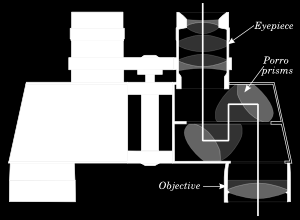
2 c. Describe the proper clothing and other precautions for safely making observations at night and in cold weather. Night: Cold Weather: Then explain how to safely observe the Sun, objects near the Sun, and the Moon. 2. Explain what light pollution is and how it and air pollution affect astronomy. 3. With the aid of diagrams (or real telescopes if available), do each of the following: a. Explain why binoculars and telescopes are important astronomical tools. Demonstrate or explain how these tools are used. Astronomy - Merit Badge Workbook Page. 2 of 12
3 b. Describe the similarities and differences of several types of astronomical telescopes, including at least one that observes light beyond the visible part of the spectrum (i.e., radio, X-ray, ultraviolet, or infrared). c. Explain the purposes of at least three instruments used with astronomical telescopes. d. Describe the proper care and storage of telescopes and binoculars both at home and in the field. 4. Do the following: a. Identify in the sky at least 10 constellations, at least four of which are in the zodiac. b. Identify at least eight conspicuous stars, five of which are of magnitude I or brighter. Name of star Magnitude Astronomy - Merit Badge Workbook Page. 3 of 12
4 c. Make two sketches of the Big Dipper. In one sketch, show the Big Dipper s orientation in the early evening sky. In another sketch, show its position several hours later. In both sketches, show the North Star and the horizon. Record the date and time each sketch was made. Date: / / Time: Date: / / Time: North Star West North East Suggested procedure: Choose a clear night when you will have time and the ability to make observations some hours apart. Looking north, draw the position of the Big Dipper with relation to the North Star. Note the time next to it. Several hours later (six hours are best but at least four hours and preferably more than five hours) draw the position of the big dipper with relation of the North Star and note the time next to it. (Be sure to clearly identify which diagram represents which observation) d. Explain what we see when we look at the Milky Way. Astronomy - Merit Badge Workbook Page. 4 of 12
5 5. Do the following: a. List the names of the five most visible planets. Explain which ones can appear in phases similar to lunar phases and which ones cannot, and explain why. Five Most Visible Planets Phases? Why? b. Using the Internet (with your parent's permission), books, and other resources, find out when each of the five most visible planets that you identified in requirement 5a will be observable in the evening sky during the next 12 months, then compile this information in the form of a chart or table. Planet Name Month c. Describe the motion of the planets across the sky. Astronomy - Merit Badge Workbook Page. 5 of 12
6 d. Observe a planet and describe what you saw. 6. Do the following: a. Sketch the face of the Moon and indicate at least five seas and five craters. Label these landmarks.\ Astronomy - Merit Badge Workbook Page. 6 of 12
7 b. Sketch the phase and the daily position of the Moon, at the same hour and place, for four days in a row. Include landmarks on the horizon such as hills, trees, and buildings. Date: / / Time: Date: / / Time: Date: / / Time: Date: / / Time: East South West Suggested procedure: First check to see whether it is a morning or evening moon and chose a time to view the moon. Avoid an observation period when there will be a new moon. Choose a time and place you are going to be able to observe the moon each day. On the first day, sketch the relative position of the moon across the southern horizon noting its height and shape (phase). Draw some landmarks on the sketch as points of reference. On the same drawing, repeat this at the same time each day for the next three days, showing the height and shape of the moon for each observation. Note the date and time of your observation next to each sketch of the moon. If the sky is overcast and the moon is not visible, either extend the observations until you can make four of them, and/or using the other observations, estimate where the moon would have been and what shape it would have been on the overcast day(s) and indicate that what is an estimate due to overcast sky. Explain the changes you observe. Astronomy - Merit Badge Workbook Page. 7 of 12
8 List the factors that keep the Moon in orbit around Earth. d. With the aid of diagrams, explain the relative positions of the Sun, Earth, and the Moon at the times of lunar and solar eclipses, and at the times of new, first-quarter, full, and last-quarter phases of the Moon. Editor s Note: These diagrams can be used to show the relative positions of the Sun, Earth, and Moon during the new, first-quarter, full, and last-quarter phases of the Moon as well as during the Waxing Gibbous, Waning Gibbous, Waxing Crescent, and Waning Crescent phases of the Moon (which is not required for the merit badge). Two of the diagrams can be used to show the positions both for a phase of the Moon and during an eclipse. Astronomy - Merit Badge Workbook Page. 8 of 12
9 7. Do the following: a. Describe the composition of the Sun, its relationship to other stars, and some effects of its radiation on Earth s weather and communications. Composition: Relationship to other stars: Effects on Earth s weather: Effects on communications. b. Define sunspots and describe some of the effects they may have on solar radiation. Definition: Effects: c. Identify at least one red star, one blue star, and one yellow star (other than the Sun). Red star: Blue star: Yellow star: Explain the meaning of these colors. 8. With your counselor's approval and guidance, do ONE of the following: a. Visit a planetarium or astronomical observatory. Submit a written report, a scrapbook, or a video presentation afterward to your counselor that includes the following information: 1. Activities occurring there 2. Exhibits and displays you saw 3. Telescopes and instruments being used 4. Celestial objects you observed. Astronomy - Merit Badge Workbook Page. 9 of 12
10 b. c. d. e. Plan and participate in a three-hour observation session that includes using binoculars or a telescope. List the celestial objects you want to observe, and find each on a star chart or in a guidebook. Prepare an observing log or notebook. Show your plan, charts, and log or notebook to your counselor before making your observations. Review your log or notebook with your counselor afterward. Plan and host a star party for your Scout troop or other group such as your class at school. Use binoculars or a telescope to show and explain celestial objects to the group. Help an astronomy club in your community hold a star party that is open to the public. Personally take a series of photographs or digital images of the movement of the Moon, a planet, an asteroid or meteoroid, or a comet. In your visual display, label each image and include the date and time it was taken. Show all positions on a star chart or map. Show your display at school or at a troop meeting. Explain the changes you observed. 9. Find out about three career opportunities in astronomy Pick one and find out the education, training, and experience required for this profession Discuss this with your counselor, and explain why this profession might interest you. Requirement resources can be found here: resources Astronomy - Merit Badge Workbook Page. 10 of 12
11 Astronomy - Merit Badge Workbook Page. 11 of 12
12 Attachment (NOTE: It is not necessary to print this page.) Important excerpts from the Guide To Advancement, No : Effective January 1, 2012, the Guide to Advancement (which replaced the publication Advancement Committee Policies and Procedures ) is now the official Boy Scouts of America source on advancement policies and procedures. [ Inside front cover, and ] Unauthorized Changes to Advancement Program No council, committee, district, unit, or individual has the authority to add to, or subtract from, advancement requirements. (There are limited exceptions relating only to youth members with disabilities. For details see section 10, Advancement for Members With Special Needs.) [ Inside front cover, and ] The Guide to Safe Scouting Applies Policies and procedures outlined in the Guide to Safe Scouting, No , apply to all BSA activities, including those related to advancement and Eagle Scout service projects. [Note: Always reference the online version, which is updated quarterly.] [ ] The Buddy System and Certifying Completion Youth members must not meet one-on-one with adults. Sessions with counselors must take place where others can view the interaction, or the Scout must have a buddy: a friend, parent, guardian, brother, sister, or other relative or better yet, another Scout working on the same badge along with him attending the session. When the Scout meets with the counselor, he should bring any required projects. If these cannot be transported, he should present evidence, such as photographs or adult certification. His unit leader, for example, might state that a satisfactory bridge or tower has been built for the Pioneering merit badge, or that meals were prepared for Cooking. If there are questions that requirements were met, a counselor may confirm with adults involved. Once satisfied, the counselor signs the blue card using the date upon which the Scout completed the requirements, or in the case of partials, initials the individual requirements passed. [ ] Group Instruction It is acceptable and sometimes desirable for merit badges to be taught in group settings. This often occurs at camp and merit badge midways or similar events. Interactive group discussions can support learning. The method can also be attractive to guest experts assisting registered and approved counselors. Slide shows, skits, demonstrations, panels, and various other techniques can also be employed, but as any teacher can attest, not everyone will learn all the material. There must be attention to each individual s projects and his fulfillment of all requirements. We must know that every Scout actually and personally completed them. If, for example, a requirement uses words like show, demonstrate, or discuss, then every Scout must do that. It is unacceptable to award badges on the basis of sitting in classrooms watching demonstrations, or remaining silent during discussions. Because of the importance of individual attention in the merit badge plan, group instruction should be limited to those scenarios where the benefits are compelling. [ ] Partial Completions Scouts need not pass all requirements with one counselor. The Application for Merit Badge has a place to record what has been finished a partial. In the center section on the reverse of the blue card, the counselor initials for each requirement passed. In the case of a partial completion, he or she does not retain the counselor s portion of the card. A subsequent counselor may choose not to accept partial work, but this should be rare. A Scout, if he believes he is being treated unfairly, may work with his Scoutmaster to find another counselor. An example for the use of a signed partial would be to take it to camp as proof of prerequisites. Partials have no expiration except the 18th birthday. Page. 12 of 12
Astronomy Merit Badge Workbook
 Merit Badge Workbook This workbook can help you but you still need to read the merit badge pamphlet. The work space provided for each requirement should be used by the Scout to make notes for discussing
Robotics Merit Badge Workbook
 Merit Badge Workbook This workbook can help you but you still need to read the merit badge pamphlet. The work space provided for each requirement should be used by the Scout to make notes for discussing
Citizenship in the Nation Merit Badge Workbook
 Merit Badge Workbook This workbook can help you but you still need to read the merit badge pamphlet. The work space provided for each requirement should be used by the Scout to make notes for discussing
Hiking Merit Badge Workbook
 Merit Badge Workbook This workbook can help you but you still need to read the merit badge pamphlet. This Workbook can help you organize your thoughts as you prepare to meet with your merit badge counselor.
Engineering Merit Badge Workbook
 Merit Badge Workbook This workbook can help you but you still need to read the merit badge pamphlet. The work space provided for each requirement should be used by the Scout to make notes for discussing
Weather Merit Badge Workbook
 Merit Badge Workbook This workbook can help you but you still need to read the merit badge pamphlet. The work space provided for each requirement should be used by the Scout to make notes for discussing
Orienteering Merit Badge Workbook
 Merit Badge Workbook This workbook can help you but you still need to read the merit badge pamphlet. The work space provided for each requirement should be used by the Scout to make notes for discussing
Journalism Merit Badge Workbook
 Merit Badge Workbook This workbook can help you but you still need to read the merit badge pamphlet. The work space provided for each requirement should be used by the Scout to make notes for discussing
Athletics Merit Badge Workbook
 Merit Badge Workbook This workbook can help you but you still need to read the merit badge pamphlet. The work space provided for each requirement should be used by the Scout to make notes for discussing
Bird Study Merit Badge Workbook
 Merit Badge Workbook This workbook can help you but you still need to read the merit badge pamphlet. The work space provided for each requirement should be used by the Scout to make notes for discussing
Space Exploration - Merit Badge Workbook Page. 2 of 11
 c. Benefits related to Earth resources, technology, and new products. d. International relations and cooperation. 2. Design a collector s card, with a picture on the front and information on the back,
Nuclear Science Merit Badge Workbook
 Merit Badge Workbook This workbook can help you but you still need to read the merit badge pamphlet. The work space provided for each requirement should be used by the Scout to make notes for discussing
Indian Lore Merit Badge Workbook
 Merit Badge Workbook This workbook can help you but you still need to read the merit badge pamphlet. The work space provided for each requirement should be used by the Scout to make notes for discussing
Citizenship in the World Merit Badge Workbook
 Merit Badge Workbook This workbook can help you but you still need to read the merit badge pamphlet. This Workbook can help you organize your thoughts as you prepare to meet with your merit badge counselor.
Dog Care Merit Badge Workbook
 Merit Badge Workbook This workbook can help you but you still need to read the merit badge pamphlet. The work space provided for each requirement should be used by the Scout to make notes for discussing
Radio Merit Badge Workbook
 Merit Badge Workbook This workbook can help you but you still need to read the merit badge pamphlet. The work space provided for each requirement should be used by the Scout to make notes for discussing
Soil and Water Conservation
 Merit Badge Workbook This workbook can help you but you still need to read the merit badge pamphlet. The work space provided for each requirement should be used by the Scout to make notes for discussing
Rifle Shooting Merit Badge Workbook
 Merit Badge Workbook This workbook can help you but you still need to read the merit badge pamphlet. The work space provided for each requirement should be used by the Scout to make notes for discussing
Forestry Merit Badge Workbook
 Merit Badge Workbook This workbook can help you but you still need to read the merit badge pamphlet. This Workbook can help you organize your thoughts as you prepare to meet with your merit badge counselor.
Textile Merit Badge Workbook
 Merit Badge Workbook This workbook can help you but you still need to read the merit badge pamphlet. The work space provided for each requirement should be used by the Scout to make notes for discussing
Communication Merit Badge Workbook
 Merit Badge Workbook This workbook can help you but you still need to read the merit badge pamphlet. The work space provided for each requirement should be used by the Scout to make notes for discussing
American Business Merit Badge Workbook
 Merit Badge Workbook This workbook can help you but you still need to read the merit badge pamphlet. This Workbook can help you organize your thoughts as you prepare to meet with your merit badge counselor.
Environmental Science Merit Badge Workbook
 Merit Badge Workbook This workbook can help you but you still need to read the merit badge pamphlet. This Workbook can help you organize your thoughts as you prepare to meet with your merit badge counselor.
Archery Merit Badge Workbook
 Merit Badge Workbook This workbook can help you but you still need to read the merit badge pamphlet. This Workbook can help you organize your thoughts as you prepare to meet with your merit badge counselor.
Automotive Maintenance Merit Badge Workbook
 Merit Badge Workbook This workbook can help you but you still need to read the merit badge pamphlet. The work space provided for each requirement should be used by the Scout to make notes for discussing
Personal Management Merit Badge Workbook
 Merit Badge Workbook This workbook can help you but you still need to read the merit badge pamphlet. The work space provided for each requirement should be used by the Scout to make notes for discussing
Geology Merit Badge Workbook
 Merit Badge Workbook This workbook can help you but you still need to read the merit badge pamphlet. The work space provided for each requirement should be used by the Scout to make notes for discussing
Cooking Merit Badge Workbook
 Merit Badge Workbook This workbook can help you but you still need to read the merit badge pamphlet. This Workbook can help you organize your thoughts as you prepare to meet with your merit badge counselor.
Public Health Merit Badge Workbook
 Merit Badge Workbook This workbook can help you but you still need to read the merit badge pamphlet. The work space provided for each requirement should be used by the Scout to make notes for discussing
Personal Management Merit Badge Workbook
 Merit Badge Workbook This workbook can help you but you still need to read the merit badge pamphlet. This Workbook can help you organize your thoughts as you prepare to meet with your merit badge counselor.
Oceanography Merit Badge Workbook
 Merit Badge Workbook This workbook can help you but you still need to read the merit badge pamphlet. The work space provided for each requirement should be used by the Scout to make notes for discussing
Mining in Society Merit Badge Workbook
 Merit Badge Workbook This workbook can help you but you still need to read the merit badge pamphlet. This Workbook can help you organize your thoughts as you prepare to meet with your merit badge counselor.
First Aid Merit Badge Workbook
 First Aid Merit Badge Workbook This workbook can help you but you still need to read the merit badge pamphlet. This Workbook can help you organize your thoughts as you prepare to meet with your merit badge
Fly Fishing Merit Badge Workbook
 Merit Badge Workbook This workbook can help you but you still need to read the merit badge pamphlet. The work space provided for each requirement should be used by the Scout to make notes for discussing
Medicine Merit Badge Workbook
 Merit Badge Workbook This workbook can help you but you still need to read the merit badge pamphlet. The work space provided for each requirement should be used by the Scout to make notes for discussing
Camping Merit Badge Workbook
 Merit Badge Workbook This workbook can help you but you still need to read the merit badge pamphlet. This Workbook can help you organize your thoughts as you prepare to meet with your merit badge counselor.
Merit Badge Counseling
 The Essentials of Merit Badge Counseling Expiration Date This presentation is not to be used after May 31, 2015. Obtain an updated version at www.scouting.org/advancement This Training Will Cover Scouting
The Essentials of. Merit Badge Counseling
 The Essentials of Merit Badge Counseling This Training Will Cover Scouting overview: mission, aims, and methods Merit badge program role and benefits Merit badge counselor qualifications How to become
Explain the Big Bang Theory and give two pieces of evidence which support it.
 Name: Key OBJECTIVES Correctly define: asteroid, celestial object, comet, constellation, Doppler effect, eccentricity, eclipse, ellipse, focus, Foucault Pendulum, galaxy, geocentric model, heliocentric
Moon. & eclipses. Acting out celestial events. (oh my)
 phasestides & eclipses Moon (oh my) Acting out celestial events Developed by: Betsy Mills, UCLA NSF GK-12 Fellow Title of Lesson: Moon Phases, Tides, & Eclipses (oh my)! Grade Level: 8 th grade Subject(s):
Overarching questions
 Moon phases Eclipses (Section. in textbook) Overarching questions What are the names of the Moon s phases? What causes these phases? What causes eclipses? What does the Moon look like during eclipses?
Activity 3: Observing the Moon
 Activity 3: Observing the Moon Print Name: Signature: 1.) KEY. 2.). 3.). 4.). Activity: Since the dawn of time, our closest neighbor the moon has fascinated humans. In this activity we will explore the
Exploring the Phases of the Moon
 Exploring the Phases of the Moon Activity UCIObs 5 Grade Level: 3 5 Source: Copyright (2009) by Tammy Smecker-Hane. Contact [email protected] with questions. Standards: This activity addresses these California
5- Minute Refresher: Daily Observable Patterns in the Sky
 5- Minute Refresher: Daily Observable Patterns in the Sky Key Ideas Daily Observable Patterns in the Sky include the occurrence of day and night, the appearance of the moon, the location of shadows and
Lesson 1: Phases of the Moon
 Lesson 1: Phases of the Moon The moon takes 29.5 days to revolve around the earth. During this time, the moon you see in the sky appears to change shape. These apparent changes, which are called phases,
Second Class Rank Workbook
 Workbook This Workbook can help you organize your thoughts as you read your Boy Scout Handbook. You still must satisfy your Scoutmaster that you can demonstrate each skill and have learned the information.
Rising and Setting of the Moon
 Rising and Setting of the Moon Activity UCIObs 6 Grade Level: 3 5 Source: Copyright (2009) by Tammy Smecker-Hane. Contact [email protected] with questions. Standards: This activity addresses these California
EDMONDS COMMUNITY COLLEGE ASTRONOMY 100 Winter Quarter 2007 Sample Test # 1
 Instructor: L. M. Khandro EDMONDS COMMUNITY COLLEGE ASTRONOMY 100 Winter Quarter 2007 Sample Test # 1 1. An arc second is a measure of a. time interval between oscillations of a standard clock b. time
Phases of the Moon. Preliminaries:
 Phases of the Moon Sometimes when we look at the Moon in the sky we see a small crescent. At other times it appears as a full circle. Sometimes it appears in the daylight against a bright blue background.
Changes in Our Sky Grade Two
 Ohio Standards Connection: Earth and Space Sciences Benchmark A Observe constant and changing patterns of objects in the day and night sky. Indicator 2 Observe and describe how the sun, moon and stars
INDEPENDENT PROJECT: The Spring Night Sky
 INDEPENDENT PROJECT: The Spring Night Sky Your Name: What is the difference between observing and looking? As John Rummel said to the Madison Astronomical Society, January 11, 2002: Looking implies a passive
CELESTIAL MOTIONS. In Charlottesville we see Polaris 38 0 above the Northern horizon. Earth. Starry Vault
 CELESTIAL MOTIONS Stars appear to move counterclockwise on the surface of a huge sphere the Starry Vault, in their daily motions about Earth Polaris remains stationary. In Charlottesville we see Polaris
CITIZENSHIP IN THE NATION
 This Workbook has been developed to help aid in organizing notes and references while working on the Citizenship in the Nation Merit Badge Requirements. Visit www.scoutmasterbucky.com for more information
Lunar Phase Simulator Student Guide
 Name: Lunar Phase Simulator Student Guide Part I: Background Material Answer the following questions after reviewing the background pages for the simulator. Page 1 Introduction to Moon Phases Is there
JOURNALISM PROGRAM OVERVIEW & WORKBOOK
 JOURNALISM PROGRAM OVERVIEW & WORKBOOK MERIT BADGE UNIVERSITY OVERLAND TRAILS COUNCIL TABLE OF CONTENTS PROGRAM OVERVIEW MERIT BADGE REQUIREMENTS (PRE-REQUISITE REQUIREMENTS IN BOLD RED UNDERLINED ITALICS)
The following questions refer to Chapter 19, (PAGES 259 278 IN YOUR MANUAL, 7 th ed.)
 GEOLOGY 306 Laboratory Instructor: TERRY J. BOROUGHS NAME: Locating the Planets (Chapter 19) and the Moon and Sun (Chapter 21) For this assignment you will require: a calculator, colored pencils, a metric
Project-Based Learning Unit Earth/Moon/Sun Systems Marcie Owen Pilot Elementary
 Project-Based Learning Unit Earth/Moon/Sun Systems Marcie Owen Pilot Elementary Grade Level:3 Essential Question: How do the Earth, Moon, and Sun Interact? Subquestions: 1. Does the moon change shape?
GETTING STARTED IN STAR GAZING. The fact you are here in this introductory session says you have an interest in the hobby of
 GETTING STARTED IN STAR GAZING by Nelson Tilden Sun City Oro Valley Astronomy Club The fact you are here in this introductory session says you have an interest in the hobby of astronomy, but please note
Phases of the Moon. --demonstrate the ability to apply an in-depth understanding of moon phases to real life situations
 6 th Grade Standard I Rubric Phases of the Moon --demonstrate the ability to apply an in-depth understanding of moon phases to real life situations --demonstrate an understanding of different reasons why
CELESTIAL EVENTS CALENDAR APRIL 2014 TO MARCH 2015
 CELESTIAL EVENTS CALENDAR APRIL 2014 TO MARCH 2015 *** Must See Event 2014 ***April 8 - Mars at Opposition. The red planet will be at its closest approach to Earth and its face will be fully illuminated
Astronomy Club of Asheville October 2015 Sky Events
 October 2015 Sky Events The Planets this Month - page 2 Planet Highlights - page 10 Moon Phases - page 13 Orionid Meteor Shower Peaks Oct. 22 nd - page 14 Observe the Zodiacal Light - page 15 2 Bright
Solar Matters II Teacher Page
 Solar Matters II Teacher Page Sun Misconceptions Student Objective understands why some common phrases about the Sun are incorrect can describe how the Earth s rotation affects how we perceive the Sun
Unit One Organizer: The Stars and Our Solar System (Approximate Time: 7 Weeks)
 The following instructional plan is part of a GaDOE collection of Unit Frameworks, Performance Tasks, examples of Student Work, and Teacher Commentary. Many more GaDOE approved instructional plans are
Motions of Earth, Moon, and Sun
 Motions of Earth, Moon, and Sun Apparent Motions of Celestial Objects An apparent motion is a motion that an object appears to make. Apparent motions can be real or illusions. When you see a person spinning
INDEPENDENT PROJECT: The Spring Night Sky
 INDEPENDENT PROJECT: The Spring Night Sky Your Name: What is the difference between observing and looking? As John Rummel said to the Madison Astronomical Society, January 11, 2002: Looking implies a passive
Science Standard 4 Earth in Space Grade Level Expectations
 Science Standard 4 Earth in Space Grade Level Expectations Science Standard 4 Earth in Space Our Solar System is a collection of gravitationally interacting bodies that include Earth and the Moon. Universal
Exam # 1 Thu 10/06/2010 Astronomy 100/190Y Exploring the Universe Fall 11 Instructor: Daniela Calzetti
 Exam # 1 Thu 10/06/2010 Astronomy 100/190Y Exploring the Universe Fall 11 Instructor: Daniela Calzetti INSTRUCTIONS: Please, use the `bubble sheet and a pencil # 2 to answer the exam questions, by marking
The Lunar Phase Wheel
 The Lunar Phase Wheel A lunar phase wheel is a simple device to help you to visualize the positions of the Earth, Moon, and Sun at various times of the day or month, and then predict the phases and the
View Through a Telescope Classroom Activity
 View Through a Telescope Classroom Activity The Classroom Activity introduces students to the context of a performance task, so they are not disadvantaged in demonstrating the skills the task intends to
AST 114 Spring 2016 Introduction to the Night Sky INTRODUCTION TO THE NIGHT SKY
 NAME: INTRODUCTION TO THE NIGHT SKY What will you learn in this Lab? This lab will introduce you to the layout of the night sky: constellations and stars, their names and the patterns they make, and the
Night Sky III Planetary Motion Lunar Phases
 Night Sky III Planetary Motion Lunar Phases Astronomy 1 Elementary Astronomy LA Mission College Spring F2015 Quotes & Cartoon of the Day Everything has a natural explanation. The moon is not a god, but
SURVEYING PROGRAM OVERVIEW & WORKBOOK
 2010 SURVEYING PROGRAM OVERVIEW & WORKBOOK STUHR MUSEUM MERIT BADGE UNIVERSITY OVERLAND TRAILS COUNCIL 7/31/2010 TABLE OF CONTENTS PROGRAM OVERVIEW MERIT BADGE REQUIREMENTS (PRE-REQUISITE REQUIREMENTS
1-2. What is the name given to the path of the Sun as seen from Earth? a.) Equinox b.) Celestial equator c.) Solstice d.
 Chapter 1 1-1. How long does it take the Earth to orbit the Sun? a.) one sidereal day b.) one month c.) one year X d.) one hour 1-2. What is the name given to the path of the Sun as seen from Earth? a.)
General Astronomy Phys1810 Fall 2015. Observing Exercises
 Observing Exercises You will complete 3 of the following exercises: Exercise 1: Sketching the North Circumpolar Cap (mandatory) Exercise 2: Seasonal Constellations Exercise 3: Telescope Observations Exercise
The Celestial Sphere. Questions for Today. The Celestial Sphere 1/18/10
 Lecture 3: Constellations and the Distances to the Stars Astro 2010 Prof. Tom Megeath Questions for Today How do the stars move in the sky? What causes the phases of the moon? What causes the seasons?
Chapter 3 The Science of Astronomy
 Chapter 3 The Science of Astronomy Days of the week were named for Sun, Moon, and visible planets. What did ancient civilizations achieve in astronomy? Daily timekeeping Tracking the seasons and calendar
Science Investigations: Investigating Astronomy Teacher s Guide
 Teacher s Guide Grade Level: 6 12 Curriculum Focus: Astronomy/Space Duration: 7 segments; 66 minutes Program Description This library of videos contains seven segments on celestial bodies and related science.
Grade 6 Standard 3 Unit Test A Astronomy. 1. The four inner planets are rocky and small. Which description best fits the next four outer planets?
 Grade 6 Standard 3 Unit Test A Astronomy Multiple Choice 1. The four inner planets are rocky and small. Which description best fits the next four outer planets? A. They are also rocky and small. B. They
California Standards Grades 9 12 Boardworks 2009 Science Contents Standards Mapping
 California Standards Grades 912 Boardworks 2009 Science Contents Standards Mapping Earth Sciences Earth s Place in the Universe 1. Astronomy and planetary exploration reveal the solar system s structure,
Motions of the Earth. Stuff everyone should know
 Motions of the Earth Stuff everyone should know Earth Motions E W N W Noon E Why is there day and night? OR Why do the Sun and stars appear to move through the sky? Because the Earth rotates around its
The changing phases of the Moon originally inspired the concept of the month
 The changing phases of the Moon originally inspired the concept of the month Motions of the Moon The Moon is in orbit around the Earth, outside the atmosphere. The Moon `shines via reflected light (12%)
FIRST GRADE 1 WEEK LESSON PLANS AND ACTIVITIES
 FIRST GRADE 1 WEEK LESSON PLANS AND ACTIVITIES UNIVERSE CYCLE OVERVIEW OF FIRST GRADE UNIVERSE WEEK 1. PRE: Describing the Universe. LAB: Comparing and contrasting bodies that reflect light. POST: Exploring
NOVA Counselor Training. Instructor s Guide
 NOVA Counselor Training Instructor s Guide October 2013 INTRODUCTION This course is intended to provide Nova counselors with the basic information they need to conduct successful Nova counseling sessions
STAAR Science Tutorial 30 TEK 8.8C: Electromagnetic Waves
 Name: Teacher: Pd. Date: STAAR Science Tutorial 30 TEK 8.8C: Electromagnetic Waves TEK 8.8C: Explore how different wavelengths of the electromagnetic spectrum such as light and radio waves are used to
BOY SCOUTS OF AMERICA EAGLE APPLICATION PROCESS
 BOY SCOUTS OF AMERICA EAGLE APPLICATION PROCESS October 6, 2004 Page 1 of 5 Revised 2/1/06 (2) Background This guide was developed to help Eagle candidates (ie, Life Scouts) navigate their way through
Space Exploration Classroom Activity
 Space Exploration Classroom Activity The Classroom Activity introduces students to the context of a performance task, so they are not disadvantaged in demonstrating the skills the task intends to assess.
Cycles in the Sky. Teacher Guide: Cycles in the Sky Page 1 of 8 2008 Discovery Communications, LLC
 Cycles in the Sky What is a Fun damental? Each Fun damental is designed to introduce your younger students to some of the basic ideas about one particular area of science. The activities in the Fun damental
Scouting Adventure. Arrow of Light Adventure Workbook
 Arrow of Light Adventure Workbook No one may add or subtract from the official requirements found in the Cub Scout Webelos Handbook This workbook was updated in June, 2015. http://www.usscouts.org http://www.meritbadge.org
Finding Stars and Constellations Earth & Sky
 Finding Stars and Constellations Earth & Sky Name: Introduction If you carefully watched the night sky over a period of time, you would notice that it s not always the same. There are certain changes that
astronomy 2008 1. A planet was viewed from Earth for several hours. The diagrams below represent the appearance of the planet at four different times.
 1. A planet was viewed from Earth for several hours. The diagrams below represent the appearance of the planet at four different times. 5. If the distance between the Earth and the Sun were increased,
Astronomy Merit Badge
 Astronomy Merit Badge Frequently Asked Questions Boy Scouts of America & the Adler Planetarium Astronomy Merit Badge Frequently Asked Questions BASIC INFORMATION WHAT DO SCOUTS DO AT THE BADGE WORKSHOP?
ANSWER KEY. Chapter 22. 8. phase 9. spring 10. lunar 11. solar 12. gravity
 Chapter 22 Section 22-1 Review and Reinforce (p. 11) 1. winter 2. At point A the sun would be directly overhead, at point B it would be on the horizon, and at point C it would not be visible because it
The Earth, Sun & Moon. The Universe. The Earth, Sun & Moon. The Universe
 Football Review- Earth, Moon, Sun 1. During a total solar eclipse, when almost all of the Sun's light traveling to the Earth is blocked by the Moon, what is the order of the Earth, Sun, and Moon? A. Moon,
Moon Motion. Grade 3. Title of Lesson: Essential Question:
 Grade 3 Title of Lesson: Moon Motion Conceptual Statement: Earth and its moon move in predictable patterns that can be noted by regular observation. Essential Question: How does the appearance of Earth
The Sun and the Stars
 www.k5learning.com Objective Concepts (gravity, climate, solar system, hydrogen, helium, elements, core, ultraviolet rays, cluster, galaxy, Milky Way Galaxy); Sight words (surface, middle, dangerous, causes,
Appropriate space vocabulary for Primary School
 Appropriate space vocabulary for Primary School Stuff Looks like Gas Dust Rock Liquid Fatter (moon) Thinner (moon) Faster Slower Hot Cold Material Shape Straight at (an object) Direct (light) Indirect
2015 York District Merit Badge College
 2015 York District Merit Badge College Contents of Guide Catawba Nuclear Station April 17-19 th 2015 Leaders Guide Section 1: General Information and Policies Section 2: Merit Badge Classes Section 3:
A long time ago, people looked
 Supercool Space Tools! By Linda Hermans-Killam A long time ago, people looked into the dark night sky and wondered about the stars, meteors, comets and planets they saw. The only tools they had to study
Study Guide due Friday, 1/29
 NAME: Astronomy Study Guide asteroid chromosphere comet corona ellipse Galilean moons VOCABULARY WORDS TO KNOW geocentric system meteor gravity meteorite greenhouse effect meteoroid heliocentric system
Merit Badge Counselor Instructors Guide
 Merit Badge Counselor Instructors Guide Training Summary This module will guide new and potential merit badge counselors through their responsibilities in the role and will give them an understanding of