
STDs: Risk & Vulnerability Grades 9-12, Lesson 18
|
|
|
- Clemence Preston
- 9 years ago
- Views:
Transcription
1 STDs: Risk & Vulnerability Grades 9-12, Lesson 18 Student Learning Objectives The student will be able to 1. compare the relative risk of different sexual behaviors, including abstaining. 2. compare the relative risk of varying numbers of partners, sequential and concurrent. Agenda 1. Introduce lesson with STD risk story. 2. Lead STD transmission activity using fluid exchange or 3x5 card method. 3. Explain why teens are at greater risk for STDs. 4. Explain concurrent partners using STD Risk and Vulnerability Visuals Lead risky behavior activity using Risk Behavior Cards. 6. Conclude lesson. This lesson was most recently edited on February 28, Lesson 18 Page 1

2 Materials Needed Student Materials None Classroom Materials Risk Signs 1-4 Behavior Cards one set, cut in half STD Risk and Vulnerability Visuals 1-3: (contained in this lesson & also available online as a PowerPoint presentation at Small paper cups (one per student can be reused if teaching multiple classes) White vinegar ph paper slips (one per student) these can be obtained from a science teacher or an online science materials company Plastic wrap Large pitcher of water (if your classroom does not have a sink) Rubber band Index cards (one per student) only if doing Alternative Activity 2, in which case, see page 6 of this lesson for how to prepare the cards One pair of scissors or paper cutter Teacher Preparation The day before or the day of the lesson NOTE: this lesson requires a fair amount of preparation time. You may consider getting it ready the day before or asking a TA to help you set it up. If you do not have a sink in your classroom, fill a large pitcher with water. For each student, fill one small paper cup half full with water. If you teach multiple classes, prepare a set of cups for the class that has the most students. You can reuse the cups. In one cup, make a solution of 2/3 cup water and 1/3 cup vinegar. Keep the cup with vinegar separate. Cover one paper cup with plastic wrap after you have filled it with water. Slip a rubber band over the rim of the cup so the water is sealed inside. Gather all materials for the fluid exchange activity on a table so they are easily reachable by students or yourself if you are going to pass the cups around. If you want to pass the cups around, you could place them on a cafeteria tray. Prior to the beginning of the fluid exchange activity, identify three students in private and tell them that regardless of the directions you give the class, two of them should only exchange fluid with each other. The third student should not exchange his or her fluid with anyone during this activity. Choose a wall in your classroom where all the students in your class could comfortably stand. Photocopy the 4 Risk Signs and tape them on the wall so they form a continuum from No Risk on one side of the room to A Big Risk on the other side of the room. Print and cut the Behavior Cards. Lesson 18 Page 2

3 Most cups are plain water; one is a 1/3 vinegar, 2/3 water solution: Standards National Health Education Standard Standard 1: Students will comprehend concepts related to health promotion and disease prevention to enhance health. Performance Indicator : Predict how healthy behaviors can affect health status. Standard 2: Students will analyze the influence of family, peers, culture, media, technology, and other factors on health behaviors. Performance Indicator : Analyze how some health risk behaviors can influence the likelihood of engaging in unhealthy behaviors. Washington State Health Education Standard EALR 2: The student acquires the knowledge and skills necessary to maintain a healthy life: Recognizes dimensions of health, recognizes stages of growth and development, reduces health risks, and lives safely. Component 2.3: Understands the concepts of prevention and control of disease. GLE 2.3.1: Analyzes personal health practices, and how they affect communicable diseases. Lesson 18 Page 3

4 Rationale This lesson is a follow up to the STD Prevention lesson and HIV lessons. By addressing students beliefs about their own risks and vulnerability to STDs, the hope is that students will choose healthier behaviors such as: less permissive attitudes towards early sex, perceiving more costs than benefits toward early sex, and if choosing to have sex - fewer sexual partners, greater motivation and intention to use condoms, and less frequent sex. Proven programs that address these determinants have been shown to reduce teen pregnancy and reduce STD transmission. The activities in this lesson are specifically designed to address those determinants. Lesson 18 Page 4

5 Activities NOTE: Instructions to you are in regular font. A suggested script is in italics. Feel free to modify the script to your style and your students needs. 1. Introduce lesson with STD risk story. Tell students that you are going to read them a story. Ramón went to a local clinic for an STD check up. He said his new girlfriend wanted him to get tested for everything before they started having sex. He told the doctor at the clinic this was his second relationship, and he d had oral and vaginal sex with his first girlfriend. He figured his chances of having an STD were pretty low because he had only had sex with one person in his life. The doctor told Ramón to pee in a cup in the bathroom for the test, and the lab results came back positive for gonorrhea. The doctor asked if Ramón would tell his ex-girlfriend about the results, but Ramón was too mad to talk to his ex-girlfriend about this. The doctor said Public Health can contact her, instead, and tell her she should get tested. When she got the phone call, she asked the Public Health staff person how they got her name. He said he couldn t tell her; he explained that he had to protect that person s privacy, just like he would protect hers. In the end she gave him contact information for four people she had had sex with, so that he could contact them, too. Ramón didn t know that his ex-girlfriend had ever had sex with anyone else. The fact of the matter is that the age group with the most STDs is teenagers. The Centers for Disease Control says: Each year, there are approximately 19 million new STD infections, and almost half of them are among youth aged 15 to In one recent year, an estimated 5,259 young people aged in the 33 states reporting to CDC were diagnosed with HIV/AIDS, representing about 14% of the persons diagnosed that year. 2 Anyone having unprotected sex can get STDs, and anyone can spread them. The point of this lesson is that many times, people think that STDs only happen to other people. But if one in four teenage women had an STD in a national study done in 2008, 3 then there is a 25% chance that other person could be you, your boyfriend or girlfriend, your brother or sister, or your teammate or friend. I hope you can learn from other peoples mistakes and not have to make your own. Just remember, sometimes people get an STD from sexual assault or rape and they did not make a mistake. What happened is not their fault. When people start new relationships, trust has to be earned over time. If people are going to have sex with someone, they should know the person s sexual history, if they have one, and whether or not they used condoms with their previous partner(s). It is also important to ask their partner s disease status (whether they have any diseases), because some STDs like HPV, HIV, and genital herpes have no cure. Remember, it is illegal to not tell sex partners that you have HIV if you know you have it. Lesson 18 Page 5

6 2. Lead STD transmission activity. Prior to the beginning of this activity, be sure you identify three students in private and tell them that regardless of the directions you give the class, two should only exchange fluid with each other and one should not exchange fluid with anyone during this activity. Remind them discreetly. Explain to students that they are now going to do an activity. Hold up two cups of plain water to demonstrate how you want students to trade their liquids by pouring a little bit into one cup and then a little back into the first cup. The amounts of fluid should be roughly equal after the trade. Instruct the students to mingle among others in the class and to share a little bit of liquid from each other s cup with three other students. Now provide each student with a cup of water. Tell the students not to drink the liquid. Be sure one student gets the cup with the vinegar solution and another student gets the cup with the plastic wrap rubber banded around the top. Make a mental note of which student got the vinegar solution. After students have had time to complete three trades, have them return to their seats. How does this experience relate to transmission of HIV and other sexually transmitted diseases? Explain that one student s cup contained water that was infected with an acidic solution (vinegar) and even though no one could tell by its appearance, it was capable of infecting others by the exchange of fluids. This represents an STD. Some students may have smelled the vinegar, which shows there sometimes are symptoms of STDs, but more often there are not. In order to visually determine who may have become infected by the exchange of water, give each student a small piece of ph or litmus paper you can tear each piece into thirds. If the litmus paper changes color when it hits the water, they have been exposed to the STD and could be infected. For the cup with the plastic wrap on it, tell the student to test the water below the plastic wrap. ALTERNATE ACTIVITY: If you do not have access to the materials needed or time to set it up, there is a low-tech alternative. Gather index cards so that you have one for each student. Using pencil, so the letters are barely visible, on the back of one index card write the letter S for STD. On the back of one index card, write the letter A for abstinence. On the backs of two cards, write the letter M for monogamy. On the back of one index card write the letter C for condom. On the back of all remaining cards write the letter U for unprotected. Discreetly explain to the student with the A card to not shake anyone s hand and with the M card to only shake hands with another M card holder. Have all students mingle around the room, swapping signatures on the lined sides of the index cards with three other people in the room. They may sit down after their card has three signatures, except for the students with the A and M cards. Continue the discussion in the same way, but first reveal what the letters stand for on the back of everyone s card. Lesson 18 Page 6

7 After testing each cup, follow with a discussion of the following points. Could you tell just by looking which cups were infected? If students mention they could smell the vinegar, ask if they can always smell an STD. In some cases, STDs do cause an odor due to bacteria, but many STDs have no symptoms so you would not be able to smell them. Who did not exchange water during the exercise? How did it feel not to participate? Explain that this represents abstinence. Abstinence is the only 100% sure way not to get an STD. How did the other students respond to the abstinent students? Were they pressured, ignored, left out, etc.? Who exchanged fluids with only one other person? Note the two students who exchanged fluid only with each other. Explain that these two students represent monogamy. Monogamy is when both people in a relationship agree they will only have sex with each other and not other people. Ask if their test results showed an STD. Explain that when couples know they do not have STDs because of testing, they can reduce their risk by agreeing not to have sex with other people. Ask the two: What did it feel like to deny others who wanted to exchange fluid with you? For the cup with the plastic wrap on it, explain that this represents using a condom during sex. How did the condom work to protect the student from transmission? Remind students that using condoms correctly or consistently will provide excellent protection against the STDs that are transmitted through fluids (such as gonorrhea, chlamydia, and HIV), but won t provide as much protection against STDs that are transmitted skin to skin (such as herpes and HPV). If skin to skin contact happens and the condom doesn t happen to cover the part of skin that s got an infection, the STD can be spread. How did it feel to be tested? Were you uncomfortable knowing that others could see the results of your test? Would a promise of confidentiality be important in deciding whether or not to be tested for HIV or other STDs? Risk reduction: Remind the class that only one cup was originally infected, but through exchanges with multiple cups, the infection was transmitted to those not ever in contact with the original source. What would have happened if they shared fluids with only one other person? How about if it were with five other people? 3. Explain why teens are at greater risk of STDs. First of all, most teens do not think they are at risk of an STD. 4 Ask class why they think teens may be at greater risk for STDs than older people. Take a variety of responses. The truth is there are several reasons. You may read these or summarize them in your own words. About 1 in 7 high school students has had four or more sex partners during their life. 5 In a high school of 1,000 kids, that s about 140 people who ve had four or more partners. The more partners a person has in his or her life, the greater the risk of contracting an STD. (Of course, that means that 6 in 7 have had fewer partners or none.) Lesson 18 Page 7

8 About 1 in 3 sexually active high school students did not use a condom during last sexual intercourse. 6 Condoms help lower the risk of STDs. (Of course, that means 2 in 3 DID use a condom.) A little more than half of people aged has had oral sex with someone of another sex. 7 (Of course, that means that almost half have not.) But the point is not everyone realizes that STD germs can spread from mouth to genitals or vice versa. People are more likely to engage in high-risk behaviors, such as unprotected sex, when they re under the influence of drugs or alcohol 8. About 1 out of 5 high school students who ve had sexual intercourse during the past three months drank alcohol or used drugs before their last sexual intercourse. 9 Teens are less likely to be married or in a long-term monogamous relationship than adults and are more likely to have a concurrent sexual relationship. A concurrent sexual relationship is when a person is having sex with more than one person at the same time. Concurrent sexual partnerships are risky because they make it easier to spread HIV and other STDs. 10 Teen girls' cervixes are not fully developed and the cells are especially susceptible to STDs. 11 The frequency of sex can increase a person s chances of getting an STD. When people have more sex, they are at greater risk for getting a sexually transmitted infection. Also, the more sex their partner has (or has had in the past) or the more partners they ve had can increase a new partner s risk of infection. 4. Explain concurrent partners using STD Risk and Vulnerability Visuals 1-3 Concurrent partners are when a person is having sex with more than one person in the same period of time. It is risky behavior because it opens people up to sexual networks where STDs can spread more quickly than if people are abstinent or with a monogamous partner. In the following visuals white figures represent people with STDs. The lines connecting figures indicate that those two people have had sex. Show STD Risk and Vulnerability Visual 1: How STDs Spread - Abstinence or 1 Monogamous Partner. Explain that the white stick figure represents someone who has an STD. The single dark stick figures represent people being abstinent. The figures with only one line between them represent monogamous partners where each person only has sex with the other partner and no one else. These stick figures can represent people of all genders. Show STD Risk and Vulnerability Visual 2: How STDs Spread - 1 or 2 Concurrent Partners. Explain that once people start having sex with multiple partners at the same time, called concurrent partners, their risk of getting an STD increases. The white figures have STDs. Show STD Risk and Vulnerability Visual 3: How STDs Spread - 2 or 3 Concurrent Partners. Explain that increasing the number of concurrent partners makes you more susceptible to STDs if someone in the network has one. Lesson 18 Page 8

9 5. Lead risky behavior activity: We just talked about how and why teens are at greater risk for STDs than other age groups of people. In this activity, we will look at which behaviors are riskier than others in terms of getting an STD or HIV. Explain that there are four signs on one wall of the classroom. Explain that they mean risk of acquiring an STD or HIV due to a certain risk behavior. Distribute one Risk Behavior Card per student. Ask every student to silently read his or her card and stand near the sign they feel represents the risk of acquiring an STD or HIV for the behavior listed on their card. Tell them to talk to their neighbors near the sign and arrange themselves so their behavior is either more or less risky than the person next in line. They should be in descending order from most risky on one side to least risky on the other. Another option is to ask students to tape their cards under the signs, with the riskiest behaviors near the top and less risky behaviors near the bottom. Starting at the Bigger Risk side of the room, ask each student to read the card aloud. Tell students to listen if they think anyone is out of order. After each student has read, ask students to help you rearrange the line so that it is consistent with medical fact. Now point out any misconceptions or add any facts you think are necessary to explain why some behaviors are riskier than others. Use this chart as a rough guide for risky behaviors. If applicable, the riskier behaviors are at the top of the chart. There are notes about certain risks after the table. Some of these risks could possibly be in other columns, depending on extenuating circumstances. A Bigger Risk A Risk A Smaller Risk No Risk Sharing needles to inject drugs Having vaginal or anal sex with a condom Receiving a blood Giving first aid and CPR transfusion Having sex before 1985 in with a the US monogamous Having vaginal partner or anal sex Kissing (open without a mouth) condom Breastfeeding from a mother with HIV Drinking beer or doing drugs at a party Having oral sex without a condom or dental dam Dating someone who is a lot older Spending time with a boyfriend or girlfriend at home when no adults are there Sharing a toothbrush or razor Piercing or tattooing with a needle someone else already used Abstaining from sex and drugs Being with someone who is crying, coughing, or sneezing Donating blood Receiving a blood transfusion after 1985 in the US Kissing (closed mouth) Getting a mosquito bite Touching doorknobs, toilet seats, dishes, glasses Going to school with a person who has an STD or HIV Being in water with people who have HIV such as pools, hot tubs or showers Lesson 18 Page 9

10 Explanatory Notes Teacher Background A Bigger Risk Sharing needles to inject drugs: Blood transmission is the easiest way to spread HIV and Hepatitis B and C. Breastfeeding from a mother with HIV: A mother can use HIV medication to lower her viral load and formula to feed her baby. Having vaginal or anal sex without a condom: Anal sex is riskier than vaginal sex and in both cases, the receptive partner is at more risk than the insertive partner. Receiving a blood transfusion before 1985 in the U.S.: This is when the US started routinely testing blood for HIV. Blood transfusions are still risky in parts of the world where donors and donated blood are not as carefully screened, due to the cost of screening. A Risk Dating someone who is a lot older: Older partners are more likely to try to convince younger partners that they should not use condoms, 12 and it could be harder to assert yourself with someone older whose opinion might seem more valid than your own or whose respect for you might be low. Drinking beer or doing drugs at a party: Alcohol and drugs alter judgment and have been shown to decrease condom use. 13 Having oral sex without a condom or dental dam: The risk of oral sex is less than unprotected vaginal or anal sex. The risk depends on the disease, but in most cases, the receptive partner is at greater risk of acquiring an STD than the insertive partner. If a person already has an STD, it s easier for him or her to get HIV from an infected partner. Chlamydia, gonorrhea, syphilis, herpes, HPV, and HIV can all be transmitted during unprotected oral sex. HPV and herpes may not be stopped by using a condom or dental dam because they are spread by skin to skin contact. Oral-anal contact is definitely a risk for Hepatitis B with an infected partner. 14,15 Spending time with a boyfriend or girlfriend at home when no adults are there: Two-thirds (68%) of 16 to 18-year olds who reported a first sexual experience in [one study] said that they first had sexual intercourse in their family home, their partner s family home, or a friend s house. 16 Using a razor or a piercing or tattooing needle someone else already used: Because razors can have blood on them, they should not be shared, since both Hepatitis and HIV are blood borne. A risk of HIV transmission does exist if instruments contaminated with blood are either not sterilized or disinfected or are used inappropriately between clients. CDC recommends that single-use instruments intended to penetrate the skin be used once, then disposed of. Reusable instruments or devices that penetrate the skin and/or contact a client's blood should be thoroughly cleaned and sterilized between clients. 17 A Smaller Risk Having vaginal or anal sex with a condom: Latex condoms, when used consistently and correctly, are highly effective in preventing the sexual transmission of HIV, the virus that causes AIDS. In addition, consistent and correct use of latex condoms reduces the risk of other sexually transmitted diseases (STDs), including diseases transmitted by genital secretions, and to a lesser degree, genital ulcer diseases. Condom use may Lesson 18 Page 10

11 reduce the risk for genital human papillomavirus (HPV) infection and HPV-associated diseases, e.g., genital warts and cervical cancer. 18 Having sex with a monogamous partner: Both people must test negative for STDs first and then trust each other that neither has had sex with anyone else in the months before they were tested and that neither is having sex with other people outside the relationship. This is placed in a risk category, because sometimes people lie about their histories, their test results, or sex with other people outside the relationship. How much risk that entails is a judgment call it would be OK to call it a risk rather than a smaller risk. Giving first aid and CPR: Current CPR recommendations stress the chest compressions over to mouth to mouth resuscitation, but barriers are available to prevent mouth to mouth contact if the victim is bleeding. When providing first aid wound care, universal precautions should be followed by wearing latex gloves. No Risk Abstaining from sex and drugs: The only 100% sure way to avoid STDs. Being with someone who is crying, coughing, or sneezing: These can spread coughs and colds, not STDs. Donating blood: There is no risk whatsoever. Receiving a blood transfusion after 1985 in the U.S.: All blood is tested thoroughly in the US and most other nations. Kissing (closed mouth): There is no risk from this kind of kissing. Getting a mosquito bite: Mosquitoes transmit many diseases but not HIV or other STDs. Touching doorknobs, toilet seats, dishes, glasses: STDs and HIV do not survive for long on surfaces. CDC studies have shown that drying of high concentrations of HIV [in blood] reduces the amount of infectious virus by 90 to 99 percent within several hours. Since the HIV concentrations used in laboratory studies are much higher than those actually found in blood or other specimens, drying of HIV-infected human blood or other body fluids reduces the theoretical risk of environmental transmission to that which has been observed essentially zero. 19 Going to school with a person who has an STD or HIV: Casual contact like what people have in a classroom, on a basketball court, or in the lunchroom will not spread STDs or HIV. Being in water with people who have HIV such as pools, hot tubs or showers: Plantars warts (a kind of HPV) and athlete s foot do transmit from locker room floors and shared shower floors, so wearing sandals is recommended. But there are no known STD infections spread by these environments. 6. Conclude the lesson by summarizing critical points. Ask students to write one thing that they learned from today s lesson in their notebook. Wrap up the lesson by restating these key points: Anyone who has unprotected sex is at risk of contracting an STD or HIV. Not having sex is the only 100% sure way not to get an STD or HIV. STDs do not get passed by casual contact. But when people get too casual about protecting themselves, like drinking or using drugs, not using condoms, or having sex with concurrent partners, then STDs can spread. There is no recommended homework for this lesson. Lesson 18 Page 11

12 Related Activities for Integrated Learning BIOLOGY Students can research individual STDs to make posters to hang in the class or in the halls. Ask them to find things like common and scientific names, history, current prevalence and incidence, modes of transmission, treatment / cure if any, and prevention. The CDC STD website has excellent fact sheets to get them started: MATH Have students access data at the most local level data is available, i.e., county or state, about STDs among teenagers. Ask students to prepare a PowerPoint presentation showing meaningful graphs and charts using local STD data. For example, students can show the progression of chlamydia infection over the past five years or a pie chart showing what infections make up the local STD infection population, or teen STD infection rates vs. the population of the school or county or state. LANGUAGE ARTS Another title to consider: is Fade to Black by Alex Finn, winner of the Iowa High School Award. ISBN-10: ; ISBN-13: This is the story of an HIVpositive high school junior, the teen who attacks him with a baseball bat and the young person who witnesses the attack. It s told from all three teens perspectives. Have students discuss bullying, discrimination, and stereotyping of people with HIV and other STDs and compare that with bullying, discrimination or stereotyping they have experienced or witnessed. It is important for teachers to know that this book does contain a few slurs, including the words spic and homo and the term PW, which implies the word pussy-whipped. HISTORY Show the film The Sensei, a remarkable 2008 film (released on DVD in 2010) set in the 1980 s by Writer/Director D. Lee Inosanto, niece of Bruce Lee. A fast-paced martial arts film, it weaves a (fictional) story of bullying and violence rooted in racism, misogyny, homophobia and AIDSphobia. At the same time it shows the human capacity to outgrow one s biases. Have students discuss the ways in which ignorance about the spread of HIV contributed to the bias various people exhibited. Have them write about their own biases and their own journeys to overcome them in comparison to those explored in the film. Lesson 18 Page 12

13 STD Risk and Vulnerability Visual 1 Lesson 18 Page 13

14 STD Risk and Vulnerability Visual 2 Lesson 18 Page 14

15 STD Risk and Vulnerability Visual 3 Lesson 18 Page 15

16 Risk Sign #1 A Bigger Risk Lesson 18 Page 16

17 Risk Sign #2 A Risk Lesson 18 Page 17

18 Risk Sign #3 A Smaller Risk Lesson 18 Page 18

19 Risk Sign #4 No Risk Lesson 18 Page 19

20 Risk Behavior Cards Sharing needles to inject drugs Dating someone who is a lot older Lesson 18 Page 20

21 Drinking beer or doing drugs at a party Having oral sex without a condom or dental dam Lesson 18 Page 21
22 Having vaginal or anal sex with a condom Abstaining from sex and drugs Lesson 18 Page 22
23 Having sex with a monogamous partner Donating blood Lesson 18 Page 23
24 Being with someone who is crying, coughing, or sneezing Lesson 18 Page 24
25 Receiving blood transfusions after March 1985 in the US Lesson 18 Page 25
26 Kissing (closed mouth) Getting a mosquito bite Lesson 18 Page 26
27 Touching doorknobs, toilet seats, dishes, glasses Lesson 18 Page 27
28 Going to school with a person who has an STD or HIV Lesson 18 Page 28
29 Breastfeeding from a mother with HIV Having vaginal or anal sex without a condom Lesson 18 Page 29
30 Being in water with people who have HIV such as pools, hot tubs, or showers Lesson 18 Page 30
31 Spending time with a boyfriend or girlfriend at home when no adults are there Lesson 18 Page 31
32 Receiving a blood transfusion before March 1985 in the US Lesson 18 Page 32
33 Sharing a razor Giving first aid or CPR Lesson 18 Page 33
34 Piercing or tattooing with a needle someone else already used Lesson 18 Page 34
35 Oral sex using a condom or dental dam Lesson 18 Page 35
36 References: 1 Weinstock H, Berman S, Cates W. (2004). Sexually transmitted diseases among American youth: Incidence and prevalence estimates Perspectives on Sexual and Reproductive Health, 36(1): Centers for Disease Control and Prevention. (2008) HIV/AIDS Surveillance Report, Atlanta: US Department of Health and Human Services, Centers for Disease Control and Prevention, 18:11. 3 Forhan, S.E., Gottlieb, S.L., Sternberg, M.R., Xu, F., Datta, S.D., McQuillan, G.M., Berman, S.M., Markowitz, L.E. (2009). Prevalence of Sexually Transmitted Infections Among Female Adolescents Aged 14 to 19 in the United States. Pediatrics, 124, Office of National AIDS Policy. (1995). Youth and HIV/AIDS. Retrieved from: 5 Centers for Disease Control and Prevention. (2010). Youth Risk Behavior Surveillance United States, MMWR, 59 (SS-5): Centers for Disease Control and Prevention. (2010). Youth Risk Behavior Surveillance United States, Mosher, W., Chandra, A., Jones, J. (2005). Sexual behavior and selected health measures: men and women years of age, United States, Advance Data from Vital and Health Statistics, 362, Leigh, B., Stall, R. (1993). Substance use and risky sexual behavior for exposure to HIV: issues in methodology, interpretation, and prevention. American Psychologist,48, Centers for Disease Control and Prevention. (2010). Youth Risk Behavior Surveillance United States, Morris, M., Kretzschmar, M. (1995) Concurrent partnerships and transmission dynamics in networks. Soc Networks, 7, Centers for Disease Control and Prevention. Sexually Transmitted Disease website. Pelvic Inflammatory Disease (PID) - CDC Fact Sheet. Retrieved from: 12 DiClemente, R.J., Wingood, G.M., Crosby, R.A., Sionean, C., Cobb, B.K., Harrington, K., Davies, S.L., Hook E.W. 3rd, Oh M.K. (2002). Sexual risk behaviors associated with having older sex partners: a study of black adolescent females. Sexually Transmitted Diseases, 29, (1): Leigh, B. Stall, R. (1993). 14 Centers for Disease Control and Prevention. (2010). Can I get HIV from oral sex? Retrieved from: 15 Edwards, S., Carne, C. (1998). Oral sex and the transmission of viral STIs. Sexually Transmitted Infections, 74, The National Campaign to Prevent Teen Pregnancy. (2003). What Science Says: Where and When Teens First Have Sex, 1. Retrieved from: 17 Centers for Disease Control and Prevention. (2010). Can I get HIV from getting a tattoo or from body piercing? Retrieved from: Lesson 18 Page 36
37 18 Centers for Disease Control and Prevention. (2010). Male Latex Condoms and Sexually Transmitted Diseases. Retrieved from: 19 Centers for Disease Control and Prevention. (2010). How well does HIV survive outside the body? Retrieved from: Lesson 18 Page 37
Why it is Important to Talk with Young People about HIV and AIDS 2. Facts about HIV and AIDS 3. How to Get Started 7
 Table of Contents Why it is Important to Talk with Young People about HIV and AIDS 2 Facts about HIV and AIDS 3 How to Get Started 7 What to Say to Your Children About HIV and AIDS 8 Talking with Young
BASIC INFORMATION ABOUT HIV, HEPATITIS B and C, and TUBERCULOSIS Adapted from the CDC
 BASIC INFORMATION ABOUT HIV, HEPATITIS B and C, and TUBERCULOSIS Adapted from the CDC HIV What are HIV and AIDS? HIV stands for Human Immunodeficiency Virus. This is the virus that causes AIDS. HIV is
Related TeensHealth Links
 Grades 6 to 8 Health Problems Series STDs KidsHealth.org/classroom Teacher s Guide This guide includes: Standards Related Links Discussion Questions Activities for Students Reproducible Materials Standards
HIV/AIDS: General Information & Testing in the Emergency Department
 What Is HIV? HIV/AIDS: General Information & Testing in the Emergency Department HIV is the common name for the Human Immunodeficiency Virus. HIV is a retrovirus. This means it can enter the body s own
Chapter 21. What Are HIV and AIDS?
 Section 1 HIV and AIDS Today What Are HIV and AIDS? Human immunodeficiency virus (HIV) is the virus that primarily affects cells of the immune system and that causes AIDS. Acquired immune deficiency syndrome
Accent on Health Obgyn, PC HERPES Frequently Asked Questions
 1. What is herpes? 2. How common is herpes? 3. Is there a cure for herpes? 4. What is oral herpes (cold sores)? 5. How is oral herpes spread? 6. What is genital herpes? 7. How is genital herpes spread?
AIDS Knowledge Test. Instructions
 AIDS Knowledge Test Instructions This survey has True/False questions. For example: Pittsburgh's hockey team is the Bruins. We want you to do two things: First, answer the question. In this example, you
Chlamydia THE FACTS. How do people get Chlamydia?
 What is Chlamydia? Chlamydia is a common bacterial infection that is sexually transmitted and often causes no symptoms. If not treated, chlamydia can damage reproductive organs and make it difficult for
HIV/AIDS PAPER OUTLINE. 0.Introduction. -Definitions. 1. AIDS as a stigma. -Factors to the AIDS stigma. 2. Transmission to HIV
 HIV/AIDS PAPER OUTLINE 0.Introduction -Definitions 1. AIDS as a stigma -Factors to the AIDS stigma 2. Transmission to HIV - The most common ways that people get HIV 3. Where you can not get AIDS 4. Conclusion
What is HPV? Low-risk HPV types. High-risk HPV types
 HPV and Cancer What is HPV? HPV is short for human papilloma (PAP-uh-LO-muh) virus. HPVs are a large group of related viruses. Each HPV virus in the group is given a number, which is called an HPV type.
HIV/AIDS Tool Kit. B. HIV/AIDS Questionnaire for Health Care Providers and Staff
 8 HIV/AIDS Tool Kit B. HIV/AIDS Questionnaire for Health Care Providers and Staff FOR STAFF USE ONLY: SURVEY ID # HIV/AIDS KAP Questionnaire for Health Care Providers and Staff Introduction The goal of
Hepatitis C. Screening, Diagnosis and Linkage to Care
 Hepatitis C Screening, Diagnosis and Linkage to Care Diagnosis If your hepatitis C antibody test is reactive, a second test will be needed to diagnose and determine if you are currently infected. Screening
GENERAL INFORMATION. Hepatitis B Foundation - Korean Chapter Pg. 3 www.hepb.org
 GENERAL INFORMATION What is hepatitis B? Hepatitis B is the world's most common liver infection that can lead to cirrhosis and liver cancer. It is caused by the hepatitis B virus (HBV), which attacks and
Diseases that can be spread during sex
 Diseases that can be spread during sex Did you know... over 65 million people in the United States have a chronic, incurable sexually transmitted disease (STD)? and that every year another 19 million persons
Basic Presentation HIV/AIDS. For Use by Students, Teachers and the Public Seeking Basic Information About HIV/AIDS
 Basic Presentation HIV/AIDS For Use by Students, Teachers and the Public Seeking Basic Information About HIV/AIDS Objectives- Define and understand the difference between HIV Infection and AIDS Describe
www.hepinfo.ie Are you Hep C aware? awareness information support prevention To find out more visit
 Are you Hep C aware? awareness information support prevention To find out more visit www.hepinfo.ie What is Hepatitis C? Hepatitis C is a viral infection that affects the liver, causing it to become inflamed
Get the Facts About Tuberculosis Disease
 TB Get the Facts About Tuberculosis Disease What s Inside: Read this brochure today to learn how to protect your family and friends from TB. Then share it with people in your life. 2 Contents Get the facts,
Leader's Resource. Note: Both men and women can have an STD without physical symptoms.
 Leader's Resource Information on Sexually Transmitted Diseases (STDs) Signs and Symptoms of STDs Note: Both men and women can have an STD without physical symptoms. Any of the following can indicate to
HIV/AIDS: Influence of Alcohol & Other Drugs Grade 7, Lesson #22
 HIV/AIDS: Influence of Alcohol & Other Drugs Grade 7, Lesson #22 Time Needed One class period Student Learning Objectives To be able to 1. Describe the physical and emotional effects of alcohol and other
1.How did I get Hepatitis C?
 1.How did I get Hepatitis C? Sharing needles and syringes ( iv drug use ) or using contaminated straws to snort cocaine Reused needles or medications in a health care setting- (LV endoscopy outbreak, glucometers
Gonorrhoea. Looking after your sexual health
 Gonorrhoea Looking after your sexual health 2 Gonorrhoea Gonorrhoea is a bacterial sexually transmitted infection (STI). It can be painful and can cause serious health problems such as infertility in both
The Hepatitis B virus (HBV)
 The Hepatitis B virus (HBV) There are 400 million people in the world who live with chronic hepatitis B, including France. Most people don t even know they are infected. But there are several important
Making Sense of Your Pap and HPV Test Results
 Making Sense of Your Pap and HPV Test Results Keep this booklet until you get your test results back from your doctor. U.S. DEPARTMENT OF HEALTH AND HUMAN SERVICES Centers for Disease Control and Prevention
HIV and AIDS in Bangladesh
 HIV and AIDS in Bangladesh BACKGROUND The first case of HIV/AIDS in Bangladesh was detected in 1989. Since then 1495 cases of HIV/AIDS have been reported (as of December 2008). However UNAIDS estimates
Patient Information Sheet
 Healthcare Worker exposure to a patient s blood What is a healthcare worker exposure? Patient Information Sheet Occasionally, health care workers come into contact with the blood or body fluids of their
Working with Youth to Develop Critical Thinking Skills On Sexual Violence and Dating Violence: Three Suggested Classroom Activities
 Working with Youth to Develop Critical Thinking Skills On Sexual Violence and Dating Violence: Three Suggested Classroom Activities The Southern Arizona Center Against Sexual Assault s Rape Prevention
Trichomonas vaginalis. Looking after your sexual health
 Trichomonas vaginalis Looking after your sexual health 2 3 Trichomonas vaginalis Trichomonas vaginalis is a sexually transmitted infection (STI). It is sometimes referred to as trichomonas or trichomoniasis,
Sexually Transmitted Infections (STIs) and the STI Clinic
 Patient & Family Guide 2016 Sexually Transmitted Infections (STIs) and the STI Clinic Where to go. What to know. STIs are more common than you might think! www.nshealth.ca Sexually Transmitted Infections
The Minnesota Chlamydia Strategy: Action Plan to Reduce and Prevent Chlamydia in Minnesota Minnesota Chlamydia Partnership, April 2011
 The Minnesota Chlamydia Strategy: Action Plan to Reduce and Prevent Chlamydia in Minnesota Minnesota Chlamydia Partnership, April 2011 Section 5: Screening, Treating and Reporting Chlamydia While the information
STATE OF THE HIV/AIDS EPIDEMIC IN CHARLESTON
 STATE OF THE HIV/AIDS EPIDEMIC IN CHARLESTON 12/1/2015 A Crisis Among Lowcountry Youth The Charleston region is facing a serious issue of rising HIV rates, particularly among those under the age of 30.
Yes, I know I have genital herpes:
 Counseling Messages for Herpes Simplex Type II (HSV-II) Genital herpes Always take the time to attend to the participant s feelings and emotional state; for some people, this is the most devastating news
HIV. Looking after your sexual health
 HIV Looking after your sexual health 2 HIV HIV stands for Human Immunodeficiency Virus. Once someone is infected with HIV the virus will remain in their body for the rest of their life. There is currently
The State Hospital HIV / AIDS
 The State Hospital HIV / AIDS The red ribbon is the international symbol of HIV & AIDS awareness. What is HIV? HIV stands for Human Immunodeficiency Virus: H is for Human - This virus infects human beings.
The link between cervical cancer and HPV (human papillomavirus)
 The link between cervical cancer and HPV (human papillomavirus) The link between cervical cancer and HPV Key facts: HPV is a virus (the human papillomavirus). Almost all abnormal Pap smear results are
Comprehensive Sexual Health Lesson Plan
 This sequence of 24 lessons from the HealthSmart high school program provides a comprehensive sexual health education unit aligned with both the HECAT Knowledge and Skills Expectations and the National
HIV/AIDS: Basic Facts Grade 7, Lesson #21
 HIV/AIDS: Basic Facts Grade 7, Lesson #21 Time Needed One 50-minute class period Student Learning Objectives To be able to 1. Describe how the human immunodeficiency virus (HIV) affects the immune system.
HEPATITIS C. The Facts. Get Tested. Get Cured! Health
 HEPATITIS C The Facts Get Tested. Get Cured! Health EVEN IF YOU FEEL HEALTHY, HEPATITIS C MAY BE DAMAGING YOUR LIVER. Your liver keeps you healthy in many ways, such as by removing toxins from your blood
Information about hepatitis C for patients and carers
 Information about hepatitis C for patients and carers What is hepatitis C? Hepatitis C is an illness caused by a virus which can be passed through blood from one person to another. It mainly affects the
Bloodborne Pathogens. San Diego Unified School District Nursing & Wellness Program August 2013
 Bloodborne Pathogens San Diego Unified School District Nursing & Wellness Program August 2013 Why Another In-service?? Cal/OSHA mandates that employees with occupational exposure are informed at the time
How can herpes simplex spread to an infant?
 CHAPTER 3 HERPES AND PREGNANCY As an expectant parent eagerly awaiting the birth of your new baby, you are probably taking a number of steps to ensure your baby s health. One step many experts recommend
HIV/AIDS 101 Teens and Young Adults. Chara McGill
 HIV/AIDS 101 Teens and Young Adults Chara McGill 1 Disclosure AS MANDATED BY ACCME SPEAKERS ARE ASKED TO DISCLOSE ANY REAL OR APPARENT CONFLICT RELATED TO THE CONTENT OF THEIR PRESENTATION TODAYS SPEAKER
MANAGING HERPES. Living and loving with hsv. American Social Health association. by Charles Ebel & Anna Wald, M.D., M.P.H.
 MANAGING HERPES Living and loving with hsv by Charles Ebel & Anna Wald, M.D., M.P.H. American Social Health association RESEARCH TRIANGLE PARK, NORTH CAROLINA contents contents Preface xi Acknowledgments
Cervical cancer screening with the HPV test and the Pap test in women ages 30 and older
 Cervical cancer screening with the HPV test and the Pap test in women ages 30 and older When to get tested and how to make sense of your test results If you are 30 years or older and your Pap test is normal
Genital warts. Looking after your sexual health
 Genital warts Looking after your sexual health 2 Genital warts Genital warts are the most common viral sexually transmitted infection (STI). They are caused by the human papilloma virus (HPV) which can
Learning about Hepatitis C and Chronic Kidney Disease
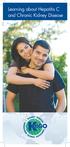 Learning about Hepatitis C and Chronic Kidney Disease Hepatitis C and Chronic Kidney Disease If you have chronic kidney disease (CKD), you want to learn all you can about your disease and what you can
Mental Health Role Plays
 Mental Health Role Plays Goals: To discuss various mental health issues and mental illnesses. To discuss stigma, support and treatment options surrounding mental health issues and mental illnesses. Requirements:
4/30/2013 HPV VACCINE AND NORTH DAKOTA HPV IMMUNIZATION RATES HUMAN PAPILLOMAVIRUS (HPV) HUMAN PAPILLOMAVIRUS HPV CONTINUED
 HPV VACCINE AND NORTH DAKOTA HPV IMMUNIZATION RATES HUMAN PAPILLOMAVIRUS (HPV) HUMAN PAPILLOMAVIRUS What is human papillomavirus (HPV)? HPV is the most common sexually transmitted infection. There are
Chlamydia. Looking after your sexual health
 Chlamydia Looking after your sexual health 2 Chlamydia Chlamydia is one of the most common sexually transmitted infections (STIs). It is very easy to treat and cure. Up to one in 10 sexually active young
HIV -The Facts BLT 043
 Human Im munodeficiency Virus HIV -The Facts NHS Dumfries & Galloway would like to acknowledge NHS Greater Glasgow for the use of information contained in this leaflet. This leaflet is also available on
New Brunswick Health Indicators
 New Brunswick Health Indicators Issue 8, July 2013 A population health bulletin published by the Office of the Chief Medical Officer of Health Youth Sexual Health Sexual health is an important aspect of
FAMILY LIFE EDUCATION ACPS Fifth Grade
 Table of Contents UNIT I FAMILY...2 Relatives and Family Friends...2 Similarities and Differences among Families...2 UNIT II PERSONAL AND SEXUAL SAFETY... 3 Sexual Safety Good and Bad Touching... 3 UNIT
Let s Learn the Basics about Cervical Cancer
 A Publication of the National Center for Farmworker Health October-December 2014 Let s Learn the Basics about Cervical Cancer What is cancer? The body is made up of millions and millions of living cells.
Get the Facts About. Disease
 Get the Facts About TB TUBERCULOSIS Disease What s Inside: 3 PAGE Get the facts, then get the cure 4 PAGE 9 PAGE 12 PAGE Learn how TB is spread Treatment for TB disease Talking to family and friends about
Condoms for the prevention of HIV and STI transmission
 FACTSHEET Condoms for the prevention of HIV and STI transmission Summary Condoms are physical barriers that can reduce the risk of a sexual exposure to HIV and sexually transmitted infections (STIs). They
Georgia Performance Standards. Health Education
 HIGH SCHOOL Students in high school demonstrate comprehensive health knowledge and skills. Their behaviors reflect a conceptual understanding of the issues associated with maintaining good personal health.
Underage Drinking. Underage Drinking Statistics
 Underage Drinking Underage drinking is a serious public health problem in the United States. Alcohol is the most widely used substance of abuse among America s youth, and drinking by young people poses
FAQs HIV & AIDS. What is HIV? A virus that reduces the effectiveness of your immune system, meaning you are less protected against disease.
 HIV & AIDS What is HIV? A virus that reduces the effectiveness of your immune system, meaning you are less protected against disease. What does HIV stand for? Human Immunodeficiency Virus Where did HIV
Lesson 2: Save your Smile from Tooth Decay
 Lesson 2: Save your Smile from Tooth Decay OVERVIEW Objectives: By the end of the lesson, the Lay Health Worker will be able to: 1. Describe what tooth decay is and how it happens. 2. State the causes
DO YOU WORK AROUND BLOOD OR BODY FLUIDS? Cal/OSHA s New Rules
 DO YOU WORK AROUND BLOOD OR BODY FLUIDS? Cal/OSHA s New Rules Labor Occupational Health Program University of California, Berkeley 1994 ACKNOWLEDGMENTS This booklet is a publication of the Labor Occupational
Oral sex. Looking after your sexual health
 Oral sex Looking after your sexual health 2 What is this booklet about? This booklet gives you information about oral sex, the risk of getting and passing on sexually transmitted infections through oral
This brochure explains how alcohol:
 When you are HIV positive, you have to work hard to stay healthy. Drinking less alcohol or not drinking at all can help you fight HIV disease and improve your health. Quitting drinking or cutting down
associated with puberty for boys and girls.
 Lesson 5 Puberty Overview In this informational lesson, students learn about puberty. Small groups brainstorm physical, emotional and social changes they think occur The class discusses and evaluates the
Scottish Parliament Health and Sport Committee s Inquiry into Teenage Pregnancy in Scotland Evidence from CHILDREN 1 ST
 Scottish Parliament Health and Sport Committee s Inquiry into Teenage Pregnancy in Scotland Evidence from CHILDREN 1 ST February 2013 For over 125 years CHILDREN 1 ST has been working to build a better
Birth Control Options
 1 of 5 6/2/2014 9:46 AM Return to Web version Birth Control Options What is contraception? Contraception means preventing pregnancy, also called birth control. Most people know about options such as birth
Grade 8 Lesson Peer Influence
 Grade 8 Lesson Peer Influence Summary This lesson is one in a series of Grade 8 lessons. If you aren t able to teach all the lessons, try pairing this lesson with the Substance and Gambling Information,
Hepatitis B. What I need to know about. National Digestive Diseases Information Clearinghouse NATIONAL INSTITUTES OF HEALTH
 What I need to know about Hepatitis B U.S. Department of Health and Human Services NATIONAL INSTITUTES OF HEALTH National Digestive Diseases Information Clearinghouse What I need to know about Hepatitis
REDUCING SEXUAL RISK Lesson 1
 REDUCING SEXUAL RISK Lesson 1 GRADE 9 LEARNER OUTCOME 1 W-9.14: Develop strategies that address factors to prevent or reduce sexual risk; e.g., abstain from drugs and alcohol, date in groups, use assertive
Frequently Asked Questions (FAQs)
 Frequently Asked Questions (FAQs) Research Rationale 1. What does PrEP stand for? There is scientific evidence that antiretroviral (anti-hiv) medications may be able to play an important role in reducing
Ten Tips for Parents. To Help Their Children Avoid Teen Pregnancy
 Ten Tips for Parents To Help Their Children Avoid Teen Pregnancy Ten Tips for Parents To Help Their Children Avoid Teen Pregnancy The National Campaign to Prevent Teen Pregnancy has reviewed research
Living healthy with MRSA
 Stamford Health System Having MRSA means what? Living healthy with MRSA Discharge information for patients and families WASHING YOUR HANDS IS THE KEY!!! Staph aureus is a bacteria that lives on your skin
Specimen collection and transport for Chlamydia trachomatis and Neisseria gonorrhoeae testing
 Specimen collection and transport for Chlamydia trachomatis and Neisseria gonorrhoeae testing Overview Chlamydia trachomatis (CT) and Neisseria gonorrhoeae (NG) infections are two of the most common sexually
Black Hills Healthcare System
 Black Hills Healthcare System Methicillin Resistant Staphylococcal Aureus (MRSA) Patient and Family Information What is MRSA? Staphylococcus Aureus, often referred to simply as staph, is a bacteria commonly
HIV/AIDS. Information booklet
 HIV/AIDS Information booklet Content Introduction 1 What is HIV/AIDS 2 How is HIV spread? 4 Symptoms of HIV infection 7 Testing for HIV 8 Preventing the spread of HIV 10 Sexually Transmitted Infections
Sexuality Education Lesson Plan #1
 Mary Wenstrom Sexuality Education Lesson Plan #1 Health Education Grade 10 Content Area: Sexuality Education Health Literacy: Effective Communicator and Critical Thinker Life Skills: Understanding Adolescence,
Preface. TTY: (888) 232-6348 or [email protected]. Hepatitis C Counseling and Testing, contact: 800-CDC-INFO (800-232-4636)
 Preface The purpose of this CDC Hepatitis C Counseling and Testing manual is to provide guidance for hepatitis C counseling and testing of individuals born during 1945 1965. The guide was used in draft
CYTOTOXIC PRECAUTIONS A GUIDE FOR PATIENTS & FAMILIES
 Perth and Smiths Falls District Hospital Attention: Manager, Quality 60 Cornelia Street, West Smiths Falls, Ontario K7A 2H9 CYTOTOXIC PRECAUTIONS A GUIDE FOR PATIENTS & FAMILIES This guide has been prepared
100 Questions and answers about HiV/aids. Questions Answers. about HIV/AIDS. New York State Department of Health
 100 Questions and answers about HiV/aids 1 Questions Answers about HIV/AIDS New York State Department of Health 2 new York state department of HealtH 100 Questions and answers about HiV/aids 3 Contents
A Time to Tell Troop Meeting Guide
 A Time to Tell Troop Meeting Guide Using This Guide The video A Time to Tell shows several strategies child molesters use to attempt sexual molestation. In addition, one scenario introduces bullying as
Photocopy Masters. Learning for Life: Classroom Activities for HIV and AIDS Education
 Education International Internationale de l Education Internacional de la Educación Education International - Education Development Center - World Health Organization Learning for Life: Photocopy Masters
Tuberculosis: FAQs. What is the difference between latent TB infection and TB disease?
 Tuberculosis: FAQs What is TB disease? Tuberculosis (TB) is a disease caused by bacteria (germs) that are spread from person to person through the air. TB usually affects the lungs, but it can also affect
WHAT YOU NEED TO KNOW ABOUT HEPATITIS C: A GUIDE FOR PEOPLE WITH HIV INFECTION
 WHAT YOU NEED TO KNOW ABOUT HEPATITIS C: A GUIDE FOR PEOPLE WITH HIV INFECTION Did you know that in the United States, at least 1 in 4 people with HIV is also infected with hepatitis C? Hepatitis C is
LEARNER OUTCOME 1 W-4.3:
 PUBERTY CHANGES Lesson 2 GRADE 4 LEARNER OUTCOME 1 W-4.3: Describe physical, emotional and social changes that occur during puberty; e.g., menstruation, secondary sexual characteristics, changing identity
The Chocolate Touch: Chapters 1-2
 Complete. The Chocolate Touch: Chapters 1-2 Review 1. What did John find unusual about the man inside the store? 2. Why didn't John make it to Susan's house? 3. Is this book written from a first or third
HIV/AIDS AND OTHER SEXUALLY TRANSMITTED INFECTIONS 11
 HIV/AIDS AND OTHER SEXUALLY TRANSMITTED INFECTIONS 11 11.1 INTRODUCTION D. Zanera and I. Miteka The 2004 Malawi Demographic and Health Survey (MDHS) collected information on HIV/AIDS as well as other sexually
Assessing capacity to consent and to give evidence
 Assessing capacity to consent and to give evidence Dr Theresa Joyce Estia Centre; South London & Maudsley NHS Trust, London, UK This presentation will consider 4 topics Assessing capacity to consent to
THE A, B, C S OF HEPATITIS. Matt Eidem, M.D. Digestive Health Associates of Texas 1600 Coit Road Suite #301 Plano, Texas 75075 (972) 867-0019
 THE A, B, C S OF HEPATITIS Matt Eidem, M.D. Digestive Health Associates of Texas 1600 Coit Road Suite #301 Plano, Texas 75075 (972) 867-0019 WHAT IS HEPATITIS? Hepatitis means inflammation of the liver
Frequently asked questions about whooping cough (pertussis)
 Frequently asked questions about whooping cough (pertussis) About whooping cough What is whooping cough? Whooping cough is a highly contagious illness caused by bacteria. It mainly affects the respiratory
Legal Issues for People with HIV
 Legal Issues for People with HIV Duke Legal Project Box 90360 Durham, NC 27708-0360 (919) 613-7169 (888) 600-7274 Duke Legal Project is a clinical legal education program of Duke Law School. Legal Representation
Understanding healthy childhood sexual development plays a key role in child sexual abuse
 Awareness Month 2013 An overview of healthy childhood sexual Understanding healthy childhood sexual plays a key role in child sexual abuse prevention. Many adults are never taught what to expect as children
Saginaw Township Community Schools HIV/AIDS & Human Sexuality Curriculum MIDDLE SCHOOL
 Introduction: Michigan Schools are required to teach about dangerous communicable diseases, including, but not limited to, HIV/AIDS. Instruction regarding dangerous communicable diseases, including, but
JAC-CEN-DEL COMMUNITY SCHOOLS BLOODBORNE PATHOGENS UNIVERSAL PRECAUTIONS A BACK TO SCHOOL TRADITION
 JAC-CEN-DEL COMMUNITY SCHOOLS BLOODBORNE PATHOGENS UNIVERSAL PRECAUTIONS A BACK TO SCHOOL TRADITION UNIVERSAL PRECAUTIONS AGAINST BLOODBORNE PATHOGENS Employees working in a school system are potentially
Bloodborne Pathogens. Scott Anderson CCEMTP. Materials used with permission from the Oklahoma State University
 Bloodborne Pathogens Scott Anderson CCEMTP Materials used with permission from the Oklahoma State University What is a Bloodborne Pathogen? Microorganisms that are carried in the blood that can cause disease
HPV and HPV Testing. Human Papilloma Virus (HPV) What are viruses? What is HPV?
 HPV and HPV Testing Human Papilloma Virus (HPV) What are viruses? Viruses are very small organisms most cannot even be seen with a regular microscope. They cannot reproduce on their own. They must enter
A guide for people with genital herpes
 A guide for people with genital herpes Contents Getting the facts 4 The key facts 6 What is genital herpes? 8 Genital herpes symptoms 10 Getting tested 12 The first outbreak 14 Recurrent outbreaks 16 Common
Related KidsHealth Links
 Grades 9 to 12 Personal Health Series KidsHealth.org/classroom Teacher s Guide This guide includes: Standards Related Links Discussion Questions Activities for Students Reproducible Materials Standards
HPV is very common and usually clears up on its own
 What is HPV? All cervical cancers are linked to a very common virus called the human papillomavirus or HPV. HPV usually doesn t cause any harm and most people will be infected with it at some point in