
CHILDHOOD VACCINATIONS A HOMEOPATHIC VIEW
|
|
|
- Ashlynn Woods
- 10 years ago
- Views:
Transcription
1 CHILDHOOD VACCINATIONS A HOMEOPATHIC VIEW This is a summary of material from a few sources, and can be used by parents as a source of information about vaccinations. This is a general review rather than a critical examination, and parents are advised to reach any decision together with their homeopath and their GP. Noam Bar, RSHom Registered Homeopath E: [email protected], M:

2 Overview Vaccination presents a difficult choice. On the one hand it is aimed to prevent serious diseases whose mere name terrifies us, like polio or tetanus; on the other hand we tend to instinctively reject the idea of injecting young babies with pathological materials. In order to shed some light on the issue, the following issues are discussed: Overview of the vaccination program in the UK The philosophical basis for vaccination Appraisal of individual vaccines Possible side effects of vaccinations Homeopathic alternatives to vaccinations To be sure, the paper is written from the point of view of homeopathy which is very critical of vaccination; there s a lot of pro-vaccination information from conventional medicine sources. My conclusions are, as could be expected, somewhat complex: vaccinations have some effectiveness, but certainly not to the extent claimed by the health authorities; they might have nasty side-effects, but sometimes this risk is lower than the threat of disease; conventional vaccines are not the only option, but if they are given some of the damage can be later reversed. The main conclusion is that, unfortunately, no-one can make the decision for parents. It is important, however, that parents have information from both pro and anti vaccination sources before they make up their minds. 1. Introduction to vaccination The rationale behind the mass vaccination campaign is twofold: Prevention of serious diseases, which are sometimes fatal Eradication of diseases from the planet through the protection given to all or most of the possible carriers. The current recommended vaccination schedule in the UK is: DTaP/IPV/Hib (Diphtheria, Pertussis, Tetanus, Polio, Hib influenza) 2 months 3 months 4 months 3-5 years (not Hib) Meningitis-C 2 months 3 months 4 months MMR (Mumps, years Measles, Rubella) months BCG (tuberculosis) Baby - if likely to be exposed years (not Pertussis, Hib) Vaccination is appealing in the progressive view it offers eradication of disease and proactive control of health; it is a part of the modern and industrial attitude, based on seeing the body as a machine and diseases as enemies that should be fought with all possible means. However, the truth about health, disease and prevention is more complex: both because disease and health have to be considered in a wider, holistic, context and because the application of vaccines is rife with problems. 2. The philosophic issue imposing our will on nature The idea that diseases should be eradicated from the world raises some worries. Disease is part of life and is, homeopaths believe, a reflection of a state of being. Trying to remove a disease from the world all together might upset the balance of Nature in fundamental ways that we can barely imagine (Moskowitz, p.1). 2

3 Since disease is a reflection of a human condition, trying to eradicate it can only have one result its substitution by a different disease, which will often be more dangerous and difficult to treat. Contrary to the all-out war attitude to disease, many holistic thinkers claim that being sick in some of the childhood diseases is actually positive, as it allows the immune system to mature. Head (1999) says that after recovering from measles, for example, there is usually a growth spurt, more energy, a clearer mind and increase in the child s well-being as well as better ability to deal with other viral infections. 3. The practical issue how beneficial are individual vaccines? The next question to ask is whether the UK vaccination program is targeting the right diseases and to what degree is the program effective. Following is a short benefit-to-risk evaluation of vaccination to each disease. The list starts with the case of lowest benefit to risk ratio, and ends in the case of apparent possible highest benefits. Rubella This is a mild disease with a very slight chance of serious complications. Its main danger is in case it is contracted during the first trimester of pregnancy, when it might cause fetal damage. The vaccine s effectiveness is questionable. In one study 80% of previously vaccinated soldiers contracted the disease. Administration of the vaccine was connected to diseases such as glandular fever and chronic fatigue syndrome. It is clear that protection before pregnancy is important, but it seems that the best way to gain it is to actually have this mild disease, possibly through rubella parties, which were eagerly organized by mothers in the past. The current vaccination program actually pushes the disease into the more dangerous childbearing years: in the 1960s the average age of contracting Rubella was 8, in 1993 it was 17. Mumps Is another reasonably mild disease, in which complications are rare. It is more serious if contracted at puberty, at which time it might lead (a rare complication) to sterility in males. The situation is similar to rubella: as the vaccine is not very effective, taking it can often prevent getting mumps at childhood and lead to developing the disease in later years, when it is more dangerous. Contracting it naturally is possibly the best solution. Vaccination has several possible side effects, including the possibility of autism, which has recently been strongly denied by government agencies. Measles Is a more serious disease, but again children that contract it recover swiftly apart from a low possibility for serious complications. Measles was a deadly disease in the 19 th century and until the middle of the 20 century (it is still deadly in third world countries, where malnourishment is common). Its near-disappearance is generally attributed to the vaccination program. However, death rate from the disease was falling fast before the introduction of the vaccine or of antibiotics, and it is not normally dangerous now. Again, the vaccine is not very effective - in a recent measles epidemic in the US 40% of the sick children had been vaccinated. The vaccine has potentially serious side effects including convulsions, encephalitis, wasting and many more. Diphtheria Has nasty symptoms, but its occurrence in the west is now extremely low (4 cases a year in the US). The disease was virtually eliminated before the introduction of the vaccine. Possible side effects of the vaccine are arthritis and damage to the central nervous system. Pertussis (whooping cough) Whooping cough is potentially very serious, because if infection occurs, mortality in under 5 months can reach 40%; mortality then decreases rapidly with age. This leads to giving the vaccine very early. Current incidence in the west is quite low and it has been declining fast before the introduction of the vaccine. There s usually a degree of weakness in the system before contraction, so healthy, breast-fed babies (there s protection through breast milk) are in lesser danger. The downside in vaccination is that this is one of the most toxic vaccines, and several European countries have now stopped this vaccine following 3

4 connection to side effects like SIDS (Sudden Infant Death Syndrome), asthma (according to one study increases probability by 5.43 times) and neurological damage. It is interesting that in a recent British outbreak of whooping cough fully vaccinated children contracted the disease in substantial numbers. More importantly, the rate of serious or fatal complications from the disease was reduced only slightly in vaccinated compared to non-vaccinated children. This might be interpreted to show that even if the vaccine offers some protection against contracting the disease it doesn t actually help those children that are most sensitive to it, because it doesn t reduce complications. A similar phenomenon of reduction in incidence but no reduction in death rate is seen in other vaccines as well. Polio Wild (paralytic) polio is virtually non-existent now. Mild polio, which is more widespread, is often indistinguishable from common cold. Wild polio can cause permanent paralysis if contracted after the age of 3 years (although babies are getting 3 doses before the age of 6 months). The polio vaccine has the advantage of being delivered through the mouth, the way the disease is contracted, and not directly to the blood stream. On the other hand, there are serious doubts as to its effectiveness, and the current vaccination procedure, with live virus that is often transmitted from the vaccinated baby to others, may actually preserve a disease that was already in a quick decline before the introduction of the vaccine 1. Tetanus Death rate if the disease occurs is 40%. However, it is now difficult to contract tetanus as it is mainly carried in horse and cow manure (to a lesser degree also in feces of dogs and cats), and because the bacteria dies upon exposure to the air. This means that one can only contract it through a deep penetrating wound that was neglected for a few hours and occurred in area where there were animal feces sometime in the past (the spores can remain in the ground for decades). The incidence of the disease in the UK is extremely low, and is limited to old people and drug-users (the incidence and mortality rates of tetanus in developing countries are higher, and traveling with children will call for a fresh review of all diseases/ vaccines). The vaccine, as usual, can cause side effects. There is definitely no need for this vaccination before a baby can freely walk (but the vaccine is nevertheless given 3 times before the age of 6 months). Careful wound hygiene is the most important step to take, and deep wounds can also treated homeopathically to avoid complications. On top of all that, there is post-injury passive immunization treatment injection of antibodies, which should bring immediate protection in case of a deep wound even with no vaccination history. Intravenous doses of Vitamin C are also effective. Hib (Haemophilus influenzae type b) Hib is an infection that can cause a number of major illnesses like blood poisoning, pneumonia and meningitis. The disease can be fatal, especially for young children who are not breast-fed; in case of contraction treatment in whichever form must be immediate. On the other hand, the vaccine has questionable effectiveness and is connected to a myriad of side effects. More vaccines There are more vaccines currently offered in the US than there are in the UK (eg: hepatitis, chickenpox, flu). We should expect numbers in the UK to grow as well. One of the recent additions is vaccine to Men-c, protecting against one type of bacterial meningitis, which was recently introduced here. There s not enough critical information about this vaccine. 1 Formerly deadly diseases, like scarlet fever and typhoid, have disappeared without vaccination. Could polio have followed if left alone? Dr. Salk, one of the developers of the polio vaccine, admitted in 1977 in a Science article that the vaccine is the principle reason for polio still present in the US and other countries (quoted by Golden). 4

5 4. Side effects common to all vaccines Causes Apart from the specific side effects of each vaccine, other side effects are possible due to the procedure of artificially introducing pathogens: 1. Administration injecting pathogens bypasses the normal pathways of infection, which our immune system is designed to protect (almost all infection occurs through the respiratory system), and goes directly into the blood stream, thus shocking the body 2. Adjuvants chemicals are used to prevent the body from quickly dismantling and excreting the pathogens. Some of these contain mercury. The danger is both the prevention of the natural immune response and in the introduction of neuro-toxins directly into the system 3. Preparation some vaccines are prepared in animal tissue. This can lead to possible genetic abnormalities and cross-species disease transference 2 4. Quantities the quantity injected is massive compared to natural infection. On top of that there are possibly other direct risk factors such as: 1. Faulty production 2. Faulty administration 3. Immediate allergic response 4. Abnormal sensitivity of patients. Side effects These factors might be manifested as the following side effects: Short term: the child becomes upset and irritable, develops temperature, soreness of the injection site, cough or runny nose. Anaphylactic shock (severe allergic reaction, deadly if not treated) is also possible Medium term: repeated, painless ear infections; sleeplessness, inability to concentrate; encephalitis Long term: destabilization of the whole immune system. Tina Head, a homeopath, says that she was prompted to consider the question of mass vaccination by the enormous number of children who came for treatment (following vaccination) with vague symptoms and low-grade illnesses that would not respond to any type of medicine, including homeopathy. More on the long-term effects in the next section. The accumulation of data regarding side effects has caused one doctor investigating cot death to say that vaccination is the single most prevalent and most preventable cause of infant death the call for suspension of vaccination is now inevitable What do vaccines actually do? Possible long-term damage Dr. R. Moskowitz, an MD and a homeopath, presents a disturbing theory as to what reaction the vaccine actually creates in the body. He starts by describing the immune reaction in case of normal infection, and goes on to describe the reaction to vaccine. This will be quoted in some length because I find that the discussion helps to understand the possible long-term influences of vaccines on the immune system. The process of coming down with and recovering from an acute illness like the measles involves a general mobilization of the entire immune system, including: 1) Inflammation of previously sensitized tissues at the portal of entry; 2) Activation of white blood cells and macrophages (scavenger cells) that find and destroy the foreign elements; 3) Release of special serum protein fractions to expedite these operations and numerous other mechanisms, of which the production of specific antibodies (which is what the vaccine does) is only one, and by no means the most important. 2 Eg one view of AIDS is that it is such a difficult disease to treat because the virus originates in a monkey the jumping gene theory. 3 Dr. V. Scheibner; quoted in Golden, p

6 This splendid outpouring leaves little room for doubt that acute illnesses are in fact the decisive experiences in the normal, physiological maturation of the immune system as a whole. In contrast, when the artificially attenuated measles virus is injected directly into the blood, it bypasses the normal portal of entry, producing at most a brief, mild inflammatory reaction at the injection site, but no incubation period, no local sensitization, no real possibility of eliminating it via the same route, and no generalized immune response to prime the immune system in the future. Indeed, by cheating the body in this fashion, we have accomplished precisely what the evolution of the immune system seems to have been designed to prevent: we have introduced the virus directly into the blood and given it free, immediate access to the major immune organs To be sure, we have also achieved the production of specific antibodies against the virus, which can be measured in the blood, but now only as an isolated technical feat, with no massive outpouring and no general improvement in the health of the organism. Indeed, I fear, exactly the opposite is true: the exorbitant price we have to pay for these antibodies is for the maintenance of the virus in the cells of the immune system for prolonged periods of time, maybe permanently, which in turn presupposes a generalized weakening of our capacity to mount an effective response not only to measles, but to other acute infections as well. Moskowitz continues by saying that in his eyes vaccination does not confer a genuine immunity to the disease, but rather some sort of chronic immune tolerance to it. Moskowitz uses the term latent viruses, and claims that the imperfect immune response, which is not powerful enough to actually remove the pathogen, might create a permanent enemy within. The chemical treatment given to vaccines to make them stay in the tissues for the longest possible time aggravates this danger. Moskowitz theorizes that these latent viruses are connected to the huge increase in autoimmune diseases, which is the most worrying medical phenomenon of our time (these are diseases in which the body attacks its own cells, and include nearly all the current serious diseases: cancer, rheumatoid arthritis, multiple sclerosis, lupus, ME ). There is a possibility, he says, that autoimmune diseases are not due to the body going crazy, or a genetic predisposition, as it is generally assumed now, but are actually justified that the body merely tries to remove tissue that is perceived as foe, due to the presence of latent viruses. 6. The homeopathic alternative to vaccination All systems of holistic medicine view microorganisms not as the cause for disease but rather as opportunist invaders to an already weakened body. Hence, the first priority for maintaining health is always to strengthen and balance the organism as much as possible. Even the World Health Organization maintains that the best vaccine against common infectious diseases is an adequate diet. Adequate, balanced nutrition which includes all the vitamins and minerals needed by the body, a healthy psychological environment together with constitutional treatment (homeopathic or other) in case it is necessary, are the most important steps to take in order to avoid complications of childhood diseases. Nevertheless, it does make sense to consider prophylactic protection from certain diseases. In one rare study of homeopathic prophylaxis the result was 89% success in prevention of childhood diseases (Golden, p. 142). This is similar to the success rate of conventional vaccines, which is estimated at 75%-95%. Further research in this field is necessary. Even homeopathic vaccinations shouldn t be used in a routine, indiscriminate way; as discussed earlier, it is sometimes good to allow a child to go through a disease. 6

7 7. Mitigating the damage of vaccination Some parents might find it difficult to reject conventional vaccination all together. In such cases, they can still control a few factors which might minimize the damage: a. Start vaccinations later in life The immune system is maturing very quickly over the first months of life. Possible damage from vaccines will therefore decrease if the application is postponed. Even postponing vaccines so that they are taken only after the age of 6 months can be of benefit 4. B. Avoid using combination vaccines This decreases the load on the system. There s also evidence that the immune system cannot cope with too many stimuli at once, so the level of protection offered by combination vaccines is lower. c. Choose only specific vaccines Avoiding combination vaccines allows the parent to weigh risk to benefit ratios for every disease, and to choose only specific vaccines. d. Re-consider vaccination in specific cases Parents should be very careful in cases where there is likely to be an adverse reaction, namely: In times of acute illness or fever Hypersensitivity, history of previous adverse reaction or allergic conditions Strong family history of adverse reaction to any vaccine Having any chronic disease Current treatment with any drug that depletes the immune system, including antibiotics. e. Use homeopathy to undo some of the damage In cases vaccines were given we can use homeopathic remedies to reduce the side effects of the vaccines. Remedies can be taken either immediately after the vaccine, or on later date, to reduce the damage caused by the vaccine. Such a treatment will be especially warranted if a child s health has deteriorated after receiving a certain vaccine. Further reading Golden, I., Vaccination? A Review of Risks and Alternatives, 1998 A detailed book about vaccination. Very useful, although the editing leaves much to de desired. Written by an Australian homeopath. Head, T., An Educated Decision, 1999 Written by an English homeopath that might be, on occasion, trigger-happy with homeopathic remedies. Moskowitz, R., Unvaccinated Children, at Good review of the philosophic background vaccination Neustaedter, R., Vaccine Guide (Revised Edition, 2002) One of the best comprehensive and accessible sources for information, thoroughly researched, including reviews of technical and political issues. Written by an American acupuncturist and homeopath. Can get a bit long-winded at parts. 4 In 1975 the Japanese government changed the starting age for giving DPT from 3 to 24 months. There was a sharp reduction in side effects, including SID. Long-term death rates from whooping cough remained unchanged. 7

Vaccinations and Spina Bifida and Hydrocephalus
 shinecharity.org.uk [email protected] 42 Park Road Peterborough PE1 2UQ 01733 555988 Vaccinations and Spina Bifida and Hydrocephalus Vaccines are made from parts of bacteria or viruses that cause
Information on Measles and Whooping Cough: Vaccination and Disease
 Information on Measles and Whooping Cough: Vaccination and Disease Vaccine s Mechanism of Action Vaccines expose the recipient to a small amount of an weakened organism. Through this exposure, the body
2 P age. Babies from Birth to Age 2
 Contents Babies from Birth to Age 2... 2 Vaccines give parents the power... 2 Vaccines are recommended throughout our lives... 3 Talk to your doctor... 3 Vaccines are very safe... 3 Whooping Cough (Pertussis)...
Parent s Guide to CHILDHOOD IMMUNIZATIONS
 Part One Vaccine-Preventable Part Three More Diseases About Vaccines and Childhood Vaccines 30 Parent s Guide to CHILDHOOD IMMUNIZATIONS Part 3: More About Vaccines How do vaccines work? To understand
2 months Diptheria; Tetanus; Whooping Cough; Hib & Polio 1st dose Pneumococcal Conjugate Vaccination
 IMMUNISATIONS You may want to know if your child should have routine immunisations and whether there could be an increased risk of complications because of the heart condition. We have sought the opinions
Factsheet September 2012. Pertussis immunisation for pregnant women. Introduction
 Factsheet September 2012 Pertussis immunisation for pregnant women Introduction The routine childhood immunisation programme has been very effective in reducing the overall numbers of cases of pertussis.
Immunity and how vaccines work
 1 Introduction Immunity is the ability of the human body to protect itself from infectious disease. The defence mechanisms of the body are complex and include innate (non-specific, non-adaptive) mechanisms
Plan early - get your vaccinations in time for full protection. To prepare for your trip, schedule an appointment: (910) 347-2154, option #2.
 The Onslow County Health Department Travel Clinic offers a complete line of immunizations and prescriptions to protect you while traveling abroad. The most appropriate immunizations and travel medications
Chapter 3. Immunity and how vaccines work
 Chapter 3 Immunity and how vaccines work 3.1 Objectives: To understand and describe the immune system and how vaccines produce immunity To understand the differences between Passive and Active immunity
School of Health & Rehabilitation Sciences INFORMATION FOR HEALTH CARE STUDENTS RE: VACCINATIONS AND INFECTIOUS DISEASES
 School of Health & Rehabilitation Sciences INFORMATION FOR HEALTH CARE STUDENTS RE: VACCINATIONS AND INFECTIOUS DISEASES Adults as well as children need protection against infectious diseases. As Health
BE SURE. BE SAFE. VACCINATE.
 DON T GET OR GIVE THE FLU THIS YEAR THANK YOU Vaccination is the only protection. www.immunisation.ie BE SURE. BE SAFE. VACCINATE. FLU VACCINE 2013-2014 Healthcare workers prevent the spread of flu and
Vaccination: It s what your child would choose. Your guide to childhood vaccinations.
 Vaccination: It s what your child would choose No-one likes an injection, but your child would never choose to suffer from serious conditions like measles, mumps or whooping cough. Your guide to childhood
The Reality Pertussis can be a serious illness, part icularly for babies and young children.
 Sounds of Pertussis Pertussis, also known as whooping cough, is a poten tially deadly infection that can strike at any age, but is particularly dangerous for babies. The sounds of pertussis are like no
Whooping Cough Vaccine for Pregnant Women
 Whooping Cough Vaccine for Pregnant Women What is whooping cough (pertussis)? Whooping cough (also known as pertussis) is a highly contagious illness that can be life threatening. The disease is most serious
FOR IMMEDIATE RELEASE Release #2014-04
 FOR IMMEDIATE RELEASE Release #2014-04 CONTACT for this Release: Krista Dommer Office Phone: (209) 468-3571 Email: [email protected] Alvaro Garza, MD, MPH. Public Health Officer MEASLES OUTBREAKS PROMPT
DENMARK S CHILDHOOD VACCINATION PROGRAMME
 DENMARK S CHILDHOOD VACCINATION PROGRAMME 2013 7th EDITION Denmark s childhood vaccination programme, 2012 7th edition 2013 by the Danish Health and Medicines Authority. All rights reserved. Danish Health
THE DANISH CHILDHOOD VACCINATION PROGRAMME
 THE DANISH CHILDHOOD VACCINATION PROGRAMME 2015 CONTENTS Introduction 2 The Danish childhood vaccination programme 3 Why do we vaccinate children in Denmark? 4 The diseases 5 Diphtheria 5 Tetanus 5 Whooping
Pertussis (whooping cough) immunisation for pregnant women the safest way to protect yourself and your baby
 Factsheet September 2012 Pertussis (whooping cough) immunisation for pregnant women the safest way to protect yourself and your baby The routine childhood immunisation programme has been very effective
Adult Vaccination Frequently Asked Questions: The Basics
 The Basics Why should I get vaccinated? Vaccination is the best way to protect against infections that can make you sick and be passed on to those around you. 1 What kinds of side effects will I get from
A Guide to Your Baby s Care The First Year
 A Guide to Your Baby s Care The First Year A Guide to Your Baby s Care The First Year What s Inside Congratulations! Your baby is finally here. Having a baby is a special gift. You ll want to take good
Summary of the risk management plan (RMP) for Tritanrix HB [Diphtheria, tetanus, pertussis (whole cell) and hepatitis B (rdna) vaccine (adsorbed)]
![Summary of the risk management plan (RMP) for Tritanrix HB [Diphtheria, tetanus, pertussis (whole cell) and hepatitis B (rdna) vaccine (adsorbed)]](/thumbs/27/12172665.jpg "Summary of the risk management plan (RMP) for Tritanrix HB [Diphtheria, tetanus, pertussis (whole cell) and hepatitis B (rdna) vaccine (adsorbed)]") EMA/14365/2014 Summary of the risk management plan (RMP) for Tritanrix HB [Diphtheria, tetanus, pertussis (whole cell) and hepatitis B (rdna) vaccine (adsorbed)] Overview of disease epidemiology Diphtheria
EMA/14365/2014 Summary of the risk management plan (RMP) for Tritanrix HB [Diphtheria, tetanus, pertussis (whole cell) and hepatitis B (rdna) vaccine (adsorbed)] Overview of disease epidemiology Diphtheria
FREQUENTLY ASKED QUESTIONS ABOUT PERTUSSIS (WHOOPING COUGH)
 FREQUENTLY ASKED QUESTIONS ABOUT PERTUSSIS (WHOOPING COUGH) What is pertussis? General Questions About Pertussis Pertussis, or whooping cough, is a contagious illness that is spread when an infected person
What is whooping cough. (pertussis)? Information and Prevention. Ocument dn
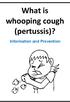 What is whooping cough Ocument dn (pertussis)? Information and Prevention IMPORTANT Pertussis (or whooping cough) is a highly contagious infection that can cause uncontrollable, violent coughing. If you
Pertussis (whooping cough) immunisation for pregnant women
 Factsheet September 2012 Pertussis (whooping cough) immunisation for pregnant women Immunisation DEPARTMENT OF HEALTH Rheynn Slaynt The routine childhood immunisation programme has been very effective
Influenza Vaccine Frequently Asked Questions. Influenza Control Program
 Influenza Vaccine Frequently Asked Questions Influenza Control Program Influenza or the flu can be a serious contagious disease, which is spread by droplet transmission through close contact with an infected
Multiple Choice Questions
 C hapter 13 WHY DO WE FALL ILL Multiple Choice Questions 1. Which one of the following is not a viral disease? (a) Dengue (b) AIDS (c) Typhoid (d) Influenza 2. Which one of the following is not a bacterial
Transient Hypogammaglobulinemia of Infancy. Chapter 7
 Transient Hypogammaglobulinemia of Infancy Chapter 7 An unborn baby makes no IgG (antibody) and only slowly starts producing it after birth. However, starting at about the sixth month of pregnancy, the
Vaccination of children and adolescents
 Information letter from the Norwegian Institute of Public Health No. 3 National childhood vaccination programme in Norway English Last updated July 2010 www.fhi.no/publ/infoletter Vaccination of children
Whooping Cough. The Lungs Whooping cough is an infection of the lungs and breathing tubes, both of which are parts of the respiratory system.
 Whooping Cough Introduction Whooping cough is a serious bacterial infection of the lungs and breathing tubes. It is also called pertussis. About 16 million cases of whooping cough happen worldwide each
CHAPTER 35 HUMAN IMMUNE SYSTEM STANDARDS:SC.912.L.14.52 & SC.912.L.14.6
 CHAPTER 35 HUMAN IMMUNE SYSTEM STANDARDS:SC.912.L.14.52 & SC.912.L.14.6 SECTION 1 - Infectious Disease 1.Identify the causes of infectious disease. 2.Explain how infectious diseases are spread. Causes
Childhood Diseases and potential risks during pregnancy: (All information available on the March of Dimes Web Site.) http://www.modimes.
 Childhood Diseases and potential risks during pregnancy: (All information available on the March of Dimes Web Site.) http://www.modimes.org/ Fifth disease (erythema infectiosum) is a common, mild, childhood
Protecting your baby against meningitis and septicaemia
 Protecting your baby against meningitis and septicaemia caused by meningococcal B bacteria MenB vaccine now available! Information about the MenB vaccine and recommended paracetamol use mmunisation The
Explanation of Immunization Requirements
 Explanation of Immunization Requirements CONTENTS Hepatitis A... 2 Hepatitis B... 3 Influenza... 4 Measles (Rubella), Mumps, and Rubella (MMR)... 5 Pertussis (Tdap)... 6 Tuberculosis (TB) Test... 7 Varicella/Chicken
Immunisation. for babies just after their first birthday
 Immunisation for babies just after their first birthday Introduction This leaflet contains the facts about the first MMR vaccine and the PCV and Hib/Men C booster vaccines, which your child should have
Vaccination against pertussis (Whooping cough) for pregnant women- 2014. Information for healthcare professionals
 Vaccination against pertussis (Whooping cough) for pregnant women- 2014 Information for healthcare professionals About Public Health England Public Health England s mission is to protect and improve the
X-Plain Pediatric Tuberculosis Reference Summary
 X-Plain Pediatric Tuberculosis Reference Summary Introduction Tuberculosis, or TB, is a bacterial infection that causes more deaths in the world than any other infectious disease. When a child gets TB,
Pentavalent Vaccine. Guide for Health Workers. with Answers to Frequently Asked Questions
 Pentavalent Vaccine Guide for Health Workers with Answers to Frequently Asked Questions Ministry of Health and Family Welfare Government of India 2012 Immunization is one of the most well-known and effective
Tdap and MenC booster vaccines. Information for parents of children in First Year of second level school
 Tdap and MenC booster vaccines Information for parents of children in First Year of second level school Tdap and MenC booster vaccines Information for parents of children in First Year of second level
Frequently asked questions about whooping cough (pertussis)
 Frequently asked questions about whooping cough (pertussis) About whooping cough What is whooping cough? Whooping cough is a highly contagious illness caused by bacteria. It mainly affects the respiratory
Severe Combined Immune Deficiency (SCID)
 Severe Combined Immune Deficiency (SCID) ASCIA EDUCATION RESOURCES (AER) PATIENT INFORMATION Severe combined immune deficiency (SCID) is the most serious form of primary immune deficiency and is usually
Figure 14.2 Overview of Innate and Adaptive Immunity
 I M M U N I T Y Innate (inborn) Immunity does not distinguish one pathogen from another Figure 14.2 Overview of Innate and Adaptive Immunity Our first line of defense includes physical and chemical barriers
Principles of Vaccination
 Immunology and Vaccine-Preventable Diseases Immunology is a complicated subject, and a detailed discussion of it is beyond the scope of this text. However, an understanding of the basic function of the
Name Date Class. This section explains what kinds of organisms cause infectious disease and how infectious diseases are spread.
 Fighting Disease Name Date Class Infectious Disease This section explains what kinds of organisms cause infectious disease and how infectious diseases are spread. Use Target Reading Skills Before you read,
The Immune System and Disease
 Chapter 40 The Immune System and Disease Section 40 1 Infectious Disease (pages 1029 1033) This section describes the causes of disease and explains how infectious diseases are transmitted Introduction
TEMPORARY PROGRAMME PERTUSSIS VACCINATION FOR PREGNANT WOMEN
 TEMPORARY PROGRAMME PERTUSSIS VACCINATION FOR PREGNANT WOMEN Richard Smithson Neil Irvine Maureen McCartney Consultant Health Protection October 2012 Pertussis/whooping cough The disease Whooping Cough
protect your child IMMUNIZE ON TIME, EVERY TIME. Haemophilus Influenzae Type B (Hib) Human Papillomavirus (HPV) Influenza (Flu) Disease Disease
 protect your child IMMUNIZE ON TIME, EVERY TIME. Diphtheria Haemophilus Influenzae Type B (Hib) Hepatitis A Hepatitis B Human Papillomavirus Influenza (Flu) Measles Meningococcal Disease Mumps Pertussis
I B2.4. Design of the patient information leaflet for VariQuin
 (English translation of official Dutch version) I B2.4. Design of the patient information leaflet for VariQuin Information for the Patient: Read this package leaflet carefully when you have some time to
What actually is the immune system? What is it made up of?
 This is a radio interview with Ken Sell, M.D., scientific director of the National Institute of Allergy and Infectious Diseases, National Institutes of Health (NIH), and Co-Chairman of the NIH Working
Facts About Chickenpox and Shingles for Adults
 Facts About Chickenpox and Shingles for Adults What is chickenpox? Chickenpox, also known as varicella, is a very contagious disease caused by the varicella-zoster virus. It is spread easily through the
What You Need to Know About the National Vaccine Injury Compensation Program (VICP)
 What You Need to Know About the National Vaccine Injury Compensation Program (VICP) NOTE: What You Need to Know About the National Vaccine Injury Compensation Program (VICP) is not a legal document. The
The CIWEC Clinic Health News
 Immunizations Recommended for Travel in Nepal Name of vaccine Dosage Booster Comment Hepatitis A - brand names (Havrix, Vaqta, Avaxim) or Twinrix (combined A&B) Hepatitis B - Engerix, Recombivax or Twinrix
FAQs on Influenza A (H1N1-2009) Vaccine
 FAQs on Influenza A (H1N1-2009) Vaccine 1) What is Influenza A (H1N1-2009) (swine flu) 1? Influenza A (H1N1-2009), previously known as "swine flu", is a new strain of influenza virus that spreads from
1) Siderophores are bacterial proteins that compete with animal A) Antibodies. B) Red blood cells. C) Transferrin. D) White blood cells. E) Receptors.
 Prof. Lester s BIOL 210 Practice Exam 4 (There is no answer key. Please do not email or ask me for answers.) Chapters 15, 16, 17, 19, HIV/AIDS, TB, Quorum Sensing 1) Siderophores are bacterial proteins
I am reaching out to you with some preventative information that you might be interested in sharing with your school community.
 Reported cases of pertussis (whooping cough) are on the rise in Colorado and El Paso County. As of October 23, more than 1,000 cases of pertussis have been reported across the state. El Paso County cases
It takes a planet: global implications/consequences of local vaccine refusal
 It takes a planet: global implications/consequences of local vaccine refusal Meg Fisher, MD Medical Director Disclosures I have no disclosures. I may be mentioning off label uses of vaccines. Objectives/Outcomes
Why you and your Family Should Get the Flu Shot
 Why you and your Family Should Get the Flu Shot Why Get VaCCinated against influenza? Influenza (flu) is a virus that can lead to serious complications, hospitalization, or even death. Even healthy children
Vaccination against pertussis (whooping cough) - the replacement of Repevax with Boostrix -IPV an update for registered healthcare practitioners
 Vaccination against pertussis (whooping cough) - the replacement of Repevax with Boostrix -IPV an update for registered healthcare practitioners Questions and Answers May 2014 Health Protection Scotland
APPENDIX I-A: INFORMED CONSENT BB IND 11184 Protocol CDC IRB #4167
 APPENDIX I-A: INFORMED CONSENT BB IND 11184 Protocol CDC IRB #4167 INFORMED CONSENT FOR USE OF DIPHTHERIA ANTITOXIN (DAT) FOR SUSPECTED DIPHTHERIA CASES Investigational New Drug (IND) BB 11184 Protocol
Immunisations. at 12 months of age. Features the new MenB programme. the safest way to protect your child
 Immunisations at 12 months of age Features the new MenB programme the safest way to protect your child Copies of these booklets are available from your clinic or doctor s surgery. See also www.nhs.uk/vaccinations
Immunization Healthcare Branch. Meningococcal Vaccination Program Questions and Answers. Prepared by
 Immunization Healthcare Branch Meningococcal Vaccination Program Questions and Answers Prepared by Immunization Healthcare Branch (IHB), Defense Health Agency Last Updated: 27 Mar 06 www.vaccines.mil 877-GET-VACC
MUMPS PUBLIC FREQUENTLY ASKED QUESTIONS
 New Jersey Department of Health Vaccine Preventable Disease Program MUMPS PUBLIC FREQUENTLY ASKED QUESTIONS Date: April 17, 2014 DESCRIPTION OF MUMPS What is mumps? Mumps is a disease that is caused by
Immunity Unit Test Z
 Immunity Unit Test Z Name MB Multiple Choice Identify the choice that best completes the statement or answers the question. 1. Which of the pathogens in Figure 31.1 cause disease by taking over healthy
Acton Early Childhood Centre HEALTH POLICY
 Acton Early Childhood Centre HEALTH POLICY AIM The Centre aims to provide a healthy and safe environment for staff and children in their care. EXPLANATION Spending time in child care centres or other facilities
GENERAL INFORMATION. Hepatitis B Foundation - Korean Chapter Pg. 3 www.hepb.org
 GENERAL INFORMATION What is hepatitis B? Hepatitis B is the world's most common liver infection that can lead to cirrhosis and liver cancer. It is caused by the hepatitis B virus (HBV), which attacks and
Current Trends in Immunization
 Current Trends in Immunization Christian Lease Director, Immunization Policy, Novartis Vaccines 2011 NCSL Meeting Objectives Review the benefits of immunization Discuss where the immunization enterprise
Whooping cough (Pertussis) Information for you
 Whooping cough (Pertussis) Information for you Visit our website: www.nhsaaa.net All our publications are available in other formats ...Information for you...information for you...information for you.
Whooping cough and pregnancy
 Whooping cough and pregnancy Your questions answered on how to help protect your baby the safest way to protect yourself and your baby There is a lot of whooping cough around at the moment and babies who
Gilenya. Exceptional healthcare, personally delivered
 Gilenya Exceptional healthcare, personally delivered Your Consultant Neurologist has suggested that you may benefit from treatment with Gilenya. The decision to start this form of treatment can be difficult.
FAQs HIV & AIDS. What is HIV? A virus that reduces the effectiveness of your immune system, meaning you are less protected against disease.
 HIV & AIDS What is HIV? A virus that reduces the effectiveness of your immune system, meaning you are less protected against disease. What does HIV stand for? Human Immunodeficiency Virus Where did HIV
NSW Pertussis Control Program 2015
 NSW Pertussis Control Program 2015 Pertussis Disease Pertussis ( whooping cough ) is a bacterial infection affecting the respiratory system, caused by the organism Bordetella pertussis It affects individuals
Nurse Advice Line 1-877-813-1417
 Do you have a health question? Speak with a RN for free! Contact a registered nurse any time, day or night, for answers to your health questions. nurses can help when: You re unsure if you need to visit
safest place for your baby is in your arms...
 Help protect your baby by helping to protect yourself. Photo: John Bentham Imagine a cough barreling through your infant s body at up to 100 mph. Help protect yourself and your family by getting an adult
BASIC INFORMATION ABOUT HIV, HEPATITIS B and C, and TUBERCULOSIS Adapted from the CDC
 BASIC INFORMATION ABOUT HIV, HEPATITIS B and C, and TUBERCULOSIS Adapted from the CDC HIV What are HIV and AIDS? HIV stands for Human Immunodeficiency Virus. This is the virus that causes AIDS. HIV is
The Hepatitis B virus (HBV)
 The Hepatitis B virus (HBV) There are 400 million people in the world who live with chronic hepatitis B, including France. Most people don t even know they are infected. But there are several important
VI. Current Approaches to Vaccine Injury Compensation. In the U.S., California created an Immunization Adverse Reaction Fund in
 61 VI. Current Approaches to Vaccine Injury Compensation In the U.S., California created an Immunization Adverse Reaction Fund in 1977, and a bill patterned after the California law was introduced in the
Addition of vaccination against hepatitis B infection and change of the HPV vaccination programme
 Change to DENMARK S CHILDHOOD VACCINATION PROGRAMME 2014 Addition of vaccination against hepatitis B infection and change of the HPV vaccination programme 2014 Addition to the Danish Health and Medicines
Ear Infections Chickenpox chickenpox
 Ear Chickenpox Infections chickenpox Chickenpox Chickenpox is a common, very contagious viral infection that over 90% of people get during childhood unless they have been immunised. After an infection,
Remove this cover sheet before redistributing and replace it with your own. Please ensure that DPHHS is included on your HAN distribution list.
 State of Montana Health Alert Network DPHHS HAN ADVISORY Cover Sheet DATE: May 15, 2012 SUBJECT: Pertussis INSTRUCTIONS: DISTRIBUTE to your local HAN contacts. This HAN is intended for general sharing
The Challenge of Whooping Cough:
 The Challenge of Whooping Cough: Canada s Role in the Development of Pertussis Vaccines AUTHORS: Luis Barreto, M.B.B.S., M.D., M.H.Sc. Rob Van Exan, Ph.D. Christopher Rutty, Ph.D. CREATED THROUGH AN EDUCATIONAL
10. T and B cells are types of a. endocrine cells. c. lymphocytes. b. platelets. d. complement cells.
 Virus and Immune System Review Directions: Write your answers on a separate piece of paper. 1. Why does a cut in the skin threaten the body s nonspecific defenses against disease? a. If a cut bleeds, disease-fighting
Practical Nursing Program (PND) CLINICAL PREPAREDNESS PERMIT (CPP)
 Students are required to: Practical Nursing Program (PND) CLINICAL PREPAREDNESS PERMIT (CPP) Last Name First Name College Student # Birth (DD/MM/YY) 1. Keep this permit up-to-date and current at all times.
Immunization Information for Blinn College Students
 1 Immunization Information for Blinn College Students *Important Information Regarding the Bacterial Meningitis Vaccine* The State passed Senate Bill 1107 in 2011 and recently Senate Bill 62 in 2013, which
The Immunization Office, located in the Student Health Center, is open year round to administer needed immunizations at a nominal fee.
 Student Health Services 2815 Cates Avenue Raleigh, NC 27695-7304 919-515-2563 healthcenter.ncsu.edu The Immunization Record Form is designed to collect information about your current immunization status.
Chapter 3 Type 1 Diabetes
 Chapter 3 Type 1 Diabetes Type 1 diabetes is one of the most common chronic disorders of childhood. Unfortunately, it is increasing in incidence, particularly in young children. The reason for this is
Guidelines for Vaccinating Pregnant Women
 Guidelines for Vaccinating Pregnant Women U.S. DEPARTMENT OF HEALTH & HUMAN SERVICES Centers for Disease Control & Prevention Guidelines for Vaccinating Pregnant Women from Recommendations of the Advisory
ASTHMA IN INFANTS AND YOUNG CHILDREN
 ASTHMA IN INFANTS AND YOUNG CHILDREN What is Asthma? Asthma is a chronic inflammatory disease of the airways. Symptoms of asthma are variable. That means that they can be mild to severe, intermittent to
Ambulance Service Patient Care and Transportation Standards
 Ambulance Service Patient Care and Transportation Standards Patient Care A. General Each operator and each emergency medical attendant and paramedic employed by the operator, shall: (a) Ensure that each
Principles of Vaccination
 Immunology and Vaccine-Preventable Diseases Immunology is a complicated subject, and a detailed discussion of it is beyond the scope of this text. However, an understanding of the basic function of the
Providing health care
 82 CHAPTER 10 Providing health care In any community, people become ill and require access to health care facilities and treatment. The problem may be physical, such as diarrhoea, fever or injury, or mental,
Zika Virus. Fred A. Lopez, MD, MACP Richard Vial Professor Department of Medicine Section of Infectious Diseases
 Zika Virus Fred A. Lopez, MD, MACP Richard Vial Professor Department of Medicine Section of Infectious Diseases What is the incubation period for Zika virus infection? Unknown but likely to be several
Chickenpox in pregnancy: what you need to know
 Chickenpox in pregnancy: what you need to know First published December 2003 Revised edition published November 2008 What is chickenpox? Chickenpox is a very infectious illness caused by a virus called
HSA Consumer Guide. Understanding Vaccines, Vaccine Development and Production. www.hsa.gov.sg November 2009. How a Vaccine Works.
 November 2009 Understanding Vaccines, Vaccine Development and Production Vaccines, in general, help protect people from harmful infections before they come in contact with the disease. Vaccines may also
Health Information Form for Adults
 A. IDENTIFICATION B. EMERGENCY CONTACTS Name (Last) (First) (Middle) Maiden Name Primary Alternate In Case of Emergency, Notify: Primary Contact Name (Last) (First) (Middle) Relationship Home Work Home
How To Immunise Health Workers
 GUIDELINE Vaccination of Health Care Workers Version 2 December 2012 Centre for Healthcare Related Infection Surveillance and Prevention Introduction This guideline provides information to support Hospital
MINISTRY OF HEALTH PANDEMIC INFLUENZA A / H1N1 2009 VACCINE FREQUENTLY ASKED QUESTIONS
 Government of the Republic of Trinidad and Tobago MINISTRY OF HEALTH PANDEMIC INFLUENZA A / H1N1 2009 VACCINE FREQUENTLY ASKED QUESTIONS Influenza vaccines are one of the most effective ways to protect