
MEHMET AKIF ERSOY UNIVERSITY CONTINUING EDUCATION CENTER
|
|
|
- Nigel Osborne
- 10 years ago
- Views:
Transcription
1 23-24 May 2009 Burdur/Turkey Mehmet Akif Ersoy University MEHMET AKIF ERSOY UNIVERSITY CONTINUING EDUCATION CENTER ABSTRACT PROCEEDINGS OF THE 1ST INTERNATIONAL CONFERENCE OF LIVING THEORISTS HOWARD GARDNER MAY 2009-BURDUR/TURKEY Topics: Innovation with Intelligence The Creative Classrooms Active Teaching and Learning The Multiple Intelligence Prepared by Ramazan SAĞ Behsat SAVAŞ Fatma ÇELİK KAYAPINAR

2 Abstract Proceedings of the 1 st International Conference of Living Theorists Howard Gardner (23-24 May 2009) Prepared by SAĞ, R., SAVAŞ, B., & ÇELİK KAYAPINAR, F. ISBN: Formatting Team: Ramazan SAĞ Behsat SAVAŞ Address: Continuing Education Center Mehmet Akif Ersoy University (15100) Burdur-TURKEY Contact: Phone: Ext: 2230 Fax: [email protected] Conference Venue: Congress Hall Mehmet Akif Ersoy University Burdur, Turkey Sponsored by SEBİT Education & Information Technologies Inc. Sebit, LLC Burdur Governorship Burdur Municipality Burdur Higher Education Foundation (BURYÖV) 2009, Mehmet Akif Ersoy University All the ideas and theories and any existing errors in this book are the sole responsibility of the authors. The abstracts published in this book may be cited as references, provided full bibliographical credit is given. Publisher Name: Anı Yayıncılık Kizilirmak Sok. No: 10 / A Bakanliklar - Ankara Phone: [email protected]

3 TABLE OF CONTENTS TABLE OF CONTENTS iii RECTOR S ADRESS xii CLOSING SPEECH xiii COMMITTEES OF THE CONFERENCE xvi CONFERENCE PROGRAMME xviii INTRODUCTION xix PART I INNOVATION WITH INTELLIGENCE AND THE CREATIVE CLASSROOM 1 CREATIVE CLASSROOMS: A COMPARATIVE STUDY OF PRIMARY SCHOOLS IN INDIA AND FINLAND Kulkarni, Shirin Heramb 3 USING MULTIPLE INTELLIGENCE TO INTEGRATE INTO LESSON PLANS OF PRESCHOOLS Gürkan, Tanju-Dinçer, Çağlayan- Özer, Burcu Çabuk AN ALTERNATIVE TO PRESCHOOL EDUCATION SETTINGS: A SAMPLE PROJECT Dinçer, Çağlayan-Akgün, Ege-Canarslan, Özgecan 4 5 DEFINING DIFFERENCES OF SEXES BY EXAMINING SELF CONCEPT AND SELF ACTUALIZATION LEVELS OF SENIOR STUDENTS OF PHYSICAL EDUCATION AND SPORT COLLEGE (Kafkas University example) Sungur, Pınar-Yüksek, Selami 6 MATERIAL DESIGN IN THE TEACHING OF MATHEMATICS TO FACILITATE UNDERSTANDING Yağız, Burcu -Karslıgil, Gülnur 7 INTERPERSONAL INTELLIGENCE AND ATTACHMENT THEORY Köse, Bahar iii 9

4 IN WHICH WAYS ARE THE ACTIVITY MATERIALS OBTAINED IN THE KONYA PRESCHOOLS Ünüvar, Perihan 10 THE EFFECT OF MULTIPLE INTELLIGENCES SUPPORTED SCIENCE AND TECHNOLOGY TEXTBOOKS ON THE STUDENTS SUCCESS Batman, Kemal Akkan-Sarpten, Salih 11 WHAT DO THE TEACHER CANDIDATES THINK ABOUT CONCEPT CARTOONS? Süzen, Selda 12 THE OPINIONS OF PRE-SCHOOL TEACHER CANDIDATES ABOUT CREATIVITY AND CREATIVE CLASSES Özer Aytekin, Kâmile-Ünüvar, Perihan 13 THE PERCEPTIONS OF CLASSROOM ENVIRONMENT OF THE TEACHERS AND STUDENTS WHO ARE AT THE SECONDARY SCHOOL Ünal, Esra 14 THE SEARCH OF THE LEVEL OF ELEMENTARY EDUCATION TEACHERS AFFILIATIVE BEHAVIOURS IN TERMS OF DIFFERENT VARIABLES Perihan, Şara -Gizem, Saygılı-Ebru, Topak-Baysan Uzun, Banu 16 VISUALIZATION OF MATH TEACHER(S): WHAT IS IN STUDENTS MINDS? Gökçek, Tuba-Güneş, Gönül 17 PART II ACTIVE TEACHING AND LEARNING AND THE MULTIPLE INTELLIGENCE 18 THE RELATIONSHIP BETWEEN MULTIPLE INTELLIGENCES AND TEACHING MUSIC COURSE - SUCCESS OF CLASS TEACHER CANDIDATES Kocabaş, Ayfer-Selçioğlu Demirsöz, Ebru-Bütüner, İrde 20 A CONTRIBUTION TO THE MULTIPLE INTELLIGENCES THEORY UNDERSTANDING AND APPLICATION IN SCHOOL Leahu, Iulian 21 iv

5 DEVELOPING PRESCHOOL BLIND CHILDREN S MULTIPLE INTELLIGENCE THROUGH A PROGRAM BASED ON PLAYİNG Tahany, Mohamed Osman Moneeb 22 THE EFFECT OF MUSİCAL INTELLIGENCE THROUGH USING THE SUGGESTOPEDIA METHOD ON THE ACHIEVEMENT OF THE BASIC SIXTH GRADE STUDENTS' VOCABULARY AND READINGCOMPREHENSION Fayzeh, Hussein, Abu Sneineh 23 FROM THE DYNAMIC INFRASTRUCTURE OF MIND TO THE MULTIPLE INTELLIGENCES PROFILE: A CHALLENGE FOR CURRICULUM DESIGN Singer, Florence Mihaela 24 DECONSTRUCTING THE CANON: MI AS A POWERFUL TOOL TO BUILD LANGUAGE TEACHERS' COMPETENCE Sarivan, Ligia 25 STUDENT-TEACHERS ATTITUDES AND BELIEFS ABOUT USING TECHNOLOGY IN TEACHING Güler, Başak-Pilli-Eti, Olga 26 A STUDY ABOUT RELATİONSHİP BETWEEN APPLYİNG MULTİPLE INTELLİGENCES AND SOCİAL RESPONSİBİLİTY (An Iranian primary school as a case study) Delgoshaei, Yalda Poushane, Kambez THE RELATIONSHIP BETWEEN THE PRIMARY EDUCATION PRE-SERVICE TEACHERS ATTITUDES TOWARDS DRAMA IN PRIMARY EDUCATION COURSE AND THEIR DOMAINS OF MULTIPLE INTELLIGENCES Onur Sezer, Gönül-Taner Derman-Bağçeli Kahraman, Pınar-İpek, Nigar-Sadioğlu, Ömür-Sungurtekin, Şehnaz ACTIVITIES BASED ON LEARNING CYCLE MODEL FOR TEACHING ANIMAL CLASSIFICATION Alpmen, Ayten-Atılboz, N.Gökben-Salman, Selahattin THE INTEGRATIVE APPLICATION OF THE ACTIVITIES THAT STIMULATE MULTIPLE INTELLIGENCES IN THE VISUAL ARTS COURSE Maccario, Nihal 30 v

6 THE THEORY OF MULTIPLE INTELLIGENCES IN LIFE SCIENCES CURRICULUM Demirel, Melek-Tüfekçi, Serap PROJECT-BASED LEARNİNG: MY DAUGHTER S GREAT GOALS PROJECT MY GIRLS BIG AIMS PROJECT Yıldırım, Nail-Yar, Veda THE RELATION BETWEEN MULTIPLE INTELLIGENCES AND ACADEMIC ACHIEVEMENT LEVELS OF SECOND GRADE STUDENTS İkiz, F. Ebru-Savi Çakar, Firdevs 35 THE EFFECTS OF MULTIPLE INTELLIGENCE THEORY IN RAISING THE VAN HIELE LEVELS OF THINKING OF ALQUDS OPEN UNIVERSITY LEARNERS Samir Najdi-Randa El Sheikh 36 CREATIVE DRAMA IN MATHEMATICS EDUCATION: UNDERSTANDING EVARISTE GALOIS Akkuş, Oylum-Duatepe Paksu, Asuman 37 THE MULTIPLE INTELLIGENCE THEORY IN THE ACTIVITIES OF SCIENCE AND TECHNOLOGY BOOK SETS Keleş, Özgül-Koçakoğlu, Melih-Bakar, Elif 38 A STUDY ON THE ADAPTATION OF MULTIPLE INTELLIGENCES DEVELOPMENTAL ASSESSMENT SCALES (MIDAS) IN TURKISH LANGUAGE Shearer, Branton-Saban-İflazoğlu, Ayten-Kayıran-Kuşdemir, Bilge-Işık, Dilek 39 MULTIPLE INTELLIGENCES AND FOREIGN LANGUAGE LEARNING Savas, Perihan 40 DISCUSSIONS ON EXISTENCE AND FUNCTIONS OF EXISTENTIAL INTELLIGENCE Shen, Zhilong 41 THE RELATIONSHIP BETWEEN THE PRIMARY TEACHERS TEACHING STRATEGIES AND THEIR STRENGTHS IN MULTIPLE INTELLIGENCES (THEIR MULTIPLE INTELLIGENCE TYPES) (SAMPLING: IZMIR AND LEFKOSA) Serin, Oğuz-Pehlivan, Ahmet-Yavuz, M. Ali-Bulut Serin, Nergüz 42 vi

7 HE ANALYSIS OF THE RELATIONSHIP BETWEEN MULTIPLE INTELLIGENCE TYPES AND LEARNING STRATEGIES OF THE PREPARATORY STUDENTS ACCORDING TO THE MULTIPLE INTELLIGENCE THEORY Bulut Serin, Nergüz-Yavuz, M. Ali-Aydınoğlu, Nazife-Serin, Oğuz-Saygılı, Gizem 44 APPLICATIONS OF MULTIPLE INTELLIGENCES IN PRESCHOOL EDUCATION (Lefkoşa-Nicosia Sample) Bulut Serin, Nergüz-Ceylan, Ali-Turan, Merve-Aslan, Mehmet Kalan,Tuğba-İnce,Hakan 46 A GENERAL OUTLOOK ON THE RELATION BETWEEN MULTI-INTELLIGENCE AND THE LEARNING STYLES OF PROSPECTİVE TEACHERS IN SCIENCE Uçak, Esra-Ekici, T.,Fatma-Ekici, Erhan 48 MULTIPLE INTELLIGENCE APPLICATIONS IN ELEMENTARY MUSIC LESSONS Nacakcı, Zeki 50 THE ROLE OF MULTIPLE INTELLIGENCE THEORY IN PROVIDING SOCIAL PEACE AND CONSTITUTING AN AGREEMENT CULTURE Akpınar, Burhan-Erdamar, Fatih-Selim- Dönder, Ayşenur 51 EFFECT OF THE MULTIPLE INTELLIGENCE PROFILES OF PRIMARY SCHOOL FIRST GRADERS ON THEIR FIRST READING AND WRITING Demir, Servet-Camuzcu, Sevim-Yiğit, Celal 52 THE PROFILE OF MULTIPLE INTELLIGENCE OF II. STAGE PRIMARY EDUCATION STUDENTS AND ADULTS WHICH STUDIES IN SCHOOLS BELONGS TO THE MINISTRY OF NATIONAL EDUCATION Çeliköz, Nadir -Erişen, Yavuz-Uslu, Mustafa- Saltalı Durmuşoğlu Neslihan -Ataş, Sait-Koca, İsmail 53 MULTIPLE INTELLIGENCES APPLICATIONS IN SCIENCE EDUCATION IN TURKISH REPUBLIC OF NORTH CYPRUS Kiraz, Aşkın 54 EVALUATION OF STUDIES ON MULTIPLE INTELLIGENCES THEORY CONDUCTED IN TURKEY Karabay, Ayşegül-Işık, Dilek- Bilaloğlu, Günay- Kuşdemir, Raziye-Kayıran, Bilge 55 vii

8 A NEW PROJECT TASK FOR OUR CREATIVE CLASS Koburan, Güliz -Durmuş, Barış -Demirelli, Gözde 56 THE EFFECT OF THE WHOLE BRAIN LEARNING APPROACH AND MULTIPLE INTELLIGENT THEORY BASED EDUCATION ON THE FIRST GRADE STUDENTS' READING AND WRITING SUCCESS Baş, Özlem 57 THE EFFECT OF MUSIC (SONGS) TAUGHT IN ENGLISH CLASSES AND ON STUDENTS SUCCESS IN ENGLISH Şaktanlı, Süleyman Cem 58 THE RELATIONSHIP BETWEEN THE MULTIPLE INTELLIGENCES OF THE INSTRUCTORS ACCORDING TO THEIR AGE AND GENDER Oktar Ergür, Derya 59 MULTIPLE INTELLIGENCES THEORY AND ENGLISH LANGUAGE TEACHING Işik, Ali-Erdoğan, Tolga 60 INTERPRETATING THE TRADITION OF ORAL FOLK NARRATIVE IN THE FRAME OF THE THEORY OF MULTIPLE INTELLIGENCES Demren, Özlem 61 THE ROLE OF MULTIPLE INTELLIGENCE IN EDUCATION AND DIFFERENT APPLICATIONS IN SCHOOLS WITH A VIEW TO PROMOTING AWARENESS Koburan, Güliz -Durmuş, Barış-Demirelli, İstek Gözde 62 EFFECTIVE LEARNING IN INSTRUMENT PRACTICE Özmenteş, Sabahat 64 COMMUNICATION SKILL LEVELS OF UNIVERSITY STUDENTS ACCORDING TO CLASS, SECTİON AND MULTIPLE INTELLIGENCE LEVEL Kumcağız, Hatice-Yılmaz, Müge-Çelik, Balcı, Seher 65 THE EFFECTIVENESS OF THE DRAMA IN PRIMARY EDUCATION COURSE, ON THE MULTIPLE INTELLIGENCE DOMAINS OF PRE-SERVICE TEACHERS IN PRIMARY EDUCATION Sadioğlu, Ömür-İpek, Nigar-Onur Sezer, Gönül-Taner Derman, Meral-Bağçeli Kahraman, Pınar-Sungurtekin, Şehnaz 66 SAKARYA VOCATIONAL SCHOOL MULTIPLE INTELLIGENCES APPLICATIONS: MACHINE TECHNOLOGY FIELD SAMPLE Karan, Kenan-Şişman Levent -Kara, Gamze-Asan, Arzu-Güneş, Sadullah 68 viii

9 ASSESSING YOUNG LEARNERS ACHIEVEMENT IN ESL CLASSES IN TURKEY Aslan, Yasin 69 THE EFFECTS OF EDUCATION TECHNOLOGIES ON DYSLEXIC STUDENTS LEARNING OF POLYGONS Küçük, Hasan IMPLEMENTATION OF DEVELOPMENTAL GUIDANCE STUDIES THROUGH INTERDISCIPLINARY COOPERATION Atalay, Yesim-Albayram, Eda SAKARYA VOCATIONAL SCHOOL MULTIPLE INTELLIGENCES APPLICATIONS: ELECTRONICS TECHNOLOGY FIELD SAMPLE Pehlivan, İhsan-Erkekoğlu, Metin- Sertel, Cem-Odabaş, Coşkun-Cinal, D. Murat MULTIPLE INTELLIGENCES AND UNIVERSAL DESIGN IN CHILDREN S MUSEUMS Hasırcı, Deniz MEETING UP BIG MINDS AND LITTLE HEARTS: PRACTICING MULTIPLE INTELLIGENCES THEORY IN PRESCHOOL EDUCATION WITH FAMILY PARTICIPATION Hanoğlu, Nihan-Karkın, Şenay THE EFFECTS OF USING MATERIALS IN TEACHING MATHEMATICS TO HELP CONCEPTUAL UNDERSTANDING Karslıgil, Gülnur-Yağız, Burcu WE KNITTED FAIRYTALES - EFFECTIVE TEACHING AND LEARNING METHODS IN TURKISH LESSONS Günay, Hatice CONTRIBUTIONS OF TEACHING METHODS MATCHING STUDENTS LEARNING STYLES TO LEARNING/TEACHING PROCESS Summak, Elçin-Turan, Esen THE EFFECT OF TEACHING SIXTH GRADE STUDENTS IN THE PRIMARY SCHOOL THE TOPIC PROBABILITY IN ACCORDANCE WITH THE THEORY OF MULTIPLE INTELLIGENCE ON THE STUDENTS SUCCESS Köse, Fatma APPLICATIONS OF THE MULTIPLE INTELLIGENCE THEORY BASED SCIENCE EDUCATION FOR THE PRESCHOOL CHILDREN Alabay, Erhan SAKARYA VOCATIONAL SCHOOL MULTIPLE INTELLIGENCES APPLICATIONS: METAL TECHNOLOGY FIELD SAMPLE Çelik Ali-Koşar, Mehmet- Büyükçınar, Emin- Akgün, İrfan Kanpolat, Muğdat ix

10 IMPLEMENTATION OF MULTIPLE-INTELLIGENCE FOR KNOWLEDGE OF LIFE LESSON Sever, Zeynep-Özsarı, Tülin-Erdoğan, Sevil-Korkmaz- Cennet Karataş, Betül CHART OF FEELINGS Şahintaş, Handan DESIGNING MATERIALS AND ACTIVITIES ACCORDING TO STUDENTS THINKING PATTERNS Bingül, Hülya-Adıyaman, Hatice MULTIPLE INTELLIGENCE PRACTICES IN SOCIAL SCIENCE LESSON (6TH, 7TH, 8TH GRADES) Altınyurek, Pınar THE MOTIVATION AND THE IMPLICATIONS OF TEACHING RESPONSIBILTY ON LEARNING FOR THE VOCATIONAL QUALIFYING EXAM Temiz, Nida A METHOD OF LESSON PLAN COMPOSED OF MULTIPLE INTELLIGENCES THEORY AND 4MAT SYSTEM Temiz, Nida EFFECTIVE USAGE OF FREETIME ACTIVITIES AT PRESCHOOL EDUCATION ASSOCIATIONS Kefi, Sara ABOUT ONE APPEACH TO METHOD OF LEARNING AND ITS APPYLING TO CONTEMPORARY LESSON Aliyev, Bahtiyar.H-Jabbarov, Rashid.V. LEARNING STYLES OF TEACHERS-STUDENTS IN ENGLISH LANGUAGE TEACHING DEPARTMENTS IN SOME FACULTIES OF EDUCATION WITH RESPECT TO FOREIGN LANGUAGE LEARNING AND TEACHING Köprülü, Özlem APPLICATIONS OF MULTIPLE INTELLIGENCES IN PRESCHOOL EDUCATION (Lefkoşa-Nicosia Sample) Bulut Serin, Nergüz- Ceylan, Ali- Turan, Merve- Aslan, Mehmet- Kalan, Tuğba- İnce, Hakan GRADUATE STUDENTS INTELLIGENCE AREAS: EDUCATION FACULTY CASE Güneş, Gönül-Gökçek, Tuba REVIEW OF MULTIPLE INTELLIGENCE STUDIES: PERIOD İSKENDEROĞLU, Tuba-ŞENGÜN, Yasemin WHY SERVICE LEARNING IN NUTRITION EDUCATION? Ünüsan, Nurhan - Oga, Hidefumi x

11 MULTIPLE INTELLIGENCE PRACTICES IN MUSIC TEACHING Kayayan, Naomi 98 PRE-SERVICE TEACHERS AWARENESS LEVEL ABOUT THEIR INTELLIGENCE DOMAIN Yiğit, E.Özlem- Kösterelioğlu, Meltem- Sezer, Türker- Kösterelioğlu, İlker 99 EFFECTS UPON THE SUCCESS AND MEMORY OF MULTI- INTELLIGENCES OF 7TH YEAR PRIMARY SCHOOL STUDENTS REGARDING ELEMENT CLASSIFICATION AND TRANSFORMATION Uçak, Esra-Baştürk, Ramazan TECHNOLOGICAL INNOVATION MODEL FOR PUBLIC SECTOR Arpacı, İbrahim- Arifoğlu, Ali. A STUDY ON CORRELATION OF WISC-R SUB-TEST SCORES AND DYSCALCULIA IN PRIMARY SCHOOLS GIRLS Ashraf, Maryam- Mahnaz, Estaki xi

12 RECTOR S ADDRESS Education, which is the process of revealing and developing an individual s intellectual, emotional and physical potential, is a service field in which many studies are carried out consistently on the account of the fact that it has the power to transform societies. Along with the changing needs, aims, and life standards of societies, there have also been changes in educational objectives and approaches. Over time, perception of education being grounded on the authority has given way to perception of education being grounded on the learner. Concepts such as active teaching learning and learning-friendly environments, which have recently taken their place among the concepts of educational sciences, are the techniques and key words of this change. While the Theory of Multiple Intelligences supported and developed by educational psychologist Howard Gardner took its place in literature as a contemporary educational scientific approach, it profoundly affected views and thoughts in education and other disciplines around the world, which revolutionized the quality of education. The Theory of Multiple Intelligences is a contemporary theory which attempts to systematically explain the interrelated data involving intellectual structures affecting the learning ability of an individual and the procedures which a teacher follows for a meaningful and functional approach in the teaching learning activities process. Since it embodies Faculty of Education, which involves following and carrying out educational research, theories, and applications, Mehmet Akif Ersoy University presents the theory at issue in the form of a seminar program on May 23rd and 24th, Educational psychologist Howard Gardner will be in attendance and participate along with other scientists and researchers knowledgeable on the subject. With the help of this book, in which there are the papers presented in The 1 st International Conference of Living Theorists: Howard Gardner, researchers and others interested in the field will be able to study the teaching learning process while becoming closely acquainted with Howard Gardner and developing a better understanding of the valuable information related to the theory from the scientist himself. The information presented will allow those who are concerned with the field to follow the studies carried out in the Theory of Multiple Intelligences and the subjects related to it. In addition, it has the potential to be utilized as a reference resource for studies which may be conducted in the future. During its third year of foundation, our university is proud to present and host this meaningful and important scientific meeting. This conference is of great historical value to our university and I would like to convey my sincere appreciation and thanks to those who helped to make this meeting possible. Prof. Gökay YILDIZ Honorary President, Rector xii

13 CLOSING SPEECH Good Afternoon Dearest Guests, It is with great pleasure that I deliver this closing speech to such a distinguished audience. An audience which has collectively provided us with two outstanding days of effective, innovative, influential and thought-provoking educational festivalmeetings and poster sessions. I am confident that these meetings and poster sessions will result in credible applications for the Turkish Educational System and for education in the global world as well. Before continuing my speech on behalf of the Organizing Committee, I would like to take the time to gratefully acknowledge those individuals and institutions who have contributed in various ways to this symposium. First of all, I would like to express my deepest thanks to the president of Mehmet Akif Ersoy University, Professor Gökay Yıldız, and to his team. Without the Professor's strong support and encouragement, this symposium would not have been held. I would also like to share with you one of my memories about Dr. Gardner. Many years ago, in the early 1980 s (in those days some of the participants in this hall had not even been on this planet yet!!!), I read Dr. Gardner's book, entitled "Developmental Psychology." After reading it, my thought was that I wished that "I" could have written this book, instead of Gardner! I absolutely admired him as a psychologist in those days and continue to have strong admiration for him today as an educational policy maker. At this time, I would like to reflect and think about some of the questions which have been brought up within the last two days based on the speeches, discussions and posters we've heard. How can we generate innovative intelligence? How can we design creative learning environments; how can we design brain friendly teaching-learning environments, which result in an effective teaching-learning process catering to an individual s needs for living, managing and leading the VUCA world. By "VUCA" I mean, Volatile, Uncertain, Complex and filled with Ambiguity, world. What kind of treads must be gained by individuals to deal with and develop such a VUCA world in the 21 st Century. Last, but not least, a crucial question which needs to be answered is, "how we can create a sustainable, creative and innovative world based on ethical and respectful thinking as world citizens." What are the responsibilities of currently developed and future developing countries together with individuals residing in the global world? I would like to share an excerpt from Dr. Berliner's speech at the AERA Curriculum SIG meeting in This excerpt illustrates how we can implement Multiple Intelligences, develop creativity, and five minds in Turkey, and in the world. xiii

14 Quote: 1 st International Living Theorists Conference-Howard Gardner In 1780, John Adams wrote in a letter to his wife, Abigail, the following: "I must study politics and war that my sons have liberty to study mathematics and philosophy, geography, natural history, naval architecture, navigation, commerce and agriculture in order to give their children a right to study painting, poetry, music, architecture, statuary, tapestry, and porcelain." This is the perfect quote to start a discussion of Curriculum for American Schools at the start of the 21 st century, says Berliner. For Adams, a former school teacher, the ultimate goal of education in a free society was to foster the arts. War was a necessity so that his children had freedom. But the freedom was to generate wealth by means of the commercial and agricultural skills that the new nation needed for its survival, independent of European powers. Adams knew, however, that the ultimate goal of education for a free person was the liberty to appreciate and participate in the arts. For more than nearly a decade, David Berliner has criticized American Education policy because the curriculum is based on high stakes testing and ineffective education policies. Education by these means does not motivate or encourage an individual to develop higher order thinking skills, critical thinking, creativity, or writing and problem solving the stuff of genius.[ As we have seen, the matrix of educational problems and ultimate goals of education are very similar throughout the world. As Turkish educators, we also criticize high stakes testing, curriculum, ineffective teaching-learning environments, and incompetent policy makers. Nearly 86 years ago, and more than 100 hundred years after John Adams, there lived a man called Atatürk, he was the founder of the Republic of Turkey. Atatürk won the war for Turkish independence, while at the same time, he gave priority to education, art, sports, fine arts, as well as improving the economy, sustaining survival of the nation and becoming a member of the contemporary world. He was an extraordinary leader, soldier, politician, and economist, but most importantly he was an educator. After the Turkish Independence War and establishment of the Turkish Republic (1923), the overall literacy rate was merely 6-7% throughout the entire nation. While the literacy rate for women was even less than that. Atatürk sought education for every individual, especially villagers, girls and women, in occupations such as scientists, artists, musicians, authors, poets, farmers, traders, and even as pilots, in order to catch up with and become a contemporary civilization. In short, he and his colleagues worked to generate creative and problem solving individuals by establishing learner friendly teaching-learning environments establishing museums, art houses, convention centers, farms, zoos, libraries, music halls, etc. In those days, Dr. Gardner had not yet fully conceptualized the Multiple xiv

15 Intelligences Theory, even though it was utilized and implemented successfully in many cases. Unfortunately, there later came a time when the Turkish education system slipped backward due to the inadequacy of politicians and poor practices. Politicians adversely affect and too easily change educational implementation with empty fashion slogans; without deep investigation and preparedness. In this way, serious educational problems are created and once established they are an uphill battle to solve. Therefore, the unintentional result has been for the teaching and learning process to become drill oriented and teacher dominated, which in turn has resulted in boredom and dislike of the subject matter. Under these circumstances, learners find it difficult to acquire higher order thinking skills which is essential for individuals in the 21st century s VUCA world. Particularly, the current trend of the broad and sweeping use of high stakes testing in Turkey and the world is misguided and wrongly emphasizes rote learning, instead of extensive and all-encompassing intellectual skills. Contrary to this trend, our challenge for the 21 st century and the new millennium is to cultivate creative, flexible, disciplined, synthesized minds with regard to ethical and respectful minds. The development of ethical and respectful minds is an especially crucial element in any discipline, activity, or profession in making a better world. Because discoveries in every field are unimaginable; machines may become much faster and smarter than ever before; understanding of genetics may lead to unbelievable engineering, perhaps even the cloning of human beings. In such a world, what is the colossal question to be answered by educators, policy makers, parents and every citizen in the world? How to prepare, nurture and cultivate individuals to cope with, survive, overcome and improve an unimaginable world with a sense of responsibility; with a sense of ethics. In short, how can we generate a sustainable world for every individual's happiness and prosperity, for every nation's happiness, and for every country's happiness within these unimaginable discoveries? It is not an easy question to answer, but I think nurturing and cultivating ethical and respectful minds, by investigating every case rather than broad generalizations, are the key points to attaining a sustainable world for every individual, for every nation and country within the global world. Thank you all very much for your attention and patience. It is my sincerest hope that the work which we have done in these two days has contributed towards making this world a much better place in which to live!! Prof. Dr. Nuray Senemoğlu Member of Organizing Committee xv

16 COMMITTEES Honorary President Prof. YILDIZ, Gökay (President) Chair Prof. Dr. ÖZÇELİK METİN, Mahiye (Vice President) Organizing Committee Prof. YILDIZ, Gökay (President) Prof. Dr. ÖZÇELİK METİN, Mahiye (Vice President) Prof. Dr. BERLINER, David (Arizona State Univ.) Prof. Dr. ÇELEBİ, Nilgün (Mehmet Akif Ersoy Univ.) Prof. Dr. SENEMOĞLU, Nuray (Hacettepe Univ.) Prof. Dr. YALÇINER, Mehmet (Mehmet Akif Ersoy Üniv) Assoc. Prof. Dr. CASANOVA, Ursula (Arizona State Univ) Programme Coordinators Assist. Prof. Dr. KARAKELLE, Sibel Assist. Prof. Dr. MOR, Firdevs Assist. Prof. Dr. SAĞ, Ramazan Assist. Prof. Dr. SAVAŞ, Behsat Assist. Prof. Dr. ŞAHİN, Mehmet Inst. EREN, Kamuran Semra Inst. KONAK, Şevkinaz Lect. ÖNAL, Ali Suat Secretariat Assist. Prof. Dr. KIRDAR, Seval Sevgi Assist. Prof. Dr. ÇELİK KAYAPINAR, Fatma Scientific Committee Prof. Dr. AÇIKGÖZ, Kamile (Dokuz Eylül Univ., TURKEY) Prof. Dr. ALEXANDER, Robin (Cambridge Univ., ENGLAND) Prof. Dr. BATTRO, Antonio M. (IMBES, ARGENTINA) Prof. Dr. BAYKUL, Yaşar (Başkent Univ., TURKEY) xvi

17 1 st International Living Theorists Conference-Howard Gardner Prof. Dr. BERLINER David (Arizona State Univ., USA) Prof. Dr. BİLEN, Mürüvvet Prof. Dr. BORKO, Hilda (Stanford Univ., USA) Prof. Dr. BOYD, Brian (Auckland Univ., NEW ZEALAND) Prof. Dr. CORNO, Lyn (Columbia Univ., USA) Prof. Dr. CRAFT, Anna (Univ. of Exeter, ENGLAND) Prof. Dr. Em. DE CORTE, Erik (Leuven Univ., BELGIUM) Prof. Dr. DOĞAN, Süleyman (Ege Univ., TURKEY) Prof. Dr. Em. GALTON, Maurice (Univ. Of Cambridge, ENGLAND) Prof. Dr. GARDNER, Howard (Harvard Univ., USA) Prof. Dr. GÖMLEKSİZ, Müfit (Ege Univ., TURKEY) Prof. Dr. GÜRKAN, Tanju (Ankara Univ., TURKEY) Prof. Dr. HAYES, Elisabeth (Betty) (Arizona State Univ., USA) Prof. Dr. KISAKÜREK, Mehmet Ali (Ankara Univ., TURKEY) Prof. Dr. MAKER, June (Univ. of Arizona, USA) Prof. Dr. MASKIT, Dirza (Gordon College of Education, ISRAEL) Prof. Dr. MCCASLIN, Mary (Univ. of Arizona, USA) Prof. Dr. ÖZÇELİK, Durmuş Ali Prof. Dr. ÖZER, Bekir (Near East Univ., TURKISH REPUBLIC of NORTHERN CYPRUS) Prof. Dr. POGRE, Paula (Universidad Nacional de General Sarmiento, ARGENTINA) Prof. Dr. POGROW, Stan (Univ. of Arizona, USA) Prof. Dr. RICHARDSON, Virginia (Univ. of Michigan, USA) Prof. Dr. SARIVAN, Ligia (Institute for Educational Sciences, ROMANIA) Prof. Dr. SENEMOĞLU, Nuray (Hacettepe Univ., TURKEY) Prof. Dr. SHEN, Zhilong (Beijing Üniv., CHINA) Prof. Dr. SINGER, Florence Mihaela (Univ. of Ploiesti, ROMANIA) Prof. Dr. TEZBAŞARAN, Ata (Mersin Univ., TURKEY) Prof. Dr. TÜRKOĞLU, Adil (Adnan Menderes Univ., TURKEY) Prof. Dr. YALÇINER, Mehmet (Mehmet Akif Ersoy Univ., TURKEY) Assoc. Prof. Dr. CAIRNS, Len (Univ. of Monash, AUSTRALIA) Assoc. Prof. Dr. CASANOVA, Ursula (Arizona State Univ., USA) Assoc. Prof. Dr. HENRY, Warren (Univ. of North Texas, USA) xvii

18 THE 1ST INTERNATIONAL CONFERENCE OF LIVING THEORISTS-- HOWARD GARDNER May 22, 2009/Friday CONFERENCE PROGRAM Registration May 23, 2009/Saturday Registration Opening Ceremony: Concert: Mehmet Akif Ersoy University String Ensemble Conductor: Assist. Prof. Dr. Süleyman Cem ŞAKTANLI Rector s Address: Prof. Gökay YILDIZ 1st Session: Dr. Howard Gardner Innovation with Intelligence: Discussion and Examine Poster Proceedings Lunch: nd Session: Vitamin s 1st Presentation- Garry G. Bitter Adaptive curriculum mathmetic (Sponsor) Dr. Howard GARDNER The Creative Classrooms Discussion and Examine Poster Proceedings Dinner: Place: Motel Serenler May 24, 2009/Sunday Authentic Music: Conductor: Lec. Gökhan ÇAĞIRGAN rd Session: Dr. Howard GARDNER The Active Teaching and Learning Discussion and Examine Poster Proceedings Lunch: th Session: Vitamin s 2nd Presentation- Jane Legacy Adaptive curriculum (Sponsor) Dr. Howard GARDNER The Multiple Intelligence Theory Discussion Closing Address: Prof. Dr. Nuray SENEMOĞLU, Member of Scientific Committee, Hacettepe University. xviii

19 INTRODUCTION 1 st International Living Theorists Conference-Howard Gardner We would like to extend our thanks for participating with your contribution in the First International Conference of Living Theorists Dr. Howard Gardner. We believe that the concept of education is highly important for educationalists, local and global level administrators and policy makers in Turkey, just as it is in other countries with its meaning and function. The reason is that the world for humans and its surrounding social and economic conditions are changing at an ever startling pace. This has generated new demands for the development of new solutions and methods in the areas of social, economic and cognitive development for which human beings feel the needs. Our conference focuses on multiple intelligences theory and such topics that can be related to this theory as innovations and intelligence, creative classrooms and effective teaching and learning. Up until Middle Ages, humans were believed to be born as blank slates and therefore their minds required to be filled in. Thus, up until recently their traits and the potentials that they possessed were overlooked and rather considered as beings which needed to be disciplined. However, as a result of the spread of current humanistic understanding, we observe that the understanding evolved towards the notion that humans do not need to adjust to the conditions we provide, but rather we need to adjust and improve our conditions to fit humans. Dr. Gardner is undoubtedly one of those who made significant contributions in the development of this understanding. As Dr. Gardner proposes, humans are endowed with at least eight intelligence characteristics by birth and they go to school with this trait. For this reason, teaching and learning environments and practices need to address not only their dominant intelligences, but they also need to be arranged to address eight intelligence fields to cover these intelligence areas and the environments should be arranged in such a way to provide opportunities to develop all of their cognitive capacities by active involvement. This theory was used extensively in the curriculum development studies which started in 2005 in Turkey for the formation of the psychological foundations of the curricula of preschool and primary school levels in particular. Moreover, it is known that the theory s limitations are discussed as much as its positive aspects within a broad range of circles from practitioners to academic circles. This is the reason why we organized this conference and invited Dr. Gardner to make it possible to share and discuss in person his theory, findings and thoughts that he developed based on his research on effective teaching and learning, innovations and intelligence and creative classrooms as related to his theory. We would like to thank Dr. Gardner for his presence at our conference on behalf of our university and Continuous Education Research and Application Center as the conference organizing committee. In order to overcome the scientific limitations that a study based solely on talks and discussion to a certain degree, we decided to organize our conference to include poster presentations. In this way, we aimed to enrich the environment of discussion with research conducted on this topic. Up until the final proposal submission date, we received a total of eighty poster presentation summaries. We collected these summaries under two subsections in the booklet as related to their topics. In the first subsection, xix

20 we included summaries of topics on innovation and creative classrooms with intelligence and in the second subsection we included summaries on active teaching and learning as well as topics on the theory of multiple intelligences. There are thirteen summaries in the first and sixtyseven summaries in the second subsection. To ease location of summaries and poster presentation, the page numbers of the summaries in the booklet have been assigned to the poster presentations as well. An examination of the summaries shows that research topics reach numerous subfields in education to include, for example, arts education and use of information technologies. We believe that this is important to point out as a way of indicating the dimensions of the effect area of the theory in education. We would also like to state that the poster presentations will be published in a special issue in Mehmet Akif Ersoy University Faculty of Education Journal following the referee process. We would like to present you with a rich academic environment as well as welcoming you in a warm, energetic and friendly manner as characteristic of Teke region during these two days of work. With the hope of making a humble contribution to scientific field Prepared by Ramazan SAĞ Behsat SAVAŞ Fatma ÇELİK KAYAPINAR xx

21 1
22 PART I Innovation with Intelligence The Creative Classroom 2
23 CREATIVE CLASSROOMS: A COMPARATIVE STUDY OF PRIMARY SCHOOLS IN INDIA AND FINLAND Kulkarni, Shirin Heramb. University of Tampere, Finland, [email protected] Creative thinking is not a talent, it is a skill that can be learnt. It empowers people by adding strength to their natural abilities which improves teamwork, productivity and where appropriate profits. -- Edward de Bono Everybody accepted the importance of creativity in human progress. Now scientists or researchers are looking for the opportunity of implementation of creativity in each and every field. Primary education is one of the most important fields where creativity can be fostered. Though the primary school students are studied for this purpose, the classrooms are not yet studied and compared for their creativity at least in reference with schools of India and Finland. This study describes a comparison of classrooms of primary schools of India and Finland. The aim of the study was to find out the implementation of creativity in day-to-day activities. It also aimed at the study of representation of creativity in the classrooms. This was an observational research. Non-participant observation, field notes and interviewing were the methods of data collection. After the qualitative analysis of the data, it is confirmed that there is a difference in the representation of creativity in both the countries. This study will benefit the education system with respect to implementation of creativity in regular school activities. Keywords: primary education, creativity, comparative study 2
24 USING MULTIPLE INTELLIGENCE TO INTEGRATE INTO LESSON PLANS OF PRESCHOOLS Gürkan, Tanju. Cyprus Girne American University, College of Education, Dinçer, Çağlayan. Ankara University, College of Educational Sciences, Çabuk Özer, Burcu. Ankara University, College of Educational Sciences, One of the major questions that classroom teachers struggle with is what strategy or method to use when teaching their students. One of the theories that teachers find to be effective as they teach to their preschoolers is Howard Gardner s theory of Multiple Intelligences. This study reviewed Gardner s work in this area. The aim of this paper was to evaluate the effectiveness of Multiple Intelligences on students interest and active participation to the lesson learning. In order to evaluate the rate of effectiveness of Multiple Intelligences in preschools; researchers conducted a study in two classrooms of the same preschool with the cooperation of two preschool teachers. Two groups of 6-year-old children of the same preschool in urban Ankara participated in this study. Groups, then, assigned as experimental and control groups. Students in the experimental group were exposed to the Multiple Intelligences based lesson, whereas students in the control group were exposed to the traditional lesson. During the treatment, researchers observed both of the classes. After a two-day treatment, evaluations were done using a scale developed by the researchers. According to the results of this study, Multiple Intelligences based instruction made significant effect on students' interests and active participation to the lesson in comparison to traditional method. Findings not only provide insight into the role of Multiple Intelligences theory on students interests and active participation to the lesson, but also draw attention to the importance of having all the eight multiple intelligences in the lesson plans. Recommendations on how to use this theory in preschool classrooms was provided and also an example of an enriched lesson plan was given which illustrates how this theory can be put into practice in preschool classroom settings. Keywords: multiple intelligence, lesson plans, pre-school education 3
25 AN ALTERNATIVE TO PRESCHOOL EDUCATION SETTINGS: A SAMPLE PROJECT Dinçer, Çağlayan. Ankara University, Faculty of Educational Sciences, Department of Preschool Education, [email protected] Akgün, Ege. Ankara University, Faculty of Educational Sciences, Department of Preschool Education, [email protected] Canarslan, Özgecan. Middle East Technical University, Faculty of Architecture, Department of Architecture, [email protected] The physical characteristics of preschool education institutions are of primary importance given the quality of an educational setting. The place and environment contribute to the development of children s aesthetic perception in addition to their education and all developmental areas. It is important to consider the satisfaction of children s educational needs when designing educational settings. An educational setting should support creativity of children. It is known that a poorly designed educational setting has adverse effects on the development of children and causes an increase in tension. On the other hand, it is obvious that well-designed settings have positive effects on body and mental health of children and play a vital role reducing the risk of accidents. This is a qualitative study which investigates the characteristics of an ideal preschool setting. First, a literature survey was carried out within the study. Further, the study has recourse to personal observations as well as projects of ideal preschool education institutions conducted by undergraduate students at the Department of Preschool Teaching, Faculty of Educational Sciences, Ankara University. For the purpose of these projects, the students were asked to design preschool settings within the frame of a certain perspective in consideration of the elements which are inevitable for preschool education institutions and which support the development of preschool children. Children are in need of living within nature and spending time in a direct learning setting given the life conditions of today s children in intensive urbanization. In this setting appropriate for active learning, children will be able to deal with science and arts and be engaged in activities that foster their sense of responsibility. Furthermore, it should not be ignored that the best learning occurs by playing. Besides the design of original preschool education institution, the study uses the data obtained from interviews with 10 preschool teachers and 10 directors of preschool education institutions. The data from these interviews were summarized and interpreted by descriptive analysis. The interviews focused on the flaws of current preschool institution projects. Visual elements were used to define the preschool institutions, designed for the purpose of this present project, and its interior and exterior settings, classroom environment, living and playing areas, activity corners, garden and position and characteristics of other components. An architectural drawing is used as well. In light of all abovementioned findings, the study proposes the design of a sample preschool education institution. Keywords: pre-school, education settings, design for children 4
26 DEFINING DIFFERENCES OF SEXES BY EXAMINING SELF CONCEPT AND SELF ACTUALIZATION LEVELS OF SENIOR STUDENTS OF PHYSICAL EDUCATION AND SPORT COLLEGE ( Kafkas University example) Sungur, Pınar. K.Ü. Sarıkamış BESY0, [email protected] Yüksek, Selami. K.Ü. Sarıkamış BESYO, [email protected] In this study, it is aimed to examine self concept and self actualization level of senior students in physical treatment and sport college, Kafkas University and to find out differences between sexes. Total 72 senior students, 43 of whom are male and 29 of whom are female, who studied in Physical Education and Sport college, Kafkas University in and education year attended to this study. Self Concept Enventer which was developed by Baymur (1968), On Behalf of Developing Enventer and Self Actualization Enventer which are based upon the theorier of Maslow and Rogers, developed by Shostrom in 1968 and adapted to Turkish by Kuzgun in 1973 are used to collect relevant data in this study. In this study, On behalf of Developing Enventer is examined by considering the factss of subdimensions of well-used time and take support inside in the study. Data collected in the study is analysed by means of SPSS for Windows packet programme. Determining the avarage and standart deviation of the collected data, participants self concept and self actualization level, differences between sexes are determined by Kruskal Wallis, one of nonparametric tests.the relationship between self concept and self actualization levels of male and female is examined with Pearson Correlation on the level of 0,01 and 0,05. At the end of the study, no significant difference is found out between self concept and self actualization levels of male and female participants (p>0,05). While there is a positive relation between self concept and self actualization level of female (p< 0,05), there is no significant relation on men (p> 0,05). Keywords: self concept, self actualization level 5
27 MATERIAL DESIGN IN THE TEACHING OF MATHEMATICS TO FACILITATE UNDERSTANDING Yağız, Burcu. Private Sanko Schools Karslıgil, Gülnur. Private Sanko Schools It is stated that in the field of mathematics one of the topics on which a study has not been carried out is developing activities and determining the principles of activity development ( Monaghan and Ozmantar, 2006). It is aimed to fulfill the emptiness in this field with this study. The Aim of this study is to encourage conceptual understanding for permanent education of mathematical concepts, according to the multiple intelligence theory s point of view, to introduce an educational material according to the design principles and to give examples of this material about how it offers education opportunities. During this material s development, it is especially important that students should make concrete connections between their existing knowledge. People who are doing studies in the field of education emphasize the importance of education materials which consist different intelligence fields (Demirel, 2002).Especially, younger students understand better when the knowledge is taught with concrete models and according to this understanding, the importance of using concrete models in the teaching of mathematics is mentioned in the new syllabus of primary education.( Ministry of National Education 2005). When the course books and formal documents which have been prepared according to the newly-changed Primary Education syllabus are examined, the subjects determined for the students from 1 st to 5 th grades, almost in all subjects; first introducing of numbers, counting rhythmically, digit and number value, process of addition and subtraction etc unit cubes are used, but when these books are examined (National Education Ministry Publications, Buhan Publications, Özgün Publications ), the problem encountered is that these unit cubes have two dimensions and lose its liveliness.the relationship of all the subjects is not clarified. These cubes being independent from each other can be stated as something negative because, during the lesson, while doing an activity a group can not be formed. According to the deficiencies noticed at the end of theoretic frame and document analysis mentioned above, a caterpillar has been formed whose body has cubes in order, colorful and can be stretched. This caterpillar, whose name is Hüsnü and whose body has cubes in order, will be a guide during the lesson because, with its help student will understand the subject easily in a unity. With this material, it is aimed to form a bridge between the student and the teacher. For example, in the subject of volumes, unit squares in its body are used to explain what dimension means to the students concretely. In addition to these, if it is folded, different size of cubes and prisms can be formed. This material has some important characteristics, for example, students see the process of forming cubes and prisms which are formed of unit squares. They see the shape of it and even they form it themselves, which encourages the conceptual understanding and they make connections between the concepts, which makes learning permanent and facilitates expression. 6
28 Also, the character of Hüsnü addresses to visual field with its three dimensioned body formed with cubes, colorful and cute face, to oral field with its power of humorous expression, to logical-mathematical field with its ability of lesson presentation by using induction and deduction methods and introducing abstract concepts by reshaping its body, to kinesthetic field with making students control and comment physical objects by touching and reshaping the materials, to social intelligence fields with making students talk about and comment on the main topics. In this poster study, examples about the usage of briefly introduced material and learning opportunities that the material provides will be shared with the participants. Keyword: material design, material design principles, unit cubes 7
29 INTERPERSONAL INTELLIGENCE AND ATTACHMENT THEORY Köse, Bahar. The Middle East Technical University, Psychology Department, In the essay, the relationship between the Attachment Theory (secure and insecure) and Interpersonal Intelligence from Howard Gardner s Multiple Intelligence Theory was analyzed. In the theory of Gardner (1983), there are eight different types of intelligence in terms of Linguistic, Logical-Mathematical, Spatial, Bodily Kinesthetic, Musical, Interpersonal and Intrapersonal Intelligence. One of them is Interpersonal Intelligence depending on interacting with other people, interpereting and understanding others intensions, desires and behaviors. On the other hand, Attachment Theory (John Bolwby,1982) depends on a psychological, evolutionary and ethological base to explain interpersonal relationship between human beings by depending on child-parent relationship. This theory basically contains two types of attachment as secure and insecure (avoidant, ambivalent and disorganised) ones. Securely attached child has the ability of trusting others and lasting relationships, developing self-esteem, sharing emotions and thoughts with others and becomes in need of social support. However, insecurely attached child has the opposite charactersitics of secured one. Moreover, by depending on this, Attachment Theory claims that secure attachment is an important factor triggering emotional and social development. Therefore, in the essay, the styles of attachment in terms of secure and insecure has relationship with development of Interpersonal Intelligence. Keywords: attachment, interpersonal intelligence, multiple intelligence 8
30 IN WHICH WAYS, ARE THE ACTIVITY MATERIALS ARE OBTAINED IN THE KONYA PRESCHOOLS Ünüvar, Perihan. Mehmet Akif Ersoy University /Faculty of Education, In this study, the methods of the preschool education teachers in obtaining activity materials were determined. The sample of the study is composed of 65 preschool education teachers working in the independent kindergartens, private kindergartens, and kindergarten classes in elementary schools in the city center of Konya. The preschool teachers in the sample compose the 28% of the universe. The data in the study was obtained by the application of the questionnaire: In Which Ways, Are the Activity Materials Are Obtained in the Konya Preschools. According to the frequency of the data and the findings obtained from the percentage tables: out of the creativity and free time materials, teachers prepare the pulp and salt ceramic by themselves while they purchase and use pastel, water based paint and colored papers. Nearly half of the teachers in the sample stated that they prepare the puppet corner materials by themselves. Hand puppet is the most preferred type among the purchased puppets. In the music corners, while teachers mostly prepare the maracas and beanbags, materials such as tambourine and bells are mostly purchased. Musical materials such as rain rods, shells, and blocks covered with sand paper are the least used materials in schools. Out of the science and nature corner materials, teachers mostly prepare plants, album and collections themselves while they mostly purchase educational table toys and experiment materials. It was also found out that, concept maps and animals are the least found materials in schools. Keywords: pre-school, activity materials, activity corners 9
31 THE EFFECT OF MULTIPLE INTELLIGENCES SUPPORTED SCIENCE AND TECHNOLOGY TEXTBOOKS ON THE STUDENTS SUCCESS Akkan Batman, Kemal. Ataturk Teacher Training Academy, North Cyprus. Sarpten, Salih. Ataturk Teacher Training Academy, North Cyprus. The aim of this study is to look into the effects of the Multiple Intelligences Theory supported Science and Technology textbooks prepared by the Ministry of Education and Culture of North Cyprus. The sampling of the study will be a total of 30 students randomly chosen from the 6 th, 7 th and 8 th grades of a junior school in North Cyprus, using the group sampling method. Qualitative situtation study design will be used in this study. Data will be collected by researchers, using an unstructured interview form. Gathered data will be analysed using the content analysis technique, which covers the process of identifying main patterns, coding and categorising. Based on the findings derived from the data, suggestions will be made towards the writing of textbooks supported by the Multiple Intelligences Theory. Keywords: science and technology textbooks, multiple ıntelligences theory, success 10
32 WHAT DO THE TEACHER CANDIDATES THINK ABOUT CONCEPT CARTOONS? Süzen, Selda. Mehmet Akif Ersoy University, Students come into class with their alternative individual structures unlike scientifically accepted knowledge. Concept cartoons provide solutions these problems both by bringing to light children s ideas and obtaining active participation with constructivist approach. Concept cartoons were developed by Keogh&Naylor in 1992 with the purposes of arousing scientific thinking, giving rise to discussion and interest. They were developed for 9-13 years old children originally. But recently, they have been used for different degress such as secondary schools, university etc. Concept cartoons include cartoon drawings in which some characters discuss about given situation. Cartoon characters contend some viewpoints about situation. These viewpoints reflect common misconceptions or alternative structures. There are two important points for concept cartoons: one of these is that only one of the viewpoints is true scientifically. The other important point is that other viewpoints aren t true scientifically. These viewpoints (which aren t true scientifically) mustn t be illogical. Students discuss cartoon characters ideas about situation. The purpose of this study is to learn teacher candidates ideas about concept cartoons. Thirty two teacher candidates from Mehmet Akif Ersoy University Faculty of Education took a course (related with science and technology) in which concept cartoons were used by researcher during four weeks in academic year. After this application, focus group interview was made for this study with six teacher candidates about concept cartoons. Interview form was prepared by researcher. Hyper research program has been used for data analyze. Data analyze hasn t been completed yet. Keywords: concept cartoons, teacher candidates, science and technology 11
33 THE OPINIONS OF PRE-SCHOOL TEACHER CANDIDATES ABOUT CREATIVITY AND CREATIVE CLASSES Özer Aytekin, Kâmile. Selçuk University Ahmet Keleşoğlu Faculty of Education Ünüvar, Perihan. Mehmet Akif Ersoy, Faculty of Education This research aims to find out the opinions of the students currently studying in Selçuk University Ahmet Keleşoğlu Education Faculty Elementary School Department Preschool Desk about Creativity and Creative Classes. The sample of the research consists of 50 randomly selected first and fourth grade students of Selçuk University Ahmet Keleşoğlu Education Faculty Elementary School Department Pre-school Desk. 20 of the students study at first grade and 30 of them are second grade students. Single and relational scanning method was used in the research. Qualitative and quantitative data were collected. The quantitative data of the research was collected through the application of the survey named Creativity and Creative Classes prepared by researchers. The qualitative data of the research was collected through Creativity and Creative Classes Form. SPSS software was used in analyzing the quantitative data. Frequency and percentage tables of the data, according to the independent variables, were given and it was researched whether there was a differentiation or not, with respect to the independent variables. The qualitative data of the research was given codes and based on certain themes, the explanation of them was given with respect to the research questions. Keywords: creativity, pre-school, creative classes 12
34 THE PERCEPTIONS OF CLASSROOM ENVIRONMENT OF THE TEACHERS AND STUDENTS WHO ARE AT THE SECONDARY SCHOOL Ünal, Esra. Dokuz Eylül Üniversitesi Eğitim Fakültesi. In this research, the differences between the teachers' and students' perceptions of classroom environment at the three secondary schools which have the different socioeconomical positions were searched. Besides this, according to the changeables like the sexualities of teachers and students, teachers' seniorities, in which classroom the students are etc;.the differences between the average of points they have taken from the nine lower dimensions of classroom environment scale were searched. This research is a descriptive study. To measure the classroom environment, classroom environment scale which was developed by Moss and Trickett and was adapted by Gür to our country, was used. The research was applied on three schools which were selected by chance between the secondary schools at the different socio- economical positions in the distict of Konak in Izmir. 333 students and 87 teachers have participated in the research. The datas of the research were analysed by applying the T-test and variance analyses. According to the findings, in all the lower dimensions of the scale, between the teachers and students; in the favour of teachers, the acceptable difference was found. According to the teachers' seniorities, when the points which they have taken from lower dimension of classroom environment, have become different as a statistic in the lower dimension of affiliation, competition and rule clarity; the difference in the other lower dimension hasn't been found acceptably as a statistic. The teachers who have 6-10 and yearly seniorities, in the lower dimension of affiliation become different when comparing the others; it was observed that the teachers who have 20 or over yearly seniorities, in the lower dimension of competition become different when comparing the others. On the contrary to this, it was seen that the teachers who have 6-10 yearly seniorities become different in the lower dimension of rule clarity comparing to the others. The points averages in the classroom environment scale in the dimension of affiliation, order and organization and annivation become different acceptably as a statistic for the students class level. As the dimension of affiliation, order and organization become different in the favour of 6. grade; for the lower dimension of innovation the grade which is higher one, comparing to the lower grade, become different pessimisticly. According to the socio-economical positions of schools where the teachers have worked, the lower dimension of point averages of classroom environment scale have become different acceptably as a statistic in affiliation, teacher support, competition, rule clarity and innovation. It has been seen that they have taken much more points in the lower dimensions of affiliation and teacher support; when we compare the students at the middle socio-economical positions with the students at the high socio-economical positions, and in the lower dimension of competition, rule clarity; when we compare the students at the middle socio-economical positions with the students at the lower socio-economical positions. In the lower dimension of innovation, when we compare the students who are at the middle socio-economical positions with the students at the lower and higher position, they have lower point averages; when we compare the students who are at the lower socio-economical 13
35 positions with the students at the higher position, they have higher point averages. According to the students' socio-economical positions, classroom environment scale has become different acceptably in the lower dimension of teacher support and task orientation. In the lower dimension of teacher support, when we compare the students who are at the middle socio-economical positions with the students who are at the lower, they have the higher point averages. In the lower dimension of task orientation, the students who are at the middle socio-economical positions have low point averages and when we compare them with the students who are at the higher, they have higher point averages. According to the students' sexualities, the acceptable difference has been found as a statistic in the favour of male students in the lower dimension of teacher control and rule clarity of point averages of classroom environment scale. Keywords: teacher, student, classroom environment 14
36 THE SEARCH OF THE LEVEL OF ELEMANTARY EDUCATION TEACHERS AFFILIATIVE BEHAVIOURS IN TERMS OF DIFFERENT VARIABLES Şara Seniha, Perihan. Mayda İlköğretim Okulu Karabağlar /İzmir Saygılı, Gizem. Giresun Bilim ve Sanat Merkezi Giresun / Merkez Ebru Topak. İlkkurşun İlköğretim Okulu Karabağlar/İzmir Uzun Baysan, Banu. Giresun Bilim ve Sanat Merkezi Giresun / Merkez The aim of this study is to determine whether the teachers affiliative behaviours level varies according to branches and some variables. In this research, the method of survey has been applied. 265 students and 15 teachers have participated in the research. The data of the reserch were analayzed by applying the mean, standard deviation, T-test and variance analyses, frequency, percantage tecnichs. According to the findings, there has been found a similarity between the levels of teachers affiliative behaviors of Turkish and Social Sciences Teachers. There are similarities betweenj bethe levels of teachers affiliative behaviors of Mathematics and Science teachers as well. Studendt have pointed out that the level of teachers proximity behaviour of the English teachers are remarkably less behaviour of English teachers have shown differences at the rank of items scales. In addition to this, an acceptle differnce has been found as a static in the favour of female students between the Turkish and Mathematics teachers affiliative behaviors and students sexuality. Such an acceptable differnce, on the contary, hasn t been found as a statistic between tha science and social science teachers affiliative behaviors and students sexuality. This kind of acceptable differnce has been found as a statistic in the favour of female students between the English teachers affiliative behaviors and the students sexuality. Acceptable differences have been found between the student achievement and teachers affiliative behaviors in Turkish and English lessons. However, such acceptable differnces have not been found between the student achievement and the teachers affiliative behaviors in Mathematics., Science and Social Sciences lessons. Keywords: teachers affiliative behaviors, communication 15
37 VISUALIZATION OF MATH TEACHER: WHAT IS IN STUDENTS MINDS? Gökçek, Tuba. Karadeniz Technical University, Fatih Education Faculty, Güneş, Gönül. Karadeniz Technical University, Fatih Education Faculty, Along with the changes in society and the development of science, there has been a change in the perception of education in Turkey as well as in the world. With this change, it is hoped that traditional understanding in schools will be replaced by the perception of which the students characteristics are taken into consideration. As an individual it is known that every student has different learning styles besides different types of intelligence. According to the multiple intelligent theory posed by Gardner (1983) people have various type of intelligence. Among these types, the most common multiple ones are Verbal-Linguistic, Logical-Mathematical, Visual-Spatial, Body- Kinesthetic, Musical-Rhythmic, Interpersonal, Intrapersonal and Naturalistic Intelligence. Every person has different intelligences in born. But they appear in various environments and cultures in different ways. Lazear (2000) stated that Visual- Spatial intelligence is among the first languages used by brain together with various methods (Bümen, 2002). From this point of view, in some occasions, students can more easily explain themselves, their sense, opinions, and perceptions with the help of drawings rather than oral or written expressions. So, students visual explanations related to their thoughts about mathematics teachers will give an opportunity for revealing the real teacher image in their minds. Because of these reasons, the study is aimed to put forward how the students express their perception of math teacher visually. The study is a qualitative research and conducted with 30 randomly selected 8 th grade students from three elementary schools. Data are gained from document analyses and open-ended questions. For the purpose of the study, sample students were asked to draw a picture about their perception of mathematics teachers and later their ideas about that matter were taken by five open ended questions. Pictures were interpreted with the help of the subject-field specialist and findings presented by making quotations from the students responses to the questions. According to the results, students who have positive perception about mathematics teachers exactly reflect these feelings into their pictures. They transfer many situations in their pictures that they could not express orally. We have seen that students were able to transfer the type of the teacher in their minds, teachers behaviors and teaching styles in the class more clearly into their pictures. In addition, teachers displaying negative behaviors have influenced on the students learning negatively. Finally, we suggest that in order to facilitate teachers evaluation of themselves and their students perception of math course they should present them an atmosphere where they can draw pictures. Thus, students can have opportunities to develop their visual intelligence. Keywords: mathematics teacher, visual intelligence, students perception 16
38 PART II Active Teaching and Learning The Multiple Intelligence 17
39 18
40 THE RELATIONSHIP BETWEEN MULTIPLE INTELLIGENCES AND TEACHING MUSIC COURSE SUCCESS OF CLASS TEACHER CANDIDATES Kocabaş, Ayfer. Dokuz Eylül University, Selçioğlu Demirsöz, Ebru. Dokuz Eylül University, Bütüner, İrde. Dokuz Eylül Music is natural, efficient, educational expression instrument for humanity. Gardner specifies in his multiple intelligences theory (1993) music has important and necessary role in education. Researches showed that music education has a great impact upon an individual as it contributes the improvement of social, educational success, success in life and the development of intelligence. Although Music and Teaching Music courses take place in the Program of Primary Teacher Training Department, these courses are not undertaken as a holistic approach until from preschool to university education. In this condition, neither in teacher training system nor elementary, secondary and university students are not benefited from functions of music education. The aim of the study is to determine the relationship between multiple intelligences and teaching music course success of class teacher candidates according to some different variables and present some suggestions towards development of teaching music course s content. Method of the study is descriptive and related to bringing the relationship between multiple intelligences and teaching music course success of class teacher candidates according to some different variables. Sample of the study has been determined by deliberate sampling method which constituted 169 third grades teacher candidates from the department. The data of the study was collected by Personal Information Form, Multiple Intelligences Scale for Educators and Teaching Music Course Success Level of Teacher Candidates. Findings and Results: Obtained findings will be commented by analyzing collected data for bringing up the relationship between multiple intelligences and teaching music course success of class teacher candidates according to some different variable. Data has been collected and evaluated. Some suggestions will be developed and presented relating to importance of music education and multiple intelligences domains in formal and non-formal education system. Keywords: multiple intelligences, teaching music course success, primary teacher training 19
41 A CONTRIBUTION TO THE MULTIPLE INTELLIGENCES THEORY UNDERSTANDING AND APPLICATION IN SCHOOL Leahu Iulian, Alexandru cel Bun School, Iasi, Romania, Based on our experience within the Contest in Science Creativity Stefan Procopiu (initiated in 1995, involving 12 to 18 years old students), we propose a model of the relation intelligences vs. creativity, which enlightens intelligences as a situational construct: a set of symbol information processing capacities interfacing the students creative potential vs. creative production in a school discipline. Unlike the traditional assessment of science skills (product centered, limited within a narrow skills range, typically encoded in a logical-linguistic manner), the Contest focuses on science creative profiles, a broad skills range (theoretical, experimental, technical, anticipative, creative thinking factors) and a variety of assessment situations matching the students intellectual profiles, based on multiple intelligences theory. The Contest approaches the students creativity assessment on two dimensions: a) a skills-competencies one, symbolizing the student s different creative potentials or profiles corresponding to physics (science and technologies) school learning, relative to individuals or groups; b) an intellectual one, as interfacing the individuals creative potential vs. production, relative to individuals vs. environments intellectual interaction. In a creative activity, the students attain maximum performances if they harmonize these two dimensions, or are favored to meet a combination of intelligences (internal vs. external) enabling them to efficiently solve a problem or develop specific skills. Within the Contest, the creative profiles are represented by nine different Diplomas (awards): Archimedes (perspicacity), Copernicus (flexibility), Galileo (experimental skills), Newton (theoretical skills), Edison (inventiveness), Coandă (technical skills), Jules Verne (anticipative imagination), Einstein (originality), Procopiu (broad science skills range). The students intellectual profiles are configured by the eight Sections of the Contest, as assessment situations favoring the students performances: Paper Tests, Physics Lab Tests, Mechatronics Lab Tests, Work Groups Tests, Physics Reports, Physics & Technology Reports, Physics & Computer Reports, Physics & Arts Presentations. This agrees to Gardner s view on intelligence, as pluralistic, contextualized and distributed, from two perspectives: a) internal or individual, enabling students to adapt to or to shape an environment, so as the environments match the students intellectual profiles; b) external or environmental, meaning the intelligent situations deliberately shaping the students intellectual profile, so as they successfully solve problems or develop specific skills within a school discipline. This model can be applied to any school discipline, as a learning-assessment tool. Keywords: creative profiles, intellectual profiles, situational intelligences 20
42 DEVELOPING PRE SCHOOL BLIND CHILDREN S MULTIPLE INTELLIGENCE THROUGH A PROGRAM BASED ON PLAYİNG Moneeb, Tahany Mohamed Osman. Special Education Department, Faculty of Education, Ain Shams University [email protected] Special care is devoted to special needs children. It s a national concern. However, they are in need of more progressive contexts to improve different social, mental and psychological domains of their characters. This study is an attempt to develop those children s multiple intelligence, depending on Gardner s theory to enhance their artistic, kinetic, and logical intelligence. Thus, individual intelligence of blind children and their normal colleagues will be investigated and compared. Then special needs for blind children will be developed. 30 children will be the subjects of this study. And the following instruments will developed: Multiple pre school children intelligence measurement. Pre school children program based on multiple intelligence. Results are expected to show the development taking place the special needs intelligence. Keywords:multiple intelligence child, blind child, play program 21
43 THE EFFECT OF MUSİCAL INTELLIGENCE THROUGH USING THE SUGGESTOPEDIA METHOD ON THE ACHIEVEMENT OF THE BASIC SIXTH GRADE STUDENTS' VOCABULARY AND READINGCOMPREHENSION Fayzeh Hussein, Abu Sneineh, English Department, Philadelphia University, Jordan, This study aimed at investigating the effect of musical intelligence on the achievement of the basic sixth grade female students in vocabulary and reading comprehension through using the Suggestopedia method. The population of the study consisted of (152) sixth grade female students. MI inventory related to musical intelligence was distributed to all the population of the study. Then (100) students were recategorized according to their musical intelligences to form an experimental group (students who have musical intelligences) and a control group (students who don't have musical intelligences), (50) students for each, who were randomly selected and formed the sample of this study. The study sought to answer the following questions: 1. Are there any significant differences in vocabulary achievement among the suggestopedia students due to the musical intelligences? 2. Are there any significant differences in reading comprehension achievement among the suggestopedia students due to the musical intelligences? To answer the questions of the study, the researcher conducted one-way ANOVA on students mid-term final results in English in the sixth grade. The results confirmed that the experimental and the control groups were equivalent in their vocabulary and reading comprehension before conducting the study. At the end of the experiment, the two groups sat for the posttest, Two-Way ANOVA means and frequencies were used to analyze the data of the study. The first finding of this study indicated that there were no statistical significant differences in vocabulary achievement between the experimental group and the control group. The second finding indicated that there were statistically significant differences in reading comprehension achievement between the experimental group and the controlled group, in favour of the experimental group. In the light of these findings, the researcher came up with several implications and recommendations. Keywords: musical intelligence, suggestopedia, reading comprehension and vocabulary achievement 22
44 FROM THE DYNAMIC INFRASTRUCTURE OF MIND TO THE MULTIPLE INTELLIGENCES PROFILE: A CHALLENGE FOR CURRICULUM DESIGN Singer, Florence Mihaela, University of Ploiesti, [email protected] A large gamut of research shows that infants have amazing capabilities in perceiving amounts, the spatial layout, the rhythms of multisyllabic words, etc. Some researchers viewed these capabilities as evidence for innate encapsulated modules. Others considered that babies show cognitive biases for some basic domains such as math or language. Among these theories, the concept of the dynamic infrastructure of mind (DIM) focuses on the general properties of mind from a dynamic view. DIM consists of several clusters of operations that are foundational for learning. Evidence for DIM comes from a detailed analysis of many empirical studies on cognition in the first years of life, as well as from an experimental longitudinal research conducted for 232 children from the first grade to the fourth. The DIM acts as a cognitive processing mechanism that is domain-general. From this perspective, the addressed questions are: How can the dynamic infrastructure of mind as a domain-general mechanism contribute to a multiplicity of intelligences? And, if this happen, how could this contribution enhance the learning of a domain? The article presents two kinds of connections between MI and DIM: one refers to the cognitive development, and the other to the applications in teaching and learning. The key aspect that relates DIM to MI is functional specialization. Briefly, in order to deal with the environmental factors, the DIM inevitably crosses a process of progressive modularization along development, where some components specialize for specific inputs. In this process, DIM engages the available strengths and weaknesses that constitute the neural constraints specific to each person. The inborn dynamic nucleus multiplies at the level of each intelligence of an individual and develops a network of formal properties that allows the MI profile. The teaching and learning strategy is based on procedural tasks that emphasize the operational clusters of the DIM in relation to structural elements of a knowledge domain and the strengths of a related intelligence. The procedural tasks might be assorted with cultural artifacts/ actions based on individual strengths, even if they are in areas at far distance from the core intelligence relevant for that domain of knowledge. Using multiple learning contexts and a curriculum design that stresses on the DIM operations, domain specific learning is enhanced. Keywords: cognition, curriculum, dynamic infrastructure of mind, multiple intelligences, operation 23
45 DECONSTRUCTING THE CANON: MI AS A POWERFUL TOOL TO BUILD LANGUAGE TEACHERS' COMPETENCE Sarivan, Ligia. Institute for Educational Sciences, Bucharest, [email protected] This presentation briefs on a four years teaching experience within a master program for Language students. The aim of the experiment is to develop a research partnership between the enrolled students and the trainers that will impact the schools where our findings are applied. The message that we try to deliver and which is backed by a good number of examples of good practice is the following: MI-based applications in the Language class do make a difference in both the pupils motivation for learning and their deep understanding of the subject matter. Our first step is to identify the stereotypes that still haunt the Language and Literature teachers, irrespective of the paradigm change in the official curriculum promoted in the 90s. We observe that many teachers have a strict pattern when relating to their subject, i.e. they value the literary canon as a rigid selection of fiction; they also value traditional grammar as an academic description of the language system. A second step is to research into innovative theories and try solutions to deconstruct the stereotypes. So far, MI has been the top choice of the students. MI is an effective lens for a curricular selection of literature which is more adequate for nowadays students' needs. MI inspires questions like: What will stir the mathematician's interest for literature? Why would architects take any interest in literature at all? Similar questions can support a more pragmatic goal-oriented approach to grammar. What could a musician value in the subjunctive? Is there any need for a painter to study the relative clause? MI is also a good generator for plural and deeper reading by multiple representations: Students can interpret the text and promote their conclusions while making use of other codes than the verbal one. Within our Master program, MI also represents an effective set of concepts that can support the enrolled students build their own deep understanding of teaching competence within a subject area and beyond. Thus MI represents the main frame of a Story-in-a-story model in which professor and prospective teachers explore various learning difficulties. Our stories are developed in face-to-face sessions at the university, in online sharing of experiences (our elearning meeting point is and in the classroom setting. Keywords: multiple intelligences, teaching stereotype, research partnership 24
46 STUDENT-TEACHERS ATTITUDES AND BELIEFS ABOUT USING TECHNOLOGY IN TEACHING Güler, Başak. Eastern Mediterranean University, Faculty of Education, Pilli-Eti, Olga. Eastern Mediterranean University, Faculty of Education, Recently technology is becoming more prevalent in educational sciences. The influence of technology in educational institutions cannot be disregarded. Many research studies were conducted to understand the way teachers, students and student-teachers view and perceive technology. The main purpose of this study is to investigate student-teachers attitudes toward their use of technology. Besides, this study also aimed to examine student-teachers beliefs and thoughts about their intent to use educational technology in future professional lives. The sample will be consisted of 250 third year undergraduate students who enroll the different programs in Faculty of Education, Eastern Mediterranean University. In order to investigate the student-teachers attitudes toward use of technology, Likert type scale namely Technology Attitude Scale that was developed by Yavuz (2005) will be utilized. After completing the survey, a randomly selected group of students will take part in a semi-structured interview to find out their beliefs and thoughts of using technology as an instructional tool in teaching activities. Both quantitative and qualitative data analysis techniques will be utilized to analyze the survey and follow-up interview. Results of the study will be indicated the student-teachers perceptions about using technology and their attitudes toward technology. In the light of the collected data, student-teachers readiness to utilize technology in instruction will be obtained. Keywords: student-teachers, technology, instructional technology 25
47 A STUDY ABOUT RELATIONSHIP BETWEEN APPLYING MULTIPLE INTELLIGENCES AND SOCIAL RESPONSIBILITY (An Iranian Primary School as a Case Study) Delgoshaei, Yalda. Islamic Azad University Central Tehran Member, [email protected] Poushane, Kambez. Islamic Azad University Central Tehran Member, [email protected] Since many of the curriculum plan's goal is to establish effective and efficient schools to foster self motivated, creative, independent, happy, educated and highly self confident human beings many of the cognitive scientists believe that using cognitive approaches such as MI theory will lead to educating responsible and sociable people. There for the main concern of this research is to find out if there is any relationship between Gardner's MI theory and becoming a socially responsible person. According to this by using a pretest and a post test on experimented and testate gropes we have done a pseudo experiment. In this experiment dependence variable was a plan written based on MI theory and independence variable was the rate of social responsibility measured by Grasam test. In order to statistic analysis we have used data processing and descriptive and illative statistics, such as VillCockson. Using Gardner's MI method resulted 95% increase in children's social responsibility. Therefore it is critical to give the schools some advice to use Multiple Intelligence Theory as a guide for their plan. Keywords: multiple intelligences, responsibility, one self, children, old people, environment 26
48 THE RELATIONSHIP BETWEEN THE PRIMARY EDUCATION PRE- SERVICE TEACHERS ATTITUDES TOWARDS DRAMA IN PRIMARY EDUCATION COURSE AND THEIR DOMAINS OF MULTIPLE INTELLIGENCES Onur Sezer, Gönül. Uludag University Education Faculty, Taner Derman. Meral, Uludag University Education Faculty, Bağçeli Kahraman. Pınar, Uludag University Education Faculty, İpek, Nigar. Uludag University Education Faculty, Sadioğlu, Ömür. Uludag University Education Faculty, Sungurtekin, Şehnaz. Uludag University Education Faculty, In the broadest sense, the main aim of education is to bring out the different interests, needs and skills of children and use these features as the basis for their teachinglearning processes in the classroom. (Saban, 2002; Selçuk et. al., 2002). The current education system must both catch up with the changes brought by the new era and train the individuals that are needed for the present day. An education system that aims to train individuals with such understandings must go under a different way of construction rather than the traditional teaching styles that merely focus on the transfer of the content from teacher to pupils. (Yurtluk, 2005). The multiple intelligence theory which provides a new approach to education can be regarded as the most significant theory in the field of personal development. The basis of the theory involves life-long learning and self-development. (Saban, 2002; Selçuk et.al., 2002). Drama is one of the most ideal ways for the learning and the physical, social, intellectual and emotional developments of individuals from all ages and all educational backgrounds. Drama develops the individuals thinking skills and provides them with new points of views. (Tuğrul, 2006). Thus, it is argued that drama can be used for developing multiple intelligences. The purpose of the study is to investigate the relationship between the pre-service teachers attitudes towards creative drama and their domains of intelligences. In accordance with this purpose, senior students at the Uludağ University Faculty of Education Department of Primary Education in academic year who also enrolled to the Drama in Primary Education course were administered the "Multiple Intelligence Domains Inventory for Educators (MIDIE) designed by Saban (2001) and The Scale for Attitudes towards the Drama Course that was developed by Adıgüzel (2006). At the current time, statistical evaluations about the research are still in progress. Keywords: pre-service teachers, drama, attitudes towards drama in primary education course 27
49 ACTIVITIES BASED ON LEARNING CYCLE MODEL FOR TEACHING ANIMAL CLASSIFICATION 1 Alpmen, Ayten. O.D.T.Ü. Eğitim Fakültesi, [email protected] Atılboz, N.Gökben. Gazi Üniversitesi, Gazi Eğitim Fakültesi, [email protected] Salman, Selahattin. Gazi Üniversitesi, Gazi Eğitim Fakültesi, [email protected] Constructivism is a learning theory which is based on the idea that individuals learn more effectively while constructing knowledge by their experiences that they are actively involved. Learning cycle is a teaching model based on Piaget s theory of cognitive development which is coherent with the constructivist approach in science education. In this study, various activities were developed related to learning cycle model on animal classification subject. A learning cycle which consisted of three stages which are exploration, concept introduction and concept application was used. Learning cycles relevant to the groups of sponges, cnidarians, worms, mollusks, echinoderms, primitive chordates, amphibians, reptiles, birds and mammals were developed. In the exploration stage, learners were given a sample of living beings belonging one of these groups. They observed and estimated about in which group these samples may belong to. Depending on their estimations they collected data. In the stage of concept introduction, the general properties about these groups were presented to the learners. In the concept application stage, learners were given various photos belonging to different groups and were desired to specify the samples which are in the same groups. These activities developed about the animal classification were performed at Ankara Ataturk Anatolian High School to two 9 th grade classes. In this two classes there are twenty-five learners constituted the control group and twenty-five learners constituted the experimental group. The subject was presented with learning cycle model in the experimental group whereas it was presented with traditionally designed instruction in the control group. The open-ended questions which were developed about the subject was performed as pretest and posttest to examine the effect of the activities based on learning cycle model. The results of the statistical analyses emphasized that there is a statistically significant mean difference between the students who learn the animal classification with traditionally designed instruction and learning cycle model. Keywords: learning cycle, animal classification, biology teaching * This research was funded by TUBITAK (The Scientific and Technological Research Council of Turkey), Project No: SOBAG-105K
50 THE INTEGRATIVE APPLICATION OF THE ACTIVITIES THAT STIMULATE MULTIPLE INTELLIGENCES IN THE VISUAL ARTS COURSE Maccario, Nihal. Muğla University Faculty of Education, The principle of the Art Teaching program for children of Turkish Primary Schools is to improve creativity, use the advantage of individual personalities, learn art issues on the field (museums, art galleries, etc..),and privilege participating techniques such as role-play and improvisation, instead of traditional methods with the purpose of giving great benefit to flexible thinking, originality, creativity of schoolgirls and schoolboys. With this basilar mission, and taking profit from Gardner s Multiple Intelligences Theory (MIT), the researcher has organized a sequence of scheduled activities that should help the Primary schools educators in art disciplines to enable children to cater their multiple intelligences (Spatial linguistics, musical-rhythmic, logicalmathematical, bodily-kinesthetic, intrapersonal, and interpersonal and nature). For this purpose, cartoon caricatures have been chosen as main subject and activities have been defined as follows: 1) Have students research the use of masks in the world in the past (Japan, Ancient Greece, and Africa): - They should prepare a paper mask showing a specific feeling (happiness, sadness and, anger,) -Cover the face with the mask and show the feeling acting with body language and pronouncing a short sentence. -Each member of the group should replay showing the feeling represented by his own mask 2) Have students research the style of Expressionism through the study of the artists that convey human feelings in their portraits (Van Gogh, Munch, Gauguin...): -They should create facial expressions by using different Medias (textural surface, monoprints ), write a story of the character and improvise a play. 3) Have students research the history of animation by discussing key characters and artists on a timeline. -With the help of cartoons and/or strips showing different facial expressions to each participating, ask all member of the group to make a sentence according to the expression just seen. - At the end, the team should prepare a story that should include all the feelings seen, and illustrate it with some cartoons 4) Each member of the group should write a statement about his dominant manner (physical, intellectual) and prepare a comic cartoon that emphasize it from different and three unusual points-of-view: (Bird eye, worm s-eye, close-up,) 5) Each member of the group will use the above cartoon for creating a metaphoric idea or phrase. 29
51 6) Looking at a short story represented in some cartoons, each student should fill the blank spaces of the scenes with proper phrases related to the story, and answer to the five W s (where, when, who, what, why) 7)The group should list some social problems(nature, environment..),select the one they want to describe, and prepare,with analogous method,a cartoon panel about the chosen subject Keywords: multiple intelligences, visual arts course, creative drama, caricature 30
52 THE THEORY OF MULTIPLE INTELLIGENCES IN LIFE SCIENCES CURRICULUM Demirel, Melek. Hacettepe University, Faculty of Education, Department of Curriculum and Instruction, Tüfekçi, Serap. Gazi University Industrial Arts Education Faculty, Department of Curriculum and Instruction, Compulsory education in Turkey was increased to eight years starting in academic year. The change in the compulsory education in Turkey led to changes in the primary school curricula. The new curricula which started to be restructured again in 2005 aim to develop these eight fundamental areas: using Turkish language better, problem solving, scientific research, creative thinking, entrepreneurship, communication, using information technologies, and critical thinking skills. The principles of constructivism, student-centredness, theory of multiple intelligence,theme approach and active learning were taken as basics in the primary education Mathematics, Turkish, Science and Technology, Life Sciences, and Social Sciences curricula, which went into effect in academic year. New curricula are different from traditional methods as they put the students more in the center of education. Skills like critical thinking, creative thinking, communication, problem solving, research, decision making, using information technologies, entrepreneurship, giving importance to individual and social values are highlighted in every curriculum. The Life Sciences curriculum is designed for grades 1, 2 and 3. The vision of this curriculum is to raise individuals who enjoy learning; who are in good terms with themselves and with their social environment and nature; who are protecting, developing and are aware of themselves, their nation, country and nature, who have the basic knowledge and survival skills needed for daily life and the essential qualifications for the contemporary world, who are open-minded and happy enough to adapt dynamically to changes through activities that are initiated by students and monitored by teachers rather than by transferring mere knowledge. Interest in Howard Gardner s theory of multiple intelligences and its application to education has been substantial since the publication of Frames of Minds in Teachers, schools and curriculum developers have embraced this model of intelligence as their guide. According to Gardner s Theory of Multiple Intelligences, each human being is capable of eight relatively independent forms of information processing, with individuals differing from one another in the specific profile of intelligences that they exhibit. The analysis of a wider and more disparate set of data about human intellectual abilities suggests a minimum of eight distinct intelligences; logical-mathematical, linguistic, spatial, bodily-kinaesthetic, musical, inter-personal,intrapersonal and naturalist. The theory of multiple intelligences has a broad impression in Turkey and data were found which support the efficiency of the theory in almost all researches done by 31
53 experimantal methods at the post-graduate (MA and Phd) levels. Also, in many public and private schools, curricula are applied based on the theory of multiple intelligences. This study in which document analysis -one of the quantitative research methods- was used, has been limited to the Life Sciences lesson; and curriculum and teacher s guide have been intended to be analysed in terms of the basic principles of the theory of the multiple intelligences. The attainments in the curriculum, activities, skills to be developed in students, the roles of the teacher, the process of learning & teaching, and measurement and evaluation have been subjected to content analysis based on the theory of multiple inteligences. In the end, the features of the curriculum which are sensitive to individual differences and different intelligence domains, and which bring these in the foreground have been tried to made explicit. Keywords: theory of multiple intelligences, life sciences curriculum, primary education 32
54 PROJECT-BASED LEARNİNG: MY DAUGHTER S GREAT GOALS PROJECT MY GIRLS BIG AIMS PROJECT Yıldırım, Nail. Gazi Osman Paşa University, [email protected] Yar, Veda. Zile Anatolian Girls Vocational High School English Teacher, [email protected] This study is made upon the students aimlessness and early marriage attitude which are thouhgt as a problem at Zile Anatolian Girl s Vocational High School. Project based learning method was used to solve this problem. For this purpose, the project My Girl s Big Aims was prepared and the activities were planned. In this project, successful women were invited to the school and they were showed as a model; peer group motivation was held; mothers oriented education was made; the students attending school was prompted from the religious point of view; being showed real models, it was tried to affect the students in many sides. In conclusion, it was observed that students were more ambitious and the students families were pleased. Keywords: learning, project, motivation 33
55 THE RELATION BETWEEN MULTIPLE INTELLIGENCES AND ACADEMIC ACHIEVEMENT LEVELS OF SECOND GRADE STUDENTS Ikiz, F. Ebru. Dokuz Eylul University, Buca Education Faculty, Savi Çakar, Firdevs. Mehmet Akif Ersoy University Burdur Education Faculty, Problem statement: Recent studies about intelligence leads to new visions on education that begins with the process of changing what was the primary understanding of human intelligence. As the education system has stressed the importance of developing mathematical and linguistic intelligences as a uniform cognitive capacity, it often bases student success only on the measured skills in those two intelligences. The Multiple intelligences(mi) is an educational theory, first developed by Howard Gardner, that describes an array of different kinds of "intelligences" exhibited by human beings. Gardner suggests that each individual manifests varying levels of these different intelligences, and thus each person has a unique "cognitive profile. Teachers must seek to assess their students' learning in ways which will give an accurate overview of the their strengths and weaknesses ( Brualdi, 1996). The theory suggests that, rather than relying on a uniform curriculum, schools should offer "individual-centered education", with curriculum tailored to the needs of each child. With an understanding of Gardner's theory of multiple intelligences, teachers, school administrators, and parents can better understand the learners in their midst. They can allow students to safely explore and learn in many ways, they can help students direct their own learning; enhance their physical, social, emotional and intellectual development as a whole. Adults can help students understand and appreciate their strengths, and identify real-world activities that will stimulate more learning (Guignon, 1998, Akboy, 2005). Identifying the multiple intelligences of secondary school students, correlating them with the academic achievemet levels of the students will contribute an awareness to the self knowledge and self efficacy of the students as well as to develop programs for enhancing their academic achievement levels and to be a referance for further studies. Purpose: The aim of this study is to investigate the relation between the multiple intelligences and the academic achievement levels of secondary school students. Methods: Relational survey method will be used in this study. Participants are 250 students from secondary schools in Izmir, Turkey. Data is collecting by Multiple Intelligence Scale for Students (Selcioğlu, 2005) and a questionnaire. Students first semester accumulative grades will be taken as a criteria for academic achievement. Data will be analyzed by descriptive statistics and Pearson Correlation technique. This research is stil continiuing, therefore results will be given and discussed according to the relevant literature later. Keywords: secondary school, multiple intelligences, academic achievement 34
56 THE EFFECTS OF MULTIPLE INTELLIGENCE THEORY IN RAISING THE VAN HIELE LEVELS OF THINKING OF ALQUDS OPEN UNIVERSITY LEARNERS Najdi, Samir. Education Faculty, Alquds Open University, Palestine, El Sheikh, Randa. Education Faculty, Alquds Open University, Palestine, Multiple Intelligences (MI) theory has had a wide audience among educators, since the theory suggests that, rather than relying on a uniform curriculum, they should offer "individual-centered education", with curriculum tailored to the needs of each learner. And since Geometry is an important part of the 21st century mathematical curriculum, learners must acquire powerful skills to be successful in the global competition. However learners at Alquds Open University QOU are not demonstrating strong conceptual knowledge of this subject. Various studies have documented that many college students encounter difficulties and performed poorly in geometry, since their Van Hiele (VH) level of thinking is lower than they should be (Knight, 2006; Halat, 2008). Mayberry, Burger and Burger and (Shaughnessy :1986), along with (Geddes and Fortunato :1993); (Crowley: 1987) and (Fuys et al. :1988), argued that the quality of instructions had the greatest influence on the students acquisition of geometry knowledge in mathematics classes that affected their progress from one reasoning VH level to the next. This study will investigate the VH levels of geometric thinking on a sample of mathematics education learners at QOU, Moreover, the researchers will investigate the argument that Multiple Intelligence-based teaching might cause raising VH thinking levels in a group of QOU learners by having them learn a course of analytical geometry by performing Multiple Intelligence-based teaching strategy. Keywords:multiple intelligence, Van Hiele Levels of thinking 35
57 CREATIVE DRAMA IN MATHEMATICS EDUCATION: UNDERSTANDING EVARISTE GALOIS Akkuş, Oylum. Hacettepe University Education Faculty, Duatepe-Paksu, Asuman. Pamukkale University Education Faculty, French mathematician Evariste Galois was born on October 25, 1811 in Bourg-la- Reine (near Paris). At the age of 14, that he began to take a serious interest in mathematics. He read the Legendre s Elements de Geometrie and mastered at the first reading. At the age of 15, he was reading the original papers of Lagrange and Abel for professional mathematicians. Galois' first paper, on continued fractions was published in Later he submitted two papers on polynomial equations to the Academy of Sciences. Cauchy refereed these papers, but refused to accept them for publication for reasons that still remain unclear. He submitted his papers it to the Academy's secretary Fourier, to be considered for the Grand Prix of the Academy. Unfortunately, Fourier died soon after, and the papers were lost so never considered for the prize. Galois found himself in a duel at the age of 20. Although the real reasons will most likely remain forever uncertain, there has been a lot of speculation that it was related with a love affair. A night before the duel he spend his hours on studying mathematics and writing a letter to his friend Chevalier. Next day the duel was on the stage The aim of this study is to develop a creative drama activity plan to introduce the participants with, the one of the most famous mathematicians, Galois story and to enable them experience the last part of his life. Furthermore arousing motivation and attention to the history of mathematics is another aim. In the poster, the activity plan for participants will be explained and discussed in detail. The method for this study was creative drama. Creative drama can be defined as conducting creative improvisations about an issue by involving participants prior experiences. Shortly it can be stated as living an idea. When creative drama is used as a teaching method in classrooms, it offers an opportunity for students to construct the concepts by themselves and as a result the students will no longer be passive information receivers from their teachers. That s why creative drama is observed as a constructivist teaching method. In the implementation of this creative drama activity plan Galois life story will be evolved with the participants by living the idea of being Galois with the help of creative drama. Keywords: creative drama, mathematics education, mathematics history 36
58 THE MULTIPLE INTELLIGENCE THEORY IN THE ACTIVITIES OF SCIENCE AND TECHNOLOGY BOOK SETS Keleş, Özgül. Aksaray University Education Faculty, Koçakoğlu, Melih. Ministry of National Education, General Directorate of Primary Education, Bakar, Elif. Ministry of National Education, General Directorate of Primary Education, The purpose of science education is to raise science and technology literate individuals. The traditional teaching methods aren t effectual to educate individuals who have these characters. A lot of methods must be used to activate students and to give opportunity them for constructing own knowledge and developing their creativities and social abilities. One of the theories which give these opportunities to students in science teaching is the multiple intelligence theory. The multiple intelligence theory is a kind of theory advocates that individuals have several intelligence areas for learning something and showing it. This theory includes student centered activities and depends on their activity on learning period. It aims that students reach the knowledge, not give them prepared knowledge. Every student is different from the others. Thus the activities must be prepare by looking at these differences. Renovationed curriculums and science and technology book sets which are appropriate to these curriculum have activities related different intelligence types are important for students to handle subjects through different aspects. Teaching of a subject with several activities such as linguistic, mathematical, spatial or kinesthetic activities provide all of the individuals who have different characters and different learning styles understand the subject. So in this study it is aimed to assess that science and technology book sets (textbook, student workbook and teacher guide book) for the 4-8th class prepared by the Ministry of National Education in point of the multiple intelligence theory. For the assessment it is endeavoured to determine the activitiy numbers which are appropriate for the multiple intelligence theory in science and technology book sets, the learning areas which have these activities and the intelligence types which activities in book sets. The obtained data are presented by tables and graphs. At the end of the study it was found that there are activities in the book sets appropriate for the multiple intelligence theory and according to the learning area and the aim of the activity some of them includes all of intelligence types and some of them includes a few types. This study is important because of showing the quality about the multiple intelligence theory of book sets used by nearly all students of the country and being guide for researchers and teachers who want to study about this subject. Keywords: science and technology, book sets, activity, multiple intelligence theory 37
59 A STUDY ON THE ADAPTATION OF MULTIPLE INTELLIGENCES DEVELOPMENTAL ASSESSMENT SCALES (MIDAS) IN TURKISH LANGUAGE Shearer, Branton. Kent University, Saban-İflazoğlu, Ayten. Çukurova University, Kayıran-Kuşdemir, Bilge. Çukurova University, Işık, Dilek. Çukurova University, According to multiple intelligence theory, human being has eight different intelligence areas or maybe more. People intelligence profiles differ from one another. That is to say, there are no two people having the exact proportion and mixture of intelligences. Thus, if we can determine the intelligence areas of a person by multiple intelligence theory, it may be possible to reach more people and make them be aware of themselves and be satisfied with their own existence. In order to raise people s awareness of themselves Multiple Intelligences Developmental Assessment Scales (MIDAS) which was developed for adults by Shearer (1996) can be utilized. Information gleaned from the MIDAS Profile can be used to formulate personalized educational and career plans by recognizing, valuing and focusing attention on areas of strength and potential. This scale was developed in three different forms: MIDAS for Kids (ages 6-14), Teen- MIDAS (ages 14-18) and MIDAS for adults & university students (19 and above). The MIDAS Profile provides detailed information in four broad categories. First, it gives a reasonable estimate of the person s intellectual disposition in each of eight constructs (Linguistic, Logical-mathematical, Spatial, Musical, Kinesthetic, Naturalist, Interpersonal and Intrapersonal). Second, twenty four or more kinds of skill associated with each intelligence are described (e.g. Instrumental and Vocal for Musical). Third, several intellectual style scales estimate the person s proclivity for Innovation, General Logic and Leadership. Fourth, qualitative information from each question can provide description of particular intellectual activities and actual outcomes (Shearer, 1996). For the purpose of this study, an adaptation of MIDAS for adults & university students that includes 119 items to identify eight different intelligence areas will be done. The purpose of this study is to adapt Multiple Intelligences Developmental Assessment Scales (MIDAS)-Adult & University students to Turkish. After examining and confirming equivalency between English and Turkish versions the scale was administered to a sample (1475 participant) including undergraduate, graduate students at the Çukurova University and adult in Adana, Turkey. In order to examine the validity and reliability properties of the scale, exploratory factor analysis, Cronbach Alpha correlation coefficients, corrected itemtotal correlations and t-tests between items means of upper 27%-lower 27% points were used. The analyses on the data are continued Keywords: scale adaptation, multiple intelligences, reliability, validity, midas 38
60 MULTIPLE INTELLIGENCES AND FOREIGN LANGUAGE LEARNING Savas, Perihan. Middle East Technical University Faculty of Education Department of Foreign Language Education, Without language, it would be very difficult for us to prove our intelligence. Without intelligence, there will be no need for us to possess language. And, without learning, no one could tell if either of the two makes a difference. Intelligence, language and learning are bonded naturally in the minds of human beings, which is very easy to perceive, but never simple to study. The purpose of the study was to investigate the perceptions of 160 prospective English Language Teachers at Foreign Language Education Department in Middle East Technical University about which type(s) of multiple intelligences play a role in foreign language learning. Half of the participants who took part in the study were second year students whereas the other half was third year students, who were all familiar with the Howard Gardner s theory of Multiple Intelligences. Being advanced and experienced language learners themselves, the participants reflected on their language learning and micro-teaching experiences and each participant wrote a paragraph of 300 words to indicate and illustrate their views on the type(s) of multiple intelligences that are important in foreign language learning. The data gathered was analyzed through both quantitative and qualitative means of data analysis. Mainly, frequency analysis was done to indicate the number of occurrences of each intelligence types and constant comparison data analysis was carried out to explore the reasons behind these occurrences. The findings of the study indicate that participants believe that language learning does not only involve linguistic intelligence. Even though linguistic intelligence should be considered an important variable, the activation of all intelligences combined should be encouraged in foreign language learning and teaching. Thus, the results of the study illustrate that multiple intelligences and foreign language learning have an ongoing, complex, and interactive relationship that should be taken into consideration in foreign language learning classrooms as well as foreign language teaching task and material design. (311 words) Keywords: multiple ıntelligences, foreign language learning and teaching 39
61 DISCUSSIONS ON EXISTENCE AND FUNCTIONS OF EXISTENTIAL INTELLIGENCE Shen, Zhilong. Beijing Technology and Business University Faculty, Based on the description in Howard Gardner s book, Intelligence Reframed: The multiple Intelligences for the 21 st Century and conversation of the author with him, connecting with the main ideas from the founders of existentialism, Danish philosopher Søren Kierkegaard(1813~1855), German philosopher Martin Heidegger(1889~1976), French artist Jean-Paul Sartre(1905~1980) and Chinese ancient philosopher Lao Zi(585 B.C. ~?), the paper has discussed the existence of existential intelligence, the ninth intelligence suggested by the founder of the Theory of Multiple Intelligence, Gardner. The author of this paper have considered that the existential intelligence is a kind of philosophic one, connects with the philosophy of existentialism closely, has been materialized and applied widely in the life of people and society, with the creation and appreciation of scientific and artistic works, possibly exists and is a very important intelligence for the development of children s mind and possesses the effective function for the students no matter whether they study in or leave schools or university because it is almost impossible for human beings to be involved in the Peak Experience defined by Abraham Maslow, a American humanistic psychologist, and immersed in the exultation and great happiness in all period of the whole life. Where the sufferings, lonely, oppression,anxiety and desperation exist, where the philosophic consideration of existence exists and where the existential intelligence is existing and needed. Author of this paper argue further that the common character of existential intelligence and existentialism is the connection with arts, and many composers, writers and painters such sa Vincent Van Gogh, Paul Gauguin, Fyodor Dostoyevsky, Beethoven and Gustav Mahler channeled their personal experiences and pains into their powerful, dramatic works of art with the existential considerations. Analyzing the psychological problems of students in the schools and universities of CHINA, the author suggested the improvement of the mental or psychological healthy of students needs the development of existential intelligence and all people. Keywords: the theory of multiple intelligence, existential intelligence, existentialism, mental health, art education 40
62 THE RELATIONSHIP BETWEEN THE PRIMARY TEACHERS TEACHING STRATEGIES AND THEIR STRENGTHS IN MULTIPLE INTELLIGENCES (THEIR MULTIPLE INTELLIGENCE TYPES) (SAMPLING: IZMIR AND LEFKOSA) Serin, Oğuz. Cyprus International University, Faculty of Education, Pehlivan, Ahmet. Cyprus International University, Faculty of Education, Yavuz, M. Ali. Cyprus International University, Faculty of Education, Bulut Serin, Nergüz. Cyprus International University, Faculty of Education, Various methods and techniques are used during the process of teaching and learning in order to make teaching more effective and enhance the retention of what has been learned. It is not possible to claim that there is a perfect method to this end. Teachers in selecting methods and implementing them in their courses should take into consideration some issues such as the content of the topics and lesson plans proper to their students profile. Those teachers who do not choose the right method or not implement them in an efficient way in learning and teaching process waste their time. In order to enhance learning, teachers should use the most appropriate and reliable method by spotting and recognizing the students aptitude, interest, motivation and learning pace. At the beginning of learning and teaching process, teachers should plan what and how to teach. The Multiple Intelligence (MI) theory provides teachers with some practical techniques to recognize each learner s potential and help them to be successful in every aspect of learning. The aim to use the MI theory is to help elementary teachers not only collaborate among themselves but also with the teachers in the other fields to plan the lessons, subject materials and units. For instance, in order to teach the learners of the visual-spatial intelligence more effectively a primary teacher can ask for some help from an art teacher; or the art teacher can use some drawing activities considering the topics or the units that have been taught in the class. The purpose of this study is to investigate the relationship between the primary school teachers teaching strategies and their multiple intelligence types by means of the participants working in Turkey (Sampling: Izmir) and Cyprus (Sampling: Lefkosa). The research population encompasses the primary teachers of the Izmir and Lefkosa cities. The sample of the study encompasses 300 elementary school teachers, 150 in Izmir and 150 in Lefkosa. The sampling technique in this study is random sampling. In the study, the Teaching Styles Scale developed by Serin, Bulut Serin and Serin (2005) was used to find out the teaching styles and the Multiple Intelligence Inventory developed by Saban (2002) was capitalized on to find out the multiple intelligences of the teachers. The Cronbach alpha reliability coefficient is 0.87 for the Teaching Styles Scale and 0.92 for the Multiple Intelligence Inventory. 41
63 The significance level of the research was determined to be.05. In order to analyze the data, percentage calculations, One-Way Variance Analysis (ANOVA), t-test, Scheffe and tests of significance and Pearson Moments Product Correlation coefficient were used. The results of the study, discussions and suggestions will be presented in the conference. Keywords: primary teacher, teaching strategies, multiple intelligences 42
64 THE ANALYSIS OF THE RELATIONSHIP BETWEEN MULTIPLE INTELLIGENCE TYPES AND LEARNING STRATEGIES OF THE PREPARATORY STUDENTS ACCORDING TO THE MULTIPLE INTELLIGENCE THEORY Bulut Serin, Nergüz. Cyprus International University, Faculty of Education, Yavuz, Mehmet Ali. Cyprus International University, Faculty of Education, Aydınoğlu, Nazife. Cyprus International University, Faculty of Education, Serin,Oğuz. Cyprus International University, Faculty of Education, Saygılı, Gizem. Giresun Science and Art Centre, The use of intelligence in education is to discover students hidden abilities and natural potentials. In terms of multiple intelligence, intelligence (Gardner 1999), (1) is the capability to create a product that is valuable in culture, (2) the ability to find effective and efficient solutions to the problems in real life, (3) the ability to discover new problems which need to be solved. Gardner suggests seven different universal intelligences in his book Frames of Mind which was published in 1983 (Talu, 2002). Today the number of intelligence types has increased to ten with the addition of natural, moral and existential inteligences. (Gardner, 1999) These capacities or intelligences exist in human beings from birth; however, in different cultures, they come into being in different types. According to Gardner (1993), intelligence is defined as the ability to give shape to a product that is valuable in one or more cultural structures or the ability to solve problems. Furthermore, Gardner claims that there are not only two types of intelligence as mathematical and linguistic intelligence. Intelligence is an abstract concept which has been studied for many years. Therefore, it has become a living feature that has always been wondered, questioned and whose frames have been tried to be drawn. An effective and efficient instruction must consist of guidance for students in terms of how to learn, how to remember, how to motivate himself on his own and how to control and direct his learning effectively (Senemoğlu, 2002). Learning strategies consist of behaviours and thoughts which are expected to influence the method of learner on how to choose, organize and link the new item which is going to be taught (Büyük öztürk vd. 2004). Learning strategies are the strategies which are mostly learned in social environment and improved in order to overcome various situations (Şimşek, 2004). The results of this study which state intelligence types and learning strategies of the students will provide important information related to this field. The aim of the study is not only to analyse the relationship between intelligence types and learning strategies of the preparatory students at Cyprus International University, according to the multiple intelligence theory, but also to confirm whether there is a significant difference between intelligence type and learning strategies of the students according to their gender and 43
65 department variables. 460 students were taken from prep school for the study. In the study, Multiple Intelligence Scale by Yeşildere and Learning Strategies Scale improved by Samon and Oxford were used so as to collect data. T test was used to find whether there was a difference between intelligence types and learning strategies of CIU preparatory school students according to their department variables. In addition, one-way variance analyse was used to find whether there was a difference between intelligence types and learning strategies of the students according to their department variables. The relationship between students intelligence types and learning strategies was analysed by Pearson Moment Multiplication Correlation Coefficient Keywords: learning strategies, intelligence types, preparatory school students 44
66 APPLICATIONS OF MULTIPLE INTELLIGENCES IN PRE SCHOOL EDUCATION (Lefkoşa-Nicosia Sample) Bulut Serin, Nergüz. Cyprus International University, Faculty of Education, Ceylan, Ali. Cyprus International University, Faculty of Education Turan, Merve. Cyprus International University, Faculty of Education Aslan, Mehmet. Cyprus International University, Faculty of Education Kalan, Tuğba. Cyprus International University, Faculty of Education İnce, Hakan. Cyprus International University, Faculty of Education Nowadays, the term intelligence has been progressed significantly and many studies have been carried out on what being intelligent actually means. Consequently, IQ tests are found not to be efficient enough in evaluating the intelligence and it s justified that many intelligence types which these tests cannot evaluate potentially exist. According to Gardner, the founder of Multiple Intelligence Theory, human beings have all different kinds of intelligence. However, the way of using these may differ. In this age of intelligence that we live in, it is an obligation for each individual who has responsibility on pre-school children s education to keep up with the most recent knowledge and support children s development in the most modern and up-to date way. Because, having their development of intelligence founded, the child is prepared for the complexities of adult life, she enjoys gaining new abilities and knowledge, also gains strength to adapt himself/ herself to life ( Karadağ, 2007).Teachers can apply Multiple Intelligence Theory into their daily plans. In order to achieve the objectives, all kinds of intelligence should be taken into account and each activity should not only support one type but several types at the same time. On the other hand, learning styles that fit a specific intelligence should be chosen. Ordering the teaching learning environment has a remarkable importance in application of the theory. An environment that includes various kinds of stimuli that are appropriate for children s age group and development level should be provided. An environment in which they explain themselves, gain life experiences and show their creativity using open- ended materials that make them choose should be created. In such environment, both children can find an opportunity to reflect themselves outside world and also the teacher doesn t have any difficulties in getting to know them. The objective of this study is to create an environment for Levent primary school (which is in TRNC) pre- school students where they can exhibit their creativity and gain life experinces by applying activities prepared accordingly with the eight intelligence types. Ten weeks time is set to apply these activities that are prepared according to eight intelligence types. Those activities are taken from the books 45
67 Multiple Intelligence in Pre- School by Asiye Karadağ (2007) and Group Guidance Activities by Serdar Erkan (2007). Activities that are prepared for the application of multiple intelligence include experiencing observation, science and nature tasks, games, music, drama, Turkish Language, creative art works, classroom notice- board, posters and interest corners activities. Tasks on only one intelligence type are practiced with the kids for one hour a week. After clarifying the aims and acqusition for each intelligence types, some time is given for activities on that specific area. Starting the learning process, activity is completed. The outcomes of the practical studies of multiple intelligence are displayed as a poster presentation at the end of the sypmposium. Keywords: pre- school, intelligence types, multiple intelligence 46
68 A GENERAL OUTLOOK TO THE RELATION BETWEEN MULTI-INTELLIGENCE AND THE LEARNING STYLES OF PROSPECTİVE TEACHERS IN SCIENCE Uçak, Esra. Pamukkale Üniversitesi Eğitim Fakültesi, Ekici, T.,Fatma. Pamukkale Üniversitesi Eğitim Fakültesi, Ekici, Erhan. Gazi Üniversitesi Eğitim Fakültesi, The general aim of this study is to find out the relation between the learning styles and multi-intelligence types of prospective teachers in science. The samples of this study are 193 prospective teachers who are studying in the course of science teaching in Pamukkale University, in year As sources of data Personal Information Form, Learning Styles Inventory, Multi-Intelligence Types Inventory for Pedagogist has been utilized. The first part of secondary data Personal Information Form includes articles assisting identifying the sample prospective teachers. In the second part, Kolb Learning Styles Inventory developed by David Kolb (1985) consisting of 12 articles, validity and reliability approved, translated into Turkish language by Petek Askar and Buket Akkoyunlu (1993) has been utilized. In third part, Multi-intelligence types inventory for pedagogist developed by Saban (2001) has been utilized. The research has been carried out in accordance with Relational Scanning Model. SPSS (Statistical Package for the Social Sciences) programme has been utilized for statistical analysis of data. For this purpose, the data gathered from the participants by using data collection devices have been coded on the computer and have been converted ready for analysis. Participants personal information, learning styles and intelligence types have been analyzed separately, percentage and frequency values have been identified and these values have been put in the chart comparatively. The findings of study have produced that the majority of the participant prospective teacher have assimilating (39,9 %), afterwards transforming (25,9 %), distinctive (22,3%) and lastly emplacing (11,9%) learning styles. Additionally, as a result of data analysis, it has been found out that sex, graduated school, and social economic status have affect on the learning styles. In accordance with the aim of research, secondly each student s intelligence types have been defined and all the points have been added up and average values have been calculated and prospective teachers have been grouped in accordance with their intelligence field. Upon the comparison of the points that the participant group gained, it has been found out that the participants mostly have logical/mathematical intelligence field. It has been found that there is not a significant difference when the participants are compared regarding the sex, class and personal features. Lastly, the percentage and frequency values of participants have been put in the chart after they have been grouped in accordance with their learning styles. As a result of this, among the learning styles, majority of the participants have logical/mathematical intelligence, contrary to this, they have least oral intelligence. 47
69 The new educational programme implemented in our country basically assists students to associate the daily experiences and develop the information they have gained. Additionally, this new education programme emphasizes that each student has different intelligence types and this difference should be carefully considered in the education. Therefore, to see what sort of relation there is between multi-intelligence types and learning styles stemmed from personal differences will be an effective guide in teaching and learning activities. Keywords: multi intelligence theory, learning style, prospective science teacher 48
70 MULTIPLE INTELLIGENCE APPLICATIONS IN ELEMENTARY MUSIC LESSONS Nacakcı, Zeki. Yüzüncü Yıl University Fine Art Music Department, The main purpose of this study is to determine how much the teaching model prepared for the 7th grade music lesson in primary schools based on the multiple intelligence theory influences the students levels of learning in music.instead of the traditional teaching methods in primary school music lessons, the application of the multiple intelligence theory,which pays respect to individual differences of students learning abilities, points out the significance of the research in that it reveals the fact that the ability in music is an inborn part of human intellegence rather than just the ability to make music in the lesson. In this study a mixed experimental pattern of pre-test and post-test groups were used. Therefore four different means of data collection were conducted. These were: The Cognitive Success Test which measures Cognitive behaviours students have aquired; The behavioural Obsevation Medium which determines behavioural aspects; the auditory behaviour Manner Scales to determine auditory behaviour and the Comment Form which according to the multiple intellegence theory used in the lesson aims to assess the comments of students and teachers about the lesson. In the research it was found that the teaching model based on multiple intelligence theory was much more affective than the conventional teaching methods in teaching cognitive behaviours for the unit Rhytm, Melody and Measure in Music, in teaching psychomotor behaviours it was found to be affective partially and for the affective bahaviours it was not found to be more affective. Keywords: multiple intelligence theory, education, music 49
71 THE ROLE OF MULTIPLE INTELLIGENCE THEORY IN PROVIDING SOCIAL PEACE AND CONSTITUTING AN AGREEMENT CULTURE Akpınar, Burhan. Firat University, Education Faculty, Selim, Fatih. Erdamar, Firat University, Social Sciences Institute Dönder, Ayşenur. Firat University, Social Sciences Institute Turkey performs vision of a country fluctuating between globalization and national values after a recent - complex historical process, and where arguments and polarization are experienced almost every subject. With the integrations of intelligences, this situation which reduces organizations solving problem capacity and harms social peace is one of the biggest problems that prevent country s energy from concentrating on socially and economically improving. Educational organizations have been regarded as resort to arguments and polarization, but with the increasing numbers of schools, argument and polarization have also risen. Although new primary education curricula mentions about different discourses, the theory that our schools, where traditional intellect and education understanding is still dominant, raise individuals having unique truth has been accepted. It is seen that, in addition to many factors, education is also closely related to educational curricula structure and their practice process that leads the graduate. Thus, it important that educational curricula should be studied from this perspective and the teachers view should be determined. The general aim of this research is to determine teachers view about the effectiveness of Multiple Intelligence Theory s in raising an individual who is flexible, indulgent and has various characteristics. (Multiple Intelligence Theory is theory that has come to agenda in recent years and it has profoundly affected educational theories and their practises). Also, revealing teachers perceptions about Multiple Intelligence Theory and determining how they reflect them in learning and teaching process are among the aims of this research. With this aim, in education and teaching year, a questionnaire was applied to 514 teachers who work at primary school in the center of Diyarbakır. From the analysis of questionnaires which have open-ended questions and likert-like materials, it has been determined that the teachers have positive attitudes towards Multiple Intelligence Theory, even though they don t find themselves sufficient about the theory. Besides, it has been determined that teachers have different and interesting views that Multiple Intelligence Theory is effective in preventing argument and polarization. Keywords: multiple intelligence theory and social peace, teachers views about multiple intelligence theory, the problems of multiple intelligence theory s practises in class 50
72 EFFECT OF THE MULTIPLE INTELLIGENCE PROFILES OF PRIMARY SCHOOL FIRST GRADERS ON THEIR FIRST READING AND WRITING Demir, Servet. Gaziantep Üniversitesi, Camuzcu, Sevim. Özel Sanko Okulları, Yiğit, Celal. Özel Sanko Okulları, Teaching first reading and writing is the most crucial activity of the primary school. The aim of teaching first reading-writing is to have children gain the basic skills for reading and writing they will use throughout their lives and the those for language. There are various mental, psychological and socioeconomic variables affecting first reading-writing. Howard Gardner claims that intelligence levels of each individual are formed by autonomous skills and there are eight intelligence fields. This study aims to research the effect of the multiple intelligence profiles of primary school first graders on their first reading-writing. Furthermore, their level of first reading-writing is to be determined in respect of their gender and the educational level and professions of their parents. At the beginning of the Educational Year, the Teele Inventory of Multiple Intelligences (TIMI) was applied to the primary school first graders by interviewing the students one by one. At the beginning of the Educational Year, the teachers determined the reading-writing levels of the students by again oneto-one talks. The data about the educational level and professions of the parents have been obtained from the student registration files. Eliminating the students whose readiness level about first reading-writing is high, 56 students in the first grade of Private Sanko Schools was chosen as the sample. Since the implementation of TIMI, the first reading-writing skills have been monitored thorough observation forms, reading test, and dictation test. The teachers are going on observing in which week of the year the students start to read and write. The descriptive method is used in the study. The multiple intelligence profiles gained from TIMI, the level of first readingwriting and date taken from the student registration files are to be analyzed using the SPSS program. It is planned to execute the normality test so as to identify the effect of such variables as students multiple intelligence profiles, gender, their parents educational level and professions on first reading-writing levels. Following the normality test, other analyses will be decided according to whether the findings of the test require parametric or non-parametric test(s) and the outputs will be evaluated. Keywords: multiple intelligence profile, first reading and writing, primary school 51
73 THE PROFILE OF MULTIPLE INTELLIGENCE OF II. STAGE PRIMARY EDUCATION STUDENTS AND ADULTS WHICH STUDIES IN SCHOOLS BELONGS TO MINISTRY OF NATIONAL EDUCATION Çeliköz, Nadir. S.Ü. MEF. Eğitim Bilimleri Bölümü Erişen, Yavuz. S.Ü. MEF. Eğitim Bilimleri Bölümü Uslu, Mustafa. S.Ü. MEF. Eğitim Bilimleri Bölümü Saltalı Durmuşoğlu, Neslihan. S.Ü. MEF. Çocuk Gelişimi ve Eğitimi Bölümü Ataş, Sait. S.Ü. MEF. Eğitim Bilimleri Bölümü Koca, İsmail. S.Ü. MEF. Çocuk Gelişimi ve Eğitimi Bölümü The purpose of this study is to determine II. Stage primary education students and adults which studies in schools belongs to Ministry of National Education most dominant intelligence profile according to the theory of Multiple Intelligences developed by Howard Gardner. By this research the dominant intelligence of students has been determined and compared in terms of variety of schools (state-private); degree of school (Primary-secondary); gender(female-male); degree of class( ) and city (İstanbul-İzmir-Konya). The investigation was employed on 1653 student from İstanbul, Konya, İzmir. In the research dominant intelligent of students determined by scale of A Valid and Reliable Assessment Scale to Determine II Stage Primary Education Students and Adults Multiple Intelligence which has presented in 11. International Conference on Further Education in the Balkan Countries Konya-Turkey, October 23rd 26th, The general results in this research have discussed and suggestions obtained related to findings. 52
74 MULTIPLE INTELLIGENCES APPLICATIONS IN SCIENCE EDUCATION IN TURKISH REPUBLIC OF NORTH CYPRUS Kiraz, Aşkın. Yakın Doğu Üniversitesi, Atatürk Eğitim Fakültesi, Education program has innovated itself in TRNC as in Turkey. Course Books which are the most important course materials in the country where learning through doing and living is accepted as a principle are prepared according to new understanding by the commission assigned by the Ministry of National Education of TRNC. In this structure, Science and Technology course books which are prepared by the Science and Technology commission for the TRNC Basic Education 1 st and 2 nd steps, have rapidly taken their places in the process of education. The units start with concept maps and introduction activities which help students getting ready for the subjects. The ending parts of the units where subject narrations are supported by activities, there are tests related to the units. After the tests, there are Multiple Intelligence Activities which aim each student to increase learning ability to the top level through his/her own intelligence type. In this study, Multiple Intelligence Activities are examined in Science and Technology course books which are applied in TRNC Basic Education. This research is a kind of study based on from qualitative analysis techniques to content analysis. The universe of the study is composed of Science and Technology course books prepared by the TRNC Ministry of National Education Science and Technology Commission. At the end of the study, Multiple Intelligence Activities which are thought to make the learning easy, funny and easy to apply are aimed to be shared by other educators out of TRNC. With the aim of decreasing individual differences to the lowest level, it is thought that multiple intelligence activities which are especially added to the ending parts of the units to be a sample and to increase the variety, would make the applications easy and attractive and increase the multiple intelligence applications in Science Teaching. Keywords: multiple intelligences, science education, education in TRNC 53
75 EVALUATION OF STUDIES ON MULTIPLE INTELLIGENCES THEORY CONDUCTED IN TURKEY Karabay, Ayşegül. Çukurova Üniversitesi Eğitim Fakültesi, Işık, Dilek. Çukurova Üniversitesi Eğitim Fakültesi, Günay Bilaloğlu, Raziye. Çukurova Üniversitesi Eğitim Fakültesi, Kuşdemir Kayıran, Bilge. Çukurova Üniversitesi Eğitim Fakültesi, Multiple intelligences is one of the most widespread and fruitful areas of theory, research, and practice in education. From early childhood to higher education level, many researchers have studied multiple intelligences theory almost in every aspect of educational practice. These researchers have looked into the effects of multiple intelligences theory on academic achievement, attitude, and retention. Besides, in many studies, the researchers have tried to determine the participants areas of multiple intelligences or to find out changes in their areas of intelligences according to methods applied in their studies. Surveying the studies on multiple intelligences conducted in Turkey regarding the focus areas, grade levels, data collection and analysis methods used in these studies is important for future research on this subject. The aim of this meta-analysis is to evaluate the studies on multiple intelligences theory conducted in Turkey in terms of the methodologies used in those studies. Keywords: multiple intelligences theory, meta-analysis 54
76 A NEW PROJECT TASK FOR OUR CREATIVE CLASS Koburan, Güliz. Istek Private Atanur Oğuz Primary School, Durmuş, Barış. Istek Private Atanur Oğuz Primary School, Demirelli, Gözde. Istek Private Atanur Oğuz Primary School, As it is well known, multiple intelligence theory is based on two conditions. Firstly, human beings are in possession of all of these types of intelligence. Secondly everyone is different. Every individual has a different character, personality and intelligence profile. The purpose of multiple intelligence theory is: 1.Improvement of the desired abilities 2.Approaching a concept, a subject or a lesson from more than one point of view 3.Individualisation of education. Every individual, together with the types of intelligence he possesses has a different learning, problem solving and commiunication style. In the Ministry of Education curriculum in use in our schools, all the gains are structured so that they meet various aspects of multiple intelligence. The suitable evaluation materials for this curriculum, which are project and performance tasks, are prepared in the same manner by our teachers. There are general and individual multiple intelligence profiles of the class which are from certain periods of the academic year. These multiple intelligence profiles show individual students learning styles, the areas which need to be improved and the atmosphere of application prevailing in class. We made use of these evaluations in our application of the project in our 3 rd grade classes. According to the results of these multiple intelligence profiles in our classes, we set up four or five different groups whose intelligence areas are different from each other. We took care that the students intelligence areas were the same in the same group. We determined a project from our social sciences curriculum which would require the participation of all the groups. We completed the aspects of the project with a performance task. We were careful to make sure that the performance tasks were consistent with in class curriculum and also with interdisciplinary curriculum so as to contribute to the gains of the courses. While the performance tasks were being distributed to the groups special care was taken to match the dominant intelligence areas. The presentation of the project was done by a group speaker determined by each group in class. The targeted purpose was to have all of the students in class use their dominant intelligence to produce the most succcessful product. Among the objectives was also for each student to get maximum pleasure out of their tasks. The use of multiple intelligence theory in our school is not limited to this. One of our primary values in our school is an educational atmosphere in which each student has a personalised education with a view to personal fulfillment. A new project task for our creative class is a product of these studies. Keywords: creative classes, multiple intelligence, group approach 55
77 THE EFFECT OF THE WHOLE BRAIN LEARNING APPROACH AND MULTIPLE INTELLIGENT THEORY BASED EDUCATION ON THE FIRST GRADE STUDENTS' READING AND WRITING SUCCESS 2 Baş, Özlem. Class Teacher, Ankara Maya Private Primary School/ Faculty of Gazi Education, Department of Elementary Education, [email protected] The goal of the research was to determine if there were any differences in the reading and writing acquisition skills between students groups on which the Whole Brain Learning Approach and Multiple Intelligence Theory were applied. The research was carried out with a Post Test Control Group pattern on a total of 46 samples of which 22 were in the experiment and 24 were in the control group. These samples of the research were selected among first grade students of the Private Maya Primary School that was located in Ankara, Turkey and the experiment was conducted in the following manner: For each quarters of the brain appropriate activities were prepared and performed with the participant students in the first group, resulting in around 100 hours of classes spent with Whole Brain Learning Approach. At the same time in the control group, same amount of reading and writing time was spent by applying the Multiple Intelligence Theory techniques. At the end of the experimental work; a questionnaire composed of two sections including 17 questions was distributed to both of the groups in order to answer the 3 sub problems about reading and writing. Finally, the questionnaire data collected was analyzed using the SPSS 10.0 software to determine the differences, if any, between the reading and writing achievements of groups and the potential effects of gender differences on this process. The contributions of this thesis are twofold: Firstly, students, who were trained via the Whole Brain Learning Approach method, demonstrated considerably more successful reading and writing skills than the students who were trained through the Multiple Intelligence Theory techniques. Secondly, using the data gathered from the questionnaire, we reach the conclusion that gender differences do not play a substantial role in developing reading and writing skills for the students. The key aspect of this study was to include original samples in terms of presenting a theoretical and practical study for the first such work conducted in Turkey, by using both approaches with a Clause Based Sentence Method. Keywords: multiple intelligence theory, whole brain learning approach, clause based sentence method 2 Master s Dissertation Gazi University. Ankara. (2004) 56
78 THE EFFECT OF MUSIC TEACHER SONG TEACHING IN ENGLISH CLASSES ON STUDENTS SUCCESS IN ENGLISH Şaktanlı, Süleyman Cem. Mehmet Akif Ersoy Üniversitesi Eğitim Fakültesi, The aim of the study is to determine if music teacher support based song teaching used in Primary school English classes through ear-song-teaching technique has any meaningful effect on the improvement of the pronunciation, listening and vocabulary learning skills. For this aim, a pretest-final test control grouped experimental design is used in this study. An observation form is used to measure the students success rate. Frequency (f), percentage(%), arithmetical average(x) are used to analyze the collected data and dual factor Anova is used to analyze the complex measurements. The data are processed in SPSS 13.0 computer program. In this context, music teacher support-based song teaching, used in Primary school English classes, is more effective on the success and sustainability of success of the students than other methods used. Keywords: music education, teaching songs, teaching english 57
79 THE RELATIONSHIP BETWEEN THE MULTIPLE INTELLIGENCES OF THE INSTRUCTORS ACCORDING TO THEIR AGE AND GENDER Oktar Ergür, Derya, Hacettepe University, Department of English Linguistics, Today many English instructors know about Gardner s Multiple Intelligences Theory and even name the intelligences and also can give examples of how they have been using these intelligences in their own lives. However, only few of them actually consider these intelligences while arranging their lesson plans, language learning tasks and assessment. As Armstrong (1995) suggested before the teachers apply any model of learning in their classrooms, they should apply it to themselves as educators. Therefore, for the instructors the first step in using Multiple Intelligences Theory is to determine their own multiple intelligence profiles. As the teachers learn more about their profile, they will become more confident in the choices they make that affect their teaching and then they can begin to look at the learning activities they choose for their classes from that frame of reference. Preferably the last step should be to match the methods of assessment to the language learning activities. The purpose of this research is to find out the multiple intelligence profiles of a group of English instructors in one of the most prestigious universities in Turkey, to compare their scores with variables like age and gender and to find out the relation between each of the intelligence domains. The research was administered on 82 English instructors who have been teaching English to the students at the Department of Basic English at Hacettepe University in Ankara. Multiple Intelligences Inventory for ESL Teachers developed by Dr. Mary Ann Christison was administered to the instructors without any modification or translation during the beginning of the first semester of Academic Year. The inventory consists of 10 statements for 8 intelligence domains namely:verballinguistic, musical, logical-mathematical,visual- spatial, bodily-kinesthetic, intrapersonal, interpersonal and naturalist intelligences. The instructors were asked to rate the statements according to their personal preferences, 2 for complete agreement, 0 for complete disagreement and 1 for partial agreement. Apart from the multiple intelligences inventory for the instructors Personal Information Form was also developed by the researcher in order to get more information about the instructors personal characteristics.independent two group comparison method, multiple comparison method and one-way variance analysis will be used to analyze the data, furthermore the findings of the research will be discussed in the light of literature and some recommendations will be given accordingly. Overall it will be a great opportunity for the instructors not only to have an idea about their intelligence profiles but also to utilize the result of this survey in arranging their language learning activities and assessment component of the curriculum as well. Keywords: english instructors in Turkey, multiple intelligence profile, age, gender 58
80 MULTIPLE INTELLIGENCES THEORY AND ENGLISH LANGUAGE TEACHING Isik, Ali. Middle East Technical University, Erdogan, Tolga. Hacettepe University, Multiple Intelligences Theory, which has presented a new perspective to education, has become a fashion in today s educational practices. It, too, has been commonly referred in foreign language education. However, a study carried out in Ankara, Turkey, manifested that it is not applied in foreign language education in a real sense. Schools, educational institutions and private language courses which were examined in this study advertised themselves as the rigorous implementers of Multiple Intelligences Theory. When the websites and introductory brochures of these institutions are reviewed, people can be easily convinced that the Multiple Intelligences Theory has been basis of foreign language education practices. But in fact, when their foreign language teaching and learning applications are studied, it can be easily concluded that schools, educational institutions and private language courses do not reflect the ideology behind this theory. It can be inferred that actually they do not know how to put Multiple Intelligences Theory into practice. Moreover, considering what they do in terms of Multiple Intelligences Theory, other institutions and people who take these institutions as a model of Multiple Intelligences Theory practices are likely to get false impressions about the theory. In this poster presentation, to provide a down to earth model a sample unit exemplifying how to implement Multiple Intelligences Theory in foreign language teaching is prepared and presented to ELT practitioners. In this sample unit, the main purpose is to show how to integrate different intelligences to foreign language classrooms by using different foreign language materials and tasks. Consequently, different materials were chosen and different tasks were designed, based on principles of Multiple Intelligences Theory. It will hopefully serve as a tangible example to those who have been bombarded with the Multiple Intelligences Theory, but who are left in thick fog when it comes to using it in foreign language teaching. Keywords: multiple intelligences theory, English language teaching, teaching materials and tasks 59
81 INTERPRETATING THE TRADITION OF ORAL FOLK NARRATIVE IN THE FRAME OF THE THEORY OF MULTIPLE INTELLIGENCES Demren, Özlem. Hacettepe University, Faculty of Literature, Turkish Folklore Department, In this essay, the tradition of oral folk narrative which is a commucinative process as a performance will be interpretated in the frame of The Theory of Multiple Intelligences. This communicative process in oral cultural context comprehends three dimensions which are performer (as personal dimension); narrative (as oral dimension); and audience (as social dimension). The communicative process between performer and audience begins with the oral narrative. I suppose that, in the frame of the Theory of Multiple Intelligences, the linguistic intelligence has primary role in the oral cultural context. The genre of the traditional oral narrative and its representation to the audience are affected by the multiple intelligences of performer and audience, and how whom using the intelligences in various combinations. Traditional oral folk narratives are created in a logical process,and in this process the logical-mathematical intelligence has a role to form the genres of oral narrative that what kind of oral narrative form will be created in this communicative process (oral epic or fairy tale or tounge twister, etc.) by the narrator. Also, iintrapersonal intelligence and interpersonal intelligence have importance for the performer and the audience in the oral cultural context to communicate with each other. Actually all other intelligences (musical intelligence, spatial intelligence, bodily-kinesthetic intelligence, natural intelligence) are used in combinations and in this process the linguistic intelligence has primary role in the oral cultural context. Keywords: multiple intelligences, performance, oral narrative, oral cultural context 60
82 THE ROLE OF MULTIPLE INTELLIGENCE IN EDUCATION AND DIFFERENT APPLICATIONS IN SCHOOLS WITH A VIEW TO PROMOTING AWARENESS Koburan, Güliz. Istek Private Atanur Oğuz Primary School, [email protected] Durmuş, Barış. Istek Private Atanur Oğuz Primary School, [email protected] Demirelli, Gözde. Istek Private Atanur Oğuz Primary School, [email protected] Within the basic education system, to acquire data which will evaluate the priorities that the students use in learning, will promote the quality of education as well as expand the students point of view and provide diversity for the teacher. Implementation at schools, instead of diversifying the education system according to all of the existing intelligence areas in class, should be based on the students awareness of this subject. It is assuredly very important for the teacher to use different methods, to pay attention to different learning styles. Structural approach, is based on the studies which will improve the students access to information, learning how to learn, questioning and analizing ability. In this case the teacher is now cleared off from his/her teaching duty, and is now someone who is guiding the student, who plans activities oriented towards reaching knowledge. As well as information will not be readily presented to the student, structuring the learning environment, and for the student to gain conscious about which methods to use to learn more easily and effectively is an important ability to be taught. This is achieved through multiple intelligence theory. This has been the starting point for the multiple intelligence theory that we administer in our school. Assuredly the teacher will consider the learning profiles of the class, and take them into consideration while planning the activities that are suitable for the gains. This is especially an effective method for the grades 1, 2 and 3. But the studies in 4 th and 5 th grade should focus on the students responsibility of self learning and to gain awareness on this matter.when students reach the second phase of primary education they come to the understanding of which intelligence area individually they use better, in which area they need to make further efforts and what are the sources they can utilize for these. These behaviours are controlled periodically according to certain criteria in our school and the results are evaluated by our special advisory unit. In the text of final presentation, there will be an analysis of these findings which belongs to the sample group consisting of the students of the 6 th grade. Here, using the advantage of the continuity of the class teacher in the first five years of the primary education is important. Those students who are starting to the 6 th grade with this conscious both bring with them an important knowledge file and also they become fully responsible from their learning process. In this structure where elimination system is applied in the early classes the development of the infrastructure which has been developed during the first five years is essential and it is an important advantage for the preparation of exams. 61
83 A student who is aware of his intelligence profile will never have any sentiment and thoughts which lead to a negative motivation such as : I don t understand, I can not do, I can not learn. He will know that there will always be another way of learning. The aim of this particular program, is to make students understand that learning process can change from one individual to another. After the 6 th grade, progress can be continued in a multiple phase through programs such as learning styles. With this understanding the multiple intelligence implementation program which is applied to 4 th and 5 th grades and multiple intelligence behaviour criteria for the 6 th grade constitutes the basis of main report. Keywords: multiple ıntelligence, awareness, learning 62
84 EFFECTIVE LEARNING IN INSTRUMENT PRACTICE Özmenteş, Sabahat. Akdeniz University, Education Faculty, Elementary Education Department, The purpose of this study is to discuss the effective learning and practicing strategies in order to enhance the performance in instrument education which is one of the dimensions of music education. In this context, related literature has been reviewed and effective practice strategies in instrument education has been summarized under six categories: (1) time and environment management that includes deciding the practice time, arranging learning and home environment, teacher and friends; (2) using cognitive strategies that includes analyzing pieces using formal and structural analysis, sight-reading, dividing the piece into small parts, listening the piece from instrument teacher or recordings, and selecting and practicing the difficult passages; (3) using meta-cognitive strategies that requires planning, controlling and directing the cognitive strategies; (4) providing concentration that involves focusing on practicing and avoiding distraction; (5) self monitoring that includes monitoring him/herself by video, sound recording technologies or by mirror and monitoring good or bad aspects of his/her performance in instrumental practice; (6) self evaluating that covers drawing conclusion with data that s/he has obtained as a result of evaluating instrumental practice process and asking questions such as Did I achieve the goals that I had determined?, Was my practice efficient enough?, Could I do better one?, What was the most difficult time I had during practice?, If I was weak, what was the reason?, What was the level of my success comparing to performance of my friends?. In instrument education students should be taught how to use the effective practice strategies explained above. In order to help the students acquire these strategies some suggestions has been summarized. First of all, using direct teaching methods in instrument practice is efficient in learning effective learning strategies. Modeling is the second one because steps in planning, controlling, distributing cognitive resources can be assimilated by students as they observe the teacher or other experts. Guiding is another method for developing individual practice strategies under the supervision of the teacher. Lastly, providing feedback is necessary for evaluating learning process objectively. In the paper, the effective learning and practicing strategies in instrument education and teaching methods of these strategies will be discussed. Keywords: effective learning, instrument practice, education 63
85 COMMUNICATION SKILLS LEVELS OF UNIVERSITY STUDENTS ACCORDING TO CLASS, SECTİON AND MULTIPLE INTELLIGENCE LEVEL Kumcağız, Hatice. Ondokuz Mayıs Üniversitesi, Samsun Sağlık Yüksekokulu, Yılmaz, Müge. Ondokuz Mayıs Üniversitesi, Eğitim Bilimleri, Çelik, Balcı, Seher. Ondokuz Mayıs Üniversitesi, Eğitim Bilimleri, The aim of this study was to invastigate communication skills levels of Ondokuzmayıs University Students according to some variables such as section, class and multiple intelligence level. Research group consisted of 427 students (Female: 313 %73, Male: 114 % 27), in Ondokuz Mayıs University were randomly selected fort his study. Evaluation of Communication Skills Inventory, Multiple Intelligence Inventory and Information Form were administered to the research groups. The analysis of data showed that Communication Skills was predicted by class and multiple intelligence level but communication skills wasn t predicted by section of students. Results have been discussed in the light of literature. Keywords: communication skills, multiple intelligence level, university students 64
86 THE EFFECTIVENESS OF THE DRAMA IN PRIMARY EDUCATION COURSE, ON THE MULTIPLE INTELLIGENCE DOMAINS OF PRE- SERVICE TEACHERS IN PRIMARY EDUCATION Sadioğlu, Ömür. Uludag University Education Faculty, İpek, Nigar. University Education Faculty, Onur Sezer, Gönül. Uludag University Education Faculty, Taner Derman, Meral. Uludag University Education Faculty, Bağçeli Kahraman, Pınar. Uludag University Education Faculty, Sungurtekin, Şehnaz. Uludag University Education Faculty, In our present day where technology advances very quickly, accessing and using information gains more importance day by day. Therefore, one of the most important and fundamental goals of our educational system should be promoting our learners with the skills of accessing to information rather than transferring the knowledge aridly. (Demirci&Yağcı 2008). It is especially more important for the solution of public, economical and political matters that the students are educated in accordance with their wills, skills and talents. For this reason, the fact that one intelligence domain may be dominant than the other domains should not be forgotten for healthy socialization and development of individuals. (İzci, Kara and Dalaman, 2007) Howard Gardner has brought a new dimension to the arguments in the field of intelligence in 1983 by his definition of intelligence as the ability or set of abilities that allows a person to solve problems or to create products that are valued within one or more cultural settings; the potential for finding effective and efficient solutions for problems in real life and a set of skills that make it possible for a person to discover new and complicated problems that needs to be solved. (Saban, 2001). Realizing the talents in students and raising these skills to above levels are some of the most important functions of education. Multiple intelligence activities help revealing and developing those talents of students. Besides, in order for teachers to create an effective and efficient learning environment; it is very important to address to as many sense organs as possible, to include techniques and methods that activate and involve students into the lesson; to support the course with materials such as visuals and realia and to raise motivation and interest levels of learners for the development of knowledge and skills. (Aykaç, 2005). In this respect Creative drama activities can be considered as a method which supplies great contributions for the teacher. Creative drama; which is an effective teaching tool, not only helps the participants see their inner self, evaluate themselves and produce workable solutions for dramatic questions, but also redeems students from a passive listener state and activates their bodies and sense organs and enlivens the topics as if they are real incidents to be encountered. (Üstündağ 1988; Adıgüzel, 2007). 65
87 This study aims to investigate the effectiveness of the Drama in Primary Education course on the multiple intelligence domains of pre-service teachers. In line with this purpose, senior pre-service teachers who also enrolled to the Drama in Primary Education course at the Uludağ University Faculty of Education Department of Primary Education in academic year were administered the "Multiple Intelligence Domains Inventory for Educators (MIDIE) designed by Saban (2001), at the beginning and at the end of the term by the use of pre-post test research design. The inventory designed in 5-point Likert-type response style was composed of a total of 80 items in which every 10 item focused on each intelligence domain. The statistical studies on the findings are still being carried out. Keywords: pre-service teachers, drama in primary education course, multiple intelligence domains 66
88 SAKARYA VOCATINAL SCHOOL MULTIPLE INTELLIGENCES APPLICATIONS: MACHINE TECHNOLOGY FIELD SAMPLE Karan, Kenan. Sakarya Anadolu Teknik Lisesi, Teknik Lise ve Endüstri Meslek Lisesi, Şişman, Levent. Sakarya Anadolu Teknik Lisesi, Teknik Lise ve Endüstri Meslek Lisesi, Kara, Gamze. Sakarya Anadolu Teknik Lisesi, Teknik Lise ve Endüstri Meslek Lisesi, Asan, Arzu. Sakarya Anadolu Teknik Lisesi, Teknik Lise ve Endüstri Meslek Lisesi, Güneş, Sadullah. Sakarya Anadolu Teknik Lisesi, Teknik Lise ve Endüstri Meslek Lisesi, In this report we have worked on the Multiple Intelligences applications in Machine Technology in Sakarya Vocational School. Multiple Intelligences supports the understanding that education should take individual differences into consideration. Multiple Intelligences is applied in elementary schools in Turkey but there are no applications in secondary schools. This study is based on our school s Eight Colours in Education project which is approved in 2007, in the field of Innovation Transfer of Leonardo da Vinci Projects, by EU Education and Youth Programmes. This continuing project will last for two years with a budget of Our partners in this project are Waterford Institute of Technology (Ireland), Technical University of Varna (Bulgaria), Balkan University (Bulgaria), and Sakarya University (Turkey). Our targets in this project are to help teachers to understand and accept Multiple Intelligences theory and realize the learning differences of students. Thus, the students in vocational schools will be able to increase their skills and adequacy and choose professions matching their intelligences. Also needs analysis and survey results are studied which are done for the project in order to identify possible application of Multiple Intelligences in Machine Technology field in our school. In addition to these classrooms and lesson plans are presented suitable for Multiple Intelligences theory. Finally, all the data collected from these studies are evaluated. As a result it is evident that creating different classes and activities for different intelligences have positive effect on the learning process and success of students in Machine field. Keywords: multiple intelligences theory, vocational education, machine technology, types of intelligences, individual differences 67
89 ASSESSING YOUNG LEARNERS ACHIEVEMENT IN ESL CLASSES IN TURKEY Aslan, Yasin. Selcuk University School of Foreign Languages, This study discusses the policies and practices of student evaluation with respect to the newly-introduced curriculum in Turkey. The paper focuses on the new methods and techniques of assesment in elementary school classes. As the currciulum has adapted a thematic content-based approach whose major features are integration of language and content, the traditional methods are insufficient, especially for evaluating the performance tasks in Elementary ESL classroom. Thus, this study gives alternative models of evaluation such as performance-based evaluation and portfoilos which treat assessment as an integral part of teaching process. Keywords: learning, assessment and evaluation, ESL 68
90 THE EFFECTS OF EDUCATION TECHNOLOGIES ON DISTEXIC STUDENTS LEARNING OF POLYGONS Küçük, Hasan. Eastern Mediterranean University, North Cyprus, The aim of this research is to analyze the effects of the education technology on Dyslexic students learning of polygons. In order to reach this aim, these three research questions given below have been asked: (i) the effect of some independent factors the teaching polygons. (ii) the effect of the Education technologies materials; CDs and other modified and designed materials on learning. (iii) the effects of constructivist the teaching methods on learning. The range of this study is grade 7 and ages dyslexic students In the study that was conducted with 40 students, 20 dyslexic students were control group, and 20 dyslexic students were experimental group (21 male, and 19 female). In addition 5 dyslexic students are English man, and 35 dyslexic students are Turkish man. Triangulation method was used to collect data. Interviews with mathematics teachers and the director of psychology and guideline department of North Cyprus Ministry of Education; observed dyslexic students in studies; and survey. ASSURE model used in teaching and learning, to analyze learners-characteristics and type students, stated objectives as specifically as possible-standards of NCTM, selected methods, media, and materials-type of media and teaching method, modified and designed., utilized media and materials, requiring learner participation, evaluated and revises section. Frequency table and t-test used to analyze collecting data. The results of the study indicated that the effects of educational technologies on dyslexic students learning of polygons. Keywords: dyslexic student, constructivist teaching method, polygons, education technology 69
91 IMPLEMENTATION OF DEVELOPMENTAL GUIDANCE STUDIES THROUGH INTERDISCIPLINARY COOPERATION Atalay, Yesim. Private Sanko Schools, Albayram, Eda. Private Sanko Schools, Psychological Consultant In this study, it is aimed to observe how the process of positive behaviour change occurs by using interdisciplinary cooperation and methods in line with the Theory of Multiple Intelligence of the studies about Character Education which is within the context of developmental guidance. Private Sanko Schools has been applying guidance and psychological studies within the frame of Developmental Guidance since Educational Year. Multiple Intelligence and project studies which are the school`s education policy, take place together with Character Education studies in the Department of Guidance and Psychological Counselling. This study aims is to extend the implementations of Character Education shaped by the Theory of Multiple Intelligence to all lessons through interdisciplinary cooperation and lead to more permanent desirable positive behaviour changes. The study covers primary education 3 rd class implementations at Private Sanko Schools. The study covers Turkish, Maths and Social Studies subjects taught by class teachers and Music, Art, Physical Education, English, Drama, Computer and chess lessons taught by branch teachers. The subject in the study within the context of interpersonal relation is Communication in Family The study has included formulating worksheets and classroom activities in the frame of multiple intelligence theory. Implementing the activities to all lessons through interdisciplinary cooperation. getting the feedback of appliance from teachers and students through rating forms and rubrics. planning the following year`s studies according to the feedbacks. Activities in the study are as follows: Turkish: Worksheets, oral presentations, compositions and worksheets involving eight intelligence areas about the topic. Mathematics: Mathematical rhythm and problem exercises, number games and study papers that involve the area of 8 intelligences about the topic. Social Studies: Worksheets, projects, researches and observations involving eight intelligence areas about the topic. Music: Composition studies about the topic. Drawing: Making a family album and drawing a picture about the topic., Physical Training: Planning games inside the family. English: Making sentences and dramas in English in the lesson about the topic. 70
92 Drama: Students play the dramas they have prepared themselves. Computer: Sending s to the parents and providing encouragement for the projects. Chess: Carrying out activities about the topic and playing chess with the members of the family. Program Development (Research & Development) : Constructing the topic around the theory of Multiple Intelligence and planning, practicing and evaluating the activities with Guidance and Psychological Counseling Department. Guidance and Psychological Counseling Department: Practicing the activity related to the topic in the Guidance Lesson. Having the students watch the CDs from the series of Character Education related to the topic. Practicing and evaluating the activity evaluation forms to the students and teachers. All the studies within the scope of the topic are concluded with the evaluation forms practiced to the students and teachers, worksheets practiced for students and classroom applications. Feedbacks are provided and documented for both statistical and developmental evaluation (File of Individual Improvement). As a result of the study, the implementations of Developmental Guidance become more observable, and it is stated that positive behavioral changes are actualized when the appliances of Developmental Guidance are processed with the cooperation of interdisciplinary and the methods of Multiple Intelligence Theory. Keywords: developmental guidance- interdisciplinary cooperation- multiple intelligence 71
93 SAKARYA VOCATINAL SCHOOL MULTIPLE INTELLIGENCES APPLICATIONS: ELECTRIC ELECTRONICS TECHNOLOGY FIELD SAMPLE Pehlivan, İhsan. Elektrik-Elektronik Müh., Mühendislik Fakültesi, Sakarya Üniversitesi, Erkekoğlu, Metin. Sakarya Anadolu Teknik Lisesi, Teknik Lise ve Endüstri Meslek Lisesi, Sertel, Cem. Sakarya Anadolu Teknik Lisesi, Teknik Lise ve Endüstri Meslek Lisesi, Odabaş, Coşkun. Sakarya Anadolu Teknik Lisesi, Teknik Lise ve Endüstri Meslek Lisesi, Cinal, D. Murat. Sakarya Anadolu Teknik Lisesi, Teknik Lise ve Endüstri Meslek Lisesi, In this report we have worked on the Multiple Intelligences applications in Electric Electronics Technology in Sakarya Vocational School. Multiple Intelligences supports the understanding that education should take individual differences into consideration. Multiple Intelligences is applied in elementary schools in Turkey but there are no applications in secondary schools. This study is based on our school s Eight Colours in Education project which is approved in 2007, in the field of Innovation Transfer of Leonardo da Vinci Projects, by EU Education and Youth Programmes. This continuing project will last for two years with a budget of Our partners in this project are Waterford Institute of Technology (Ireland), Technical University of Varna (Bulgaria), Balkan University (Bulgaria), and Sakarya University (Turkey). Our targets in this project are to help teachers to understand and accept Multiple Intelligences theory and realize the learning differences of students. Thus, the students in vocational schools will be able to increase their skills and adequacy and choose professions matching their intelligences. Also needs analysis and survey results are studied which are done for the project in order to identify possible application of Multiple Intelligences in Electric Electronics Technology field in our school. In addition to these classrooms and lesson plans are presented suitable for Multiple Intelligences theory. Finally, all the data collected from these studies are evaluated. As a result it is evident that creating different classes and activities for different intelligences have positive effect on the learning process and success of students in Electric Electronics field. Keywords: multiple intelligences theory, vocational education, electric electronics technology, types of intelligences, individual differences 72
94 MULTIPLE INTELLIGENCES AND UNIVERSAL DESIGN IN CHILDREN S MUSEUMS Hasirci, Deniz. Izmir University of Economics, Faculty of Fine Arts and Design, Department of Interior Architecture and Environmental Design, [email protected] In children s museums that have started gaining significance in Turkey, very seldom are the skills, specific tendencies and potentials of the visiting children are taken into consideration in the design programming phases and design of the museum. A museum designed for children can be successful if it follows the theory of Multiple Intelligences (MI) and the rules of Universal Design (UD). The study investigates the preliminary stages for a children s museum to be established in Izmir, Turkey. Until now, participatory workshops have been made, the museum requirements have been determined with the children, and the logo has been designed. The building to be given to the museum association is currently being used as the storage of the Izmir Painting and Sculpture Museum, and will be emptied in 2009 before the interior architects can start working. This paper analyzes the effectiveness of a MI and UD approach to create an inclusive planning of a children s museum in Turkey. Children s spaces are formed according to prototype plans of adults opinions of what children may like, and thus, user-specific functional needs are often omitted. This could bring out problems regarding the functionality and utilization of the space. In order to prevent this situation, the potential users should be taken into consideration and should be involved in the program and design of the museum as much as possible. The approach of universal design that aims to balance personal differences is often overlooked even by designers, and is of great importance in public spaces, while Howard Gardner s theory of MI questions the general notion of one type of skill to be indispensable for success in life. Drawing a parallelism between these two approaches, it can be stated that, there is not one type of person and thus, there cannot be one type of usage of a museum space. Exhibits offering little or no alternative can readily be considered unsuccessful in terms of creating a humane environment (Moshe, 2001). In the planning of a museum, a participatory approach from the initial steps onward, involves the necessary public should be informed and be encouraged to state their opinions regarding the design proposals (Jensen, 1994). A design process in which children and adults are included at different levels will create efficient results as well as a sense of belonging. This paper will state the theoretical framework and explain the methodology and findings of this inclusive process. Keywords: participatory process, inclusiveness, multiple intelligences, universal design, children s museum 73
95 MEETING UP BIG MINDS AND LITTLE HEARTS: PRACTISING MULTIPLE INTELLIGENCES THEORY IN PRESCHOOL EDUCATION WITH FAMILY PARTICIPATION Hanoğlu, Nihan. Mehmet Sündüs İçli Elementary School, Karkın, Şenay. Mehmet Sündüs İçli Elementary School, This study has been made with the aim of determining the effect of multiple intelligences activities conducted by the participation of families in preschool on learning of students. Study has been carried out with 38 students and their families in nursery class of Mehmet Sündüs İçli Elementary School. Opinions of parent and students have been taken before and after application. Research data has been obtained as a result of interviews made with students and parents and observation of process. At the end of research, it has been determined that multiple intelligence activities carried out by students with their parents makes contribution on cognitive, sensory and social developments of students. It has also been confirmed that these activities provide and increase voluntary participation of family members such as mother, father, grandmother, grandfather, big brother, big sister, etc. Keywords: multiple intelligence, family, preschool, drama 74
96 THE EFFECTS OF USING MATERIALS IN TEACHING MATHEMATICS TO HELP THE CONCEPTUAL UNDERSTANDING Karslıgil, Gülnur. Private Sanko Schools, Yağız, Burcu. Private Sanko Schools, It is said that when mathematical concepts are given as abstract mass of formulas, the students tend to learn by memorizing instead of understanding the logic behind it. This case affects the permanence of the things learned and may prevent them from being used in following subjects and other fields. The students being led to memorize some formulas and algorithms instead of forming an atmosphere in which conceptual learning may become true and not associating the algorithmical and conceptual knowledge result in the concepts not understood completely; moreover, this may cause concept errors (NCTM, 2000). As it is stated in the new educational program, especially young learners learn more efficiently in learning atmospheres where knowledge is represented with concrete models (MEB, 2005). In this study the suggestions declared in NCTM standards and findings obtained as a result of using a material for teaching exponential numbers in primary levels, the material developed by taking the approach for teaching mathematic into account will be shared. Exponential numbers is one of the subjects that the students usually have difficulty in. This material is also encouraged by the new educational program. Although this subject is being used in many fields of mathematics and in other disciplines, it is defined as difficult, unnecessary, having no relation with daily life and complicated functions and concepts (Şenay, 2002). In addition it is emphasized that most of the time exponential numbers are not understood conceptually (Duatepe-Paksu, 2008). It has been proven that the difficulties created by teaching the square and cube concepts which are the acquisitions of the exponential topics dealt with in primary levels by using abstract methods can lead to difficulties not only for the students in this level but also for the ones in following levels (Duatepe-Paksu, 2008). For instance, as the students cannot visualize the square and cube concepts in their minds, it may be expectable that they have difficulty in perceiving 3 2 means 3 3; that is, the square of or 2 3 means 2 2 2; that is, the cube of 2. In this respect, this results in the students, especially the primary students, not perceiving the notion of dimension; that is, the square is two-dimensional and represents the multiplication of two same numbers and the cube is three-dimensional and represents the multiplication of three same numbers) with an abstract way of teaching. During this study a material has been developed so that the students can cope with the difficulties mentioned above and learn the notion of exponential number through abstract manipulations. This material has been applied to a group of 24 students on the 5 th grade to introduce the notion of power. This material is a colorful and flexible caterpillar the body of which is formed with sequential cubes. This cube, called Hüsnü, can compose squares, cubes and prisms in different dimensions. During the introduction of the notion of power, this notion is dealt with by providing the students with the opportunity of forming squares and prisms constituted by square units. With 75
97 this material, the students are aimed to learn the concepts of two and three dimensions by seeing, doing, enjoying, discussing and forming on their own in the presentations of teaching the notion of power. In this poster study, our findings of the students acquisitions in two lesson periods which is briefly summarized above will be shared. These findings will be evaluated in the aspects of how the material has affected students participation and how the students have performed during the conceptual teaching of the notion of power. Moreover, the concepts of square and cube which are given in the material here above will be evaluated in terms of the features appealing to the visual, linguistic, kinesthetic, logical and interpersonal intelligence of the multiple intelligence approach. Keywords: exponential numbers, materials, conceptual understanding, learning by doing 76
98 WE KNITTED FAIRY TALES EFFECTIVE TEACHINNG AND LEARNING METHODS IN TURKISH LESSONS Günay, Hatice. Adapazarı Enka Private Primary School, During this study it is benefitting from creative aspects of fairytales, students are expected to write fairytales, use different objects according to the characters of the tale, demonstrate the tale as a group work using creative drama techniques, design costumes and trying to tear down super stereos against written materials. The study was practiced in Adapazarı Enka Private Primary School during Academic year with two classes per 24 students as 5-A and 5-B. We used objects that students can easily find and use to create their tales. Different types of clothes with different colour, size and shape, different types of hats referring different ages, shoes, slippers and boots. We also benefitted from the newspapers. Students are divided into even groups. In the classroom, each group look around the exhibition on the table. The exhibition composes cloth pieces which are brought by students in different colour, size, pattern and fabric. Each group examine, talk about, the cloth pieces they brought and give these pieces new purviews except from their own. During the improvised sharing, different fairy tale heroes, periods, places and costumes are appeared. In the meantime the objects are personalised and in order to understand the inner world of the character they created the students get the object talk by questioning-answering. Groups orally perform the fairy tale they created. Each group write their fairy tale on a card board, as they wish they can picture it also. The performance is repeated by using different shoes, boots and hats in another process. At the end of the activity, a book is chosen which includes stories and is read by the whole class. The cover of the book and characters are examined. The half stories are written again in different ways. The rhymes and the lullabies are written again by changing the beginnings. Book covers are designed by the support of Arts and Computer lessons. The writer of the book is examined. During these activities a booklet is created. Although the stories are common the booklets reflect the inner world of each child. It was noticed that the students can identify the different kinds of written works, can improve their writing skills and can build new things on the story, in their booklets. By being aware of the aim of writing, they discovered the enjoyable sides of writing. In the activity which was prepared according to the different abilities and interests of the students it was noticed that the students gave various meanings to the words they used different ways of presentation and they had different ways of learning. Keywords: Turkish lesson, drama, kinds of writing, multiple intelligence 77
99 CONTRIBUTIONS OF TEACHING METHODS MATCHING STUDENTS LEARNING STYLES TO LEARNING/TEACHING PROCESS Summak, Elçin. Gaziantep Üniversitesi Eğitim Fakültesi, Turan, Esen. Gaziantep Üniversitesi Eğitim Fakültesi, Although people have a lot of common characteristics, they differ in intrerests, skills, communicating, thinking, percieving and learning styles, which are either hereditary or results of experiences. Learning process is known to be the product of interaction between the individual and his environment. The concept of The Learning Styles was introduced fort the first time in 1960, when those individual differences were noticed to be effective in learning. The concept of The Learning Styles has many descriptions but they all suggest it to be an innate characteristic style with which the individual perceives, processes and recalls the information. In other words, the differerence in learning results from the way perception and procession of the information. The Learning Styles also imply the choice of the individual senses among visual, auditory or tactile while learning. Rita Dunn decribes it as using distinctive ways while preparing to learn, learning and recalling something difficult. In teaching and learning process teachers, ignoring the learning styles, even being unaware of them, try to teach in the way they have learned or any style that they prefer, thus the process ends up in failure of students with different learning styles than of the teachers. Then schools ought to determine pupils learning styles using various learning styles inventories which will guide teachers to sound clues pupils learning styles. Teachers own styles will not be equally effective for each student. Students who have the learning style corresponding to the teachers teaching strategy will succeed whereas the remnant may fail. To avoid that, strategies will require particapion of all students ought to be devised. This study aims at importance of restructuring teaching process considering the individual differences of students. Teachers aware of the individual differences will facilitate the process through proper activities and planning, which will facilitate learning on students part, motivate them, improve their motivation and attitude towards learning. Keywods: learning styles, teaching strategies 78
100 THE EFFECT OF TEHACHING THE SIXTH GRADE STUDENTS IN THE PRIMARY SCHOOL THE TOPIC PROBABILITY IN ACCORDANCE WITH THE THEORY OF MULTIPLE INTELLIGENCE ON THE STUDENTS SUCCESS Köse, Fatma. Özel Sanko Okulları, Berk, Elif Seda. Özel Sanko Okulları, Binet and Weschler describes intelligence as innate, stable and something that can never be changed and can be measured through certain intelligence tests. In the following years, Piaget, Vygotsky and Feurstein proved that the intelligence is not stable, overshadowing the findings of Binet and Weschler. Gardner, in his cognitive research called Project Zero, developed the MI Theory. With the theory he presented in his book Frames of Mind, Gardner started a new perspective destroying the old intelligence theories having survived till then. This new current put forth by Gardner promised fundamental changes in the understanding of education of the century. The student is in a listening position while the teacher is in a continuously-speaking position in the traditional education. The aim of the teacher is not to give the ready knowledge but to use and relate it with the daily life and have students gain the ability to reflect that knowledge in their lives. Since the student is regarded as the centre of the lessons according to the MI Theory, the interest in the lesson and desire for learning increase. The MI Theory aims that students fields of multiple intelligence are determined and they are educated in line with their various interests and abilities. An experimental study supported by various educators has been carried out. An answer for the question can the students successes be improved by addressing their highest intelligence field(s)? has been researched. 58 students in four separate state schools in Gaziantep were divided into two as the experimental and control group. It is aimed to implement the Theory of Multiple Intelligence in the teaching of probability in the sixth grade. Before starting the implementation in the experimental group, the intelligence fields of students were determined with a ready scale and a pretest was administered to them by taking the opinion of experts. Afterwards, lessons were carried out in accordance with MI Theory (end-of lesson activities, interview, photos and during-lesson activities are to be presented in the full paper. On the other hand, in the control group, the lessons were carried out using traditional teaching methods after the pre-test. The results of this study have been evaluated using SPSS 15 and compared using Mann-Whitney U test. According to the results, it has been found out that, (p<0,50), the students in the experimental group are more successful than those in the control group. With that finding, it has been determined that the students are more successful in the teaching of mathematics constructed according to the MI Theory. It has been seen that the successes of the students in the experimental group regarded as unsuccessful in the post-test is higher. It has been noticed that the teaching of 79
101 mathematics in accordance with the MU Theory has a positive effect on the students success. It has been determined that there is a meaningful difference between the successes of the control and experimental groups. Moreover, the finding there is no unsuccessful student which appeared with the MI Theory has been supported. Keywords: probability, multiple intelligence, primary school, mathematics 80
102 APPLICATIONS OF THE MULTIPLE INTELLIGENCE THEORY BASED SCIENCE EDUCATION FOR THE PRESCHOOL CHILDREN Alabay, Erhan. Selçuk University, Faculty of Education Primary Education Department Preschool Education Program, Children learn various concepts at their preschool phase. The science is considered as one of these concepts. It is a requirement that contemporary education methods are employed in order to provide children with a well-grounded educational setting for their future learning and make them develop positive attitudes toward the science. Multiple Intelligence Theory is one of the major contemporary teaching methods. According to this theory, methods, techniques, and strategies which will be employed in the implications of science education should be varied considering the fact that every child has a potential to learn the things in a different way. In this study, case studies concerning the implication of the multiple intelligence theory based science education with the preschool children and the significance of the multiple intelligence theory have been emphasized. In addition to the importance of the theory, the suggestions have also been presented. Keywords: preschool, multiple intelligence, science education 81
103 SAKARYA VOCATINAL SCHOOL MULTIPLE INTELLIGENCES APPLICATIONS: METAL TECHNOLOGY FIELD SAMPLE Çelik, Ali. Sakarya Anadolu Teknik Lisesi, Teknik Lise ve Endüstri Meslek Lisesi, Koşar, Mehmet. Sakarya Anadolu Teknik Lisesi, Teknik Lise ve Endüstri Meslek Lisesi, Büyükçınar, Emin. Sakarya Anadolu Teknik Lisesi, Teknik Lise ve Endüstri Meslek Lisesi, Akgün, İrfan. Sakarya Anadolu Teknik Lisesi, Teknik Lise ve Endüstri Meslek Lisesi, Kanpolat, Muğdat. Sakarya Anadolu Teknik Lisesi, Teknik Lise ve Endüstri Meslek Lisesi, In this report we have worked on the Multiple Intelligences applications in Metal Technology in Sakarya Vocational School. Multiple Intelligences supports the understanding that education should take individual differences into consideration. Multiple Intelligences is applied in elementary schools in Turkey but there are no applications in secondary schools. This study is based on our school s Eight Colours in Education project which is approved in 2007, in the field of Innovation Transfer of Leonardo da Vinci Projects, by EU Education and Youth Programmes. This continuing project will last for two years with a budget of Our partners in this project are Waterford Institute of Technology (Ireland), Technical University of Varna (Bulgaria), Balkan University (Bulgaria), and Sakarya University (Turkey). Our targets in this project are to help teachers to understand and accept Multiple Intelligences theory and realize the learning differences of students. Thus, the students in vocational schools will be able to increase their skills and adequacy and choose professions matching their intelligences. Also needs analysis and survey results are studied which are done for the project in order to identify possible application of Multiple Intelligences in Metal Technology field in our school. In addition to these classrooms and lesson plans are presented suitable for Multiple Intelligences theory. Finally, all the data collected from these studies are evaluated. As a result it is evident that creating different classes and activities for different intelligences have positive effect on the learning process and success of students in Metal field. Keywords: multiple intelligences theory, vocational education, metal technology, types of intelligences, individual differences 82
104 IMPLEMENTATION OF MULTIPLE-INTELLIGENCE FOR KNOWLEDGE OF LIFE LESSON Sever, Zeynep. Özel Bornova İlköğretim Okulu, Özsarı, Tülin. Özel Bornova İlköğretim Okulu, Erdoğan, Sevil. Özel Bornova İlköğretim Okulu, Korkmaz, Cennet. Özel Bornova İlköğretim Okulu, Karataş, Betül. Özel Bornova İlköğretim Okulu, Scientific researches are the pre-conditions of improvement in pedagogics as it is in all other disciplines.also,the knowledge of quantity and quality concerning researches on any fields of science gives the expository information about the situation of that field. As in all other fields, the acquirement of improvement in the field of teaching Knowledge of Life in elementary education is closely related with having a strong research policy,supporting the researches to be elaborated and adapting the research results to practice. The methods and techniques which are implemented on Private Bornova Elementary School 2/A students are experimented during two-hours of class. I M LEARNING MY DIRECTIONS is chosen as a subject from Knowledge of Life lesson.a pre-test is given to the students before the lesson.the implemented lesson covers all fields of Multipleİntelligence and the students participate the lesson one-to-one.to take the attentions of the students,violin is played and some of the lyrics are uttered.afterwards,a tennis ball is likened to sun and the directions from which the sun rises and sets are taught.the lesson is enriched by using many different materials and continuity of the lesson is provided by this way.the students are taken to the projection room for the second lesson and BDÖ (Unified Education) is applied there.students met the concepts of directions with the help of the slide-show used during the lesson.at the end,the lesson is revised with a game.moreover,the entire lyrics of the song which was played with a violin at the beginning of the lesson is sang again and the physical intelligence of the students is activated. This research aims to prove that the implementation of Multiple-intelligence in Knowledge of Life Lesson increases the academic success of the students.because of thşs reason a pre-test and a final-test is given to the students.the test results are evaluated and using Multiple-intelligence for Knowledge of Life lesson for 2nd grade students is proved to increase the academic success of the students which is based on data. Keywords: knowledge of life, multiple-intelligence, acedemic success, music 83
105 CHART OF FEELINGS Şahintaş, Handan. Özel Sanko İlköğretim Okulu-Gaziantep, In kindergarten classes the pre-drawn faces expressing anger, happiness, sadness and surprised are put into the relative pockets under which each students names are written. When students come to the class they put on of the drawn faces relative to their daily feelings into the pocket. The teacher then starts the lesson having every student around the circle. The students sitting in a circle are asked: How are you today? by the teacher. In fact guessing the feelings from the chart, the teacher encourages the students to tell their feelings and their reasons. Sharing the feelings the teacher enables the student to feel comfortable, to get rid of negative feelings in a very short time and turn them into positive ones. Thus, the teacher prevents the tenseness which could last the whole day at once. The motto is the more happy students the more comfortable atmosphere is in the classroom. Because THE FEELINGS ARE INFECTIOUS. Should there be any need to repeat the activity the teacher follows the same route. It doesn t matter what part of the day it happens. Let s get to be aware of our feelings Let s share our feelings Let s multiply positive feelings The feelings are infectious. Keywords: feelings, bulletin boards. 84
106 DESIGNING MATERIALS AND ACTIVITIES ACCORDING TO STUDENTS THINKING PATTERNS Bingül, Hülya. Özel Sanko Okulları, Adıyaman, Hatice. Özel Sanko Okulları, According to Markova and Powel (2002:48), that we act assuming that all students learn in the same manner is one of the biggest problems encountered in education. Students agree that they can be more understandable when the teaching environment is arranged in accordance with their thinking patterns. The aim of this research is to ensure that teachers arrange the teaching and learning environment in accordance with the students thinking patterns. The research was executed by 12 teachers who teach 3 rd Grades at Private Sanko Schools in the 1 st Term of educational year. At the beginning, in order to determine our students thinking patterns, by making a research and resource review, teacher-student-parent forms have been designed. This form was applied to 3 rd grade students, parents and teachers in the educational year of as a pilot study. The students, parents and teachers have been informed about the goal, content and benefits of the study with a power point presentation, Each student s thinking patterns have been determined by applying this form to 3 rd grade students, parents and teachers. In case of any discrepancy which could occur in the forms of students, parents and teachers, another meeting has been designed to ascertain the students thinking patterns. The post research phases have been planned as follows: 1- In the second week of November 2008, the parents and teachers will be given a booklet about students thinking patterns at a meeting. 2- In the last week of November, the teachers will be given a 16-hour material and activity development education to help them enrich their classroom environment with regards to students thinking patterns. 3- In the last week of January, the lessons of 3 rd grade teachers will be recorded and watched. In that way, it will be determined whether the language activities used by the teachers correspond to the level of students thinking patterns. Afterwards, the teachers will fill in a self assessment form to find out whether all the activities they carried out throughout the month were relevant to the students thinking patterns. In addition, the teachers will determine which activity goes well with which thinking patterns with a check list and then this process will be kept under control. 4- The data gathered will be analyzed both qualititatively and quantitatively. Keywords: thinking pattern, in-service training, material development 85
107 MULTIPLE INTELLIGENCE PRACTICES IN SOCIAL SCIENCE LESSON (6TH, 7TH, 8TH GRADES) Altınyurek, Pınar. Adapazarı Private Enka Primary School, The Aim of this Project is to make sure that the objektives of the Social Sciense curriculum are understood more easily and to improve student s different intelligence areas. In this study there are lesson activities including multiple intelligence practice techniques for secondary school level. The activities are: Where is my civilization with 47 6th grade srudent s, Voyage through the time-i am a traveller with 50 7th grade student s and Future of a Natıon with 44 8th grade student s. The level of understanding at evaluation resulted in above %90 of student s achieving a sufficient level. Keywords: activity, dramatization, melody, scenerio, completing the story 86
108 THE MOTIVATION AND THE IMPLICATIONS OF TEACHING RESPONSIBILTY ON LEARNING FOR THE VOCATIONAL QUALIFYING EXAM Temiz, Nida. Faculty of Education, Başkent University, In the contemporary world, new learning and teaching methods were needed by teachers and students. In this regard, the current study proposes a new method for learning and teaching. The name of the method is learning while having teaching responsibility. The new method consists of five main stages namely; (1) forming team, (2) motivating and putting teaching responsibility on the team, (3) preparing physical environment for studying, (4) creating circle system, (5) implementation, (6) reaching production / outcome. Besides, the main stages have sub stages. In this study, the model was used in order to teach and learn the content of educational sciences of the vocational qualifying exam. The formal name of the exam is The Selection Examination for Professional Posts in Public Organizations. The graduate and undergraduate students at the faculty of education have been exposed to various exams in order to prove their vocational qualification. However, they must take the exam in order to work at public schools. For their efficient and effective preparation in order to reach vocational qualification in the content of educational sciences, the model was used in the study. Therefore, the purpose of the study was to find out the effectiveness of the new method on the undergraduate students motivation and preparation process for the vocational qualification exam. The participants of the study were determined on the basis of purposeful sampling methods. Fourteen undergraduates from the faculty of education were participated in the study. Seven of them were exposed to the method, seven of them were not. The data of the study was gathered through observations, questionnaires, interviews and written documents. The data was analyzed in terms of descriptive and content analysis. The data analysis of the study indicated that the implications of the new method on the undergraduates were positive in terms of various aspects of learning. The students participated in the new method expressed more positive point of views about their vocational qualification and the exam. Furthermore, the students thought the new method made them be self confident and productive. Keywords; teaching, learning, vocational qualifying, the selection examination for professional posts in public organizations 87
109 A METHOD OF LESSON PLAN COMPOSED OF MULTIPLE INTELLIGENCES THEORY AND 4MAT SYSTEM Temiz, Nida. Faculty of Education, Başkent University, The study started with the aim of presenting a model for planning lesson in which students were active not only physically but also cognitively. Thus, the study touched two contemporary cognitive theories namely; Multiple Intelligences Theory and 4MAT system. While the research literature abounded with the implications of Multiple Intelligences Theory and the implications of 4MAT system separately, the study of integration of them was somewhat rare or left unstudied. However, they would work together very well. Consequently, the model was integration of Multiple Intelligences Theory into 4MAT system. The study proposed the model as an alternative planning format for the teachers who wanted to activate all multiple intelligences and learning styles in a class. Besides the study asserted that the model was useful for the teachers who wanted to make their students be active not only physically but also cognitively. After the model was constructed, the study followed its own way with a new purpose. The purpose was to find out the implications of the model of lesson plan composed of Multiple Intelligences Theory and 4MAT system. The researcher conducted a research study at primary education level and the data analysis of the research study indicated positive results at primary education level. And now, the current research study are trying to find out the implications of the model of lesson plan composed of Multiple Intelligences Theory and 4MAT system at University level. For that purpose, the participants of the study were comprised of 3 rd grade undergraduates enrolling in the course Instruction of Life Science the instructor of which is the researcher. The study has been conducted in the faculty of education in Başkent University during the fall semester in academic year. The qualitative data was obtained through observations and interviews. Qualitative data analysis was conducted. The study has still continued. The completed part of ongoing data analysis indicated that the model of lesson plan enabled the instructor to think about the efficiency of the lessons systematically and make more active lessons in which the students are active both cognitively and physically at university level. Keywords: multiple intelligences theory, 4mat system, higher education, lesson plan 88
110 EFFECTIVE USAGE OF FREETIME ACTIVITIES AT PRESCHOOL EDUCATION ASSOCIATIONS Kefi, Sara. Municipality of Foca Child House Manager, Game is an uniter of curriculum at preschool education associations. Researchers have importantly stressed the usage of game phenomenon as a tool at children s education by stressing the supporting role of game for children s development. Preschool curriculum units with game and education. For Gardner s intelligence theory, at the situations of learning, problem solving, being informed, processing and using, individuals can use eight different intelligence area as an eight different ways. The point that is important for educationalists in here is supporting the children for using these ways more effective. At preschool education, the interest corners that are in freetime activities; science and nature, music, block, computer, puppet and dramatization, playhouse, book, art; are compatible with Gardner s intelligence theory. In freetime activities that are seperated as planning, playing, reminding; the children for different kinds of intelligence areas; what kind of atmosphere do they like to be in? İn a term that their development is so fast,in which education center(interest corner) and with what kind of material do they want to play? to discover the life, how do they want their teachers support them? for teachers, how can they provide the effective acquisition at freetime activities? These questions answers compose the basic of the work. This work have been done for the aim of composing a model related to the role of teacher for the order of education centers at freetime activities; the activities inclined to acquire the aims that are planned by the mediation of game. The sample group of the work is 22 students at the 6-age group whom took education at Municipality of FOCA Child House in 2008/2009 education year. Keywords: preschool education, freetime activities, game 89
111 ABOUT ONE APPEACH TO METHOD OF LEARNING AND ITS APPYLING TO CONTEMPORARY LESSON H.Aliyev, Bahtiyar. Baku State University, Department of Social Science and Psychology, Jabbarov, Reshid. Baku State University, Faculty of Social Science and Psychology In the article the new model of orqanization of training and learning is offered. It is shown that training must be orqanized causing, the function of thinking must be added to the aims of training and the training activity must be directed towards the creation of mental contrasts. It must be turned into the main laytmotive in composition of actual material and in the orqanization of a lesson as well. Increasing of pupils cognition ability in the process of training, must be realized by the way of created emotional background. It is considered that such a model of learning is the model of learning on the base is of cognition. Such a model increases not only the effectiveness of appropriation, but also helps pupils to find themselves as a person in their life. 90
112 LEARNING STYLES OF TEACHER-STUDENTS IN ENGLISH LANGUAGE TEACHING DEPARTMENTS IN SOME FACULTIES OF EDUCATION WITH RESPECT TO FOREIGN LANGUAGE LEARNING AND TEACHING 3 Köprülü, Özlem. Dokuz Eylül Üniversitesi, [email protected] This study has sought to discover the learning styles of frehman senior students at English Language Teaching Departments in some Faculties of Education to see whether learning styles exhibit dramatic differences between freshman and senior students and to investigate whether these styles are inherent or can be affected by learning experiences.it has further aimed to determine whether certain learning styles are especially important in foreign language learning. The research sample consists of 812 freshman and senior students attending English Language Teaching Departments im D.E.U., G.U. and Ç.O.M.U. who were selected as subjects randomly. The ILS questionnaire developed by Richard Felder and Barbara Solomon (1996) was used in order to survey the learning style preferences of the participants. Keywords: language learning, learning styles, school achievement, learning experience 3 This study is a doctorate dissertation completed in
113 APPLICATIONS OF MULTIPLE INTELLIGENCES IN PRE SCHOOL EDUCATION (Lefkoşa-Nicosia Sample) Bulut Serin, Nergüz. Cyprus International University, Faculty of Education, Ceylan, Ali. Cyprus International University, Faculty of Education Turan, Merve. Cyprus International University, Faculty of Education Aslan, Mehmet. Cyprus International University, Faculty of Education Kalan,Tuğba. Cyprus International University, Faculty of Education İnce,Hakan. Cyprus International University, Faculty of Education Nowadays, the term intelligence has been progressed significantly and many studies have been carried out on what being intelligent actually means. Consequently, IQ tests are found not to be efficient enough in evaluating the intelligence and it s justified that many intelligence types which these tests cannot evaluate potentially exist. According to Gardner, the founder of Multiple Intelligence Theory, human beings have all different kinds of intelligence. However, the way of using these may differ. In this age of intelligence that we live in, it is an obligation for each individual who has responsibility on pre-school children s education to keep up with the most recent knowledge and support children s development in the most modern and up-to date way. Because, having their development of intelligence founded, the child is prepared for the complexities of adult life, she enjoys gaining new abilities and knowledge, also gains strength to adapt himself/ herself to life ( Karadağ, 2007).Teachers can apply Multiple Intelligence Theory into their daily plans. In order to achieve the objectives, all kinds of intelligence should be taken into account and each activity should not only support one type but several types at the same time. On the other hand, learning styles that fit a specific intelligence should be chosen. Ordering the teaching learning environment has a remarkable importance in application of the theory. An environment that includes various kinds of stimuli that are appropriate for children s age group and development level should be provided. An environment in which they explain themselves, gain life experiences and show their creativity using open- ended materials that make them choose should be created. In such environment, both children can find an opportunity to reflect themselves outside world and also the teacher doesn t have any difficulties in getting to know them. The objective of this study is to create an environment for Levent primary school (which is in TRNC) pre- school students where they can exhibit their creativity and gain life experinces by applying activities prepared accordingly with the eight intelligence types. Ten weeks time is set to apply these activities that are prepared according to eight intelligence types. Those activities are taken from the books Multiple Intelligence in Pre- School by Asiye Karadağ (2007) and Group Guidance Activities by Serdar Erkan (2007). Activities that are prepared for the application of 92
114 multiple intelligence include experiencing observation, science and nature tasks, games, music, drama, Turkish Language, creative art works, classroom notice- board, posters and interest corners activities. Tasks on only one intelligence type are practiced with the kids for one hour a week. After clarifying the aims and acqusition for each intelligence types, some time is given for activities on that specific area. Starting the learning process, activity is completed. The outcomes of the practical studies of multiple intelligence are displayed as a poster presentation at the end of the sypmposium. Keywords: pre- school, intelligence types, multiple intelligence 93
115 GRADUATE STUDENTS INTELLIGENCE AREAS: EDUCATION FACULTY CASE Güneş, Gönül. Karadeniz Technical University, Fatih Education Faculty. Gökçek, Tuba. Karadeniz Technical University, Fatih Education Faculty. The determination and evaluation of the individual differences, skills and their deficient or competent areas are seemed to be necessary for effective learning. According to the multiple intelligent theory posed by Gardner (1983) people have various type of intelligence. Among these types, the most common multiple ones are Verbal-Linguistic, Logical-Mathematical, Visual-Spatial, Body-Kinesthetic, Musical- Rhythmic, Interpersonal, Intrapersonal and Naturalistic Intelligence. Gardner states that all humans possess certain core abilities in each of the intelligences. Even though all humans partake in each intelligence to some degree, certain individuals have more potential in particular intelligences. In a review of learning theories, Stage et al. note that almost no research has been conducted on multiple intelligences in higher education and the little research on multiple intelligences has focused on validating whether these intelligences exist among college students. In order to fill this gap in the literature, current study is intend to examine the multiple intelligence types of the graduate students pursuing their degrees at the departments of the education faculty connected to K.T.U institute of science. In this framework, the sample of the study was comprised of total 160 graduate students. Multiple Intelligence Self Evaluation Scale was used as a data collection tool. According to the results gained from students self evaluation with the Likert type scale, multiple intelligences areas of graduate students at the department of science, mathematics, computer and instructional technologies education (CITE) have enhanced at medium and above level. Results indicated that there is a meaningful difference between the multiple intelligence (MI) types of the students in different departments. It was also concluded that interpersonal, bodilykinesthetic and naturalist MI types in science education (SE) department students were more advanced than the students in mathematics education (ME) department on the other hand spatial MI types in CITE students were more stronger than the graduate students in mathematics education. Keywords: graduate students, education, multiple intelligence theory 94
116 REVIEW OF MULTIPLE INTELLIGENCE STUDIES: PERIOD İskenderoğlu, Tuba. Karadeniz Technical University, Faculty of Fatih Education, Şengün, Yasemin. Tuba. Karadeniz Technical University, Faculty of Fatih Education, Gardner viewed intelligence as 'the capacity to solve problems or to fashion products that are valued in one or more cultural setting'. Opposing to reduce human intelligence into only an IQ based approach; Gardner s Multiple Intelligences Theory says the human intelligence has multiple parts and highlights that individuals exist in learning environment with different learning styles. The aim of this study is to review multilaterally the multiple intelligence studies in 1999 to 2008 issues of 20 Turkish educational journals and to pave a way for further studies by stating the present situation of the collection of the related studies. The data were collected by literature review. For the literature review 46 articles were choosed which focusing on multiple intelligences. The articles were examined in terms of their date of release, method, sample, field and unit, type and content of the studies. The concerned articles evaluated by content analysis. In this process the multiple intelligence articles classified under the titles of year of publication, sample distribution, research types, research methods, discipline (field) and research. The review showed that the studies in the decade of concern have particularly concentrated between 2006 and 2008 whereas there were no studies in years 2000 and The mostly studied groups as samples have been 6 th to 8 th grade students and there have been no studies sampling preschool groups. It has been observed that quantitative approaches have been more frequently adopted rather than quantitative counterpart. Mathematics and science education fields has extended as the most frequently studied disciplines. However it, chemistry and geography were least frequently studied fields. Besides, there were no studies in physical education and music field. The studies have concerned; teaching methods, achievement, affective domain, sample activities, cognitive domain, teacher training, socio-cultural effects, and fields of intelligences topics. The percent distributions of the mostly studied titles of the studies were teaching methods (28,75%), achievement (23,75%), affective domain (17,5%) and sample activities (12,5%) respectively. The presents study suggests that more studies should be launched towards multiple intelligences. Keywords: multiple intelligence theory, education, multiple intelligence activity samples, multiple intelligence theory articles 95
117 WHY SERVICE LEARNING IN NUTRITION EDUCATION? Unusan, Nurhan. Selcuk University, Konya; Turkey, Oga, Hidefumi. NIHN, Tokyo, Japan, Service learning is an instructional method in which students learn and develop through active participation in service experiences that facilitates critical thinking and decision making. A partnership between educational institutions and others exists. Service learning offers a unique opportunity to enhance students proficiency in nutrition related skills and preparing nutrition education material. Recognizing the growing influence of higher education programs in service learning situations; this article presents a review of the service learning literature as a foundation for a discussion on integrating service learning into nutrition education. The aims of this review are to define service learning, discuss how service learning can influence nutrition education programs, and explain principles for integrating service learning into the nutrition education curricula. Since he information given has pedagogical implications, it is transferable to food hygiene and dietetics programs. Keywords: service learning, multiple intelligence, nutrition education 96
118 MULTIPLE INTELLIGENCE PRACTICES IN MUSIC TEACHING Kayayan, Naomi. University of Reading, International Centre for Research in Music Education, United Kingdom, Is it possible to navigate an individual s musical development by knowing their unique profile of intelligences? Gardner argues that as a society in general we are faced with a stark choice: either to continue with the traditional views of intelligence and how it should be measured, or to come up with a different, and better way of conceptualizing the human intellect (Gardner, 1999, p.3). This provokes an unavoidable need for music educators to create individual learning paths for their students through an exploration of their profiles of intelligence. Individual instrumental teaching provides an ideal environment in which to investigate and practically apply the differentiated approach supported by Multiple Intelligences Theory (MI). This research investigates the applications and implications of MI on instrumental teaching. The extent of how the theory can impose on the efficacy of a musically holistic learning experience within the construct of instrumental teaching is examined at length. Case studies of a group of instrumental teachers and their students were documented before strategic interventions according to their individual intelligence profiles were implemented. Quick studies were given to each student respondent to ascertain the extent of changes made in their processes to such a task both before and after interventions were put in place. According to the results of the research carried out, this not only showed that it is possible to shift the intelligence profile of an individual over time, but that teacher perceptions of musical ability were also altered. This had an effect on teacher approaches to delivery of lessons and development of learning. In addition, the research confirmed that student motivation increased as a result of identifying their unique profiles of intelligence. The problem solving capacities of both the teachers and the students involved were also significantly augmented. This research also makes implications regarding perceptions of musical ability, social constructivism in music education in the UK and how they affect teaching and learning. Areas in need of further research regarding music education and Multiple Intelligence Theory are also highlighted. Keywords: intelligence profiles, musical ability, teacher perception 97
119 PRE-SERVİCE TEACHERS AWARENESS LEVEL ABOUT THEIR INTELLIGENCE DOMAIN Yiğit, E.Özlem. Abant İzzet Baysal University, Faculty of Education. Kösterelioğlu, Meltem. Abant İzzet Baysal University, Faculty of Education. Sezer, T. Abant İzzet Baysal University, Faculty of Education, Kösterelioğlu, İlker. Abant İzzet Baysal University, Faculty of Education, In modern world, because of the importance of education in individuals improvement process, parallel with the difference of the expectations from individuals, different models about construction of educational systems come into question. Besides the forefront point of the student centered approaches, it was seen that the attention was rotated from teacher to student. Consequently, the examination of the characteristics of students and taken the advantages of this characteristics to attain the educational goals gain importance. Gardner developed the Theory of Multiple Intelligences and proposed the individuals development in some intelligence domain much than others. This theory is affective in determination of the students characteristics and in the learning process. To attain the educational goals, it is necessary to define the students domain intelligences and provide activities related with these intelligences. Because of this, to be successful in their school and societal life, definition of students intelligence domain and students awareness of their intelligence domain gain importance. It is necessary about preservice teachers as well. Determination of pre-service teachers intelligence domains and training them through activities related with these intelligences contribute them to being a good teacher in the future. Because of this, in this study researchers were tried to find out the pre-service teachers intelligence domain and their awareness level about this subject. This is a descriptive study. The universe of this study was consisted of pre-service teachers who were attained to Abant İzzet Baysal University in the fall term. In the determination of sample group purposeful sample method was used. The sample group was consisted of senior pre-service teachers from Department of Primary School Education, Department of Social Studies Education and Department of Mathematics Education. In the data collection process Multiple Intelligences Scale was used. This scale was developed by Armstrong and it was translated to Turkish by psychologist Hidayet Erdoğan from İzmir Student Orientation Centre. Adaptation, validity and reliability procedures and a computer program about it were done by him too. It was a self-evaluation scale. Cronbach Alpha validity factor was found 0.94 by Hidayet Erdoğan. Data analysis were done through computer with SPSS program; frequency, percentage and arithmetic mean calculated. At the bottom of the scale, researches were added some questions to found out the awareness level 98
120 pre-service teachers about their intelligence domain. This part was analyzed with inductive content analyze method. Key Words: Multiple Intelligence, Pre-Service Teacher, Awareness Level 99
121 EFFECTS UPON THE SUCCESS AND MEMORY OF MULTI- INTELLIGENCES OF 7TH YEAR PRIMARY SCHOOL STUDENTS REGARDING ELEMENT CLASSIFICATION AND TRANSFORMATION Ucak, Esra. Pamukkale University, Faculty of Education. Basturk, Ramazan. Pamukkale University, Faculty of Education. The aim of this research is to define the relation between multi-intelligence types and memory storage levels and success of 7th year primary school students having different intelligence types regarding element classification and transformation. As a sample, a primary school located in the central Denizli was selected randomly. Two classes were divided as control group and experimental group. To be able to define the differences in intelligence types of control group and experimental group regarding the multiintelligence theory, multi intelligence types questionnaire was applied. While the subject of element classification and transformation was studied for four weeks period in the experimental group in accordance with multi-intelligence theory activities, in the control group, the same subject was studied in the traditional method. An achievement test prepared by researchers was applied to both groups in the beginning of the study, at the end of four weeks study and two months after the completion of study as memory storage test again. According to the results, when the relation between the different intelligence types and success levels was analyzed regarding element classification and transformation for control and experimental groups, it was found out that statistically there was no significant relation between the success points and different intelligence types points of students at the beginning in experimental group; however, it was found out that statistically there was a significant relation between post success points and visual, logical, physical, natural intelligence types points. While there was a significant relation between the pre-test success points and musical intelligence points of students in control group, it was also found that there is statistically a significant relation between the post success points and internal intelligence points. However, it was found out that there is statistically no significant relation between the memory storage test points of the students in different intelligence types located in Control and Experimental groups. Keywords: Science and technology education, multi intelligence theory 100
122 TECHNOLOGICAL INNOVATION MODEL FOR PUBLIC SECTOR Arpacı, İbrahim. Middle East Technical University, Informatics Institute, Department of Information Systems, Arifoğlu, Ali. Middle East Technical University, Informatics Institute, Department of Information Systems, This study aims to build a technological innovation model for public organizations in Turkey identifying technological innovation process, stakeholders of the process, sources of innovation, obstacles of innovation and driving forces of innovation. In this research study, strategically important organizations, including all ministries and the pioneer public organizations that perform technological innovation projects are analyzed. In the research study, case study is used as a research strategy and interviews, documentation, and observations are used as data collection methods. Using collected data; data sets are produced and presented in tables. Data analysis results clearly show that the innovation process is dynamic and complex. External relations with stakeholders enhance the innovation process. Innovation emerges as a result of interaction between the stakeholders. Innovation process has four main stages and six steps. Stages of the innovation process are idea generation, project development, production and innovation. Six steps of the innovation process are idea, project study, project approval, project implementation, new services and innovation. Innovation starts with idea generation in the first stage. New ideas can be generated by the personnel of the organization, legislation, citizens and other firms. After idea generation, the new ideas should be conceptualized projects in order to reach innovation. Innovation cannot be achieved due to some obstacles. The main obstacles in the public sector can be listed as legislation, lack of qualified staff, approval authority, and bureaucracy. Production as the third stage can only start after overcoming the mentioned obstacles. Project implementation is performed in the fourth step and a new service is acquired in the fifth step. Innovation is the last 101
123 stage of the technological innovation process where diffusion of the new service is performed in order to provide adoption of innovation. Keywords:Innovation, technological innovation model, innovation management, public organizations 102
124 A STUDY ON CORRELATION OF WISC-R SUB-TEST SCORES AND DYSCALCULIA IN PRIMARY SCHOOLS GIRLS Ashraf, Maryam. Islamic Azad University Central Tehran Graduated Mahnaz, Estaki. Islamic Azad University Central Tehran Member This research aims to study the correlation of WISC-R Sub-test with dyscalculia of the student of second and third grade of primary schools located In the 7 and 8 area of Tehran. The groups on the research are the dyscalculia students of girls school in 7 and 8 area of Tehran. The method of the research is random selected method. When the research done, in order to analyze the data, descriptive statute t- test comparing the group arrange with the others were used. In order to gather data, WISC-R was used. The group sample was homogenized age and sex wise. The statistical analysis reveals the is a correlation between the students dyscalculia and IQ of dyscalculia students. It means the students IQ are lower than the IQ of the others. There is a correlation between verbal IQ and dyscalculia of dyscalculia students. It means these students verbal IQ is lower than the verbal IQ of the others. There is a correlation between non-verbal IQ and dyscalculia of dyscalculia students. It means the non- verbal IQ of these students is lower than the non-verbal IQ of the others. The scores of (information sub test, similarities, arithmetic, vocabulary and digit - span) of dyscalculia students are significantly lower than the average score. The scores of sub tests (picture completion, picture arrangement, digit symbol, block design) of dyscalculia students are significantly lower the average score. The difference between the scores of comprehension and object assembly of dyscalculia student and the average score is not significant. Keywords: Dyscalculia, WISC-R sub-test 103
125 NOT: 1 st International Living Theorists Conference-Howard Gardner 104
126 105
127 106
128 107
129 108
130 109
131 110
132 111
133 112
134 113
135 114
136
INTEGRATION OF CRITICAL THINKING PRINCIPLES INTO THE CURRICULUM OF SECONDARY SCHOOLS: LITHUANIA S CASE
 INTEGRATION OF CRITICAL THINKING PRINCIPLES INTO THE CURRICULUM OF SECONDARY SCHOOLS: LITHUANIA S CASE Research report Author Daiva Penkauskienė June 2010 Supported by a grant of from Foundation Open Society
Faculty of Social and Behavioral Sciences
 Faculty of Social and Behavioral Sciences Chair: Basma Faour, Ed.D. Mission The Faculty of Social and Behavioral Sciences (SBS) provides culturally and contextually relevant educational curricula that
Assist. Prof. Dr. Olga Pilli (Curriculum Vitae) Home address : 2 Orhan Gazi Sok, Maraş/Magusa, Mersin 10 Turkey, North Cyprus
 Assist. Prof. Dr. Olga Pilli (Curriculum Vitae) PERSONAL DETAILS Name and surname : Olga Pilli Place and date of birth : Lefkoşa, Cyprus 1976 Nationality : Turkish Cypriot Home address : 2 Orhan Gazi Sok,
Section 2: Program Summary Economics (CA): Secondary Major and Minor
 Section 2: Program Summary Economics (CA): Secondary Major and Minor The University Detroit Mercy (UDM), a Catholic institution whose mission flows from the educational traditions of the Sisters of Mercy
Nurturing Early Learners
 Nurturing Early Learners A Curriculum Framework for Kindergartens in Singapore A Guide for Parents A Strong Start for Every Child 1 A Strong Start for Every Child A Word to Parents Parents know that the
Standards for Certification in Early Childhood Education [26.110-26.270]
![Standards for Certification in Early Childhood Education [26.110-26.270]](/thumbs/24/3436110.jpg "Standards for Certification in Early Childhood Education [26.110-26.270]") I.B. SPECIFIC TEACHING FIELDS Standards for Certification in Early Childhood Education [26.110-26.270] STANDARD 1 Curriculum The competent early childhood teacher understands and demonstrates the central
I.B. SPECIFIC TEACHING FIELDS Standards for Certification in Early Childhood Education [26.110-26.270] STANDARD 1 Curriculum The competent early childhood teacher understands and demonstrates the central
Beacon s Education Program:
 Beacon s Education Program: Why it works 2101 Livingston Street Oakland, CA 94606 510.436.4466 beaconday.org Part One: Curriculum Spirals Beacon s Education Program is based upon a system which we call
MMSD 6-12 th Grade Level Visual Arts Standards
 MMSD 6-12 th Grade Level Visual Arts Standards The Madison Metropolitan School District does not discriminate in its education programs, related activities (including School-Community Recreation) and employment
B.A. in Education Specialization: Early Childhood Education (P-3) Student Handbook
 B.A. in Education Specialization: Early Childhood Education (P-3) Student Handbook Rowan University College of Education Teacher Education Department 1 Table of Contents Program Description 3 ECED Program
METACOGNITIVE AWARENESS OF PRE-SERVICE TEACHERS
 METACOGNITIVE AWARENESS OF PRE-SERVICE TEACHERS Emine ŞENDURUR Kocaeli University, Faculty of Education Kocaeli, TURKEY Polat ŞENDURUR Ondokuz Mayıs University, Faculty of Education Samsun, TURKEY Neşet
Analysing Technological Pedagogic Content Knowledge of Science Teacher Candidates According to Various Variables
 Analysing Technological Pedagogic Content Knowledge of Science Teacher Candidates According to Various Variables 1 Mehmet Barış Horzum, 2 Murat Demirbaş, 1 Mustafa Bayrakcı 1 Sakarya University Education
Recommended Course Sequence MAJOR LEADING TO PK-4. First Semester. Second Semester. Third Semester. Fourth Semester. 124 Credits
 ELEMENTARY AND EARLY CHILDHOOD EDUCATION MAJOR LEADING TO PK-4 Recommended Course Sequence 124 Credits Elementary and Early Childhood Education majors will also complete a Reading Education minor within
Course Description \ Bachelor of Primary Education Education Core
 Course Description \ Bachelor of Primary Education Education Core EDUC 310 :Foundations of Education in Qatar and School Reform : This course has been designed to acquaint the learners with the progress
(i) The program shall prepare candidates who are familiar with the historical foundations of gifted and talented education;
 Effective May 15, 2014 505-3-.90 GIFTED IN-FIELD EDUCATION ENDORSEMENT PROGRAM (1) Purpose. This rule states field-specific content standards for approving endorsement programs that prepare individuals
8. Education. 3. Experiences:
 Curriculum Vitae 1. Name Surname : Aynur Pala 2. Title : Assistant Professor 3. Administrative Positions : 4. Department :Educational Sciences 5. Program :Curriculum and Instruction 6. Birth Date :23.04.1961
Executive Summary and Recommendations
 Executive Summary and Recommendations To download a free copy of the complete report, go to www.aauw.org/learn/research/whysofew.cfm. Executive Summary Women have made tremendous progress in education
PRE AND POST TEST TO SEE THE DIFFERENCE BETWEEN YEARS OF ANIMATED LITERACY AND KNOWLEDGE OF LETTERS STEPHANIE, BUCK. Submitted to
 Animated Literacy 1 RUNNING HEAD: Years of Animated Literacy Letters PRE AND POST TEST TO SEE THE DIFFERENCE BETWEEN YEARS OF ANIMATED LITERACY AND KNOWLEDGE OF LETTERS By STEPHANIE, BUCK Submitted to
Howard Gardner s Theory of Multiple Intelligences
 Howard Gardner s Theory of Multiple s Many of us are familiar with three general categories in which people learn: visual learners, auditory learners, and kinesthetic learners. Beyond these three general
The General Education Program at Sweet Briar College
 The General Education Program at Sweet Briar College Introduction The purpose of the General Education Program at Sweet Briar College is to provide all students with a common pattern of skills, experiences
Research into competency models in arts education
 Research into competency models in arts education Paper presented at the BMBF Workshop International Perspectives of Research in Arts Education, Nov. 4 th and 5 th, 2013. Folkert Haanstra, Amsterdam School
DRAFT TJ PROGRAM OF STUDIES: AP PSYCHOLOGY
 DRAFT TJ PROGRAM OF STUDIES: AP PSYCHOLOGY COURSE DESCRIPTION AP Psychology engages students in a rigorous appraisal of many facets of our current understanding of psychology. The course is based on the
BOK Course Title Course Description Access to Children
 ECE Online Courses Course Number BOK Course Title Course Description Access to Children 18CI1001 TI Educational Technology This course encompasses effectively analyzing, designing, Must videotape a developing,
Course of Study. Psychology. Warren County Career Center. 3525 North State Route 48 Lebanon, Ohio 45036. Adopted 4-26-06
 Course of Study Psychology Warren County Career Center 3525 North State Route 48 Lebanon, Ohio 45036 Adopted 4-26-06 This document is for the use of the staff at Warren County Career Center. Credit is
UPS 411.201 GENERAL EDUCATION: GOALS FOR STUDENT LEARNING
 University Policy Statement California State University, Fullerton GENERAL EDUCATION: GOALS FOR STUDENT LEARNING The Goals of General Education General education is central to a university education, and
Animation Overview of the Industry Arts, AV, Technology, and Communication. Lesson Plan
 Animation Overview of the Industry Arts, AV, Technology, and Communication Lesson Plan Performance Objective Upon completion of this assignment, the student will have a better understanding of career and
Pre-Primary Education ( PPE11 )
 FACULTY OF EDUCATION Bachelor s Degree Programmes Pre-Primary Education ( PPE11 ) EDUC180 INTRODUCTION TO EDUCATION This course aims to help students understand the general law of the human education system.
SCHOOL OF EDUCATION/HUMAN SERVICES
 SCHOOL OF EDUCATION/HUMAN SERVICES CHILD DEVELOPMENT IV I. DESCRIPTION The study of child development prepares a student to acquire a working knowledge of the principles of a child s growth and development.
Instructional Technology Philosophy
 Instructional Technology Philosophy Do not train a child to learn by force or harshness; but direct them to it by what amuses their minds, so that you may be better able to discover with accuracy the peculiar
SIUE Mass Communications Graduate Program Guide & Handbook. Designed To Educate & Assist Our Prospective & Current Masters Candidates
 SIUE Mass Communications Graduate Program Guide & Handbook Designed To Educate & Assist Our Prospective & Current Masters Candidates Copyright SIUE Mass Communications Department 2010 Table of Contents
Running Head: EFFECTIVE USE OF TECHNOLOGY IN EDUCATION 1
 Running Head: EFFECTIVE USE OF TECHNOLOGY IN EDUCATION 1 Effective Use of Technology in Education Inez Escandón The University of Texas at San Antonio EFFECTIVE USE OF TECHNOLOGY IN EDUCATION 2 Effective
THE UNIVERSITY OF EDINBURGH. PROGRAMME SPECIFICATION M.A. Honours in Psychology and Business Studies1
 THE UNIVERSITY OF EDINBURGH PROGRAMME SPECIFICATION M.A. Honours in Psychology and Business Studies1 1) Awarding Institution: University of Edinburgh 2) Teaching Institution: University of Edinburgh 3)
Tennessee Board of Regents. Proposal for the Establishment of a Lower Division General Education Core
 Tennessee Board of Regents Proposal for the Establishment of a Lower Division General Education Core Created by: The Ad Hoc Committee charged to Establish a Lower Division General Education Core Curriculum
Policy for the Organization of Curricula for Undergraduate Degrees. Policy for the Management of Curricula for Undergraduate Degrees
 Nishikyushu University Policy for the Organization of Curricula for Undergraduate Degrees 1. In order to achieve the educational objectives of its faculties and departments, Nishikyushu University shall
ST JOSEPH S INSTITUTION
 ST JOSEPH S INSTITUTION SJI Senior School International Baccalaureate Diploma Programme SJI Senior School International Baccalaureate Diploma Programme ABOUT ST JOSEPH S INSTITUTION Founded by the De La
Categories of Study: Curriculum Goals and Requirements
 Philosophy and Requirements Educational Goals The purpose of the UT Martin undergraduate educational experience is to prepare all students for the opportunities and challenges of a dynamic world. The combination
School Development Planning Curriculum Review at Junior Cycle
 School Development Planning Curriculum Review at Junior Cycle SDPI Contents Introduction...2 Section 1...5 Section 2...11 Section 3...14 Section 4...17 Section 5...20 Appendix 1...22 Appendix 2...27 Appendix
THE UNIVERSITY OF TENNESSEE AT MARTIN DEPARTMENT OF EDUCATIONAL STUDIES
 THE UNIVERSITY OF TENNESSEE AT MARTIN DEPARTMENT OF EDUCATIONAL STUDIES Instructor: David Dietrich, Ph.D. Office: 219 McWherter, Jackson State Community College, Jackson, TN 38301 Phone: 731.267.2949 or
Morris College Teacher Education Curriculum Changes Elementary Education
 EDU 200 Introduction to Education (3) Introduction to Education provides an introduction to the nature of education and its place in our society. An overview of the historical background of systems of
ASU College of Education Course Syllabus ED 4972, ED 4973, ED 4974, ED 4975 or EDG 5660 Clinical Teaching
 ASU College of Education Course Syllabus ED 4972, ED 4973, ED 4974, ED 4975 or EDG 5660 Clinical Teaching Course: ED 4972, ED 4973, ED 4974, ED 4975 or EDG 5660 Credit: 9 Semester Credit Hours (Undergraduate),
Five Attitudes of Effective Teachers: Implications for Teacher Training. Bonni Gourneau University of North Dakota. Abstract
 Five Attitudes of Effective Teachers: Implications for Teacher Training Bonni Gourneau University of North Dakota Abstract When preservice teachers or teacher candidates are asked, "Why do you want to
A RESEARCH ON GEOMETRY PROBLEM SOLVING STRATEGIES USED BY ELEMENTARY MATHEMATICS TEACHER CANDIDATES
 A RESEARCH ON GEOMETRY PROBLEM SOLVING STRATEGIES USED BY ELEMENTARY MATHEMATICS TEACHER CANDIDATES Mustafa Zeki Aydoğdu Dokuz Eylül University Faculty of Education İzmir, TURKEY [email protected]
Curriculum Development for Doctoral Studies in Education
 Curriculum Development for Doctoral Studies in Education Irine BAKHTADZE * Abstract Profound changes in high education which started in 1996 in Georgia have to be continued. We have to explore potentially
SLO REQUIRED PRIOR TO ADMISSION TO ALL DEGREE PROGRAMS IN MUSIC
 SLO REQUIRED PRIOR TO ADMISSION TO ALL DEGREE PROGRAMS IN MUSIC GENERAL SLO (Knowledge and Skill) The prospective music major will demonstrate the ability to relate musical sound to notation and terminology
FACULTY OF EDUCATIONAL STUDIES
 UNIVERSITY OF EDUCATION, WINNEBA FACULTY OF EDUCATIONAL STUDIES DEPARTMENT OF EARLY CHILDHOOD CARE AND DEVELOPMENT DIPLOMA IN EARLY CHILDHOOD CARE AND BRIEF HISTORY BACKGROUND OF EACH PROGRAMME OF STUDY
A. The master of arts, educational studies program will allow students to do the following.
 PROGRAM OBJECTIVES DEPARTMENT OF EDUCATION DEGREES OFFERED MASTER OF ARTS, EDUCATIONAL STUDIES (M.A.); MASTER OF ARTS, SCIENCE EDUCATION (M.S.); MASTER OF ARTS IN GERMAN WITH TEACHING LICENSURE (M.A.);
Elementary MEd I. The Relationship of the Program with the Unit s Conceptual Framework
 Elementary MEd I. The Relationship of the Program with the Unit s Conceptual Framework Shaping Tomorrow: Ideas to Action The Early Elementary Education program for prospective elementary education candidates
UNH Graduate Education Department. Quarterly Assessment Report
 First Quarter Assessment Report UNH Graduate Education Department Quarterly Assessment Report First Quarter i First Quarter Assessment Report Table of Contents Introduction... Section - Purpose of the
UNIT: PSYCHOLOGICAL RESEARCH
 Assignment: Research Experiment Instructor Guide UNIT: PSYCHOLOGICAL RESEARCH Standards that Apply to this Assignment National Standards for High School Psychology Curricula August 2005 Standard Area IA:
MA in Visual Arts Education (VAE) Degree Program
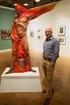 MA in Visual Arts Education (VAE) Degree Program Mission Statement: The Master of Arts in Visual Arts Education (MA-VAE) program is designed for persons currently teaching art or who have earned a teaching
v. 2014 w/out cert info KY Valid Course List
 KY Valid Course List Kentucky Uniform Academic Course Codes 704 KAR 3:540 states the following: Section 1. (1) Local districts and schools shall use uniform academic course codes, listed and described
A.S. Degree, Early Childhood Education. Degree Type: A.S. Major Code: CHLDD-AS CIP: 1420020203
 A.S. Degree, Early Childhood Education Degree Type: A.S. Major Code: CHLDD-AS CIP: 142002020 This program prepares students for employment as child development center teachers, child development curriculum
REGULATIONS FOR THE DEGREE OF MASTER OF EDUCATION (MEd)
 215 REGULATIONS FOR THE DEGREE OF MASTER OF EDUCATION (MEd) (See also General Regulations) Any publication based on work approved for a higher degree should contain a reference to the effect that the work
3.1.1 Improve ACT/SAT scores of high school students; 3.1.2 Increase the percentage of high school students going to college;
 SECTION 1. GENERAL TITLE 135 PROCEDURAL RULE West Virginia Council for Community and Technical College SERIES 24 PREPARATION OF STUDENTS FOR COLLEGE 1.1 Scope - This rule sets forth minimum levels of knowledge,
Charter Oak State College Examination Program
 55 Paul J. Manafort Drive New Britain, CT 06053 Testing Phone 860-515-3708 www.charteroak.edu/exams Charter Oak State College Examination Program Description: Introduction to Early Childhood Education
REGULATIONS AND CURRICULUM FOR THE MASTER S PROGRAMME IN INFORMATION ARCHITECTURE FACULTY OF HUMANITIES AALBORG UNIVERSITY
 REGULATIONS AND CURRICULUM FOR THE MASTER S PROGRAMME IN INFORMATION ARCHITECTURE FACULTY OF HUMANITIES AALBORG UNIVERSITY SEPTEMBER 2015 Indhold PART 1... 4 PRELIMINARY REGULATIONS... 4 Section 1 Legal
Lesson Plan. Preparation
 Portfolio Information Practicum in Interior Design Lesson Plan Performance Objective Upon completion of this assignment, the student will be able to create a portfolio to document personal knowledge and
Frank Phillips College Psychology 2301
 Frank Phillips College Psychology 2301 I. General Course Information Ms. Jan Moore PSYC2301, Spring Mini-Term, 2010 Introduction to Psychology 3 Credit Hours Prerequisites: passage of reading section of
ED 632 Curriculum, Instruction, and Learning Theory. 4 credits
 Course Description ED 632 Curriculum, Instruction, and Learning Theory 4 credits Education 632 provides school leaders with the ability to understand major curriculum design models, interpret school district
2013-2014 Academic Year Catalog
 The School of Architecture and Design 2013-201 Academic Year Catalog Özyeğin University School of Architecture & Design [ OzU SArDes ] http://www.ozyegin.edu.tr/akademik-programlar/architecture Özyeğin
FIRST SEMESTER. SHF 101 Introduction to Social Work Profession 3 0 3 / 10
 GEDİZ UNIVERSITY FACULTY OF HEALTH SCIENCES DEPARTMENT OF SOCIAL WORK UNDERGRADUATE PROGRAM FIRST DEGREE COURSE CONTENT FIRST SEMESTER SHF 101 Introduction to Social Work Profession 3 0 3 / 10 The course
EARLY CHILDHOOD TEACHERS VIEWS ABOUT SCIENCE TEACHING PRACTICES
 ISSN 1308 8971 Special Issue: Selected papers presented at WCNTSE EARLY CHILDHOOD TEACHERS VIEWS ABOUT SCIENCE TEACHING PRACTICES a Elif ÖZTÜRK YILMAZTEKİN & b Feyza TANTEKİN ERDEN a Dr., Izmir University,
Alignment of State Standards and Teacher Preparation Program Standards
 Alignment of State Standards and Teacher Preparation Program Standards Hilda Medrano Jaime Curts The University of Texas Pan American (UTPA), at the most southern tip of South Texas is located about 20
Holland s Theory. Holland s Six Personality Types HOLLAND=S OCCUPATIONAL PERSONALITY TYPES
 HOLLAND=S OCCUPATIONAL PERSONALITY TYPES John Holland, Ph.D., professor emeritus at Johns Hopkins University, is a psychologist who devoted his professional life to researching issues related to career
Engineering Attractiveness
 1 SEFI Deans Meeting Birmingham, 29 & 30 March 2012 Engineering Attractiveness Mervyn Jones Imperial College London Outline 2 Introduction Issues in Engineering Attractiveness Student perceptions a survey
EFRT 305 Human Development and Learning
 EFRT 305 Human Development and Learning Required Textbooks: Slavin, Robert E., (2010). Educational psychology: Theory and practice. 9 th Ed. ISBN: 9780137034352 EMSP Registration: This course has a field
JEFFERSON TOWNSHIP SCHOOLS COURSE OF STUDY ADVANCED CHILD DEVELOPMENT CP GRADE 12
 JEFFERSON TOWNSHIP SCHOOLS COURSE OF STUDY ADVANCED CHILD DEVELOPMENT CP GRADE 12 SEPTEMBER 2011 TABLE OF CONTENTS JEFFERSON TOWNSHIP HIGH SCHOOLCURRICULUM ADVANCED CHILD DEVELOPMENT CP Topic Page Number(s)
STUDENT HANDBOOK. Master of Education in Early Childhood Education, PreK-4 and Early Childhood Education Certification Programs
 Master of Education in Early Childhood Education, PreK-4 and Early Childhood Education Certification Programs STUDENT HANDBOOK Lincoln University Graduate Education Program 3020 Market Street Philadelphia,
2015 2016 preparatory courses design pre-master s
 2015 2016 preparatory courses design pre-master s postgraduate programmes preparatory course design pre-master s 02 Brief descriptive summary Over the past 78 years this course at Istituto Marangoni has
Development of Postgraduate Maritime Education at Turkey
 International Association of Maritime Universities AGA11 Development of Postgraduate Maritime Education at Turkey Ersan Baar 1 Dr.Capt., Karadeniz, [email protected] Ercan Köse 2 Prof., Karadeniz, [email protected]
EDUCATION AND TRAINING POLICY
 E.E.P-86 FEDERAL DEMOCRATIC REPUBLIC GOVERNMENT OF ETHIOPIA EDUCATION AND TRAINING POLICY Addis Ababa April, 1994 First Edition 1994 ST. GEORGE PRINTING PRESS TABLE OF CONTENTS Page 1. INTRODUCTION 1 2.
A STATISTICS COURSE FOR ELEMENTARY AND MIDDLE SCHOOL TEACHERS. Gary Kader and Mike Perry Appalachian State University USA
 A STATISTICS COURSE FOR ELEMENTARY AND MIDDLE SCHOOL TEACHERS Gary Kader and Mike Perry Appalachian State University USA This paper will describe a content-pedagogy course designed to prepare elementary
ILLINOIS CERTIFICATION TESTING SYSTEM
 ILLINOIS CERTIFICATION TESTING SYSTEM FIELD 188: ASSESSMENT OF PROFESSIONAL TEACHING (PK 12) June 2011 ILLINOIS CERTIFICATION TESTING SYSTEM FIELD 188: ASSESSMENT OF PROFESSIONAL TEACHING (PK 12) June
Department of Psychology
 Department of Psychology Tanner Babb, Mary Ruthi The Psychology Department seeks to provide a curriculum that stimulates the necessary knowledge base and skills for participation in a variety of fields
The Design Study of High-Quality Resource Shared Classes in China: A Case Study of the Abnormal Psychology Course
 The Design Study of High-Quality Resource Shared Classes in China: A Case Study of the Abnormal Psychology Course Juan WANG College of Educational Science, JiangSu Normal University, Jiangsu, Xuzhou, China
2012 VISUAL ART STANDARDS GRADES K-1-2
 COGNITIVE & K Critical and Creative Thinking: Students combine and apply artistic and reasoning skills to imagine, create, realize and refine artworks in conventional and innovative ways. The student will
Action Research Project Design Document
 Santa Clara University Department of Education EDUC 369: Action Research Winter 2009 Action Research Project Design Document Information Packet By Joe Chee Action research is an approach to scholarly inquiry
Curriculum and Instruction
 Curriculum and Instruction Core curriculum is the foundation of Tier 1 instruction and is the basis for building K-12 literacy in Arizona students. The curriculum at each level must be based upon the 2010
OKLAHOMA STATE UNIVERSITY School of Applied Health and Educational Psychology
 OKLAHOMA STATE UNIVERSITY School of Applied Health and Educational Psychology Ph.D. Program in Educational Psychology Program Description for Educational Psychology Option School Mission The mission of
This historical document is derived from a 1990 APA presidential task force (revised in 1997).
 LEARNER-CENTERED PSYCHOLOGICAL PRINCIPLES: A Framework for School Reform & Redesign TABLE OF CONTENTS: Background Learner-Centered Principles Prepared by the Learner-Centered Principles Work Group of the
Kansas Board of Regents Precollege Curriculum Courses Approved for University Admissions
 Kansas Board of Regents Precollege Curriculum Courses Approved for University Admissions Original Publication April 6, 2011 Revision Dates June 13, 2011 May 23, 2012 Kansas Board of Regents Precollege
Guide to the Focus in Mind, Brain, Behavior For History and Science Concentrators Science and Society Track Honors Eligible 2015-2016
 Guide to the Focus in Mind, Brain, Behavior For History and Science Concentrators Science and Society Track Honors Eligible 2015-2016 Department of the History of Science Science Center 371 The Focus in
Program: Organizational Leadership. Department: Psychology. College: Arts & Sciences. Year: 2014-2015
 Program: Organizational Leadership Department: Psychology College: Arts & Sciences Year: 2014-2015 Primary Faculty: Stacie Holloway 513-556-0176 [email protected] Faculty : Donna Chrobot Mason
Southwest Baptist University
 Doctoral Program in Educational Leadership Application Packet Southwest Baptist University College of Education and Social Sciences Department of Graduate Studies in Education Page 1 Overview of Program
Preparation for Teaching in Catholic Schools
 PREPARATION FOR TEACHING IN CATHOLIC SCHOOLS Preparation for Teaching in Catholic Schools (Initial Teacher Education Course) 2012 1. Introduction 1 The Institute for Catholic Education periodically updates
Sevim Kutlutürk. Inönü University, Malatya, Turkey
 Sino-US English Teaching, January 2016, Vol. 13, No. 1, 22-28 doi:10.17265/1539-8072/2016.01.004 D DAVID PUBLISHING Perceptions of Instructors and Students to Online Education at a Rural University Sevim
2014-15 College-wide Goal Assessment Plans (SoA&S Assessment Coordinator September 24, 2015)
 2014-15 College-wide Goal Assessment Plans (SoA&S Assessment Coordinator September 24, 2015) College-wide Goal 1: Intellectual Engagement PG1 Students will demonstrate the ability to think critically and
Psychology. Academic Requirements. Academic Requirements. Career Opportunities. Minor. Major. Mount Mercy University 1
 Mount Mercy University 1 Psychology The psychology major presents a scientific approach to the study of individual behavior and experience. The goal of the major is to provide an empirical and theoretical
Evaluation Framework for Engineering Education Curriculum: a Review of Engineering
 Evaluation Framework for Engineering Education Curriculum: a Review of Engineering is Elementary Meagan Ross 11/6/2010 HOW TO CITE THIS ARTICLE Ross, Meagan. (2010) Evaluation Framework for Engineering
CURRICULUM VITAE. 1. Name Surname: Mehmet Toran 2. Date of Birth: 01.01.1980 3. Academic Degree: Assist.Prof.Dr. 4. Educational Degree:
 1. Name Surname: Mehmet Toran 2. Date of Birth: 01.01.1980 3. Academic Degree: Assist.Prof.Dr. 4. Educational Degree: CURRICULUM VITAE University Date B.S Karadeniz Technical University Faculty of Education
GEORGIA STANDARDS FOR THE APPROVAL OF PROFESSIONAL EDUCATION UNITS AND EDUCATOR PREPARATION PROGRAMS
 GEORGIA STANDARDS FOR THE APPROVAL OF PROFESSIONAL EDUCATION UNITS AND EDUCATOR PREPARATION PROGRAMS (Effective 9/01/08) Kelly Henson Executive Secretary Table of Contents Standard 1: Candidate Knowledge,
Graduation Requirements
 Graduation Requirements PROGRAMS OF INSTRUCTION The Lone Star College System offers courses and programs to suit the needs of individual students. In keeping with the mission of a community college, the
The Views Of Primary and Preschool Education Teachers about Home Visiting: A Study in Turkey
 The Views Of Primary and Preschool Education Teachers about Home Visiting: A Study in Turkey Pınar Bahçeli Kahraman 1 Meral Taner Derman 2 Abstract The aim of this study is to investigate the views of
EDUCATION ACT (CAP. 327)
 As approved by Senate of 18 June 2015 EDUCATION ACT (CAP. 327) Bye-Laws of 2015 in terms of the General Regulations for University Postgraduate Awards, 2008 for the Degree of Master in Teaching and Learning
LEARNING THEORIES Ausubel's Learning Theory
 LEARNING THEORIES Ausubel's Learning Theory David Paul Ausubel was an American psychologist whose most significant contribution to the fields of educational psychology, cognitive science, and science education.
Instruction: Design, Delivery, Assessment Worksheet
 Reading Specialist Instruction: Design, Delivery, Assessment Worksheet Sponsoring Organization University of Massachusetts Amherst Program/Group of Programs Reading Specialist Required Documents Program