
THE EVALUATION OF CONTENT ON OUTDOOR ADVERTISEMENTS
|
|
|
- Beverly Houston
- 10 years ago
- Views:
Transcription
1 THE EVALUATION OF CONTENT ON OUTDOOR ADVERTISEMENTS Coetzee, J.L. Innovative Traffic Solutions (Pty) Ltd, 29 De Havilland Crescent, Persequor Technopark, Pretoria. Tel: (012) Fax: (012) ABSTRACT Using the length of messages (number of bits) on advertisement content as the only quantitive criteria in the evaluation of the sign face was identified as a problem. Accident statistics were evaluated to determine the relationship between advertisements and increased accident rates and it was found that in general, advertisements result in higher accident rates. No accident data related to the content of advertisements was however found. This study investigates an analytical approach to evaluate the contents on advertisements, based on the characteristics of the driver. These characteristics include vision, reaction time, reading time, legibility factors, spare capacity to process information and selective attention. A parallel is drawn between a driver s reading of road signs and the reading of outdoor advertisements. A concept of the critical zone - the 500m in front of an advertisement - is developed and the control of content in this zone is quantified. Rules are proposed to evaluate the content for advertisements that will hopefully provide a more practical, defendable approach to evaluate the content of outdoor advertisements. 1. BACKGROUND The South African National Roads Agency Limited (SANRAL) promulgated Regulations on Outdoor Advertising and Control in December Since then, SANRAL received hundreds of applications for the erection of outdoor advertisements and have subsequently approved several thereof. The regulations provide specific rules for the control of the following:! Positioning of advertisement structure! Size of advert! Controlling advertisement content (also known as faces ) The rules provided in the Regulations are well defined and have been used to approve the position and size of all the advertisements. The next stage in the evaluation and control of outdoor advertisements is the regulation of the content on the advertisements. The extent of this control task is underestimated, as it is a continuous process, with advertisements changing quite often. In the application of the regulations, several problems were experienced with the evaluation of content. These typically include:! Using bits of information as the only quantitative criteria to evaluate content. Other controls in the regulations are vague. Proceedings of the 22 nd Southern African Transport Conference (SATC2003) th July 2003 ISBN Number: Pretoria, South Africa Proceedings produced by: Document Transformation Technologies Conference Organised by: Conference Planners

2 ! Graphic designers / advertisers are not on the same wavelength as the engineers and not as concerned with road safety.! No clear evidence exists that advertisements increase accident rates - advertisers often erect an advertisement face and only apply later for approval - the fact that the existing one does not cause accidents is then used as an argument in the application.! Different Councils and Road Authorities apply different rules these create precedents. These problems led to a study of the existing regulations and a literature study of the existing information available on the impact of advertisements on road safety. The objectives of the study were to:! Evaluate existing available accidents statistics related to outdoor advertisements.! Develop a better methodology for evaluating information content on advertisements and develop rules that are easier to enforce.! Develop a common sense approach to obtain buy-in from advertisers. It should be noted that opinions and findings in this paper represent that of the author and not necessarily that of the SA National Roads Agency. 2. SANRAL REGULATIONS The regulations control position, size and content of advertisements. The relevant regulations are briefly summarised below. 2.1 Regulations for positioning of advertisement structure! Designation of area (urban min, partial, max control, rural, natural)! 200m from road signs! 250 m from other advertisements! No advertisements 1 km before interchanges! 50 / 100 m from intersection! 200 m from ramp gore 2.2 Regulations for size of advertisement! Small billboard (< 18 sqm)! Large billboards (> 18 sqm no maximum size defined)! Electronic Billboards < 18 sqm! Project boards < 9 sqm! On premises business advertisements < 12 sqm! Service Facility Signs: 14 sqm 120 sqm 2.3 Regulations for content of advertisement The major controlling factor provided in the Regulations, are the number of bits of information allowed on and advertisement face. Bit is defined as the unit for measuring length of messages letters, digits, symbols, logos, graphics and abbreviations. They have the following values: Bit values (Regulation 1): Words up to 8 letters: 1 bit Words > 8 letters: 2 bits Numbers to 4 digits: 0,5 bit Numbers 5 8 digits: 1 bit Symbol / Abbreviation: 0,5 bit Logo / graphics: 2 bits

3 Apart from the number of bits, the following regulations are provided to control the content of advertisements: Reg. Nr Description 6(1)(b) 6(2)(a) 6(2)(b) may not distract attention of driver in a manner likely to lead to unsafe driving conditions may not affect conspicuousness by virtue of potential visual clutter size, color, letter size, graphics etc having distracting effect on the attention of the driver 6 (d) The color, or combination of colors in advert may not correspond with colors of road traffic signs 6 (f) Bits must be within limits as defined in Regulation 1. 7 Amenity and Decency 8. Advertisement to be concise 8 (a) No advertisement displaying a single message may exceed 6 bits on freeways and 10 bits on other roads 8 (b) Combination signs, or any other advert displaying more than one message may contain more than 6 bits per enterprise, service or message 8 (c) Numbers longer than 8 digits not allowed 8(d) Street names min size 150 mm, max 350 mm 8(e) No message spread across more than one advert 9 (d) Any advertisement must have a neat appearance in terms of content and sign writing and may not contain untidy handwritten messages 40(4) Agency may in respect of road safety, request letter sizes and length of message Reading the above regulations, it is clear that some regulations are difficult to apply in practice as they can be interpreted in several ways. Some regulations are also perceived to be unnecessary strict, such as the definition of bits - a typical example being the bit value of small words like the, and etc. New proposals are made in Section 5 to make the applications of the regulations more practical. 3. ADVERTISEMENTS AND ACCIDENTS - AVAILABLE RESEARCH 3.1 Research Results A literature survey was conducted to determine what research is available on the impact of advertisements on road safety and on increased accidents. One of the key discoveries was a document compiled in 1980 for the Federal Highway Administration, titled: Safety and Environmental design considerations in the use of Commercial Electronic Variable Message Signage. The study summarised the findings of several other research projects on the impact of billboards on traffic safety and accident rates. The most important findings of 6 different studies are outlined below Minnesota Department of Highways Field Study 1951 A study of 713 accidents occurring along 675 km of road was done. It was found that an increase in the number of advertisement signs per mile was accompanied by an increased accident rate. Intersections with 4 or more advertisements had an accident rate 3 times higher than those with no advertisements.

4 3.1.2 Iowa State College Field Study 1951 Accident rates immediately upstream of billboards and immediately downstream were evaluated. The accident rates upstream were found to be double upstream than those downstream Michigan State Highway Department Field Study, 1952 In their study, the Michigan State Highway Department found a conflicting result, namely: Advertising signs have practically no effect whatever on the accident experience of this road. Despite their general finding, they did also conclude that: Illuminated signs, of the neon type, showed an appreciable association with accident locations Lauer and McMonacle, Laboratory Investigation, 1955 The first simulator test was done by Lauer and McMonacle to evaluate the impact of advertisements on the drivers efficiency at the wheel. Similar as the previous study, they found: The presence of numerous signs in the drivers field of vision in no way influenced the efficiency at the wheel adversely. It is important to note that in the 1980 study, the results of the simulated environment were questioned and the fact that the simulated results were not validated against real life scenario. The results should therefore be interpreted with caution New York State Thruway Field Study, 1963 In their study, they investigated 1550 driver inattention accidents. The on site accident reports were studied and it was found that 32,6 % of the 1550 accidents, occurred on the section where motorists were exposed to advertisements. The total length of the road section investigated was 1800 km with advertisements on 236 km (or 13,1 %) thereof. It was found that 1,06 driver inattention accidents occurred per km where advertisements were present and 0,31 driver inattention accidents occurred per km where NO advertisements were present, a significant difference in accident rates Faustman, California Route Field Study, 1961 The accident statistics on a 64 km section of US 40 interstate highway were analysed. Specific attention was given to geometric design aspects to ensure that the impact of other factors on accident statistics, for purposes of comparison, were minimized. Characteristics that were selected to be approximately the same included road cross section, design speed, access control, traffic volume, vertical alignment, few roadside developments and equal quality law enforcement and accident reporting. The accident statistics, traffic volume, advertisement positions etc were plotted and evaluated. It was found that 34 sections of 0,4 km each - total 13,6 km - had advertisements present. The accident rate on these sections was 1,59 accidents per million vehicle km, whereas the accident rate on the sections without advertisements present, were 1,13 accidents per million vehicle kilometers. This represents a 41 % increase. The same data was further analysed by Weiner in 1973 and he determined that there is a relationship between the number of billboards present along a section of road and expected number of accidents, as shown in the table below.

5 No. Billboards Table 1. Re-analysis of California Data. Expected Number of Accidents in 5 years % % % % % % Cumulative increase in Accident Rate 3.2 Synthesis of accident statistics The following can be derived from the accident statistics provided above:! The studies provide evidence that billboards result in higher accident rates. The rates reported vary from 3 times higher at intersections, 41 % increase and 62 % increase. There is however some conflicting results from certain studies, one of which the results were questioned later.! The studies do not state anything about advertisement content and the impact thereof. In every case the presence of advertisements were evaluated against the non presence of advertisements, content was not specifically evaluated. In one case the presence of neon signs was found to be responsible for increased accidents.! Limited information is available on the spacing between advertisements on these road sections.! In some cases it is stated that the quality of reporting (accident reports) is a problem. This is similar to the South African experience.! Environmental context geometry, speed, grade, etc. makes it difficult to separate impact of advertisements in a before- and after study.! The accident statistics quoted certainly show that in general, advertisements result in increased accident rates. In the Commercial Electronic Variable Message Signs (CEVMS) study done in 1980 it was found that courts have fallen back on the readily understood logic that a driver cannot be expected to give full attention to his driving task when reading a billboard. The problem with accident statistics is that it is extremely difficult to pinpoint the exact cause of an accident where advertisements can possibly be involved.! At this point in time South Africa, decisions have already been made to allow advertisements along all categories of roads under certain conditions. These accident statistics should therefore be seen as proof that outdoor advertisements should be controlled, not banned entirely.! Accidents are relative rare events. It is therefore necessary to also study conflicts and near misses to obtain an understanding of the potential impact of advertisements. This background, that limited empirical proof of advertisements resulting in more accidents exists, necessitates an analytical investigation of the impact of advertisements. The following section investigates the driver, his reactions and the potential impact of advertisements (especially advertisement content) from an analytical point of view. 4. UNDERSTANDING THE DRIVER To study the impact of advertisements on the driver from an analytical point of view, it is necessary to investigate the factors that determine the driver s performance. These factors are listed below. 4.1 Vision or Eyesight This is the only sensory power that the driver uses to gain information on the road ahead. A few important aspects of vision are listed below:! The National Road Traffic Act (Act 93 of 1996), 15 (1) (e) (vi) states that a Person is not

6 allowed to obtain a learners driving license if he/she suffers from defective vision ascertained in accordance with a prescribed standard. The Road Traffic Act Regulations, 102 (1)! Licence codes A1, A, B or EB defines this more specifically as follows: - The driver must have minimum visual acuity of 6/12 (20/40). The normal persons eye is at rest at 6m, 6/12 means a person with slight seeing disability can see at 6m what a normal person can see at 12m. (20/40 is in feet). - the driver must have a minimum visual field of 70 degrees temporal, in respect of each eye, or if one eye is blind, a visual field of 115 degrees! Ogden, KW, in Understanding the driver states that drivers have a limited visual field focal vision narrows with increasing speed. A driver typically has 3 to 10 degrees visual field when stationary - this field of vision narrows to 1 degree at 120 km/h. It is also stated that a driver has peripheral vision of 70 degrees.! The design criteria used in the South African Road Traffic Signs Manual (SARTSM) is a horizontal cone of vision of 15 degrees - the reason being that beyond 15 degrees a driver cannot determine the alignment of the road! One of the design criteria for road signs in the SARTSM is based on legibility of letters, font type and size. The font type used for road sign letters is DIN A and DIN B. The legibility factors provided for this letter type is 0.5 m/mm (Night time reduced to 0.4 m / mm) - which implies that 1m high text can be read at 500m and 300 mm high text can be read at 150 m. It is assumed that the legibility of font types varies, but will be similar in value for the purpose of this study.! SARTSM also states that drivers have a fixation rate of 1,0 to 1,5 fixations per second - i.e. they can focus and interpret 1 to 1,5 items per second. The design criteria used in SARTSM is also that a driver should not remove his focal vision for more than 1,5 seconds from the road to allow safe driving. This is in line with what Beijer et al found in 2001, namely that drivers glance at freeway signage only once every 12,5 seconds and that each glance range between 0,9 to 2,5 seconds, with an average of 1,6 seconds.! A critical impact of outdoor advertisements, is that the amount of information (bits) determine the time required for a driver to read the advertisement. For road signs, a reading time formula is provided in SARTSM: T = (0,32 N 0,21) x D T = Reading time N = Bits on signs D = Distraction Factor D = 1,00 straight roads, less than 5000 vehicles per day (vpd) D = 1,25 straight roads with vpd D = 1,50 freeways, roads in urban areas, more than vpd Typical reading times are then as follows: N (bits) T (D=1,25) T (D=1,5) 3 0,9 sec 1,1 sec 6 2,1 sec 2,6 sec 8 2,9 sec 3,5 sec 12 4,5 sec 5,4 sec


7 It is debatable whether this is applicable to outdoor advertisements, but it provides an indication of the time required to read certain content. 4.2 Reaction time and driver expectancy In the analytical approach to how drivers will react, reaction time is critical - the time from when an incident is detected and the driver physically starts reacting by swerving or braking. Driver expectancy is the factor where, for example, a driver will follow another vehicle at 120 km/h with a following distance of 20m and feel safe, due the fact that all the previous times that it was done, the vehicle in front did not brake, so it is expected the vehicle will not brake now. 4.3 Human information processing capacity The requirement of drivers to process information at high speed, account for 50% of human error in traffic accidents (Lamm, 1999). Treat, et al, found in 1977 that delayed recognition of hazards and inattention of drivers was of the largest factors leading to accidents. Ogden, KW found that in some cases the driver may have inadequate information to handle a certain driving task (e.g. a missing road sign warning of a sharp curve), in other cases the driver will be provided with too much information and due to his limited processing capacity, the driver will shed some of this information. It was found that human sensory processing capacity is 10^9 bits per second (1 MHz). Relating this to computer terms it can also be called bandwidth. Ogden describes a phenomenon called self pacing. A driver will do the critical tasks necessary including control of the vehicle, navigating and will then have spare capacity to do other tasks. Spare capacity is defined as a person operating at less than full information processing capacity and can cope with an additional task performed simultaneously. It was found by Johnson & Cole in a Laboratory Study in 1976 that humans have a selective attention process - in other words when driving, they will perform the critical task first. Drivers are not forced to look at advertisements - if the driving task require more attention, the driver will typically ignore the advertisement. However it was found that if a sign has a high attention getting character, it will assume primary importance and will require increased reading time. To illustrate the concepts of limited human processing capacity, spare capacity and the potential impact of high attention advertisements, Figure 1, as illustrated below, was developed. Figure 1. Human processing capacity and spare capacity when driving.

8 The x-axis shows time as the driver is traveling along the road, whereas the processing capacity is shown on the y-axis. The driver will typically perform the basic task of driving using the bottom range of his processing capacity. This will consist of two elements, one being driving and vehicle control, the second being navigation. The processing required for navigation will typically increase in front of interchanges and the control task will require more processing capacity when merging after an interchange. There should then remain a certain bandwidth of spare capacity that the driver will use in emergencies such as a tyre bursting, if the vehicle in front suddenly brakes, etc. The top range of the spare capacity is then used by the driver to perform other tasks such as talking on his cell phone, eating, talking to other passengers or looking at advertisements. If an advertisement is a high attention advertisement, it will use a large portion of the driver s information processing capacity for a period of time. The danger exists that the portion of his capacity used for driving and control will also be taken up by processing the information on the advertisement. The critical scenario will happen when the time that the advertisement distracts the driver from the driving task, becomes too long that he will start swerving laterally in the lane he is traveling in or will not be able to react to incidents such as vehicles braking in front, etc. To define high attention advertisements is not a simple task. In a study by the Outdoor Association of America in 1999, it was found that bright colours, especially yellow, attract attention. It is obvious that advertisements containing human faces or the human body also attract attention. The capacity of the human to process information is used as the basis for the analytical approach. The critical assumption is the selective attention process of the driver, i.e. that he will first control the vehicle and will then do other tasks using his spare capacity. 5. PROPOSED METHODOLOGY FOR EVALUATING THE CONTENT OF OUTDOOR ADVERTISEMENTS 5.1 Critical Event Drivers should retain their focal vision on the road to react as quickly as possible to events occurring in front of them. For the purpose of this study, a critical event is defined as one where the driver of the vehicle has his eyes of the road, looking at an advertisement and an event occur that requires his attention, but he is not focusing on the road and will thus have delayed reaction. A typical critical event is one where the front vehicle starts braking immediately after the driver of the second following vehicle starts looking at an advertisement. An example calculation is carried out to assess the possible impact. Assume the 2 vehicles are driving at 120 km/h (33,3 m/s) on a freeway, the traffic on the freeway is dense, but free flow with no regular stop start breakdowns. Vehicle A: In front, observes incident, start braking at 5 m/s² immediately after Vehicle B starts observing an advertisement next to the road. Vehicle B: Follows certain distance behind Vehicle A, looks at advertisement for 1,5 seconds (relates to reading time of 4 bits), needs reaction time of 1,0 second after looking at road again, thus will start braking 2,5 seconds after Vehicle A.


9 Using standard movement equations, if Vehicle B was following at less than 16m, a head rear collision will occur. If Vehicle B looks at the advertisement for 2,6 seconds (reading time for 6 bits), it will only start braking 3,6 seconds after Vehicle A and will require 33 m following distance to prevent a collision. On South African freeways the following distance between vehicles is anything between 10 and 30m, especially during high flow conditions due to the fact that when leaving to large a gap, another vehicle will change lanes and fill that gap. Based on the above calculations it will then be extremely dangerous to allow a driver to be distracted for anything more than 1,5 seconds. This rather simplistic calculation indicates that 1,5 seconds is in line with all the other literature results and should be used as the design criteria. To calculate the probability of such a critical event occurring is impossible, as numerous events have to occur simultaneously. It will also be affected by the competency of the driver, reaction time, fitness of the vehicle, weather conditions, traffic volumes and density of traffic, etc. The assumptions made above do however provide a conservative, but realistic scenario to use as design criteria. 5.2 Critical Zone The critical zone is defined as the area in front of an advertisement that starts at the point where the driver can start reading the advertisement. Assuming 1m high text is used, the driver will be able to start reading 500m away (with legibility factor as given before), a total traveling time of 18 seconds in the critical zone at 120 km/h. Based on the above calculations, the duration of the drivers glances at the advertisement should be limited to 1,5 seconds and based on the reading time formula, that relates to 4 bits of information per glance. Taking into consideration the cone of vision of 15 degrees, the driver should not be reading the advertisement when closer than 150 m from the advertisement, assuming a lateral distance from the lane centre line of 40m. This leaves 350 m, or 10,5 seconds to read the advertisement. Assuming a full cycle of a glance at the advertisement takes 3 seconds - 1,5 seconds looking away and 1,5 seconds to assess the road ahead, 3 glances can be allowed in this 10,5 seconds. The critical zone is shown graphically Figure 2 below. Figure 2. Critical zone - driver s vision 500m in front of advertisement. The total content or information presented to the driver should then not exceed 12 bits per 500m, as that is the amount that can be read with 3 glances of 1,5 seconds. This is in line with the regulations, as it specifies 2 adjacent advertisements should be 250m apart with maximum 6 bits of information per advertisement, thus 12 bits per 500m.


10 An evaluation was done of the content on an existing freeway, namely the N1 through Midrand from the Allandale interchange northbound for a distance of 3,5 km. The bits per road sign is shown in Figure 3 and the bits per 500m are summarised in the table below. Figure 3. Bits per Road Sign. Table 2. Existing bits per 500m, N1 North of Allandale Interchange (northbound). Distance (km) Bits per 500m (Road signs only) 0,0-0,5 2,0 0,5-1,0 6,5 1,0-1,5 7,75 1,5-2,0 2,5 2,0-2,5 9,0 2,5-3,0 14,5 3,0-3,5 8,0 The above table shows that in this case, there are several sections where the road signs, although more than 200 m apart, have high content and this should limit the content on adjacent advertisements. There is only one 500m section with more than 12 bits, which is in front of a complex interchange (New Road). The table also indicates that there are existing 500m sections with low information content where the possibility exists to allow advertisements or additional road signs. It is important to make provision for possible future road signs or to allow advertisements only temporary. 5.3 Proposed Rules on content evaluation Based on the findings of the literature studies outlined in the previous sections and the proposed analytical approach defining the critical zone, the following rules for evaluating the content of outdoor advertisements are proposed:! The existing regulations should still be applicable. There are a few regulations that will ultimately need adjustment to accommodate the proposed rules. Aspects such as amenity and decency are not addressed in this paper.

11 ! The Regulations do not specify a link between preceding road signs and the content of an advertisement - an advertisement can be preceded by a road sign 200m in front thereof with content well over 6 bits. The 500m in front of the advertisement should be included in the evaluation and the bits in the 500m should be calculated to determine the maximum number of bits on the specific advertisement. A limit of 12 bits per 500 m is proposed.! The text and logos on the advertisements should be clustered together into groups of 4 bits with similar size. If all the text (more than 4 bits) are the same size, the driver will try and read it one glance and will exceed the 1,5 seconds rule.! High Attention Advertisements should be classified as any advertisement containing content that will fix the drivers eye for more than 1,5 seconds in one glance. This is difficult to assess, as different persons will view it differently. Relative simplistic tests can however be carried out by displaying the advertisement to a group of people for 1,5 seconds and determining what they have seen.! Text size should be controlled. Text larger than 1m or smaller than 300mm should not be allowed to ensure that drivers read only in the 500 m in front of the sign and not after entering the 15-degree cone of vision (150m in front of the sign).! The regulations do not allow telephone numbers with more than 8 digits. Reading time tests revealed that the average person cannot read a 10-digit number in 1,5 seconds. Numbers can be allowed, but the font size should then be minimum 750mm to allow more than one glance to read it.! Graphics and logos count 2 bits according to the regulations. Familiar graphics and logos can be reduced as the assumption is made that these are read simultaneously with the text. Familiar logos include brand names such as Coca-Cola, Vodacom, ABSA, etc. This can be reduced to 0,5 bits.! The Bit value of short words like and, the etc. can be reduced to 0,25 bits as they do not take the same reading time as larger words. Some of the proposals above are made without available scientific proof and are based on logical assumptions. The analytical approach outlined in the previous sections form the basis thereof and additional research in future will be necessary. 6. CONCLUSIONS Using the length of messages (number of bits) on advertisement content as the only quantitive criteria in the evaluation of the sign face, was identified as a problem. This study investigates an analytical approach to evaluate the contents on advertisements, based on the characteristics of the driver. These characteristics include vision, reaction time, reading time, legibility factors, spare capacity to process information and selective attention. Accident statistics were also evaluated to determine the relationship between advertisements and increased accident rates and it was found that in general, advertisements result in higher accident rates. The proposed rules to evaluate the content for advertisements in the above section will hopefully provide a more practical, defendable approach to evaluate the content. 7. REFERENCES [1] Ogden, K W. Human Factors in Traffic Engineering [2] Road Safety and signs, 02/12/08 [3] Green, P, The 15-Second Rule for Driver Information Systems, Intelligent Transportation Society of America Conference Proceedings (CD).

12 [4] Alexander, G J and Lunenfeld, H, Satisfying motorists need for information, Traffic Engineering. [5] Wood, J, Vision and Driving, /driving.jsp [6] Orrich, P, Route Guidance, [7] White, J, Medical/Vision Conditions, [8] Vision Conditions and Actions, Physical and Mental Conditions Guidelines, Rev 2-99, Reflecting on Road Signs in an Age of Information Technology [9] Triggs, T J & Harris, W G, Reaction Time of Drivers to Road Stimuli, Human Factors Report No HFR-12, Monash University. [10] Draft National Road Traffic Regulations, Government Gazette, 9 April 1999 [11] Wells, D, Secrets of the Human Auto Pilot, /brighton_hove/archive/2001/07/31/ NEWS600ZM.html [12] Vision in Vehicle, 29/11/02 [13] Wachtel, J and Netherton, R, Safety and Environmental Design Considerations in the use of Commercial Electronic Variable-message Signage, FHWA/RD-80/051, [14] Research Review of Potential Safety Effects of Electronic Billboards On Driver Attention And Distraction, FHWA, 02/11/17 [15] Tansley, B. Introduction to Human Factors, Course Notes Synopsis [16] Prentice, K, New outdoor study reveals how people react to billboards, [17] Schnell, T, Eye Movement Research and Eye Movement Apparatus at the University of Iowa, /~opl/presentandplannedeyescanresearch.htm [18] Spice, B, CMU work aims to change relationship between vehicle, driver [19] Utter, D, Passenger Vehicle Driver Cell Phone Use, Results from the Fall 2000 National Occupant Protection Use Survey, Research Note DOT HS [20] Rötting, M, Göbel, M and Springer, J, Automatic object identification and analysis of eye movement recordings, [21] Enterprise Marketing and Research Services, Road Safety Campaign Awareness Research Report, March 2001 [22] Recarte, M A and Nunes, M L, High Percentage of Car Accidents Due to Inattention Rather Than Lack Of Driving Ability, [23] Sodhi, M, Reimer, B and Cohen, J L. On-Road Driver Eye Movement Tracking Using Head- Mounted Devices [24] Jacobs G and Aeron-Thomas, A, Africa Road Safety Review Final Report, PR/INT/659/2000,

13 THE EVALUATION OF CONTENT ON OUTDOOR ADVERTISEMENTS Coetzee, J.L. Innovative Traffic Solutions (Pty) Ltd, 29 De Havilland Crescent, Persequor Technopark, Pretoria. Tel (012) , Fax (012) Biography Jan Coetzee founded ITS in February 1997 and has steered the development of ITS to a consulting engineering firm with specialist expertise in various traffic and transportation related fields. He led the transformation of ITS to a black empowered company with majority black shareholding. He is involved in management of ITS, management of projects and new business development. He has been involved in various technical fields including traffic signal optimisation, traffic calming, intelligent transportation systems, outdoor advertising, road safety and road safety audits, access management, public transport facility design, road planning and has done traffic engineering for several large property developments. He has extensive expertise on traffic signals in optimisation of networks, detail design and implementation of traffic signal hardware. He presents the annual course on traffic signal design for the SA Road Federation. He has been involved in major projects where partnerships were formed between authorities and private companies. He delivered several papers at the SA Annual Transportation Convention on traffic calming, traffic signals, road safety and other topics. He was author and co-author of several guideline documents including SA Trip Generation Rates, Access Guidelines for Filling Stations for Tshwane and Traffic Calming. He is a member of the Institute of Transportation Engineers, is a past chairman of the Pretoria Branch of the South African Institution of Civil Engineering (SAICE) and is at present member of the Transportation Division Committee of SAICE. He holds an Honours Degree in Transportation Engineering and a B Eng (Civil) from the University of Pretoria.

Safety-conscious Drivers Prevent Crashes. Defensive Driving: Managing Visibility, Time and Space. Improve Your Defensive Driving Skills
 Defensive Driving: Managing Visibility, Time and Space Motor vehicle travel is the primary means of travel in the United States. With all the benefits that come along with mobility, there are thousands
CAPACITY AND LEVEL-OF-SERVICE CONCEPTS
 CHAPTER 2 CAPACITY AND LEVEL-OF-SERVICE CONCEPTS CONTENTS I. INTRODUCTION...2-1 II. CAPACITY...2-2 III. DEMAND...2-2 IV. QUALITY AND LEVELS OF SERVICE...2-2 Service Flow Rates...2-3 Performance Measures...2-3
Online and Classroom
 Defensive Driving Course for All Licence Classes Online and Classroom The information provided in this document is applicable to Online and Classroom learning. 1 of 13 Introduction The Requirements for
USING THE MOBILE PHONE WHILE DRIVING. Using a mobile phone while driving can significantly impair a driver s:
 USING THE MOBILE PHONE WHILE DRIVING Is it dangerous to use the phone while driving? Driving is a complex task, requiring drivers to use and coordinate a number of skills. Any lapse in concentration increases
SIGN LEGIBILITY By Andrew Bertucci, United States Sign Council
 SIGN LEGIBILITY By Andrew Bertucci, United States Sign Council Since 1996, the United States Sign Council (USSC) and its research arm, the United States Sign Council Foundation (USSCF) have funded an extensive
Document Name: Driving Skills. Purpose: To outline necessary driving skills required to maximize driving safety.
 Document Name: Driving Skills Date Created: 8 October 2013 Date Reviewed: 4 February 2014 Date Approved: 29 July 2015 Purpose: To outline necessary driving skills required to maximize driving safety. Overview:
Analysis of Accidents by Older Drivers in Japan
 Analysis of Accidents by Older Drivers in Japan Kazumoto Morita 1, Michiaki Sekine 1 1 National Traffic Safety and Environment Laboratory, Japan Abstract Since Japan is a rapidly aging society, ensuring
Tips for Safer Driving
 Fleet Management Fleet Management Introduction Improvements in technology will continue to help bring auto accident numbers down, but the bottom line remains that most car accidents are the result of human
MS INFORMATION SHEET DRIVING WITH MS. How can MS affect my ability to drive? Simultaneous coordination of arms and legs necessary when changing gears.
 MS INFORMATION SHEET DRIVING WITH MS How can MS affect my ability to drive? Driving a motor vehicle is a complex task, requiring perception, good judgement, responsiveness and reasonable physical capability.
GUIDELINES. for oversize and overmass vehicles and loads MAY 2006. Government of South Australia. Department for Transport, Energy and Infrastructure
 ESCORTING GUIDELINES ESCORTING GUIDELINES SCORTING GUIDELINES ESCORTING GUIDELINES ESCORTING ESCORTING GUIDELINES for oversize and overmass vehicles and loads Government of South Australia Department for
Chapter Forty-seven. RURAL TWO-LANE/MULTILANE STATE HIGHWAYS (New Construction/Reconstruction) BUREAU OF DESIGN AND ENVIRONMENT MANUAL
 Chapter Forty-seven RURAL TWO-LANE/MULTILANE STATE HIGHWAYS (New Construction/Reconstruction) BUREAU OF DESIGN AND ENVIRONMENT MANUAL Illinois RURAL TWO-LANE/MULTILANE STATE HIGHWAYS December 2009 2 Illinois
BENEFIT OF DYNAMIC USE CASES TO EARLY DESIGN A DRIVING ASSISTANCE SYSTEM FOR PEDESTRIAN/TRUCK COLLISION AVOIDANCE
 BENEFIT OF DYNAMIC USE CASES TO EARLY DESIGN A DRIVING ASSISTANCE SYSTEM FOR PEDESTRIAN/TRUCK COLLISION AVOIDANCE Hélène Tattegrain, Arnaud Bonnard, Benoit Mathern, LESCOT, INRETS France Paper Number 09-0489
Temporary Traffic Management
 Temporary Traffic Management Tom Kiddle 4 th July 2012 Temporary Traffic Management Auckland Transport TTM Operation Requirements AT TTM Audits Qualified Persons on site Pedestrian Management 1 AT Temporary
DEFENSIVE DRIVING. It s an Attitude
 DEFENSIVE DRIVING It s an Attitude RLI Design Professionals Design Professionals Learning Event DPLE 155 July 15, 2015 RLI Design Professionals RLI Design Professionals is a Registered Provider with The
The partnership has selected three intersections where enforcement, education, and engineering initiatives are being implemented to improve safety:
 Hamilton-Finn Suite 310 Tel. (403) 207-6000 Road Safety 3016 5th Avenue N.E. Fax. (403) 273-3440 Consultants Ltd. Calgary, Alberta dawatt.dawatt.com www.hamiltonfinn.ca January 19, 2005 Mr. Don Szarko,
Level 2 Award in Safe Driving at Work
 Level 2 Award in Safe Driving at Work Student notes (sample) www.britsafe.org Membership Training Qualifications Audit and Consultancy Audit and Policy Consultancy and Opinion Policy Awards and Opinion
Delineation. Section 4 Longitudinal markings
 Delineation Section 4 Longitudinal markings The delineation guidelines have been developed to assist in designing and maintaining a quality delineation system. The guidelines are to comprise 19 sections
FLEET SAFETY INSAFE Safety Consultants Mark McDaniel - Bob Starkey
 INSAFE Safety Consultants Mark McDaniel - Bob Starkey What is Fleet Safety? Driving Techniques Operator Knowledge Vehicle Maintenance Trip Planning Indiana Dept. of Labor : McDaniel / Starkey 1 Real Estate
Accidents with Pedestrians and Cyclists in Germany Findings and Measures
 Accidents with Pedestrians and Cyclists in Germany Findings and Measures Siegfried Brockmann Unfallforschung der Versicherer (UDV) May 7th, Geneva 2 Content 2 Accident situation in Germany based on National
TEST ON Driving Safely Among Bicyclists and Pedestrians
 TEST ON Driving Safely Among Bicyclists and Pedestrians Next you will take a 16 question test about driving safely among bicyclists and pedestrians. Please take out a sheet of paper to mark down and score
A RELATIONSHIP BETWEEN ACCIDENT TYPES AND CAUSES
 A RELATIONSHIP BETWEEN ACCIDENT TYPES AND CAUSES L VOGEL and UC J BESTERU Department of Civil Engineering, University of Stellenbosch, Private Bag X1 MATIELAND 7602 ABSTRACT A study was done on a road
TRACKING DRIVER EYE MOVEMENTS AT PERMISSIVE LEFT-TURNS
 TRACKING DRIVER EYE MOVEMENTS AT PERMISSIVE LEFT-TURNS Michael A. Knodler Jr. Department of Civil & Environmental Engineering University of Massachusetts Amherst Amherst, Massachusetts, USA E-mail: [email protected]
Workplace Transport Safety Reversing Vehicles Information Sheet What are the dangers associated with reversing vehicles? Why is reversing a problem?
 Workplace Transport Safety Reversing Vehicles Information Sheet This information sheet aims to raise awareness of the dangers caused by reversing vehicles in the workplace. It provides basic information,
ITARDAInstitute for Traffic Accident
 ITARDAInstitute for Traffic Accident Research and Data Analysis ( 財 ) 交 通 事 故 総 合 分 析 センター ITARDA INFORMATION No. 2011 88APRIL Fatality rate (%) 0 2 4 6 Head-on 0.70% Rear-end 4.7% Rear-end 0.70% Crossing
Defensive Driving While Towing a Trailer By Elizabeth Koncki, Maryland Department of Agriculture
 Defensive Driving While Towing a Trailer By Elizabeth Koncki, Maryland Department of Agriculture Many of you have heard the term defensive driving, but maybe you may have not been taught the method or
The Need for Traffic Incident Management
 The Need for Traffic Incident Management With traffic incidents responsible for approximately 50-60% of the congestion delays motorists encounter on the nation s roadways every day, increased roadway capacity
Access Spacing and Accidents
 Access Spacing and Accidents A Conceptual Analysis HERBERT S. LEVINSON Transportation Consultant 40 Hemlock Road New Haven, CT 06515 ABSTRACT This paper develops a method for predicting the safety of arterial
ROAD SAFETY ASSESSMENTS AND ROAD SAFETY AUDITS ON THE EXISTING ABU DHABI INTERNAL ROAD NETWORK
 ROAD SAFETY ASSESSMENTS AND ROAD SAFETY AUDITS ON THE EXISTING ABU DHABI INTERNAL ROAD NETWORK Siegfried GROSSKOPF, Tawab KAZEMI*, John HUGHES* & Sami ALMUSAWI Bani Hashim # Parsons International Limited,
Bicycle Safety Quiz Answers Parental Responsibilities
 Bicycle riding is a great way to get into shape and enjoy the outdoors. To remain safe on Illinois roads, it is important to follow the same traffic safety laws that govern vehicle drivers. No amount of
chapter 3 basic driving skills
 chapter 3 basic driving skills When curving to the left, keep the front wheels close to the right edge of the lane to keep your driver s side rear wheels out of the next lane of traffic. Curve ahead slow
ROAD SAFETY GUIDELINES FOR TAH ROAD INFRASTRUCTURE SAFETY MANAGEMENT
 I. GENERAL ROAD SAFETY GUIDELINES FOR TAH ROAD INFRASTRUCTURE SAFETY MANAGEMENT ANNEX III B i. The setting up and implementing of appropriate management procedures is an essential tool for improving the
Vehicles travelling in the same direction on the same roadway. Vehicles travelling in the same direction in 2 different lanes of traffic
 Cases 1 to 3 Vehicles travelling in the same direction on the same roadway Cases 4 to 6 Vehicles travelling in the same direction in 2 different lanes of traffic Case 7 Vehicles travelling in opposite
PEDESTRIAN LAWS OF NORTH CAROLINA
 PEDESTRIAN LAWS OF NORTH CAROLINA Under North Carolina law, pedestrians have the right of way at all intersections and driveways. However, pedestrians must act responsibly, using pedestrian signals where
DEADLY DRIVING DISTRACTIONS: Texting, Cell Phones, and Other Killers
 Instructor s Guide : Texting, Cell Phones, and Other Killers According to insurance statistics, distracted drivers are responsible for almost 80 percent of all car crashes and 65 percent of near-collisions
Operating Vehicle Control Devices
 Module 2 Topic 3 Operating Vehicle Control Devices 1. Identify the vehicle controls in the pictures below: 1. 2. 3. 4. 7. 7. 5. 6. 1. accelerator 2. parking brake 3. foot brake 4. gear shift lever_ 5.
DRIVING TEST POSSIBLE QUESTIONS & ANSWERS.
 DRIVING TEST POSSIBLE QUESTIONS & ANSWERS. Question 1. What shape and colour is a warning sign? Diamond Shape - Yellow and Black Question 2. When should you not drive? While under the influence of alcohol,
CHAPTER 2 TRAFFIC SIGNS AND HIGHWAY MARKINGS
 CHAPTER 2 TRAFFIC SIGNS AND HIGHWAY MARKINGS This chapter summarizes traffic signs, signals and road markings that control the flow of traffic, making streets and highways safer for motorists, bicyclists
Author: Hamid A.E. Al-Jameel (Research Institute: Engineering Research Centre)
 SPARC 2010 Evaluation of Car-following Models Using Field Data Author: Hamid A.E. Al-Jameel (Research Institute: Engineering Research Centre) Abstract Traffic congestion problems have been recognised as
1. LICENSING OF DRIVERS
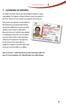 1. LICENSING OF DRIVERS Possession of a driver s licence and the privilege of driving is a major responsibility. The Registrar of Motor Vehicles, under the authority of the Motor Vehicle Act issues, renews
How To Design A Crash Investigation Site
 CHAPTER 7 CRASH INVESTIGATION SITES December, 2000 7. Crash Investigation Sites (CIS) 7.1. Introduction and Usage The idea of "crash investigation sites" or areas outside of the freeway mainline where
Driver Certification
 Driver Certification Environmental Health & Safety/Risk Management Department of Campus Operations 300 College Park Dayton, Ohio 45469-2904 937-229-4503 Agenda: Part I: Review of UD Driver Certification
SAFE CYCLING GUIDE. 6th Edition
 SAFE CYCLING GUIDE 6th Edition BEFORE SETTING OUT A WELL-MAINTAINED BICYCLE is key A Check tire pressure B Check that the chain does not slip C Check the brakes D Check lights and reflectors: 3 4 1 5 2
Customer Demo Ride Manual
 Customer Demo Ride Manual Table of Contents Page Section 1 Dealer Responsibilities 3 Section 2 Customer Qualifications 5 Section 3 Conducting Rides 6 Section 4 Accidents 9 Section 5 Mechanical Failures
TRAFFIC MANAGEMENT PLAN
 TRAFFIC MANAGEMENT PLAN For: The construction and operation of a Photovoltaic (PV) Facility in Dabenoris, South Africa Prepared for: Alternative Energy Solutions (Pty) Ltd PO Box 4939 Tygervalley, South
9988 REDWOOD AVENUE PROJECT TRAFFIC IMPACT ANALYSIS. April 24, 2015
 9988 REDWOOD AVENUE PROJECT TRAFFIC IMPACT ANALYSIS April 24, 2015 Kunzman Associates, Inc. 9988 REDWOOD AVENUE PROJECT TRAFFIC IMPACT ANALYSIS April 24, 2015 Prepared by: Bryan Crawford Carl Ballard,
NORTH CAROLINA NUG UPDATES FOR SUCCESSFUL TIM TEAMS. Traffic Incident Management Workshop June 19th, 2012
 NORTH CAROLINA NUG UPDATES FOR SUCCESSFUL TIM TEAMS Traffic Incident Management Workshop June 19th, 2012 OUTLINE FEMA PARKING GUIDELINES DVD / CARD RESPONDER VISIBILITY ACCIDENT INVESTIGATION SITES SAFE,
Preliminary Investigation Caltrans Division of Research and Innovation
 Preliminary Investigation Caltrans Division of Research and Innovation Produced by CTC & Associates LLC Effects of Outdoor Advertising Displays on Driver Safety Requested by Suzy Namba, Caltrans Division
Traffic Management During Construction
 Traffic Management During Construction The construction of Dublin Port Tunnel couldn t begin until a traffic management plan had been developed and agreed to facilitate construction of the Tunnel and to
What Every Driver Must Know Review Assignment
 What Every Driver Must Know Review Assignment 1. Who is the Michigan Secretary of State? What services does the Secretary of State office offer? What days and hours is your local Secretary of State branch
A Scientific Study "ETAC" European Truck Accident Causation
 A Scientific Study "ETAC" European Truck Accident Causation Executive Summary and Recommendations 1 Introduction 1.1 The project and its objectives Currently, only limited statistics are available regarding
Atlanta, Georgia Road Test
 1. When driving your car Into traffic from a parked position, you should: A. Sound your horn and pull Into the other lane. B. Signal and proceed when safe. C. Signal other traffic and pull directly into
Incident Management Response Plan Hampton Roads Highway Incident Management Committee
 Incident Management Response Plan Hampton Roads Highway Incident Management Committee Multi-Jurisdictional Memorandum of Understanding Highway Incident Management Plan This memorandum of understanding
INSTRUCTOR S GUIDE. Stay on the Right Track Highway-Railway Crossing Awareness Training for Newly Licensed Drivers
 INSTRUCTOR S GUIDE Stay on the Right Track Highway-Railway Crossing Awareness Training for Newly Licensed Drivers WHAT WE DO Operation Lifesaver is a nationwide, non-profit public information and education
PERMISSION FOR TRANSPARENCY USE
 PERMISSION FOR TRANSPARENCY USE 2003 Smith System Driver Improvement Institute, Inc. All rights reserved. No part of this publication may be reproduced without written permission other than as specifically
Table of Contents. Traffic Control Devices (Signs, Channelizing Devices, Lighting Devices, Pavement Markings) 2-7
 1 Table of Contents Introduction 2 Traffic Control Devices (Signs, Channelizing Devices, Lighting Devices, Pavement Markings) 2-7 Five Parts of a Traffic Control Zone 8 Buffer Space Guidance 9 Taper Length
ITARDAInstitute for Traffic Accident
 972 972 972 972 972 972 972 972 ITARDAInstitute for Traffic Accident Research and Data Analysis ( 財 ) 交 通 事 故 総 合 分 析 センター ITARDA INFORMATION No. 211 9SEPTEMBER 1, 2, 3, 4, 5, 1 1 1km/h or less 1,42 2
Back to School Car Safety. Direct Buy Warranty Staff September 19, 2014
 Back to School Car Safety Direct Buy Warranty Staff September 19, 2014 It s back to school season, and that means kids are picking out new clothes, putting on their backpacks, and hitting the road to get
Pedestrian/Car Accident
 Pedestrian/Car Accident by Frank Owen, Alpha Omega Engineering, Inc. (www.aoengr.com), all rights reserved August 2012 This example is taken from the book Technische Analyse von Verkehrsunfällen anhand
TO PREVENT SPEED VIOLATIONS AND TO PROVIDE TRAFFIC SAFETY WITH MICROPROCESSOR-BASED AUTOMATIC VEHICLE SPEED CONTROL SYSTEM
 TO PREVENT SPEED VIOLATIONS AND TO PROVIDE TRAFFIC SAFETY WITH MICROPROCESSOR-BASED AUTOMATIC VEHICLE SPEED CONTROL SYSTEM Hasbi APAYDIN Şükrü KİTİŞ Dumlupınar University Simav Vacational High School,
SAMPLE VEHICLE FLEET SAFETY & USAGE POLICY
 SAMPLE VEHICLE FLEET SAFETY & USAGE POLICY Policy The purpose of this policy is to ensure the safety of those individuals who drive company vehicles and to provide guidance on the proper use of company
ENGINEERING SOLUTIONS FOR DESIGNING YOUR SAFE ROUTES
 How to Get Started ENGINEERING SOLUTIONS FOR DESIGNING YOUR SAFE ROUTES Design Elements Selecting appropriate design treatments for school neighborhoods creates environments that address the needs of all
ve been rolling Here, s to you, Oregon riders! You, , s no wonder for longer than you, ve been walking, so it
 THE BICYCLIST S 1 the bicyclist s survival guide ride safely. the way to go. 2 Here, s to you, Oregon riders! You, ve been rolling for longer than you, ve been walking, so it, s no wonder you feel right
REPORT OF THE ROAD SAFETY CAMERA COMMISSIONER TO THE MINISTER FOR POLICE AND EMERGENCY SERVICES
 REPORT OF THE ROAD SAFETY CAMERA COMMISSIONER TO THE MINISTER FOR POLICE AND EMERGENCY SERVICES INVESTIGATION INTO THE OPERATION OF THE RED LIGHT CAMERA AND YELLOW TRAFFIC LIGHT PHASES AT THE INTERSECTION
12 & 15- Passenger Van Defensive Driver Training
 12 & 15- Passenger Van Defensive Driver Training NHTS-national Highway Traffic Safety Administration Recognizes that 12-15 passenger vans (include driver) are similar type vehicle and offer the same hazards
Cell Phone Distracted Driving is Impaired Driving. John Ulczycki National Safety Council
 Cell Phone Distracted Driving is Impaired Driving John Ulczycki National Safety Council What Is Distracted Driving? Measuring The Risks of Distracted Driving Epidemiology research Correlations of emergency
Teaching Your Teen to Drive
 MetLife Auto & Home Teaching Your Teen to Drive Without driving each other crazy! Dear Parent/Guardian, One of the best ways for you to influence your teen s driving habits is to sit in the copilot seat
California Crossing Guard Training: Online Course Part 2
 California Crossing Guard Training: Online Course Part 2 Prepared by the Safe Routes to School Technical Assistance Resource Center The Safe Routes to School Technical Assistance Resource Center is a program
Testimony of Ann Wilson House Energy & Commerce Committee Subcommittee on Commerce, Manufacturing and Trade, October 21, 2015
 House Energy & Commerce Committee Subcommittee on Commerce, Manufacturing and Trade, October 21, 2015 Introduction Chairman Burgess, Ranking Member Schakowsky, members of the subcommittee: Thank you for
Transportation Policy and Design Strategies. Freight Intensive. Level of Freight Presence
 Appendix G Transportation Policy and Design Strategies CONTEXT SENSITIVE SOLUTIONS To address the need to describe freight systems which account for the population distress which may result, an analysis
Chapter 4 DEFENSIVE DRIVING
 Chapter 4 DEFENSIVE DRIVING Chapter 4 Table of Contents Chapter 4 DEFENSIVE DRIVING... 4-1 DEFENSIVE DRIVING... 4-3 Positioning The Bus... 4-3 When Making a Turn at an Intersection... 4-3 Making the perfect
Statistical Forecasting of High-Way Traffic Jam at a Bottleneck
 Metodološki zvezki, Vol. 9, No. 1, 2012, 81-93 Statistical Forecasting of High-Way Traffic Jam at a Bottleneck Igor Grabec and Franc Švegl 1 Abstract Maintenance works on high-ways usually require installation
Stop The stop sign, a red octagon with white lettering, means come to a full stop and be sure the way is clear before proceeding.
 Tr a f f i c S i g n s 7 7. TRAFFIC SIGNS Many collisions and near crashes occur as a result of drivers who ignore or fail to respond appropriately to traffic signs. It is essential that the meaning of
Distracted Driving: An Overview
 Institute for Transport Studies Distracted Driving: An Overview Oliver Carsten Institute for Transport Studies University of Leeds UK A disclaimer There is a huge literature on distracted driving, e.g.
Distracted Driving is Impaired Driving
 Distracted Driving is Impaired Driving If this was your company, What would you do? John Ulczycki National Safety Council If this was your company, What would you do? What Is Distracted Driving? Cell Phone
SAFE CYCLING GUIDE. 7th Edition
 SAFE CYCLING GUIDE 7th Edition BEFORE SETTING OUT A Check tire pressure B Check that the chain does not slip C Check the brakes D Check lights and reflectors: 1 A WELL-MAINTAINED BICYCLE is key 3 4 5 Adjust
Evaluation of the Shared-Use Arrow
 Evaluation of the Shared-Use Arrow Table of Contents Page Evaluation of the Shared-Use ARROW Background... 1 ARROW Design... 1 ARROW Placement... 2 Wayne E. Pein William W. Hunter J. Richard Stewart Report
Report of Investigation. into the Crew Fatality Caused. by a Deck Lifter Onboard. M.V. Dyvi Adriatic
 Report of Investigation into the Crew Fatality Caused by a Deck Lifter Onboard M.V. Dyvi Adriatic on 30 June 2005 Purpose of Investigation This incident is investigated, and published in accordance with
FMCSA Webinar Nov.18th to Examine Large Truck Crash Fatalities Involving Pedestrians & Bicyclists. New Technology for Better Fleet Management
 In This Issue: FMCSA Webinar Nov.18th to Examine Large Truck Crash Fatalities Involving Pedestrians & Bicyclists Help Prevent Roadway Accidents involving Pedestrians How to Steer Clear of Accidents with
LAND TRANSPORT (ROAD USER) AMENDMENT RULE 2011
 Chair Cabinet Business Committee Office of the Minister of Transport LAND TRANSPORT (ROAD USER) AMENDMENT RULE 2011 Proposal 1. The purpose of this paper is to notify the Cabinet Business Committee (the
Videos for Safety Meetings
 Videos for Safety Meetings 2474 2005, ERI Safety Videos OPERATING ELECTRIC PALLET JACKS SAFELY This easy-to-use Leader s Guide is provided to assist in conducting a successful presentation. Featured are:
Temporary Traffic Control for Building and Maintaining Single and Multi-Lane Roundabouts
 Purpose and Background Temporary Traffic Control for Building and Maintaining Single and Multi-Lane Roundabouts Although roundabouts have recently gained popularity and use in the United States, minimal
Bicycle riding is a great way to get into shape
 Bicycle riding is a great way to get into shape and have fun. To remain safe on Illinois roads, it is important to follow the same traffic safety laws that govern vehicle drivers. No amount of bicycle
road safety issues 2001 road toll for the WBOP/Tauranga Police area JULY 2002 Regional crash causes 1997 2001 Major road safety issues:
 WESTERN BAY OF PLENTY/TAURANGA POLICE AREA road safety issues JULY 22 The Land Transport Safety Authority (LTSA) has prepared this Road Safety Issues Report. It is based on reported crash data and trends
September 8th 8:30 AM 10:00 AM PL1: Reinventing Policy to Support the New ITS
 September 8th 8:30 AM 10:00 AM PL1: Reinventing Policy to Support the New ITS September 8th 10:30 AM 12:00 PM AM01: Sustainable Transportation Performance Measures: Best Practices September 8th 10:30 AM
Designing Pedestrian Facilities for Accessibility. ADA Compliance Training. Local Programs Engineer FHWA NJ Division
 Keith et P. Skilton Local Programs Engineer FHWA NJ Division 840 Bear Tavern Road, Suite 310 West Trenton, NJ 08628 Phone: 609-637-4203 Fax: 609-538-4919 [email protected] Note: Pictures may depict
Freeway Driving Demands Special Skills
 Demands Special Skills Demands Special Skills Traveling today s highways can be a frustrating, confusing journey through a maze of roadblocks, detours and traffic jams. With more than 161,000 miles of
SYSTEMWIDE REQUIREMENTS
 SYSTEMWIDE REQUIREMENTS for the Peninsula Rail Program San Francisco to San Jose on the Caltrain Corridor Description of the Systemwide Context for the High Speed Train Project This document provides a
The New Mobility: Using Big Data to Get Around Simply and Sustainably
 The New Mobility: Using Big Data to Get Around Simply and Sustainably The New Mobility: Using Big Data to Get Around Simply and Sustainably Without the movement of people and goods from point to point,
Automotive Communication via Mobile Broadband Networks
 Automotive Communication via Mobile Broadband Networks Dr. Joachim Sachs Ericsson Corporate Research, Aachen Contributors: René Rembarz, Mai-Anh Phan, Sabine Sories Where are we in telecommunications?
Section ALTERNATIVES. 3. Alternatives
 Section 3 ALTERNATIVES 3. Alternatives 3.0 Alternatives The Springfield Rail Improvements Project Build Alternatives would utilize different routes. The No Build Alternative includes the continuation of
Equipment Lighting and Visibility Requirements
 Equipment Lighting and Visibility Requirements Purpose To help ensure that adequate warning of work vehicles and equipment is provided to motorists, pedestrians and workers, in and adjacent to construction
The Mathematics of Highway Design
 The Mathematics of Highway Design Scenario As a new graduate you have gained employment as a graduate engineer working for a major contractor that employs 2000 staff and has an annual turnover of 600m.
Texas Virtual Driver Education Course Syllabus
 Texas Virtual Driver Education Course Syllabus By Amarillo Independent School District INTRODUCTION: 46:04 Welcome/Tutorial 5 minutes Virtual Drive Notice 1 minute Audio/Computer Requirements 3 minutes
PREDICTING PATTERNS OF POTENTIAL DRIVER DISTRACTION THROUGH ANALYSIS OF EYE TRACKING DATA
 PREDICTING PATTERNS OF POTENTIAL DRIVER DISTRACTION THROUGH ANALYSIS OF EYE TRACKING DATA Wei Zhang, Ph.D., P.E. Highway Research Engineer, Office of Safety Research & Development, HRDS-10 Federal Highway
The State Government recognises. areas, and regulates bicycle
 cycling & THE LAW rules introduction for roads The State Government recognises The cycling South Australian as a legitimate Road Traffic form of Act including transport the Australian and an increasingly