
Revisions to the PCB Q and A Manual. (June 2014)
|
|
|
- Rudolph Cole
- 10 years ago
- Views:
Transcription
1 June 2014 Version Revisions to the PCB Q and A Manual (June 2014) About the PCB Question and Answer Manual: The PCB Q and A manual is a living document and is periodically revised and updated. The updates are posted on the EPA PCB web site at for our customer s use. It is recommended that our customers periodically check this web page for updates instead of relying solely on a single hard copy. Each update or revision will be dated. This date will appear as a header on each page of the manual and will also appear on the web site Revisions 1. EPA edited the table on page 42, TSCA Storage Disposal Requirements for Fluorescent Light Ballasts, to include the storage options for PCB fluorescent light ballasts. Additionally, EPA made a technical correction to the table. The previous version of the table incorrectly specified that PCB fluorescent light ballasts that are able to be disposed of as a PCB bulk product waste did not have any labeling requirements. While disposal of such PCB fluorescent light ballasts under (b) does not require labeling (see (b)(6)), disposal under (a) does require labeling and disposal under (c) may require labeling Revisions 1. Question 3, Page 92, has been revised to reflect the transfer of the PCB Cleanup and Disposal Program from the Office of Pollution Prevention and Toxics to the Office of Solid Waste and Emergency Response and the name change of the Office of Solid Waste to the Office of Resource Conservation and Recovery. This policy addresses use, cleanup, and disposal requirements for polychlorinated biphenyls (PCBs) only. This document is intended to be used as an informal reference, and as such, is not a complete statement of all the applicable PCB requirements. This document does not replace nor supplant the requirements of the Toxic Substances Control Act (TSCA) PCB regulations. Please refer to the regulations at 40 CFR Part 761 for specific regulatory and legal requirements. 1

2 June 2014 Version Applicability 761.1(b)(2) Determining PCB concentration on a weight-per-weight basis 1. Q: How must I report PCB concentrations as ppm, mg/kg, or mg/l? A: Determine and report PCB concentrations on a weight-per-weight basis (such as ppm or mg/kg). You may determine and report the PCB concentration of liquids on a weight-per-volume basis (such as mg/l) if you also determine and report the density of the liquid (see 761.1(b)(2)). 2. Q: Is there a standard formula to convert PCB gallons to kilograms? A: Generally speaking, the density of mineral oil is 3.64 kilograms (8 pounds) per gallon and Askarel is 5.45 kilograms (12 pounds) per gallon (b)(3) Bulk and surface concentrations 1. Q: Please clarify the statement at 761.1(b)(3) that "provisions that apply to PCBs at concentrations of <50 ppm apply also to contaminated surfaces at PCB concentrations of #10 µg/100 cm 2." Does this mean that a spill of <50 ppm PCBs will always result in a surface concentration of #10 µg/100 cm 2? A: No. EPA did not intend to imply that a spill of a liquid containing <50 ppm PCBs would necessarily result in a surface concentration of #10 ug/100 cm 2. Rather, EPA intended to clarify that materials contaminated with PCBs at these levels, <50 ppm for bulk concentrations and #10 ug/100cm 2 for surface concentrations, would effectively be regulated in the same way under 40 C.F.R. part 761. Keep in mind that measures of surface concentration may not be accurate for all kinds of materials, for example, for old spills to porous surfaces. 2. Q: May I characterize a drained transformer from which the core, coil, and all free-flowing liquids have been removed by taking a wipe sample from the inside surface of the transformer? A: Yes. However, the wipe sample results may only be used for purposes of disposal (i.e., the drained carcass is not authorized for use). Refer to the following table ( 761.1(b)(3)):

3 June 2014 Version If the concentration of the wipe sample is... Then the transformer is regulated as... #10 µg/100 cm 2 non-pcb >10 but <100 µg/100 cm 2 PCB-Contaminated $100 µg/100 cm 2 PCB Transformer 761.1(b)(4) Determining PCB concentration on a wet weight or dry weight basis Liquids 1. Q: Can I dispose of an oil/water mixture based on the PCB concentration of the oil without testing the water? A: Yes. Since PCBs are hydrophobic, the higher concentration of PCBs will be in the oil phase and you do not need to test the water. 2. Q: Must I test an oil sample to assure that it contains less that 0.5 percent non-dissolved PCB material, or may I rely on a visual determination? A: You must test the oil sample to determine that it contains less than 0.5 percent non-dissolved material. A visual determination is not enough of a test; an actual measurement is necessary. 3. Q: Can liquids containing differing PCB levels be mixed together? A: Yes, providing the resultant mixture is handled in accordance with the requirements applicable to the liquid component with the greatest PCB concentration level. Multi-phasic waste 1. Q: The preamble to the disposal amendments at page gives an example of a multi-phasic waste made up of a non-liquid phase, an aqueous liquid phase, and a non-aqueous phase. What is the difference between a non-liquid phase and a non-aqueous phase?

4 June 2014 Version A: The term non-aqueous phase was meant to refer to a non-aqueous liquid phase, such as oil. 2. Q: Must I test an oil sample for water to determine whether the sample is multi-phasic, or may I rely on a visual determination? A: If the water is dissolved in the oil, it is not a multi-phasic liquid-liquid mixture and you may determine the PCB concentration of the oil and dissolved water on a wet weight basis. Oil-water emulsions are multiphasic liquid-liquid mixtures. A visual determination is a sufficient test to determine the presence of more than one liquid phase in a multi-phasic liquid-liquid mixture. You must separate the phases of a multi-phasic liquid-liquid mixture, for example by centrifugation, before determining the concentration of each phase. 3. Q: A multi-phasic solution contains one phase with a PCB concentration of <50 ppm and an aqueous with a PCB concentration $3 ppb. How is the aqueous phase regulated? A: If you do not separate the waste into phases for disposal, all phases are regulated as if they contained <50 ppm PCBs, i.e., they are unregulated for disposal. If you decide to dispose of the phases separately, you must dispose of each phase using the PCB disposal requirements that apply to each separated, single-phase material. Keep in mind that you may not discharge the aqueous phase at $3 ppb to navigable waters or a treatment works unless permitted under the Clean Water Act (see (a)(3)). 4. Q: If I take a multi-phasic sample from a manhole that contains oil, water, and sediment, and I know that the PCB concentration of the oil is 100 ppm, can I manage all three phases as 100 ppm without having to analyze the water and sediment phases? A: No. You may assume that the water contains a PCB concentration no higher than the oil, because PCBs are hydrophobic. However, you may not make the same assumption about the sediment. You must separate the sediment from the sample and analyze it separately. Multi-phasic waste 1. Q: May I add absorbent to a sludge sample in order to test the PCB concentration of the solid portion of the sludge?

5 June 2014 Version A: No. You may not add an absorbent to a sludge sample. You may not solidify liquid wastes. If your sample of sludge contains both non-liquid and liquid phases, then you must separate the sample into its different phases, and analyze each phase for its PCB concentration. You must determine the concentration of the solid portion of the sample on a dry weight basis, that is, excluding the weight of the water in the sample. 2. Q: Is there a limit on the amount of liquid allowed in a solid sample? A: "Non-liquid PCBs" are materials that do not flow at room temperature or that do not pass through a paint filter (see the definition at 761.3). There is no set percentage of liquid permitted in non-liquid PCBs. You must determine the concentration of non-liquid PCBs on a dry weight basis, that is, excluding the weight of water in the sample. For guidance on drying a non-liquid for analysis, see the definition of "dry weight basis" in 40 CFR Q: How should a facility dispose of multi-phasic waste if the highest PCB concentration is found in the solid phase of the waste? Can the waste be disposed of as a non-liquid even though there are liquids present in the waste? A: You may separate the waste into phases and dispose of it according to the disposal requirements applicable to each phase. You may also dispose of the waste without separation, based on the phase with the highest PCB concentration. For this example, 40 CFR 761.1(b)(4)(iv) allows disposal of the multi-phasic mixture based on the PCB concentration of the non-liquid phase; however, this section does not override the prohibition on disposing of PCB liquids > 50 ppm in a landfill ( (a)). If you choose to incinerate the multi-phasic waste, the incinerator must be approved to dispose of liquid PCBs. Section (a)(2) prohibits the processing of liquid PCBs into nonliquid forms to circumvent the high temperature incineration requirements of (a). If you would like to stabilize the sludge or solidify the sludge at a chemical waste landfill, you must obtain a 40 CFR (c) approval from the EPA Region.

6 June 2014 Version Assumptions General 1. Q: Do the PCB concentration assumptions in apply to use, storage and disposal, or only use? A: The assumptions apply to use and to storage for reuse. They do not apply to disposal or to storage for disposal. For example, if you are the owner of a transformer manufactured before July 2, 1979, that contains $3 pounds of fluid other than mineral oil at an unknown concentration, while the transformer is in use you must assume it is a PCB Transformer, i.e., that it contains $500 ppm PCBs. Once you decide to dispose of the transformer, you are no longer required to assume that it is a PCB Transformer. You must know the concentration at the time of disposal in order to assure compliance with the regulations. However, if you place the transformer into storage for disposal without having determined its concentration, EPA recommends that you store it as if it contains PCBs at regulated levels to avoid a violation. 2. Q: Can I dispose of equipment manufactured after July 2, 1979, without testing to determine if it is non-pcb? A: No. The PCB concentration assumptions in apply only while the equipment is in use. At the time of disposal you must know the equipment s actual PCB concentration. 3. Q: If PCBs are not used in an authorized manner and are released, can the assumptions in these sections still be made? A: No, for two reasons. First, the assumptions apply only to authorized uses. Second, the assumptions only apply while the equipment is in use or stored for reuse. They do not apply to PCBs that have spilled or been otherwise released from the equipment. 4. Q: Can I clean up a spill from a transformer manufactured after 1979 assuming the PCB concentration of the spill is <50 ppm? Similarly, can I clean up a spill from a transformer containing less than 3 pounds of PCBs assuming the concentration is <50 ppm? A: No. The PCB concentration assumptions in apply only while the equipment is in use or stored for reuse. At the time of disposal you must

7 June 2014 Version know the equipment s actual PCB concentration. The concentration assumptions do not apply to PCBs that have spilled or been otherwise released from the equipment. 5. Q: How do the assumptions fit in with the Spill Cleanup Policy? A: For purposes of the Spill Cleanup Policy only, where a spill of untested mineral oil occurs, the oil is presumed to contain >50 but <500 ppm PCBs. (See the definition of spill at ) No other assumptions or presumptions apply to spilled liquids. 6. Q: If a spill occurs from equipment assumed to be PCB-Contaminated, can I assume that the spilled liquid contains a PCB concentration of $50 and <500 ppm? A: The PCB concentration assumptions apply only to equipment while in use, not to material spilled or otherwise released from the equipment. However, under the Spill Cleanup Policy, where a spill of untested mineral oil occurs, the oil is presumed to contain >50 but <500 ppm PCBs. No other assumptions or presumptions apply to spilled liquids. 7. Q: What assumptions apply to silicone-filled transformers manufactured prior to July 2, 1979 and after July 2, 1979? A: Silicone dielectric fluid was manufactured not to contain PCBs. There is no assumption applicable to transformers known to be silicone-filled while in use, regardless of the date of manufacture. These transformers are regulated based on their actual PCB concentration. It is possible the transformer could have become contaminated during servicing with fluid containing $50 ppm PCBs. 8. Q: 761.2(a)(2) says that all mineral oil-filled electrical equipment can be assumed to have a PCB concentration of $50 and <500 ppm (a)(3) says that if a transformer contains fluid other than mineral oil, it must be assumed that the concentration is greater than 500 ppm. If a voltage regulator or switch has a fluid other than mineral oil, what assumption applies? A: EPA has historically treated voltage regulators and switches as mineral oil-filled electrical equipment. There is no assumption applicable to voltage regulators and switches containing fluid other than mineral oil while in use. This equipment is regulated based on its actual PCB

8 June 2014 Version concentration. You are responsible for knowing the PCB concentration in your equipment. 9. Q: Do the assumption rules apply to motor starters? A: A motor starter is a type of switch. EPA has historically treated voltage regulators and switches as mineral oil-filled electrical equipment. Unless the motor starter contains another type of dielectric fluid, it is subject to the assumption in 761.2(a)(2) generally applicable to mineral oil-filled electrical equipment, i.e., that it contains $50 and <500 ppm PCBs. 10. Q: What are the assumptions to be used in determining the PCB concentration of wastewater treatment sludge from an unknown source? A: There is no assumption applicable to wastewater treatment sludge. You must manage this material based on its actual concentration (a)(1) Transformers with <3 pounds of fluid, circuit breakers, reclosers, oilfilled cable, and rectifiers 1. Q: Do the assumptions apply to oil-filled cables? A: Liquid-filled cables are assumed to be non-pcb while the cables are in use. 2. Q: The regulations state that transformers containing less than three pounds of fluid are assumed to be non-pcb. Are materials like epoxy and tar-like potting compounds fluid? A: Fluid refers to a flowable material. Transformers that contain PCBs in tar-like potting compounds or epoxy do not contain fluid. 3. Q: Where a spill occurs from a transformer that is assumed to be non- PCB, can I assume the spilled material is non-pcb as well? A: No. The PCB concentration assumptions apply only to equipment while in use, not to material spilled or otherwise released from the equipment. 4. Q: How do the assumptions in 761.2(a)(1) translate into gallons? A: The density of mineral oil is about 8 pounds per gallon and the density of

9 June 2014 Version Askarel is 12 to 13 pounds per gallon (a)(2) Mineral oil-filled electrical equipment 1. Q: What assumptions apply to a bushing removed from a transformer that was assumed to be PCB-Contaminated? A: The PCB concentration assumptions in apply only while the equipment is in use. At the time of disposal you must know the equipment s actual PCB concentration. If the bushing was removed for disposal, the concentration assumptions do not apply. If the bushing was removed for reuse or stored for reuse, the bushing is assumed to have the same concentration as the transformer it was removed from. 2. Q: Where a spill occurs from a bushing removed from a transformer that was assumed to be PCB-Contaminated, can I assume that the spilled material is $50 and <500 ppm? A: No. The PCB concentration assumptions apply only to equipment while in use, not to material spilled or otherwise released from the equipment. 3. Q: When I dispose of a transformer that is assumed to contain $50 and <500 ppm PCBs, what concentration do I list on the manifest? What happens if the disposer tests the transformer and determines that it actually contains a different PCB concentration? A: The PCB concentration assumptions in apply only while the equipment is in use. At the time of disposal you must know the equipment s actual PCB concentration. If you include the concentration in the manifest, and the disposer determines that the actual concentration of the equipment is different, then the disposer must file a manifest discrepancy report. (See (b).) 4. Q: If I clean up and dispose of oil released from a pole-mounted transformer manufactured after July 2, 1979, can I assume the oil has a PCB concentration of <50 ppm? A: No. The PCB concentration assumptions in apply only while the equipment is in use. At the time of disposal you must know the equipment s actual PCB concentration. 5. Q: When must I assume that a pole-top or pad-mounted distribution

10 June 2014 Version transformer is a PCB Transformer, i.e., $500 ppm? A: Never. Under 761.2(a)(2), a pole-top or pad-mounted distribution transformer manufactured before July 2, 1979 must be assumed to be mineral oil-filled. Mineral oil-filled electrical equipment is assumed to be PCB-Contaminated, i.e., $50 and <500 ppm PCBs. A pole-top or padmounted distribution transformer manufactured after July 2, 1979 may be assumed to be non-pcb, i.e., <50 ppm PCBs. If the date of manufacture of the pole-top or pad-mounted distribution transformer is unknown, it must be assumed to be PCB-Contaminated, i.e., $50 and <500 ppm PCBs. 6. Q: Where do mineral oil-filled transformers other than pole-top and pad-mounted distribution transformers, such as submersible transformers, fit into these assumptions? A: If the equipment is was manufactured before July 2, 1979, and is known to be filled with mineral oil, you must assume it is PCB-Contaminated. 7. Q: Can I send a drained pre-1979 mineral oil transformer carcass to a recycler without making the actual determination of its PCB concentration? A: The PCB concentration assumptions in apply only while the equipment is in use. You must dispose of the equipment s based in its actual, not its assumed, PCB concentration. 8. Q: A spill occurs from a pole-mounted distribution transformer of unknown PCB concentration whose nameplate indicates the year of manufacture was The transformer was assumed to contain PCB concentrations < 50 ppm. How should I classify the spill for cleanup during the interim between the spill s occurrence and the receipt of analytical results a week later? A: The PCB concentration assumptions apply only to equipment while in use, not to material spilled or otherwise released from the equipment. For purposes of the Spill Cleanup Policy only, where a spill of untested mineral oil occurs, the oil is presumed to contain >50 but <500 ppm PCBs. (See the definition of spill at ) No other assumptions or presumptions apply to spilled liquids. 9. Q: Can a transformer that is assumed to have a PCB concentration of

11 June 2014 Version <500 ppm be disposed of without further testing? A: No. The PCB concentration assumptions in apply only while the equipment is in use. You must dispose of the equipment s based in its actual, not its assumed, PCB concentration. 10. Q: Is there a size cutoff (i.e., gallons or pounds of fluid) for pole-top or pad-mounted transformers? A: No. You must assume that all mineral oil-filled electrical equipment, regardless of size, that was manufactured before July 2, 1979, and whose PCB concentration is not established, is PCB-Contaminated Electrical Equipment (contains $50 but <500 ppm PCBs) (a)(3) PCB Transformers 1. Q: Must I assume that a transformer has a PCB concentration of $500 ppm only if both the date of manufacture and the type of fluid are unknown? A: Yes. The assumption of PCB concentrations $500 ppm applies when both the date of manufacture and the type of fluid are unknown. For instance, if you did not know the date of manufacture but did know that the transformer was silicon filled, you would not assume that the transformer was a PCB Transformer. 2. Q: My facility does not know the date of manufacture or type of fluid of many of the transformers it owns. These current, ignition, instrument, and similar transformers are contained in energized substations, cabinets, and vaults, and consequently are difficult to access to determine date of manufacture or the type of fluid they contain. Must we assume these transformers are PCB Transformers? A: For any period during which it is not possible to physically inspect or test one of these transformers without compromising the integrity of the equipment, or where such inspection or testing would pose a safety hazard to personnel without an electrical shutdown of the transformer, the owner or operator of the equipment may rely upon the exercise of best engineering judgment to evaluate the regulatory status of the equipment under the criteria set out in 761.2(a)(3) (that is, whether the equipment is dry, non-liquid, contains less than 3 pounds of fluid, or contains mineral

12 June 2014 Version oil) (a)(4) Capacitors Best engineering judgment means, in this context, that for a particular system or location, a qualified person, such as an engineer or field representative, who is familiar with the operation of the system and its equipment, can assess the regulatory status of the equipment under the criteria set out in 761.2(a)(3) based on information such as the following: knowledge of characteristics of similar equipment at that location or similar equipment within the company s operating system; testing of similar equipment at the time of disposal; or knowledge of past equipment purchases. For example, if a qualified person knows that the company has disposed of similar transformers from a particular system or location with identifiable common characteristics, such as size, electrical rating, or name plate information, the qualified person may conclude that another transformer still in use that shares these characteristics will have the same PCB status. The owner or operator must be able to document the basis on which these conclusions were made for so long as the equipment remains in use. Such documentation must be available for EPA inspection by July 1 of the subsequent calendar year. Once such a conclusion has been documented, no further documentation is necessary in later years unless new information becomes available which affects the validity of the conclusion. Please note that this clarification only applies so long as the equipment in question cannot be physically inspected for one of the reasons listed above. If at any time after such a conclusion is made it becomes possible to physically inspect the equipment to determine its status, the company must do so and modify any previous conclusions as necessary. Similarly, if at any time new information becomes available which would affect the conclusions of a qualified person with respect to any particular equipment, the owner or operator must revise any previous conclusions as necessary. 1. Q: What is the PCB concentration assumption for use for dry capacitors? A: Dry capacitors are not regulated while in use and no concentration assumptions apply. The definition of capacitor refers only to devices that contain dielectric fluid.

13 June 2014 Version 761.2(b) Establishing PCB concentration 1. Q: Can my company use a letter signed by top management stating that transformers manufactured after July 2, 1979, were never serviced with transformer fluid to demonstrate that the transformers contain PCB concentrations <50 ppm? A: Your company may assume that electrical equipment manufactured after July 2, 1979, is non-pcb (i.e., <50 ppm PCBs). (See 761.2(a)(2).) You do not need supporting documentation of PCB concentration. 2. Q: If I know that a piece of equipment was manufactured after July 2, 1979, must I place a label on the unit to indicate the absence of PCBs? A: The PCB regulations do not require you to label non-pcb equipment, but you may wish to do so to help you to manage your equipment. 3. Q: If servicing records show that equipment manufactured after July 2, 1979, was serviced with fluid containing PCBs, may I still assume the equipment is non-pcb? A: No. Use the servicing records to establish the PCB concentration of the equipment, or test the fluid to determine its current actual concentration Prohibitions and Exceptions General 1. Q: Does processing a transformer for disposal (draining/flushing) require an authorization? Is a commercial storage authorization adequate? If not, can an authorized disposer of PCBs process transformers without additional authorization? A: Draining and flushing PCB liquids from electrical equipment is processing for disposal that primarily facilitates storage or transportation of the liquids for disposal and does not require an approval. (See (c)(2)(i) and 63 FR ) (c)(2) Processing and distribution in commerce 1. Q: Do I need a TSCA approval under to physically separate oil

14 June 2014 Version and water? A: No. The process of physically separating oil and water is considered a decontamination process and is subject to the requirements in This activity does not require TSCA approval under Q: May my repair facility sell a core and coil assembly from a PCB- Contaminated transformer to a company that operates an approved scrap metal recovery oven without having to decontaminate the core and coil assembly? A: Yes. You may distribute the core and coil assembly in commerce for disposal (see (c)(2)) (c)(5) Decontaminated materials 1. Q: If a facility has a preexisting alternate disposal approval, does it need additional approval to sell decontaminated natural gas pipeline in commerce? A: If the natural gas pipeline currently meets a decontamination standard in is decontaminated to a standard in , or is decontaminated to a standard specified in the alternate disposal approval, then you may distribute it in commerce. 2. Q: Do the provisions in (c)(5) apply to units that have been contaminated as a result of a spill of oil with a PCB concentration $50 ppm? A: Yes. The provisions in (c)(5) apply to equipment, structures, or other liquid or non-liquid materials that were contaminated with PCBs $50 ppm. Any of these materials may be distributed in commerce, provided one of the conditions in (c)(5)(i) or (ii) is met Authorizations General 1. Q: I keep a quart container of PCB oil (Askarel) in a chemical storage cabinet and periodically use it for training/demonstration purposes with PCB field test kits. Is this allowed? What regulatory requirements apply to this use?

15 June 2014 Version (a) A: This is an unauthorized use of PCBs. 1. Q: For a pole/pad mounted transformer assumed to have PCB concentrations <50 ppm based on date of manufacture, is a record of transfer required under Subpart J if the unit is later tested and found to have PCB concentrations $50 ppm? A: The PCB assumptions for use at apply as long as a piece of equipment is in use. Therefore, the concentration of the transformer, if not established, may be assumed at the time of transfer. If the concentration is later established to be $50 ppm, any transfers that occur after the concentration is established would have to be recorded (a)(1)(vi) Transformer Registration 1. Q: Must I register a PCB Transformer that has been removed from service prior to December 28, 1998 and is headed for disposal? A: No. 2. Q: Must I register a PCB transformer that is in storage for reuse? A: Yes. 3. Q: Must I register a transformer with an unknown PCB concentration? A: If you do not know the PCB concentration of a transformer that is in use, apply the concentration assumptions for use in If you are required to assume that the transformer contains $500 ppm PCBs, you must register it. 4. Q: Must I register a bushing that contains oil with a PCB concentration $500 ppm if it is on a transformer which has a PCB concentration <500 ppm? A: No. 5. Q: Must I register voltage regulators that contain $500 ppm PCBs? Why or why not?

16 June 2014 Version A: The Disposal Amendments do not require you to register voltage regulators with PCB concentrations $500 ppm. This is because data available to EPA show that most voltage regulators contain mineral oil as a dielectric fluid, and very few would contain PCB concentrations $500 ppm. 6. Q: Do PCB Transformers only need to be registered once? If a transformer that has already been registered is purchased by someone other than the person who registered the unit, does the new owner have to register the unit again? A: PCB transformers only need to be registered once. If a previous owner registered the transformer, a new owner does not need to re-register the unit. The transformer registration database is available on the PCB Web Site at 7. Q: If a facility identifies a PCB Transformer and decides to reclassify it, must it do so before December 28, 1998, to avoid the registration requirement? A: Yes. All transformers that contain $500 ppm PCBs as of December 28, 1998, must be registered or they are not authorized for continued use. 8. Q: If, under the assumption rules, I assume a transformer not to be a PCB Transformer, but later discover it is a PCB Transformer, must I register it? A: Yes. The you must register the transformer within 30 days of when you discover that it is a PCB Transformer. 9. Q: Can I unregister a transformer if I reclassify it or I determine that it contains PCB concentrations <500 ppm? How do I unregister a registered transformer? A: You may notify EPA of the reclassification and ask that the transformer be removed from the database. This notification is strictly voluntary. 10. Q: When I take a transformer out of service, must I notify EPA? A: You are not required to notify EPA that the PCB Transformer is no longer in service. However, you may do so and ask that the transformer be removed from the database.

17 June 2014 Version 11. Q: How large a geographical area can a single registration cover? Can I register transformers owned by my company but located in different states under the same address? A: Where a company has multiple locations, EPA will accept one registration form or cover letter that provides information on the company or other entity that owns the transformer and information specific to the transformers at each location. 12. Q: What assurance does the Agency provide to owners that their registration application (Form ) was received and duly registered? A: EPA recommends that you submit your registration by certified mail, return receipt requested. 13. Q: The registration form asks whether the PCB Transformer contains flammable dielectric fluid. How do I determine whether the fluid in my transformer is flammable? A: Refer to the RCRA ignitability standards at 49 CFR (a)(1). Also, note that including this information in the registration is optional. 14. Q: Does a utility need to register pole top transformers? A: Pole top transformers are assumed to have a concentration <500 ppm PCBs while in use (see 761.2(a)(2)), so they usually would not have to be registered. If a pole top transformer were known to have PCB concentrations of greater than 500 ppm, however, it would need to be registered. 15. Q: Is the registration of transformers to EPA in lieu of the registration to the local fire department? A: Yes. 16. Q: Will local fire departments have access to EPA s information on transformers that are registered? A: Yes. EPA maintains a publicly-available database of registered transformers. Fire departments and others can download information on registered transformers in their area from the PCB web site at

18 June 2014 Version 17. Q: If I place a PCB pole mounted transformer in storage for disposal, must I register it? A: If you place the PCB transformer in storage for disposal, it is not in use and therefore you do not need to register it. 18. Q: If a transformer in storage (that had therefore not been registered) was found to have PCB concentrations of greater than 500 ppm at the time of disposal, would it be a violation to have an unregistered transformer recorded in the annual document log? A: No, it would not be a violation, as long as the decision to dispose had been made. Transformers in storage for disposal do not need to be registered. 19. Q: If I test a transformer for disposal and find that it contains PCBs in concentrations $500 ppm, must I register the transformer? A: No. The registration requirement applies to equipment in use or in storage for reuse. As long as you are disposing of the equipment, you are not required to register it (d) and (e) Use in heat transfer systems and hydraulic systems 1. Q: Under (d) and (e), does a heat transfer system or a hydraulic system with an unknown PCB concentration need to be tested? A: There is no specific requirement to test. However, if you choose not to test and your heat transfer system or hydraulic system is found to contain PCBs at concentrations >50 ppm, then your equipment is not authorized for use (i) Use and Reuse of PCBs in Natural Gas Pipeline Systems General 1. Q: How do PCBs get into natural gas pipelines? A: PCBs may have entered natural gas pipelines through the use of PCBcontaining lubricants in turbine compressors and pipeline valves; through fogging of the pipeline system with PCB-containing oil vapor; or through migration from other contaminated systems. PCBs move primarily with

19 June 2014 Version the liquid condensate that forms in the pipeline. 2. Q: Under the new regulations at (i), can I introduce PCBs into a natural gas pipeline system? A: No, (i) does not allow the introduction of PCBs into a natural gas pipeline system. (See the preamble discussion at 63 FR 35396, June 29, 1998). 3. Q: Often, pipes are "inserted", meaning that the existing pipe is used as a conduit for a new plastic pipe that is mechanically emplaced by a machine that moves inside the existing pipe. Some of these machines use the old pipe as a sleeve for the new pipe. However, some of the machines split or shatter the existing pipe and replace it with the new pipe, with the parts of the old pipe still in place (e.g. destructive insertion). In all cases, free flowing liquids are removed prior to insertion. What is the status of pipes that are inserted? Can the pipe be considered still in service because the pipe itself is still in place? What if the pipe was inserted destructively? Could the insertion be considered as a form of grouting? Clearly the process renders the pipe unusable. A: The non-destructive insertion of the new plastic pipe into the existing metal pipe can be considered as continued use of the natural gas pipeline system, under (i) and the owner/operator must comply with the applicable requirements in (i)(1)(iii)(A) or (B). It s the Agency s understanding that at the time of insertion, companies are removing any liquids, if present, and characterizing the PCB contamination of the system at that particular location by testing removed liquids and wipe testing metal pieces of pipe removed from the system prior to insertion of the plastic pipe. The Agency recommends maintaining records of this PCB characterization until the time of abandonment or disposal of the system and/or its components, although (i)(1)(iii)(C) only requires the owner/operator to maintain records for three years. EPA will consider these records regarding characterization, done at the time of the insertion process, to be valid for compliance with applicable characterization requirements for abandonment and disposal in (b)(5)(iii). Destructive insertion of the plastic pipe is not specifically addressed in the regulations. If the outer casing is >50 ppm PCBs and the insertion is

20 June 2014 Version destructive, the outer pipe would be considered illegally abandoned. The destructive insertion of the new pipe would not prevent the release of residual PCBs into the environment, because the integrity of the original metal pipe has not been maintained. A risk-based disposal application could be submitted under (c). EPA does not consider insertion to be a form of grouting, as the intention for the grouting requirement is to permanently prohibit future reuse and to prevent the release of residual PCBs into the environment. 4. Q: Which requirements, if any, apply to customer service lines, including customer owned service lines? It appears from the Preamble that the Agency intended to exclude end users, such as homes and businesses, from the regulations. However, the definition of Natural Gas Pipeline System at does not exclude end users. In addition, (i) contains a specific use authorization, that is unconditional, for PCBs at any concentration in natural gas pipeline systems not owned or operated by a seller or distributor of natural gas. Finally, there is nothing at (b)(5) that excludes end users from the requirements regarding disposal. A: End users, such as homes and businesses are part of the use authorization in (i), but they are not subject to the requirements in (i). They cannot be excluded from the definition of natural gas pipeline system because they are part of the use authorization. There will be a technical correction made to the preamble (63 Fed.Reg ) to correct this contradiction. For disposal purposes, end users are not necessarily excluded from the regulations at (b)(5). Anyone meeting the definition of household waste at can dispose of their waste in accordance with If you do not meet the household waste exemption, then you are subject to the regulations at (b)(5). Applicability of 120 Day Characterization Time Frame 1. Q: If you plan to abandon pipe in the near future, does the 120 day time frame for characterization under (i)(1)(iii)(A) apply now? When does the 120 day time frame for characterization of pipe begin? A: The pipe is technically in use until abandonment or removal occurs. Therefore, all applicable requirements in (i) apply until

21 June 2014 Version abandonment or removal takes place. The 120 day characterization time frame begins with the effective date of the rule (8/28/98) for cases where the owner/operator knows there is PCB contamination at concentrations $50 ppm. Otherwise, the 120 day period begins after detection of PCB concentrations $50 ppm occurs. Potential Sources 1. Q: Can I use historical data to document absence of sources in a system? A: Yes. (See (i)(1)(iii)(E).) 2. Q: If grease containing PCBs was added to a valve, would the valve be considered a source? A: Section (i)(1)(iii)(A)(3) excludes valves as being a potential source. The intention of this section was to leave out small items such as valves, as long as an attempt is being made to remove PCBs from the system. If there are no other potential sources in the system, but there are PCBs $50 ppm in the system, then (i)(1)(iii)(B) would apply. 3. Q: Are meters (specifically custody transfer meters and customer meters) sources? A: Custody transfer meters could be potential sources of introduction of PCBs into the natural gas pipeline system. However, the Agency would need more specific information about the meter to make a definite determination. Customer meters are most likely not potential sources of PCBs because they are located at the end of the natural gas pipeline and would be unlikely to introduce PCBs into the system. 4. Q: Is a paper-like filter in a natural gas pipeline system, similar to a car s oil filter, considered a source? A: If this filter is kept relatively clean, it most likely will not be a potential source. However, if the filter is allowed to fill up with liquids and is not cleaned out (i.e. per standard operating procedures and manufacturer s recommendations), it could be a potential source. In this case, it could be a source because it could be introducing PCBs >50 ppm into the pipeline system. The determining factor is whether or not it is introducing PCBs
22 June 2014 Version >50 ppm into the pipeline system and causing PCB contamination downstream. 5. Q: What does EPA consider to be a "potential source of PCB contamination" (40 C.F.R (i)(1)(iii)(B)) for purposes of the use authorization requirements? A: The types of items in (i)(1)(iii)(A)(3) are what EPA considers to be potential sources. The regulations reference specific items that may be considered sources (i.e., compressors, scrubbers, filters and interconnects), and items that are not considered sources (i.e., valves, drips and other small liquid condensate collection points). If a seller or distributor has one of these potential sources and it contains PCBs >50 ppm and has created PCB contamination downstream, then the regulations at (i)(1)(iii)(A) apply. The requirements at (i)(1)(iii)(A) still apply when the source contains PCBs >50 ppm, but there is no contamination downstream. In this situation, the source could still potentially introduce PCBs into the system, so the owner/operator is still responsible for addressing the PCBs in the source by removing the source or reducing the concentration of PCBs to <50 ppm (e.g., removing liquids from the source). If a natural gas pipeline system contains drips with PCBs >50 ppm, but it does not contain a scrubber, filter or compressor with PCBs >50 ppm, then the only potential source in the system would be the interconnect. It s the Agency s understanding that the interconnect is the point in the natural gas pipeline system at which the ownership of the pipeline equipment changes (e.g., from natural gas supplier to local distribution company). Whoever owns/controls the interconnect in this scenario would be required to follow the provisions in (i)(1)(iii)(A). If you do not own/control the interconnect, then you must follow the provisions in (i)(1)(iii)(B). According to (i)(1)(iii)(B), sampling and analysis of the liquids and record keeping would still apply, including documenting that the system s sources never used PCB containing oils and grease. The owner/operator would also need to document that the most likely source of PCB contamination is the natural gas pipeline system that supplied their natural gas. This documentation is required. The natural gas pipeline system described above could also fall under the regulations at (i)(1)(iii)(B) if the first liquid collection point after the interconnect contains PCBs <50 ppm. In this situation EPA would not
23 Characterization June 2014 Version consider the interconnect to be a source for the contamination, which was found further downstream. 1. Q: Under (i), is use of organic liquids for characterization of the natural gas pipeline system required? A: Yes. EPA s intention was for organic liquids to be used to characterize the PCB contamination in the natural gas pipeline system. EPA will make a technical correction to (i)(4) to clarify this. 2. Q: When conducting the annual sampling under (i), what do you do if you don t have liquids present annually? A: Under the use authorization provisions at (i), if a pipeline system once contained liquids at 50 ppm or greater but is now relatively dry (i.e., there are no liquids available to test at existing condensate collection points), then the owner/operator of the pipeline system has no further sampling and analysis to do until such time as liquids appear. EPA did not intend to require wipe sampling for characterizing natural gas pipeline systems in use; hence, EPA has made a technical correction at (i)(4) to drop the reference to wipe samples. For these relatively dry systems with no liquids, the sampling requirements at (i)(1)(iii)(A)(5) don t apply. However, EPA would expect the owner/operator of the pipeline system to continue to check at least annually for liquids and document their absence under the recordkeeping requirements in (i)(1)(iii)(C). Should any liquids appear later, the liquids should be tested. 3. Q: For purposes of 40 C.F.R (i)(1)(iii)(A)(4), does an ongoing program for the removal and disposal of pipeline liquids and condensate constitute an "engineering measure or methods to reduce PCB levels to <50 ppm"? A: The phrase engineering measure or methods to reduce PCB levels to <50 ppm was meant to deal with the pipe itself or sources. The intent was to clean and/or remove the sources. Since drips are not considered sources, the removal of liquids at drip collection points would not constitute an engineering measure or methods to reduce PCB levels to <50 ppm. However, if contamination is from an upstream source outside
24 June 2014 Version your system, liquid removal from a scrubber, compressor or filter (which are operated and maintained in accordance with manufacturer s recommendations) within your system would be considered an engineering method or measure to remove or reduce PCBs from your system. 4. Q: Can a company use a GIS-based map (mapping database) to satisfy the "written description" requirement at 40 C.F.R (i)(1)(iii)(A)(1)? A: Yes, a GIS-based map may be used to fulfill the requirement for a written description at 40 C.F.R (i)(1)(iii)(A)(1). 5. Q: How should I document that my natural gas distribution system is PCB free and exempt from regulation? A: The regulations at (i) do not require you to document that a natural gas pipeline system is PCB free. Historical Data for Characterization 1. Q: Can I use samples collected before August 28, 1998 as historical data? A: Section (i)(1)(iii)(E) allows the use of historical data. For purposes of the use authorization at (i)(1)(iii), any data collected before August 28, 1998 is considered as historical data, provided it is accurate and sufficient. 2. Q: Can a company use historical data from liquid collection points to document the applicability of the (i)(1)(i) use authorization? A: There is no specific requirement to test, but there is a requirement to comply with the applicable regulations in (i). Therefore, if historical records are used in place of testing to characterize a pipeline system, the company is still responsible for following the regulations. Since the movement of PCBs in pipeline systems is not well understood, EPA strongly recommends testing.
25 June 2014 Version Pipeline Components and Appurtenances 1. Q: How do PCB pipeline system components differ from pipeline appurtenances? A: The term component refers to any part of the natural gas pipeline system (as defined at 761.3), to include pipe, appurtenances and compressors. The term appurtenance is defined in the definition of natural gas pipeline system under Appurtenance refers to instrumentation and vessels directly in contact with transported natural gas such as valves, regulators, drips, filter separators, etc., but not including air compressors. This list is not all inclusive. Condensate 1. Q: Under (i)(1)(iii)(A)(3), what is the definition of small liquid condensate collection point. Does the condensate pertain to both hydrocarbon condensate and water condensate? A: The term small liquid condensate collection point is not defined in the regulations. The interpretation of the term was meant to be left open as it refers to items that are similar to drips and valves. Marking The term condensate applies to both hydrocarbon condensate and water condensate. However, for purposes of characterizing the PCB concentration of the pipe, the organic condensate must be analyzed. 1. Q: If a gas utility owns customer meters (industrial or residential) and a meter has liquids with PCB concentrations in excess of 50 ppm PCB, must the meter be marked with the M L mark, in accordance with (a)? A: Yes (i)(1)(iii)(A)(6) requires marking aboveground sources (e.g. system components) of PCB liquids in natural gas pipeline systems that contain PCBs >50 ppm. 2. Q: Do the (k) marking requirements apply to gas mains and services that are still in service? That is, natural gas is being delivered to our customers. If so, do all aboveground piping that is attached to the gas meter at a structure need to be marked? How is
26 pipe to be marked? June 2014 Version A: No, the marking requirements at (k) do not generally apply to gas mains and services. The marking requirements at (k) apply to the PCB Items specified in subparagraphs (1) and (2) which include PCB Large Low and High Voltage Capacitors, PCB Transformers, and equipment containing these items. However, if your pipeline system contains these specified PCB Items, then the (k) regulations would apply. No, all aboveground piping should not need to be marked. The marking requirements specific to natural gas pipeline systems were promulgated on June 29, 1998 at (i)(1)(iii)(A)(6). These regulations apply to natural gas pipeline systems owned or operated by sellers or distributors of natural gas where these systems contain PCBs at concentrations of 50 ppm or greater. Section (i)(1)(iii)(A)(6) requires the marking of aboveground sources (e.g., aboveground equipment such as meters, filters, compressors, valves, or drips) of pipeline liquids at >50 ppm PCBs with the M L Mark in accordance with (a). EPA dropped the former marking requirement for underground pipe containing PCBs < 50 ppm in response to public comment. (See the preamble discussion in the June 29, 1998 Federal Register at page ) Reuse of Pipe and Distribution in Commerce 1. Q: In order to reuse contaminated piping for other purposes at a later date, what needs to be done in the interim? A: The provisions for interim storage for reuse are outlined in The provisions at apply to drained PCB articles. By definition, drained pieces of pipe are considered drained PCB articles. Note that (i)(2) and (3) only authorize the reuse of natural gas pipeline that is PCB-Contaminated (10 ug/100cm ug/100cm 2 or 50 ppm ppm). These sections do not authorize the reuse of pipe that is >100 ug/100cm 2 or >500 ppm. At these higher concentrations, the pipe would have to be decontaminated in accordance with (b)(3) to the levels authorized in (i)(2) and (3) before reuse would be authorized. Additionally, the regulations do not explicitly authorize the distribution in commerce (e.g. sale, transfer to a third party) of PCB-Contaminated pipe. Thus, sale or transfer to a third party for the reuses listed in (i)(2)
27 June 2014 Version and (3) could only occur if the pipe is decontaminated or meets the decontamination standards in (b)(3), in accordance with (c)(5), the general authorization for distribution in commerce. 2. Q: What are the requirements that a company must comply with when transporting pipe that is drained of all free-flowing liquids and is contaminated with PCBs at #10 µg/100cm 2 to # 100 ug/100cm 2 or at >100 ug/100cm 2? The pipe will be removed and transported to the company s storage facility for reuse by the company. A: Since the pipe will be reused, it is not a waste and is not subject to manifesting. Because there is no marking requirement for natural gas pipe in use, there is no marking required for storage for reuse. 3. Q: A section of pipeline has been sampled. The wipe sample shows <10ug/100cm 2 and the liquid condensate sample shows <50 ppm. Is this pipe regulated? Can it be sold? A: At PCB concentrations <10ug/100cm 2 or <50 ppm, the pipeline is unregulated for use at (i) and is unregulated for abandonment or disposal at (b)(5). This pipe can be sold under (c)(5)(ii), which allows the distribution in commerce of materials that currently meet a decontamination standard in (b). The decontamination standard for non-porous surfaces in contact with liquid PCBs is <10ug/100cm 2, provided all free-flowing liquids have been removed ( (b)(3)). 4. Q: The new regulations authorize the reuse of PCB-Contaminated pipe (drained of all free flowing liquids) for certain specified uses such as reuse in natural gas pipeline systems, and for electrical cable, optic fiber, etc. ( (i)(2-3)). Why is there is no parallel authorization for distribution in commerce for these reuse options -- without such an authorization the reuse options are virtually worthless, as gas companies would be unable to convey them to parties that would use the pipe in this manner. A: The regulations do not explicitly authorize distribution in commerce of PCB-Contaminated pipe, despite the authorization for reuse. There is a general authorization of distribution in commerce at (c)(5) for items decontaminated or currently meeting decontamination standards. Therefore, in order to distribute PCB-Contaminated pipe in commerce, it would have to be decontaminated or it would have to currently meet a decontamination standard such as <10 ug/100cm 2. The provision in
28 June 2014 Version (c)(5) would then allow the distribution in commerce of these items (j) Research and Development 1. Q: If I take a sample from a site and analyze it in a lab, is this activity considered research and development for disposal or research and development for use? A: Section (j) allows the use of PCBs in analytical reference standards when conducting research and development on waste samples containing PCBs. Research and development activities that are considered use of PCBs include the chemical analysis of PCBs, including analysis to determine concentration; determinations of the physical properties of PCBs; studies of environmental transport processes; studies of biochemical transport processes; studies of effects of PCBs on the environment; and studies of the health effects of PCBs, including direct toxicity and toxicity of metabolic products of PCBs. Chemical analysis of the waste samples themselves is not subject to (j). As EPA stated in the preamble to the Notification and Manifesting Rule (54 FR 52716, 52719, December 21, 1989), the policy on analysis of waste samples is as follows. It is necessary to know whether or at what concentration a waste contains PCBs to determine whether or how the waste is regulated under 40 CFR Part 761. Consequently, a waste sample is implicitly authorized for use while chemical analysis is taking place. 2 Q: Does (j) apply to samples of waste containing PCBs that are being chemically analyzed for other possible constituents such as metals or anions? A: No. Section (j) allows the use of PCBs in analytical reference standards when conducting research and development on waste samples containing PCBs. Chemical analysis of the waste samples themselves is not subject to (j). A waste sample is implicitly authorized for use while chemical analysis is taking place. Once the analysis is complete, the sample is subject to disposal as PCB waste in accordance with if it contains $50 ppm PCBs. Chemical analysis for the presence of other contaminants in samples containing PCBs may be regulated under specific requirements for those contaminants. 3 Q: Can I transport soil off site to a laboratory for toxicity testing? Must I notify EPA?
29 June 2014 Version A: Section (j) authorizes the use of PCBs in analytical reference samples for research and development. You are not required to notify EPA prior to using PCBs in research and development under this section. However, processors and distributors of PCBs in small quantities for research and development must report certain information about their activities to EPA (see (g)). 4 Q: According to (i)(2), which deals with transport and use of samples collected to determine PCB concentration for regulatory status, you can collect a sample and send it to the lab for analysis without a manifest. Has anything in (j) changed this prior rule? A: Section (i)(2) exempts these samples from manifesting requirements when sending the samples to the lab for analysis of PCB concentration or when shipping them from the lab back to the sample collector, provided the conditions in are followed. However, under (i)(2), after analysis is complete and the use of the sample is ended, the sample must be manifested when it is shipped from the R & D facility to a commercial storer or disposer. In its technical corrections rule, EPA is deleting (j)(3), which addressed manifesting requirements, to avoid confusion. 5 Q: Is notification to EPA for PCB research and development under (j) still required? A: No, notification to EPA is not required under (j). However, notification is required for research and development for PCB disposal (see (j)) (q) Non-liquid PCBs 1 Q: What is the status of the non-liquid PCB use authorization? When will a supplemental notice for (q) be published? What is the interim policy concerning use and distribution in commerce of unauthorized PCBs? A: The Agency is in the process of obtaining data that can be used to make an informed decision of the risks associated with certain unauthorized uses of non-liquid PCBs for the purpose of either finalizing the authorization or reproposing the provision. Check the PCB Web Site at In the meantime, use and distribution in commerce of unauthorized PCBs is prohibited.
30 June 2014 Version (s) Use of PCBs in air compressor systems 1 Q: How do I determine whether air compressors that are not associated with natural gas pipeline systems contain PCBs at regulated levels? Are there any assumptions that apply? Is the age of the air compressors relevant? A: In general, EPA does not expect that air compressors (not associated with natural gas pipeline systems) will contain PCBs at regulated levels of $50 ppm. However, EPA is aware of cases where air compressors have become contaminated with PCBs due to the use of lubricating oils, such as Pydraul. The use authorization at (s) was developed to allow the continued use of contaminated air compressor systems provided steps are taken to remove the PCB liquids and to decontaminate or dispose of the contaminated components in the system. Testing of the air compressor system liquids is not explicitly required to determine the applicability of these regulations. If, however, past inventory records indicate that Pydraul or other PCB containing lubricating oils had been used in the past, testing would be prudent. 2 Q: Are air compressors and air tanks that are contaminated with PCBs <50 ppm regulated for use? A: PCBs in air compressor systems are authorized for use at concentrations <50 ppm (u) Use of decontaminated materials 1 Q: If I clean up concrete contaminated by a post-1987 spill pursuant to state clean-up standards, can I continue to use the concrete? If not, what are the requirements? A: You may use non-liquid materials such as concrete that were contaminated with PCBs $50 ppm provided the materials are decontaminated in accordance with a PCB disposal approval, the decontamination provisions of , or an applicable PCB spill cleanup policy, or if they meet an applicable decontamination standard in (b). The decontamination standard for concrete under (b) is <10 µg/100 cm² and requires that cleanup be initiated within 72 hours of the spill. If the state cleanup met these standards, you may continue to use the concrete. Alternatively, you may comply with the requirements of (p) for continued use of contaminated porous surfaces.
31 2 Q: If you have a PCB spill after the effective date of the new rule that contaminates equipment, can you reuse the equipment after cleaning it pursuant to the PCB Spill Cleanup Policy, or must it be decontaminated under Section ? A: You can continue to use the equipment after cleaning it in accordance with the TSCA PCB Spill Cleanup policy (40 C.F.R (c)(5), (u)). 3 Q: Is water containing PCBs at 3 g/l authorized for use under (u)? A: No. You may use or reuse water containing #0.5 µg/l PCBs without restriction. You may use or reuse water containing PCBs at concentrations <200 µg/l in industrial processes where there is no release from the process (see (u)(3) and (4)). You may discharge water containing <3 µg/l to a treatment works or to navigable waters (see (b)(1) in accordance with a permit issued under the Clean Water Act. Discharge is regulated as disposal, not use or reuse. 4 Q: What does the provision in (u)(1)(ii) mean (stating that materials not previously decontaminated can be used if they meet a decontamination standard)? A: It means that the PCB concentration of the material meets one of the standards of (u) without further cleanup or decontamination Storage for Reuse What is storage for reuse? 1 Q: When is an item considered to be stored for reuse as opposed to in use? My company keeps a spare transformer on a pad next to an inservice transformer. The spare transformer is not energized. We plan to use the spare transformer in the electrical system in the event the in-service transformer fails or must be taken off-line for servicing. Is the spare transformer considered to be in use or stored for reuse? A: The spare transformer is considered to be in storage for reuse because it is not energized. The spare transformer is subject to the requirements of The in-service transformer is considered to be in use.
32 2 Q: What is the difference between storage for disposal and storage for reuse? A: You may store a PCB Article for reuse if you plan to reuse the article and you maintain it in usable condition. In that case, you must follow the storage for reuse requirements at If you are storing PCBs, including a PCB Article, that you do not plan to reuse or that you have decided to dispose of, then the PCBs are in storage for disposal and you must follow the storage for disposal requirements at Q: I am storing a PCB Article that has never been used. Is the article in "storage for reuse"? A: If you have a PCB Article in storage, under the regulations you must treat it as either in storage for reuse or in storage for disposal, depending on whether you intend to use or to dispose of the article when you remove it from storage. You do not have to have used the article in the past for the article to be in storage for reuse. If you do not intend to use the article, it is in storage for disposal and you must dispose of it within one year of the date you decide to dispose of it. 4 Q: What is the status of equipment that I have taken out of service but am still evaluating for use or disposal? For example, I have had a transformer tested for PCB concentration, but the test results are not yet available. Is the transformer in use, in storage for disposal, or in storage for reuse? A: You must treat a transformer or other PCB Article that is removed from service as either in storage for reuse or in storage for disposal. If you have not yet determined to dispose of the transformer, treat it as in storage for reuse. 5 Q: Does apply to interim storage articles prior to classification, such as pulled transformers that are waiting to be tested? A: Yes. Since you have removed the transformer from service, you must treat it as either in storage for reuse or in storage for disposal. If you have not yet decided to dispose of the transformer, treat it as in storage for reuse. 6 Q: What requirements apply to the storage for reuse of electrical equipment like cable and electrical starters left in place inside old,
33 shut down, facilities? These buildings may not be demolished for many years; some ultimately may be remodeled; others may be used as a source of spare parts, etc, for similar facilities. Even though the equipment may not be operated for an extended period of time before it is discarded, could it still be considered in service until actual demolition occurs? A: The equipment is not in service if the facility is shut down. You may treat the equipment as stored for reuse if you contemplate a future use of the equipment and you are maintaining the equipment in usable condition. In that case, you must comply with Otherwise, you must treat the equipment as in storage for disposal and you must comply with , including the one-year limit on storage for disposal at (a)(1). 7 Q: What are the requirements for the storage and reuse of equipment like tools, trays, and pumps that I use for servicing electrical equipment? A: There are no regulatory provisions that specifically address this type of equipment. EPA views this type of equipment as in use, since it is being used in servicing, an authorized use activity. EPA recommends that you identify the equipment as PCB-regulated and store it in a marked area or drum to prevent its being used by people unaware that it contains PCBs. 8 Q: What storage for reuse requirements apply to small capacitors? A: The storage for reuse provisions at apply to PCB Articles. Small capacitors are PCB Articles. 9 Q: Are bushings PCB Articles subject to storage for reuse requirements? A: Yes, if the bushings contain PCBs. A PCB Article is a manufactured article whose surface has been in contact with PCBs. (See ) 10 Q: May I store fluids that have PCB concentrations of $50 ppm for topping off? A: If you use dielectric fluid containing $50 ppm PCBs in servicing transformers, then you must store the fluid in accordance with the storage for disposal requirements of (see (a)(2)(vi)).
34 Version 11 Q: May I use for storing analytical rinsate solutions removed from use between analyses? A: No. The storage for reuse requirements at only apply to PCB Articles, as defined at Q: Do the PCB concentration assumptions for equipment in use apply to PCB Articles that are stored for reuse? A: Yes. The concentration assumptions for use at apply because PCB Articles in storage for reuse are considered to be in use. 13 Q: If I rely on the assumptions for use in to classify a unit as containing a PCB concentration $500 ppm, is the unit subject to the storage for reuse requirements of ? A: Yes. 14 Q: Are pole top transformers and units exempted from the requirements in ? A: No. Any PCB Article that contains PCBs and is stored for reuse is subject to the requirements of Q: Must I mark equipment that I store for reuse? A: You must follow all marking requirements in subpart C that would be applicable if the equipment were in use. (See (a)(1).) 16 Q: Is a PCB Article with a concentration less than 50 ppm subject to the storage for reuse requirements at ? A: No. PCB Articles with PCB concentrations less than 50 ppm are considered excluded PCB products. They are not regulated for use or for storage for reuse. Five year time limit 1 Q: If I remove a PCB Article from service for testing, and have not determined whether it will be serviced and reused or disposed of, when does the five year limit for storage for reuse begin?
35 A: The five year time limit begins on the date the article is disconnected from the electrical system. The article is considered in storage for reuse until you determine it does not contain PCBs, place the article back in service by reconnecting it to the system, or decide to dispose of it. 2 Q: My company owns a transformer that is scheduled to be retrofilled. Does the five-year time limit begin on the date the company decided to retrofill the transformer, or on the date the rebuilder drains it? A: The five-year time limit begins on the date the unit is taken out of service, i.e., disconnected from the electrical system. 3 Q: I store backup equipment that is put into temporary service when the main unit is taken out of service for repair. Does the five year time limit on storing the backup equipment restart each time the equipment is taken out of temporary service? A: Yes. Extensions of the five year storage limit 1 Q: After I have stored a transformer for reuse for five years, must I reuse it, or can I dispose of it? A: At any time during the five-year storage period you may decide to dispose of equipment stored for reuse and either place it in storage for disposal or dispose of it. You should not request an extension of the five year storage limit unless you still plan to reuse the equipment. Section (c) also allows you to store a PCB Article for reuse indefinitely in a unit in compliance with (b), or in a unit permitted under Section 3004 or 3006 of RCRA. 2 Q: If a facility has spare equipment and does not use it within 5 years must they dispose of it? A: No. If the facility stores its spare equipment in a storage facility that complies with (b)(1) or that is permitted under 3004 or 3006 of RCRA, it can store the equipment indefinitely (see (c)). EPA recommends that equipment stored for reuse in these facilities be segregated from equipment stored for disposal. However, storage in facilities not meeting one of these standards is limited to five years unless the EPA Regional Administrator grants an extension. At the end of five years, you must have received an extension, have moved the equipment
36 to a storage facility not subject to a time limit, have placed the equipment in storage for disposal, have disposed of the equipment, or have placed the equipment back in use. 3 Q: My facility stores many bushings for reuse. If we plan to store more than one bushing for longer than five years, must we request a separate approval for each bushing that is in storage? A: No. A request for an extension can cover more than one article, but you must include an item-by-item justification for the extension. 4 Q: What are some examples of acceptable justifications for extending the five year storage period? A: The regulations do not specify criteria for granting extensions. This decision is within the discretion of the EPA Regional Administrator. Recordkeeping requirements 1 Q: How should a facility keep track of the length of time it stores a PCB Article for reuse? A: Under (a)(2), the facility must keep records on each PCB Article it stores for reuse, including the date on which the article is removed from use. You may select the recordkeeping method that works best for you. For example, you may maintain records on equipment stored for reuse in the same manner as the annual document log under Q: If a facility s inventory of equipment does not include each PCB unit that is in storage for reuse, must the facility conduct a physical inventory of all of its stored equipment to obtain this information? A: Yes. You must have a record of each PCB Article you are storing for reuse. 3 Q: Do the marking and recordkeeping requirements at (a) apply to PCB Articles stored for reuse indefinitely in a (b) or a unit permitted under RCRA section 3004 or 3006? A: No. Other marking and recordkeeping requirements may apply for storage in a (b) facility or in a unit permitted under RCRA section 3004 or See (b) or RCRA section 3004 or 3006 for
37 applicable marking and recordkeeping requirements. 4 Q: Must I label a transformer in storage for reuse with the date I put it into storage? A: No. Such a requirement was proposed, but not included in the final rule. However, you must keep a record of this date ( (a)(2)). 5 Q: Section (a)(2) requires that records be kept for PCB- Contaminated Electrical Equipment stored for reuse, indicating the location for future use. Would a generic statement saying that a pole-mount or pad-mount transformer is of a size and voltage that could be used in numerous locations throughout the distribution system be acceptable? A: Yes, that would be acceptable. In this instance, you would not have to identify a specific piece of equipment that the article could replace. 6 Q: Must I keep records in accordance with for transformers that are being stored to be tested? A: Once the transformer is disconnected from the electrical system and placed into storage it is considered to be either in storage for reuse or in storage for disposal. If you have not yet decided to dispose of the transformer, it is in storage for reuse and you must comply with the requirements of Q: Are facilities still required to perform quarterly inspections of the articles in storage for reuse? A: While PCB Articles are in storage for reuse, you must comply with all use conditions established for the equipment in (see (a)(1)). This would include such requirements as quarterly inspections for PCB Transformers. 8 Q: How specific must the description of future use "location" be for storage for reuse purposes? A: Companies can store pipe and appurtenances that have an identified reuse in accordance with These provisions cannot be used for equipment that does not have an intended reuse. The description must indicate the manner in which the reuse will occur within the system, but
38 need not say exactly where in the system the reuse will occur. Storage with no time limit 1 Q: Is there a limit on how long I may store a piece of equipment for reuse in a (b) facility? A: There is no limit for storage for reuse in a (b) facility. EPA recommends that equipment stored in the facility for reuse be segregated from equipment stored for disposal. 2 Q: May I store PCB Articles indefinitely for reuse in a facility that qualifies for interim status under section 3005 of RCRA? A: No. You may store PCB Articles for reuse in an interim status facility, but only for five years unless the EPA Regional Administrator grants an extension Marking Requirements 1 Q: Has there been a substantive change to the marking requirements for transport vehicles? A: No. Section (b) combines the provisions of two earlier paragraphs that were redundant. 2 Q: Does the line crew that is transporting a transformer from the field to the repair shop need to label the truck? (No decision has been made to dispose of the transformer at this time and unit is assumed to be PCB-Contaminated.) A: Transport vehicles carrying a transformer must be marked only if the transformer is a PCB Transformer (i.e., contains PCBs at concentrations $500 ppm). You must mark a transport vehicle carrying a PCB Transformer whether the PCB Transformer is still in use or is a waste. In this example, the transformer is still in use (no decision has been made to dispose of it), so the PCB concentration assumptions for use apply when the concentration of the transformer has not been established. (See ) 3 Q: Section (k) states that PCB large low voltage capacitors must be marked as of April 26, Section (l), which requires
39 A: Yes Applicability Version marking of voltage regulators, does not specify a deadline. Does this mean voltage regulators must be marked as of August 28, 1998, the effective date of the rule? (a)(2) Processing liquids into non-liquids 1 Q: Do the Disposal Amendments allow me to stabilize or solidify liquid PCBs and dispose of them in accordance with the requirements for non-liquid waste? A: No. You may not process liquid PCBs into non-liquid forms to circumvent the high temperature incineration requirements of (a). 2 Q: Must I dispose of PCB liquids solidified prior to 1978 as liquids or non-liquids? A: Prior to 1978 there was no prohibition on solidifying liquid PCB waste. The waste is subject to the regulations that apply to its condition at the time of disposal. 3 Q: If a facility has a low-lying, contaminated soil area, can it put the contaminated soil in a rolloff and solidify the contents of the rolloff to ensure that any liquids present do not spill out? A: You may not process liquid PCBs into non-liquid PCBs to avoid the disposal requirements that apply to liquid PCBs. However, you may solidify the waste if you dispose of it based on the requirements that would have applied before the waste was solidified (a)(3) Discharging water to treatment works 1 Q: If a permanent wastewater treatment facility begins to treat PCB wastewater on an occasional basis, is the treatment plant equipment considered TSCA waste when the plant generates maintenance wastes such as piping, valves, etc? A: The Disposal Amendments prohibit the discharge of water containing $3 ppb PCBs to a treatment works unless a higher PCB concentration is
40 allowed by a discharge limit established under the Clean Water Act. Nonporous surfaces in wastewater treatment equipment that come into contact with water at PCB concentrations in low parts per billion are not likely to have surface contamination >10 µg/100 cm². Non-porous surfaces at concentrations >10 µg/100 cm² may not be used in contact with food, feed or drinking water (see (b)(3)(i) and (u)(2)). Treatment works equipment can be reused in contact with food, feed, or drinking water if it is decontaminated in accordance with a risk-based decontamination approval (see (h)). For uses not in contact with food, feed, or drinking water, unless the occasional releases to the treatment works greatly exceed the levels allowed in the disposal amendments, PCB contamination in maintenance wastes is unlikely to reach regulated concentrations (a)(5) Presuming $500 ppm 1 Q: Section (a) allows people disposing of non-liquid PCBs to avoid sampling requirements by presuming that the PCB concentrations are $500 ppm. Can I dispose of liquid-filled electrical equipment under this provision? A: No. This provision pertains only to the land disposal of non-liquids. You may choose to assume a piece of electrical equipment is contaminated at $500 ppm PCBs rather than testing the equipment, but you must follow the disposal requirements in (b) (b)(1) PCB liquids 1 Q: Can I dispose of liquids in a landfill? A: The only liquids you can dispose of in a landfill are non-ignitable PCB liquids at concentrations <500 ppm that are incidentally derived from PCB Articles or non-liquid PCB wastes (for example, precipitation, condensation, leachate, or load separation). You may dispose of these liquids in a chemical waste landfill that complies with You must dispose of all other liquids by decontamination under ; depending on the concentration of the liquid waste, in an incinerator that complies with or a high efficiency boiler in accordance with ; or in a facility with an alternative disposal approval issued under (e) (b)(2) PCB Items 1 Q: Can non-intact PCB Articles be disposed of as bulk product waste?
41 What about small and large capacitors and PCB Transformers? A: You can dispose of PCB Articles that are no longer intact and non-leaking, and PCB Items containing non-intact PCB Articles, as PCB bulk product waste under (a) or (c). However, land disposal is generally not available if liquid PCBs remain in the equipment. Non-intact PCB Articles include leaking capacitors and PCB Transformers. 2 Q: Under (b), can I assume that light ballasts contain PCB concentrations of less than 50 ppm? A: No. Fluorescent light ballasts are regulated for disposal when they contain PCBs that are regulated for disposal. Disposal options depend on whether the PCBs are found in an intact and non-leaking PCB small capacitor, a non-intact or leaking PCB small capacitor, or in the potting material. (See (b)(2).) The PCB regulations do not create any assumptions about the PCB concentrations in fluorescent light ballasts. 3 Q: Do manifest requirements apply to light ballasts that are sent to recyclers? A: Yes, if the ballasts contain PCBs $50 ppm in leaking small capacitors or in potting material. 4 Q: Can I assume that ballasts manufactured after 1979 are not contaminated? A: Fluorescent light ballasts manufactured between July 1, 1979, and July 1, 1998, at the time of manufacture were required to be marked by the manufacturer with the statement No PCBs. It is acceptable to treat ballasts with this mark as unregulated for PCBs.
42 TSCA Storage Disposal Requirements for Fluorescent Light Ballasts Location of the PCBs Capacitor Potting Material Storage Requirements (if not at a PCB Commercial Storage Facility) Labeling, Transportation, & Manifesting for Disposal Disposal Reference in 40 CFR 761 Disposal Options "No PCBs" label < 50 ppm < 50 ppm Not regulated for storage or disposal under TSCA Not regulated for storage or disposal under TSCA 50 ppm, non-leaking 50 ppm < 50 ppm 50 ppm (c)(9) for up to 180 days or (b) for longer Is regulated as a PCB bulk product waste 1 - Manifesting and labeling 4 are required for disposal in accordance with (a); is not required under (b); may be required under (c) (b)(2)(ii) and (a), (b), or (c) - TSCA Incinerator - TSCA/RCRA Landfill - TSCA-Approved Alternative Destruction Method - Decontamination - Coordinated approval - State-approved landfill (leach test required) - Risk-based approval 50 ppm, non-leaking < 50 ppm not regulated for storage under TSCA 3 Is regulated as PCB Equipment - No labeling or manifesting required (b)(2)(i) and (b)(2)(ii) As municipal solid waste 40 CFR 761 subpart D options 50 ppm, leaking any (c)(1) for up to 30 days or (b) for longer Is regulated as PCB Equipment, but is Regulated as a PCB Bulk Product Waste for Disposal 2 - Manifesting and labeling are required for disposal in accordance with (a); may be required under (c) (b)(2) and (a) or (c) - TSCA Incinerator - TSCA or RCRA Hazardous Waste Landfill - TSCA-Approved Alternative Destruction Method - Decontamination - Coordinated approval - Risk-based approval 1 Based on the definition of PCB Bulk Product Waste (761.3) 2 Based on (b)(2) 3 Based on (b)(7) 4 Although labeling may not be required, records or optional labeling must show that the waste is less than 1 year old. 42
43 5 Q: Has EPA received data on the percent of light ballasts with PCB concentrations $50 ppm? A: The Agency does not have any data other than that data submitted in connection with the PCB Disposal Amendments rulemaking. Commenters submitted data based on samples taken from ballasts to be recycled and is found in the rulemaking docket Number OPPTS-66009C. The docket is open Monday through Friday from 12 noon to 4 pm in Washington, DC ( ). 6 Q: Is there a grandfather provision or exemption for ballast processing? A: Existing PCB disposal approvals, issued in accordance with (e), for the disposal of fluorescent light ballasts remain in effect until their expiration date. Many activities currently included in these (e) approvals are authorized in and do not require approvals. 7 Q: Is the definition of a fluorescent light ballast restricted to the smaller ones found in homes or can it be applied to larger industrial models? A: The PCB regulations define the term fluorescent light ballast at The definition includes ballasts found in homes and larger industrial models found in commercial and industrial settings. It doesn t refer to the overall size and location of the ballast. 8 Q: Are fluorescent light ballasts that contain PCBs <50 ppm regulated for disposal? A: No. 9 Q: How do I determine if a light ballast from a fluorescent light in a commercial building contains PCBs? A: If there is no label indicating that there are no PCBs, the Agency suggests two options. First, you could assume that the potting material contains PCBs at 50 ppm or greater and dispose of the ballast as PCB bulk product waste in accordance with Alternatively, you could conduct a survey of the manufacturer and type of ballasts in use in the
44 building and develop a random sampling plan for each manufacturer and type of ballast found and analyze the samples for PCBs. However, regardless of the results of the survey, you are responsible for the proper disposal of each ballast. 10 Q: Are there any cases where light ballasts fall under the household solid waste exemptions? A: Light ballasts fall under the household solid waste exemptions in if they are disposed of during routine maintenance at a house or a residential building. 11 Q: Is a ballast manufactured before 1978 regulated for disposal? A: Yes. Materials containing PCBs that were disposed of or otherwise released to the environment before April 18, 1978, are generally not regulated for disposal under the current regulatory requirements. However, products manufactured before April 18, 1978, that have been in use since that time are regulated for disposal under the current requirements. 12 Q: My company operates a facility that recycles metal from fluorescent light ballasts. We physically separate potting material containing $50 ppm PCBs and any intact and non-leaking PCB small capacitors from the metals and then dispose of the PCBs under subpart D. Does my company need a disposal approval under subpart D? A: No. Keep in mind that you must decontaminate any metal in contact with PCBs to the standards in Q: Is a ballast recycling facility required to have a commercial storage approval? A: Yes, unless the facility at no time stores more than 500 gallons of liquid and/or non-liquid materials containing PCB waste that was generated by others. Regardless of the amount of PCBs stored, commercial storers must comply with (b)(2)(i) Fluorescent light ballasts containing PCB small capacitors 1. Q: Did the Disposal Amendments change the requirements for
45 disposing of small capacitors, such as those in motors and fluorescent light ballasts? A: No. Unless you are a small capacitor manufacturer, you may dispose of intact and non-leaking small capacitors as municipal solid waste (see (b)(2)(ii)). 2. Q: Must facilities that dispose of non leaking small capacitors in a municipal landfill (i.e., less than one pound PCBs of capacitor weight) notify under Superfund? A: No. This requirement was included in the proposed rule but, based on comments, was not included in the final rule. 3. Q: Can fluorescent light ballasts manufactured before 1978 that contain an intact and non-leaking PCB small capacitor be disposed of as a solid waste? Do these ballasts need to be tested to determine their PCB concentration? What are the storage, manifesting, and notification requirements for this disposal? A: Under (b)(2)(i), ballasts that contain PCBs only in intact and nonleaking PCB small capacitors can be disposed of in a state approved solid waste landfill, regardless of date of manufacture or PCB concentration. There are no storage, manifesting, or notification requirements for these ballasts under TSCA (b)(2)(ii) Ballasts with PCBs in the potting material 1. Q: How must I dispose of fluorescent light ballasts with PCBs in the potting material? A: This depends on the concentration of PCBs in the potting material and whether the ballast contains an intact or non-intact PCB small capacitor. If the PCB concentration of the potting material is <50 ppm and the ballast contains either no PCB small capacitor or an intact and non-leaking PCB small capacitor, you can dispose of the ballast as municipal solid waste (see (b)(2)(ii)). If the PCB concentration of the potting material is $50 ppm and the ballast contains either no PCB small capacitor or an intact and non-leaking PCB small capacitor, you can dispose of the ballast as PCB bulk product waste in a TSCA incinerator, a TSCA/RCRA landfill, a facility permitted, licensed, or registered by a state as a municipal or non-municipal non-hazardous waste landfill, or by means of an approved
46 destruction method, decontamination, or risk-based disposal method (see ). Regardless of the PCB concentration of the potting material, you must dispose of ballasts containing non-intact or leaking capacitors as PCB bulk product waste in accordance with (a) or (c). 2. Q: If the PCB concentration of the potting material in a fluorescent light ballast is unknown, for disposal purposes must it be assumed to be greater than 50 ppm? A: No. PCBs are regulated for disposal based on their actual concentrations. No assumptions are required (b)(3) PCB remediation waste General 1. Q: I spilled soil that contains PCBs $50 ppm onto concrete. After I clean up the soil, may I dispose of the concrete as a non-tsca waste? A: You must dispose of the concrete and the soil based on its "as found" concentration following You are potentially subject to a penalty from spilling the soil (b)(3)(i) Pre- 78 waste 1. Q: A remediation contractor has exhumed drums of mixed waste that were landfilled 30 to 40 years ago. The drums contain PCBs at levels <50 ppm, with an average concentration of 7.2 ppm. The remediation contractor wants to send the <50 ppm material to another company that will process the waste to address the non- PCB components. The process will also thermally destroy the PCBs. Do the PCB regulations apply? A: No. The PCB rules do not apply to waste disposed of prior to April 18, 1978, that is currently <50 ppm, regardless of the concentration of the original spill. 2. Q: If I find buried pieces of electrical equipment that I know were disposed of prior to 1978, must I remove the equipment and clean up the site?
47 A: Not unless the EPA Regional Administrator makes a finding that spills, leaks, or other uncontrolled releases or discharges from the site constitute ongoing disposal that may present an unreasonable risk of injury to health or the environment from exposure to PCBs at the site. If you decide voluntarily to remove the equipment and clean up the site, you must follow in disposing of PCB remediation waste from the site. Dispose of pieces of electrical equipment as PCB Articles in accordance with (b). 3. Q: Do soils containing PCBs at concentrations greater than or equal to 50 ppm from a pre-1978 spill require a manifest? A: Yes. Disposal of pre- 78 waste must conform to current regulatory requirements. 4. Q: Can PCB remediation wastes with a PCB concentration of less than 50 ppm, from a pre-1978 spill not cleaned up in accordance with , be sent to a municipal solid waste landfill? A: Yes. Disposal of pre- 78 wastes at PCB concentrations <50 ppm are not regulated under TSCA. 5. Q: I found PCBs in soil at concentrations <25 ppm from an old release. May I move this soil freely on-site? May I move it to another site? May I use it as fill? A: Yes. The PCB disposal rules do not apply to waste that is currently <50 ppm that was disposed of, spilled, or otherwise released into the environment prior to April 18, Q: If a facility has a construction site that was contaminated before 1978, how should it manage excavated soil containing PCBs $50 ppm? A: The regulations do not require you to clean up soil contaminated prior to 1978, unless the Regional Administrator first determines that the soil presents an unreasonable risk. However, if you voluntarily decide to clean up this site, then you must follow the requirements in in disposing of PCB remediation waste from the site. 7. Q: Is a concrete surface contaminated with a pre-1978 spill of mineral oil regulated for cleanup and reuse?
48 A: The regulations do not require you to clean up concrete contaminated prior to 1978, unless the Regional Administrator first determines that an unreasonable risk exists. However, if you voluntarily decide to clean up the contaminated concrete, then you must follow the requirements in Q: Is a facility required to clean up soil with $50 ppm PCBs if the soil was contaminated from a pre-1978 spill? If the soil is cleaned, is it subject the remediation waste requirements in (a)? A: The regulations do not require you to clean up soil contaminated prior to 1978, unless the Regional Administrator first determines that an unreasonable risk exists. However, if you voluntarily decide to clean up the contaminated soil, then you must follow the requirements in Q: If a pre release resulted in PCB soil levels <50 ppm (so that soil would not meet the definition of remediation waste ), can the Regional Administrator require cleanup pursuant up TSCA? A: No. Under (b)(3)(i)(A), the Regional Administrator can require cleanup based on a finding of unreasonable risk only if the PCB concentration as found at the site is $50 ppm (b)(3)(ii) Post- 78 waste 1. Q: Does (b)(3)(ii)(B) mean that EPA can still take enforcement action for unauthorized releases even if EPA reviews and approved a cleanup work plan? A: Yes. Unlike the Spill Cleanup Policy under Subpart G, compliance with does not create a presumption against enforcement for the initial illegal spill. However, in accordance with , you may dispose of PCB remediation waste at its as found concentration, whereas in accordance with subpart G, you must dispose of the cleanup waste as though it were the material spilled. 2. Q: How are intermingled pre- and post-1978 wastes regulated? A: If the waste cannot be physically separated, you must manage it all as post-'78 waste.
49 3. Q: I am removing soil from a site that was contaminated by a spill of PCBs that occurred after July 2, The PCB concentrations in the soil at the site are all <50 ppm. Is this soil regulated for disposal? A: The soil is regulated for disposal if the concentration of the original spilled material was $50 ppm. However, you may be able to dispose of the material on site, depending on the cleanup method you use (selfimplementing, performance-based, or risk-based). For more information, contact the Regional PCB Coordinator (b)(iii) Burden of proof 1. Q: Did EPA intend to change the burden of proving that PCBs were illegally disposed of at a site in 40 CFR (b)(3)(iii)? A: No. 40 CFR (b)(3)(iii) was intended to codify existing administrative case law on this point. Once EPA has made its prima facie case that PCBs were illegally disposed of at a site, the defendant has the burden of producing evidence that refutes EPA s prima facie case (b)(4) PCB bulk product waste 1 Q: Section (b)(4) regulates disposal of PCB bulk product waste if the waste was $50 ppm when removed from service. Understanding that there is no specific use authorization for materials covered with PCB contaminated paint, is there any burden on a generator to determine PCB concentration of these materials prior to removal from service? A: There is currently no use authorization for paint containing PCBs. However, there is no regulatory requirement to test paint in use to determine its PCB concentration. Paint containing PCBs at concentrations $50 ppm are regulated for disposal whether or not someone has measured their concentration. You may dispose of the dried paint based either on its PCB concentration under (a), on its leaching characteristics under (b), or in accordance with a riskbased approval under (c). 2 Q: Under (b)(4)(ii), are all pieces of equipment with painted surfaces defined as PCB bulk product waste?
50 A: While the definition of PCB bulk product waste includes applied dried paint, whether or not the paint has been removed from the surface to which it was applied, the definition does not include PCB Items regulated for disposal under (b), such as transformers coated with paint containing PCBs. (See ) 3 Q: I need to dispose of a painted metal surface. There is no reason to believe that the paint contains PCBs, but it is suspected that the surface may have been exposed to PCBs in the past by virtue of its location. How do I determine its status for disposal? A: If the paint contains PCBs that were added during its manufacture, the painted surface is PCB bulk product waste. If the paint contains PCBs that it absorbed as a result of a spill, the painted surface is PCB remediation waste. 4 Q: Can paint chips from the surface be analyzed to demonstrate that a painted metal surface is unregulated disposal? A: Analyzing a bulk sample of paint removed from the surface will establish whether the paint contains PCBs, but will not establish whether the PCBs were added to the paint during manufacture or whether they were absorbed into the painted surface as a result of a spill. If you suspect that PCBs have spilled on the surface, it might be useful to wipe sample the surface before taking a bulk sample of the paint (b)(7) PCB/Radioactive waste 1 Q: How is the disposal of radioactive PCB waste regulated (i.e., dried applied paint)? A: In accordance with (b)(7)(ii), any person disposing of PCB/radioactive waste must do so taking into account both its PCB concentration and its radioactive properties. If, taking into account only the properties of the PCBs in the waste (and not the radioactive properties of the waste), the waste meets the requirements for disposal in a facility permitted, licensed, or registered by a State as a municipal or non-municipal non-hazardous waste landfill (e.g., PCB bulk product waste under Sec (b)(1)), then the person may dispose of the PCB/radioactive waste, without regard to the PCB component of the waste, on the basis of its radioactive properties in accordance with all applicable requirements for the radioactive component of the waste.
51 For example, applied dried paint that meets the definition of PCB bulk product waste (i.e., where the PCBs were added to the paint during manufacture) may be disposed of in a facility permitted, licensed, or registered by a State as a municipal or non-municipal non-hazardous waste landfill. (See (b)(1)(i).) Therefore, radioactive applied dried paint, which meets the definition of PCB bulk product waste and which contains PCBs at any concentration, may be disposed of on the basis of its radioactive properties in accordance with all applicable requirements for the radioactive component of the waste. 2 Q: Please confirm that (b)(7) authorizes the disposal of radioactive, non-liquid PCB wastes into low-level radioactive waste disposal facilities operated under the purview of the Atomic Energy Act (e.g. DOE). Those facilities are not subject to state permitting and licensing and thus do not possess state permits or licenses as described in that paragraph and in (a)(5)(v)(A). A: Under (b)(7), as added by the PCB Disposal Amendments (63 FR 35384, June 29, 1998), you may dispose of PCB/radioactive waste on the basis of its radioactive properties, without regard to the PCB component of the waste, if the PCB disposal rules allow the waste to be disposed of in a facility permitted, licensed, or registered by a State as a municipal or non-municipal non-hazardous waste landfill. The PCB disposal rules allow materials containing PCBs to be disposed of in this type of landfill only if the PCB concentration is low, or the PCBs are not likely to leach from the material. We reasoned that a facility authorized to accept radionuclides would be sited, designed, constructed and operated in such a manner as to attenuate PCBs and keep them from contaminating any underlying aquifer. Therefore, disposal of these low-concentration or nonleaching PCBs in a radioactive waste disposal facility would not present an unreasonable risk of injury to human health or the environment. This should clarify that EPA s concern is not that a particular municipal or nonmunicipal non-hazardous waste landfill be available and permitted to accept the PCB/radioactive waste, but rather that the PCB characteristics of the waste are such that they can be managed in a radioactive waste disposal facility. 3 Q: Should PCB/radioactive remediation waste be characterized based on the source concentration or the as-found concentration? A: You may dispose of PCB remediation waste based on its as-found concentration. (See ) For radioactive PCB remediation waste, you must also consider the radioactive properties of the waste.
52 4 Q: My state allows PCB/radioactive waste to be disposed of in a radioactive waste landfill. May I send that waste to another state for disposal, regardless of the second state's requirements for the PCB component of the PCB/radioactive waste? A: Under the PCB regulations, you may dispose of PCB/radioactive waste on the basis of its radioactive properties, as long as the PCB component of the waste qualifies for disposal in a facility permitted, licensed, or registered by a State as a municipal or non-municipal non-hazardous waste landfill. Federal, State or local regulations or permits may govern what type of waste can be disposed of in a radioactive waste landfill. Check with the landfill where you plan to dispose of the waste to make sure they are able to accept it. 5 Q: Is it possible to correlate the concentration of PCBs with the radioactive content of a material (to reduce analytical burden)? For example, could treatment of a PCB/radioactive spill be based on the level of radioactivity? A: The only provision for the use of a surrogate measurement to determine a PCB concentration is the use of subpart Q. Subpart Q requires comparison analysis of a proposed method to a standard PCB analysis. You might be able to use measurements of radioactivity to estimate the extent of a spill, however, such measurements would not be a regulatory substitute for measuring the PCB concentration for purposes of postcleanup verification. 6 Q: My facility disposes of drained PCB-Contaminated transformer carcasses that are also radioactive. Under (b)(6)(ii)(A)(2), I could dispose of the drained PCB-Contaminated carcasses in a municipal or non-municipal non-hazardous waste landfill if not for the radioactive component of the waste. Does this mean, under (b)(7), that I may dispose of the carcasses in a smelter purely on the basis of the radioactive component of the waste? A: No. Section (b)(7) applies only to waste that will be placed in a land disposal facility (b)(8) Porous surfaces 1. Q: (b)(8) indicates that all porous surfaces, not just those covered under self-implementation, must be disposed of per
53 761.61(a)(5)(iii). Does this apply to PCB remediation waste generated as part of a risk based cleanup approved under (c)? A: EPA is implementing a technical correction to (b)(8) to clarify that porous surfaces meeting the definition of PCB remediation waste must be disposed of in accordance with Q: May I use a wipe test to determine the PCB concentration of concrete for purposes of determining whether a cleanup is complete or necessary? A: You may use a wipe sample to determine the PCB concentration of concrete that has been contaminated by a spill of PCBs less than 72 hours old (see (b)(4)). For concrete contaminated by older spills, you must determine the PCB concentration by analyzing a bulk sample of the concrete. 3. Q: What is the numerical cleanup standard for old PCB spills to concrete? A: Concrete contaminated with a spill of PCBs that meets the definition of "PCB remediation waste" at is regulated at its as-found concentration under There are three options for disposal under this section. The first option, self-implementing cleanup and disposal of PCB remediation waste ( (a)) has cleanup levels but also has numerous qualifying requirements before you can use the levels. The second option ( (b)) requires disposal of all concrete containing PCBs. The third option ( (c)) requires you to submit an application to the EPA Regional Administrator with your own proposal for disposal of the concrete. The standard you must use to justify your proposal is no unreasonable risk of injury to health and the environment Disposal Requirements General 1. Q: When I sample an article to test for PCB concentration, should I take the sample before the article is taken out of service, or before it is disposed of? A: Either is acceptable, as long as the article is correctly characterized prior
54 to disposal. 2. Q: I plan to dispose of PCB Articles by draining the liquid, adding absorbent, and landfilling the drained PCB Articles. Must I notify the landfill before sending this waste? A: No. Disposal options for PCB-Contaminated Articles, including electrical equipment, from which all free-flowing liquid has been removed, include a State-permitted municipal or non-municipal non-hazardous waste landfill and a TSCA chemical waste landfill. (See (b)(6).) You may dispose of PCB Transformers in a TSCA chemical waste landfill after removing all free-flowing liquid and flushing with solvent. (See (b)(1).) Neither of these provisions requires notification prior to disposal. The PCB rules do not require that absorbent be added to either type of equipment before it can be land disposed. If you do add absorbent, it would be prudent to check with the landfill, as it may have restrictions on disposal of absorbents (a) PCB liquids 1. Q: May I dispose of liquids containing $50 ppm PCBs in a landfill? A: No, with one exception. The only liquids containing $50 ppm PCBs that you may dispose of in a landfill are non-ignitable PCB liquids at actual concentrations <500 ppm that are incidentally derived from PCB Articles or non-liquid PCB wastes (for example, precipitation, condensation, leachate, or load separation). The PCB regulations allow you to dispose of these liquids in a chemical waste landfill that complies with However, even though the PCB regulations allow the disposal of certain liquids in landfills, the disposal of the liquids in the landfill may be prohibited by other Federal, state or local regulations or permits. You must dispose of all other liquids containing $50 ppm PCBs either by decontamination under , or, depending on the concentration of the liquid waste, in an incinerator that complies with or a high efficiency boiler in accordance with (b)(1) PCB Transformers 1. Q: How must I drain all free-flowing liquid from transformers? A: You must remove free-flowing liquids from electrical equipment (see (b)). Draining the equipment is one option. Other options are
55 pumping, vacuuming, or any other physical method. 2. Q: What are the disposal options for solvents used to soak drained PCB Transformers prior to disposal under (b)(1)(i)(B)? A: Dispose of these solvents in an incinerator that complies with or decontaminate them in accordance with (b)(4) PCB-Contaminated Electrical Equipment 1. Q: It is impossible to drain PCB-contaminated transformers dry without having some oil leak back out of the paper and windings during shipment and storage. What is the best way to properly recycle the carcasses? A: EPA recognizes that it can be difficult to remove liquid from the inner workings of electrical equipment, whether by draining, pumping, vacuuming, or another removal method. EPA suggests you drain, pump, or otherwise remove the liquid twice so that as little liquid as possible remains in the unit when you dispose of it. A facility that receives electrical equipment carcasses for recycling must capture all free-flowing liquid when it disassembles the carcasses and dispose of the liquid in accordance with (a). (See (b)(6)(ii)(A).) The recycler may remove liquid that remains as a thin coating on metal through one of the decontamination processes described in , properly disposing of decontamination waste such as contaminated solvent (b)(5) Abandonment and Disposal of Natural Gas Pipeline Systems (b)(5)(i) Abandonment 1. Q: A company plans to abandon a section of pipe that is a dead end line. The pipe has no sources, but does have drips. Neither the pipe nor the drips have ever been tested for PCBs, nor have any liquids ever been removed from the pipe. The pipe may be filled with water due to leakage. Testing done upstream detected no PCBs. What is required for abandonment? A: Pipe that contains <50 ppm PCBs is not regulated for disposal, including abandonment. There is no need to test for PCBs if the system has never shown evidence of PCB contamination. As long as the natural gas pipeline system upstream has never had PCBs $50 ppm and there are no
56 sources, then testing is not necessary. 2. Q: A local natural gas utility company has historical information showing PCBs <50 ppm in its distribution system and drip liquids. A subsequent testing program using wipe tests of the entire distribution area (incoming interconnect feeds, area loops and the internal surfaces of low-lying pipe) shows PCBs <50 ppm. Is this information satisfactory for characterization of the area piping network? Does the local distribution company have to ensure that all liquids are drained from abandoned pipe or can it just cap the ends and abandon the pipe in place? A: Until the abandonment occurs, the pipe is technically in use and the regulations at (i) apply. At the time of abandonment, if there is no reason to believe that PCBs are present in the system, then there is no reason to test. There is no requirement to test under (b)(5). However, there is a requirement to determine if your natural gas pipeline system is subject to the PCB disposal regulations. If you choose not to test, and the pipe is later discovered to be regulated, you will be in violation of the regulations. If the pipe contains PCBs <50 ppm, then the pipe should be abandoned according to best management practice. If the pipe contains PCBs $50 ppm, then the pipe should be abandoned according to (b)(5), which requires the removal of free flowing liquids, except for the provision in (b)(5)(i)(D). 3. Q: A company purchased property, prior to August 28, 1998, that had an abandoned pipe, sealed at both ends. There was documentation that PCBs were <50 ppm. What must the company do to comply with the Disposal Amendments? A: Since the pipe has already been abandoned prior to the effective date of August 28, 1998, the new rule does not apply as it is prospective. 4. Q: In (b)(5)(i), what is meant by sealing ends? What was the intent and how permanent does the sealing need to be? The normal practice for this company is to cap with plastic caps and secure with duct tape. If a pipe is grouted they use a more permanent method such as welding. A: The intent was to permanently keep things from entering and exiting the pipe. There was no specific method required, but best management practice should be applied to prevent releases and exposure and to keep
57 your liability at a minimum. EPA would consider both welding metal caps to metal pipes and sealing plastic caps to plastic pipe with the glue used to join pipe as permanent options, but would not consider plastic caps secured with duct tape as an acceptable option. 5. Q: Must a pipe segment to be abandoned or disposed of be pigged if there are no liquids present at the two ends of the segment? A: Prior to abandonment or disposal, all free flowing liquids must be removed from the pipe. The regulations do not specify how to remove the liquids, only that all free flowing liquids are removed prior to abandonment or disposal. Just because both ends of the pipe are dry doesn t ensure that the entire pipe is dry. The low points of the pipeline system can be located and drained or the pipe can be pigged. 6. Q: Can large pipe (>4" diameter) be abandoned if wipe tests show ppm PCBs? Can it be abandoned using Nitrogen Gas, caps and Cathodic Protection? A: PCB-Contaminated natural gas pipe of any diameter can be abandoned in place if it has been characterized, has no free flowing liquids, and is sealed at each end. (40 C.F.R (b)(5)(i)(B)). Pipe that is characterized above 500 ppm must be drained, sealed at all ends, and either decontaminated or filled to 50% or more of its volume with grout. For >500 ppm pipe the intent of the grouting requirements is to permanently prohibit reuse of the pipe by a third party. Therefore, to utilize an alternative method the company would have to obtain EPA approval under (c), and would have to demonstrate that the alternative achieves permanent prevention against reuse. 7. Q: Can caution tape be used in the abandonment process to alert parties that pipe was contaminated? A: Although this procedure could be submitted as an alternate disposal measure under the risk-based approach in (c), EPA is concerned that this option would not permanently preclude reuse. Small Diameter Pipe 1. Q: Does small diameter pipe that contains PCBs have to be characterized before abandonment? A: No, characterization is not required for small diameter pipe, i.e., pipe
58 having a nominal inside diameter of #four inches. (See (b)(5)(i)(A).) However, if the pipe is in use before the abandonment takes place, then all applicable requirements under (i) need to be followed, including characterization. Leaking of abandoned pipe 1. Q: How does EPA plan to deal with pipe abandoned before August 28, 1998 if the pipe is later found to leak liquids with a PCB concentration $50 ppm? A: If the pipe leaks liquids with a PCB concentration $50 ppm, then it is considered a spill and the waste from the spill needs to be cleaned up under (b)(5)(ii) Removal with subsequent action General 1. Q: Must a company characterize gas pipe that is to be removed from service and "disposed of" in a scrap metal recovery oven or smelter, pursuant to (b)(5)(ii)(A)? A: Natural gas pipe of less than 4" nominal inside diameter is not required to be characterized prior to disposal in a scrap metal recovery oven or smelter, operating in accordance with (see, (b)(5)(ii)(A)(2)). Natural gas pipe greater than 4" nominal inside diameter must be characterized, pursuant to (b)(5)(iii), prior to disposal in either a scrap metal recovery oven or smelter. Such disposal is authorized only if the pipe is "PCB-Contaminated" (i.e., 50 to < 500 ppm liquids or 10µg/100 cm 2 to < 100µg/100 cm 2 wipe sample). In addition, (b)(3)(ii) sets a decontamination standard for disposal of nonporous surfaces in a smelter of 100µg/100 cm 2. Decontamination 1. Q: What method may I use to decontaminate gas pipeline to the standard for unrestricted use in (b)(3)(i)(A)? A: You may use any decontamination method specified in (b), provided confirmatory sampling is done in accordance with Subpart P to verify that the standard for non-porous surfaces, #10 ug/100 cm 2, has
59 been met. You may also use the decontamination methods in (c)(3) or (4) or (h), per (b)(5)(i)(D). 2. Q: A company plans to decontaminate natural gas pipe to #10ug/100cm 2 using (b)(3). Decontamination under this paragraph also requires confirmatory sampling in accordance with Subpart P. Can the company use Subpart M instead of Subpart P, as Subpart M was specifically written for wipe sampling natural gas pipe? A: In this situation, if the company wants to use Subpart M in place of Subpart P, they should apply for an alternate sampling approval under (h)(3). This requires submitting a letter to the EPA Regional Administrator requesting the use of Subpart M in place of Subpart P (h)(3) outlines what information is required in this application. Until the application is approved by the EPA Regional Administrator, Subpart M cannot be used. Storage for disposal 1. Q: What are the physical requirements for storage of dry PCB pipe for disposal? A: Store dry pipe in accordance with Dry pipe may be treated as remediation waste and stored temporarily in accordance with (c)(9) (b)(5)(iii) Characterization of natural gas pipeline systems by PCB concentration in condensate Historical records 1. Q: Can historical records be used to establish PCB concentration for pipeline abandonments or disposal? A: No. Historical data may not be used for purposes of abandonment or removal of natural gas pipeline systems containing $50 ppm PCBs under (b)(5). Section (b)(5)(iii) provides the characterization requirements for abandonment or removal of natural gas pipeline. Under this section, you must collect samples within 72 hours after the last transmission of gas through the system when abandoning pipe, or after the last transmission of gas through the system when removing the pipe
60 for disposal. 2. Q: A particular pipeline system has an indicator of PCBs. If an oillike sludge is present in this system, then the system will most likely contain PCBs. If there is no sludge, then there are usually no PCBs present in this system. Approximately 300 drips have been tested and they have found no PCBs in the pipeline system. Additionally, there is no oil-like sludge present. The pipeline system contains no sources. Can this historical data and generator knowledge be used to avoid sampling for use and abandonment? A: The idea behind requiring sampling for use authorization was to sample successively if you had a PCB hit or you knew there were PCBs in the system. Under (i)(1)(iii)(A)(5), you must do successive sampling until PCBs are <50 ppm for two consecutive testings, with a minimum interval of 180 days between tests. However, in this particular case, if your test results show that there are no PCB sources $50 ppm in the system, then there is no reason to sample. Sampling For abandonment, sample if you believe there may be PCBs $50 ppm in the system. Even if PCBs were $50 ppm, depending on which option is chosen, you may not need to sample. If sampling is required, then you must characterize the natural gas pipeline system in accordance with (b)(5)(iii). 1. Q: What is the sampling requirement when abandoning pipe? A: According to (b)(5)(iii), if there are liquids present, then characterize the pipe based on the concentration of PCBs in the organic condensate. However, if there are no liquids present, then you must do a wipe sample in accordance with Subpart M ( ). For abandonment of pipe, (b) requires that, at a minimum, all ends of all sections of pipe be sampled. Section (b)(1) and (2) provide sampling procedures for pipe in specific locations. Section (b)(3) provides a sampling procedure to collect samples in addition to those that are required. This procedure is optional. 2.. Q: Section (b)(5)(iii) addresses characterization of pipe by the concentration of the condensate. What do you do if you can t get to the pipe within 72 hours of the last transmission of gas? For
61 example, how does this apply to an old piece of pipe? Are there any contingencies? A: This provision was intended to help provide a more accurate concentration of PCBs in the condensate. The longer the PCBs remain in the pipe after the last transmission of gas, the more likely it is that the PCBs will concentrate, increasing the concentration of the PCBs in the condensate. If organic liquids are present, the liquids should be collected within 72 hours of the final transmission of natural gas through the pipeline system. If there are no free flowing liquids present, a wipe sample should be taken after the final transmission of natural gas through the pipeline system. In most cases, it should be known well in advance that a pipeline system will be abandoned or removed for disposal. Therefore, it should not be difficult to comply. If it is an emergency abandonment or removal and it is not possible to sample the condensate in the pipe within 72 hours, please contact the Office of Enforcement for information on compliance. Also, if you are dealing with an old piece of pipe, please contact the Office of Enforcement. 3. Q: For large pipes in excess of 4 inch nominal interior diameter, are there limits on the length of pipe to be tested and to be abandoned under (b)(5)? A: There are no restrictions on the length of pipe for abandonment or testing for abandonment. 4. Q: How many samples must I take for abandoned pipe? A: At a minimum, (b) requires you to sample all ends of all pipeline sections. Under (b)(3), there are procedures for selecting other locations if additional sampling is desired. 5. Q: How can appurtenances removed from a pipeline be characterized for disposal if the pipeline is not tested? A: Natural gas pipeline systems, which include appurtenances, must be characterized based on the concentration of PCBs in the organic condensate ( (b)(5)(iii)). If there are no liquids present in the appurtenance, then the appurtenance could be disposed of as PCB remediation waste under Section (b)(2)(ii) allows decontamination in accordance with Under (b)(3)(i)(A) you may use Subpart P to sample and characterize the appurtenance.
62 Additionally, you may submit an alternate sampling plan under (c) or (h). 6. Q: How is a short section of greater than four inch diameter gas pipeline tested for disposal? For instance, for a 30 foot section of eight inch pipe, the seven samples called for in of Subpart M seem excessive. A: Under (b)(5)(ii), there are several options to dispose of the pipe, and only one of these options requires sampling for PCB contamination, disposal of PCB-Contaminated pipe. If you choose this option, then under , if you only have one pipe segment (a pipe segment can be up to 40 feet in length), you only need one sample. If you have more than one segment however, you need more than one sample. As an alternative to the Subpart M sampling procedure, you may request a riskbased sampling approval under (c). 7. Q: When disposing of natural gas pipe pursuant to (b)(5)(ii)(A)(1), is it acceptable to characterize the pipe using only samples from organic liquids collected at condensate liquid collection points, or must the concentration be determined in accordance with Subpart M? A: Characterize the pipe in accordance with (b)(5)(iii). Characterize pipe using the organic liquids collected at condensate collection points. If no liquids are present, collect wipe samples in accordance with Subpart M. 8. Q: A 320 foot segment of pipe will be removed for disposal. PCBs are present in the system, but the level of contamination is unknown. The system slopes, so there are no liquids present. A wipe test will be done to determine the level of PCBs. If the result is #10 µg/100 cm 2, is the pipe regulated? For this 320 foot segment, do you have to apply the sampling method in ? A: The sampling method for disposal of natural gas pipeline systems is in Once you have sampled the pipeline segment, you may use in order to determine the regulatory status of the sampled pipe segment. If the wipe test result is #10 ug/100 cm 2, then the pipe is not regulated for disposal under (b)(5). Since you know the system contains PCBs, it may be more beneficial to forego sampling and just assume the entire system contains PCBs $50 ppm, and dispose in
63 accordance with (b)(5)(ii)(B). Otherwise, you must use the method in to sample the pipe or apply for a risk-based alternative sampling approval under (c). 9. Q: Do the regulations permit wipe sampling of small diameter pipe, with a diameter of 4 inches or less? A: The regulations do not include a protocol for wipe sampling small diameter pipe. All comments that were received regarding this issue stated that it was difficult, if not impossible, to wipe sample pipe with a diameter of 4 inches or less. These commenters stated that other options should be made available. There were no comments requesting wipe sampling of small diameter pipe. Information received by EPA shows that it is difficult to obtain enough constant pressure when sampling these small pipes. Thus, the results are not consistent. If you want to wipe sample small diameter pipe, you must apply for an alternate sampling method under (c) (or under (h) if you plan to dispose of the pipeline by decontaminating it). 10 Q: If I sample a main line and find no PCBs, may I assume that all of the service lines that come off of it are also non-pcb? A: No, not necessarily. When characterizing a pipe under (i) or (b)(5), the PCB level in the condensate is assumed to extend only to the next liquid collection point downstream. Thus, further characterization may be necessary. 11 Q: If I have only one liquid collection point that I sample within 72 hours of the last gas transmission and find it is $50 ppm, may I wipe sample other sections of pipe below that point and remove those sections for disposal based on a lower concentration, if it is #10 µg/100 cm 2? Along a length of 5000 feet of pipe, there are no other liquid collection points to sample below the one that is $50 ppm. A: Under (b)(5)(iii), you must characterize natural gas pipeline based on the concentration of PCBs in the organic condensate. Therefore, if there are liquids present, even just at one collection point, the pipeline must be characterized based on that sample. The only way you could use a wipe sample in this situation is if you submit an alternate sampling plan under (c) (or under (h) if you plan to dispose of the pipeline by decontaminating it). 12 Q: What options are available for wipe sampling irregular surfaces such
64 as internal parts of compressors? A: Subpart P, 40 C.F.R and (c) prescribe sampling protocols for flat and small irregular surfaces, respectively. In the event neither protocol is acceptable, companies can (a) utilize methods approved by EPA in previously-issued TSCA Alternative Technology Permits, provided the permit is still in effect, or (b) apply to the appropriate EPA Regional Office for an alternative sampling approval pursuant to 40 C.F.R (h), for decontamination, or 40 C.F.R (c), for disposal. 13 Q: Where a segment of pipe to be abandoned in place has more than two "ends," must all ends be sampled and capped, or just the main ends? A: All ends must be capped; in addition, if sampling is required for characterization for purposes of abandonment then all ends must be sampled in accordance with Subpart M, provided there are no organic liquids present for analysis. 14 Q: When all of a main in a subdivision is being renewed, the main may be cut in 30 different places. Is it necessary to test at every one of these places even if they are not very far away from each other, or will testing of the main feeds into the area be enough without having to breakup the pipeline segment every 40 feet? A: The regulations would require that, for characterization purposes each cut location should be tested. To avoid this, a company should apply for a (c) risk based alternative sampling approval. The applicant would need to state in the application the basis of its presumption that the different areas of the pipe within the subdivision would contain the same level of contamination as the contamination in the main feeds. Porous surfaces 1. Q: A company needs to abandon some old pipe that contains all porous surfaces. These porous surfaces are not due to the thin porous coating used to prevent corrosion and there are no liquids present. When sampling pipe for abandonment does one need to be concerned with the presence of porous surfaces? A: Yes. You must characterize a natural gas pipeline system by analyzing
65 organic liquids collected at the condensate collection points (see (b)(5)(iii)). If there are no liquids present you must wipe sample in accordance with Subpart M, (a)(2). Select the proper sampling position along the pipe by following the directions in (c) and (d). Then, according to (c)(3)(iii), if the entire population of pipe to be wipe sampled is porous and there are no non-porous surfaces available, assume that the pipe contains PCBs >50 ppm but <500 ppm and is PCB- Contaminated. Subsequently, an appropriate provision in (b)(5)(i) must be used to abandon the pipe. If you do not want to assume that the pipe is PCB-Contaminated, then you may apply for an alternate sampling plan under (c) (b)(5)(iv) Disposal of pipeline liquids 1. Q: Section (b)(5)(iv)(B) allows gas pipeline liquids containing PCB concentrations of <50 ppm to be burned for energy recovery per (e). Can this waste be disposed of rather than burned for energy recovery? Is it subject to storage, marking, and manifest requirements if the PCB concentration is <50 ppm? A: The waste can be disposed of as a non-pcb waste since it is <50 ppm. The waste is not subject to the storage, marking, and manifest requirements for PCB waste when it is <50 ppm. 2 Q: Do you need a manifest in order to transport pipeline liquids with PCBs to a consolidation site before disposal? A: No, you do not need a manifest if you are transporting the liquids to your own property or a related company, for purposes of consolidation. The consolidation site would not be a Commercial storer of PCB waste under the definition at 761.3, since the storage activities do not involve waste generated by others. 3 Q: How must a company treat water that comes into contact with and is therefore contaminated with PCBs? A: If the liquid is just water, not associated with a pipeline, such as runoff from a contaminated transformer pad, then it should be treated in accordance with the disposal requirements at for PCB liquids, or with the decontamination standards for water containing PCBs at (b)(1). If the water is liquid removed from a pipeline (i.e. pipeline liquids), then it should be treated as PCB remediation waste in accordance with (a)(5)(iv). A technical correction will be made to
66 Version (i)(5)(i). The phrase in accordance with (a) will be replaced with the phrase in accordance with (a)(5)(iv) (b)(6) PCB-Contaminated Articles 1. Q: Does EPA encourage recycling of PCB-Contaminated Articles? A: EPA included decontamination provisions in the Disposal Amendments at in part to address questions on removing PCBs from reusable materials. Decontamination is a disposal option for PCB-Contaminated Articles (see (b)(6)(ii)(A)(1)). There is no regulatory requirement to use PCB disposal options which result in recycling instead of or in preference to disposal options which do not result in recycling. 2. Q: When I dispose of a drained PCB-Contaminated Article in a municipal or non-municipal, non-hazardous waste landfill, must I notify the landfill as is required for PCB bulk product waste? A: No. 3. Q: For a facility sending PCB-Contaminated Articles, such as electrical equipment, to an industrial furnace, what is the responsibility of the facility to verify that the smelter is operating correctly under ? A: The facility generating the PCB waste is strictly liable for its proper disposal. The generator therefore is responsible for determining whether the smelter or other disposal facility meets the regulatory requirements for disposing of the generator s waste. 4. Q: Given that storage for disposal of drained PCB-Contaminated Articles is not regulated, is this equipment exempt from monthly storage inspections and can it be stored for disposal at any location? A: Yes. 5. Q: If I store a drained PCB-Contaminated transformer for disposal for more than nine months, must I file an exception report? A: Storage for disposal of drained PCB-contaminated articles, including transformers, is not regulated (see (b)(6)(ii)(B)). Therefore,
67 neither the one-year disposal requirement nor the one-year exception reporting requirement apply to the waste. 6. Q: Now that drained PCB-Contaminated transformers are regulated for disposal, must I manifest them? If so, must I include them on the annual document log? A: Manifesting and recordkeeping requirements do not apply to PCB- Contaminated Articles from which all free-flowing liquids have been removed (see (b)(6)(ii)(C)). 7. Q: Must I mark a drained PCB-Contaminated Article with the M L? May I remove the mark prior to sending the drained article to a municipal waste landfill? A: You are not required to mark PCB-Contaminated Electrical Equipment (see (c)(1)). For equipment that does require a mark, the regulations do not allow you to remove the mark at the time of disposal (b)(8) Dermal and Inhalation Protection 1. Q: Does the requirement to protect against dermal and inhalation exposure to PCBs apply only to liquid PCBs, or are powders and intact non-liquids also included? A: Persons disposing of PCB Articles must be protected from dermal and inhalation exposure to PCBs in whatever form. 2. Q: Is it the generator s responsibility to determine the appropriate dermal protection for handling PCB-Contaminated surfaces? What are some appropriate examples? Why doesn t the rule specify the type of protective equipment personnel are required to have? A: Yes, the generator must determine what is appropriate dermal protection. Use any type of equipment appropriate to protect the person handling the contaminated materials. The rule does not specify the type of equipment to use because this will vary from one disposal scenario to the next. If paint chips are being handled, wearing latex gloves is a good example of appropriate dermal protection; however, latex gloves would not be suitable protection for handling liquid PCBs. 3. Q: How is personal protective equipment generated from routine
68 activities at PCB storage and disposal facilities regulated for disposal? A: Dispose of this waste as PCB remediation waste in accordance with (a)(5)(v) (e) Alternate disposal approvals 1. Q: May I decontaminate a PCB Transformer under a (e) approval? A: No. Under (e), EPA approves alternate disposal technologies that are equivalent to incineration. Decontamination standards and procedures are set out in Generally, decontamination is not appropriate for intact electrical equipment. However, you may apply to the EPA Regional Administrator for a risk-based decontamination approval under (h). The EPA Regional Administrator will decide whether decontamination is appropriate under your particular circumstances (g) Testing Procedures 1. Q: Is a field screening kit such as a chloronol test acceptable for characterizing PCB electrical equipment and mineral oil for disposal? A: No. You must conduct chemical analysis using gas chromatography (see (g)(1)(iii)) (j) Disposal of Research and Development PCB Waste Definition of research and development (R&D) for PCB disposal 1. Q: Are samples of waste used in treatability studies covered by the self-implementing provisions for research and development for PCB disposal? A: The definition of research and development (R&D) for PCB disposal includes treatability studies for PCB disposal technologies which have not been approved.
69 General 1. Q: Do the R&D for PCB disposal requirements apply only to material with a PCB concentration that is known or assumed to be $50 ppm? A: The regulations affecting disposal of PCBs apply generally to PCBs $50 ppm or to PCBs that are <50 ppm as a result of dilution. If you plan to conduct R&D for disposal activities with waste at these concentrations, you must either do so in accordance with the provisions for selfimplementing R&D for PCB disposal ( (j)(1) and (2)), or get an R&D for PCB disposal approval ( (j)(3)). 2. Q: If a facility has two disposal technologies and studies wastes from multiple generators in each technology, does the facility have to notify EPA for each of the two technologies, or for each waste source? A: If your facility has two technologies that treat waste from multiple sources, you must notify EPA for each technology. You do not need to notify for each waste source. 3. Q: Do the annual limits on volume of waste (500 gallons or 70 cubic feet) apply to each technology, or to the source of material used in the study? A: A facility may treat no more than 500 gallons or 70 cubic feet of liquid or non-liquid waste per year. These amounts are cumulative. The number of sources of waste and the number of treatment technologies the facility conducts do not affect these limits. 4. Q: Does the 10,000 ppm limit apply to each sample that I use in a treatability study? A: Yes, the limit applies to each individual sample that you use. No single sample may exceed a concentration of 10,000 ppm PCBs. 5. Q: May I store treatability study material in facilities other than those described in (b)? A: Not without an alternate storage approval issued under (c) or (c).
70 6. Q: Section (j)(1)(vi) states that all wastes produced from selfimplementing R&D for PCB disposal activities are regulated for disposal at their undiluted PCB concentration; however allows disposal of certain laboratory wastes associated with R&D at their post R&D concentration (that is, at their concentration at the time of disposal). Why do these provisions conflict? A: The large amount of process wastes from self-implementing R&D for PCB disposal activities is regulated for disposal under (j)(1)(vi), not under Section is intended to address only the small quantities of waste generated during chemical analysis of wastes or from scientific studies not related to disposal. The only portion of (j) wastes which may be disposed of in accordance with are the portions which have been analyzed for purposes of determining the concentration of the waste prior to, during, or after the disposal research. The large amount of process wastes, which are treated during the disposal process, are regulated for disposal at their undiluted PCB concentration prior to treatment. 7. Q: Section (j)(1)(vi) states that laboratory instrumentation must be disposed of. Why can t laboratory instrumentation that s contaminated be decontaminated and reused, rather than disposed of, where decontamination is feasible? A: EPA did not intend this provision to mean that you cannot reuse laboratory instruments. However, at the end of the equipment s useful life, you must dispose of it based on the pre-treatment concentration of the PCBs that contaminated it. You do not need to decontaminate laboratory instruments after each use. However, when the instrument is cleaned during normal maintenance or according to the manufacturer s recommendations, the residual PCB-containing waste must be disposed of in accordance with Instruments must be decontaminated in accordance with prior to distribution in commerce. 8. Q: Must I manifest waste from R&D for PCB disposal? A: You must manifest wastes from R&D for PCB disposal activities that are shipped from the R&D facility to an approved PCB storage or disposal facility. However, you do not need to manifest PCB materials being shipped from the lab back to the source. (See (j)(1)(vii).)
71 761.60(j)(3) R&D for PCB disposal approval 1. Q: Previous to the new rule, when R&D permits still existed, it was common for a project manager to receive a sample for testing hours after the initial call and to begin the study immediately. It is widely believed among these managers that the 30 day notification lag will adversely impact their ability to serve the clients in a timely fashion. Would it be acceptable for a laboratory manager to send the Regional Administrator a notification of intent to perform letter annually and another notification upon receipt of each sample that details sample quantity, technology to be used, and start/end dates, to avoid the 30-day notification lag? A: The EPA Regional Administrator, the State environmental protection agency, and the local environmental protection agency may waive notification in writing prior to commencement of the research. (See (j)(1)(ii).) Alternatively, you may avoid the notification requirement by requesting and receiving an R&D for PCB disposal approval under (j)(3) PCB Remediation Waste Definition of PCB remediation waste 1. Q: The definition of PCB remediation waste refers to buildings contaminated from a transformer. What about leaks from other articles? A: Buildings contaminated by spills of PCBs from any source may fall within the definition of PCB remediation waste. PCB remediation waste means waste contaminated with PCBs as a result of a spill, release, or other unauthorized disposal of PCBs. Paragraphs (1) through (3) of the definition give examples of materials that fall within the definition, not an exclusive list of the materials that may be PCB remediation waste. 2. Q: Section defines PCB remediation waste to include waste containing PCBs as a result of a spill, release, or other unauthorized disposal, and materials which are currently at any concentration if the PCBs are from a source not authorized for use under this part. What is considered as a source not authorized for use? A: Under TSCA 6(e), use of PCBs is banned unless specifically authorized or excluded by regulation. In the regulations, authorizations appear in
72 and exclusions appear in PCBs from any use not authorized or excluded under these rules are from a source not authorized for use. 3. Q: To what does the phrase porous surfaces and non-porous surfaces used in paragraph (3) of the definition of PCB remediation waste refer? A: Porous surface and non-porous surface are defined in A porous surface or non-porous surface contaminated with PCBs by a spill, release, or other unauthorized disposal is PCB remediation waste if it otherwise meets the requirements of that definition. 4. Q: Is contaminated media from a post-1979 spill considered remediation waste? A: Media such as soil, gravel, sludge, and sediments currently at any concentration that were contaminated after July 2, 1979, by a spill of PCBs $50 ppm fall within the definition of PCB remediation waste. 5. Q: Does the definition of PCB remediation waste include paint containing PCBs that was not authorized for use when it was applied? A: PCB remediation waste includes only waste containing PCBs as a result of a spill, release, or other unauthorized disposal, not materials such as paint to which PCBs were added during manufacture. Therefore, paint manufactured to contain PCBs would not fall within the definition of PCB remediation waste (see instead the definition of "PCB bulk product waste"). 6. Q: Is PCB remediation waste the same as bulk PCB remediation waste? A: Bulk PCB remediation waste is just one category of PCB remediation waste. Bulk PCB remediation waste includes non-liquid PCB remediation waste such as soil, sediments, dredged material, muds, PCB sewage sludge, and industrial sludge. 7. Q: Does PCB remediation waste include sewage and other sludges? A: Yes. The definition of PCB remediation waste includes:
73 sewage sludge containing <50 ppm PCBs that is not in use for land application as allowed under RCRA or the Clean Water Act PCB sewage sludge, i.e., sewage sludge as defined pursuant to the Clean Water Act that contains $50 ppm PCBs commercial or industrial sludge contaminated as the result of a spill of PCBs, including sludges located in or removed from any pollution control device aqueous decantate from an industrial sludge 8. Q: A material that today would be considered PCB bulk product waste (e.g., wire fluff) was disposed of on the land many years ago. If this waste was remediated, would it be considered PCB bulk product waste or bulk PCB remediation waste? A: If soil comes into contact and mixes with the waste, the waste is considered a bulk PCB remediation waste because it is waste containing PCBs as a result of an unauthorized disposal. If the waste has not become mixed with the soil, it is PCB bulk product waste. 9. Q: Does the definition of PCB remediation waste include contaminated concrete removed from a building? A: Contaminated concrete that is removed from a building is PCB waste and is regulated for disposal. If the concrete was contaminated by a spill, release, or other unauthorized disposal of PCBs, it may be PCB remediation waste depending on the concentration of the PCBs and the date of the spill, release, or disposal. If the concrete was manufactured to contain PCBs, and at the time of designation for disposal contains PCBs $50 ppm, it is PCB bulk product waste. Spill Cleanup Policy 1. Q: Is the Spill Cleanup Policy still in effect? Are the cleanup field manual and publication for cleanup still valid? A: The Spill Cleanup Policy and all related guidance are still valid. 2 Q: Why must waste from a spill cleaned up under the Spill Cleanup Policy be managed in the same manner as the spilled material, while cleanup waste generated from activities may be managed at its as found concentration? A: The PCB Spill Cleanup Policy provides a presumption against
74 enforcement penalties for the unauthorized disposal of the original spill, in exchange for quick and effective cleanup of the spill. If the waste resulting from the spill were regulated for disposal at its as-found concentration (as is PCB remediation waste), there would no disincentive for owners of PCBs to dilute them to less regulated or unregulated levels by spilling. Under , to create an incentive to clean up old spills, PCB remediation waste can be cleaned up at its as-found concentration. However, to provide a disincentive to disposing of the original source material by spilling it, a penalty for the original generation of the waste is possible. The potential penalty is not associated with the cleanup requirements. 3 Q: If I clean up a spill in accordance with the Spill Cleanup Policy, may I dispose of the waste in accordance with (a) without notification? A: No. If the Spill Cleanup Policy is applicable and you choose to follow it, you must follow it in its entirety. If you choose instead to conduct a selfimplementing cleanup under (a), you must comply with all the requirements of (a), including notification. As alternatives to selfimplementing cleanup under (a), you may dispose of waste from the spill site in accordance with the options listed under (b), or you may apply to the EPA Regional Administrator for a risk-based disposal approval under (c). 4 Q: May I use the Spill Cleanup Policy to clean up an old spill (for example, at an abandoned building) if I act within 48 hours of discovering the spill? A: No. The Spill Cleanup Policy was designed for quick and effective cleanup of fresh spills that have had a very limited time to migrate from the spill site or otherwise spread into the ambient environment. A quick and effective cleanup means a recovery of almost all of the spilled material based on visible traces. To meet the environmental cleanup objectives a spill has to be fresh, that is less than 72 hours old. For spills more than 72 hours old, refer to (a) for other self-implementing cleanup and disposal options. 5 Q: Does the owner/operator of PCB equipment have a regulatory obligation to test stains when there is no evidence of a spill or release? A: There is no regulatory requirement that you sample the equipment or
75 stains near the equipment for PCB contamination. However, you are responsible for properly disposing of the equipment and cleaning up and properly disposing of any contaminated surfaces or materials. When in doubt, EPA recommends that you sample. 6 Q: What sampling and testing methods must I use to assess staining visible on PCB equipment? A: Use Subpart P to sample non-porous surfaces. For porous surfaces (including paint on metal), use Subpart P to determine a location for collecting a representative sample from the surface (for example, by scraping), and measure the bulk (as opposed to surface) PCB concentration in the sample. 7 Q: What are the disposal options for soils from a site where the selfimplementing cleanup option in (a) will not be used? A: You may request approval from the EPA Regional Administrator for a riskbased cleanup approval that includes disposal options for the soil, or you may remove all contaminated soil from the site and dispose of it accordance with any of the performance-based options in (b). As-found concentration 1. Q: Section states that PCB remediation waste must be managed and disposed of based on the concentration at which the PCBs are found. What does this mean? A: This means the concentration of the PCBs in the waste at the site at the time the waste is discovered, as opposed to the concentration of the PCBs in the material that was originally spilled, released, or otherwise disposed of at the site. For example, if dielectric fluid containing PCBs at $500 ppm was spilled onto soil, and testing revealed the PCB concentration of the soil to be <50 ppm, the soil would be managed as having a concentration of <50 ppm, not as having the concentration of the dielectric fluid that spilled. You may not dilute the as-found concentration of the contaminated soil by mixing it with clean soil during excavation or other management activities. 2. Q: Does as found mean in-situ, or can it refer to concentrations in stockpiles? A: As found refers to in-situ concentrations, or to stockpiles if the waste
76 Version was already in place at the time of site investigation or characterization. 3. Q: Should PCB/radioactive remediation waste be characterized based on the source concentration or the as-found concentration? A: All types of remediation waste are regulated based on their as-found concentrations. Please review the above questions in this section on properly managing waste based on its as-found concentration. 4. Q: If I generate a stockpile of soil by excavating a spill site, what is the as-found concentration of the waste -- the concentration of PCBs in the ground prior to excavation, or the final concentration in the stockpile? A: The applicable concentration is the one found in the soil prior to excavation. 5 Q: How do I determine the concentration of multi-phasic PCB remediations waste such as sludges? A: Separate the multi-phasic waste and sample each phase separately. You may either disposed of each phase separately based on the as-found concentration in that phase, or dispose of the waste without separating it based on the highest as-found concentration of any phase. 6 Q: May I place PCB remediation waste in a tank system for storage prior to disposal, then determine the as-found concentration by taking a sample from each tank? A: No. You must determine the concentration at the time the waste is found at the site, not after it is removed and placed in the tank. 7 Q: May I use SW-846 Method 8082 or Method 8280 to analyze a nonaqueous phase organic liquid that is a PCB remediation waste (part of a groundwater removal, part of pump and treat process) for PCBs? A: Yes. These methods are acceptable for determining the PCB concentration in the waste prior to disposal.
77 761.61(a) Self-implementing Cleanup and Disposal 1. Q: May I clean up fresh spills under the self-implementing option? A: Yes. Keep in mind that the self-implementing option requires site characterization and notification to the EPA Regional Administrator before cleanup begins. You may wish to consider cleaning up a spill less than 72 hours old under the Spill Cleanup Policy instead. 2 Q: The rule says that EPA designed the self-implementing cleanup procedure for a moderately-sized site. What is a moderately-sized site? A: A moderately-sized site is approximately one acre. For larger sites and different sampling procedures, you may use a risk-based approval. 3 Q: I am cleaning up PCBs at a site according to requirements set by a county regulatory agency. Must I comply with the self-implementing cleanup requirements, such as notification and certification? A: Not necessarily. Self-implementing cleanup under (a) is only one option for disposing of PCB remediation waste. Other cleanup or disposal options include incineration, disposal in a chemical waste landfill, decontamination, coordinated approval, and risk-based disposal (see (b) and (c)). To be in compliance with TSCA 6(e), you must conduct your cleanup and dispose of your waste in accordance with one of these options. Where the self-implementing option is available and you choose to follow it, you must stop the cleanup and comply with all the requirements of (a), including notification and certification. 4 Q: If I started a PCB spill cleanup before August 28, 1998, may I use the self-implementing cleanup and disposal procedures to finish the job? A: Yes, as long as you develop an appropriate plan, provide the required notification, and follow the other requirements of (a). 5 Q: Do the provisions of the amendments that address cleanup of PCB wastes impact or change remediation actions that are proceeding under existing consent orders? A: No (a) provides for self-implementing cleanup of PCB
78 Version remediation waste. This does not require that cleanups be performed in accordance with (a), nor does it supersede cleanup being performed under existing consent orders that are at least as stringent as federal requirements (a)(1) Applicability 1. Q: May I use the self-implementing disposal option to clean up sewage sludge? What if the sewage sludge does not pass the TCLP? A: While you may not use the self-implementing disposal options to clean up sewers or sewage treatment systems, you may use it to clean up sewage sludge. (See (a)(1)(i)(C).) Clean up and dispose of the sewage sludge as bulk PCB remediation waste. The TCLP has no bearing on the self-implementing disposal of PCB remediation waste under (a). If the sewage sludge also includes RCRA-regulated components, you must dispose of the sewage sludge in a manner that complies with both TSCA and RCRA. 2. Q: How does the self-implementing option apply to sediments? Section (a)(1)(i) states that the self-implementing option may not be used to clean up sediments in marine and freshwater ecosystems. Section (a)(4)(i) states that bulk PCB remediation waste includes sediments and dredged materials. A: You may not use the self-implementing option to clean up sediments in marine and freshwater ecosystems, that is, sediments that are still in place in the environment. EPA intended that the self-implementing option be used only at sites where there is a low environmental impact from cleanup activities. You may use the self-implementing option to clean up sediments and other materials that have already been dredged. These materials would be regulated as bulk PCB remediation waste. A sludge pond, lagoon, drainage ditch, or other former water impoundment that is isolated and does not support life may not be a "marine or freshwater ecosystem". Contact the EPA Regional Administrator for more information (a)(2) Site Characterization 1. Q: My company has been using the procedures in the documents Field Manual for Grid Sampling of PCB Spill Sites to Verify Cleanup (EPA-560/ ) and Verification of PCB Spill Cleanup
79 Version By Sampling and Analysis (EPA-560/ ) to determine the horizontal and vertical extent of PCB contamination before disposing of PCB-contaminated soils. Do the Disposal Amendments, particularly Subparts N and O, affect the way we should characterize the extent or degree of contamination in existing soil $1.0 ppm prior to its removal, or do they apply only after the soils have been removed and segregated for disposal? A: If you wish to conduct a self-implementing cleanup under (a), you must characterize the cleanup site and provide to the Regional Administrator your proposed post-cleanup verification plan before site cleanup begins. Subpart N is provided as site characterization guidance (see (a)(3)). The two documents you mention were designed for small sites (approximately 20 feet in diameter) and are limited to a maximum of 37 samples. The Regional Administrator has the discretion to approve of site characterization in accordance with these documents for small sites. For larger sites, you may wish to consult the Regional Administrator before proposing the details of site characterization based on either of these two documents. The rules are more prescriptive as to post-cleanup verification -- you must follow Subpart O (see (a)(6)). 2. Q: Who defines the area that must be characterized? Must I sample and characterize my entire site if the source of PCB contamination is localized in one area? A: You must characterize the cleanup site. The Disposal Amendments define cleanup site as the areal extent of contamination and all suitable areas in very close proximity to the contamination necessary for implementation of a cleanup of PCB remediation waste, regardless of whether the site was intended for management of waste. Whether the cleanup site includes areas surrounding a localized source of PCB contamination depends on such factors as whether the PCB contamination could have been spread or carried beyond the localized area of contamination. You must describe the cleanup site in your notification to the EPA Regional Administrator under (a)(3). The Regional Administrator may approve or disapprove of your description of the site. Keep in mind that if you do not accurately define the cleanup site and your cleanup fails to address all regulated contamination, further cleanup may be required. 3. Q: Extraction methods in Subpart N ( ) are for solid matrices. Did EPA intentionally not prescribe any methods for liquids?
80 A: The regulations do not prescribe a method for characterizing liquids. You may wish to confer with the EPA Regional Administrator prior to characterizing liquids at your site (a)(3) Notification 1. Q: Section (a) says that I may conduct self-implementing cleanup and disposal of PCB remediation waste without written approval from EPA, but (a)(3) states that I must notify EPA at least 30 days prior to the cleanup or disposal. Are these two statements contradictory? A: No. Obtaining a written approval from EPA to engage in cleanup or disposal activities is generally a time-consuming process involving an individualized risk assessment. EPA has determined that selfimplementing cleanup conducted in accordance with (a) will not pose an unreasonable risk, so individual approvals are not required. The pre-cleanup notification is intended to assure EPA that the person in charge of the cleanup or the owner of the site understands the selfimplementing requirements and that the contamination at the site can effectively be cleaned through the self-implementing process. The notification process gives the Agency 30 days to review the proposed cleanup and request further information if necessary. If EPA does not respond within the 30 days, the cleanup may proceed without a written response from EPA. 2. Q: In the notification, does the owner have to summarize the entire site scope, or simply summarize the actual cleanup to be conducted? A: Notification requires information on the nature of contamination, the procedures used to sample the site, the location and extent of the contaminated area, the cleanup plan for the site, and a certification that the information used to collect data is available on site. This information must describe the cleanup site, that is, the area that is contaminated with PCBs and all contiguous areas that must be included to implement the cleanup. 3. Q: When must the region respond to a notification? A: Within 30 calendar days of the initial notification, the Regional Administrator will respond with an approval, a disapproval, or a request for additional information. If the Regional Administrator does not respond
81 within 30 calendar days of receiving the notice, the person submitting it may assume that it is complete and acceptable and proceed with the cleanup as described in the notification. Where the person conducting the cleanup or the owner of the site notifies the Regional Administrator of changes in cleanup activities, regions will respond verbally within seven calendar days and in writing within 14 calendar days with an approval, a disapproval, or a request for additional information. If the Regional Administrator does not respond within these time limits, the person submitting the change notice may assume that it is complete and acceptable and proceed with the cleanup as described in the change notice. 4 Q: Why must I notify the Regional Administrator before I conduct selfimplementing cleanup of an old spill, but not before cleaning up a fresh spill under the Spill Clean-up Policy? A: The Spill Clean-up Policy sets out procedures for cleaning up fresh spills from electrical equipment that EPA believes will be uniformly effective. Sites containing older contamination can vary greatly from site to site and not every site may be suitable for self-implementing cleanup. The notification process allows the EPA Regional Administrator to assure that the contamination at the site can effectively be cleaned through the selfimplementing process (a)(4) Clean-up Levels 1. Q: What factors should a company consider in determining whether an area is a low occupancy area? A: A low occupancy area is an area where PCB remediation waste has been disposed of and is based on the hours of occupancy per year of an unprotected individual. See the definition of this term at Q: Are there PCB concentrations or surface levels that would not be acceptable if a disposal site is unrestricted? A: Yes. Section (a)(4) specifies the levels of PCB contamination that may remain at a site after cleanup, depending on the type of contaminated material (bulk PCB remediation waste, non-porous surfaces, porous surfaces, and liquids) and the potential exposure to PCBs at the site (high occupancy area or low occupancy area). 3. Q: Does a county regulatory agency have the authority to establish
82 cleanup levels that are less stringent than the cleanup levels established in (a)(4)? A: If you select the self-implementing option for cleaning up your site, you must clean to the levels in (a). The federal requirements under TSCA supersede less stringent state and local requirements (a)(4)(i) Bulk PCB remediation waste 1. Q: How does a facility establish the length of time an employee is in an area and whether the area is high or low occupancy? Is it based on a time sheet or an activity log? A: The definitions of high and low occupancy are based on hours of exposure per year. A time sheet or an activity log would be a way to demonstrate the time areas are occupied by certain employees. The time the area could be occupied by supervisors, itinerant workers (who do not have the area as a workstation but pass through the area), and non-employees (such as visitors, collaborators, contractors, and outside maintenance and installation employees) also has to be factored in, if relevant. A facility could also conduct a time and motion study. Keep in mind that if the use of your site changes to high occupancy, you must reclean the area to the standards specified for high occupancy areas. (See (a)(4)(v).) 2. Q: How does the difference between high and low occupancy apply to public lands? A: In the same manner as it applies to any other area. Whether an area is high or low occupancy depends on hours of occupancy for an unprotected individual. However, the EPA Regional Administrator may require cleanup of the site to more stringent levels based on proximity to sensitive areas such as endangered species habitats, estuaries, wetlands, national parks, and fisheries. (See (a)(4)(vi).) 3. Q: Under (a)(4), would a stream contaminated with PCBs located on a large parcel of grassy property that also contained a school building be considered a "high occupancy area" by virtue of its association with the school, regardless of actual exposure to PCBs at the stream? A: Whether an area is a high occupancy area or a low occupancy area is
83 based on exposure at the location of on-site disposal. A cleanup in a school classroom would probably have to meet cleanup levels for a high occupancy area. It would probably be acceptable to meet low occupancy levels when cleaning up a school parking lot. The cleanup levels at (a)(4) would not be applicable to a stream or stream bank on school property or any other property because under (a)(1)(i)(A) and (B), the self-implementing procedures may not be used to clean up surface waters or sediments. Contact the EPA Regional Administrator for information specific to your cleanup site. 4. Q: For bulk PCB remediation waste, what type of protection is required in low occupancy areas? A: Bulk PCB remediation waste at levels >25 ppm but #50 ppm may remain at a low occupancy area if the area is secured with a fence and marked. Bulk PCB remediation waste at levels >25 ppm but #100 ppm may remain at a site if the site is capped. 5 Q: If I leave soil containing PCBs <1 ppm on site, is the soil unregulated for disposal? A: Yes. Soil containing <1 ppm PCBs is unregulated for disposal under TSCA whether you leave it on-site or remove it from the site (a)(4)(iii) Porous surfaces 1. Q: Do the cleanup levels for soil apply to concrete? A: Yes. The cleanup levels for bulk PCB remediation waste (such as soil) and for porous surfaces (such as concrete) are the same. 2. Q: If I use scarification to conduct a self-implementing cleanup of concrete (e.g., a concrete pad) under (a), and I clean to the levels specified in (a)(4)(iii) for porous surfaces, must I still comply with the requirements of (p) before I may use the concrete? A: No. If you clean to the levels specified for self-implementing cleanup, the PCBs are considered disposed of. The requirements for continued use of a contaminated porous surface do not apply because the surface is no longer contaminated.
84 3. Q: My site contains porous surfaces that were contaminated with $50 ppm liquid PCBs after April 18, If I conduct a selfimplementing cleanup under (a) and clean the surfaces to the standards in (a)(4)(i), are use and distribution in commerce of the surfaces regulated? Does it matter how long ago the spill occurred? A: Cleanup in accordance with (a), to the standards specified in (a)(4), constitutes disposal of the PCBs. Once you have disposed of the PCBs at the site by conducting a self-implementing cleanup, under TSCA you may use the site or distribute it in commerce without restriction. You may conduct a self-implementing cleanup of a porous surface at any time, no matter how much time has elapsed between the time of the contamination and the initiation of cleanup. 4. Q: If I dispose of contaminated concrete in accordance with (a)(4)(iii), may I continue to use and/or sell the property without any further restrictions? A: Yes. As long as the property meets the requirements for high occupancy areas or low occupancy areas set out in (a)(4)(i) (including caps, fences, marking, and deed restrictions), no further requirements for use or distribution in commerce apply. 5. Q: May I leave PCBs in drainage pipelines or in concrete at levels exceeding the standards in (a)(4)? A: If you are conducting a self-implementing cleanup, you must clean to the specified levels. You may request a risk-based approval under (c) to clean to different levels (a)(4)(v) Change in land use for a cleanup site 1. Q: If the use of a site cleaned up under the self-implementing option changes from low occupancy to high occupancy, the regulations require the owner to clean up the site to high occupancy standards. Must I contact EPA before starting the cleanup? A: It depends on how you conduct the cleanup. You must use one of the options in If you choose the self-implementing option under (a), you must notify the EPA Regional Administrator before starting the cleanup. If you choose the risk-based option under
85 761.61(c), you must get an EPA approval before starting the cleanup. 2. Q: (a)(4)(vi) states that EPA can require more stringent cleanup levels in an area that is in proximity to sensitive areas such as residential dwellings, hospitals, schools, and nursing homes. How close does the sensitive area have to be to the cleanup area to justify a more stringent cleanup level? A: The EPA Regional Administrator may require more stringent cleanup levels if he or she determines this is necessary to protect against an unreasonable risk of injury to health or the environment in the sensitive area. This determination would be made on a case-by-case basis taking into account the factors at each site (a)(5) Site Cleanup (a)(5)(i) Bulk PCB remediation waste 1. Q: Please clarify (a)(5)(i)(A). It states that any person cleaning up bulk PCB remediation waste on-site using a soil washing process may do so without EPA approval. Is this referring to techniques allowed under (b)? A: No. You may conduct any soil-washing process without prior EPA approval as long as the process meets the requirements of (a)(5)(i)(A)(1) through (6). 2. Q: My site contains large areas of contaminated soil. As part of a selfimplementing cleanup, I plan to have the soil bulldozed into piles prior to removing it from the site for disposal. When should I sample the soil before it is bulldozed or after? A: You must sample the soil before it is bulldozed into piles. The soil is PCB remediation waste and it is regulated at its as-found concentration. Bulldozing the soil into piles is likely to mix the contaminated soil with underlying, uncontaminated soil, diluting the PCB concentration. 3. Q: I want to use the self-implementing option to clean up a site at which PCB remediation waste (contaminated soil) is stored in piles. How must I sample the soil for disposal? A: Before beginning your cleanup, you must characterize the site (see
86 761.61(a)(2).) The rules do not require any particular characterization method, but when you notify the EPA Regional Administrator under (a)(3) that you plan to use the self-implementing option, you must include in the notification a summary of the characterization process. Subpart R sets out a method for sampling PCB remediation waste in piles. If you find PCB remediation waste in piles at your cleanup site prior to site characterization, you may include in your notification to the EPA Regional Administrator that you plan to sample the piles according to Subpart R. If you generated these piles during prior cleanups or excavations not approved by EPA, you may be subject to penalties for dilution to avoid disposal requirements. 4 Q: Once a facility has treated contaminated soil to PCB concentrations of <50 ppm, is the waste unregulated for disposal? Can it be sent to a solid waste disposal facility? A: The soil is regulated for disposal if the PCB concentration is $1 ppm. The disposal options for soil <50 ppm, set out in (a)(5)(v)(A), include a state-approved municipal or non-municipal non-hazardous waste landfill. 5 Q: Why do the requirements for the disposal of soil containing PCB concentrations of <50 ppm in (a)(5)(i)(B)(2)(ii) refer to a section containing requirements for the disposal of non-liquid cleaning materials and personal protective equipment waste ( (a)(5)(v)(A))? Are all bulk PCB remediation wastes with PCB concentrations of < 50 ppm required to comply with (a)(5)(v)(A), or only the non-liquid cleaning materials and personal protective equipment waste? A: The disposal options are the same for bulk PCB remediation waste (including soil) at <50 ppm PCBs as they are for non-liquid cleaning materials and personal protective equipment waste: a facility permitted licensed, or registered by a State to manage municipal solid waste or nonmunicipal, non-hazardous waste; a hazardous waste landfill permitted under Subtitle C of RCRA; or an approved PCB disposal facility. 6 Q: Under the self-implementing cleanup provisions, if a transformer leaks and testing shows the soil has PCB concentrations <50 ppm but the oil contains PCB concentrations $50 ppm, may I dispose of the soil in a Subtitle D landfill? A: Dispose of PCB remediation waste based on its as-found concentration.
87 If testing reveals the level of contamination in the soil to be <50 ppm, despite the concentration of the original spill, and you are conducting a self-implementing cleanup in accordance with the requirements of (a) (including notification to the EPA Regional Administrator), you may dispose of the soil in a facility permitted, licensed, or registered by a State as a municipal or non-municipal non-hazardous waste landfill. (See (a)(5)(i)(B)(2)(ii).) You must notify the landfill in writing of the amount and concentration of the waste at least 15 days prior to the first shipment. 7 Q: Must I manifest bulk PCB remediation waste <50 ppm PCBs to a municipal solid waste landfill? A: No. (See (a)(5)(i)(A).) Keep in mind that when conducting a selfimplementing cleanup you must notify the EPA Regional Administrator under (a)(3) and you may not dilute the waste as found at the site to concentrations <50 ppm by excavating or other management practices that result in dilution of the PCBs. 8 Q: May I dispose of bulk PCB remediation waste with PCB concentrations <50 ppm by land application at another site, such as under an asphalt roadbed? A: PCB remediation waste $1 ppm is regulated for disposal. Off-site land application is not a disposal option for waste generated as part of a selfimplementing cleanup under (a). You may apply for a risk-based disposal approval under (c) for disposal by off-site land application. 9 Q: Does the requirement in (a)(5)(i)(B)(2)(iv) to notify landfills apply to PCB waste at concentrations <50 ppm sent to a municipal solid waste landfill? A: Yes. The notice applies in lieu of a manifest for waste destined for disposal in any area not subject to a TSCA PCB Disposal Approval. 10 Q: What are the off-site disposal requirements for bulk PCB remediation waste with PCB concentrations $50 ppm? At concentrations $500 pm? A: You must dispose of bulk PCB remediation waste at any concentration that is $50 ppm in a hazardous waste landfill permitted by EPA under section 3004 of RCRA or by a State authorized under section 3006 of
88 RCRA, or in an approved PCB disposal facility. (See (a)(5)(i)(B)(2)(iii).) 11 Q: Must I manifest PCB remediation waste $50 ppm to a RCRA landfill? A: Yes (a)(5)(ii) Non-porous surfaces 1. Q: Section (a)(5)(ii)(B)(1) allows non-porous surfaces having surface concentrations <100 g/100 cm 2 to be disposed of off-site in the same manner as bulk PCB remediation wastes with PCB concentrations <50 ppm, for example, in a facility permitted, licensed, or registered by a State to manage municipal solid waste subject to 258, or non-municipal non-hazardous waste subject to through Is this correct, or should the reference be to non-porous surfaces having surface concentrations <10 g/100 cm 2? A: The reference as published is correct. drained PCB-contaminated electrical equipment and drained PCB-contaminated articles may be land disposed in a facility that is permitted, licensed, or registered by a State to manage municipal solid waste subject to 40 CFR part 258, or non-municipal non-hazardous waste subject to 40 CFR through (See (b)(4)(i)(A) and (b)(6)(ii)(B), respectively.) The definition of PCB-contaminated includes non-porous surfaces with surface concentrations <100 :g/100 cm 2. It is consistent to provide for the same disposal option for surfaces having the same PCB surface concentration whether those surfaces are present in drained PCBcontaminated electrical equipment and articles or any other non-porous surface (a)(5)(iii) Porous surfaces 1. Q: May I clean and re-use a concrete slab with an average surface PCB contamination of 65 g/100 cm 2? Must I sample and test the subsurface of contaminated concrete? A: You may decontaminate the porous surface in accordance with (b)(4) if you begin decontamination within 72 hours of the initial spill to the concrete. This decontamination procedure does not require you to sample and test the subsurface concrete. You may reuse the
89 concrete after decontaminating it under this provision. There are two options for older spills to porous surfaces. You may remove the contaminated concrete to the levels specified in (a)(5)(i). Under this option, you must sample and test the subsurface concrete until all concrete at concentrations higher than the specified levels is removed. Alternatively, you may continue to use the porous surface for the remainder of its useful life if you comply with the use conditions of (p). When the surface's useful life has ended you must dispose of it as PCB remediation waste. 2. Q: If core sampling and testing show that the PCB concentration of contaminated concrete is <50 ppm, may I disposed of the concrete in a solid waste landfill? A: Yes, if you are using the self-implementing disposal option under (a) (including notification to the EPA Regional Administrator). Disposal options for porous surfaces are the same as those for bulk PCB remediation waste. You must notify the landfill of the quantity and concentration of the waste at least 15 days prior to the first shipment (a)(5)(iv) Liquids 1. Q: Sludge at PCB concentrations 500 ppm was centrifuged and the soil was disposed of in an incinerator. The remaining water had measured PCB concentrations of <1 ppm. Can this water be solidified and disposed of in a TSCA landfill without being considered a dilution process or should it be incinerated? A: Disposal options for the water include decontamination to the levels set in (b)(1) and incineration or other combustion in accordance with (a), depending on the concentration. You may not process liquid PCBs into non-liquid forms to circumvent the high temperature incineration requirements of (a) (see (a)(2)) (a)(5)(v) Cleanup wastes 1. Q: Under (a)(5)(v)(A), may I dispose of personal protective equipment and non-liquid cleaning materials that are contaminated with PCBs in an incinerator permitted under RCRA? A: Not unless the incinerator is also permitted under TSCA.
90 2. Q: Under (a)(5)(v)(A), must I notify a municipal waste landfill before sending cleanup waste? A: No. No notice is required and this waste is not subject to manifesting. 3. Q: Is cleanup waste under (a)(5)(v) subject to storage and marking requirements? A: Yes. EPA has not waived storage and marking requirements for this waste. If the PCB concentration of the waste is 50 ppm, you must store it in accordance with Depending on the type of waste, marking requirements may apply (see ) (a)(6) Cleanup Verification 1. Q: May I use a field screening test to verify cleanup? A: Sampling and analysis verification of self-implementing cleanup must be done in accordance with subpart O (see (a)(6)). Subpart O does not include use of field screening kits. However, you may use a method not specified in subpart O if you validate the method under subpart Q (see ) (a)(7) Cap Requirements 1. Q: The cap requirements for self-implementing cleanup sites at (a)(7) state, repairs shall begin within 72 hours of discovery for any breaches that would impair the integrity of the cap. Does this imply an inspection requirement for caps? A: There is no inspection requirement specified in the regulations, but the owner or operator of the site is responsible for ensuring that the cap is maintained in accordance with the regulations. 2. Q: Do the performance criteria for caps apply to both solid caps, such as asphalt and concrete, and to soil caps? A: Yes. The performance criteria are necessary to ensure that the cap maintains its integrity and prevents release of or exposure to PCBs at the site.
91 761.61(a)(9) Recordkeeping Version 1. Q: If I porous surfaces are demolished, fenced and/or capped and left on-site as part of a self-implementing cleanup under (a), is that facility a disposer for purposes of recordkeeping and reporting? A: You must keep records of the cleanup in accordance with (c)(5). However, for waste left on-site, you do not need to comply with the reporting and recordkeeping requirements applicable to disposers of PCB waste. Those requirements apply to facilities with an EPA approval to dispose of PCB waste (b) Performance-based disposal 1. Q: Section (b) refers to liquid PCB remediation wastes. What types of liquids are covered by this reference? A: Examples of liquids that might be found at a remediation site include liquids that are found in buried containers or run-off that has accumulated in impoundments. 2. Q: If I am removing soil from a site for off-site disposal in a (b) facility, must I remove soil that is <50 ppm? A: PCB remediation waste may be regulated for disposal at PCB concentrations <50 ppm. Section (b) only addresses disposal of waste. Section (b) does not require removal of PCB remediation waste at any specified concentration nor does this paragraph provide for procedures to demonstrate that cleanup at a site is complete. To be completely unregulated for disposal off-site without an approval from EPA, waste must contain <1 ppm, and that concentration must not be the result of dilution during remediation (i.e., by mixing with clean soil during excavation) (c) Risk-based disposal approval 1. Q: On what factors are risk-based approvals based? A: Whether to grant a risk-based approval is in the discretion of EPA. EPA may grant such an approval based on a finding that the sampling, cleanup, disposal, or storage method will not pose an unreasonable risk
92 of injury to health or the environment. The regulations do not specify what criteria EPA must consider in making this finding. 2. Q: Under (c), does EPA allow alternative site characterization, cleanup levels, and verification sampling? A: The regulations authorize EPA to grant risk-based approvals for sampling, cleanup, disposal or storage. Site characterization, cleanup levels, and verification sampling fall within the activities that can be included in a riskbased approval. 3. Q: If a specific risk-based approval is granted, is it then nationalized across all facilities? A: No, technologies or methods in individual risk-based approvals will not automatically be applicable nationwide. To request a risk-based approval for sampling, cleanup, disposal or storage occurring in a single EPA Region, apply in writing to the EPA Regional Administrator in the Region where the sampling, cleanup, disposal or storage site is located. To request a risk-based approval for sampling, cleanup, disposal or storage occurring in more than one EPA Region, apply to the Director of the Office of Resource Conservation and Recovery. 4 Q: How long will it take EPA to review applications submitted under (c)? A: Since each risk-based approval must be based on an individual risk assessment for the site, this will depend on the circumstances at the site. EPA recommends that you plan to allow at least 180 days for this process Disposal of PCB Bulk Product Waste Definition of PCB bulk product waste 1. Q: Is paint residue taken off a large metal structure considered a bulk product waste? A: Yes. Applied dried paint is PCB bulk product waste whether or not it is removed from the original surface. 2 Q: Are fluorescent light ballasts regulated as PCB bulk product waste?
93 A: If the PCB concentration of the potting material is <50 ppm and the ballast contains either no PCB small capacitor or an intact and non-leaking PCB small capacitor, you can dispose of the ballast as municipal solid waste (see (b)(2)(ii)). If the PCB concentration of the potting material is 50 ppm and the ballast contains either no PCB small capacitor or an intact and non-leaking PCB small capacitor, you can dispose of the ballast as PCB bulk product waste in a TSCA incinerator, a TSCA/RCRA landfill, a facility permitted, licensed, or registered by a state as a municipal or non-municipal non-hazardous waste landfill, or by means of an approved destruction method, decontamination, or risk-based disposal method (see (b)(iii)). Regardless of the PCB concentration of the potting material, you must dispose of ballasts containing non-intact or leaking capacitors as PCB bulk product waste in accordance with (a) or (c). 3 Q: The definition of PCB bulk product waste states that such waste includes, but is not limited to several specific types of materials. If the actual PCB content of a given batch of one of the listed materials is <50 ppm (or even 0 ppm), must the material be disposed of as a PCB bulk product waste solely because it is listed in the definition? For example, must all plastics or all paper automatically be disposed of as PCB bulk product wastes simply because plastics and paper are listed in the definition? A: No. The materials included in the definition of PCB bulk product waste are regulated as such only if their PCB concentration at the time of designation for disposal is 50 ppm. 4 Q: What does the phrase concentration at the time of designation for disposal mean in the definition of PCB bulk product waste? A: This means the concentration of the PCBs in the manufactured product at the time it is determined that the product is a waste and before it is mixed with other materials. For example, the concentration at the time of designation for disposal of dried wall paint containing PCBs in a building being demolished would be the concentration of the paint itself prior to demolition, not mixed or diluted with waste from the underlying wall or other debris from the building. 5 Q: Does this definition include contaminated concrete removed from a building for which the use changes, but there is no demolition? A: Contaminated concrete that is removed from a building is PCB waste and
94 is regulated for disposal, regardless of whether the building itself is demolished or reused. If the concrete was contaminated by a spill, release, or other unauthorized disposal of PCB liquids, it may be PCB remediation waste depending on the concentration of the PCBs and the date of the spill, release, or disposal. If the concrete contains or is coated with a material that was manufactured to contain PCBs, and at the time of designation for disposal contains PCBs 50 ppm, it is PCB bulk product waste. 6 Q: Is the definition of PCB bulk product waste intended to focus on individual PCB-contaminated units or a larger amount/pile of PCBcontaminated waste? A: Both. The definition of PCB bulk product waste applies to waste derived from manufactured products containing PCBs in a non-liquid state. The definition would include a single plastic casing from a television as well as a pile or other accumulation of building demolition debris. 7 Q: I have a site where wire fluff, a material that today would be considered PCB bulk product waste, was disposed of on the land many years ago. If I remove the wire fluff for off-site disposal, would it be regulated as PCB bulk product waste or bulk PCB remediation waste? A: If soil comes into contact and mixes with the wire fluff, the wire fluff is considered a bulk PCB remediation waste because it is waste containing PCBs as a result of an unauthorized disposal. If the wire fluff has not become mixed with the soil, for example, fluff that was stored in piles on a liner or other barrier, it is PCB bulk product waste. 8 Q: Are residues from electrical transformers PCB bulk product waste? A: No. You must dispose of the non-liquid residues removed from electrical transformers as liquid PCBs. 9 Q: Some scrappers may shred autos and white goods and remove ferrous metal using electromagnets. The remaining primary shredder residue may be disposed of as is, or undergo further processing to recover non-ferrous metals at the same facility or another facility. Is metal recovered from shredder fluff by eddy current separation a PCB bulk product waste?
95 A: Yes, if the metal is contaminated by PCBs that were 50 ppm in the feed material. The definition of PCB bulk product waste at includes PCB-containing wastes from the shredding of automobiles, household appliances, or industrial appliances. 10 Q: A plant processes metal shredding residue (fluff) to recover aluminum. The particulate control system includes a baghouse which generates a dust material containing 50 ppm PCBs. Is this baghouse dust a PCB bulk product waste subject to disposal standards? A: Yes. The dust is PCB bulk product waste. General 1. Q: Why did EPA establish a new waste category and new disposal methods for PCB bulk product waste? A: Before the Disposal Amendments were promulgated, large volume, nonliquid PCB wastes such as wastes from the shredding of automobiles, white goods, and industrial scrap had to be disposed of in an incinerator, a chemical waste landfill, or under an alternate disposal approval. EPA believed there were other disposal methods and waste management techniques for this waste that would facilitate its disposal without posing an unreasonable risk. 2 Q: Section seems to say that any material or unit that could possibly contain PCBs should be sampled and tested for PCB content. Is it the Agency s intention to require this type of search for PCBs? A: The PCB regulations do not expressly require you to test a material for PCB contamination. However, you are responsible for properly disposing of regulated PCBs. If you are in doubt about whether a material contains PCBs, EPA recommends that you test it. 3 Q: If bulk product waste is radiologically contaminated, can the waste be disposed of in a landfill used for the disposal of radiologically contaminated waste even though the state does not license, register, or permit landfills used for disposal of these materials? A: In accordance with (b)(7)(ii), any person disposing of
96 PCB/radioactive waste must do so taking into account both its PCB concentration and its radioactive properties. If, taking into account only the properties of the PCBs in the waste (and not the radioactive properties of the waste), the waste meets the requirements for disposal in a facility permitted, licensed, or registered by a State as a municipal or non-municipal non-hazardous waste landfill (e.g., PCB bulk product waste under Sec (b)(1)), then the person may dispose of the PCB/radioactive waste, without regard to the PCB component of the waste, on the basis of its radioactive properties in accordance with all applicable requirements for the radioactive component of the waste. The facility that accepts the PCB/radioactive bulk product waste must be operating under a valid permit, but the permit does not have to have been issued by the state. 4 Q: Does EPA have any data on any potentially hazardous by-products associated with cutting painted metal surfaces with a flame? A: Studies have shown that open burning of liquid PCBs, even at low concentrations, results in the formation of polychlorinated dibenzofurans. These compounds are probable human carcinogens and their toxicity can be up to 100 times higher than the toxicity of some PCBs. There is no reason to believe that polychlorinated dibenzofurans would not form during cutting painted metals with a flame, which would normally occur at temperatures within the range included in the studies. 5 Q: Is it correct that dermal protection is required for handling PCB Articles, but not for handling PCB bulk product waste? A: That is correct. There are no specific references to dermal protection in because the PCBs in bulk product waste are tightly bound within the matrix of the waste and are unlikely to result in dermal exposure. 6 Q: Is PCB bulk product waste subject to the storage requirements in ? A: Yes. Note the additional option for temporary storage of PCB bulk product waste in piles under (c)(9). Shredder Waste 1. Q: A scrap dealer shreds vehicles, etc., and produces shredder fluff. Grab samples show that PCBs are present in the fluff at
97 concentrations <50 ppm. The source of the PCBs is not known. Is this waste a PCB bulk product waste? A: PCB bulk product waste is regulated for disposal if the concentration at the time of designation for disposal was 50 ppm PCBs. This means that if the shredder feedstock contained any material with a PCB concentration 50 ppm, the resulting fluff is regulated no matter what its concentration. If you are unable to establish that the PCBs in the fluff came from a source other than 50 ppm feedstock, your fluff is regulated as PCB bulk product waste. 2 Q: While automobile and appliance shredder fluff may be handled under (bulk product waste), there is no allowance for capacitors in this type of waste stream. Therefore, is shredder fluff containing shredded capacitors regulated under (a) or (c), as stated in the preamble, or as PCB remediation waste because it is contaminated with liquid released from the ruptured capacitor? A: Fluff containing shredded capacitors is regulated as PCB bulk product waste under (a) or (c). PCB remediation waste is regulated based on its as-found concentration. Allowing fluff contaminated by shredded capacitors to be disposed of at its as-found concentration would not create an incentive to remove the capacitors prior to shredding. In addition, it would require that each batch of fluff be tested for PCB concentration prior to disposal. 3 Q: What are the procedures for dealing with shredder fluff when it is unclear that capacitors were removed? Some municipal collection programs process or crush the waste before it is forwarded to a shredder; therefore, the shredding facility has no way of knowing whether the PCB small capacitor was removed. May the shredder still take advantage of (b) if there is no way to verify that the PCB small capacitor was removed? Would (c) be an available alternative for the shredder when verification of the removal of PCB small capacitors is not possible? A: If the fluff contains PCBs and you cannot establish that all capacitors were removed prior to shredding, the fluff is regulated as PCB bulk product waste and must be disposed of in accordance with (a) or (c). You may not dispose of the fluff under (b)(1)(i), because that section requires that all capacitors be removed from the fluff. You may not dispose of the fluff under (b)(1)(ii) or (b)(2), because this
98 would create a disincentive to remove the capacitors and would result in the dilution of the liquid PCBs. 4 Q: May shredder residue containing PCBs be disposed of in a cement kiln? The TSCA regulations already allow disposing of PCB wastes with even higher PCB concentrations in boilers and smelters. Disposal of shredder residue containing PCBs should be allowed in an industrial furnace that has demonstrated removal efficiencies for PCBs and that can handle large volumes of material. The fact that the shredder residue has value as fuel should not distract from the fact that the PCBs are at the end of their useful life and are being disposed of. A: Shredder residue, which meets the definition of PCB bulk product waste, is regulated for disposal at Specified disposal options in paragraphs (a) and (b) of this section do not include a cement kiln. However, disposal in a cement kiln may be approved by the EPA Regional Administrator as an option under risk-based disposal at (c). 5 Q: In my state, PCB small capacitors are required to be removed prior to sending items to a recycler for shredding. May such a source control program constitute compliance with the requirement to remove all capacitors? What constitutes an effective program of screening waste going to a white goods shredder for small capacitors? A: You may submit to EPA a request for an approval of a source control program as a risk-based disposal option under (c). The request should describe the source control program in detail, including the steps a facility would use to remove or verify removal of capacitors or other sources of PCBs; results of a pilot study verifying that the waste generated when the program is used does not pose an unreasonable risk to health or the environment, including underlying data; and a method for each facility relying on the program to identify itself to EPA and to identify the individual responsible for the facility s administration of and compliance with the source control program. 6 Q: My facility recovers scrap metal from automobiles and white goods. Is my facility required to comply with the TSCA PCB regulations? A: Yes, if the recycled automobiles or white goods contain PCBs >50 ppm
99 and the regulated PCBs are not removed prior to shredding. PCBs can be found in a non-liquid state as part of manufactured items, such as paint or plastic, or in a liquid state in capacitors. EPA has provided for selfimplementing decontamination procedures to remove or separate PCBs from metal prior to recycling the metal. Physically separating non-liquid PCB-containing waste from non-pcb-containing metal is a selfimplementing decontamination activity that does not require an approval. Waste streams from this process may be regulated for disposal (see and ) 7 Q: Is the scrap metal from the shredding of automobiles and appliances regulated for disposal under TSCA? A: No, as long as the feedstock material did not contain PCBs at concentrations > 50 ppm and if the scrap metal no longer contains or is contaminated by regulated PCBs. 8 Q: It is possible to reduce the contamination of the feedstock of automobile and household appliance shredders from liquid PCBs, which have a concentration 50 ppm, through the use of a source control program? A: Yes 9 Q: Does a source control program have to be approved by EPA? A: No. However, if a facility wishes to use an EPA approved source control program, the facility must apply for an approval in accordance with 40 CFR (c). 10 Q: Is the shredder residue regulated for disposal? A: Yes, if the feedstock material contained PCBs at concentrations > 50 ppm, then the residue is regulated under Q: My facility adds water to PCB Bulk Product Waste to physically separate metals from non-metal by flotation. Is this processing for disposal that requires an approval? A: No. Physically separating PCB-containing waste from non-pcbcontaining waste (usually the metal component) is a self-implementing decontamination activity that does not require an approval (see (a)(1)). Even though an approval is not required, the materials
100 Sampling Version must still meet the decontamination standards in The metal, whether it is painted or unpainted, must meet the decontamination standards at (b)(3)(i)(B), (b)(3)(ii)(B), (c)(6) or alternate standards set in a (h) approval. The water used for flotation must meet the standards in (b) or alternate standards set in a (h) approval. Waste streams from this process (including the water) may be regulated at the time of disposal, depending on their PCB content. 1. Q: Section (b)(1)(ii) sets out land disposal options for non-liquid PCB bulk product waste sampled in accordance with subpart R that leaches <10 µg/l. Subpart R describes a sampling protocol for non-liquid, non-metal PCBs. How do I sample metal PCB bulk product waste? A: Subpart P establishes a sampling protocol for non-porous surfaces, including metal. Section (b)(1) does not refer to subpart P because EPA anticipated that most metal from shredded PCB bulk product waste would be smelted or otherwise recovered rather than being disposed of in a landfill. You may apply to the EPA Regional Administrator for a riskbased sampling method under (c) for any sampling activities involving PCB bulk product waste that are not directly addressed in the regulations. 2. Q: A utility wishes to determine whether cable contains a PCB concentration 50 ppm for the purpose of disposal. Must the utility follow Subpart R to determine whether the cable contains 50 ppm PCBs, or may the utility use another method of its own choosing? A: The utility may apply to the EPA Regional Administrator for a risk-based sampling method under (c) for any sampling activities involving PCB bulk product waste that are not directly addressed in the regulations. 3 Q: Many municipal waste landfills will not accept materials that contain a PCB concentration over 10 ppm. Must I sample to determine the PCB concentration of all demolition waste before sending it to the municipal waste landfill? A: The Disposal Amendments require only that the landfill be notified that the PCB bulk product waste may contain components containing PCBs at
101 50 ppm, and that the leaching characteristics also be included in the notice. The PCB regulations do not specifically require sampling. A particular landfill may be subject to other regulations or requirements, including PCB concentration limits (a) Performance-based disposal 1. Q: Must I manifest PCB bulk product waste disposed of under (a)? A: Yes (b) Disposal in Solid Waste Landfills 1. Q: What PCB bulk product waste may I dispose of in a state-approved municipal or non-municipal non-hazardous waste landfill? A: The Disposal Amendments identify specific types of PCB bulk product waste, such as plastics, rubber, and building demolition debris, that you may dispose of in a facility permitted, licensed, or registered by a State as a municipal or non-municipal non-hazardous waste landfill. In addition, you may dispose of other wastes which leach PCBs at <10 µg/l in this type of facility. You may dispose of PCB bulk product waste not meeting these criteria, such as paper or felt gaskets contaminated by liquid PCBs, in a municipal or non-municipal non-hazardous waste landfill that segregates the PCB bulk product waste from organic liquids disposed of in the landfill and collect the landfill leachate and monitors it for PCBs. See (b)(1) and (2) for more details. 2 Q: Is pipe coated with coal tar enamel covered under (b)(1)(i)? What about loose coal tar enamel that has been removed from piping? A: The Disposal Amendments do not specifically identify these as materials that you may dispose of in a facility permitted, licensed, or registered by a state as a municipal or non-municipal non-hazardous waste landfill. However, you may dispose of these materials in this type of facility if a leach simulation test shows that they leach PCBs at <10 µg / L. If the materials leach 10 µg/l, you may dispose of them in a municipal or nonmunicipal non-hazardous waste landfill that segregates the PCB bulk product waste from organic liquids disposed of in the landfill and collects the landfill leachate and monitors it for PCBs, or in accordance with (a) or (c).
102 3 Q: What type of auto shredder waste may I dispose of in a stateapproved municipal or non-municipal hazardous waste landfill? A: You may dispose of non-liquid PCB bulk product waste from the shredding of automobiles or household appliances (fluff) from which PCB small capacitors have been removed in a municipal or non-municipal nonhazardous waste landfill. You must dispose of fluff from which the PCB small capacitors have not been removed in accordance with (a) or (c). 4 Q: One of the conditions for landfilling PCB bulk product waste is that any release from the landfill must be cleaned up as PCB remediation waste (see (b)(i)(3)). What is meant by any release from the landfill? A: Any release from the landfill refers to any release that contains PCBs, such as a release to groundwater through leaching, or soil contamination of adjacent areas where waste is blown from the landfill. 5 Q: I have construction debris that includes materials that may be disposed of in a municipal or non-municipal non-hazardous waste landfill under (b)(1) and materials that must be disposed of in a landfill with leachate collection under (b)(2). Must I separate these materials for disposal? A: You must either separate the materials or dispose of all of them in a landfill with waste segregation and leachate collection under (b)(2). 6 Q: The regulations say that when I dispose of PCB bulk product waste in a facility permitted, licensed, or registered by a State to manage municipal solid waste or non-municipal non-hazardous waste, I must notify the facility that the waste contains 50 ppm PCBs. Must I test all the PCB bulk product waste I dispose of, or may I test a representative sample? A: It is not always necessary to determine the PCB concentration or leaching characteristics of PCB bulk product waste. For example, under (b)(1)(i), you may dispose of certain PCB bulk product waste in a facility permitted, licensed, or registered by a State as a municipal or nonmunicipal non-hazardous waste landfill regardless of its PCB
103 concentration. Under (b)(4), you must notify the disposal facility that the waste may contain PCBs 50 ppm, but you may do so based on application of a general knowledge of the waste stream or similar material. If you cannot base the (b)(4) notice on general knowledge of the PCB concentration of the waste, you must test the waste. You may do so by taking a representative sample of the waste following Subpart R. That subpart describes how to select and analyze a sample of non-liquid, non-metal PCB bulk product waste, either from existing accumulations (such as piles of shredder fluff or demolition debris) or from processes that continuously generate new waste. Alternatively, you may request approval under (c) of another sampling method. 7 Q: Is leach testing required to show that the PCB do not leach < 10ug/l or can this be presumed? A: This can be presumed only for the materials specifically identified in (b)(1). Otherwise, leach testing is required. 8 Q: What is a leach simulation test mentioned in (b)(1)(ii)? Is this the same as the TCLP? What guidance is there on conducting the leach testing to demonstrate < 10 µg/l? A: A leach simulation test is a type of test that simulates what would happen when a waste is placed in a landfill. You may use the TCLP to stimulate leachate generation, or any test that simulates leaching under your disposal conditions and that generates reproducible results. 9 Q: When do I have to notify an off-site disposal facility that I am disposing of PCB bulk product waste? Must I notify for every shipment of waste from a demolition project if it is always the same type of material (e.g., painted concrete and metal or cable)? A: When you dispose of PCB bulk product waste in a facility permitted, licensed, or registered by a State as a municipal or non-municipal nonhazardous waste landfill under (b)(1), and that facility does not have a commercial PCB storage or disposal approval, you must notify the facility a minimum of 15 days in advance of the first shipment from the same disposal waste stream. When you dispose of PCB bulk product waste in a municipal or non-municipal non-hazardous waste landfill that segregates the PCB bulk product waste from organic liquids disposed of in the landfill, and collects the landfill leachate and monitors it for PCBs under (b)(2), and that facility does not have a commercial PCB
104 storage or disposal approval, you must notify the facility a minimum of 15 days in advance of the first shipment from the same disposal waste stream and with each shipment thereafter. 10 Q: What is meant by the same disposal waste stream? A: A disposal waste stream remains the same as long as the source or origin of the waste remains unchanged. For example, demolition waste from a single demolition project that is delivered to the disposal facility in more than one load is waste from the same disposal waste stream. Waste from a different demolition project is not from the same disposal waste stream. For a shredding operation, the waste stream from automobiles is not the same as the waste stream from plastic-insulated electrical cables or from household appliances. 11 Q: Who must I notify when I dispose of radioactive PCB bulk product waste? A: The requirements are the same as for PCB bulk product waste without a radioactive component. 12 Q: What must I include in the notification to the landfill? A: If you are disposing of PCB bulk product waste under (b)(1), the notice must state that the PCB bulk waste may include components containing PCBs at 50 ppm and that the PCB bulk waste is known or presumed to leach <10 µg/l PCBs. If you are disposing of PCB bulk product waste under (b)(2), the notification must state that the PCB bulk waste may include components containing PCBs at 50 ppm and that the PCB bulk product waste is known or presumed to leach 10 µg/l PCBs. 13 Q: What would happen if a facility disposed of something as non-pcb in a municipal landfill and the landfill (or other party) later determined that the PCB concentration of the article was 50 ppm? A: The facility would be in violation for failure to notify the landfill. However, the article would only need to be removed from the landfill if it was prohibited from disposal.
105 14 Q: Under (b)(4)(i), does a facility that owns a solid waste landfill and also generates its own PCB bulk product waste need to send a notice to itself when it disposes of its own waste? A: No, the intent of the notice is to give the landfill the opportunity to determine whether the waste may be managed under the landfill s permits. 15 Q: Does the requirement to dispose of PCB material within one year apply to PCB bulk product waste going to a state-approved landfill? A: Yes. Any PCB waste regulated for clean-up must be disposed of within one year unless the EPA Regional Administrator grants an extension (see (a)). 16 Q: How do I determine if a building scheduled for demolition would be PCB bulk product waste based on the PCB concentration in the applied dried paint on the building? A: EPA has not specified a procedure for collecting samples of applied dried paint prior to demolition of the painted surface. Subpart R is designed for post-demolition debris in piles. You may wish to contact your EPA regional office for advice on sampling (especially if you are planning to composite the samples), or to apply for an alternative sampling procedure through (c). 17 Q: Must a municipal solid waste facility accepting PCB bulk product waste keep annual records, keep annual document logs, and submit annual reports under subparts J and K? Are these wastes to be manifested? Must the receiving facilities have an EPA ID or notify EPA regarding their PCB waste activity? A. No (see (b)(6)) (c) Risk-based disposal approval 1. Q: Is manifesting required for PCB bulk product waste disposed of in accordance with a risk-based disposal approval under (c)? A: PCB waste must be manifested unless the regulations or your disposal approval specify otherwise. There is no regulatory exception to manifesting in (c). You may work with the EPA Regional
106 Administrator to resolve this issue when your risk-based approval is issued. 2. Q: On what factors are risk-based approvals based? A: Whether to grant a risk-based approval is in the discretion of EPA. EPA may grant such an approval based on a finding that the sampling, disposal, or storage method will not pose an unreasonable risk of injury to health or the environment. The regulations do not specify what criteria EPA must consider in making this finding. 3. Q: What information must I include in an application for risk-based disposal of PCB bulk product waste? A: You must include information indicating that, based on technical, environmental, or waste-specific characteristics or considerations, the proposed sampling, storage, or disposal methods or locations will not pose an unreasonable risk of injury to health or the environment. The specific data needed to support an individual application will vary from case to case. 4 Q: Under (c), may EPA issue an approval to allow me to recycle concrete coated with paint containing PCBs for use as aggregate for new concrete? A: No. Section (c) allows EPA to issue a risk-based approval for sampling, disposal, or storage of PCB bulk product waste. EPA cannot issue a risk-based approval for a use not authorized by the regulations. Recycling concrete containing PCBs is use, not disposal, and this use is not authorized (d) Disposal as daily landfill cover or roadbed 1. Q: Under (d)(2), may I dispose of potting material under a roadbed? A: Yes, if you have tested the potting material and determined that it leaches PCBs at <10 µg/l. 2. Q: If PCB bulk product waste is disposed of as a roadbed under asphalt, what are the regulatory implications when the asphalt is ground up for reuse?
107 A. The regulations allow disposal of PCB bulk product waste under an asphalt roadbed. This means that the PCB bulk product waste must not be dug up or disturbed after placement. You may not grind up and reuse the asphalt if doing so will disturb the PCB bulk product waste roadbed and result in exposure to PCBs. 3 Q: Under (d), what type of landfill may dispose of PCB bulk product waste as daily landfill cover? A: The regulations do not restrict this form of disposal of PCB bulk product waste to particular types of landfills PCB household waste storage and disposal 1. Q: Does the definition of PCB household waste include waste disposed of by colleges and universities? Does it matter whether the waste comes from dorms or from administration buildings? A: PCB household waste is waste generated by residents on the premises of temporary or permanent residences, and that consists primarily of materials found in waste generated by consumers in their homes. Waste containing PCBs from college and university dorms is PCB household waste; waste from administration buildings is not. 2 Q: If household waste managed by a municipal solid waste facility is unregulated, are the activities subsequently undertaken by the municipality or a second party unregulated (e.g., material recovery)? Also, does the waste continue to be unregulated after the municipality handles the material (e.g., baled refrigerators)? A: You may dispose of PCB household waste in a municipal or industrial solid waste facility. If the municipal or industrial solid waste facility sells or otherwise distributes the waste for further processing, it is no longer household waste. If the waste contains regulated PCBs, the facility that receives the waste must properly manage and dispose of it. For example, if a municipal solid waste facility sends baled refrigerators containing PCBs in paint or in small capacitors to a shredding facility for metal recovery, the shredding facility must manage and dispose of the refrigerators as PCB bulk product waste. 3 Q: Why does EPA believe homeowners may still have liquid paint with
108 50 ppm PCBs? Version A: EPA does not believe that most homeowners will have PCB-containing paint at concentrations of 50 ppm or greater. But, the Agency is aware of situations where homeowners have brought paint containing high concentrations of PCBs to municipal waste landfills for disposal Disposal of Analysis Waste General 1. Q: Section states that waste generated during analysis of waste samples for PCBs may be managed at the PCB concentration in the waste, regardless of the concentration in the original sample. Does this apply only to waste produced in analyzing for PCB concentration or does it also apply to waste produced for other analyses (such as for metals or anions that may also be present in the sample)? A: Section applies to waste from research and development activities involving analysis of samples containing PCBs. Dispose of wastes from chemical analysis of samples containing PCBs based on the PCB concentration of the waste at the time of disposal. (See (b).) 2 Q: How must I dispose of the unused portion of a sample that contains PCBs? A: Dispose of the unused portion of the sample in the same manner as the waste from which the sample was taken. For example, where analysis of a portion of a sample of mineral oil dielectric fluid shows that the PCB concentration is 50 and <500 ppm, dispose of the unused portion of the sample in an incinerator that complies with or a high efficiency boiler according to (a). 3 Q: I have laboratory equipment that I used for analysis of samples that contain PCBs and samples that do not. Must I decontaminate the equipment between uses? May I follow the manufacturer's recommendations for cleaning the instrument instead of the decontamination procedures specified in ? A: You do not need to decontaminate chemical instruments in accordance with after each use. However, when you clean the instrument
109 during normal maintenance or according to the manufacturer s recommendations, you must dispose of the residual PCB-containing waste in accordance with You must decontaminate instruments in accordance with prior to distribution in commerce (a) Extracted samples 1. Q: Please clarify the phrase unregulated for PCB disposal as used in (a). A: The phrase unregulated for PCB disposal means there are no disposal requirements affecting the PCB component of the waste. Other requirements may apply if the waste contains hazardous constituents besides PCBs (b) Other wastes 1. Q: What does the term "concentration at the time of disposal" mean in (b)? Has anti-dilution been waived for laboratory wastes generated from chemical analysis of samples for PCBs? A: Yes. Concentration at the time of disposal means the existing concentration of PCBs in the laboratory waste as opposed to the PCB concentration attributed to the original sample. 2 Q: If waste is produced from an instrument during a series of analyses and the waste is collected into a single container, may the PCB concentration of the composite waste be used, or is it necessary to determine the PCB concentration for the waste produced for each individual analysis? A: You may determine the PCB concentration of liquid laboratory waste either by analyzing the PCB concentration of the composite of all of the liquid waste in the container, or by using the PCB concentration from the sample or samples having the highest PCB concentration which is included in the container. Disposal of non-liquid laboratory waste does not depend on the PCB concentration of the waste. 3 Q: If I know a sample that I received for analysis contains PCBs 50 ppm, how must I store it? A: You are not required to comply with storage for disposal requirements
110 because the sample is still in use (rather than in disposal) until analysis is completed. EPA recommends that you date the sample and label it with its PCB concentration. 4 Q: Under the Disposal Amendments, if a lab is storing for disposal a container of hazardous liquid waste generated from PCB analysis (such as spent solvent / hexane extract, deionized water, PCB oil sample, or reagent blanks), should the waste be labeled and disposed of as only RCRA hazardous waste and not PCB waste? A: If the waste contains regulated levels of PCBs, it must be marked, stored, and disposed of in accordance with the PCB regulations as well as in accordance with applicable RCRA regulations Storage for Disposal General 1. Q: What storage requirements apply to waste that may be disposed of in a non-tsca facility, such as certain categories of PCB bulk product waste and bulk PCB remediation waste at concentrations <50 ppm, decontaminated waste <50 ppm, lab waste <50 ppm, and cleanup debris classified under remediation waste? A: The storage for disposal requirements in apply to all types of PCB waste at concentrations 50 ppm, unless otherwise specified in the regulations. Storage of waste with <50 ppm PCBs is not subject to Storing less than 500 gallons 1. Q: If a facility s storage of PCB waste generated by others does not exceed 500 gallons, must the facility notify EPA as a commercial storer (realizing that approval is not needed), keep records as required by (b), and submit annual reports? A: Yes. The definition of commercial storer of PCB waste states, If a facility s storage of PCB waste generated by others at no time exceeds a total of 500 gallons of liquid and/or non-liquid material containing PCBs at regulated levels, the owner or operator is a commercial storer but is not required to seek EPA approval as a commercial storer of PCB waste. Nonetheless, the facility must comply with the requirements pertaining to
111 commercial storers in Subparts J and K, including notification, recordkeeping, and reporting. 2. Q: If a facility s storage of PCB waste generated by others does not exceed 500 gallons, does the storage facility need to meet the structural requirements of (b)? A: Yes. A facility that stores no more than 500 gallons of PCB waste generated by others is not required to obtain approval as a commercial storer. The storage facility must nonetheless comply with the requirements of (b). 3. Q: If a facility s storage of PCB waste generated by others does not exceed 500 gallons, and the facility experiences a PCB leak, does the facility have to follow the PCB rules when cleaning up the spill? A: Yes. A facility that stores no more than 500 gallons of PCB waste generated by others is not required to obtain approval as a commercial storer. All other provisions of the PCB rules apply. Related company 1. Q: A rural electric cooperative is owned by its members. If the cooperative stores leaking small capacitors generated by farmers who are members of the cooperative, is the cooperative a commercial storer? A: No. The definition of commercial storer of PCB waste states that storage of one company s waste by a related company is not considered commercial storage. Members of electric cooperatives are considered related companies. Therefore, the cooperative may store the PCB waste of its members without engaging in commercial storage. 2. Q: If one government agency stores waste for another government agency, is the first agency a commercial storer? A: Entities within the same executive agency may store each others waste without being considered commercial storers. However, if one executive agency stores the waste of another executive agency, this constitutes commercial storage. 3. Q: If a utility has a contract to service customer-owned equipment, is
112 the utility a commercial storer? A: It depends. A commercial storer of PCB waste is a facility that engages in storage activities involving PCB waste generated by others. Some examples of waste generated by the utility s customers are PCBs removed from equipment sold to the utility for salvage rather than repair (the customer has made the decision to dispose of the equipment, so any PCBs it contains are considered a waste), and PCB waste resulting from a type of servicing that the customer knows will generate PCB waste, such as reclassification of a transformer. If the customer sends the equipment to the utility for servicing not knowing whether the servicing will produce a PCB waste, the customer is not the generator of PCB waste. Any waste that does result from the servicing is generated by the utility. For more information contact your EPA Regional Office. 4. Q: Can a company accept PCB wastes from an affiliated company, for purposes of consolidation prior to disposal, without becoming a "commercial storer" of PCBS? A: Yes, provided the affiliated company qualifies as a related company as discussed in the definition of commercial storer in (a)(1) Storage limitations 1. Q: The Disposal Amendments provide that PCB/radioactive waste removed from service for disposal is exempt from the 1-year time limit for storage for disposal, provided certain records are kept. Does this apply to non-doe PCB/radioactive waste? A: Yes (a)(2) One-year extension 1. Q: If an article was taken out of service, but is stuck in litigation prior to disposal beyond one year storage for disposal, what happens? A: Contact the EPA Regional Administrator to request an extension of the one-year storage limit (b) Storage Containers/Units (b)(2) Non-65(b) areas
113 1. Q: Does allow RCRA storage facilities to store PCB waste without additional TSCA storage approvals? A: Yes, you may store waste in a facility permitted or authorized under RCRA 3004, 3005, or 3006 without additional TSCA approval. RCRA regulations at 40 CFR require the owner or operator of the RCRA storage facility to close the facility in a manner that controls, minimizes, or eliminates the post-closure escape of hazardous constituents, including PCBs. 2. Q: Which containment standards apply to the storage of PCB/radioactive waste in RCRA interim status facilities, RCRA or TSCA? A: PCB/radioactive waste may be stored in a facility permitted or authorized under RCRA 3004, 3005, or 3006 without additional TSCA approval. 3 Q: Under (b), PCBs may be stored for disposal in areas meeting the requirements of RCRA 3004, 3005, or May I store PCBs in accordance with the requirements for 90-day accumulation under RCRA (40 CFR )? A: No. The allowance to store in a RCRA permitted facility does not include the 90-day generator storage provision or storage in satellite accumulation areas (c) Storage in DOT containers 1. Q: May I use a roll-off bin or a tank truck as a shipping container for PCBs? A: Refer to the requirements of the DOT Hazardous Materials Regulations at 49 CFR parts 171 through (c)(9) Bulk PCB remediation waste and PCB bulk product waste 1. Q: How is storage defined as it relates to PCB remediation waste prior to clean up (i.e., contaminated media as it sits in place)? A: This waste would be considered improperly disposed of, rather than stored for disposal. The storage for disposal requirements apply if you store the waste after removing it from the site of improper disposal.
114 2. Q: PCB remediation waste is stored on-site at the generator's facility. The PCB remediation waste is generated from a cleanup from a post July 2, 1979 spill having a source 50 ppm PCBs. The PCBs in the PCB remediation waste soil stockpile are all detected at <50 ppm. Do the storage requirements for bulk PCB remediation waste apply to this soil? A: It depends. The storage requirements at apply to waste with PCB concentrations 50 ppm. PCB remediation waste is regulated based on the concentration at which the waste is found. You may not dilute the as-found concentration of the contaminated soil by mixing it with clean soil during excavation or other management activities. If the waste was stockpiled prior to the effective date of the Disposal Amendments (August 28, 1998), the as-found concentration is the current concentration of the stockpile. However, if the waste was excavated into piles after that date, the as-found concentration is the concentration of the soil before it was excavated and potentially mixed with clean soil. If the as-found PCB concentration of the waste is 50 ppm, the storage requirements apply. 3. Q: If PCBs and absorbent materials that may be disposed of in a non- TSCA landfill are generated during waste remediation, is the generated waste subject to the storage requirements? A: If the PCB concentration in the waste is 50 ppm, it is subject to the storage for disposal requirements, unless the regulations specifically provide otherwise for the type of waste you are managing. 4. Q: May a facility that does not have access to a RCRA or TSCA disposal facility store PCB bulk product waste from a demolition project on its site? A: The facility may store PCB bulk product waste at the demolition site for 180 days provided specified conditions are met to prevent migration or dispersal of the waste. (See (c)(9).) Alternatively, the facility may apply for a risk-based storage approval under (c). 5. Q: At what point is PCB bulk product waste from a demolition project subject to the storage for disposal requirements? This material is generated in large volumes and it is moved off-site quickly. A: PCBs are subject to the storage for disposal requirements as soon as they become a waste. Approved storage for PCB bulk product waste
115 includes storage in piles under conditions specified in (c)(9) for up to 180 days. 6. Q: Section (c)(9) allows storage of bulk remediation waste and bulk product waste up to 180 days at the cleanup site or at the site of generation. What is the difference between the two? A: These two terms have essentially the same meaning. Cleanup site is defined as the areal extent of contamination and all suitable areas in very close proximity to the contamination necessary for implementation of a cleanup of PCB remediation waste, regardless of whether the site was intended for management of waste. 7 Q: A facility has pre-1978 ballasts and other bulk product waste in rolloff boxes. May the facility store these wastes in containers for up to 180 days under (c)(9) before they are shipped out? A: The regulations do not expressly allow for this type of storage. Under (c), you may request approval for risk-based storage of PCB bulk product waste in a manner not provided for in the regulations. 8 Q: What are the physical requirements for storage for disposal of dry natural gas pipe containing PCBs? A: This pipe is regulated as a PCB Article, but may also be disposed of or stored for disposal in accordance with the requirements applicable to PCB remediation waste. Therefore, the pipe must be stored in accordance with (b) or (c)(9). Alternatively, you may request a risk-based storage approval under (c) Scrap Metal Recovery Ovens and Smelters General 1. Q: How can I locate a smelter or scrap metal recovery oven that meets the requirements in ? A: The PCB home page at " Waste Handlers" lists companies that have advised EPA that they comply with the requirements for scrap metal recovery ovens and smelters at 40 CFR To determine whether EPA has verified compliance, contact the Regional PCB Coordinators. You can get a list of Regional PCB Coordinators from
116 the PCB home page at " or by calling the TSCA hotline at (202) Q: Do I need a TSCA disposal approval to operate a scrap metal recovery oven or smelter in accordance with the requirements of ? A: No. However, you need a commercial storage approval unless you dispose of the PCB waste you receive directly on receipt, or you store less than 70 cubic feet or 500 liquid gallons of PCB waste at any one time (see the definition of "commercial storer of PCB waste" at 761.3, and requirements pertaining to commercial storage approvals at (d)). 3. Q: Must I notify a smelter when I send waste that contains PCBs? A: The Disposal Amendments do not require you to notify a smelter that it is receiving waste that contains PCBs. The disposer of the PCB waste is responsible for ensuring that it is properly disposed of in a facility that meets the regulatory requirements for disposal of PCB waste. 4. Q: Do smelters that are subject to Subparts J and K have to keep a PCB log? A: It depends. The smelter must keep a record in its annual document log of waste that is manifested to the smelter. Not all PCB waste disposed of in a scrap metal recovery oven or smelter is subject to manifesting. 5. Q: Must I manifest drained PCB-Contaminated Electrical Equipment (known to contain 50 and <500 ppm PCBs) to a scrap metal recovery oven that meets the requirements of ? Must the scrap metal recovery oven issue a certificate of disposal? A: No. Drained PCB-Contaminated Articles, including drained PCB- Contaminated Electrical Equipment, are not subject to manifesting requirements. (See (b)(6)(ii)(C).) A disposal facility need not issue a certificate of disposal for waste that is not required to be manifested to it. 6. Q: Must I manifest PCB waste at surface concentrations 100g/100cm 2 when sending it to a smelter? Must the smelter issue a certificate of disposal?
117 A: Yes, you must manifest the waste and the smelter must issue a certificate of disposal. (See (c)(2).) 7. Q: I operate a smelter that accepts PCB waste for disposal. Must I have a commercial storage approval? A: Yes, unless you dispose of the PCB waste directly on receipt, or you store less than 70 cubic feet or 500 liquid gallons of PCB waste at any one time. Otherwise, you must apply for and receive a commercial storage approval under (d) before you accept the waste (a) Scrap metal recovery ovens 1. Q: My company operates a scrap metal recovery oven that is in compliance with (a) and (c). Are the operating requirements of (a) performance-based, or must my company wipe sample all metals after they go through the burning process? A: If your scrap metal recovery oven is operating in compliance with (a) and is accepting only PCB waste allowed to go to a scrap metal recovery oven under the Disposal Amendments, EPA considers the PCBs disposed of after they have been treated in the oven. You do not need to wipe sample the metals after they have been through the burning process. 2. Q: My company wants to dispose of drained PCB-Contaminated Transformers in a scrap metal recovery oven. Our state air pollution permit restricts material input to drained transformers and electrical equipment previously containing <500 ppm PCBs. Does this material input standard meet the requirement of ? A: Yes. Under (a)(7), emissions from the secondary chamber of a scrap metal recovery oven must be vented through an exhaust gas stack in accordance with State or local air regulations or permits, or standards specified in (a)(8). It is not necessary to have an emissions standard for PCBs in an a State or local air permit, so long as your permit acknowledges that the secondary chamber vents through an exhaust stack and emissions are in compliance with State and local air regulations. 3. Q: Will EPA review state or local air pollution permits to ensure that the permits meet the requirements of (a)(7) and (c)(1)?
118 A: The Disposal Amendments do not require you to submit state or local air permits for EPA s review to ensure compliance with (a)(7) or (c)(1). It is the obligation of the owner or operator of the scrap metal recovery oven or smelter to ensure that the facility maintains a valid (currently in-force) air permit with the appropriate state or local authority (b) Smelters 1. Q: May I dispose of PCB bulk product waste in a facility that meets the requirements of (b) but does not have the primary function of a smelter? A: Yes. 2. Q: May I send waste to a smelter that does not meet the requirements in (b)? A: You may send waste to a smelter that does not meet the requirements of (b) if the level of PCB contamination in the waste is <50 ppm or 10 µg/100 cm (c) Risk assessment and public participation 1. Q: I operate a scrap metal recovery oven that meets the requirements of (a), but does not have a RCRA permit. Under (c), must I get approval from the Region? A: Section (c)(1) requires that a scrap metal recovery oven or smelter have a final RCRA permit or be operating under a valid state air emissions permit that includes a standard for PCBs. This is to ensure that the facility s operations have been evaluated through a process that includes a risk assessment and public participation. Alternatively, under (c)(3), the EPA Regional Administrator may make a finding based on a site-specific risk assessment that a scrap metal recovery oven or smelter does not pose an unreasonable risk of injury to health or the environment even though it does not have a state air permit that includes an air emissions standard for PCBs. Each Region offers an opportunity for public participation in the process of making such a finding. 2. Q: Under (c)(3), if a company develops a risk assessment for their scrap metal recovery oven or smelter which demonstrates that the equipment poses no unreasonable risk of injury to health and
119 the environment, must they comply with ? A: Yes. A scrap metal recovery oven must comply with the operating requirements of (a). A smelter must comply with the operating requirements of (b). In addition, the facility must have gone through an approval process involving public participation and a risk assessment. If your facility does not meet the operating requirements of (a) or (b), you may ask the EPA Regional Administrator to issue an alternate disposal approval under (e) based on risk Decontamination General 1. Q: Must I always use the Spill Cleanup Policy to clean up a fresh spill onto a porous surface? A: You may clean up a spill to a nonimpervious solid surface (see the definition of that term at ) using the Spill Cleanup Policy if the spill is less than 72 hours old. If the spill is less than 72 hours old and the porous surface is concrete, you may decontaminate the concrete under (b)(4). As an alternative to decontamination, you may clean up and dispose of any spill to a porous surface if you follow the selfimplementing cleanup and disposal procedures under (a) (it does not matter whether the spill is more or less than 72 hours old). 2. Q: May I use to decontaminate equipment such as shovels used during a cleanup under the Spill Cleanup Policy? A: The Spill Cleanup Policy does not address this question. You may decontaminate movable equipment, tools, and sampling equipment under (c)(2) (a) Applicability 1. Q: May I decontaminate an intact PCB-Contaminated Transformer by draining and flushing the transformer? A: No. The decontamination standards do not apply to intact electrical equipment such as transformers. You may decontaminate the nonporous surfaces in a PCB-Contaminated transformer after disassembling it and removing the paper and other porous materials. This means that you must detank a PCB-Contaminated transformer and separate the
120 metal and non-metal materials. In order to decontaminate the metal from a PCB-Contaminated transformer, it is necessary to make all surfaces available for solvent contact and the rinsing necessary for completing decontamination. You may do this by removing all contents from the tank, separating any core laminations and unwinding and stripping any insulation from the coils. The porous materials cannot be decontaminated. To reduce the PCB concentration in an intact PCB Transformer still in use, see the reclassification rules at (a)(2)(v) (a)(1) When do I need a TSCA disposal approval? 1. Q: Do I need an approval to strip insulation from cable? A: No. Stripping of insulation is a self-implementing decontamination activity allowed in (b). As such, you do not need a processing for disposal approval (see (c)(2)(ii)). However, you may need a commercial storage approval if you store over 500 gallons or 70 cu.ft. of waste at any one time. 2. Q: Do I need a TSCA approval to use a piece of equipment to remove paint that contains PCBs? A: If the equipment removes the paint through scraping, abrasion, or scarification, you do not need a TSCA processing for disposal approval to operate the equipment, since these are self-implementing decontamination activities allowed in (b) (see (c)(2)(ii)). If you remove the paint by a process not included in (b) or (c), such as using a heat gun or torch, you need a TSCA processing for disposal approval under (c)(2)(ii) or an alternative decontamination approval under (h). 3. Q: What decontamination procedures require an approval? A: Any procedure that is not listed in (b) or (c) requires an EPA approval under (h) (a)(3) Use of decontaminated materials 1. Q: If material previously contaminated with PCBs already meets the decontamination standards, do I still have to follow the decontamination requirements in in order to use the material?
121 A: No, if the material already meets the decontamination standards it is authorized for use under (u) and for distribution in commerce under (c)(5)(ii) without further decontamination. 2 Q: If I decontaminate a shovel is after using it to clean up a spill, may I reuse the shovel? A: Yes, you may reuse the shovel as long as you decontaminate it in accordance with Q: Can a facility reuse a diesel pump that had PCB fluid in the crankcase, if it has been drained and decontaminated? (b) A: You may reuse the pump as long as you decontaminate it in accordance with General 1. Q: Does the list of approved PODFs in (c) limit the type of solvents that may be used for decontamination under (b)? A: No. There are no restrictions on the solvent used under (b) as long as the regulated surface level concentrations are met. 2. Q: Is soil washing a decontamination method? A: No. Section provides decontamination standards and procedures for water, organic liquids, non-porous surfaces, concrete, and non-porous surfaces covered with a porous surface (such as paint on metal). The rules do not allow decontamination of soil. Soil washing under certain conditions is an authorized method for self-implementing cleanup of PCB remediation waste (see (a)(5)(i)(A)). 3. Q: If a facility does decontamination under the performance-based procedures, does the facility have to submit an annual report? A: Decontamination is a form of processing for disposal that does not in itself make the facility subject to the annual reporting requirements. If the decontamination facility is a commercial storer or disposer, it must submit an annual report (see (b)(3)).
122 Porous surfaces 1. Q: My company transports PCB Transformers and PCB-Contaminated transformers on wood trailer beds. Transformers sometimes leak during transportation, contaminating the wood with oil 50 ppm. Can I decontaminate the wood trailer beds under , or must I follow the requirements for reuse of a porous surface in (p)? What should I do if I follow (p) and the wood becomes recontaminated? A: The Disposal Amendments do not include decontamination standards or procedures for wood. To continue to use the contaminated wood trailer bed, you must follow the requirements of (p). Follow the procedures at (p) as to all exposed, accessible porous surfaces that are contaminated (this may include the underside of the trailer). After complying with (p), you may continue to use the wood trailer bed for its original purpose of transporting electrical equipment, but you may not sell or otherwise distribute it. If the wood becomes recontaminated, since there is no procedure for decontamination, you must follow (p) again. To prevent recurring contamination, you may wish to place metal containment pans between the leaking equipment and the wooden bed. Once the trailer bed has reached the end of it useful life, you must dispose of it in accordance with (b)(1) Water 1. Q: Why was the definition of navigable waters used in (b)(1)(ii) instead of simply waters in the U.S. or waters of a State since navigable waters under the Clean Water Act only includes very large bodies of water used for commerce? A: The Clean Water Act defines navigable waters as the waters of the United States, including the territorial seas. 33 U.S.C. 1362(7). This definition is not limited to waters that are actually navigable. Congress intended to give navigable waters the broadest possible interpretation consistent with the Commerce Clause of the U.S. Constitution. The definition includes interstate waters (including interstate wetlands), all waters that can be used in interstate or foreign commerce, wetlands adjacent to U.S. waters, isolated waters such as lakes and ponds that are affected by interstate commerce, and even non-navigable mosquito canals that empty into waters of the U.S. For information on a specific water body, contact the Regional PCB Coordinator.
123 2. Q: Section (b)(1)(i) sets a <200 g/l PCB decontamination standard for the non-contact use of water in a closed system where there are no releases. To what type of facility does this refer? A: A closed cooling system is an example of the facility referred to in (b)(1)(i). If you are not sure whether your system meets this standard, contact the Regional PCB Coordinator (b)(2) Organic liquids 1. Q: What does it mean to decontaminate a solvent? A: Decontaminating a solvent means removing the PCBs from the solvent, such as by distillation or filtration (b)(3) Non-porous surfaces 1. Q: When decontaminating a non-porous surface covered with a porous surface such as paint contaminated with PCBs during manufacture, must I remove the paint? A: You have two options for decontaminating this non-porous surface -- only one option requires you to remove the paint. Under (b)(3), you may decontaminate the non-porous surface by removing the non-liquid PCBs (in this case, paint) to specified visual standards, depending on the future use or disposal of the non-porous surface. This is the only nonthermal decontamination option available in the regulations for painted metal surfaces. Your other decontamination option is to use thermal processes as specified in (c)(6). You also have the option of disposing of the non-porous surface as a PCB bulk product waste (see ) without removing the paint. 2. Q: My facility repairs and reclassifies transformers. How do I decontaminate a painted transformer tank contaminated by transformer fluid containing PCBs? Must I remove the contaminated paint for the transformer to be reused? A: The painted transformer tank is a non-porous surface with a porous coating contaminated by liquid PCBs. One option is to remove the contaminated coating from the surface by cleaning to the NACE visual standard (see (b)(3)(i)(B)), then confirm that this cleaning has removed the liquid PCBs from the underlying non-porous metal surface to
124 10 µg/100 cm 2 (see (b)(3)(i)(A)). Decontaminate the underlying non-porous surface if necessary to remove residual contamination from the spilled liquid. Alternatively, you may demonstrate that the paint can be decontaminated as part of a request for an alternative decontamination approval under (h). Consult with your regional PCB Program Coordinator to develop a process for verifying that the decontamination method is effective. 3. Q: May I decontaminate a spill of liquid PCBs onto a painted metal surface in accordance with the Spill Cleanup Policy? A: Yes, under certain circumstances. The Spill Cleanup Policy was created to address the cleanup of fresh spills. EPA interprets the Spill Cleanup Policy as being available to a party only if it begins cleanup within 24/48 hours after discovery of a spill, which is 72 hours old or less. The painted surface must be cleaned up in accordance with requirements for nonimpervious solid surfaces (see the definition of that term at ). The Spill Cleanup Policy requirements for non-impervious solid surfaces depend on the concentration of the PCBs in the spill, the volume of PCBs in the spill, and the location/potential use of the cleaned up surfaces. 4. Q: Where is the NACE visual standard found? A: The NACE standard can be obtained from the National Association of Corrosion Engineers, or can be found in the docket (#C3-012). The full reference for the standard can be found at 63 FR (#27). 5. Q: When decontaminating a non-porous surface to meet NACE Visual Standard No. 2 or No. 3, must I blast clean the surface with an abrasive as designated in the procedure, or can I use other methods such as scraping, stripping, or pulling? A: You may use any of the methods listed in (b), such as chopping spraying, soaking, wiping, stripping of insulation, scraping, scarification or the use of abrasives or solvents, to attain the visual standards required in (b)(3). 6 Q: My company strips PCB-containing plastic insulation from wire cable for purposes of metal reclamation by smelting. If the resulting wire (not the plastic) contains PCB concentrations 10g/100cm 2, would this wire be regulated for disposal?
125 A: For disposal in a smelter, the decontamination standard for non-porous surfaces in contact with non-liquid PCBs (such as wire in contact with insulation) is NACE Visual Standard No. 3, not a measurement from a surface wipe sample. (See (b)(3)(ii).) Once the stripped wire meets this standard, it is regulated for disposal in a smelter that meets the requirements of (b) (b)(4) Concrete 1. Q: Does the (b)(4) decontamination standard apply to painted concrete? A: No. This standard applies only to spills directly to concrete that are less than 72 hours old (c) Self-implementing decontamination procedures 1. Q: How must I decontaminate PCB drums that once contained PCB remediation waste? What about roll-offs and dump trucks? A: Decontaminate the inside of a PCB container, such as a drum, by flushing the internal surface three times with a solvent as required in the selfimplementing procedure in (c)(1). Decontaminate the outside of this equipment in accordance with the procedures for movable equipment in (c)(2). These options may not be suitable for equipment such as roll-offs or dump trucks. You may request an alternate decontamination approval under (h). 2. Q: May I distribute in commerce movable equipment (metal with a painted surface) with PCB concentrations <10g/100cm 2 after I double wash/rinse the equipment, or must I also remove the painted surface to meet the NACE visual standard? A: Once you have decontaminated equipment in accordance with (c)(2), you may distribute it in commerce under (c)(5). You need not remove the paint to meet the NACE standard (c)(3) Self-implementing decontamination of non-porous surfaces 1. Q: May I use the procedures in (c)(3) and(c)(4) to decontaminate non-porous surfaces that have been in contact with PCBs in fluids
126 A: No. other than MODEF? Version 2. Q: May I use mineral oil or as a performance-based organic decontamination fluid (PODF) under (c)(3) and (c)(4)? A: Yes. Mineral oil exhibits the same solvent properties as diesel fuel, which is specified in the regulations as a PODF. EPA therefore approves the use of mineral oil as a PODF under (c)(3) and (c)(4). 3. Q: Is hexane considered a performance-based organic decontamination fluid? If not, will hexane have to be tested and validated for performance-based decontamination in Subpart T? A: Yes. Hexane exhibits the same solvent properties as the PODFs specified in the regulations. EPA therefore approves the use of hexane as a PODF under (c)(3) and (c)(4) without validation under Subpart T (c)(5) Air compressor systems 1. Q: May I use sodium hydroxide or potassium hydroxide to triple rinse compressed air tanks? A: The final rules do not specify methods for decontaminating compressed air tanks. Spraying is a permissible decontamination method under (b), so you may decontaminate the tank by solvent spraying as long as you sample to make sure the solvent spray reduces the level of PCB contamination to the standards in (b). Another option is to request an alternative decontamination approval under (h) (d) Decontamination solvents 1. Q: How must I store used decontamination solvents that I intend to reuse? A: You may reuse decontamination solvent as long as its PCB concentration is <50 ppm. There are no storage requirements for the solvent. 2. Q: If I use a solvent that meets the five percent solubility requirement of (d)(1), must I follow the validation procedure in Subpart T?
127 A: No. The five percent solubility requirement and the Subpart T procedures are unrelated. Subpart T provides self-implementing criteria for validating solvent use conditions in performance-based decontamination under (c)(3) and (c)(4). The five percent solubility requirement applies to solvents used in other decontamination processes. Solubility information is available in many reference books. 3. Q: We inadvertently generate PCBs in the 50 to <500 ppm range in some of our chlorinated organic processes. Perchloroethylene is the most effective solvent for the waste stream. Our tests show the solubility of Arochlors in perchloroethylene is >5%. Since some of our PCB-contaminated waste streams contain decachlorobiphenyl as the largest biphenyl constituent, we also tested using decachlorobiphenyl. The result of that test was about 1%. Will the test using Arochlors be acceptable to allow us to use perchloroethylene as a solvent for decontamination of containers and during spill cleanup? A: You may use perchloroethylene where the PCBs are soluble at 5% and greater. You could apply for an alternative decontamination approval under (h) for the use of perchloroethylene for decachlorobiphenyl. The alternative approval might require you to measure the residual PCB concentration after solvent cleaning. The PCB rules do not specifically mention chlorinated solvents as decontamination fluids because of the problems associated with disposal of chlorinated waste solvents. However, under the new decontamination provisions, chlorinated solvents used as decontamination fluid may be distilled to levels less than 2 ppm PCBs and may be reused rather than disposed of. The PCBs in the still bottoms must be disposed of in accordance with (g). 4. Q: Should a spilled decontamination solution (used to decontaminate PCB contaminated metal with a concentration of 800 ppm) and all cleanup material be managed at 800 ppm, or can the remaining solution be tested and the spill cleanup material be managed based on actual concentration of the decontamination solution? A: Dispose of the remaining decontamination solution in accordance with (g) at its existing concentration. A spill of decontamination liquids is unauthorized disposal. There are two choices for this situation: 1. Use the Spill Cleanup Policy (40 CFR part 761, subpart G) to
128 manage all waste contaminated by the spill as liquid PCBs, provided that cleanup begins within 48 hours of spill. Compliance with the Spill Cleanup Policy creates a presumption against both enforcement action for penalties and the need for further cleanup under TSCA. 2. Using , dispose of the material onto which the liquid spilled based on the PCB concentration found in the materials. EPA, however, may take enforcement action based on the original spill. 5. Q: Section (d) allows solvent to be reused as long as the PCB concentration is <50 ppm. To determine when the 50 ppm limit is reached, must I test the solvent after each use? A: The PCB regulations do not specify when you must test the solvent. However, it is your responsibility to make sure that the PCB concentration of the solvent does not exceed the 50 ppm limit (e) Limitation of exposure and control of releases 1. Q: Does EPA recommend specific personal protective equipment for cutting or blasting PCB painted surfaces? A: No. Use any type of equipment appropriate to protect the person handling the contaminated materials. The rule does not specify the type of equipment to use because this will vary from one disposal scenario to the next. You should also refer to the pertinent OSHA requirements. 2. Q: Are there any medical monitoring requirements (i.e., blood level checks) for personnel performing the preceding operations? A: EPA has no such requirement. Refer to the pertinent OSHA requirements (f) Sampling and Recordkeeping 1. Q: Section (f)(1) states that the annual recordkeeping of (a) is applicable for those who perform decontamination work. However, (b)(3) and preamble page 35424, third column, state the an annual disposer report is required, even if you re decontaminating your own waste on your own site. Please
129 clarify. A: Decontamination in and of itself is not disposal, it is a form of processing for disposal. A decontamination facility would have to prepare an annual document log if the facility was also a disposer or commercial storer, i.e., if it disposed of the waste it generated during decontamination activities or if it stored or disposed of waste received from others. 2. Q: What is the frequency of confirmatory sampling of non-porous surfaces decontaminated using a measurement-based approach under ? A: Subpart P requires you to record sampling of non-porous surfaces for every square meter of the surface. Any person wishing to use an alternate sampling frequency may apply to the EPA Regional Administrator as stated in (h)(3) (g) Decontamination waste and residues 1. Q: I run a permitted PCB disposal facility. I want to buy from the Navy PCB-Contaminated wire from a pilot ship disposal program, then properly dispose of the insulation and recycle the copper. Am I a generator, and if so, of what? A: Electrical cable containing non-liquid PCBs in non-conducting materials at concentrations 50 ppm in any individual component is PCB bulk product waste, which is regulated for disposal. One disposal option for PCB bulk product waste is decontamination, i.e., separation of the metal from the PCB-containing insulation (see (a)(5)). The Navy became the generator of the waste electrical cable when it removed the cable from the ship for disposal. Even after sale of the cable to the disposer, the Navy is still the generator of the waste cable. Even though the decontamination facility separates reclaimable metal from the waste cable, the remaining PCB-containing insulation is regulated as part of the original waste stream generated by the Navy. PCB waste must be disposed of within one year from the date it was removed from service. In this case, the waste was removed from service when the Navy removed the cable from the ship. The act of separation during decontamination does not affect this date. The decontamination facility may generate additional waste (such as rags, rinse solvents, and filters) as a result of the decontamination process.
130 The facility is the generator of this waste. A new one year clock starts for this decontamination waste, which is regulated for disposal under (g). 2. Q: If I abrade paint off of coated metal, must I capture the paint dust and chips? A: Yes, you must capture and properly dispose of the paint dust and chips. Under (g)(2), this waste is regulated at its original PCB concentration, i.e., the concentration of the paint undiluted by the abrasives. 3. Q: How must I dispose of filter media used to decontaminate water? A: Dispose of filter media as a PCB remediation waste (see (g)(1)). This means that you must dispose of the filter media at its as-found (i.e., existing) concentration. 4. Q: We reactivate granular activated carbon used to clean up water streams. Testing of the carbon reveals PCBs at <50 ppm. We told the generator that we needed to verify that the source of the PCBs was not 50 ppm or TSCA-regulated. He told us that under the Disposal Amendments the source of the PCBs doesn't matter, only the concentration of the carbon in the filter. Is this correct? A: Under (g), decontamination waste such as filter media is regulated for disposal at its existing concentration, even if that concentration is <50 ppm. The disposal options for this waste are the options available under for PCB remediation waste. Reactivation of granular activated carbon, depending on the processes involved in removing the PCBs from the carbon, is most likely decontamination (separation) followed by disposal (destruction) of the PCBs removed from the reactivated (decontaminated) carbon. Reactivation of activated carbon by thermal means would require an approval from the EPA Regional Administrator (see (h)). Sections (b) and (c) describe decontamination procedures which do not require an approval from the EPA Regional Administrator. Any PCBs separated from the carbon during reactivation are regulated for disposal as PCB remediation waste. 5. Q: May I decontaminate rubber gloves and respirators, or must I dispose of them?
131 A: You must dispose of them as PCB remediation waste in accordance with (a)(5)(v). Rubber is a porous surface and cannot be decontaminated. 6. Q: I decontaminated metal coated with PCB paint, a PCB bulk product waste, by an abrasive blasting method leaving clean metal and a PCB waste consisting of stripped paint and spent abrasive. If allows the original PCB bulk product waste to be disposed of in a state-approved solid waste disposal facility, is the stripped paint residue also eligible for disposal in a state-approved solid waste disposal facility? A: Yes. Under (g)(2), PCBs physically separated from regulated waste during decontamination are regulated for disposal at their original concentration. PCB bulk product wastes are regulated based on their leachability rather than their concentration. You may dispose of the stripped paint and spent abrasive in the same manner as if you had not removed the paint from the metal. Under (b)(1)(i), you may dispose of applied dried paints as bulk product wastes in a state approved solid waste disposal facility (h) Alternate Decontamination or Sampling Approval 1. Q: How often must I take and test samples to obtain approval for alternate decontamination or sampling methods under (h)? A: The number and frequency of samples required for alternate decontamination methods is determined on a case-by-case basis. To apply for alternate decontamination or sampling approval, a facility must submit a written application which describes the alternate method and its effectiveness to the EPA Regional Administrator in accordance with (h) Records and Monitoring 1. Q: The Disposal Amendments at (a)(1)(iii) and (b)(1)(iii) require me to include records of inspection, maintenance, clean-up, and disposal in my facility's annual records. What are some examples of these records? A: This requirement refers to records of inspection, maintenance, clean-up,
132 and disposal in accordance with (c)(5). Examples are records of inspections for leaks of materials containing PCBs from PCB Items in storage for disposal; records of cleanups of any materials containing PCBs that are spilled from these stored PCB Items; disposal records for the cleaned up material; and records of maintenance of PCB Items in storage for disposal. 2. Q: Is decontamination now considered disposal? The preamble to the new rule (on page 35424) says that disposers of PCBs (even those that dispose of waste generated on-site) must submit their annual document logs to EPA. The preamble provides, as an example of facilities that might dispose of waste generated on-site, facilities conducting decontamination under Please explain. Are facilities that conduct decontamination considered PCB disposers such that they must prepare and submit an annual document log? A: Decontamination in and of itself is not disposal, it is a form of processing for disposal. A decontamination facility would have to prepare an annual document log if the facility was also a disposer or commercial storer, i.e., if it disposed of the waste it generated during decontamination activities or if it stored or disposed of waste received from others. 3. Q: Section states that PCB voltage regulators must be recorded and reported as PCB transformers. Does this also apply to the registration requirements in , or do only PCB Transformers need to be registered with EPA? A: The provision in that PCB voltage regulators be treated as PCB transformers for purposes of recordkeeping and reporting does not extend to the registration requirements in Only PCB transformers need to be registered with EPA. 4. Q: The new rule permits many PCB wastes to be disposed of at RCRA Subtitle C or municipal landfills. How do the environmental monitoring, recordkeeping, and reporting requirements at and apply to those landfills? A: The requirements of apply only to chemical waste landfills approved under TSCA. They do not apply to facilities approved under another federal or state program. The recordkeeping requirements of apply to all facilities disposing of or commercially storing PCBs and PCB Items, regardless of the source of their disposal approval.
133 5. Q: Must I include fluorescent light ballasts that contain PCBs only in the potting material in my facility's annual records? A: Yes, if you store at least 45 kg of PCB waste (see (a)). Any ballasts containing a leaking PCB small capacitor or PCBs at concentrations of 50 ppm or greater in the potting material are regulated for disposal as PCB waste. 6. Q: Recognizing that the 45 kg trigger is based on the weight of the material as a whole, not just the weight of the PCBs, which is the correct weight to be recorded in the Annual Document Log per (a)(2)? A: Record the total weight of the material in the Annual Document Log The Manifest - General Requirements 1. Q: Can a company that sends PCB wastes to its affiliated company for purposes of consolidation prior to disposal treat those shipments as internal consolidation not subject to the PCB manifesting requirements at 40 C.F.R ? A: Yes, provided the affiliated company qualifies as a related company as discussed in the definition of commercial storer in Subpart N - Characterization Sampling for Q: Extraction methods in Subpart N ( and ) are for solid matrices. Did EPA intentionally not prescribe any methods for liquids? A: You may use the methods for liquids set out in (g)(1)(iii). Subpart O - Cleanup Verification Sampling for Q: Can I use a verification sampling approach rather than the approach presented in Subpart O? If so, do I need to get approval before implementing it? A: To use another method, you must receive a risk-based sampling approval under (c) from the EPA Regional Administrator.
134 Subpart R - Sampling PCB Bulk Product Waste 1. Q: Subpart R is used to characterize collected waste for disposal yet much of the time it is placed in barrels or roll-off boxes. How does Subpart R apply to this situation? A: Subpart R contains procedures for sampling existing waste piles and contemporaneously sampling PCB bulk product wastes from processes that continuously generate new waste. While Subpart R doesn t apply to sampling wastes in drums or roll-offs, you may follow (a) when sampling new waste as generated before it s dumped into the containers. Subpart R does not apply to waste collected in barrels or roll-off boxes. To sample this waste, you must get a risk-based sampling approval under (c) from the EPA Regional Administrator. 2. Q: A utility wishes to determine whether cable contains a PCB concentration greater than 50 ppm for the purpose of disposal (bulk product waste). Can the utility use another method of its own choosing to determine whether the cable contains greater than 50 ppm PCBs or is the facility required to follow Subpart R? A: To use another method, you must receive a risk-based sampling approval under (c) from the EPA Regional Administrator. Subpart S - Double Wash/Rinse Method for Decontaminating Non- Porous Surfaces 1. Q: Subpart S details the double rinse/wash procedure. After I follow this procedure, must I sample to verify that PCB dust or dirt has been removed from a nonporous surface? A: No. This is a self-implementing procedure that does not require verification sampling. Subpart T - Validation of Alternative Decontamination Solvents 1. Q: Can Subpart T be used to validate a performance-based decontamination method using a detergent in addition to a solvent? A: Yes, if it can be described and demonstrated for approval.
Rutgers Environmental Health and Safety
 Rutgers Environmental Health and Safety PCB Self-Audit (TSCA Program) Facility Name: Rutgers University, Facility Address: Facility EPA Identification Number: Date of Self-Audit Inspection: Campus/Farm/Field
Pollution Prevention And Best Management Practices For Dry Cleaners Operating In Broward County
 FORWARD In 1991, the Broward County Environmental Protection and Growth Management Department, who was then known as the Department of Natural Resource Protection (DNRP), initiated the development of Pollution
Compliance Bulletin Hazardous Waste Lighting Waste reviewed/revised March 2012
 Lamp Wastes Many commonly used lamps contain small amounts of mercury and other metals. Such lamps include fluorescent, compact fluorescent, high-pressure sodium, mercury vapor and metal halide lamps.
Environmental Compliance Consultation: DOE PCB Questions and Answers Part I
 Environmental Compliance Consultation: DOE PCB Questions and Answers Part I Office of Environmental Policy and Guidance, RCRA/CERCLA Division DOE/EH-413-0003 (June 2000) Summary This Environmental Compliance
PCB Cleanups. Kurt Limesand EPA Region 7 Waste Remediation and Permitting. 5/1/13 U.S. Environmental Protection Agency 1
 PCB Cleanups Kurt Limesand EPA Region 7 Waste Remediation and Permitting 5/1/13 U.S. Environmental Protection Agency 1 40 CFR Part 761 Polychlorinated Biphenyls (PCBs) Subpart D: Storage and disposal 761.61
Spill Prevention, Control, and Countermeasures (SPCC) Regulations Update
 Spill Prevention, Control, and Countermeasures (SPCC) Regulations Update The current deadline for most facilities (including typical mining and aggregate operations) is November 10, 2011. All facilities
Policies and Procedures Manual Waste Management Plan Policy No. 06:04:00 Page 1 of 12
 Page 1 of 12 Revision Responsibility: Director of Facility Services and Safety Responsible Executive Officer: Vice President for Financial & Administrative Services Source / Reference: Tennessee Division
FLORIDA HAZARDOUS WASTE MANAGEMENT REGULATIONS THAT DIFFER FROM FEDERAL REQUIREMENTS
 FLORIDA HAZARDOUS WASTE MANAGEMENT REGULATIONS THAT DIFFER FROM FEDERAL REQUIREMENTS Chapter 1: Introduction General Notes Lead Agency: Florida Department of Environmental Protection (DEP) Division of
RULE 1102. DRY CLEANERS USING SOLVENT OTHER THAN PERCHLOROETHYLENE
 (Adopted January 6, 1978)(Amended August 3, 1979)(Amended July 11, 1980) (Amended August 3, 1990)(Amended December 7, 1990) (Amended November 17, 2000) RULE 1102. DRY CLEANERS USING SOLVENT OTHER THAN
RAILROAD COMMISSION OF TEXAS APPENDIX C LIST OF E&P WASTES: EXEMPT AND NONEXEMPT
 RAILROAD COMMISSION OF TEXAS APPENDIX C LIST OF E&P WASTES: EXEMPT AND NONEXEMPT WASTE MINIMIZATION IN THE OIL FIELD - APPENDIX C NOTES RAILROAD COMMISSION OF TEXAS LIST OF E&P WASTES: EXEMPT AND NON EXEMPT
CHAPTER 62-740 PETROLEUM CONTACT WATER
 CHAPTER 62-740 PETROLEUM CONTACT WATER 62-740.010 Declaration of Intent (Repealed) 62-740.020 Applicability 62-740.030 Definitions 62-740.040 General 62-740.100 Management Practices for Producers of PCW
Hazardous Waste Determination and Management Plan
 Hazardous Waste Determination and Management Plan Prepared By: Triumvirate Environmental Developed: November 2014 Updated: Program Approval Associate Vice President of Public Safety & Administrative Services
Here are some hazardous wastes commonly generated by the marina industry:
 Important Note: The following text is excerpted directly from the New York State Department of Environmental Conservation s publication, Environmental Compliance, Pollution Prevention, and Self Assessment
Compliance Guidance for Motor Vehicle Waste Disposal Wells in Oregon September 2015
 Compliance Guidance for Motor Vehicle Waste Disposal Wells in Oregon September 2015 Underground Injection Control Program 700 NE Multnomah Street Suite 600 Portland, OR 97232 Phone: 503-229-6371 800-452-4011
ACTIVITY NAME. Training Requirements for Spill Prevention Control and Countermeasures (SPCC) 40 CFR Part 112 Naval Air Station Corpus Christi Texas
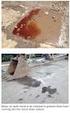 ACTIVITY NAME Training Requirements for Spill Prevention Control and Countermeasures (SPCC) 40 CFR Part 112 Naval Air Station Corpus Christi Texas CY 2014 BOTTOM LINE UP FRONT To prevent oil discharges
Polychlorinated Biphenyl Inspection Manual
 EPA-305-X-04-002 Polychlorinated Biphenyl Inspection Manual August 2004 Office of Compliance Office of Enforcement and Compliance Assurance U.S. Environmental Protection Agency 1200 Pennsylvania Avenue,
EPA s proposed hazardous waste pharmaceutical regulations
 EPA s proposed hazardous waste pharmaceutical regulations November 4, 2015 By J. Timothy Ramsey The United States Environmental Protection Agency ( EPA ) published proposed regulations in the Federal Register
SOP 4: Spill Response and Cleanup Procedures SOP 4: SPILL RESPONSE AND CLEANUP PROCEDURES
 SOP 4: SPILL RESPONSE AND CLEANUP PROCEDURES Municipalities are responsible for any contaminant spill or release that occurs on property they own or operate. Particular areas of concern include any facilities
UTILITIES DEPARTMENT
 UTILITIES DEPARTMENT Dear Business Owner, As a Business owner or manager you know how important it is to provide a safe and reliable service or product. Similarly, the City of Brighton Utilities Department
Hazardous Waste Compliance Awareness For Faculty and Staff
 Hazardous Waste Compliance Awareness For Faculty and Staff Important information for campus employees generating, handling or storing hazardous waste I. Hazardous Waste A. Materials being used for their
An Information Booklet Addressing PCB-Containing Materials in the Indoor Environment of Schools and Other Public Buildings
 An Information Booklet Addressing PCB-Containing Materials in the Indoor Environment of Schools and Other Public Buildings Prepared by Bureau of Environmental Health Massachusetts Department of Public
PCB STORAGE. 1) 2-drum unit (4 x 2 x 4 ) 2) 4-drum unit (4 x 4 x 4 ) 3) 8-drum unit (8 x 4 x 4 ) 4) 16-drum unit (8 x 8 x 10 )
 PCB STORAGE With the exception of utilities, very few PCB owners are choosing to store their PCB wastes on site. The practice of on-site PCB storage was commonplace before Swan Hills opened up in 1996
Extraction Oil and Gas, LLC. Diamond Valley Central Oil Terminal Waste Management Plan
 Extraction Oil and Gas, LLC. Diamond Valley Central Oil Terminal Waste Management Plan Scope: This Extraction Oil and Gas Waste Management Plan has been prepared to provide operations personnel at the
OIL POLLUTION PREVENTION REGULATIONS
 OIL POLLUTION PREVENTION REGULATIONS The Newly Revised SPCC Rules Spill Prevention Control and Countermeasure NON-TRANSPORTATION RELATED ONSHORE AND OFFSHORE FACILITIES Code of Federal Regulations Title
Spill Prevention, Control & Cleanup SC-11
 Objectives Cover Contain Educate Reduce/Minimize Product Substitution Description Spills and leaks, if not properly controlled, can adversely impact the storm drain system and receiving waters. Due to
New York State Department of Environmental Conservation 625 Broadway, Albany, NY 12233 www.dec.ny.gov. Environmental Self Audit For Small Businesses
 New York State Department of Environmental Conservation 625 Broadway, Albany, NY 12233 www.dec.ny.gov Environmental Self Audit For Small Businesses Disclaimer The materials in this document are intended
APPENDIX G Materials Storage and Handling Guidelines
 APPENDIX G Materials Storage and Handling Guidelines 1.0 INTRODUCTION Operations at Austin-Bergstrom International Airport (ABIA) comprise several different industrial activities including aircraft, ground
7. Chemical Waste Disposal Procedures
 7. Chemical Waste Disposal Procedures Substances that Can and Cannot be Disposed of via Sink Drains or in Regular Solid Refuse Containers 1. It is prohibited to pour down a sink or floor drain, or place
Frequently Asked Questions about Hazardous Waste Lamps (e.g., fluorescent or other lights containing mercury)
 Frequently Asked Questions about Hazardous Waste Lamps (e.g., fluorescent or other lights containing mercury) I. Current Regulatory Status of Fluorescent Lamps in NC What is the current regulatory status
WASTE MANAGEMENT PLAN CERTIFICATION AND COMPLIANCE FORM (GSFA Residential Energy Retrofit Program)
 Golden State Finance Authority (GSFA) 1215 K Street, Suite 1650 Sacramento, California 95814 Phone: (855) 740-8422 Fax: (916) 444-3219 www.gsfahome.org WASTE MANAGEMENT PLAN CERTIFICATION AND COMPLIANCE
FUELING AND FUEL STORAGE
 FUELING AND FUEL STORAGE BENCHMARK Implement spill prevention measures whenever fuel is handled or stored. Report, minimize, contain and clean up spills that do occur. FUELING BMPS Spills of diesel, oil,
Evaluating Water-Damaged Electrical Equipment
 Evaluating Water-Damaged Electrical Equipment 1 USE OF THIS PUBLICATION This publication provides information on how to evaluate electrical equipment that has been exposed to water through flooding, fire
Chapter 2 Stormwater Pollution Prevention Plan (SWPPP) for Park Operations
 SWPPP for Park Operations 2 Chapter 2 Stormwater Pollution Prevention Plan (SWPPP) for Park Operations Bordered by Lake Washington & Lake Sammamish, the City of Bellevue has more than 60 miles of streams,
Florida Department of Environmental Protection
 Florida Department of Environmental Protection Background Mobile vehicle and equipment washing involves washing at a location where vehicles are based (such as a trucking company, warehouse, bus station,
NEW JERSEY SMALL BUSINESS ENVIRONMENTAL ASSISTANCE PROGRAM. Dry Cleaner Compliance Calendar 2012
 NEW JERSEY SMALL BUSINESS ENVIRONMENTAL ASSISTANCE PROGRAM Dry Cleaner Compliance Calendar 2012 Welcome The New Jersey Small Business Environmental Assistance Program developed this guidance document to
HAZARDOUS WASTE MANAGEMENT PROGRAM
 HAZARDOUS WASTE MANAGEMENT PROGRAM UNIVERSITY RISK MANAGEMENT Occupational Safety and Health Programs 19 Hagood Avenue, Suite 908 Charleston, SC 29425 843-792-3604 Revised: January 2015 TABLE OF CONTENTS
Spill Prevention, Control and Countermeasure (SPCC) Training
 Spill Prevention, Control and Countermeasure (SPCC) Training Fort Jackson 2015 Origins of SPCC Regulatory History 1972 Clean Water Act Oil Pollution Act of 1990 Spill Prevention Control and Countermeasures
Critical Regulations SUMMARY OF. Stormwater Management Regulations (National Pollutant Discharge Elimination System or "NPDES ) 40 CFR 122.
 SUMMARY OF Critical Regulations Stormwater Management Regulations (National Pollutant Discharge Elimination System or "NPDES ) 40 CFR 122.26 Spill Prevention, Control, and Countermeasures Rule (SPCC) 40
This guidance was prepared to parallel the Low Hazard Exemption process guidance prepared by the Waste and Materials Management Program.
 RR-999 Management of Contaminated Soils and Other Waste Materials Under s. NR 718 Wis. Adm. Code Wisconsin Department of Natural Resources (November, 2014) The attached document, Management of Contaminated
DIRECTIVE 055: STORAGE REQUIREMENTS FOR THE UPSTREAM PETROLEUM INDUSTRY. August 2012
 DIRECTIVE 055: STORAGE REQUIREMENTS FOR THE UPSTREAM PETROLEUM INDUSTRY August 2012 SECTION 2 The storage requirements in Directive 055 apply to upstream petroleum facilities, well sites, and pipelines
The Lamp Recycling Outreach Project
 Training Module (1-hour version) for Generators and Handlers Of Fluorescent and Mercury-Containing Lamps (and Ballasts) (Training required by the Universal Waste Rule) Prepared by: The Lamp Recycling Outreach
Good Housekeeping Practices for DPW/Fleet Maintenance Facilities
 Good Housekeeping Practices for DPW/Fleet Maintenance Facilities Kevin P. Walker C&S Engineers, Inc. Best Management Practices Best Management Practices (BMPs) are measures and/or controls used to prevent
SPILL PREVENTION AND RESPONSE PLAN TEMPLATE FOR BUSINESSES IN DAYTON S SOURCE WATER PROTECTION AREA
 SPILL PREVENTION AND RESPONSE PLAN TEMPLATE FOR BUSINESSES IN DAYTON S SOURCE WATER PROTECTION AREA Regulated Substance Management: All Regulated Substances, including chemical wastes, are to be managed
Improper storage of fuel on construction sites will increase the risk of water pollution that may occur as a result of leaks or spills.
 WQ-10 Best Management Practice (BMP) Water Quality Protection Guideline Secondary Containment Design Standards Fuel Storage on Construction Sites According to the EPA, the majority of water pollution in
Michigan Dry Cleaning Environmental Compliance Workbook
 Michigan Dry Cleaning Environmental Compliance Workbook Michigan Department of Environmental Quality Environmental Science and Services Division Clean Air Assistance Program Jennifer M. Granholm, Governor
Managing Floor Drains and Flammable Traps
 Managing Floor Drains and Flammable Traps Contents: Problem... 1 Solution... 2 Maintenance... 2 Waste Management Options... 2 For More Information... 4 BMP Chart... 5 This fact sheet discusses recommended
SPILL RESPONSE PLAN. What is the Issue? Regulatory Requirements. General Information
 An equal opportunity university SPILL RESPONSE PLAN What is the Issue? Accidental spills of petroleum products, common household cleaning products, hazardous materials or hazardous waste, can have negative
POLLUTION PREVENTION FACT SHEET: AUTOMOBILE MAINTENANCE
 POLLUTION PREVENTION FACT SHEET: AUTOMOBILE MAINTENANCE Description This pollution prevention measure involves creating a program of targeted outreach and training for businesses involved in automobile
RCRA, Superfund & EPCRA Call Center Training Module
 United States Environmental Protection Agency Solid Waste and Emergency Response (5305W) EPA530-K-02-024I October 2001 RCRA, Superfund & EPCRA Call Center Training Module Introduction to: Transporters
The potential to adversely affect human
 Purpose and Applicability of Regulations The potential to adversely affect human health and the environment is always present when using, storing, and transporting regulated materials. Consequently, numerous
Newport News Shipbuilding Contractor Environmental, Health and Safety Resource Manual Waste Management
 Newport News Shipbuilding Contractor Environmental, Health and Safety Resource Manual Waste Management Newport News Shipbuilding Page 1 WASTE MANAGEMENT 1. Purpose and Scope a. The purpose of this section
UDOT SPILL PREVENTION and RESPONSE PLAN for CONSTRUCTION SITES
 UDOT SPILL PREVENTION and RESPONSE PLAN for CONSTRUCTION SITES February 2014 The plan contained in the following pages was developed in part from UDOT Construction Division s Safety and Health Manual,
Spill Control Prevention Plan (SCPP)
 Spill Control Prevention Plan (SCPP) FACILITY INFORMATION PLEASE PRINT Facility Name: Mailing Address: Physical address if different: Owner Name: Owner Address: Primary Contact Name: Work Phone Number:
40 CFR 262.11 Hazardous Waste Determination
 262.11 states, the following: 40 CFR 262.11 Hazardous Waste Determination [which is incorporated into 391 3 11.08(1) of the Georgia Rules for Hazardous Waste Management by reference] A person who generates
OIL STORAGE REQUIREMENTS OF THE SPCC REGULATIONS. Christopher J. Ecsedy, P.E. Fuss & O'Neill, Inc. 146 Hartford Road Manchester, CT 06040
 ABSTRACT OIL STORAGE REQUIREMENTS OF THE SPCC REGULATIONS Christopher J. Ecsedy, P.E. Fuss & O'Neill, Inc. 146 Hartford Road Manchester, CT 06040 The SPCC regulations entail numerous requirements for the
UPDATE ON MAINE'S UNDERGROUND TANK LAWS
 MAINE OIL DEALERS ASSOCIATION TECHNICAL BULLETIN #6.5 MAINE UNDERGROUND TANK LAW CHANGES September, 1992 [Replaces Technical Bulletin #6.4, issued January, 1992] UPDATE ON MAINE'S UNDERGROUND TANK LAWS
History of the SPCC Rule
 2010 SPCC Training SPCC Rule History of the SPCC Rule The SPCC plan is a document required under the clean water act (CWA) It became effective in 1972 and has changed little in 32 years. The rule was formally
HAZARDOUS WASTE MANAGEMENT PROGRAM. For OTTERBEIN UNIVERSITY. Prepared by: 140 North Otterbein Avenue Westerville, Ohio 43081
 HAZARDOUS WASTE MANAGEMENT PROGRAM For OTTERBEIN UNIVERSITY Prepared by: 140 North Otterbein Avenue Westerville, Ohio 43081 Otterbein University 0 TABLE OF CONTENTS 1.0 PURPOSE AND SCOPE... 1 2.0 ROLES
Natural Resources Conservation Authority Guidelines for Secondary Containment of Hazardous Liquids stored Above-ground
 Natural Resources Conservation Authority Guidelines for Secondary Containment of Hazardous Liquids stored Above-ground December 2011 Table of Contents Definition of Terms... 2 Requirements for Secondary
BEST MANAGEMENT PRACTICES FOR DENTAL OFFICES CLEAN WATER INDUSTRIAL WASTE MANAGEMENT DIVISION OF THE CITY OF LOS ANGELES
 BEST MANAGEMENT PRACTICES FOR DENTAL OFFICES CLEAN M A K I N G I T H A P P E N WATER INDUSTRIAL WASTE MANAGEMENT DIVISION OF THE CITY OF LOS ANGELES B E S T M A N A G E M E N T P R A C T I C E S Dental
Environmental Health & Safety
 Environmental Health & Safety Title: Oil Spill Notification, Reporting, and Response Effective Date: 04/01/2008 Document #: PBS-007-001.JPB Revision Date: Rev. 0 I. Purpose of the Policy: To ensure Oil
Work Type Definition
 Work Type Definition Page 1-6 details the work type definition. In order to become pre-qualified for this work type, please see the Work Type Submittal Requirements on pages 7-8. I. Description A. Work
RULE 8-8 - ORGANIC COMPOUNDS - WASTEWATER COLLECTION AND SEPARATION SYSTEMS
 BAY AREA AIR QUALITY MANAGEMENT DISTRICT RULE 8-8 - ORGANIC COMPOUNDS - WASTEWATER COLLECTION AND SEPARATION SYSTEMS (ADOPTED: January 17, 1979) (AMENDED: November 1, 1989; October 6, 1993; June 15, 1994;
Spill Prevention Control and Countermeasure (SPCC) Regulations Fact Sheet
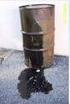 Spill Prevention Control and Countermeasure (SPCC) Regulations Fact Sheet REGULATORY SUMMARY The Spill Prevention Control and Countermeasure (SPCC) regulations strive to prevent oil from entering navigable
Disposal of Pharmaceuticals, and their empty containers, in the Workplace
 Disposal of Pharmaceuticals, and their empty containers, in the Workplace Prepared by Bio-Team Mobile LLC There is a lot of misinformation being circulated about disposal of pharmaceuticals ever since
SILICON VALLEY CLEAN WATER. May 2015
 SILICON VALLEY CLEAN WATER May 2015 Slug Discharge Control and Spill Containment Guidelines This document was revised and used with the permission of the Los Angeles County Sanitation District, Industrial
ST. VINCENT AND THE GRENADINES
 ST. VINCENT AND THE GRENADINES MARITIME ADMINISTRATION CIRCULAR N POL 008 - Rev 1 MARPOL ANNEX I OIL RESIDUE (SLUDGE) AMENDMENTS - MEPC 59 TO: SHIPOWNERS, SHIPS OPERATORS AND MANAGERS, MASTERS APPLICABLE
ENVIRONMENTAL PROTECTION AGENCY
 ENVIRONMENTAL PROTECTION AGENCY Fees Requires application fees for state isolated wetlands permits to be credited to the Surface Water Protection Fund, which is used for the administration of surface water
EMERGENCY PETROLEUM SPILL WASTE MANAGEMENT GUIDANCE. Hazardous Materials and Waste Management Division (303) 692-3300
 EMERGENCY PETROLEUM SPILL WASTE MANAGEMENT GUIDANCE Hazardous Materials and Waste Management Division (303) 692-3300 First Edition January 2014 This guidance is meant to provide general information to
Treatment of Hazardous Waste On-Site by Generators
 IDEM Indiana Department of Environmental Management Office of Land Quality 100 North Senate Indianapolis, IN 46204 OLQ PH: (317) 232-8941 Guidance Treatment of Hazardous Waste On-Site by Generators The
How To Understand And Understand Solid And Hazardous Waste
 Learning Objectives Solid and Hazardous Wastes Gene D. Schroder PhD To understand the sources of solid and hazardous wastes. To understand methods of solid waste disposal. To evaluate the health risks
Underground Storage Tanks
 Underground Storage Tanks An Informational and Guidance Document for the University Community. Please contact Yale Environmental Health and Safety for latest Regulatory Requirements. A typical UST installation
Spill Prevention, Control and Countermeasure (SPCC) Rule
 Spill Prevention, Control and Countermeasure (SPCC) Rule Code of Federal Regulations Title 40 CFR Part 112 Training Guide for Oil and Fuel handlers on Farms 1 Purpose of SPCC Rule To prevent oil discharges
ABOVE-GROUND STORAGE TANKS
 ABOVE-GROUND STORAGE TANKS Above-ground storage tanks in Georgia are regulated by the State Fire Marshall and by the EPA. Above-ground tanks containing 1,100 gallons or less do not require any secondary
COMPLIANCE MANAGEMENT STRATEGIES. Presented by: Megan Kazmierczak, ECS Eclipse
 COMPLIANCE MANAGEMENT STRATEGIES Presented by: Megan Kazmierczak, ECS Eclipse AST vs. UST Compliance requirements Aboveground Storage Tanks (ASTs): Misconception that ASTs are unregulated Most are subject
APPENDIX O. Spill Prevention and Emergency Response Plan. G3 Terminal Vancouver Port Metro Vancouver Project Permit Application APPENDIX O
 APPENDIX O Spill Prevention and Emergency Response Plan APPENDIX O G3 Terminal Vancouver Port Metro Vancouver Project Permit Application G3 TERMINAL VANCOUVER: PORT METRO VANCOUVER SPILL PREVENTION AND
A Guide for Used Oil Transporter Training Programs. Following are excerpts from laws and rules pertaining to Used Oil Transporter Certification
 A Guide for Used Oil Transporter Training Programs Introduction An used oil transporter that transports over public highways more than 500 gallons of used oil annually, not including oily waste, must become
Green Seal Best Practices Guide for Fleet Vehicle Maintenance Operations
 Green Seal Best Practices Guide for Fleet Vehicle Maintenance Operations June 4, 1996 Green Seal, Inc. 1001 Connecticut Ave. NW, Ste 872 Washington, DC USA 20036-5525 (202) 872-6400 FAX (202) 872-4324
Best Management Practices for Mercury Waste Management in Dental Offices
 Best Management Practices for Mercury Waste Management in Dental Offices Mercury Waste Best Management Practices (BMPs) for Dental Facilities are designed to comply with environmental regulations, prevent
Evaluating Water-Damaged Electrical Equipment
 Evaluating Water-Damaged Electrical Equipment 1 USE OF THIS PUBLICATION This publication provides information on how to evaluate electrical equipment that has been exposed to water through flooding, fire
ATTACHMENT 12 CONTAINERS
 ATTACHMENT 12 CONTAINERS Attachment 12 - Page 1 Table of Contents Table of Contents List of Tables List of Acronyms 12.1 Applicability 12.2 Description of 12.3 Reserved 12.4 Reserved 12.5 Description of
ENVIRONMENTAL HEALTH & SAFETY/RISK MANAGEMENT Contractor Management (including Sub-Contractors)
 ENVIRONMENTAL HEALTH & SAFETY/RISK MANAGEMENT Contractor Management (including Sub-Contractors) Contractors have the responsibility to ensure the health and safety of their workers and that their work
UNIFIED FACILITIES GUIDE SPECIFICATIONS
 USACE / NAVFAC / AFCEC / NASA UFGS-02 81 00 (February 2010) ----------------------------- Preparing Activity: USACE Superseding UFGS-02 81 00 (April 2006) UNIFIED FACILITIES GUIDE SPECIFICATIONS References
Appendix VIII: Spill Prevention, Control and Countermeasure (SPCC) Plans
 Appendix VIII: Spill Prevention, Control and Countermeasure (SPCC) Plans Background What is a Spill Prevention, Control and Countermeasure (SPCC) Plan? An SPCC plan is a written document that describes
TEXAS TECH UNIVERSITY HAZARDOUS WASTE PROGRAM DEPARTMENT OF ENVIRONMENTAL HEALTH AND SAFETY
 TEXAS TECH UNIVERSITY HAZARDOUS WASTE PROGRAM DEPARTMENT OF ENVIRONMENTAL HEALTH AND SAFETY 1 TABLE OF CONTENTS I II III IV V VI VII INTRODUCTION CHEMICAL HAZARDOUS WASTE 1. Definition 2. Characteristics
Waste Oil Collection / Storage
 ENVIRONMENTAL & REGULATORY SERVICES Storage Tank Regulation Section P. O. Box 7837 Madison, Wisconsin 53707-7837 TDD #: (608) 264-8777 http://www.commerce.state.wi.us http://www.wisconsin.gov Jim Doyle,
TRAINING SPCC/SWPP Training UGA. Automotive Center. Campus Transit
 SPILL PREVENTION, CONTROL, AND COUNTERMEASURE TRAINING SPCC/SWPP Training UGA STORM WATER Automotive Center POLLUTION Campus Transit PREVENTION PLAN PLAN Goals of SPCC/SWPP Training Introduce facility
Evaluating Water-Damaged Electrical Equipment
 Evaluating Water-Damaged Electrical www.nema.org Evaluating Water-Damaged Electrical 1 USE OF THIS PUBLICATION This publication provides information on how to evaluate electrical equipment that has been
~CSRMA ALERT~ REVISED SPCC RULE WILL IMPACT MOST POTW S
 ~CSRMA ALERT~ September 17, 2004 REVISED SPCC RULE WILL IMPACT MOST POTW S A CSRMA member in the San Francisco Bay Area was recently inspected by the EPA and Bay Area Regional Water Quality Control Board
GUIDELINES FOR WATER-DAMAGED ELECTRICAL EQUIPMENT
 GUIDELINES FOR HANDLING WATER-DAMAGED ELECTRICAL EQUIPMENT NATIONAL ELECTRICAL MANUFACTURERS ASSOCIATION 1300 NORTH 17 TH STREET, SUITE 1752 ROSSLYN, VIRGINIA 22209 703 841-3200 703 841-5900 FAX WWW.NEMA.ORG
Notification of RCRA Subtitle C Activity
 United States Environmental Protection Agency January 2015 Notification of RCRA Subtitle C Activity Instructions and Form EPA Form 8700-12 (OMB #2050-0024; Expires 01/31/2017) Office of Resource Conservation
2013 CONSTRUCTION CONTRACTOR CATALOGUE ECATTS. Copyright ECATTS. All Rights Reserved.
 2013 CONSTRUCTION CONTRACTOR CATALOGUE ECATTS Copyright ECATTS. All Rights Reserved. TABLE OF CONTENTS Introduction Course Descriptions Construction Contractors... 5 Air/Emissions Asbestos Drinking Water
Inspections Standard Operating Procedure 5 Aboveground Storage Tanks
 Aboveground Storage Tanks Aboveground Storage Tank Inspection This Standard Operating Procedure describes the steps that campus units that manage aboveground oil storage tanks (ASTs) or containers must
Contingency Plan. Facility Name
 Contingency Plan Facility Name This plan is reviewed annually and amended whenever changes occur that will significantly affect the ability of this facility to respond to an emergency situation. This includes
How To Get A Stormwater Discharge Permit In A City Of Scottsdale
 Environmental Regulations Guide Section 4 Pollution Prevention 4. 0 Pollution Prevention The Pollution Prevention Act (PPA) focuses on source reduction, i.e. on reducing the amount of pollution through
Handling of Specific Chemicals
 Handling of Specific Chemicals 1) ACETONITRILE 2) CARCINOGENS, MUTAGENS, TERATOGENS 3) COMBUSTIBLE LIQUIDS 4) CONTAMINATED CONTAINERS 5) CONTAMINATED EQUIPMENT 6) CORROSIVE ACIDS AND BASES 7) EXPLOSIVES
The Comprehensive Environmental Response,
 Purpose and Applicability of Regulations The Comprehensive Environmental Response, Compensation, and Liability Act (CERCLA) was enacted by Congress in 1980 to clean up the nation s hazardous waste sites
INDEX 9-7-100 GENERAL
 REGULATION 9 INORGANIC GASEOUS POLLUTANTS RULE 7 NITROGEN OXIDES AND CARBON MONOXIDE FROM INDUSTRIAL, INSTITUTIONAL AND COMMERCIAL BOILERS, STEAM GENERATORS AND PROCESS HEATERS INDEX 9-7-100 GENERAL 9-7-101