
Design, Fabrication and Experimental Testing of Solar Parabolic Trough Collectors with Automated Tracking Mechanism
|
|
|
- Virgil Bennett
- 10 years ago
- Views:
Transcription
1 ISSN (ONLINE): INTERNATIONAL JOURNAL OF RESEARCH IN AERONAUTICAL AND MECHANICAL ENGINEERING Design, Fabrication and Experimental Testing of Solar Parabolic Trough Collectors with Automated Tracking Mechanism Pradeep Kumar K V 1*, Srinath T 2, Venkatesh Reddy 3 1 M. Tech Student (Machine Design), Department of Mechanical Engineering, East West Institute of Technology, Bengaluru-91, Karnataka, India, [email protected] 2 Associate Professor, Department of Mechanical Engineering, Dr. Ambedkar Institute of Technology, Bengaluru- 91, Karnataka, India, [email protected] 3 Associate Professor, Department of Mechanical Engineering, Dr. Ambedkar Institute of Technology, Bengaluru- 91, Karnataka, India, [email protected] ABSTRACT This paper was concerned with an experimental study of parabolic trough collector s with its sun tracking system designed and manufactured. To facilitate rapid diffusion and widespread use of solar energy, the systems should also be easy to install, operate and maintain. In order to improve the performance of solar concentrator, different geometries and different types of reflectors were evaluated with respect to their optical and energy conversion efficiency. To assure good performance and long technical lifetime of a concentrating system, the solar reflectance of the reflectors must be high and long term stable. Therefore, different types of reflector materials and absorbing materials were analyzed in this work; also the optical properties and degradation of the reflecting surfaces were assessed. During the research, focus has shifted from evaluation of the performance of concentrating solar collector to analysis of the optical properties of reflector and absorbing materials. The shift of focus was motivated by the need to assess long term system performance and possibilities of optimizing the optical efficiency or reducing costs by using new types of reflector materials and absorbing materials. For the design of the SPTC frame, a finite element model had been developed and used to check the capability of the structure to absorb torsion and bending forces, under dead and wind loads. The SPTC was fabricated in local workshops and the sun tracking system was assembled using electric and electronic components in the market, while the mechanical components making up the driving system were procured from the second hand market. The fabricated SPTC and its tracking system were tested outdoors in the campus under dry and wet weather. The experimental results obtained have shown that the obtained characteristic curve of the tested Aluminium collector is considerably lower than that of a mirror collector which can be attributed to the higher thermal losses for the lack of the evacuated glass envelope around the absorbing tube, the end losses of the collector and the inaccuracy in tracking the sun. However, the mirror collector efficiency is about 8% higher than that of Aluminium under dry weather condition, which is fairly acceptable, considering that it was the first attempt to manufacture such mirror collector locally. Thus, the overall aim of the Pradeep Kumar K V, Srinath T, Venkatesh Reddy 37

2 work presented in this research was to investigate the possibilities to increase the efficiency of the solar energy systems, and thereby reducing the cost of the electricity or heat that was produced. Attention was also given to the long term durability and robustness of the system. The basic hypothesis was that the use of durable, light weight, low cost reflectors for increasing the concentrator efficiency. Keywords: Solar Parabolic Trough Collector, Cost Effective Design, Automated Sun Tracking Mechanism, Solar Collector Efficiency. 1. INTRODUCTION The operation of any solar thermal energy collector can be described as an energy balance between the solar energy absorbed by the collector and the thermal energy removed or lost from the collector. If no alternative mechanism is provided for removal of thermal energy, the collector receiver heat loss must equal the absorbed solar energy. The temperature of the receiver increases until the convective and radiation heat loss from the receiver equals the absorbed solar energy. The temperature at which this occurs is termed the collector stagnation temperature. For control of the collector temperature at some point cooler than the stagnation temperature, active removal of heat must be employed. This heat will then available for use in a solar energy system. The rate at which heat is actively removed from the collector determines the collector operating temperature. For removal of a large fraction of the absorbed solar energy as useful heat, the amount of heat lost from the receiver must be kept small. Receiver heat loss can be reduced by operating the collector near the ambient temperature (such as with low-temperature flat-plate collectors) or by constructing the collector such that heat loss at elevated temperature is reduced. The most common way of reducing receiver heat loss at elevated temperatures is to reduce the size of the hot surface (i.e., the receiver) since heat loss is directly proportional to area of the hot surface. Concentrating collectors reduce the area of the receiver by reflecting (or refracting) the light incident on a large area (the collector aperture) over an absorber of small area. With reduced heat loss, concentrating collectors can operate at elevated temperatures and still provide significant quantities of useful thermal energy. A second reason for using concentration in the design of solar collectors is that, in general, reflective surfaces are usually less expensive than absorbing (receiver) surfaces. Therefore, large amounts of inexpensive reflecting surface area can be placed in a field, concentrating the incident solar energy on smaller absorbing surfaces. However, concentrating collectors must track the sun s movement across the sky, adding significant cost to the construction of a concentrating collector system. 2. Basic Theory and Terminology A parabolic trough is a type of solar thermal energy collector. It was constructed as a long parabolic mirror (usually coated silver or polished aluminum) with a Dewar tube running its length at the focal point. Sunlight is reflected by the mirror and concentrated on the Dewar tube. The trough is usually aligned on a north-south axis, and rotated to track the sun as it moves across the sky each day. Alternatively the trough can be aligned on an east-west axis; this reduces the overall efficiency of the collector, due to cosine loss, but only requires the trough to be aligned with the change in seasons, avoiding the need for tracking motors. This tracking method works correctly at the spring and fall equinoxes with errors in the focusing of the light at other times during the year (the magnitude of this error varies throughout the day, taking a minimum value at solar noon). There is also an error introduced due to the daily motion of the sun across the sky, this error also reaches a minimum at solar noon. Due to these sources of error, seasonally adjusted parabolic troughs are generally designed with a lower solar concentration ratio. Heat transfer fluid (usually oil) runs through the tube to absorb the concentrated sunlight. The heat transfer fluid is then used to heat steam in a standard turbine generator. The process is economical and, for heating the pipe, thermal efficiency ranges from 60-80%. The overall efficiency from collector to grid, i.e. (Electrical Output Power) / (Total Impinging Solar Power) is about 15%, similar to PV (Photovoltaic Cells) and less than Stirling dish Pradeep Kumar K V, Srinath T, Venkatesh Reddy 38

3 concentrators. Current commercial plants utilizing parabolic troughs are hybrids; fossil fuels are used during night hours, but the amount of fossil fuel used is limited to a maximum 27% of electricity production, allowing the plant to qualify as a renewable energy source. Because they are hybrids and include cooling stations, condensers, accumulators and other things besides the actual solar collectors, the power generated per square meter of space ranges enormously. 2.1 Advantages of Concentrating Collectors 1) Reflecting surfaces require less material and are structurally simpler than flat plate collectors. 2) The absorber area of a concentrator system is smaller than that of flat plate system for same solar energy collection. 3) Heat lost to the surrounding per unit of solar energy collecting area is less than that of flat plate. 4) Working fluid can attain higher temperature in concentrating collector. 2.2 Losses in Collectors 1) Conductive losses: Heat transfer takes place through adjacent surfaces by conduction; this can be minimized by placing insulating materials in place of good conductors of heat. 2) Convective losses: Heat losses due to carry of heat by some medium like air from the surface can take place in these kinds of devices. This can be minimized by closing all the air gaps. 3) Radiative losses: Radiative losses from the absorber can be prevented by the use of spectrally selective absorber coatings. Such coatings have a high absorption of about 0.9 in the solar spectrum and a low emittance, usually of the order of 0.1, in the infrared spectrum, in which the absorber radiates to the environment. Selective absorber coating, therefore decrease heat losses and increase collector efficiency. 2.3 Basic Terminology Solar Concentration Ratio: The total amount of solar light energy concentration achieved by a given collector is termed as Solar Concentration Ratio. It is defined as ratio of averaged radiant solar flux integrated over the receiver area to the flux incident on the collector aperture. It directly relates the reflector quality. A higher concentration ratio allows the collector to reach a higher working temperature with minimal thermal loss, but requires higher manufacturing precision too. A very carefully constructed and adjusted collector may reach an effective concentration ratio as high as 100. Tilt Angle: Tilt angle is defined as the angle subtended by the focal line of trough collector with horizontal. Collectors based on heat pipes can have a strong tilt dependency and this must be considered when testing such collectors. Normally slopes below should be avoided but this cannot be taken as a general rule. Rim angle (Ψ rim ): The rim angle is defined as the angle subtended by the edges of the reflector at the focus. Collector Acceptance angle: Collector acceptance angle is defined as the sensitivity of the solar parabolic trough collector to tracking misalignment. Pradeep Kumar K V, Srinath T, Venkatesh Reddy 39

4 3. Geometric Design of SPTC Assembly 3.1 Design Objectives 1) To Design parabolic solar trough collectors for energy concentration. 2) To make cost effective solar trough collectors, so that it s affordable to common people. 3) To develop an automated sun tracking mechanism (N-S horizontal). 4) To bring up a system that constantly works with intended mechanism. 5) A system, which eliminates the human work considerably. 3.2 Solar Parabolic Trough Collector Design The Parabolic concentrating collector assembly was modelled by using UNIGRAPHICS NX3. Figure 1: Solar Parabolic Trough Collector Assembly Table 1: SPTC system specifications ITEM Value Type Collector aperture area 2.52x10 6 mm 2 Collector aperture 1200 mm Aperture to Length ratio 0.57 Rim angle 180 Receiver diameter 25 mm Tracking mechanism type Electronic Mode of tracking N-S horizontal The collector is designed with simple parabolic equation and merged of solar radiation method in order to optimize the fabrication with local material. According to the size limitation of highly polished Aluminium and Mirror sheet, 2100 mm long, 1200 mm wide and rim angle of 180, makes the focal line in place with the cord line. Simple parabolic equation can be applied to solve the above condition, where x is axial to parabolic curve, y is centre line of focal, R is radius of parabolic curve, and f is focal line, as shown in Figure 2. Consideration the simple parabolic equation: (1) Pradeep Kumar K V, Srinath T, Venkatesh Reddy 40 (2)

5 Figure 2: Schematic representation of a parabolic system The sheet is 1200 mm wide, has a curve of R, and focal point f is half of R, Therefore, α is cos α = (R/2) (1/R) α = 60 Thus, a curve length of 1200 mm and α = 60, it can be used to find length R: R = [b (18000)] / [2 π] Then finding the concentration ratio C, using a ratio between collecting area (A a ) and absorbing area (A r ) (3) (4) (5) The solar collecting area (A a ) is calculated by the projected area of collector, and A r will consider that of absorber a = 2 R sin α Where a is only the width of collector, which is reconsidered to be the width of absorber. FOCAL LENGTH: (6) Here X = 500 mm Y = 225 mm From simple parabolic equation we have X² = 2 R Y Radius (R) = X² / 2Y = 500² / 2*225 = cm Hence Focal length = R / 2 = /2 Focal length = mm. a) Support Stand of SPTC The support stand was made of Mild Steel. It consists of L and rectangle shaped cross sectioned bars welded together and two ball bearings fixed with the inner race with a rod. The outer race is rotary and mounted in the housing of absorber supporting plate. The specifications of the support frame are as given in Table 2. Pradeep Kumar K V, Srinath T, Venkatesh Reddy 41

6 Table 2: Specifications of Support Stand Dimension Height of the support stand due south Height of the support stand due north Distance between the two stands Width of the stand Thickness of the stand Value 790 mm 1190 mm 2100 mm 45 mm 5 mm Figure 3: Model of Support Stand b) Supporting frame of SPTC The frame modelled was of the form of L cross section and made of Mild Steel. The specifications of the support frame are as given in Table 3. Figure 4: Model of supporting frame Table 3: Specifications of Support frame Dimension Length of the Support frame Breadth of the Support frame Thickness of the Support frame c) Absorber Supporting Plate Value 2100 mm 1090 mm 2 mm There are 2 supporting plates welded to the two opposite sides along the length of the support frame. It houses the absorber pipe at both ends while the lower end of plate has two ball bearings mount which in turn connected to the supporting stand with one rotational degree of freedom. Pradeep Kumar K V, Srinath T, Venkatesh Reddy 42

7 Figure 5: Model of Absorber supporting plate Table 4: Specifications of Absorber Supporting Plate Dimension Length of the Plate Breadth of the Plate Thickness of the Plate Hole diameter for Absorber Pipe Value 400 mm 60 mm 3 mm 25 mm d) Radiation absorber pipe The absorber was designed according to the limitation of the collector, with considering parameters and common practice, such as, piping, working fluid velocity, fabrication and heat loss. Thereby, the absorber is fabricated by the seamless chromium pipe, with the inner diameter of 23 mm, outer diameter 25 mm and 2100 mm in length. Figure 6: Model of Absorber pipe Table 5: Specifications of Absorber Pipe Dimension Inner diameter of the Pipe Outer diameter of the Pipe Length of the Pipe Value 23 mm 25 mm 2150 mm The width of absorber, D, is defined by: Furthermore, the collector is fixed; therefore, the altitude angle will be affected to the image of all the times. It moves for 10 per day. Since the pipe is very long, so that two strips of carbon steel is attached to the tube for increasing the strength of absorber. Each Strip has the width of 25 mm. (7) Pradeep Kumar K V, Srinath T, Venkatesh Reddy 43

8 Thus, overall width of absorber w is 98 mm [(25x2) + 48]. Figure 7: Cross section of the absorber pipe. Thus the concentration ratio is modified to: (8) Where L is the length of both collector and absorber pipe. The refection coefficient of collector is approximated range of 0.8 to 0.85 by polished technique and the absorber pipe is coated with black colour. e) Parabolic trough ALUMINIUM TROUGH: To obtain the desired dimensions two highly polished Aluminium sheets are used. Each highly polished Aluminium sheets dimensions are as follows: Length : 1220 mm Breadth : 1250 mm Thickness : 3 mm Length of the reflector : 2100 mm Arc length of the reflector : 1200 mm (9) Figure 8: Aluminium trough MIRROR GLASS TROUGH: To obtain the desired dimensions 110 rectangular mirror pieces are used. Each highly reflective rectangular mirror piece dimensions are as follows, Length : 400 mm Pradeep Kumar K V, Srinath T, Venkatesh Reddy 44

9 Breadth Thickness : 50 mm : 2 mm Length of the reflector : 2100 mm Arc length of the reflector : 1200 mm f) Sun tracking Mechanism Figure 9: Mirror trough Most concentrators would collect so little energy in a fixed position that they must be provided with the capability to daily track the sun from morning (East) to sunset (West) to be cost-effective. The sun travels 360 in 24x60 minutes. Therefore, in 1 minute the sun moves by an angle of Therefore, in 30 minutes the sun moves by an angle = 0.25 x 30 = 7.5 This implies an error of cos (7.5 ) = %. Since this error is small, we have included only a basic manual tracking mechanism which must be set at the beginning of the 30 minutes span and need not be changed for 30 minutes. So in order to obtain maximum concentration the lens has to be rotated by an angle of 7.5 after every 30 minutes. Some concentrators can only be cost effective by tracking both the sun's daily path and the sun's annual inclination (which causes the sun to appear to move in declination by 47 over the year). Thus, concentrators may be non-tracking, single-axis tracking (which tracks east to west), or two-axis tracking (which tracks both east to west and north to south). Two-axis tracking provides the maximum solar energy collection but is not cost effective for most applications or collector designs. The Tracking Mechanism consists of a Stepper motor, Sprocket, Chain drive and 8051 Micro-Controller arrangement. STEPPER MOTOR A stepper motor is an electromechanical device which converts discrete electrical pulse into discrete mechanical movements. The shaft or spindle of a stepper motor rotate at equal angle of increment called steps when electrical command pulses are applied to it in the proper sequence. The sequence of the applied pulse is directly related to the direction of rotation of motor shaft and its speed directly related to the frequency of input pulses and total radiation at a stretch is directly related to the number of input pulse applied. Stepper motors with steps of 12, 24, 72, 144, 180 and 200 per revolution are available resulting in angle of the shaft increments of 30, 15, 5, 25, 2 and 1.8 per step. Special micro-stepping circuitry is sometimes provided to allow many more steps per revolution and these circuitry offer 10,000 steps per revolution or even more. Pradeep Kumar K V, Srinath T, Venkatesh Reddy 45

10 Figure 10: Stepper Motor Arrangement DESIGN OF SPROCKET & CHAIN MECHANISM Figure 11: Open chain drive mechanism Consider a Parabolic trough as a large Sprocket or gear. Let a chain drive be meshed with both sprockets, one mounted on the Stepper Motor & another on parabolic trough. STEP 1: To calculate the length of open chain drive Where δ1 = Radius of Larger Sprocket = 500 mm δ2 = Radius of Smaller Sprocket = 47.5 mm x = Centre distance = 750 mm. (10) L = π ( ) + (2 750) + [( )²/750] = 3600 mm = 3.6 m. Actual length of chain = 3.6-½πD1 = mm 2.2 m. STEP 2: To calculate the speed ratio Pradeep Kumar K V, Srinath T, Venkatesh Reddy 46

11 Let n1 = Speed of Larger Sprocket n2 = Speed of Smaller Sprocket. Where t = Thickness of Sprocket = 0.5 cm = 5 mm. S = Slip of chain = 0% (assumed). (11) Speed ratio = (n1/n2) = [(95+5) / (100+5)] = If the small sprocket rotates 1.8, then 1.8 (π/180) = radians. Then the larger sprocket rotates by = = radians = The stepper motor rotates 1.8 per step. The trough rotates by 3.6 per 15 min. Number of steps required for Stepper motor = 3.6 /0.179 = steps/ 15 min. 20 steps are performed in 15 min. For each step it takes = (15 60)/20 = 45 sec MICRO CONTROLLER ARRANGEMENT A key feature of the P89V51RD2 is its X2 mode option. The design engineer can keep the same performance by reducing the clock frequency by half, thus dramatically reducing the EMI. The Flash program memory supports both parallel programming and in serial to be reprogrammed in the end product under software control. Figure 12: Block Diagram of the Microcontroller Arrangement Pradeep Kumar K V, Srinath T, Venkatesh Reddy 47

12 4. Experimental setup and testing Figure 13: Actual Microcontroller Arrangement When SPTC, Mounting Stand, Copper pipe and Automated Sun Tracking Mechanism are integrated, the required assembly shall be configured. One Rotational degree of freedom was allowed about the focal line of the SPTC for sun tracking from 09:00 AM to 04:00 PM every day. SPTC shall be repositioned perpendicular to the sun, the next day and automatically rotated using sun tracking mechanism. Figure 14: Theoretical Setup of SPTC mount Assembly Pradeep Kumar K V, Srinath T, Venkatesh Reddy 48

13 The experimental setups used for testing the manufactured SPTC s are shown schematically in Figure 15 and Figure 16. In this experiment, water was filled from one end of the copper absorber pipe with other end closed. The temperature of water was measured by using mercury thermometer and tabulated for every hour from 09:00 am to 04:00 pm. The SPTC was rotated using a stepper motor and sprocket and chain mechanism to keep the sun perpendicular to the absorber pipe. The volume of water was measured by using a beaker. The battery supplies required power to the stepper motor to function. Figure 15: Final Setup of Aluminium foil type SPTC Assembly Figure 16: Final Setup of Mirror type SPTC Assembly Pradeep Kumar K V, Srinath T, Venkatesh Reddy 49

14 5 Observations and Results Testing was made on four different days with dry and wet weather. To determine the solar energy concentration, both Aluminium and Mirror troughs were tested. The various results were tabulated and analyzed with graphs. TEMPERATURE OF WATER IN ABSORBING PIPE USING ALUMINIUM TROUGH COLLECTOR DATE : 17/05/2009. WEATHER CONDITION : DRY WEATHER. MINIMUM TEMP DURING OBSERVATION : 31ºC around 9AM. MAXIMUM TEMP DURING OBSERVATION : 111 C around 1PM. TOTAL QUANTITY OF WATER TAKEN : 760cm³. Table 6: Aluminium trough dry weather condition TIME TEMPERATURE OF WATER IN ABSORBER PIPE(IN ºC) 09:00AM 31 10:00AM 73 11:00AM 90 12:00PM 106 1:00PM 111 2:00PM 96 3:00PM 87 4:00PM 62 DATE : 15/05/2009. WEATHER CONDITION : WET WEATHER. MINIMUM TEMPERATURE : 26 C around 9AM. MAXIMUM TEMERATURE : 60 C around 1PM. TOTAL QUANTITY OF WATER TAKEN : 760cm³. Table 7: Aluminium trough wet weather condition TIME TEMPERATURE OF WATER IN ABSORBER PIPE(IN ºC) 9:00AM 26 10:00AM 32 11:00AM 37 12:00PM 45 1:00PM 60 2:00PM 53 3:00PM 42 4:00PM 35 TEMPERATURE OF WATER IN ABSORBING PIPE USING MIRROR TROUGH COLLECTOR DATE : 18/05/2009. WEATHER CONDITION : DRY WEATHER MINIMUM TEMPERATURE : 35 C around 9AM. Pradeep Kumar K V, Srinath T, Venkatesh Reddy 50

15 MAXIMUM TEMPERATURE : 123 C around 1PM. TOTAL QUANTITY OF WATER TAKEN : 760cm ³ Table 8: Mirror trough dry weather condition TIME TEMPERATURE OF WATER IN ABSORBER PIPE(IN ºC) 9:00AM 35 10:00AM 78 11:00AM 94 12:00PM 117 1:00PM 123 2:00PM 113 3:00PM 102 4:00PM 88 DATE : 16/05/2009. WEATHER CONDITION : WET WEATHER. MINIMUM TEMP DURING OBSERVATION : 29 C around 9AM. MAXIMUM TEMP DURING OBSERVATION : 72ºC around 1PM. TOTAL QUANTITY OF WATER TAKEN : 760cm³. Table 9: Mirror trough wet weather condition TIME TEMPERATURE OF WATER IN ABSORBER PIPE(IN ºC) 9:00AM 29 10:00AM 40 11:00AM 49 12:00PM 61 1:00PM 72 2:00PM 63 3:00PM 57 4:00PM 42 Pradeep Kumar K V, Srinath T, Venkatesh Reddy 51

16 TEMPERATURE ( C) Aluminium Mirror TIME Graph 1: Temperature v/s time plot (Dry weather) TEMPERATURE ( C) Aluminium Mirror TIME Graph 2: Temperature v/s time plot (Wet weather) COLLECTOR EFFICIENCY CALCULATION: We have, Collector efficiency, Where, Q u = net useful heat gained by fluid.w/m 2 C p = Sp. Heat of fluid kj/kg K m = mass of fluid kg T fo =fluid outlet temperature 0 C (12) Pradeep Kumar K V, Srinath T, Venkatesh Reddy 52

17 For Aluminium trough: T fi = fluid inlet temperature 0 C A c = collector area m 2 H b = beam radiation W/m 2 hr R b = tilt factor for beam radiation Conditions: Dry weather Minimum temperature = 31 0 C Maximum temperature = C Mass of water, Net useful heat gained by fluid, m = density (ρ)* Volume (V) = 1000*760 = 0.76 kg Q u = mc p (T fo T fi ) = 0.76*4.217 (111-31) = W/m 2 Collector efficiency, η = / (0.83*350*1.123) = 78.59% For Mirror trough: Conditions: Dry weather Minimum temperature = 35 0 C Maximum temperature = C Net useful heat gained by fluid, Q u = mc p (T fo T fi ) = 0.76* (123-35) = W/m 2 Collector efficiency, η = / (0.83*350*1.123) = 86.45% With the available solar radiation data, efficiency for both troughs was found. Efficiency of Aluminium trough collectors on dry weather is 78.59% whereas Efficiency of Mirror trough collectors on dry weather is 86.45%. 6 Conclusions This research has its own special features. The collector cannot be easily tilted and oriented, as per the position of the sun with tracking mechanism and external power will be needed. The maintenance cost is minimum and hence economical. Running cost is nil. The labour cost is minimized on account of its simple design. Although the research has its own limitations, that is, intermittent supply of solar energy and converted energy cannot be stored; it is satisfactory considering the market survey report. The use of solar troughs is limited only to clear sunny days. The Solar trough tilting angle is limited to a maximum of 120. The steam can produce scaling inside the metal absorber pipe and hence, non-corrosive coating should be applied in it. The Tracking Mechanism is of single Axis (North- Pradeep Kumar K V, Srinath T, Venkatesh Reddy 53

18 South horizontal). Additional maintenance is required to clean the dirt absorbed on the glass surface. Periodic maintenance is necessary to avoid any complications. As other forms of energy are fast depleting and polluting the atmosphere, non-conventional energy resources like solar energy are best suited to use. The solar concentrating collector is among the best way to use solar energy efficiently due to its advantages to convert abundantly available solar energy into effective and convenient form of heat energy which can be used for various purposes. Herein, this converted heat energy has been used for several applications like water heating, candle making, solar cooking and for popping corns. Solar concentrating collector allows us to use solar heat energy for various purposes without using any external power source and avoids using separate devices for each individual purpose. Finally, it was concluded that concentration of Solar Energy on Mirror Parabolic Trough Collector has been intensified when compared to Aluminium Parabolic Trough Collector. 7 Scopes for Future Work Solar cells can be used in places of absorbing pipe and electricity can be generated and thereby stored in battery. Thus electricity can be used for several purposes. Teflon coating can be given to the absorber pipes used instead of black paint in order to maintain cleanliness. This will be more useful for mass production of food products. Design involving automatic tracking of the sun using LED s can be incorporated in support frame of the collector. A single highly Reflective Mirror sheet can be employed in place of Mirror pieces for better reflection of the incident sunlight and thus achieving higher temperatures. Dewar tubes which are constructed like Dewar flasks, but not silvered and open at ends, having the space between the walls exhausted so as to prevent heat conduction, and sometimes having the glass silvered to prevent absorption of Radiant heat can be used. The Two Axis Tracking Mechanism can be used instead of a single Axis Tracking Mechanism to obtain maximum intensity of solar radiation. A larger area can be covered using relatively inexpensive mirrors rather than using expensive solar cells. Concentrated light can be redirected to a suitable location via optical fibre cable. For example, illuminating buildings, like Hybrid Solar Lighting. References S.D. Odeh, G.L. Morrison, M. Behnia, et al., June 1998, Modelling of parabolic trough direct steam generation solar collectors, Science direct, Elsevier, Solar Energy, Volume 62, Issue 6, Pages A. Fernandez-Garcia, E. Zarza, L. Valenzuela, M. Perez, et al., September 2010, Parabolic trough solar collectors and their applications, Science direct, Elsevier, Renewable and sustainable Energy, Volume 14, Issue 7, pages Soteris Kalogirou, Eleftheriou P., Lloyd S., Ward J., et al., 1994, Design and performance characteristics of a parabolic trough collector system, Science direct, Elsevier, Applied Energy, Volume 1, Issue 47, Pages Soteris Kalogirou, Lloyd S., Ward J., et al., 1997, Modelling, Optimization and Performance Evaluation of a parabolic trough collector Steam Generation System, Science direct, Elsevier, Solar Energy, Volume 60, Pages Soteris Kalogirou, September 1996, Parabolic trough collector system for low temperature steam generation; Design and performance characteristics, Science direct, Elsevier, Applied Energy, Volume 55, Issue 1, Pages Markus Eck, Tobias Hirsch, et al., February 2007, Dynamics and control of parabolic trough collector loops with direct steam generation, Science direct, Elsevier, Solar Energy, Volume 81, Issue 2, pages A. Valan Arasu, T. Sornakumar, October 2007, Design, manufacture and testing of fibreglass reinforced parabola trough for parabolic trough solar collectors, Science direct, Elsevier, Solar Energy, Volume 81, Issue 10, Pages Pradeep Kumar K V, Srinath T, Venkatesh Reddy 54

19 A.Rabl, P. Bendt, H.W. Gaul, et al., 1982, Optimization of parabolic trough solar collectors, Science direct, Elsevier, Solar Energy, Volume 29, Issue 5, Pages M. Collares-Pereira, J. M. Gordon, A. Rabl, R. Winston, et al., 1991, High concentration two-stage optics for parabolic trough solar collectors with tubular absorber and large rim angle, Science direct, Elsevier, Solar Energy, Volume 47, Issue 6, Pages H. E. I. Khonkar, A. A. M. Sayigh, et al., February 1995, Optimization of the tubular absorber using a compound parabolic concentrator, Science direct, Elsevier, Solar Energy, Volume 6, Issue 1, Pages Danny M. Deffenbaugh, Steve T. Green, Steve J. Svedeman, et al., 1986, The effect of dust accumulation on linefocus parabolic trough solar collector performance, Science direct, Elsevier, Solar Energy, Volume 36, Issue 2, Pages Figueredo, Stacy Lee, et al., 2011, Parabolic trough solar collectors: design for increasing efficiency, Massachusetts Institute of Technology, DSpace@MIT. G. D. Rai, 2000, Non-Conventional Energy Sources, Fourth Edition, Khanna Publishers. S. P. Sukhatme, J. K. Nayak, et al., 2008, Solar Energy: Principles of Thermal Collection and Storage, Third Edition, Tata McGraw-Hill Publishing Companies. A Brief Author Biography Pradeep Kumar K V Student, presently pursuing M. Tech in East West Institute of Technology, Bengaluru under Visvesvaraya Technological University (VTU), Belgaum. He has research interests in the field of Space Systems, Aeronautical Design and FE Analysis. Srinath T Associate Professor, Department of Mechanical Engineering, Dr. Ambedkar Institute of Technology, Bengaluru. He has both teaching and research experience of more than 15 years in the field of Non Conventional Energy Resources, Composite Materials Technology, Automobile Engineering, Machine Design and Finite Element Analysis. He has published more than 20 five papers in the International and National Journals and Conferences. Venkatesh Reddy Associate Professor, Department of Mechanical Engineering, Dr. Ambedkar Institute of Technology, Bengaluru. He has both teaching and research experience of more than 20 years in the field of Engineering Economics, CAD/CAE, Mechatronics and Robotics. He has published more than 30 papers in the International and National Journals and Conferences. Pradeep Kumar K V, Srinath T, Venkatesh Reddy 55

Testing and Performance of the Convex Lens Concentrating Solar Power Panel Prototype
 Testing and Performance of the Convex Lens Concentrating Solar Power Panel Prototype Ankit S. Gujrathi 1, Prof. Dilip Gehlot 2 1 M.tech (2 nd Year), 2 Assistant Professor, Department of Mechanical Engg.,
Performance analysis of a Gamma type Stirling engine using three different solar concentrators
 Performance analysis of a Gamma type Stirling engine using three different solar concentrators Krishanu Ganguly 1, Bhushan Dewangan *2, Sumit Banerjee 3, Rajeev Kumar 4 1 Krishanu Ganguly 2 Bhushan Dewangan
Impact of Reflectors on Solar Energy Systems
 Impact of Reflectors on Solar Energy Systems J. Rizk, and M. H. Nagrial Abstract The paper aims to show that implementing different types of reflectors in solar energy systems, will dramatically improve
Solar energy and power
 Solar energy and power Solar Basics Energy from the Sun The sun has produced energy for billions of years. Solar energy is the sun s rays (solar radiation) that reach the Earth. This energy can be converted
Solar Tracking Application
 Solar Tracking Application A Rockwell Automation White Paper Solar trackers are devices used to orient photovoltaic panels, reflectors, lenses or other optical devices toward the sun. Since the sun s position
Solar thermal collectors for medium temperature applications: a comprehensive review and updated database
 Available online at www.sciencedirect.com ScienceDirect Energy Procedia 00 (2015) 000 000 www.elsevier.com/locate/procedia SHC 2015, International Conference on Solar Heating and Cooling for Buildings
Solar Energy System Design
 1. Solar Energy System Design The largest solar electric generating plant in the world produces a maximum of 354 megawatts (MW) of electricity and is located at Kramer Junction, California. This solar
Renewable Energy. Solar Power. Courseware Sample 86352-F0
 Renewable Energy Solar Power Courseware Sample 86352-F0 A RENEWABLE ENERGY SOLAR POWER Courseware Sample by the staff of Lab-Volt Ltd. Copyright 2009 Lab-Volt Ltd. All rights reserved. No part of this
Full credit for this chapter to Prof. Leonard Bachman of the University of Houston
 Chapter 6: SOLAR GEOMETRY Full credit for this chapter to Prof. Leonard Bachman of the University of Houston SOLAR GEOMETRY AS A DETERMINING FACTOR OF HEAT GAIN, SHADING AND THE POTENTIAL OF DAYLIGHT PENETRATION...
Abstract. emails: [email protected], [email protected], phone: 860-429-6508, fax: 860-429-4456
 SOLAR THERMAL POWER PLANT WITH THERMAL STORAGE Ronald C. Derby, President Samuel P. Lazzara, Chief Technical Officer Cenicom Solar Energy LLC * Abstract TM employs 88 parabolic mirrors (concentrating dishes)
American Society of Agricultural and Biological Engineers
 ASAE S580.1 NOV2013 Testing and Reporting Solar Cooker Performance American Society of Agricultural and Biological Engineers ASABE is a professional and technical organization, of members worldwide, who
The impact of high latitudes on the optical design of solar systems
 The impact of high latitudes on the optical design of solar systems Mats Rönnelid 1, Björn Karlsson 2 and J M Gordon 3 1 Solar Energy Research Center, Dalarna University, S-781 88 Borlänge, Sweden 2 Vattenfall
Experimental study of a parabolic solar concentrator
 Revue des Energies Renouvelables CICME 08 Sousse (008) 193-199 Experimental study of a parabolic solar concentrator A.R. El Ouederni 1*, A.W. Dahmani, F. Askri 3, M. Ben Salah 3 and S. Ben Nasrallah 4
Test Report No. C1319LPEN
 Institut für Solartechnik Hochschule für Technik Rapperswil Oberseestrasse 10, CH 8640 Rapperswil Tel +41 55 222 48 21, Fax +41 55 222 48 44 www.solarenergy.ch Ordered by: Thermics S.r.l. Via dell'olmo
The Three Heat Transfer Modes in Reflow Soldering
 Section 5: Reflow Oven Heat Transfer The Three Heat Transfer Modes in Reflow Soldering There are three different heating modes involved with most SMT reflow processes: conduction, convection, and infrared
Energy and Energy Transformations Test Review
 Energy and Energy Transformations Test Review Completion: 1. Mass 13. Kinetic 2. Four 14. thermal 3. Kinetic 15. Thermal energy (heat) 4. Electromagnetic/Radiant 16. Thermal energy (heat) 5. Thermal 17.
CFD SIMULATION OF SDHW STORAGE TANK WITH AND WITHOUT HEATER
 International Journal of Advancements in Research & Technology, Volume 1, Issue2, July-2012 1 CFD SIMULATION OF SDHW STORAGE TANK WITH AND WITHOUT HEATER ABSTRACT (1) Mr. Mainak Bhaumik M.E. (Thermal Engg.)
Heat Pipe Cooling of Concentrating Photovoltaic (CPV) Systems
 Heat Pipe Cooling of Concentrating Photovoltaic (CPV) Systems William G. Anderson 1, Sanjida Tamanna 2, David B. Sarraf 3, and Peter M. Dussinger 4 Advanced Cooling Technologies, Inc., Lancaster, PA, 17601
Cooking at the Speed of light!
 Cooking at the Infrared Cooking & Colouring Infrabaker is a modular infrared continuous cooking system developed by Infrabaker International. The machine is designed to cook and/or put colour on a wide
VITOSOL r 200-T SP2A. VITOSOL 200-T Type SP2A
 Technical Data Manual Model Nos. and pricing: see Price List Vacuum tube collector based on the heat pipe principle For the utilisation of solar energy VITOSOL r 200-T SP2A Product may not be exactly as
Harness Your Energy NOW AVAILABLE! the new. ASW-58A-22/30 Solar Thermal Collector
 NOW AVAILABLE! the new ASW-58A-22/30 Solar Thermal Collector The ASW-58A-22/30 series of collectors are available in 22 and 30 tube units. Other sizes are available upon request. Each unit comes complete.
UniPlate. Solar Collectors SOLAR SYSTEMS. www.solarico.eu
 UniPlate Solar Collectors SOLAR SYSTEMS www.solarico.eu keep the sun in mind Solar energy has by far the highest theoretical potential of the earth s renewable energy sources. It is the most abundant energy
Always Following the Sun
 DLR Always Following the Sun Bearing solutions for tracking systems Photovoltaic & Solar Thermal Systems Photovoltaic and solar thermal systems: Improved performance with tracking systems with high-precision
Heat Transfer. Energy from the Sun. Introduction
 Introduction The sun rises in the east and sets in the west, but its exact path changes over the course of the year, which causes the seasons. In order to use the sun s energy in a building, we need to
Solar Energy Systems
 Solar Energy Systems Energy Needs Today s global demand for energy is approximately 15 terawatts and is growing rapidly Much of the U.S. energy needs are now satisfied from petroleum (heating, cooling,
Test Report No. C926LPEN
 Institut für Solartechnik Hochschule für Technik Rapperswil Oberseestrasse 10, CH 8640 Rapperswil Tel +41 55 222 48 21, Fax +41 55 222 48 44 www.solarenergy.ch Ordered by: AMK-Collectra AG Bahnweg Nord
APPENDIX D: SOLAR RADIATION
 APPENDIX D: SOLAR RADIATION The sun is the source of most energy on the earth and is a primary factor in determining the thermal environment of a locality. It is important for engineers to have a working
Dispelling the Solar Myth - Evacuated Tube versus Flat Plate Panels. W illiam Comerford Sales Manager Ireland Kingspan Renewables Ltd.
 Dispelling the Solar Myth - Evacuated Tube versus Flat Plate Panels W illiam Comerford Sales Manager Ireland Kingspan Renewables Ltd. 1 The Kingspan Group Energy independent buildings for a sustainable
Solar Energy Systems. Matt Aldeman Senior Energy Analyst Center for Renewable Energy Illinois State University
 Solar Energy Solar Energy Systems Matt Aldeman Senior Energy Analyst Center for Renewable Energy Illinois State University 1 SOLAR ENERGY OVERVIEW 1) Types of Solar Power Plants 2) Describing the Solar
FREESTUDY HEAT TRANSFER TUTORIAL 3 ADVANCED STUDIES
 FREESTUDY HEAT TRANSFER TUTORIAL ADVANCED STUDIES This is the third tutorial in the series on heat transfer and covers some of the advanced theory of convection. The tutorials are designed to bring the
PHOTOVOLTAIC (PV) solar panels. Specification. Electricity - CE & ISO 9000 certified. 83W panel. 180W panel Maximum power:
 PHOTOVOLTAIC (PV) solar panels Electricity - CE & ISO 9000 certified Photovoltaic solar panels convert sunlight into useful electricity. ZEDfabric supplies high quality mono-crystalline silicon cell PV
DEVELOPMENT OF AN AUTOMATED TRACKER FOR THE ENHANCEMENT OF ENERGY AVAILABILITY IN A SOLAR BOX OVEN
 The International Journal Of Engineering And Science (IJES) Volume 4 Issue 5 Pages PP.12-18 2015 ISSN (e): 2319 1813 ISSN (p): 2319 1805 DEVELOPMENT OF AN AUTOMATED TRACKER FOR THE ENHANCEMENT OF ENERGY
2 Absorbing Solar Energy
 2 Absorbing Solar Energy 2.1 Air Mass and the Solar Spectrum Now that we have introduced the solar cell, it is time to introduce the source of the energy the sun. The sun has many properties that could
SOLAR WATER PURIFICATION WITH THE HELP OF CSP TECHNOLOGY
 Sci. Revs. Chem. Commun.: 3(2), 2013, 128-132 ISSN 2277-2669 SOLAR WATER PURIFICATION WITH THE HELP OF CSP TECHNOLOGY JINESH S. MACHALE *, PRACHI D. THAKUR, PIYUSH S. LALWANI and GAYATRI M. APTE Department
Sunlight and its Properties. EE 495/695 Y. Baghzouz
 Sunlight and its Properties EE 495/695 Y. Baghzouz The sun is a hot sphere of gas whose internal temperatures reach over 20 million deg. K. Nuclear fusion reaction at the sun's core converts hydrogen to
Test Report No. C908LPEN
 Institut für Solartechnik Hochschule für Technik Rapperswil Oberseestrasse 10, CH 8640 Rapperswil Tel +41 55 222 48 21, Fax +41 55 222 48 44 www.solarenergy.ch Ordered by: Changzhou He Jia Solar Energy
DOE Concentrating Solar Power 2007 Funding Opportunity Project Prospectus
 DOE Concentrating Solar Power 2007 Funding Opportunity Project Prospectus DOE Solar Energy Technologies Program Contact: Frank Tex Wilkins [email protected] Enabling a New Vision for Concentrating
EXPERIMENTAL AND CFD ANALYSIS OF A SOLAR BASED COOKING UNIT
 EXPERIMENTAL AND CFD ANALYSIS OF A SOLAR BASED COOKING UNIT I N T R O D U C T I O N Among the different energy end uses, energy for cooking is one of the basic and dominant end uses in developing countries.
PERFORMANCE EVALUATION OF WATER-FLOW WINDOW GLAZING
 PERFORMANCE EVALUATION OF WATER-FLOW WINDOW GLAZING LI CHUNYING DOCTOR OF PHILOSOPHY CITY UNIVERSITY OF HONG KONG FEBRUARY 2012 CITY UNIVERSITY OF HONG KONG 香 港 城 市 大 學 Performance Evaluation of Water-flow
Tube Control Measurement, Sorting Modular System for Glass Tube
 Tube Control Measurement, Sorting Modular System for Glass Tube Tube Control is a modular designed system of settled instruments and modules. It comprises measuring instruments for the tube dimensions,
CPI Links Content Guide & Five Items Resource
 CPI Links Content Guide & Five Items Resource Introduction The following information should be used as a companion to the CPI Links. It provides clarifications concerning the content and skills contained
Economic Mass Producible Mirror Panels for Solar Concentrators
 Abstract G, G. Burgess, K. Lovegrove and A. Luzzi Centre for Sustainable Energy Systems Australian National University, Canberra 2 Australia E-mail: [email protected] The Centre for Sustainable Energy
Elegance SC. Solar Control
 Elegance SC Solar Control Sapa Building System Building Understanding In an age of global warming, the reduction of carbon emissions is a key factor when both selecting materials for a building and how
P R E A M B L E. Facilitated workshop problems for class discussion (1.5 hours)
 INSURANCE SCAM OPTICS - LABORATORY INVESTIGATION P R E A M B L E The original form of the problem is an Experimental Group Research Project, undertaken by students organised into small groups working as
Vicot Solar Air Conditioning. V i c o t A i r C o n d i t i o n i n g C o., l t d Tel: 86-531-8235 5576 Fax: 86-531-82357911 Http://www.vicot.com.
 Vicot Solar Air Conditioning V i c o t A i r C o n d i t i o n i n g C o., l t d Tel: 86-531-8235 5576 Fax: 86-531-82357911 Http://www.vicot.com.cn Cooling, heating, and domestic hot water. Return on investment
MONDOATHENS BASKETBALL SET (Reference PK110)
 MONDOATHENS BASKETBALL SET (Reference PK110) DESCRIPTION The MONDOATHENS backstop unit is mainly designed for multi-sports pavilions and installations where the highest-level basketball competitions are
AS COMPETITION PAPER 2008
 AS COMPETITION PAPER 28 Name School Town & County Total Mark/5 Time Allowed: One hour Attempt as many questions as you can. Write your answers on this question paper. Marks allocated for each question
Enhancement of heat transfer of solar air heater roughened with circular transverse RIB
 Enhancement of heat transfer of solar air heater roughened with circular transverse RIB Gurpreet Singh 1, Dr. G. S. Sidhu 2 Lala Lajpat Rai Institute of Engineering and Technology, Moga Punjab, India 1,2
Solar Energy. Outline. Solar radiation. What is light?-- Electromagnetic Radiation. Light - Electromagnetic wave spectrum. Electromagnetic Radiation
 Outline MAE 493R/593V- Renewable Energy Devices Solar Energy Electromagnetic wave Solar spectrum Solar global radiation Solar thermal energy Solar thermal collectors Solar thermal power plants Photovoltaics
Renewable Solar. Solar Basics. Energy from the Sun. Solar Energy Can Be Used for Heat and Electricity
 Renewable Solar Solar Basics Energy from the Sun The sun has produced energy for billions of years. Solar energy is the sun s rays (solar radiation) that reach the Earth. This energy can be converted into
Performance of the Boiler and To Improving the Boiler Efficiency Using Cfd Modeling
 IOSR Journal of Mechanical and Civil Engineering (IOSR-JMCE) e-issn: 2278-1684,p-ISSN: 2320-334X, Volume 8, Issue 6 (Sep. - Oct. 2013), PP 25-29 Performance of the Boiler and To Improving the Boiler Efficiency
TARIFF CODE and updates standard
 TARIFF CODE and updates standard No HS CODE AHTN CODE PRODUCT DESCRIPTION PRODUCT TYPE STANDARDS IDENTIFIED 7207 Semi finished products of iron or non alloy steel Containing by weight less than 0.25% of
Station #1 Interpreting Infographs
 Energy Resources Stations Activity Page # 1 Station #1 Interpreting Infographs 1. Identify and explain each of the energy sources (5) illustrated in the infograph. 2. What do the white and black circles
HEAT TRANSFER AUGMENTATION THROUGH DIFFERENT PASSIVE INTENSIFIER METHODS
 HEAT TRANSFER AUGMENTATION THROUGH DIFFERENT PASSIVE INTENSIFIER METHODS P.R.Hatwar 1, Bhojraj N. Kale 2 1, 2 Department of Mechanical Engineering Dr. Babasaheb Ambedkar College of Engineering & Research,
Dual Axis Sun Tracking System with PV Panel as the Sensor, Utilizing Electrical Characteristic of the Solar Panel to Determine Insolation
 Dual Axis Sun Tracking System with PV Panel as the Sensor, Utilizing Electrical Characteristic of the Solar Panel to Determine Insolation Freddy Wilyanto Suwandi Abstract This paper describes the design
VGB Congress Power Plants 2001 Brussels October 10 to 12, 2001. Solar Power Photovoltaics or Solar Thermal Power Plants?
 VGB Congress Power Plants 2001 Brussels October 10 to 12, 2001 Solar Power Photovoltaics or Solar Thermal Power Plants? Volker Quaschning 1), Manuel Blanco Muriel 2) 1) DLR, Plataforma Solar de Almería,
HDA -----------------------------------------------------------
 ----------------------------------------------------------- Lightstrips ---------------------------------------------------------------------- Ceiling system for heating and cooling LIGHTSTRIPS LIGHTSTRIPS
Optimum Solar Orientation: Miami, Florida
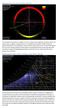 Optimum Solar Orientation: Miami, Florida The orientation of architecture in relation to the sun is likely the most significant connection that we can make to place in regards to energy efficiency. In
How To Build A Solar Energised Power Plant
 Project Title Solar Energised Power Plant Project Description In recent years energy crisis has become one of the most talked about issues around the world. Especially in the developing countries, the
After reading this lesson you will be able to: 12.3 IMPORTANCE OF ROOF 12.4 TYPES OF ROOF IN A HOUSE
 86 :: Certificate in Construction Supervision (CIVIL) 12 ROOF 12.1 INTRODUCTION The structure provided to cover the house surface (floor) is known as roof. For different situation and requirement, it is
Parabolic Trough Solar Collector Analysis
 Parabolic Trough Solar Collector Analysis Derek Lipp AME 4043 Capstone Design Project 28 February 2008 Abstract The purpose of this trade study is to examine a parabolic trough and determine the ideal
ENERGY PRODUCING SYSTEMS
 ENERGY PRODUCING SYSTEMS SOLAR POWER INTRODUCTION Energy from the sun falls on our planet on a daily basis. The warmth of the sun creates conditions on earth conducive to life. The weather patterns that
PERFORMANCE COMPARISON OF THE SUN TRACKING SYSTEM AND FIXED SYSTEM IN THE APPLICATION OF HEATING AND LIGHTING
 PERFORMANCE COMPARISON OF THE SUN TRACKING SYSTEM AND FIXED SYSTEM IN THE APPLICATION OF HEATING AND LIGHTING Sabir Rustemli*¹ Electrical and Electronics Engineering Department, Yuzuncu Yil University,
Seasonal & Daily Temperatures. Seasons & Sun's Distance. Solstice & Equinox. Seasons & Solar Intensity
 Seasonal & Daily Temperatures Seasons & Sun's Distance The role of Earth's tilt, revolution, & rotation in causing spatial, seasonal, & daily temperature variations Please read Chapter 3 in Ahrens Figure
VIESMANN VITOSOL 200-F Flat-plate collectors for the utilisation of solar energy
 VIESMANN VITOSOL 200-F Flat-plate collectors for the utilisation of solar energy Datasheet Part no. and prices: see pricelist VITOSOL 200-F Type SV2A/B and SH2A/B Flat-plate collector for vertical or horizontal
PLC Based PV Module Tracking with Microcontroller Backup
 PLC Based PV Module Tracking with Microcontroller Backup S. Dhivya Lakshmi 1, S. Harine 2, P.T. Subasini 3, S.T. Priyanka 4 Student, Dept. of EEE, Velammal Engineering College, Chennai, Tamilnadu, India
Characteristic curves of a solar cell
 Related Topics Semi-conductor, p-n junction, energy-band diagram, Fermi characteristic energy level, diffusion potential, internal resistance, efficiency, photo-conductive effect, acceptors, donors, valence
(This report is endorsed) Industrivej 20, 9900 Frederikshavn, Danmark
 Spectrum Laboratories Ltd is accredited by International Accreditation New Zealand (formerly Telarc). The tests reported herein have been performed in accordance with the terms of our accreditation. This
MCQ - ENERGY and CLIMATE
 1 MCQ - ENERGY and CLIMATE 1. The volume of a given mass of water at a temperature of T 1 is V 1. The volume increases to V 2 at temperature T 2. The coefficient of volume expansion of water may be calculated
Encoders for Linear Motors in the Electronics Industry
 Technical Information Encoders for Linear Motors in the Electronics Industry The semiconductor industry and automation technology increasingly require more precise and faster machines in order to satisfy
SOLAR WATER HEATER USER AND INSTALLATION MANUAL
 SOLAR WATER HEATER USER AND INSTALLATION MANUAL SOLAR WATER HEATER USER AND INSTALLATION MANUAL Non-pressure series solar water heater SZ58/1800-10 SZ58/1800-15 SZ58/1800-18 SZ58/1800-20 Index System
www.klmtechgroup.com TABLE OF CONTENT
 Page : 1 of 24 Project Engineering Standard www.klmtechgroup.com KLM Technology #03-12 Block Aronia, Jalan Sri Perkasa 2 Taman Tampoi Utama 81200 Johor Bahru Malaysia S TABLE OF CONTENT SCOPE 2 DEFINITIONS
Solar Heating and You
 Solar Heating and You DOE/CH10093-272 FS 118 August 1994 The sun gives us energy in two forms: light and heat. For many years, people have been using the sun s energy to make their homes brighter and warmer.
Active Solar Thermal Energy Applications in Buildings (Part 1)
 Active Solar Thermal Energy Applications in Buildings (Part 1) Yerevan State University of Architecture and Construction INOGATE Programme New ITS Project, Ad Hoc Expert Facility (AHEF) Task AM-54-55-56
Chapter 3 Earth - Sun Relations
 3.1 Introduction We saw in the last chapter that the short wave radiation from the sun passes through the atmosphere and heats the earth, which in turn radiates energy in the infrared portion of the electromagnetic
Eco Pelmet Modelling and Assessment. CFD Based Study. Report Number 610.14351-R1D1. 13 January 2015
 EcoPelmet Pty Ltd c/- Geoff Hesford Engineering 45 Market Street FREMANTLE WA 6160 Version: Page 2 PREPARED BY: ABN 29 001 584 612 2 Lincoln Street Lane Cove NSW 2066 Australia (PO Box 176 Lane Cove NSW
UNIT II Robots Drive Systems and End Effectors Part-A Questions
 UNIT II Robots Drive Systems and End Effectors Part-A Questions 1. Define End effector. End effector is a device that is attached to the end of the wrist arm to perform specific task. 2. Give some examples
Effect of design parameters on temperature rise of windings of dry type electrical transformer
 Effect of design parameters on temperature rise of windings of dry type electrical transformer Vikas Kumar a, *, T. Vijay Kumar b, K.B. Dora c a Centre for Development of Advanced Computing, Pune University
Which month has larger and smaller day time?
 ACTIVITY-1 Which month has larger and smaller day time? Problem: Which month has larger and smaller day time? Aim: Finding out which month has larger and smaller duration of day in the Year 2006. Format
EFFECT OF OBSTRUCTION NEAR FAN INLET ON FAN HEAT SINK PERFORMANCE
 EFFECT OF OBSTRUCTION NEAR FAN INLET ON FAN HEAT SINK PERFORMANCE Vivek Khaire, Dr. Avijit Goswami Applied Thermal Technologies India 3rd Floor,C-Wing,Kapil Towers, Dr. Ambedkar Road, Pune- 411 1 Maharashtra,
EXPERIMENTAL AND NUMERICAL ANALYSIS OF THE COLLAR PRODUCTION ON THE PIERCED FLAT SHEET METAL USING LASER FORMING PROCESS
 JOURNAL OF CURRENT RESEARCH IN SCIENCE (ISSN 2322-5009) CODEN (USA): JCRSDJ 2014, Vol. 2, No. 2, pp:277-284 Available at www.jcrs010.com ORIGINAL ARTICLE EXPERIMENTAL AND NUMERICAL ANALYSIS OF THE COLLAR
1. At which temperature would a source radiate the least amount of electromagnetic energy? 1) 273 K 3) 32 K 2) 212 K 4) 5 K
 1. At which temperature would a source radiate the least amount of electromagnetic energy? 1) 273 K 3) 32 K 2) 212 K 4) 5 K 2. How does the amount of heat energy reflected by a smooth, dark-colored concrete
Journal bearings/sliding bearings
 Journal bearings/sliding bearings Operating conditions: Advantages: - Vibration damping, impact damping, noise damping - not sensitive for vibrations, low operating noise level - dust tight (if lubricated
SOLAR RADIATION AND YIELD. Alessandro Massi Pavan
 SOLAR RADIATION AND YIELD Alessandro Massi Pavan Sesto Val Pusteria June 22 nd 26 th, 2015 DEFINITIONS Solar radiation: general meaning Irradiation [Wh/m 2 ]: energy received per unit area Irradiance [W/m
Solar Cooling. Methods and Applications. Sargon Ishaya, PE, LEED AP
 Solar Cooling Methods and Applications Sargon Ishaya, PE, LEED AP Objectives Describe two practical methods for solar cooling Give air conditioning engineers the confidence to offer customers a mechanical
1.1 DIMENSIONS AND WEIGHT PAG. 2 1.2 LOAD CENTRE FOR LIFTING PAG. 2 1.3 STORAGE CONDITIONS PAG. 2
 TRANSPORT AND INSTALLATION. DIMENSIONS AND WEIGHT PAG.. LOAD CENTRE FOR LIFTING PAG..3 STORAGE CONDITIONS PAG. STARTING. INSTALLATION PAG.. SPACE REQUIREMENTS PAG. 3.3 ELECTRIC CONNECTION PAG. 3 3 DESCRIPTION
Chapter 6. Sustainability and Renewable Energy
 Chapter 6 Sustainability and Renewable Energy 1 CHAPTER 6. SUSTAINABILITY AND RENEWABLE ENERGY 6.1 Introduction The Sustainability and Renewable Energy field addresses global technological challenges balancing
Domestic Water Heating with Flat Collector
 Domestic Water Heating with Flat Collector Dr. K.Boedecker This manual must be kept by the unit. Before operating the unit: - Read this manual. - All participants must be instructed on handling of the
Green Heating. Pupil Research Brief. Teachers Notes. Syllabus Coverage Subject Knowledge and Understanding. Route through the Brief UPIL ESEARCHER
 R P UPIL ESEARCHER Green Heating I NITIATIVE Pupil Research Brief Teachers Notes Syllabus Coverage Subject Knowledge and Understanding all types of electromagnetic radiation form a continuous spectrum
جامعة البلقاء التطبيقية
 AlBalqa Applied University تا سست عام 997 The curriculum of associate degree in Air Conditioning, Refrigeration and Heating Systems consists of (7 credit hours) as follows: Serial No. Requirements First
SOLAR HOT WATER SOLUTIONS stainless steel roof systems
 SOLAR HOT WATER SOLUTIONS stainless steel roof systems RHEEM. SINCE 1937. Rheem has been manufacturing in Australia since 1937. Over seventy-five years later, Rheem is a household name and is as much a
Consider How can you collect solar energy for use in your school? What are other alternatives?
 5 a 5 Energy Sources a - Energy from the sun Purpose To explore sourcing our energy from the sun Key concepts Solar energy is a natural and renewable resource Heat energy from the sun can be used to heat
Solar Absorption Cooling / Heating System for the Intelligent Workplace
 Solar Absorption Cooling / Heating System for the Intelligent Workplace Ming Qu Sophie Masson Dr. David Archer IWESS Workshop Oct.4,2006 page1 Introduction IW solar cooling/heating system One -axis solar
Solar energy is available as long as the sun shines, but its intensity depends on weather conditions and geographic
 Solar Energy What is Solar Energy? The radiation from the sun gives our planet heat and light. All living things need energy from the sun to survive. More energy from sunlight strikes the earth in one
Solar Hot Water Heaters
 Solar Hot Water Heaters Three High Vacuum Water inlet Stainless Steel screw Gel seal and insulation Water outlet Dust proof seals Non Pressure Models Details ASWH-1b ( Color Painted 304 ) ASWH-1c ( stainless
Siting of Active Solar Collectors and Photovoltaic Modules
 SOLAR CENTER INFORMATION NCSU Box 7401 Raleigh, NC 27695 (919) 515-3480 Toll Free 1-800-33-NC SUN Siting of Active Solar Collectors and Photovoltaic Modules To install a solar energy system properly, it
CHAPTER 3. The sun and the seasons. Locating the position of the sun
 zenith 90 summer solstice 75 equinox 52 winter solstice 29 altitude angles observer Figure 3.1: Solar noon altitude angles for Melbourne SOUTH winter midday shadow WEST summer midday shadow summer EAST