
Prospect Theory, Life Insurance, and Annuities
|
|
|
- Amberly Fox
- 10 years ago
- Views:
Transcription
1 Prospect Theory, Life Insurance, and Annuities Daniel Gottlieb July 26, 212 Abstract This paper presents a prospect theory-based model of insurance against mortality risk. The model accounts for five main puzzles from life insurance and annuity markets: under-annuitization; insufficient life insurance among the working age; excessive life insurance among the elderly; guarantee clauses; and the simultaneous holding of life insurance and annuities. 1 Introduction Twenty-five years ago, while delivering his Nobel Prize banquet speech, Franco Modigliani pointed out that annuity contracts, other than in the form of group insurance through pension systems, are extremely rare. Why this should be so is a subject of considerable current interest. It is still ill-understood. 1 In the two and a half decades that followed, not only has this under-annuitization puzzle persisted, but several other puzzles been documented in the study of insurance markets for mortality risk. This paper suggests that prospect theory can simultaneously account for all of these puzzles. The death of a family member is among the most important financial risks a household faces. About 3 percent of elderly widows live below the poverty line, compared to only eight to nine percent of the married elderly. In addition, over three-quarters of poor widows were not poor before their husband s death. 2 The importance of life insurance and annuities for hedging against mortality risk has been understood since the seminal work of Yaari (1965). 3 Working-aged individuals with dependents should purchase life insurance to financially protect their dependents in the event of an untimely death. Retirees should purchase annuities to protect against outliving their assets. Additionally, because purchasing a life insurance policy is equivalent to selling an annuity, the same person should not buy both at the same time. Wharton School, University of Pennsylvania ( [email protected]). I thank Nick Barberis, Xavier Gabaix, Botond Kőszegi, Olivia Mitchell, Jeremy Tobacman, and John Zhu for helpful comments and suggestions. Research support from the Wharton School Dean s Research Fund is gratefully acknowledged. 1 Modigliani (1986). Also cited by Brown (27) and Benartzi, Previtero, and Thaler (211). 2 Hurd and Wise (1989). 3 Davidoff, Brown, and Diamond (25) generalize Yaari s analysis to environments with incomplete markets. 1

2 The demand for life insurance and annuities observed in practice, however, is strikingly different from what theory predicts. Five puzzles have been extensively documented in the empirical literature. First, as mentioned by Modigliani, few individuals purchase annuities. Second, working-age individuals do not purchase sufficient life insurance. Third, too many retired individuals have life insurance. Fourth, many of those who do purchase annuities hold life insurance policies at the same time. And fifth, most annuity policies have clauses that guarantee a minimum repayment. Overall, it is surprising that individuals treat annuities and life insurance so differently since they are simply mirror images of each other: an initial installment in exchange for payments on the condition either of death (insurance), or of continuing to live (annuities). This paper presents a dynamic model of the demand for annuities and life insurance based on prospect theory, and suggests that it simultaneously accounts for the apparently diverse behaviors described in these five puzzles. Prospect theory has three main features. First, preferences are defined over gains and losses. Second, preferences have a kink at zero so that the marginal utility in the domain of gains is smaller than in the domain of losses (loss aversion). And third, individuals are risk averse over gains and risk seeking over losses. 4 In addition, following the original work of Tversky and Kahneman (1981), Redelmeier and Tversky (1992), and Kahneman and Lovallo (1993), most applications of Prospect Theory assume that lotteries are evaluated in isolation from other risks (narrow framing). 5 Individuals who narrowly frame view life insurance and annuities as risky investments, which are profitable if the total payment received from the insurance company exceeds the premium. As Brown (27) puts it: Without the annuity, the individual has $1, for certain. With the annuity, in contrast, there is some positive probability that the individual will receive only a few thousand dollars in income (if he were to die within a few months), some probability that the individual will receive far more than $1, (if he lives well past life expectancy), and a full distribution of possibilities in between. Similarly, Kunreuther and Pauly (212) argue that [t]here is a tendency to view insurance as a bad investment when you have not collected on the premium you paid the insurer. It is difficult to convince people that the best return on an insurance policy is no return at all. 6 Countless press articles describe the tendency to view life insurance and annuities as risky investments. Consider, for example, the following excerpt from an article recently published by Forbes magazine: Every once in a while we get a call on our Financial Helpline from someone whose financial adviser recommended that they invest in a permanent life insurance policy (...). adviser s pitch can sound compelling. Why purchase temporary term life insurance that you ll likely never use? Isn t that like throwing money away? With permanent life insurance, part of your premiums are invested and some of it can be borrowed tax-free 4 The other component of Prospect Theory, which I abstract from in this paper for simplicity, is the idea that people overweight small probability outcomes and underweight large probability outcomes (probability weighting). 5 Read, Lowenstein, and Rabin (1999) present several examples of narrow framing. 6 Analogously, in his discussion of Cutler and Zeckhauser (24), Kunreuther argued that consumers seem to view insurance as an investment rather than a contingent claim. This view creates a strong preference for low deductibles and rebate schemes so that the insured can get something back. The 2

3 for retirement, or your children s college education, or anything else you d like and your heirs will get a nice death benefit when you pass away. But is it really always as great as it sounds? The author then compares a standard permanent life policy (which combines insurance and savings) with a mix of term insurance and a 41(k) plan. While the permanent life policy would pay approximately $6k at retirement, a combination of term insurance and 41(k), which costs exactly the same and provides the same insurance coverage, would pay $98k. 7 The tendency to evaluate insurance in terms of investments dates back to the origins of the life insurance industry. The launch of Tontine insurance policies, which promised payments to consumers who outlived their life insurance policies, was arguably the most important marketing innovation in the history of American life insurance. Henry B. Hyde introduced these policies in He refused to refer to payments as prizes, calling them investment returns instead. He acknowledged that [t]he Tontine principle is precisely the reverse of that upon which Life Assurance is based. 8 By the time of his death, his company had become the largest life insurance company in the world, and the companies selling tontine policies had become the largest financial institutions of the day. 9 Prospect theory s asymmetric evaluation of gains and losses has important implications for the difference in how people treat annuities and life insurance. According to prospect theory, consumers are risk averse in the domain of gains and risk seeking in the domain of losses. An annuity involves an initial payment to the insurance company in exchange for a payment stream conditional on being alive. It initially features a considerable chance of loss (if the consumer dies soon), but also the possibility of a gain (if she lives a long time). Because of the kink between the gains and losses domains (loss aversion), consumers under-annuitize. As time passes, surviving consumers collect annuity payments, thereby shifting the support of the distribution to the right. If they live for long enough, the support of the distribution eventually falls entirely in the gains domain. Then, the kink is no longer relevant since it lies outside of the support. However, because consumers are risk averse in the gains domain, they keep under-purchasing annuities. On the other hand, a life insurance policy involves an initial payment to the insurance company in exchange for a repayment to beneficiaries in case of death. Thus, it initially comprises a significant chance of gain (if the consumer dies soon), but also the possibility of a loss (if she lives a long time). The presence of a kink between the domains of gains and losses again implies that consumers initially under-purchase life insurance. As time passes, surviving consumers spend more on insurance without 7 Davidson, L. Should You Use Life Insurance as an Investment? 3 Things to Consider, Forbes, July 211. For another example, see Richards, C. Why Life Insurance Is Not an Investment, The New York Times, April 21. Anagol, Cole, and Sarkar (211) study the Indian life insurance market and show that whole life insurance policies, which are purchased by a substantial fraction of the population, are dominated by a bundle of term life insurance policies and non-life contingent savings. 8 Tontine investment schemes were originally invented by Lorenzo de Tonti in They were used as a source of public finance by several governments, including France, Denmark, the Netherlands, Britain, and some German states. The Tontine Coffee House in Manhattan was the first home of what eventually became the New York Stock Exchange. See Hendrick (197), Jennings and Trout (1982), McKeever (29) and Gottlieb (27). 9 Baker and Siegelman (21). Tontine policies were eventually outlawed on the basis of providing gambling rather than insurance products. Nevertheless, the idea of including payments in case one does not use the insurance policy persisted. 3

4 collecting any payments. Therefore, the support of the distribution gradually shifts to the left and, if consumers survive for long enough, it eventually falls entirely in the losses domain. At that point, the kink lies outside of the support and no longer affects the decision. Moreover, because consumers are risk seeking in the domain of losses, they buy too much life insurance when they are old. That is, consumers are reluctant to liquidate their life insurance policies after having invested in them for long enough. As a result, they underinsure when young and over-insure when old. In fact, they may even hold both annuities and life insurance policies at the same time if they have previously purchased life insurance and the load is below a certain threshold. This is not the first paper to suggest a connection between prospect theory and the underannuitization puzzle. The so-called hit by a bus concern, according to which individuals may be reluctant to purchase annuities because they fear dying shortly thereafter, can be translated in terms of narrow framing and loss aversion. Brown, Kling, Mullainathan, and Wrobel (28) present survey results consistent with the idea that individuals frame annuities as an uncertain gamble, wherein one risks losing the invested wealth in case of death shortly after the purchase. 1 Hu and Scott (27) formally show that prospect theory can explain under-annuitization. Gazzale and Walker (29) find support for prospect theory as a cause for under-annuitization in a laboratory experiment. This is, however, the first paper to link the under-annuitization puzzle to the other four main puzzles of insurance against mortality risk, and to suggest that these apparently diverse findings can be explained by the same model. 11 The predictions of the model differ sharply from the predictions of both expected and standard non-expected utility models. The celebrated theorem of Mossin (1968) shows that risk-averse expected-utility consumers will choose full insurance coverage if the load is zero, and they will choose partial insurance coverage if the load is positive. Segal and Spivak (199) show that Mossin s result holds for non-expected utility theories satisfying second-order risk aversion. Under first-order risk aversion, consumers will still choose full coverage if the load is zero but may also choose full coverage under positive loads. 12 Under the prospect theory model presented here, Mossin s result also does not hold. However, the departure goes in the opposite direction of standard non-expected utility theories satisfying firstorder risk aversion. Because the kink occurs at the point in which there is no insurance rather than full insurance, individuals may choose not to purchase insurance even under actuarially fair pricing. The remainder of the paper is organized as follows. Section 2 briefly describes empirical evidence 1 Brown and Warshawsky (24) describe how participants in focus groups conducted by the American Council of Life Insurers consider the purchase of annuities gambling on their lives. In light of prospect theory, it appears that these individuals do not integrate the annuity payoffs into their wealth but instead evaluate them separately. Brown, Kapteyn, and Mitchell (211) present experimental evidence that individuals are more likely to delay claiming Social Security benefits when benefits are framed as gains rather than losses, and when they are described in terms of consumption rather than investment. See also Benartzi, Previtero, and Thaler (211). 11 Prospect theory has been successfully applied to several other environments (see, for example, Camerer (24) for a survey). Marquis and Holmer (1996) empirically study the demand for supplementary health insurance and find that prospect theory fits the data better than expected utility theory. 12 Karni (1992) and Machina (1995) generalize Mossin s theorem for non-expected utility theories satisfying Fréchet differentiability. Doherty and Eeckhoudt (1995) show that, in the dual theory of Yaari (1987), the solution always entails either full or zero coverage, with full coverage when the load is below a certain threshold. 4

5 from annuities and life insurance markets. Section 3 starts by considering a static insurance setting and contrasts the implications of the prospect theory model with those from expected and standard non-expected utility models (Subsection 3.1). It goes on to introduce a general continuous time framework of mortality risk and the demand for life insurance and annuities (Subsection 3.2). Under expected utility, consumers generically purchase positive amounts of either life insurance or annuity policies. Under prospect theory, purchasing positive amounts of either life insurance or annuities is no longer a generic property. Section 4 presents the dynamics of life insurance demand, and Section 5 considers the dynamics of annuity demand under prospect theory. Section 6 shows that, in the presence of positive loads, expected utility consumers never simultaneously demand both life insurance and annuities, whereas prospect theory consumers may. Section 7 reviews how the predictions of the model fit the empirical evidence, and Section 8 concludes. 2 Empirical Evidence In recent decades, the development of the field of information economics brought insurance to the center of economic research. Life insurance and annuity markets became particularly important for several reasons. First, they deal with major and widely-held risks. Second, these markets can potentially shed light on the role of bequests and intergenerational transfers. 13 And third, they appear to be particularly suitable to test standard insurance theory. As Cutler and Zeckhauser (24) argue: Mortality risk is a classic case where we expect insurance to perform well. On the demand side, the event is obviously infrequent, so administrative costs relative to ultimate payouts are not high. The loss is also well defined, and moral hazard is contained. On the supply side, it is relatively easy to diversify mortality risk across people, since aggregate death rates are generally fairly stable. Nevertheless, numerous studies have established a striking divergence between predictions of standard insurance theory and empirical observations. The literature documents five puzzles in the demand for life insurance and annuities. Puzzle 1. Insufficient Annuitization 14 The main puzzle in annuities research is why so few people buy them. Almost no 41(k) plan even offers annuities as an option, and only 16.6 percent of defined contribution plans do so. 15 In the few cases in which annuities are offered, they are rarely taken. Schaus (25) examines a sample of retirees for which annuities were offered as part of their 41(k) plan in a sample of 5 medium to large firms and finds that only two to six percent of them accepted. According to a study by 13 See, for example, Bernheim (1991). 14 See Brown (27) and Benartzi, Previtero, and Thaler (211) for detailed surveys, including discussions of how prospect theory may explain this puzzle. 15 Based on PSCA s 54th Annual Survey of Profit Sharing and 41(k) Plans. 5

6 Hewitt Associates, only one percent of workers actually purchase annuities. 16 Mitchell, Poterba, Warshawsky, and Brown (1999) show that fees and expenses are not large enough to justify the lack of annuitization. As Davidoff, Brown, and Diamond (25) argue, the near absence of voluntary annuitization is puzzling in the face of theoretical results suggesting large benefits to annuitization. (...) It also suggests the importance of behavioral modeling of annuity demand to understand the equilibrium offerings of annuity assets. 17 Puzzle 2. Insufficient Life Insurance Among the Working-Aged Several studies find that too few working-age families have life insurance, and many of those that do are still underinsured. A large literature shows that the death of a partner generates large declines in a household s per capita consumption. Bernheim, Forni, Gokhale, and Kotlikoff (23), for example, argue that two-thirds of poverty among widows and over one-third of poverty among widowers can be attributed to an insufficient purchase of life insurance alone. Roughly two-thirds of secondary earners between ages 22 and 39 would suffer a decline in consumption of more than 2 percent, and nearly one-third would suffer a decline of more than 4 percent if a spouse were to die. 18 Bernheim, Forni, and Kotlikoff (1999) consider individuals between the ages of 52 years old and 61 years old from the Health and Retirement Study and estimate that 3 percent of wives and 11 percent of husbands face living standard reductions of over 2 percent if a spouse were to die. Since life insurance policies are close to actuarially fair (Gottlieb and Smetters, 211), failure to appropriately insure cannot be attributed to adverse selection or administrative loads. Puzzle 3. Excessive Life Insurance Among the Elderly Compared to the predictions of standard life cycle models, elderly people hold too much life insurance. Brown (21) finds that 78 percent of couples aged 7 and older own a life insurance policy. Life insurance is almost 1 times more prevalent than privately purchased annuities in this cohort. In fact, according to the 1993 Life Insurance Ownership Study, individual ownership of life insurance policies is actually more frequent among those age 65 and older than in any other age cohort. Moreover, many elderly people without dependents have life insurance policies See Lieber, R., The Unloved Annuity Gets a Hug From Obama. The New York Times, January 29, 21. Brown (21) reports that in the AHEAD survey, which consists of households aged 7 and older, less than eight percent of households held privately purchased annuity contracts. 17 Several explanations have been proposed for the low amount of annuitization, including the presence of preannuitized wealth through Social Security and private DB pension plans (Bernheim, 1991; Dushi and Webb, 24); the correlation between out-of-pocket health and mortality shocks (Sinclair and Smetters, 24); and the irreversibility of annuity purchases (Milevsky and Young, 27). Another leading explanation is the existence of strong bequest motives (Friedman and Warshawsky, 199, Bernheim, 1991, Lockwood, 212). Brown (21) compares annuitization by households with and without children and concludes that bequest motives cannot account for under-annuitization. 18 Gokhale and Kotlikoff (22). 19 See also Cutler and Zeckhauser (24). 6

7 Puzzle 4. Guaranteed Repayments One surprising feature of annuity markets is the presence of guarantees. The overwhelming majority of private annuity products include clauses such as a 1-year period guarantee, which promises 1 years of payments even if the annuitant dies. Guaranteed annuities represent 73 percent of all annuities sold in the United States (LIMRA, 1998). A guaranteed annuity can be seen as a combination of a standard bond and an annuity with a payout date deferred by the guarantee period. Considering this, the prevalence of guarantee clauses is puzzling in two ways. First, several other products offer better payouts at comparable levels of risk than does the bond implicit in these annuities (Brown, 27). Second, because the guarantee clause de facto delays the start of annuity, it does not offer protection for the guarantee period. Although the guarantee period may appear to reduce the risk of the annuity when the policy is evaluated in isolation, it does so by delaying insurance against mortality risk, which was presumably the reason for purchasing the annuity to begin with. 2 Puzzle 5. Simultaneous Holding of Life Insurance and Annuities As Yaari (1965) and Bernheim (1991) point out, purchasing a life insurance policy is equivalent to selling an annuity. Therefore, as long as either of them has a positive load, no one should ever demand both of them at the same time. In practice, however, a substantial number of the families that own annuities also have life insurance policies. According to Brown (21): Of all married households, 5 percent own both a private pension and some form of life insurance. Among widows and widowers, 21 percent own both private pension annuities and life insurance. There are reasons to suspect that private pensions are not strictly voluntary, especially among those aged seventy and up who were likely covered for most of their careers in traditional defined benefit plans. However, even if we restrict ourselves to privately purchased, nonpension annuities, 6.6 percent of married couples own both. Since only 7.7 percent of the sample own such an annuity, however, this means that 86 percent of those married households who have purchased a private, nonpension annuity also own life insurance. In the presence of positive loads, any portfolio with positive amounts of both life insurance and annuities is first-order stochastically dominated by another portfolio with a lower amount of both. As a result, any decision maker with preferences defined over final wealth cannot simultaneously demand both assets. 2 Hu and Scott (27) also propose that prospect theory can account for the existence of guaranteed annuities. However, as Brown (27) points out, consumers who prefer guarantees never purchase annuities in their model. 7

8 3 The General Framework 3.1 Insurance as a Risky Investment Before introducing a general dynamic model, I will consider a canonical static setting in order to contrast my model with other insurance models. A consumer suffers a financial loss L > with probability p (, 1). She is offered insurance policies with a proportional loading factor l [, 1 p). That is, each policy costs p + l and pays $1 in case of loss; insurance is actuarially fair if l =. Following a large literature in prospect theory, I assume that individuals evaluate lotteries according to the sum of a consumption utility function, which satisfies the standard assumptions of expected utility theory, and a gain-loss utility function. 21 Let U : R ++ R be a strictly increasing, strictly concave, differentiable consumption utility function. 22 Additionally, each lottery is individually evaluated according to the gain-loss utility function V (X) = { v (X) if X λv ( X) if X <, (1) where v : R + R is a weakly concave, twice differentiable function satisfying v () =. 23 A prospect theory decision-maker maximizes the expected sum of consumption utility and gain-loss utility. Let W denote the consumer s wealth, and denote by I the number of policies purchased. Buying insurance corresponds to participating in a lottery that pays [1 (p + l)] I with probability p and (p + l) I with probability 1 p. Therefore, the expected gain-loss utility from insurance is pv ((1 p l) I) + (1 p) V ( (p + l) I). Consistently with the discussion in the introduction, this specification of gains and losses takes the point of zero insurance (status quo) as the reference point: possible outcomes are evaluated against the alternative of not buying any coverage. 24 Expected consumption utility is pu (W L + (1 p l) I) + (1 p) U (W (p + l) I). 21 This global-plus-local specification has been widely used in the prospect theory literature. Examples include Barberis and Huang (21), Barberis, Huang, and Santos (21), Barberis and Xiong (211), Koszegi and Rabin (26, 27, 29), Rabin and Weizsacker (29), and Heidhues and Koszegi (28, 21). It is defended by Azevedo and Gottlieb (212). 22 Subsection 3.2 allows the consumption utility to be state dependent, which is important for mortality risk applications. Here, we assume state independence in order to make the comparison with expected utility more transparent. 23 Kahneman and Tversky called v a value function and suggested the power utility functional form v(x) = X α, α (, 1]. This functional form is concave but it is not differentiable at X = when α < 1, which creates some counterintuitive properties at the kink. The use of the same value function for gains and losses is for notational convenience only; results immediately generalize to gain-loss utility functions featuring different value functions for gains and losses. 24 My results remain qualitatively unchanged if we replace the status quo by any other deterministic reference point below the point of full insurance. In fact, when insurance is actuarially fair, the formal analysis remains identical if we assume that the reference point is set at the expected insurance payments. On the other hand, my results do not hold if the reference point is set at the point of full insurance. 8

9 For comparative purposes, it is helpful to represent preferences in the classic Hirshleifer-Yaari diagram. Let C L and C NL denote consumption in the states of loss and no loss. Under consumption utility only (expected utility), indifference curves are smooth, with slope equal to p U (C L ) 1 p U (C NL ). Figure 1. Hirshleifer-Yaari diagram. Indifference curves from consumption utility (smooth curve) and total utility (kink at zero insurance). Loss aversion introduces a kink at the status quo (point of zero insurance). Because of the kink, a prospect theory consumer prefers not to purchase insurance more frequently than if she were maximizing consumption utility only; she may prefer not to purchase insurance even under actuarially fair prices. Formally, let I U and I P T denote the sets of wealth levels, losses, loss probabilities, and loads (W, L, p, l) for which zero insurance maximizes expected consumption utility and total utility, respectively. The necessary and sufficient condition for zero insurance to maximize expected consumption utility is 25 p (1 p l) U (W L) (1 p) (p + l) U (W ). The necessary local condition for zero insurance to maximize total utility is p (1 p l) U (W L) (1 p) (p + l) U (W ) {p (1 p) (λ 1) + l [λ (1 p) + p]} v (). (2) Since λ > 1 and l, the right-hand side of (2) is strictly positive: Whenever zero insurance maximizes consumption utility, it also maximizes total utility. The gain-loss utility function introduces a kink at the point of zero insurance, which makes purchasing insurance less desirable. Proposition 1. I U IP T and the inclusion is strict. 25 We are imposing the restriction that insurance purchases are non-negative (i.e., the consumer does not sell insurance policies to the insurance company). 9

10 In most non-expected utility theories, indifference curves are either smooth or have a kink at the point of full insurance. Therefore, as discussed by Segal and Spivak (199), they predict either just as much or more insurance than expected utility theory does. In contrast, equation (2) implies that prospect theory decision-makers may purchase no insurance even when prices are actuarially fair. 26 Therefore, as with non-expected utility theories featuring first-order risk aversion, Mossin s theorem no longer holds. However, the result is distorted in the opposite direction: While first-order risk averse individuals may demand full coverage under actuarially unfair prices, prospect theory individuals may not purchase full coverage even when prices are actuarially fair! Dynamic Model In order to study the dynamics of mortality insurance demand, we must generalize the basic framework in two ways: First, because the marginal utility of consumption is likely to be different if the individual is alive or dead, we must allow consumption utility to be state-dependent; Second, we need to allow for more than one period. I consider a continuous-time model of mortality risk. A household consists of a head of the household and one or more heirs; the head of the household lives for a random length T R + and makes all decisions while alive. For simplicity, I assume that heirs are infinitely lived. Because the head of the household is responsible for making decisions while alive, I refer to her as the consumer. The functions U a : R ++ R and U d : R ++ R denote the consumption utility in states in which the consumer is alive and dead; U d (C) can be interpreted as the instantaneous utility of bequeathing C dollars. 28 The consumption utility functions U a and U d are strictly increasing, strictly concave, twice continuously differentiable, and satisfy the following Inada condition: lim C U i (C) = +, i = a, d. Because U a and U d satisfy the assumptions of expected utility theory, I will refer to allocations that maximize expected consumption utility as expected utility maximizing allocations. A prospect theory decision-maker selects allocations that maximize the expected sum of consumption utility and gain-loss utility (equation 1). When v (X) = X, we say that the gain-loss utility is piecewise linear. The piecewise linear specification considerably simplifies calculations and is used in several theoretical papers. 29 However, it does not generate the risk-seeking behavior in the domain of losses stressed out by Kahneman and Tversky (1979) and observed in empirical studies. When v is strictly concave, we say that the gainloss utility is strictly concave in the gains domain and strictly convex in the losses domain. In order 26 For example, let v (x) = x. Under actuarially fair prices, zero insurance maximizes total utility if and only if U (W L) U (W ) λ 1. This condition is satisfied if the loss aversion coefficient λ > 1 is large enough or if the financial loss L is small enough. 27 Motivated by prospect theory, a number of recent papers propose axiomatizations for status quo reference dependence such as the one featured here. Sagi (26) shows that prospect theory violates a normatively appealing no-cycling condition, but there exist preferences that display status quo reference dependence and satisfy this condition. Ortoleva (21) and Riella and Teper (211) propose axiomatizations of status quo reference dependent preferences based on multiple priors and uncertainty aversion. 28 This state-dependent formulation follows the literature on mortality risk. State-independence is obviously a special case. My results on annuities do not require the consumer to value bequests. 29 For example, Barberis, Huang, and Santos, 21, Barberis and Huang, 21, and Barberis and Xiong,

11 to avoid unrealistic patterns of risk-seeking behavior, we assume that v is not too concave so that the sum of consumption and gain-loss utility is globally concave. 3 For expositional purposes, I focus on gain-loss functions that are either piecewise linear or strictly concave in the domain of gains and strictly convex in the domain of losses. The results can be generalized for weak concavity in the gains domain and weak convexity in the losses domain. I use the superscripts EU, P L, and C to denote the allocations that maximize expected consumption utility, prospect theory utility with piecewise linear gain-loss utility, and prospect theory utility with strictly concave v, respectively. An important feature of the model is the assumption that lotteries are evaluated in isolation (narrow framing). That is, the decision-maker separately evaluates V at the outcome of each individual lottery, instead of combining the outcomes from all lotteries. Throughout the paper, life insurance and annuities are treated as different lotteries. The time of death T is distributed according to an exponential distribution with parameter µ. 31 The probability distribution function of the time of death is f(t ) = µ exp ( µt ); the consumer is alive at time t with probability 1 t f (s) ds = exp ( µt). Expected consumption utility is ˆ exp ( µt) {U a (C a (t)) + µu d (C d (t))} dt, (3) where C a (t) denotes consumption at time t (if alive) and C d (t) denotes the amount of bequests left if the individual dies at t. The consumer earns an income W a (t) at time t if she is alive. The remaining members of the household have lifetime discounted income W d (t) if the consumer dies at t. While alive, the consumer allocates her income between instantaneous life insurance policies, I(t), and instantaneous annuities, A (t). Although it is straightforward to generalize the results for the case of positive proportional loads, I assume that policies are sold at actuarially fair prices to simplify notation. An instantaneous life insurance policy costs µdt and pays $1 if the individual dies in the interval [t, t + dt]. Since the probability of death in this interval is µdt, the policy is actuarially fair. Buying an instantaneous annuity is equivalent to selling an instantaneous life insurance policy: It pays µdt if the consumer survives the interval [t, t + dt], but costs $1 if she dies in this interval. Therefore, consumption in each state is C a (t) = W a (t) + µ [A(t) I(t)] and C d (t) = W d (t) [A(t) I(t)]. Substituting in the expected consumption utility (3), we obtain ˆ exp ( µt) {U a (W a (t) + µ [A(t) I(t)]) + µu d (W d (t) [A(t) I(t)])} dt. (4) An expected utility maximizer chooses functions A and I to maximize (4). Because prices are actuarially fair, annuities and life insurance only affect consumption utility through their net amount: N (t) A (t) I (t). Moreover, whenever N (t), any solution entails 3 See Azevedo and Gottlieb (212). 31 Although not key to our results, the exponential distribution simplifies the analysis because its memoryless property allows for a parsimonious recursive formulation. In particular, it implies that actuarially fair prices are constant over time. 11

12 either A (t) > or I (t) > (or both). 32 A net amount N maximizes expected consumption utility (4) if and only if U a (W a (t) + µn (t)) = U d (W d (t) N (t)) for almost all t. Since insurance is actuarially fair, an expected utility maximizer equates the marginal utility in both states of the world in almost all periods (full insurance). Purchasing zero quantities of both annuities and life insurance is optimal if the income paths W a and W d satisfy U a (W a (t)) = U d (W d (t)) for almost all t. (5) Let B denote the space of bounded continuous functions (W a, W d ) : R + R 2 +, endowed with the norm of uniform convergence. A property is generic if the set of income paths (W a, W d ) B for which this property is satisfied is a dense and open set. Because U a and U d are strictly concave, the marginal utilities are strictly decreasing. Thus, (5) fails generically. As a result, an expected utility maximizer generically purchases a strictly positive quantity of either life insurance or annuity policies: Proposition 2. Generically, an expected utility maximizer purchases a strictly positive quantity of actuarially fair life insurance or annuities (i.e., generically, N EU (t) at almost all t). Buying a life insurance path I amounts to participating in a lottery that costs µi (t) dt for as long as the individual is alive and pays I ((t) when she dies. Therefore, the gain-loss utility from life insurance if death occurs at time t is V I (t) µ ) t I (s) ds. We say that life insurance payments are in the gains domain at time t if the payment received exceeds the total amount spent on life insurance if the individual dies at t: I (t) µ t I (s) ds. Similarly, if the person buys A(t) instantaneous annuities at time t, she either survives and receives µa(t)dt or dies and loses A (t). Thus, a person who dies at t has collected a total of µ t A (s) ds in ( annuity payments and loses A (t) in annuities that will not be collected; the gainloss utility is V µ ) t A (s) ds A (t). Annuity payments are in the gains domain at time t if the total amount collected in annuities exceed the amount spent on annuities if the person dies at t: µ t A (s) ds A (t). Because the reference point is the point of zero dollars spent on annuities and life insurance, which is constant over time, the consumer is time-consistent. Thus, whether the consumer is evaluating the insurance paths at time or as time unfolds is immaterial for our results. It is natural, therefore, to interpret the paths A and I as (possibly time-varying) annuities and life insurance policies purchased at time t =. There are three advantages to interpreting the annuity and life insurance paths as time-varying policies purchased at a fixed period rather than instantaneous policies adjusted at each point in time. First, they are easier to interpret in term of observed policies. A five-year term life insurance, for example, corresponds to the path I (t) = 1 if t 5 and I(t) = if t > 5. Second, people do not seem to adjust their life insurance and annuities portfolios at a regular basis. Therefore, requiring 32 The possibility of holding both life insurance and annuities is an implication of actuarially fair pricing. Section 6 introduces positive loads and shows that expected utility maximizers do not simultaneously hold both life insurance and annuities. 12

13 them to choose policies continuously might seem unrealistic. And third, it avoids issues related to the possible updates of the reference point. 33 Loss aversion introduces a kink at A = I = (in terms of the Gâteaux derivative). show in the appendix, individuals will not purchase either insurance or annuities if the consumption smoothing value is not high enough: As I U a (W a (t)) U d (W d(t)) v () (λ 1) (6) for almost all t. Because λ > 1 (loss aversion) and v () >, this condition no longer fails generically. Therefore, unlike in the case of expected utility, a prospect theory consumer does not generically purchase positive amounts of either life insurance or annuities: Proposition 3. A prospect theory consumer does not generically purchase a strictly positive quantity of actuarially fair life insurance or annuities (i.e., almost all t featuring either A (t) > or I (t) > is not a generic property). Equation (6) is the continuous-time counterpart of the zero-insurance condition for the static model (2) under actuarially fair prices: U (W L) U (W ) v () (λ 1). As in the static model, the non-genericity of purchasing positive amounts of either life insurance and annuities is a consequence of the kink at zero introduced by loss aversion. It resembles the loss aversion rationale for the endowment effect and the status quo bias (Tversky and Kahneman, 1991; Kahneman, Knetsch, and Thaler, 1991). 3.3 Illustration of Main Results Next, we will study the dynamics of life insurance and annuity demands separately. However, before presenting the formal analyses, it is helpful to consider an illustrative example in a static setting. Consider an individual who has previously spent an amount X on life insurance and faces the probability of death p (, 1) in a single remaining period. Life insurance policies are available at actuarially fair prices: Each dollar of coverage costs p. Let U (I) denote the expected consumption utility from purchasing the life insurance coverage I. For expositional simplicity, I assume that U is continuously differentiable, strictly concave, and has an interior maximum. Let Ī denote the amount of insurance that maximizes expected consumption utility: U ( Ī ) =. Purchasing coverage I costs pi and repays (1 p) I in case of death. Therefore, the total net payments from life insurance equal (1 p) I X if the individual dies and pi X if she survives. The individual maximizes total expected utility: U (I) + pv ((1 p) I X) + (1 p) V ( pi X). 33 In the ex-ante interpretation, the only relevant reference point is the one at t = which is when the decision is made. In that period, the point of zero insurance is the status quo against which life insurance and annuity paths are evaluated. If the individual purchases instantaneous amounts of life insurance and annuities over time, reference points may shift as time unfolds. 13

14 The solution depends on whether the net payment in case of death lies in the losses domain (1 p)i < X, the gains domain (1 p)i > X, or at the kink (1 p)i = X. 34 In the losses domain, the individual chooses the life insurance coverage that solves the first-order condition: U (I) = p (1 p) λ [ v (X + pi) v (X (1 p) I) ], where the inequality follows from the weak concavity of v. Therefore, the solution features I Ī. In particular, if the gain-loss utility is piecewise linear, the marginal gain-loss utility is the same whether or not the individual dies (since both are in the losses domain) and the individual picks the amount of insurance that maximizes expected consumption utility I = Ī. If the value function v is strictly concave, gain-loss utility is convex in the domain of losses, which pushes the individual to purchase more insurance. As a consequence, the individual over-insures relative to expected utility: I > Ī. The rationale for over-insurance in the domain of losses resembles the informal description of consumers who renew their term insurance policies because they have invested too much to quit. 35 In the gains domain, the individual chooses the insurance coverage that solves the following first-order condition: U (I) = p (1 p) [ λv (pi + X) v ((1 p) I X) ]. If the gain-loss utility is piecewise linear, this condition becomes U (I) = p (1 p) (λ 1) >. Therefore, the solution entails underinsurance (relative to expected consumption utility): I < Ī. Under a piecewise linear gain-loss utility function, the marginal gain-loss utility if the individual survives is λ (since it lies in the domain of losses) whereas the marginal gain-loss utility if the individual dies is 1 (gains domain). purchase less insurance in the gains domain. Therefore, loss aversion (λ > 1) induces the individual to When the value function v is strictly concave, there are two effects. As before, loss aversion pushes the individual to underinsure. However, convexity of the gain-loss utility in the losses domain may push her to over-insure or under-insure. 36 The individual will prefer to underinsure as long as the gain-loss utility function is not too convex so that the loss aversion effect dominates. At the kink, the individual chooses exactly the amount of insurance that will compensate for the previous expenditure in case of death: I = X 1 p. Figure 2a presents the amounts of insurance that maximize total utility. When the value function is piecewise linear (γ = 1), the individual underinsures relative to expected utility if the previous expenditure is small (i.e., in the gains and kink regions) and purchases the coverage that maximizes expected utility if previous expenditure is large (losses region). When it is strictly concave, she underinsures if the previous expenditure is small (gains region) and over-insures if it is large (losses region). Figure 2b shows the net payment in case of death: (1 p) I X. It is positive in the gains region, zero at the kink, and negative in 34 It is straightforward, but not very informative, to write these regions in terms of primitives rather than in terms of the endogenous variable I. 35 This rationale is related to the large literature on the escalation of commitment to a failing course of action. See, for example, Staw (1981). 36 Convexity will push the agent to over-insure if ( 1 p) I < X and under-insure if the reverse is true. 2 14

15 the losses region. Figure 2. Life insurance coverage and net gains as a function of previous expenditure X. Gain-loss utility: v (x) = 1 2 [(1 + x)γ 1]. 37 Next, let us consider the purchase of annuities. An individual who has previously received X in annuity payments faces the probability of death p (, 1) in a single remaining period. Annuities are available at actuarially fair prices: Each annuity costs 1 p and pays $1 in case of survival. With some abuse of notation, let U (A) denote the individual s expected consumption utility from purchasing A annuities, where U is continuously differentiable, strictly concave, and has an interior maximum. Let Ā denote the amount of coverage that maximizes expected consumption utility: U ( Ā ) =. The consumer maximizes total expected utility: U (A) + pv (X (1 p) A) + (1 p) V (X + pa). The solution depends on whether the net payment in case of death lies in the gains domain (X > (1 p) A), losses domain (X < (1 p) A), or at the kink. The first-order condition in the domain of gains is: U (A) = p (1 p) [ v (X (1 p) A) v (X + pa) ], where the inequality follows from the weak concavity of the value function v. Thus, as with life insurance in the domain of losses, the individual chooses an amount of annuities weakly below than 37 The figure uses a power (CRRA) consumption utility so that expected consumption utility is U (I) = U a (w pi)+ pu d (I) + (1 p) U a (w), where U a (x) = U d (x) = x.75, w = 1, and p = 1. The loss aversion coefficient is λ = 2. The 2 graph remains qualitatively unchanged under a standard power gain-loss utility function v(x) = x γ. However, I avoid using this functional form because of its unbounded derivative at the kink. 15

16 the one that maximizes expected utility: A Ā. If the gain-loss utility is piecewise linear, the individual has the same marginal gain-loss utility if she dies or survives. As a result, she chooses the annuity coverage that maximizes expected utility (A = Ā). If the gain-loss utility is strictly concave in the domain of gains, the individual under-annuitizes relative to expected utility: A < Ā. The first-order condition in the domain of losses is: U (A) = p (1 p) [ λv ((1 p) A X) v (X + pa) ]. If the gain-loss utility is piecewise linear, this condition becomes U (A) = p (1 p) (λ 1) >, which implies in under-annuitization relative to expected utility (A < Ā): Loss aversion pushes the individual to purchase less annuities. Strict convexity of the gain-loss utility in the domain of losses introduces an additional effect, which may be either positive or negative. 38 However, as long as the gain-loss utility is not too convex in the domain of losses, the loss aversion effect dominates and the individual under-annuitizes relative to expected utility. At the kink, the individual( buys the) amount of annuities that prevents her from entering the losses domain in case of death A = X 1 p. Consistently with the hit by a bus concern discussed in the introduction, loss aversion induces individuals to under-annuitize. Figure 3. Annuity coverage and net gains as a function of previous expenditure X. Gain-loss utility: v (x) = 1 2 [(1 + x)γ 1]. 39 Figure 3a presents the amounts of annuity that maximize total utility. When the gain-loss utility is piecewise linear (γ = 1), the individual under-annuitizes relative to Ā when the previous expenditure is small (losses and kink regions) and purchases the amount that maximizes expected utility when the previous expenditure is large (gains region). When the value function is strictly 38 Strict convexity induces the individual to demand more annuities if ( 1 2 p) A > X. 39 Same parameters as Figure 2, except for a lower utility in case of death, U d (x) =.3 x.75, which generates a demand for annuities rather than life insurance. 16

17 concave, the consumer always under-annuitizes. Figure 3b presents the net payment in case of death: X (1 p) A. It is positive in the gains region and zero at the kink. 4 The analysis in this section took the previous expenditure X as given. In a dynamic model, the choice of life insurance and annuity in one period affects the expenditure level in all future periods. Purchasing an additional unit of life insurance today increases one s total life insurance expenditures by 1 p units in all future periods. Similarly, an additional annuity today raises the net annuity expenditure by p units in all future periods. As a result, the optimal decision incorporates its effect in all future periods. Sections 4 and 5 consider the dynamic model formally and establish that the optimal solutions are qualitatively similar to the ones from the static model considered here. 4 Demand for Life Insurance This section studies the dynamics of life insurance demand. In order to focus on the dynamic effects introduced by prospect theory, I assume that income is constant. Moreover, I assume that the household has no income if the consumer dies so that there is no role for annuities and, from the Inada condition, she will always demand a positive amount of life insurance policies. For notational simplicity, I will drop the subscript a from W a in this section. Household consumption at time t equals C a (t) = W µi (t) if the consumer survives and C d (t) = I (t) if she dies. For brevity, I will omit the qualifier almost all t in the remainder of the paper. Let Ī denote the amount of insurance purchased by an expected utility maximizer: U a ( w µ Ī ) = U d (Ī). I will refer to Ī as the efficient amount of insurance. 41 Notice that the efficient amount Ī is constant over time: The model abstracts from the life cycle component of life insurance demand by assuming a constant income. In this model, any departure from the constant insurance policy Ī is caused by prospect theory only. A prospect theory consumer chooses I to maximize ˆ { [ ( exp ( µt) U a (W µi (t)) + µ U d (I (t)) + V I (t) µ ˆ t )]} I (s) ds dt. Let G I (t) I (t) µ t I (s) ds denote the gain if the individual dies in period t. Life insurance payments are: in the gains domain if G I (t) >, in the losses domain if G I (t) <, and at the kink if G I (t) =. Consider the benchmark case of a piecewise linear gain-loss utility function first. Proposition 4. I P L (t) is continuous. Moreover, there exist t P L 1 > and t P L 2 > t P L 1 such that: 1. I P L (t) < Ī is strictly decreasing and GP L I (t) > when t [, t P 1 L ), 4 In the graph above, the household s wealth in case of death (w = 1) is not small enough to encourage the individual to ever enter the losses domain. The individual purchases zero annuities if she has not previously done so (X = ); she purchases enough to avoid entering the losses domain if her previous annuity income is not high enough (zero net gains); and she purchases more if her previous annuity income is high enough (positive net gains). 41 Referring to Ī as efficient implicitly takes expected utility as a normative benchmark and treats the gain-loss utility as a mistake. As with most behavioral welfare analyses, this is not an uncontroversial assumption, although it seems to be the case in standard judgements about whether individuals buy appropriate amounts of life insurance and annuities. 17

18 2. I P L (t) < 3. I P L (t) = Ī is increasing and GP L I (t) = when t (t P 1 L, t P 2 L ), and Ī and GP L I (t) < when t > t P 2 L. The proof of Proposition 4 is presented in the appendix. 42 Here, I discuss the intuition behind it. Time is partitioned in three intervals: the gains domain [, t 1 ), the kink (t 1, t 2 ), and the losses domain (t 2, + ). The individual is underinsured in the gains domain and at the kink, and she is efficiently insured in the losses domain. Purchasing an instantaneous life insurance policy has two effects. It spreads consumption from the state in which the individual is alive to the state in which she is not ( consumption utility effect ). Because it pays $1 if the consumer dies but increases the stock of insurance expenditure in all future periods by µdt if she survives, purchasing instantaneous insurance increases the gain in the current period while decreasing it in all future periods ( gain-loss utility effect ). In the losses domain (t > t 2 ), the marginal gain-loss utility λ is constant; shifting payments intertemporally does not affect the gain-loss utility and the second effect cancels out. More precisely, the individual s gain-loss utility for t > t 2 is [ ( + t 2 exp ( µt) µ λ I (t) µ )] t I (s) ds dt. Applying integration by parts, this expression simplifies to µλ exp ( µt 2 ) t 2 I (t) dt, which is not a function of I (t) for t > t 2. Thus, the gain-loss utility cancels out: The consumer maximizes expected consumption utility only, which yields the efficient insurance level in this last interval. In the gains domain (t < t 1 ), the marginal gain-loss utility is 1. Since the individual may eventually reach the losses domain (if she lives past t 2 ), where the marginal gain-loss utility is λ > 1, she underinsures. Moreover, the probability of reaching the losses domain is increasing, inducing her to further reduce the amount of life insurance over time. At t = t 1, the individual reaches the kink. At this point, she chooses exactly the amount needed to avoid entering the losses domain. In order to do so, the amount of insurance needs to grow at rate µ. Next, consider the case in which the gain-loss utility is strictly convex in the domain of losses and strictly concave in the domain of gains. Strict concavity in the gains domain exacerbates the effect of loss aversion, further reducing the amount of life insurance. On the other hand, strict convexity in the losses domain induces the consumer to demand more insurance than in the piecewise linear case (efficient level). Therefore, consumers under-insure in the domain of gains and over-insure in the losses domain. The following proposition states this result formally: Proposition 5. Suppose the gain-loss utility function is strictly concave in the domain of gains and strictly convex in the domain of losses (i.e., v is strictly concave). There exist t P 1 L and t P 2 L > t P 1 L such that: 1. I C (t) < I P L (t) < Ī for t [, tp L 1 ), and 2. I C (t) > Ī = IP L (t) for t (t P L 2, + ). 42 In general, the life insurance path I P L cannot be expressed in closed form. In the supplementary appendix, I obtain a closed form solution for the case of quadratic consumption utility. 18

19 Proposition 5 states that under a strictly concave value function v, consumers behave exactly as in Puzzles 2 and 3: They initially buy too little life insurance but eventually over-insure (if they live for long enough). 5 Demand for Annuities This section considers the dynamics of annuity demand. As in Section 4, we will consider constant incomes in order to focus on the dynamic effects introduced by prospect theory; we also assume that U a (W a ) U d (W d) is large enough so that there is no role for life insurance and the individual demands a strictly positive amount of annuities in (almost) all periods. 43 At time t, household consumption equals W a + µa(t) if the individual survives and W d A(t) if she dies. Let Ā denote the amount of annuities purchased by an expected utility maximizer: U a ( W + wa + µā) ( = U d W + wd Ā). I will refer to Ā as the efficient amount of annuities. A prospect theory consumer chooses A to maximize ˆ { [ ( exp ( µt) U a (W a + µa(t)) + µ U d (W d A(t)) + V µ ˆ t )]} A (s) ds A (t) dt. Let G A (t) µ t A (s) ds A (t) denote the gain from annuities if the individual dies at t. Annuity payments are: in the gains domain if G A (t) >, in the losses domain if G A (t) <, and at the kink if G A (t) =. The following proposition establishes the properties of the dynamics of annuity demand in the benchmark case of a piecewise linear gain-loss utility: 44 Proposition 6. A P L (t) is continuous. Moreover, there exist t P L 1 > and t P L 2 > t P L 1 such that: 1. A P L (t) < 2. A P L (t) < 3. A P L (t) = Ā is strictly decreasing and GP L A Ā is increasing and GP L A Ā and GP L A (t) > when t > tp L (t) < when t [, tp L 1 ), (t) = when t (tp L 1, t P 2 L ), and 2. The proof of Proposition 6 is analogous to the one from Proposition 4. The main difference is that, with annuities, the solution starts in the losses domain (t < t 1 ), reaches the kink (t 1 < t < t 2 ), and then eventually reaches the gains domain (t > t 2 ). The consumer under-annuitizes in the losses domain and at the kink, and buys the efficient amount of annuities in the gains domain. As in the case of life insurance, an annuity has two effects. It spreads consumption from the state in which the individual dies to the one in which she survives ( consumption utility effect ); and it reduces the gain-loss utility by $1 if the individual dies but increases the stock of annuity 43 This is satisfied, for example, if W a = and W d >. 44 In general, the annuity path A P L cannot be expressed in closed form. In the supplementary appendix, I obtain a closed form solution for the case of quadratic consumption utility. 19

20 payments in all future periods by µdt if she survives ( gain-loss utility effect ). In the domain of gains, the marginal gain loss utility is constant (equal to 1). Therefore, intertemporally shifting payments does not affect the gain-loss utility. Formally, the gain-loss utility in the gains domain is ( + t 2 exp ( µt) µ µ ) t A (s) ds A (t) dt. Applying integration by parts, this term can be simplified to µ exp ( µt 2 ) t 2 A (t) dt, which is not a function of A(t) for t > t 2. Thus, the gain-loss utility effect vanishes and the consumer maximizes consumption utility. In the domain of losses (t < t 1 ), current marginal gain-loss utility (λ) is higher that expected future marginal gain-loss utility (since there is a positive probability of reaching the gains domain, where it equals 1 < λ). Therefore, the prospect of loosing money on an uncollected annuity is particularly salient in the domain of losses, leading to under-annuitization. Moreover, the chances of reaching the gains domain increases over time, further reducing the amount of annuitization. At t = t 1, the consumer reaches the kink, where she chooses exactly the amount needed to avoid entering the domain of losses. In order to do so, annuitization has to grow at rate µ. As described in Section 2 (Puzzle 4), most annuities feature guarantee clauses, which effectively delay the annuity coverage. Proposition 7 shows that prospect theory consumers choose annuity paths with this pattern: Consistently with the hit-by-a-bus argument, they initially purchase small amounts of instantaneous annuities, which limits exposure in the domain of losses. The next proposition considers gain-loss utility functions that are strictly concave in the domain of gains and strictly convex in the domain of losses: Proposition 7. Suppose the gain-loss utility function is strictly concave in the domain of gains and strictly convex in the domain of losses (i.e., v is strictly concave). There exist t P 1 L and t P 2 L > t P 1 L such that: 1. A C (t) > A P L (t) for t [, t P L 1 ), and 2. A C (t) < Ā = AP L (t) for t (t P L 2, + ). Propositions 5 and 7 emphasize the main dynamic difference between annuities and life insurance. Seen as an investment, life insurance is profitable if the consumer does not live for too long. Life insurance starts in the gains domain and eventually moves into the losses domain. Because of strict convexity in the domain of losses, individuals over-insure if they live for long enough. As an investment, an annuity is profitable if the consumer lives for long enough. Because of strict concavity in the gains domain, the consumer under-annuitizes if she lives for long enough. Moreover, as long as the gain-loss utility is not too convex in the losses domain (relative to the loss aversion coefficient λ), she always buys less than the efficient amount of annuities. 45 Therefore, Proposition 7 establishes that consumers always under-annuitize (Puzzle 1) as long as the convexity in the domain of losses is not too large. 45 More precisely: There exists ɛ > such that if v (X) X < ɛ for all X, then A C (t) < Ā for all t. 2

21 6 Simultaneous Holding of Life Insurance and Annuities As described previously, a substantial fraction of families that own annuities also own life insurance policies (Puzzle 5). This is a puzzling observation because, when either life insurance or annuities are not actuarially fair, any portfolio with positive amounts of both life insurance and annuities is first-order stochastically dominated by another portfolio with a lower amount of both. This section shows that, while an expected utility consumer will never simultaneously hold life insurance and annuity policies, a prospect theory consumer may. It builds on the intuition that consumers with strictly convex gain-loss utility functions will be reluctant to terminate their life insurance policies after having spent enough on life insurance. As a result, when the value of annuities is sufficiently high, they may purchase annuities but still keep some life insurance. In particular, individuals who have purchased a large amount of life insurance before retiring may choose to keep their life insurance policies after retirement while, at the same time, purchasing annuities. Consider the same model as Section 5 with two modifications. First, in order to make the question of simultaneous holding of annuities and life insurance interesting, we need to allow prices to be actuarially unfair. Therefore, I assume that annuities and life insurance policies both have a proportional loading factor l (, µ). Second, I will assume that the individual has already spent an amount X I > on life insurance. As in Section 5, we take U a (W a ) U d (W d) to be large enough so that life insurance has no value in terms of consumption utility. The main difference with respect to the model of Section 5, thus, is that we study a consumer who has previously purchased life insurance. It is therefore natural to interpret this setting as the postretirement continuation problem in a life cycle model. In the appendix, I show that the consumer will simultaneously hold annuities and life insurance as long as the loading factor is not too large and the consumer is sufficiently loss averse. Proposition 8. Let v be a strictly concave value function v with a bounded second derivative v. There exist λ(x I, v) > and l(x I, v) > such that whenever λ > λ(x I, v) and l < l(x I, v), the solution entails A(t) > for almost all t and I(t) > in a set with positive measure. Simultaneously purchasing life insurance and annuities reduces consumption uniformly by the insurance loads. For small insurance loads, the effect on consumption utility is of lower order relative to the effect on gain-loss utility. Purchasing an additional ( annuity in the domain of gains affects gain-loss utility by an amount proportional to v µ t ), A (s) ds A (t) which is negative because of risk aversion in the domain of gains. Moreover, because the consumer has previously spent an amount X I >, life insurance payments are in the losses domain for small amounts of instantaneous insurance I: Purchasing an infinitesimal amount of life insurance increases gain-loss utility by an amount proportional to λv (µx I ) >. When λ is large enough, the gain from the life insurance gain-loss utility exceeds the loss from the annuity gain-loss utility. As a result, the consumer simultaneously holds life insurance and annuities. 21
22 7 The Puzzles Revisited This section more directly relates the predictions of the model with the puzzles noted in Section 2. Puzzle 1. Insufficient Annuitization. Prospect theory consumers are reluctant to purchase annuities (Proposition 3). Moreover, the ones who do buy annuities, buy less than the efficient amount as long as the gain-loss utility is not too convex in the domain of losses (Proposition 7). Therefore, the model generates an insufficient amount of annuitization. Puzzle 2. Insufficient Life Insurance Among the Working-Aged. As in the case of annuities, prospect theory consumers are reluctant to purchase life insurance (Proposition 3). Furthermore, the ones who buy insurance initially choose an insufficient amount (Proposition 5). Puzzle 3. Excessive Life Insurance Among the Elderly. Life insurance payments eventually lie in the domain of losses. Because the gain-loss utility is convex in the domain of losses, consumers hold too much life insurance later in life (Proposition 5). In other words, the model predicts that individuals will be initially reluctant to purchase life insurance but will later be unwilling to get out of it. Puzzle 4. Guaranteed Repayments. Guaranteed annuities feature a reduced coverage during an initial period. Because of loss aversion, prospect theory consumers demand annuity policies with this feature (Proposition 6). Puzzle 5. Simultaneous Holding of Life Insurance and Annuities. Since buying a life insurance policy is equivalent to selling an annuity, consumers should not demand both of them at the same time. In contrast, a number of the families that own annuities also have life insurance policies. Because prospect theory consumers who have purchased life insurance are reluctant to get out of it, they demand both life insurance and annuities as long as they are sufficiently loss averse and loads are not too large (Proposition 8). 8 Conclusion This paper studies an insurance model based on prospect theory. The predictions of the model differ from those of expected and standard non-expected utility models. In particular, decision-makers may prefer to buy zero coverage even when policies are actuarially fair. I apply the model to a dynamic setting of mortality risk insurance, and show that it can shed light on the five main empirical puzzles from life insurance and annuity markets. There are several possible directions for future research. It would be interesting to test whether differences in loss aversion can account for these puzzles empirically. Brown, Kling, Mullainathan, and Wrobel (28) and Gazzale and Walker (29) present evidence for the under-annuitization puzzle, but the empirical study of the other puzzles remains to be done. Additionally, this paper abstracted from probability weighting for simplicity. Nevertheless, because mortality risk usually involves small probabilities, which are overweighted in prospect theory, probability weighting may exacerbate the effects obtained here. 22
23 The model can also be applied more broadly. In particular, several recent attempts to introduce new insurance products have consistently encountered remarkably low demands. Karl Case, Robert Shiller, and Allan Weiss, for example, attempted to introduce home equity insurance, which protects homeowners against declines in the prices of their homes. Because residential equity is the single largest component of household wealth for most households and tends to be extremely under-diversified, and because index policies are largely immune from adverse selection and moral hazard concerns, they should be highly valuable. Very few households, however, are willing to pay for them. 46 A similar pattern is observed in development economics. Cole, Gine, Tobacman, Topalova, Townsend, and Vickery (211) document an attempt to introduce a new rainfall insurance for Indian farmers. Although rainfall was widely cited as the most significant source of risk, only 5-1 percent of households accepted to purchase rainfall insurance. Stein and Tobacman (211) present results from an experiment in which individuals from Gujarat, India are offered rainfall insurance and savings products. They find that individuals prefer either pure savings or pure insurance to mixes between the two. This result is consistent with the model presented here, where loss aversion introduces a kink at zero for both products. Bryan (21) studies the low adoption of crop insurance in India and limited liability credit insurance in Kenya. In this paper, I have focused on the demand side, taking available insurance policies as exogenous. In practice, however, policies are determined by insurance firms who are largely aware of the consumers biases. Another avenue for future research is to study the supply of insurance policies when consumers behave according to prospect theory. One attempt in this direction is pursued by Gottlieb and Smetters (211), who study the supply of life insurance policies in a market where consumers frame their risks narrowly. Finally, while the model seems to match the evidence for mortality risk insurance and provides implications consistent with other insurance markets, there are some markets that do not fit the predictions of the model. For example, although the model predicts that individuals will be initially reluctant to purchase insurance, there are several markets in which consumers seem to be too eager to purchase insurance. Examples include durable goods insurance (such as cell phones or DVD players), identity theft insurance, and flight insurance. 47 An analysis of which behavioral theories are more relevant to which markets seems to be a particularly fruitful avenue for future research. 46 See Shiller (28), who documents the attempt to commercialize these policies and also mentions that prospect theory may help understand why it failed. Consistently with the model presented here, Kunreuther and Pauly (212) argue that the tendency to view insurance as an investment may explain the widespread reluctance to purchase flood and earthquake insurance observed in practice. 47 See, for example, Cutler and Zeckhauser (24) or Kunreuther and Pauly (25). Excessive insurance is consistent with a number of other models, including Koszegi and Rabin (27), Artstein-Avidan and Dillenberger (211), and, more broadly, the class of non-expected utility theories displaying first-order risk aversion. One possible cause for this divergence may be the effect of framing in different insurance markets, which could shift the a reference point. 23
24 Appendix Proof of Proposition 3 Suppose the solution to the prospect theory consumer s program entails zero{ amounts of both annuities and life insurance. For some δ >, consider the perturbation: I (s) = δ if s [t, t + dt] otherwise. The perturbation changes consumption utility by: ˆ t+dt t exp ( µs) {U a (W a (s) µδ) U a (W a (s)) + µ [U d (W d (s) + δ) U d (W d (s))]} ds. The gain-loss utility is zero under the solution to the program. After the perturbation, it equals: if s t, V ( δ µ s t δdx) = v (δ [1 (s t) µ]) if s [t, t + dt], and ( V µ ) t+dt t δds = λv (µδdt) if s > t + dt. Therefore, the perturbation changes gain-loss utility by ˆ t+dt = t ˆ t+dt t ˆ µ exp ( µs) v (δ [1 (s t) µ]) ds λv (µδdt) µ exp ( µs) ds t+dt µ exp ( µs) v (δ [1 (s t) µ]) ds λv (µδdt) exp ( µ (t + dt)). For small dt, the effect on consumption utility becomes {U a (W a (t) µδ) U a (W a (t)) + µ [U d (W d (t) + δ) U d (W d (t))]} exp ( µt) dt, whereas the effect on gain-loss utility becomes µ [v (δ) λδv ()] exp ( µt) dt. Thus, the perturbation reduces total expected utility if {U a (W a (t) µδ) U a (W a (t)) + µ [U d (W d (t) + δ) U d (W d (t))]} exp ( µt) dt Rearranging and dividing by δ, yields +µ [ v (δ) λδv () ] exp ( µt) dt U a (W a (t) µδ) U a (W a (t)) + µ [U d (W d (t) + δ) U d (W d (t))] + µ [v (δ) λδv ()] δ. By concavity, it suffices to check this condition for small δ. Taking the limit as δ, yields U d (W d(t)) U a (W a (t)) v () (λ 1). (7) 24
25 Next, consider the perturbation A (s) = consumption utility gain is { δ if s [t, t + dt] otherwise for some δ >. For small dt, the {U a (W a (t) + µδ) U a (W a (t)) + µ [U d (W d (t) δ) U d (W d (t))]} exp ( µt) dt. The gain-loss utility after the perturbation is if s t, V ( µ s t δdx δ) = λv (δ [1 (s t) µ]) if s [t, t + dt], and ( V µ ) t+dt t δds = v (µδdt) if s > t + dt. The effect on gain-loss utility is then λ ˆ t+dt t µ exp ( µs) v (δ [1 (s t) µ]) ds + v (µδdt) exp ( µ (t + dt)). For small dt, this term becomes µ [ λv (δ) + δv ()] exp ( µt) dt. Therefore, the perturbation reduces expected utility if U a (W a (t) + µδ) U a (W a (t)) + µ [U d (W d (t) δ) U d (W d (t))] + µ [ λv (δ) + δv () ] By concavity, it suffices to check this condition for small δ. Dividing by δ and taking the limit as δ yields U a (W a (t)) U d (W d(t)) v () (λ 1). (8) Combining conditions (7) and (8), yields U a (W a (t)) U d (W d(t)) v () (λ 1). Proof of Proposition 4 First, let us introduce a relaxed program that will be useful in the characterization of the solution. Suppose that for any t > T, the individual faces a linear cost function: Ṽ (G) = KG, where K >. Then, the consumer chooses I to maximize + ˆ T ˆ + T { [ ( exp ( µt) U a (w µi (t)) + µ U d (I (t)) + V I (t) µ { [ ( exp ( µt) U a (w µi (t)) + µ U d (I (t)) + K I (t) µ Applying integration by parts, this expression can be simplified to ˆ T { [ ( exp ( µt) U a (w µi (t)) + µ U d (I (t)) + V I (t) µ ˆ t ˆ t )]} I (s) ds dt ˆ t )]} I (s) ds dt. )]} I (s) ds dt+ 25
26 ˆ + T exp ( µt) {U a (w µi (t)) + µu d (I (t))} dt. Pointwise maximization of this expression with respect to I (t) for t > T yields U a (w µi (t)) = U d (I (t)). Thus, whenever the individual faces a linear cost function in all future periods, she chooses the efficient insurance level: I (t) = Ī. In order to set up the utility maximization in terms of an optimal control problem, let us introduce the auxiliary variables X (t) = µ t I (s) ds and G (t) = I (t) X (t). The variable X denotes the total amount spent in insurance policies until period t if the individual is alive and G denotes the gain (which may be negative) if the individual dies in period t. The consumer s program can be restated as ˆ max I,X,G exp ( µt) {U a (w µi (t)) + µ [U d (I (t)) + V (G (t))]} dt subject to Ẋ (t) = µi (t), X () =, and G (t) = I (t) X (t). The Hamiltonian associated with this program is H = exp ( µt) {U a (w µi (t)) + µ [U d (I (t)) + V (G (t))]}+γ (t) µi (t)+ν (t) [G (t) I (t) + X (t)]. The state variable is X, γ is the co-state variable, and the control variables are I and G. Note that the hamiltonian is a continuous function of the state variable, and has a kink in the control variable G at G =, with continuous derivatives from both sides. The necessary optimality conditions are and µ exp ( µt) [ U d (I (t)) U a (w µi (t)) ] + µγ (t) ν (t) =, (9) µ exp ( µt) V (G (t)) = ν(t) if G (t), (1) µ exp ( µt) lim G V (G) ν (t) µ exp ( µt) lim G V (G) if G (t) =, Substituting equation (1) in (11), yields ν (t) = γ (t), (11) lim γ (t) x (t) =. (12) t γ (t) = µ exp ( µt) V (G (t)) if G (t). (13) Equations (9) and (1) imply that, apart from points on the kink (i.e., G ), we must have exp ( µt) [ U d (I (t)) U a (w µi (t)) + V (G (t)) ] + γ (t) =. By piecewise linearity, we have that V = 1 in the gains domain and V = λ in the losses domain. Differentiating the previous condition yields: 26
27 Substituting (13) and rearranging, µ exp ( µt) [ U d (I (t)) U a (w µi (t)) + V (G (t)) ] + exp ( µt) [ U d (I (t)) + µu a (w µi (t)) ] I (t) + γ (t) =. I (t) = µ U a (w µi (t)) U d (I (t)) [ U d (I (t)) + µu a (w µi (t)) ]. (14) Therefore, insurance is decreasing if there is underinsurance (I < Ī = I < ), it is increasing if there is overinsurance (I > Ī = I > ), and it is constant if there is an efficient amount of insurance (I = Ī = I = ). Equations (1) and (11) yield: whenever G (t). µ exp ( µt) = γ (t) (15) Our first lemma establishes that the solution starts at the the gains region but eventually leaves: Lemma 1. G() >. Moreover, there exists a T R + such that G(T ). Proof. From the Inada condition, we must have I () > = X (). Therefore, G () >. Suppose the solution entails G (t) > for all t. Then, the solution must coincide with the solution of the relaxed program (since the gain-loss utility is linear in the gains domain) and, therefore, we must have I (t) = Ī and X (t) = tµī. Substituting in the definition of G, we obtain G (t) = Ī (1 tµ), which is negative for t > 1 µ. However, this is a contradiction to the assumption that the solution entails G (t) > for all t. 48 The second lemma establishes that once the solution hits the losses region, it starts choosing the efficient amount of insurance and does not leave the losses region. Lemma 2. Suppose the solution entails G(T ) < for some T R +. Then, I(t) = Ī and G(t) < for all t T. Proof. Note that the consumer s program coincides with the relaxed program with K = λ except in the gains domain, where the utility in the relaxed program dominates the utility in the consumer s program (since V (G) = G < KG for G > ). Therefore, if the solution of the relaxed program features G (t) < for all t T, it must also be the solution of the consumer s program. Then, the result follows directly from the fact that the solution of the relaxed program entails I (t) = Ī and, because G (t) is decreasing if I (t) is constant, it follows that G (t) < G (T ) < Alternatively, this result can be seen by noting that for G (t) to be strictly positive for all t, we need I (t) to grow at a faster rate than µ, which violates the transversality condition (12). 49 More precisely, if I (t) = Ī for all t T, then G (t) = G (T ) µ (t T ) Ī. 27
28 From equations (9) and (15), it follows that whenever G (t) <, γ(t) = λ exp ( µt). (16) The following lemma establishes that the control variables I and G are continuous. Note first that, since the state variable X must be continuous, it is sufficient to verify the continuity of I (since the continuity of G (t) = I (t) X (t) would immediately follow). Lemma 3. I (t) and G (t) are continuous functions. Proof. Note that I must be continuous in the interior of the gains and losses domains since I is determined by the solution of the differential equations (14). In the kink domain, I is determined by I (t) = X (t) and, because the state variable X is continuous, I must also be continuous. Therefore, it remains to be verified that the solution is continuous at the boundary points of these regions. This part of the proof is long but tedious and is presented in the additional appendix. The next lemma establishes that the initial amount of insurance is below the efficient: Lemma 4. I () Ī. Proof. Suppose we have I() > Ī. Then, from (14), we have I () >, which implies that I (t) > I () > Ī. Therefore, I (t) > for as long as we remain in the gains domain G (t) >. From Lemma 1, we must eventually reach the kink. At the kink, we must have I (t) = µi (t) > so that the solution is also strictly increasing. There are three possibilities. The solution either reaches to the losses domain in some period T, or it never reaches the losses domain. If the solution moves into the losses domain, we must have I (T ) > I () > Ī by the fact that I is strictly increasing and the continuity of the solution (Lemma 3). However, this contradicts the fact that I (T ) = Ī in the losses domain (Lemma 2). In order for the solution to remain outside of the losses domain, I has to grow at rate µ or higher, which this violates the transversality condition (12). Lemma 5. I (t) < Ī for all t such that G (t) <. Proof. From Lemma 4, we know that I () Ī. From (14), if I (t) = Ī for any t in the gains domain, it follows that it must be equal to Ī for all t in the gains domain. Moreover, since I is continuous, strictly increasing in the kink domain and I (t) = Ī in the losses domain, it follows that the kink must have measure zero. Let t and t 1 be such that G (t ) > > G (t 1 ), and consider the perturbation that increases I(t ) and decreases I(t 1 ) by δ. The total expected utility changes by in period t, µδ exp ( µt ) { U d (Ī) U a ( w µ Ī ) + v ( Ī µt Ī )} = µδ exp ( µt ) [ˆ T µδ exp ( µt) µv ( ˆ t1 Ī µtī) dt + λ exp ( µt) µv ( ] µtī Ī) dt = t T 28
29 = µδ [exp ( µt ) λ exp ( µt 1 ) + (λ 1) exp ( µt )] between periods t and t 1 (where T (t, t 1 ) is the period in which the solution passes through the kink) and µδ exp ( µt 1 ) {[ U d (Ī) U a ( w µ Ī )] + λv ( µt 1 Ī Ī)} = µδ exp ( µt 1 ) λ in period t 1. Summing these three effects, we obtain the total effect µδ (λ 1) exp ( µt ), which is negative because λ > 1. The next lemma establishes that, once the solution reaches the kink, it does not return to the gains domain. Lemma 6. Suppose G (t) = for some t. Then, G (t ) for (almost) all t > t. Proof. By the Inada condition, I (s) > for all s. Let t be the period in which the solution enters the gains domain and t 1 > t the period in which it returns to the kink. By the definition of the kink and the continuity of I, ˆ t ˆ t1 G (t ) = I (t ) µ I (s) ds =, and G (t 1 ) = I (t 1 ) µ I (s) ds =. Combining both equalities, we obtain t 1 t I (s) ds = I (t 1 ) I (t ). From the argument in Lemma 4, I is decreasing in the gains domain: I (t 1 ) I (t ) <. Therefore, t 1 t I (s) ds <, which contradicts the fact that t 1 > t and I(s) > for all s. It follows from Lemma 4 that the consumer initially chooses an inefficiently low amount of insurance. Then, from equation (14), the amount of insurance is decreasing in time while in the gains region. From Lemma 1, we must eventually reach the kink. At that point, we have G (t) = so the amount of insurance increases at rate µ: I (t) = µi (t) >. From Lemma 6, it does not return to the gains domain. Therefore, I eventually reaches the efficient level at which point it remains constant for all subsequent periods (from Lemma 4). Proof of Proposition 5 Consider the solution to Proposition 4 I P L (t), and consider a perturbation function h(t) = δχ (t2, ), where χ denotes the indicator function and δ >. We claim that, for δ > small, I P L (t) + h(t) yields a strictly higher utility. By the envelope theorem, all the effects through consumption utility vanish since the solution I P T coincides with the utility maximizing consumption Ī in the losses domain. A pointwise increase of δ in I P T (t) changes utility at time t by µ exp ( µt) V (I (t) µ ˆ t ) I (s) ds δ, 29
30 and changes future expected utility by µ ˆ The total effect is then ( µδ {exp ( µt) V I (t) µ t µ exp ( µs) V (I (s) µ ˆ t For small δ >, the effect is positive if V (I (t) µ ˆ t ) I (s) ds > ) I (s) ds ˆ t ˆ t ˆ s ) I (l) dl dsδ. µ exp ( µs) V (I (s) µ µ exp ( µ (s t)) V (I (s) µ ˆ s ˆ s )} I (l) dl. ) I (l) dl. Note that the term on the right is the expectation of the term on the left conditional on t > t. A sufficient condition for this inequality to be satisfied is that V (I (t) µ ˆ t ) ( I (s) ds > V I ( t ) ˆ ) t µ I (s) ds for all t > t. Because V is strictly convex in the losses region, V is strictly increasing. Therefore, condition 17 becomes: I (t) µ t I (s) ds > I (t ) µ t I (s) ds. Using the fact that I (t) = Ī in the losses region, this condition becomes t I (s) ds < t I (s) ds, which can be simplified to I(s)ds = (t t) Ī >. Since t > t and Ī >, the inequality is true. Therefore, any strictly t t positive perturbation function h (t) with support on the losses domain strictly increases utility. The first claim then follows by concavity. Next, let t and t 1 be both periods in the gains domain with t 1 > t, and consider an increase in I P L (t ) and a decrease in I P L (t 1 ) by δ <. (17) Note that the total amount spent on insurance only changes in the interval (t, t 1 ) and, therefore, leaves utility in all periods outside of this interval unchanged. The total effect can be expressed in terms of deviations from the effect in the piecewise linear case. Then, by the envelope theorem applied to the piecewise linear case, only the effect through deviations from the piecewise linear case matter. This perturbation changes utility in period t relative to the piecewise linear case by ( ˆ t ) ] µ exp ( µt ) [v I P L (t ) µ I P L (s) ds 1 δ. It changes expected utility between periods t and t 1 (relative to the piecewise linear case) by ˆ t1 ( µ µ exp ( µt) [v I P L (t) µ t ˆ t ) ] I P L (l) dl 1 δdt. 3
31 And it changed expected utility in period t 1 (relative to the piecewise linear case) by ( ˆ t1 ) ] µ exp ( µt 1 ) [v I P L (t 1 ) µ I P L (s) ds 1 δ. The total effect is then ( δµ exp ( µt ) v I P L (t ) µ ) ( t IP L (s) ds exp ( µt 1 ) v I P L (t 1 ) µ ) t 1 IP L (s) ds ( t 1 t µ exp ( µt) v I P L (t) µ ) t IP L (l) dl dt. As in the proof of Proposition 4, let G (t) = I P L (t) µ t IP L (s) ds denote the gain at time t. We can then rewrite this term as [ ˆ t1 ] δµ exp ( µt ) v (G (t )) exp ( µ (t 1 t )) v (G (t 1 )) µ exp ( µ (t t )) G (t) dt. t Since Ġ (t) = I P L (t) µi (t) and I P L (t) < in the gains domain, it follows that G is strictly decreasing in the gains domain. Therefore, ˆ t1 exp ( µ (t 1 t )) v (G (t 1 )) + µ exp ( µ (t t )) G (t) dt = E [ v ] (min{g(t), G(t 1 )}) t > t, t so that the total effect is δµ exp ( µt ) {v (G (t )) E [v (min{g(t), G(t 1 )}) t > t ]}. Since G is strictly decreasing, it follows that G (t ) > min{g(t), G(t 1 )}. Moreover, because v is strictly decreasing (v is strictly concave): v (G (t )) E [v (min{g(t), G(t 1 )}) t > t ] <. Thus, the perturbation δ < increases utility. The result then follows by the concavity of the program. Proofs of Propositions 6 and 7 These proofs follow the same steps as Propositions 4 and 7 and are, therefore, omitted. Proof of Proposition 8 An instantaneous annuity policy pays (µ l) dt in case of survival and costs $1 in case of death; an instantaneous life insurance policy costs (µ + l) dt and pays $1 in case of death. Consumption in each state equals C a (t) = W a (t) + µ [A(t) I(t)] l [A(t) + I(t)], and C d (t) = W d (t) [A(t) I(t)]. Notice that any path in which the set {t : I (t) >, A (t) > } has positive measure is first-order stochastically dominated reducing both A(t) and I(t) leaves C d (t) unchaged but raises C a (t) by 2l. For notational simplicity, assume that the load equals zero l = ; the result for positive loads follows from the continuity of the objective function. Let A and I denote a solution to the maximization of expected total utility. In order to obtain a contradiction, suppose that I (t) = for almost all t. By Proposition 6, there exists a t C 2 such that µ t A(s)ds > A(t) for all t > tc 2 (that is, t > tc 2 lies in the gains domain). Fix t > t C 2. Because µ t A (s) ds is a strictly increasing function of t, there exists δ > such that µ t A(s)ds > A(t) + δ for all δ (, δ). Consider a uniform increase in A (t) 31
32 and I (t) for all t > t by an amount δ (, δ). Consumption in each state remains unchanged. The gain-loss utility conditional on dying before time t also remains unchanged. The gain-loss utility from life insurance conditional on dying at t t is V (δ µ [X I + δ (t t)]). For small enough δ, this expression equals λv (µx + δ [µ (t t) 1]). The gain-loss utility from annuities conditional on dying at t t is V ( µ ˆ t ) ( A (s) ds + µ (t t) δ A (t) δ = v µ ˆ t ) A (s) ds A (t) + δ [µ (t t) 1], where I used the fact that, by construction, t lies in the gains domain. Therefore, the change in expected total utility equals: ˆ t exp ( µt) µ { [ ( v µ ) ( t A (s) ds A (t) + [µ (t t) 1] δ v µ )] t A (s) ds A (t) λ [v (µx I + [µ (t t) 1] δ) v (µx I )] Applying a second order Taylor expansion, we obtain that this term is positive if the following condition holds: ˆ t exp ( µt) µ [µ (t t) 1] 2 { v (µ ˆ t ) } A (s) ds A (t) λv (µx I ) >. ( Because exp ( µt) µ [µ (t t) 1] 2 > for all t > t, a sufficient condition is v µ ) t A (s) ds A (t) > λv (µx I ). Let v = sup { v (x) } (which exists because v is bounded). Letting λ (X I, v) establishes the result. } dt. v v (µx I ) References Anagol, S., S. A. Cole, and S. Sarkar (211): Bad Advice: Explaining the Persistence of Whole Life Insurance, Discussion paper, University of Pennsylvania and Harvard Business School. Artstein-Avidan, S., and D. Dillenberger (211): Dynamic Disappointment Aversion, Working paper, Tel Aviv University and University of Pennsylvania. Azevedo, E., and D. Gottlieb (212): Risk-Neutral Firms Can Extract Unbounded Profits from Consumers with Prospect Theory Preferences, Journal of Economic Theory, 147(3), Baker, T., and P. Siegelman (21): Tontines for the Invincibles: Enticing Low Risks into the Health Insurance Pool with an Idea from Insurance History and Behavioral Economics, Wisconsin Law Review, 1, Barberis, N., and M. Huang (21): Mental Accounting, Loss Aversion, and Individual Stock Returns, Journal of Finance, 56, Barberis, N., M. Huang, and T. Santos (21): Prospect Theory and Asset Prices, Quarterly Journal of Economics, 116(1),
33 Barberis, N., and W. Xiong (211): Management and Princeton University. Realization Utility, Discussion paper, Yale School of Benartzi, S., A. Previtero, and R. H. Thaler (211): Annuitization Puzzles, Journal of Economic Perspectives, Forthcoming. Bernheim, B. D. (1991): How Strong Are Bequest Motives? Evidence Based on Estimates of the Demand for Life Insurance and Annuities, Journal of Political Economy, 99(5), Bernheim, B. D., L. Forni, J. Gokhale, and L. Kotlikoff (23): The Mismatch Between Life Insurance and Financial Vulnerabilities: Evidence from the Health and Retirment Survey, American Economic Review, 93(1), Bernheim, B. D., L. Forni, and L. Kotlikoff (1999): The Adequacy of Life Insurance: Evidence from the Health and Retirement Survey, NBER Working Paper Brown, J. R. (21): Are the Elderly Really Over-Annuitized? New Evidence on Life Insurance and Bequestspp University of Chicago Press. Brown, J. R. (27): Rational and Behavioral Perspectives on the Role of Annuities in Retirement Planning, NBER Working Paper Brown, J. R., A. Kapteyn, and O. S. Mitchell (211): Framing Effects and Expected Social Security Claiming Behavior, Discussion paper, University of Illinois and University of Pennsylvania. Brown, J. R., J. R. Kling, S. Mullainathan, and M. V. Wrobel (28): Why Don t People Insure Late Life Consumption? A Framing Explanation of the Under-Annuitization Puzzle, American Economic Review, 98(2), Brown, J. R., and M. Warshawsky (24): Longevity-Insured Retirement Distributions from Pension Plans: Market and Regulatory Issues, in Public Policies and Private Pensions, ed. by D. Brookings Institution Press: Washington. W.G. Gale and J.B. Shoven and M.J. Warshawsky. Bryan, G. (21): Ambiguity and Insurance, Discussion paper, London School of Economics. Camerer, C. (24): Prospect theory in the wild: Evidence from the field, Advances in Behavioral Economics, Princeton University Press. Cole, S., X. Gine, J. Tobacman, P. Topalova, R. Townsend, and J. Vickery (211): Barriers to Household Risk Management: Evidence from India, Discussion paper, University of Pennsylvania. Cutler, D., and R. Zeckhauser (24): Extending the Theory to Meet the Practice of Insurance, Brookings-Wharton Papers on Financial Services, pp
34 Davidoff, T., J. R. Brown, and P. A. Diamond (25): Annuities and Individual Welfare, American Economic Review, 95(5), Doherty, N. A., and L. Eeckhoudt (1995): Optimal Insurance without Expected Utility: The Dual Theory and the Linearity of Insurance Contracts, Journal of Risk and Uncertainty, 1(2), Dushi, I., and A. Webb (24): Household Annuitization Decisions: Simulations and Empirical Analyses, Journal of Pension Economics and Finance, 3(2). Friedman, B. M., and M. J. Warshawsky (199): The Cost of Annuities: Implications for Saving Behavior and Bequests, The Quarterly Journal of Economics, 15(1), pp Gazzale, R. S., and L. Walker (29): Behavioral Biases in Annuity Choice: An Experiment, Working Paper, Williams College. Gokhale, J., and L. Kotlikoff (22): The Adequacy of Life Insurance, Discussion paper, Boston University. Gottlieb, D. (27): Asymmetric information in late 19th century cooperative insurance societies, Explorations in Economic History, 44, Gottlieb, D., and K. Smetters (211): Narrow Framing and Life Insurance, Discussion paper, University of Pennsylvania. Heidhues, P., and B. Koszegi (28): Competition and Price Variation when Consumers are Loss Averse, American Economic Review, 92, (21): Regular Prices and Sales, Discussion paper, University of California. Hendrick, B. J. (197): The Story of Life Insurance. McClure, Phillips, and Co.: New York. Hu, W.-Y., and J. S. Scott (27): Behavioral Obstacles in the Annuity Market, Financial Analysts Journal, 63(6), Hurd, M. D., and D. A. Wise (1989): The Wealth and Poverty of Widows: Assets Before and After the Husband s Death, in The Economics of Aging, ed. by D. A. Wise. Univ. of Chicago Press. Jennings, R. M., and A. P. Trout (1982): The Tontine: From the Reign of Louis XIV to the French Revolutionary Era, no. 12. Huebner Foundation Monograph. Kahneman, D., J. L. Knetsch, and R. H. Thaler (1991): Anomalies: The Endowment Effect, Loss Aversion, and Status Quo Bias, Journal of Economic Perspectives, 5(1), Kahneman, D., and D. Lovallo (1993): Timid Choices and Bold Forecasts: A Cognitive Perspective on Risk Taking, Management Science, 39(1),
35 Kahneman, D., and A. Tversky (1979): Prospect theory: An analysis of decision under risk, Econometrica, 47(2), Karni, E. (1992): Optimal Insurance: a Nonexpected Utility Analysis, in Contributions to Insurance Economics, ed. by G. Dionne. Boston: Kluwer Academic Publishers. Koszegi, B., and M. Rabin (26): A Model of Reference-Dependent Preferences, Quarterly Journal of Economics, CXXI(4), (27): Reference-Dependent Risk Attitudes, American Economic Review, 97(4), 147 (29): Reference-Dependent Consumption Plans, American Economic Review, 99(3), Kunreuther, H., and M. V. Pauly (25): Insurance Decision-Making and Market Behavior, Foundation and Trends in Microeconomics, vol. 1. Now Publishers Inc. (212): Understanding and Improving Insurance Decisions in the Most Misunderstood Industry, Mimeo, University of Pennsylvania. LIMRA (1998): Immediate Annuities, Product Design Series. Lockwood, L. M. (212): Bequest motives and the annuity puzzle, Review of Economic Dynamics, 15(2), Machina, M. (1995): Non-Expected Utility and the Robustness of the Classical Insurance Paradigm, Geneva Papers on Risk and Insurance Theory, 2, 9 5. Marquis, S. M., and M. R. Holmer (1996): Alternative Models of Choice Under Uncertainty and Demand for Health Insurance, The Review of Economics and Statistics, 78(3), McKeever, K. (29): A Short History of Tontines, Fordham Journal of Corporate and Financial Law, 15(2), Milevsky, M. A., and V. R. Young (27): Annuitization and asset allocation, Journal of Economic Dynamics and Control, 31(9), Mitchell, O. S., J. Poterba, M. Warshawsky, and J. R. Brown (1999): New Evidence on the Money s Worth of Individual Annuities, American Economic Review, 89(5), Modigliani, F. (1986): Life Cycle, Individual Thrift, and the Wealth of Nations, American Economic Review, 76(3), Mossin, J. (1968): Aspects of Rational Insurance Purchasing, Journal of Political Economy, 76(4),
36 Ortoleva, P. (21): Status Quo Bias, Multiple Priors and Uncertainty Aversion, Games and Economic Behavior, 69, Rabin, M., and G. Weizsacker (29): Narrow Bracketing and Dominated Choices, American Economic Review, 99(4), Read, D., G. Lowenstein, and M. Rabin (1999): Choice Bracketing, Journal of Risk and Uncertainty, 19, Redelmeier, D. A., and A. Tversky (1992): On the Framing of Multiple Prospects, Psychological Science, 3( ). Riella, G., and R. Teper (211): Probabilistic Dominance and Status Quo Bias, Discussion paper, University of Pittsburg and Univesidade de Brasilia. Sagi, J. S. (26): Anchored Preference Relations, Journal of Economic Theory, 13, Schaus, S. (25): Annuities Make a Comeback, Journal of Pension Benefits, 12(4), Segal, U., and A. Spivak (199): First order versus second order risk aversion, Journal of Economic Theory, 51(1), Shiller, R. J. (28): Derivatives Markets for Home Prices, Discussion Paper Working Paper No. 46, Yale University. Sinclair, S. H., and K. Smetters (24): Health Shocks and the Demand for Annuities, Discussion Paper 9, Congressional Budget Office. Staw, B. M. (1981): The Escalation of Commitment to a Course of Action, The Academy of Management Review, 6(4), Stein, D., and J. Tobacman (211): Weather Insured Savings Accounts, Working paper, London School of Economics and University of Pennsylvania. Tversky, A., and D. Kahneman (1981): The Framing of Decisions and the Psychology of Choice, Science, 211(4481), (1991): Loss Aversion and Riskless Choice: A Reference Dependent Model, Quarterly Journal of Economics. Yaari, M. E. (1965): Uncertain Lifetime, Life Insurance, and the Theory of the Consumer, Review of Economic Studies, 32(2), (1987): The Dual Theory of Choice under Risk, Econometrica, 55(1),
37 Omitted Results (not for publication) Continuity of I Rearranging the first-order conditions in the losses domain (G(t) < ), we must have In the gains domain (G(t) > ), we must have I (t) = µ γ(t) = λ exp ( µt) and I (t) = Ī. (18) U a (w µi (t)) U d (I (t)) [ U d (I (t)) + µu a (w µi (t)) In the kink domain (G(t) = ), the conditions yield ], and exp (µt) γ (t) = U a (w µi (t)) U d (I (t)) 1. (19) 1 U a (w µi (t)) U d (I (t)) γ(t) exp (µt) λ. (2) For notational clarity, let us introduce the definitions G (T ) lim t T G(t) and G (T + ) lim t T G(t). Since the solution never leaves the losses region, we only need to check continuity in the following cases: 1) G(T ) > G(T + ) (entering the losses region), 2) G(T ) > = G(T + ) (entering the kink from the gains region), and 3) G(T ) = < G(T + ) (entering the gains region from the kink). We start with Case 1 in the 2 claims below. Claim 1. Suppose G(T ) > G(T + ). Then, I (T L ) Ī. Proof. Because G(T + ) <, Lemma (2) implies that I(T + ) = Ī. Moreover, G(T +) = Ī lim t T X (t) and G (T ) = lim t T I (t) lim t T X (t). Since the state variable X is continuous, we must have lim t T X (t) = lim t T X (t) = X (T ). Thus, G(T + ) = Rearranging, we obtain Ī lim t T I (t). Ī X (T ) = lim t T I (t) X (T ) = G (T ). Claim 2. Suppose G(T ) > G(T + ). Then, I (T L ) Ī. Proof. Since T + is in the losses domain, equation (18) gives γ(t + ) = λ exp ( µt ). Using the continuity of the co-state variable, we have: γ (T ) = λ exp ( µt ). There are two possibilities: G (T ) = and G (T ) >. If G (T ) =, equation (2) yields U a (w µi (T )) U d (I (T )) + λ λ. 37
38 Therefore, U a (w µi (T )) U d (I (T )), which implies that there is overinsurance at T : I (T ) Ī. If G (T ) >, equation (19) gives U a (w µi (T )) U d (I (T )) = 1 λ <. Therefore, U a (w µi (t)) < U d (I (t)), which again implies that I (T ) > Ī. The claims above imply that I must be continuous when entering the losses region. Next, we will establish continuity for Case 2. Claim 3. Suppose G(T ) > = G(T + ). Then, I (T ) > I (T + ). Proof. Using the continuity of the state variable, we obtain G (T ) = I (T ) X (T ) > = I (T + ) X (T ) = G (T + ). Rearranging, yields I (T ) > I (T + ). Claim 4. Suppose G(T ) > = G(T + ). Then, I (T ) I (T + ). Proof. From equation (19), exp (µt) γ (T ) + 1 = U a (w µi (T )) U d (I (T )). From equation (2), we have exp (µt ) γ(t ) + 1 U a (w µi (T + )) U d (I (T +)). Combining these conditions, we obtain U a (w µi (T )) U d (I (T )) U a (w µi (T + )) U d (I (T +)). Since I [U a (w µi) U d (I)] >, it follows that I (T ) I (T + ). The two previous claims establish the result for Case 2. Next, we consider Case 3. Claim 5. Suppose G(T ) = < G(T + ). Then I (T + ) > I (T ). Proof. Using the continuity of the state variable, we obtain G (T ) = I (T ) X (T ) = < I (T + ) X (T ) = G (T + ). Rearranging, I(T + ) > I(T ). Claim 6. Suppose G(T ) = < G(T + ). Then I (T + ) I (T ). 38
39 Proof. From equation (19) and the continuity of the co-state variable, we have exp (µt ) γ (T ) + 1 = U a (w µi (T + )) U d (I (T +)). From equation (2) and the continuity of the co-state variable, γ(t ) exp (µt ) + 1 U a (w µi (T )) U d (I (T )). Combining both conditions, yields U a (w µi (T + )) U d (I (T +)) U a (w µi (T )) U d (I (T )). Since I [U (W µi) V (I)] >, it follows that I (T + ) I (T ). These two claims conclude the proof. Proof of Proposition 6 Introducing the auxiliary variables X and G, the consumer s program can be written as ˆ max A,X,G exp ( µt) { U a (W + w a + µa(t)) +µ [U d (W + w d A(t)) + V (G (t))] subject to Ẋ (t) = µa (t), X () =, and G (t) = X (t) A (t). The Hamiltonian associated with this program is H = exp ( µt) {U a (W + w a + µa(t)) + µ [U d (W + w d A(t)) + V (G (t))]} The optimality conditions are +γ (t) µa (t) + ν (t) [G (t) + A (t) X (t)]. } dt exp ( µt) µ { U a (W + w a + µa(t)) U d (W + w d A(t)) } + µγ (t) + ν (t) =, (21) exp ( µt) µv (G (t)) + ν(t) = if G(t), µ exp ( µt) lim G V (G) + ν (t) µ exp ( µt) lim G V (G) + ν (t) if G (t) =, and the transversality condition lim t γ (t) x (t) =. For G(t), we have: A(t) U d = µ (W + w d A(t)) U a (W + w a + µa(t)) [ µu a (W + w a + µa(t)) + U d (W + w ], (22) d A(t)) 39
40 which is the annuity counterpart of equation (14). Recall that the efficient amount of annuities is determined by U d ( W + wd Ā) = U a ( W + wa + µā). If there is insufficient annuitization (A < Ā), then U d (W + w d A) < U a (W + w a + µa) (the numerator is negative) and, because the denominator is positive, A <. Conversely, if there is excessive annuitization, A >. Therefore, the gap relative to the efficient amount has to be increasing. The proof proceeds exactly like the proof of Proposition 4. Integration by parts establishes that in the gains domain, we have efficient annuitization: A = Ā. However, in the losses domain, we must have insufficient annuitization A() < Ā. The gap is increasing until it reaches the kink. At that point, annuitization starts increasing until it reaches the efficient amount, where it enters the gains domain and remains constant. Hirshleifer-Yaari Diagram Let C L = W L + (1 p l) I and C NL = W (p + l) I denote consumption if the consumer does or does not suffer the loss. Total utility can be written in terms of state-dependent consumption and the point of zero insurance (W L, W ) as pu (C L ) + (1 p) U (C NL ) + pv (C L (W L)) + (1 p) V (C NL W ). Because of reference dependence, the same consumption profile is ranked differently if it is the consumer s original endowment or if it is obtained by acquiring insurance. Thus, an individual s preferences over consumption profiles depends on the point of zero insurance. Under consumption utility only (expected utility), the slope of indifference curves equals p U (C L ) 1 p U (C NL ). In particular, the marginal rate of substitution at certainty (45 degree line) equals the odds ratio: p 1 p. Under prospect theory, indifference curves have slope dc NL = p U (C L ) + V (C L (W L)) dc L 1 p U (C NL ) + V (C NL W ). The slope converges to p U (W L)+v () 1 p U (W )+λv () as I, and p U (W L)+λv () 1 p U (W )+v () aversion introduces a kink at the point of zero insurance. as I. Thus, loss Quadratic Utility Examples Propositions 4 and 6 characterize the paths of life insurance and annuity policies in the piecewise linear case. These paths are represented by the solutions to differential equations. In general, these differential equations have no closed form solutions. In the case of quadratic consumption utility, however, we can obtain a closed form solution for the paths of life insurance and annuity policies. These solutions are presented below. 4
41 Quadratic Utility and the Demand for Life Insurance Consider the model of Section 4. Suppose consumption utility is quadratic: U a = αc β 2 C2 and U d = ac b 2 C2. The solution is determined by Ī K exp(µt) if t < t 1, I(t) = Ī + exp (µt) (1 + K) exp ( 1 K ) if t Ī 1 t t 2, Ī if t > t 2 where t 1 = 1 ( ) µ 1 KĪ, t2 = 1 ( ) µ 1 KĪ + ln(1+k) µ, and K (, Ī) is a function of the parameters. In the first interval, the solution is in the gains domain. The amount of insurance is below the efficient level and decreasing. In the second interval, the solution is at the kink. The amount of insurance is increasing, although still inefficiently low. The solution reaches the losses domain at t = t 2 and the individual insures efficiently from then on. Quadratic Utility and the Demand for Annuities Consider the model of Section 5. Let U a (C) = αc β 2 C2 and U d (C) = ac b 2 C2. The solution is determined by Ā K exp (µt) if t < t 1, A(t) = Ā + exp(µt) (1 + K) exp ( 1 K ) if t Ā 1 t t 2, Ā if t > t 2 where t 1 = 1 ( ) µ 1 KĀ, t2 = 1 ( ) µ 1 KĀ + ln(1+k) µ, and K = [, Ā) is a function of the parameters. The solution is in the losses domain in the first interval. The consumer purchases an amount of annuities below the efficient and decreasing. In the second interval, the solution is at the kink. The amount of annuities is increasing, although still below the efficient level. Then, the solution reaches the gains domain at t = t 2 the individual insures efficiently from then on. Because the quadratic utility function does not satisfy the Inada condition, the solution may be at the boundary. For example, for µ = α = β = a = b = 1, with w d = 1, and W = w a =, the solution entails K = for any loss aversion coefficient λ > 1. In this case, loss aversion is so strong that the individual never enters the losses domain and, therefore, ends up buying zero annuities in the initial period. The optimal annuity path is then A (t) = min {exp (t) 1; 1}. It starts at the kink with zero annuities and remains at the kink until period t = ln(2), when it reaches the gains domain at the efficient annuitization level. This path is shown in the figure below: 41
42 Proof of Proposition 7 Consider the solution to Proposition 6 A P L (t), and consider a perturbation function h(t) = δχ (t2, ), where χ denotes the indicator function and δ <. We claim that, for small δ <, A P L (t) + h(t) yields a strictly higher total expected utility. By the envelope theorem, the effect on consumption utility vanishes since the solution I P T coincides with the (pointwise) utility maximizing consumption perturbation of δ at A P T (t) changes utility at t by and changes future expected utility by The total effect is then µδ 1 + µ [ˆ µδ 1 + µ For small δ <, the effect is positive if t ˆ t µδ 1 + µ exp ( µt) V (G (t)), ˆ t µ exp ( µs) V (G(s)) ds. ] µ exp ( µs) V (G(s)) ds exp ( µt) V (G (t)). µ exp ( µ (s t)) V (G(s)) ds > V (G (t)). Ī in the losses domain. A pointwise The term on the left is the expectation of V (G(s)) conditional on s > t. Recall that in the original path A P L, G is strictly increasing. Moreover, because all t > t 2 are in the gains domain, V is strictly decreasing. Therefore, the condition above is true. Therefore, a negative distortion around A P L increases utility. By the concavity of the program, it follows that the optimal path involves A(t) < A P L (t) = Ā for all t > t 2. 42
Regret and Rejoicing Effects on Mixed Insurance *
 Regret and Rejoicing Effects on Mixed Insurance * Yoichiro Fujii, Osaka Sangyo University Mahito Okura, Doshisha Women s College of Liberal Arts Yusuke Osaki, Osaka Sangyo University + Abstract This papers
READING 14: LIFETIME FINANCIAL ADVICE: HUMAN CAPITAL, ASSET ALLOCATION, AND INSURANCE
 READING 14: LIFETIME FINANCIAL ADVICE: HUMAN CAPITAL, ASSET ALLOCATION, AND INSURANCE Introduction (optional) The education and skills that we build over this first stage of our lives not only determine
Annuity for micro pensions
 Annuity for micro pensions Nadiya Ivanova January 2010 There are many elements in the design of a micro pension scheme that the pension provider needs to consider carefully. One of the most important decisions
AN ANNUITY THAT PEOPLE MIGHT ACTUALLY BUY
 July 2007, Number 7-10 AN ANNUITY THAT PEOPLE MIGHT ACTUALLY BUY By Anthony Webb, Guan Gong, and Wei Sun* Introduction Immediate annuities provide insurance against outliving one s wealth. Previous research
Life Cycle Asset Allocation A Suitable Approach for Defined Contribution Pension Plans
 Life Cycle Asset Allocation A Suitable Approach for Defined Contribution Pension Plans Challenges for defined contribution plans While Eastern Europe is a prominent example of the importance of defined
Choice under Uncertainty
 Choice under Uncertainty Part 1: Expected Utility Function, Attitudes towards Risk, Demand for Insurance Slide 1 Choice under Uncertainty We ll analyze the underlying assumptions of expected utility theory
Evaluating the Advanced Life Deferred Annuity - An Annuity People Might Actually Buy
 Evaluating the Advanced Life Deferred Annuity - An Annuity People Might Actually Buy Guan Gong and Anthony Webb Center for Retirement Research at Boston College Shanghai University of Finance and Economics
NTA s and the annuity puzzle
 NTA s and the annuity puzzle David McCarthy NTA workshop Honolulu, 15 th June 2010 hello Today s lecture Was billed as Pension Economics But I teach a 70-hour course on pension economics and finance at
Can a Continuously- Liquidating Tontine (or Mutual Inheritance Fund) Succeed where Immediate Annuities Have Floundered?
 Can a Continuously- Liquidating Tontine (or Mutual Inheritance Fund) Succeed where Immediate Annuities Have Floundered? Julio J. Rotemberg Working Paper 09-121 Copyright 2009 by Julio J. Rotemberg Working
Lecture 15. Ranking Payoff Distributions: Stochastic Dominance. First-Order Stochastic Dominance: higher distribution
 Lecture 15 Ranking Payoff Distributions: Stochastic Dominance First-Order Stochastic Dominance: higher distribution Definition 6.D.1: The distribution F( ) first-order stochastically dominates G( ) if
Moral Hazard. Itay Goldstein. Wharton School, University of Pennsylvania
 Moral Hazard Itay Goldstein Wharton School, University of Pennsylvania 1 Principal-Agent Problem Basic problem in corporate finance: separation of ownership and control: o The owners of the firm are typically
Prospect Theory Ayelet Gneezy & Nicholas Epley
 Prospect Theory Ayelet Gneezy & Nicholas Epley Word Count: 2,486 Definition Prospect Theory is a psychological account that describes how people make decisions under conditions of uncertainty. These may
How To Get A 5% Annual Withdrawal Rate
 Financial Services Review 18 (2009) 53 68 A new strategy to guarantee retirement income using TIPS and longevity insurance S. Gowri Shankar Business Administration Program, University of Washington, Bothell,
Federal Reserve Bank of Chicago
 Federal Reserve Bank of Chicago Accounting for non-annuitization Svetlana Pashchenko WP 2010-03 Accounting for non-annuitization Svetlana Pashchenko University of Virginia March 25, 2010 Abstract Why don
1 Uncertainty and Preferences
 In this chapter, we present the theory of consumer preferences on risky outcomes. The theory is then applied to study the demand for insurance. Consider the following story. John wants to mail a package
CHAPTER 1: INTRODUCTION, BACKGROUND, AND MOTIVATION. Over the last decades, risk analysis and corporate risk management activities have
 Chapter 1 INTRODUCTION, BACKGROUND, AND MOTIVATION 1.1 INTRODUCTION Over the last decades, risk analysis and corporate risk management activities have become very important elements for both financial
Unraveling versus Unraveling: A Memo on Competitive Equilibriums and Trade in Insurance Markets
 Unraveling versus Unraveling: A Memo on Competitive Equilibriums and Trade in Insurance Markets Nathaniel Hendren January, 2014 Abstract Both Akerlof (1970) and Rothschild and Stiglitz (1976) show that
Optimal demand management policies with probability weighting
 Optimal demand management policies with probability weighting Ana B. Ania February 2006 Preliminary draft. Please, do not circulate. Abstract We review the optimality of partial insurance contracts in
Prospect Theory and the Demand for Insurance
 Prospect Theory and the emand for Insurance avid L. Eckles and Jacqueline Volkman Wise ecember 211 Abstract We examine the effect of prospect theory preferences on the demand for insurance to determine
Lecture notes for Choice Under Uncertainty
 Lecture notes for Choice Under Uncertainty 1. Introduction In this lecture we examine the theory of decision-making under uncertainty and its application to the demand for insurance. The undergraduate
Optimal Consumption with Stochastic Income: Deviations from Certainty Equivalence
 Optimal Consumption with Stochastic Income: Deviations from Certainty Equivalence Zeldes, QJE 1989 Background (Not in Paper) Income Uncertainty dates back to even earlier years, with the seminal work of
Uncertainty and Insurance
 Uncertainty and Insurance A risk averse consumer is willing to pay for insurance. If consumption levels are 100, 200 and 400, with probabilities 1/6, 1/2, 1/3, respectively, then expected value of cons.
THE MATHEMATICS OF LIFE INSURANCE THE NET SINGLE PREMIUM. - Investigate the component parts of the life insurance premium.
 THE MATHEMATICS OF LIFE INSURANCE THE NET SINGLE PREMIUM CHAPTER OBJECTIVES - Discuss the importance of life insurance mathematics. - Investigate the component parts of the life insurance premium. - Demonstrate
ECONOMICS AND FINANCE OF PENSIONS Lecture 8
 ECONOMICS AND FINANCE OF PENSIONS Lecture 8 ANNUITIES MARKETS Dr David McCarthy Today s lecture Why study annuities? Annuity demand Theoretical demand for annuities The demand puzzle Asymmetric information
Current Accounts in Open Economies Obstfeld and Rogoff, Chapter 2
 Current Accounts in Open Economies Obstfeld and Rogoff, Chapter 2 1 Consumption with many periods 1.1 Finite horizon of T Optimization problem maximize U t = u (c t ) + β (c t+1 ) + β 2 u (c t+2 ) +...
Economics 2020a / HBS 4010 / HKS API-111 FALL 2010 Solutions to Practice Problems for Lectures 1 to 4
 Economics 00a / HBS 4010 / HKS API-111 FALL 010 Solutions to Practice Problems for Lectures 1 to 4 1.1. Quantity Discounts and the Budget Constraint (a) The only distinction between the budget line with
Social Insurance (Chapter-12) Part-1
 (Chapter-12) Part-1 Background Dramatic change in the composition of government spending in the U.S. over time Background Social insurance programs: Government interventions in the provision of insurance
Demand and supply of health insurance. Folland et al Chapter 8
 Demand and supply of health Folland et al Chapter 8 Chris Auld Economics 317 February 9, 2011 What is insurance? From an individual s perspective, insurance transfers wealth from good states of the world
Chapter 21: The Discounted Utility Model
 Chapter 21: The Discounted Utility Model 21.1: Introduction This is an important chapter in that it introduces, and explores the implications of, an empirically relevant utility function representing intertemporal
Insurance Demand and Prospect Theory. by Ulrich Schmidt
 Insurance Demand and Prospect Theory by Ulrich Schmidt No. 1750 January 2012 Kiel Institute for the World Economy, Hindenburgufer 66, 24105 Kiel, Germany Kiel Working Paper No. 1750 January 2012 Insurance
. In this case the leakage effect of tax increases is mitigated because some of the reduction in disposable income would have otherwise been saved.
 Chapter 4 Review Questions. Explain how an increase in government spending and an equal increase in lump sum taxes can generate an increase in equilibrium output. Under what conditions will a balanced
Too Risk Averse to Purchase Insurance? A Theoretical Glance at the Annuity Puzzle
 Too Risk Averse to Purchase Insurance? A Theoretical Glance at the Annuity Puzzle Antoine Bommier, Francois Le Grand ETH Risk Center Working Paper Series ETH-RC--00 The ETH Risk Center, established at
LEVELING THE NET SINGLE PREMIUM. - Review the assumptions used in calculating the net single premium.
 LEVELING THE NET SINGLE PREMIUM CHAPTER OBJECTIVES - Review the assumptions used in calculating the net single premium. - Describe what is meant by the present value of future benefits. - Explain the mathematics
Economics of Insurance
 Economics of Insurance In this last lecture, we cover most topics of Economics of Information within a single application. Through this, you will see how the differential informational assumptions allow
The taxation of retirement saving is an important and. Taxing Retirement Income: Nonqualified Annuities and Distributions from Qualified Accounts
 Taxing Retirement Income Taxing Retirement Income: Nonqualified Annuities and Distributions from Qualified Accounts Jeffrey R. Brown John F. Kennedy School of Government, Harvard University, and NBER,
Notes - Gruber, Public Finance Chapter 20.3 A calculation that finds the optimal income tax in a simple model: Gruber and Saez (2002).
 Notes - Gruber, Public Finance Chapter 20.3 A calculation that finds the optimal income tax in a simple model: Gruber and Saez (2002). Description of the model. This is a special case of a Mirrlees model.
Lecture 3: Growth with Overlapping Generations (Acemoglu 2009, Chapter 9, adapted from Zilibotti)
 Lecture 3: Growth with Overlapping Generations (Acemoglu 2009, Chapter 9, adapted from Zilibotti) Kjetil Storesletten September 10, 2013 Kjetil Storesletten () Lecture 3 September 10, 2013 1 / 44 Growth
WHAT MAKES A BETTER ANNUITY?
 C The Journal of Risk and Insurance, 2011, Vol. 78, No. 1, 213-244 DOI: 10.1111/j.1539-6975.2010.01381.x WHAT MAKES A BETTER ANNUITY? Jason S. Scott John G. Watson Wei-Yin Hu INTRODUCTION ABSTRACT Given
The Economists Voice
 The Economists Voice Volume 2, Issue 1 2005 Article 8 A Special Issue on Social Security Saving Social Security: The Diamond-Orszag Plan Peter A. Diamond Peter R. Orszag Summary Social Security is one
Individual Preferences, Monetary Gambles, and Stock Market Participation: A Case for Narrow Framing
 Individual Preferences, Monetary Gambles, and Stock Market Participation: A Case for Narrow Framing By NICHOLAS BARBERIS, MING HUANG, AND RICHARD H. THALER* We argue that narrow framing, whereby an agent
Insurance. Michael Peters. December 27, 2013
 Insurance Michael Peters December 27, 2013 1 Introduction In this chapter, we study a very simple model of insurance using the ideas and concepts developed in the chapter on risk aversion. You may recall
ADVERSE SELECTION IN INSURANCE MARKETS: POLICYHOLDER EVIDENCE FROM THE U.K. ANNUITY MARKET
 ADVERSE SELECTION IN INSURANCE MARKETS: POLICYHOLDER EVIDENCE FROM THE U.K. ANNUITY MARKET Amy Finkelstein Harvard University and NBER James Poterba MIT and NBER Revised August 2002 ABSTRACT In this paper,
Demand for Health Insurance
 Demand for Health Insurance Demand for Health Insurance is principally derived from the uncertainty or randomness with which illnesses befall individuals. Consequently, the derived demand for health insurance
CREATE TAX ADVANTAGED RETIREMENT INCOME YOU CAN T OUTLIVE. create tax advantaged retirement income you can t outlive
 create tax advantaged retirement income you can t outlive 1 Table Of Contents Insurance Companies Don t Just Sell Insurance... 4 Life Insurance Investing... 5 Guarantees... 7 Tax Strategy How to Get Tax-Free
6. Budget Deficits and Fiscal Policy
 Prof. Dr. Thomas Steger Advanced Macroeconomics II Lecture SS 2012 6. Budget Deficits and Fiscal Policy Introduction Ricardian equivalence Distorting taxes Debt crises Introduction (1) Ricardian equivalence
SOCIETY OF ACTUARIES THE AMERICAN ACADEMY OF ACTUARIES RETIREMENT PLAN PREFERENCES SURVEY REPORT OF FINDINGS. January 2004
 SOCIETY OF ACTUARIES THE AMERICAN ACADEMY OF ACTUARIES RETIREMENT PLAN PREFERENCES SURVEY REPORT OF FINDINGS January 2004 Mathew Greenwald & Associates, Inc. TABLE OF CONTENTS INTRODUCTION... 1 SETTING
MIT LIBRARIES. Willlfl
 MIT LIBRARIES 3 9080 02618 3548 Willlfl % ttto * / \ * LIBRARIES Digitized by the Internet Archive in 2011 with funding from Boston Library Consortium Member Libraries http://www.archive.org/details/annuitiesindivid00davi2
TRENDS AND ISSUES A PAYCHECK FOR LIFE: THE ROLE OF ANNUITIES IN YOUR RETIREMENT PORTFOLIO JUNE 2008
 TRENDS AND ISSUES JUNE 2008 A PAYCHECK FOR LIFE: THE ROLE OF ANNUITIES IN YOUR RETIREMENT PORTFOLIO Jeffrey R. Brown William G. Karnes Professor of Finance, College of Business University of Illinois at
Using Prospect Theory to Explain Anomalous Crop Insurance Coverage Choice. Bruce A. Babcock Iowa State University. Abstract
 Using Prospect Theory to Explain Anomalous Crop Insurance Coverage Choice Bruce A. Babcock Iowa State University Abstract Farmers decisions about how much crop insurance to buy are not generally consistent
Optimal Annuitization with Stochastic Mortality Probabilities
 Working Paper Series Congressional Budget Office Washington, DC Optimal Annuitization with Stochastic Mortality Probabilities Felix Reichling Congressional Budget Office [email protected] Kent Smetters
On Compulsory Per-Claim Deductibles in Automobile Insurance
 The Geneva Papers on Risk and Insurance Theory, 28: 25 32, 2003 c 2003 The Geneva Association On Compulsory Per-Claim Deductibles in Automobile Insurance CHU-SHIU LI Department of Economics, Feng Chia
.4 120 +.1 80 +.5 100 = 48 + 8 + 50 = 106.
 Chapter 16. Risk and Uncertainty Part A 2009, Kwan Choi Expected Value X i = outcome i, p i = probability of X i EV = pix For instance, suppose a person has an idle fund, $100, for one month, and is considering
Living to 100: Survival to Advanced Ages: Insurance Industry Implication on Retirement Planning and the Secondary Market in Insurance
 Living to 100: Survival to Advanced Ages: Insurance Industry Implication on Retirement Planning and the Secondary Market in Insurance Jay Vadiveloo, * Peng Zhou, Charles Vinsonhaler, and Sudath Ranasinghe
Inflation. Chapter 8. 8.1 Money Supply and Demand
 Chapter 8 Inflation This chapter examines the causes and consequences of inflation. Sections 8.1 and 8.2 relate inflation to money supply and demand. Although the presentation differs somewhat from that
Money and Public Finance
 Money and Public Finance By Mr. Letlet August 1 In this anxious market environment, people lose their rationality with some even spreading false information to create trading opportunities. The tales about
Why is Insurance Good? An Example Jon Bakija, Williams College (Revised October 2013)
 Why is Insurance Good? An Example Jon Bakija, Williams College (Revised October 2013) Introduction The United States government is, to a rough approximation, an insurance company with an army. 1 That is
Why Do Rich People Buy Life Insurance? By Lisa L. Verdon College of Wooster. January 2012. Abstract
 Why Do Rich People Buy Life Insurance? By Lisa L. Verdon College of Wooster January 2012 Abstract Life insurance can be thought of as insurance against a loss of income or as an investment. Those with
1 Portfolio mean and variance
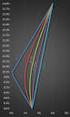 Copyright c 2005 by Karl Sigman Portfolio mean and variance Here we study the performance of a one-period investment X 0 > 0 (dollars) shared among several different assets. Our criterion for measuring
Annuity and Lump-Sum Decisions in Defined Benefit Plans: The Role of Plan Rules
 January 2013 No. 381 Annuity and Lump-Sum Decisions in Defined Benefit Plans: The Role of Plan Rules By Sudipto Banerjee, Ph.D., Employee Benefit Research Institute A T A G L A N C E Amidst growing concerns
Optimal Portfolio Choice with Annuities and Life Insurance for Retired Couples
 Optimal Portfolio Choice with Annuities and Life Insurance for Retired Couples Andreas Hubener, Raimond Maurer, and Ralph Rogalla Finance Department, Goethe University, Frankfurt am Main, Germany This
How To Use A Massmutual Whole Life Insurance Policy
 An Educational Guide for Individuals Unlocking the value of whole life Whole life insurance as a financial asset Insurance Strategies Contents 3 Whole life insurance: A versatile financial asset 4 Providing
ECON20310 LECTURE SYNOPSIS REAL BUSINESS CYCLE
 ECON20310 LECTURE SYNOPSIS REAL BUSINESS CYCLE YUAN TIAN This synopsis is designed merely for keep a record of the materials covered in lectures. Please refer to your own lecture notes for all proofs.
FINANCIAL ANALYSIS ****** UPDATED FOR 55% BENEFIT ****** ****** FOR ALL SURVIVORS ******
 FINANCIAL ANALYSIS ****** UPDATED FOR 55% BENEFIT ****** ****** FOR ALL SURVIVORS ****** This fact sheet is designed to supplement the Department of Defense brochure: SBP SURVIVOR BENEFIT PLAN FOR THE
EDUCATION AND EXAMINATION COMMITTEE SOCIETY OF ACTUARIES RISK AND INSURANCE. Copyright 2005 by the Society of Actuaries
 EDUCATION AND EXAMINATION COMMITTEE OF THE SOCIET OF ACTUARIES RISK AND INSURANCE by Judy Feldman Anderson, FSA and Robert L. Brown, FSA Copyright 25 by the Society of Actuaries The Education and Examination
Lecture Notes on Actuarial Mathematics
 Lecture Notes on Actuarial Mathematics Jerry Alan Veeh May 1, 2006 Copyright 2006 Jerry Alan Veeh. All rights reserved. 0. Introduction The objective of these notes is to present the basic aspects of the
The Demand for Enhanced Annuities. Petra Schumacher
 The Demand for Enhanced Annuities Petra Schumacher Discussion Paper 2008-15 November 2008 Munich School of Management University of Munich Fakultät für Betriebswirtschaft Ludwig-Maximilians-Universität
LIFE INSURANCE AND PENSIONS by Peter Tryfos York University
 LIFE INSURANCE AND PENSIONS by Peter Tryfos York University Introduction Life insurance is the business of insuring human life: in return for a premium payable in one sum or installments, an insurance
Learning Objectives 26. What Is Insurance? 3. Coverage Concepts 8. Types of Insurance 10. Types of Insurers 11. Introduction 26
 Contents u n i t 1 Introduction to Insurance 1 Introduction 2 Learning Objectives 2 What Is Insurance? 3 Risk 4 Coverage Concepts 8 Types of Insurance 10 Types of Insurers 11 Domicile and Authorization
2. Information Economics
 2. Information Economics In General Equilibrium Theory all agents had full information regarding any variable of interest (prices, commodities, state of nature, cost function, preferences, etc.) In many
THE FUNDAMENTAL THEOREM OF ARBITRAGE PRICING
 THE FUNDAMENTAL THEOREM OF ARBITRAGE PRICING 1. Introduction The Black-Scholes theory, which is the main subject of this course and its sequel, is based on the Efficient Market Hypothesis, that arbitrages
Annuities versus Bonds Optimal Consumption and Investment Decisions in a Continuous Life Cycle Model
 Annuities versus Bonds Optimal Consumption and Investment Decisions in a Continuous Life Cycle Model Bernhard Skritek Research Report 2011-09 September, 2011 Operations Research and Control Systems Institute
Analyzing the Demand for Deductible Insurance
 Journal of Risk and Uncertainty, 18:3 3 1999 1999 Kluwer Academic Publishers. Manufactured in The Netherlands. Analyzing the emand for eductible Insurance JACK MEYER epartment of Economics, Michigan State
(Common) Shock models in Exam MLC
 Making sense of... (Common) Shock models in Exam MLC James W. Daniel Austin Actuarial Seminars www.actuarialseminars.com June 26, 2008 c Copyright 2007 by James W. Daniel; reproduction in whole or in part
Optimal Paternalism: Sin Taxes and Health Subsidies
 Optimal Paternalism: Sin Taxes and Health Subsidies Thomas Aronsson and Linda Thunström Department of Economics, Umeå University SE - 901 87 Umeå, Sweden April 2005 Abstract The starting point for this
A Portfolio Model of Insurance Demand. April 2005. Kalamazoo, MI 49008 East Lansing, MI 48824
 A Portfolio Model of Insurance Demand April 2005 Donald J. Meyer Jack Meyer Department of Economics Department of Economics Western Michigan University Michigan State University Kalamazoo, MI 49008 East
Notes - Gruber, Public Finance Section 12.1 Social Insurance What is insurance? Individuals pay money to an insurer (private firm or gov).
 Notes - Gruber, Public Finance Section 12.1 Social Insurance What is insurance? Individuals pay money to an insurer (private firm or gov). These payments are called premiums. Insurer promises to make a