
Regret and Rejoicing Effects on Mixed Insurance *
|
|
|
- Maria Ray
- 10 years ago
- Views:
Transcription
1 Regret and Rejoicing Effects on Mixed Insurance * Yoichiro Fujii, Osaka Sangyo University Mahito Okura, Doshisha Women s College of Liberal Arts Yusuke Osaki, Osaka Sangyo University + Abstract This papers examines how regret and rejoicing influence on mixed insurance choice and demand. Unlike expected utility, both regret and rejoicing may explain why some people prefer to hold mixed insurance to term insurance. Over-insurance of mixed insurance is optimal under expected utility framework when its premium is actuarially fair. Since rejoicing weakens mixed insurance demand, there are possibilities that over- and under-insurance is optimal for incorporating rejoicing term. Keywords: mixed insurance, regret, rejoicing JEL classification numbers: D03, D81, G22 * This paper is partly supported by Kampo-Zaidan Grants. + Corresponding author Address: Faculty of Economics, Osaka Sangyo University, Nakagaito 3-1-1, Daito, Osaka, , Japan. [email protected] 1

2 1. Introduction People purchase term insurance to receive compensation for their bereaved family if people die within a certain term. Term insurance can cover mortality risk, but people may not be able to receive benefits from term insurance because they might survive when the policy term ends. In contrast, there is another type of life insurance that can receive benefits both if people die before the policy term ends and survive at the end of the policy term. This type of life insurance is called mixed insurance. Endowment insurance is a typical example of mixed insurance. According to Dorfman (2008, p. 264), endowment insurance has both the beneficiary paid if the insured dies before the policy matures and the endowment if he or she is alive when the policy matures. Thus, endowment insurance provides benefits in not only death case but also survival case. 2 It is intuitive that mixed insurance seems to be strange from proper purpose of holding insurance. This intuition is supported by expected utility framework which is a dominant tool in an insurance economics. Since people suffers a mean preserving spread of final wealth by holding mixed insurance instead of term one, risk averse people never want to hold mixed insurance by a classical argument of Rothschild and Stiglitz (1971). Thus, expected utility theory concludes that holding a mixed insurance is irrational. 3 However, there are some kinds of mixed insurance in an actual life insurance market. Thus, what are the rational reasons to hold mixed insurance is still an open 2 For example, according to Life Insurance Fact Book 2014 issued by the life insurance association of Japan ( the number of new policies of individual insurance (excluding converted contracts) of endowment insurance accounts for percent in fiscal Another kind of explanation for insisting irrationality of mixed insurance may conducts through arbitrage opportunities. When mixed insurance can be replicated using other financial instruments like a combination of saving and term insurance, those are priced by excluding arbitrage opportunities. However, perfect replication is difficult in real situations by difference of liquidity. For example, it is difficult to withdraw money from a fixed deposit immediately at time of an accident. 2

3 question. In addition, how to decide optimal insurance coverage of mixed insurance is unclear. In order to find the answers from these questions, we attempt to provide a different theoretical ground which calls regret theory. In section 2, background of this research is described. In section 3, we briefly explain the original regret and rejoicing formation, and introduce the regret formation and the rejoicing formation. In section 4, we consider a choice problem between term and mixed insurance. In section 5, we examine rejoicing effect on mixed insurance demand. Section 6 makes concluding remarks. 2. Background Regret theory was originally introduced by Bell (1982) and Looms and Sugden (1982). Regret theory is formed by two components, regret and rejoicing by comparing actual wealth to reference one. To avoid confusion, this paper does not call regret theory, but regret and rejoicing formation. Regret and rejoicing formation is given axiomatic foundations by Sugden (1993) and Quiggin (1994). Since it is difficult to apply their original formation to most insurance problems, Braun and Muermman (2004) proposed a modified version of the original formation and examined regret effects on insurance demand. As they set the reference payoffs as the best wealth, people always feels regret from their actual wealth comparing the best wealth. Their formation was standardized by Wong (2011) and Solnik and Zuo (2012). In accordance with these previous studies, this paper applies rejoicing formation by setting the reference payoffs as the worst wealth. 3. Regret and Rejoicing Formation A brief explanation of regret theory was introduced by Bell (1982) and Loomes and Sugden (1982). Their formulation included both regret and rejoicing. An agent feels regret when a forgone consequence she had not chosen is preferable than a consequence she had chosen. The rejoicing take place the opposite situation, that is, 3

4 a consequence she had chosen is preferable than a forgone consequence. Their formulations, however, considered an agent only choose between two alternatives. Braun and Muerrman (2004) treat a multiple alternatives case. The formulation is based on the best payoffs. It should be noted that this formulation is standard in the literatures (Wong (2011), Solnik and Zuo (2012)). The regret formation is represented by. 1 Here, denotes the actual wealth and the ex post best wealth. is assumed to be twice differentiable, 0 and 0. and : captures regret and is a strictly increasing and strictly convex function with 0 0. is assumed to be twice differentiable, 0 and 0. is called regret function and an agent is regret theoretical if she follows the preference representation (1). We consider another extreme case, that is, the worst payoffs are set to be specific ones to compare actual wealth. In this case, an agent always feels rejoicing. This should be called rejoicing formation. It is represented by. 2 Here and are defined the above and is the ex post worst wealth. Rejoicing is captured by transforming the utility difference actual and the worst wealth trough : which is a strictly increasing and strictly concave function with 0 0. is assumed to be twice differentiable. is called rejoicing function and an agent is rejoicing theoretical if she follows the preference representation (2). This explanation is also applicable to regret function by substituting regret for rejoicing. First, concavity of the rejoicing function signifies that an agent dislikes mean preserving spreads of the utility difference between actual and the best wealth. Second, the total utility is concave by assuming 0 and 0, and this guarantees that optimal choices are characterized by the first-order conditions. However, there are few studies that have adopted rejoicing formation for both theoretical and empirical approaches unlike regret formation. 4

5 Thus, behavioral properties of rejoicing formation remain important issues for future research. A rejoicing theoretical agent pays her attention to the worst wealth in her decision makings, whereas a regret theoretical agent does to the best wealth. It seems to be natural that an agent pays her attentions to specific losses that are subjects for insurance products when she chooses them. Accordingly, we believe that it is necessary to examine the rejoicing effect on insurance purchase decision besides the regret effect. Apart from insurance context, we consider that regret formation is more suitable in some cases and for some agents, and that rejoicing formation is in other cases and for other agents. It may be interesting that regret and rejoicing are dealt with simultaneously as in the original regret and rejoicing formation. In this study, the signs of the second-order derivatives play important roles. We call these their concavity. For example, utility function is strictly concave (linear) if 0 ( 0). This way is applied to a regret function and to a rejoicing function. Braun and Muermann (2004) termed a convex regret function, regret aversion. However, this appears to be confusing terminology since an agent with 0, always dislike regret even though is concave. It is even more confusing in the case of rejoicing. So, unlike Braun and Muermann (2004), we do not term functions averse, but them by their concavity. 4. Choice between Term and Mixed Insurance 4.1 Choice problem Let us consider an agent who has to choose to hold either term or mixed insurance at the full insurance level. For the sake of comparison, both insurance premiums are set to be actuarially fair. An agent has initial wealth of 0 and faces a risky loss. For simplicity, we consider that the risk can be captured by two states: one is called the loss state and 5

6 the other is the no-loss state. The loss size is denoted by with 0. The loss probability is 0,1 and the no-loss probability is 1. If an agent holds term insurance, they receive coverage in the loss state and nothing in the no-loss state. If an agent holds mixed insurance, they receive coverage in the loss state and also receive compensation in the no-loss state, with 0. Since insurance premiums are actuarially fair, term insurance premium is given by and mixed insurance premium by 1. If an agent holds term insurance, her final wealth is given by in both states. If an agent holds mixed insurance, her final wealth is given by in the loss state and in the no-loss state. 4 It is easy to confirm that the wealth holding mixed insurance is a mean-preserving spread of one with term insurance. As the result, every risk-averse agent prefers to hold term insurance rather to mixed insurance in the expected utility framework. In other words, it is not possible to justify why some people hold mixed insurance. 4.2 Regret formation An agent follows the regret formation. The best wealth can be achieved by holding term insurance in the loss state, which is given by, and by holding mixed insurance in the no-loss state, which is given by. The agent computes her total utility as follows. If an agent holds term insurance, her total utility is represented by: 1 1. The equality comes from 0 0. If the agent holds mixed insurance, her total utility is represented as 1 1. The condition that the agent prefers mixed insurance to term insurance can be given as 4 In the following section, the final wealth holding mixed insurance is expressed in the loss state and in the no-loss state. When 1, we simply write and. 6

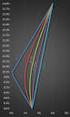
7 The total utility can be decomposed into two effects, one is captured by utility function and the other by regret function. To distinguish between these two effects, the former is designated the risk effect and the latter the regret effect. Since the risk effect is degenerated into the expected utility case, term insurance leads to higher value than mixed insurance in terms of risk effect. However, it is possible that mixed insurance leads to higher value than term insurance in terms regret effect. In this case, the agent prefers to hold mixed insurance rather than term insurance if the regret effect dominates the risk effect. This implies that regret theory may be consistent with why some agents do not want to hold term insurance, but mixed one, even though all agents holds term insurance under expected utility theory. It is difficult to imagine a situation in which an agent holds mixed insurance. Thus, we have to determine specific conditions. To do so, we assume that utility function is linear, in other words, we ignore the risk effect and focus on the regret effect. In this setting, we make the following result: Result 1 Utility function is assumed to be linear and that regret function is strictly convex. If the loss probability is more than 1 2, an agent prefers to hold mixed insurance to term insurance. Proof Since 1, condition (3) can be written as Since 1 for 0, we have 1 by 0 and

8 [Insert Figure 1] An agent is indifferent to hold either mixed insurance or term insurance when the loss probability is 1 2. Let us consider that an agent holds mixed insurance. In this case, an impact of regret is composed into two components, one is captured by regret function and the other is by the loss probability. When the loss probability is increasing, the loss probability is, obviously, increasing in regret, but regret function is decreasing in regret since utility difference of its argument, 1, is decreasing. By convexity of regret function, the latter effect dominates the former one. For the case that an agent holds term insurance, an opposite reasoning can be applied. As a result, an agent prefers to hold mixed insurance to term insurance when the loss probability is more than 1 2. This result means that even though an agent is slightly risk aversion, that is is slightly negative, the she holds mixed insurance when the loss probability is more than Rejoicing formation We now turn to the argument for the case of rejoicing formation. The argument is similar to the case with regret formation by slight modifications, and the details are almost skipped. The worst wealth is in the loss state and in the no-loss state. The total utility in holding term insurance is given as. The total utility in holding mixed insurance is given as As with the regret formation case, a rejoicing theoretical agent may prefer to hold mixed insurance to term insurance. When utility function is linear, we obtain the following result: Result 2 Utility function is assumed to be linear and that rejoicing function is strictly concave. If the loss probability is less than 1 2, an agent prefers to hold mixed insurance to term insurance. 8

9 An intuition of this result can be obtained by a same reasoning in the regret case. It appears more natural to consider that the loss probability is smaller than 1 2 in insurance context. We thus adopt the rejoicing formulation for analyzing mixed insurance demand in the following section. However, the analysis is basically applied to the case of regret formation. 5. Full Insurance and Mixed Insurance 5.1 Expected Utility and Term Insurance We examine how rejoicing influences on mixed insurance demand based on the full insurance theorem by Mossin (1968). Before proceeding with the analysis, we will review the classical result that a risk averse agent decides to buy how amounts of term insurance in the expected utility setting. As in the previous section, the insurance premiums are assumed to be actuarially fair. This assumption makes our analysis keep simple and is common to consider full insurance property. The objective function is given as max 1., Here, signifies the wealth in the loss state when the agent purchases amount of term insurance, which is given as. stands for the wealth in the no-loss state, which is. denotes term insurance demand, whose interval is 0,1. Over-insurance is typically prohibited by law, and so 1 is not included in the interval. Applying, the first-order condition (FOC) can be written as V The second-order condition (SOC) is also satisfied because 0. We omit the argument of the SOC below since it is easily confirmed. According to (6), has to equal to, in other words, α satisfies the condition 9

10 . Thus, α 1, holds, this means that the full insurance is optimal. This result is reasonable, since there is no risk on final wealth holding term insurance at the full insurance level. It is necessary to note that this full insurance is an interior solution. We have to distinguish between an interior and a corner solution at the full insurance level. For convenience, the former is hereafter termed full insurance and the latter is over-insurance. We should recall that over-insurance, α 1, is intrinsically prohibited. 5.2 Rejoicing Formation and Mixed Insurance Let us now consider that an agent is regret theoretical. The agent chooses an optimal mixed insurance level,, to maximize their total utility: max 0, 1 1. Here, represents the wealth in the loss state when the agent purchases amount α of mixed insurance, which is given as. stands for the wealth in the no-loss state, which is. denotes mixed insurance demand. Applying 1, the FOC can be written as To examine mixed insurance demand at the full hedging level, we determine the sign of (7) at α 1: For notational ease, we denote 1 1 and 0. The sign of (8) coincides with 1 1 0, since all the other terms of (8) are strictly positive. Since and is decreasing,. Since 0 and is decreasing, 0. From this observation, we obtain that the sign of (9) and thus that of (8) is

11 indeterminate. This means that it is possible that optimal mixed insurance demand is either over- or under-insurance. Full insurance is occurred on a knife-edge case. 5.3 Decomposition of Utility and Rejoicing Effect To examine what factors determine mixed insurance demand under rejoicing formation, we consider here two special cases: one is no rejoicing function, and the other is linear utility function. The first case is no rejoicing effect and is degenerated to the expected utility case. The latter case is no risk effect. In the expected utility case, the objective function is written as The FOC at α 1 is written as max Since the all terms are strictly positive, (10) is positive. This means that over-insurance is optimal. An intuition for this result is as follows. Unlike term insurance, the wealth holding mixed insurance remains some risk at the full insurance level. Thus, the agent eagers to hold the mixed insurance beyond the full insurance level so as to decrease in risk of the wealth. We summarize this argument into the following: Result 3 If an agent has concave utility function and no rejoicing, that is, risk averse under expected utility representation, optimal mixed insurance holding is over-insurance under actuarially fair premium. Unlike the term insurance, an agent cannot exclude risk even though she holds the full insurance level of the mixed insurance. This gives her a motive to hold the mixed insurance beyond the full insurance level. As a result, optimal mixed insurance holding is over-insurance. 11

12 Next, we next consider another special case where the utility function is linear. The total utility is written as max, π Here, the utility difference is calculated as 0 and 1 1. The FOC (11) at α 1 is given as Since 0 and the other terms are strictly positive, (12) is strictly negative. This means that under-insurance is optimal. An intuition for this result is as follows. While an agent feels maximum rejoicing in the loss state, she does not feel any rejoicing in the no-loss state at the full insurance level. The total utility can be increasing by marginal decrease in mixed insurance holding from the full insurance level since gaining rejoicing in the no-loss state is more than losing it in the loss state by the concavity of rejoicing function. We summarize this argument into the following: Result 4 If an agent has linear utility function and concave rejoicing function, optimal mixed insurance holding is under-insurance under actuarially fair premium. At the full insurance level, an agent gains rejoicing in the loss state, while she does not gain one in the no-loss state. For a marginal decrease of mixed insurance holding, she loses some rejoicing in the loss state, but gains one in the no-loss state. The latter dominates the former because of the concavity of rejoicing function. As the result, the optimal mixed insurance holding is under-insurance. From the results of the two special cases, the following intuition is taken: risk effect propels over-insurance and rejoicing effect drives under-insurance, and that optimal insurance is determined by their relative strength. We will now confirm this intuition formally Risk and Rejoicing Effects on Mixed Insurance Demand 12

13 Let us consider utility function and rejoicing function such that full insurance is optimal, i.e This can be rewritten as The relative strength of utility function and rejoicing function is characterized by their degrees of concavity as showing following propositions. Result 5 Let us consider rejoicing function. Over- (under-) insurance is optimal if utility function is more (less) concave than in the sense that. Proof: A more (less) concave relation is equivalent to that is decreasing (increasing) in. Thus, for, with Setting and, we have This indicates that over- (under-) insurance is optimal if an agent has a more (less) concave utility function than. The form of the degree of concavity defined the above, is same for the absolute Arrow-Pratt aversion in the expected utility framework. 5 Utility function is preserved under affine transformation, so that we can set

14 A similar argument can be applied to rejoicing function. We consider that rejoicing function is more (less) concave than in the sense that By a similar argument of the above, we have This indicates that under- (over-) insurance is optimal if an agent has a more (less) concave rejoicing function than. We summarize this argument into the following. Result 6 Let us consider utility function. Under-insurance is optimal if rejoicing function is more concave than in the sense that 1 1. From the above analysis, we confirm our intuitive conclusion, i.e. when risk effect dominates rejoicing effect, over insurance is optimal, and vice versa. Here, the relative importance is measured by their degree of concavity. Finally, we will examine the effect of compensation in the no-loss state on mixed insurance demand. Let us consider the above situation, i.e. the full insurance is optimal. We denote the compensation that satisfies (13). It is easily calculated as follows: sgn 1 0, 6 Unlike utility function, rejoicing function is not preserved under affine transformations. 14

15 1 0 1 sgn From the above, we have the following inequality for the compensation such that by setting as, and as By this argument, we have the following result: Result 7 Let us consider that the compensation satisfies (13). Over-insurance (under-insurance) is optimal if the compensation is large (small) in the sense that. By the reasoning of the analysis, the compensation increases the mixed insurance demand from the viewpoint of the risk effect and decreases one from the rejoicing effect. When the compensation is enough large (small), the former dominates (is dominated by) the latter, so that an agent has a motive that she holds (does not hold) the mixed insurance compared to the full insurance level. 6. Concluding Remarks This paper examines how regret and rejoicing on mixed insurance choice and demand. Both an agent may prefer to hold mixed insurance to term insurance under both the regret formation and the rejoicing formation. This observation provides a theoretical ground why people purchase mixed insurance. We determine conditions on how amounts of mixed insurance are bought using the rejoicing formation. The relative strength of rejoicing effects plays a key role to determine 15

16 mixed insurance demand. When rejoicing function is enough concave, under-insurance is optimal. There are two directions of future research: one is about the formation. Braun and Muermann (2004) opened up the possibility that the regret and rejoicing formation is a useful and promising approach to analyze insurance problems. This formation can explain why mixed insurance is traded. It is worth pursuing insurance problems using this formation. Behavioral approach including the regret and rejoicing formation, may be powerful to understand them. References Bell, D. E., Regret in decision making under uncertainty, Operations Research 30, , Braun, M. and A. Muermann, The impact of regret on the demand for insurance, Journal of Risk and Insurance 71, , Dorfman, M. S., Introduction to Risk Management and Insurance (9th edition), New Jersey: Pearson Prentice Hall, Loomes, G. and R. Sugden, Regret theory: An alternative theory of rational choice under uncertainty, Economic Journal 92, , Mossin, J. Aspects of rational insurance purchasing, Journal of Political Economy 76, , Quiggin, J., Regret theory with general choice sets, Journal of Risk and Uncertainty 8, , Rothschild, M. and J. E. Stiglitz, Increasing risk II: Its economic consequences, Journal of Economic Theory 3, 66-84, Solnik, B. and Luo Z. A global equilibrium asset pricing model with home preference, Management Science 58, , Sugden, R., An axiomatic foundation for regret theory, Journal of Economic Theory 60, , Wong, K. P., Regret theory and the banking firm: The optimal bank interest margin, Economic Modelling 28, ,

17 17

Choice under Uncertainty
 Choice under Uncertainty Part 1: Expected Utility Function, Attitudes towards Risk, Demand for Insurance Slide 1 Choice under Uncertainty We ll analyze the underlying assumptions of expected utility theory
Analyzing the Demand for Deductible Insurance
 Journal of Risk and Uncertainty, 18:3 3 1999 1999 Kluwer Academic Publishers. Manufactured in The Netherlands. Analyzing the emand for eductible Insurance JACK MEYER epartment of Economics, Michigan State
Moral Hazard. Itay Goldstein. Wharton School, University of Pennsylvania
 Moral Hazard Itay Goldstein Wharton School, University of Pennsylvania 1 Principal-Agent Problem Basic problem in corporate finance: separation of ownership and control: o The owners of the firm are typically
Economics 1011a: Intermediate Microeconomics
 Lecture 11: Choice Under Uncertainty Economics 1011a: Intermediate Microeconomics Lecture 11: Choice Under Uncertainty Tuesday, October 21, 2008 Last class we wrapped up consumption over time. Today we
Unraveling versus Unraveling: A Memo on Competitive Equilibriums and Trade in Insurance Markets
 Unraveling versus Unraveling: A Memo on Competitive Equilibriums and Trade in Insurance Markets Nathaniel Hendren January, 2014 Abstract Both Akerlof (1970) and Rothschild and Stiglitz (1976) show that
1 Uncertainty and Preferences
 In this chapter, we present the theory of consumer preferences on risky outcomes. The theory is then applied to study the demand for insurance. Consider the following story. John wants to mail a package
On Compulsory Per-Claim Deductibles in Automobile Insurance
 The Geneva Papers on Risk and Insurance Theory, 28: 25 32, 2003 c 2003 The Geneva Association On Compulsory Per-Claim Deductibles in Automobile Insurance CHU-SHIU LI Department of Economics, Feng Chia
The Effect of Ambiguity Aversion on Insurance and Self-protection
 The Effect of Ambiguity Aversion on Insurance and Self-protection David Alary Toulouse School of Economics (LERNA) Christian Gollier Toulouse School of Economics (LERNA and IDEI) Nicolas Treich Toulouse
FIN-40008 FINANCIAL INSTRUMENTS SPRING 2008
 FIN-40008 FINANCIAL INSTRUMENTS SPRING 2008 Options These notes consider the way put and call options and the underlying can be combined to create hedges, spreads and combinations. We will consider the
Optimal demand management policies with probability weighting
 Optimal demand management policies with probability weighting Ana B. Ania February 2006 Preliminary draft. Please, do not circulate. Abstract We review the optimality of partial insurance contracts in
Portfolio Allocation and Asset Demand with Mean-Variance Preferences
 Portfolio Allocation and Asset Demand with Mean-Variance Preferences Thomas Eichner a and Andreas Wagener b a) Department of Economics, University of Bielefeld, Universitätsstr. 25, 33615 Bielefeld, Germany.
Lecture notes for Choice Under Uncertainty
 Lecture notes for Choice Under Uncertainty 1. Introduction In this lecture we examine the theory of decision-making under uncertainty and its application to the demand for insurance. The undergraduate
Session IX: Lecturer: Dr. Jose Olmo. Module: Economics of Financial Markets. MSc. Financial Economics
 Session IX: Stock Options: Properties, Mechanics and Valuation Lecturer: Dr. Jose Olmo Module: Economics of Financial Markets MSc. Financial Economics Department of Economics, City University, London Stock
Economics of Insurance
 Economics of Insurance In this last lecture, we cover most topics of Economics of Information within a single application. Through this, you will see how the differential informational assumptions allow
No-Betting Pareto Dominance
 No-Betting Pareto Dominance Itzhak Gilboa, Larry Samuelson and David Schmeidler HEC Paris/Tel Aviv Yale Interdisciplinary Center Herzlyia/Tel Aviv/Ohio State May, 2014 I. Introduction I.1 Trade Suppose
Chapter 7. Sealed-bid Auctions
 Chapter 7 Sealed-bid Auctions An auction is a procedure used for selling and buying items by offering them up for bid. Auctions are often used to sell objects that have a variable price (for example oil)
The Reasonable Person Negligence Standard and Liability Insurance. Vickie Bajtelsmit * Colorado State University
 \ins\liab\dlirpr.v3a 06-06-07 The Reasonable Person Negligence Standard and Liability Insurance Vickie Bajtelsmit * Colorado State University Paul Thistle University of Nevada Las Vegas Thistle s research
Lecture 15. Ranking Payoff Distributions: Stochastic Dominance. First-Order Stochastic Dominance: higher distribution
 Lecture 15 Ranking Payoff Distributions: Stochastic Dominance First-Order Stochastic Dominance: higher distribution Definition 6.D.1: The distribution F( ) first-order stochastically dominates G( ) if
2. Information Economics
 2. Information Economics In General Equilibrium Theory all agents had full information regarding any variable of interest (prices, commodities, state of nature, cost function, preferences, etc.) In many
A Portfolio Model of Insurance Demand. April 2005. Kalamazoo, MI 49008 East Lansing, MI 48824
 A Portfolio Model of Insurance Demand April 2005 Donald J. Meyer Jack Meyer Department of Economics Department of Economics Western Michigan University Michigan State University Kalamazoo, MI 49008 East
1 Introduction to Option Pricing
 ESTM 60202: Financial Mathematics Alex Himonas 03 Lecture Notes 1 October 7, 2009 1 Introduction to Option Pricing We begin by defining the needed finance terms. Stock is a certificate of ownership of
Demand and supply of health insurance. Folland et al Chapter 8
 Demand and supply of health Folland et al Chapter 8 Chris Auld Economics 317 February 9, 2011 What is insurance? From an individual s perspective, insurance transfers wealth from good states of the world
Prices versus Exams as Strategic Instruments for Competing Universities
 Prices versus Exams as Strategic Instruments for Competing Universities Elena Del Rey and Laura Romero October 004 Abstract In this paper we investigate the optimal choice of prices and/or exams by universities
CHAPTER 1: INTRODUCTION, BACKGROUND, AND MOTIVATION. Over the last decades, risk analysis and corporate risk management activities have
 Chapter 1 INTRODUCTION, BACKGROUND, AND MOTIVATION 1.1 INTRODUCTION Over the last decades, risk analysis and corporate risk management activities have become very important elements for both financial
How To Understand The Relationship Between Health Insurance And Moral Hazard
 Optimal health insurance contract : can moral hazard incresase indemnity? David Alary SDFi, University Paris Dauphine Franck Bien LEGOS, University Paris Dauphine Abstract In this note, we generalize the
Lecture 11 Uncertainty
 Lecture 11 Uncertainty 1. Contingent Claims and the State-Preference Model 1) Contingent Commodities and Contingent Claims Using the simple two-good model we have developed throughout this course, think
K 1 < K 2 = P (K 1 ) P (K 2 ) (6) This holds for both American and European Options.
 Slope and Convexity Restrictions and How to implement Arbitrage Opportunities 1 These notes will show how to implement arbitrage opportunities when either the slope or the convexity restriction is violated.
Economics 200B Part 1 UCSD Winter 2015 Prof. R. Starr, Mr. John Rehbeck Final Exam 1
 Economics 200B Part 1 UCSD Winter 2015 Prof. R. Starr, Mr. John Rehbeck Final Exam 1 Your Name: SUGGESTED ANSWERS Please answer all questions. Each of the six questions marked with a big number counts
On the Efficiency of Competitive Stock Markets Where Traders Have Diverse Information
 Finance 400 A. Penati - G. Pennacchi Notes on On the Efficiency of Competitive Stock Markets Where Traders Have Diverse Information by Sanford Grossman This model shows how the heterogeneous information
Prospect Theory and the Demand for Insurance
 Prospect Theory and the emand for Insurance avid L. Eckles and Jacqueline Volkman Wise ecember 211 Abstract We examine the effect of prospect theory preferences on the demand for insurance to determine
Insurance. Michael Peters. December 27, 2013
 Insurance Michael Peters December 27, 2013 1 Introduction In this chapter, we study a very simple model of insurance using the ideas and concepts developed in the chapter on risk aversion. You may recall
Valuation of the Surrender Option Embedded in Equity-Linked Life Insurance. Brennan Schwartz (1976,1979) Brennan Schwartz
 Valuation of the Surrender Option Embedded in Equity-Linked Life Insurance Brennan Schwartz (976,979) Brennan Schwartz 04 2005 6. Introduction Compared to traditional insurance products, one distinguishing
Two-State Options. John Norstad. [email protected] http://www.norstad.org. January 12, 1999 Updated: November 3, 2011.
 Two-State Options John Norstad [email protected] http://www.norstad.org January 12, 1999 Updated: November 3, 2011 Abstract How options are priced when the underlying asset has only two possible
Financial Markets. Itay Goldstein. Wharton School, University of Pennsylvania
 Financial Markets Itay Goldstein Wharton School, University of Pennsylvania 1 Trading and Price Formation This line of the literature analyzes the formation of prices in financial markets in a setting
Asset Pricing. Chapter IV. Measuring Risk and Risk Aversion. June 20, 2006
 Chapter IV. Measuring Risk and Risk Aversion June 20, 2006 Measuring Risk Aversion Utility function Indifference Curves U(Y) tangent lines U(Y + h) U[0.5(Y + h) + 0.5(Y h)] 0.5U(Y + h) + 0.5U(Y h) U(Y
Lecture Notes: Basic Concepts in Option Pricing - The Black and Scholes Model
 Brunel University Msc., EC5504, Financial Engineering Prof Menelaos Karanasos Lecture Notes: Basic Concepts in Option Pricing - The Black and Scholes Model Recall that the price of an option is equal to
.4 120 +.1 80 +.5 100 = 48 + 8 + 50 = 106.
 Chapter 16. Risk and Uncertainty Part A 2009, Kwan Choi Expected Value X i = outcome i, p i = probability of X i EV = pix For instance, suppose a person has an idle fund, $100, for one month, and is considering
Capital Structure of Non-life Insurance Firms in Japan
 Capital Structure of Non-life Insurance Firms in Japan Applied Economics and Finance Vol. 3, No. 3; August 2016 ISSN 2332-7294 E-ISSN 2332-7308 Published by Redfame Publishing URL: http://aef.redfame.com
READING 14: LIFETIME FINANCIAL ADVICE: HUMAN CAPITAL, ASSET ALLOCATION, AND INSURANCE
 READING 14: LIFETIME FINANCIAL ADVICE: HUMAN CAPITAL, ASSET ALLOCATION, AND INSURANCE Introduction (optional) The education and skills that we build over this first stage of our lives not only determine
Lecture 13: Risk Aversion and Expected Utility
 Lecture 13: Risk Aversion and Expected Utility Uncertainty over monetary outcomes Let x denote a monetary outcome. C is a subset of the real line, i.e. [a, b]. A lottery L is a cumulative distribution
LIFE INSURANCE AND PENSIONS by Peter Tryfos York University
 LIFE INSURANCE AND PENSIONS by Peter Tryfos York University Introduction Life insurance is the business of insuring human life: in return for a premium payable in one sum or installments, an insurance
Further Topics in Actuarial Mathematics: Premium Reserves. Matthew Mikola
 Further Topics in Actuarial Mathematics: Premium Reserves Matthew Mikola April 26, 2007 Contents 1 Introduction 1 1.1 Expected Loss...................................... 2 1.2 An Overview of the Project...............................
The Cumulative Distribution and Stochastic Dominance
 The Cumulative Distribution and Stochastic Dominance L A T E X file: StochasticDominance Daniel A. Graham, September 1, 2011 A decision problem under uncertainty is frequently cast as the problem of choosing
Optimal insurance contracts with adverse selection and comonotonic background risk
 Optimal insurance contracts with adverse selection and comonotonic background risk Alary D. Bien F. TSE (LERNA) University Paris Dauphine Abstract In this note, we consider an adverse selection problem
Valuation of the Minimum Guaranteed Return Embedded in Life Insurance Products
 Financial Institutions Center Valuation of the Minimum Guaranteed Return Embedded in Life Insurance Products by Knut K. Aase Svein-Arne Persson 96-20 THE WHARTON FINANCIAL INSTITUTIONS CENTER The Wharton
1.4 Hidden Information and Price Discrimination 1
 1.4 Hidden Information and Price Discrimination 1 To be included in: Elmar Wolfstetter. Topics in Microeconomics: Industrial Organization, Auctions, and Incentives. Cambridge University Press, new edition,
4: SINGLE-PERIOD MARKET MODELS
 4: SINGLE-PERIOD MARKET MODELS Ben Goldys and Marek Rutkowski School of Mathematics and Statistics University of Sydney Semester 2, 2015 B. Goldys and M. Rutkowski (USydney) Slides 4: Single-Period Market
The Values of Relative Risk Aversion Degrees
 The Values of Relative Risk Aversion Degrees Johanna Etner CERSES CNRS and University of Paris Descartes 45 rue des Saints-Peres, F-75006 Paris, France [email protected] Abstract This article
1 Portfolio mean and variance
 Copyright c 2005 by Karl Sigman Portfolio mean and variance Here we study the performance of a one-period investment X 0 > 0 (dollars) shared among several different assets. Our criterion for measuring
Commodity Options as Price Insurance for Cattlemen
 Managing for Today s Cattle Market and Beyond Commodity Options as Price Insurance for Cattlemen By John C. McKissick, The University of Georgia Most cattlemen are familiar with insurance, insuring their
Social Insurance (Chapter-12) Part-1
 (Chapter-12) Part-1 Background Dramatic change in the composition of government spending in the U.S. over time Background Social insurance programs: Government interventions in the provision of insurance
Black-Scholes-Merton approach merits and shortcomings
 Black-Scholes-Merton approach merits and shortcomings Emilia Matei 1005056 EC372 Term Paper. Topic 3 1. Introduction The Black-Scholes and Merton method of modelling derivatives prices was first introduced
Derivative Users Traders of derivatives can be categorized as hedgers, speculators, or arbitrageurs.
 OPTIONS THEORY Introduction The Financial Manager must be knowledgeable about derivatives in order to manage the price risk inherent in financial transactions. Price risk refers to the possibility of loss
Computational Finance Options
 1 Options 1 1 Options Computational Finance Options An option gives the holder of the option the right, but not the obligation to do something. Conversely, if you sell an option, you may be obliged to
Using Generalized Forecasts for Online Currency Conversion
 Using Generalized Forecasts for Online Currency Conversion Kazuo Iwama and Kouki Yonezawa School of Informatics Kyoto University Kyoto 606-8501, Japan {iwama,yonezawa}@kuis.kyoto-u.ac.jp Abstract. El-Yaniv
ECO 317 Economics of Uncertainty Fall Term 2009 Week 5 Precepts October 21 Insurance, Portfolio Choice - Questions
 ECO 37 Economics of Uncertainty Fall Term 2009 Week 5 Precepts October 2 Insurance, Portfolio Choice - Questions Important Note: To get the best value out of this precept, come with your calculator or
ANOTHER PERVERSE EFFECT OF MONOPOLY POWER
 ANOTHER PERVERSE EFFECT OF MONOPOLY POWER Jean J. Gabszewicz and Xavier Y. Wauthy November 2000 Abstract We show that the simple fact that a monopolist sells a good in units which are indivisible may well
EC247 FINANCIAL INSTRUMENTS AND CAPITAL MARKETS TERM PAPER
 EC247 FINANCIAL INSTRUMENTS AND CAPITAL MARKETS TERM PAPER NAME: IOANNA KOULLOUROU REG. NUMBER: 1004216 1 Term Paper Title: Explain what is meant by the term structure of interest rates. Critically evaluate
Market Value of Insurance Contracts with Profit Sharing 1
 Market Value of Insurance Contracts with Profit Sharing 1 Pieter Bouwknegt Nationale-Nederlanden Actuarial Dept PO Box 796 3000 AT Rotterdam The Netherlands Tel: (31)10-513 1326 Fax: (31)10-513 0120 E-mail:
Thomas Russell. Dept. of Economics Santa Clara University
 Catastrophe Insurance and the Demand for Deductibles Thomas Russell Dept. of Economics Santa Clara University The author acknowledges the assistance of a Leavey Grant in the preparation of this paper.
Review of Basic Options Concepts and Terminology
 Review of Basic Options Concepts and Terminology March 24, 2005 1 Introduction The purchase of an options contract gives the buyer the right to buy call options contract or sell put options contract some
Cost Minimization and the Cost Function
 Cost Minimization and the Cost Function Juan Manuel Puerta October 5, 2009 So far we focused on profit maximization, we could look at a different problem, that is the cost minimization problem. This is
A Generalization of the Mean-Variance Analysis
 A Generalization of the Mean-Variance Analysis Valeri Zakamouline and Steen Koekebakker This revision: May 30, 2008 Abstract In this paper we consider a decision maker whose utility function has a kink
3 Introduction to Assessing Risk
 3 Introduction to Assessing Risk Important Question. How do we assess the risk an investor faces when choosing among assets? In this discussion we examine how an investor would assess the risk associated
FIN-40008 FINANCIAL INSTRUMENTS SPRING 2008. Options
 FIN-40008 FINANCIAL INSTRUMENTS SPRING 2008 Options These notes describe the payoffs to European and American put and call options the so-called plain vanilla options. We consider the payoffs to these
Answer Key to Problem Set #2: Expected Value and Insurance
 Answer Key to Problem Set #2: Expected Value and Insurance 1. (a) We have u (w) = 1 2 w 1 2, so u (w) = 1 4 w 3 2. As we will see below, u (w) < 0 indicates that the individual is risk-averse. (b) The
Economics 1011a: Intermediate Microeconomics
 Lecture 12: More Uncertainty Economics 1011a: Intermediate Microeconomics Lecture 12: More on Uncertainty Thursday, October 23, 2008 Last class we introduced choice under uncertainty. Today we will explore
Why is Insurance Good? An Example Jon Bakija, Williams College (Revised October 2013)
 Why is Insurance Good? An Example Jon Bakija, Williams College (Revised October 2013) Introduction The United States government is, to a rough approximation, an insurance company with an army. 1 That is
THE FUNDAMENTAL THEOREM OF ARBITRAGE PRICING
 THE FUNDAMENTAL THEOREM OF ARBITRAGE PRICING 1. Introduction The Black-Scholes theory, which is the main subject of this course and its sequel, is based on the Efficient Market Hypothesis, that arbitrages
Optimal Paternalism: Sin Taxes and Health Subsidies
 Optimal Paternalism: Sin Taxes and Health Subsidies Thomas Aronsson and Linda Thunström Department of Economics, Umeå University SE - 901 87 Umeå, Sweden April 2005 Abstract The starting point for this
Equilibrium in Competitive Insurance Markets: An Essay on the Economic of Imperfect Information
 Equilibrium in Competitive Insurance Markets: An Essay on the Economic of Imperfect Information By: Michael Rothschild and Joseph Stiglitz Presented by Benjamin S. Barber IV, Xiaoshu Bei, Zhi Chen, Shaiobi
Example 1. Consider the following two portfolios: 2. Buy one c(s(t), 20, τ, r) and sell one c(s(t), 10, τ, r).
 Chapter 4 Put-Call Parity 1 Bull and Bear Financial analysts use words such as bull and bear to describe the trend in stock markets. Generally speaking, a bull market is characterized by rising prices.
Notes - Gruber, Public Finance Section 12.1 Social Insurance What is insurance? Individuals pay money to an insurer (private firm or gov).
 Notes - Gruber, Public Finance Section 12.1 Social Insurance What is insurance? Individuals pay money to an insurer (private firm or gov). These payments are called premiums. Insurer promises to make a
Gains from trade in a Hotelling model of differentiated duopoly
 Gains from trade in a Hotelling model of differentiated duopoly Kenji Fujiwara School of Economics, Kwansei Gakuin University and Department of Economics, McGill University August 8, 009 Abstract Constructing
Insurance Demand and Prospect Theory. by Ulrich Schmidt
 Insurance Demand and Prospect Theory by Ulrich Schmidt No. 1750 January 2012 Kiel Institute for the World Economy, Hindenburgufer 66, 24105 Kiel, Germany Kiel Working Paper No. 1750 January 2012 Insurance
Adverse selection and moral hazard in health insurance.
 Adverse selection and moral hazard in health insurance. Franck Bien David Alary University Paris Dauphine November 10, 2006 Abstract In this paper, we want to characterize the optimal health insurance
Black Scholes Merton Approach To Modelling Financial Derivatives Prices Tomas Sinkariovas 0802869. Words: 3441
 Black Scholes Merton Approach To Modelling Financial Derivatives Prices Tomas Sinkariovas 0802869 Words: 3441 1 1. Introduction In this paper I present Black, Scholes (1973) and Merton (1973) (BSM) general
6. Budget Deficits and Fiscal Policy
 Prof. Dr. Thomas Steger Advanced Macroeconomics II Lecture SS 2012 6. Budget Deficits and Fiscal Policy Introduction Ricardian equivalence Distorting taxes Debt crises Introduction (1) Ricardian equivalence
Working Paper Series
 RGEA Universidade de Vigo http://webs.uvigo.es/rgea Working Paper Series A Market Game Approach to Differential Information Economies Guadalupe Fugarolas, Carlos Hervés-Beloso, Emma Moreno- García and
Switching Cost, Competition, and Pricing in the Property/Casualty Insurance Market for Large Commercial Accounts
 Switching Cost, Competition, and Pricing in the Property/Casualty Insurance Market for Large Commercial Accounts Lisa L. Posey * Abstract: With large commercial accounts, a small number of insurers negotiate
Economics 206 Problem Set 1 Winter 2007 Vincent Crawford
 Economics 206 Problem Set 1 Winter 2007 Vincent Crawford This problem set, which is optional, covers the material in the first half of the course, roughly in the order in which topics are discussed in
IAA PAPER VALUATION OF RISK ADJUSTED CASH FLOWS AND THE SETTING OF DISCOUNT RATES THEORY AND PRACTICE
 Introduction This document refers to sub-issue 11G of the IASC Insurance Issues paper and proposes a method to value risk-adjusted cash flows (refer to the IAA paper INSURANCE LIABILITIES - VALUATION &
Institute for Empirical Research in Economics University of Zurich. Working Paper Series ISSN 1424-0459. Working Paper No. 229
 Institute for Empirical Research in Economics University of Zurich Working Paper Series ISSN 1424-0459 Working Paper No. 229 On the Notion of the First Best in Standard Hidden Action Problems Christian
Decision Making under Uncertainty
 6.825 Techniques in Artificial Intelligence Decision Making under Uncertainty How to make one decision in the face of uncertainty Lecture 19 1 In the next two lectures, we ll look at the question of how
THE FINANCING DECISIONS BY FIRMS: IMPACT OF CAPITAL STRUCTURE CHOICE ON VALUE
 IX. THE FINANCING DECISIONS BY FIRMS: IMPACT OF CAPITAL STRUCTURE CHOICE ON VALUE The capital structure of a firm is defined to be the menu of the firm's liabilities (i.e, the "right-hand side" of the
Distribution-Based Pricing Formulas. Are Not Arbitrage-Free
 Author s Response To Michael G. Wacek s Discussion Of a Paper Published In Proceedings Volume XC Distribution-Based Pricing Formulas Are Not Arbitrage-Free By David L. Ruhm Author s reply to discussion