
PCNE Classification for Drug related problems
|
|
|
- Miles Wood
- 10 years ago
- Views:
Transcription
1 PCNE Classification for Drug related problems (revised vm) V Pharmaceutical Care Network Europe Foundation This classification can freely be used in Pharmaceutical Care Research and practice, as long as the Foundation is informed of its use and results of validations. The classification is available both as a Word document and a PDF document. Contact: [email protected] This classification should be referred to as The PCNE Classification V 4.00

2 Introduction During the working conference of the Pharmaceutical Care Network Europe in January 1999, a classification scheme was constructed for drug related problems (DRPs). The classification is part of a total set of instruments. The set consists of the classification scheme, reporting forms and cases for training or validation. The classification system is validated and adapted regularly. The current version is V4. It is not compatible with previous versions. The classification is for use in research into the nature, prevalence, and incidence of DRPs and also as a process indicator in experimental studies of Pharmaceutical Care outcomes. It is also meant to help health care professionals to document DRP-information in the pharmaceutical care process. The hierarchical classification is based upon similar work in the field, but it differs from existing systems because it separates the problems from the causes. The following definition is the basis for the classification: A Drug-Related Problem is an event or circumstance involving drug therapy that actually or potentially interferes with desired health outcomes. The basic classification now has 6 primary domains for problems, 6 primary domains for causes and 5 primary domains for Interventions. However, on a more detailed level there are 21 grouped sub domains for problems, 33 grouped sub domains for causes and 15 grouped sub domains for interventions. Those sub domains can be regarded as explanatory for the principal domains. Zuidlaren, April 2003 PCNE classification V 4.00

3 PCNE Classification scheme for Drug-Related Problems V4 -Page 1 The Basic Classification Problems Causes Interventions Code V4 P1 P2 P3 P4 P5 P6 C1 C2 C3 C4 C5 C6 I0 I2 I2 I3 I4 Primary domains Adverse reaction(s) Patient suffers from an adverse drug event Drug Choice Problem Patient gets or is going to get a wrong (or no drug) drug for his/her disease and/or condition Dosing problem Patient gets more or less than the amount of drug he/she requires Drug Use/Administration Problem Wrong or no drug taken/administered Interactions There is a manifest or potential drug-drug or drug-food interaction Other Drug/Dose Selection The cause of the DRP can be related to the selection of the drug and/or dosage schedule Drug Use Process The cause of the DRP can be related to the way the patient uses the drug, in spite of proper dosage instructions (on the label) Information The cause of the DRP can be related to a lack or misinterpretation of information Patient/Psychological The cause of the DRP can be related to the personality of the patient. (Pharmacy) Logistics The cause of the DRP can be related to the logistics of the prescribing or dispensing mechanism Other No intervention At prescriber level At patient (or carer) level At drug level Other PCNE classification V 4.00

4 PCNE Classification scheme for Drug-Related Problems V4 -Page 2 The Detailed Classification The Problems Each problem should be coded separately, but there may be more causes or interventions to one problem. Primary Domain Code Problem V4 1. Adverse reactions P1.1 Side effect suffered (non-allergic) Patient suffers from an adverse P1.2 Side effect suffered (allergic) drug event P1.3 Toxic effects suffered 2. Drug choice problem Patient gets or is going to get a wrong (or no drug) drug for his/her disease and/or condition 3. Dosing problem Patient gets more or less than the amount of drug he/she requires 4. Drug use problem Wrong or no drug taken/administered 5. Interactions There is a manifest or potential drug-drug or drug-food interaction 6. Others P2.1 Inappropriate drug (not most appropriate for indication) P2.2 Inappropriate drug form (not most appropriate for indication) P2.3 Inappropriate duplication of therapeutic group or active ingredient P2.4 Contra-indication for drug (incl. Pregnancy/breast feeding) P2.5 No clear indication for drug use P2.6 No drug prescribed but clear indication P3.1 Drug dose too low or dosage regime not frequent enough P3.2 Drug dose too high or dosage regime too frequent P3.3 Duration of treatment too short P3.4 Duration of treatment too long P4.1 Drug not taken/administered at all P4.2 Wrong drug taken/administered P5.1 Potential interaction P5.2 Manifest interaction P6.1 Patient dissatisfied with therapy despite taking drug(s) correctly P6.2 Insufficient awareness of health and diseases (possibly leading to future problems) P6.3 Unclear complaints. Further clarification necessary P6.4 Therapy failure (reason unknown) PCNE classification V 4.00

5 PCNE Classification scheme for Drug Related Problems V4 -Page 3 The Causes N.B. One problem can have more causes Primary Domain 1. Drug/Dose selection The cause of the DRP is related to the selection of the drug and/or dosage schedule 2. Drug use process The cause of the DRP can be related to the way the patient uses the drug, in spite of proper dosage instructions (on the label) 3. Information The cause of the DRP can be related to a lack or misinterpretation of information 4. Patient/Psychological The cause of the DRP can be related to the personality of the patient. 5. Logistics The cause of the DRP can be related to the logistics of the prescribing or dispensing mechanism 6. Others Code Cause V4 C1.1 Inappropriate drug selection C1.2 Inappropriate dosage selection C1.3 More cost-effective drug available C1.4 Pharmacokinetic problems, incl. ageing/deterioration in organ function and interactions C1.5 Synergistic/preventive drug required and not given C1.6 Deterioration/improvement of disease state C1.7 New symptom or indication revealed/presented C1.8 Manifest side effect, no other cause C2.1 Inappropriate timing of administration and/or dosing intervals C2.2 Drug underused/ under-administered C2.3 Drug overused/ over-administered C2.4 Therapeutic drug monitoring required C2.5 Drug abused (unregulated overuse) C2.6 Patient unable to use drug/form as directed C3.1 Instructions for use/taking not known C3.2 Patient unaware of reason for drug treatment C3.3 Patient has difficulties reading/understanding Patient Information Form/Leaflet C3.4 Patient unable to understand local language C3.5 Lack of communication between healthcare professionals C4.1 Patient forgets to use/take drug C4.2 Patient has concerns with drugs C4.3 Patent suspects side-effect C4.4 Patient unwilling to carry financial costs C4.5 Patient unwilling to bother physician C4.6 Patient unwilling to change drugs C4.7 Patient unwilling to adapt life-style C4.8 Burden of therapy C4.9 Treatment not in line with health beliefs C5.1 Prescribed drug not available C5.2 Prescribing error (only in case of slip of the pen) C5.3 Dispensing error (wrong drug or dose dispensed) C6.1 Other reason; specify C6.2 No obvious reason PCNE classification V 4.00

6 PCNE Classification scheme for Drug-Related Problems V4 -Page 4 The Interventions N.B. One problem can lead to more interventions Primary Domain Code Intervention V4 No intervention I0.0 No Intervention 1. At prescriber level I1.1 Prescriber informed only I1.2 Prescriber asked for information I1.3 Intervention proposed, approved by Prescriber I1.4 Intervention proposed, not approved by Prescriber I1.5 Intervention proposed, outcome unknown 2. At patient/carer level I2.1 Patient (medication) counselling I2.2 Written information provided only I2.3 Patient referred to prescriber I2.4 Spoken to family member/caregiver 3. At drug level I3.1 Drug changed to. I3.2 Dosage changed to. I3.3 Formulation changed to.. 4. Other intervention or I4.1 Other intervention (specify) activity I4.2 Side effect reported to authorities PCNE classification V 4.00

7 PCNE Classification scheme for Drug-Related Problems Amendments Changes between V 3.02 and V 4.00 General: After incorporating changes as a result of validations in Portugal and N. Ireland, all items have been renumbered and re-arranged. SPSS numbering removed: unclear in context of classification. Added a first page to the official classifications, with only the primary domains to clarify that the classification can also be used on the first level. Problem Domains Rearranged problem-domains (more important and frequent to the top) Inappropriate drug form inserted Distinction between allergic and non-allergic side-effect reintroduced, as well as option for toxic effect Distinction between inappropriate drugs prescribed and OTC removed No drug prescribed but clear indication moved to Drug choice problem: (although this sub domain is debatable in a DRP classification) Drug level too low or too high removed: overlap with dosing problem Incorrect timing removed, is a cause and not a problem per sé Items in Drug use domain partially removed and integrated in causes section; this type of problem is a dosage problem that leads to a problem. Added Inappropriate to duplication Causes domains Merged a number of codes in Drug/dose selection domain Reworded a number of causes Rearranged a number of sub domains (more important and frequent to the top) Cause Drug used to suppress avoidable side effects removed (no cause for a problem, the cause is inappropriate drug selection) Reasons for drug not used/underused moved to sub-sub domain Moved manifest side effect to Domain drug/dose selection Intervention domain: Added: Formulation changed to Changes between V 3.01 and 3.02 P3.4 removed as option but series not renumbered Changes between V 3.0 and 3.01 Added new P3.4: Too little drug taken or administered. Moved other numbers. Changed description of C3.4, C4.1, I1.3 and I1.4 P3.4 might be identical to P3.1, should be discussed. Changes between V2.0 and V 3.0 Due to the Basle meeting between experts (2001), the whole problem section has been revised, in order to make the system compatible with other, similar systems. N.B. The codes have been changed too! PCNE classification Amendments V 4.00

8 Manifest Interaction has been moved back to the problem section (now P4.1). This is debatable. Changes between V1.0 and V 2.0 General: Word medicine replaced by drug (can be reversed if desirable) Suggested option to include Patient asks for OTC drug and drug sold does not have a link with a drug related problem, and therefore will not be included. If the patient asks for the wrong OTC drug, then P7.2 is available. Problem section Domain Too much drug added Items Drug dose too low and dosage regime not frequent enough merged into new item: Drug dose too low or dosage regime not frequent enough and moved to appropriate domain. Items Drug dose too high and dosage regime too frequent merged into new item: Drug dose too high or dosage regime too frequent and moved to appropriate domain. Item Drug not taken (only partially) added. Domain Dosage changed into Treatment Duration. Item Patient is unable to use drug/form properly moved to domain Patient related problems. Item Manifest Interaction removed (is cause) and Drug level too low and Drug level too high added to the appropriate domains. Item Potential interaction is still in problem section. The manifest interaction is a cause. Item Patient asks for inappropriate drug (OTC) added to domain Patient related problems Side effect suffered combined, not really relevant if it is allergic or not. Causes section Item Drug overused removed (= drug misused) Prescribing error (slip of the pen) changed into Prescribing error (only in case of slip of the pen). Other prescribing errors are covered in first domain. Manifest side effect, no other cause added to Misc. domain (a side effect can be an independent cause for an undesirable reaction to a drug) Intervention section Item Practical instruction to patient removed (= Patient medication counselling) Item Written information provided only added Item Intervention proposed to prescriber, outcome unknown added Item: Side effect reported to authorities added Comments on this classification and its use can be addressed at: Dr. J.W.F. van Mil Pharmacy Practice Consultant PCNE classification Amendments V 4.00

9 Member of the Pharmaceutical Care Network Europe (PCNE) Margrietlaan CT Zuidlaren The Netherlands [email protected] PCNE classification Amendments V 4.00

Classification for Drug related problems
 Classification for Drug related problems (revised 14-01-2010vm) 2003-2010 Pharmaceutical Care Network Europe Foundation This classification can freely be used in Pharmaceutical Care Research and practice,
Clinical Intervention Definitions
 Pharmacy Practice Incentive (PPI) Program Clinical Intervention Definitions $97 million over the life of the Agreement (5 years) Clinical Intervention - Definitions A clinical intervention: is a professional
How To Prevent Medication Errors
 The Academy of Managed Care Pharmacy s Concepts in Managed Care Pharmacy Medication Errors Medication errors are among the most common medical errors, harming at least 1.5 million people every year. The
Guidelines on Counseling. Approved by PEIPB
 Guidelines on Counseling Approved by PEIPB November 2005 1 Patient Counseling Patient counseling is a key competency element of the Pharmaceutical Care process. Given the advertising for medication in
Health Professions Act BYLAWS SCHEDULE F. PART 3 Residential Care Facilities and Homes Standards of Practice. Table of Contents
 Health Professions Act BYLAWS SCHEDULE F PART 3 Residential Care Facilities and Homes Standards of Practice Table of Contents 1. Application 2. Definitions 3. Supervision of Pharmacy Services in a Facility
TABLE OF CONTENTS CHAPTER 9 PATIENT COUNSELING AND PROSPECTIVE DRUG USE REVIEW REGULATIONS
 TABLE OF CONTENTS CHAPTER 9 PATIENT COUNSELING AND PROSPECTIVE DRUG USE REVIEW REGULATIONS Section 1. Authority 9-1 Section 2. Definitions 9-1 Section 3. Patient Profile Records 9-1 Section 4. Prospective
Pharmaceutical Care Lectures. Jay D. Currie, Pharm.D. Fall 2006
 Pharmaceutical Care Lectures Jay D. Currie, Pharm.D. Fall 2006 History of the development of the pharmaceutical care model clinical pharmacy practice - 1960's move toward "patient-oriented practice" away
Medication Utilization. Understanding Potential Medication Problems of the Elderly
 Medication Utilization Understanding Potential Medication Problems of the Elderly NICE - National Initiative for the Care of the Elderly WHAT ARE MEDICATION UTILIZATION PROBLEMS AMONG THE ELDERLY? A useful
West Midlands Centre for ADRs. Jeffrey Aronson. Robin Ferner. Side Effects of Drugs Annuals. Editor Meyler s Side Effects of Drugs
 Do we have a common understanding of medication errors? Editor Meyler s Side Effects of Drugs Jeffrey Aronson Co-editor: Stephens Detection and Evaluation of Adverse Drug Reactions Side Effects of Drugs
PHARMACOVIGILANCE GUIDELINES
 PHARMACOVIGILANCE GUIDELINES What is Pharmacovigilance? Pharmacovigilance is defined as the science and activities concerned with the detection, assessment, understanding and prevention of adverse reactions
NUVIGIL (armodafinil) oral tablet
 NUVIGIL (armodafinil) oral tablet Coverage for services, procedures, medical devices and drugs are dependent upon benefit eligibility as outlined in the member's specific benefit plan. This Pharmacy Coverage
GUIDELINES ON PREVENTING MEDICATION ERRORS IN PHARMACIES AND LONG-TERM CARE FACILITIES THROUGH REPORTING AND EVALUATION
 GUIDELINES GUIDELINES ON PREVENTING MEDICATION ERRORS IN PHARMACIES AND LONG-TERM CARE FACILITIES THROUGH REPORTING AND EVALUATION Preamble The purpose of this document is to provide guidance for the pharmacist
Medicines reconciliation on admission and discharge from hospital policy April 2013. WHSCT medicines reconciliation policy 1
 Medicines reconciliation on admission and discharge from hospital policy April 2013 WHSCT medicines reconciliation policy 1 Policy Title Policy Reference Number Medicines reconciliation on admission and
Maintenance of abstinence in alcohol dependence
 Shared Care Guideline for Prescription and monitoring of Acamprosate Calcium Author(s)/Originator(s): (please state author name and department) Dr Daly - Consultant Psychiatrist, Alcohol Services Dr Donnelly
Humulin R (U500) insulin: Prescribing Guidance
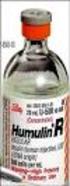 Leeds Humulin R (U500) insulin: Prescribing Guidance Amber Drug Level 2 We have started your patient on Humulin R (U500) insulin for the treatment of diabetic patients with marked insulin resistance requiring
Understanding Alberta s Drug Schedules
 Understanding Alberta s Drug Schedules Preface In May 2002, the provincial drug schedules to the Pharmaceutical Profession Act were amended. In April 2007, the Alberta Regulation 66/2007 to the Pharmacy
HAWAII BOARD OF MEDICAL EXAMINERS PAIN MANAGEMENT GUIDELINES
 Pursuant to section 453-1.5, Hawaii Revised Statutes, the Board of Medical Examiners ("Board") has established guidelines for physicians with respect to the care and treatment of patients with severe acute
Standards of Practice for Pharmacists and Pharmacy Technicians
 Standards of Practice for Pharmacists and Pharmacy Technicians Introduction These standards are made under the authority of Section 133 of the Health Professions Act. They are one component of the law
Root cause analysis in context of WHO International Classification for Patient Safety
 1 NHS Presentation to [XXXX Company] [Type Date] Root cause analysis in context of WHO International Classification for Patient Safety Dr David Cousins Associate Director Safe Medication Practice and Medical
Guidelines for the Use of Controlled Substances in the Treatment of Pain Adopted by the New Hampshire Medical Society, July 1998
 Guidelines for the Use of Controlled Substances in the Treatment of Pain Adopted by the New Hampshire Medical Society, July 1998 Section I: Preamble The New Hampshire Medical Society believes that principles
Institutional Pharmacy Advance Practice Experience Transcript
 Institutional Pharmacy Advance Practice Experience Transcript Student name UM Professional Ability-Based Outcomes 1a. Collect and organize patient data, medical records, interviews, and psychomotor evaluations
Licensed Pharmacy Technician Scope of Practice
 Licensed Scope of Practice Adapted from: Request for Regulation of s Approved by Council April 24, 2015 Definitions In this policy: Act means The Pharmacy and Pharmacy Disciplines Act means an unregulated
Health Professions Act BYLAWS SCHEDULE F. PART 2 Hospital Pharmacy Standards of Practice. Table of Contents
 Health Professions Act BYLAWS SCHEDULE F PART 2 Hospital Pharmacy Standards of Practice Table of Contents 1. Application 2. Definitions 3. Drug Distribution 4. Drug Label 5. Returned Drugs 6. Drug Transfer
SafetyFirst Alert. Errors in Transcribing and Administering Medications
 SafetyFirst Alert Massachusetts Coalition for the Prevention of Medical Errors January 2001 This issue of Safety First Alert is a publication of the Massachusetts Coalition for the Prevention of Medical
PHARMACEUTICAL MANAGEMENT PROCEDURES
 PHARMACEUTICAL MANAGEMENT PROCEDURES THE FORMULARY The purpose of Coventry Health Care s formulary is to encourage use of the most cost-effective drugs. The formulary is necessary because the cost of prescription
Professional Standards and Guidance for the Sale and Supply of Medicines
 Professional Standards and Guidance for the Sale and Supply of Medicines About this document The Code of Ethics sets out seven principles of ethical practice that you must follow as a pharmacist or pharmacy
Wisconsin Department of Safety and Professional Services
 Mail To: P.O. Box 8935 Madison, WI 53708-8935 1400 E. Washington Avenue Madison, WI 53703 FAX #: (608) 261-7083 Phone #: (608) 266-2112 E-Mail: [email protected] Website: http://dsps.wi.gov PHARMACY EXAMINING
Over the Counter Drugs (OTCs): Considerations for Physical Therapy Practice in Canada
 Background Over the Counter Drugs (OTCs): Considerations for Physical Therapy Practice in Canada The use of medications or drugs by non-physician health professionals is evolving and is linked to collaboration
MINISTRY OF HIGHER EDUCATION UNIVERSITY OF HAIL COLLEGE OF PHARMACY
 MINISTRY OF HIGHER EDUCATION UNIVERSITY OF HAIL COLLEGE OF PHARMACY Academic Reference Standards of Pharm.-D Program College of Pharmacy-University of Hail May The Major shift in the health-care system
Concept Series Paper on Disease Management
 Concept Series Paper on Disease Management Disease management is the concept of reducing health care costs and improving quality of life for individuals with chronic conditions by preventing or minimizing
Pharmacy Technician Structured Practical Training Program Logbook
 Pharmacy Technician Structured Practical Training Program Logbook This logbook outlines the activities that pharmacy technician learners are required to complete in order to demonstrate competencies as
Medicals c i e n t i f i c study
 Medicals c i e n t i f i c study design risks medical-ethics review board 2 Table of contents M e d i c a l - s c i e n t i f i c study Preface 2 Introduction 4 Medical-scientific study 5 Why participate?
Agency # 070.00 REGULATION 9 PHARMACEUTICAL CARE/PATIENT COUNSELING
 Agency # 070.00 REGULATION 9 PHARMACEUTICAL CARE/PATIENT COUNSELING 09-00: PATIENT COUNSELING 09-00-0001--PATIENT INFORMATION, DRUG USE EVALUATION, AND PATIENT COUNSELING The intent of this regulation
MEDICINES CONTROL COUNCIL
 MEDICINES CONTROL COUNCIL SCHEDULING OF MEDICINES This guideline is intended to provide guidance to applicants on the scheduling of substances submitted for registration as medicines. It represents the
4. Emergency medical treatment due to injury or physical illness. 5. Hospitalization (Medical) due to injury or physical illness
 MCCMH MCO Policy 9-321 CONSUMER, INCIDENT, ACCIDENT, ILLNESS, DEATH, OR ARREST REPORT MONITORING Date: 7/02/13 receive and review all Consumer Incident, Accident, Illness, Death or Arrest Reports for violations
Pharmacist independent prescribing programme learning outcomes and indicative content
 Pharmacist independent prescribing programme learning outcomes and indicative content Learning outcomes All providers of GPhC accredited independent prescribing programmes need to ensure that following
HEALTH REQUIREMENTS & SERVICES: MEDICAL TREATMENT
 DESCRIPTOR TERM: Students Millard District Policy File Code: 6200 1 st Reading: 05-08-14 HEALTH REQUIREMENTS & SERVICES: MEDICAL TREATMENT Purpose The purpose of this policy is to authorize school personnel
247 CMR: BOARD OF REGISTRATION IN PHARMACY
 247 CMR 9.00: CODE OF PROFESSIONAL CONDUCT; PROFESSIONAL STANDARDS FOR REGISTERED PHARMACISTS, PHARMACIES AND PHARMACY DEPART- MENTS Section 9.01: Code of Professional Conduct for Registered Pharmacists,
CHAPTER 61-03-02 CONSULTING PHARMACIST REGULATIONS FOR LONG-TERM CARE FACILITIES (SKILLED, INTERMEDIATE, AND BASIC CARE)
 CHAPTER 61-03-02 CONSULTING PHARMACIST REGULATIONS FOR LONG-TERM CARE FACILITIES (SKILLED, INTERMEDIATE, AND BASIC CARE) Section 61-03-02-01 Definitions 61-03-02-02 Absence of Provider or Consulting Pharmacist
Mayo Clinic College of Medicine Pharmacy Services. Rotation Summary
 Mayo Clinic College of Medicine Pharmacy Services Rotation Summary Rotation Title: PGY-2 Pediatric Hematology-Oncology Rotation Length: 3-6 weeks Primary Preceptor Name: Amanda Kuper, PharmD, BPCS, Ron
NEWFOUNDLAND AND LABRADOR PHARMACY BOARD Standards of Pharmacy Practice. Standards for Hospital Pharmacies
 NEWFOUNDLAND AND LABRADOR PHARMACY BOARD Standards of Pharmacy Practice Standards for Hospital Pharmacies Approved by the Newfoundland and Labrador Pharmacy Board January 11, 1998 Updated: June 16, 2007
Care Definition, Practice Foundations, and Ability-Based Outcomes Updated May 23, 2013
 University of Washington School of Pharmacy Care Definition, Practice Foundations, and Ability-Based Outcomes The pharmacist graduating from the University of Washington School of Pharmacy promotes the
PRINCIPLES OF PHARMACOLOGY. MEDICAL ASSISTANT S ROLE History: Drug Legislation & Regulation. Education: indication, instructions, side effects
 PRINCIPLES OF PHARMACOLOGY Medical Assistants At the heart of health care MEDICAL ASSISTANT S ROLE History: prescription over the counter (OTC) alcohol (ETOH), recreational, smoking, herbal remedies Education:
GUIDELINES FOR USE OF PSYCHOTHERAPEUTIC MEDICATIONS IN OLDER ADULTS
 GUIDELINES GUIDELINES FOR USE OF PSYCHOTHERAPEUTIC MEDICATIONS IN OLDER ADULTS Preamble The American Society of Consultant Pharmacists has developed these guidelines for use of psychotherapeutic medications
PPP 1. Continuation of a medication to ensure continuity of care
 PRESCRIBING POLICIES: 4.7 PHARMACIST AUTHORITY The College of Pharmacists of BC Professional Practice Policy (PPP) 58 Medication Management (Adapting a Prescription) became effective April 1, 2009. The
A competency framework for all prescribers updated draft for consultation
 A competency framework for all prescribers updated draft for consultation Consultation closes 15 April 2016 Contents 1 Introduction... 3 2 Uses of the framework... 4 3 Scope of the competency framework...
Example of a Health Care Failure Mode and Effects Analysis for IV Patient Controlled Analgesia (PCA) Failure Modes (what might happen)
 Prescribing Assess patient Choose analgesic/mode of delivery Prescribe analgesic Institute for Safe Medication Practices Example of a Health Care and Effects Analysis for IV Patient Controlled Analgesia
DEPARTMENT OF HEALTH & HUMAN SERVICES NDA 17-854 NDA 21-793 NDA 17-862. [inside address] Dear :
![DEPARTMENT OF HEALTH & HUMAN SERVICES NDA 17-854 NDA 21-793 NDA 17-862. [inside address] Dear :](/thumbs/24/3528188.jpg "DEPARTMENT OF HEALTH & HUMAN SERVICES NDA 17-854 NDA 21-793 NDA 17-862. [inside address] Dear :") DEPARTMENT OF HEALTH & HUMAN SERVICES Public Health Service Food and Drug Administration Rockville, MD 20857 NDA 17-854 [inside address] Dear : Please refer to your new drug application NDA xx-xxx for
DEPARTMENT OF HEALTH & HUMAN SERVICES Public Health Service Food and Drug Administration Rockville, MD 20857 NDA 17-854 [inside address] Dear : Please refer to your new drug application NDA xx-xxx for
GUIDELINES FOR THE CONTROL AND ADMINISTRATION OF MEDICINES DOMICILIARY CARE AGENCIES
 GUIDELINES FOR THE CONTROL AND ADMINISTRATION OF MEDICINES DOMICILIARY CARE AGENCIES January 2009 Contents Page Number 1.0 Introduction 3 2.0 Background 4 3.0 Criteria 5 3.1 Referral 5 3.2 Levels of assistance/consent
Michigan Guidelines for the Use of Controlled Substances for the Treatment of Pain
 Michigan Guidelines for the Use of Controlled Substances for the Treatment of Pain Section I: Preamble The Michigan Boards of Medicine and Osteopathic Medicine & Surgery recognize that principles of quality
PHARMACY AND POISONS ORDINANCE (Cap. 138) APPLICATION FOR A CLINICAL TRIAL/MEDICINAL TEST CERTIFICATE
 PHARMACY AND POISONS ORDINANCE (Cap. 138) APPLICATION FOR A CLINICAL TRIAL/MEDICINAL TEST CERTIFICATE PART A: TRIAL INFORMATION A1. Title of Clinical Trial (as stated in proposed Protocol) Protocol No.
Minimum Information Model for Reporting
 Minimum Information Model for Reporting Dr. H. Sefiani - Pr. R. Soulaymani Bencheikh 1 Background WHO created the Department Safety and vigilances with ambition to integrate all Health Vigilances that
UW School of Dentistry Comprehensive Medication Policy
 UNIVERSITY OF WASHINGTON SCHOOL OF DENTISTRY Subject: UW School of Dentistry Comprehensive Medication Policy Policy Number: Effective Date: December 2014 Revision Dates: June 2015 PURPOSE This policy provides
Guidance on adverse drug reactions
 Guidance on adverse drug reactions Classification of adverse drug reactions Adverse drug reactions are frequently classified as type A and type B reactions. An extended version of this classification system
Custodial Procedures Manual Table of Contents
 Custodial Procedures Manual Table of Contents Page 1. Drug Policies and Procedures 1 A. Procurement of Prescription Drugs 1 i. Prescription drugs may only be accepted from 1 pharmacies and or practitioners.
Wales Patient Access Scheme: Process Guidance
 Wales Patient Access Scheme: Process Guidance July 2012 (Updated September 2014) This guidance document has been prepared by the Patient Access Scheme Wales Group, with support from the All Wales Therapeutics
www.sequelmed.com 800.965.2728 www.sequelmed.com
 Practice Management Document Management Medical Records e-prescribe e-health Patient Portal One Integrated Solution Our practice has been working with Sequel Systems for many years and is extremely satisfied.
ANALYSIS OF POISON CONTROL CENTER DATA FOR ACETAMINOPHEN-CONTAINING PRODUCTS 1998-2000
 ANALYSIS OF POISON CONTROL CENTER DATA FOR ACETAMINOPHEN-CONTAINING PRODUCTS 1998-2000 Prepared by Julie A. Skare, PhD. Health Care Research Center The Procter & Gamble Company 8700 Mason-Montgomery Road
Oral Oncology Treatment Regimens and the Role of Medication Therapy Management on Patient Adherence and Compliance
 Oral Oncology Treatment Regimens and the Role of Medication Therapy Management on Patient Adherence and Compliance Oral Cancer Care Therapies: The Opportunity and The Challenge Chemotherapy used to treat
Learn More About Product Labeling
 Learn More About Product Labeling Product label The product label is developed during the formal process of review and approval by regulatory agencies of any medicine or medical product. There are specific
Issue: June 2009 PROFESSIONAL STANDARDS AND GUIDANCE FOR THE SALE AND SUPPLY OF MEDICINES
 Issue: June 2009 PROFESSIONAL AND GUIDANCE FOR THE SALE AND SUPPLY OF MEDICINES PROFESSIONAL AND GUIDANCE FOR THE SALE AND SUPPLY OF MEDICINES CONTENTS Status of this document About this document 1 Pharmaceutical
BOARD OF PHARMACY SPECIALITIES 2215 Constitution Avenue, NW Washington, DC 20037-2985 202-429-7591 FAX 202-429-6304 [email protected] www.bpsweb.
 BOARD OF PHARMACY SPECIALITIES 2215 Constitution Avenue, NW Washington, DC 20037-2985 202-429-7591 FAX 202-429-6304 [email protected] www.bpsweb.org Content Outline for the PSYCHIATRIC PHARMACY SPECIALTY
Lindenwold Board File Code # 5141.21 Of Education Page 1 of 7
 Of Education Page 1 of 7 The Board of Education disclaims any and all responsibility for the diagnosis and treatment of the illness be contingent upon the timely administration of medication duly prescribed
Adjunctive psychosocial intervention. Conditions requiring dose reduction. Immediate, peak plasma concentration is reached within 1 hour.
 Shared Care Guideline for Prescription and monitoring of Naltrexone Hydrochloride in alcohol dependence Author(s)/Originator(s): (please state author name and department) Dr Daly - Consultant Psychiatrist,
Competency-Based Educational College Outcomes:
 Competency-Based Educational College Outcomes: The Competency-Based Educational College Outcomes were approved by the College of Pharmacy faculty in January, 2008. These outcomes were derived from the
Medication Safety and Error Prevention
 Medication Safety and Error Prevention 16 LEARNING OBJECTIVES By the end of this chapter, students will be able to competently: 1. Explain the process for reporting errors. 2. Explain the difference between
The TIRF REMS Access program is a Food and Drug Administration (FDA) required risk management program
 Subject: Important Drug Warning Announcement of a single shared REMS (Risk Evaluation and Mitigation Strategy) program for all Transmucosal Immediate Release Fentanyl (TIRF) products due to the potential
Specialty Pharmacy. Measures At A Glance
 Specialty s At A Glance Updated: 1/21/2016 Page 1 of 6 Specialty Mandatory s (5) Note: Mandatory measures are those measures that are a requirement of accreditation and must be reported to on an annual
Requirements for Drug Information Centres
 FIP Pharmacy Information Section Requirements for Drug Information Centres Summary All countries should provide drug information services either independently or as part of a regional network. The service
ExCPT Certified Pharmacy Technician (CPhT) Detailed Test Plan* 100 scored items, 20 pretest items Exam time: 2 hours 10 minutes
 ExCPT Certified Pharmacy Technician (CPhT) Detailed Test Plan* 100 scored items, 20 pretest items Exam time: 2 hours 10 minutes # scored items 1. Regulations and Pharmacy Duties 35 A. Overview of technician
For purposes of this policy, "medication" means any prescription drug or over-the-counter medicine or nutritional supplement.
 5330/Page 1 of 5 M 5330 The Board of Education disclaims any and all responsibility for the diagnosis and treatment of the illness of any pupil. At the same time, the Board recognizes that a pupil's attendance
COUNCIL OF EUROPE TRAINING PROGRAMME HEALTH LITERACY FOR ELDERLY PEOPLE
 SECRETARIAT GENERAL Directorate General of Democracy COUNCIL OF EUROPE TRAINING PROGRAMME HEALTH LITERACY FOR ELDERLY PEOPLE prepared by Dr Raymond XERRI (Malta), Consultant August 2013 Content Introduction...
Attitudes and Beliefs About the Use of Over-the-Counter Medicines: A Dose of Reality
 Attitudes and Beliefs About the Use of Over-the-Counter Medicines: A Dose of Reality A National Survey of Consumers and Health Professionals Prepared for: National Council on Patient Information and Education
GUIDE TO PATIENT COUNSELLING
 Guide To Patient Counselling page - 1 - GUIDE TO PATIENT COUNSELLING Communication is the transfer of information meaningful to those involved. It is the process in which messages are generated and sent
APMI CODE OF PRACTICE ON ADVERTISING OF MEDICINAL PRODUCTS ISSUE 1
 APMI CODE OF PRACTICE ON ADVERTISING OF MEDICINAL PRODUCTS ISSUE 1 August 2010 1. Introduction... 2 2. Scope... 3 3. Definitions... 4 4. General rules of advertising of medicinal products... 6 5. Advertising
Medication Management Guidelines for Nurses and Midwives
 Medication Management Guidelines for Nurses and Midwives 1. Introduction As the statutory body responsible for the regulation of nursing and midwifery practice in Western Australia (WA), the Nurses & Midwives
Manitoba Prescribing Practices Program Pharmacist Questions and Answers
 College of Pharmacists of Manitoba 200 Tache Avenue, Winnipeg, Manitoba R2H 1A7 Phone (204) 233-1411 Fax: (204) 237-3468 E-mail: [email protected] Website: www.cphm.ca Manitoba Prescribing Practices Program
18% Role of Pharmacist-Provided Medication Reviews in Workers Compensation Claims Management. Introduction. Role of the Pharmacist
 Role of Pharmacist-Provided Medication Reviews in Workers Compensation Claims Management Benjamin Link, PharmD, RPh Introduction According to information from the National Council on Compensation Insurance
Guidelines for Education Requirements for Recognition as Eligible Midwives and Accreditation Standards for programs of study leading to endorsement
 Guidelines for Education Requirements for Recognition as Eligible Midwives and Accreditation Standards for programs of study leading to endorsement for scheduled medicines for Eligible Midwives 6447 Contents
Document Title: Supply of Clinical Trials Investigational Material: Dispensing, Returns and Accountability
 Document Title: Supply of Clinical Trials Investigational Material: Document Number: SOP072 Staff involved in development: Job titles only Document author/owner: Directorate: Department: For use by: RM&G
Report of the Task Force on the Regulation of Pharmacist Care Services
 Report of the Task Force on the Regulation of Pharmacist Care Services Members Present: Joel Thornbury (KY), chair; Allison Benz (TX); Reginald Reggie Dilliard (TN); Kamlesh Kam Gandhi (AZ); John Marraffa,
Section II When you are finished with this section, you will be able to: Define medication (p 2) Describe how medications work (p 3)
 Section II When you are finished with this section, you will be able to: Define medication (p 2) Describe how medications work (p 3) List the different medication effects (p5) List the ways that medications
Information for Pharmacists
 Page 43 by 42 CFR part 2. A general authorization for the release of medical or other information is NOT sufficient for this purpose. Information for Pharmacists SUBOXONE (buprenorphine HCl/naloxone HCl
RULES AND REGULATIONS PERTAINING TO ACQUIRING AND STOCKING EPINEPRHINE AUTO- INJECTORS FOR EMERGENCY ADMINISTRATION
 RULES AND REGULATIONS PERTAINING TO ACQUIRING AND STOCKING EPINEPRHINE AUTO- INJECTORS FOR EMERGENCY ADMINISTRATION [R23-6.4-EPI] STATE OF RHODE ISLAND AND PROVIDENCE PLANTATIONS DEPARTMENT OF HEALTH February
ODB Expanded Services Billing
 ODB Expanded Services Billing Contents Description of Services... 1 Reasons for a Clinical Intervention... 1 Outcomes... 2 Documentation Requirements... 2 Running the Update to Add Expanded Services PINs...
Master's Clinical Pharmacy (Thesis Track)
 Master's Clinical Pharmacy (Thesis Track) I. GENERAL RULES CONDITIONS: Plan Number 3 \ 12 06 2010 T 1. This plan conforms to the valid regulations of the programs of graduate studies. 2. Areas of specialty
Guidance notes on the management of adverse events and product complaints from digital media
 Guidance notes on the management of adverse events and product complaints from digital media Guidance notes on the management of adverse events and product complaints from digital media ABPI Pharmacovigilance
Risk Assessment and Management: A Regulatory Lawyer s Perspective
 Risk Assessment and Management: A Regulatory Lawyer s Perspective Presented By: Alan G. Minsk Partner and Leader, Food and Drug Practice Team Arnall Golden Gregory LLP 171 17 th Street, NW, Suite 2100
healthcare associated infection 1.2
 healthcare associated infection A C T I O N G U I D E 1.2 AUSTRALIAN SAFETY AND QUALITY GOALS FOR HEALTH CARE What are the goals? The Australian Safety and Quality Goals for Health Care set out some important
DERBYSHIRE JOINT AREA PRESCRIBING COMMITTEE (JAPC) SHARED CARE AGREEMENT FRAMEWORK
 DERBYSHIRE JOINT AREA PRESCRIBING COMMITTEE (JAPC) SHARED CARE AGREEMENT FRAMEWORK ACAMPROSATE CALCIUM (Campral EC) for alcohol abstinence ESCA: Adjunct in the treatment of chronic alcohol dependence (under
IMPORTANCE OF THE ENFORCEMENT OF THE LAW AND EU DIRECTIVES CONCERNING TRANSLATION OF PHARMACEUTICALS LEAFLETS
 IMPORTANCE OF THE ENFORCEMENT OF THE LAW AND EU DIRECTIVES CONCERNING TRANSLATION OF PHARMACEUTICALS LEAFLETS Qendro Gentiana Planetary University, Faculty of Medical Sciences, Department of Pharmacy,