
MEDICINES CONTROL COUNCIL
|
|
|
- Patrick Eaton
- 9 years ago
- Views:
Transcription
1 MEDICINES CONTROL COUNCIL SCHEDULING OF MEDICINES This guideline is intended to provide guidance to applicants on the scheduling of substances submitted for registration as medicines. It represents the Medicines Control Council s current thinking on the safety, quality and efficacy of medicines and takes into account the country s obligations in terms of international agreements. It is not intended as an exclusive approach. Council reserves the right to request any additional information to establish the scheduling status of a medicine in keeping with the knowledge current at the time of evaluation. Alternative approaches may be used but these should be scientifically and technically justified. It is important that applicants adhere to the administrative requirements to avoid delays in the processing and evaluation of applications. Guidelines and application forms are available from the office of the Registrar of Medicines and the website. First publication released for Industry comment October 2013 Due Date for Comment January 2014 Final Version 1 June 2014 REGISTRAR OF MEDICINES MS M HELA 2.36_Scheduling_of_Medicines_Jun14_v1 June 2014 Page 1 of 20
2 TABLE OF CONTENTS 1 INTRODUCTION Scope of the Guidelines Information for Applicants General Language Where to send Applications Principles of Scheduling Brief Description of the Schedules Schedule Schedule Schedule Schedule 3 and Schedule 5 (and specified Schedule 5) Schedule Schedule Schedule GENERAL GUIDELINES FOR CATEGORISATION IN THE SCHEDULES APPLICATIONS FOR SCHEDULING OF MEDICINES OR SUBSTANCES Applications for Registration Products submitted for registration where a change in scheduling status is requested APPLICATIONS FOR CHANGING THE SCHEDULING CLASSIFICATION (RESCHEDULING) OF A MEDICINE OR SUBSTANCE Applications for rescheduling of selected indications, strengths, routes of administration or pack sizes UPDATE HISTORY APPENDIX: FORMAT FOR APPLICATIONS FOR RESCHEDULING COVER/TITLE PAGE DECLARATION BY APPLICANT TABLE OF CONTENTS SUMMARY _Scheduling_of_Medicines_Jun14_v1 June 2014 Page 2 of 20
3 5 BODY OF APPLICATION Purpose of the Application General Background Current Regulatory Status International Regulatory Status Introduction of the data upon which the application is based Technical Information Physico-Chemical Properties of the Active Pharmaceutical Ingredient Pharmacology Clinical Data Toxicology Safety Reports Occupational Health and Safety Information (If applicable) Pharmaceutical Aspects Monitoring of the Public Health Impact Education Proposal Discussion Proposed Indication for Use Product Information and Presentation: OTHER RELEVANT INFORMATION BIBLIOGRAPHY COPIES OF REFERENCED MATERIAL APPENDICES IF REQUIRED _Scheduling_of_Medicines_Jun14_v1 June 2014 Page 3 of 20
4 1 INTRODUCTION 1.1 Scope of the Guidelines These guidelines are intended to provide information and guidance on the criteria and procedures applied by the Names and Scheduling Committee and the secretariat of the Medicines Control Council when evaluating the scheduling status of a medicine or substance for human or veterinary use. These guidelines should be read in conjunction with the Medicines and Related Substances Act, 1965 (Act 101 of 1965), as amended, and the supporting Regulations. As these guidelines are constantly evolving, due to harmonisation initiatives as well new scientific developments, applicants are advised to always consult the latest information available. The Medicines Control Council endeavours to keep abreast of such developments and to keep its requirements, procedures and policies in line with best international practice. 1.2 Information for Applicants General The scheduling of medicines and products containing substances already listed in the Schedules as well as those substances not yet contained in the Schedules (new chemical entities) are normally managed as part of the medicine registration process. Three broad types of applications are considered by the Names and Scheduling Committee: applications for the registration of a medicine, which may include applications for the scheduling of a new chemical entity or applications for registration of a product containing a substance already listed in the Schedules (in accordance with such listing); applications for re-scheduling a substance that has already been listed in the Schedules; applications for listing a substance in the Schedules for prescribing by an authorised prescriber other than a medical practitioner or dentist. Applications for the registration of a medicine may only be made by manufacturers or importers of medicines. However, applications for re-scheduling of a substance may be made by any person or organisation. Applications for listing a substance for prescribing by an authorised prescriber other than a medical practitioner or dentist would usually be made by a statutory health council, but could also be made by an individual or organisation. In addition, requests to reconsider the scheduling status of a substance may be submitted by individuals, private sector firms, organisations, law enforcement agencies or specific departments of directorates within the public sector. The processing of all applications may only proceed once all requirements, outlined in this document, are complied with. The application will be considered complete only if the submission is in the proper format, with the required data, the correct number of copies and the prescribed application fee, if applicable. Once an application has been received, it will be logged in, acknowledged, and processed for evaluation. From this point on, time lines will be followed as determined by the Medicines Control Council for the evaluation and these will be communicated to the applicant. At no stage will the applicant be permitted to communicate directly with an evaluator. All queries and concerns must be communicated through the regulatory authority to allow for these to be logged in and processed. 2.36_Scheduling_of_Medicines_Jun14_v1 June 2014 Page 4 of 20
5 1.2.2 Language In terms of Regulation 22 of Act 101 of 1965, all applications and supporting data submitted to the Medicines Control Council must be presented in English. Any documents in languages other than English must be accompanied by a translation Where to send Applications Applications may be posted to Private Bag X 828, Pretoria, 0001 or delivered at the MCC reception; NDoH, CIVITAS, corner Thabo Sehume (Andries) and Struben streets, PRETORIA, 0001 where these will be logged in and acknowledged. All correspondence should be addressed to the Registrar of Medicines. Applications received in any manner other than as stated above will not be considered for processing. 1.3 Principles of Scheduling In terms of the Medicines and Related Substances Act (Act 101 of 1965), a 'Scheduled substance' is defined as follows: means any medicine or other substance prescribed by the Minister under section 22A. Section 22A(2) empowers the Minister of Health on the recommendation of the Council, to make the Schedules referred to in that section, Section 37A also empowers the Minister, again on the recommendation of the Council, to amend the Schedules by notice in the Government Gazette. The official Schedules shall therefore always be those that have been published in the Government Gazette or amended by subsequent notice in the Gazette. All medicines are subject to a scheduling process on the basis of the substances (active pharmaceutical ingredients) they contain. The sale and supply of medicines in South Africa is governed by section 22A of the Medicines and Related Substances Act, 1965 (Act 101 of 1965), read together with the supporting Regulations. Control over access to medicines and substances are therefore regulated by the process of scheduling, and the control measures provided for in the Act and Regulations. Scheduling allows for different levels of regulatory control over pharmacologically active substances, whether in the form of active pharmaceutical ingredients, naturally-occurring products or extracts thereof, or finished pharmaceutical products (medicines). In addition, these legal provisions enable South Africa to comply with its obligations in terms of the Single Convention on Narcotic Drugs (1961), the Convention on Psychotropic Substances (1971) and the United Nations Convention against Illicit Traffic in Narcotic Drugs and Psychotropic Substances (1988), to which it is a signatory. 1 The primary consideration in scheduling a substance is its safety profile, in relation to the therapeutic indications for its use. Substances may be listed in one or more of eight Schedules. However, substances may also be listed in more than one Schedule, based on dosage form, route of administration, strength, indication, dose, duration of treatment or a combination of these factors. Where a substance or medicine has been listed in more than one Schedule, the other Schedule(s) in which it is listed is/are indicated in parentheses after the inscription in a particular Schedule. Where exceptions are included in an entry, these have been emphasised by printing the word except in bold type. DESPITE THIS, IT IS NOT POSSIBLE TO LABEL ANY SINGLE PRODUCT (AS DISTINCT FROM SUBSTANCE) WITH MORE THAN ONE SCHEDULE STATUS. WHERE APPLICANTS WISH TO MARKET PRODUCTS WITH DIFFERENT SCHEDULES, THIS WILL REQUIRE DIFFERENT PRODUCT REGISTRATIONS AND ALSO DIFFERENT PROPRIETARY NAMES. 1 Details of the conventions can be obtained from the website of the International Narcotics Control Board at _Scheduling_of_Medicines_Jun14_v1 June 2014 Page 5 of 20
6 1.4 Brief Description of the Schedules Section 22A of the Medicines and Related Substances Act, 1965 (Act 101 of 1965) provides for a graduated system of control over sale and supply of substances, ranging from access via any retail outlet, at one extreme, to outright prohibition, at the other Schedule 0 Although no list of Schedule 0 substances is provided in the Schedules, a preamble states that This Schedule includes all substances or mixtures of substances subject to registration in terms of the Act and which are not listed in any of the other Schedules. Section 22A(3) states that Any Schedule 0 substance may be sold in an open shop. In order to qualify for Schedule 0 status, a substance must be known to be substantially safe in use, without routine necessity for advice or counselling by a healthcare practitioner. Medicines containing one or more substances, none of which bears a Scheduling status higher than Schedule 0, are indicated for minor diseases or symptoms which can be easily recognised by the patient and which do not require medical diagnoses or monitoring. As a result, Schedule 0 substances may be sold in an open shop (i.e. any setting, including general dealers). Such substances may also be sold in a pharmacy. However, a holder of a section 22C(1)(a) dispensing licence may not provide any medicine to a patient unless that act is preceded by proper diagnosis and prescription (in terms of General Regulation 18(7)(f)). General Regulation 45(2)(a) states that Medicines which do not contain a scheduled substance and medicines which contain a substance appearing in Schedule 0 or Schedule 1 may be advertised to the public Schedule 1 Section 22A(4) states that: Any Schedule 1 substance shall not be sold- (a) by any person other than- (i) (ii) a pharmacist, or a pharmacist intern or pharmacist's assistant acting under the personal supervision of a pharmacist; a manufacturer of or wholesale dealer in pharmaceutical products for sale to any person who may lawfully possess such substance; (iii) a medical practitioner or dentist, who may- (aa) prescribe such substance; (bb) compound and dispense such substance only if he or she is the holder of a licence as contemplated in section 22C(1)(a); (iv) a veterinarian who may prescribe, compound or dispense such substance; (v) a practitioner, nurse or a person registered under the Health Professions Act, 1974, other than a medical practitioner or dentist, who may- (aa) prescribe only the Scheduled substances identified in the Schedule for that purpose; (bb) compound and dispense the Scheduled substances referred to in item (aa) only if he or she is the holder of a licence contemplated in section 22C(1)(a); 2.36_Scheduling_of_Medicines_Jun14_v1 June 2014 Page 6 of 20
7 1.4.2 Schedule 1 continued (b) (c) to any person apparently under the age of 14 years except upon a prescription issued by an authorised prescriber and dispensed by a pharmacist, pharmacist intern or pharmacist's assistant or by a veterinarian or a person who is the holder of a licence as contemplated in section 22C(1)(a), or on a written order disclosing the purpose for which such substance is to be used and bears a signature known to the seller as the signature of a person known to such seller and who is apparently over the age of 14 years; unless the seller, other than a manufacturer or wholesale dealer in pharmaceutical products, enters in a prescription book required to be kept in the prescribed manner, the prescribed particulars of such sale. Schedule 1 substances must therefore be known to be substantially safe in use, but might require advice or counselling by a pharmacist or other healthcare practitioner in order to ensure safe use. Products containing Schedule 1 substances are indicated for minor diseases or symptoms. As with Schedule 0 substances, the advertising of medicines containing Schedule 1 substances to the public is permitted by General Regulation 45. Substances which may be prescribed by persons other than medical practitioners and dentists will be identified and will be annotated or otherwise differentiated in their inscriptions in each Schedule, from Schedule 0 to Schedule 6. However, in order to gain access to prescribing authority, such persons will also need to be registered as such by their professional council (as provided for in section 22A(14)(b)) Schedule 2 The control over Schedule 2 to 6 substances is provided for in section 22A(5) of the Act, which reads as follows: Any Schedule 2, Schedule 3, Schedule 4, Schedule 5 or Schedule 6 substance shall not be sold by any person other than- (a) (b) (c) (d) (e) (f) a pharmacist, pharmacist intern or a pharmacist's assistant acting under the personal supervision of a pharmacist, who may sell only Schedule 2 substances without a prescription; a pharmacist or a pharmacist intern or pharmacist's assistant acting under the personal supervision of a pharmacist, upon a written prescription issued by an authorised prescriber or on the verbal instructions of an authorised prescriber who is known to such pharmacist; a manufacturer of or wholesale dealer in pharmaceutical products for sale to any person who may lawfully possess such substance; a medical practitioner or dentist, who may- (i) prescribe such substance; (ii) compound or dispense such substance only if he or she is the holder of a licence as contemplated in section 22C(1)(a); a veterinarian who may prescribe, compound or dispense such substance; a practitioner, a nurse or a person registered under the Health Professions Act, 1974, other than a medical practitioner or dentist, who may- (i) prescribe only the Scheduled substances identified in the Schedule for that purpose; (ii) compound and dispense the Scheduled substances referred to in subparagraph (i) only if he or she is the holder of a licence contemplated in section 22C(1)(a). 2.36_Scheduling_of_Medicines_Jun14_v1 June 2014 Page 7 of 20
8 1.4.3 Schedule 2 continued In order for a substance to be listed in Schedule 2, it must be known to be substantially safe in use but require advice, counselling and management or monitoring by a pharmacist or other health professional. While medicines containing such substances may be indicated for minor disease or symptoms which can be recognised by the patient, these will require verification by a pharmacist but not an initial medical diagnosis or medical management. Schedule 2 medicines are therefore available without a prescription, but require a greater level of control than Schedule 1 medicines. Additional control measures are provided for in section 22A(6) of the Act, which reads as follows: Any sale under subsection (5) shall only take place on condition that- (a) (b) (c) (d) (e) (f) (g) (h) (i) (j) all the prescribed particulars of every sale shall be recorded in the prescribed manner in a prescription book or other permanent record required to be kept in the prescribed manner; the authorised prescriber who has given verbal instructions to a pharmacist to dispense a prescription shall within seven days after giving such instructions furnish such pharmacist with a prescription confirming such instructions; in the case of verbal instructions the treatment period shall not exceed seven days; if a prescription is not presented for dispensing within 30 days of issue it shall not be dispensed; in the case of a Schedule 2 substance, such substance may not be supplied to any person apparently under the age of 14 years except upon a prescription issued by an authorised prescriber and dispensed by a pharmacist, pharmacist intern or pharmacist's assistant or by a veterinarian or a person who is the holder of a licence as contemplated in section 22C (1) (a), or on a written order disclosing the purpose for which such substance is to be used and bears a signature known to the seller as the signature of a person known to such seller and who is apparently over the age of 14 years; in the case of a Schedule 2, Schedule 3 or Schedule 4 substance, such sale may be repeated if the person who issued the prescription has indicated thereon the number of times it may be dispensed, but not for longer than six months; in the case of a Schedule 5 substance, such sale shall not be repeated for longer than six months, and then only if the authorised prescriber has indicated on the prescription the number of times and the intervals at which it may be dispensed; where a Schedule 5 substance is used for- (i) its anxiolytic, antidepressant or tranquillising properties it shall not be prescribed for longer than six months unless the authorised prescriber has consulted a registered psychiatrist, or, in the case of a psychiatrist, another psychiatrist before issuing a new prescription; (ii) its analgesic properties it shall not be prescribed for longer than six months unless the authorised prescriber has consulted another medical practitioner, before issuing a new prescription; in the case of a Schedule 6 substance, it shall not be repeated without a new prescription being issued; in an emergency in which the health or life of a patient is at stake, a pharmacist engaged in wholesale practice may, on receipt of a telephonic or tele faxed or other electronic request, supply a Schedule 6 substance to a pharmacist, medical practitioner, dentist, veterinarian, practitioner, nurse or other person registered under the Health Professions Act, 1974, without a written order: Provided that- 2.36_Scheduling_of_Medicines_Jun14_v1 June 2014 Page 8 of 20
9 1.4.3 Schedule 2 continued (k) (l) (i) it shall be the responsibility of such pharmacist, medical practitioner, dentist, veterinarian, practitioner, nurse or other person to ensure that such pharmacist receives a written order within seven days. (ii) the Schedule 6 substance shall be supplied in the smallest unit sales pack available; (iii) a permanent record is made and kept of such supply. in an emergency a pharmacist may sell any Schedule 5 or Schedule 6 substance in a quantity not greater than that required for continuous use for a period of 48 hours, on the verbal instructions of a medical practitioner, dentist, veterinarian, practitioner, nurse or other person registered under the Health Professions Act, 1974, who is known to such pharmacist, but the prescriber who has given such verbal instructions shall within 72 hours after giving such instructions furnish to such pharmacist a written prescription confirming the instructions; in an emergency a pharmacist may sell a Schedule 2, Schedule 3 or Schedule 4 substance on a non-recurring basis for a period not exceeding 30 days in accordance with the original prescription in order to ensure that therapy is not disrupted if he or she is satisfied that an authorised prescriber initiated the therapy, with the intention that the therapy be continued, and that the particulars of such sale are recorded in a prescription book or other prescribed permanent record; (m) a pharmacist may sell a greater or a lesser quantity of a Schedule 1, Schedule 2, Schedule 3 or Schedule 4 substance than the quantity prescribed or ordered, according to the therapeutic pack in the original container of such substance as supplied to him or her, but the quantity so sold shall not exceed or be less than, 25 per cent of the quantity specified in the prescription or order in question; (n) any seller referred to in this subsection shall retain the prescription or order concerned for a period of not less than five years as from the date of such sale; (o) a Schedule 6 substance may only be sold if the course of treatment does not exceed 30 consecutive days; (p) (q) (r) the sale of a specified Schedule 5 or Schedule 6 substance by a manufacturer of or wholesale dealer in pharmaceutical products shall be recorded in a register which shall be kept in the prescribed manner, and shall be balanced so as to show clearly the quantity of every specified Schedule 5 or Schedule 6 substance remaining in stock as on the last day of March, June, September and December of each year, and such balancing shall be completed within the 14 days following each of the said dates; a pharmacist shall endorse on the prescription the date of sale and the quantity of the substance sold, and when it is repeated, the date of sale and the quantity of the said substance sold, and the last seller shall retain the prescription for a period of not less than five years as from the date of the last sale; any Schedule 1, Schedule 2, Schedule 3 or Schedule 4 substance for the treatment of any animal may be supplied by any person practicing a para-veterinary profession within the meaning of the Veterinary and Para-Veterinary Professions Act, 1982 (Act 19 of 1982), upon a written prescription issued by a veterinarian or on the verbal instructions of a veterinarian. Some of these provisions only apply to medicines containing substances listed in the subsequent Schedules. 2.36_Scheduling_of_Medicines_Jun14_v1 June 2014 Page 9 of 20
10 1.4.3 Schedule 2 continued General Regulation 45(2)(b) states that Medicines which contain a substance appearing in Schedule 2, Schedule 3, Schedule 4, Schedule 5 or Schedule 6 may be advertised only for the information of medical practitioners, dentists, veterinarians, pharmacists and other persons authorised to prescribe or in a publication which is normally or only made available to persons referred to therein. No product containing a Schedule 2 substance may therefore be advertised to the public Schedule 3 and 4 From Schedule 3 to Schedule 6, medicines containing such substances can only be obtained on the prescription of an authorised prescriber. Schedule 3 and 4 substances are indicated for use in disease or conditions which require professional medical, dental or veterinary diagnoses and management. As listed above, repeat prescriptions for Schedule 2, 3 or 4 substances are limited to a maximum of 6 months supply. There are no differences between the control measures applicable to Schedule 3 and 4 substances. Section 22A(6)(l) provides for emergency access to Schedule 2 to 4 substances: in an emergency a pharmacist may sell a Schedule 2, Schedule 3 or Schedule 4 substance on a non-recurring basis for a period not exceeding 30 days in accordance with the original prescription in order to ensure that therapy is not disrupted if he or she is satisfied that an authorised prescriber initiated the therapy, with the intention that the therapy be continued, and that the particulars of such sale are recorded in a prescription book or other prescribed permanent record. As with Schedule 2 substances, Schedule 3 and 4 substances may not be advertised directly to the public Schedule 5 (and specified Schedule 5) In order to be listed in Schedule 5, substances must be known to have a low to moderate potential for abuse or dependence, which necessitates both medical diagnosis and management, but also enhanced control of supply. Such substances may be listed in schedule IV of the 1971 Convention on Psychotropic Substances, which indicates more stringent international control. In addition, some Schedule 5 substances are listed as specified Schedule 5, indicated by flagging with an asterisk in the Schedules. It is intended that enhanced record-keeping will be required for all specified Schedule 5 substances (such as the keeping of registers by all sellers). Repeat prescriptions for Schedule 5 and specified Schedule 5 substances are permissible, but are more stringently controlled by section 22A(6): (g) in the case of a Schedule 5 substance, such sale shall not be repeated for longer than six months, and then only if the authorised prescriber has indicated on the prescription the number of times and the intervals at which it may be dispensed; (h) where a Schedule 5 substance is used for- (i) its anxiolytic, antidepressant or tranquillising properties it shall not be prescribed for longer than six months unless the authorised prescriber has consulted a registered psychiatrist, or, in the case of a psychiatrist, another psychiatrist before issuing a new prescription; (ii) its analgesic properties it shall not be prescribed for longer than six months unless the authorised prescriber has consulted another medical practitioner, before issuing a new prescription. 2.36_Scheduling_of_Medicines_Jun14_v1 June 2014 Page 10 of 20
11 1.4.5 Schedule 5 (and specified Schedule 5) continued Emergency access to Schedule 5 or 6 substances is provided for in section 22A(6)(k), but with specific requirements: in an emergency a pharmacist may sell any Schedule 5 or Schedule 6 substance in a quantity not greater than that required for continuous use for a period of 48 hours, on the verbal instructions of a medical practitioner, dentist, veterinarian, practitioner, nurse or other person registered under the Health Professions Act, 1974, who is known to such pharmacist, but the prescriber who has given such verbal instructions shall within 72 hours after giving such instructions furnish to such pharmacist a written prescription confirming the instructions. Schedule 5 and specified Schedule 5 substances may not be advertised directly to the public Schedule 6 Schedule 6 substances may have a moderate to high potential for abuse or for producing dependence, which necessitates close medical management and supervision and strict control over supply. Such substances are listed in Schedules of the 1961 Convention on Narcotic Drugs (except those listed in Schedule III). The conditions under which Schedule 6 medicines and substances may be sold or supplied are described in detail in Section 22 A of the Act and are suitably restrictive. Section 22A(6)(i) prohibits the supply of a Schedule 6 substance on a repeat prescription, whereas section 22A(6)(o) limits the quantity dispensed to a maximum of 30 days supply at the prescribed dose. Schedule 6 substances may not be advertised directly to the public Schedule 7 Schedule 7 substances are not recognised for medical use and have an extremely high potential for abuse or producing dependency which renders their possession unjustifiable and undesirable, except for limited scientific purposes. This Schedule includes substances listed in Schedule I of the 1971 Convention on Psychotropic Substances. The advertising of Schedule 7 substances is accordingly prohibited Schedule 8 Access to a limited list of substances which have an extremely high potential for abuse or dependency, but some limited recognised medical uses, is provided for by this Schedule. Such substances are made available by the Director-General only to medical practitioners who have obtained special permission from the Medicines Control Council for such use and prescription. The advertising of Schedule 8 substances is prohibited. 2.36_Scheduling_of_Medicines_Jun14_v1 June 2014 Page 11 of 20
12 2 GENERAL GUIDELINES FOR CATEGORISATION IN THE SCHEDULES In deciding the scheduling status of a medicine or substance, the primary emphasis is on evidence of safety in use and the requirements for professional advice and/or supervision of its use. In addition, the requirements for control over access, possession and supply, as stipulated in international agreements, are considered. The scheduling decision therefore involves the consideration of a number of factors, including: evidence for the toxicity of the substance and the safety in use; the proposed indication for the substance; the need for medical diagnosis, monitoring and medical management by a healthcare professional; the potential for abuse; the need for access to the substance. However, there may be considerable interaction between the factors considered, as none is a simple binary quality of the substance (indicating the presence or absence of the factor). The factors need to be considered as a whole in order to reach a final assessment of the public health risk associated with a substance, and hence their optimal categorisations in relation to the available control measures. In terms of the listing of substances to be prescribed by persons other than medical practitioners or dentists, the competencies of the prescriber category in question also have to be considered. In order to meet the criteria for Schedule 1 status, the following characteristics would need to be demonstrated by candidate substances: There is a low and well-characterised incidence of adverse effects, interactions with commonly used substances or food and contra-indications; The risk profile of the medicine is well defined and the risk factors can be identified and managed by a consumer through appropriate packaging and labelling and access to consultation with a health professional if required; The use of the medicine at established therapeutic doses is unlikely to produce dependency and the medicine is unlikely to be misused, abused or illicitly used; The medicine is for minor ailments or symptoms that can easily be recognised and are unlikely to be confused by the consumer with other more serious diseases or conditions. Treatment can be managed by the consumer without the need for medical intervention. However, the availability of a pharmacist at the point of sale supports the consumer in selecting and using the appropriate medicine; The use of the medicine at established therapeutic dosage levels is not likely to mask the symptoms or delay diagnosis of a serious condition; The use of the medicine is substantially safe for short term treatment and the potential for harm from inappropriate use is low; Safe and effective use of the medicine can be achieved by labelling, packaging, and/or provision of other information, with access to advice from a pharmacist. 2.36_Scheduling_of_Medicines_Jun14_v1 June 2014 Page 12 of 20
13 2 General Guidelines for Categorisation in the Schedules continued In order to meet the criteria for Schedule 2 status, the following characteristics would need to be demonstrated: The risk profile of the medicine is well defined and the risk factors for adverse effects and interactions are known, identifiable and manageable by a pharmacist; The medicine is substantially safe with pharmacist intervention to ensure its safe and effective use. There may be potential for harm if the medicine is used inappropriately; The consumer may not be able to self-monitor the safe ongoing use of the medicine. The condition does not require medical diagnosis or only requires initial medical diagnosis, and the consumer does not require close medical management; The consumer can identify the ailments or symptoms that may be treated by the medicine but counselling and verification by a pharmacist is required before use. An interaction between the pharmacist and consumer (patient) is necessary to reinforce and/or expand on aspects of the safe use of the medicine; Where the medicine is intended for recurrent or subsequent treatment of a chronic condition, pharmacist intervention is required to monitor safe use of the medicine following recommendation by a medical practitioner or a pharmacist; The use of the medicine at established therapeutic dosage levels may mask the symptoms or delay diagnosis of a serious condition. Interaction between the pharmacist and the consumer (patient) is required to detect the risk of masking a serious disease or compromising medical management of a disease, and to deal with it appropriately; The use of the medicine at established therapeutic dosages is not expected to produce dependency. Where there is an identified risk of misuse, abuse or illicit use, the risk can be minimised through monitoring by a pharmacist. However, if any of the following characteristics are met, the substance will require scheduling as a prescription-only medicine (Schedules 3 to 6): The ailments or symptoms that the substance is used for require medical, veterinary or dental intervention. Diagnosis, management or monitoring of the medical condition is such that it requires medical, veterinary or dental intervention before the substance is used; The use of the substance requires adjunctive therapy or evaluation. Adjunctive therapy could include other medicines, non-pharmacological measures, or specialised medicine delivery devices. Evaluation could include laboratory tests or additional clinical assessments; The use of the substance at established therapeutic dosage levels may produce dependency but has a moderate propensity for misuse, abuse or illicit use; Control of access and duration of therapy by a medical, veterinary or dental practitioner is required; The seriousness, severity and frequency of adverse effects are such that monitoring or intervention by a medical, veterinary or dental practitioner is required to minimise the risk of using the substance; The margin of safety between the therapeutic and toxic dose of the substance is such that it requires medical, veterinary or dental intervention to minimise the risk of using the substance; The seriousness or severity and frequency of the interactions of the substance (medicine-medicine, medicine-food, or medicine-disease) are such that monitoring or intervention is required by a medical, veterinary or dental practitioner; 2.36_Scheduling_of_Medicines_Jun14_v1 June 2014 Page 13 of 20
14 2 General Guidelines for Categorisation in the Schedules continued The use of the substance has contributed to, or is likely to contribute to, communal harm. For example the development of resistant strains of microorganisms. Appropriate use, and/or the decision to continue treatment, requires evaluation by a medical, veterinary or dental practitioner; The experience of the use of the substance under normal clinical conditions is limited. Unexpected effects of the substance may only become evident after widespread use. Close monitoring of the patient is required by a medical, veterinary or dental practitioner to monitor for unanticipated effects. Accordingly, in order for a higher degree of control to be imposed, as in Schedule 5, specified Schedule 5 or Schedule 6, one or more of the following characteristics would need to be demonstrated: Listing in Schedule IV to the United Nations Single Convention on Narcotic Drugs (1961) or in Schedule I to the United Nations Convention on Psychotropic Substances (1971); Taking into consideration the danger to the health of individuals and of the community (both immediate and imminent) associated with the use of the substance as compared to the therapeutic advantages of the substance, the benefits are substantially outweighed by the risks. However, if the substance has no currently established therapeutic value and is likely to present a high risk of dependency, abuse, misuse or illicit use, then a higher level of control is required through prohibition of use, possession, administration, prescription, sale or distribution, in order to prevent abuse, misuse or diversion into illicit activities. This may be achieved by listing in Schedule 7. With such substances, the dangers are such as to warrant limiting use to strictly controlled medical and scientific research. Exceptions can be provided for in terms of Schedule 8 status. The same logic would be applied in considering an application for rescheduling. Therefore, in order to justify a rescheduling from Schedule 3 or 4 to Schedule 2 or 1, evidence would need to be provided to justify use without a prescription. If any of the following criteria were met, prescription status would need to be maintained: The substance is likely to present a direct or indirect danger to human health, even when used correctly, if used without supervision by a medical practitioner or dentist; The substance is frequently and to a very wide extent used incorrectly or inappropriately, and as a result is likely to present a direct or indirect danger to human health; The safety and efficacy of the substance has not yet been adequately described and requires further investigation. Likewise, in order to justify a Schedule 0 status, evidence would need to be provided that show that the hazard to health, the risk of misuse and the need for special precautions in handling are small, and that wider sale would be a convenience to the consumer. 2.36_Scheduling_of_Medicines_Jun14_v1 June 2014 Page 14 of 20
15 3 APPLICATIONS FOR SCHEDULING OF MEDICINES OR SUBSTANCES 3.1 Applications for Registration Refer to section 5 of the General Information guideline. 3.2 Products submitted for registration where a change in scheduling status is requested Although a substance might already be listed in the Schedules, it is possible that an application could be made for a new dosage form, or for a medicine combination formulated for new indication for use. In such cases, the new product may qualify for the same scheduling status as was allocated to the active ingredient in other dosage forms or with different indications. Alternatively Council may find it necessary to assign a different scheduling status, one appropriate to the dosage form or to the new indications for the substance. If an applicant is of the opinion that the unique properties or limited indications of a product qualify it for a different scheduling status than that already listed in the Schedules, a rescheduling application should be made. The requested status should not merely be indicated on the proposed package insert. The covering letter for the application should clearly indicate that a request for rescheduling is involved. Any new clinical or supportive data included in the CTD/ ectd application form must also be incorporated in the application for rescheduling. The Clinical Committee will evaluate the clinical information in the CTD/ ectd and, after its approval; the Names and Scheduling Committee will consider the request for rescheduling. It is therefore advisable to submit a copy of the rescheduling request directly to the section dealing with scheduling so that the evaluation may be initiated simultaneously with the registration process. 4 APPLICATIONS FOR CHANGING THE SCHEDULING CLASSIFICATION (RESCHEDULING) OF A MEDICINE OR SUBSTANCE 4.1 Applications for rescheduling of selected indications, strengths, routes of administration or pack sizes A product is normally assigned the highest scheduling status appropriate to any one of the registered indications of the product. If application is made to reschedule only selected indications of a specific product to a lower Schedule, a unique name and a separate registration dossier will also be required for such a product. It must be noted that dual scheduling on printed packaging is not permitted. Only products with indications, strengths, routes of administration and/or pack sizes applicable to the lower schedule will qualify for the lower scheduling status. The structure of the application should be as follows: Cover/title page Declaration by Applicant Table of Contents Summary Body of Application Other Relevant Information Bibliography Copies of referenced material Appendices if required 2.36_Scheduling_of_Medicines_Jun14_v1 June 2014 Page 15 of 20
16 The application format is provided in the Appendix. Applicants must provide: (i) (ii) Three copies of the full application. Fifteen copies of a summary of the main application findings, abstracts of reference materials and full bibliography/reference lists for distribution to committee members. 5 UPDATE HISTORY Date Reason for update Version & Publication Oct 2013 First version published for comment Version 1, Oct 2013 June 2014 Finalised for Implementation Version 1, June _Scheduling_of_Medicines_Jun14_v1 June 2014 Page 16 of 20
17 Appendix: Format for applications for rescheduling 1 Cover/title page The cover / title page should indicate: i. The subject of the application. ii. The name and address of the applicant. iii. The name of a contact person. iv. The date on which the application was submitted. 2 Declaration by Applicant Applications for a rescheduling decision must contain a declaration by the applicant certifying that to the best of the applicant's knowledge all information relevant to the application has been submitted and is true and accurate. 3 Table of Contents The table of contents should tabulate and correlate the titles of each section and major subsections of the application with their appropriate page numbers. 4 Summary The summary should contain a concise, clear statement of - i. The purpose of the application, including any proposed change involved as well as the reason for the proposed change in scheduling status. ii. The major points in the argument, including a. The proposals arising from such argument. b. An overall summary of the toxicology, clinical data, post-marketing studies and pharmacoepidemiology of the compound. The arguments must address the criteria listed in the guidelines for the categorisation of medicines or substances in the schedules. Normally, this summary will not extend beyond a few pages. Tables are favoured as a means of condensing information. Studies reported in the summary should be cross-referenced to the reports in the main submission. 5 Body of Application The body of the application should communicate the aims and justification of the proposal in a concise, clear and logical manner. Appropriate data and information must be supplied to demonstrate that the substance or product will be safe for the public when supplied and used in the proposed manner. Whilst the format of each application may vary the Committee recommends the use of a standard framework consisting of the following: 2.36_Scheduling_of_Medicines_Jun14_v1 June 2014 Page 17 of 20
18 5.1 Purpose of the Application 5.2 General Background Current Regulatory Status Reference should be made to the current local regulatory status of the product or substance in terms of dosage forms registered, scheduling status and approved indications. If applicable, the registration number must be indicated International Regulatory Status Classification / scheduling status in other countries where the product is registered, including information of the approved indications and dosage forms. The availability status should be clearly indicated in terms of e.g. prescription only, pharmacy only, general sales outlets. For regulatory authorities with which the MCC aligns itself, refer to the General Information guideline. 5.3 Introduction of the data upon which the application is based 5.4 Technical Information Additional information on the active pharmaceutical ingredient that was not submitted during the registration of the original product is required. Data that were submitted during the registration process may be summarized Physico-Chemical Properties of the Active Pharmaceutical Ingredient i. Structural formula or any available information on the structure of the substance. ii. All relevant chemical and physical properties Pharmacology i. Any known information relating to the structural and pharmacological relationship to other medicines or chemicals ii. The pharmacodynamic and pharmacokinetic profile iii. Interactions, incompatibilities, side effects or adverse reactions iv. Any recognized standard such as a pharmacopoeia monograph Clinical Data i. Post-marketing reports ii. Additional clinical reports iii. Adverse drug reaction reports iv. Epidemiology reports v. Poisoning reports Toxicology i. Summary of the known toxicology of the product. ii. Summary of the known metabolism of the product. iii. Relevant details of any published or unpublished toxicological investigations of the product / substance 2.36_Scheduling_of_Medicines_Jun14_v1 June 2014 Page 18 of 20
19 5.4.5 Safety Reports i. A summary of animal studies that show low general toxicity and no relevant reproductive toxicity, genotoxic, or carcinogenic properties relevant to the experience/ exposure of the product. ii. Information from post-marketing surveillance studies, clinical trials and published literature presenting the issue of medicine safety. For OTCs: Considerable experience of patient exposure, including at least 2 years of use in the relevant or similar population. iii. Information on adverse drug reactions. In the case of OTC medication the information should include experience without medical supervision in other countries. Variables such as numbers of patients treated, demographic details, indications for use and dose should be provided and taken into account in providing and interpreting the data; iv. Drug interactions with food or commonly prescribed medicines. v. Consideration of the consequences concerning misuse Occupational Health and Safety Information (If applicable) A summary of occupational health and safety aspects Pharmaceutical Aspects Any intended change in formulation, pack size, packaging, etc should be indicated. However, pharmaceutical data such as stability need not be included. This data must be evaluated as part of a registration application or amendment to the registration application Monitoring of the Public Health Impact If evaluation of the public health impact is required proposals on how this will be managed should be given Education If any specific education of professionals, distributors or users are required, details of a process to manage this is required. 5.5 Proposal Indicate proposed schedule. 5.6 Discussion Safety issues must be justified in relation to the schedule for which the application is made. For example: A motivation for rescheduling from Schedule 5 to Schedule 4 will focus on the absence of abuse potential. 5.7 Proposed Indication for Use New indications are evaluated by the Clinical Committee as part of a registration application or an amendment to the registration application after registration. Only thereafter will the possibility of rescheduling be discussed. 2.36_Scheduling_of_Medicines_Jun14_v1 June 2014 Page 19 of 20
20 5.8 Product Information and Presentation: Presentation of the product: i. Dosage form, strength and pack size ii. Type of packaging iii. Label warning or other information that can impact on safety iv. Proposed package insert v. Patient information leaflet 6 Other Relevant Information 7 Bibliography 8 Copies of referenced material 9 Appendices if required 2.36_Scheduling_of_Medicines_Jun14_v1 June 2014 Page 20 of 20
Having regard to the Treaty establishing the European Economic Community, and in particular Article 100 thereof;
 DIRECTIVE 65/65/EEC Council Directive 65/65/EEC of 26 January 1965 on the approximation of provisions laid down by law, regulation or administrative action relating to medicinal products (OJ L No 22 of
Standards of Practice for Pharmacists and Pharmacy Technicians
 Standards of Practice for Pharmacists and Pharmacy Technicians Introduction These standards are made under the authority of Section 133 of the Health Professions Act. They are one component of the law
Medication Management Guidelines for Nurses and Midwives
 Medication Management Guidelines for Nurses and Midwives 1. Introduction As the statutory body responsible for the regulation of nursing and midwifery practice in Western Australia (WA), the Nurses & Midwives
Understanding Alberta s Drug Schedules
 Understanding Alberta s Drug Schedules Preface In May 2002, the provincial drug schedules to the Pharmaceutical Profession Act were amended. In April 2007, the Alberta Regulation 66/2007 to the Pharmacy
11 MEDICATION MANAGEMENT
 1 11 MEDICATION MANAGEMENT OVERVIEW OF MEDICATION MANAGEMENT Depending on the size, structure and functions of the health facility, there may be a pharmacy with qualified pharmacists to dispense medication,
Health Professions Act BYLAWS SCHEDULE F. PART 3 Residential Care Facilities and Homes Standards of Practice. Table of Contents
 Health Professions Act BYLAWS SCHEDULE F PART 3 Residential Care Facilities and Homes Standards of Practice Table of Contents 1. Application 2. Definitions 3. Supervision of Pharmacy Services in a Facility
CHAPTER 61-03-02 CONSULTING PHARMACIST REGULATIONS FOR LONG-TERM CARE FACILITIES (SKILLED, INTERMEDIATE, AND BASIC CARE)
 CHAPTER 61-03-02 CONSULTING PHARMACIST REGULATIONS FOR LONG-TERM CARE FACILITIES (SKILLED, INTERMEDIATE, AND BASIC CARE) Section 61-03-02-01 Definitions 61-03-02-02 Absence of Provider or Consulting Pharmacist
Professional Standards and Guidance for the Sale and Supply of Medicines
 Professional Standards and Guidance for the Sale and Supply of Medicines About this document The Code of Ethics sets out seven principles of ethical practice that you must follow as a pharmacist or pharmacy
Importing pharmaceutical products to China
 Importing pharmaceutical products to China Imported pharmaceutical products need pre-market approval before entering the Chinese market Imported drugs for human use are required to obtain pre-market approval
Health Professions Act BYLAWS SCHEDULE F. PART 2 Hospital Pharmacy Standards of Practice. Table of Contents
 Health Professions Act BYLAWS SCHEDULE F PART 2 Hospital Pharmacy Standards of Practice Table of Contents 1. Application 2. Definitions 3. Drug Distribution 4. Drug Label 5. Returned Drugs 6. Drug Transfer
REGULATION. on the advertising of medicinal products. SECTION I Definitions, scope and general provisions.
 REGULATION on the advertising of medicinal products. SECTION I Definitions, scope and general provisions. Article 1 Definitions. For the purposes of this Regulation, the following terms are used as defined
THE DRUGS AND COSMETICS RULES, 1945
 THE DRUGS AND COSMETICS RULES, 1945 PART VI SALE OF DRUGS OTHER THAN HOMOEOPATHIC MEDICINES 59. (1) The State Government shall appoint Licensing Authorities for the purpose of this Part for such areas
NEUROTONE THR 00904/0005 UKPAR
 NEUROTONE THR 00904/0005 UKPAR TABLE OF CONTENTS Lay summary Page 2 Scientific discussion Page 3 Steps taken for assessment Page 10 Summary of Product Characteristics Page 11 Product Information Leaflet
House Study Bill 503 - Introduced
 House Study Bill 0 - Introduced HOUSE FILE BY (PROPOSED COMMITTEE ON HUMAN RESOURCES BILL BY CHAIRPERSON MILLER) A BILL FOR An Act relating to prescription authority for certain psychologists and making
Donepezil hydrochloride 10 mg film-coated tablets PL 19156/0130
 Donepezil hydrochloride 10 mg film-coated tablets PL 19156/0130 UKPAR TABLE OF CONTENTS Lay Summary Page 2 Scientific Discussion Page 4 Steps Taken for Assessment Page 12 Summary of Product Characteristics
STANDARDS AND GUIDELINES TITLE: CIRCULATION DATE: March June 2013 REVISED: June 2013 APPROVAL DATE: July 29, 2013
 College of Homeopaths of Ontario 163 Queen Street East, 4 th Floor, Toronto, Ontario, M5A 1S1 TEL 416-862-4780 OR 1-844-862-4780 FAX 416-874-4077 www.collegeofhomeopaths.on.ca STANDARDS AND GUIDELINES
REGULATION (EEC) No 2309/93
 REGULATION (EEC) No 2309/93 Council Regulation (EEC) No 2309/93 of 22 July 1993 laying down Community procedures for the authorization and supervision of medicinal products for human and veterinary use
COUNTY OF LOS ANGELES DEPARTMENT OF MENTAL HEALTH PSYCHIATRIC MENTAL HEALTH NURSE PRACTITIONER STANDARDIZED PROCEDURES
 COUNTY OF LOS ANGELES DEPARTMENT OF MENTAL HEALTH PSYCHIATRIC MENTAL HEALTH NURSE PRACTITIONER STANDARDIZED August 2010 Page 2 TABLE OF CONTENTS I. Development, Review and Approval of Psychiatric Mental
Memantine hydrochloride 20 mg film-coated tablets PL 17907/0291
 Memantine hydrochloride 20 mg film-coated tablets PL 17907/0291 UKPAR TABLE OF CONTENTS Lay Summary Page 2 Scientific Discussion Page 5 Steps Taken for Assessment Page 13 Summary of Product Characteristics
CONNECTICUT. Downloaded January 2011 19 13 D8T. CHRONIC AND CONVALESCENT NURSING HOMES AND REST HOMES WITH NURSING SUPERVISION
 CONNECTICUT Downloaded January 2011 19 13 D8T. CHRONIC AND CONVALESCENT NURSING HOMES AND REST HOMES WITH NURSING SUPERVISION (d) General Conditions. (6) All medications shall be administered only by licensed
Draft guidance for registered pharmacies preparing unlicensed medicines
 Draft guidance for registered pharmacies preparing unlicensed medicines January 2014 1 The General Pharmaceutical Council is the regulator for pharmacists, pharmacy technicians and registered pharmacies
Pharmacy Policy (General)
 WORKSAFE VICTORIA Pharmacy Policy (General) WorkSafe can pay the reasonable costs of medications and other pharmacy items required as a result of a work-related injury or illness in accordance with Victorian
Veterinary Compounding
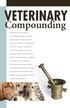 Veterinary Compounding Veterinarians occasionally use compounded preparations to meet a specific patient s medical need. The purpose of this brochure, created jointly by the Animal Health Institute (AHI),
Licensed Pharmacy Technician Scope of Practice
 Licensed Scope of Practice Adapted from: Request for Regulation of s Approved by Council April 24, 2015 Definitions In this policy: Act means The Pharmacy and Pharmacy Disciplines Act means an unregulated
PL 17871/0208 UKPAR TABLE OF CONTENTS
 Fultium-D 3 3,200 IU Capsules PL 17871/0208 UKPAR TABLE OF CONTENTS Lay Summary Page 2 Scientific discussion Page 4 Steps taken for assessment Page 11 Summary of Product Characteristics Page 12 Patient
247 CMR: BOARD OF REGISTRATION IN PHARMACY
 247 CMR 9.00: CODE OF PROFESSIONAL CONDUCT; PROFESSIONAL STANDARDS FOR REGISTERED PHARMACISTS, PHARMACIES AND PHARMACY DEPART- MENTS Section 9.01: Code of Professional Conduct for Registered Pharmacists,
Learn More About Product Labeling
 Learn More About Product Labeling Product label The product label is developed during the formal process of review and approval by regulatory agencies of any medicine or medical product. There are specific
Manitoba Prescribing Practices Program Pharmacist Questions and Answers
 College of Pharmacists of Manitoba 200 Tache Avenue, Winnipeg, Manitoba R2H 1A7 Phone (204) 233-1411 Fax: (204) 237-3468 E-mail: [email protected] Website: www.cphm.ca Manitoba Prescribing Practices Program
Prescribing Standards for Nurse Practitioners (NPs)
 Prescribing Standards for Nurse Practitioners (NPs) July 2014 Approved by the College and Association of Registered Nurses of Alberta Provincial Council, (July 2014) Permission to reproduce this document
APMI CODE OF PRACTICE ON ADVERTISING OF MEDICINAL PRODUCTS ISSUE 1
 APMI CODE OF PRACTICE ON ADVERTISING OF MEDICINAL PRODUCTS ISSUE 1 August 2010 1. Introduction... 2 2. Scope... 3 3. Definitions... 4 4. General rules of advertising of medicinal products... 6 5. Advertising
COMMITTEE FOR VETERINARY MEDICINAL PRODUCTS GUIDELINE FOR THE CONDUCT OF POST-MARKETING SURVEILLANCE STUDIES OF VETERINARY MEDICINAL PRODUCTS
 The European Agency for the Evaluation of Medicinal Products Veterinary Medicines and Information Technology EMEA/CVMP/044/99-FINAL COMMITTEE FOR VETERINARY MEDICINAL PRODUCTS GUIDELINE FOR THE CONDUCT
THEME: PROMOTING GOOD PRACTICES IN DRUG POLICY DEVELOPMENT AND IMPLEMENTATION
 Page 1 AFRICAN UNION UNION AFRICAINE UNIÃO AFRICANA Addis Ababa, ETHIOPIA P. O. Box 3243 Telephone 251-11-5517 700 Fax 251-11-5517 844 website: www. africa-union.org 5 th SESSION OF THE AU CONFERENCE OF
REGULATION OF HEALTH STANDARDS IN SPORTS ACTIVITIES AND THE FIGHT AGAINST DOPING
 Not official translation CONI -Ufficio Documentazione e Informazione LAW N. 376 OF 14 DECEMBER 2000 REGULATION OF HEALTH STANDARDS IN SPORTS ACTIVITIES AND THE FIGHT AGAINST DOPING Section 1 - Health standards
PRINCIPLES OF VETERINARY MEDICAL ETHICS OF THE AMERICAN VETERINARY MEDICAL ASSOCIATION (AVMA)
 PRINCIPLES OF VETERINARY MEDICAL ETHICS OF THE AMERICAN VETERINARY MEDICAL ASSOCIATION (AVMA) (Bold print states the Principles, standard print explains or clarifies the Principle to which it applies)
SADC GUIDELINES ON IMPORT AND EXPORT PROCEDURES FOR PHARMACEUTICAL PRODUCTS
 SADC GUIDELINES ON IMPORT AND EXPORT PROCEDURES FOR PHARMACEUTICAL PRODUCTS June 2006 1 INTRODUCTION Public health concerns demand that the manufacture of pharmaceutical products and their subsequent handling
Page 191 TITLE 21 FOOD AND DRUGS 355 1
 Page 191 TITLE 21 FOOD AND DRUGS 355 1 APPEALS TAKEN PRIOR TO OCTOBER 10, 1962 Section 104(d)(3) of Pub. L. 87 781 made amendments to subsec. (h) of this section inapplicable to any appeal taken prior
Guideline on good pharmacovigilance practices (GVP)
 1 2 20 February 2012 EMA/876333/2011 3 4 Guideline on good pharmacovigilance practices (GVP) Annex I - Definitions Draft finalised by the Agency in collaboration with Member States 7 February 2012 Definitions
Requirements for Drug Information Centres
 FIP Pharmacy Information Section Requirements for Drug Information Centres Summary All countries should provide drug information services either independently or as part of a regional network. The service
Gen. 253] 253 HEALTH OCCUPATIONS. November 28, 2001
![Gen. 253] 253 HEALTH OCCUPATIONS. November 28, 2001](/thumbs/34/17075319.jpg "Gen. 253] 253 HEALTH OCCUPATIONS. November 28, 2001") Gen. 253] 253 HEALTH OCCUPATIONS PHARMACISTS PHYSICIANS ANTITRUST COLLABORATIVE AGREEMENTS BETWEEN PHARMACISTS AND PHYSICIANS RELATING TO DRUG THERAPY November 28, 2001 Ms. LaVerne G. Naesea Executive
Gen. 253] 253 HEALTH OCCUPATIONS PHARMACISTS PHYSICIANS ANTITRUST COLLABORATIVE AGREEMENTS BETWEEN PHARMACISTS AND PHYSICIANS RELATING TO DRUG THERAPY November 28, 2001 Ms. LaVerne G. Naesea Executive
SECTION.1800 - PRESCRIPTIONS
 SECTION.1800 - PRESCRIPTIONS 21 NCAC 46.1801 EXERCISE OF PROFESSIONAL JUDGMENT IN FILLING PRESCRIPTIONS (a) A pharmacist or device and medical equipment dispenser shall have a right to refuse to fill or
RULES OF THE ALABAMA BOARD OF MEDICAL EXAMINERS GUIDELINES AND STANDARDS FOR THE UTILIZATION OF CONTROLLED SUBSTANCES FOR WEIGHT REDUCTION
 RULES OF THE ALABAMA BOARD OF MEDICAL EXAMINERS GUIDELINES AND STANDARDS FOR THE UTILIZATION OF CONTROLLED SUBSTANCES FOR WEIGHT REDUCTION Table of Contents 540-X-17-.01 540-X-17-.02 540-X-17-.03 540-X-17-.04
ADMINISTRATION OF MEDICATIONS POLICY
 Policy 6.007. ADMINISTRATION OF MEDICATIONS POLICY It is the policy of Cooperative Educational Services (C.E.S.) that students who require any medications to be administered during school hours, including
Official Journal of the European Union. (Acts whose publication is obligatory)
 27.12.2006 L 378/1 I (Acts whose publication is obligatory) REGULATION (EC) No 1901/2006 OF THE EUROPEAN PARLIAMT AND OF THE COUNCIL of 12 December 2006 on medicinal products for paediatric use and amending
C162 Asbestos Convention, 1986
 C162 Asbestos Convention, 1986 Convention concerning Safety in the Use of Asbestos (Note: Date of coming into force: 16:06:1989.) Convention:C162 Place:Geneva Session of the Conference:72 Date of adoption:24:06:1986
Clinical Intervention Definitions
 Pharmacy Practice Incentive (PPI) Program Clinical Intervention Definitions $97 million over the life of the Agreement (5 years) Clinical Intervention - Definitions A clinical intervention: is a professional
TABLE OF CONTENTS CHAPTER 9 PATIENT COUNSELING AND PROSPECTIVE DRUG USE REVIEW REGULATIONS
 TABLE OF CONTENTS CHAPTER 9 PATIENT COUNSELING AND PROSPECTIVE DRUG USE REVIEW REGULATIONS Section 1. Authority 9-1 Section 2. Definitions 9-1 Section 3. Patient Profile Records 9-1 Section 4. Prospective
PHARMACOVIGILANCE GUIDELINES
 PHARMACOVIGILANCE GUIDELINES What is Pharmacovigilance? Pharmacovigilance is defined as the science and activities concerned with the detection, assessment, understanding and prevention of adverse reactions
2015 No. 2059 PROFESSIONAL QUALIFICATIONS. The European Union (Recognition of Professional Qualifications) Regulations 2015
 S T A T U T O R Y I N S T R U M E N T S 2015 No. 2059 PROFESSIONAL QUALIFICATIONS The European Union (Recognition of Professional Qualifications) Regulations 2015 Made - - - - 17th December 2015 Laid before
SPECIFICATIONS AND CONTROL TESTS ON THE FINISHED PRODUCT
 SPECIFICATIONS AND CONTROL TESTS ON THE FINISHED PRODUCT Guideline Title Specifications and Control Tests on the Finished Product Legislative basis Directive 75/318/EEC as amended Date of first adoption
EUROPEAN COMMISSION HEALTH AND CONSUMERS DIRECTORATE-GENERAL
 EUROPEAN COMMISSION HEALTH AND CONSUMERS DIRECTORATE-GENERAL Health systems and products Medicinal products authorisations, EMA Brussels, 27.03.2014 ENTR/6283/00 Rev 4 orphan\guidelines\format content
Accreditation of Master of Pharmacy Degrees
 Accreditation of Master of Pharmacy Degrees Interim standards, Sept 2010 Introduction This document sets out the standards against which we, the General Pharmaceutical Council (GPhC), will accredit those
Volume 2B Notice to Applicants. Medicinal products for human use. Presentation and format of the dossier. Common Technical Document (CTD)
 Volume 2B Notice to Applicants Medicinal products for human use Presentation and format of the dossier Common Technical Document (CTD) Introduction Edition June 26 Module 1 Edition May 28 Module 2 Edition
SASKATCHEWAN COLLEGE OF PHARMACISTS Electronic Transmission of Prescriptions. Policy Statement and Guidelines for Pharmacists
 SASKATCHEWAN COLLEGE OF PHARMACISTS Electronic Transmission of Prescriptions PREAMBLE This document replaces the Operational Guidelines - Facsimile Transmission of Prescriptions Current legislation allows
A competency framework for all prescribers updated draft for consultation
 A competency framework for all prescribers updated draft for consultation Consultation closes 15 April 2016 Contents 1 Introduction... 3 2 Uses of the framework... 4 3 Scope of the competency framework...
Regulatory Impact Statement. Drugs, Poisons and Controlled Substances (Nurse Practitioner and Miscellaneous Amendments 2004)
 Regulatory Impact Statement Drugs, Poisons and Controlled Substances (Nurse Practitioner and Miscellaneous Amendments 2004) Regulatory Impact Statement Drugs, Poisons and Controlled Substances (Nurse Practitioner
IAC 12/12/12 Pharmacy[657] Ch 5, p.1 CHAPTER 5 PHARMACY SUPPORT PERSONS
![IAC 12/12/12 Pharmacy[657] Ch 5, p.1 CHAPTER 5 PHARMACY SUPPORT PERSONS](/thumbs/39/20007517.jpg "IAC 12/12/12 Pharmacy[657] Ch 5, p.1 CHAPTER 5 PHARMACY SUPPORT PERSONS") IAC 12/12/12 Pharmacy[657] Ch 5, p.1 CHAPTER 5 PHARMACY SUPPORT PERSONS 657 5.1(155A) Definitions. For purposes of this chapter, the following definitions shall apply: Board means the Iowa board of pharmacy.
IAC 12/12/12 Pharmacy[657] Ch 5, p.1 CHAPTER 5 PHARMACY SUPPORT PERSONS 657 5.1(155A) Definitions. For purposes of this chapter, the following definitions shall apply: Board means the Iowa board of pharmacy.
Guide for Custom-Made Dental Device Manufacturers on Compliance with European Communities (Medical Devices) Regulations, 1994
 Guide for Custom-Made Dental Device Manufacturers on Compliance with European Communities (Medical SUR-G0014-1 12 NOVEMBER 2013 This guide does not purport to be an interpretation of law and/or regulations
Qualified Persons in the Pharmaceutical Industry Code of Practice 2009, updated August 2015
 Qualified Persons in the Pharmaceutical Industry Code of Practice 2009, updated August 2015 *QP Code of Practice 2008 updated Aug15 Page 1 of 13 Code of Practice for Qualified Persons 1. INTRODUCTION 2.
LEMSIP MAX DAY & NIGHT COLD & FLU RELIEF CAPSULES. (paracetamol, caffeine and phenylephrine hydrochloride)
 LEMSIP MAX DAY & NIGHT COLD & FLU RELIEF CAPSULES (paracetamol, caffeine and phenylephrine hydrochloride) PL 00063/0529 UKPAR TABLE OF CONTENTS Lay Summary Page 2 Scientific Discussion Page 5 Summary of
ALABAMA BOARD OF NURSING ADMINISTRATIVE CODE CHAPTER 610-X-5 ADVANCED PRACTICE NURSING COLLABORATIVE PRACTICE TABLE OF CONTENTS
 ALABAMA BOARD OF NURSING ADMINISTRATIVE CODE CHAPTER 610-X-5 ADVANCED PRACTICE NURSING COLLABORATIVE PRACTICE TABLE OF CONTENTS 610-X-5-.01 610-X-5-.02 610-X-5-.03 610-X-5-.04 610-X-5-.05 610-X-5-.06 610-X-5-.07
C155 - Occupational Safety and Health Convention, 1981 (No. 155)
 C155 - Occupational Safety and Health Convention, 1981 (No. 155) Convention concerning Occupational Safety and Health and the Working Environment (Entry into force: 11 Aug 1983)Adoption: Geneva, 67th ILC
LEGISLATURE OF THE STATE OF IDAHO Sixty-third Legislature Second Regular Session - 2016 IN THE SENATE SENATE BILL NO. 1322
 LEGISLATURE OF THE STATE OF IDAHO Sixty-third Legislature Second Regular Session - IN THE SENATE SENATE BILL NO. BY HEALTH AND WELFARE COMMITTEE 0 0 AN ACT RELATING TO EPINEPHRINE AUTO-INJECTORS; AMENDING
MEETING OF THE DRUG SAFETY AND RISK MANAGEMENT ADVISORY COMMITTEE MEETING: RISKS AND BENEFITS OF HYDROCODONE COMBINATION ANALGESIC PRODUCTS
 MEETING OF THE DRUG SAFETY AND RISK MANAGEMENT ADVISORY COMMITTEE MEETING: RISKS AND BENEFITS OF HYDROCODONE COMBINATION ANALGESIC PRODUCTS David Gaugh, R.Ph. Senior Vice President for Sciences and Regulatory
What Every Practitioner Needs to Know About Controlled Substance Prescribing
 What Every Practitioner Needs to Know About Controlled Substance Prescribing New York State Department of Health Use of Controlled Substances Controlled substances can be effective in the treatment of
LAW ON MEDICINES. Article 1. Article 2. Article 3 Manufacturing and marketing of medical devices is the activity of public interest.
 LAW ON MEDICINES I BASIC PROVISIONS Article 1 This Law regulates conditions for manufacturing and marketing medicines for human use and use in veterinary medicine, measures for quality assurance, safety
HOSPITAL PHARMACY PRACTICE IN THE UK AND THE RESPONSIBLE PHARMACIST REQUIREMENTS
 HOSPITAL PHARMACY PRACTICE IN THE UK AND THE RESPONSIBLE PHARMACIST REQUIREMENTS ROYAL PHARMACEUTICAL SOCIETY OF GREAT BRITAIN AND THE PHARMACEUTICAL SOCIETY OF NORTHERN IRELAND STATUS OF THIS DOCUMENT
UW School of Dentistry Comprehensive Medication Policy
 UNIVERSITY OF WASHINGTON SCHOOL OF DENTISTRY Subject: UW School of Dentistry Comprehensive Medication Policy Policy Number: Effective Date: December 2014 Revision Dates: June 2015 PURPOSE This policy provides
PHARMACEUTICAL SOCIETY OF SINGAPORE (PSS) CERTIFIED PHARMACY TECHNICIAN COURSE WSQ ADVANCED CERTIFICATE IN HEALTHCARE SUPPORT (PHARMACY SUPPORT)
 AC ANNEX 1 & 2 PHARMACEUTICAL SOCIETY OF SINGAPORE (PSS) CERTIFIED PHARMACY TECHNICIAN COURSE WSQ ADVANCED CERTIFICATE IN HEALTHCARE SUPPORT (PHARMACY SUPPORT) 29th CPTC intake 12/01/16 to 17/11/16 (updated
Ensuring Safe & Efficient Communication of Medication Prescriptions
 Ensuring Safe & Efficient Communication of Medication Prescriptions in Community and Ambulatory Settings (September 2007) Joint publication of the: Alberta College of Pharmacists (ACP) College and Association
Having regard to the Treaty establishing the European Community, and in particular Article 95 thereof,
 L 121/34 DIRECTIVE 2001/20/EC OF THE EUROPEAN PARLIAMENT AND OF THE COUNCIL of 4 April 2001 on the approximation of the laws, regulations and administrative provisions of the Member States relating to
COMMITTEE ON HERBAL MEDICINAL PRODUCTS (HMPC) FINAL COMMUNITY HERBAL MONOGRAPH ON AVENA SATIVA L., FRUCTUS
 European Medicines Agency Evaluation of Medicines for Human Use London, 4 September 2008 Doc. Ref. EMEA/HMPC/368600/2007 COMMITTEE ON HERBAL MEDICINAL PRODUCTS (HMPC) FINAL COMMUNITY HERBAL MONOGRAPH ON
Hazardous Substances and New Organisms Act 1996
 Hazardous Substances and New Organisms Act 1996 Tattoo and Permanent Makeup Substances Group Standard 2011 Pursuant to section 96B of the Hazardous Substances and New Organisms Act 1996 (the Act), the
IMPORTANCE OF THE ENFORCEMENT OF THE LAW AND EU DIRECTIVES CONCERNING TRANSLATION OF PHARMACEUTICALS LEAFLETS
 IMPORTANCE OF THE ENFORCEMENT OF THE LAW AND EU DIRECTIVES CONCERNING TRANSLATION OF PHARMACEUTICALS LEAFLETS Qendro Gentiana Planetary University, Faculty of Medical Sciences, Department of Pharmacy,
GUIDELINES ON PREVENTING MEDICATION ERRORS IN PHARMACIES AND LONG-TERM CARE FACILITIES THROUGH REPORTING AND EVALUATION
 GUIDELINES GUIDELINES ON PREVENTING MEDICATION ERRORS IN PHARMACIES AND LONG-TERM CARE FACILITIES THROUGH REPORTING AND EVALUATION Preamble The purpose of this document is to provide guidance for the pharmacist
Michigan Board of Nursing Guidelines for the Use of Controlled Substances for the Treatment of Pain
 JENNIFER M. GRANHOLM GOVERNOR STATE OF MICHIGAN DEPARTMENT OF COMMUNITY HEALTH LANSING JANET OLSZEWSKI DIRECTOR Michigan Board of Nursing Guidelines for the Use of Controlled Substances for the Treatment
INTERNATIONAL CONFERENCE ON HARMONISATION OF TECHNICAL REQUIREMENTS FOR REGISTRATION OF PHARMACEUTICALS FOR HUMAN USE S1A. Current Step 4 version
 INTERNATIONAL CONFERENCE ON HARMONISATION OF TECHNICAL REQUIREMENTS FOR REGISTRATION OF PHARMACEUTICALS FOR HUMAN USE ICH HARMONISED TRIPARTITE GUIDELINE GUIDELINE ON THE NEED FOR CARCINOGENICITY STUDIES
02 DEPARTMENT OF PROFESSIONAL AND FINANCIAL REGULATION
 Effective June 13, 2010 02-313, 02-373, 02-380, 02-383, 02-396 Chapter 21 page 1 02 DEPARTMENT OF PROFESSIONAL AND FINANCIAL REGULATION 313 BOARD OF DENTAL EXAMINERS 373 BOARD OF LICENSURE IN MEDICINE
MINISTRY OF HIGHER EDUCATION UNIVERSITY OF HAIL COLLEGE OF PHARMACY
 MINISTRY OF HIGHER EDUCATION UNIVERSITY OF HAIL COLLEGE OF PHARMACY Academic Reference Standards of Pharm.-D Program College of Pharmacy-University of Hail May The Major shift in the health-care system
Selected Requirements of Prescribing Information
 The Selected Requirements of Prescribing Information (SRPI) is a checklist of 42 important format prescribing information (PI) items based on labeling regulations [21 CFR 201.56(d) and 201.57] and guidances.
QUESTIONS AND ANSWERS ABOUT THE EDQM ACTIVITIES
 QUESTIONS AND ANSWERS ABOUT THE EDQM ACTIVITIES Why are Pharmacopoeias so important in a globalised world? Pharmacopoeias have historically provided collections of medical recipes intended to ensure accurate
South African Nursing Council (Under the provisions of the Nursing Act, 2005)
 South African Nursing Council (Under the provisions of the Nursing Act, 2005) e-mail: [email protected] web: www.sanc.co.za P.O. Box 1123, Pretoria, 0001 Republic of South Africa Tel: 012 420 1000 Fax:
The College of Family Physicians of Canada. Position Statement Prescribing Rights for Health Professionals
 The College of Family Physicians of Canada Position Statement Prescribing Rights for Health Professionals Introduction The College of Family Physicians of Canada (CFPC) supports models of practice that
The Kenya National Drug Policy
 The Kenya National Drug Policy Table of Contents The Kenya National Drug Policy...1 FOREWORD...1 ABBREVIATIONS...1 1. GOAL AND OBJECTIVES OF THE NATIONAL DRUG POLICY...2 1.1. The Goal of the National
CRITERIA FOR DIAGNOSIS AND MANAGEMENT OF ATTENTION DEFICIT HYPERACTIVITY DISORDER IN ADULTS
 CRITERIA FOR DIAGNOSIS AND MANAGEMENT OF ATTENTION DEFICIT HYPERACTIVITY DISORDER IN ADULTS For the purpose of this document adults are considered to be persons who are 18 years or over. Separate criteria
PRIORITY RESEARCH TOPICS
 PRIORITY RESEARCH TOPICS Understanding all the issues associated with antimicrobial resistance is probably impossible, but it is clear that there are a number of key issues about which we need more information.
Issue: June 2009 PROFESSIONAL STANDARDS AND GUIDANCE FOR THE SALE AND SUPPLY OF MEDICINES
 Issue: June 2009 PROFESSIONAL AND GUIDANCE FOR THE SALE AND SUPPLY OF MEDICINES PROFESSIONAL AND GUIDANCE FOR THE SALE AND SUPPLY OF MEDICINES CONTENTS Status of this document About this document 1 Pharmaceutical
SAMPLE ANTIMICROBIAL STEWARDSHIP POLICY
 SAMPLE ANTIMICROBIAL STEWARDSHIP POLICY FOR A LOCAL HEALTH DISTRICT OR NETWORK Purpose of this document The development of an official policy for Antimicrobial Stewardship (AMS) is a fundamental step towards
THEME: PROMOTING GOOD PRACTICES IN DRUG POLICY DEVELOPMENT AND IMPLEMENTATION
 Page 1 AFRICAN UNION UNION AFRICAINE UNIÃO AFRICANA Addis Ababa, ETHIOPIA P. O. Box 3243 Telephone 251-11-5517 700 Fax 251-11-5517 844 website: www. africa-union.org 5 th SESSION OF THE AU CONFERENCE OF
Guidance for Industry Time and Extent Applications for Nonprescription Drug Products
 Guidance for Industry Time and Extent Applications for Nonprescription Drug Products U.S. Department of Health and Human Services Food and Drug Administration Center for Drug Evaluation and Research (CDER)
The Management of Pharmaceuticals in the Environment (PIE) FAQ. Key questions and answers. Q: How do pharmaceuticals get into the environment?
 The Management of Pharmaceuticals in the Environment (PIE) FAQ Key questions and answers Q: How do pharmaceuticals get into the environment? A: Like many foods and supplements that are consumed by humans
RADIOPHARMACEUTICALS BASED ON MONOCLONAL ANTIBODIES
 RADIOPHARMACEUTICALS BASED ON MONOCLONAL ANTIBODIES Guideline Title Radiopharmaceuticals based on Monoclonal Antibodies Legislative basis Directives 65/65/EEC, 75/318/EEC as amended, Directive 89/343/EEC
Zambia UK Health Workforce Alliance & Zambia Ministry of Health Conference
 Zambia UK Health Workforce Alliance & Zambia Ministry of Health Conference CURRENT HEALTH BILLS/ACTS & RESTRUCTURING OF THE ZAMBIAN HEALTH SERVICE WITHIN MINISTRIES Maynard Theatre, The Kings Fund, 11
Role of the Investigational Drug Services (IDS) in the Management of Investigational Drugs
 Role of the Investigational Drug Services (IDS) in the Management of Investigational Drugs Charlesworth Rae, BS, PharmD, JD Investigational Drug Pharmacist July 2012 1 Outline of Presentation I. Introduction
Administrative Policies and Procedures for MOH hospitals /PHC Centers. TITLE: Organization & Management Of Medication Use APPLIES TO: Hospital-wide
 Administrative Policies and Procedures for MOH hospitals /PHC Centers TITLE: Organization & Management Of Medication Use APPLIES TO: Hospital-wide NO. OF PAGES: ORIGINAL DATE: REVISION DATE : السیاسات
TRANSATLANTIC TRADE AND INVESTMENT PARTNERSHIP
 DISCLAIMER: The EU reserves the right to make subsequent modifications to this text and to complement its proposals at a later stage, by modifying, supplementing or withdrawing all, or any part, at any
Regulation 3/2010 1 (12) 30 December 2010 Dnro 4848/03.01.01/2010. Clinical trials on medicinal products for veterinary use.
 Regulation 3/2010 1 (12) 30 December 2010 Dnro 4848/03.01.01/2010 Clinical trials on medicinal products for veterinary use Legal bases Section 88a, paragraph 4 of the Medicines Act (395/1987), as amended
Aciclovir 200mg Tablets Aciclovir 400mg Tablets Aciclovir 800mg Tablets PL 29831/0517 PL 29831/0518 PL 29831/0519 UKPAR
 Aciclovir 200mg Tablets Aciclovir 400mg Tablets Aciclovir 800mg Tablets PL 29831/0517 PL 29831/0518 PL 29831/0519 UKPAR TABLE OF CONTENTS Lay Summary Page 2 Scientific discussion Page 3 Steps taken for
ALABAMA BOARD OF MEDICAL EXAMINERS ADMINISTRATIVE CODE CHAPTER 540-X-8 ADVANCED PRACTICE NURSES: COLLABORATIVE PRACTICE TABLE OF CONTENTS
 Medical Examiners Chapter 540-X-8 ALABAMA BOARD OF MEDICAL EXAMINERS ADMINISTRATIVE CODE CHAPTER 540-X-8 ADVANCED PRACTICE NURSES: COLLABORATIVE PRACTICE TABLE OF CONTENTS 540-X-8-.01 540-X-8-.02 540-X-8-.03