
Bulking Up Fiber's Healthful Reputation
|
|
|
- Winfred Arnold
- 10 years ago
- Views:
Transcription
1 Bulking Up Fiber's Healthful Reputation by Ruth Papazian More Benefits of 'Roughage' Are Discovered Because it causes gas, bloating, and other uncomfortable side effects, fiber may be the Rodney Dangerfield of food constituents. But with more and more research showing that a high-fiber diet may help prevent cancer, heart disease, and other serious ailments, roughage has started to get some respect. The problem is that most Americans don't get enough fiber to realize its potential benefits. The typical American eats only about 11 grams of fiber a day, according to the American Dietetic Association. Health experts recommend a minimum of 20 to 30 grams of fiber a day for most people. The Food and Drug Administration has recognized fiber's importance by requiring it to be listed on the Nutrition Facts panel of food labels along with other key nutrients and calories. And, based on scientific evidence, the agency has approved four claims related to fiber intake and lowered risk of heart disease and cancer. One claim states that dietary soluble fiber, when part of a diet low in saturated fat and cholesterol, may reduce the risk of coronary heart disease. In 1997, FDA approved this claim for certain foods containing whole oats and in 1998, for certain foods containing psyllium seed husk. The other three claims, allowed since 1993, are: Diets low in fat and rich in fiber-containing grain products, fruits, and vegetables may reduce the risk of some types of cancer. Diets low in saturated fat and cholesterol and rich in fruits, vegetables, and grain products that contain fiber, particularly soluble fiber, may reduce the risk of coronary heart disease. Diets low in fat and rich in fruits and vegetables, which are low-fat foods and may contain fiber or vitamin A (as beta-carotene) and vitamin C, may reduce the risk of some cancers. Found only in plant foods, such as whole grains, fruits, vegetables, beans, nuts, and seeds, fiber is composed of complex carbohydrates. Some fibers are soluble in water and others are insoluble. Most plant foods contain some of each kind. Some foods containing high levels of soluble fiber are dried beans, oats, barley, and some fruits, notably apples and citrus, and vegetables, such as potatoes. Foods high in insoluble fiber are wheat bran, whole grains, cereals, seeds, and the skins of many fruits and vegetables. In a 1996 survey, however, when 1,009 Americans were asked which of five foods--lettuce, asparagus, navy beans, brown rice, and oatmeal--provided the best source of cholesterol-fighting soluble fiber, many missed the mark. Brown rice was incorrectly

2 chosen by 64 percent, lettuce by 46 percent, and asparagus by 48 percent. In fact, only navy beans (chosen by 60 percent) and oatmeal (chosen by 75 percent) are rich sources of soluble fiber--see graph (a 130K gif file). Fiber's Health Benefits What can fiber do for you? Numerous epidemiologic (population-based) studies have found that diets low in saturated fat and cholesterol and high in fiber are associated with a reduced risk of certain cancers, diabetes, digestive disorders, and heart disease. However, since high-fiber foods may also contain antioxidant vitamins, phytochemicals, and other substances that may offer protection against these diseases, researchers can't say for certain that fiber alone is responsible for the reduced health risks they observe, notes Joyce Saltsman, a nutritionist with FDA's Office of Food Labeling. "Moreover, no one knows whether one specific type of fiber is more beneficial than another since fiber-rich foods tend to contain various types," she adds. Recent findings on the health effects of fiber show it may play a role in: Cancer: Epidemiologic studies have consistently noted an association between low total fat and high fiber intakes and reduced incidence of colon cancer. A 1992 study by researchers at Harvard Medical School found that men who consumed 12 grams of fiber a day were twice as likely to develop precancerous colon changes as men whose daily fiber intake was about 30 grams. The exact mechanism for reducing the risk is not known, but scientists theorize that insoluble fiber adds bulk to stool, which in turn dilutes carcinogens and speeds their transit through the lower intestines and out of the body. The evidence that a high-fiber diet can protect against breast cancer is equivocal. Researchers analyzing data from the Nurses' Health Study, which tracked 89,494 women for eight years, concluded in 1992 that fiber intake has no influence on breast cancer risk in middle-aged women. Previously, a review and analysis of 12 studies found a link between high fiber intake and reduced risk. In the early stages, some breast tumors are stimulated by excess amounts of estrogen circulating in the bloodstream. Some scientists believe that fiber may hamper the growth of such tumors by binding with estrogen in the intestine. This prevents the excess estrogen from being reabsorbed into the bloodstream. Digestive disorders: Because insoluble fiber aids digestion and adds bulk to stool, it hastens passage of fecal material through the gut, thus helping to prevent or alleviate constipation. Fiber also may help reduce the risk of diverticulosis, a condition in which small pouches form in the colon wall (usually from the pressure of straining during bowel movements). People who already have diverticulosis often find that increased fiber consumption can alleviate symptoms, which include constipation and/or diarrhea, abdominal pain, flatulence, and mucus or blood in the stool. Diabetes: As with cholesterol, soluble fiber traps carbohydrates to slow their digestion and absorption. In theory, this may help prevent wide swings in blood sugar level

3 throughout the day. Additionally, a new study from the Harvard School of Public Health, published in the Feb. 12 issue of the Journal of the American Medical Association, suggests that a high-sugar, low-fiber diet more than doubles women's risk of Type II (non-insulin-dependent) diabetes. In the study, cereal fiber was associated with a 28 percent decreased risk, with fiber from fruits and vegetables having no effect. In comparison, cola beverages, white bread, white rice, and french fries increased the risk. Heart Disease: Clinical studies show that a heart-healthy diet (low in saturated fat and cholesterol, and high in fruits, vegetables and grain products that contain soluble fiber) can lower blood cholesterol. In these studies, cholesterol levels dropped between 0.5 percent and 2 percent for every gram of soluble fiber eaten per day. As it passes through the gastrointestinal tract, soluble fiber binds to dietary cholesterol, helping the body to eliminate it. This reduces blood cholesterol levels, which, in turn, reduces cholesterol deposits on arterial walls that eventually choke off the vessel. There also is some evidence that soluble fiber can slow the liver's manufacture of cholesterol, as well as alter low-density lipoprotein (LDL) particles to make them larger and less dense. Researchers believe that small, dense LDL particles pose a bigger health threat. Recent findings from two long-term large-scale studies of men suggest that high fiber intake can significantly lower the risk of heart attack. Men who ate the most fiber-rich foods (35 grams a day, on average) suffered one-third fewer heart attacks than those who had the lowest fiber intake (15 grams a day), according to a Finnish study of 21,903 male smokers aged 50 to 69, published in the December 1996 issue of Circulation. Earlier in the year, findings from an ongoing U.S. study of 43,757 male health professionals (some of whom were sedentary, overweight or smokers) suggest that those who ate more than 25 grams of fiber per day had a 36 percent lower risk of developing heart disease than those who consumed less than 15 grams daily. In the Finnish study, each 10 grams of fiber added to the diet decreased the risk of dying from heart disease by 17 percent; in the U.S. study, risk was decreased by 29 percent. These results indicate that high-fiber diets may help blunt the effects of smoking and other risk factors for heart disease. Obesity: Because insoluble fiber is indigestible and passes through the body virtually intact, it provides few calories. And since the digestive tract can handle only so much bulk at a time, fiber-rich foods are more filling than other foods--so people tend to eat less. Insoluble fiber also may hamper the absorption of calorie-dense dietary fat. So, reaching for an apple instead of a bag of chips is a smart choice for someone trying to lose weight. But be leery of using fiber supplements for weight loss. In August 1991, FDA banned methylcellulose, along with 110 other ingredients, in over-the-counter diet aids because there was no evidence these ingredients were safe and effective. The agency also recalled one product that contained guar gum after receiving reports of gastric or esophageal obstructions. The manufacturer had claimed the product promoted a feeling of fullness when it expanded in the stomach.

4 An Apple a Day and More Recent research suggests that as much as 35 grams of fiber a day is needed to help reduce the risk of chronic disease, including heart disease. A fiber supplement can help make up the shortfall, but should not be a substitute for fiber-rich foods. "Foods that are high in fiber also contain nutrients that may help reduce the risk of chronic disease," Saltsman notes. In addition, eating a variety of such foods provides several types of fiber, whereas some fiber supplements contain only a single type of fiber, such as methylcellulose or psyllium. To fit more fiber into your day: Read food labels. The labels of almost all foods will tell you the amount of dietary fiber in each serving, as well as the Percent Daily Value (DV) based on a 2,000-calorie diet. For instance, if a half cup serving of a food provides 10 grams of dietary fiber, one serving provides 40 percent of the recommended DV. The food label can state that a product is "a good source" of fiber if it contributes 10 percent of the DV--2.5 grams of fiber per serving. The package can claim "high in," "rich in" or "excellent source of" fiber if the product provides 20 percent of the DV--5 grams per serving. Use the U.S. Department of Agriculture's food pyramid as a guide. If you eat 2 to 4 servings of fruit, 3 to 5 servings of vegetables, and 6 to 11 servings of cereal and grain foods, as recommended by the pyramid, you should have no trouble getting 25 to 30 grams of fiber a day. Start the day with a whole-grain cereal that contains at least 5 grams of fiber per serving. Top with wheat germ, raisins, bananas, or berries, all of which are good sources of fiber. When appropriate, eat vegetables raw. Cooking vegetables may reduce fiber content by breaking down some fiber into its carbohydrate components. When you do cook vegetables, microwave or steam only until they are al dente--tender, but still firm to the bite. Avoid peeling fruits and vegetables; eating the skin and membranes ensures that you get every bit of fiber. But rinse with warm water to remove surface dirt and bacteria before eating. Also, keep in mind that whole fruits and vegetables contain more fiber than juice, which lacks the skin and membranes. Eat liberal amounts of foods that contain unprocessed grains in your diet: whole-wheat products such as bulgur, couscous or kasha and whole-grain breads, cereals and pasta. Add beans to soups, stews and salads; a couple of times a week, substitute legume-based dishes (such as lentil soup, bean burritos, or rice and beans) for those made with meat. Keep fresh and dried fruit on hand for snacks. "So many foods contain fiber that it's really not that hard to get your intake up where it should be," Saltsman says.

5 Ruth Papazian is a writer in Bronx, N.Y., specializing in health and safety issues. Slow Going A word of caution: When increasing the fiber content of your diet, it's best to take it slow. Add just a few grams at a time to allow the intestinal tract to adjust; otherwise, abdominal cramps, gas, bloating, and diarrhea or constipation may result. Other ways to help minimize these effects: --R.P. Drink at least 2 liters (8 cups) of fluid daily. Don't cook dried beans in the same water you soaked them in. Use enzyme products, such as Beano or Say Yes To Beans, that help digest fiber. Publication No. (FDA) Hypertext last updated by ckc 26-OCT-1998

HIGH FIBER DIET. (Article - Web Site) August 20, 2003
 HIGH FIBER DIET (Article - Web Site) August 20, 2003 Dietary fiber, found mainly in fruits, vegetables, whole grains and legumes, is probably best known for its ability to prevent or relieve constipation.
Here's how to include more fiber in your diet.
 July 1, 2012 Welcome to our first newsletter which will address the issue of fiber in your diet. If you are not regular or are having difficulty going to the bathroom then you should consider eating more
Dietary Fiber. Soluble fiber is fiber that partially dissolves in water. Insoluble fiber does not dissolve in water.
 Dietary Fiber Introduction Fiber is a substance in plants. Dietary fiber is the kind of fiber you get from the foods you eat. Fiber is an important part of a healthy diet. Fiber helps get rid of excess
Getting Enough Fiber In Your Diet Does Not Have To Be Like This!
 Getting Enough Fiber In Your Diet Does Not Have To Be Like This! What is Fiber? Fiber is indigestible carbohydrate found in plant foods, such as fruits, vegetables, and grain products. Your body cannot
TRACKS Lesson Plan. Fiber Fill Up On Fiber! Grade: 9-12
 TRACKS Lesson Plan Fiber Fill Up On Fiber! Grade: 9-12 I. Nutrition Education Objective: Goal 1: Students will comprehend concepts consistent with USDA guidance related to eating and physical activity
FIBER IN YOUR DIET WHAT IS FIBER?
 FIBER IN YOUR DIET WHAT IS FIBER? Fiber is the portion of plant foods that our bodies cannot absorb or digest. Fiber is found primarily in fruits, vegetables, legumes, and whole grains. There is no fiber
The Basics of Nutrition: Understanding Nutrition Facts, Servings Sizes, & Adequate Portions
 The Basics of Nutrition: Understanding Nutrition Facts, Servings Sizes, & Adequate Portions K AT I E L. H O W E H E A LT H E D U C AT O R D I V I S I O N O F S T U D E N T A F FA I R S U S C U P S TAT
How to Increase Volume in Your Meals
 How to Increase Volume in Your Meals By adding certain types of food to your diet and drinking more water, you can actually increase the amount of food you eat, while staying within your fat gram and calorie
Using the Nutrition Facts Label
 Using the Nutrition Facts Label A How-To Guide for Older Adults Inside Why Nutrition Matters For You...1 At-A-Glance: The Nutrition Facts Label...2 3 Key Areas of Importance...4 Your Guide To a Healthy
How To Get Healthy
 Dietary Fiber and Alcohol Nana Gletsu Miller, PhD Fall 2-13 Dietary Fiber It is the complex carbohydrate in plants that can not be broken down by human digestive enzymes Sources Grains Fruits and Vegetables
H IGH F IBER D IET. Definition. Origins. Description
 H IGH F IBER D IET Definition A high-fiber diet is a diet in which the individual consumes foods that meet or exceed the dietary reference intake (DRI) for dietary fiber set by the United States Institute
Fibe. Fiber and water work together in bowel regulation. Be sure to drink eight to ten (8 ounce) glasses of
 r Fibe An important part of a healthy diet is eating a variety of fiber-rich foods, including whole-grain breads and cereals, fruits and vegetables, beans and nuts. Fiber is an important part of your diet.
FIBER FACTS. Straight Talk About Dietary Fiber
 F FIBER FACTS Straight Talk About Dietary Fiber WHAT IS DIETARY FIBER? HOW CAN I INCREASE MY FIBER INTAKE? WHO NEEDS TO INCREASE DIETARY FIBER? HOW WILL INCREASED FIBER BENEFIT YOU? WHEN SHOULD A FIBER
Dietary Fiber and Alcohol. Nana Gletsu Miller, PhD Spring 2014
 Dietary Fiber and Alcohol Nana Gletsu Miller, PhD Spring 2014 Dietary Fiber It is the complex carbohydrate in plants that can not be broken down by human digestive enzymes Sources Grains Fruits and Vegetables
An Essential Part of a Healthy Diet. Soluble vs Insoluble Fibre. Are You Getting Enough Fibre? Health Benefits of a High-Fibre Diet 4
 An Essential Part of a Healthy Diet Eat more fibre. You have probably heard it before. But do you know why fibre is so good for your health? Dietary fibre comes from the portion of plants that is not digested
online version Dietary Fibre Patient Information for the Gloucestershire Health Community GHPI0811_08_07 Author: Continence Review due: August 2010
 GHPI0811_08_07 Author: Continence Review due: August 2010 Patient Information for the Gloucestershire Health Community Dietary Fibre Notes Introduction Fibre is an extremely important component of a balanced,
Nutritional Guidelines for Roux-en-Y, Sleeve Gastrectomy and Duodenal Switch. Gastric Restrictive Procedures. Phase III Regular Consistency
 Nutritional Guidelines for Roux-en-Y, Sleeve Gastrectomy and Duodenal Switch Gastric Restrictive Procedures Phase III Regular Consistency The University of Chicago Hospitals Center for the Surgical Treatment
Fiber. What is fiber? Fiber is a part of plant food. There are two types of fiber:
 Fiber An important part of a healthy diet is eating fiber-rich foods. This handout will explain what fiber is, where it s found, and how to increase the amount of fiber in your diet. What is fiber? Fiber
A fresh look at. fiber. www.nationalfibercouncil.org. The resource for credible information about the benefits of dietary fiber 1-866-749-5296
 A fresh look at fiber The resource for credible information about the benefits of dietary fiber 1-866-749-5296 Fiber: Boost Your Health You probably already know that fiber is an important part of your
Eating more fibre. This handout provides you with tips on how to increase the amount of fibre in your diet.
 Eating more fibre This handout provides you with tips on how to increase the amount of fibre in your diet. Why do I need fibre in my diet? Fibre in the diet is important for good health. Fibre can promote
Maintaining Nutrition as We Age
 SS-207-06 For more information, visit the Ohio Department of Aging web site at: http://www.goldenbuckeye.com and Ohio State University Extension s Aging in Ohio web site at: http://www.hec.ohio-state.edu/famlife/aging
Nonalcoholic Fatty Liver Disease. Dietary and Lifestyle Guidelines
 Nonalcoholic Fatty Liver Disease Dietary and Lifestyle Guidelines Risk factors for NAFLD Typically, but not always seen in patients who are overweight. May have Diabetes and or insulin resistance high
Food Sources of Fibre
 Food Sources of Fibre Information About Fibre Fibre includes all parts of plant foods that your body can't digest or absorb. Fibre is also known as roughage or bulk. Insoluble fibre helps promote regularity
Dietary Fiber Ingredients: Expanding options for meeting dietary fiber recommendations is a selfstudy module produced by the Calorie Control Council,
 Dietary Fiber Ingredients: Expanding options for meeting dietary fiber recommendations is a selfstudy module produced by the Calorie Control Council, an accredited provider of continuing professional education
Food Sources of Fibre
 Information About Fibre Food Sources of Fibre Fibre includes all parts of plant foods that your body can't digest or absorb. Fibre is also known as roughage or bulk. Insoluble fibre helps promote regularity
Eat Well For Life: Week 4
 Eat Well For Life: Get the facts on Fiber What is Dietary Fiber? Fiber (also known as roughage or bulk) includes the parts of plant foods that the body cannot digest or absorb. Fiber is found in the skin,
American Cancer Society. Nutritional Guidelines for Reducing Your Risk of Cancer
 American Cancer Society Nutritional Guidelines for Reducing Your Risk of Cancer Cancer Impact More than one million Americans will be diagnosed with cancer this year. Scientific evidence suggests that
CORPORATE HEALTH LOWERING YOUR CHOLESTEROL & BLOOD PRESSURE
 CORPORATE HEALTH LOWERING YOUR CHOLESTEROL & BLOOD PRESSURE What is Cholesterol? What s wrong with having high cholesterol? Major risk factor for cardiovascular disease Higher the cholesterol higher the
Cholesterol made simple!
 Cholesterol made simple! Cholesterol is the biggest risk factor for heart disease and also increases your risk of stroke and circulatory disease - Heart UK The Cholesterol Charity What is Cholesterol and
Save Time and Money at the Grocery Store
 Save Time and Money at the Grocery Store Plan a Grocery List Making a list helps you recall items you need and also saves you time. Organize your list according to the layout of the grocery store. For
Ready, Set, Start Counting!
 Ready, Set, Start Counting! Carbohydrate Counting a Tool to Help Manage Your Blood Glucose When you have diabetes, keeping your blood glucose in a healthy range will help you feel your best today and in
It is important to know that some types of fats, like saturated and trans fat, can raise blood cholesterol levels.
 Healthy Eating You are what you eat! So before you even shop for food, it is important to become a well informed, smart food consumer and have a basic understanding of what a heart healthy diet looks like.
Making Healthy Food Choices. Section 2: Module 5
 Making Healthy Food Choices Section 2: Module 5 1 Nutrition For Health What is healthy Tips on planning meals Making a shopping list/ Bulk orders Using WIC foods Cook and freeze What foods to choose How
DIETARY ADVICE FOR CONSTIPATION
 Leicestershire Nutrition and Dietetic Services DIETARY ADVICE FOR CONSTIPATION What is constipation? Constipation is one of the most common digestive complaints. Normal bowel habits vary between people.
DIABETES & HEALTHY EATING
 DIABETES & HEALTHY EATING Food gives you the energy you need for healthy living. Your body changes most of the food you eat into a sugar called glucose. (glucose) Insulin helps your cells get the sugar
How To Eat Healthily
 Pierce College Putman/NUTR& 101 Unit 04 Practice Exam: Carbohydrates 1. Which is not a monosaccharide? a. lactose b. glucose c. fructose d. galactose 2. Used for immediate energy in the body: a. carbohydrates
Take Control of Your Health and Reduce Your Cancer Risk
 Take Control of Your Health and Reduce Your Cancer Risk Creation of this material was made possible in part by a pioneering grant from CBCC-USA. Distributed by India Cancer Initiative Take Control of
Fat Facts That Can Help Your Heart. Most Common Risk Factors for Heart Disease
 Fat Facts That Can Help Your Heart Sally Barclay, MS RD LD Nutrition Clinic for Employee Wellness Most Common Risk Factors for Heart Disease High LDL (bad) cholesterol Smoking Low HDL (good) cholesterol
Carbohydrate Counting for Patients with Diabetes. Lauren Dorman, MS RD CDE Registered Dietitian & Certified Diabetes Educator
 Carbohydrate Counting for Patients with Diabetes Lauren Dorman, MS RD CDE Registered Dietitian & Certified Diabetes Educator Program Purpose To increase knowledge of carbohydrate counting skills for nurses
What impacts blood glucose levels?
 What you eat and how much you eat has an impact on your blood glucose levels. Your blood glucose level reflects how well your diabetes is controlled. There are many aspects to eating for target BG (Blood
CARBS, FATS, FIBER & FADS FAD DIETS
 CARBS, FATS, FIBER & FADS FAD DIETS Carbohydrates The national recommendation for carbohydrate intake is 40% to 65% of our daily intake. Our requirements change depending on how active we are, our current
Level 3. Applying the Principles of Nutrition to a Physical Activity Programme Level 3
 MULTIPLE CHOICE QUESTION PAPER Paper number APNU3.0 Please insert this reference number in the appropriate boxes on your candidate answer sheet Title MOCK PAPER Time allocation 50 minutes Level 3 Applying
Nutritional Glossary. Index of Contents
 Nutritional Glossary This glossary provides nutrition information about the nutrients commonly found in fruits, vegetables, and other plant foods Each glossary definition has a long and a short version.
Eat More, Weigh Less?
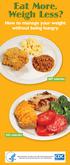 Eat More, Weigh Less? How to manage your weight without being hungry 607 calories 293 calories Department of Health and Human Services Centers for Disease Control and Prevention Can you weigh less without
NEW YORK CITY DEPARTMENT OF HEALTH AND MENTAL HYGIENE. Control Your Cholesterol: Keep Your Heart Healthy
 V O L U M E 5, N U M B E R 8 V O L U M E 5, N U M B E R 8 Health Bulletin NEW YORK CITY DEPARTMENT OF HEALTH AND MENTAL HYGIENE #42 in a series of Health Bulletins on issues of pressing interest to all
Effect of dietary fiber on blood lipid profile of selected respondent
 (2012) Effect of dietary fiber on blood lipid profile of selected respondent Khogare, D.T. UGC Major Research Project, Dept. of Home Science, Government Rajaram College, Kolhapur(MS) India Abstract: Recent
Nutrients: Carbohydrates, Proteins, and Fats. Chapter 5 Lesson 2
 Nutrients: Carbohydrates, Proteins, and Fats Chapter 5 Lesson 2 Carbohydrates Definition- the starches and sugars found in foods. Carbohydrates are the body s preferred source of energy providing four
Fit With Fiber Graphing Cereal
 Fit With Fiber Graphing Cereal Objective Students will graph information about breakfast, breakfast cereal and nutrition. Background Fiber is present in all plants that are eaten for food, including fruits,
Sutton and Merton Community Services. High fibre diet. Community Nutrition and Dietetics. Patient information
 Sutton and Merton Community Services High fibre diet Community Nutrition and Dietetics Patient information Contents Contents What is a high fibre diet? 1 Why do I need fibre in my diet? 1 Good sources
Food Allergy Gluten & Diabetes Dr Gary Deed Mediwell 314 Old Cleveland Road Coorparoo 4151 3421 7488
 Food Allergy Gluten & Diabetes Dr Gary Deed Mediwell 314 Old Cleveland Road Coorparoo 4151 3421 7488 SUMMARY Type 1 diabetes Onset common in Children Insulin requiring Immune origins with attack on the
The Five Food Groups and Nutrition Facts
 session 4 The Five Food Groups and Nutrition Facts (Note to the presenter: Comments in parentheses are instructions to follow while giving the presentation. Do not read the comments to participants. This
My Diabetic Meal Plan during Pregnancy
 My Diabetic Meal Plan during Pregnancy When you have diabetes and are pregnant, you need to eat small meals and snacks throughout the day to help control your blood sugar. This also helps you get in enough
Carbohydrate Counting for Pediatric Patients With Type 1 Diabetes. Review Date 4/08 K-0591
 Carbohydrate Counting for Pediatric Patients With Type 1 Diabetes Review Date 4/08 K-0591 Program Purpose To increase knowledge of carbohydrate counting and insulin management skills for those caring for
February 2006. 23 Best Foods for Athletes
 23 Best Foods for Athletes February 2006 1. Beans Legumes a. Excellent source of fiber (important for keeping blood sugar and cholesterol levels under control). b. High in protein and a good source of
LARGE GROUP PRESENTATION: PRESENTER S NOTES
 LARGE GROUP PRESENTATION: PRESENTER S NOTES Introduce yourself. Welcome! We are so glad you are here to learn about fruits and vegetables. Icebreaker Handout: Fruit or Vegetable: Parts of Many Words Read
MEAL PLANNING FOR MECHANICAL SOFT DIET
 MEAL PLANNING FOR MECHANICAL SOFT DIET Definition of Terms Calories Protein Blenderized Pureed Units of energy. A nutrient used by your body for growth and repair. The best sources are milk, meats, fish,
Graphing Cereal. www.agclassroom.org/ok. Skills: Science and Math P.A.S.S. Objective: Students gather and graph information about favorite.
 Fit With Fiber Graphing Cereal Skills: Science and Math Objective: Students gather and graph information about favorite breakfast cereals. Background Fiber is present in all plants that are eaten for food,
University of California, Berkeley 2222 Bancroft Way Berkeley, CA 94720 Appointments 510/642-2000 Online Appointment www.uhs.berkeley.
 Constipation Why Am I Constipated? Constipation is passage of small amounts of hard, dry bowel movements, usually fewer than three times a week. People who are constipated may find it difficult and painful
Lesson 3 Assessing My Eating Habits
 Lesson 3 Assessing My Eating Habits Overview This lesson introduces the federal guidelines for healthy eating. Students assess their eating habits against these guidelines and make suggestions for improvement.
Fertile Food Can you eat your way to pregnancy? Tracy Cherry, RD, CDN University of Rochester Women s Lifestyle Center
 Fertile Food Can you eat your way to pregnancy? Tracy Cherry, RD, CDN University of Rochester Women s Lifestyle Center Fertility Food Folklore Almonds a fertility symbol throughout the ages. The aroma
No More Carb Confusion
 No More Carb Confusion Choosing carbs ( carbohydrates ) wisely helps you control your blood sugar and weight. What is low-carb dieting? What can it do for you when you're trying to control your blood sugar
Eating Well with Diabetes. Cassie Vanderwall UW Health Nutrition Registered Dietitian Certified Personal Trainer Certified Diabetes Educator
 Eating Well with Diabetes Cassie Vanderwall UW Health Nutrition Registered Dietitian Certified Personal Trainer Certified Diabetes Educator Outline What is Diabetes? Diabetes Self-Management Eating Well
Canada s Food Guide Jeopardy
 Canada s Food Guide Jeopardy Drafted: July 2008 Revised: December 2012 Eating Well with Canada s Food Guide Veg & Fruit Grain Products Milk & Alternatives Meat & Alternatives Physical Activity Miscellaneous
and let yourself GOoOoooo! Fill up with fiber! Lindsay Orbeta, MS, RD
 Fill up with Fiber and let yourself Fill up with fiber! GOoOoooo! Lindsay Orbeta, MS, RD 8 great tips for a high fiber diet 1. Eat whole fruits instead of drinking fruit juices 2. Replace white rice, bread,
Caring for Your Colon. By: Saeed Ahmed, MD, Gastroenterology
 Caring for Your Colon By: Saeed Ahmed, MD, Gastroenterology COLON HEALTH Over View Constipation Fecal incontinence Hemorrhoids Diverticulosis Colorectal cancer screening Diet for Healthy Colon Colon Health
Digestive System Why is digestion important? How is food digested? Physical Digestion and Movement
 Digestive System The digestive system is made up of the digestive tract a series of hollow organs joined in a long, twisting tube from the mouth to the anus and other organs that help the body break down
ADD PROFI TO YOUR RECIPE ADD PROFIT TO YOUR BUSINESS ADD PROTEIN ADD FIBER ADD TRUST ADD VALUE ADD DEALERS INGREDIENTS
 PROFI TO YOUR RECIPE ADD PROFIT TO YOUR BUSINESS ADD PROTEIN ADD FIBER ADD TRUST ADD VALUE ADD DEALERS INGREDIENTS PROFI CAN HELP CONSUMERS MEET DAILY PROTEIN GOALS A concentrated complete vegetable protein
Carbohydrate Counting for Patients With Diabetes. Review Date 4/08 D-0503
 Carbohydrate Counting for Patients With Diabetes Review Date 4/08 D-0503 Program Objectives At the end of the session you will know how to: Define carbohydrate counting Identify the relationship between
1. Which substances in the small intestine of humans serve to increase the surface area for absorption?
 Digestion Review 1. Which substances in the small intestine of humans serve to increase the surface area for absorption? (a.) intestinal glands (b.) villi (c.) pseudopodia (d.) cilia (e.) flagella 2. The
Nutritional Value of Peas, Lentils & Chickpeas
 Nutritional Value of Peas, Lentils & Chickpeas Presented by: Amy Myrdal Miller, MS, RDN Senior Director of Programs and Culinary Nutrition, Strategic Initiatives The Culinary Institute of America Presented
Presentation Prepared By: Jessica Rivers, BASc., PTS
 Presentation Prepared By: Jessica Rivers, BASc., PTS Presentation Outline Why should we care about our eating habits? Why is nutrition so important as we age? How do we know if we are eating healthy? What
Part One. Nutrition and Diet
 Part One R Nutrition and Diet 1 R Carbohydrates: Sugar, Starch and Dietary Fiber Carbohydrates often get a bad rap they make you fat, they cause diabetes, they trigger hyperactivity in children. However,
Dietetics. Advice on. Healthy Eating for Lowering Cholesterol
 Dietetics Advice on Healthy Eating for Lowering Cholesterol 41 What is blood cholesterol? A waxy, fat-like substance in the blood Made by the liver and also comes from food Important for building and maintenance
The Skinny on Visceral Fat
 The Skinny on Visceral Fat Fat stored deep in the belly is the most harmful kind. Find out how to cut it down to size. People can carry their extra weight in different places on the body: All over On the
UW MEDICINE PATIENT EDUCATION. PCOS Nutrition. Eat a Balanced Diet
 UW MEDICINE PATIENT EDUCATION PCOS Nutrition Eating for health when you have polycystic ovarian syndrome Eating to treat PCOS is not much different than how many people are advised to eat to be their healthiest.
Frequently Asked Questions: Ai-Detox
 What is Ai-Detox? Frequently Asked Questions: Ai-Detox Ai-Detox is a Chinese herbal medicinal formula, produced using state of the art biotechnology, which ensures the utmost standards in quality and safety.
Health Maintenance: Controlling Cholesterol
 Sacramento Heart & Vascular Medical Associates February 18, 2012 500 University Ave. Sacramento, CA 95825 Page 1 What is cholesterol? Cholesterol is a fatty substance. It has both good and bad effects
Ready, Set, Start Counting!
 Ready, Set, Start Counting! Carbohydrate Counting a Tool to Help Manage Your Blood Glucose When you have diabetes, keeping your blood glucose in a healthy range can help you feel your best today and in
BEST & WORST FOODS FOR BELLY FAT
 Belly fat is worse for you than fat elsewhere on your body. Excess accumulation of belly fat is more dangerous than excess fat around your hips and thighs. Belly fat is associated with serious health problems,
Sugars, Starches, and Fibers Are All Carbohydrates
 Sugars, Starches, and Fibers Are All Carbohydrates What are carbohydrates? Today's food advertisements call them carbs, but they are not all the same. They are a group of compounds that have some similarities
CHOC CHILDREN SUROLOGY CENTER. Constipation
 Constipation What is constipation? Constipation is a condition in which a person has uncomfortable or infrequent bowel movements. Generally, a person is considered to be constipated when bowel movements
Do children with diabetes need a special diet?
 Do children with diabetes need a special diet? No! The basic nutritional needs of a child or adolescent with diabetes is the same as their peers Healthy eating is important for all children Children with
2) Herewith the 2nd question in our Q&A series with Ria Catsicas about 'Nutrition and Diabetes':
 DIABETES Q&A WITH RIA CATSICAS 1) Today is World Diabetes Day! We ve been chatting to clinical dietitian and nutrition consultant Ria Catsicas about nutrition and diabetes. Ria is a specialist in the practice
Blood clot in atheroma. help make vitamin D and hormones, like oestrogen and testosterone, in your body.
 CHOLESTEROL This factsheet explains what cholesterol is and why too much cholesterol in your blood is harmful. It also provides information regarding cholesterol testing and tips to help reduce your blood
(8 years or younger)
 What is iron? Iron deficiency in children (8 years or younger) Iron is a mineral found in food that your body needs. It is bound to hemoglobin, which is an important part of red blood cells. Iron helps
Diabetes 101. Lifestyle Recommendations to Manage Diabetes. Cassie Vanderwall. Licensed, Registered Dietitian Certified Personal Trainer
 Diabetes 101 Lifestyle Recommendations to Manage Diabetes Cassie Vanderwall Licensed, Registered Dietitian Certified Personal Trainer Diabetes 101- Outline What is Diabetes? What can I do to control Diabetes?
LOWERING YOUR CHOLESTEROL WITH DIET AND EXERCISE MPH, RD, CDE
 LOWERING YOUR CHOLESTEROL WITH DIET AND EXERCISE Presented by Nutritionist Alix B. Landman, MPH, RD, CDE Cigna Provider CONTRIBUTORS OF HEART DISEASE AND HIGH VLDL CHOLESTEROL Wrong Foods: Excessive Sugar,
Surgical Weight Loss. Mission Bariatrics
 Surgical Weight Loss Mission Bariatrics Obesity is a major health problem in the United States, with more than one in every three people suffering from this chronic condition. Obese adults are at an increased
Daily Habits and Urinary Incontinence
 Effects of Daily Habits on the Bladder Many aspects of our daily life influence bladder and bowel function. Sometimes our daily habits may not be in the best interest of the bladder. A number of surprisingly
1. (U4C1L4:G9) T or F: The human body is composed of 60 to 70 percent water. 2. (U4C1L4:G13) Another name for fiber in a diet is.
 Cadet Name: Date: 1. (U4C1L4:G9) T or F: The human body is composed of 60 to 70 percent water. A) True B) False 2. (U4C1L4:G13) Another name for fiber in a diet is. A) vegetables B) laxative C) fruit D)
SUGAR SMARTS. Introduction. Preparation. Suggested Recipes. Key Concepts
 SUGAR SMARTS Introduction This lesson uses health concerns around diabetes to introduce a discussion of sugar in our diets. Depending on your audience, you may want to talk about diabetes more generally
Healthy Weight Loss Program
 Healthy Weight Loss Program NEW! SlimStyles PGX Granules SlimStyles PGX SlimStyx: Available in convenient single-serving Slimstyx packets (2.5 g each) All the products in this brochure are available at
simple steps give you for good bowel health
 simple steps give you for good bowel health This booklet contains simple steps you can take to help achieve good bowel health. This is important to everyone, as these small changes will help your digestive
Eating Right for Kidney Health: Tips for People with Chronic Kidney Disease
 Eating Right for Kidney Health: Tips for People with Chronic Kidney Disease What you eat and drink can help slow down the progression of chronic kidney disease (also known as CKD ) and help prevent complications.
Daily Diabetes Management Book
 01 Daily Diabetes Management Book This book belongs to Name Address Your Diabetes Health Care Team Telephone Numbers Primary Doctor Diabetes Educator Specialist Dietitian/Nutritionist Pharmacy Insurance