
Diet Guidelines for Stem Cell Transplant Patients
|
|
|
- Berenice Oliver
- 10 years ago
- Views:
Transcription
1 Diet Guidelines for Stem Cell Transplant Patients Inpatient Immunosuppressed Diet Guidelines Chemotherapy and radiation treatments puts patients at an increased risk for developing a foodrelated infection. The following dietary guidelines and the "low-microbial diet" will help reduce and immunosuppressed patient s risk of contracting a food-borne infection (food poisoning) while they are admitted to the hospital. Upon admission to the Bone Marrow Transplant Program at P/SL, each patient will be placed on a low microbial diet and the following guidelines will apply: 1. Restaurant foods are NOT allowed. This guideline is in place to ensure that patients do not develop a food-borne infection (food poisoning) that can be associated with transporting food and the potential for bacterial growth. 2. Homemade and temperature sensitive foods brought from outside the hospital are not allowed. This guideline is also in place to ensure that you do not develop a food-borne infection that can be associated with transporting food and the potential for bacterial growth. Below is a list of foods that CAN be brought onto the Bone Marrow Units and eaten. These foods are not heat or cold sensitive (shelf-stable) and are "low-risk" food items. These foods may be kept in your room and consumed when you desire: Granola Bars Instant Oatmeal Packages Canned Soups* Canned Vegetables* Canned Fruits* Candy Pre-packaged Trail Mix Cup-of-Soup Packages Cookies Crackers Dry Cereals Protein Bars (cannot contain herbs) Bagels Juice Boxes Chips Pretzels Popcorn * These items are not shelf-stable after opening. Please eat within 24 hours or discard.

2 Outpatient Immunosuppressed Diet Guidelines Persons with decreased immune function due to chemotherapy and radiation therapy are at increased risk of developing a food-related infection. The purpose of this diet is to help patients and caregivers avoid specific foods that are more likely to contain infection-causing organisms while allowing maximum healthy food choices. Patients undergoing allogeneic transplantation (from an unrelated or family donor) are at risk for infections until all immunosuppressive medications have been stopped and the patient is free of active acute or chronic GVHD (graft versus host disease). Immunosuppressive medications include cyclosporine (Neoral ), tacrolimus (Prograf ), prednisone, thalidomide, Imuran, Rapamycin, mycophenolate mofetil (MMF, CellCept ) and interferon. Allogeneic patients should follow this diet during and after all therapy (chemotherapy and/or radiation). The diet should be continued until all immunosuppressive therapy is discontinued AND no acute or chronic graft versus host disease is present. Patients and their caregivers should talk to their physician and dietitian about whether or not to continue any part of the diet after these medications have been discontinued. Choose foods from the May Eat column. Do NOT eat foods in the Do Not Eat column. You may want to discuss the safety of these or other foods with your dietitian. Food Groups May Eat Do Not Eat Dairy *All pasteurized, grade A milk and milk products including eggnog, yogurt, ice cream, frozen yogurt, sherbet, ice cream bars, milkshakes, processed cheese slices and spreads, cream cheese, cottage cheese and ricotta cheese *Dry, refrigerated, or frozen pasteurized whipped topping * Commercially packaged hard and semi-soft cheeses such as cheddar, mozzarella, parmesan, Swiss, Monterey Jack, etc. *Cooked soft cheeses such as brie, camembert, feta, farmer s cheese Though not completely risk free, the risk of contracting food borne illness from COOKED soft cheese is low. *Non-pasteurized or raw milk and milk products make from nonpasteurized or raw milk. *Cheeses from delicatessens *Cheeses containing chili peppers or other uncooked vegetables Cheeses with molds (such as blue, Stilton, Roquefort, or gorgonzola) *Mexican-style soft cheese such as queso fresco, queso blanco

3 Food Groups May Eat Do Not Eat Meat and Meat Substitutes Fruits and Nuts Entrees, Soups *All meats cooked to well-done (see temperature guide attached on page ) or canned meats (beef, pork, lamb, poultry, fish, shellfish, game, ham, bacon, sausage, hot dogs) *Eggs cooked until both white and yolk are firm *Pasteurized eggs and egg substitutes (such as Egg Beaters ), and powdered egg white (all can be used uncooked) *Commercially packaged salami, bologna, hot dogs, ham and other luncheon meats *Canned and shelf-stable 1 smoked fish (refrigerate after opening) 2 *Pasteurized or cooked tofu *Refrigerated smoked seafood such as salmon or trout if cooked to 160 F or contained in a cooked dish or casserole *Well washed 3 raw and frozen fruit; foods containing well washed raw fruits *Cooked, canned and frozen fruit *Pasteurized juices and frozen juice concentrates *Dried fruits *Canned or bottled roasted fruits *Shelled, roasted nuts and nuts in baked products *Commercially-packaged nut butters (such as peanut butter, almond butter, soybean butter) *All cooked entrees and soups *Raw or undercooked meat, poultry, fish, game, tofu *Raw or undercooked eggs and non-pasteurized egg substitutes; no eggs over easy, soft boiled eggs, or poached eggs *Meats and cold cuts from delicatessens *Hard cured salami in natural wrap *Uncooked refrigerated smoked seafood such as salmon or trout labeled as nova-style, lox, kippered, smoked, or jerky *Pickled fish *Tempe (tempeh) products * Unwashed raw fruits *Unroasted raw nuts * Roasted nuts in the shell * Non-pasteurized fruit and vegetable juices *Fresh fruit salsa found in the grocery refrigerator case *Non-pasteurized items containing raw fruits found in the grocery refrigerator case. *All miso products (such as miso soup and miso paste) 1 Shelf-stable refers to unopened canned, bottled, or packaged food products that can be stored before opening at room temperature; container may require refrigeration after opening 2 Aseptically packaged, shelf-stable tofu and pasteurized tofu do not need to be boiled. Unpasteurized tofu much be cut into 1-inch cubes or smaller, and boiled a minimum of five minutes in water or broth before eating or using in recipes. 3 Rinse under clean, running water before use, including produce that is to be cooked or peeled (such as bananas, oranges and melon).

4 Food Groups May Eat Do Not Eat Vegetables Bread, Grain, and Cereal Products *Well washed 4 raw and frozen vegetables *All cooked fresh, frozen or canned vegetables, including potatoes *Shelf-stable 5 bottled salsa (refrigerate after opening). *Cooked vegetable sprouts (such as mung bean sprouts) *Fresh, well washed herbs and dried herbs and spices(added to raw or cooked foods) *All breads, bagels, rolls, English muffins, pancakes, sweet rolls, waffles, French toast *Potato chips, corn chips, tortilla chips, pretzels, popcorn *Cooked grains and grain products, including pasta and rice *All cereals, cooked and ready-to-eat *Unwashed raw vegetables or herbs *Fresh, non-pasteurized vegetable salsa found in the grocery refrigerator case *Non-pasteurized items containing raw vegetables found in the grocery refrigerator case *All RAW vegetable sprouts (alfalfa sprouts, clover sprouts, mung bean sprouts, all others) *Salads from delicatessens *Raw (not baked or cooked) grain products (such as raw oats) Beverages *Boiled well water 6 *Tap water and ice made from tap water 7 *Commercially-bottled distilled, spring and natural waters 8 *All canned, bottled and powdered beverages *Instant and brewed coffee and tea; cold brewed tea made with boiling water *Herbal teas brewed from commercially-packaged tea bags *Commercial nutritional supplements, both liquid and powered *Unboiled well water *Cold-brewed tea made from warm or cold water *Non-pasteurized fruit and vegetable juices *Mate tea *Wine, unpasteurized beer (Note: All alcoholic beverages should only be consumed following physician approval) 4 Rinse under clean, running water before use, including produce that is to be cooked or peeled (such as potatoes) 5 Shelf-stable refers to unopened canned, bottles, or packaged food products that can be stored before opening at room temperature; container may require refrigeration after opening. 6 Bring tap water to a rolling boil and boil for minutes. Store boiled water in refrigerator. Discard water not used within 48 hours (2 days). 7 Recommend using boiled or bottled water if using a water service other than city water service. Please see Water Safety Guidelines in Food Safety Guidelines. 8 See Water Safety Guidelines in Food Safety Guidelines for approved water treatments.

5 Food Groups May Eat Do Not Eat Desserts Fats *Refrigerated commercial and homemade cakes, pies, pastries and pudding *Refrigerated cream-filled pastries *Cookies, both homemade and commercially prepared *Shelf-stable cream-filled cupcakes (such as Twinkies, Ding Dongs ) and fruit pies (such as Pop Tarts and Hostess fruit pies) *Canned and refrigerated puddings *Ices, popsicles and similar products *Candy, gum *Vegetable oils and shortening *Refrigerated lard, margarine, butter *Commercial, shelf-stable mayonnaise and salad dressings including Blue Cheese and other cheese-based salad dressings (refrigerate after opening) *Cooked gravy and sauces *Unrefrigerated cream-filled pastry products (non shelf-stable) *Fresh salad dressings (stored in the grocer s refrigerated case) containing raw eggs or cheeses as listed as Do Not Eat under Dairy. Other *Commercial pasteurized Grade A honey *Salt, granulated sugar, brown sugar *Jam, jelly, syrups (refrigerate after opening) *Pickles, pickle relish, olives (refrigerate after opening) *Vinegar *Raw honey; honey in the comb *Herbal and nutrient supplement preparations (refer to Guidelines for Use of Herbal and Nutrient Supplements ) *Brewer s yeast, if uncooked

6 Food Safety Guidelines Foodborne illness (food poisoning) is occurring with increasing frequency. A foodborne illness is any illness caused by eating a food that is contaminated with a bacteria, virus, mold or parasite. Examples of organisms that can cause a foodborne illness are E. coli, Salmonella and Listeria. Sources of foodborne illness, or food poisoning, may be the food handler, the environment (such as a contaminated work surface) or the food itself. Bacteria and other organisms exist in most common foods. Most of these organisms are of little risk to the average healthy person. However, people undergoing chemotherapy, radiation or a bone marrow or stem cell transplant are at increased risk for infections, including foodborne illness. By following safe food practices, patients and caregivers can reduce the risk of foodborne illness. Caregivers should perform most of the food preparation while patients are going through a bone marrow or stem cell transplant. Specifically, patients with an ANC less than 1000 should avoid sharp knives and stove top cooking to prevent unnecessary cuts, injuries and/or infections. All people are advised to follow the food-safety guidelines discussed below. If patients or caregivers have questions regarding food safety and diet guidelines, please talk with the CBCI dietitians. Elements of Food Safety Wash hands and surfaces often. Avoid cross-contamination. Keep foods at safe temperatures. Tools for Food Safety Food and refrigerator thermometers Hand soap Clean towels (cloth or paper) Dilute bleach solution for washing countertops, cutting boards and other items (1/3 cup unscented household bleach with 3 1/3 cups water) Personal Hygiene Wash hands frequently with soap and warm, running water and rubbing motion (friction) for 15 seconds before and after every step in food preparation. This is critical before and after handling raw meat, seafood and poultry.

7 Wash hands before eating and after using the rest room, handling garbage or touching pets. Dry hands with a paper towel or cloth hand towel that is changed daily. Kitchen Cleanliness Replace dishcloths and dishtowels daily. They should be laundered in the hot cycle of your washing machine. Sanitize sponges daily by doing one of the following: 1. Soak sponges in a dilute bleach solution (see Tools for Safety section for bleach solution recipe) for five minutes. 2. Heat WET sponges in a microwave oven on high for 1 minute. 3. Run the sponge through the dishwasher cycle. Discard sponges weekly! Use liquid dish soap and very warm water when hand-washing dishes, pans and utensils. You may air-dry dishes instead of towel-drying them. Wash counters, utensils and can openers with soap and hot water immediately after use. After washing, they must be sanitized using the dilute beach solution (see page ) or a sanitizing spray or wipe. Keep the refrigerator clean. Clean spills immediately. Wash shelves and doors using a dilute bleach solution when soiled. Make sure food and storage areas remain clean. Rotate food stock so older items are used first. Check expiration dates. Do not use foods past the expiration dates. Throw away (without tasting) any bulging, leaking or cracked cans, or those deeply dented in the seam area. Keep appliances free of food particles (including the microwave oven, toaster, can opener, blender and mixer blades). Blender blades and the bottom ring should be removed from the blender after each use and washed in hot, soapy water. Do not store any food supplies under the sink. Do not store chemicals and cleaning solutions over or near food supplies.

8 Cutting Boards Plastic or glass surfaces should be used for cutting raw meat and poultry. However, wooden cutting boards are considered safe if they are used exclusively for raw meat and poultry. Use a different board for cutting other foods, such as produce and bread. Wash cutting boards with hot, soapy water after each use. Then rinse and air-dry or pat dry with fresh paper towels. Nonporous acrylic, plastic or glass boards and solid wood boards can be washed in a dishwasher. Laminated boards washed in the dishwasher may crack or split. Sanitize both wooden and plastic cutting boards with a dilute bleach solution (see Tools for Food Safety for dilute bleach solution recipe). This should be done every time the board is used for raw meat, fish, or poultry. Sanitize cutting boards used for other purposes at least once weekly. Put on rubber gloves, flood the surface with the bleach solution and allow it to stand for at least 2 minutes, then rinse and air-dry or pat dry with fresh paper towels. You may also us a commercial sanitizing agent (such as Clorox Disinfectant Wipes) and follow the directions on the product. Replace worn cutting boards, including boards with cracks or grooves. Safe Food Handling: From the Grocery Store to Your Home Shop for shelf-stable items first (shelf-stable refers to unopened canned, bottles or packaged food products that can be stored at room temperature before opening; the container may require refrigeration after opening). Select frozen and refrigerated foods last, especially during the summer months. Check sell by and use by dates on dairy products, eggs, cereals, canned foods and other goods. Select only the freshest products. Check packaging dates and use by dates on fresh meats, poultry and seafood. Do not purchase if they are outdated. Do not use damaged, swollen, rusted or deeply dented cans. Check that packaged and boxed foods are properly sealed. Select fruits and vegetables that are not moldy, bruised or damaged. Fresh fruits and vegetables should look fresh. Wilted salad greens may be an indication that the product is old and not properly handled. Avoid unpasteurized juice (unless prepared at home with washed produce and consumed within 24 hours).

9 Choose shelf-stable salsa rather than salsas found in the refrigerator section of the grocery section of the grocery store. Home Avoid unpasteurized milk, yogurt or cheese, and other unpasteurized milk products, including Mexican-style cheese made from unpasteurized milk (such as queso fresco). Do not use foods with any mold present. Avoid unrefrigerated, cream and custard-filled pasty products, such as fresh bakery cream pies, éclairs, cream-filled doughnuts and pastries. Commercial, shelf-stable products are allowed. Avoid foods from reach-in or scoop bulk food containers. Avoid food from any type of bulk food container if it will not be cooked prior to consumption. Do not taste free, unpackaged food samples. Choose eggs that are refrigerated in the store. Do not use cracked eggs. Pasteurized eggs, liquid pasteurized egg products (such as Egg Beaters ) and powdered egg whites may be used in recipes calling for raw eggs in foods that will not be cooked. Place meat, poultry and fish in plastic bags. Ask to have these items placed in separate bags from the fresh produce and ready-to-eat foods when at the check-out stand. Never leave perishable foods in the car. Refrigerate or freeze them properly. Wash the tops of canned foods before opening with water. Clean the can opener after each use. Throw away eggs with cracked shells. Throw away foods older than their use by or expiration dates. Throw away entire food packages or containers with any mold present, including yogurt, cheese, cottage cheese, fruits (especially berries), vegetables, jelly, bread, cereal and pastry products. Fruit and Vegetable Handling Use the following guidelines for handling all raw produce, including organic, organically grown, natural and general produce. The terms organic and natural refer to growing without the use of chemical fertilizers or pesticides, and they have no relationship to the cleanliness of the produce.

10 Refrigerate fruits and vegetables promptly. Do not purchase produce that has been cut at the grocery store (such as melon or cabbage halves). This is particularly true for produce that will not be cooked prior to eating. Rinse produce thoroughly under clean, running water just before use, including produce to be peeled (such as bananas, melons and oranges) or cooked. Do NOT wash fruits and vegetables with soaps, detergents or chlorine bleach solutions. Produce can absorb these cleaning agents. Commercial produce rinses (such as Fit Fruit and Vegetable Spray ) may be used, but they have not been shown to be more effective for removing bacteria off the produce than washing under running water. Scrub produce that has a thick, rough skin or rind (such as cantaloupe or potatoes) or has visible dirt on the surface using a clean vegetable scrubber. Rinse leave of leafy vegetables (such as lettuce, spinach and cabbage) individually under running water. Packaged salads, slaw mixes and other prepared produce, even when marked pre-washed, should be rinsed again under running water; a colander can be used to make this easier. Check for use by dates. Do not eat any type of raw vegetable sprouts (including alfalfa sprouts, clover sprouts, mung bean sprouts and others) due to high risk of Salmonella and E. coli contamination. Cooked mung bean sprouts are acceptable. Throw away fruits and vegetables that are slimy and show mold. Do not consume home-canned goods. Do Not Cross-Contaminate Use a clean knife for cutting different foods (for example, use different knives for cutting meat, produce and bread). During food preparation, do not taste the food with the same utensil used for stirring. Use a clean utensil each time you taste food while preparing or cooking. In the refrigerator, store raw meat separately from ready-to-eat foods. When grilling, always use a clean plate for the cooked meat.

11 Keep Foods at Safe Temperatures Proper Thermometer Use Insert the meat thermometer into the middle of the thickest part of the food to test for doneness. The thermometer must be fully inserted into the food. For thin foods, insert the thermometer sideways. A refrigerator thermometer should be placed on a shelf toward the back of the refrigerator. It should read 40 F or less. Refrigeration Keep the refrigerator temperature between 34 F and 40 F. Keep the freezer temperature no higher than 2 F. Never leave perishable food out of the refrigerator for more than 2 hours. Throw away food left out longer than 2 hours. Marinate foods in the refrigerator. Never thaw foods on the counter. Thaw meat, fish, poultry in the refrigerator away from raw fruits and vegetables and other prepared foods. Place on a dish to catch drips. Cook defrosted meat right away; do not refreeze. If you are in a hurry, you can thaw meat in the microwave, but the meat must be cooked immediately after thawing. Cool hot foods uncovered in shallow containers in the refrigerator. Cover storage containers after cooling. Make sure that covers seal tightly. Throw away all prepared food after 72 hours, or three days. Date foods placed in the refrigerator to keep track of their age. Freeze foods that will not be used within 72 hours, or three days. NEVER TASTE FOOD THAT LOOKS OR SMELLS STRANGE! Cook Foods Adequately Cook meat until it is no longer pink and juices run clear. These are signs that the meat may be cooked to a high-enough temperature. However, the only way to be sure that the meat has been cooked to the proper temperature is to use a food thermometer (see table below). Do not eat raw or lightly cooked eggs or soft-boiled eggs.

12 Do not eat uncooked foods containing raw or undercooked eggs, such as raw cookie dough, cake batter or salad dressings containing raw or coddled eggs. Pasteurized eggs and liquid pasteurized egg products (such as Egg Beaters ) may be used in recipes call for raw eggs in foods that will not be cooked. Hold food at safe temperatures: hot food should stay above 140 F. Recommended Minimum Cooking Temperatures for Meats and Poultry Product Cooking Temperature Eggs Casseroles, food containing eggs, custards and egg sauces Cook until yoke and white are firm 160 F Whole pieces of meat, hot dogs 160 F Ground veal, beef, lamb, pork, rabbit, goat, game 160 F Chicken and turkey: whole bird and dark meat (thigh, wing) 180 F Breast, roast 170 F Ground chicken, turkey 165 F Stuffing (always cook in separate container outside of bird) 165 F Fresh or Precooked Ham 160 F Fin fish (such as salmon, cod, halibut, snapper, sole, bass, trout) Shrimp, lobster, crab Scallops Clams, mussels, oysters Cook until opaque and flakes easily with a fork Should turn red and flesh should become pearly opaque Should turn white or opaque or firm Cook until shells open (may be high-risk food for people with low white count or immunosupressed) Leftovers 165 F

13 Microwave Cooking Microwave cooking can leave cold spots in food where bacteria can survive. Rotate the dish a quarter turn once or twice during cooking if there is no turntable in the appliance. When heating leftovers, use a lid or vented plastic wrap to cover them. Stir several times during reheating. When the food is heated thoroughly (to a minimum of 165 F), cover and let sit for two minutes before serving. Dining Out Safely Do s: If ordering take-out, pick it up instead of allowing it to be delivered and begin consuming it within 20 minutes of preparation. Check the general condition of the restaurant. Are the plates, glasses and utensils clean? Are the restrooms clean and stocked with soap and paper towels? How clean the restaurant looks may tell the amount of care taken while preparing the food. Eat early to avoid crowds. Ask that food be prepared fresh if fast food establishments (for example: a hamburger should be fresh off the grill, no one that has been sitting under heat lamps). Be sure that utensils are set on a napkin or clean tablecloth or placemat rather than directly on the table. Ask if fruit juices as pasteurized. Ask for single-serving condiment packages. If you want to keep your leftovers, ask the server to bring you a box into which you can transfer the food yourself, rather than having your food transferred into a box in the restaurant kitchen. Be sure to take and refrigerate the leftovers immediately. Don ts: Don t eat at salad bars, buffets, potlucks, store samples and sidewalk vendors. Don t eat raw fruits and vegetables when dining out. Eat these items when prepared at home where you can wash them thoroughly and prepare them safely. Don t use self-serve condiment containers, including salsa.

14 Bringing food to CBCI from Home and Restaurants We understand that you may be spending many hours in our clinic while you re receiving treatments. You are allowed to bring food from home if it complies with the Outpatient Immunosuppressed Diet Guidelines, but we want to ensure these foods are transported correctly to prevent foodborne illnesses. The following guidelines should be followed when transporting foods: You may bring shelf-stable foods (food that does not need to be kept hot or cold to prevent spoilage) and keep them with you. Restaurant foods are allowed BUT: o You should get the food from a nearby restaurant so that the patient can begin consuming the food within 20 minutes of preparation. o Do not consume fresh fruits or vegetables from a restaurant. o Any left-over restaurant food that is taken into a patient room cannot enter the patient refrigerator and MUST be discarded. Home-made temperature-sensitive food are allowed BUT: o It must be cooled to below 40 degrees F, placed in a cooler, and kept at below 40 degrees while being transported. o Once the temperature-sensitive food arrives in the clinic, it must be labeled, dated and go directly into the patient refrigerator or freezer. THIS FOOD WILL BE DISCARDED AT THE END OF EACH DAY. o Liquid foods that need to be heated must be brought to boiling. All other foods need to be brought to greater than 165 degrees F. Once reheated, the patient must begin to consume the food within 20 minutes. o If reheated foods are not completely consumed, it must be thrown away after one reheating. o Any refrigerated food that is taken into a patient room cannot re-enter the patient refrigerator and MUST be discarded. If you have any further questions, please ask the nutrition team about these guidelines.

15 Guidelines of the Use of Herbal and Nutrient Supplements during Hematopoetic Stem Cell Transplantation (HSCT) and High-Dose Chemotherapy Patients may be using nutrient supplements or herbal preparations upon arrival for treatment or transplant. Our health care team recommends stopping use of all such preparations after your initial consultation and prior to any treatment at CBCI or P/SL. These preparations may affect treatment or even cause a serious infection. There are four areas of concern about the use of nutritional supplements, herbals and other preparations during marrow or stem cell transplantation or high dose chemotherapy: 1. Interactions between preparations and prescribed medications may reduce the effectiveness of drugs routinely used during the course of transplantation or chemotherapy. 2. Potential contamination of preparations derived from plants may cause bacterial, fungal or parasitic infections due to inadequate purification and sterilization. Even boiling water may not destroy some infectious organisms that can contaminate these products. 3. A few specific preparations have been repeatedly associated with serious toxic side effects to the liver, blood, kidneys, heart and other body organs. 4. The production, distribution, and labeling of herbal preparations and nutrient supplements are not regulated by the U.S. Food and Drug Administration. As a result, the dosage may vary from the dose listed on the label. Also, the product might contain ingredients not listed on the label. Herbal and Botanical Preparations Herbal and botanical preparations include a variety of products derived directly from plants. They may be sold as tablets, capsules, liquid extracts, teas, powders and topical preparations. There are no manufacturing regulations for the cleanliness or purity of these products. Therefore, there is a danger the products may be contaminated with fungus, bacteria, parasites, or other chemicals, which can be life-threatening to a person with an impaired immune system, including persons receiving chemotherapy or transplantation.

16 Patients undergoing allogeneic transplantation (from an unrelated or family donor) are at risk for infections until all immunosuppressive medications have been stopped and the patient is free of active chronic GVHD (graft versus host disease). Immunosuppressive medications include cyclosporine (Neoral ), tacrolimus (Prograf ), prednisone, thalidomide, Imuran, Rapamycin, mycophenolate mofetil (MMF, CellCept ) and interferon. Allogeneic patients should avoid herbal and botanical preparations all immunosuppressive medications are discontinued AND no acute or chronic graft versus host disease is present. Some herbals may decrease blood clotting. Persons with low platelet counts should not take garlic or gingko biloba. The following list includes herbal and botanical medications with known dangerous side effects and should NOT be taken under any circumstance. Other herbs and botanicals could be found to be dangerous in the future. Always talk with your physician before taking herbal and botanical preparations. Alfalfa Borage Chaparral Chinese herbs Coltsfoot Comfrey DHEA Dieter s tea (including senna, aloe, Rhubarb root, buckthorn, cascara, castor oil) Ephedra or MaHuang Groundsel or Life Root Heliotrope or Valerian Kava-Kava Laetrile (Apricot Pits) Licorice Root L-tryptophan Lobelia Mate Tea Pau d arco Pennyroyal Sassafras St. John s Wort Yohimbe and Yohimbine

17 Vitamin and Mineral Supplements and Antioxidants It is recommended that you take a multivitamin for at least one year after transplantation or chemotherapy. Your vitamin/mineral preparation SHOULD NOT contain iron unless otherwise directed to do so by your healthcare provider. The following is a list outlining the standard Daily Reference Intakes (DRI) and the maximum amounts of supplements recommended. Higher doses can be toxic or interact with other medications including chemotherapy. Adult Daily Supplement Intake Recommendations Micronutrient Dietary Reference Intakes (DRI) Safe Upper Limits Vitamin A IU/ RE or mcg No more than 10,000 IU or 2,000 mcg Vitamin C (Ascorbic Acid) 120 mg No more than 500 mg Vitamin D (Calciferol) IU or 5-15 mcg No more than 2000 IU or 50 mcg Vitamin E (tocopherol) 8-10 mg or IU No more than 100 mg or IU while on anticoagulant therapy No more than 800 mg or IU β-carotene No DRI No more than 25,000 IU or 15 mg Folic Acid (folate) 400 mcg No more than 1000 mcg or 1 mg Vitamin B1 Thiamin Vitamin B2 Riboflavin mg mg While high intakes of B-Vitamins may not be toxic, talk with your dietitian to discuss your particular Niacin (mg of Niacin equivalents) mg needs Vitamin B6 Pyridoxine mg No more than 100 mg Vitamin B12 (Cobalamin) Biotin 2.4 mg 30 mcg While high intakes of B-Vitamins may not be toxic, talk with your dietitian to discuss your particular Pantothenic Acid 5 mg needs Iron mg Iron supplementation is not recommended posttransplant. Selenium mcg No more than 200 mcg Calcium mg No more than 2500 mg A list of appropriate multivitamin supplements is available from the BMT coordinators or dietitians.

18 Antioxidants A high intake of some antioxidants (vitamin C, vitamin E, and β-carotene) may protect against the development of certain type of cancer. However, taking antioxidant supplements during radiation and chemotherapy may reduce the effectiveness of these treatments in destroying diseased cells. Therefore, patients should stop antioxidant supplementation prior to chemotherapy and radiation. Antioxidants may be inappropriate posttransplant due to interactions with medications, immunosuppressive therapy or other vitamins and minerals in your body. Your dietitian can provide you with more information. B-Vitamins The B vitamins (thiamin, niacin, riboflavin, pyridoxine (B6), folate, cobalamine (B12), biotin and pantothenic acid), are water soluble nutrients that assist in energy production. High levels of supplementation may not be toxic; however it is important to maintain a balance among these B- vitamins.

19 Water Safety Guidelines Public-water quality and treatment vary throughout the United States, so always check with your local health department and water utility regarding the safety of household and community tap water and ice for use by immunosuppressed persons. The water supply in the Denver metro area is safe and acceptable for your use. Patients undergoing allogeneic transplantation (from an unrelated or family donor) are at risk for infections until all immunosuppressive medications have been stopped and the patient is free of active chronic GVHD (graft versus host disease). Immunosuppressive medications include cyclosporine (Neoral ), tacrolimus (Prograf ), prednisone, thalidomide, Imuran, Rapamycin, mycophenolate mofetil (MMF, CellCept ) and interferon. Allogeneic patients should avoid private wells and small community wells until all immunosuppressive medications are discontinued AND no acute or chronic graft versus host disease is present. Tap Water Water from your home faucet is considered safe if our water is from a city water supply or a municipal well serving highly populated areas. These water supplies should be tested at least twice weekly for coli forms and Cryptosporidium to be regarded as safe. Well Water Examples of ways well water could become contaminated: Construction is taking place near the well. The well depth is shallow. The well is located near a dairy or large numbers of livestock. Flooding has recently occurred in the well area. Spring snow runoff. Municipal Wells Drinking well water from municipal wells serving highly populated areas is considered safe because the water is tested for bacterial contamination more than twice daily.

20 Private Wells and Small Community Wells Well water from private or small community wells is not considered safe for consumption by persons considered immunosuppressed and at risk for infection unless it is tested daily and found to be negative for coli forms and Cryptosporidium organisms. It is recommended that other approved water sources be used instead, including boiled water or bottled water. Home Water-Filtration Devices Common home water-filtration devices do not remove bacteria and viruses, so well-water treated only this way is not considered safe. If your well-water supply is chlorinated per guidelines provided by your local health department, the chlorinated water treated in one or more of the following ways is considered safe to consume: Reverse-osmosis treated Distilled Filtered through a filter with an absolute pore size of 1 micron or smaller (NSF Standard #53 for cyst removal) Safe Water Sources The following sources of water are suggested if your water is not from a city water or municipal well supply: Boiled water: At home, safe water can be made by bringing tap water to a rolling boil for one minute. After boiling, the water should be stored in a clean, covered container in the refrigerator. Discard water not used within 72 hours, or three days. Distilled water: Water may be distilled using a steam distillation system. After distilling, the water should be stored in a clean, covered container in the refrigerator. Discard water not used within 72 hours, or three days. Bottled water: Acceptable forms of bottles water are those that have been processed to remove organisms known to cause stomach or intestinal infection. Bottled water labels reading well water, artesian well water, or mineral water do not guarantee that the water is safe to drink. Bottled water labeled as having been treated in one or more of the following ways is considered safe: Reverse-osmosis treated Distilled Filtered through a filter with an absolute pore size of 1 micron or smaller (NSF Standard #53 for cyst removal)

21 To ensure that your preferred bottled water meets the National Sanitation Foundation International guidelines, you may call (800) or visit the NSF at: If the NSF does not have information on a specific brand, call the bottling company directly. Water Filters Most water-filtration devices will not make the water safe if the water supply has not been chlorinated. If you choose to install water filters on household water taps purchase only filters certified by NSF International. The following specifications must also be met: The filters must be designed to remove coli forms and Cryptosporidium. Any of the following types of filters are acceptable: o Reverse-osmosis filters o Filters with an absolute pore size of 1 micron or smaller o Filters tested and certified by NSF Standard #52 for cyst removal The water-tap filter must be installed immediately before the tap water. Manufacturer directions must be followed for filter maintenance and replacement. Portable water filters (such as Brita or Pur System ) as well as refrigerator-dispensed water and ice machine systems do not meet filtration standards. Portable water systems filter out chemical impurities, not bacteria. If a portable water system (such as a Brita pitcher) is used in combination with a safe water supply (to improve water flavor and remove chlorine and other impurities), change the system s filter frequently according to manufacturer s guidelines. For a list of filtration systems, call the National Sanitation Foundation International at (800) or visit the NSF at: DWTU
22
Basic Guidelines for Immunosuppressed Patients:
 Chemotherapy, radiation, or bone marrow transplant patients are at a higher risk of developing a food-related infection due to decreased immune function. These guidelines will help you avoid foods that
Don t let food make you sick:
 * Although America has some of the safest food in the world, an average of one in six Americans has some type of food borne illness each year. When you are immune suppressed, it is even easier for you
MEAL PLANNING FOR MECHANICAL SOFT DIET
 MEAL PLANNING FOR MECHANICAL SOFT DIET Definition of Terms Calories Protein Blenderized Pureed Units of energy. A nutrient used by your body for growth and repair. The best sources are milk, meats, fish,
Nutrition Information from My Plate Guidelines
 Nutrition Information from My Plate Guidelines Note: This information was compiled from the website: http://www.choosemyplate.gov/ for participants in the 4-H Food Prep Contest 1/12/16. The information
Low Fat Diet after Cardiac Surgery With or Without Chyle Leak
 Low Fat Diet after Cardiac Surgery With or Without Chyle Leak What is chyle? Chyle (sounds like kyle) is a milky white fluid that contains protein, fat, cholesterol, lymphocytes, and electrolytes. It is
Appendix A Food Sources of Vitamins and Minerals
 Appendix A Food Sources of Vitamins and Minerals Appendix A 229 Appendix A Food Sources of Vitamins and Minerals Vitamin A (Retinol) Food Amount IU* Liver 3 oz 45,400 Crab 2 cup,680 Egg medium 590 Fats
Home Food Safety Myths and Facts for Consumers. The Partnership for Food Safety Education
 10 Home Food Safety Myths and Facts for Consumers The Partnership for Food Safety Education 2014 For more Home Food Safety Mythbusters go to www.fightbac.org Myth #1 Freezing foods kills harmful bacteria
Heart Healthy Diet: Tips for Lowering Cholesterol and Fat in Your Diet
 Heart Healthy Diet: Tips for Lowering Cholesterol and Fat in Your Diet Cholesterol Saturated Fats Polyunsaturated and Mono-unsaturated Fats This fat-like substance is needed for good health. However, high
Low Tyramine Diet. Foods high in tyramine may cause serious effects when combined with certain medications. Patient Education
 Low Tyramine Diet Patient Education diet and nutrition Foods high in tyramine may cause serious effects when combined with certain medications. The foods you eat can alter the way certain medications work
Diet for Oral Surgery/Wired Jaw
 Diet for Oral Surgery/Wired Jaw After oral surgery no chewing is allowed for a period of 4-8 weeks. During this time you will need a blenderized or liquid diet. This pamphlet will help you to get adequate
Healthy Eating During Pregnancy
 Healthy Eating During Pregnancy Pregnancy is a time of great change. Your body is changing to allow your baby to grow and develop. Good nutrition will help you meet the extra demands of pregnancy while
SHOP SMART, STORE SAFE
 SHOP SMART, STORE SAFE Introduction This lesson gives an older adult audience an opportunity to focus on making the most of their food budgets by sharing strategies for healthy shopping on a budget and
Meal Planning for a Mushy Soft Diet After Nissen Fundoplication
 Meal Planning for a Mushy Soft Diet After Nissen Fundoplication Name: Date: Dietitian: Telephone: Questions? CALL YOUR DIETITIAN! Patient Food and Nutrition Services University of Michigan Hospital 1500
Meal Planning for a Mushy Soft Diet After Laparoscopic Myotomy
 Meal Planning for a Mushy Soft Diet After Laparoscopic Myotomy Name: Date: Dietitian: Telephone: Why is it necessary to follow this diet? This diet is necessary for individuals who have had some types
MEAL PROVIDER VOLUNTEER GROUP GUIDELINES
 MEAL PROVIDER VOLUNTEER GROUP GUIDELINES Thank you for providing meals to our adult residents and their children living at CHOICES! Meals at CHOICES CHOICES welcomes your contribution of an evening meal
How To Eat Without Getting Sick
 Level 2 Dysphagia Mechanically Altered* This diet consists of foods that are moist, soft-textured and easily formed into a bolus. All foods on Level 1 are. Meats and other select foods may be ground or
Table of Contents. Introduction... 1. Personal Hygiene... 2. Temperature Control... 5. Cross-contamination... 6. Cleaning and Sanitizing...
 Table of Contents Introduction... 1 Food Handler Certification Program... 1 Personal Hygiene... 2 Temperature Control... 5 Cross-contamination... 6 Cleaning and Sanitizing... 6 Dishwashing... 7 Food Storage...
Blenderized & Pureed Recipes
 Blenderized & Pureed Recipes While you are having difficulty chewing or swallowing, use these recipes for preparing pureed meals. Use the recipes as a base for developing your own recipes. Be creative!
Save Time and Money at the Grocery Store
 Save Time and Money at the Grocery Store Plan a Grocery List Making a list helps you recall items you need and also saves you time. Organize your list according to the layout of the grocery store. For
Canada s Food Guide Jeopardy
 Canada s Food Guide Jeopardy Drafted: July 2008 Revised: December 2012 Eating Well with Canada s Food Guide Veg & Fruit Grain Products Milk & Alternatives Meat & Alternatives Physical Activity Miscellaneous
Will the cholesterol in my diet raise my blood cholesterol?
 Healthy eating for your heart What does heart healthy eating mean to me? Heart healthy eating is an important part of a healthy lifestyle. Heart healthy eating, along with regular physical activity and
FOOD HYGIENE & KITCHEN SAFETY
 FOOD HYGIENE & KITCHEN SAFETY [These are as collated for use at Union Baptist Church. We acknowledge the excellent work done by the Galashiels Presbytery in preparing the original document from which much
You can eat healthy on any budget
 You can eat healthy on any budget Is eating healthy food going to cost me more money? Eating healthy meals and snacks does not have to cost you more money. In fact, eating healthy can even save you money.
SCHOOL DISTRICT NO. 36 (SURREY) No. 5535.1
 SCHOOL DISTRICT NO. 36 (SURREY) 1. Provincial Legislation All food service events are governed by the Food Premises Regulations of the Health Act of the Province of British Columbia and must comply with
Making Healthy Food Choices. Section 2: Module 5
 Making Healthy Food Choices Section 2: Module 5 1 Nutrition For Health What is healthy Tips on planning meals Making a shopping list/ Bulk orders Using WIC foods Cook and freeze What foods to choose How
at Home Food Safety Your guide to safe food handling Food safety is a key concern to us - this brochure is brought to you by: turkeyfarmersofcanada.
 Food safety is a key concern to us - this brochure is brought to you by: turkeyfarmersofcanada.ca 1-888-245-8180 or ehfc.ca 1-888-248-beef or beefinfo.org chicken.ca canfightbac.org eggs.ca More questions
Eat More, Weigh Less?
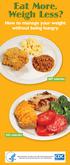 Eat More, Weigh Less? How to manage your weight without being hungry 607 calories 293 calories Department of Health and Human Services Centers for Disease Control and Prevention Can you weigh less without
TEMPORARY FOOD FACILITY PERMIT APPLICATION
 COUNTY OF LAKE HEALTH SERVICES DEPARTMENT Division of Environmental Health 922 Bevins Court, Lakeport, CA 95453-9739 Telephone 707/ 263-1164 FAX: 263-1681 TEMPORARY FOOD FACILITY PERMIT APPLICATION Failure
STANDARD OPERATING PROCEDURE S (SOP S) FOR HAZARDOUS ANALYSIS CRITICAL CONTROL POINT (HACCP) PLANS
 STANDARD OPERATING PROCEDURE S (SOP S) FOR HAZARDOUS ANALYSIS CRITICAL CONTROL POINT (HACCP) PLANS RECEIVING: All food must be from approved sources. Foods must be wholesome and not adulterated. No home-prepared
Maintaining Nutrition as We Age
 SS-207-06 For more information, visit the Ohio Department of Aging web site at: http://www.goldenbuckeye.com and Ohio State University Extension s Aging in Ohio web site at: http://www.hec.ohio-state.edu/famlife/aging
Nutrition Pointers: Fruits and Veggies
 Nutrition Pointers: Fruits and Veggies Eat as many as possible try filling half your plate with fruits and veggies. Fruits and veggies are good for you whether they are fresh or frozen. Go for a wide variety
Volume RESTAURANT X. 123 Main Street, Phoenix, Arizona. Food Safety Manual
 Volume 1 RESTAURANT X 123 Main Street, Phoenix, Arizona Food Safety Manual RESTAURANT X Food Safety Training Manual Note to New Author Thank you for your interest and your enthusiasm in developing your
100 Gram Fat Diet for 72 hour Fecal Fat Collection
 100 Gram Fat Diet for 72 hour Fecal Fat Collection The fecal fat test will help find out if you have steatorrhea (that is, excess fat in bowel movements due to the body not being able to absorb fat). To
Guidelines for Offering Healthy Foods at Meetings, Seminars and Catered Events
 Guidelines for Offering Healthy Foods at Meetings, Seminars and Catered Events Guidelines for Offering Healthy Foods at Meetings, Seminars and Catered Events The School of Public Health at the University
Nutrition Guidelines for Diabetes
 Nutrition Guidelines for Diabetes Eating healthy foods and keeping a healthy body weight are very important parts of a diabetes treatment plan. A healthy diet and weight helps to keep your blood sugar
Healthy Foods for my School
 yum, yum, yum, yum, yum, yum, yum, yum, yum, yum, yum, yum, yum, yum, yum, yum, yum, yum, yum, yum, yum, Healthy Foods for my School Nutrition Standards for Saskatchewan Schools Schools are an ideal place
Registered Trade Mark
 2008 High Energy, High Protein, Low Fiber Guidelines Registered Trade Mark High Energy, High Protein, Low Fibre Guidelines Eating well, even though you may not feel hungry, is an important part of taking
GUIDELINES FOR CONSISTENCY MODIFICATIONS OF FOODS AND LIQUIDS
 GUIDELINES FOR CONSISTENCY MODIFICATIONS OF FOODS AND LIQUIDS 1. Alterations to the consistency of foods and/ or liquids presented to the individual are made in accordance with the recommendation of an
Carbohydrate counting a pocket guide
 counting a pocket guide www.bayerdiabetes.ca Contents Starches 3 Vegetables 4 Fruit/Fruit juices 5 Milk/Yoghurt 5 Fast foods 6 Proteins (meat/meat substitutes) 6 Drinks 6 Sweets/Sugary foods 7 Combination
Nutritional Guidelines for Roux-en-Y, Sleeve Gastrectomy and Duodenal Switch. Gastric Restrictive Procedures. Phase III Regular Consistency
 Nutritional Guidelines for Roux-en-Y, Sleeve Gastrectomy and Duodenal Switch Gastric Restrictive Procedures Phase III Regular Consistency The University of Chicago Hospitals Center for the Surgical Treatment
When you have diabetes be careful about what you eat to help you control your blood sugar.
 PART 5 INTRO TO EATING WITH DIABETES When you have diabetes be careful about what you eat to help you control your blood sugar. Foods are in three main groups: Carbohydrates (Carbs) Higher Carbohydrates
Eating Low-Fat on a Budget. Shop Smart: Save Money at the Grocery Store
 Eating Low-Fat on a Budget Following a low-fat diet can help lower your risk of heart disease, cancer, diabetes and stroke. Eating low fat usually means eating fewer calories. High calorie intake may lead
CALORIE NEEDS Minimum: Current weight (lb) x 20 = number of calories for males Current weight ( lb) x 15 = number of calories for females
 NUTRITION CONDITIONING GOALS FOR ATHLETES Leslie Bonci, M.P.H., R.D. (412)432-3674 or email: [email protected] Director- Sports Medicine Nutrition University of Pittsburgh Medical Center Health System
ST 2004-01 Food Definition, Issued May, 2004; Revised June, 2007 and May, 2015
 Business Tax Division Sales & Use Tax P.O. Box 530 Columbus; Ohio 43216-0530 www.tax.ohio.gov ST 2004-01 Food Definition, Issued May, 2004; Revised June, 2007 and May, 2015 The purpose of this information
Healthy Grocery Shopping On A Budget
 Healthy Grocery Shopping On A Budget 1 Click Understanding to edit Master Grocery title style Stores Over 50,000 products Strategically placed items and traffic flow Lighting, music, color used strategically
REQUIREMENTS FOR TRADE SHOWS
 REQUIREMENTS FOR TRADE SHOWS All Trade Show Booth operators who give out food samples must be approved before the event and licensed by Regina Qu Appelle Health Region prior to opening. Food sold for immediate
MEN'S FITNESS FAT TO FIT CHALLENGE - 1800 CALORIE MEAL PLAN WEEK 2
 Day 1 1 egg + 3 egg whites scrambled 125 1.1 17.1 5.1 1/2 whole wheat english muffin, toasted 67 13.3 2.9 0.7 1 medium orange 61.6 15.4 1.2 0.2 TOTAL 253.6 29.8 21.2 6 2 Tbs dried cherries 48.8 12.8 0
Nutrition and Chronic Kidney Disease
 Nutrition and Chronic Kidney Disease I have been told I have early kidney failure. What does this mean? What can I expect? This means that your kidneys are not doing as good a job as they should to help
(8 years or younger)
 What is iron? Iron deficiency in children (8 years or younger) Iron is a mineral found in food that your body needs. It is bound to hemoglobin, which is an important part of red blood cells. Iron helps
Can You Name this Kitchen Equipment? Assembled and photographed by
 Can You Name this Kitchen Equipment? Assembled and photographed by Stacy Halvorson, Program Assistant Julie Garden Robinson, Ph.D., L.R.D. Food and Nutrition Specialist Look at the pictures on the following
1800 Calorie Meal Plan. Jessica Iannotta Department of Nutritional Sciences UMDNJ School of Health Related Professions
 1800 Calorie Meal Plan Meal Portion Food Calories DAY 1 Breakfast 1 cup Hot Oatmeal, cooked, unsweetened 150 1 banana 120 1 Amy s Bean & Rice Burrito 280 (in the frozen foods section of your grocery store
FARMERS MARKET GUIDELINES
 FARMERS MARKET GUIDELINES A Farmers Market is a short-term operation for the sale of produce and prepared food products under the direction of a designated operator. This guideline also applies to flea
Tips for Shopping Wisely at the Grocery Store
 Tips for Shopping Wisely at the Grocery Store For successful planning, be sure to keep in mind: u The maximum amount you can spend on food. u The five basic food groups. Plan Ahead Start With A Meal Plan
Eating Well For Less. Document developed by Mapleton Teaching Kitchen 2011 TIPS & RESOURCES FOR COMMUNITY FOOD MENTORS
 Eating Well For Less TIPS & RESOURCES FOR COMMUNITY FOOD MENTORS EATING WELL ON A BUDGET Food takes a big bite from most of our household incomes, but eating nutritious & tasty meals IS possible with skills
Housing & Home Management
 Food Management: Grocery Shopping and Food Preparation In this section, youth will learn how to develop a weekly menu with nutritious meal options, create a grocery shopping list within a budget, save
Healthy Eating For Your Kidneys
 Winter 14 Healthy Eating For Your Kidneys (For People Not on Dialysis) BC Provincial Renal Agency If you have kidney disease, you may need to change the food you eat. Changes will depend on your appetite,
DIABETES & HEALTHY EATING
 DIABETES & HEALTHY EATING Food gives you the energy you need for healthy living. Your body changes most of the food you eat into a sugar called glucose. (glucose) Insulin helps your cells get the sugar
Duke Center for Metabolic and Weight Loss Surgery Pre-op Nutrition Questionnaire
 Duke Center for Metabolic and Weight Loss Surgery Pre-op Nutrition Questionnaire Name Date How long have you been considering weight loss surgery? Which procedure are you interested in having? Gastric
BREAKFAST. 2 poached eggs 1 envelope Instant Breakfast 1 cup warm milk 8 oz milk
 WHAT CAN I EAT NOW? While you are recovering from your surgery, good nutrition will be vitally important. Even though all food will need to be in liquid form, you can still enjoy mealtimes and promote
Mealtime Memo. Timesaving Tips for Mealtime
 Mealtime Memo National Food Service Management Institute The University of Mississippi for Child Care No. 6, 2009 Timesaving Tips for Mealtime Family day care home providers have a busy day. It starts
Food Safety Guide for Family Day Care Educators
 Food Safety Guide for Family Day Care Educators Department of Health and Human Services About this Guide This Guide is designed to help Family Day Care (FDC) Educators make safe and healthy meals for the
Nutrition after chemotherapy and radiation for head and neck cancer
 Nutrition after chemotherapy and radiation for head and neck cancer Good nutrition is important while you are recovering from the side effects of your treatment for head and neck cancer. You may have:
WHOLE GRAINS FOR GOOD HEALTH
 WHOLE GRAINS FOR GOOD HEALTH Section 1: What are Whole Grains? Whole grains are nutritious, delicious, and are included in the WIC program! Whole grains contain the entire grain kernel. That means whole
MEN'S FITNESS FAT TO FIT CHALLENGE - 1800 CALORIE MEAL PLAN WEEK 1
 Day 1 Tomato & Basil Omelet* (see recipe) 1 large egg 73.5 0.4 6.3 5 2 large egg whites 34.3 0.5 7.2 0.1 1/4 cup chopped tomato 8.1 1.8 0.4 0.1 2 Tbs grated parmesan cheese 43.1 0.4 3.9 2.9 2 Tbs chopped
Sample Protocol for Evaluating 45 Degree Cold Holding Variance Requests
 Sample Protocol for Evaluating 45 Degree Cold Holding Variance Requests Purpose This document provides a sample protocol by which local health jurisdictions (LHJs) in Washington State may evaluate variance
Preparing Food at Home advice and legal requirements www.eastbourne.gov.uk/homecatering
 Preparing Food at Home advice and legal requirements www.eastbourne.gov.uk/homecatering Introduction This advice is aimed at people preparing food for others beside their immediate family either: a) on
Table 1. How Cancer Treatments Can Affect Eating
 Table 1. How Cancer Treatments Can Affect Eating Cancer Treatment How it Can Affect Eating Surgery Increases the need for good nutrition. May slow digestion. May lessen the ability of the mouth, throat,
10 Week Nutrition Plan
 10 Week Nutrition Plan Welcome and thank you for your interest in taking the next step to health! We hope you find this eating plan a starting point to making healthier food choices and a tool to reach
Healthy Eating for Diabetes
 Healthy Eating for Diabetes What is diabetes and why is it important to manage it? Diabetes occurs when there is too much glucose in the blood. Learning how to manage your diabetes will help you feel better
A GUIDE TO HELP PLAN, PURCHASE & PREPARE YOUR OWN HEALTHY FOOD. FOOD SENSE HEALTHY MEALS ON A BUDGET
 A GUIDE TO HELP PLAN, PURCHASE & PREPARE YOUR OWN HEALTHY FOOD. FOOD SENSE HEALTHY MEALS ON A BUDGET You ll be surprised at how affordable, delicious & convenient your own meals can be! the Great Plate:
Bariatric Surgery: Step III Diet
 Bariatric Surgery: Step III Diet This diet is blended foods with one new solid food added daily. The portions are very small to help prevent vomiting. Warning: This diet does not have enough calories,
Culinary Arts Level 1 Prep Cook
 Job Ready Assessment Blueprint Culinary Arts Level 1 Prep Cook Test Code: 4236 / Version: 01 Copyright 2012. All Rights Reserved. General Assessment Information Blueprint Contents General Assessment Information
Arefrigerator is one of the most important pieces of equipment in the kitchen for keeping foods safe. These
 United States Department of Agriculture Food Safety and Inspection Service Food Safety Information USDA Photo Refrigeration and Food Safety Arefrigerator is one of the most important pieces of equipment
A Guide to Reducing Dietary Sodium Intake
 Salt and High Blood Pressure A Guide to Reducing Dietary Sodium Intake A Look at the DASH eating plan My Plate Basics Sodium is a mineral element most commonly found in salt (sodium chloride) Sodium occurs
MICROBIAL HAZARDS. Eating food contaminated with harmful microorganisms. These
 MICROBIAL HAZARDS Microorganisms are everywhere. They can be found in the air, in water, in soil, on animals, and even on humans. Some are beneficial, such as those used to make fermented dairy and meat
Food Groups for Low Potassium and Low Phosphorus Diets
 Food Groups for Low Potassium and Low Phosphorus Diets When you have kidney disease, you may need to follow a diet low in sodium, potassium and phosphorus. This diet is sometimes called a renal diet. You
Restaurant Rehab: Using the Menu to Make Heart Healthy Choices
 Restaurant Rehab: Using the Menu to Make Heart Healthy Choices It can be hard to find heart healthy restaurant foods. Restaurant foods are often high in calories, fat, cholesterol and sodium. For this
Why does my child need to follow a milk and dairy free diet?
 Milk and dairy free diet Why does my child need to follow a milk and dairy free diet? Your child has an allergy to milk and dairy products, and their ingredients. An allergic reaction to milk and dairy
ACF Culinary Arts Certification
 Assessment Blueprint ACF Culinary Arts Certification Test Code: 3990 and 3991 / Version: 01 Copyright 2013. All Rights Reserved. General Assessment Information Blueprint Contents General Assessment Information
BREAKS & HOSPITALITY WORK IS THE MEAT OF LIFE, PLEASURE THE DESSERT - B. C. FORBES
 BREAKS & HOSPITALITY WORK IS THE MEAT OF LIFE, PLEASURE THE DESSERT - B. C. FORBES 48 THEMED BREAK PACKAGES INCLUDE FRESHLY BREWED REGULAR & DECAFFEINATED COFFEE TRADITIONAL & HERBAL TEAS SEE MENUS FOR
SAFE HEALTHY CHILDREN A Health and Safety Manual for Childcare Providers
 TABLE OF CONTENTS Chapter 7: Food Storage and Preparation Safe Food: Food Storage and Preparation 7.1 Requirements of the Day Nurseries Act... 7.2 Recommendations of the Medical Officer of Health... 7.2
Sanitary Food Preparation & Safe Food Handling
 70 Feeding Infants 10 Sanitary Food Preparation & Safe Food Handling Babies are more susceptible to bacteria than older children, and unsanitary food conditions can cause serious infections. General cleanliness,
POLICY 11 Food Safety
 11.1 Introduction The Food Premises Regulation 1 made under the Health Act 2 has been amended to exempt small assisted living residences (no more than six residents), which would otherwise be used as single-family
Eating Well with. Canada s Food Guide
 Eating Well with Canada s Food Guide Recommended Number of Food Guide Servings per Day Children Teens Adults Age in Years Sex 2-3 4-8 9-13 14-18 19-50 51+ Girls and Boys Females Males Females Males Females
Following a 2 gram sodium diet What is sodium? Why should I limit the sodium in my diet? Where does sodium come from?
 Following a 2 gram sodium diet Your health care provider has asked you to follow a 2 gram sodium diet. This is a diet that moderately restricts the amount of sodium you eat. About ⅓ of the sodium in our
30 % The Food Guide Pyramid T F A O F T O C A L
 The Food Guide Pyramid L I M I T F A O F 30 % S T O T C A L O R I E United States Center for Home and Department of Nutrition Policy Garden Bulletin Agriculture and Promotion Number 252 What s in this
General food hygiene rules
 General food hygiene rules Why food hygiene is important? Good food hygiene is essential to ensure that the food you and your family eats is safe. Poor hygiene procedures in your home can put you at risk.
NUTRITION AND HEMODIALYSIS
 NUTRITION AND HEMODIALYSIS www.kidney.org National Kidney Foundation's Kidney Disease Outcomes Quality Initiative Did you know that the National Kidney Foundation's Kidney Disease Outcomes Quality Initiative
Monday Paella Broccoli with coconut oil and spices Baby greens with Asian dressing Sauerkraut 8 oz. coconut milk tonic* (or glass raw milk)
 weekly meal menu Dinner: July 10-14 20 minutes before dinner: 1 tablespoon coconut oil in warm water Before bed: Monday Paella Broccoli with coconut oil and spices Baby greens with Asian dressing (or glass
Mexican Recipes. 1 tablespoon chili powder ¼ teaspoon garlic powder
 Mexican Recipes Taco Seasoning 1 tablespoon chili powder ¼ teaspoon garlic powder ¼ teaspoon onion powder ¼ teaspoon dried oregano 1 ¼ teaspoon crushed red pepper flakes ½ teaspoon paprika 1 ½ teaspoons
Food Safety Manual for the Food Service Worker
 Food Safety Manual for the Food Service Worker (Revised March 2013) Portsmouth Health Department Acknowledgments Maricopa County Food Protection Program Environmental Health Services Division of Seattle
Shelf Life of Food Bank Products
 Shelf Life of Food Bank Products Greater Pittsburgh Community Food Bank often distributes food items after the date on the package. This food is still safe to eat! Food manufacturers use different date
RÉVEILLON 2016. Hotel Apartamento Paraíso de Albufeira
 RÉVEILLON 2016 PROGRAM 8 pm Cocktail Shows 9 pm Buffet Dinner Table wines, juices, mineral water, coffee and after dinner drinks Shows Midnight Sparkling wine service with raisins Open bar 02 am Supper
Provider Guide Many families may find it difficult to pay for or get
 introduction Hello! Provider Guide Many families may find it difficult to pay for or get access to nutritious foods. In such situations, they may find it especially hard to make healthy choices. As a provider
Heart healthy diet: 8 steps to prevent heart disease
 Heart healthy diet: 8 steps to prevent heart disease Changing your eating habits can be tough. Start with these eight strategies to kick start your way toward a heart healthy diet. By Mayo Clinic Staff
Patient and Family Education. Low Sodium Recipes
 Patient and Family Education Low Sodium Recipes Try these recipes to get started with lowsodium cooking that tastes good and is quick and easy! Oatmeal muffins 2 eggs 1 teaspoon vanilla extract 2 cups