
Harpoon Free Fall Cone Penetrometer Test Results: Hudson Field Verification Project
|
|
|
- Albert Payne
- 10 years ago
- Views:
Transcription
1 Harpoon Free Fall Cone Penetrometer Test Results: Hudson 243 Field Verification Project Prepared for: Petroleum Research Atlantic Canada by Christian Situ Geosciences Inc Barclay Street Vancouver, BC, V6G 1J4 and Brooke Ocean Technology Ltd. 5 Thornhill Drive, Unit 11 Dartmouth, NS, B3B 1S1 October 6, 24

2 INTRODUCTION This report summarizes field testing and geotechnical engineering interpretations for data collected with the Harpoon Free Fall Cone Penetrometer Test (FFCPT). This apparatus was developed with financial support from the Petroleum Research Association of Canada (PRAC) by Brooke Ocean Technology Ltd. and Christian Situ Geoscience Inc. Shiptime was provided by the Geological Survey of Canada Atlantic (GSCA) for testing purposes. The tests conducted during this cruise fulfilled a PRAC requirement for field verification of the technology, in preparation for commercial application. BACKGROUND The FFCPT method involves dropping an instrumented penetrometer into the seafloor, using its gravitational mass as a means of developing sufficient downward force to cause shear failure of the sediments. The FFCPT sensors are designed to record the decceleration and the porewater pressure response of the sediment during the penetration process. Geotechnical engineering data can be obtained from these measurements, useful in characterizing the sediment layering, composition and shear strength profile. Such data are required for design of deepwater suction pile foundations for tethered leg platforms and FPSO s. The FFCPT yields geotechnical measurements that are directly comparable to conventional cone penetration test (CPT) methods, used in current site investigation practice by industry. Traditionally, these data have only been obtainable from specialized deepwater site investigation vessels. The long term objective of this project is to develop a commercially viable alternative method of geotechnical site investigation, that is deployable from a vessel of opportunity. EQUIPMENT AND METHODS The configuration in this project employed the GSCA large-diameter piston coring system as a delivery device. The FFCPT probe was mounted on the end of the core barrel in place of the cutting shoe. The FFCPT probe operates fully autonomously in this configuration, wherein system operational parameters such as trigger channel, trigger threshold, rearming channel, rearm threshold and data buffer characteristics are set at the 1

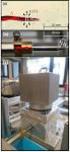
3 time of probe activation. The penetrometer is mounted on the end of the piston core barrel after the internal computer has been given a set of preset trigger thresholds and test parameters. Figure 1 shows two photographs of the instrument (a) on the bench being configured for testing and (b) being mounted on the core barrel, which is held horizontally at the ship s rail. Figure 1a. Setting up the FFCPT on the bench in the forward lab onboard CCG Hudson during the July 24 GSCA cruise to the Scotian Slope. Figure 1b. Mounting the FFCPT on the end of the GSCA large diameter piston corer at the rail, in preparation for deployment. 2

4 The probe houses electronics and hydraulic systems for sensing water pressure around the tip during penetration (dynamic porewater pressure), hydrostatic pressure at the top of the instrument (open to the water column), optical backscatter at a location just behind the conical point (mudline detector), as well as acceleration over 3 ranges (+/- 2g, +/- 5g, +/- 5g). Data is captured into two files after each trigger event. The system is activated to capture data initially into a low speed (25 Hz) buffer file. This file is later used to check calibration constants for the Tail Pressure gage. Once the system senses that the preset trigger condition has been met, it also begins logging data into a high speed (2 khz) buffer. After the buffer is full (maximum duration of sec) the system switches back to low speed and checks to see if it should rearm itself for another high speed data capture. Once the rearm condition is met, it will go into a standby mode, awaiting another trigger event. Triggering can be done off any of the channels, at any signal level. Similarly, rearming can be done from any channel, at any signal level. Ideally the system should be set so that it always remains armed for data capture following any trigger events. The data interpretation is done within custom FFCPT View software. Signal conditioning is done at this time. Each trigger event creates a set of datafiles, stored in Flash memory within the FFCPT probe. Upon recovery, the datafiles are offloaded using Windows HyperTerminal software to the host computer for processing, interpretation and hardcopy output. Two methods of deployment were used. For the first two stations (1 and 5) the system was lowered into the seabed on the winch, at maximum payout speed. However the data indicated that the dynamic strength profile of the sediment was not high enough to substantially decelerate the corer, especially near the mudline. The penetration ended when the corehead impacted the mudline, indicating that more core barrels should have been mounted. The last two tests (stations 13 and 15) were carried out by tripping the corer from a free fall height of between 2.4 and 4. m, using the pilot gravity corer as a trip weight. The resulting test data were of much higher quality and can be put through the full FFCPT analysis. A settling period of 45 seconds was allowed after impact, to ensure that the datafiles had been written to the Flash card and the probe was rearmed. Two pullout events were recorded (stations 5 and 13), giving useful data on the sediment suction behaviour. Capturing pullout events is not an objective of the test however. Figures 2a and 2b show photographs of the FFCPT readied for deployment. 3

5 Figure 2a. FFCPT Mounted on the end of the GSCA large diameter piston corer at the rail, in preparation for lowering. Figure 2b. FFCPT on core barrel, ready for lowering. 4

6 Figures 3 shows a photograph of the piston corehead. Figure 4 shows the coring system being rotated to a vertical position and Figures 5 and 6 show the trip arm and gravity corer mechanisms being fastened to the wire at the corehead. Once deployed and allowed to impact the seafloor, the winch is used to recover the system to the ship. Once at the rail, the trip arm is removed from the wire and the corehead is lifted into its cradle. Then the entire piston coring system is rotated back up to the horizontal position for cleaning and removal of the FFCPT tool (Figures 7 and 8 ). At present, the FFCPT must be taken into the lab after each recovery to download the data. In future, data downloading will be possible at the rail. The entire operation is highly efficient and takes less time than is needed for taking a physical core sample. Since there are no core samples inside the core barrel, all that needs to be done is to download the data each time. There is sufficient capacity built into the FFCPT datalogger for conducting over 1 tests before recovery is actually required. This makes collection of in situ geotechnical data highly cost effective, especially at deep water locations, where lowering and raising operations can consume hours of shiptime. Figure 3. GSCA large diameter piston corehead with 3 ft. of core barrel and FFCPT. Tests were conducted with as much as 5 ft of core barrel. 5

7 Figure 4. GSCA large diameter piston being rotated to a vertical position. 6

8 Figure 5. Trip arm attached to the wire and the piston corehead, with 8 ft of free fall (note loop in recovery wire). The end of the recovery wire is attached to a sliding piston inside the core barrel, which allows the system to fully penetrate the seabed. Figure 6. 3m gravity corer being attached to the end of the trip arm wire. This allows for release of the piston corer into free fall at the correct height (free fall distance) above the seafloor. A small sample is collected each time this corer is used. 7

9 Figure 7. FFCPT and 5 ft. of core barrel being raised to the rail. CCG Hudson can accommodate as much as 1 ft. of core barrel, using the dedicated monorail system (see top of photo). Figure 8. FFCPT after recovery, showing mud up to the split coupling on the core barrel, before being pressure-washed. 8

10 FIELD TESTING AND DATA INTERPRETATION Table 1 summarizes key data for the four FFCPT tests conducted during the GSCA Hudson 243 cruise to the Scotian Slope. Test 1 was unsuccessful because the trigger thresholds for high speed data collection were set incorrectly. The impact and penetration process only takes about 3 seconds, with 5 ft of core barrel (12 to 13 m of actual penetration). Test 2 successfully demonstrated that the system can be lowered into the seafloor using the ship s winch and can achieve almost as the same amount of penetration as when the system is deployed in free fall, by tripping the piston corer (tests 3 and 4). The depth of penetration for test 1 was limited by the length of core barrels installed on the system (three 1 ft long barrels). The data record showed the corehead impacting the seafloor, which prevented deeper penetration. It is likely that had 5 barrels been installed, the ultimate depth of penetration would have been very similar to tests 3 and 4, wherein the system was deployed in free fall. Table 1. Summary of FFCPT test data for field trials onboard CCG Hudson during GSCA 243 cruise. SYSTEM CONFIGURATION STA NO. OF PINGER CORER PINGER HT OFF TRIGGER TRIGGER REARM REARM REARM NO. BARRELS TO CORER LENGTH IMPACT CHANNEL LEVEL DELAY CHANNEL LEVEL RIGGED (m) (m) (m) (sec) Mudline 1,6 mv 1 MUDLINE 1,3 mv Diff Pr. 3 m 5 TAIL PR. 2, m 13 5 NA 18. NA Diff Pr. 5 m 5 TAIL PR. 3, m 15 5 NA 18. NA Diff Pr. 5 m 5 TAIL PR. 3, m DEPLOYMENT DETAILS STA LATITUDE LONGITUDE GEOGRAPHIC LOCATION JULIAN PEN WATER WINCH FREE NO. AT IMPACT AT IMPACT REGION NAME DAY TIME DEPTH SPEED FALL (m) (m/min) (m) N W Grand Banks St. Pierre Slope ,13 97 NA N W Scotian Slope Mohican Channel NA N W Scotian Slope Torbrook Block ,581 TRIPPED N W Scotian Slope Torbrook Block ,2 TRIPPED 4. TEST RESULT SUMMARY STA APPARENT VISUAL SEDIMENT DESCRIPTION FROM MUD ON OBSERVATIONS NO. PENETRATION (m) OUTSIDE OF CORE BARRELS Very soft to soft silty clay, olive green OBS Rearm level set too low, probe triggered at rail, didn t rearm Very soft to soft silty clay, olive green Heave on ACC, DPT during penetration, try free falling corer Firm over very soft to soft silty clay, olive green Some false trigger events, good test, not at terminal velocity Firm over very soft to soft silty clay, olive green Some false trigger events, good test. not at terminal velocity 9

11 Data Interpretation After the datafiles were transferred to the host computer, they were processed and displayed within FFCPT View software (Version 3.1). This custom interface was written for analyzing FFCPT data collected with previous FFCPT models and is of limited usefulness in reviewing and displaying data collected with the piston coring FFCPT equipment due to system configuration variances. However, flat ascii files were created after signal conditioning was completed, then the geotechnical analysis and sediment behaviour interpretation was completed using spreadsheet methods. The interpretation of FFCPT data involves determining the descent velocity immediately prior to impact, then selecting the portion of the dataset containing the FFCPT penetration into the sediment, thereafter one of the acceleration channels is chosen and for forward integration against time, which yields the time-velocity curve (after impact). The integration process typically results in a non-zero residual velocity value, which is then used to adjust the impact velocity so that the at-rest velocity (integration residual) is reduced to zero. The velocitytime curve is then itself integrated, yielding the distance versus time curve. The depth at impact, as determined from the ship s echosounder, defines the zero baseline for the Tail Pressure channel. The tip differential pressure is already compensated for hydrostatic pressure since its back side is open to the water column (inside the core barrel), so it is a direct high resolution measurement of the excess dynamic porewater pressure response to FFCPT penetration. Typically in very soft to soft clay, the dynamic porewater pressure response is in excess of hydrostatic, due to the low permeability of sediment surrounding the probe. The undrained shear strength is calculated from the dynamic penetration resistance, which is obtained from Newton s Law (F=mA). A second, fully independent estimate of undrained shear strength is calculated from the dynamic porewater pressure. Both of these strength calculations utilize published empirical relationships developed from numerous analyses of static cone penetration test data. One long term objective is to develop greater understanding of the relationship between the CPT cone and pore pressure factors used in evaluating undrained shear strength, as it applies to tests conducted at high rates of penetration, as is the case with the FFCPT. To date, there seems to be very close agreement between the various cone penetrometers, especially with respect to the porewater pressure prediction of undrained shear strength. It is also possible to calculate a continuous profile of sediment type, by plotting FFCPT analysis parameters (excess pore pressure ratio and normalized dynamic penetration resistance) on a CPT classification chart, commonly known as a Bq 1

12 Qn chart. Data from each test are plotted and each data point is assigned a numeric code, according to which region, or Sediment Behaviour Type, it falls into. This chart has been developed based on thousands of CPT soundings and sampled boreholes for which the soil classification was available. More experience is needed with FFCPT data before it can be concluded that the chart is also valid at high penetration rates. To date, there appears to be close agreement between FFCPT SBT predictions and actual sediment type based on grain size testing. Dynamic Penetration Resistance The FFCPT probe was mounted on the end of the piston corer and allowed to free fall into the seabed, to test the acceleration-based data interpretation method. Normally the FFCPT falls a considerable distance through the water column before impacting the seafloor and thereby achieves a constant terminal velocity, at which time by definition vertical accelerations are zero. This zero acceleration is equivalent to a free fall condition. However, with the Harpoon FFCPT configuration, there are large hydrodynamic drag forces that act on the piston coring head, which is not very streamlined. In fact, it appears that at the time of impact, the gravitational forces transmitted into the sediment were about half what they would have been had there been no hydrodynamic drag on the system. This is illustrated in the raw data times series depicted in Figures X and X, wherein the acceleration at the time of impact was about 5% less than 1 m/s2 (or 1g). This indicates that the downward gravitational forces are severely limited by hydrodynamic form drag on the corehead. A quick calculation indicates that the drag coefficient for the corehead is at best,.5 at the time of impact. Taking into account an acceleration baseline at impact that is less than 1g, a slight modification to the data analysis was required. The algorithm for integrating the area beneath the acceleration-time curve used a straight-line varying baseline, drawn between the measured acceleration at impact and that when the system had come to rest (by definition 1g). This adjustment in the analysis consistently yielded an accurate calculation of the total depth of penetration, which was compared to measured mud marks on the outside of the piston core barrel. The calculation of dynamic penetration resistance was likewise modified to shift the starting acceleration to be equal to 1g, as otherwise negative forces result from the data processing. An equivalent interpretation would also work, wherein all acceleration data are referenced to g instead of 1g. For the purpose of this testing, the former adjustment was made. 11

13 Dynamic Porewater Pressure Response The dynamic tip pressure response measured just behind the probe tip shows a deceleration effect in tests at locations FFCPT-13 and FFCPT-15, somewhat masking the sediment-induced excess porewater pressure response. This effect is due to water hammer surging on the negative side of the differential tip pressure transducer diaphragm, which occurs during free fall penetration. The dynamic pressure response is much more linear when the system is lowered into the sediment on the winch, rather than allowing it to free fall into the sediment. This is more typical of cone penetration test results, wherein soundings have consistently shown a gradual increase in shear strength with depth. The dynamic porewater pressure response is directly related to the undrained shear strength in clays, according to extensive testing over 25 years of CPT testing practice. It may be possible to significantly reduce the water hammer effect during free fall penetration, by installing a water surge chamber on the negative side of the differential tip pressure transducer. This would hopefully result in datasets that more accurately reflect the in situ shear strength profile. Replacement of the differential gage with an absolute gage would not be feasible, as the reduction in sensor sensitivity would have a degrading effect on the pressure measurement data. Figures 9 through 16 show interpreted results for the FFCPT tests summarized in Table 1, in graphical format. The raw data time series are shown, along with interpreted geotechnical engineering logs and sediment classification charts. Figures 9 and 1 correspond to a test where the coring system was winched (lowered) into the sediment column. The subsequent figures 11 through 16 show results from the following two tests which were done by free falling the coring system into the seafloor. The system operated well and had no electronic or mechanical problems. It was concluded that the best trigger method was to use the tip differential pore pressure channel, set to a trigger threshold of +5 m in head. Rearming was best done using the Tail Pressure (water depth) channel, set to a value much greater than the maximum water depth, which ensured that the system rearmed itself after all trigger events. The maximum operating range of the equipment is 3,4 m however the maximum water depth encountered was only 1,581 m. In general the sites tested comprised soft normally consolidated silty clays to clays, in some cases there was a stiff layer present at the seafloor, extending to several metres in thickness. The differential porewater pressure measurements were used to evaluate the undrained shear strength profile. The dynamic penetration resistance profile was calculated from the vertical acceleration data 12

14 and was also used to predict the undrained strength profile. Sediment Behaviour Type (SBT) was predicted from CPT classification charts, based on the combined dynamic penetration resistance and dynamic pore pressure response. 13

15 Figure 9 Raw data time series for FFCPT-5 location. The tool was lowered into the seabed at a rate of 97 m/min using the ship s foredeck winch. Note the cyclic acceleration response, which is due to vessel heave effects transmitted down the deployment wire. The system came to rest at about 8 sec. Chris ian Situ OPTICAL OUTPUT (counts) GSC ATLANTIC HUDSON 243, STATION 5, MOHICAN CHANNEL, SCOTIAN SLOPE FFCPT-5 DAY 196 TIME: 29 WATER DEPTH: 894 m MUDLINE DETECTOR -15 2g ACCELEROMETER ACCELERATION (m/s 2 ) VELOCITY (m/s) PRESSURE HEAD (m) DIFFERENTIAL GAGE TIME (sec) 14

16 Figure 1. Summary interpreted engineering log for FFCPT-5 location. As the system was not deployed in free fall, no useful acceleration data was obtained (note NA comments on Q d, B q and Q n logs. Chris ian Situ GSC ATLANTIC HUDSON 243, STATION 5, MOHICAN CHANNEL, SCOTIAN SLOPE FFCPT-5 DAY 196 TIME: 29 WATER DEPTH: 894 m DYNAMIC PENETRATION RESISTANCE Q d (kpa) DYNAMIC PORE PRESSURE U d (m) UNDRAINED SHEAR STRENGTH S u (kpa) DYNAMIC PORE PRESSURE PARAMETER B q NORMALIZED DYNAMIC PENETRATION RESISTANCE Q n DESCENT VELOCITY & ACCEL. V (m/s) OBS OUTPUT (A/D counts) SBT ρ s = 17 kn/m 3 S u / P' = DEPTH BELOW SEABED (m) NA NA NA VERY SOFT TO SOFT SILTY CLAY TO CLAYEY SILT MAXIMUM DEPTH: 1.4 m U o N.C. Line COREHEAD ARRESTED PENETRATION PAST THIS DEPTH 1 2 A (m/s 2 ) 15

17 Figure 11. Raw data time series for FFCPT-13 location. The tool was deployed in free fall using the piston coring trip arm, with a free fall distance of about 2.4m. The accelerometer data show the deceleration response as the system penetrates the seabed, coming to rest at about 3 sec. Chris ian Situ OPTICAL OUTPUT (counts) GSC ATLANTIC HUDSON 243, STATION 13, TORBROOK BLOCK, SCOTIAN SLOPE FFCPT-13 DAY 198 TIME: 197 WATER DEPTH: 1581 m MUDLINE DETECTOR ACCELERATION (m/s 2 ) g ACCELEROMETER CALCULATED VELOCITY -5 VELOCITY (m/s) DIFFERENTIAL PRESSURE (m) DIFFERENTIAL GAGE CALCULATED DEPTH TIME (sec) 16

18 Figure 12. Summary interpreted engineering log for FFCPT-13 location. Note the large excess porewater pressure response from about 7 to 11m, due to the water hammer effect. A thin stiffer layer was encountered from to 2m below seabed, which was also observed in adjacent piston core samples. Chris ian Situ GSC ATLANTIC HUDSON 243, STATION 13, TORBROOK BLOCK, SCOTIAN SLOPE FFCPT-13 DAY 198 TIME: 197 WATER DEPTH: 1581 m DYNAMIC PENETRATION RESISTANCE Q d (kpa) DYNAMIC PORE PRESSURE U d (m) UNDRAINED SHEAR STRENGTH S u (kpa) DYNAMIC PORE PRESSURE PARAMETER B q NORMALIZED DYNAMIC PENETRATION RESISTANCE Q n DESCENT VELOCITY & ACCEL. V (m/s) OBS OUTPUT (A/D counts) SBT CEMENTED FIRM SILTY CLAY DEPTH BELOW SEABED (m) U d, corr ρ s = 17 kn/m 3 S u / P' =.3 VERY SOFT TO SOFT SILTY CLAY TO CLAYEY SILT MAXIMUM DEPTH: 12.3 m U o U d N.C. Line A (m/s 2 ) 17

19 Figure 13. Raw data time series for FFCPT-15 location. The tool was deployed in free fall using the piston coring trip arm, with a free fall distance of about 4.m. The accelerometer data show the deceleration response as the system penetrates the seabed, coming to rest at about 3 sec. Chris ian Situ OPTICAL OUTPUT (counts) GSC ATLANTIC HUDSON 243, STATION 15, TORBROOK BLOCK, SCOTIAN SLOPE FFCPT-15 DAY 199 TIME: 1955 WATER DEPTH: 12 m MUDLINE DETECTOR ACCELERATION (m/s 2 ) g ACCELEROMETER CALCULATED VELOCITY -5 VELOCITY (m/s) DIFFERENTIAL PRESSURE (m) DIFFERENTIAL GAGE CALCULATED DEPTH TIME (sec) 18

20 Figure 14. Summary interpreted engineering log for FFCPT-15 location. Note the large excess porewater pressure from about 5 to 1m, due to the water hammer effect. A stiffer layer was encountered from to about 1.5m, which was also observed in an adjacent piston core sample. Chris ian Situ GSC ATLANTIC HUDSON 243, STATION 15, TORBROOK BLOCK, SCOTIAN SLOPE FFCPT-15 DAY 199 TIME: 1955 WATER DEPTH: 12 m DYNAMIC PENETRATION RESISTANCE Q d (kpa) DYNAMIC PORE PRESSURE U d (m) UNDRAINED SHEAR STRENGTH S u (kpa) DYNAMIC PORE PRESSURE PARAMETER B q NORMALIZED DYNAMIC PENETRATION RESISTANCE Q n DESCENT VELOCITY & ACCEL. V (m/s) OBS OUTPUT (A/D counts) SBT CEMENTED FIRM SILTY CLAY 2 3 ρ s = 17 kn/m 3 S u / P' =.3 DEPTH BELOW SEABED (m) U d,corr VERY SOFT TO SOFT SILTY CLAY TO CLAYEY SILT U o U d N.C. Line 13 MAXIMUM DEPTH: m A (m/s 2 ) 19

21 DISCUSSION The key findings of the field testing are summarized below in Table 2. Overall, the equipment functioned as designed, was easily deployed and recovered and produced useful geotechnical datasets. Some further work is required to improve the quality of the data and to compare it to shear strength test results measured in high quality core samples (still in progress). Table 2. Summary of key testing objectives and findings, along with suggested actions to remedy perceived problems, either with the mechanical and electronic equipment, or with the method of data interpretation. Mechanical Issues System handling Corer rigging Mounting split coupler on core barrel very difficult in rough seas; significant pinch hazard to fingers To obtain free fall, it was necessary to attach recovery to top half of split piston Install centering ring on top end cap, to guide FFCPT onto core barrel; fabricate custom web sling for chain falls to support FFCPT at rail Fabricate custom opencentre piston for FFCPT work, which allows more water flow and fits core barrel with no core liner inside core barrel Split FFCPT coupler Robust Need external safety wire attached to FFCPT housing in case core barrel breaks Split coupler fasteners Saturating hydraulic lines Saturating filter ring User manual Probe diameter Electronics Issues Battery pack Difficult to clean mud out of cap screws Enerpac hand pump gage needle seems prone to jamming Potential for oil to drain out of filter during deployment Good but needs improvement Large enough to prevent mud from contacting core barrel; friction on core barrel is minimized Duration of battery life not known, battery Portable high pressure washer for cleaning off mud Drill out pressure port on dial gage, viscous mineral oil not allowing pressure to release Use viscous silicone oil instead of mineral oil Update as required; develop Job Safety Awareness procedures for all activities No action required Bench test to check battery life 2
22 pack easily changed Sleep feature Serial sleep cable cannot be used inside core barrel if piston is in use; probe has to be activated on bench, assembled and deployed before battery life dies Assembly - disassembly Serial connection inside top end cap easily pulled apart during reassembly Data transfer No communication cable inside core barrel when piston in use Data Interpretation Issues Mudline detector High frequency noise on Mudline Detector signal Accelerometers Movement of piston inside core barrel produces highfrequency noise on accelerometers Terminal velocity Not achievable with 4 m of free fall due to hydrodynamic drag effect Differential pressure Dominated by water hammer when system deployed in free fall FFCPT Interpretation Not properly Software configured for Harpoon system Install a manual switch on FFCPT probe to activate and put electronics to sleep Solder wires to end cap connector pins Carry probe into lab for data transfer; fabricate longer deck cable for connecting to probe at rail Evaluate electronics on bench; hardware modification as required Apply high-frequency filter to acceleration data Increase free fall to 1m; streamline corehead Install air surge chamber on negative side of differential pressure gage Modified FFCPT View software to produce special Harpoon View version REFERENCES Robertson, P.K Soil classification using the cone penetration test, Canadian Geotechnical Journal, 27(1), pp
23 APPENDIX A HUDSON 243 FFCPT SUMMARY LOG STATION FFCPT-1 Datafile: HUD1.b1 / Day: 193 / Time: 16 GMT / Site: St. Pierre Slope The FFCPT was configured to trigger on the Mudline Detector at a level of 1,6 mv and rearm on the Mudline Detector at a level of 1,3 mv. The equipment was winched into the bottom at a speed of 97 m/s and penetrated to the corehead (1.4 m). There was no damage. The datalogger recorded one datafile (HUD1.b1), which was created with the system still at the rail. The OBS signal levels in the datafile never fell below 1,343 mv, so the probe did not rearm after being triggered at the rail. In future the rearm level should be set as high as possible, so that it will always rearm. Testing on the bench showed that the response of the Mudline sensor is dependent on the reflectivity of the material near the OBS port. White paper and orange plastic were found to induce triggering (ie. signals exceeded the trigger threshold) however dark green rubber did not. The signal response of the detector has a peak in a certain wavelength of light, as indicated by previous datasets sometimes showing signals falling off to the baseline with penetration into darker-coloured sediment. It was concluded that the Mudline Detector could not be relied upon to trigger the probe, as the seafloor sediment colour is often quite dark. Bench testing in the shop should be done to determine the range of sensitivity of the mudline detector in various colours of sediment. The system penetrated soft clay and came to rest with the corehead at the mudline, so the penetration process was incomplete. STATION FFCPT-5 Datafile: HUD54.b1 / Day: 196 / Time: 1935 GMT / Site: Mohican Channel The FFCPT was configured to trigger on the Tip Differential Pressure at a level of 3 m and rearm on the Tail Pressure at a level of 2, m. The equipment was winched into the bottom at a speed of 97 m/s and penetrated to the corehead (1.4 m). There was no damage. 22
24 The datalogger recorded 24 datafiles, some of which were created by false trigger events during lowering and raising through the water column. Several data records were obtained recording the impact event (HUD54.b1), the system at rest in the seabed (HUD55.b1 and HUD56.b1) and the pullout event (HUD57.b1). The rearming worked well and ensured the probe recovered into a ready state after each false trigger event. In future, the trigger level could be increased to 5 m to prevent false triggering. The data buffer split of 5 / 5 % was also too biased toward the pre-trigger data, in future deployments using the winch-in method a 2 / 8 split should be used, especially if more core barrels are mounted. The pore pressure response was very good however there was some surging due to vessel heave that was transmitted down the wire. This surging was also observed on the accelerometer signals, which did not vary much from 1 g until the corehead impacted the mudline. The weight of the system was carried on the wire up until that time, indicating that longer penetration was possible had more core barrels been in place. The system penetrated soft clay and came to rest due to friction buildup on the core barrels. The accelerometer signal will likely not be very useful in determining the depth of penetration, when the system is lowered on the winch in this manner. It may be advantageous to free fall the system with a longer core barrel, to generate higher decelerations for integration. However the tip pore pressure data are acceptable. STATION FFCPT-13 Datafile: HUD1332.b1 / Day: 198 / Time: 197 GMT / Site: Torbrook Block The FFCPT was configured to trigger on the Tip Differential Pressure at a level of 3 m and rearm on the Tail Pressure at a level of 3, m. The equipment was rigged like a piston corer using the upper half of the split piston. A free fall distance of 2.4 m was used. The safety wire was removed. No water hose was used inside the core barrel. The system penetrated to 13.2 m. There was no damage. The datalogger recorded 41 datafiles, most of which were created by false trigger events during lowering and raising through the water column. Several data records were obtained recording the impact event (HUD1332.b1), the system at rest in the seabed (HUD1333.b1, HUD1334.b1) and the pullout event (HUD1335.b1, HUD1336.b1, HUD1337.b1). The system was triggered at 5 m on the differential gage and rearmed at 3 m on Tail Pressure. A 5 / 5 % pre-trigger / post-trigger data buffer split exactly the impact event. The pore pressure response was very good with no vessel heave effect during penetration into the seabed. There was excessive hydrodynamic drag created by 23
25 the bullnose shape of the corehead, which prevented it from reaching terminal velocity before impact. Accelerations were slowly increasing toward.5g during the free fall period. The entire penetration through the sediment lasted about 3 sec. The system came to rest in soft clay largely due to friction buildup on the core barrels. A stiff layer several metres in thickness was noted at the mudline. STATION FFCPT-15 Datafile: HUD153.b1 / Day: 199 / Time: 1955 GMT / Site: Torbrook Block The FFCPT was configured to trigger on the Tip Differential Pressure at a level of 3 m and rearm on the Tail Pressure at a level of 3, m. The equipment was rigged like a piston corer using the upper half of the split piston. A free fall distance of 2.4 m was used. The safety wire was not used. No water hose was used inside the core barrel. The system penetrated to 12. m. There was no damage. The datalogger recorded 14 datafiles, some of which were created by false trigger events during lowering and raising through the water column. Several data records were obtained recording the impact event (HUD153.b1) and while the system was at rest in the seabed (HUD154.b1) but none during pullout. The system was triggered at 5 m on the differential gage and rearmed at 3 m on Tail Pressure. A 5 / 5 % pre-trigger / post-trigger data buffer split exactly the impact event. The pore pressure response was very good with no vessel heave effect during penetration into the seabed. Excessive hydrodynamic drag created by the bullnose shape of the corehead again prevented the system from reaching terminal velocity before impact. Accelerations were slowly increasing toward.5g during the free fall period. The entire penetration through the sediment lasted about 3 sec. The system came to rest in soft clay largely due to friction buildup on the core barrels. A stiff layer several metres in thickness was noted at the mudline. 24
INSITU TESTS! Shear Vanes! Shear Vanes! Shear Vane Test! Sensitive Soils! Insitu testing is used for two reasons:!
 In-situ Testing! Insitu Testing! Insitu testing is used for two reasons:! To allow the determination of shear strength or penetration resistance or permeability of soils that would be difficult or impossible
CPTic_CSM8. A spreadsheet tool for identifying soil types and layering from CPTU data using the I c method. USER S MANUAL. J. A.
 CPTic_CSM8 A spreadsheet tool for identifying soil types and layering from CPTU data using the I c method. USER S MANUAL J. A. Knappett (2012) This user s manual and its associated spreadsheet ( CPTic_CSM8.xls
Soil behaviour type from the CPT: an update
 Soil behaviour type from the CPT: an update P.K. Robertson Gregg Drilling & Testing Inc., Signal Hill, California, USA ABSTRACT: An initial application of CPT results is to evaluate soil type and soil
Figure 2.31. CPT Equipment
 Soil tests (1) In-situ test In order to sound the strength of the soils in Las Colinas Mountain, portable cone penetration tests (Japan Geotechnical Society, 1995) were performed at three points C1-C3
Ingeniería y Georiesgos Ingeniería Geotécnica Car 19 a Nº 84-14 of 204 ; TEL : 6916043 E-mail: [email protected]
 The plot below presents the cross correlation coeficient between the raw qc and fs values (as measured on the field). X axes presents the lag distance (one lag is the distance between two sucessive CPT
KWANG SING ENGINEERING PTE LTD
 KWANG SING ENGINEERING PTE LTD 1. INTRODUCTION This report represents the soil investigation works at Aljunied Road / Geylang East Central. The objective of the soil investigation is to obtain soil parameters
CIVL451. Soil Exploration and Characterization
 CIVL451 Soil Exploration and Characterization 1 Definition The process of determining the layers of natural soil deposits that will underlie a proposed structure and their physical properties is generally
Cone Penetration Testing in Geotechnical Practice. Tom Lunne Peter K. Robertson John J.M. Powell
 Cone Penetration Testing in Geotechnical Practice Tom Lunne Peter K. Robertson John J.M. Powell BLACKIE ACADEMIC & PROFESSIONAL An Imprint of Chapman & Hall London Weinheim New York Tokyo Melbourne Madras
Lymon C. Reese & Associates LCR&A Consulting Services Tests of Piles Under Axial Load
 Lymon C. Reese & Associates LCR&A Consulting Services Tests of Piles Under Axial Load Nature of Services The company has a long history of performance of tests of piles and pile groups under a variety
HAULBOWLINE, CORK STATIC CONE PENETRATION TESTS FACTUAL REPORT
 HAULBOWLINE, CORK STATIC CONE PENETRATION TESTS FACTUAL REPORT CONE PENETRATION TESTS Cone resistance Local friction Porewater pressure Dissipations REPORT NO: RRM CONTRACT NO: GLOVER SITE INVESTIGATIONS
ON THE INTERPRETATION OF SEISMIC CONE PENETRATION TEST (SCPT) RESULTS
 Studia Geotechnica et Mechanica, Vol. XXXV, No. 4, 213 DOI: 1.2478/sgem-213-33 ON THE INTERPRETATION OF SEISMIC CONE PENETRATION TEST (SCPT) RESULTS IRENA BAGIŃSKA Wrocław University of Technology, Faculty
Site Investigation. Some unsung heroes of Civil Engineering. buried right under your feet. 4. Need good knowledge of the soil conditions
 This is an attempt to create a stand alone self learning module on site investigation. Fasten your seat belts. Sit back, relax and enjoy. 1 2 Site Investigation Some unsung heroes of Civil Engineering
Cone penetration testing, CPTu
 1 Cone penetration testing, CPTu Preface Our company is Environmental Mechanics AB or short Envi. A Swedish company developing, producing and marketing systems for cone penetration testing (also known
product manual HS-4210 HS-4210_MAN_09.08 Digital Static Cone Penetrometer
 HS-4210_MAN_09.08 product manual HS-4210 Digital Static Cone Penetrometer Introduction This Manual covers the measurement of bearing capacity using the Humboldt Digital Static Cone Penetrometer (DSCP).
Cone Penetration Test (CPT)
 Cone Penetration Test (CPT) The cone penetration test, or CPT in short, is a soil testing method which will provide a great deal of high quality information. In the Cone Penetration Test (CPT), a cone
Numerical Simulation of CPT Tip Resistance in Layered Soil
 Numerical Simulation of CPT Tip Resistance in Layered Soil M.M. Ahmadi, Assistant Professor, [email protected] Dept. of Civil Engineering, Sharif University of Technology, Tehran, Iran Abstract The paper
Penetration rate effects on cone resistance measured in a calibration chamber
 Penetration rate effects on cone resistance measured in a calibration chamber K. Kim Professional Service Industries, Inc, Houston, TX, USA M. Prezzi & R. Salgado Purdue University, West Lafayette, IN,
c. Borehole Shear Test (BST): BST is performed according to the instructions published by Handy Geotechnical Instruments, Inc.
 Design Manual Chapter 6 - Geotechnical 6B - Subsurface Exploration Program 6B-2 Testing A. General Information Several testing methods can be used to measure soil engineering properties. The advantages,
GUIDELINE FOR HAND HELD SHEAR VANE TEST
 GUIDELINE FOR HAND HELD SHEAR VANE TEST NZ GEOTECHNICAL SOCIETY INC August 2001 CONTENTS Page 1.0 Introduction 2 2.0 Background 2 3.0 Recommended Practice 3 4.0 Undrained Shear Strength 3 5.0 Particular
Cone Penetration Testing (CPT) Michael Bailey, P.G. U.S. Army Corps of Engineers, Savannah District
 Cone Penetration Testing (CPT) Michael Bailey, P.G. U.S. Army Corps of Engineers, Savannah District Recommended publications ASTM D 5778-07 Standard Test Method for Electronic Friction Cone and Piezocone
INDIRECT METHODS SOUNDING OR PENETRATION TESTS. Dr. K. M. Kouzer, Associate Professor in Civil Engineering, GEC Kozhikode
 INDIRECT METHODS SOUNDING OR PENETRATION TESTS STANDARD PENETRATION TEST (SPT) Reference can be made to IS 2131 1981 for details on SPT. It is a field edtest to estimate e the penetration e resistance
product manual 08.09 H-4210A PORTABLE STATIC CONE PENETROMETER
 08.09 product manual H-4210A PORTABLE STATIC CONE PENETROMETER PORTABLE STATIC CONE PENETROMETER GENERAL INFORMATION The H-4210A Static Cone Penetrometer is an unparalleled device for measuring soil consistency.
STANDARD OPERATING PROCEDURE
 STANDARD OPERATING PROCEDURE DATA ACQUISITION USING THE C1 MEMOCONE SYSTEM REVISION DATE: OKT 21, 2011 Prepared by Per Ljunggren TABLE OF CONTENTS STANDARD OPERATING PROCEDURE...3 DATA ACQUISITION USING
Single Channel Loop Detector
 Single Channel Loop Detector Model - LD100 Series The LD100 is a single channel inductive loop detector designed for parking and access control applications. The detector is connected to an inductive loop
SPECIFICATION FOR DYNAMIC CONSOLIDATION / DYNAMIC REPLACEMENT
 SPECIFICATION FOR DYNAMIC CONSOLIDATION / DYNAMIC REPLACEMENT 1.0 SOIL IMPROVEMENT 1.1 General Soil Investigation Information are provided in Part B1 annex as a guide to the Contractor for his consideration
CONE PENETRATION TESTING AND SITE EXPLORATION IN EVALUATING THE LIQUEFACTION RESISTANCE OF SANDS AND SILTY SANDS ABSTRACT
 CONE PENETRATION TESTING AND SITE EXPLORATION IN EVALUATING THE LIQUEFACTION RESISTANCE OF SANDS AND SILTY SANDS E. J. Newman 1, T. D. Stark 2, and S. M. Olson 3 ABSTRACT Refined relationships between
Eurocode 7 - Geotechnical design - Part 2 Ground investigation and testing
 Brussels, 18-20 February 2008 Dissemination of information workshop 1 Eurocode 7 - Geotechnical design - Part 2 Ground investigation and testing Dr.-Ing. Bernd Schuppener, Federal Waterways Engineering
CEEN 162 - Geotechnical Engineering Laboratory Session 7 - Direct Shear and Unconfined Compression Tests
 PURPOSE: The parameters of the shear strength relationship provide a means of evaluating the load carrying capacity of soils, stability of slopes, and pile capacity. The direct shear test is one of the
Fundamentals of CONE PENETROMETER TEST (CPT) SOUNDINGS. J. David Rogers, Ph.D., P.E., R.G.
 Fundamentals of CONE PENETROMETER TEST (CPT) SOUNDINGS J. David Rogers, Ph.D., P.E., R.G. Cone Penetration Test CPT soundings can be very effective in site characterization, especially sites with discrete
1 Mobilisation and demobilisation 1 Deep boring sum 2 Cone penetration tests sum 3 Miscellenous tests sum
 Malaysian Civil Engineering Standard Method of Measurement (MyCESMM) CLASS D: SITE INVESTIGATION WORK Measurement covered under other classes: Excavation not carried out for the purpose of soil investigation
Measurement of Soil Parameters by Using Penetrometer Needle Apparatus
 Vol.3, Issue.1, Jan-Feb. 2013 pp-284-290 ISSN: 2249-6645 Measurement of Soil Parameters by Using Penetrometer Needle Apparatus Mahmoud M. Abu zeid, 1 Amr M. Radwan, 2 Emad A. Osman, 3 Ahmed M.Abu-bakr,
NEW DEVELOPMENTS AND IMPORTANT CONSIDERATIONS FOR STANDARD PENETRATION TESTING FOR LIQUEFACTION EVALUATIONS. Jeffrey A Farrar M.S.
 NEW DEVELOPMENTS AND IMPORTANT CONSIDERATIONS FOR STANDARD PENETRATION TESTING FOR LIQUEFACTION EVALUATIONS Jeffrey A Farrar M.S., P E 1 ABSTRACT Standard Penetration Tests (SPT) are often used for evaluating
CHAPTER 1 INTRODUCTION
 CHAPTER 1 INTRODUCTION 1.1 Introduction The design and construction of foundations require a good knowledge of the mechanical behaviour of soils and of their spatial variability. Such information can be
CONSTANT HEAD AND FALLING HEAD PERMEABILITY TEST
 CONSTANT HEAD AND FALLING HEAD PERMEABILITY TEST 1 Permeability is a measure of the ease in which water can flow through a soil volume. It is one of the most important geotechnical parameters. However,
Caltrans Geotechnical Manual
 Cone Penetration Test The cone penetration test (CPT) is an in-situ sounding that pushes an electronic penetrometer into soil and records multiple measurements continuously with depth. Compared with rotary
How To Prepare A Geotechnical Study For A Trunk Sewer Project In Lincoln, Nebraska
 APPENDIX B Geotechnical Engineering Report GEOTECHNICAL ENGINEERING REPORT Preliminary Geotechnical Study Upper Southeast Salt Creek Sanitary Trunk Sewer Lincoln Wastewater System Lincoln, Nebraska PREPARED
Design methodology and numerical analysis of a cable ferry
 Design methodology and numerical analysis of a cable ferry SNAME Annual Meeting; Nov 6-8, 2013, Bellevue, WA Paper #T35 Author name(s): Dean M. Steinke (M)1, Ryan S. Nicoll1 (V), Tony Thompson2 (M), Bruce
Conquering New Frontiers in Underwater Cone Penetration Testing
 Conquering New Frontiers in Underwater Cone Penetration Testing Karin van den Berg, Axel Walta & Titus de Wolff A.P. van den Berg, Heerenveen, The Netherlands ABSTRACT: The future poses a challenge with
2009 Japan-Russia Energy and Environment Dialogue in Niigata S2-6 TANAKA ERINA
 Importance of the Site Investigation for Development of Methane Hydrate Hokkaido University Hiroyuki Tanaka Civil Engineer My Background Site Investigation Soil Parameters for Design Very Soft Clay and
OTC 21569. Copyright 2011, Offshore Technology Conference
 OTC 21569 "CPT Stinger" - An Innovative Method to Obtain CPT Data for Integrated Geoscience Studies A.G Young, GEMS, Inc., B.B. Bernard, TDI-Brooks Int, B.D. Remmes, GEMS, Inc., L.V. Babb, Detail Design,
Experiment: Static and Kinetic Friction
 PHY 201: General Physics I Lab page 1 of 6 OBJECTIVES Experiment: Static and Kinetic Friction Use a Force Sensor to measure the force of static friction. Determine the relationship between force of static
ASSESSMENT OF SHEAR WAVE VELOCITY FROM INDIRECT INSITU TESTS
 Proceedings of Indian Geotechnical Conference IGC-2014 December 18-20, 2014, Kakinada, India ASSESSMENT OF SHEAR WAVE VELOCITY FROM INDIRECT INSITU TESTS Kant, L., M. Tech Student, Department of Earthquake
NOTES on the CONE PENETROMETER TEST
 GE 441 Advanced Engineering Geology & Geotechnics Spring 2004 Introduction NOTES on the CONE PENETROMETER TEST The standardized cone-penetrometer test (CPT) involves pushing a 1.41-inch diameter 55 o to
INTRODUCTION TO SOIL MODULI. Jean-Louis BRIAUD 1
 INTRODUCTION TO SOIL MODULI By Jean-Louis BRIAUD 1 The modulus of a soil is one of the most difficult soil parameters to estimate because it depends on so many factors. Therefore when one says for example:
CHAPTER 65 TAIL ROTOR DRIVE SYSTEM. Section Title Page
 CHAPTER 65 TAIL ROTOR DRIVE SYSTEM Section Title Page 65-00 Description........................................ 65.1 65-10 Tail Rotor Drive Fan Shaft.............................. 65.1 65-20 Tail Rotor
Instrumented Becker Penetration Test for Liquefaction Assessment in Gravelly Soils
 Instrumented Becker Penetration Test for Liquefaction Assessment in Gravelly Soils Mason Ghafghazi 1, PhD, PEng. Jason DeJong 2, Professor Department of Civil and Environmental Engineering University of
skirt Appendix A Mechanical Containment and Cleanup Technologies Containment Booms
 Appendix A Mechanical Containment and Cleanup Technologies Containment Booms Oil spill containment barriers or booms are floating devices generally resembling short curtains that restrict an oil slick
Soil Classification Through Penetration Tests
 Pak. J. Engg. & Appl. Sci. Vol. 9, Jul., 2011 (p. 76-86) Soil Classification Through Penetration Tests A. H. Khan, A. Akbar, K. Farooq, N. M. Khan, M. Aziz and H. Mujtaba Department of Civil Engineering,
STATIC AND KINETIC FRICTION
 STATIC AND KINETIC FRICTION LAB MECH 3.COMP From Physics with Computers, Vernier Software & Technology, 2000. INTRODUCTION If you try to slide a heavy box resting on the floor, you may find it difficult
Geotechnical Measurements and Explorations Prof. Nihar Ranjan Patra Department of Civil Engineering Indian Institute of Technology, Kanpur
 Geotechnical Measurements and Explorations Prof. Nihar Ranjan Patra Department of Civil Engineering Indian Institute of Technology, Kanpur Lecture No. # 13 (Refer Slide Time: 00:18) So last class, it was
Using Combination of SPT, DMT and CPT to Estimate Geotechnical Model for a Special Project in Turkey
 Using Combination of SPT, DMT and CPT to Estimate Geotechnical Model for a Special Project in Turkey Figen Orhun Onal GE, M.Sc., Site Works Manager, Zemin Etud ve Tasarım A.Ş., Istanbul, [email protected]
Module 1 : Site Exploration and Geotechnical Investigation. Lecture 4 : In-situ tests [ Section 4.1: Penetrometer Tests ] Objectives
![Module 1 : Site Exploration and Geotechnical Investigation. Lecture 4 : In-situ tests [ Section 4.1: Penetrometer Tests ] Objectives](/thumbs/26/8734290.jpg "Module 1 : Site Exploration and Geotechnical Investigation. Lecture 4 : In-situ tests [ Section 4.1: Penetrometer Tests ] Objectives") Lecture 4 : In-situ tests [ Section 4.1: Penetrometer Tests ] Objectives In this section you will learn the following Penetrometer Tests Standard penetration test Static cone penetration test Dynamic cone
Lecture 4 : In-situ tests [ Section 4.1: Penetrometer Tests ] Objectives In this section you will learn the following Penetrometer Tests Standard penetration test Static cone penetration test Dynamic cone
Applying a circular load. Immediate and consolidation settlement. Deformed contours. Query points and query lines. Graph query.
 Quick Start Tutorial 1-1 Quick Start Tutorial This quick start tutorial will cover some of the basic features of Settle3D. A circular load is applied to a single soil layer and settlements are examined.
STP883-EB/Nov. 1985. Subject Index
 STP883-EB/Nov. 1985 Subject Index A Aas in-situ tests, 209-210 Analytical model technique, 432, 438 Andersen's procedure, 342, 345,349-351 Arabian Gulf soils, 413 ASCE conference, 41 ASTM Standards D 422:385
Profound Vibration Monitoring
 Profound Vibration Monitoring Profound vibra Series VIBRA VIBRA-SBR VIBRA + VIBRA-series: Measuring Vibrations With a Profound VIBRA system, vibrations that are caused by traffic, pile driving or demolition
ABB i-bus EIB / KNX Analogue Input AE/S 4.2
 Product Manual ABB i-bus EIB / KNX Analogue Input AE/S 4.2 Intelligent Installation Systems This manual describes the functionality of Analogue Input AE/S 4.2. Subject to changes and errors excepted. Exclusion
Statistical identification of homogeneous soil units for Venice lagoon soils
 Statistical identification of homogeneous soil units for Venice lagoon soils M. Uzielli Georisk Engineering, Florence, Italy P. Simonini, S. Cola Department of Hydraulic, Maritime, Environmental and Geotechnical
A study on the Effect of Distorted Sampler Shoe on Standard Penetration Test Result in Cohesionless soil
 ISSN: 319-53 (An ISO 39: 00 Certified Organization) A study on the Effect of Distorted Sampler Shoe on Standard Penetration Test Result in Cohesionless soil Utpal Kumar Das Associate Professor, Department
DIRECT PUSH DRILLING.
 DIRECT PUSH DRILLING. CONCEPT. Direct Push Drilling is a method of drilling and sampling where the tools are pushed or driven into the ground. No rotation is involved so all the samples are uncontaminated
Standard Test Method for Mechanical Cone Penetration Tests of Soil 1
 Designation: D 3441 98 AMERICAN SOCIETY FOR TESTING AND MATERIALS 100 Barr Harbor Dr., West Conshohocken, PA 19428 Reprinted from the Annual Book of ASTM Standards. Copyright ASTM Standard Test Method
CHAPTER 9 LONG TERM MONITORING AT THE ROUTE 351 BRIDGE
 CHAPTER 9 LONG TERM MONITORING AT THE ROUTE 351 BRIDGE 9.1 INTRODUCTION An important reason that composite piles have not gained wide acceptance in the civil engineering practice is the lack of a long
Geotechnical Investigation using Standard Penetration Test (SPT) in Rangamati, Bandarban and Khagrachari Towns
 1. Introduction 1.1 Scope of Work The Asian Disaster Preparedness Centre (ADPC) is implementing the project Seismic Hazard and Vulnerability Mapping for Rangamati, Bandarban and Khagrachari Municipality.
High Strain Dynamic Load Testing of Drilled Shafts
 Supplemental Technical Specification for High Strain Dynamic Load Testing of Drilled Shafts SCDOT Designation: SC-M-712 (9/15) September 3, 2015 1.0 GENERAL This work shall consist of performing high-strain
How To Design A Foundation
 The Islamic university - Gaza Faculty of Engineering Civil Engineering Department CHAPTER (2) SITE INVESTIGATION Instructor : Dr. Jehad Hamad Definition The process of determining the layers of natural
PAPAMOA EAST URBAN DEVELOPMENT PART 1 AREA LIQUEFACTION HAZARD REVIEW Technical Report
 PAPAMOA EAST URBAN DEVELOPMENT PART 1 AREA LIQUEFACTION HAZARD REVIEW Technical Report Tauranga District Council Papamoa East Urban Development Strategy Part 1 Area Liquefaction Hazard Review Technical
Dynamic Load Testing of Helical Piles
 Dynamic Load Testing of Helical Piles ANNUAL KANSAS CITY SPECIALTY SEMINAR 2014 JANUARY 10, 2014 Jorge Beim JWB Consulting LLC Pile Dynamics, Inc. Main Topics Brief description of the Dynamic Load Test
PREDICTING THE HYDRAULIC CONDUCTIVITY OF MAKASSAR MARINE CLAY USING FIELD PENETRATION TEST (CPTU) RESULTS
 Proceedings of the Sixth International Conference on Asian and Pacific Coasts (APAC 2011) December 14 16, 2011, Hong Kong, China PREDICTING THE HYDRAULIC CONDUCTIVITY OF MAKASSAR MARINE CLAY USING FIELD
NOVEL EXAMINATION OF GUN BORE RESISTANCE ANALYSIS AND EXPERIMENTAL VALIDATION
 23 RD INTERNATIONAL SYMPOSIUM ON BALLISTICS TARRAGONA, SPAIN 16-2 APRIL 27 NOVEL EXAMINATION OF GUN BORE RESISTANCE ANALYSIS AND EXPERIMENTAL VALIDATION D. Carlucci 1, J. Vega 1, M. Pocock 2, S. Einstein
Improvement in physical properties for ground treated with rapid impact compaction
 International Journal of the Physical Sciences Vol. 6(22), pp. 5133-5140, 2 October 2011 Available online at http://www.academicjournals.org/ijps ISSN 1992-1950 2011 Academic Journals Full Length Research
DOUBLE DRUM TRACTION WINCH SYSTEMS FOR OCEANOGRAPHIC RESEARCH 1.0 TRACTION WINCH SYSTEM ADVANTAGES 11-2
 Chapter 11 DOUBLE DRUM TRACTION WINCH SYSTEMS FOR OCEANOGRAPHIC RESEARCH James Stasny 1.0 TRACTION WINCH SYSTEM ADVANTAGES 11-2 2.0 THEORY OF OPERATION 11-3 3.0 ADVANTAGES IN TRACTION WINCH SYSTEM DESIGN/
By D. P. StewarP and M. F. Randolph z
 T-BAR PENETRATION TESTING IN SOFT CLAY By D. P. StewarP and M. F. Randolph z ABSTRACT: A t-bar penetration test for soft clay that can be performed with existing cone penetration test (CPT) equipment is
Permanent Reservoir Monitoring (PRM) System Installation: The Installers Perspective
 Permanent Reservoir Monitoring (PRM) System Installation: The Installers Perspective Introduction Global Marine Systems Limited (Global Marine) has a vast wealth of knowledge in designing planning and
THE THERMAL FLOW METER, A GAS METER FOR ENERGY MEASUREMENT
 THE THERMAL FLOW METER, A GAS METER FOR ENERGY MEASUREMENT Kazuto Otakane, Tokyo Gas Co., Ltd Katsuhito Sakai, Tokyo Gas Co., Ltd Minoru Seto, Tokyo Gas Co., Ltd 1. INTRODUCTION Tokyo Gas s new gas meter,
INTERNATIONAL JOURNAL OF CIVIL AND STRUCTURAL ENGINEERING Volume 3, No 3, 2013
 INTERNATIONAL JOURNAL OF CIVIL AND STRUCTURAL ENGINEERING Volume 3, No 3, 2013 Copyright by the authors - Licensee IPA- Under Creative Commons license 3.0 Research article ISSN 0976 4399 Reliability of
ANNEX D1 BASIC CONSIDERATIONS FOR REVIEWING STUDIES IN THE DETAILED RISK ASSESSMENT FOR SAFETY
 ANNEX D1 BASIC CONSIDERATIONS FOR REVIEWING STUDIES IN THE DETAILED RISK ASSESSMENT FOR SAFETY ANNEX D1: BASIC CONSIDERATIONS FOR REVIEWING STUDIES IN DRA FOR SAFETY D1-1 ANNEX D1 BASIC CONSIDERATIONS
Determination of undrained shear strength parameters for buried pipeline stability in deltaic soft clays
 Determination of undrained shear strength parameters for buried pipeline stability in deltaic soft clays T.A. Newson and M.F. Bransby Division of Civil Engineering, The University of Dundee, Nethergate,
METHOD OF STATEMENT FOR STATIC LOADING TEST
 Compression Test, METHOD OF STATEMENT FOR STATIC LOADING TEST Tension Test and Lateral Test According to the American Standards ASTM D1143 07, ASTM D3689 07, ASTM D3966 07 and Euro Codes EC7 Table of Contents
telemetry Rene A.J. Chave, David D. Lemon, Jan Buermans ASL Environmental Sciences Inc. Victoria BC Canada [email protected] I.
 Near real-time transmission of reduced data from a moored multi-frequency sonar by low bandwidth telemetry Rene A.J. Chave, David D. Lemon, Jan Buermans ASL Environmental Sciences Inc. Victoria BC Canada
How To Use A Power Supply On A Powerline 2.2 (Ai)
 KNX/EIB Product documentation Issue: 05.08.2010 629x1220 Push button sensor 3 comfort 1-gang Push button sensor 3 comfort 2-gang (1+1) Push button sensor 3 comfort 3-gang Push button sensor 3 comfort 4-gang
Pavements should be well drained both during and upon completion of construction. Water should not be allowed to pond on or near pavement surfaces.
 Project No. 208-8719 January, 2009 Ref: 2-8719BR Anthony Hudson - Broadscale Geotechnical Investigation - Proposed Commercial Development - 52 Old Pacific Highway, Pimpama Page 32 iii) Pavements should
AUTOMATED, FULL LOAD MOTOR TESTING AT PRODUCTION SPEEDS
 AUTOMATED, FULL LOAD MOTOR TESTING AT PRODUCTION SPEEDS Abstract: Revolutionary test method coupled with innovative automation yields superior motor performance measurement data without sacrifice of production
PRAKlA SEISMDS "V V PRAKLA-SEISMOS AG
 !\ PRAKlA SEISMDS "V V PRAKLA-SEISMOS AG 1 Bridge - all conlrols and video screens are within easy reach Mast lable to lit various antennae 01 radio survey systems in one beamline THE ESSENTIAL INSTRUMENTATION
A Ground Improvement Update from TerraSystems
 TERRANOTES A Ground Improvement Update from TerraSystems SOIL MODULUS AFTER GROUND IMPROVEMENT Evaluation of ground improvement is accomplished using a variety of methods, from simple elevation surveys
Wind Direction Smart Sensor (S-WDA-M003)
 (S-WDA-M003) The Wind Direction smart sensor is designed to work with HOBO Stations. The smart sensor has a plug-in modular connector that allows it to be added easily to a HOBO Station. All sensor parameters
International Journal of Scientific & Engineering Research, Volume 4, Issue 9, September-2013 409 ISSN 2229-5518
 International Journal of Scientific & Engineering Research, Volume 4, Issue 9, September-2013 409 Estimation of Undrained Shear Strength of Soil using Cone Penetration Test By Nwobasi, Paul Awo Department
Troubleshooting accelerometer installations
 Troubleshooting accelerometer installations Accelerometer based monitoring systems can be tested to verify proper installation and operation. Testing ensures data integrity and can identify most problems.
VOLUME III GEOLOGY, HYDROGEOLOGY & GEOTECHNICAL REPORT CAPITAL REGION RESOURCE RECOVERY CENTRE
 2.0 SITE INVESTIGATION METHODOLOGY The following section summarizes the Site investigation methodology applied during the subsurface investigation and hydrogeological assessment completed at the CRRRC
APPENDIX F GEOTECHNICAL REPORT
 The City of Winnipeg Bid Opportunity No. 101-2016 Template Version: C420150806 - RW APPENDIX F GEOTECHNICAL REPORT AECOM 99 Commerce Drive 204 477 5381 tel Winnipeg, MB, Canada R3P 0Y7 204 284 2040 fax
In-situ Load Testing to Evaluate New Repair Techniques
 In-situ Load Testing to Evaluate New Repair Techniques W.J. Gold 1 and A. Nanni 2 1 Assistant Research Engineer, Univ. of Missouri Rolla, Dept. of Civil Engineering 2 V&M Jones Professor, Univ. of Missouri
Drained and Undrained Conditions. Undrained and Drained Shear Strength
 Drained and Undrained Conditions Undrained and Drained Shear Strength Lecture No. October, 00 Drained condition occurs when there is no change in pore water pressure due to external loading. In a drained
STATNAMIC : Pile Load Testing Equipment
 STATNAMIC : Pile Load Testing Equipment Today's taller buildings, heavier loads, and increased construction costs require the use of large-diameter, drilled pier foundation systems. As such, the demand
TECHNICAL NOTE: SI 01 SPECIFIC REQUIREMENTS FOR THE ACCREDITATION OF INSPECTION BODIES FOR SITE INVESTIGATION
 ACCREDITATION SCHEME FOR INSPECTION BODIES TECHNICAL NOTE: SI 01 SPECIFIC REQUIREMENTS FOR THE ACCREDITATION OF INSPECTION BODIES FOR SITE INVESTIGATION Technical Note SI 01: 3 February 2016 The SAC Accreditation
Robot Perception Continued
 Robot Perception Continued 1 Visual Perception Visual Odometry Reconstruction Recognition CS 685 11 Range Sensing strategies Active range sensors Ultrasound Laser range sensor Slides adopted from Siegwart
RapidScan3D Ultrasonic Instrumentation Quick Start Guide
 RapidScan3D Ultrasonic Instrumentation Quick Start Guide Part Number: 147363 Setting up the RapidScan3D System Terminology used in this document includes: instrument the black Peli-case and its contents;
NUMERICAL MODELLING OF PIEZOCONE PENETRATION IN CLAY
 NUMERICAL MODELLING OF PIEZOCONE PENETRATION IN CLAY Ilaria Giusti University of Pisa [email protected] Andrew J. Whittle Massachusetts Institute of Technology [email protected] Abstract This paper
Use and Application of Piezocone Penetration Testing in Presumpscot Formation
 Use and Application of Piezocone Penetration Testing in Presumpscot Formation Craig W. Coolidge, P.E. Summit Geoengineering Services, Rockland, Maine ABSTRACT: This paper examines the advantages and limitations
Precision Miniature Load Cell. Models 8431, 8432 with Overload Protection
 w Technical Product Information Precision Miniature Load Cell with Overload Protection 1. Introduction The load cells in the model 8431 and 8432 series are primarily designed for the measurement of force
An Automatic Kunzelstab Penetration Test
 An Automatic Kunzelstab Penetration Test Yongyuth Sirisriphet 1, Kitidech Santichaianant 2 1 Graduated student: Faculty of Industrial Education in and Technology. King Mongkut's University of Technology
Subminiature Load Cell Model 8417
 w Technical Product Information Subminiature Load Cell 1. Introduction... 2 2. Preparing for use... 2 2.1 Unpacking... 2 2.2 Using the instrument for the first time... 2 2.3 Grounding and potential connection...
Geotechnical Design Monopile Foundations for Offshore Wind Turbines
 Geotechnical Design Monopile Foundations for Offshore Wind Turbines R.J.N.J. Luiken, Structural specialist Van Oord Dredging and Marine Contractors Copyright Van Oord 2012 1 Content Content - Company profile