
NOTES on the CONE PENETROMETER TEST
|
|
|
- Rolf Johns
- 10 years ago
- Views:
Transcription
1 GE 441 Advanced Engineering Geology & Geotechnics Spring 2004 Introduction NOTES on the CONE PENETROMETER TEST The standardized cone-penetrometer test (CPT) involves pushing a 1.41-inch diameter 55 o to 60 o cone (Figs. 1 thru 3) through the underlying ground at a rate of 1 to 2 cm/sec. CPT soundings can be very effective in site characterization, especially sites with discrete stratigraphic horizons or discontinuous lenses. Cone penetrometer testing, or CPT (ASTM D-3441, adopted in 1974) is a valuable method of assessing subsurface stratigraphy associated with soft materials, discontinuous lenses, organic materials (peat), potentially liquefiable materials (silt, sands and granule gravel) and landslides. Cone rigs can usually penetrate normally consolidated soils and colluvium, but have also been employed to characterize d weathered Quaternary and Tertiary-age strata. Cemented or unweathered horizons, such as sandstone, conglomerate or massive volcanic rock can impede advancement of the probe, but the author has always been able to advance CPT cones in materials of Tertiary-age sedimentary rocks. The cone is able to delineate even the smallest (0.64 mm/1/4-inch thick) low strength horizons, easily missed in conventional (small-diameter) sampling programs. Some examples of CPT electronic logs are attached, along with hand-drawn lithologic interpretations. Most of the commercially-available CPT rigs operate electronic friction cone and piezocone penetrometers, whose testing procedures are outlined in ASTM D-5778, adopted in These devices produce a computerized log of tip and sleeve resistance, the ratio between the two, induced pore pressure just behind the cone tip, pore pressure ratio (change in pore pressure divided by measured pressure) and lithologic interpretation of each 2 cm interval are continuously logged and printed out. Tip Resistance The tip resistance is measured by load cells located just behind the tapered cone (Figure 4). The tip resistance is theoretically related to undrained shear strength of a saturated cohesive material, while the sleeve friction is theoretically related to the friction of the horizon being penetrated (Robinson and Campanella, 1986, Guidelines for Use and Interpretation of the Electric Cone Penetration Test, 3rd Ed.: Hogentogler & Co., Gaithersburg, MD, 196 p.). The tapered cone head forces failure of the soil about 15 inches ahead of the tip and the resistance is measured with an embedded load cell in tons/ft 2 (tsf). Local Friction The local friction is measured by tension load cells embedded in the sleeve for a distance of 4 inches behind the tip (Figure 4). They measure the average skin friction as the probe is advanced through the soil. If cohesive soils are partially saturated, they may exert appreciable skin friction, negating the interpretive program.

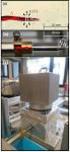
2 Figure 1 (left) Cone tip exposed beneath truck, just before being advanced into the ground at a rate between 1 and 2 cm/sec. The cone has an area of either 10 or 15 cm 2 and is typically advanced in 1 m increments because the rods are of that length. Figure 2 (right) Hogentogler CPT rig operated by Ertec in Long Beach, CA. Cone rigs weigh about 18 tons, so are capable of exerting considerable normal force on the advancing rod. The cone tip includes a plumb meter to warn of out-of-vertical penetration. Figure 3 Manufacturing and operating tolerances of cones, taken from ASTM D5778.

3 Figure 4 Schematic section through an electric friction-cone penetrometer tip, taken from ASTM D3441. Friction ratio The friction ratio is given in percent. It is the ratio of skin friction divided by the tip resistance (both in tsf). It is used to classify the soil, by its behavior, or reaction to the cone being forced through the soil. High ratios generally indicate clayey materials (high c, low Ø) while lower ratios are typical of sandy materials (or dry desiccated clays). Typical skin friction to tip friction ratios are 1 % to 10%. The ratio seldom, if ever, exceeds 15%. Sands are generally identified by exhibiting a ratio < 1%. Pore Pressure Piezocones also measure insitu pore pressure (in psi), in either dynamic (while advancing the cone) or static (holding the cone stationary) modes. Piezocones employ a porous plastic insert just behind the tapered head that is made of hydrophilic polypropylene, with a nominal particle size of 120 microns (Figure 5). The piezocell must be saturated with glycerin prior to its employment. The filter permeability is about 0.01 cm/sec (1 x 10⁻² cm/sec). When using the cone to penetrate dense layers, such as cemented siltstone, sandstone or conglomerate, the piezo filter element can become compressed, thereby

4 inducing high positive pore pressures. But, the plastic filters do not exhibit this tendency, though they do become brittle with time and may need to be replaced periodically. In stiff over-consolidated clays the pore pressure gradient around the cone may be quite high. This pore pressure gradient often results in dissipations recorded behind the CPT tip that initially increase before decreasing to the equilibrium value. Figure 5- Schematic section through a piezocone head, showing the piezo-element and friction sleeve. Taken from ASTM D5778. Differential Pore Pressure The Differential Pore Pressure Ratio is used to aid in soil classification according to the Unified Soil Classification System (USCS). When the cone penetrates dense materials like sand, the sand dilates and the pore pressure drops. In clayey materials high pore pressures may be induced by the driving of the cone head. If transient pore pressures are being recorded that seem non-hydrostatic, most experienced operators will ask that the penetration be halted and allowed at least 5 minutes to equilibrate, so a quasi-static pore pressure reading can be recorded. Sometimes equilibration can take 10 to 30 minutes, depending on the soil. In practice experienced operators try to stop the advance and take

5 pore pressure measurements in recognized aquifers and just above or adjacent to indicated aquacludes. Temperature sensor One great advantage of the electric cone is the temperature sensor. This has been found to be very useful in assessing the precise position of the zone, or zones, of saturation, which is of great import in slope stability and consolidation studies. A temperature shift of about 6 o F is common at the groundwater interface, even perched horizons within landslides. Corrected Logs Most CPT rigs are equipped with one or several automated interpretation programs, which classify 1 cm horizons according to the Unified Soil Classification System. The most widely employed routine has been that originally developed by Robinson and Campanella, available from Hogentogler & Co., of Gaithersburg, MD or from the Natural Sciences and Engineering Research Council of Canada. An alternative interpretation program was developed by Dr. Richard Olsen (available through The interpretation programs evaluates all of the measured properties and classifies the horizon according to its behavior (in lieu of petrology). For instance, when classifying a clayey material the interpretive programs consider undrained shear strength, tip resistance and differential pore pressure. A high differential pore pressure is assumed diagnostic of more clayey materials. Importance of ground-truthing Like geophysical techniques, CPT soundings are most meaningful when groundtruthed with established lithologic horizons. The easiest method to ground truthing CPT data is to advance a sounding next to a bucket auger or conventional boring, from which subsurface samples are collected. In this way the electronic signature of the sounding can be compared with the various lithologies already identified in the substory. This comparison can prove especially valuable in identifying potentially liquefiable materials and old landslide slip surfaces. Once the CPT sounding is ground-truthed, the rig can traverse the job site, commonly advancing 10 or 12 soundings in a single day. This allows for an expanded data set, which allows superior three-dimensional characterization of the site under evaluation, and allows construction of reliable geologic cross sections through the area. Notes of Caution Some notes of caution are advised when applying the CPT method to evaluating discrete low-strength horizons or partings, such as landslide slip surfaces. The 60 o tip of the cone forces a passive failure of the ground in front of the advancing tip. The instrumented tip senses soil resistance about 21cm (8.4 in) ahead of the advancing tip.

6 This means that the tip resistance reported as undrained shear strength is actually an average value, taken over the zone within 21 cm of the cone tip. If the tip penetrates low strength horizons less than 21 cm thick, such as a landslide slip surface, the tip resistance reported on the CPT log may be much higher than actually exists on the discrete plane of slippage, which maybe only a fraction of an inch thick. Another problem with the CPT method is that cone soundings advanced through desiccated clay will often be interpreted as sand or silt mixtures (by the computerized lithologic interpretation routine) because of recorded sleeve friction. The opposite problem occurs when reporting Standard Penetration Test (SPT) blow counts after advancing drive samples through clayey horizons! The SPT test is only intended for granular materials, and blow counts in such materials must be regarded with some degree of skepticism as they may shift dramatically upon later absorption of moisture. Sample CPT logs The attached logs are representative of the features common to electronic friction cones. They include raw data sensed by the cone as it is pushed through the ground. This data includes: Friction Ratio, Local Friction, Tip Resistance, Pore Pressure, Differential Pore Pressure Ratio and an interpreted lithologic profile (often printed out on a separate sheet, depending on which interpretation program is being utilized).

7

8

9

Fundamentals of CONE PENETROMETER TEST (CPT) SOUNDINGS. J. David Rogers, Ph.D., P.E., R.G.
 Fundamentals of CONE PENETROMETER TEST (CPT) SOUNDINGS J. David Rogers, Ph.D., P.E., R.G. Cone Penetration Test CPT soundings can be very effective in site characterization, especially sites with discrete
c. Borehole Shear Test (BST): BST is performed according to the instructions published by Handy Geotechnical Instruments, Inc.
 Design Manual Chapter 6 - Geotechnical 6B - Subsurface Exploration Program 6B-2 Testing A. General Information Several testing methods can be used to measure soil engineering properties. The advantages,
Soil behaviour type from the CPT: an update
 Soil behaviour type from the CPT: an update P.K. Robertson Gregg Drilling & Testing Inc., Signal Hill, California, USA ABSTRACT: An initial application of CPT results is to evaluate soil type and soil
INSITU TESTS! Shear Vanes! Shear Vanes! Shear Vane Test! Sensitive Soils! Insitu testing is used for two reasons:!
 In-situ Testing! Insitu Testing! Insitu testing is used for two reasons:! To allow the determination of shear strength or penetration resistance or permeability of soils that would be difficult or impossible
SPECIFICATION FOR DYNAMIC CONSOLIDATION / DYNAMIC REPLACEMENT
 SPECIFICATION FOR DYNAMIC CONSOLIDATION / DYNAMIC REPLACEMENT 1.0 SOIL IMPROVEMENT 1.1 General Soil Investigation Information are provided in Part B1 annex as a guide to the Contractor for his consideration
Pavements should be well drained both during and upon completion of construction. Water should not be allowed to pond on or near pavement surfaces.
 Project No. 208-8719 January, 2009 Ref: 2-8719BR Anthony Hudson - Broadscale Geotechnical Investigation - Proposed Commercial Development - 52 Old Pacific Highway, Pimpama Page 32 iii) Pavements should
Subsurface Exploration Using the Standard Penetration Test and the Cone Penetrometer Test
 Subsurface Exploration Using the Standard Penetration Test and the Cone Penetrometer Test J. DAVID ROGERS Department of Geological Sciences & Engineering, 125 McNutt Hall, University of Missouri Rolla,
Site Investigation. Some unsung heroes of Civil Engineering. buried right under your feet. 4. Need good knowledge of the soil conditions
 This is an attempt to create a stand alone self learning module on site investigation. Fasten your seat belts. Sit back, relax and enjoy. 1 2 Site Investigation Some unsung heroes of Civil Engineering
How To Prepare A Geotechnical Study For A Trunk Sewer Project In Lincoln, Nebraska
 APPENDIX B Geotechnical Engineering Report GEOTECHNICAL ENGINEERING REPORT Preliminary Geotechnical Study Upper Southeast Salt Creek Sanitary Trunk Sewer Lincoln Wastewater System Lincoln, Nebraska PREPARED
CHAPTER 1 INTRODUCTION
 CHAPTER 1 INTRODUCTION 1.1 Introduction The design and construction of foundations require a good knowledge of the mechanical behaviour of soils and of their spatial variability. Such information can be
Cone Penetration Testing (CPT) Michael Bailey, P.G. U.S. Army Corps of Engineers, Savannah District
 Cone Penetration Testing (CPT) Michael Bailey, P.G. U.S. Army Corps of Engineers, Savannah District Recommended publications ASTM D 5778-07 Standard Test Method for Electronic Friction Cone and Piezocone
Caltrans Geotechnical Manual
 Cone Penetration Test The cone penetration test (CPT) is an in-situ sounding that pushes an electronic penetrometer into soil and records multiple measurements continuously with depth. Compared with rotary
Geotechnical Measurements and Explorations Prof. Nihar Ranjan Patra Department of Civil Engineering Indian Institute of Technology, Kanpur
 Geotechnical Measurements and Explorations Prof. Nihar Ranjan Patra Department of Civil Engineering Indian Institute of Technology, Kanpur Lecture No. # 13 (Refer Slide Time: 00:18) So last class, it was
product manual HS-4210 HS-4210_MAN_09.08 Digital Static Cone Penetrometer
 HS-4210_MAN_09.08 product manual HS-4210 Digital Static Cone Penetrometer Introduction This Manual covers the measurement of bearing capacity using the Humboldt Digital Static Cone Penetrometer (DSCP).
HAULBOWLINE, CORK STATIC CONE PENETRATION TESTS FACTUAL REPORT
 HAULBOWLINE, CORK STATIC CONE PENETRATION TESTS FACTUAL REPORT CONE PENETRATION TESTS Cone resistance Local friction Porewater pressure Dissipations REPORT NO: RRM CONTRACT NO: GLOVER SITE INVESTIGATIONS
Cone Penetration Testing in Geotechnical Practice. Tom Lunne Peter K. Robertson John J.M. Powell
 Cone Penetration Testing in Geotechnical Practice Tom Lunne Peter K. Robertson John J.M. Powell BLACKIE ACADEMIC & PROFESSIONAL An Imprint of Chapman & Hall London Weinheim New York Tokyo Melbourne Madras
Strength Determination of "Tooth-Paste" Like Sand and Gravel Washing Fines Using DMT
 Strength Determination of "Tooth-Paste" Like Sand and Gravel Washing Fines Using DMT David L. Knott, P.E. and James M. Sheahan, P.E. HDR Engineering, Inc. 3 Gateway Center Pittsburgh, PA 15222-1074 Phone:
INDIRECT METHODS SOUNDING OR PENETRATION TESTS. Dr. K. M. Kouzer, Associate Professor in Civil Engineering, GEC Kozhikode
 INDIRECT METHODS SOUNDING OR PENETRATION TESTS STANDARD PENETRATION TEST (SPT) Reference can be made to IS 2131 1981 for details on SPT. It is a field edtest to estimate e the penetration e resistance
CPTic_CSM8. A spreadsheet tool for identifying soil types and layering from CPTU data using the I c method. USER S MANUAL. J. A.
 CPTic_CSM8 A spreadsheet tool for identifying soil types and layering from CPTU data using the I c method. USER S MANUAL J. A. Knappett (2012) This user s manual and its associated spreadsheet ( CPTic_CSM8.xls
Washington 98102-3699, [email protected]
 LESSONS LEARNED FROM A STONE COLUMN TEST PROGRAM IN GLACIAL DEPOSITS Barry S. Chen 1, P.E., Member, Geo-Institute and Michael J. Bailey 2, P.E., Member, Geo-Institute ABSTRACT A stone column test program
CIVL451. Soil Exploration and Characterization
 CIVL451 Soil Exploration and Characterization 1 Definition The process of determining the layers of natural soil deposits that will underlie a proposed structure and their physical properties is generally
GUIDE TO CONE PENETRATION TESTING
 GUIDE TO CONE PENETRATION TESTING www.greggdrilling.com Engineering Units Multiples Micro (μ) = 10-6 Milli (m) = 10-3 Kilo (k) = 10 +3 Mega (M) = 10 +6 Imperial Units SI Units Length feet (ft) meter (m)
Module 1 : Site Exploration and Geotechnical Investigation. Lecture 4 : In-situ tests [ Section 4.1: Penetrometer Tests ] Objectives
![Module 1 : Site Exploration and Geotechnical Investigation. Lecture 4 : In-situ tests [ Section 4.1: Penetrometer Tests ] Objectives](/thumbs/26/8734290.jpg "Module 1 : Site Exploration and Geotechnical Investigation. Lecture 4 : In-situ tests [ Section 4.1: Penetrometer Tests ] Objectives") Lecture 4 : In-situ tests [ Section 4.1: Penetrometer Tests ] Objectives In this section you will learn the following Penetrometer Tests Standard penetration test Static cone penetration test Dynamic cone
Lecture 4 : In-situ tests [ Section 4.1: Penetrometer Tests ] Objectives In this section you will learn the following Penetrometer Tests Standard penetration test Static cone penetration test Dynamic cone
PREDICTING THE HYDRAULIC CONDUCTIVITY OF MAKASSAR MARINE CLAY USING FIELD PENETRATION TEST (CPTU) RESULTS
 Proceedings of the Sixth International Conference on Asian and Pacific Coasts (APAC 2011) December 14 16, 2011, Hong Kong, China PREDICTING THE HYDRAULIC CONDUCTIVITY OF MAKASSAR MARINE CLAY USING FIELD
Eurocode 7 - Geotechnical design - Part 2 Ground investigation and testing
 Brussels, 18-20 February 2008 Dissemination of information workshop 1 Eurocode 7 - Geotechnical design - Part 2 Ground investigation and testing Dr.-Ing. Bernd Schuppener, Federal Waterways Engineering
ODOT/OSU collaboration on the development of CPT Capabilities for use in Ohio Transportation Projects
 CPT Cone Penetration Testing ODOT/OSU collaboration on the development of CPT Capabilities for use in Ohio Transportation Projects Presented by: Jason Ross, Staff Engineer, BBC&M Engineering, Inc. Kirk
Drained and Undrained Conditions. Undrained and Drained Shear Strength
 Drained and Undrained Conditions Undrained and Drained Shear Strength Lecture No. October, 00 Drained condition occurs when there is no change in pore water pressure due to external loading. In a drained
GUIDE TO CONE PENETRATION TESTING
 GUIDE TO CONE PENETRATION TESTING www.greggdrilling.com Engineering Units Multiples Micro (μ) = 10-6 Milli (m) = 10-3 Kilo (k) = 10 +3 Mega (M) = 10 +6 Imperial Units SI Units Length feet (ft) meter (m)
Soil Classification Through Penetration Tests
 Pak. J. Engg. & Appl. Sci. Vol. 9, Jul., 2011 (p. 76-86) Soil Classification Through Penetration Tests A. H. Khan, A. Akbar, K. Farooq, N. M. Khan, M. Aziz and H. Mujtaba Department of Civil Engineering,
Penetration rate effects on cone resistance measured in a calibration chamber
 Penetration rate effects on cone resistance measured in a calibration chamber K. Kim Professional Service Industries, Inc, Houston, TX, USA M. Prezzi & R. Salgado Purdue University, West Lafayette, IN,
USE OF CONE PENETRATION TEST IN PILE DESIGN
 PERIODICA POLYTECHNICA SER. CIV. ENG. VOL. 47, NO. 2, PP. 189 197 (23) USE OF CONE PENETRATION TEST IN PILE DESIGN András MAHLER Department of Geotechnics Budapest University of Technology and Economics
International Journal of Scientific & Engineering Research, Volume 4, Issue 9, September-2013 409 ISSN 2229-5518
 International Journal of Scientific & Engineering Research, Volume 4, Issue 9, September-2013 409 Estimation of Undrained Shear Strength of Soil using Cone Penetration Test By Nwobasi, Paul Awo Department
Chittagong Hill Tract Development Facilities (CHTDF) United Nations Development Programme
 Chittagong Hill Tract Development Facilities (CHTDF) United Nations Development Programme Main Report Deliverable 02 Sub-Surface Properties of Soil Development in Rangamati, Bandarban and Khagrachari Municipality
KWANG SING ENGINEERING PTE LTD
 KWANG SING ENGINEERING PTE LTD 1. INTRODUCTION This report represents the soil investigation works at Aljunied Road / Geylang East Central. The objective of the soil investigation is to obtain soil parameters
STANDARD OPERATING PROCEDURE
 STANDARD OPERATING PROCEDURE DATA ACQUISITION USING THE C1 MEMOCONE SYSTEM REVISION DATE: OKT 21, 2011 Prepared by Per Ljunggren TABLE OF CONTENTS STANDARD OPERATING PROCEDURE...3 DATA ACQUISITION USING
PILE FOUNDATIONS FM 5-134
 C H A P T E R 6 PILE FOUNDATIONS Section I. GROUP BEHAVIOR 6-1. Group action. Piles are most effective when combined in groups or clusters. Combining piles in a group complicates analysis since the characteristics
Geotechnical Testing Methods II
 Geotechnical Testing Methods II Ajanta Sachan Assistant Professor Civil Engineering IIT Gandhinagar FIELD TESTING 2 1 Field Test (In-situ Test) When it is difficult to obtain undisturbed samples. In case
Figure 2.31. CPT Equipment
 Soil tests (1) In-situ test In order to sound the strength of the soils in Las Colinas Mountain, portable cone penetration tests (Japan Geotechnical Society, 1995) were performed at three points C1-C3
Cone Penetration Test (CPT)
 Cone Penetration Test (CPT) The cone penetration test, or CPT in short, is a soil testing method which will provide a great deal of high quality information. In the Cone Penetration Test (CPT), a cone
Fellenius, B. H., and Eslami, A.
 Page SOIL PROFILE INTERPRETED FROM CPTu DATA Fellenius, B. H., and Eslami, A. Fellenius, B. H., and Eslami, A., 2000. Soil profile interpreted from CPTu data. Year 2000 Geotechnics Geotechnical Engineering
Standard Test Method for Mechanical Cone Penetration Tests of Soil 1
 Designation: D 3441 98 AMERICAN SOCIETY FOR TESTING AND MATERIALS 100 Barr Harbor Dr., West Conshohocken, PA 19428 Reprinted from the Annual Book of ASTM Standards. Copyright ASTM Standard Test Method
Some issues related to applications of the CPT
 Some issues related to applications of the CPT N. Ramsey Sinclair Knight Merz, Melbourne, Australia ABSTRACT: This paper reviews some issues related to the use of Cone Penetration Testing for geotechnical
Use and Application of Piezocone Penetration Testing in Presumpscot Formation
 Use and Application of Piezocone Penetration Testing in Presumpscot Formation Craig W. Coolidge, P.E. Summit Geoengineering Services, Rockland, Maine ABSTRACT: This paper examines the advantages and limitations
Geotechnical Investigation using Standard Penetration Test (SPT) in Rangamati, Bandarban and Khagrachari Towns
 1. Introduction 1.1 Scope of Work The Asian Disaster Preparedness Centre (ADPC) is implementing the project Seismic Hazard and Vulnerability Mapping for Rangamati, Bandarban and Khagrachari Municipality.
INTERNATIONAL JOURNAL OF CIVIL AND STRUCTURAL ENGINEERING Volume 3, No 3, 2013
 INTERNATIONAL JOURNAL OF CIVIL AND STRUCTURAL ENGINEERING Volume 3, No 3, 2013 Copyright by the authors - Licensee IPA- Under Creative Commons license 3.0 Research article ISSN 0976 4399 Reliability of
NOTES on the STANDARD PENETRATION TEST
 GE 441 Advanced Engineering Geology & Geotechnics Spring 2004 NOTES on the STANDARD PENETRATION TEST Origins of the Standard Penetration Test Around 1902 Colonel Charles R. Gow, owner of the Gow Construction
Table of Contents 10.1 GENERAL... 10.1-1
 Table of Contents Section Page 10.1 GENERAL... 10.1-1 10.1.1 Overview... 10.1-1 10.1.2 Role of Uncertainty in Property Interpretation... 10.1-1 10.1.3 Role of Drainage in Property Interpretation... 10.1-2
STP883-EB/Nov. 1985. Subject Index
 STP883-EB/Nov. 1985 Subject Index A Aas in-situ tests, 209-210 Analytical model technique, 432, 438 Andersen's procedure, 342, 345,349-351 Arabian Gulf soils, 413 ASCE conference, 41 ASTM Standards D 422:385
GEOTECHNICAL ENGINEERING II. Subject Code : 06CV64 Internal Assessment Marks : 25 PART A UNIT 1
 GEOTECHNICAL ENGINEERING II Subject Code : 06CV64 Internal Assessment Marks : 25 PART A UNIT 1 1. SUBSURFACE EXPLORATION 1.1 Importance, Exploration Program 1.2 Methods of exploration, Boring, Sounding
Numerical Simulation of CPT Tip Resistance in Layered Soil
 Numerical Simulation of CPT Tip Resistance in Layered Soil M.M. Ahmadi, Assistant Professor, [email protected] Dept. of Civil Engineering, Sharif University of Technology, Tehran, Iran Abstract The paper
Numerical Analysis of Texas Cone Penetration Test
 International Journal of Applied Science and Technology Vol. 2 No. 3; March 2012 Numerical Analysis of Texas Cone Penetration Test Nutan Palla Project Engineer, Tolunay-Wong Engineers, Inc. 10710 S Sam
Use of the Cone Penetration Test for Geotechnical Site Characterization in Clay-Mantled Karst. T. C. Siegel 1 and P. E. Cargill 2
 Use of the Cone Penetration Test for Geotechnical Site Characterization in Clay-Mantled Karst T. C. Siegel 1 and P. E. Cargill 2 Abstract Adapted for use as a mechanical soil exploration device in the
CPT interpretation in marine soils less than 5m depth examples from the North Sea
 CPT interpretation in marine soils less than 5m depth examples from the North Sea R. Mitchell SEtech (Geotechnical Engineers) Limited, Great Yarmouth, England S. Wootton & R. Comrie SEtech (Geotechnical
ANNEX D1 BASIC CONSIDERATIONS FOR REVIEWING STUDIES IN THE DETAILED RISK ASSESSMENT FOR SAFETY
 ANNEX D1 BASIC CONSIDERATIONS FOR REVIEWING STUDIES IN THE DETAILED RISK ASSESSMENT FOR SAFETY ANNEX D1: BASIC CONSIDERATIONS FOR REVIEWING STUDIES IN DRA FOR SAFETY D1-1 ANNEX D1 BASIC CONSIDERATIONS
Testing Procedures. Note: Please refer to Table 2 for a list of completed borings.
 Testing Procedures Drilling and Sampling: Standard penetration tests (SPT) were conducted for every ten feet of boring advancement. SPT tests were conducted in accordance with ASTM D1586, using a 140 pound
EVALUATING THE IMPROVEMENT FROM IMPACT ROLLING ON SAND
 EVALUATING THE IMPROVEMENT FROM IMPACT ROLLING ON SAND D.L. Avalle, Broons Hire (SA) Pty Ltd, Australia J.P. Carter, The University of Sydney, Australia Abstract Impact rolling, utilising a non-circular
CHAPTER 9 SOIL EXPLORATION 9.1 INTRODUCTION
 CHAPTER 9 SOIL EXPLORATION 9.1 INTRODUCTION The stability of the foundation of a building, a bridge, an embankment or any other structure built on soil depends on the strength and compressibility characteristics
Geotechnical Standards Eurocodes. An update
 Geotechnical Standards Eurocodes. An update Professor Ltd Sussex University EUROCOE 7 (EN 1997) Part 1 published. 2004 National Annex published 2007 Part 2 published Mar 2007 National Annex published 2010
Statistical identification of homogeneous soil units for Venice lagoon soils
 Statistical identification of homogeneous soil units for Venice lagoon soils M. Uzielli Georisk Engineering, Florence, Italy P. Simonini, S. Cola Department of Hydraulic, Maritime, Environmental and Geotechnical
SINKHOLE DETECTION IN FLORIDA USING GPR AND CPT
 SINKHOLE DETECTION IN FLORIDA USING GPR AND CPT Paul J. Bullock 1 and Arthur Dillman 2 1 Asst. Prof., Civil and Coastal Engineering Dept., University of Florida P.O. Box 116580, Gainesville, FL 32611([email protected])
VOLUME III GEOLOGY, HYDROGEOLOGY & GEOTECHNICAL REPORT CAPITAL REGION RESOURCE RECOVERY CENTRE
 2.0 SITE INVESTIGATION METHODOLOGY The following section summarizes the Site investigation methodology applied during the subsurface investigation and hydrogeological assessment completed at the CRRRC
COMPENDIUM OF INDIAN STANDARDS ON SOIL ENGINEERING PART 2
 (PREVIEW) SP 36 (Part 2) : 1988 COMPENDIUM OF INDIAN STANDARDS ON SOIL ENGINEERING PART 2 IS 1893 : 1979 (Reaffirmed 1987) CODE OF PRACTICE FOR SUBSURFACE INVESTIGATION FOR FOUNDATIONS 1.1 This code deals
Using Combination of SPT, DMT and CPT to Estimate Geotechnical Model for a Special Project in Turkey
 Using Combination of SPT, DMT and CPT to Estimate Geotechnical Model for a Special Project in Turkey Figen Orhun Onal GE, M.Sc., Site Works Manager, Zemin Etud ve Tasarım A.Ş., Istanbul, [email protected]
CONSTANT HEAD AND FALLING HEAD PERMEABILITY TEST
 CONSTANT HEAD AND FALLING HEAD PERMEABILITY TEST 1 Permeability is a measure of the ease in which water can flow through a soil volume. It is one of the most important geotechnical parameters. However,
IN SITU GEOTECHNICAL TESTING USING LIGHTWEIGHT PLATFORMS. Peter Zimmerman, MSCE David Brown, P.G. Geoprobe Systems Salina, Kansas.
 IN SITU GEOTECHNICAL TESTING USING LIGHTWEIGHT PLATFORMS Peter Zimmerman, MSCE David Brown, P.G. Geoprobe Systems Salina, Kansas June, 1999 ABSTRACT In situ testing in geotechnical engineering has traditionally
An Automatic Kunzelstab Penetration Test
 An Automatic Kunzelstab Penetration Test Yongyuth Sirisriphet 1, Kitidech Santichaianant 2 1 Graduated student: Faculty of Industrial Education in and Technology. King Mongkut's University of Technology
Geotechnic Parameters Analysis Obtained by Pencel Presuremeter Test on Clayey Soils in Resistencia City
 American Journal of Science and Technology 2015; 2(5): 237-242 Published online August 10, 2015 (http://www.aascit.org/journal/ajst) ISSN: 2375-3846 Geotechnic Parameters Analysis Obtained by Pencel Presuremeter
ON THE INTERPRETATION OF SEISMIC CONE PENETRATION TEST (SCPT) RESULTS
 Studia Geotechnica et Mechanica, Vol. XXXV, No. 4, 213 DOI: 1.2478/sgem-213-33 ON THE INTERPRETATION OF SEISMIC CONE PENETRATION TEST (SCPT) RESULTS IRENA BAGIŃSKA Wrocław University of Technology, Faculty
1 Mobilisation and demobilisation 1 Deep boring sum 2 Cone penetration tests sum 3 Miscellenous tests sum
 Malaysian Civil Engineering Standard Method of Measurement (MyCESMM) CLASS D: SITE INVESTIGATION WORK Measurement covered under other classes: Excavation not carried out for the purpose of soil investigation
CPT AND CPTu DATA FOR SOIL PROFILE INTERPRETATION: REVIEW OF METHODS AND A PROPOSED NEW APPROACH *
 Iranian Journal of Science & Technology, Transaction B, Vol. 28, No. B Printed in Islamic Republic of Iran, 2004 Shiraz University CPT AND CPTu DATA FOR SOIL PROFILE INTERPRETATION: REVIEW OF METHODS AND
Method Statement FOR. Soil Investigation
 Method Statement FOR Soil Investigation PREPARED BY JUNE 2010 Infratech ASTM CO., LTD. TABLE OF CONTENTS Chapter Title Page Table of Contents..1 List of Appendix... 2 List of Table... 2 List of Figures...
Cone penetration testing, CPTu
 1 Cone penetration testing, CPTu Preface Our company is Environmental Mechanics AB or short Envi. A Swedish company developing, producing and marketing systems for cone penetration testing (also known
Soil Mechanics. Soil Mechanics
 Soil is the most misunderstood term in the field. The problem arises in the reasons for which different groups or professions study soils. Soil scientists are interested in soils as a medium for plant
FACTUAL GROUND INVESTIGATION
 FACTUAL GROUND INVESTIGATION REPORT COMMERCIAL/INDUSTRIAL REDEVELOPMENT OF LAND AT STEADMAN S WELTON CUMBRIA Web: www.geoenvironmentalengineering.com Telephone: 08456 768 895 Project Ref: 2013-657 Site
TECHNICAL Summary. TRB Subject Code:62-7 Soil Foundation Subgrades February 2003 Publication No.: FHWA/IN/JTRP-2002/30, SPR-2362
 INDOT Research TECHNICAL Summary Technology Transfer and Project Implementation Information TRB Subject Code:62-7 Soil Foundation Subgrades February 3 Publication No.: FHWA/IN/JTRP-2/3, SPR-2362 Final
Module5: Site investigation using in situ testing
 Module5: Site investigation using in situ testing Topics: Introduction Penetration testing 1. Standard penetration test 2. Cone penetration test Strength and compressibility testing 1. Field vane shear
TECHNICAL REPORT ON SCALA DYNAMIC CONE PENETROMETER IRREGULARITY
 TECHNICAL REPORT ON SCALA DYNAMIC CONE PENETROMETER IRREGULARITY CETANZ Technical Report TR 1 Author(s) SJ Anderson, Geotechnics Ltd Report Date First Issue May 2010 Report Revision Date September 2011
NEW DEVELOPMENTS AND IMPORTANT CONSIDERATIONS FOR STANDARD PENETRATION TESTING FOR LIQUEFACTION EVALUATIONS. Jeffrey A Farrar M.S.
 NEW DEVELOPMENTS AND IMPORTANT CONSIDERATIONS FOR STANDARD PENETRATION TESTING FOR LIQUEFACTION EVALUATIONS Jeffrey A Farrar M.S., P E 1 ABSTRACT Standard Penetration Tests (SPT) are often used for evaluating
Ingeniería y Georiesgos Ingeniería Geotécnica Car 19 a Nº 84-14 of 204 ; TEL : 6916043 E-mail: [email protected]
 The plot below presents the cross correlation coeficient between the raw qc and fs values (as measured on the field). X axes presents the lag distance (one lag is the distance between two sucessive CPT
CONE PENETRATION TESTING AND SITE EXPLORATION IN EVALUATING THE LIQUEFACTION RESISTANCE OF SANDS AND SILTY SANDS ABSTRACT
 CONE PENETRATION TESTING AND SITE EXPLORATION IN EVALUATING THE LIQUEFACTION RESISTANCE OF SANDS AND SILTY SANDS E. J. Newman 1, T. D. Stark 2, and S. M. Olson 3 ABSTRACT Refined relationships between
By D. P. StewarP and M. F. Randolph z
 T-BAR PENETRATION TESTING IN SOFT CLAY By D. P. StewarP and M. F. Randolph z ABSTRACT: A t-bar penetration test for soft clay that can be performed with existing cone penetration test (CPT) equipment is
CIV4249 1. SITE INVESTIGATION AND EXPLORATION TABLE OF CONTENTS
 Unit CIV4249: Foundation Engineering 1.1 CIV4249 1. SITE INVESTIGATION AND EXPLORATION TABLE OF CONTENTS 1. GENERAL... 2 1.1. Objectives... 2 1.2. Reasons for investigating Subsurface... 2 1.3. Sources
A study on the Effect of Distorted Sampler Shoe on Standard Penetration Test Result in Cohesionless soil
 ISSN: 319-53 (An ISO 39: 00 Certified Organization) A study on the Effect of Distorted Sampler Shoe on Standard Penetration Test Result in Cohesionless soil Utpal Kumar Das Associate Professor, Department
Improvement in physical properties for ground treated with rapid impact compaction
 International Journal of the Physical Sciences Vol. 6(22), pp. 5133-5140, 2 October 2011 Available online at http://www.academicjournals.org/ijps ISSN 1992-1950 2011 Academic Journals Full Length Research
King Saud University College of Engineering Civil Engineering Department DEFORMATION OF PARTIALLY SATURATED SAND. Sultan Musaed Al-Ghamdi
 King Saud University College of Engineering Civil Engineering Department DEFORMATION OF PARTIALLY SATURATED SAND By Sultan Musaed Al-Ghamdi Submitted in Partial Fulfillment of The Required For the Degree
Anirudhan I.V. Geotechnical Solutions, Chennai
 Anirudhan I.V. Geotechnical Solutions, Chennai Often inadequate In some cases, excess In some cases, disoriented Bad investigation Once in a while good ones Depends on one type of investigation, often
SLOPE STABILITY ANALYSIS OF CLASS I LANDFILLS WITH CO DISPOSAL OF BIOSOLIDS USING FIELD TEST DATA
 SLOPE STABILITY ANALYSIS OF CLASS I LANDFILLS WITH CO DISPOSAL OF BIOSOLIDS USING FIELD TEST DATA by MRUTYUNJAY MOHAN VAJIRKAR B.E. Shivaji University, Kolhapur, Maharastra, 2000 A thesis submitted in
Trench Rescue by Buddy Martinette
 Trench Rescue by Buddy Martinette SOIL TYPE AND TESTING It is imperative that rescue personnel understand soil types and testing procedures if the want to be competent at trench rescue operations. Determining
Standard penetration test (SPT)
 Standard penetration test (SPT) Evolution of SPT Test methods and standards Influence of ground conditions on penetration resistance SPT energy measurement and corrections for SPT Use of SPT results Profiling
TECHNICAL NOTE: SI 01 SPECIFIC REQUIREMENTS FOR THE ACCREDITATION OF INSPECTION BODIES FOR SITE INVESTIGATION
 ACCREDITATION SCHEME FOR INSPECTION BODIES TECHNICAL NOTE: SI 01 SPECIFIC REQUIREMENTS FOR THE ACCREDITATION OF INSPECTION BODIES FOR SITE INVESTIGATION Technical Note SI 01: 3 February 2016 The SAC Accreditation
Interpretation of clogging effects on the hydraulic behavior of ion treated geotextiles
 9 th International Conference on Geosynthetics, Brazil, 2010 Interpretation of clogging effects on the hydraulic behavior of ion treated geotextiles Lee, K. W. Department of Civil Engineering, Dongseo
Effect of drainage conditions on cone penetration testing in silty soils
 Effect of drainage conditions on cone penetration testing in silty soils Rikke Poulsen, Benjaminn Nordahl Nielsen & Lars Bo Ibsen Department of Civil Engineering Aalborg University, Aalborg, Denmark ABSTRACT
A Ground Improvement Update from TerraSystems
 TERRANOTES A Ground Improvement Update from TerraSystems SOIL MODULUS AFTER GROUND IMPROVEMENT Evaluation of ground improvement is accomplished using a variety of methods, from simple elevation surveys
Module 1 : Site Exploration and Geotechnical Investigation. Lecture 5 : Geophysical Exploration [ Section 5.1 : Methods of Geophysical Exploration ]
![Module 1 : Site Exploration and Geotechnical Investigation. Lecture 5 : Geophysical Exploration [ Section 5.1 : Methods of Geophysical Exploration ]](/thumbs/40/20679662.jpg "Module 1 : Site Exploration and Geotechnical Investigation. Lecture 5 : Geophysical Exploration [ Section 5.1 : Methods of Geophysical Exploration ]") Objectives In this section you will learn the following General Overview Different methods of geophysical explorations Electrical resistivity method Seismic refraction method 5 Geophysical exploration
Objectives In this section you will learn the following General Overview Different methods of geophysical explorations Electrical resistivity method Seismic refraction method 5 Geophysical exploration
ABSTRACT 2. TAILINGS TYPES AND TESTS 1. INTRODUCTION. the Ball Penetration Test (BPT) and the Field Vane Test (FVT).
 CORRELATIONS OF SHEAR STRENGTHS OF SOFT OIL SANDS TAILINGS ASSESSED BY DIFFERENT IN SITU METHODS Srboljub Masala, Barr Engineering, Calgary, Alberta Navdip Dhadli, Shell Canada Energy, Calgary, Alberta
Work Type Definition and Submittal Requirements
 Work Type: Highway Materials Testing Geotechnical Laboratory Testing, Geotechnical Laboratory Testing, Standard Penetration (SPT) & Rock Coring, Cone Penetration Test, Solid Stem Auger Drilling, and Materials
SOILS AND FOUNDATIONS
 CHAPTER 18 SOILS AND FOUNDATIONS SECTION BC 1801 GENERAL 1801.1 Scope. The provisions of this chapter shall apply to building and foundation systems in those areas not subject to scour or water pressure
WEATHERING, EROSION, AND DEPOSITION PRACTICE TEST. Which graph best shows the relative stream velocities across the stream from A to B?
 NAME DATE WEATHERING, EROSION, AND DEPOSITION PRACTICE TEST 1. The diagram below shows a meandering stream. Measurements of stream velocity were taken along straight line AB. Which graph best shows the
2009 Japan-Russia Energy and Environment Dialogue in Niigata S2-6 TANAKA ERINA
 Importance of the Site Investigation for Development of Methane Hydrate Hokkaido University Hiroyuki Tanaka Civil Engineer My Background Site Investigation Soil Parameters for Design Very Soft Clay and
CEEN 162 - Geotechnical Engineering Laboratory Session 7 - Direct Shear and Unconfined Compression Tests
 PURPOSE: The parameters of the shear strength relationship provide a means of evaluating the load carrying capacity of soils, stability of slopes, and pile capacity. The direct shear test is one of the