
Vulnerability Assessment of Syrian Refugees (VASyR) in Lebanon
|
|
|
- Arron Preston
- 10 years ago
- Views:
Transcription
1 Vulnerability Assessment of Syrian Refugees (VASyR) in Lebanon Executive summary Photo by Jessica El Kfoury

2 Acknowledgements For the third year the Vulnerability assessment for Syrian refugees in Lebanon (VASyR-2015) was conducted jointly by the World Food Programme (WFP), United Nations High Commissioner for Refugees (UNHCR) and the United Nations Children s Fund (UNICEF). The VASyR team in Lebanon would like to thank the international non-governmental organisations (NGOs) responsible for the field data collection: Action contre la Faim, ACTED, Caritas, InterSOS, Mercy Corps, Danish Refugee Council, Première Urgence - Aide Médicale Internationale, SHEILD, Save the Children and World Vision International. The team is also grateful to all actors who contributed to the questionnaire design, methodology and analysis plan. Special thanks to the 4105 refugee households as well as the focus group discussion participants who welcomed the survey team, answered questions and provided valuable information for this assessment. Photo by Joelle Eid Background and objectives Lebanon now hosts more than one million Syrian refugees, representing 25% of the population. This is the world s highest number of refugees per inhabitant. The Syrian conflict is now entering its fifth year and humanitarian operations in Lebanon are transitioning from emergency to protracted crisis interventions. Adjustments include using improved systems to identify the most vulnerable households (HHs), individuals or areas; reducing the number of beneficiaries; conducting a more in-depth investigation into needs; and redesigning programmes to make them more costeffective. Lebanon and the refugees it is hosting are in a very delicate state. Well-informed decision-making is key to ensure the best use of limited resources. The Vulnerability Assessment of Syrian Refugees (VASyR) conducted in Lebanon in 2013 and 2014 provided valuable insight into many aspects of the living conditions and vulnerability of Syrian refugees at regional and country levels. The results have been widely used by the humanitarian community for planning purposes and programme design. Significant changes have been noted since VASyR Overall, the results indicate that refugees have become more vulnerable since However, there are a few positive indications that some Syrian refugee families are adjusting to life in Lebanon. For instance, household size has continued to shrink, likely indicating that extended families are now living in more nuclear family units. Households are increasingly renting unfurnished apartments and have acquired a few more essential items, such as gas stoves. Nevertheless, refugees cannot legally access the Lebanese labour market and the results indicate that refugees savings are increasingly exhausted, debts are mounting, and fewer are fulfilling the costly requirements to renew their legal stay in Lebanon. Families are increasingly forced to rely on negative coping mechanisms to support themselves and their families. Refugees are living in a stressful context with no way out. This updated multi-sectorial overview will allow the humanitarian community to confirm or adjust 2016 plans and programme design. This data is especially valuable for targeting purposes; it contributes to revising the expected number in need of assistance, to analysing eligibility criteria for assistance, and to estimating the degree and types of vulnerability at national and district levels. Methodology The assessment surveyed 4,105 HHs of Syrian refugees in Lebanon registered with UNHCR. Data collection took place between the 27th May and 9th June The population was stratified by districts in order to ensure data was representative at this geographical level. The household questionnaire design was based on the 2014 VASyR questionnaire to ensure comparability, and the 2015 food and cash targeting questionnaire was used to obtain the information needed to apply the targeting criteria. Qualitative information was gathered from six refugee discussion groups in each district to help understand aspects not captured with quantitative questions. The analysis for this report was carried out by three United Nations sister agencies: WFP contributed the demography, livelihoods, expenditure, food consumption, coping and debt, food sources, food security, IYCF (Infant and Young Child Feeding) and focus group discussion sections; UNHCR the specific needs, surveyed refugees, protection, shelter, assets, health and assistance sections and UNICEF the WASH, education and child health sections. While WFP and UNHCR analysed the data by regional and district level, UNICEF looked at governorate level (LCRP 2016 is planned to target at governorate level). 1

3 1 Demography For the second year running, average household size decreased, down from 6.6 members in 2014 to 5.3. Large households were significantly less common; only 25% had seven members or more, compared with 40% in Households were less likely to have one or more children under the age of two (36% vs 44% in 2014). Almost one in five (19%) Syrian refugee HHs were headed by women, 3% more than in The proportion of single headed HHs with dependents was up by 5% to 12%, and was as high as 23% in the district of Zahle. Almost 27% of HHs reported having at least one member with special needs, a significant decrease from 2014 (49%). Around 7% of HHs had at least one working age member with a disability. Around 42,000 HHs had at least one pregnant or lactating woman and 5% of the 1,327 sampled girls between 12 years and less than 18 years were either pregnant or lactating. 2 Shelter While a high proportion of HHs reported living in independent houses/apartments (58%), around 16% of HHs had difficulty paying rent and were forced to share their apartments with other families. Almost a quarter (24%) lived in buildings considered substandard and 18% lived in informal settlements. Refugees were more likely to rent unfurnished homes than in the previous two years (74% vs. 67% in 2014). The average monthly rent has continued to fall from $246 in 2013 to $205 in 2014 to $164 in Rents were highest in Beirut and Mount Lebanon ($237). 2 Around 16% of sampled HHs were deemed to be living in unacceptable and dangerous conditions. 1 Substandard covers one room structures (16%), substandard shelters (6%) and unfinished buildings (2%) Looking at crowding, on average four people occupied one room. According to the enumerator s observations, around 16% of sampled HHs were deemed to be in substandard and/or dangerous conditions. Unsealed windows, damaged roofs and lack of lighting were among the most prevalent problems, while lack of privacy was commonly reported in Bekaa and BML. 3 Water and sanitation Overall 39% of surveyed Syrian refugee HHs did not benefit from improved drinking water sources. The main unimproved water sources were bottled water not from an improved source (14%) and water piped into homes for less than two hours a day (12%). In Baalbek- Hermel 40% of HHs had water piped into their homes for less than two hours a day. The rest (61%) enjoyed improved drinking water supplies, mainly piped into their homes for more than two hours a day (22%), bottled mineral water (21%) or by drawing it from a protected well (9%). Sanitation has improved. Although one in 10 HHs did not have access to any bathroom facilities, 80% of HHs had access to flush toilets or improved pit latrines versus 70% last year. Similarly, while in % of households were forced to resort to open air defecation, this figure has steadily declined, falling to 4% in 2014, and to only 1% this year. In 2015, the proportion of HHs sharing a latrine with 15 people or more was only 4%, down from 9% in 2014 and 13% in Assets Compared with previous years, Syrian refugee HHs were more likely to possess basic assets such as gas stoves, blankets, mattresses and winter clothing. Countrywide the majority of HHs had basic kitchen utensils and water containers and, as in previous years, televisions and satellite dishes. However, only one in 10 reported having enough beds and 15% had tables/chairs compared with 24% for both last year. The regions with the lowest number of basic assets (mattress, blankets, winter clothes and gas stoves) were Akkar and the Bekaa, while HHs in Beirut and Mount Lebanon were better equipped in comparison. Primary school net attendance ratio 5 Education Just over half (52%) of 6-14 year olds attended school, with little difference between boys and girls. Bekaa had the lowest attendance at 36% and a higher enrolment rate for boys than for girls. Primary drop-out rates were high, especially in Bekaa: nationally fewer than half (46%) who entered primary grade one reached grade six. Nationally only 5% of year olds attended secondary school or higher, with Akkar reporting the lowest and Beirut and the North reporting the highest rates. Most HHs (over 71%) whose children were outof-school, had a monthly household income of less than $300. For around half of 6-17 year old children not attending school, the main reasons children could not attend were the cost of education or because the children had to work (48% of 6-14 year olds and 56% of year olds). Fewer than half of children who entered primary grade 1 reached grade 6. 6 Health Free primary health care (PHC) was available for 12% of HHs. Free primary health care was most accessible in Akkar (29%), Tripoli (19%), and Bekaa (13%), and lowest in BML (4%). Cost sharing was the most prevalent type of primary (68%) and secondary (55%) health assistance, with cost sharing being the highest in BML (76% for PHC and 65% for SHC) and in the South (69% for PHC vs. 74% for SHC). Free secondary health care was available for 6% of HHs. Around 31% of those receiving secondary health care did not receive any support from humanitarian partners. In total 15% of households reported having at least one HH member who required primary health assistance and could not get it. The main reasons cited for not being able to access PHC were cost (46%), distance (13%) and rejection by the health facility (13%). Proportions did not differ significantly between male and femaleheaded households. Around 31% reported that at least one HH member required secondary health assistance, while 28% required it and could not get it (compared with 11% in 2014), chiefly because of the high cost (78%). 2 The reference is made at the time of survey (May 2015). 3

4 Of the 4,323 surveyed children under five years old, over 37% were ill in the two weeks prior to the survey, with the highest rates of illness in Mount Lebanon (42%). Coughing was the number one reported ailment, followed by diarrhea and fever. Only about half of the surveyed children (0-59 months) had received the required three doses of the Pentavalent vaccine (diphtheria, tetanus, whooping cough, hepatitis B, haemophilus influenza type B), with the lowest immunisation rates reported in Akkar (34%) and Baalbek-Hermel (39%). MMR and measles vaccinations were also reported for about half (53% and 55%) of surveyed children (0-59 months) nationally, with the lowest rates in Mount Lebanon, the North, South and Bekaa. 7 Protection Only 6% of households who were interviewed reported experiencing any kind of security issue in the previous three months (7% in male and 3% in female-headed HH). Among those reporting any type of incident, verbal or physical harassment (69%) and community harassment (17%) were the most commonly reported. The cited causes of insecurity were similar for male and female-headed households. Neighbours were most frequently mentioned as a source of problems (58%). Almost 78% of refugees reported that concerns about safety reduced their freedom of movement. Just 28% of sampled HHs reported having residency permits for all household members. This is a significant drop from 2014, when 58% of households reportedly had residency permits for all members. Among all individuals included in the survey, 41% did not have residency permits. Furthermore, 20% of households did not have residency permits for any members, consistent with last year s findings (19%). 8 Expenditure On average, each household spent $493 a month, a 35% drop from $762 in Expenditure on food and rent (which accounted for 45% and 19% of monthly spending respectively) fell by 40%. Per capita expenditure was $107 per month, 22% less than in 2014 ($138), dipping as low as $73 in Hermel and $78 in Zahle. At the country level, 17% of HHs had high or very high expenditure on food ( 65%), a 6% increase over last year. More than half of HHs (52%) spent less than expected to cover the most basic survival needs (<$87 per capital, also known as the survival minimum expenditure basket (SMEB)). This is double the rate found in In Zahle, nearly three out of four HH spent less than the SMEB. Nationally 69% (versus 43% in 2014) were below the minimum expenditure basket, spending less than $114 per capita a month, in line with the 70% (versus 49% in 2014) below the Lebanese extreme poverty line (proposed by the World Bank in 2013 and established at $3.84 per person per day). Almost one in three HHs spent more than $400 beyond their monthly income. 9 Livelihoods The restrictions on Syrian refugees access to the Lebanese labour market, which the Lebanese government approved at the end of 2014, reduced Syrian livelihood opportunities and made it even harder for refugees to cover their basic needs autonomously. Nationally, unemployment rates among Syrians increased by 7%, but by even more in Tripoli 5, Akkar and Bekaa. Overall a third of HHs had no members working during the 30 days before the survey, compared with 26% last year. Looking at districts, more than half of working age Syrians were unemployed in El Minieh Dennie, followed by Akkar and West Bekaa. 3 United Nations Development Programme and the Council for Development and Reconstruction (2014). Lebanon Millennium Development Goals Report

5 Main livelihood source, by region and district Based on the 3,592 respondents that reported having received income in the last 30 days, the average per capita monthly income was $203, (dipping to $97 in Hermel). When nonworking members were also accounted for, the mean monthly household income was just $165. On average working members were employed for 15 out of the last 30 days. The average daily wage was $15, and was as low as $10 in West Bekaa, Hermel and Zahle. Syrian refugee HHs were more reliant on loans, credit and food vouchers than they were in Nationally household dependency on food vouchers as the primary livelihood source increased by 14% to 54% of HHs, peaking at 74% in West Bekaa district. The percentage of HHs relying on informal and formal loans as their first livelihood source was three times higher in 2015 (15%) than the previous year, reaching 33% in Chouf. Reliance on non-agricultural casual labour as the primary livelihood source (15%) was half that of 2014, while reliance on skilled work fell from 14% in 2014 to 9% in Food consumption The number of meals eaten each day by children and adults fell compared to In one in three HHs (vs one in four in 2014) members consumed just one or no cooked meals the previous day. Children under five consumed fewer than three cooked meals the previous day in 65% of HHs versus 41% in More than a quarter of HHs (27%) were unable to cook at least once a day on average (7% more than in 2014), mainly due to lack of food to cook (88%) or lack of fuel (12%). The proportion of HHs with borderline food consumption scores (FCS) increased from 10% to 14%. 6 7

6 There has been a further deterioration in consumption patterns, with households consuming less nutritious food groups, increasing the risk of micronutrient deficiencies. The percentage of HHs not able to consume vegetables or fruit on a daily basis doubled to 60%. The percentage that did not manage to consume vitamin A rich food groups on a daily basis jumped from 21% to 33%. More than half of HHs (51%) did not consume iron rich food groups (fish and meat) at all in the last seven days compared with 43% in The only food group that Syrian refugee HHs were eating slightly more regularly were sugary products, which were eaten almost daily across both years (up from 6.4 days to 6.7). HHs ate dairy food and eggs less regularly than in Child nutrition 5 Less than half (45%) of babies under six months of age were exclusively breastfed as recommended by WHO (2008). One fifth were not breastfeeding at all. An even lower percentage of 6-17 month old infants had the minimum acceptable diet in 2015 in comparison to 2014 (3% versus 4%). The main limiting factors were insufficient number of meals (83% did not have the minimum acceptable meal frequency) and poor diet diversity. Only 10% versus 18% in 2014 consumed the WHO recommended minimum four food groups out of seven, sinking to 0% in the districts of Tripoli and Zgharta. Children between 6 and 11 months were more likely to consume dairy products in 2015 than in 2014 (up from 34% to 60%) and infant formula (up by 8%). 4 Vitamin A rich food groups: dairy products, eggs, green leafy vegetables, orange or dark yellow vegetables and fruits. 5 Information on feeding practices was collected for 381 children under six months of age and 883 children between six and 17 months. 6 A composite indicator that combines dietary diversity and feeding frequency by breastfeeding status according to WHO IYCF indicators 7 The seven standard food groups are: grains and tubers; pulses; dairy products; meat and fish; eggs; vitamin A rich fruits and vegetables and other fruits and vegetables. 12 Coping and debt Most HHs (89%) reported having experienced lack of food or money to buy food in the 30 days before the survey, 22% more than in Significant differences were found by district, peaking at 100% in Tripoli 5 Out of those that did not have enough food or money to buy food, almost 100% applied food consumption related coping strategies, chiefly relying on less preferred or less expensive food, reducing the number of meals per day, borrowing food from friends or relatives and reducing portion sizes at meal times. In 29% of HHs adults restricted their consumption to allow children to eat. HHs were more likely to use coping strategies that depleted their asset base (asset-depleting coping strategies (ADCSs)) than in the previous two years. More than half of HHs (52%) applied a crisis ADCS, 32% more than in The percentage of HHs buying food on credit and reducing essential nonfood expenses such as health or education was more than double that of 2014 and triple Spending savings, selling goods and assets, and withdrawing children from school were also more common. The gap between monthly expenditures and income was estimated at $300. The percentage of HHs with debts was up from 81% in 2014 to 89% in 2015 with HHs mainly borrowing money to buy food followed by paying rent and covering health expenses. The amount of money owed rocketed too: on average, HHs with debts owed $842 compared with $674 in This national average figure has been skewed by that of HHs in BML region, where the mean debt average was $1,151. At district level HHs in El Meten, Beirut, Baabda, Bcharre- Batroun, Aley and Chouf owed more than $1,000 on average. 8 9

7 13 Food sources Syrian refugees mainly bought their food using food vouchers (48%), their own funds (30%) or credit/ borrowing (18%). Nationally Syrian refugees were 15% less likely to buy food with their own funds than they were a year ago. At the regional level, household dependency on food vouchers increased, particularly in Tripoli (55%). Using credit and borrowing increased most in Akkar (24%) and Bekaa (25%). 14 Food insecurity 8 Photo by Jessica El Kfoury The food security situation of Syrian refugees in Lebanon significantly worsened since Moderate food insecurity doubled to affect a quarter of HHs, while the percentage of food secure HHs fell from 25% to 11%. Most of the population (65%) was classified as mildly food insecure. The number of moderately or severely food insecure Syrian refugees in Lebanon has burgeoned since Out of the 1,174,690 Syrian refugees registered with UNHCR by June 2015, about 763,549 were estimated to be mildly food insecure, 272,528 moderately food insecure and 5,873 severely food insecure. Just 129,216 were considered food secure Regionally, Akkar, Tripoli 5 and Bekaa had the highest proportion of food insecure HHs and the South the lowest. However, food insecurity varied significantly by district within the same region. At district level, the highest proportion of food insecure Syrian refugee HHs (reaching one third) was found in Zgharta, Hermel, Koura, Chouf and Baalbek. Half of all moderately and severely food insecure HHs were in Zahle, Baalbek, Akkar and West Bekaa. 8 Classification of HHs according to their food security situation is based on a composite indicator that considers food consumption, food expenditure share and coping strategies. HHs are classified into four food security categories: 15 Assistance Food vouchers were the main type of assistance received (67% versus 69% last year) in the three months prior to the survey, with the lowest rate in Akkar (52%), followed by Tripoli (61%). Bekaa, BML and South had 70%+ coverage rates. Around 12% of HHs received healthcare assistance, 7% food-in-kind and 4% hygiene kits. Only 7% of HHs received cash assistance in the three months before the survey, with the lowest rate in Tripoli (3%) and the highest in the Bekaa (9%). Over the course of the previous year, 7% of HHs benefitted from education assistance compared with 17% in the 2014 survey and 16% received furniture. HHs in BML were less likely than elsewhere to receive assistance, while those in the Bekaa followed by Akkar received the most assistance, particularly in terms of furniture and food assistance. Education assistance was most common in Akkar (16%) followed by the South (10%). The number of food insecure Syrian refugees in Lebanon has burgeoned since Out of the 1.2 million registered HHs less than 130,000 were considered food secure food secure, mildly food insecure, moderately food insecure and severely food insecure

8 16 Focus group discussions Main points raised Main consequences (in no order) Suggestions Decrease in food assistance especially the WFP e-card reduction from $30 to $19 per person per month. Inability to generate additional income because government policy prohibits refugees from working. Children sent to work to earn additional income to cover food and shelter costs. Support from humanitarian organisations is lacking/non existent and often perceived to be biased. Host communities are becoming increasingly aggressive towards refugees. High rents and exploitation by landowners; accusations of wrong doings by local authorities and disrespectful treatment by aid workers. Taking loans and/or accessing interest free credit mainly from relatives, friends, markets, landlords. Most of the men said they would be unable to pay back their debts because of unemployment. Psychological and emotional pressure (some have suicidal thoughts) and health deterioration (spread of diseases). Domestic violence. Not enrolling/withdrawing children from schools. Decrease in food intake. Begging and taking on illegal jobs to generate income. More cooperation between NGOs to widen the geographical coverage of assistance (food, health, rent, education, water and cash). Better communication between refugees and INGOs/NGOs (including the UN) to provide more and better assistance. Aid organisations should prioritize families with no income earners. Up the WFP e-card value to its former value ($30) in HHs that are lowering their food intake so they can pay other necessary costs such as rent. Improve healthcare services. Ensure education for children. Renew residency permits. Provide better WASH assistance. External actors to lobby landowners to decrease rents. 17 Recommendations 12 Policies, measures and programmes oriented towards allowing refugees to generate income while protecting the Lebanese labour market and mitigating potential tensions with the host community are recommended. Reducing the number of HHs targeted for assistance is likely to lead to a further deterioration of the food security situation: dependency on external assistance must be tackled at the same time. The extended and continued inadequacy of infant and young child feeding practices requires a causal analysis to better understand the factors leading to it. Programmes must be directed at tackling the identified causes and ensuring effective behavioural change. Although sensitisation on adequate feeding practices is recommended, other potential causes should be considered to ensure effective behavioural change. Overall, an upscale of programmatic interventions to cover the growing needs of the refugees is recommended. Given the significant differences between districts in the same region, any geographical targeting should be applied at a lower geographical level. Systems to identify and recognize these pockets will ensure an appropriate and fair level of assistance to vulnerable HHs, regardless of their location. 13

Overview of Food Security Situation in Lebanon
 Overview of Food Security Situation in Lebanon Introduction Lebanon has been very heavily affected by the Syria crisis since 2011. Apart from Turkey, it received the highest number of refugees in the sub-region
The INEE Minimum Standards Linkages to the Sphere Minimum Standards
 The INEE Minimum Standards Linkages to the Sphere Minimum Standards Coordination and collaboration between education and other humanitarian sectors is essential to ensure an effective response that addresses
SYRIAN REFUGEE RESPONSE: LEBANON UPDATE ON NUTRITION
 SYRIAN REFUGEE RESPONSE: LEBANON UPDATE ON NUTRITION 5 September 2014 LEBANON #FutureOfSyria Agencies and the Government of Lebanon had requested US$1.89 billion in the interagency funding appeal. The
EU response to the Syrian crisis
 EU response to the Syrian crisis S.Baldwin/UNHCR Delegation of the European Union to the Republic of 490 Harbour Drive bldg. Charles Helou av., Saifi - Beirut P.O.Box 11-4008 Riad el Solh Beirut 11072150
POST DISTRIBUTION MONITORING: - Guidelines to Monitor processes, outputs and outcomes
 POST DISTRIBUTION MONITORING: - Guidelines to Monitor processes, outputs and outcomes A guide for the Afghanistan Cash & Voucher Working Group George Bete: - August 2013 Funded by European Community Humanitarian
Thematic Report 2013. Joint Nutrition Assessment Syrian Refugees in LEBANON
 Thematic Report 2013 Joint Nutrition Assessment Syrian Refugees in LEBANON 2013 JOINT Nutrition Assessment Syrian Refugees in LEBANON ASSESSMENT CONDUCTED: October and November 2013 FINAL Report FEBRUARY
Vulnerability Assessment Report
 Vulnerability Assessment Report Zgharta and Minieh-Danniyeh districts North Lebanon Table of contents 1. Executive Summary 2. Overview 3. Main results 4. Recommendations 22 April 2013 17 May 2013 5. Annexes
DANISH REFUGEE COUNCIL LEBANON. Accountability Framework
 DANISH REFUGEE COUNCIL LEBANON Accountability Framework This accountability framework summarizes those DRC commitments to our stakeholders in Lebanon that are additional to DRC s global accountability
Household Food Consumption: looking beyond the score
 Household Food Consumption: looking beyond the score ICDAM 17.5.2012 Session B-6 Measuring Dietary Diversity Presented by Kathryn Ogden, World Food Programme (WFP) Based on abstract by Astrid Mathiassen,
Lebanon Emergency Market Mapping and Analysis (EMMA)
 1 Lebanon Emergency Market Mapping and Analysis (EMMA) Executive Briefing for Analyses of the Construction, Service Sector and Agricultural Labor Systems April 2013 2 1 EMMA IN THE CONTEXT OF THE SYRIAN
Syrian Refugees in Lebanon AMEL Association EMERGENCY RESPONSE. Achievements and steps forward. April-August
 EMERGENCY RESPONSE Syrian Refugees in Lebanon AMEL Association Achievements and steps forward April-August 0 2012 AMEL response to urgent needs of Syrian refugees in Lebanon The continuing unrest in Syria
Baseline Nutrition and Food Security Survey
 Baseline Nutrition and Food Security Survey -2012 Ministria e Shëndetësisë Ministry of Health Ministria e Bujqësisë, Ushqimit dhe Mbrojtjes së Konsumatorit 100 Vjet Shtet Shqiptar Baseline Nutrition and
FOOD SECURITY ASSESSMENT. Executive summary SYRIA OCTOBER 2015
 FOOD SECURITY ASSESSMENT Executive summary SYRIA OCTOBER 2015 Data collected May June 2015 This report is the product of unprecedented, extensive and wide-ranging research and consultation. It offers a
ASSISTANCE TO THE AFFECTED IN THE SYRIAN CONFLICT
 Operations Update 3 P a g e 1 DERD has chosen the parable of Good Samaritan as its logo because it reflects the concept of service to all without any discrimination and this service is based on loving
cambodia Maternal, Newborn AND Child Health and Nutrition
 cambodia Maternal, Newborn AND Child Health and Nutrition situation Between 2000 and 2010, Cambodia has made significant progress in improving the health of its children. The infant mortality rate has
Unconditional Basic Income: Two pilots in Madhya Pradesh
 Background Unconditional Basic Income: Two pilots in Madhya Pradesh A Background Note prepared for the Delhi Conference, May 30-31, 2013. 1 The public debate on cash transfers in India has been highly
Sudan ANNUAL REPORT. www.wvi.org/sudan
 Sudan 2012 ANNUAL REPORT www.wvi.org/sudan OUR OPERATIONS: World Vision s involvement in Sudan dates back to 1983. It ceased its operations in 1988 and returned a decade and a half later, in June 2004,
FOOD SECURITY AND LIVELIHOODS IN FIRST PHASE EMERGENCY 48 HOUR ASSESSMENT TOOL OBJECTIVE AND GUIDANCE NOTES
 48-Hour Assessment Tool Objective and Guidance tes FOOD SECURITY AND LIVELIHOODS IN FIRST PHASE EMERGENCY 48 HOUR ASSESSMENT TOOL OBJECTIVE AND GUIDANCE NOTES OBJECTIVE The purpose of this tool is to obtain
Income is the most common measure
 Income Goal A healthy standard of living for all Income is the most common measure of socioeconomic status, and a strong predictor of the health of an individual or community. When assessing the health
MATARA. Geographic location 4 (2006-07) Distribution of population by wealth quintiles (%), 2006-07 27.3 21.4 12.9 23.7 14.8. Source: DHS 2006-07
 Ministry of Health MATARA DEMOGRAPHICS Total population 822, (28) L and area (Sq. Km) 1,27 (26) under-five (%) 9.2 (26-7) 1 Females in reproductive age group (%) 2 5.1 (26-7) 1 Estimated housing units
Food Security Assessment
 Food Security Assessment Palo, Tanauan, Santa Fe and Pastrana Municipalities Leyte Province, Philippines February 13, 2014 ACKNOWLEDGMENTS Special appreciation should be given to the Samaritan s Purse
Sindhupalchok Valley Assessment, Nepal
 Sindhupalchok Valley Assessment, Nepal Sindhupalchok District, June 2015 SITUATION OVERVIEW INTRODUCTION Sindhupalchok District was severely affected by the two major earthquakes that struck Nepal on 25
GLOBAL GRANT MONITORING AND EVALUATION PLAN SUPPLEMENT
 ENGLISH (EN) GLOBAL GRANT MONITORING AND EVALUATION PLAN SUPPLEMENT Global grant sponsors for humanitarian projects and vocational training teams must incorporate monitoring and evaluation measures within
GENDER AND DEVELOPMENT. Uganda Case Study: Increasing Access to Maternal and Child Health Services. Transforming relationships to empower communities
 GENDER AND DEVELOPMENT Uganda Case Study: Increasing Access to Maternal and Child Health Services The Context World Vision has been active in working with local communities to increase access to health
Central African Republic Country brief and funding request February 2015
 PEOPLE AFFECTED 2 700 000 affected with 2,000,000 target by Humanitarian response 1 472 000 of those in need, targeted for health service support by WHO 430 000 internally displaced 426 000 refugees HEALTH
Terms of Reference: External Evaluation for Integrated Project focused on Gender Based Violence, Child Protection and Nutrition.
 Terms of Reference: External Evaluation for Integrated Project focused on Gender Based Violence, Child Protection and Nutrition. Project title: Funded by: Safe Women s and Children s Centre: Prevention
CHANGES IN FAMILY HEALTH AND EDUCATION. The Effects Of Funding Women s Community Organizations In Senegal
 CHANGES IN FAMILY HEALTH AND EDUCATION The Effects Of Funding Women s Community Organizations In Senegal CHANGES IN FAMILY HEALTH AND EDUCATION The Effects Of Funding Women s Community Organizations In
Cholera Prevention and Control: Introduction and Community Engagement. Module 1
 Cholera Prevention and Control: Introduction and Community Engagement Module 1 Introduction This guide instructs how to prevent cholera illnesses and deaths in your communities. These slides and modules
Final Report Endline KAP Survey (Knowledge, Attitudes and Practices)
 Annex 1 Endline KAP survey Mission East/KIRDARC Final Report Endline KAP Survey (Knowledge, Attitudes and Practices) conducted in the frame of an ECHO funded project Clean water, improved sanitation and
Uganda Case Study: An Impact Evaluation of Cash and Food Transfers at Early Childhood Development Centers in Karamoja. Page 1
 Uganda Case Study: An Impact Evaluation of Cash and Food Transfers at Early Childhood Development Centers in Karamoja Page 1 Uganda vs. Ecuador Similarities to Ecuador case study: RCT rigorously comparing
2014-2017. UNICEF/NYHQ2012-1868/Noorani
 UNICEF STRATEGIC PLAN 2014-2017 UNICEF/NYHQ2012-1868/Noorani UNICEF s Strategic Plan 2014-2017 is a road map for the realization of the rights of every child. The equity strategy, emphasizing the most
WELL-BEING AND LIVING CONDITIONS OF REFUGEES: CASE STUDIES
 CHAPTER V WELL-BEING AND LIVING CONDITIONS OF REFUGEES: CASE STUDIES INTRODUCTION Since 3, UNHCR has been collecting statistics on living conditions and well-being of refugees in camp, urban and returnee
Employment creation in innovative public work programs: Phase III
 EPr1 Employment creation in innovative public work programs: Phase III 129 130 As of the end of October 2014, Egypt was host to some 140,000 registered Syrian refugees. While the influx of refugees has
PAKISTAN - FLOODS AND COMPLEX EMERGENCY
 PAKISTAN - FLOODS AND COMPLEX EMERGENCY FACT SHEET #3, FISCAL YEAR (FY) 03 JULY 5, 03 NUMBERS AT A GLANCE.5 million Flood-affected people still in need of humanitarian assistance U.N. Office for the Coordination
IMPACT OF HOSTING SYRIAN REFUGEES OCTOBER 2013. Introduction
 Introduction THE HASHEMITE KINGDOM OF JORDAN MINISTRY OF PLANNING AND INTERNATIONAL COOPERATION IMPACT OF HOSTING SYRIAN REFUGEES OCTOBER 2013 Events in Syria have been impacting the stability of the region,
COMMITTEE ON THE RIGHTS OF THE CHILD. Twenty- Second Session CONSIDERATION OF REPORTS SUBMITTED BY STATES PARTIES UNDER ARTICLE 44 OF THE CONVENTION
 UNITED NATIONS CRC Convention on the Rights of the Child Distr. GENERAL CRC/C/15/Add.111 10 November 1999 Original: ENGLISH COMMITTEE ON THE RIGHTS OF THE CHILD Twenty- Second Session CONSIDERATION OF
Who is excluded in Ghana s National Health Insurance Scheme and why: A Social, Political, Economic and Cultural (SPEC)-bystep
 Who is excluded in Ghana s National Health Insurance Scheme and why: A Social, Political, Economic and Cultural (SPEC)-bystep Analysis Felix A. Asante; Daniel K. Arhinful; Ama P. Fenny; Anthony Kusi, Gemma
HIGHLIGHTS SOMALIA TASK FORCE ON YEMEN SITUATION WEEKLY INTER-AGENCY UPDATE #28
 SOMALIA TASK FORCE ON YEMEN SITUATION WEEKLY INTER-AGENCY UPDATE #28 8-14 July 2015 KEY FIGURES 23,696 Arrivals from Yemen since 27 March at the early onset of the crisis 1,317 Yemeni prima facie refugees
SUMMARY TABLE OF FINDINGS Sudan Household Health Survey (SHHS) and Millennium Development Goals (MDG) indicators, Sudan, 2006
 SUMMARY TABLE OF FINDINGS Sudan Household Health Survey (SHHS) and Millennium Development Goals (MDG) indicators, Sudan, 2006 Topic CHILD MORTALITY Child mortality SHHS indicator number MDG indicator number
SITUATION IN LEBANON
 MIDDLE EAST CRISIS UNICEF Situation Report No. 13 Thursday 3 August 2006 Key Statistics IMPACT OF CONFLICT Duration of Conflict 23 days (since July 12) Deaths 835 (source: Higher Relief Committee) Casualties
Cameroon CFSVA April/May 2011. Cameroon Comprehensive Food Security and Vulnerability Analysis. April/May 2011. Page 1
 Cameroon CFSVA April/May 2011 Cameroon Comprehensive Food Security and Vulnerability Analysis April/May 2011 Page 1 Cameroon CFSVA April/May 2011 Photo: Jane Howard Food insecurity high despite great agricultural
Module 7 Expanded Programme of Immunization (EPI)
 Module 7 Expanded Programme of Immunization (EPI) (including Vitamin A, Tetanus Toxoid and Growth Monitoring) CONTENTS 7.1 What are the tools used for data collection?....................................2
Nutrition Promotion. Present Status, Activities and Interventions. 1. Control of Protein Energy Malnutrition (PEM)
 Nutrition Promotion The National Nutrition Centre (NNC) of the Department of Health has implemented Nutrition program area under National Health Plan covers two broad areas namely: Nutrition and Household
REPUBLIC OF THE CONGO
 For every child Health, Education, Equality, Protection ADVANCE HUMANITY UNICEF HUMANITARIAN ACTION REPUBLIC OF THE CONGO IN 2007 CORE COUNTRY DATA Population under 18 2153 (thousands) U5 mortality rate
The South African Child Support Grant Impact Assessment. Evidence from a survey of children, adolescents and their households
 The South African Child Support Grant Impact Assessment Evidence from a survey of children, adolescents and their households Executive Summary EXECUTIVE SUMMARY UNICEF/Schermbrucker Cover photograph: UNICEF/Pirozzi
CONGO (REPUBLIC OF THE)
 CONGO (REPUBLIC OF THE) 2013 GLOBAL REPORT UNHCR s presence 2013 Number of offices 4 Total personnel 80 International staff 10 National staff 53 UN Volunteers 17 Overview Operational highlights UNHCR assisted
MULTIDISCIPLINARY TRAINING PROGRAMME ON GLOBAL NUTRITION POLICY FOR SUSTAINABLE DEVELOPMENT
 MULTIDISCIPLINARY TRAINING PROGRAMME ON GLOBAL NUTRITION POLICY FOR SUSTAINABLE DEVELOPMENT Latin American Society of Nutrition (SLAN), World Health Organization (WHO)/ Pan American Health Organization
Scaling Up Nutrition (SUN) Movement Strategy [2012-2015]
![Scaling Up Nutrition (SUN) Movement Strategy [2012-2015]](/thumbs/27/12344538.jpg "Scaling Up Nutrition (SUN) Movement Strategy [2012-2015]") Scaling Up Nutrition (SUN) Movement Strategy [2012-2015] September 2012 Table of Contents Synopsis... 3 A: SUN Movement Vision and Goals... 4 B: Strategic Approaches and Objectives... 4 C: Principles of
Scaling Up Nutrition (SUN) Movement Strategy [2012-2015] September 2012 Table of Contents Synopsis... 3 A: SUN Movement Vision and Goals... 4 B: Strategic Approaches and Objectives... 4 C: Principles of
Goal 1: Eradicate extreme poverty and hunger. 1. Proportion of population below $1 (PPP) per day a
 Annex II Revised Millennium Development Goal monitoring framework, including new targets and indicators, as recommended by the Inter-Agency and Expert Group on Millennium Development Goal Indicators At
A Province-Wide Life-Course Database on Child Development and Health
 Patterns of health and disease are largely a consequence of how we learn, live and work A Province-Wide Life-Course Database on Child Development and Health Summary of Results April 2007 Principal Investigator
ASSESSMENT OF THE FEASIBILITY OF CASH TRANSFER IN SELECTED REFUGEE SETTLEMENTS IN UGANDA
 June 2015 ASSESSMENT OF THE FEASIBILITY OF CASH TRANSFER IN SELECTED REFUGEE SETTLEMENTS IN UGANDA Koboko, Kyangwali, Kyaka II and Rwamwanja ANALYSIS, MONITORING AND EVALUATION (AME) UNIT WORLD FOOD PROGRAMME
Proposal for Supplemental Nutrition Assistance Program Nutrition Education (SNAP-Ed) in Menominee and Shawano Counties during Fiscal Year 2014
 Proposal for Supplemental Nutrition Assistance Program Nutrition Education (SNAP-Ed) in Menominee and Shawano Counties during Fiscal Year 2014 Overview of Supplemental Nutrition Assistance Program Nutrition
Introduction to School Nursing Team
 Introduction to School Nursing Team School Nursing Community & Therapy Services North Lincolnshire This leaflet has been designed to give you important information about your condition / procedure, and
Terms of Reference. Food Security. Sector Coordination-Lebanon
 Terms of Reference Food Security Sector Coordination-Lebanon Background Lebanon hosts the largest Syrian refugee population in the region. Since the outset of the influx in 2011, the Government of Lebanon
DONOR REPORT WATER PROJECTS 2015
 DONOR REPORT WATER PROJECTS 2015 UPDATED: MAY 2015 ISLAMIC RELIEF USA WATER PROJECTS FUNDING IN PROGRESS. 2 URGENT WATER REPAIRS FOR GAZA FEB. 2015 - JULY 2015 LOCATION: Gaza Working with American Near
Introduction to WIC. Objectives
 Objectives Introduction to WIC After completing this lesson, you will be able to: Describe the participants served by WIC. Describe how WIC improves the health of participants. Identify the history and
The Situation of Children and Women in Iraq
 The Situation of Children and Women in Iraq Highlights from the Multiple Indicator Cluster Survey 4 (MICS 4) 2011 Demographics - Population of Iraq: 33.4 million - Children and Adolescents (0-18): 16.6
Guide to Health and Social Services
 Guide to Health and Social Services Health Services If you have little or no insurance and need health services: You can visit one of the 159 county health departments across the state. The local health
ETHIOPIA EL NINO EMERGENCY
 The Situation Ethiopia is experiencing one of the worst droughts in decades. The main rainy season (kiremt rains) that is vital for producing over 80 per cent of Ethiopia s agricultural yield in an industry
A Guide to Your Baby s Care The First Year
 A Guide to Your Baby s Care The First Year A Guide to Your Baby s Care The First Year What s Inside Congratulations! Your baby is finally here. Having a baby is a special gift. You ll want to take good
Food costing in BC 2013. October 2014
 October 2014 Food costing in BC 2013 Sufficient, safe and nutritious food is critical to the health and well-being of the British Columbian population, which is why Provincial Health Services Authority
Nutrition Education Competencies Aligned with the California Health Education Content Standards
 Nutrition Education Competencies Aligned with the California Health Education Content Standards Center for Nutrition in Schools Department of Nutrition University of California, Davis Project funded by
Wakefield Council - Local Welfare Provision Scheme Policy (updated July 2014)
 Wakefield Council - Local Welfare Provision Scheme Policy (updated July 2014) 1. Background 1.1 From 1st April 2013 elements of the Social Fund; Community Care Grants (CCG) and Crisis Loans (CL) will be
FOCUSING RESOURCES ON EFFECTIVE SCHOOL HEALTH:
 FOCUSING RESOURCES ON EFFECTIVE SCHOOL HEALTH: a FRESH Start to Enhancing the Quality and Equity of Education. World Education Forum 2000, Final Report To achieve our goal of Education For All, we the
Water is essential for life and health. In emergencies,
 Have you read section A? Gender and water, sanitation and hygiene in emergencies Water is essential for life and health. In emergencies, when adequate and appropriate water, sanitation and hygiene are
Outcome Mapping Planning, Monitoring and Evaluation
 Outcome Mapping Planning, Monitoring and Evaluation Simon Hearn, Overseas Development Institute [email protected] www.outcomemapping.ca Outline and aims 1. Introduce principles of OM 2. Give an overview
What American Teens & Adults Know About Economics
 What American Teens & Adults Know About Economics Prepared for: The National Council on Economic Education Project Directors: Dana Markow, Ph.D., Senior Research Director Kelly Bagnaschi, Senior Research
Child and Maternal Nutrition in Bangladesh
 Child and Maternal Nutrition in Bangladesh KEY STATISTICS Nutrition % of the population Malnutrition, in children (birth to 59 months) Wasting (weight-for-height) 17.4 2 Stunting (height-for-age) 43.2
How to Design and Update School Feeding Programs
 CHAPTER 7 How to Design and Update School Feeding Programs Previous chapters highlight the need to improve the design of new school feeding programs and to revisit existing programs with a view toward
Preventable mortality and morbidity of children under 5 years of age as a human rights concern
 Preventable mortality and morbidity of children under 5 years of age as a human rights concern 1. Has your government developed a national policy/strategy/action plan aimed at reducing mortality and morbidity
INDICATOR REGION WORLD
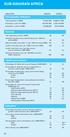 SUB-SAHARAN AFRICA INDICATOR REGION WORLD Demographic indicators Total population (2005) 713,457,000 6,449,371,000 Population under 18 (2005) 361,301,000 2,183,143,000 Population under 5 (2005) 119,555,000
What is Monetization? U.S. International Food Aid Programs
 What is Monetization? Food aid may be distributed directly to target populations or may be sold and the proceeds used to support program-related costs and developmental activities, such as training, technology
How much do you spend on food in a typical month?
 How much do you spend on food in a typical month? $ How much I spend each month in Food Stamps (EBT card benefit). $ How much I spend each month in WIC vouchers. $ How much I spend each month in cash for
Over the last fifty years, the mission of Tdh has been to come to the aid of children and to defend their rights at all times 1
 Monthly Tdh highlights in Haiti bulletin no 3 Terre de hommes child relief Emergency assistance for children and their communities in Haiti (Port-au-Prince, 7 June 2010) Among the 2 million people affected
SUSTAINABLE LIVELIHOODS AND FOOD SECURITY UNDER CHANGING CLIMATE IN DRY AREAS
 Expert Group Meeting on Promoting Best Practices On sustainable Rural Livelihoods in the ESCWA Region Beirut, 24-25 November 2010 SUSTAINABLE LIVELIHOODS AND FOOD SECURITY UNDER CHANGING CLIMATE IN DRY
Nutrition: Gender Marker Tip Sheet Gender Equality in the Project Sheet
 Nutrition: Gender Marker Tip Sheet Gender Equality in the Project Sheet There are five entry points for nutrition clusters to address gender equality in their project sheets: project objective, beneficiaries,
DOMESTIC WORKERS RIGHTS - KENYA
 DOMESTIC WORKERS RIGHTS - KENYA INDEX 1. Introduction... 3 2. Definition and legal rights... 3 3. Role in the economy... 3 4. Life experiences... 4 5. Forms of employment 5 6. Recommendations.. 6 7. References
Health Survey for England 2014: Health, social care and lifestyles. Summary of key findings
 Health Survey for England 2014: Health, social care and lifestyles Summary of key findings List of contents Introduction Page: 3 Social care 5 Planning for future care needs 12 Alcohol consumption 16 Obesity:
Health BUSINESS PLAN 2015 18 ACCOUNTABILITY STATEMENT THE MINISTRY LINK TO GOVERNMENT OF ALBERTA STRATEGIC DIRECTION STRATEGIC CONTEXT
 Health BUSINESS PLAN 2015 18 ACCOUNTABILITY STATEMENT This business plan was prepared under my direction, taking into consideration the government s policy decisions as of October 15, 2015. original signed
Reaching the Breaking Point An IRC briefing note on Syrian refugees in Lebanon
 Reaching the Breaking Point An IRC briefing note on Syrian refugees in Lebanon The humanitarian and political crisis facing Lebanon as a result of the Syrian civil war is unprecedented. As of June 2013,
ZAMBIA EMERGENCY HUMANITARIAN FOOD ASSISTANCE TO FLOOD VICTIMS
 AFRICAN DE DEVELOPMENT BANK Prepared by: OSAN Original: English ZAMBIA EMERGENCY HUMANITARIAN FOOD ASSISTANCE TO FLOOD VICTIMS DEPARTMENT OF AGRICULTURE AND AGRO-INDUSTRY, OSAN April 2008 The Government
DRC Emergency Food Program. FY14 Quarter 1 Report (1 October 31 December 2013) Award Number: AID-FFP-G-13-00046
 DRC Emergency Food Program FY14 Quarter 1 Report (1 October 31 December 2013) Award Number: AID-FFP-G-13-00046 Submission Date: 31 January 2014 Awardee HQ Contact Name : Buck Bradshaw Awardee HQ Contact
Key things to Know About Environment as a. Cross Cutting Issue In Early Recovery
 Key things to Know About Environment as a Cross Cutting Issue In Early Recovery This brief note provides an overview of key things to know about environment for early recovery actors, including Early Recovery
3,365,000 2,185,000 183 million
 PROTECTION Lead agencies: Ministry of Social Affairs (MoSA), UNHCR, UNICEF & UNFPA Contact information: David Welin [email protected], Layal Sarrouh [email protected], Wencke Gelinck [email protected]
Terms of Reference (TOR) for Consulting Services on "Food Consumption and Nutrition Survey of Nepal" Contract ID No.
 Terms of Reference (TOR) for Consulting Services on "Food Consumption and Nutrition Survey of Nepal" 1. Background Contract ID No. MOAD/CS/QCBS-01 Food Consumption Survey provides data on nutrient intake