
SPILL PREVENTION, CONTROL AND COUNTERMEASURE PLAN (SPCC)
|
|
|
- Adrian Park
- 10 years ago
- Views:
Transcription
1 SPILL PREVENTION, CONTROL AND COUNTERMEASURE PLAN (SPCC) Lawrence Berkeley National Laboratory Berkeley, California REVISION 4.0 December 2012

2

3

4 This page intentionally left blank

5 CONTENTS 1 INTRODUCTION PURPOSE APPLICABILITY PLAN MAINTENANCE AND AMENDMENTS DESIGNATED RESPONSIBLE PERSONS GENERAL FACILITY INFORMATION ANALYSIS OF SPILL POTENTIAL SPILL HISTORY PREDICTION OF POTENTIAL SPILLS CONTAINMENT CONTINGENCY PLAN FOR AREAS WITHOUT CONTAINMENT SPILL RESPONSE PROCEDURES FACILITY DRAINAGE SITE DRAINAGE PATTERNS DRAINAGE FROM CONTAINMENT AREAS PLANT EFFLUENT DISCHARGES INTO NAVIGABLE WATERS OIL STORAGE MATERIALS OF CONSTRUCTION ABOVEGROUND STORAGE TANKS (ASTs) RESTRAINTS UNDERGROUND STORAGE TANKS (USTs) DRUM STORAGE AREAS PORTABLE STORAGE TANKS OIL-FILLED ELECTRICAL EQUIPMENT FACILITY TRANSFER OPERATIONS UNDERGROUND PIPING ABOVEGROUND PIPING OUT-OF-SERVICE PIPING FACILITY TANK TRUCK LOADING/UNLOADING INSPECTIONS AND RECORDS RESPONSIBILITIES INSPECTIONS INTEGRITY TESTS AND EVALUATIONS RECORDS iii

6 Spill Prevention Control and Countermeasure Plan (SPCC) 7 SECURITY BARRIERS TO ENTRY LOCKS ON VALVES AND PUMPS FACILITY LIGHTING PERSONNEL TRAINING TRAINING PROGRAMS SPILL PREVENTION BRIEFINGS SPILL NOTIFICATION AND REPORTING REFERENCES DOCUMENTS LIST OF ACRONYMS SPCC PLAN COMPLIANCE REFERENCE TABLE FIGURES: GENERAL FACILITY INFORMATION APPENDIX A: ABOVEGROUND STORAGE TANKS APPENDIX B:UNDERGROUND STORAGE TANKS APPENDIX C: DRUM STORAGE AND WASTE ACCUMULATION AREAS APPENDIX D: OIL-FILLED TRANSFORMERS AND ELECTRICAL EQUIPMENT APPENDIX E: RAINWATER DISCHARGE PROCEDURE AND FORM APPENDIX F: SPCC COMPLIANCE INSPECTION FOR PETROLEUM DRUM STORAGE AREAS: ESG PROCEDURE APPENDIX G: PROCEDURES FOR TANK INTEGRITY TESTING APPENDIX H: SPCC IMPLEMENTATION SCHEDULE iv

7 1 INTRODUCTION 1.1 PURPOSE 1.2 APPLICABILITY 1.3 PLAN MAINTENANCE AND AMENDMENTS 1.4 DESIGNATED RESPONSIBLE PERSONS 1.5 GENERAL FACILITY INFORMATION 1

8 Spill Prevention Control and Countermeasure Plan (SPCC) 1.1 PURPOSE The purpose of this Spill Prevention, Control, and Countermeasure (SPCC) Plan is to provide standards for the storage and usage of oil at the Lawrence Berkeley National Laboratory (Berkeley Lab) that will prevent the discharge of oil into or upon the navigable waters of the United States or adjoining shorelines. This SPCC Plan (Plan) has been prepared in accordance with the requirements set forth in Title 40, Part 112 of the Code of Federal Regulations (40 CFR 112); the California Health and Safety Code Chapter 6.67 (H&SC 6.67); and the United States Department of Energy (DOE) Order No In order to prepare this Plan, Berkeley Lab has analyzed the facility s capability to prevent oil discharges and facilitate safety awareness. By accumulating the information necessary for the Plan, Berkeley Lab promotes the use of appropriate design and operational standards that reduce the likelihood of an oil discharge. This Plan is not intended to address materials classified as hazardous wastes under 40 CFR 265 or Title 22 of the California Code of Regulations (CCR Title 22) stored in the Berkeley Lab s Hazardous Waste Handling Facility. Storage of these materials is addressed in the Resource Conservation and Recovery Act (RCRA) Part B permit for the Berkeley Lab. However, waste oils stored in individual Waste Accumulation Areas (WAAs) located throughout the general facility are not addressed in the RCRA Part B permit application and are therefore addressed in this SPCC Plan. 1.2 APPLICABILITY Facilities are required to prepare SPCC Plans if they store any form of oil or petroleum product in excess of the minimum quantities defined below, and are located such that the facility could reasonably be expected to discharge harmful quantities of oil into navigable waters. Nontransportation facilities are required to prepare SPCC Plans if they meet the following criteria: Have an aggregate aboveground storage capacity of more than 1,320 gallons, or A total underground storage capacity of 42,000 gallons; and Could reasonably be expected to discharge oil in harmful quantities into navigable waters of the United States. The Berkeley Lab currently has: An aggregate aboveground storage capacity that exceeds 1,320 gallons. Total underground oil storage capacity that is less than 42,000 gallons. Capacities of individual storage tanks are listed in the appendices. Completely buried tanks are exempt pursuant to 112.1(d) if they are regulated under 40 CFR 280. However, the location of all exempt underground storage tanks (USTs) are still required to be provided in this the SPCC and marked as exempt on the location map. In addition, storm drains located in outdoor areas throughout the Berkeley Lab eventually discharge into San Francisco Bay, which is a navigable water of the United States. The Berkeley Lab is 2

9 Spill Prevention Control and Countermeasure Plan (SPCC) therefore subject to the requirement to prepare a SPCC Plan. For the purposes of this Plan: Oil is defined in 40 CFR 112.2(a) as oil (or petroleum products) of any kind or in any form, including but not limited to petroleum, fuel oil, sludge, oil refuse and oil mixed with wastes other than dredged spoil. Harmful quantities of oil or petroleum products are defined in 40 CFR 110 as those that (a) violate applicable water quality standards, or (b) cause a film or sheen upon or discoloration of the water or adjoining shorelines or cause a sludge or emulsion to be deposited beneath the surface of the water or upon adjoining shorelines. A bulk oil or petroleum storage unit is defined as a storage tank or drum having a capacity of at least 1 barrel, or 42 gallons. Selection of this quantity was based on the minimum quantity that must be reported in the event of a release (H&SC ). This Plan addresses bulk storage of oil or petroleum products only. The storage of oil may be prior to use, while being used, or prior to further distribution in commerce. Oil filled electrical, operating, or manufacturing equipment is regulated under 40 CFR and must have appropriate containment, but is excluded from the bulk storage container requirements in 40 CFR since the primary purpose of this equipment is not to store oil in bulk. This plan conforms to the requirements outline in 40 CFR PLAN MAINTENANCE AND AMENDMENTS The Environmental Services Group (ESG) of the Berkeley Lab is responsible for maintaining and updating this SPCC Plan. A complete copy of this Plan is maintained at all times at the ESG office and also on the World Wide Web ( This Plan is available to representatives of regulatory agencies for on-site review during normal business hours. The California State Water Resources Control Board may require amendment to the Plan following spills of harmful quantities of oil to navigable waters. The SPCC Plan will be amended within six months following any change in facility design, construction, operation, or maintenance, which significantly affects the potential for discharges of oil into navigable waters. In addition, the Berkeley Lab will review and evaluate the SPCC Plan every five years. Within six months following completion of the review, the Berkeley Lab if necessary will revise the Plan to include any identified improvements in prevention and control technology. A Professional Engineer licensed in the State of California will certify all technical amendments to the SPCC Plan in accordance with 40 CFR 112.5(c) and 112.3(d). Changes in emergency contact names and telephone numbers will be made as they occur and will not require engineering certification. This exception allows for maintaining an emergency contact list, and does not affect the technical/engineering aspects of this Plan. 3

10 Spill Prevention Control and Countermeasure Plan (SPCC) 1.4 DESIGNATED RESPONSIBLE PERSONS The following individuals are those designated responsible for oil spill prevention at Berkeley Lab: Ron Pauer, Group Leader, Environmental Services Group Joe Dionne, Acting Director, Environment/ Health/Safety/Security Division 1.5 GENERAL FACILITY INFORMATION Facility Name and Address: Lawrence Berkeley National Laboratory 1 Cyclotron Road Berkeley, California Type of Facility: Research Laboratory [SIC 8733] Owner Name and Address: U.S. Department of Energy Berkeley Site Office 1 Cyclotron Road, MS 90R1023 Berkeley, California Operator Name and Address: (1) University of California Regents Lawrence Berkeley National Laboratory 1 Cyclotron Road Berkeley, California (2) U.S. Department of Energy Berkeley Site Office 1 Cyclotron Road, MS 90R1023 Berkeley, California Facility Location: Latitude 37 degrees 53 seconds North Longitude 122 degrees 51 seconds East Start-up Date: 1931 Figure 2-1 shows the general site location on a San Francisco Bay Area map. A vicinity map of adjacent land use is shown in Figure 2-2. Figure 2-3 is a facility map indicating site boundaries. Figure 2-4 illustrates site storm and creek(s) drainage. Figure 2-5 shows the topography of the Berkeley Lab site. 4

11 2 ANALYSIS OF SPILL POTENTIAL 2.1 SPILL HISTORY 2.2 PREDICTION OF POTENTIAL SPILLS 2.3 CONTAINMENT 2.4 CONTINGENCY PLAN FOR AREAS WITHOUT CONTAINMENT 2.5 SPILL RESPONSE PROCEDURES 5

12 Spill Prevention Control and Countermeasure Plan (SPCC) 2.1 SPILL HISTORY There have been no known oil or petroleum product spills that have resulted in release of harmful quantities of oil to navigable waters at the Berkeley Lab. Over the years, Berkeley Lab staff has implemented numerous facility improvements that have significantly reduced the potential for release of harmful quantities of oil. Control measures include: Replacement of older Aboveground Storage Tanks (ASTs) with new, current technology tanks, designed with secondary containment. Installing secondary containment, such as sheet metal boxes, concrete berms, and catch basins around ASTs and oil-filled transformers. Leak testing existing containment and re-sealing where necessary. Spill kits are located strategically throughout the site, and are readily accessible. Locating select ASTs in buildings or sheds in addition to secondary containment. Removal or upgrade of all Underground Storage Tanks (USTs) as required by December Consolidation of all 55-gallon drums into Drum Storage Areas (DSAs) with secondary containment. Implementing an integrity testing program for bulk storage containers. Spills at tank removal sites are under the jurisdiction of the City of Berkeley, a Certified Unified Program Agency (CUPA). The Regional and State Water Quality Resources Control Boards have regulatory authority if groundwater is contaminated. The Environmental Restoration Program of the Berkeley Lab is carried out within the auspices of the DTSC approved RCRA Corrective Action Program. In addition, the RCRA Facility Assessment and RCRA Facility Investigation Work Plans are in place. These regulatory agencies, including the East Bay Municipal Utility District, provide regulatory oversight for Berkeley Lab s oil pollution prevention activities. 2.2 PREDICTION OF POTENTIAL SPILLS Aboveground tanks, oil filled electrical equipment and drum storage areas have secondary containment and do not have a reasonable potential to result in a discharge of harmful quantities of oil into navigable waters (i.e., Strawberry Creek). In addition, the Berkeley Lab has implemented numerous control measures, which have significantly reduced the potential for any spills. These control measures include providing spill containment and cleanup kits for those aboveground tanks which cannot reasonably be equipped with secondary containment (i.e. portable emergency generators), and Facilities Division procedures for inspection. 6

13 Spill Prevention Control and Countermeasure Plan (SPCC) 2.3 CONTAINMENT Appropriate containment and/or diversionary structures or equipment used at Berkeley Lab that prevents discharged oil from reaching a navigable water course include the following: Coated concrete berms and sheet metal pans Collection pits in storm drains Booms Curbing, culverts, gutters, and other drainage systems Storage sheds with built-in containment Containment barrels for drums Sorbent materials and spill kits Secondary containment is based on the typical failure mode and most likely quantity of oil that could be discharged. Containment structures used for specific aboveground storage areas are described in Appendices A (Aboveground Storage Tanks-ASTs), C (Drum Storage Areas) and D (Oil Filled Transformers and Electrical Equipment). 2.4 CONTINGENCY PLAN FOR AREAS WITHOUT CONTAINMENT All ASTs and drums used for the storage of oil or petroleum products have secondary containment. Spill kits are located strategically throughout the site, and are readily accessible. In addition, Facilities Division operations and training address necessary procedures to be conducted in the event of any leak or spill. 2.5 SPILL RESPONSE PROCEDURES Berkeley Lab staff is trained in the following SWIMS procedures below for responding to spills. These procedures are posted in areas where potential spills may occur. S W I STOP and THINK. Stop working. Stop the spill. - Assess the situation: How big is the Spill? Has it made contact with your skin or personal clothing? Warn Others -Call x7911 or if there is a medical emergency or danger to life, health or the environment. - Alert people in laboratory. Isolate the Area -Restrict access. -Determine the extent of the spill. -Keep doors closed. 7

14 Spill Prevention Control and Countermeasure Plan (SPCC) M S Monitor Yourself Carefully and Completely -Check yourself for any chemical contamination or signs/symptoms of exposure (wet clothing, skin or respiratory irritation). -For medical emergencies follow directions under the PERSONAL INJURY tab. STAY In or Near the Area Until Help Arrives -Minimize your movements. -Have person knowledgeable of incident assist Emergency Personnel - Notify your supervisor. 8

15 3 FACILITY DRAINAGE 3.1 SITE DRAINAGE PATTERNS 3.2 DRAINAGE FROM CONTAINMENT AREAS 3.3 PLANT EFFLUENT DISCHARGES INTO NAVIGABLE WATERS 9

16 Spill Prevention Control and Countermeasure Plan (SPCC) 3.1 SITE DRAINAGE PATTERNS The topography of the Berkeley Lab site consists of steep hillsides and canyons. The site generally slopes from northeast to southwest with grades as steep as 26 percent. Ground elevations range from 500 ft to 1,050 ft above mean sea level. The northwest portion of the site is located within the North Fork Strawberry Creek watershed, commonly referred to as Blackberry Creek. The remainder of the site is within the South Strawberry Creek Watershed. A map of the site drainage patterns is shown in Figure 2-4, and a map showing the site creeks and topography is shown in Figure 2-5. Surface runoff within the Blackberry Canyon Watershed discharges either directly or via storm drains into North Fork of Strawberry Creek. Surface runoff within the remainder of the site discharges either directly or via storm drain into tributaries of the South Fork of Strawberry Creek. The South Fork mixes with the Botanical Creek forming a settling pond area before overflowing into underground piping. Both the North Fork and the South Fork flow through separate culverts and re-surface on upper portions of the University of California (UC) Berkeley campus. The two creeks eventually merge at the lower end of the UC campus before passing beneath the City of Berkeley and discharging into the San Francisco Bay. Conditions for the creeks and tributaries range from completely dry in the summer months to heavy flows during winter storms. 3.2 DRAINAGE FROM CONTAINMENT AREAS When rainfall results in a significant accumulation of water in secondary containment areas, the water is discharged after each storm event. A Facilities Division procedure for rainwater disposal is presented in Appendix E, along with a rainwater disposal log form. The rainwater disposal procedure will be modified periodically to include secondary containment requiring rainwater disposal that is currently being constructed or planned. Modifications to the rainwater disposal procedure will be made as necessary and included in the Plan without formal modification. The general procedure for discharge of accumulated rainwater from containment is as follows: Bypass valves are normally sealed closed. Bypass valves will be opened and resealed following drainage under responsible supervision. Accumulated liquid will be inspected for color, clarity, odor or the presence of a sheen on the water surface. If the results of the inspection are inconclusive, a sample will be collected and analyzed for the presence of petroleum hydrocarbons. If the accumulated liquid consists of uncontaminated rainwater only, authorized Facilities Division personnel will discharge the liquid through a manually operated valve. The valve will be closed and locked following completion of the discharge. No flapper-type valves are installed in containment areas. If no discharge valves are available, the water will be pumped from the containment area into a nearby storm drain. 10

17 Spill Prevention Control and Countermeasure Plan (SPCC) If the rainwater sample test results indicate the presence of petroleum hydrocarbons, then procedures for contaminated water will be followed for the removal of the rainwater from the containment area. A record of storm water inspections and discharges is maintained using the form presented in Appendix E. The Facilities Division will maintain records for no less than three years. In the event that containment areas are in danger of overflowing and the accumulated rainwater shows evidence of oil contamination, the water will be pumped into temporary storage containers and analyzed to determine the appropriate method of disposal. 3.3 PLANT EFFLUENT DISCHARGES INTO NAVIGABLE WATERS Plant effluents discharged into navigable waters include storm water and ground water discharges from hydraugers located throughout the Berkeley Lab. The hydraugers are hydraulic conduits used to lower the water tables in potentially unstable hills. Many of the hydraugers discharge into the storm drain system. Some hydraugers, which could contain potentially contaminated effluents, are treated onsite before being discharged to the sanitary sewer. The hydrauger discharges are monitored periodically, as reported in the Site Environmental Report for the Lawrence Berkeley National Laboratory (SER). Procedures for monitoring storm water discharges are discussed in the Berkeley Lab Storm Water Monitoring Plan, in compliance with the California General Industrial Storm Water Permit. The ESG is responsible for implementing the Storm Water Monitoring Plan. The Plan requires monitoring of two storm events per year with the results reported in the SER and the Storm Water Monitoring Report. 11

18 4 OIL STORAGE 4.1 MATERIALS OF CONSTRUCTION 4.2 ABOVEGROUND STORAGE TANKS (ASTs) 4.3 RESTRAINTS 4.4 UNDERGROUND STORAGE TANKS (USTs) 4.5 DRUM STORAGE AREAS 4.6 PORTABLE STORAGE TANKS 4.7 OIL-FILLED ELECTRICAL EQUIPMENT 12

19 Spill Prevention Control and Countermeasure Plan (SPCC) Oil storage units at the Berkeley Lab consist of ASTs, Underground Storage Tanks (USTs), drum storage areas, portable tanks, and oil-filled electrical equipment. For the purposes of this Plan, an oil or petroleum product storage unit is defined as a tank or drum having a capacity of at least 1 barrel, or 42 gallons. 4.1 MATERIALS OF CONSTRUCTION All storage units used for oil or petroleum product storage are constructed of materials compatible with such products and in compliance with current construction standards. These materials include carbon-steel, epoxy-coated steel, fiberglass, and plastics that have been certified by the manufacturer to be appropriate for use with petroleum products. All tanks are designed for use under conditions that include atmospheric pressure, the full range of ambient temperatures normally occurring in the San Francisco Bay Area, exposure to rain, and extended periods of sunlight. 4.2 ABOVEGROUND STORAGE TANKS (ASTs) A current list of ASTs, with a description of the secondary containment for each tank, is provided in Appendix A. All of the ASTs containing 42 gallons or more have secondary containment of sufficient capacity to contain the entire contents of the largest tank within the containment area plus a sufficient allowance for precipitation (25-year, 24-hour storm of 4.78 inches as a best management practice). Locations of ASTs are indicated on Figure A-1 in Appendix A. Berkeley Lab tanks are as follows: Double-walled, vault tanks for E85 blend, diesel fuel and transformer oils. Double-walled, belly tanks for standby electricity generation. Several ASTs attached to standby generators (day tanks) are equipped with fiberglass automatic fill lines from USTs. In all cases, these day tanks have now been equipped with relay cutoffs that control solenoid valves, which prevent the uncontrolled pumping of oil in the event of a leak at the day tank. No ASTs at the Berkeley Lab are heated; therefore regulations pertaining to internal heating coils are omitted from discussion in this Plan. 4.3 RESTRAINTS Transformers and ASTs at the Berkeley Lab are bolted to concrete pads within containment berms. 4.4 UNDERGROUND STORAGE TANKS (USTs) A current list of USTs at the Berkeley Lab is presented in Appendix B. The locations of the USTs are shown in Figure B-1 in Appendix B. All UST systems at the Berkeley Lab are double-walled 13

20 Spill Prevention Control and Countermeasure Plan (SPCC) tanks with corrosion protection and automatic release detection capability. Overfill prevention for USTs consists of: Mechanical shutoff valves (flapper valves) for the main fuel USTs at Building 76, and an audible alarm; Formal emergency procedures LBNL UST Emergency Response Plan (April 13, 2009) for responding to a potential overfill situation; and Emergency signs posted that provide instructions for power shutoff in the event of a potential overfill situation. 4.5 DRUM STORAGE AREAS A list of drum storage areas at the Berkeley Lab is presented in Appendix C, along with a description of secondary containment or spill control measures at each area. The list includes WAAs that are currently used for storage of waste oil and hazardous waste. The locations of DSAs are indicated in Figure C-1. The locations of the WAAs are shown in Figure C-2. All WAAs may potentially be used for storage of waste oil, although waste oil that has been recently transferred to the handling facility would not be indicated on the list. Therefore, all WAAs are shown in Figure C-2, including those that do not currently contain waste oils. All WAAs are equipped with secondary containment. Currently, there are five (5) WAAs. Generally, there are only three to four WAAs containing or expected to contain waste oil. The centralized drum storage area is located at Building 79A. Additionally, several small drum storage sheds were constructed throughout the facility. To the extent practical, all oil containing product drums are stored within the sheds or at the drum storage facility. However, because of changing operations throughout the facility, small numbers of drums may periodically be stored near various buildings. Provisions have been made for the storage of these drums on secondary containment pallets, or within secondary containment drums. Additionally, if conditions require the use of a drum within a building, plastic containment barrels and/or plastic drainage/containment pallets are used. The plastic containment barrels are generally used for containment of individual drums in areas where only one or two drums are stored. In accordance with 40 CFR 112.7(e)(2)(ii), secondary containment provided for drum storage areas have sufficient volume to contain the entire contents of the largest single drum or tank plus sufficient freeboard to allow for precipitation (25-year, 24-hour storm event of 4.78 inches as a best management practice), and enough space to allow for 20 minutes of fire sprinkler water (UFC, Art.79). 14

21 Spill Prevention Control and Countermeasure Plan (SPCC) 4.6 PORTABLE STORAGE TANKS Portable storage tanks at the Berkeley Lab are associated with mobile portable standby generators, air compressors, and a small on-site tank truck for delivery of fuel. Most portable tanks are doublewalled or have fabricated metal containment. These tanks are included in the summary of ASTs in Appendix A. The following protective measures are in place at the Berkeley Lab for portable storage tanks: Three portable generators are normally stored at Building 82 and are moved to other locations, as needed. Portable tanks are located and positioned to prevent spilled oil from reaching storm drains or other access points to navigable waters. Portable tanks are equipped with spill kits. The small on-site tank truck for delivery of fuel to individual standby generators is equipped with a spill kit and is continuously manned while delivery and filling operations are occurring. 4.7 OIL-FILLED ELECTRICAL EQUIPMENT A current list of oil-filled electrical transformers is presented in Appendix D. This list includes all facility transformers and those connected to the site primary power distribution system. The transformers are mounted on concrete pads. The Berkeley Lab assumed control of the Grizzly Substation from UC Berkeley during The Grizzly Substation contains five transformers located near Building 36A. The transformer bank designation, oil capacity, and secondary containment adequacy is listed in Appendix D, Table D-1. UC Berkeley retains ownership and responsibility for operation of the Hill Substation, adjacent to the Grizzly Substation. Secondary containment is required for oil filled electrical equipment in order to prevent spills from reaching storm drains. An illegal discharge to the storm drain would constitute a violation of the Clean Water Act. Valves on secondary containment are to be kept in a closed position except to perform approved storm water procedures, (Facilities Division OPER-056-C, Revision 4/29/05, Appendix E). Transformers at the Berkeley Lab are equipped with secondary containment to prevent any leaks from reaching waterways. Containment for transformers is in the form of sheet metal berms, or in the case of some of the larger transformers, containment consists of concrete berms and retention sumps. In some areas, the capacity of the containment area may not be sufficient to contain the entire contents of the largest capacity because of the presence of rocks and gravel in the containment area. The rocks and gravel are an industry standard used to prevent fire and electrical hazards and cannot be removed. 15
22 Spill Prevention Control and Countermeasure Plan (SPCC) No transformers at the Berkeley Lab are classified by Federal standards (40 CFR 761) as polychlorinated biphenyl (PCB) transformers. Some of the transformers are classified in California as PCB-contaminated (i.e., PCBs are present but concentrations are less than 500 parts per million but greater than 5 parts per million). The concentrations of PCBs in the transformer oils are indicated in Appendix D, Table D-1. Other electrical equipment at the Berkeley Lab that contains bulk quantities of oil includes the Marx research and development tanks, which are oil-filled high voltage enclosures, and oil filled electrical switching boxes. A current list of Marx tanks and other research and development tanks is presented in Appendix D, Table D-2. Because of research being conducted at the Berkeley Lab, occasionally there is a temporary need for oil filled electrical equipment as part of experiments being performed by researchers. Currently, there are two temporary storage tanks located in Building 71. These tanks are filled with non-pcb Diala oil and are associated with research being conducted inside the building. One of these tanks is the power supply and has a capacity of 660 gallons; the other tank is part of a Klystron tube and has a capacity of 440 gallons. Both of these tanks are equipped with secondary containment pans to catch any drips or minor spills. Large spills would overflow the pans and would flow to the basement of the building and be retained in a sump. 16
23 5 FACILITY TRANSFER OPERATIONS 5.1 UNDERGROUND PIPING 5.2 ABOVEGROUND PIPING 5.3 OUT-OF-SERVICE PIPING 5.4 FACILITY TANK TRUCK LOADING/UNLOADING 17
24 Spill Prevention Control and Countermeasure Plan (SPCC) 5.1 UNDERGROUND PIPING The Berkeley Lab has upgraded all underground piping associated with USTs prior to December 1998 in accordance with the requirements for underground piping as set forth in the federal UST regulations (40 CFR 280). Underground piping is constructed of fiberglass, a non-corrodible material. 5.2 ABOVEGROUND PIPING All aboveground piping supports will be designed to minimize corrosion and abrasion and to allow for expansion and contraction. Aboveground piping associated with USTs is monitored, visually inspected and periodically subjected to precision leak testing. All aboveground piping and valves associated with ASTs will be inspected as specified in Section 8.0. Precision leak testing is periodically performed on the Building 76 AST (TK ) supply piping which contains 85% ethanol. No aboveground piping is known to be exposed to vehicular traffic. Warning signs and barriers will be posted if future pipeline installations result in exposures of pipelines to traffic. 5.3 OUT-OF-SERVICE PIPING Underground and aboveground piping that is not in service or is in standby service for an extended time will be capped and blank-flanged when removal is not practical. The Berkeley Lab has adopted Lock Out / Tag Out procedures to increase safety around the facility and reduce the chance of spills. Underground piping that is permanently out-of-service will be removed or abandoned in place in accordance with an approved closure plan. 5.4 FACILITY TANK TRUCK LOADING/UNLOADING Transportable storage tanks (tank trucks) are exempt from the provisions of the SPCC Plan, but do comply with additional regulatory requirements, which include spill prevention. The commercial tank trucks that deliver diesel and unleaded gasoline to the Berkeley Lab adhere to the requirements and regulations of the Department of Transportation (DOT) during unloading of fuels. Commercial fuel deliveries are made primarily to the 10,000 gallon USTs at Building 76 and occasionally to the ASTs at Buildings 64 (6,000 gallon) and 74/83 (4,000 gallon). Automatic interlocking systems are installed in the tank trucks to prevent departure of the tank trucks before proper disconnection of the transfer lines. Drains and outlets on the tank trucks are inspected for leaks before departure of the trucks. A bonnet area at the fill pipe of each of the USTs at Building 76 captures small spills of fuel that may occur during loading operations. Administrative controls, including procedures for monitoring and responding situations that could potentially result in a tank 18
25 Spill Prevention Control and Countermeasure Plan (SPCC) overfill, are used to prevent fuel spills during tank loading and unloading. Additionally, the fuel trucks are equipped with a spill kit to respond to spills. The Berkeley Lab has its own diesel fuel delivery truck for fueling ASTs and USTs that support engine generators. Generally, the delivery of fuel is small since engine generators are typically only run once a month. The fuel delivery truck has a capacity of 600 gallons. The fueling nozzle delivers fuel at 26 gallons per minute. The truck is equipped with a fuel pump and a meter for gallons delivered. The following protective measures are in place at the Berkeley Lab for the fuel delivery trucks: A spill kit and some additional spill absorbent are maintained at the truck Two persons monitor the delivery of fuel from this truck to an AST or UST. The fuel delivery nozzle is always manned to prevent spills. 19
26 6 INSPECTIONS AND RECORDS 6.1 RESPONSIBILITIES 6.2 INSPECTIONS 6.3 INTEGRITY TESTS AND EVALUATIONS 6.4 RECORDS 20
27 Spill Prevention Control and Countermeasure Plan (SPCC) 6.1 RESPONSIBILITIES Procedures for the inspection and maintenance of tanks and piping systems are developed and implemented at the Berkeley Lab to ensure proper equipment operations. The Facilities Division oversees leak tests and monitoring of underground tanks and piping and maintains records of the results. Facilities Division personnel also inspect aboveground tanks and piping. The Berkeley Lab Environment/ Health/ Safety/Security (EHSS) Division inspects Drum storage areas and WAAs. 6.2 INSPECTIONS Monthly inspections are conducted of petroleum drum storage areas (Appendix F). Leak detection/monitoring systems for underground tanks and piping are certified annually by an UST certified technician. Precision leak test methods specified in 40 CFR 280 and in CCR Title 23 are used to assess tank conditions. The aboveground storage tanks are inspected by Facilities Division personnel on a monthly basis following Tank Scheduled Maintenance and Inspection Operating Procedure (dated 7/2/02) found in Appendix G. This monthly aboveground storage tank inspection procedure will be enhanced to more closely match the monthly aboveground storage tank inspection guidance from the 2011 Steel Tank Institute SP001 Monthly Inspection Checklist. This activity is listed in the SPCC Implementation Schedule found in Appendix H. In addition to the monthly aboveground storage tank inspection, an annual aboveground storage tank inspection procedure will be developed to meet the new guidance from the 2011 Steel Tank Institute SP001 Annual Inspection Checklist. This activity is listed in the SPCC Implementation Schedule found in Appendix H. The development of the monthly and annual aboveground storage tank inspection procedures will take into consideration the types of aboveground storage tank systems in use at the Berkeley Lab. Inspection elements provided as guidance by the 2011 Steel Tank Institute SP001 standard that are not applicable to the types of aboveground storage tank systems at the Berkeley Lab, or are redundant, will not be included in the aboveground storage tank inspection procedures. The Berkeley Lab Environmental Services Group also conducts formal inspections of drum storage areas on a monthly basis as presented in Appendix F. Users of the materials stored in drum storage areas will visually inspect the drums on an informal basis and will report evidence of leaks to the Environmental Services Group. Waste Management Group personnel will inspect waste drum storage areas that are classified as WAAs on a weekly basis. Any visible oil leaks identified, either during an inspection or normal use, which could result in a significant accumulation of oil within the containment area, will be promptly corrected. 21
28 Spill Prevention Control and Countermeasure Plan (SPCC) 6.3 INTEGRITY TESTS AND EVALUATIONS The Berkeley Lab implements an integrity testing program for bulk storage containers, which include a combination of visual inspection and nondestructive integrity testing. The tank scheduled maintenance and inspection operating procedures for monthly and annual inspections are presented in Appendix G. The program includes formal external inspection by a certified inspector of tanks greater than 5,000 gallons every 20 years. Currently, there are two tanks which are larger than 5,000 gallons located at Building 64 (TK , 6,000 gallons) and Building 84 (TK-4-84, 6,000 gallons). Formal external inspection by a certified inspector is required for the Building 84 AST, TK-4-84, by October 2016 and is required by the Building 64 AST, TK , by November The integrity testing follows the guidelines outlined in the Steel Tank Institute (STI) Standard for Inspection of In-service Shop Fabricated Aboveground Tanks for Storage of Combustible and Flammable Liquids (Standard for Inspection, SPOO1) for in-service shop fabricated tanks. Double-walled, vault tanks are used for storage of E85 blend, diesel fuel and transformer oils. The vaults have a concrete exterior to protect the tank and containment systems. The concrete exterior precludes nondestructive testing via ultrasonic or radiographic testing. No field constructed AST s are used at the Berkeley Lab. 6.4 RECORDS All records required by this SPCC Plan are maintained on-site for a minimum period of three years. After three years, the records may be retained or archived. Inspection records are maintained by the following organizations: EHSS Division Facilities Department Drum inspections (excluding WAAs) Tank inspections WAA inspections Rainwater discharges Spill documentation Integrity tests Environmental compliance inspections 22
29 7 SECURITY 7.1 BARRIERS TO ENTRY 7.2 LOCKS ON VALVES AND PUMPS 7.3 FACILITY LIGHTING 23
30 Spill Prevention Control and Countermeasure Plan (SPCC) 7.1 BARRIERS TO ENTRY Fencing surrounds the Berkeley Lab facility, and gates are locked or guarded. Guard stations at each of the three entry gates control access to the Berkeley Lab. Many of the storage units are located inside buildings which are locked during evening hours. Tanks on the standby generators are generally difficult to access because they are located inside the generators. The WAAs are locked and access is permitted only to authorized personnel. Oil filled electrical equipment are generally located in fenced and locked areas. 7.2 LOCKS ON VALVES Drainage valves for tanks, transformers, and secondary containment berms are controlled within locked and fenced areas or the valves have directly affixed locks. All valves are maintained in the closed position by authorized Facilities Division personnel. Any new system that requires drainage valves will be secured in fenced and locked areas or will have locks affixed to the drainage valves. 7.3 FACILITY LIGHTING Facility lighting is commensurate with the type and location of the facility. The following factors were considered in determining appropriate lighting: The facility consists of 200 acres with numerous buildings, miscellaneous structures, and wooded undeveloped areas. Lighting of the entire facility is neither practical nor desired. The majority of the ASTs are located throughout the facility versus in a central location. There are security patrols of the facility 24 hours a day; a guard at the entry gate and Facilities Division personnel are present at all hours. The facility is surrounded by a fence, which minimizes the potential for vandals entering the facility. 24
31 8 PERSONNEL TRAINING 8.1 TRAINING PROGRAMS 8.2 SPILL PREVENTION BRIEFINGS 8.3 SPILL NOTIFICATION AND REPORTING 25
32 Spill Prevention Control and Countermeasure Plan (SPCC) 8.1 TRAINING PROGRAMS Personnel involved with oil equipment and bulk storage containers at the Berkeley Lab receive instructions, on the job training and or formal classes to ensure adequate understanding in the proper operation and maintenance of equipment and spill prevention. Training may include: Discussion regarding applicable pollution control laws, rules, and regulations; Introduction of new technology or revised procedures; and Familiarization with the SPCC Plan, emphasizing the SPCC Plan as a resource for informing current and new employees to enhance response and pollution awareness. Training associated with the Plan is considered job-related or required training. Whenever such training occurs, the facility manager(s) and/or the directorate s delegated personnel will record attendance of participants. The Waste Management Group personnel who may assist in responding to spills receive statecertified training in emergency response, control, and containment. This training includes a 24-hour Hazardous Materials First Responder Training course or its equivalent, and an 8-hour Annual Refresher Course Hazardous Waste Operations and Emergency Response Personnel or its equivalent. The 24-hour Hazardous Materials First Responder Training and the 8-hour Annual Refresher Course for Hazardous Waste Operations and Emergency Response Personnel courses comply with Federal OSHA regulation 29 CFR In the event of a hazardous substance spill, other EHSS personnel are also trained to provide second-responder services in order to help mitigate the effects of the spill on the surrounding population and environment. First response emergency services are provided by the Alameda County Fire Department s on-site fire station. WAA supervisors are trained in procedures for proper handling and storage of hazardous waste by attending training courses provided by EHSS. WAA supervisors attend EHSS course 610, Waste Accumulation, and EHSS course 604, Hazardous Waste Generators (see Publication 3092, revision 7.1, October 2011). 8.2 SPILL PREVENTION BRIEFINGS The ESG representative will, as found necessary, conduct spill prevention briefings, training sessions, meetings or issue reports/memos to assure adequate understanding of this SPCC Plan. These activities will: Highlight and describe known spill events or failures; Provide a brief overview of applicable regulations, provide an update on changes or updates to the SPCC Plan or regulations; 26
33 Spill Prevention Control and Countermeasure Plan (SPCC) Provide a review of SPCC procedures and recently developed precautionary measures; and Provide an opportunity for comments and discussion. These activities may also be included as part of the personnel training. The target audience will include both EHSS personnel and Facilities Division personnel responsible for implementation of the SPCC Plan or procedures, and other personnel that may be affected by the requirements in this SPCC Plan. As much as possible, SPCC awareness will be incorporated into other required EHSS training courses. Periodically, the ESG will schedule/conduct refresher/training classes for SPCC awareness. The official SPCC training course is EHSS SPILL NOTIFICATION AND REPORTING Individual agencies have spill notification and reporting requirements that apply if a release of oil occurred at the Berkeley Lab. Federal, state and local agency notification and reporting requirements for unauthorized oil releases are summarized below. Berkeley Lab staff who discovers a spill immediately notifies the Environment/Health/Safety/Security Division (EHSS) by calling All regulatory notifications are performed by the Environmental Services Group within EHSS. a) The National Response Center shall be contacted immediately at if any of the following conditions are met: i. The oil spill/release will reach the creeks via the storm drain system. ii. Water quality standards could be violated. iii. The spill/release could cause a film or sheen in the creeks. iv. The spill/release could cause a sludge or emulsion. b) The California Emergency Management Agency (Cal EMA) shall be contacted immediately at if any of the following conditions are met: i. The reportable quantity of oil or petroleum products is 42 gallons or more by direct discharge to the receiving waters (creek). [ref. Ca. Water Code 13272(f)] Note that immediate is defined as, as soon as the person has knowledge of the discharge, notification is possible, and notification can be provided without substantially impeding cleanup or other emergency measures. [ref. Ca Water Code 13272(a)] 27
34 Spill Prevention Control and Countermeasure Plan (SPCC) c) If a report is made to Cal EMA, then the spill/release shall also be reported to: i. City of Berkeley Toxics Management Division: (510) ii. San Francisco Regional Water Quality Control Board, Spill Hotline: (510) iii. California Department of Fish & Game: (707) d) For releases which reach the San Francisco Bay, the US Coast Guard Marine Safety Office shall be contacted at e) To the extent known, the following information should be provided to the regulatory agencies during the initial telephone notification [ref. 40 CFR 112.7(a)(4)]: i. Your name, location, organization, and telephone number ii. Date and time of the incident iii. Location of the incident iv. Type of petroleum product spilled/released v. Estimates of the total quantity discharged vi. Estimate of the total quantity that has reached the creek vii. Source of discharge viii. A description of all affected media ix. The cause of the discharge x. Any damages or injuries caused by the discharge xi. Actions being taken to stop, remove, and mitigate the effects of the discharge xii. Whether an evacuation may be needed xiii. The names and individuals and/or organizations who have also been contacted xiv. Weather conditions at the incident location (optional) f) If the spill/release is greater than 1,000 gallons or this is the second spill/release greater than 42 gallons with twelve (12) months, the Environmental Services Group must prepare a written report of the incident. The written report of the incident must be submitted to US EPA Region IX, 75 Hawthorn Street, San Francisco, CA with copies to the City of Berkeley Toxics Management Division and the San Francisco Regional Water Quality 28
35 Spill Prevention Control and Countermeasure Plan (SPCC) Control Board within 60 days [ref. 40 CFR (a) & (c)]. The written report of the incident must include the following: i. Name of the Facility ii. Your name iii. Location of the Facility iv. Maximum storage or handling capacity of the facility v. Corrective action and countermeasures you have taken, including a description of equipment repairs and replacements vi. An adequate description of the facility, including maps, flow diagrams, and topographical maps, as necessary vii. The cause of such discharge, including a failure analysis of the system or subsystem in which the failure occurred viii. Additional preventive measures you have taken or contemplated to minimize the possibility of recurrence; and ix. Such other information as US EPA Region IX may reasonably require pertinent to the SPCC plan or discharge. g) The following spill cleanup contractors are available for response: i. Primary Veolia ( ) LBNL contract No ii. Secondary PSC ( ) LBNL contract No
36 9 REFERENCES 9.1 DOCUMENTS 9.2 LIST OF ACRONYMS 9.3 SPCC PLAN COMPLIANCE REFERENCE TABLE 30
37 Spill Prevention Control and Countermeasure Plan (SPCC) 9.1 DOCUMENTS Emergency Procedures Environment, Health & Safety Manual, Emergency Services, Chapter 9, Publication 3000, Master Emergency Plan, Pub 533, Additional Plans and Procedures Berkeley Lab Environmental Monitoring Plan, Chemical Hygiene and Safety Plan, Hazardous Materials Business Plan (HMBP, Inventory) Stormwater Pollution Prevention Plan, Berkeley Lab s Hazardous Waste Handling Facility, RCRA Part B Permit, Section VIII - Contingency Plan, July Underground Storage Tanks: Emergency Response Plan, April Regulatory Code of Federal Regulations, Title 40, parts 110 and 112. Department of Energy, DOE Order California Health and Safety Code, Section California Water Code, Section City of Berkeley Municipal Code, Hazardous Material Disclosure Ordinance, BMC Chapter City of Oakland Municipal Code, Chapter 20, Storm Water Management and Discharge Control, Ordinance No C.M.S Specialty Berkeley Lab Site Environmental Report, Strawberry Creek, A Walking Tour of Campus Natural History, December
38 Spill Prevention Control and Countermeasure Plan (SPCC) 9.2 LIST OF ACRONYMS AST BTEX CCR CFR CUPA DCA DCE DOE DOT EHSS EPA ESG H&SC HWM IC ICS LBNL MEK MW MSL NDT PCB PCE PPM RCRA RFA RFI RWQCB SPCC TCA TCE TPH-D TPH-G UST VOC WAA Aboveground storage tank Benzene, Toluene, Ethlybenzene, and Xylenes California Code of Regulations Code of Federal Regulations Certified Unified Program Agency Dichloroethane Dichloroethene Department of Energy Department of Transportation Environment, Health, Safety, and Security Environmental Protection Agency Environmental Services Group Health and Safety Code Hazardous Waste Management Incident Commander Incident Command System Lawrence Berkeley National Laboratory Methyl ethyl ketone Monitoring well Mean sea level Nondestructive testing Polychlorinated biphenyl Perchloroethylene Parts per million Resource Conservation and Recovery Act RCRA Facility Assessment RCRA Facility Investigation Work Plan Regional Water Quality Control Board Spill Prevention, Control, and Countermeasure Trichloroethane Trichloroethene Total Petroleum Hydrocarbons as Diesel Total Petroleum Hydrocarbons as Gasoline Underground storage tank Volatile organic compound Waste Accumulation Area 32
39 Spill Prevention Control and Countermeasure Plan (SPCC) 9.3 SPCC PLAN COMPLIANCE REFERENCE TABLE Reg. 40 CFR 112 Requirement SPCC Plan Section (d) P.E. certification After Title Page (c) Plan Maintenance (a) Agency review and amendment Amendments by owner/operator Management approval After title page (a)(1) Rule Conformance (a)(3) Facility Diagram Figures 2-1, 2-2, 2-3, 2-4 and (a)(4) Spill Reporting (a)(5) Spill Response Procedures (b) Prediction of spills (c) Containment and diversionary structures (c)(2) Offshore Facilities N/A (c)(3) Rainwater Drainage (d) Integrity Tests (d)(1) Oil spill contingency plan (e) Inspection and records 6 (all sections) (f) Personnel Training 8 (all sections) (g) Security 7 (all sections) (h) Facility tank car loading/unloading (i) Brittle Fracture Requirement (b) Facility drainage 3 (all sections) (c) Bulk storage 4 (all sections) (c)(1) Materials of construction (c)(2) Secondary containment on storage unit 4.2, 4.4, 4.5, (c)(3) Rainwater drainage (c)(4) Underground tanks (c)(5) Partially buried tanks Not applicable (c)(6) Tank Inspections Integrity Tests (c)(7) Internal heating coils Not applicable (c)(8) Overfill protection 4.2, (c)(9) Plant effluents (c)(10) Visible oil leaks (c)(11) Portable storage tanks (d) Transfer operations 5 (all sections) (d)(1) Underground piping (d)(2) Out-of-service piping (d)(3) Piping supports (d)(4) Piping inspections (d)(5) Traffic warnings
40 FIGURES GENERAL FACILITY INFORMATION FIGURE 2-1 FIGURE 2-2 FIGURE 2-3 FIGURE 2-4 FIGURE 2-5 SAN FRANCISCO BAY AREA MAP ADJACENT LAND USE MAP LAWRENCE BERKELEY NATIONAL LABORATORY BUILDINGS MAP SITE STORM DRAINAGE SITE CREEKS AND TOPOGRAPHY 34
41 Spill Prevention Control and Countermeasure Plan (SPCC) Figure 2-1 San Francisco Bay Area Map 35
42 Spill Prevention Control and Countermeasure Plan (SPCC) Figure 2-2 Adjacent Land Use Map 36
43 UC Grid North M True North 1 (UC) No rth tic Stanley Hall 90R 90Q ) (UC Calvin Lab 56W 56 Former Bldg. 51 (Bevatron) Site 64B 64C 71X Memorial Stadium 71W Figure 2-3: Lawrence Berkeley National Laboratory Buildings Map ag ne nni ente GPL 1 site C proposed SERC site Lawrence Hall of Science rive al D KEY LBNL Perimeter LBNL Buildings SER_FIGURE_4.1_CSO_LBNL_Grid
44 Spill Prevention Control and Countermeasure Plan (SPCC) Figure 2-4 Site Storm Drainage 38
45 Spill Prevention Control and Countermeasure Plan (SPCC) Figure 2-5 Site Creeks and Topography 39
46 APPENDIX A ABOVEGROUND STORAGE TANKS FIGURE A-1 TABLE A-1 ABOVEGROUND STORAGE TANK MAP SUMMARY OF ABOVEGROUND STORAGE TANKS 40
47 KEY LBNL Buildings LBNL Perimeter Aboveground storage tanks SPCC_FIGURE_A.1 Rev. 9/12 Lawrence Hall of Science 71X 90Q 90R 71W 56 64B 64C 56W (UC) Former Bldg. 51 (Bevatron) Site proposed SERC site GPL 1 site 1 (UC) Stanley Hall Centennial Drive True North Calvin Lab Memorial Stadium UC Grid North Magnetic North
48 Spill Prevention Control and Countermeasure Plan (SPCC) Table A-1: Summary of Aboveground Storage Tanks (ASTs) Building Tank No. Capacity (gallons) Contents Use Containment Status 2 EG Diesel Service to engine generator Concrete berm with coating No action required 37 TK Diesel Service to EG-73-6 Concrete berm inside building No action required 37 EG Diesel Service to EG which supports Building 15 Double wall tank with leak detection. No action required 48 EG Diesel Service to engine generator Double wall tank with leak detection. No action required 50 Complex EG A 340 Diesel Service to engine generator Double wall tank with leak detection. No action required 50 Complex EG-95-50B 275 Diesel Service to engine generator Double wall tank with leak detection. No action required. 58A TK-02-58A 2,000 Transformer Oil Service to R&D Marx tanks Double wall w/ leak detection (buzzer) No action required 62 EG Diesel Service to engine generator Double wall tank w/leak detection No action required 62B EG-81-62B 55 Diesel Service to engine generator Double wall tank No action required 64 EG Diesel Service to engine generator Double wall tank No action required 64 TK ,000 Diesel Service to 2 MW engine generator Double wall tank 42 Formal Inspection by 11/ TK Motor oil Service to 2 MW engine generator Single wall tank with spill kit No action required 66 EG Diesel Service to engine generator 67 TK A 1,500 Diesel Service to engine generator 67 TK A 100 Diesel Service to engine generator (day tank) External Required Double walled tank with leak detection and No action required alarm at EMCS Double walled tank with leak detection via No action required Veeder Root Monitor 300 Double walled tank with leak detection via No action required Simplex control panel 68 TK Diesel Service to fire water pump Metal containment bin inside building No action required 70 EG Diesel Service to engine generator Double wall tank No action required 70A TK-15-70A 983 Diesel Service to engine generator Double wall w/ leak detection No action required 70A TK-14-70A 50 Diesel Daytank filled from TK-15-70A Inside building, double wall tank w/ leak No action required detection 72 TK ,000 Diesel Service to EG Double wall tank with leak detection. No action required 75 TK Diesel Service to EG Metal containment bin with cover No action required 76 TK ,000 85% Ethanol / Fuel dispensing 15% Gasoline Double wall tank with leak detection at tank No action required connected to Veeder Root TLS SCT Motor oil Storage, motor pool Double wall containment No action required 77 TK Diesel Service to EG Double wall tank No action required 82 TK Diesel Service to fire water pump Inside building with metal containment unit No action required
49 Spill Prevention Control and Countermeasure Plan (SPCC) Table A-1: Summary of Aboveground Storage Tanks (ASTs) Continued Building Tank No. Capacity (gallons) Contents Use Containment Status 82 (P) EG Diesel 100 kw generator (portable) Spill kit provided No action required 82 (P) EG Diesel 150 kw Cummins generator (portable) Metal berm No action required 82 (P) EG Diesel Service to Portable Engine Generator Double walled belly tank No action required 83 TK ,000 Diesel Service to engine generator EG Double wall tank with leak detection. No action required Formal 84 TK ,000 Diesel Service to engine generator Double wall w/ leak detection, locked room Inspection by 10/ TK-4-84B 100 Diesel Service to 84-EG-112 Simplex sheet metal berm with leak detection No action required 85 TK Diesel Service to EG-85 (day tank) Double wall w/ leak detection No action required External Required 43
50 APPENDIX B UNDERGROUND STORAGE TANKS FIGURE B-1 TABLE B-1 UNDERGROUND STORAGE TANK MAP SUMMARY OF UNDERGROUND STORAGE TANKS (USTs) 44
51 KEY LBNL Buildings LBNL Perimeter Underground storage tank locations for petroleum hydrocarbons SPCC_FIGURE_B.1Rev. 9/12 Lawrence Hall of Science 71X 90Q 90R 71W 56 64C 64B 56W (UC) Former Bldg. 51 (Bevatron) Site proposed SERC site GPL 1 site 1 (UC) Stanley Hall Centennial Drive True North Calvin Lab Memorial Stadium UC Grid North Magnetic North
52 Spill Prevention Control and Countermeasure Plan (SPCC) Table B-1: Summary of Underground Storage Tanks (USTs) Bldg. Tank No. City of Berkeley ID# Generator Capacity (gallons) Contents Construction Installed Monitoring 2 TK-3-2 COB 2-1 Boilers BR- 1-2, BR-2-2 4,000 Diesel Double-wall fiberglass 1988 Interstitial monitoring, Veeder Root TLS TK-4-2 COB 2-2 EG ,000 Diesel Double-wall fiberglass 1988 Interstitial monitoring, Veeder Root TLS TK-1-55 COB 55-1 EG ,000 Diesel Double-wall steel with fiberglass reinforced plastic corrosion protection 1986 Interstitial monitoring, Veeder Root TLS TK COB 76-1 N/A 10,000 Unleaded Gasoline Double-wall Glasteel with fiberglass reinforced plastic corrosion protection 1990 Automatic tank gauging and leak detection; Veeder-Root 350, tank level and interstitial monitoring for vapor and secondary containment; mechanical line leak detector (Red Jacket) 76 TK COB 76-2 N/A 10,000 Diesel Double-wall Glasteel with fiberglass reinforced plastic corrosion protection 1990 Automatic tank gauging and leak detection; Veeder-Root 350, tank level and interstitial monitoring for vapor and secondary containment; mechanical line leak detector (Red Jacket) 85 TK COB 85-1 EG-85 2,500 Diesel Double-wall FRP (reinforced fiberglass) 1995 Automatic tank gauging and hydrostatic leak detection (brine filled),veeder-root TLS
53 APPENDIX C DRUM STORAGE AND WASTE ACCUMULATION AREAS FIGURE C-1 FIGURE C-2 TABLE C-1 TABLE C-2 DRUM STORAGE MAP WASTE ACCUMULATION AREA (WAA) MAP LOCATION OF DRUM STORAGE AREAS LOCATION OF WASTE ACCUMULATION AREAS (WAA) 47
54 KEY LBNL Buildings LBNL Perimeter Drum storage area locations for petroleum hydrocarbons SPCC_FIGURE_C.1Rev. 9/12 Lawrence Hall of Science 71X 90Q 90R 71W 56 64C 64B 56W (UC) Former Bldg. 51 (Bevatron) Site proposed SERC site GPL 1 site 1 (UC) Stanley Hall Centennial Drive True North Calvin Lab Memorial Stadium UC Grid North Magnetic North
55 KEY LBNL Buildings LBNL Perimeter Waste accumulation areas SPCC_FIGURE_C.2 Rev. 9/12 Lawrence Hall of Science 71X 90Q 90R 71W 56 64C 64B 56W (UC) Former Bldg. 51 (Bevatron) Site proposed SERC site GPL 1 site 1 (UC) Stanley Hall Centennial Drive True North Calvin Lab Memorial Stadium UC Grid North Magnetic North
56 Spill Prevention Control and Countermeasure Plan (SPCC) Table C1: Location of Drum Storage Areas (DSAs) Building Location No. of Drums with Oil/Petroleum products Contents Containment Action for SPCC 16 South corner 1 (2 max.) Vacuum pump oil Storage shed No action required 58A South of building 3 Various oils Storage shed w/containment No action required 62 East of building Varies (4 max.) -- Drum storage shed No action required 79A Entire building 21 Various oils Central drum storage No action required Table C2: Location of Waste Accumulation Areas (WAAs) Building Location Division 62 East side of building Material Sciences 76 East side of building Facilities 77A "Q" Plating South side of building Engineering 77A "R-S" Paint West side at Paint Shop Engineering 81 Northeast of building EHSS Note: The new name for the EH&S Division is EHSS. 50
57 APPENDIX D OIL-FILLED TRANSFORMERS AND ELECTRICAL EQUIPMENT FIGURE D-1 TABLE D-1 TABLE D-2 OIL-FILLED TRANSFORMER PAD LOCATIONS OIL FILLED TRANSFORMERS OIL-FILLED R & D ELECTRICAL 51
58 KEY LBNL Buildings LBNL Perimeter Oil-filled transformer pad locations SPCC_FIGURE_D1 Rev. 9/12 Lawrence Hall of Science 71X 90Q 90R 71W 56 64C 64B 56W (UC) Former Bldg. 51 (Bevatron) Site proposed SERC site GPL 1 site 1 (UC) Stanley Hall Centennial Drive True North Calvin Lab Memorial Stadium UC Grid North Magnetic North
59 Spill Prevention Control and Countermeasure Plan (SPCC) Table D-1: Oil-Filled Transformers Building Bank Fluid Capacity PCB Concentration Secondary Containment Provided (gallon) (ppm) Oil 403 ND Yes Oil 404 ND Yes Oil 404 ND Yes Oil 219 ND Yes Oil 167 ND Yes Oil 225 ND Yes Oil 442 ND Yes 6 upper pad/419 Oil 1113 ND Yes spare Oil 250 ND Yes spare Oil 305 ND Yes 27 CTS-HVPS-1 Oil 150 ND Yes 36A 1-A Oil 2700 ND Yes 36A 1-B Oil 2700 ND Yes 36A 1-C Oil 2700 ND Yes 36A 1-Spare Oil 2700 ND Yes 36A 2 Oil 5865 ND (new 5/10) Yes 37A 218 Oil 178 ND Yes Silicone oil 161 ND Yes Oil 265 ND Yes 50A 35 Silicone oil 412 ND Yes 50B 38 Silicone oil 190 ND Yes 58C 36 Oil 350 ND (new 1/94) Yes 58C 158 Oil Yes Oil 199 ND Yes 69 SUB 217 Oil 285 ND Yes Oil 129 ND Yes Oil 219 ND Yes 70A 31 Oil 360 ND Yes Oil 428 ND Yes Oil Yes Oil Yes Oil Yes Oil Yes Oil 274 ND Yes 88 GE 100 Oil Yes 88 GE 20 Oil Yes 88 GE 60 Oil Yes 88 GT 0 Oil Yes 88 RV-1-88 Oil Yes 88 RV-1-88 Oil Yes 88 RV-1-88 Oil Yes 88 SPARE Oil Yes Oil 330 ND Yes 53
60 Spill Prevention Control and Countermeasure Plan (SPCC) Table D-2: Oil-Filled R & D Electrical Building Equipment Fluid Capacity 58 Marx Tank Diala oil Marx Tank Diala oil Marx Tank Diala oil Marx Tank Diala oil Power Supply 85 kv Diala oil Klystron Tube Diala oil Pulse Forming Network Diala oil Induction Cells Diala oil NDCX II (40 30 gals each) Diala oil
61 APPENDIX E RAINWATER DISCHARGE PROCEDURE AND FORM 55
62
63
64
65
66
67
68 APPENDIX F SPCC COMPLIANCE INSPECTION FOR PETROLEUM DRUM STORAGE AREAS: ESG PROCEDURE
69 SPCC Compliance Inspection for Petroleum Drum Storage Areas EH&S Procedure 210 Revision 0 Effective Date: October 11, 2011 Ernest Orlando Lawrence Berkeley National Laboratory Environment, Health, and Safety Division Environmental Services Group
70 Annual Review Signature Sheet Prepared By: Date: Name, Title Revision 0 10/10/2011 Page i
71 Revisions EH&S Procedure 210 Revision X Effective Date: Preparer: Specific changes: Prepared By: Date: Name, Title Revision 0 10/10/2011 Page ii
72 SPCC Compliance Inspection for Petroleum Drum Storage Areas Table of Contents 1. Overview Definitions Responsibilities Policy Preoperational Procedures Inspection Procedures References Records... 7 Appendix A: Petroleum Drum Storage Area Monthly Inspection Checklist... 8 List of Tables Table 1. Location of Petroleum Drum Storage Areas...1 List of Figures Figure 1. Petroleum Drum Storage Areas at Berkeley Lab (from SPCC Plan, 2007)...2 Revision 0 10/10/2011 Page iii
73 Environmental Services Group EH&S Procedure Overview 1.1 Purpose The purpose of this Procedure is to establish the responsibilities and describe the process for the inspection of the petroleum drum storage areas at Lawrence Berkeley National Laboratory (Berkeley Lab), which will help ensure compliance with Title 40, Part 112.7(e) of the Code of Federal Regulations and requirements set forth in Berkeley Lab s Spill Prevention, Control and Countermeasure Plan (SPCC) (October 2007). The inspection and maintenance of the petroleum drum storage areas are the responsibility of Berkeley Lab s Environmental Services Group within the Environment, Health, and Safety Division (EH&S). This Procedure was developed using best management practices employed at Berkeley Lab and the Steel Tank Institute (STI) standard (SP001) for inspection of aboveground storage tanks (with special attention given to the STI SP001 Portable Container Monthly Checklist). 1.2 Scope Petroleum oil storage units at Berkeley Lab consist of aboveground storage tanks, underground storage tanks, drum storage areas, and oil-filled electrical equipment. This Procedure is written specifically for the petroleum drum storage areas at Berkeley Lab. There are four petroleum drum storage areas and currently at the Berkeley Lab (Table 1 and Figure 1 list the locations of the petroleum drum storage areas.) Table 1. List of Petroleum Drum Storage Areas Building Location Maximum No. of Drums with Oil/Petroleum Products Containment 16 South corner of building 2 Storage shed with containment 58B South of Building 58A 2 Storage shed with containment 62D East of Building 62 5 Storage shed with containment 79A South of Building Central drum storage with containment Revision 0 10/10/2011 Page 1
74 Environmental Services Group EH&S Procedure 210 Figure 1. Map of Petroleum Drum Storage Areas at Berkeley Lab (from SPCC Plan, 2007) Revision 0 10/10/2011 Page 2
75 Environmental Services Group EH&S Procedure Definitions For the purposes of this Procedure: Oil: Oil (or petroleum products) of any kind or in any form, including but not limited to petroleum, fuel oil, sludge, oil refuse and oil mixed with wastes other than dredged spoil. [Per 40 CFR 112.2(a)] Bulk oil or petroleum storage unit: A drum having a capacity of at least 42 gallons. Selection of this quantity was based on the minimum quantity that must be reported in the event of a release (California Health and Safety Code, Chapter 6.67). Portable container: A closed aboveground storage tank having a liquid capacity equal to or greater than 55 U.S. gallons and not intended for fixed installation. 3. Responsibilities The Berkeley Lab s Environmental Services Group (ESG) is responsible for overall implementation of this procedure. 3.1 Group Leader Reviews safety compliance and authorizes work. Establishes ESG-required policies and procedures. Obtains necessary funding to support ESG policies and procedures. Ensures ESG policies and procedures meet regulatory standards and DOE requirements. 3.2 Program Manager Provides training to the Technician/Inspector on performing inspections and completing the Petroleum Drum Storage Area Monthly Inspection Checklist. Oversees safety compliance. Oversees care, maintenance, and disposition of records. Assesses Procedure implementation. 3.3 ESG Program Technician Completes Job Hazards Analysis and performs work within required safety controls. Conducts drum area inspections and submits inspection checklist forms. Informs Program Manager of non-compliance or maintenance issues and coordinate with Program Manager to assign/implement/document corrective actions. 4. Policy 4.1 Basic Health and Safety Policy ESG personnel must comply with: Revision 0 10/10/2011 Page 3
76 Environmental Services Group EH&S Procedure 210 Berkeley Lab implementation of applicable DOE health and safety policies, and other applicable federal, state, and local fire, health, safety, emergency preparedness, pollution prevention, and environmental protection regulations and policies. All Berkeley Lab health and safety policies including those described in the Berkeley Lab Health and Safety Manual, PUB-3000; Berkeley Lab and EH&S Division Integrated Safety Management (ISM) Plans; and ERP s Health and Safety Program Plan. NOTE: Hazards associated with this Procedure s activities have been reviewed, and it is noted that no hands on work is performed during the execution of this procedure. 4.2 Training Requirements At a minimum, the following Berkeley Lab safety training courses are required for permanent employees and guest workers (subcontractors holding a Berkeley Lab badge): Introduction to EH&S at Berkeley Lab (EHS0010) General Employee Radiation Training (EHS0405) On the job training includes: Review of the petroleum drum storage area locations at the Berkeley Lab site and reviewing this Procedure. 5. Preoperational Procedures 5.1 Hazard Identification and Safety Controls LBNL Health and Safety Manual, PUB-3000 provides detailed information on general hazards and safety precautions for work conducted at LBNL. Summaries of those primary hazards applicable to the activities covered by this Procedure and relevant controls are described in sections through The Personnel Protective Equipment (PPE) required for activities conducted under this Procedure is listed in Section General Hazards When working in the field, be aware of the potential for sun exposure and apply sunscreen. Heat stress can occur during prolonged activity in hot weather, when ventilation is poor, or when the work routine does not provide adequate resting periods or adequate replacement of electrolytes. Field personnel should have available an adequate supply of drinking water and take breaks whenever necessary. When working in pairs be observant of heatassociated effects in co-workers and stop work if necessary. Always be aware of your surroundings and try to minimize the amount of time in isolated spaces. Thoroughly wash your hands after returning from field activities Trip and Fall Hazards Trip and fall hazards occur when activities involve ladders, stairs, piping, uneven ground, wet slippery surfaces, or working in brushy areas. Non-slip footwear and clothing appropriate for the weather and site conditions should be worn to minimize the potential Revision 0 10/10/2011 Page 4
77 Environmental Services Group EH&S Procedure 210 for trips and falls. Assure that good housekeeping procedures are maintained around the work area to prevent tripping hazards Chemical Hazards Chemical hazards include potential exposure to petroleum products. If unusual conditions arise that indicate the potential need for respiratory protection or additional monitoring, contact the Program Leader before proceeding. During the inspection the ESG Technician is not required to touch the drums or drum pumps. A visual observation is all that is required Traffic Hazards Traffic hazards (i.e. being struck by a moving vehicle) are present when walking between petroleum drum storage area locations. Crosswalks must be used where available when crossing streets. Traffic hazards also include those associated with driving vehicles during the conduct of Procedure activities (i.e. traffic accidents). All personnel driving vehicles at LBNL must adhere to all LBNL traffic safety requirements Ergonomic Hazards The majority of injuries at LBNL are related to ergonomics. These injuries can result from the following causes: improper lifting techniques, repetitive motion, and improper tool use. No activity-specific ergonomic hazards applicable to this Procedure have been identified beyond general hazards discussed in LBNL Pub 3000, Health and Safety Manual. No hands-on-work is conducted during an inspection. 5.2 Office/Field Preparation Review this Procedure. Review facility maps that show locations of petroleum drum storage areas to be inspected. Obtain Checklist for use and documentation. Print the Petroleum Drum Storage Area Monthly Inspection Checklist in Appendix A of this document. Bring digital camera to document deficiencies/findings. 5.3 Personal Protective Equipment (PPE) The following PPE is required for activities conducted under this Procedure. Minimum Level D (e.g., safety glasses, closed toed shoes, long pants etc.) that meet the requirements of Berkeley Lab s health and safety protocol. Revision 0 10/10/2011 Page 5
78 Environmental Services Group EH&S Procedure Inspection Procedures 6.1 Inspections The ESG Program Technician is responsible for gathering appropriate information and data to complete the Petroleum Drum Storage Area Monthly Inspection Checklist. For each monthly inspection, the ESG Program Technician shall: Step Action 1. Use the Petroleum Drum Storage Area Monthly Inspection Checklist in Appendix A to document all observations and deficiencies. 2. Check for the integrity of the drums and secondary containment by looking for leaks, cracks and corrosion. 3. Sign and date the Checklist. 4. File signed Checklists with the Berkeley Lab Hazardous Materials & Wastewater Discharges Program Manager for a period of three years. 5. Bring deficiencies to the attention of the ESG for resolution in an appropriate timeframe. 7. References LBNL Spill Prevention, Control and Countermeasure Plan, revision 3, October LBNL/Pub 3000 Health and Safety Manual, latest revision LBNL Integrated Safety Management Plan, latest revision Steel Tank Institute, Standard SP001- Standard for the Inspection of Aboveground Storage Tanks, July 2006, 4th Edition Revision 0 10/10/2011 Page 6
79 Environmental Services Group EH&S Procedure Records 8.1 Records Created The following records will be created by this procedure: Petroleum Drum Storage Area Monthly Inspection Checklist 8.2 Records Retention The Hazardous Material and Wastewater Discharges Program Manager retains hardcopies of all the records (monthly checklists) created by this procedure. These records are retained by the Hazardous Material and Wastewater Discharges Program Manager for a minimum of three years. Three years of records are to be available for inspection by the City of Berkeley. 8.3 Records Care and Maintenance The Hazardous Material and Wastewater Discharges Program Manager is responsible for the care, maintenance, and disposition of records according to Berkeley Lab s records management policies and procedures, as listed in Section 1.18 of Berkeley Lab Pub-201, Regulations and Procedures Manual. Records must be maintained in an organized system so that the records are protected and easily accessed when needed. 8.4 When Records are Transferred to Archives for Storage All records created in this procedure are reviewed after five years for transfer to the Berkeley Lab Archives and Records Office. Records must be transferred to the Berkeley Lab Archives and Records Office as described in Berkeley Lab Pub 201, Regulations and Procedures Manual. Revision 0 10/10/2011 Page 7
80 Appendix A: Petroleum Drum Storage Area Monthly Inspection Checklist Drum storage area: Inspector: (print name, & sign): Inspection Date: Quantity of drums Retain until date (36 months from inspection date): Drums containing petroleum oil: Are drums within designated storage area? Yes: No: (If no, describe deficiency and take photo) Drum condition is good (i.e. no evidence of corrosion, dents, pitting, cracks, bulging, or other structural compromise)? Yes No (If no, reference specific drums and nature of condition and if immediate attention is needed. Take photo): Visible signs of leakage around drums or storage area? No Yes (If yes, describe nature of spill/leak and if immediate attention is needed. Take photo): Is water present within secondary containment? No Yes (If yes, describe entry point or source of water. Take photo): Secondary containment properly deployed (containment pallet) and in good condition (e.g. no open drain valves, no cracks or settling, good housekeeping) Yes No (If no, describe deficiency and take photo.) Are spills, debris or fire hazards present in containment or storage area? No Yes: (If yes, describe deficiency and take photo.): Are containment egress pathways clear and gates/doors operable? Yes No: (If no, describe deficiency and take photo.): Other Conditions: Are there other conditions that should be addressed for continued safe operation or that may affect the SPCC Plan?
81 Appendix A: Petroleum Drum Storage Area Monthly Inspection Checklist (cont.) Inspector s Additional Comments/Notes : Attach extra sheets as needed, reference date, area ID and number pages.
82 APPENDIX G PROCEDURES FOR TANK INTEGRITY TESTING ATTACHMENT G-1 TANK SCHEDULED MAINTENANCE AND INSPECTION OPERATING PROCEDURE (MONTHLY AST INSPECTION) (UNDER REVISION PER INFORMATION IN APPENDIX H) ATTACHMENT G-2 ANNUAL AST INSPECTION PROCEDURE (UNDER DEVELOPMENT PER INFORMATION IN APPENDIX H) ATTACHMENT G-3 CONVAULT MANUFACTURERS RECOMMENDATION 76
83
84 C 4109 Zeering Rd., Denair, CA , FAX Date: August 19, 2002 TO WHOM IT MAY CONCERN Subject: Integrity Testing of Convault Tanks Convault shop fabricated aboveground storage tanks have 4 to 6 inch high legs, which make them visible from the bottom and all sides. Furthermore, Convault tanks have secondary containment with leak detection capability and are expected to be checked and inspected on regular basis. The probability of any fuel discharge from Convault tank due to primary tank failure is highly minimal as any discharge will be detected in the leak detector tube and the fuel will be contained in the integral secondary containment. In view of the above, Convault does not recommend an integrity test on its tanks when preparing, updating or revising the SPCC plans. Convault recommends an integrity test on its tank only if there is a substantial reason to carry out such a test. Typical reasons would include the detection of fuel in the secondary containment, the tank surviving a catastrophic event such as a fire or a heavy vehicle impact, or the Authority Having Jurisdiction (such as a fire marshal) specifically requiring an integrity test. If testing is required, please refer to Convault owner manual testing protocol. Should you have any questions, please contact the undersigned. Very Truly Yours, John Ekhtiar Vice President, Engineering SPCC Testing Requirements.doc
85 APPENDIX H SPCC IMPLEMENTATION SCHEDULE 79
86 Spill Prevention Control and Countermeasure Plan (SPCC) SPCC IMPLEMENTATION SCHEDULE Items on this schedule will be completed within 6 months of the SPCC plan certification date. 1. Revise monthly AST inspection procedure to include, where applicable, new guidance from the 2011 Steel Tank Institute SP001 standard. 2. Develop an annual AST inspection procedure to include, where applicable, new guidance from the 2011 Steel Tank Institute SP001 standard. 3. Repair the secondary containment for the transformer pad at Building Install a drain valve lock for the Building 27 transformer drain valve. 5. Install a drain valve lock for the containment drain valve located at the Building 27 transformer pad. 80
ABOVE-GROUND STORAGE TANKS
 ABOVE-GROUND STORAGE TANKS Above-ground storage tanks in Georgia are regulated by the State Fire Marshall and by the EPA. Above-ground tanks containing 1,100 gallons or less do not require any secondary
ACTIVITY NAME. Training Requirements for Spill Prevention Control and Countermeasures (SPCC) 40 CFR Part 112 Naval Air Station Corpus Christi Texas
 ACTIVITY NAME Training Requirements for Spill Prevention Control and Countermeasures (SPCC) 40 CFR Part 112 Naval Air Station Corpus Christi Texas CY 2014 BOTTOM LINE UP FRONT To prevent oil discharges
Spill Prevention, Control and Countermeasure (SPCC) Rule
 Spill Prevention, Control and Countermeasure (SPCC) Rule Code of Federal Regulations Title 40 CFR Part 112 Training Guide for Oil and Fuel handlers on Farms 1 Purpose of SPCC Rule To prevent oil discharges
Kurt Wilson Louisiana Dept. of Environmental Quality Business & Community Outreach Division Small Business/Small Community Assistance Program
 Kurt Wilson Louisiana Dept. of Environmental Quality Business & Community Outreach Division Small Business/Small Community Assistance Program LDEQ Water Regulations Spill Prevention and Control (SPC) Authorized
 Section A SPCC Plan Implementation Checklist This section of the report addresses compliance with certain requirements of Federal Regulations 40 CFR 112. I. STATUS OF SPCC PLAN (40 CFR 112.3) YES NO A.
SPILL PREVENTION, CONTROL AND COUNTERMEASURE PLAN
 SPILL PREVENTION, CONTROL AND COUNTERMEASURE PLAN XXXX FARM (CITY OR COUNTY), MICHIGAN CONTACT (NAME), OWNER CERTIFICATION: I hereby certify that I have examined the facility, and being familiar with the
Spill Prevention, Control, and Countermeasures (SPCC) Regulations Update
 Spill Prevention, Control, and Countermeasures (SPCC) Regulations Update The current deadline for most facilities (including typical mining and aggregate operations) is November 10, 2011. All facilities
Appendix VIII: Spill Prevention, Control and Countermeasure (SPCC) Plans
 Appendix VIII: Spill Prevention, Control and Countermeasure (SPCC) Plans Background What is a Spill Prevention, Control and Countermeasure (SPCC) Plan? An SPCC plan is a written document that describes
SPILL PREVENTION, CONTROL AND COUNTERMEASURE PLAN. for the PIÑON RIDGE MILL 16910 HIGHWAY 90 BEDROCK, COLORADO 81411. Prepared by:
 SPILL PREVENTION, CONTROL AND COUNTERMEASURE PLAN for the PIÑON RIDGE MILL 16910 HIGHWAY 90 BEDROCK, COLORADO 81411 Prepared by: ENERGY FUELS RESOURCES CORPORATION September 2009 SPILL PREVENTION, CONTROL,
Spill Control Prevention Plan (SCPP)
 Spill Control Prevention Plan (SCPP) FACILITY INFORMATION PLEASE PRINT Facility Name: Mailing Address: Physical address if different: Owner Name: Owner Address: Primary Contact Name: Work Phone Number:
TRAINING SPCC/SWPP Training UGA. Automotive Center. Campus Transit
 SPILL PREVENTION, CONTROL, AND COUNTERMEASURE TRAINING SPCC/SWPP Training UGA STORM WATER Automotive Center POLLUTION Campus Transit PREVENTION PLAN PLAN Goals of SPCC/SWPP Training Introduce facility
OIL STORAGE REQUIREMENTS OF THE SPCC REGULATIONS. Christopher J. Ecsedy, P.E. Fuss & O'Neill, Inc. 146 Hartford Road Manchester, CT 06040
 ABSTRACT OIL STORAGE REQUIREMENTS OF THE SPCC REGULATIONS Christopher J. Ecsedy, P.E. Fuss & O'Neill, Inc. 146 Hartford Road Manchester, CT 06040 The SPCC regulations entail numerous requirements for the
History of the SPCC Rule
 2010 SPCC Training SPCC Rule History of the SPCC Rule The SPCC plan is a document required under the clean water act (CWA) It became effective in 1972 and has changed little in 32 years. The rule was formally
Section 5. Secondary Containment and Impracticability. (as applicable to APSA tank facilities)
 Section 5 Secondary Containment and Impracticability (as applicable to APSA tank facilities) Summary Secondary Containment Requirements APSA/SPCC Plan Compliance Primer Several SPCC rule requirements and
Spill Prevention, Control and Countermeasure (SPCC)
 Spill Prevention, Control and Countermeasure (SPCC) History Original promulgation 1973, effective 1974 Codified in 40 CFR 112 (EPA Jurisdiction) Proposed rulemaking 1991, 1993 and 1997 Amended July 17,
Contact Person Sarah Morris-Benavides Revision 1.1 Document Plan 10200.037 Effective Date 07/01/2014 Review Date 03/15/2017.
 Ames Laboratory Federal SPCC regulations (40 CFR Part 112) were created under the authority of the Clean Water Act. The stated purpose is " to prevent oil discharges from reaching navigable waters of the
ALLEGANY WIND POWER PROJECT CONSTRUCTION SPILL PREVENTION PLAN
 ALLEGANY WIND POWER PROJECT CONSTRUCTION SPILL PREVENTION PLAN Best Management Practices (BMPs) will be implemented during construction of the Allegany Wind Power Project to prevent and contain spills.
OIL POLLUTION PREVENTION REGULATIONS
 OIL POLLUTION PREVENTION REGULATIONS The Newly Revised SPCC Rules Spill Prevention Control and Countermeasure NON-TRANSPORTATION RELATED ONSHORE AND OFFSHORE FACILITIES Code of Federal Regulations Title
Spill Prevention, Control & Cleanup SC-11
 Objectives Cover Contain Educate Reduce/Minimize Product Substitution Description Spills and leaks, if not properly controlled, can adversely impact the storm drain system and receiving waters. Due to
Safety Manual Title: Spill Prevention & Response Review Date: 6/1/2014
 Operation s Purpose The purpose of this plan is to document spill prevention and response requirements. Each Elkhorn Construction, Inc. jobsite will develop a spill prevention and response plan based on
~CSRMA ALERT~ REVISED SPCC RULE WILL IMPACT MOST POTW S
 ~CSRMA ALERT~ September 17, 2004 REVISED SPCC RULE WILL IMPACT MOST POTW S A CSRMA member in the San Francisco Bay Area was recently inspected by the EPA and Bay Area Regional Water Quality Control Board
U.S. ENVIRONMENTAL PROTECTION AGENCY TIER I QUALIFIED FACILITY SPCC PLAN TEMPLATE
 U.S. ENVIRONMENTAL PROTECTION AGENCY TIER I QUALIFIED FACILITY SPCC PLAN TEMPLATE Instructions to Complete this Template This template is intended to help the owner or operator of a Tier I qualified facility
Outdoor Storage of Raw Materials SC-33
 Objectives Cover Contain Educate Reduce/Minimize Description Raw materials, by-products, finished products, containers, and material storage areas exposed to rain and/or runoff can pollute stormwater.
SPCC for Food Services
 Welcome to the University s Annual Oil Spill Prevention, Control and Countermeasures (SPCC ) Compliance Awareness Training for Food Service Employees. Completing this training will fulfill your annual
SPILL PREVENTION, CONTROL AND COUNTERMEASURES (SPCC) PLAN
 Note: This sample plan was developed by the U.S. Environmental Protection Agency Region 5 The following is a sample SPCC Plan for a small marina in the Midwest which stores petroleum products. This fictional
Environmental Health & Safety
 Environmental Health & Safety Title: Oil Spill Notification, Reporting, and Response Effective Date: 04/01/2008 Document #: PBS-007-001.JPB Revision Date: Rev. 0 I. Purpose of the Policy: To ensure Oil
How To Safely Handle A Spill
 WD DWGB 22 6 2010 Best Management Practices for Fueling and Maintenance of Excavation and Earthmoving Equipment Env Wq 401, Best Management Practices for Groundwater Protection, applies to a variety of
Critical Regulations SUMMARY OF. Stormwater Management Regulations (National Pollutant Discharge Elimination System or "NPDES ) 40 CFR 122.
 SUMMARY OF Critical Regulations Stormwater Management Regulations (National Pollutant Discharge Elimination System or "NPDES ) 40 CFR 122.26 Spill Prevention, Control, and Countermeasures Rule (SPCC) 40
MODULE IV Secondary Containment, Oil Spill Control & Spill Prediction
 Page 1 How to Prepare Your Own SPCC Plan: A Step-by-Step Guide for Tier 1 Qualified Facilities Using the US EPA Tier I SPCC Template MODULE IV Secondary Containment, Oil Spill Control & Spill Prediction
CITY OF WASHINGTON SPILL PREVENTION, CONTROL AND COUNTERMEASURE PLAN
 CITY OF WASHINGTON SPILL PREVENTION, CONTROL AND COUNTERMEASURE PLAN Adopted October 5, 2009 Table of Contents Chapter Description Page 1 Facility Descriptions... 3 1.1 Municipal Power Plant, 1001 Park
SPILL PREVENTION, CONTROL AND COUNTERMEASURE (SPCC) PLAN
 SPILL PREVENTION, CONTROL AND COUNTERMEASURE (SPCC) PLAN HUDSON VALLEY COMMUNITY COLLEGE 80 VANDENBURGH AVENUE TROY, NEW YORK March 2015 Page i FIVE-YEAR SPCC PLAN REVIEW AND EVALUATION In accordance with
SPILL PREVENTION, CONTROL AND COUNTERMEASURE (SPCC) PLAN
 SPILL PREVENTION, CONTROL AND COUNTERMEASURE (SPCC) PLAN DEPARTMENT OF PUBLIC WORKS, New Jersey Prepared by Date This is a sample document and is not to be used as an actual SPCC Plan for the applicable
Spill Prevention, Control and Countermeasure Plan Checklist
 Spill Prevention, Control and Countermeasure Plan Checklist Attachments To complete your SPCC plan for this facility, it will be necessary to prepare and attach the following documents including, but not
SPILL PREVENTION CONTROL AND COUNTERMEASURE PLAN PREPARED FOR: ARKANSAS STATE UNIVERSITY JONESBORO, ARKANSAS ORIGINAL DATE OF PLAN: APRIL 2005
 SPILL PREVENTION CONTROL AND COUNTERMEASURE PLAN PREPARED FOR: ARKANSAS STATE UNIVERSITY JONESBORO, ARKANSAS ORIGINAL DATE OF PLAN: APRIL 2005 DATE OF LAST PLAN AMENDMENT/P.E. CERTIFICATION: MAY 24, 2005
Spill Prevention Control and Countermeasure (SPCC) Regulations Fact Sheet
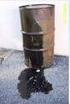 Spill Prevention Control and Countermeasure (SPCC) Regulations Fact Sheet REGULATORY SUMMARY The Spill Prevention Control and Countermeasure (SPCC) regulations strive to prevent oil from entering navigable
UNIVERSITY OF WISCONSIN MADISON
 UNIVERSITY OF WISCONSIN MADISON Contractor Spill Contingency Plan (while working on campus) Departments of: Environment, Health & Safety Physical Plant Table of Contents Spill Contingency Plan Most Common
Spill Prevention, Control, and Countermeasures (SPCC) Course Material
 Introduction Welcome to the Spill Prevention, Control, and Countermeasures (SPCC) Training course. The ultimate goal of this course is to help you recognize the ways you can avoid pollution of the local
SILICON VALLEY CLEAN WATER. May 2015
 SILICON VALLEY CLEAN WATER May 2015 Slug Discharge Control and Spill Containment Guidelines This document was revised and used with the permission of the Los Angeles County Sanitation District, Industrial
Steel Tank Institute AST Inspections. Dana Schmidt, PE STI/SPFA
 Steel Tank Institute AST Inspections Dana Schmidt, PE STI/SPFA Agenda Brief review of SPCC Rule SPCC relevance to small tanks and small facilities. SP001 Standard for Inspection of Aboveground Storage
SPILL PREVENTION AND RESPONSE PLAN TEMPLATE FOR BUSINESSES IN DAYTON S SOURCE WATER PROTECTION AREA
 SPILL PREVENTION AND RESPONSE PLAN TEMPLATE FOR BUSINESSES IN DAYTON S SOURCE WATER PROTECTION AREA Regulated Substance Management: All Regulated Substances, including chemical wastes, are to be managed
Chapter 2 Stormwater Pollution Prevention Plan (SWPPP) for Park Operations
 SWPPP for Park Operations 2 Chapter 2 Stormwater Pollution Prevention Plan (SWPPP) for Park Operations Bordered by Lake Washington & Lake Sammamish, the City of Bellevue has more than 60 miles of streams,
SPCC. Created by EPA in 1973 under the Clean Water Act. 10/22/2014. Spill Prevention Control & Countermeasure Plan
 SPCC Created by EPA in 1973 under the Clean Water Act. Purpose: To protect the "navigable" waters of the United States, a business or organization must develop a plan that would prevent any pollution from
Inspections Standard Operating Procedure 5 Aboveground Storage Tanks
 Aboveground Storage Tanks Aboveground Storage Tank Inspection This Standard Operating Procedure describes the steps that campus units that manage aboveground oil storage tanks (ASTs) or containers must
for Gary Hughes GARY HUGHES SELF SERVICE LLC State of Missouri ID: ST 3004261
 SPILL PREVENTION CONTROL & COUNTERMEASURE (SPCC) PLAN for Gary Hughes GARY HUGHES SELF SERVICE LLC State of Missouri ID: ST 3004261 Reporting conditions as of January 1, 2005 TABLE OF CONTENTS Subpart
MAINE DEPARTMENT OF ENVIRONMENTAL PROTECTION
 Oxford Hills Bus Garage 36 Brown St, Norway, ME Oil Storage Inspection 2/20/14 CONDITIONS OBSERVED Underground Oil Storage: 12,000 gallon underground oil storage tank (split 10,000 gallon diesel/2,000
Pollution Prevention And Best Management Practices For Dry Cleaners Operating In Broward County
 FORWARD In 1991, the Broward County Environmental Protection and Growth Management Department, who was then known as the Department of Natural Resource Protection (DNRP), initiated the development of Pollution
DIRECTIVE 055: STORAGE REQUIREMENTS FOR THE UPSTREAM PETROLEUM INDUSTRY. August 2012
 DIRECTIVE 055: STORAGE REQUIREMENTS FOR THE UPSTREAM PETROLEUM INDUSTRY August 2012 SECTION 2 The storage requirements in Directive 055 apply to upstream petroleum facilities, well sites, and pipelines
Suffolk County Department of Health Services. Division of Environmental Quality
 Suffolk County Department of Health Services Division of Environmental Quality Guidelines For the Construction of Storage Areas for Portable Containers ~~~~ Clare B. Bradley, M.D., M.P.H. Suffolk County
Improper storage of fuel on construction sites will increase the risk of water pollution that may occur as a result of leaks or spills.
 WQ-10 Best Management Practice (BMP) Water Quality Protection Guideline Secondary Containment Design Standards Fuel Storage on Construction Sites According to the EPA, the majority of water pollution in
The following definitions apply with regard to requirements specified in this document:
 GUIDELINES FOR INSTALLATION OF TEMPORARY AND PERMANENT ABOVEGROUND DIESEL FUEL TANKS FOR EMERGENCY AND STANDBY POWER SYSTEMS LOCATED OUTSIDE OF BUILDINGS For Use by Unidocs Member Agencies or where approved
SPCC Rule Review. Spill Prevention Control & Countermeasures NON-TRANSPORTATION RELATED ONSHORE AND OFFSHORE FACILITIES
 SPCC Rule Review Spill Prevention Control & Countermeasures NON-TRANSPORTATION RELATED ONSHORE AND OFFSHORE FACILITIES Code of Federal Regulations Title 40 CFR Part 112 40 CFR PART 112 Prevention requirements:
Natural Resources Conservation Authority Guidelines for Secondary Containment of Hazardous Liquids stored Above-ground
 Natural Resources Conservation Authority Guidelines for Secondary Containment of Hazardous Liquids stored Above-ground December 2011 Table of Contents Definition of Terms... 2 Requirements for Secondary
Civil Engineering Sector Labour-Management Health and Safety Committee
 PROCEDURE FOR THE STORAGE AND HANDLING OF FUEL ON CONSTRUCTION SITES Civil Engineering Sector Labour-Management Health and Safety Committee July 2008 PROCEDURE FOR THE STORAGE AND HANDLING OF FUEL ON CONSTRUCTION
FACILITY ENVIRONMENTAL COMPLIANCE
 FACILITY ENVIRONMENTAL COMPLIANCE 2014 TxDOT Environmental Conference 2014 TxDOT Environmental Conference 2014 TxDOT Environmental Conference Table of Contents 1 Introduction 1 2 Facility Environmental
Waste Oil Collection / Storage
 ENVIRONMENTAL & REGULATORY SERVICES Storage Tank Regulation Section P. O. Box 7837 Madison, Wisconsin 53707-7837 TDD #: (608) 264-8777 http://www.commerce.state.wi.us http://www.wisconsin.gov Jim Doyle,
Spill Prevention Control and Countermeasures (SPCC) Plan (Onshore, Nonproduction Facility) Kennesaw State University
 Spill Prevention Control and Countermeasures (SPCC) Plan (Onshore, Nonproduction Facility) Kennesaw State University 1000 Chastain Road Kennesaw, GA 30144 This document was prepared by AMEC Environment
The Federal Spill Prevention, Control & Countermeasures (SPCC) Rule Overview
 The Federal Spill Prevention, Control & Countermeasures (SPCC) Rule Overview January 2012 Presented by: Annie Macmillan, Stephanie Congo The purpose of the SPCC rule is to prevent discharges of oil into
Outdoor Liquid Container Storage
 Outdoor Liquid Container Storage SC-31 Objectives Cover Contain Educate Reduce/Minimize Description Accidental releases of materials from above ground liquid storage tanks, drums, and dumpsters present
MASSACHUSETTS INSTITUTE OF TECHNOLOGY MASSACHUSETTS INSTITUTE OF TECHNOLOGY CAMPUS SPILL PREVENTION, CONTROL, AND COUNTERMEASURE (SPCC) PLAN
 MASSACHUSETTS INSTITUTE OF TECHNOLOGY MASSACHUSETTS INSTITUTE OF TECHNOLOGY CAMPUS SPILL PREVENTION, CONTROL, AND COUNTERMEASURE (SPCC) PLAN Prepared for: Massachusetts Institute of Technology Cambridge,
Spill Prevention, Control and Countermeasure (SPCC) Training
 Spill Prevention, Control and Countermeasure (SPCC) Training Fort Jackson 2015 Origins of SPCC Regulatory History 1972 Clean Water Act Oil Pollution Act of 1990 Spill Prevention Control and Countermeasures
APPENDIX O. Spill Prevention and Emergency Response Plan. G3 Terminal Vancouver Port Metro Vancouver Project Permit Application APPENDIX O
 APPENDIX O Spill Prevention and Emergency Response Plan APPENDIX O G3 Terminal Vancouver Port Metro Vancouver Project Permit Application G3 TERMINAL VANCOUVER: PORT METRO VANCOUVER SPILL PREVENTION AND
Good Housekeeping Practices for DPW/Fleet Maintenance Facilities
 Good Housekeeping Practices for DPW/Fleet Maintenance Facilities Kevin P. Walker C&S Engineers, Inc. Best Management Practices Best Management Practices (BMPs) are measures and/or controls used to prevent
APPENDIX G Materials Storage and Handling Guidelines
 APPENDIX G Materials Storage and Handling Guidelines 1.0 INTRODUCTION Operations at Austin-Bergstrom International Airport (ABIA) comprise several different industrial activities including aircraft, ground
UDOT SPILL PREVENTION and RESPONSE PLAN for CONSTRUCTION SITES
 UDOT SPILL PREVENTION and RESPONSE PLAN for CONSTRUCTION SITES February 2014 The plan contained in the following pages was developed in part from UDOT Construction Division s Safety and Health Manual,
U.S. ENVIRONMENTAL PROTECTION AGENCY TIER I QUALIFIED FACILITY SPCC PLAN TEMPLATE
 U.S. ENVIRONMENTAL PROTECTION AGENCY TIER I QUALIFIED FACILITY SPCC PLAN TEMPLATE Instructions to Complete this Template This template is intended to help the owner or operator of a Tier I qualified facility
ENVIRONMENTAL HEALTH AND SAFETY HAZARDOUS MATERIALS MANAGEMENT PLAN
 ENVIRONMENTAL HEALTH AND SAFETY HAZARDOUS MATERIALS MANAGEMENT PLAN November 2011 University of Northern Colorado Hazardous Materials Management Plan I. General II. III. IV. Responsibilities Definition
Maryland Containment System Testing Protocol. The individual performing the inspection and testing as outlined in this protocol must be either:
 MARYLAND DEPARTMENT OF THE ENVIRONMENT Oil Control Program, Suite 620, 1800 Washington Blvd., Baltimore MD 21230-1719 4 410-537-3442 410-537-3092 (fax) 1-800-633-6101 http://www.mde.state.md.us Maryland
How To Plan Out An Oil Storage Tank At New York City College Of Technology
 NEW YORK CITY COLLEGE OF TECHNOLOGY The City University of New York 300 Jay Street, Brooklyn, NY 11201-1909 Spill Prevention, Control and Countermeasure (SPCC) Plan 2013 SPILL PREVENTION CONTROL AND COUNTERMEASURE
Spill Prevention, Control and Countermeasures (SPCC) 40 CFR 112. For Bulk Facilities
 Spill Prevention, Control and Countermeasures (SPCC) 40 CFR 112 For Bulk Facilities Section 311(c) and/or (e) Administrative Order if threat or actual discharge At time of inspection, could not conclude
Farm Fuel Tank Safety Guide
 Farm Fuel Tank Safety Guide This brochure is provided by North Dakota Department of Emergency Services, your Local Emergency Planning Committee, and the State Emergency Response Commission along with assistance
Final Spill Prevention and Response Plan
 Final Spill Prevention and Response Plan 2011 For U.S. Army Installation Management Command and Fort Leonard Wood Revised by: Burns & McDonnell Engineering Company, Inc. Kansas City, MO Contract No. W912DQ-08-D-0063
SPILL RESPONSE PLAN. What is the Issue? Regulatory Requirements. General Information
 An equal opportunity university SPILL RESPONSE PLAN What is the Issue? Accidental spills of petroleum products, common household cleaning products, hazardous materials or hazardous waste, can have negative
TULANE UNIVERSITY SPILL PREVENTION CONTROL & COUNTERMEASURE (SPCC) PLAN FOR OIL STORAGE AREAS
 TULANE UNIVERSITY SPILL PREVENTION CONTROL & COUNTERMEASURE (SPCC) PLAN FOR OIL STORAGE AREAS Office of Environmental Health and Safety (504) 988-5486 FAX (504) 988-1693 Revised: Dec 7, 2011 S\BM\emresponseplans\SPCC2011
Petroleum Tanks at Municipal Facilities
 January/February 2013 Petroleum Tanks at Municipal Facilities This document was reprinted with permission from the New York Association of Towns Talk of the Towns/Topics magazine January/February 2013
Facility Scenario - Example Tier I Qualified Facility SPCC Plan
 Facility Scenario - Example Step 1: Determine if the Doe Family Farm needs an SPCC Plan. John Doe, owner of the Doe Family Farm, has learned that he may have to develop, maintain, and implement a spill
IAC 7/2/08 Agriculture and Land Stewardship[21] Ch 44, p.1
![IAC 7/2/08 Agriculture and Land Stewardship[21] Ch 44, p.1](/thumbs/39/20233896.jpg "IAC 7/2/08 Agriculture and Land Stewardship[21] Ch 44, p.1") IAC 7/2/08 Agriculture and Land Stewardship[21] Ch 44, p.1 CHAPTER 44 ON-SITE CONTAINMENT OF PESTICIDES, FERTILIZERS AND SOIL CONDITIONERS [Prior to 7/27/88, see 21 Ch 9] PESTICIDES 21 44.1(206) Definitions.
IAC 7/2/08 Agriculture and Land Stewardship[21] Ch 44, p.1 CHAPTER 44 ON-SITE CONTAINMENT OF PESTICIDES, FERTILIZERS AND SOIL CONDITIONERS [Prior to 7/27/88, see 21 Ch 9] PESTICIDES 21 44.1(206) Definitions.
UltraTech International, Inc. Canadian Secondary Containment Requirements
 UltraTech International, Inc. 11542 Davis Creek Court Jacksonville, Florida 32256 Canadian Secondary Containment Requirements The Canadian Council of Ministers of the Environment (CCME) is the major intergovernmental
Radioactive Waste Storage Facility and Tank System Design Criteria Standards
 UCRL-AR-133355 Rev 1 Radioactive Waste Storage Facility and Tank System Design Criteria Standards John Wood Rich Michalik Karen Doiron May 1999 DISCLAIMER This document was prepared as an account of work
SPILL PREVENTION CONTROL AND COUNTERMEASURES PLAN
 SPILL PREVENTION CONTROL AND COUNTERMEASURES PLAN Abilene Christian University 1600 Campus Court Abilene, TX 79699 HRP JOB # ABI2002.WM Prepared August 2012 Prepared by: 1327-D Miller Road Greenville,
The following definitions apply with regard to requirements specified in this document:
 GUIDELINES FOR INSTALLATION OF TEMPORARY AND PERMANENT ABOVEGROUND DIESEL FUEL TANKS FOR EMERGENCY AND STANDBY POWER SYSTEMS LOCATED OUTSIDE OF BUILDINGS For Use by Unidocs Member Agencies or where approved