
Online Security Tips
|
|
|
- Aubrey Moris Poole
- 10 years ago
- Views:
Transcription
1 Online Security Tips Is your computer set to automatically check for software and security updates? Do you type your name in search engines to see what personal information is online? Have you customized your security and personal information settings on social networks? These are all ways to own your online presence by controlling privacy and security settings. In the past, online threats were primarily technical in nature, such as viruses or malware on your computer. But now, online threats are evolving and becoming more social, such as phishing ads based on your online searches, stolen passwords, identity theft and cyber bullying. Small steps, such as monitoring your privacy settings and limiting what personal information you put online, can help you control your online identity. Know who you re dealing with. Try to find a seller s physical address (not just a P.O. Box) and phone number. With internet phone services and other web-based technologies, it s tough to tell where someone is calling from. Do an internet search for the company name and website, and look for negative reviews. If you find them, you ll have to decide if the offer is worth the risk. After all, it s only a good deal if you actually get a product that works. Understand that wiring money is like sending cash. Con artists often insist that people wire money, especially overseas, because it s nearly impossible to reverse the transaction or trace the money. Don t wire money to strangers, to sellers who insist on wire transfers for payment, or to anyone who claims to be a relative or family friend in an emergency who wants to keep the request a secret. Regularly log into your online accounts. Don t leave it for as long as a month before you check each account. Read your bank, credit, and debit card statements to ensure that all transactions are legitimate. Scammers steal account information and then run up charges or commit crimes in your name. If anything looks suspicious or you don t recognize the transaction, contact your bank and/or card issuers. Give only to established charities after a disaster. In the aftermath of a disaster, give to established charities, rather than one that has sprung up overnight. Pop-up charities probably don t have the infrastructure to get help to the affected areas or people, and they could be collecting the money to finance illegal activity. For more donating tips, check out When investing, remember there s no sure thing. If someone contacts you with low-risk, high-return investment opportunities, stay away. When you hear pitches that insist you act now, that guarantee big profits, that promise little or no financial risk, or that demand that you send cash immediately, report them at ftc.gov.

2 What Not To Do Don t send money to someone you don t know. Not an online seller you ve never heard of - nor an online love interest who asks for money. It s best to do business with sites you know and trust. If you buy items through an online auction, consider using an option that provides protection, like a credit card. Never pay fees now for the promise of a big pay-off later whether it s for a loan, a job, or a socalled prize. Don t agree to deposit a check and wire money back. No matter how convincing the story. By law, banks have to make funds from deposited checks available within days, but uncovering a fake check can take weeks. You re responsible for the checks you deposit. If a check turns out to be a fake, you re responsible for paying back the bank. Don t reply to messages asking for personal or financial information. That goes whether the message comes as an , a phone call, a text message, or an ad. Don t click on links or call phone numbers included in the message either. It s called phishing. The crooks behind these messages are trying to trick you into revealing sensitive information. If you got a message like this and you are concerned about your account status, call the number on your credit or debit card or your statement and check on it. Don t play a foreign lottery. It s illegal to play a foreign lottery, and yet messages that tout your chances of winning a foreign lottery, or messages that claim you ve already won can be so tempting. Inevitably, you re asked to pay taxes, fees,, or customs duties to collect your prize. If you send money to collect, you haven t won anything. Indeed, you ve lost whatever money you sent. You won t get money back, either, regardless of the promises. Report Online Scams If you think you may have been scammed: File a complaint with the Federal Trade Commission. You may visit their website at for more information or call 1(877)FTC-HELP ( ). The FTC enters consumer complaints into the Consumer Sentinel Network, a secure online database and investigative tool used by hundreds of civil and criminal law enforcement agencies in the U.S. and abroad. Visit where you ll find out how to minimize your risk of identity theft. Report scams to your state Attorney General by visiting their website. In Oklahoma, it is at or by calling 1(405) If you get unsolicited offers or spam, send the messages to [email protected]. If you get what looks like lottery material from a foreign country through the postal mail, give it to your local postmaster.

3 Use Security Software That Updates Automatically The bad guys constantly develop new ways to attack your computer, so your security software must be up-to-date to protect against the latest threats. Most security software can update automatically; set yours to do so. You can find free security software from well-known companies. Also, set your operating system and web browser to update automatically. If you let your operating system, web browser, or security software get out-of-date, criminals could sneak their bad programs malware onto your computer and use it to secretly break into other computers, send spam, or spy on your online activities. There are steps you can take to detect and get rid of malware. Don t buy security software in response to unexpected pop-up messages or s, especially messages that claim to have scanned your computer and found malware. Scammers send messages like these to try to get you to buy worthless software, or worse, to break and enter your computer. Treat Your Personal Information like Cash Don t hand it out to just anyone. Your social security number, credit card numbers, and bank and utility account numbers can be used to steal your money or open new accounts in your name. So every time you are asked for your personal information whether in a web form, an , a text, or a phone message think about whether you can really trust the request. In an effort to steal your information, scammers will do everything they can to appear trustworthy. Check Out Companies to find out who you re Really Dealing With When you re online, a little research can save you a lot of money. If you see an ad or an offer that looks good to you, take a moment to check out the company behind it. Type the company or product name into your favorite search engine with terms like review, complaint, or scam. If you find bad reviews, you ll have to decide if the offer is worth the risk. If you can t find contact information for the company, take your business elsewhere. Don t assume that an ad you see on a reputable site is trustworthy. The fact that a site features an ad for another site doesn t mean that it endorses the advertised site, or is even familiar with it. Give Personal Information over Encrypted Websites Only If you re shopping or banking online, stick to sites that use encryption to protect your information as it travels from your computer to their server. To determine if a website is encrypted, look for https at the beginning of the web address (the s is for secure). Make it a habit to enter the address of any banking, shopping, auction or financial transaction website yourself and not depend on displayed links in s or from other sites. If you see the locked padlock icon in the browser frame on the top near the address bar or on the bottom of the web browser, double-click it to display the security certificate for the site. If you get any warnings displayed that the address of the site you have displayed does NOT match the certificate, do not continue. Follow alerts and warnings received by the browser. For example, if your browser reports that the site is a known phishing site, then do not continue to the site and type in your information.

4 Protect Your Passwords Here are a few principles for creating strong passwords and keeping them safe: The longer the password, the tougher it is to crack. Mix letters, numbers, and special characters. Try to be unpredictable don t use your name, birth date, or common words. Don t use the same password for many accounts. If it s stolen from you or from one of the companies with which you do business it can be used to take over all your accounts. Don t share passwords. Legitimate companies will not send you messages asking for your password. If you get such a message, it s probably a scam. Keep your passwords in a secure place, out of plain sight. Change passwords at regular intervals for all online sites, such as online banking, merchant sites, and accounts. Always log off the website after you have submitted an application or concluded a secure online session. Back up your Files No system is completely secure. Copy important files onto a removable disc/device or an external hard drive, and store it in a safe place. If your computer is compromised, you ll still have access to your files. Understand How a Wireless Network Works Going wireless generally requires connecting an internet access point like a cable or DSL modem to a wireless router, which sends a signal through the air, sometimes as far as several hundred feet. Any computer within a range with a wireless card can pull the signal from the air and access the internet. Unless you take precautions, anyone nearby with a wireless-ready computer or mobile device can use your network. That means your neighbors or any hacker nearby could piggyback on your network, or access information on your computer. If an unauthorized person uses your network to commit crime or send spam, the activity could be traced back to your account. Wireless routers often come with the encryption feature turned off. You must turn it on. The directions that come with your router should explain how. If they don t, check the company s website. Staying Safe on Social Networking Sites Although the features of social networking sites differ, they allow you to provide information about yourself and offer some type of communication mechanism (forums, chat rooms, , instant messenger) that enables you to connect with other users. While the majority of these sites do not pose a threat, malicious people may be drawn to them because of the accessibility and amount of personal information that s available. Using information that you provide about your location, hobbies, interests, and friends, a malicious person could impersonate a trusted friend or convince you that they have the authority to access other personal or financial data.

5 How can you protect yourself? Limit the amount of personal information you post - especially items such as your address or information about your schedule or routine. Remember that the internet is a public resource only post information you are comfortable with anyone seeing. This includes information and photos in your profile and in blogs and other forums. Be wary of strangers the internet makes it easy for people to misrepresent their identities and motives. If you interact with people you do not know, be cautious about the amount of information you reveal or agreeing to meet them in person. Be skeptical don t believe everything you read online. Try to verify the authenticity of any information before taking any action. Evaluate your settings take advantage of a site s privacy settings. The default settings for some sites may allow anyone to see your profile, but you can customize your settings to restrict access to only certain people. There is still a risk that private information could be exposed despite these restrictions, so don t post anything that you wouldn t want the public to see. Sites may change their options periodically, so review your security and privacy settings regularly to make sure that your choices are still appropriate. Be wary of third-party applications third-party applications may provide entertainment or functionality, but use caution when deciding which applications to enable. Use strong passwords protect your account with passwords that cannot easily be guessed. If your password is compromised, someone else may be able to access your account and pretend to be you. Check privacy policies some sites may share information such s addresses or user preferences with other companies. This may lead to an increase in spam. Keep software, particularly your web browser, up to date install software updates so that attackers cannot take advantage of known problems or vulnerabilities. Many operating systems offer automatic updates. If this option is available, you should enable it. Use and maintain anti-virus software anti-virus software helps protect your computer against known viruses, so you may be able to detect and remove the virus before it can do any damage. Because attackers are continually writing new viruses, it is important to keep your definitions up to date. Children are especially susceptible to the threats that social networking sites present. By teaching children about internet safety, being aware of their online habits, and guiding them to appropriate sites, parents can make sure that the children become safe and responsible users.

6 ATM Safety Tips Here are a few helpful safety tips to remember when using an Automated Teller Machine (ATM): Scope the area. Make a conscious effort to scope the area immediately adjacent to the ATM machine. Look for suspicious people or situations. If something does not look right, do not make your transaction. Leave the area and use another machine or come back at another time. Limit your time at the machine. Prior to arriving at the ATM site, have your card out to avoid any delay of going through your purse or wallet to find it. At a walk-up ATM, cover your transaction. Use your body to block the keyboard from view. By doing this, you will prevent someone from learning your personal identification number (PIN). Do not publicly show your cash. Always keep your personal identification number a secret. Never give the number to anyone or write it down anywhere. Memorize it or use a secret code if you must write it down. Notify us upon the loss of your card or PIN. Notify us immediately if your ATM card or secret PIN is lost or stolen. Never let anyone use your card or access code. Be on the lookout for ATM Skimming. ATM skimming is a crime where thieves attach a device to an ATM to capture your card information. Skimming devices can include a small magnetic head used to capture your account information, and a small camera or mirror to view the keypad when you enter your PIN. Be extra careful at night. If you need to access a machine when it s dark, make sure it s in a well-lit area and always be aware of your surroundings. Save your receipts and check against your bank statement before destroying.

7

Protection from Fraud and Identity Theft
 Table of Contents Protection from Fraud & Identity Theft... 1 Simple Steps to Secure Your Devices... 1 Setting Up Your Computer and/or Mobile Device... 2 Adding Security Software... 2 Internet Safety Tips...
Protect Yourself. Who is asking? What information are they asking for? Why do they need it?
 Protect Yourself Your home computer serves many purposes: email, shopping, social networking and more. As you surf the Internet, you should be aware of the various ways to protect yourself. Of primary
Protecting Yourself from Identity Theft
 Protecting Yourself from Identity Theft Guide 4 Because you don t have to be the next victim Desert Schools Money Matters Series Guiding you toward financial success Table of Contents How ID theft happens.............................
E-MAIL & INTERNET FRAUD
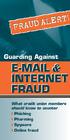 FRAUD ALERT! FRAUD ALERT! Guarding Against E-MAIL & INTERNET FRAUD What credit union members should know to counter Phishing Pharming Spyware Online fraud On-Line Fraud Is Growing E-Mail and Internet Fraud
Identity Theft, Fraud & You. Prepare. Protect. Prevent.
 Prepare. Protect. Prevent. Identity Theft, Fraud & You Fraud and identity theft incidents claimed fewer victims in 2010 than in previous years. But don t get too comfortable. Average out-of-pocket consumer
Learn to protect yourself from Identity Theft. First National Bank can help.
 Learn to protect yourself from Identity Theft. First National Bank can help. Your identity is one of the most valuable things you own. It s important to keep your identity from being stolen by someone
Avoid completing forms in email messages that ask for personal financial information.
 INTERNET FRAUD Online scams and viruses are constantly evolving and they threaten the security of computers worldwide. As criminals evolve their tactics, you need to keep your PC's security software (virus
National Cyber Security Month 2015: Daily Security Awareness Tips
 National Cyber Security Month 2015: Daily Security Awareness Tips October 1 New Threats Are Constantly Being Developed. Protect Your Home Computer and Personal Devices by Automatically Installing OS Updates.
AVOIDING ONLINE THREATS CYBER SECURITY MYTHS, FACTS, TIPS. ftrsecure.com
 AVOIDING ONLINE THREATS CYBER SECURITY MYTHS, FACTS, TIPS ftrsecure.com Can You Separate Myths From Facts? Many Internet myths still persist that could leave you vulnerable to internet crimes. Check out
Intercepting your mail. They can complete change of address forms and receive mail that s intended for you.
 At SunTrust, we re committed to protecting your accounts and identity. That s why we ve created this Identity Theft Guide. This guide provides information about online fraud and identity theft, as well
Identity Theft. Protecting Yourself and Your Identity. Course objectives learn about:
 financialgenius.usbank.com Course objectives learn about: Avoiding Identity Theft Recognize Phishing Attempts Getting Help for ID Theft Victims Identity Theft Protecting Yourself and Your Identity Index
Deter, Detect, Defend
 Deter, Detect, Defend Deter Never provide personal information, including social security number, account numbers or passwords over the phone or Internet if you did not initiate the contact Never click
Payment Systems Department
 v Note: Please follow these guidelines for your safety as you enjoy the convenience of technology. However these guidelines are general; therefore, specific precautions may be taken as warranted by the
STOP. THINK. CONNECT. Online Safety Quiz
 STOP. THINK. CONNECT. Online Safety Quiz Round 1: Safety and Security Kristina is on Facebook and receives a friend request from a boy she doesn t know. What should she do? A. Accept the friend request.
Online Fraud and Identity Theft Guide. A Guide to Protecting Your Identity and Accounts
 A Guide to Protecting Your Identity and Accounts As part of SunTrust s commitment to protecting your accounts and identity, we ve created the Online Fraud & Identity Theft Guide, which provides information
When Fraud Comes Knocking
 When Fraud Comes Knocking Identity theft occurs when someone uses your name, Social Security number, credit card number, or other personal information without your permission. It is a very serious crime.
Cyber Security. Securing Your Mobile and Online Banking Transactions
 Cyber Security Securing Your Mobile and Online Banking Transactions For additional copies or to download this document, please visit: http://msisac.cisecurity.org/resources/guides 2014 Center for Internet
Retail/Consumer Client. Internet Banking Awareness and Education Program
 Retail/Consumer Client Internet Banking Awareness and Education Program Table of Contents Securing Your Environment... 3 Unsolicited Client Contact... 3 Protecting Your Identity... 3 E-mail Risk... 3 Internet
What is Identity Theft?
 What is Identity Theft? Identity theft is a crime in which someone obtains key pieces of personal information, such as Social Security or driver's license numbers, in order to impersonate someone else.
With the Target breach on everyone s mind, you may find these Customer Service Q & A s helpful.
 With the Target breach on everyone s mind, you may find these Customer Service Q & A s helpful. Breach Overview Q: Media reports are stating that Target experienced a data breach. Can you provide more
Fraud Guide Fraud Protection
 Fraud Guide Fraud Protection A simple guide on how to protect yourself against fraud. A simple guide on how to protect yourself against fraud It seems like every day there are new reports of different
STOP THINK CLICK Seven Practices for Safer Computing
 Seven Practices for Safer Computing Access to information and entertainment, credit and financial services, products from every corner of the world even to your work is greater than earlier generations
suntrust.com 800.SUNTRUST
 suntrust.com 800.SUNTRUST SunTrust Bank is an Equal Housing Lender. Member FDIC. 2010 SunTrust Banks, Inc., SunTrust, Live Solid. Bank Solid., SunTrust Rewards, and Signature Advantage Checking, are federally
Protect Your Personal Information
 Protect Your Personal Information Table of Contents Credit vs. Debit. 3 Tips to Keep Your Information Safe... 3 Shop Safely Online... 4 What to Do About Fraud.. 6 It s a scary world. It seems like every
THINGS YOU SHOULD KNOW ABOUT IDENTITY THEFT
 THINGS YOU SHOULD KNOW ABOUT IDENTITY THEFT Compliments of: Fripp Island Security and FIPOA Security Committee November 2013 1 INTRODUCTION Identity theft is a serious crime. It occurs when your personal
Putting Telephone Scams... On Hold
 Putting Telephone Scams... On Hold Federal Trade Commission Toll-free 1-877-FTC-HELP Federal Trade Commission Toll-free 1-877-FTC-HELP www.ftc.gov For the Consumer www.ftc.gov For the Consumer Telemarketing
Helping you to protect yourself against fraud and financial crime
 Helping you to protect yourself against fraud and financial crime first direct takes fraud & other financial crimes very seriously. Even though we have market-leading fraud detection systems, we want you
When life happens... Protect Against Identity Theft. Keeping personal information safe & what to do if it happens to you
 When life happens... Protect Against Identity Theft Keeping personal information safe & what to do if it happens to you An Identity Theft Epidemic Identity theft is a huge business in the U.S. and around
7 PRACTICES FOR SAFER COMPUTING
 7 PRACTICES FOR SAFER COMPUTING The Committee on Social Responsibility Produced in cooperation with the Federal Trade Commission EFFICIENT SHOPPING ACCESS TO INFORMATION, MUSIC, AND GAMES EDUCATIONAL RESOURCES
Online Banking Customer Awareness and Education Program
 Online Banking Customer Awareness and Education Program Electronic Fund Transfers: Your Rights and Responsibilities (Regulation E Disclosure) Indicated below are types of Electronic Fund Transfers we are
Take our Fraud Quiz and see what you know about frauds and scams in Canada. Test yourself on
 Take our Fraud Quiz and see what you know about frauds and scams in Canada. Test yourself on Are you a Target? On-Line Scams Credit/Debit Card Investment Identity Theft Frauds Scams Mark the following
Guide to credit card security
 Contents Click on a title below to jump straight to that section. What is credit card fraud? Types of credit card fraud Current scams Keeping your card and card details safe Banking and shopping securely
PROTECTING YOURSELF FROM IDENTITY THEFT. The Office of the Attorney General of Maryland Identity Theft Unit
 PROTECTING YOURSELF FROM IDENTITY THEFT The Office of the Attorney General of Maryland Identity Theft Unit CONTENTS 1) What is Identity Theft? 2) How to Protect Yourself From ID Theft. 3) How to Tell If
Online Security Information. Tips for staying safe online
 Online Security Information ProCredit Bank is committed to protecting the integrity of your transactions and bank account details. ProCredit Bank therefore uses the latest security software and procedures
Fraud Prevention Guide
 Fraud Prevention Guide Table of Contents Protect your Information 2 Protect your wallet or purse 3 Don t forget around the house 3 Secure your credit cards and debit cards 4 Stop the telemarketing calls
1. Any email requesting personal information, or asking you to verify an account, is usually a scam... even if it looks authentic.
 Your identity is one of the most valuable things you own. It s important to keep your identity from being stolen by someone who can potentially harm your good name and financial well-being. Identity theft
A Gu i d e f o r Bu y e r s a n d
 In t e r n e t Au c t io n s A Gu i d e f o r Bu y e r s a n d Sellers FEDERAL TRADE COMMISSION 1-877-FTC-HELP ftc.gov FOR THE CONSUMER Inside How Internet Auctions Work: Rules of the Marketplace...........................
IdentityTheft HOW IDENTITY THEFT HAPPENS PROTECTING YOURSELF RECOVERING FROM IDENTITY THEFT
 CREDIT What You Should Know About... IdentityTheft HOW IDENTITY THEFT HAPPENS PROTECTING YOURSELF RECOVERING FROM IDENTITY THEFT YourMoneyCounts You may have heard of a crime called identity theft, but
FRAUD ALERT THESE SCAMS CAN COST YOU MONEY
 FRAUD ALERT THESE SCAMS CAN COST YOU MONEY Phishing spear phishing vishing smishing debit card skimming fake check scams THE COMMON SENSE PRECAUTIONS INSIDE CAN KEEP YOU SAFE! SCHEMES SCAMS FRAUDS Criminals
Fraud Prevention Tips
 Fraud Prevention Tips The best defense against fraud or identity theft is a proactive approach. Here are a few steps you can take to help protect yourself. Protect your identity Copy the front and back
Shop Online with Confidence
 Shop Online with Confidence Table of Contents Introduction 3 Benefits and Drawbacks of Online Shopping Benefits Drawbacks 5 6 Tips for Safe Online Shopping Before You Buy When Making a Purchase After Your
Fraud and Identity Theft. Megan Stearns, Credit Counselor
 Fraud and Identity Theft Megan Stearns, Credit Counselor Agenda Fraud and identity theft statistics Fraud Identity theft Identity theft prevention Protecting your Social Security Number Online prevention
Scams and Schemes LESSON PLAN UNIT 1. Essential Question What is identity theft, and how can you protect yourself from it?
 LESSON PLAN Scams and Schemes Essential Question What is identity theft, and how can you protect yourself from it? Lesson Overview Students learn strategies for guarding against identity theft and scams
Reduce your Risk of Credit Card & Identity Fraud
 Reduce your Risk of Credit Card & Identity Fraud This is the ITSecurityExpert s guide for reducing personal risk of Credit Card Fraud and Identity Theft. 20 Tips for Reducing the Risk 1. Invest in a decent
Scams and Schemes. objectives. Essential Question: What is identity theft, and how can you protect yourself from it? Learning Overview and Objectives
 Estimated time: 45 minutes Essential Question: What is identity theft, and how can you protect yourself from it? Learning Overview and Objectives Overview: Students learn strategies for guarding against
High Speed Internet - User Guide. Welcome to. your world.
 High Speed Internet - User Guide Welcome to your world. 1 Welcome to your world :) Thank you for choosing Cogeco High Speed Internet. Welcome to your new High Speed Internet service. When it comes to a
The Merchant. Skimming is No Laughing Matter. A hand held skimming device. These devices can easily be purchased online.
 1 February 2010 Volume 2, Issue 1 The Merchant Serving Florida State University s Payment Card Community Individual Highlights: Skimming Scam 1 Skimming at Work 2 Safe at Home 3 Read your Statement 4 Useful
Customer Awareness for Security and Fraud Prevention
 Customer Awareness for Security and Fraud Prevention Identity theft continues to be a growing problem in our society today. All consumers must manage their personal information wisely and cautiously to
Protect yourself online
 Protect yourself online Advice from Nottinghamshire Police s Pre Crime Unit Get daily updates: www.nottinghamshire.police.uk www.twitter.com/nottspolice www.facebook.com/nottspolice www.youtube.com/nottinghampolice
Many of these tips are just common sense and others are tips to keep in mind when doing a transaction, at ATMs, restaurants and merchants.
 Credit and Debit Card Security Tips Many of these tips are just common sense and others are tips to keep in mind when doing a transaction, at ATMs, restaurants and merchants. Be careful with your PIN Always
Identity Theft Assistance Kit A self-help guide to protecting yourself and your identity
 Identity Theft Assistance Kit A self-help guide to protecting yourself and your identity Stillman Bank works hard to serve and protect our customers identities and ensure their safety. That s why we have
A Guide to Protecting Yourself From Identity Theft
 A Guide to Protecting Yourself From Identity Theft 2010 Capital One. Capital One is a registered trademark. At Capital One, we understand that Identity Theft is a frustrating, and sometimes frightening,
Malware & Botnets. Botnets
 - 2 - Malware & Botnets The Internet is a powerful and useful tool, but in the same way that you shouldn t drive without buckling your seat belt or ride a bike without a helmet, you shouldn t venture online
Social Media and Cyber Safety
 Social Media and Cyber Safety Presented to the National Association of REALTORS by Andrew Wooten Safety and Security Consultant [email protected] Social Media and Cyber Safety Our instructor today
How To Protect Yourself From Identity Theft
 Learn about identity theft Investor education Protecting a vital asset: Your identity A 2013 report on identity theft by Javelin Strategy & Research found that more than 12 million Americans were the
IDENTITY THEFT: MINIMIZING YOUR RISK
 IDENTITY THEFT: MINIMIZING YOUR RISK What is Identity Theft? Identity theft occurs when someone uses another person s information to commit fraud or other crimes. Information such as your name, Social
Protecting your business from fraud
 Protecting your business from fraud KEY TAKEAWAYS > Understand the most common types of fraud and how to identify them. > What to do if you uncover fraudulent activity or suspect you are a victim of fraud.
Internet Basics. Meg Wempe, Adult Services Librarian ABOUT THIS CLASS. P a g e 1
 P a g e 1 Internet Basics ABOUT THIS CLASS This class is designed to provide a basic introduction to accessing and navigating the internet (a.k.a. the world wide web or the web ). Throughout the class,
Security Guide. for electronic transactions. UniBank is a division of Teachers Mutual Bank Limited
 Security Guide for electronic transactions UniBank is a division of Teachers Mutual Bank Limited Teachers Mutual Bank Limited ABN 30 087 650 459 AFSL/Australian Credit Licence 238981 Who We Are UniBank
Information carelessly discarded into the trash can be stolen when a thief digs through the garbage.
 Identity theft occurs when someone wrongfully acquires and uses a consumer s personal identification, credit, or account information. Identity theft can wreak havoc on an individual s credit report, cause
Protect Yourself From Identity Theft
 Protect Yourself From Identity Theft Identity theft occurs when a criminal uses another person's personal information to take on that person's identity. Identity theft is much more than misuse of a Social
Contents Security Centre
 Contents Security Centre... 1 1. Search Engines... 2 2. Online Applications... 2 3. Virgin Money Credit Card Online Banking Security Measures... 2 3.1 Access Number, PIN and Password... 2 3.2 Keypad...
I dentity theft occurs
 1.3.1.F1 Identity Family Economics and Financial Education W h at i s I d e n t i t y T h e f t? I dentity theft occurs when someone wrongfully acquires and uses a consumer s personal identification, credit,
How to Prevent It What to Do If You Are a Victim
 How to Prevent It What to Do If You Are a Victim www.tn.gov/consumer www.tn.gov/safety Tennessee Division of Consumer Affairs Identity theft happens when someone steals your personal information and uses
EL/Civics Lesson Plan
 Program Name Staff Responsible for Lesson MVCTC EL/Civics Program Mary Ann Oatney Date(s) Used 11/2007 Civics Category Civics Objective Time Frame to Complete Lesson EFL(s) II. Civics Participation II.
PROTECT YOURSELF AND YOUR IDENTITY CHASE IDENTITY THEFT TOOL KIT
 PROTECT YOURSELF AND YOUR IDENTITY CHASE IDENTITY THEFT TOOL KIT At Chase, we work hard to pro v help prepare you for whatever h Convenient Reference for Important Contacts: Chase Identity Theft Center
NATIONAL CYBER SECURITY AWARENESS MONTH
 NATIONAL CYBER SECURITY AWARENESS MONTH Tip 1: Security is everyone s responsibility. Develop an awareness framework that challenges, educates and empowers your customers and employees to be part of the
8765 CA_ScamBroc 10/10/11 10:45 AM Page 1 www.tn.gov/consumer
 www.tn.gov/consumer Tennessee Division of Consumer Affairs Don t Get Scammed Table of Contents Auction Fraud...1 Counterfeit Cashier s Check...1 Credit Card Fraud...1 Debt Elimination...2 DHL/UPS...2 Employment/Business
Protecting Yourself from Identity Theft
 Protecting Yourself from Identity Theft Identity theft is everywhere. In fact, according to a 2013 report by Javelin Research, there is one incident of identity fraud every two seconds. While we cannot
Social Network Security. Frank K. F. Chow Vice-Chairperson Professional Information Security Association (PISA)
 Social Network Security Frank K. F. Chow Vice-Chairperson Professional Information Security Association (PISA) How Do We Communicate Today? I can write you a letter by snail mail. I can write you a letter
Identity Theft PROTECT YOUR INFORMATION AND YOUR IDENTITY HIGHLIGHTS
 This publication is intended to provide general information only and is not a substitute for legal advice. HIGHLIGHTS 1 PROTECT YOUR INFORMATION AND YOUR IDENTITY 3 BE VIGILANT 3 CORRECTING INFORMATION
PROTECT YOUR COMPUTER AND YOUR PRIVACY!
 PROTECT YOUR COMPUTER AND YOUR PRIVACY! Fraud comes in many shapes simple: the loss of both money protecting your computer and Take action and get peace of and sizes, but the outcome is and time. That
Identity Theft Protection
 Identity Theft Protection Email Home EDUCATION on DANGER ZONES Internet Payments Telephone ID theft occurs when someone uses your personal information with out your knowledge to commit fraud. Some terms
Are you Smarter than a Scam Artist? 2015 AASC National Conference Nashville, Tennessee
 Are you Smarter than a Scam Artist? 2015 AASC National Conference Nashville, Tennessee Government Grants The government gives grants to special people like you! Stimulus money is still available through
Market Intelligence Cell. Fighting Financial Crime
 Market Intelligence Cell Fighting Financial Crime 1 Market Intelligence Cell Our objective To investigate and suppress illegal, dishonorable and improper practices, market abuse and any potential breach
PROTECT YOURSELF AND YOUR IDENTITY. Chase Identity Theft Tool Kit
 PROTECT YOURSELF AND YOUR IDENTITY Chase Identity Theft Tool Kit USE THESE IMPORTANT CONTACTS TO KEEP YOURSELF PROTECTED CHASE CONTACTS Customer Protection Group Credit Cards 1-888-745-0091 Other Account
Financial Safety. Protection so you can focus on what matters most
 Financial Safety Protection so you can focus on what matters most Protect yourself against threats in person and online. Keeping you informed about identity theft, online scams, ATM skimmers and other
Identity Theft Prevention Provided by the Colorado Bureau of Investigation Contact us at 303-239-4649
 Contact us at 303-239-4649 Guard your Social Security number Do not carry your Social Security card or your birth certificate in your wallet or purse Be cautious with Military ID cards, replacing any that
I know what is identity theft but how do I know if mine has been stolen?
 What is identity theft? You might hear stories on the news about stolen identities, but what is identity theft? When someone uses the personal information that identifies you, like your name, credit card
Security Breaches. There are unscrupulous individuals, like identity thieves, who want your information to commit fraud.
 IDENTITY THEFT Security Breaches Our economy generates an enormous amount of data. Most users of that information are from honest businesses - getting and giving legitimate information. Despite the benefits
Information to Protect Our Customers From Identity Theft
 Our Customers From Identity Theft Identity (ID) Theft Capital One understands that ID Theft is a growing concern of our customers, and that it is a frustrating experience for victims. We share these concerns
Identity Theft and Strategies for Crime Prevention
 Identity Theft and Strategies for Crime Prevention National Crime Prevention Council 2005 Objectives What is identity theft? Why worry about it? How does it happen? Why has identity theft emerged? What
CONTACT. information. All consumer complaints must be made in writing. Please call or write for a complaint form. Write to:
 GREG ABBOTT Attorney General of Texas CONTACT information For more information or to obtain copies of brochures, call the Attorney General s Consumer Protection Hotline at (800) 621-0508, or contact your
INTRODUCTION. Identity Theft Crime Victim Assistance Kit
 Identity Theft Crime Victim Assistance Kit INTRODUCTION In the course of a busy day, you may write a check at the grocery store, charge tickets to a ball game, rent a car, mail your tax returns, change