
Avoid completing forms in messages that ask for personal financial information.
|
|
|
- Ashlyn Bond
- 10 years ago
- Views:
Transcription
1 INTERNET FRAUD Online scams and viruses are constantly evolving and they threaten the security of computers worldwide. As criminals evolve their tactics, you need to keep your PC's security software (virus detection, security patches, etc.) up-to-date. The more you know about how to protect your computer and yourself, the less likely you are to be negatively impacted. Be suspicious of any with urgent requests for personal financial information. If you don t know the sender, do not use the links in the . Avoid completing forms in messages that ask for personal financial information. Be sure to use a secure web site when submitting credit card or other sensitive information via the web browser. If you are not sure of the website's legitimacy, or if the offer sounds too good to be true, don't provide your personal or financial information. Verify the website by checking with a consumer information site such as the Better Business Bureau. Regularly check bank, credit and debit card statements to ensure all transactions are legitimate. Use security software (virus detection, firewalls, etc.) that update automatically. Keep your passwords for online activity in a secure place; do not leave them in plain sight or share them. Make sure your browser is up-to-date and security patches have been installed. If your home PC is utilized by multiple family members, consider purchasing a second PC (ex: laptop or netbook) that will only be utilized for your online banking and storing of your financial information (ex: Quicken or TurboTax). A PC utilized by multiple users presents the opportunity for malware unknowingly downloaded on to it. If you think that your PC has been compromised, stop using it immediately, disconnect the internet access and have it checked for malware. If you believe that your online banking has been compromised due to malware, notify your financial institutions immediately. Phishing Phishing (pronounced "fishing") is a scam to steal valuable information such as credit card and Social Security numbers, user IDs, and passwords. In phishing, also known as "brand spoofing," an official-looking is sent to potential victims pretending to be from their ISP, credit union, bank, or retail establishment. s can be sent to people on selected lists or on any list, and the scammers expect some percentage of recipients will actually have an account with the real organization. Protect Yourself Canandaigua Federal Credit Union will never send an to verify your account information. If you receive an claiming to be from the Credit Union that requests that you provide personal information in an unsecure or via a link to a website, please contact the Credit Union immediately.

2 IDENTITY THEFT Identity theft occurs when someone uses your personal information without your knowledge to commit fraud or other crimes. In many cases, the victim is unaware of the activity until months after the incident. The effect of identity theft can be costly to you in terms of time and money. Identity Theft can happen in various ways: After someone steals your wallet, purse or mail. By stealing personnel records from employers. By pretending to be financial institutions or businesses and sending spam (called phishing) or pop-up messages in an attempt to get you to reveal your personal information. Identity thieves will also rummage through the trash at your home or workplace looking for bills or other documents with your personal information on it. To protect your identity, you should: Review your credit reports. You can do this for free annually! Visit Annualcreditreport.com or call , which were established to handle consumer requests by the consumer reporting companies Equifax, Experian and TransUnion. Place a fraud alert on your credit bureau files if you feel information has been exposed. Adopt daily practices like shredding your personal & financial documents, staying aware of the latest scams, protecting your home computer with anti-spyware, virus detection software and firewalls. Keep these programs up to date. Secure your mail by utilizing a Postal Service Mail Box or by placing your outgoing mail into locked mailbox. Sign up for estatement services not only does it protect your monthly statement, it also cuts down on paper and postage expense! Safeguard your Social Security Number don t leave your Social Security Card in your wallet and ask why when a person requests your SSN for business purposes. Don't leave a paper trail. Never leave ATM, credit card or gas station receipts behind. Know with whom you are speaking with before providing any confidential information. If you are not sure about the legitimacy of the caller, hang up and call back by utilizing a telephone number familiar to you. Never click on links sent to you by an unsolicited . Be alert for warning signs of possible Identity Theft, such as: Regular bills that do not arrive as expected. Denials of credit for no apparent reason. Account Statements or credit cards in the mail that you were not expecting. Calls or letters concerning purchases you did not make. If you think your identity has been compromised:

3 If your bank accounts have been compromised, immediately notify those Financial Institution(s). Make a note for your file of what Institution was contacted, who you talked to and the date/time your call was made. Place a verbal password on your accounts to prevent thieves from calling in and finding out more about your financial transactions. Close or transfer those accounts that have been compromised or tampered with to a new account number. Request that any account that was fraudulently opened in your name be closed immediately. Place a Fraud Alert on your Credit Report. You can do this by contacting the Credit Bureaus: Experian: Equifax: Trans Union: Request a copy of your Credit Reports and review them carefully. Question any unknown activity and report disputes in writing. File a police report and maintain a copy in your file for future reference. File a report with the Federal Trade Commission. You can do this online via ftc.gov. Keep an eye out for future attempts. Identity Thieves often will lay low for months and then strike again, hoping to catch you off guard. CHECK SCAMS Don t get scammed out of your hard earned money! There are many variations of the counterfeit check scam. Modern computer technology allows crooks to easily create realistic looking personal checks, business checks, Cashier's Checks or Money Orders. It could start with someone giving you an advance on a sweepstakes you ve supposedly won, a great work from home offer or asking you to help a family in a foreign country by transferring funds to your account for safekeeping. Whatever the pitch, don t get caught with your guard down. Here are some tips that will help you avoid becoming the victim of a counterfeit check scam: Shred any offer that asks you to pay for a prize or a gift. Legitimate sweepstakes offer consumers a chance to win a prize or money with no purchase or entry fee required. Know who you re dealing with, and never wire money or send a check to strangers. If you must send a check, consider utilizing a Cashier's Check or Money Order instead of your own personal check to keep your personal information safe. Watch out for any lottery, secret shopper or business offer that involves you receiving a check and requires you to forward money by MoneyGram or Western Union.

4 If you re selling something, don t accept a check for more than the selling price, no matter how tempting the offer or how convincing the story. Ask the buyer to write the check for the exact amount. If the buyer refuses to send the exact amount, don t send the merchandise or a refund. Resist pressure to act immediately. Any legitimate offer should still be good after the check clears. If you're concerned about the validity of a check, either contact the Financial Institution by telephone (via the number you looked up) or take the check to the local branch office of that Institution. Watch out for any job opportunity that asks you to be a money transfer agent. Legitimate businesses should not ask you to deposit their checks into your personal account, then instruct you to forward the funds by wire or send by MoneyGram/Western Union to other individuals or to accounts in other countries. It s best not to rely on money from any type of check unless you know and trust the person you re dealing with or, better yet until your financial institution confirms that the check has cleared. Forgeries can take weeks to be returned through the banking system, and until you have confirmation that the funds from a check have cleared your account, you are responsible for any funds you withdraw against that check, whether or not the financial institution places a hold on them. Resist the urge to enter foreign lotteries. It is illegal to play foreign lotteries in the United States. If you are notified that you are a winner of a lottery that you didn t enter, chances are you re being scammed. Monitor your checking account activity carefully. A counterfeiter only needs to obtain the MICR line (those funny looking numbers on the bottom of your check) to create fake checks that are presented against your account. Immediately report if you think you re a victim of a check fraud scheme or if you notice something suspicious. Contact your Financial Institution as well as the local police department, or your local FBI Field Office. PHONE SCAMS Many people trust phone calls, especially if the person on the other side of the line knows even a small piece of information. Like , phishing attempts can yield surprising results. Other fraud takes the form of involuntary commitment and contract approval. Here are a few tips to recognize a phone scam: Never give out your credit card number on the phone unless you initiated the call to a reliable company that you know. Always ask for written information before you agree to anything. If you suspect that something s not right, get off the phone right away. Don t provide information that the company calling should already know. Avoid high-pressure sells.

5 Land Line Telephone Vishing & VoIP (Internet Phones) Vishing Vishing, (Voice Phishing) also called "VoIP phishing for Internet phones," is the voice counterpart to phishing. Instead of being directed by to a Web site, an message asks the user to make a telephone call. The call triggers a voice response system that asks for the user's card number or other personal or financial information. The initial bait can also be a telephone call with a recording that instructs the user to phone an 800 number or another area code within or outside of the United States. In either case, because people are used to entering card numbers over the phone, this technique can be effective. Voice over IP (VoIP) is used for vishing because caller IDs can be spoofed and the entire operation can be brought up and taken down in a short time, compared to a land line telephone. Text Message Smishing Smishing (SMS Phishing) is the mobile phone counterpart to phishing. Instead of being directed by to a Web site, a text message is sent to the user's cell phone or other mobile device with some ploy to click on a link. The link causes a Trojan to be installed in the cell phone or other mobile device. Protect Yourself NASA Federal Credit Union will never call you to verify your account information. Be sure to use only the phone numbers that you know to be true for the Credit Union when responding to phone messages. If you have responded to a phone scam and provided any confidential account information, please notify us immediately. CREDIT & DEBIT CARD FRAUD Credit and debit card fraud costs cardholders and issuers millions of dollars each year. While theft is the most obvious form of fraud, it can occur in other ways. For example, someone may use your card number without your knowledge. Here are some tips to help protect yourself from credit and debit card fraud: Do: Sign your cards as soon as they arrive. Keep a record of your account numbers, their expiration dates, and the phone number and address of each company in a secure place. Keep an eye on your card during the transaction, and get it back as quickly as possible. Void incorrect receipts. Save receipts to compare with billing statements. Open bills promptly and reconcile accounts monthly, just as you would your checking account. Report any questionable charges promptly and in writing. Notify card companies in advance of a change in address.

6 Don't: Lend your card(s) to anyone. Leave cards or receipts lying around. Sign a blank receipt. When you sign a receipt, draw a line through any blank spaces above the total. Write your account number on a postcard or the outside of an envelope. Give out your account number over the phone unless you're making the call to a company you know is reputable. If you have questions about a company, check it out with your local consumer protection office or the Better Business Bureau.

Online Fraud and Identity Theft Guide. A Guide to Protecting Your Identity and Accounts
 A Guide to Protecting Your Identity and Accounts As part of SunTrust s commitment to protecting your accounts and identity, we ve created the Online Fraud & Identity Theft Guide, which provides information
Intercepting your mail. They can complete change of address forms and receive mail that s intended for you.
 At SunTrust, we re committed to protecting your accounts and identity. That s why we ve created this Identity Theft Guide. This guide provides information about online fraud and identity theft, as well
Identity Theft Protection
 Identity Theft Protection Email Home EDUCATION on DANGER ZONES Internet Payments Telephone ID theft occurs when someone uses your personal information with out your knowledge to commit fraud. Some terms
IDENTITY THEFT BROCHURE 2 6/3/05 3:07 PM Page 1 IDENTITY THEFT PROTECT YOUR IDENTITY IT S POSSIBLE@ LEARN HOW TO PROTECT YOUR PRIVATE INFORMATION
 IDENTITY THEFT BROCHURE 2 6/3/05 3:07 PM Page 1 IDENTITY THEFT PROTECT YOUR IDENTITY IT S POSSIBLE@ protection center LEARN HOW TO PROTECT YOUR PRIVATE INFORMATION @ What Is Identity Theft? IDENTITY THEFT
suntrust.com 800.SUNTRUST
 suntrust.com 800.SUNTRUST SunTrust Bank is an Equal Housing Lender. Member FDIC. 2010 SunTrust Banks, Inc., SunTrust, Live Solid. Bank Solid., SunTrust Rewards, and Signature Advantage Checking, are federally
Identity Theft Protection
 Identity Theft Protection Learning Objectives Discuss the aspects of identity theft Discuss the signs of recognizing when your identify has been stolen Understand the steps to take to reclaim your identity
Fraud and Identity Theft. Megan Stearns, Credit Counselor
 Fraud and Identity Theft Megan Stearns, Credit Counselor Agenda Fraud and identity theft statistics Fraud Identity theft Identity theft prevention Protecting your Social Security Number Online prevention
IDENTITY THEFT PROTECT YOUR IDENTITY IT S POSSIBLE@ LEARN HOW TO PROTECT YOUR PRIVATE INFORMATION
 IDENTITY THEFT IT S POSSIBLE@ PROTECT YOUR IDENTITY protection center LEARN HOW TO PROTECT YOUR PRIVATE INFORMATION IT S POSSIBLE @ What Is Identity Theft? According to the FBI, identity theft is the fastest
Retail/Consumer Client. Internet Banking Awareness and Education Program
 Retail/Consumer Client Internet Banking Awareness and Education Program Table of Contents Securing Your Environment... 3 Unsolicited Client Contact... 3 Protecting Your Identity... 3 E-mail Risk... 3 Internet
Information to Protect Our Customers From Identity Theft
 Our Customers From Identity Theft Identity (ID) Theft Capital One understands that ID Theft is a growing concern of our customers, and that it is a frustrating experience for victims. We share these concerns
Customer Awareness for Security and Fraud Prevention
 Customer Awareness for Security and Fraud Prevention Identity theft continues to be a growing problem in our society today. All consumers must manage their personal information wisely and cautiously to
IDENTITY THEFT: MINIMIZING YOUR RISK
 IDENTITY THEFT: MINIMIZING YOUR RISK What is Identity Theft? Identity theft occurs when someone uses another person s information to commit fraud or other crimes. Information such as your name, Social
Identity Theft. Protecting Yourself and Your Identity. Course objectives learn about:
 financialgenius.usbank.com Course objectives learn about: Avoiding Identity Theft Recognize Phishing Attempts Getting Help for ID Theft Victims Identity Theft Protecting Yourself and Your Identity Index
Identity Theft, Fraud & You. Prepare. Protect. Prevent.
 Prepare. Protect. Prevent. Identity Theft, Fraud & You Fraud and identity theft incidents claimed fewer victims in 2010 than in previous years. But don t get too comfortable. Average out-of-pocket consumer
I dentity theft occurs
 1.3.1.F1 Identity Family Economics and Financial Education W h at i s I d e n t i t y T h e f t? I dentity theft occurs when someone wrongfully acquires and uses a consumer s personal identification, credit,
PROTECT YOURSELF AND YOUR IDENTITY. Chase Identity Theft Tool Kit
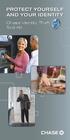 PROTECT YOURSELF AND YOUR IDENTITY Chase Identity Theft Tool Kit USE THESE IMPORTANT CONTACTS TO KEEP YOURSELF PROTECTED CHASE CONTACTS Customer Protection Group Credit Cards 1-888-745-0091 Other Account
Fraud Prevention Tips
 Fraud Prevention Tips The best defense against fraud or identity theft is a proactive approach. Here are a few steps you can take to help protect yourself. Protect your identity Copy the front and back
Deterring Identity Theft. The Federal Trade Commission estimates that as many as 9 million Americans have their identities stolen each year.
 Deterring Identity Theft The evolving threats of Identity Theft The Federal Trade Commission estimates that as many as 9 million Americans have their identities stolen each year. Identity theft complaints
Learn to protect yourself from Identity Theft. First National Bank can help.
 Learn to protect yourself from Identity Theft. First National Bank can help. Your identity is one of the most valuable things you own. It s important to keep your identity from being stolen by someone
Fraud Guide Fraud Protection
 Fraud Guide Fraud Protection A simple guide on how to protect yourself against fraud. A simple guide on how to protect yourself against fraud It seems like every day there are new reports of different
Information carelessly discarded into the trash can be stolen when a thief digs through the garbage.
 Identity theft occurs when someone wrongfully acquires and uses a consumer s personal identification, credit, or account information. Identity theft can wreak havoc on an individual s credit report, cause
When Fraud Comes Knocking
 When Fraud Comes Knocking Identity theft occurs when someone uses your name, Social Security number, credit card number, or other personal information without your permission. It is a very serious crime.
Protecting Yourself from Identity Theft
 Protecting Yourself from Identity Theft Guide 4 Because you don t have to be the next victim Desert Schools Money Matters Series Guiding you toward financial success Table of Contents How ID theft happens.............................
Many of these tips are just common sense and others are tips to keep in mind when doing a transaction, at ATMs, restaurants and merchants.
 Credit and Debit Card Security Tips Many of these tips are just common sense and others are tips to keep in mind when doing a transaction, at ATMs, restaurants and merchants. Be careful with your PIN Always
Safeguarding Your information and accounts
 Safeguarding Your information and accounts D Bank with confidence The security of your funds and information is a top priority at Liberty Bank. We do our utmost every day to prevent fraud and identity
THINGS YOU SHOULD KNOW ABOUT IDENTITY THEFT
 THINGS YOU SHOULD KNOW ABOUT IDENTITY THEFT Compliments of: Fripp Island Security and FIPOA Security Committee November 2013 1 INTRODUCTION Identity theft is a serious crime. It occurs when your personal
Identity Theft. Protecting Your Credit Identity 1.3.1.G1
 Identity Theft Protecting Your Credit Identity Identity Theft The dollar loss suffered because of identity theft from consumers was 343 million in 2002. Federal Trade Commission The number of identity
Financial Safety. Protection so you can focus on what matters most
 Financial Safety Protection so you can focus on what matters most Protect yourself against threats in person and online. Keeping you informed about identity theft, online scams, ATM skimmers and other
Identity Theft Assistance Kit A self-help guide to protecting yourself and your identity
 Identity Theft Assistance Kit A self-help guide to protecting yourself and your identity Stillman Bank works hard to serve and protect our customers identities and ensure their safety. That s why we have
PROTECT YOURSELF AND YOUR IDENTITY CHASE IDENTITY THEFT TOOL KIT
 PROTECT YOURSELF AND YOUR IDENTITY CHASE IDENTITY THEFT TOOL KIT At Chase, we work hard to pro v help prepare you for whatever h Convenient Reference for Important Contacts: Chase Identity Theft Center
With the Target breach on everyone s mind, you may find these Customer Service Q & A s helpful.
 With the Target breach on everyone s mind, you may find these Customer Service Q & A s helpful. Breach Overview Q: Media reports are stating that Target experienced a data breach. Can you provide more
Security Breaches. There are unscrupulous individuals, like identity thieves, who want your information to commit fraud.
 IDENTITY THEFT Security Breaches Our economy generates an enormous amount of data. Most users of that information are from honest businesses - getting and giving legitimate information. Despite the benefits
FRAUD ALERT THESE SCAMS CAN COST YOU MONEY
 FRAUD ALERT THESE SCAMS CAN COST YOU MONEY Phishing spear phishing vishing smishing debit card skimming fake check scams THE COMMON SENSE PRECAUTIONS INSIDE CAN KEEP YOU SAFE! SCHEMES SCAMS FRAUDS Criminals
1. Any email requesting personal information, or asking you to verify an account, is usually a scam... even if it looks authentic.
 Your identity is one of the most valuable things you own. It s important to keep your identity from being stolen by someone who can potentially harm your good name and financial well-being. Identity theft
Protection from Fraud and Identity Theft
 Table of Contents Protection from Fraud & Identity Theft... 1 Simple Steps to Secure Your Devices... 1 Setting Up Your Computer and/or Mobile Device... 2 Adding Security Software... 2 Internet Safety Tips...
RC284. Protect Yourself Against Identity Theft
 RC284 Protect Yourself Against Identity Theft Identity theft the unauthorized use of your information by third parties involves the collection and use of personal information such as your name, date of
Corona Police Department
 By Detective John Alvarez Corona Police Department High Technology Crimes Unit California Penal Code 530.5(a) defines Identity Theft: Every person who willfully obtains personal identifying information,
What is Identity Theft?
 What is Identity Theft? Identity theft is a crime in which someone obtains key pieces of personal information, such as Social Security or driver's license numbers, in order to impersonate someone else.
A Guide to Protecting Yourself From Identity Theft
 A Guide to Protecting Yourself From Identity Theft 2010 Capital One. Capital One is a registered trademark. At Capital One, we understand that Identity Theft is a frustrating, and sometimes frightening,
Cobblestone Capital Advisors. Identity Theft: What You Should Know
 Cobblestone Capital Advisors Identity Theft: What You Should Know WHAT YOU SHOULD KNOW: Identity theft the stealing and fraudulent use of a person s personal or financial information has been a hot topic
Identity Protection Guide. The more you know, the better you can protect yourself.
 Identity Protection Guide The more you know, the better you can protect yourself. Be Aware According to a 2012 report, identity theft is one of the fastest growing crimes in America 1 and it can have serious
Criminal Investigation
 Criminal Investigation Stolen Identity Refund Fraud (SIRF) Nneka Sutherland Special Agent (267) 941 6281 [email protected] Joseph Carl Special Agent (267) 941 6117 [email protected] IRS
DVD Companion Learning Guide
 DVD Companion Learning Guide How to Use This Learning Guide This learning guide is a companion to the DVD, Identity Theft: Outsmarting the Crooks It can be used to guide classroom discussion of the material
Client Resources SAFEGUARDING YOUR IDENTITY. Your personal and financial information is precious. Protect it by being savvy about identity theft.
 Client Resources SAFEGUARDING YOUR IDENTITY Your personal and financial information is precious. Protect it by being savvy about identity theft. EVERYONE IS AT RISK FOR IDENTITY THEFT. It s an unfortunate
Helping you to protect yourself against fraud and financial crime
 Helping you to protect yourself against fraud and financial crime first direct takes fraud & other financial crimes very seriously. Even though we have market-leading fraud detection systems, we want you
Protection. Identity. What should I do if I m. Common ID Theft TACTICS. a criminal obtains your personal information and uses it for his/her own gain.
 Common ID Theft TACTICS. HOW DOES IT HAPPEN? Identity What should I do if I m a Protection PROTECT YOURSELF: OLD-FASHIONED STEALING: Criminals steal your wallet or purse. > Never leave your wallet or purse
Protect Your Personal Information. Tips and tools to help safeguard you against identity theft
 Protect Your Personal Information Tips and tools to help safeguard you against identity theft Trademark of Visa International Service Association; Visa Canada Association is a licensed user. What is Identity
IdentityTheft HOW IDENTITY THEFT HAPPENS PROTECTING YOURSELF RECOVERING FROM IDENTITY THEFT
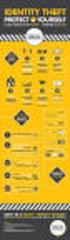 CREDIT What You Should Know About... IdentityTheft HOW IDENTITY THEFT HAPPENS PROTECTING YOURSELF RECOVERING FROM IDENTITY THEFT YourMoneyCounts You may have heard of a crime called identity theft, but
Preventing identity theft
 Preventing identity theft About ENISA The European Network and Information Security Agency (ENISA) is an EU agency created to advance the functioning of the internal market. ENISA is a centre of excellence
Identity Theft. Occurs when someone uses your personal information without your permission for personal gain.
 Identity Theft Identity Theft Occurs when someone uses your personal information without your permission for personal gain. Someone uses your personal information to open a department store credit account
Fraud Prevention Guide
 Fraud Prevention Guide Table of Contents Protect your Information 2 Protect your wallet or purse 3 Don t forget around the house 3 Secure your credit cards and debit cards 4 Stop the telemarketing calls
Protect Yourself From Scams
 Protect Yourself From Scams Practical Information on Identity Theft Cheque Overpayment Scams Advance Fee Letters Inheritance Schemes Advance Fee Loans Phishing & Vishing Lottery Scams Travel Internet Auction
How To Get Help From The Police Department
 IDENTITY THEFT A Quick Reference Guide Hawthorne Police Department Identity theft is when somebody uses your personal identifying information such as your name, address, telephone number, taxpayer identification
Protect Your Personal Information. Tips and tools to help safeguard you against identity theft
 Protect Your Personal Information Tips and tools to help safeguard you against identity theft Trademark of Visa International Service Association; Visa Canada Association is a licensed user. WHAT IS IDENTITY
PROTECT YOURSELF A CONSUMER PROTECTION PAMPHLET
 PROTECT YOURSELF A CONSUMER PROTECTION PAMPHLET Money Transfer Scams Many scammers ask consumers to send money by wire transfer through companies like Western Union and MoneyGram. If you wire money and
The Merchant. Skimming is No Laughing Matter. A hand held skimming device. These devices can easily be purchased online.
 1 February 2010 Volume 2, Issue 1 The Merchant Serving Florida State University s Payment Card Community Individual Highlights: Skimming Scam 1 Skimming at Work 2 Safe at Home 3 Read your Statement 4 Useful
NCUA LETTER TO CREDIT UNIONS
 NCUA LETTER TO CREDIT UNIONS NATIONAL CREDIT UNION ADMINISTRATION 1775 Duke Street, Alexandria, VA DATE: September 2001 LETTER NO.: 01-CU-09 TO: SUBJ: Federally Insured Credit Unions Identity Theft and
PREVENTING ID THEFT101
 PREVENTING ID THEFT101 701.255.0042 www.capcu.org i This book is intended as a general guide to the topics discussed, and it does not deliver accounting, personal finance, or legal advice. It is not intended,
Identity Theft Prevention Presented by: Matt Malone Assero Security www.asserosecurity.com
 Bringing enterprise level security to your business Identity Theft Prevention Presented by: Matt Malone Assero Security www.asserosecurity.com Matt Malone Fall 2015 Spring 2016 IDENTITY THEFT Identity
Identity Theft: Who s s Got Your Number? Brought to you by
 : Who s s Got Your Number? Brought to you by Seminar Objectives Learn: Learn how ID Theft is committed! Strategies to protect yourself. Recognize signs that you might be a victim. What to do if you are
Protecting Yourself from Identity Theft
 identity theft unit new york county district attorney s office Protecting Yourself from Identity Theft cyrus r. vance, jr. district attorney 5 / 2010 questions and answers Dear Friends, cyrus r. vance,
PROTECTING YOURSELF FROM IDENTITY THEFT. The Office of the Attorney General of Maryland Identity Theft Unit
 PROTECTING YOURSELF FROM IDENTITY THEFT The Office of the Attorney General of Maryland Identity Theft Unit CONTENTS 1) What is Identity Theft? 2) How to Protect Yourself From ID Theft. 3) How to Tell If
Identity Theft Simple ways to keep your sensitive information safe.
 Keep yourself safe from Identity Theft Simple ways to keep your sensitive information safe. Be Aware Identity theft is the number one consumer fraud perpetrated on unsuspecting citizens. In 2011, nearly
According to the Federal Trade Commission (FTC): The FTC is a government agency that promotes consumer protection
 According to the Federal Trade Commission (FTC): IDENTITY THEFT occurs when someone wrongfully acquires and uses a consumer s personal identification, credit, or account information The FTC is a government
INTRODUCTION. Identity Theft Crime Victim Assistance Kit
 Identity Theft Crime Victim Assistance Kit INTRODUCTION In the course of a busy day, you may write a check at the grocery store, charge tickets to a ball game, rent a car, mail your tax returns, change
EL/Civics Lesson Plan
 Program Name Staff Responsible for Lesson MVCTC EL/Civics Program Mary Ann Oatney Date(s) Used 11/2007 Civics Category Civics Objective Time Frame to Complete Lesson EFL(s) II. Civics Participation II.
Identity Theft Grade Level 10-12
 Identity Theft Grade Level 10-12 Take Charge of Your Finances Materials provided by: Karen Dawson, Family and Consumer Sciences Educator, Skyview High School, Billings, Montana Time to complete: 75 minutes
Identity fraud explained. How to protect your identity
 Identity fraud explained How to protect your identity Contents Raising the alarm 3 What is identity fraud? 4 When your identity is in danger 4 Keeping your identity safe 6 Spotting the warning signs 6
Online Security Tips
 Online Security Tips Is your computer set to automatically check for software and security updates? Do you type your name in search engines to see what personal information is online? Have you customized
Regions Identity Theft Kit
 Regions Identity Theft Kit How to protect yourself from identity theft, and what to do if you suspect you may be a victim. 2015 Regions Bank. Member FDIC. Index Introduction... 2 What Is Identity Theft?...
Standard 9: The student will identify and explain consumer fraud and identity theft.
 TEACHER GUIDE 9.2 FRAUD AND IDENTITY THEFT PAGE 1 Standard 9: The student will identify and explain consumer fraud and identity theft. Beware! Identity Theft Priority Academic Student Skills Personal Financial
S.A.F.E. Recognize a scam before you become a victim of fraud Division of Consumer Protection
 S.A.F.E. Senior Anti-Fraud Education Recognize a scam before you become a victim of fraud New York StaTe Department of State Division of Consumer Protection Advocating for and empowering New York consumers
Protecting Yourself from Identity Theft
 Protecting Yourself from Identity Theft Identity theft is everywhere. In fact, according to a 2013 report by Javelin Research, there is one incident of identity fraud every two seconds. While we cannot
Protect Yourself From Identity Theft
 Protect Yourself From Identity Theft Identity theft occurs when a criminal uses another person's personal information to take on that person's identity. Identity theft is much more than misuse of a Social
PROTECT YOUR COMPUTER AND YOUR PRIVACY!
 PROTECT YOUR COMPUTER AND YOUR PRIVACY! Fraud comes in many shapes simple: the loss of both money protecting your computer and Take action and get peace of and sizes, but the outcome is and time. That
Identity Theft Prevention Provided by the Colorado Bureau of Investigation Contact us at 303-239-4649
 Contact us at 303-239-4649 Guard your Social Security number Do not carry your Social Security card or your birth certificate in your wallet or purse Be cautious with Military ID cards, replacing any that
Guide to Identity Theft
 Guide to Identity Theft 1 Receive a free copy of your credit report. Visit www.annualcreditreport.com to get a copy of your credit report from all three credit reporting agencies. Review your credit report
IDENTITY THEFT RESOURCE KIT
 IDENTITY THEFT RESOURCE KIT TABLE OF CONTENTS Introduction 2 What To Do Now 3 Key Agencies to Contact 3 Other Important Contacts 4 Action Taken Form 6 Sample Letters 7 How Identity Theft Can Occur 9 What